Sustainable T Shirt Design Basics for Beginners
Sustainable t shirt design ideas now go far beyond simple leaves, recycling symbols, and familiar planet slogans. In 2026, designers combine responsible materials, original artwork, durable printing, reduced waste, and long term wearability to create shirts that feel modern and meaningful. A successful sustainable design should communicate a clear idea while giving customers an attractive garment that they will enjoy wearing regularly.
The strongest designs connect environmental responsibility with fashion. Designers now think about how the shirt feels, how much ink the artwork requires, how long the print will last, and whether the garment can support repair, reuse, or recycling. These decisions turn a basic graphic shirt into a more thoughtful product.
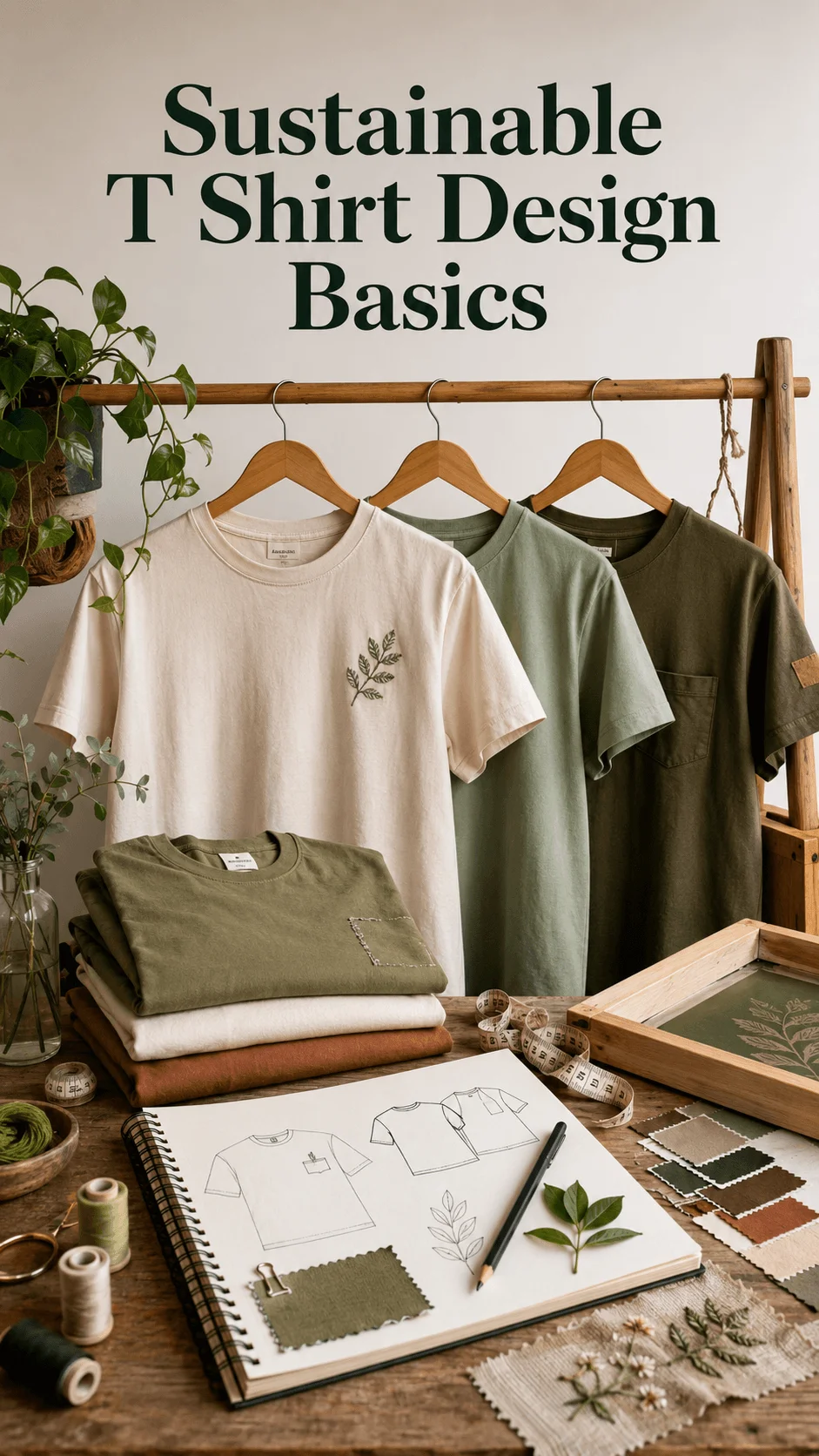
This guide explores sustainable t shirt design ideas that reflect current creative trends while remaining useful for clothing brands, print on demand sellers, artists, students, cafés, clubs, and environmental organizations. It also explains the basic principles that can help designers create more responsible and original clothing.
What Sustainable T Shirt Design Really Means
Sustainable T shirt design combines visual creativity with responsible production choices. The artwork matters, but the fabric, printing method, order quantity, durability, packaging, and expected product life matter as well.
A shirt with an environmental slogan does not automatically become sustainable. A company may print a green message on a poor quality garment, use unnecessary packaging, or produce more stock than customers need. Responsible design requires consistency between the message and the complete product.
Designers should first consider how long customers may wear the shirt. A meaningful concept, strong composition, durable decoration, and readable typography can extend the visual life of the garment. When customers feel connected to the artwork, they have a stronger reason to keep wearing it.
Material selection also affects comfort, printing, durability, and recycling. Organic cotton, recycled cotton, hemp, deadstock fabric, and carefully chosen blends can support a responsible product. However, every material has strengths and limitations. Designers should research processing, water use, comfort, strength, print compatibility, and supplier transparency before making claims.
Production planning completes the process. Small batches, preorders, limited releases, and print on demand systems can reduce unwanted inventory. A company can still create waste with responsible fabric when it orders far more shirts than customers need.
Sustainable T Shirt Design Basics for Beginners
Beginners often focus on the front graphic first, but responsible design starts before the artwork. Designers should understand the garment, audience, printing process, expected order size, and intended use before creating the final composition.
The first step involves choosing a shirt that supports the concept. A heavyweight organic cotton blank may suit premium streetwear, while a lighter recycled blend may work for outdoor clothing. Hemp can provide durability and visible texture, although designers should test the fabric because its surface may affect fine printed details.
The next step involves designing for long term wear. A designer can use a current visual style while choosing a subject that remains meaningful. Retro lettering, hand drawn illustrations, botanical graphics, and minimalist layouts can feel fashionable without depending on a temporary joke or short lived internet trend.
Ink coverage also deserves attention. Large solid print areas may feel heavy and may require more ink than the design needs. Designers can use negative space, line art, halftones, small graphics, and limited color palettes to create impact with less coverage. A low ink design can still feel detailed and visually complete.
The printing method should match the artwork and fabric. Screen printing suits bold shapes and limited colors. Direct to garment printing suits detailed illustrations and smaller orders. Embroidery adds texture to small logos and badges. Appliqué and patchwork can reuse existing fabric, while print on demand can reduce unsold inventory.
Designers should also consider repair, reuse, and recycling. Clear care instructions can help customers protect the garment. Simple construction, secure decoration, repairable artwork, and fewer unnecessary mixed materials can make the shirt easier to maintain.
Sustainable T Shirt Design Ideas Trending in 2026
The most useful sustainable t shirt design ideas for 2026 combine current fashion with thoughtful environmental storytelling. They avoid generic awareness graphics and use distinctive illustration, typography, color, texture, and garment construction.
1. Regenerative Nature Illustration T Shirts
Regenerative nature artwork focuses on complete natural systems rather than isolated leaves. Designers can illustrate roots, seeds, soil layers, worms, fungi, pollinators, wetlands, native plants, and healthy farming cycles.
A detailed design could reveal the hidden world beneath a garden. Roots can travel through soil while insects, fungi, and microorganisms form a living pattern around them. Another composition could show seeds, flowers, birds, compost, and rain as parts of one continuous cycle.
Forest green, sand, brown, cream, sage, and faded black provide suitable shirt colors. Cream, rust, pale yellow, muted pink, and soft blue can highlight important details. Designers can place a small plant symbol on the chest and a larger ecosystem illustration on the back.
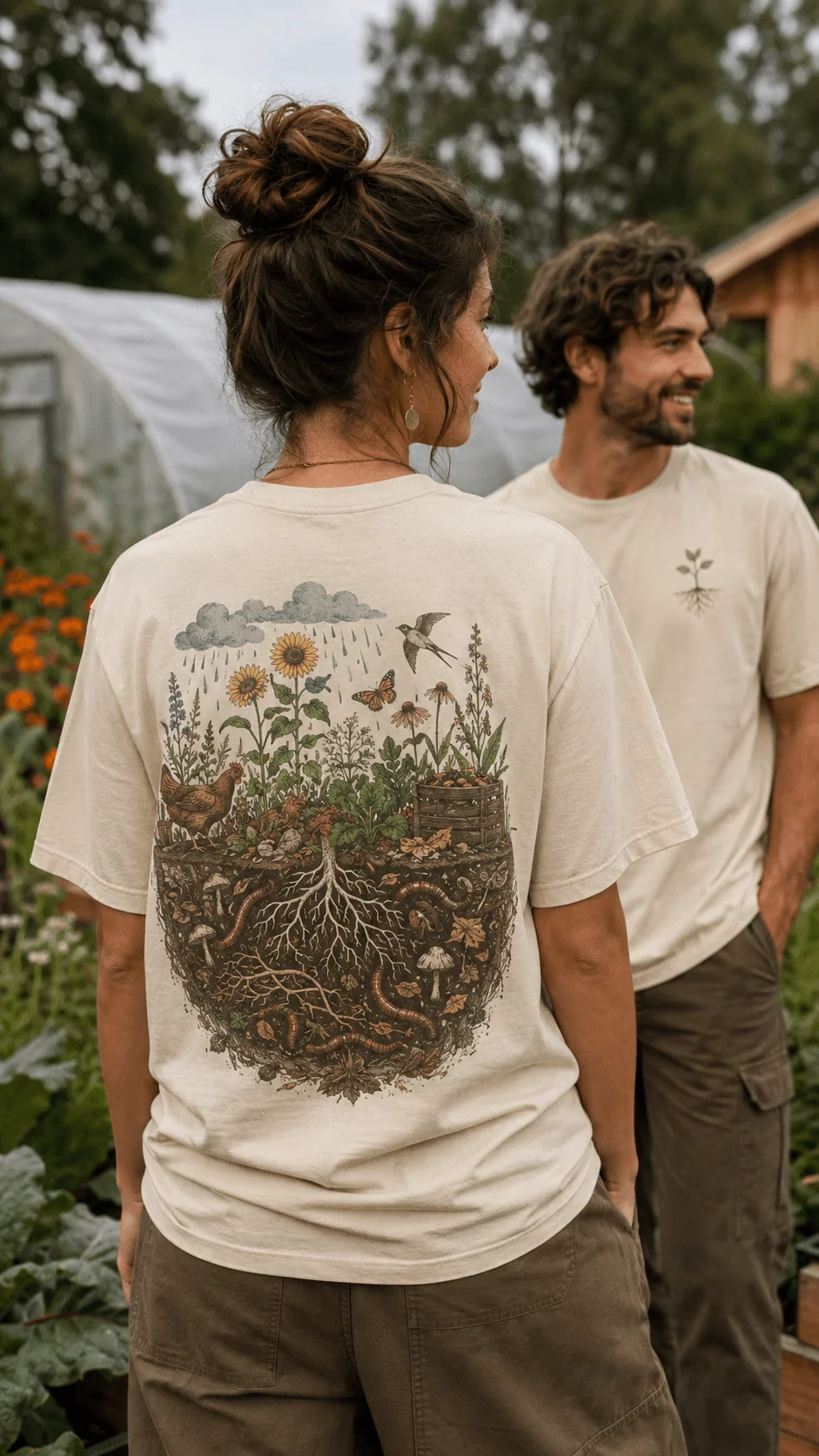
Screen printing works well for bold line work and limited palettes. Direct to garment printing suits detailed scenes with subtle color changes. Farms, gardening groups, schools, outdoor companies, and local food projects can use this style.
Designers should research their subjects carefully. Accurate plants, insects, and soil details make the artwork feel thoughtful. Random natural elements may weaken the story and make the design resemble a generic environmental poster.
2. Retro Ringer Environmental Club T Shirts
Ringer shirts create a nostalgic sportswear appearance through contrasting collars and sleeve bands. This style gives sustainable t shirt design ideas a social identity because the garment can represent a fictional club, local project, or shared environmental activity.
Designers can invent names such as River Renewal Club, Weekend Garden Society, Community Compost Team, or Coastal Cleanup League. A circular badge can sit on the chest, while a large back graphic can include the club name, mascot, founding date, and short message.
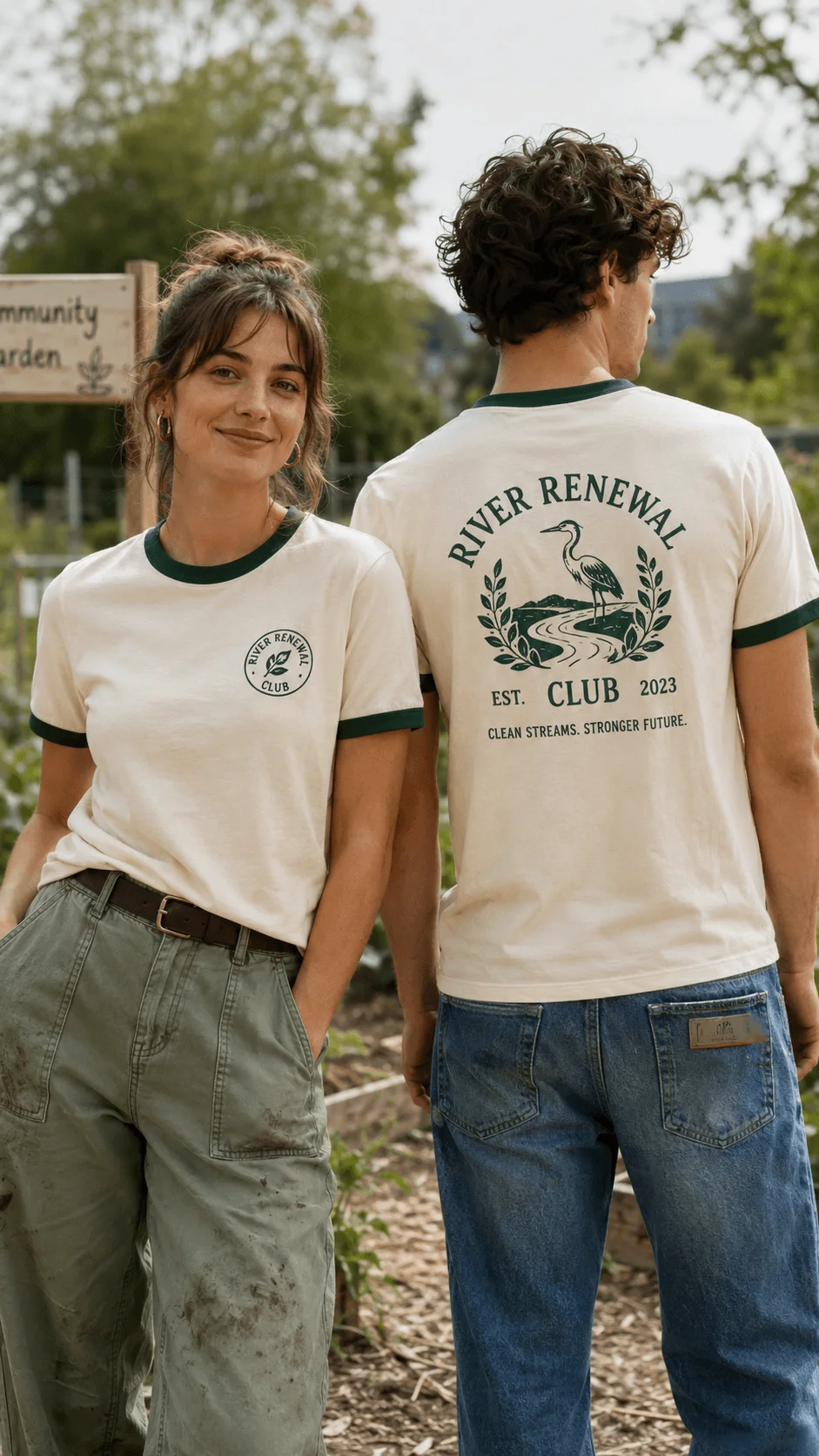
Cream with forest green trim creates a classic outdoor look. Faded yellow with brown trim feels warm and vintage. Sage with rust trim creates a softer palette, while white with navy trim supports a coastal identity.
Screen printing suits the bold shapes and limited colors of this style. Embroidery can add a small front badge. The club should have a consistent name, symbol, lettering style, and color palette so that it feels believable rather than random.
3. Sustainable Tourist and Destination T Shirt Designs
Destination shirts connect clothing with memories, places, and outdoor experiences. Designers can create original artwork inspired by forests, lakes, mountains, trails, coastlines, campgrounds, and wildlife reserves.
Fictional names such as Cedar Lake Nature Reserve, Pine Coast Walking Club, or Green Valley Camp can help designers avoid copying real tourism logos. The artwork may include a sunrise, bird, lake, trail sign, cabin, or mountain outline.
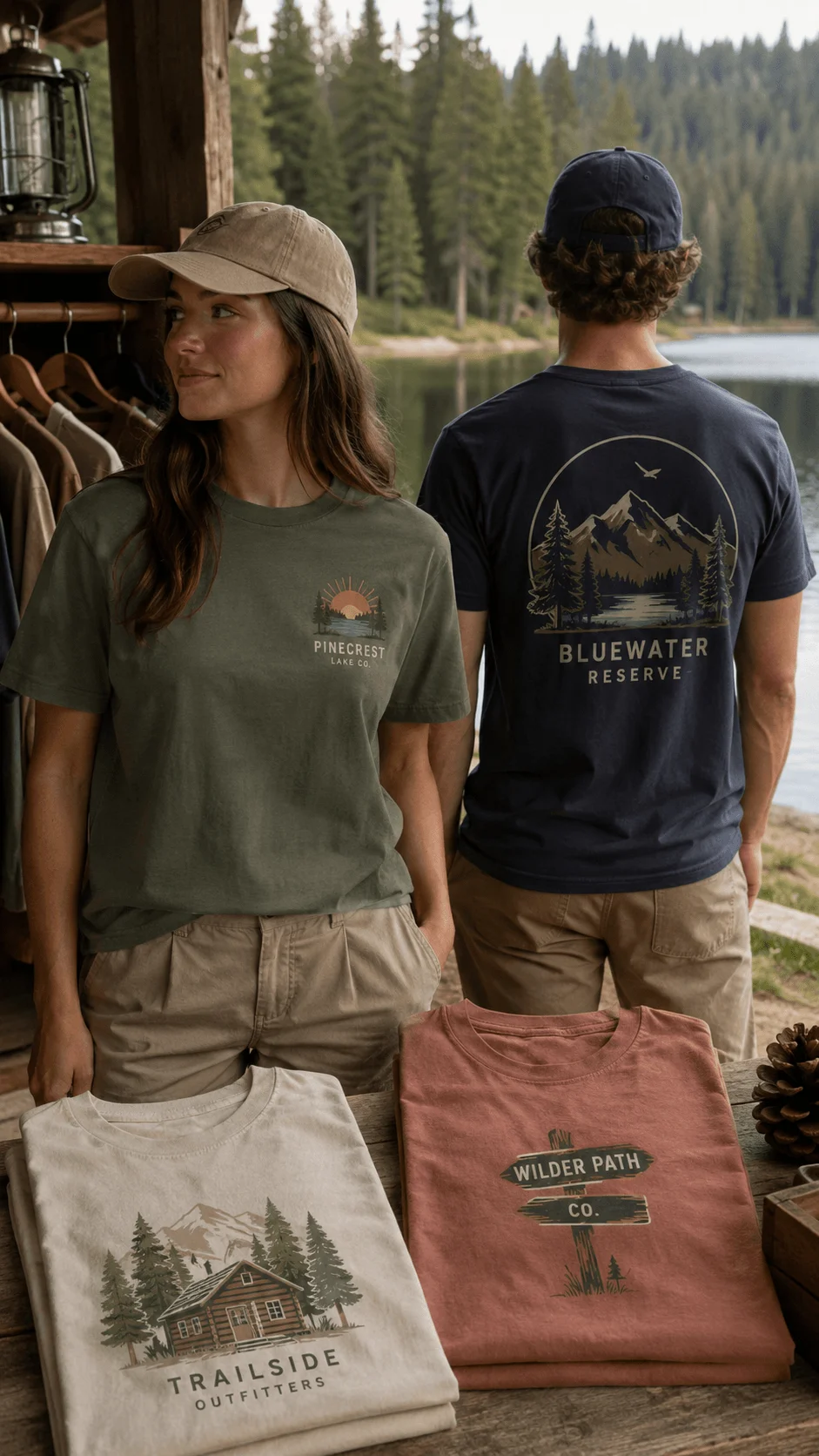
Faded green, rust, navy, sand, mustard, cream, and burgundy suit this direction. A small destination mark can appear on the front, while a larger landscape fills the back.
Tourism companies, cafés, gift shops, outdoor brands, and regional clothing labels can adapt the idea. The strongest sustainable t shirt design ideas in this category tell one clear story. One landscape, one destination name, and one supporting line usually create more impact than many unrelated icons.
4. Hand Drawn Botanical T Shirt Artwork
Hand drawn botanical artwork gives a shirt a personal and artistic quality. Visible pencil marks, uneven ink lines, handwritten labels, and small observations can make the design feel like a field notebook.
Designers can draw herbs, mushrooms, wildflowers, seed pods, vines, garden tools, and native plants. A central illustration may feature one detailed plant, while a larger back composition can combine several species with notes, dates, and location references.
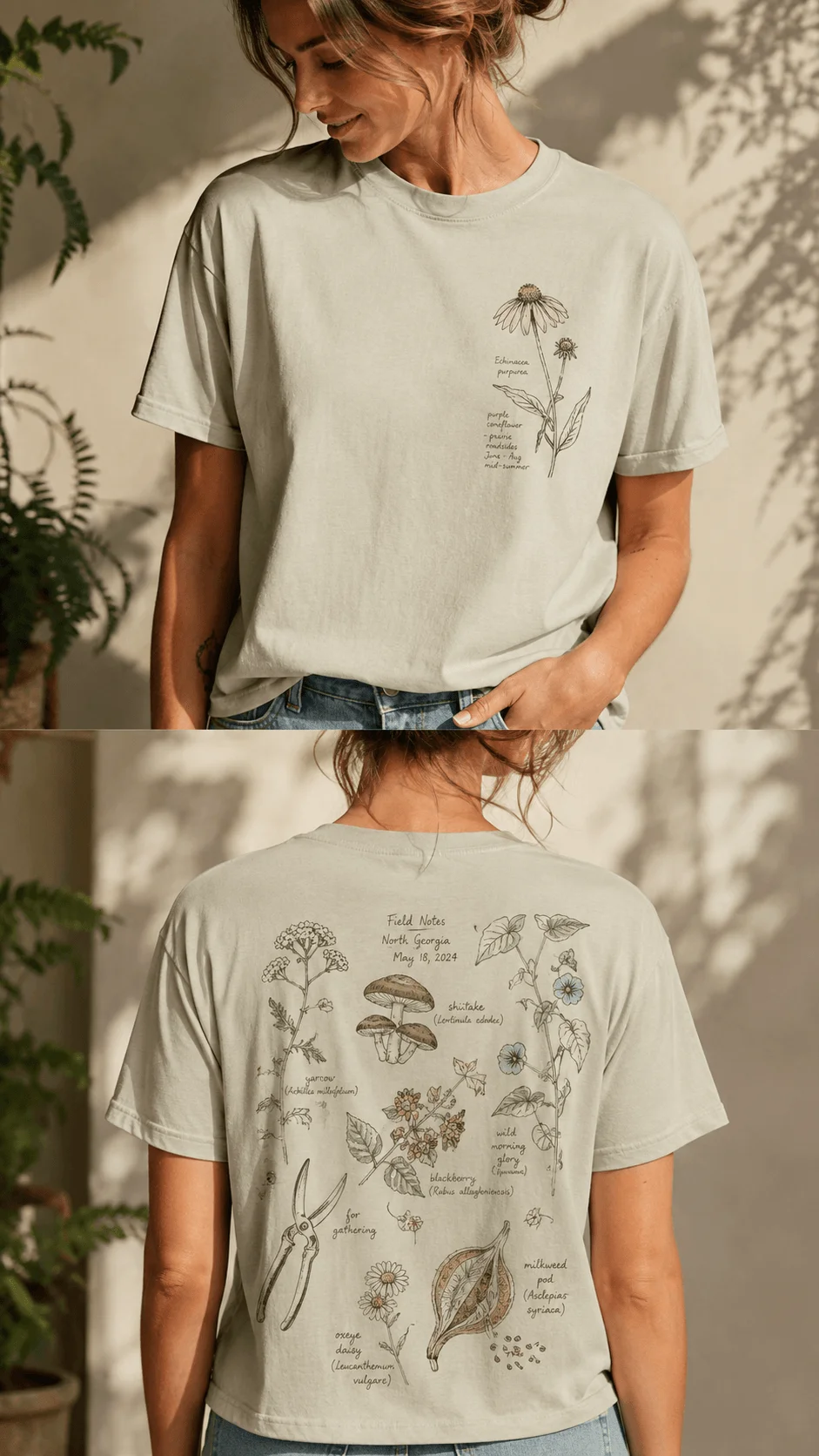
Sage, cream, olive, clay, and faded black support this style. Black or dark brown line work creates a natural journal appearance, while pale pink, yellow, or blue can emphasize selected details.
Direct to garment printing suits fine marks and several colors. One color screen printing works well for simpler drawings. Designers should sketch from real plants, personal photographs, or local references instead of tracing common botanical vectors.
5. Garment Dyed Earth Tone Minimalist Designs
Garment dyed shirts provide a soft, faded, and lived in appearance. Their muted colors create a strong base for minimalist sustainable graphic T shirt ideas that depend on spacing and subtle contrast.
Useful colors include sage, olive, clay, sand, charcoal, faded navy, cream, and muted brown. Designers can add a small embroidered leaf, tiny landscape symbol, simple phrase, or tonal back print.
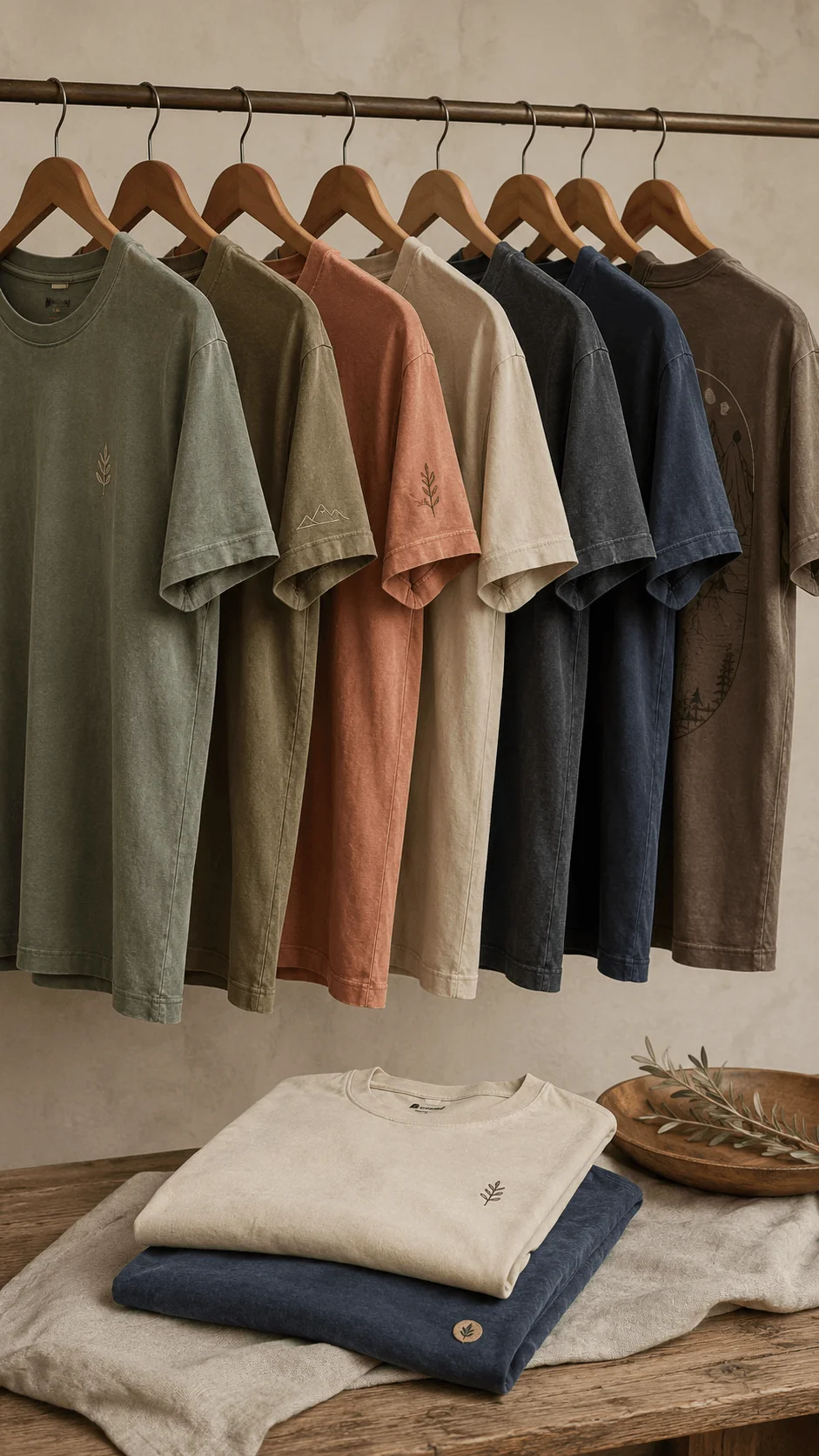
Minimal design requires precision because weak spacing or poor lettering becomes obvious when the artwork contains only a few elements. Designers should carefully test scale, placement, thread density, and contrast.
Embroidery suits small symbols and badges. Tonal screen printing can create a quiet premium effect. Cafés, studios, wellness companies, outdoor labels, and sustainable fashion brands can use this concept.
6. Colorful Retro Stripe Sustainable T Shirts
Retro stripes bring energy and nostalgia to responsible clothing. Designers can create them with yarn dyed fabric, recycled cotton panels, deadstock pieces, or printed bands.
Wide stripes can produce a bold sportswear look, while narrow uneven bands can feel handmade and playful. Mustard, forest green, rust, cream, burgundy, pale blue, orange, pink, and brown form strong vintage combinations.
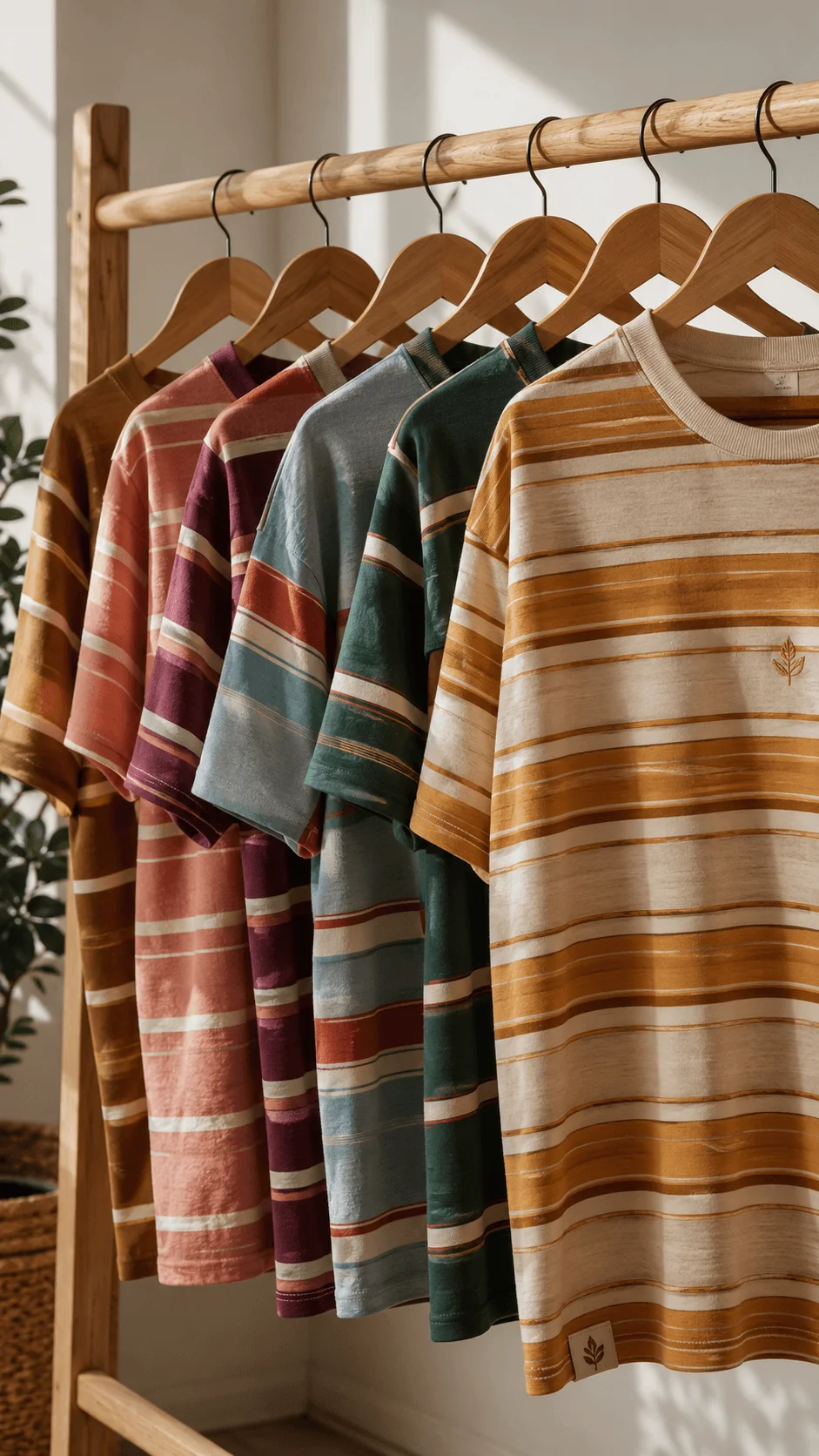
The garment itself becomes the main design, so the front artwork can remain small. A tiny embroidered symbol, chest logo, or woven label may provide enough identity.
Designers should plan fabric cutting carefully because stripe alignment can create extra scraps. Deadstock fabric can add originality, but limited quantities may prevent exact repeats. This variation can become part of the collection when the brand explains it honestly.
7. Upcycled Patchwork Graphic T Shirts
Upcycled patchwork shirts transform scraps, damaged garments, deadstock pieces, and misprinted fabric into new visual elements. Each shirt can differ slightly, which gives the product character and reduces the need for perfect repetition.
Designers can add visible repair stitching, contrasting pockets, fabric plants, landscape patches, layered graphics, and old embroidery pieces. A patch can cover existing damage while becoming the main artwork.
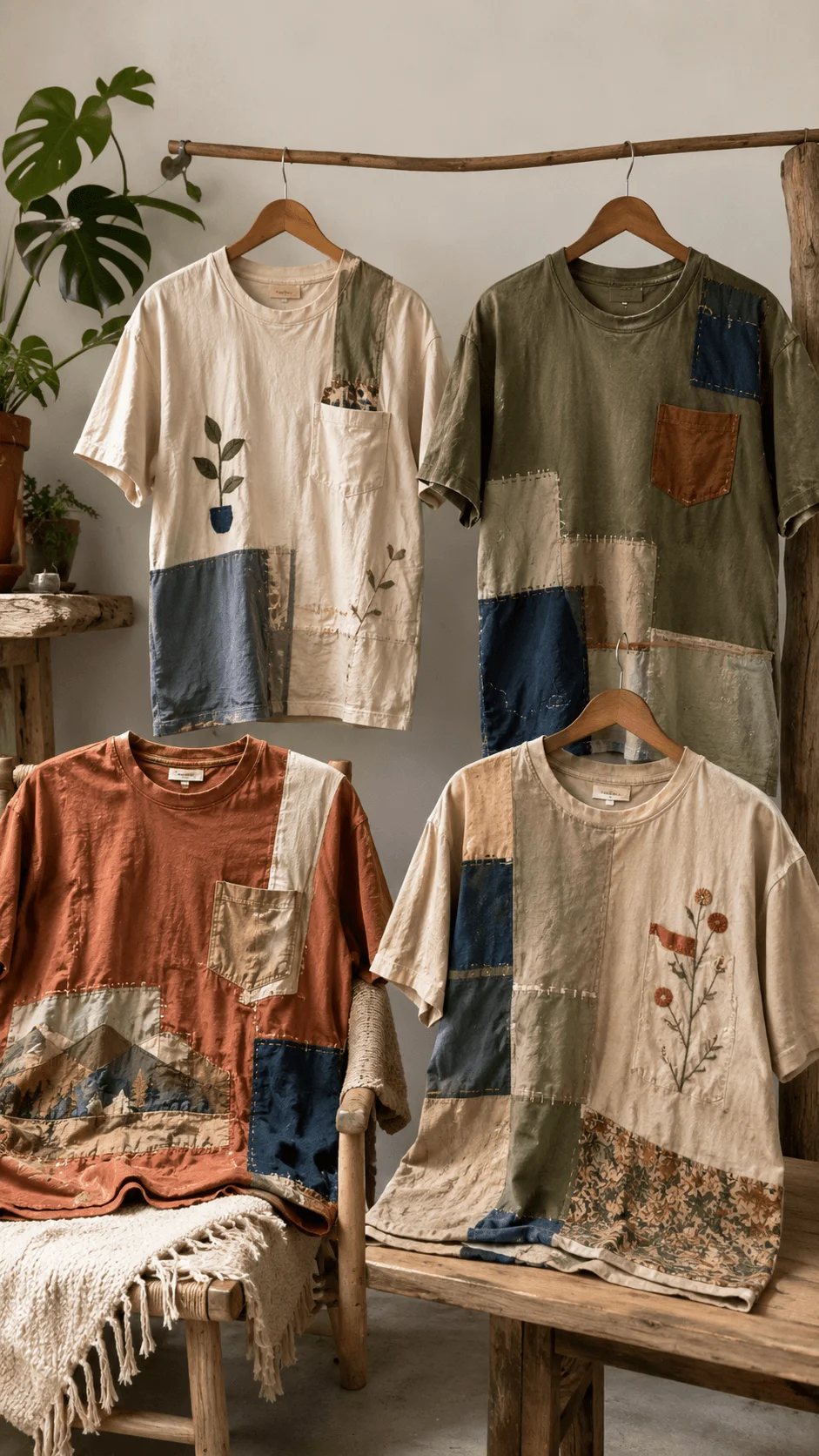
A consistent collection still needs clear rules. Designers can repeat the same color family, stitch style, symbol, or patch shape across several unique shirts.
Secure stitching, comfort, flexibility, and washability matter. Large stiff patches may feel uncomfortable, while soft and carefully placed fabric can improve the design. Upcycled sustainable t shirt design ideas work especially well for small brands, artists, repair studios, and limited collections.
8. Small Front and Large Back Storytelling Designs
A small front symbol paired with a large back illustration remains one of the most versatile modern layouts. The front creates curiosity, while the back gives the main story enough space.
A seed can appear on the chest while a complete garden ecosystem covers the back. A water droplet can introduce a river restoration scene. A bee can connect with a large pollinator habitat, while a tree symbol can introduce a forest life cycle.
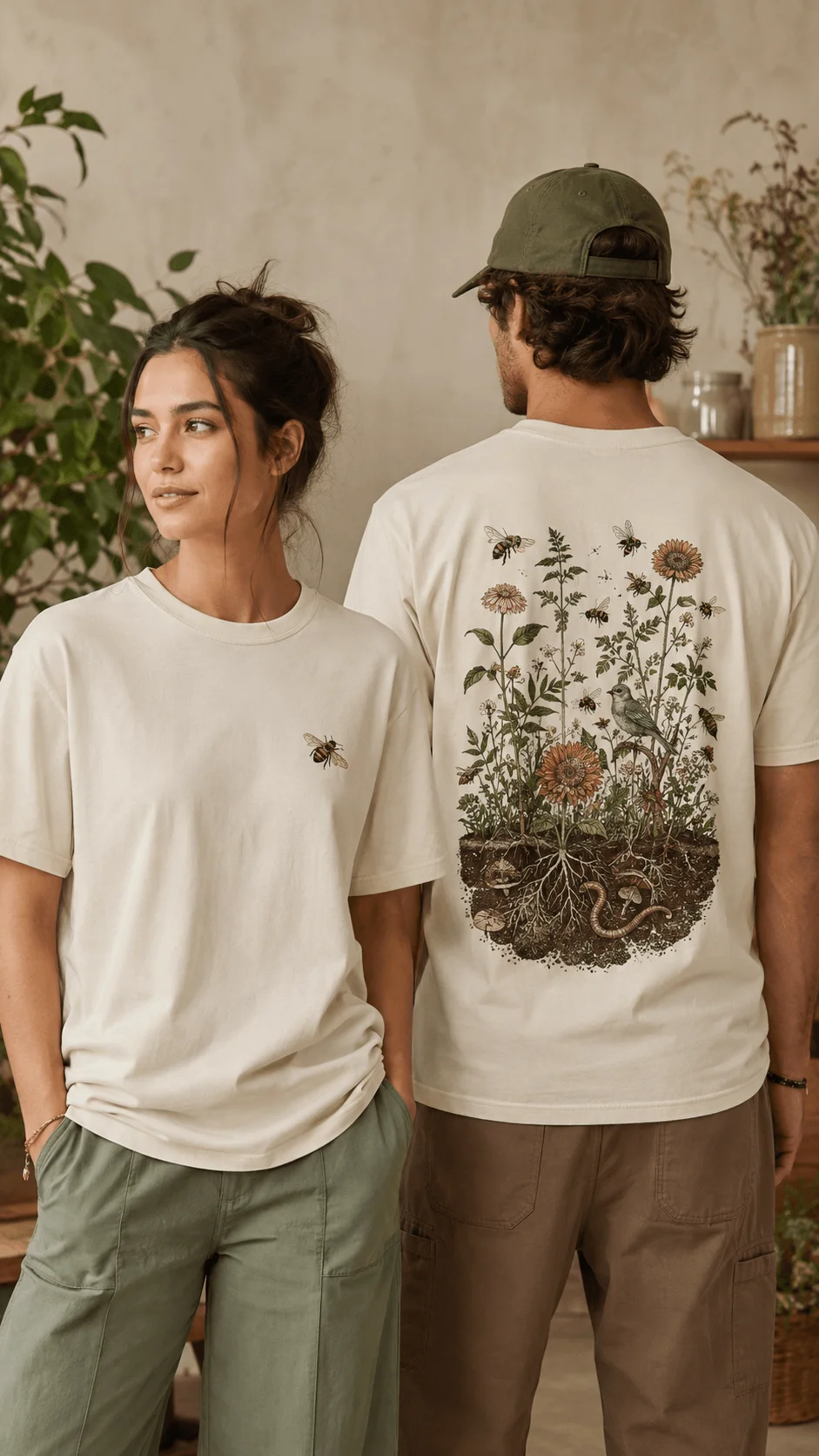
The front and back should use the same line style, typography, and colors. Sleeve symbols and back collar details can support the identity without adding clutter.
Screen printing suits bold compositions, while direct to garment printing suits detailed illustrations. Designers should leave enough space below the collar and away from side seams so the placement looks balanced and professional.
9. Friendly Eco Mascot T Shirts
Mascots turn environmental subjects into approachable visual stories. Frogs, bees, seedlings, mushrooms, birds, trees, reusable bottles, and compost bins can become characters with recognizable personalities.
A frog can protect a pond. A seedling can carry a watering can. A bee can run a flower shop. A mushroom can manage a compost club. Small props, expressions, and poses can communicate the idea without a long slogan.
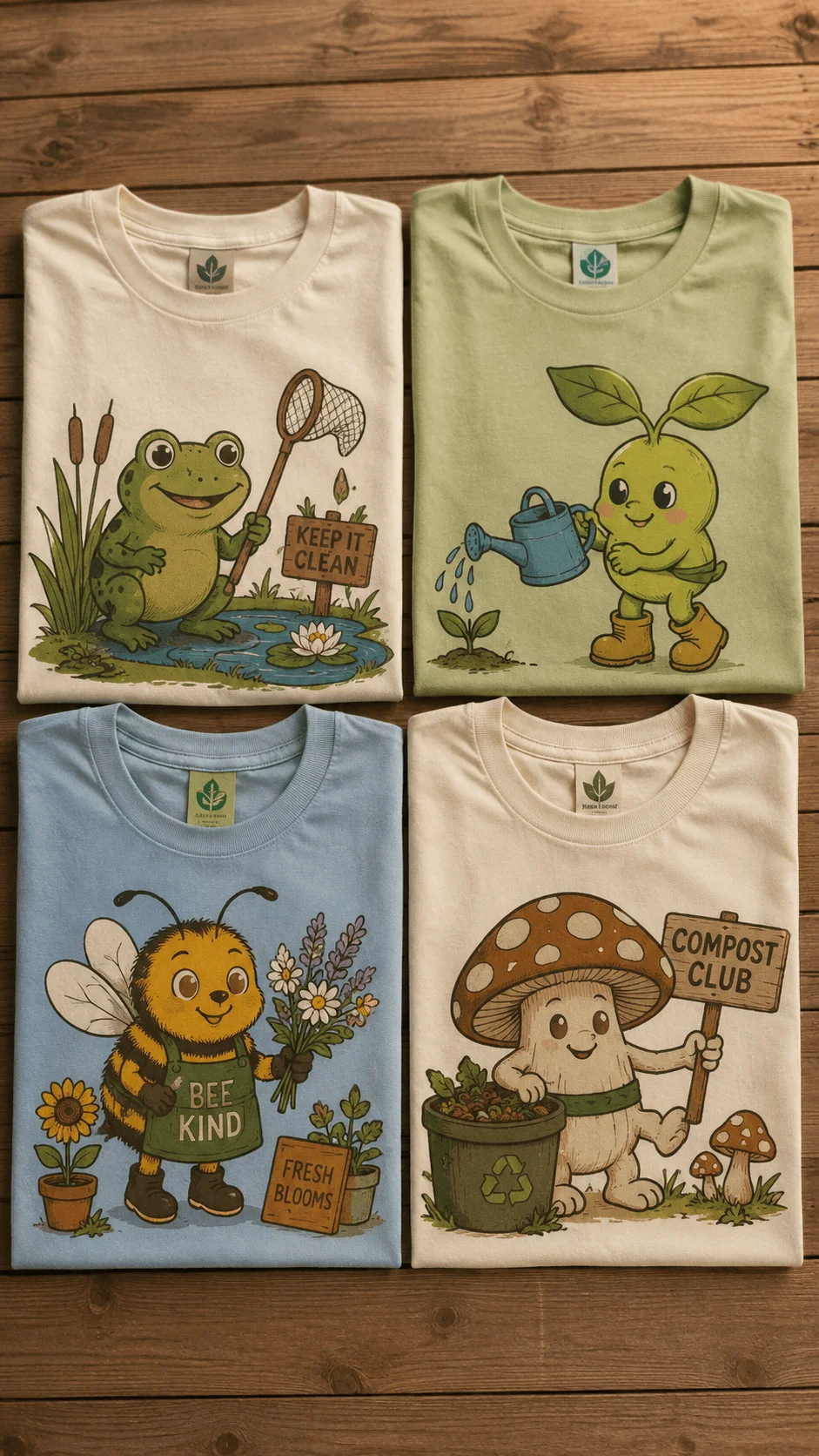
Mint, lime, sage, cream, pale yellow, and soft blue suit cheerful characters. Forest green, rust, and dark brown can create a more mature appearance.
Direct to garment printing suits detailed character art. Screen printing suits bold outlines and limited colors. Schools, cafés, clubs, campaigns, and clothing brands can use mascots, but designers should keep each character recognizable from a distance.
10. Bold Sustainable Typography T Shirts
Typography can carry an entire design when the message feels specific and original. Oversized serif letters, stretched words, hand painted text, curved layouts, and irregular baselines can create a strong identity.
Useful phrases include Wear It Longer, Repair Before Replacing, Support Your Local Ecosystem, Compost Is Not Garbage, and Borrow More Buy Less. The wording should remain brief enough for quick reading.
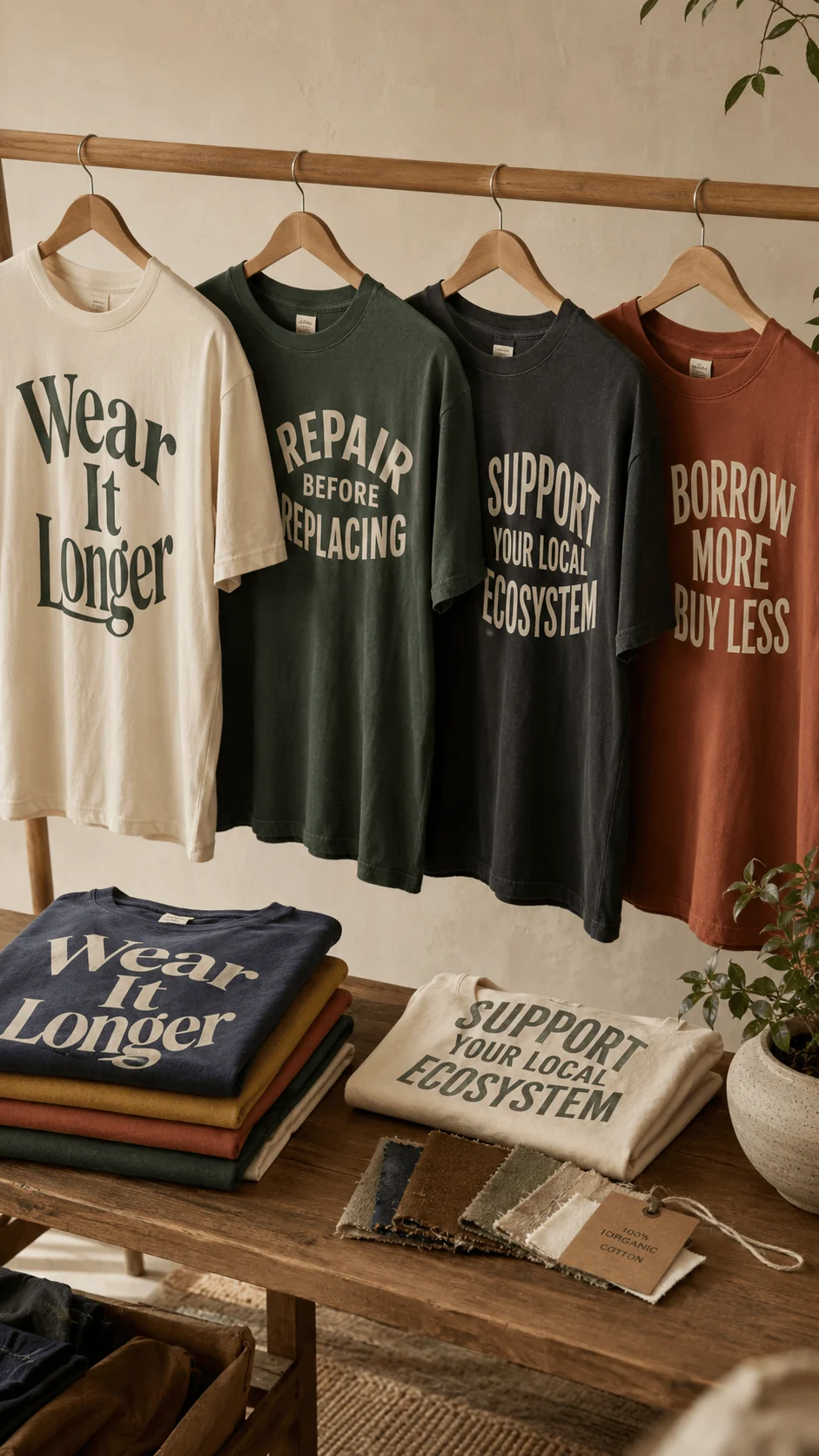
The meaning should guide the letter shape. A calm statement may use soft curves and balanced spacing. An energetic phrase may use wider letters, stronger contrast, and unusual alignment.
Forest green, faded black, cream, clay, navy, and mustard support bold lettering. One color screen printing often works well. Custom lettering helps sustainable t shirt design ideas feel distinctive even when the message remains simple.
11. Low Ink and Negative Space T Shirt Designs
Low ink artwork uses the shirt color as part of the composition. Negative space can form mountains, leaves, animals, rivers, faces, or letters without covering the full fabric.
A mountain can appear through an empty shape inside a dark print. A river can emerge as the unprinted area between two land forms. A leaf can develop from a group of carefully arranged lines.

One color screen printing suits this approach, while halftones can create shading without large solid areas. Strong combinations include cream ink on forest green, black on sand, rust on cream, and pale blue on charcoal.
The artwork should still feel complete. Designers need clear edges, strong contrast, and intentional spacing so that the low ink concept does not appear unfinished.
12. Traceable Circular T Shirts With Digital Product Stories
Traceable circular shirts connect the physical design with useful product information. A small QR code, printed symbol, or woven label can lead customers to material details, care instructions, repair guidance, factory information, recycling routes, or return programs.
The digital feature should support the design rather than dominate it. A circular illustration can show the journey from fiber to fabric, production, use, repair, return, and recycling.
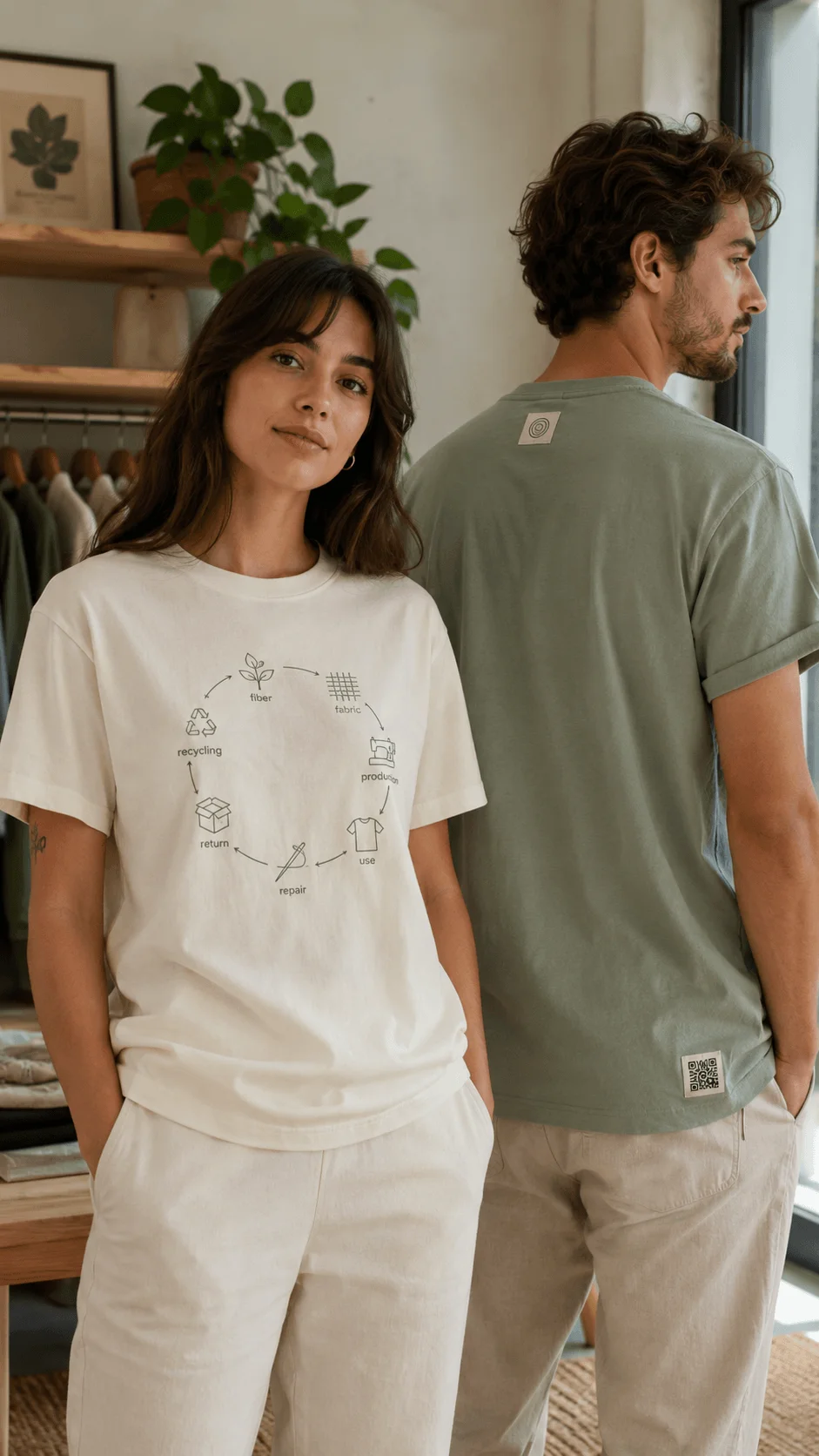
The QR code can appear near the lower hem, inside label, sleeve, or back neck. Minimal diagrams, simple icons, and thread inspired lines can create a clean visual system.
Brands must keep the linked information accurate. An outdated page can damage customer trust. Circular sustainable t shirt design ideas work well for transparent fashion brands, student projects, educational campaigns, and companies that provide repair or return services.
Best Materials for Sustainable T Shirt Design Ideas
Material choice affects comfort, durability, printing, and final recycling options. Organic cotton often provides a smooth print surface and familiar feel. Recycled cotton can reduce the need for new fiber, although shorter fibers may affect softness and strength.
Hemp can offer visible texture and durability. Deadstock fabric uses material that already exists, but limited stock may create problems for large repeat orders. Responsibly sourced cellulosic fibers may provide softness and drape, although designers should investigate processing and supplier practices.
Recycled synthetic blends can improve stretch or performance, but they may release microfibers and create recycling challenges. Designers should not assume that every recycled material provides the best solution.
Fabric weight also affects the artwork. Heavy fabric can support large prints and embroidery, while lighter fabric may suit smaller graphics and warmer climates. Designers should test shrinkage, print adhesion, comfort, and color before placing a large order.
No material name proves that a shirt is completely responsible. Brands should review certifications, supplier information, factory practices, durability, and expected product life.
Sustainable T Shirt Design Mistakes to Avoid
Generic recycling graphics often make a shirt feel predictable. Designers should select a specific subject, such as soil health, native plants, river restoration, repair culture, or community gardening, and build the design around it.
Copied slogans and familiar layouts also weaken originality. Custom lettering, personal illustration, fictional identities, and local references can create a stronger result. Designers should also check copyright and avoid using artwork, logos, or phrases owned by other creators.
Vague environmental claims may damage trust. Brands should explain materials, printing, care, and production choices clearly without claiming that the product causes no environmental impact.
Too many colors and large solid print areas can increase visual weight and production complexity. Designers should use every color for a clear reason. Negative space and controlled palettes often create more impact.
Unreadable typography, poor placement, and weak print quality reduce wearability. Designers should test samples before production and review the shirt from a normal viewing distance.
Excess inventory creates waste even when the brand selects responsible materials. Preorders, small runs, limited releases, and demand testing can help companies plan more carefully.
How to Make Sustainable Graphic T Shirt Ideas Original
Original design begins with a clear audience and story. A gardening club needs a different identity from a café, outdoor label, school group, or streetwear brand. Designers should understand what the intended customer values and which clothing styles they already wear.
Local subjects can make the artwork more meaningful. Native plants, regional landscapes, neighborhood references, wildlife, and community activities can create emotional value. Designers should research cultural and environmental details carefully.
Fictional clubs and businesses provide another creative direction. A believable name, mascot, founding date, color system, and supporting phrase can turn one shirt into a complete visual identity.
Custom illustration and typography create the strongest distinction. Even a simple concept can feel original when the artist controls the line style, spacing, composition, colors, and message.
The final shirt should still look wearable. A responsible message works best when customers like the fit, color, artwork, and overall mood. Sustainable clothing should feel like fashion rather than a generic awareness product.
Conclusion
The best sustainable t shirt design ideas combine responsible thinking with strong visual creativity. Designers should consider fabric, ink, decoration, production quantity, durability, repair, reuse, and recycling, but they must also create artwork that customers genuinely want to wear.
Regenerative illustrations, retro club shirts, destination graphics, botanical drawings, garment dyed minimalism, stripes, patchwork, storytelling layouts, mascots, typography, low ink artwork, and circular product stories all provide useful directions for 2026.
A sustainable shirt does not succeed only because it carries an environmental slogan. It succeeds when the concept feels original, the garment lasts, the print remains attractive, and the production plan avoids unnecessary waste. Thoughtful sustainable t shirt design ideas can help designers and brands connect creativity, responsibility, and long term value.