Easy Sustainable Activities for Kindergarten in 2026
Sustainable activities for kindergarten help young children understand nature, waste, water, energy, food, and shared resources through simple everyday experiences. At this age, children learn best when they can observe, touch, create, discuss, and repeat an activity. They do not need complex environmental theories. They need positive opportunities to notice how their choices affect the classroom, the playground, plants, animals, and other people.
Kindergarten children often show strong curiosity about the natural world. They ask why leaves change colour, where rain comes from, how seeds grow, and why insects visit flowers. Teachers and parents can use this curiosity to introduce responsible habits in a way that feels playful rather than frightening. The goal does not involve asking children to solve large environmental problems. The goal involves helping them develop care, patience, responsibility, cooperation, and respect for living things.
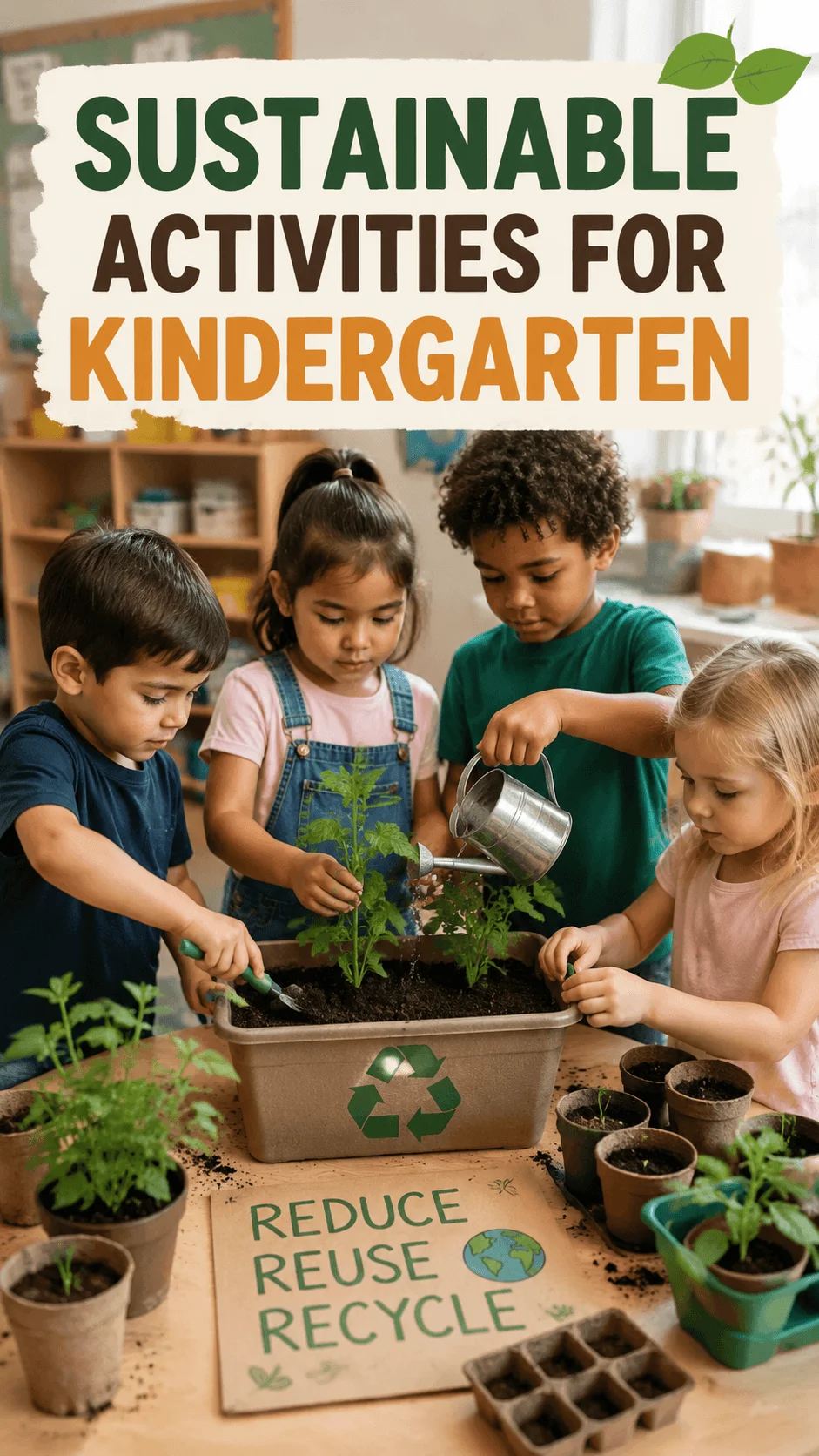
Good sustainability lessons for kindergarten also support wider learning. Children can practise counting while recording weather, improve language skills through nature stories, develop fine motor control during art activities, and build confidence while caring for plants. These activities become most valuable when adults repeat them throughout the year and connect them with normal classroom routines.
Why Sustainable Activities for Kindergarten Matter
Sustainable activities for kindergarten can help children understand that resources have value. A sheet of paper comes from natural materials. Water supports plants, people, and animals. Food requires land, labour, transport, and preparation. Toys and classroom supplies require materials and energy. Young children do not need every detail, but they can begin to understand that everyday objects should receive care.
Environmental learning also strengthens observation skills. A child who watches a seed grow begins to notice change over time. A child who records cloudy and sunny days starts to identify patterns. A child who observes butterflies learns to pay attention to movement, colour, and behaviour. These experiences support early scientific thinking because children compare, predict, question, and reflect.
Kindergarten sustainability activities can also improve social development. Many environmental tasks require children to share materials, take turns, solve small problems, and care for common spaces. A class garden, repair station, or reusable art area works best when children cooperate. These activities help them understand that a classroom belongs to everyone.
Adults should keep the message hopeful and age appropriate. Teachers should not expose young children to frightening images of disasters, pollution, or wildlife loss. They should focus on actions children can understand, such as caring for plants, using supplies thoughtfully, protecting insects, and keeping shared spaces clean.
Kindergarten Nature Detective Journals
Nature detective journals turn ordinary outdoor observation into a regular learning activity. Each child receives a simple notebook or folder where they can record what they notice in the playground, garden, park, courtyard, balcony, or outside a classroom window.
Children may draw birds, leaves, insects, clouds, flowers, shadows, puddles, soil, or changing weather. They can use colours, simple symbols, leaf rubbings, photographs, or short sentences shared with an adult. Teachers can ask gentle questions such as what changed, what moved, what colour appeared, or what sounded different.
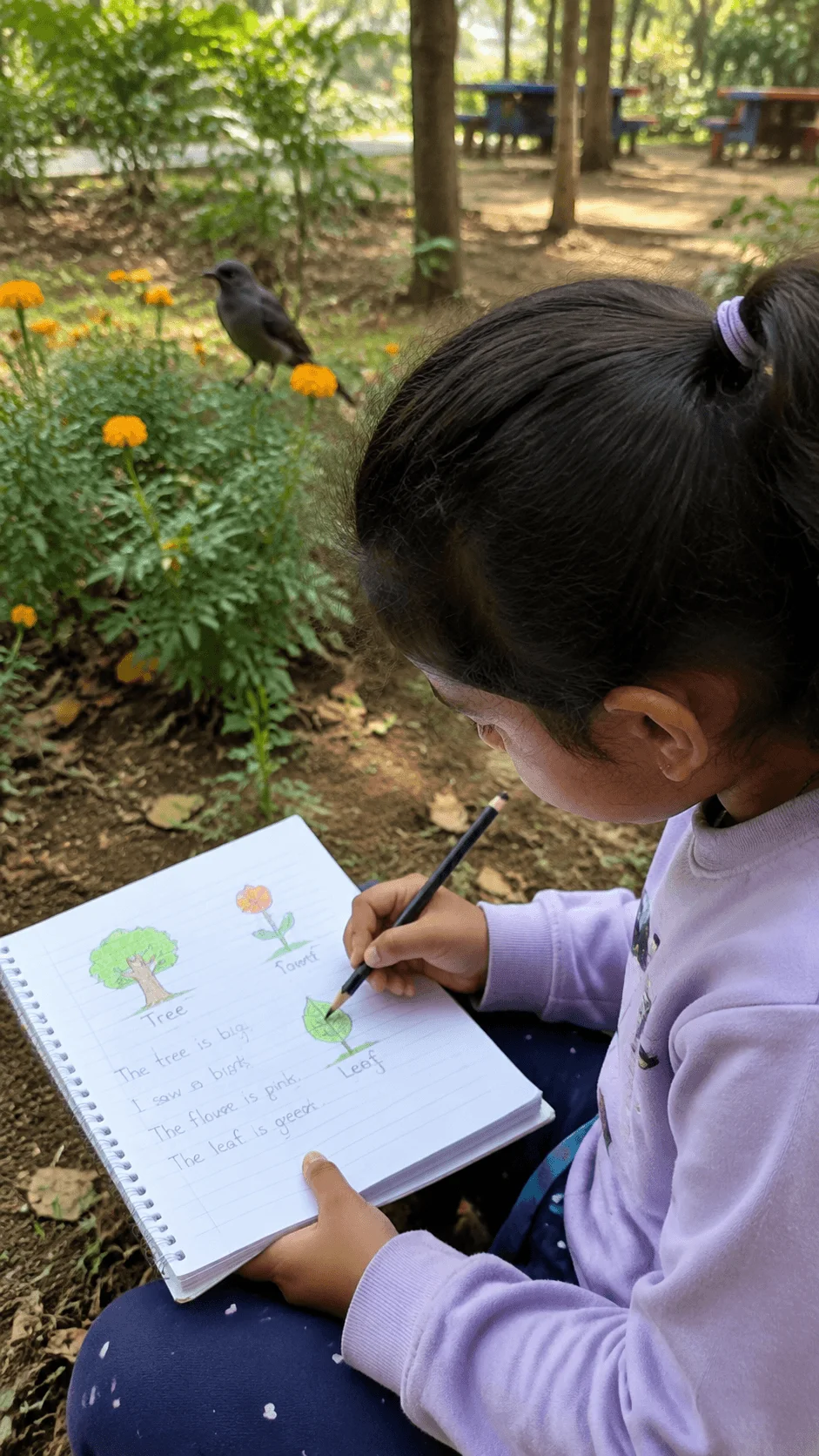
This activity becomes more meaningful when children repeat it throughout the year. A tree that looks bare in one season may later develop buds, leaves, flowers, or fruit. Children can compare their earlier drawings with new observations and discuss what changed. This builds memory, patience, vocabulary, and attention to detail.
Nature based sustainability activities like this help children form an emotional connection with their surroundings. Children often care more deeply about places they observe regularly. A familiar tree, bird, or garden area becomes part of their learning experience.
Teachers should set clear safety rules. Children should not pull plants, disturb nests, catch insects, taste unknown berries, or touch unfamiliar animals. The activity should encourage respectful observation rather than collection.
Tiny Biodiversity Garden for Young Children
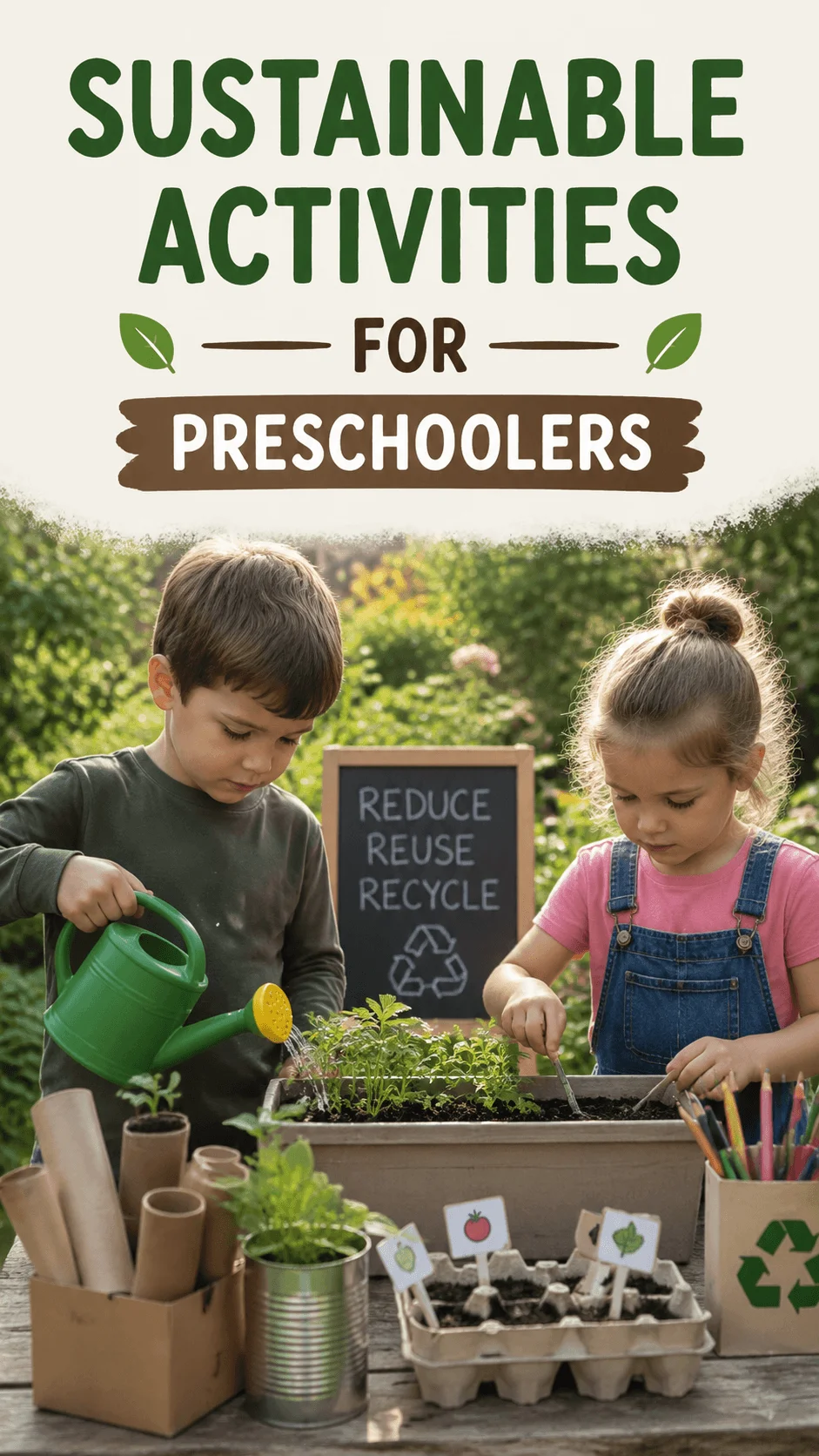
A tiny biodiversity garden gives children a chance to support local living things while learning how habitats work. The garden does not need to cover a large area. A few safe containers, a raised bed, or a small corner of a playground can provide useful learning opportunities.
Teachers can choose suitable local plants that offer nectar, shelter, seeds, or leaves for insects and birds. Children can help water plants, observe new growth, notice visiting insects, and compare different flower shapes. They may discover that butterflies prefer one plant while bees visit another.
This activity goes beyond planting flowers for decoration. Children learn that plants can support other living things. A healthy garden may provide food, shade, shelter, or a resting place. Teachers can explain these relationships with simple language and real observations.
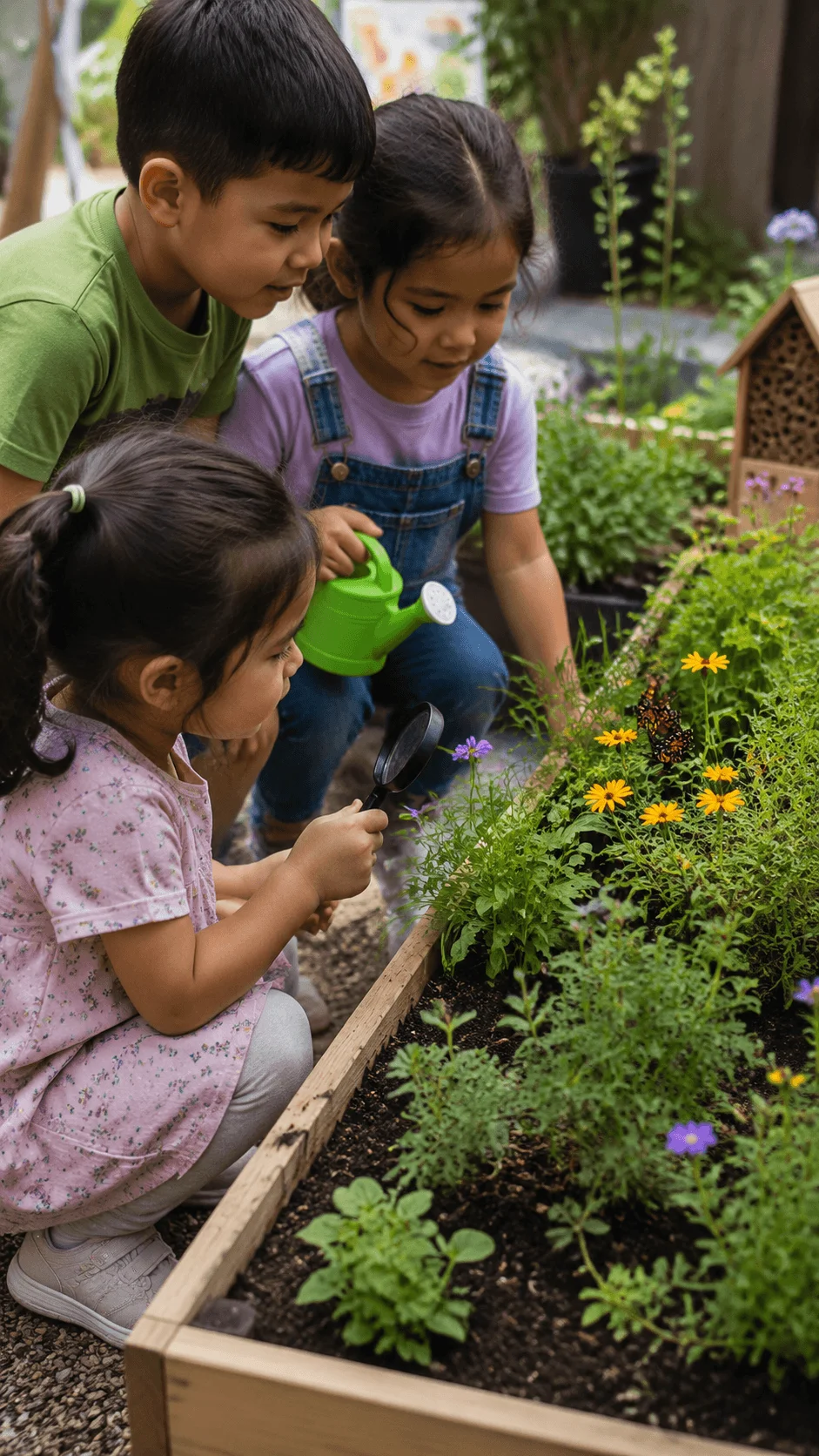
Eco friendly activities for kindergarten work best when children receive regular responsibilities. One group may check soil moisture. Another may record new flowers. Another may observe visiting insects from a safe distance. These small roles build confidence and responsibility.
Adults must choose plants carefully. They should avoid toxic species, sharp thorns, strong irritants, and plants that may cause serious allergic reactions. Teachers should also consider local weather, available sunlight, watering needs, and school rules before beginning.
Loose Parts Eco Play
Loose parts play gives children open ended materials that they can move, arrange, combine, and reuse. Suitable materials may include sticks, stones, pinecones, cardboard tubes, fabric pieces, wooden blocks, shells, seed pods, large bottle tops, and clean packaging.
Children may turn these objects into houses, bridges, gardens, roads, animals, patterns, shops, or imaginary villages. The same material can support a different idea each day. This encourages more flexible thinking than a toy with only one purpose.
Hands on sustainability activities for kindergarten should allow children to make decisions. Teachers do not need to provide a finished model for children to copy. They can ask what the children want to build, how the structure might stand, or which materials might work best.
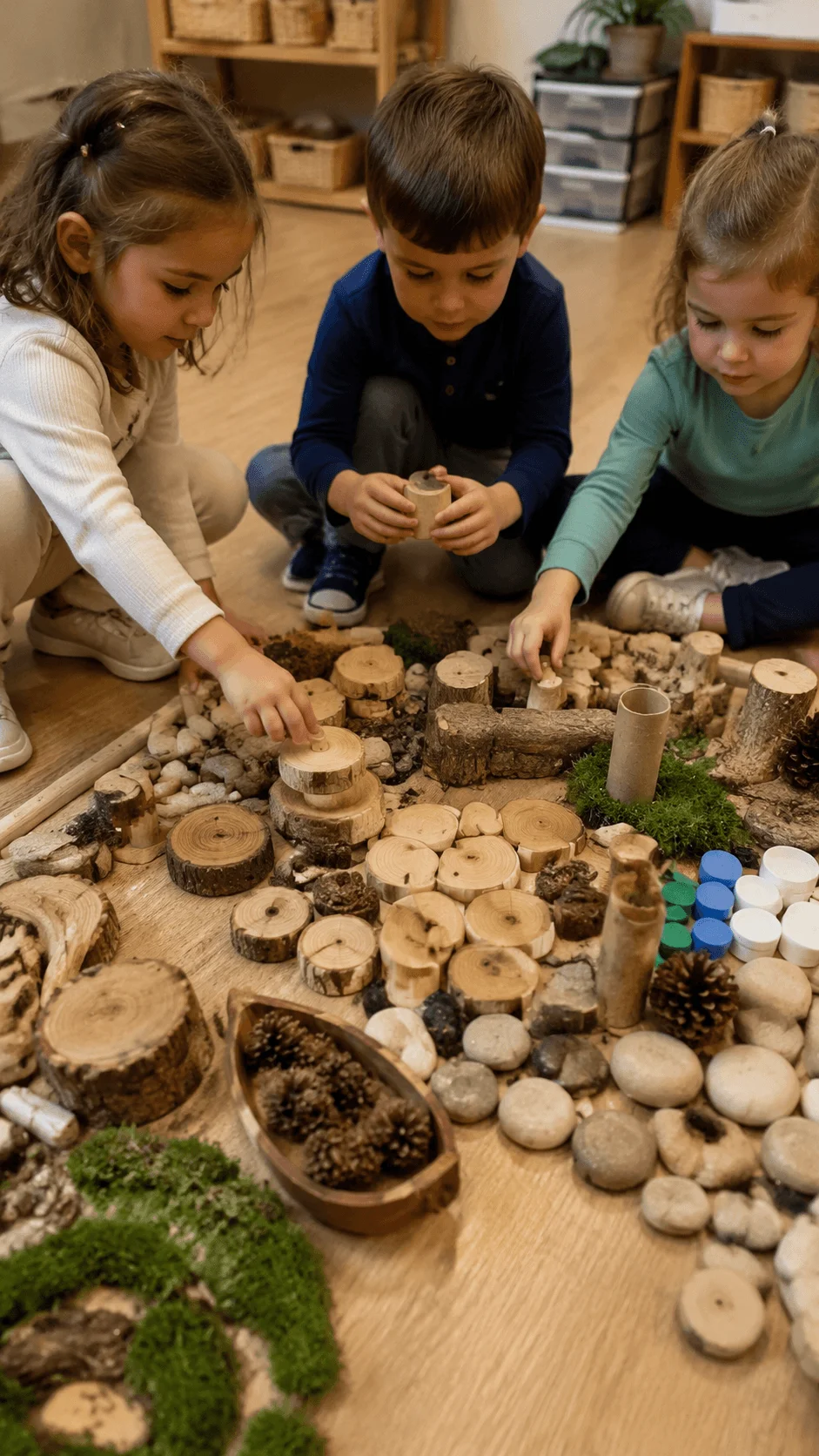
Loose parts play supports imagination, fine motor skills, teamwork, planning, and problem solving. It also helps children understand that valuable play does not always require new plastic products.
Adults should inspect every item before use. They should remove dirty materials, sharp edges, broken pieces, small choking hazards, toxic packaging, and objects with unknown residue. Teachers should choose sizes that suit the age group and supervise the activity carefully.
Food Waste Investigation Station
A food waste investigation station helps children notice why food sometimes remains uneaten. The activity should focus on understanding classroom systems rather than blaming children.
Teachers can observe common leftovers after snack time or lunch. Children may sort pictures of wasted food, draw what often remains, or help create a simple visual record. They might notice that fruit becomes damaged, portions feel too large, some food arrives in difficult packaging, or children do not have enough time to eat.
Simple sustainability activities for kindergarten should lead to realistic changes. A class may decide to begin with smaller portions and allow more food when needed. Teachers may improve storage, protect soft fruit, allow more eating time, or communicate with families about suitable quantities.
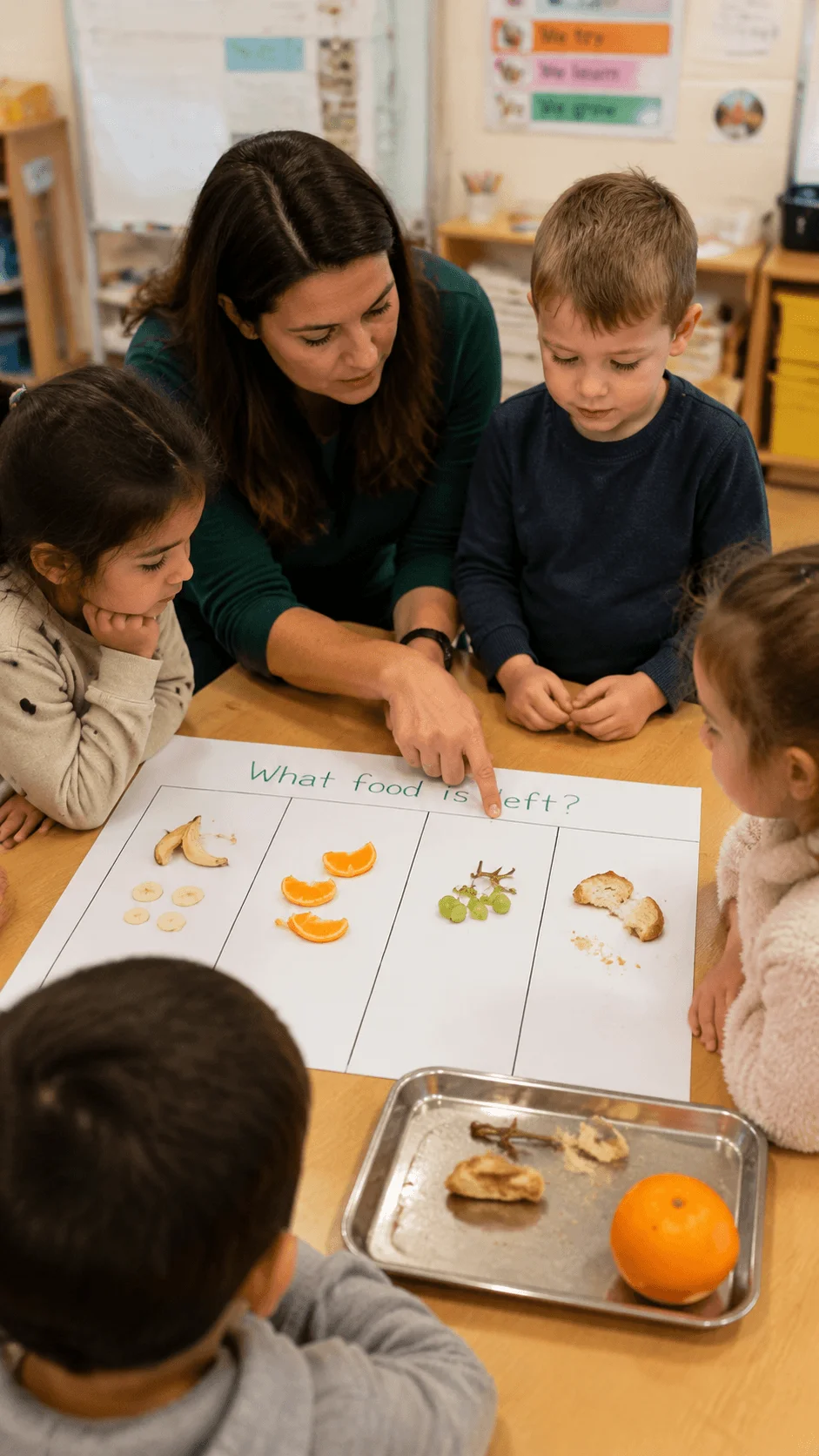
The activity must respect personal needs. Allergies, cultural preferences, religious practices, medical conditions, sensory sensitivities, and individual appetite all affect food choices. Adults should never pressure children to finish food or feel guilty about leaving something uneaten.
Food safety also matters. Children should not handle spoiled food, share open food without permission, or save unsafe leftovers. Teachers must follow school policies and local health guidance.
This activity teaches observation, discussion, planning, and respect. It also shows children that reducing waste often requires better systems rather than personal blame.
Mini Repair Workshop
A mini repair workshop introduces the idea that damaged objects do not always need to enter the bin. Children can help with safe classroom repairs while adults manage tools and complex tasks.
Children may tape a torn book page, sort missing puzzle pieces, clean reusable containers, match loose toy parts, or help restore a classroom display. They can examine an item and discuss what happened, whether it can be repaired, and how the class can care for it in the future.
These sustainable classroom activities for kindergarten build patience and responsibility. A repaired book shows children that care can extend the useful life of an object. A restored game reminds them that shared resources deserve attention.
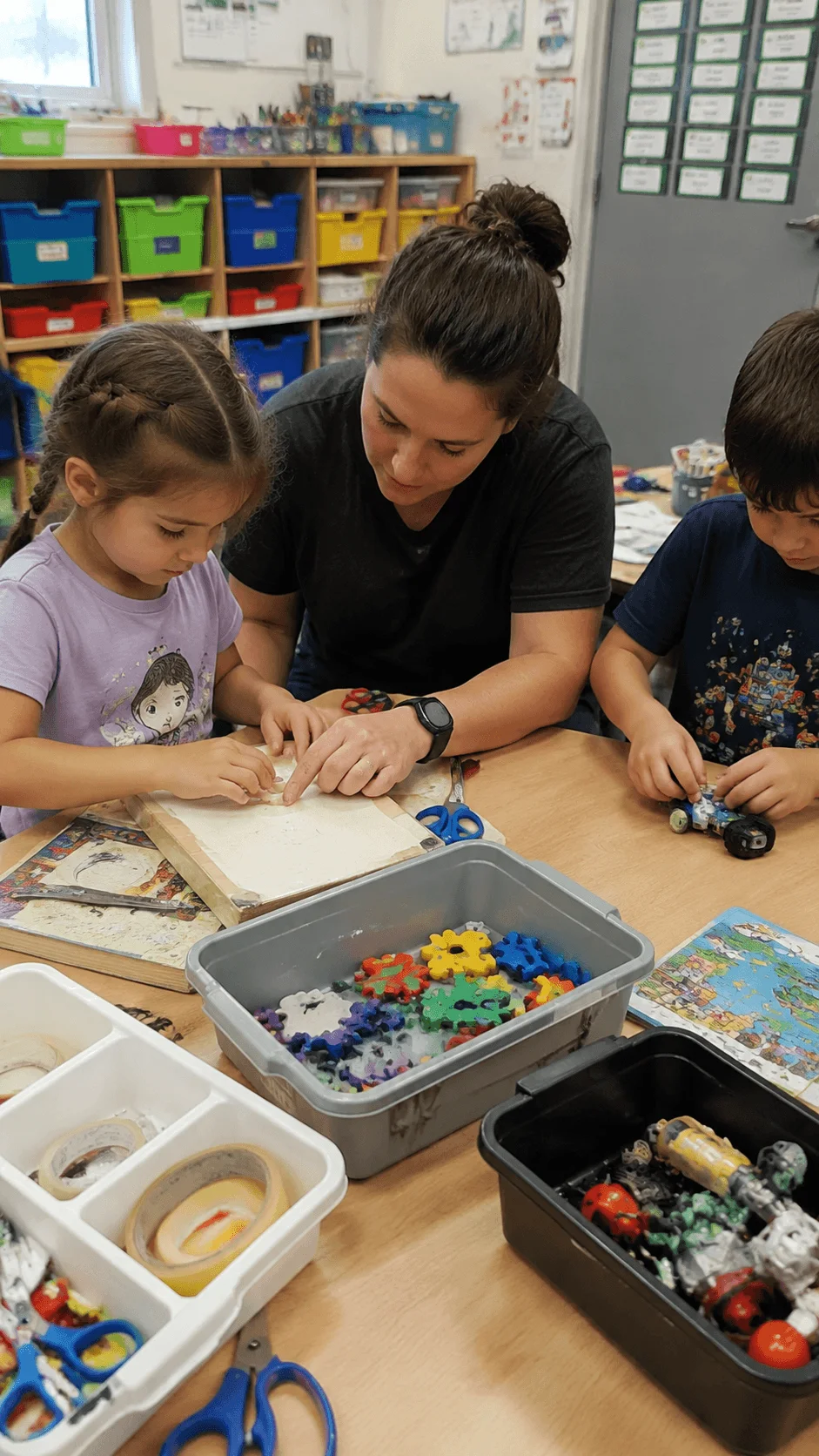
The workshop also supports problem solving. Children can think about which material may hold a page together or how to store an item so it does not break again. Teachers can guide the discussion without expecting perfect solutions.
Adults must control all unsafe materials. Children should not handle sharp tools, broken glass, batteries, electrical items, hot glue, strong chemicals, or small dangerous parts. Their role should remain simple, supervised, and appropriate for their age.
Rainwater Discovery Activity
Rainwater discovery allows children to explore weather, water, measurement, and plant care in one practical activity. Teachers can place a safe container outside during rainfall and invite children to observe how quickly it fills.
Children can compare rainy days with dry days. They may notice how much water collects after light rain or heavy rain. Teachers can use simple marks on the container to show different levels. The class can then use suitable collected water on outdoor plants.
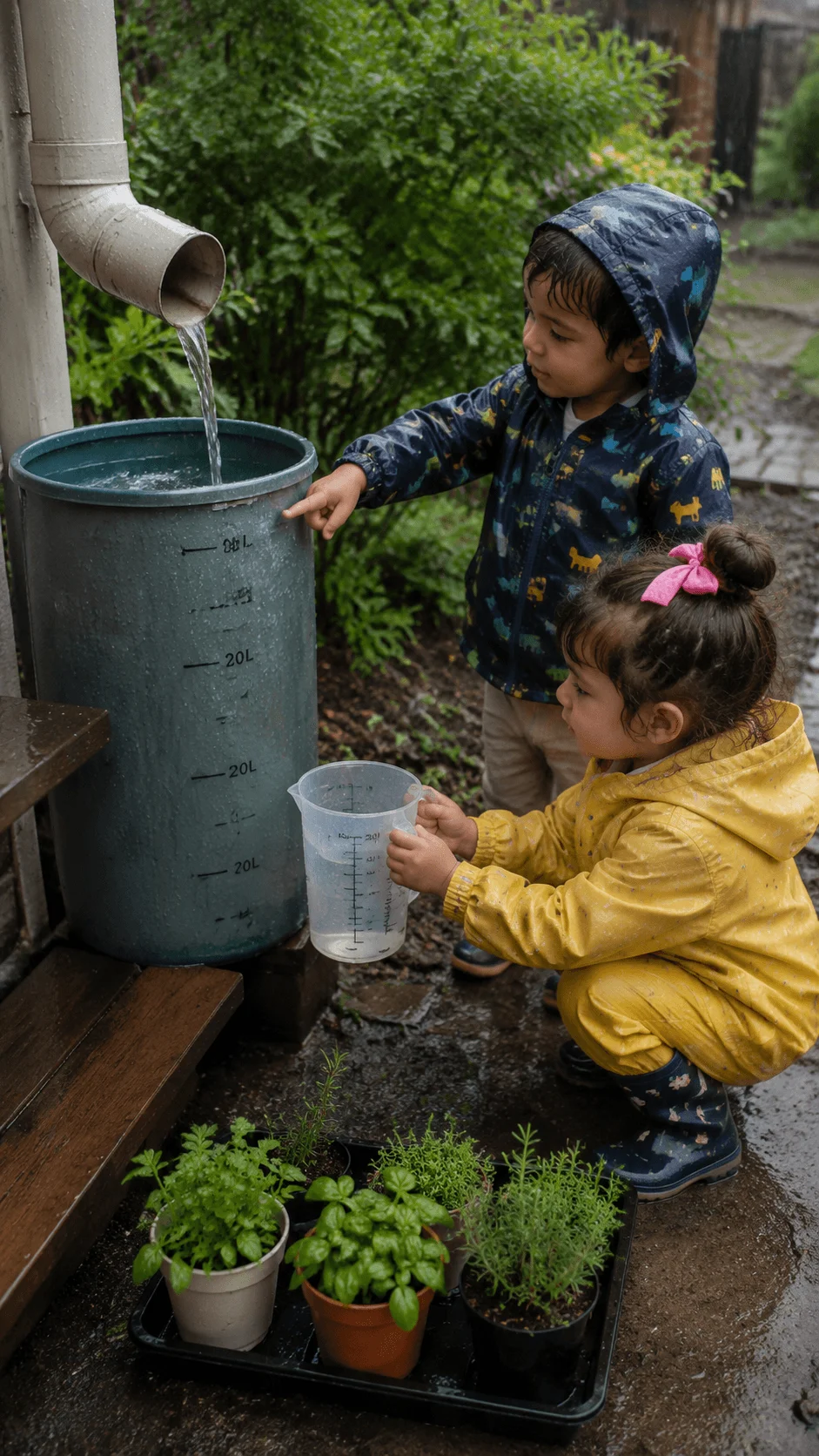
This activity can introduce water conservation in a positive way. Children learn that water supports life and should not be wasted. They also see that weather affects gardens and outdoor spaces.
The water should never be presented as drinking water. Adults should keep containers secure, clean them regularly, prevent mosquito breeding, and avoid leaving standing water for long periods. They should also check for slippery surfaces and supervise children during collection.
Classrooms without outdoor space can observe rain through windows, compare photographs, or measure water that an adult safely collects. The learning goal can remain the same even when the setup changes.
Classroom Energy Helpers
Classroom energy helpers encourage children to notice how the class uses lights, fans, screens, taps, doors, and other equipment. Children can take turns supporting simple routines under adult guidance.
A helper may remind the teacher that an unused light remains on or notice that a tap continues running. The child may also help open curtains to use daylight or check that a door stays closed while cooling or heating operates.
Environmental activities for kindergarten should never turn children into strict monitors. They should not blame classmates or correct others harshly. Teachers should present the role as teamwork and model every habit themselves.
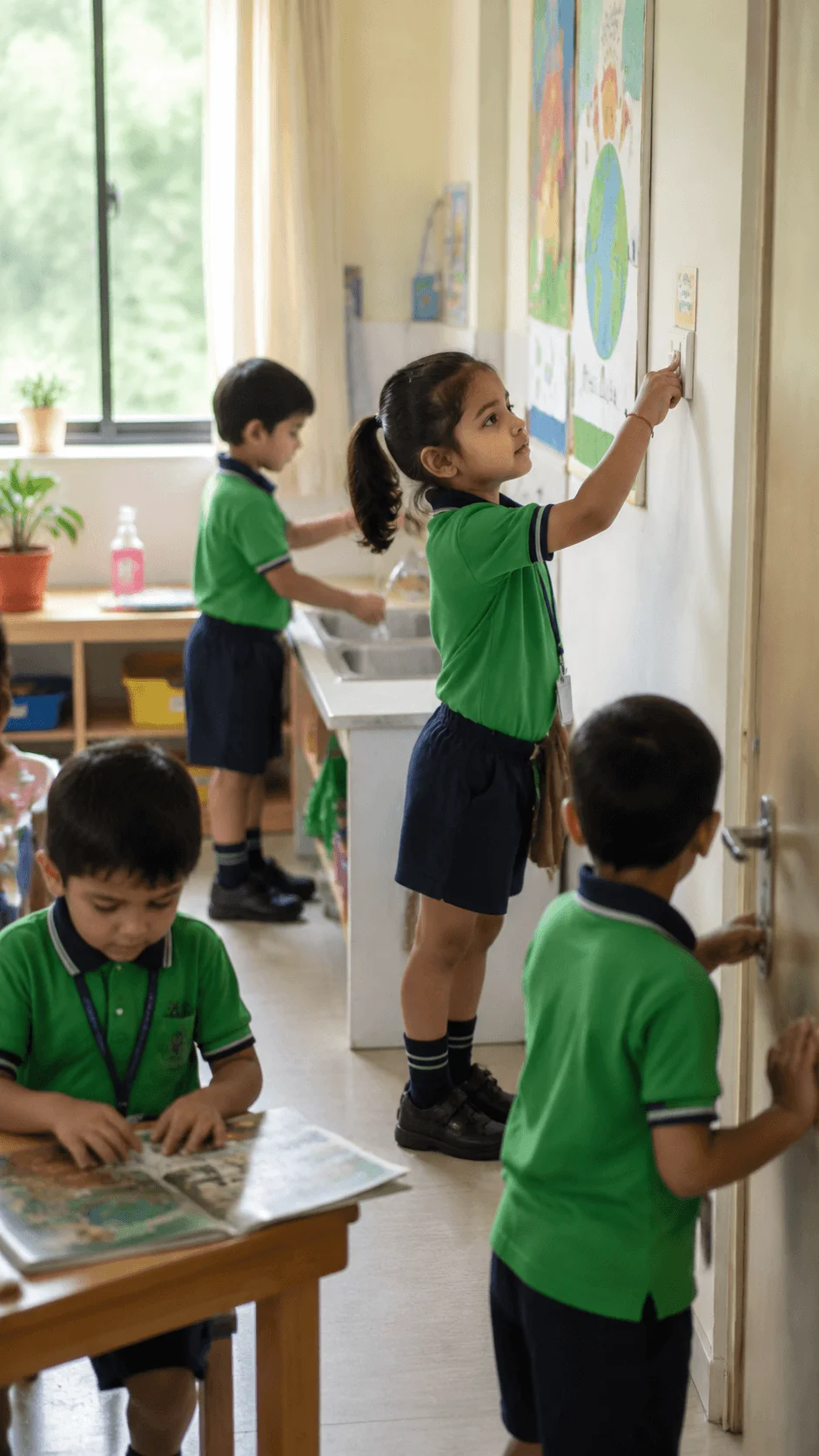
The activity builds memory, confidence, and awareness of shared resources. Children begin to understand that small routines matter because the whole class uses the same space.
Teachers should avoid complicated carbon calculations. Young children need clear examples rather than abstract numbers. They can understand that switching off an unused light saves energy, but they do not need detailed emissions data.
Praise should focus on cooperation rather than perfection. A class may forget sometimes, and the teacher can treat that moment as another chance to practise.
Pollinator Observation Walk
A pollinator observation walk invites children to look closely at bees, butterflies, beetles, birds, flowers, and other visitors. The walk can take place in a school garden, nearby park, courtyard, or other safe outdoor space.
Teachers can ask children to notice colour, movement, sound, flower shape, and insect behaviour. Children may count how many visitors approach a plant or compare which flowers attract the most activity.
The teacher can explain that some insects and birds help plants produce fruits and seeds. Simple examples make the idea easier to understand. Children may connect a bee visiting a flower with the fruit they eat later.
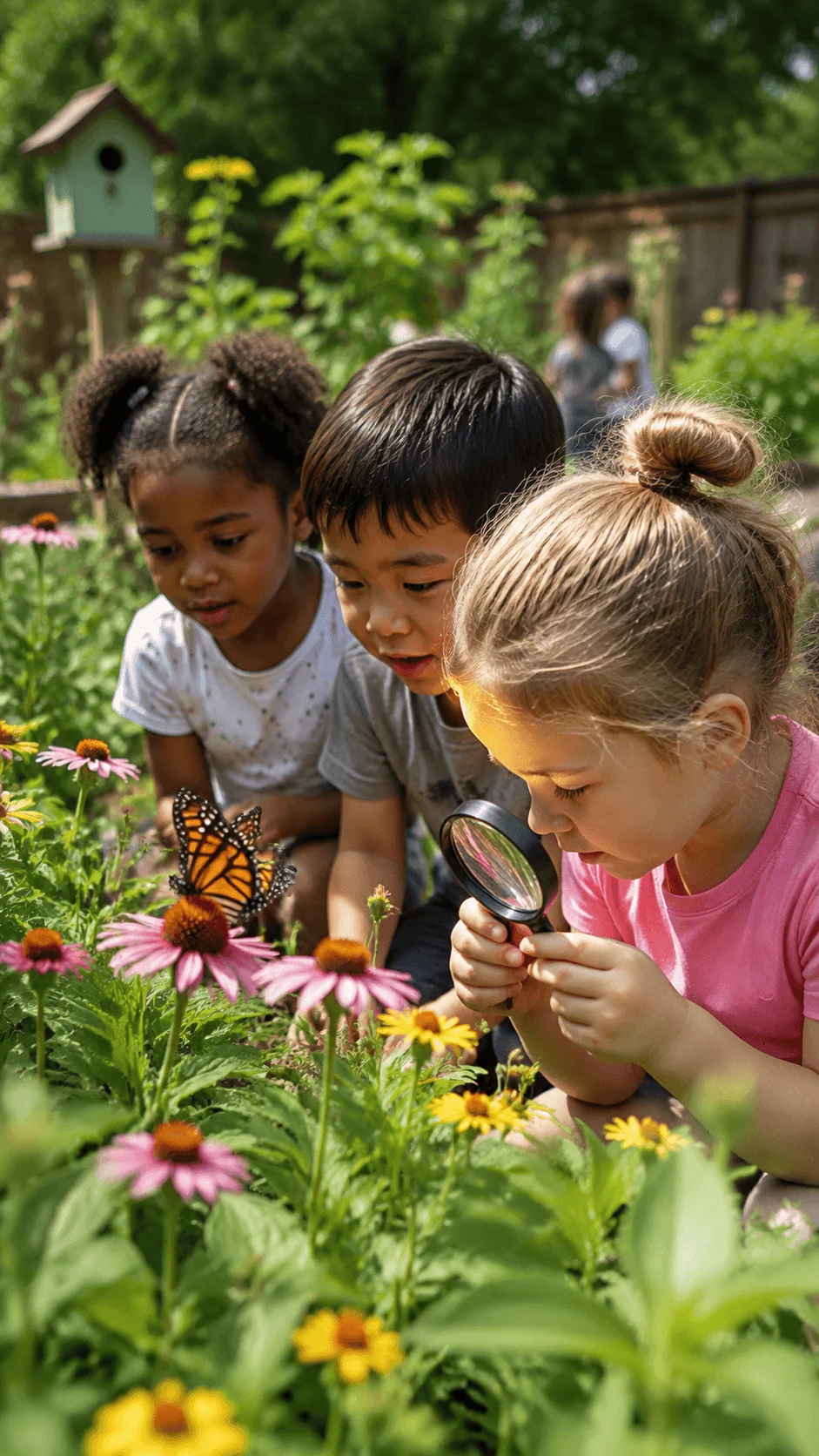
Outdoor sustainability activities for kindergarten should respect both wildlife and children. Children must not chase, catch, touch, scare, or feed insects. They should observe from a comfortable distance.
Some children may fear insects or have allergies. Teachers can offer alternatives such as looking at photographs, watching from indoors, drawing flowers, or observing birds instead. Every child should have a safe way to participate.
Sustainable Story Creation
Sustainable story creation combines environmental learning with language and imagination. Children can invent stories about forests, rivers, gardens, animals, weather, sharing, repairing, or saving water.
Teachers may use puppets, picture cards, drawings, classroom objects, or role play. A story may involve a leaking tap, a damaged book, a thirsty plant, a littered garden, or an animal searching for shelter.
Children can suggest what the characters should do next. They may decide to repair an object, ask for help, clean a space, share materials, or protect a habitat. The teacher can guide the discussion without turning the story into a lecture.
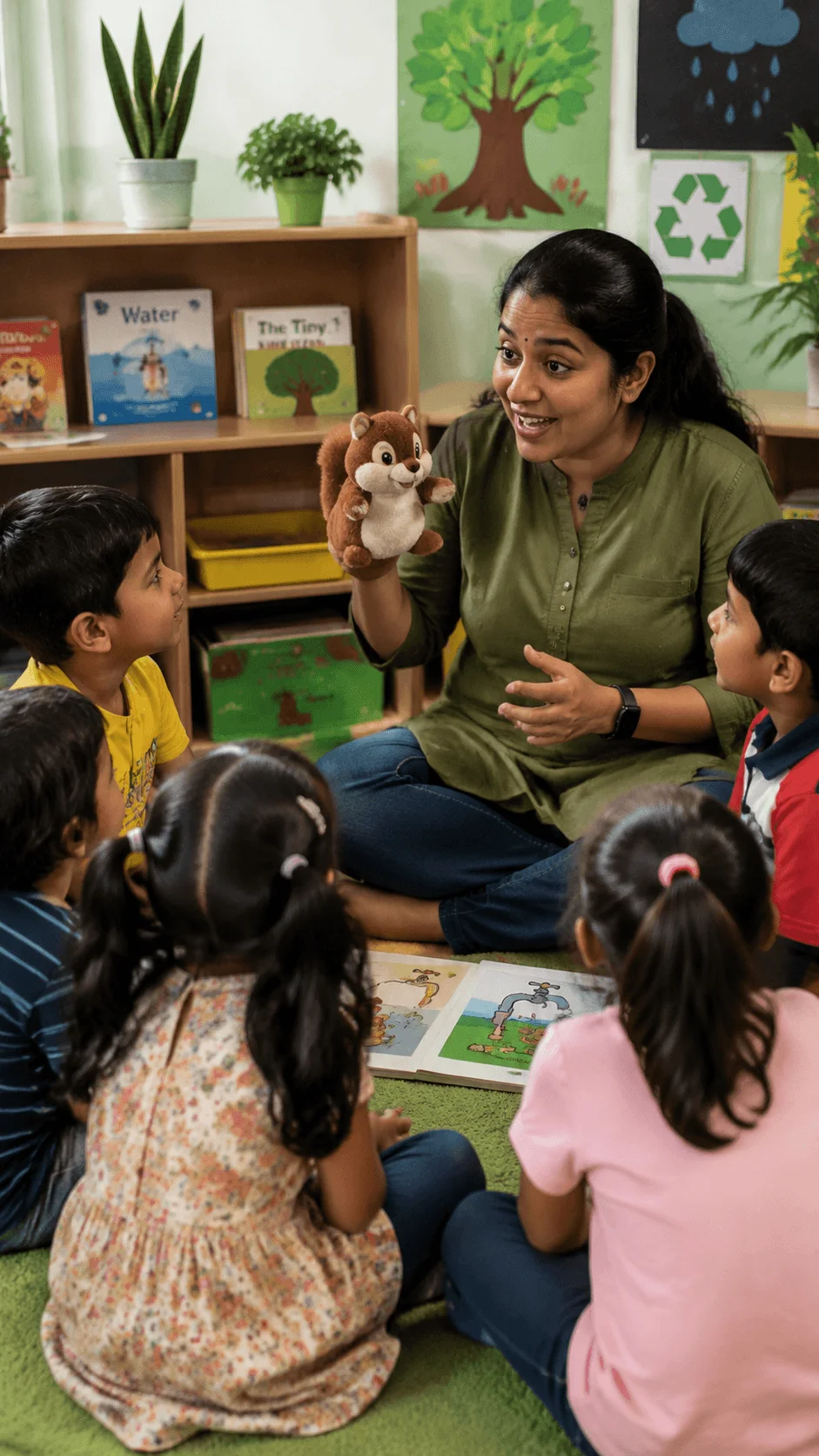
Kindergarten earth care activities become more memorable when children help shape the message. Storytelling allows them to explore choices and consequences in a safe and creative way.
This activity supports vocabulary, listening, empathy, confidence, cooperation, and early literacy. It also gives children who cannot access outdoor environments another way to engage with environmental ideas.
Adults should keep stories hopeful. The problem should feel small enough for the characters to solve. Young children do not need frightening stories about disasters or permanent damage.
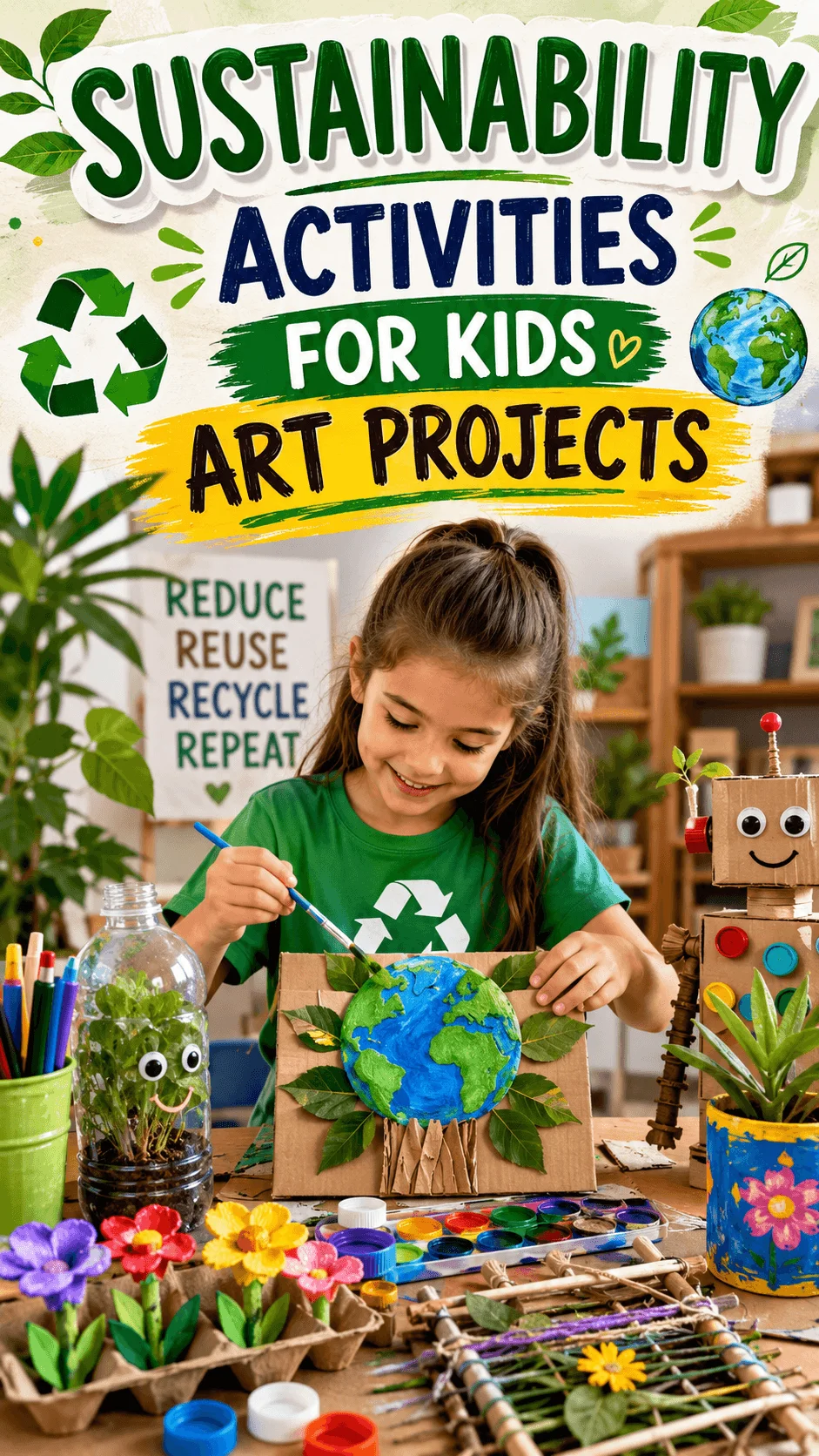
Circular Art Studio
A circular art studio uses clean leftovers and reusable materials for creative work. Children may use paper scraps, cardboard, fabric pieces, ribbon, large bottle tops, magazines, safe packaging, or natural objects.
The goal does not involve creating one more craft that immediately becomes waste. Teachers can encourage children to build temporary designs, take them apart, and return materials for future use.
A child may arrange a cardboard city one day and use the same pieces for an animal shelter later. This helps children see materials as flexible resources rather than disposable supplies.
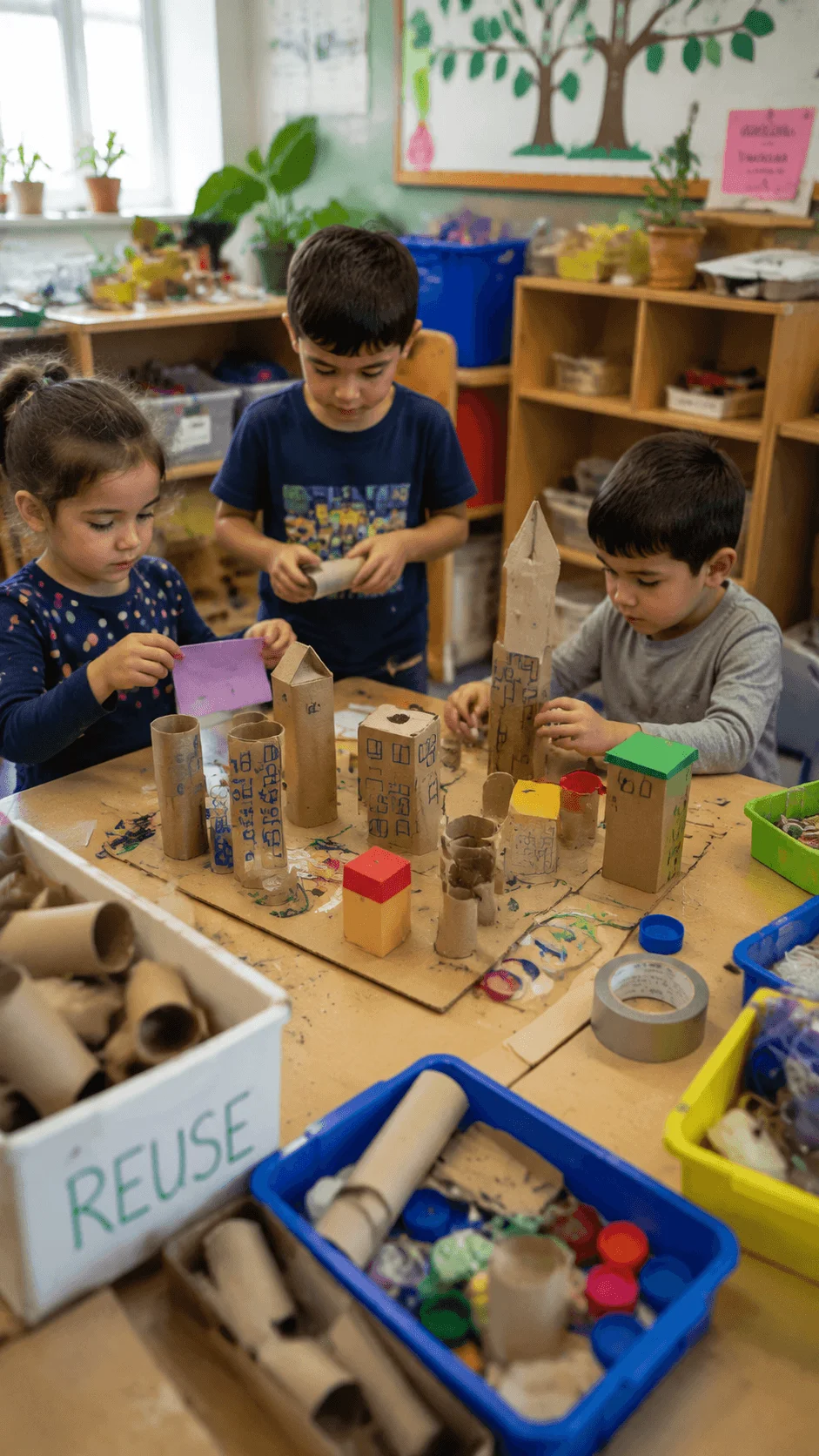
Zero waste activities for kindergarten should remain realistic. A classroom will still produce some waste, and not every item can be reused. The lesson focuses on thoughtful use rather than perfection.
The studio supports design thinking, imagination, sensory exploration, and material awareness. Children decide how pieces connect, which shapes work together, and how a design can change.
Adults must inspect all materials. They should remove sharp edges, dirty packaging, toxic containers, choking hazards, and anything that held unsafe substances. Supervision remains essential.
Weather Watch and Climate Calendar
A weather watch calendar helps children record sunny, cloudy, rainy, windy, warm, and cool days. Teachers can use simple symbols, drawings, photographs, or classroom charts.
Children can make one observation each day or several observations during the week. Over time, they may notice patterns. One month may contain more rain, while another may feel warmer or windier.
Teachers can connect the calendar with clothing, outdoor play, plant watering, shadows, and seasonal changes. Children can count symbols, compare weeks, and make simple predictions.
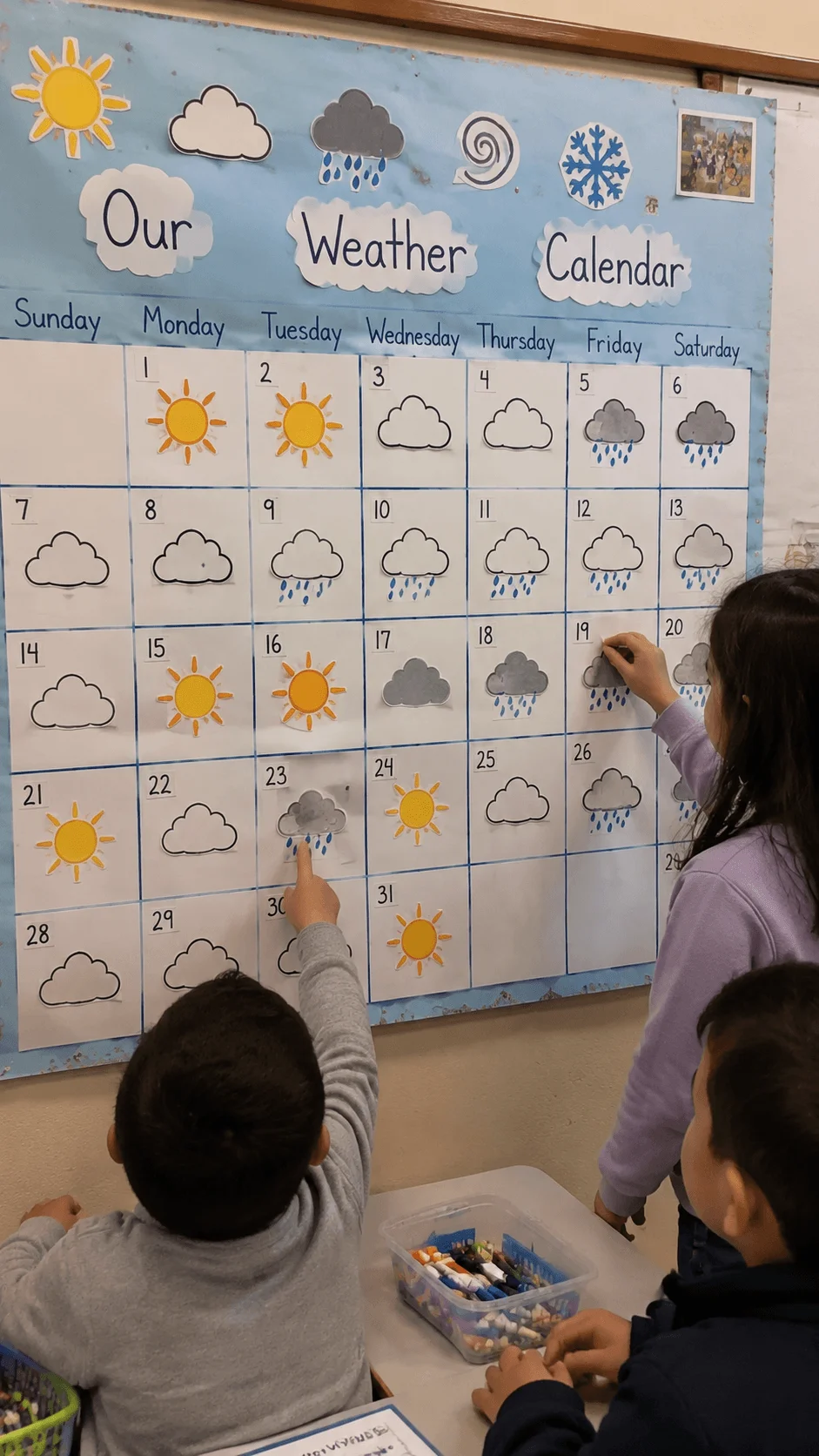
Kindergarten environmental education activities should explain the difference between weather and climate carefully. Weather describes what happens today or this week. Climate describes patterns across a much longer period. A single hot or cold day does not prove a climate trend.
The activity develops early maths, vocabulary, observation, memory, and scientific curiosity. It also teaches children that careful records can help people understand change.
Teachers should avoid making children anxious about storms, heat, or other weather events. The focus should remain on observation and practical classroom choices.
Seed Library Exchange
A seed library allows children to explore plant diversity, sharing, growth, and community participation. The school or families can contribute suitable seeds in labelled envelopes, but no family should feel required to provide anything.
Children can compare seeds by size, colour, shape, texture, plant type, or growing season. They may notice that a sunflower seed looks different from a bean seed or herb seed.
The class can plant selected seeds and observe growth over time. Children may draw roots, stems, leaves, and flowers in their journals. When appropriate, the class may save seeds for a future planting project.
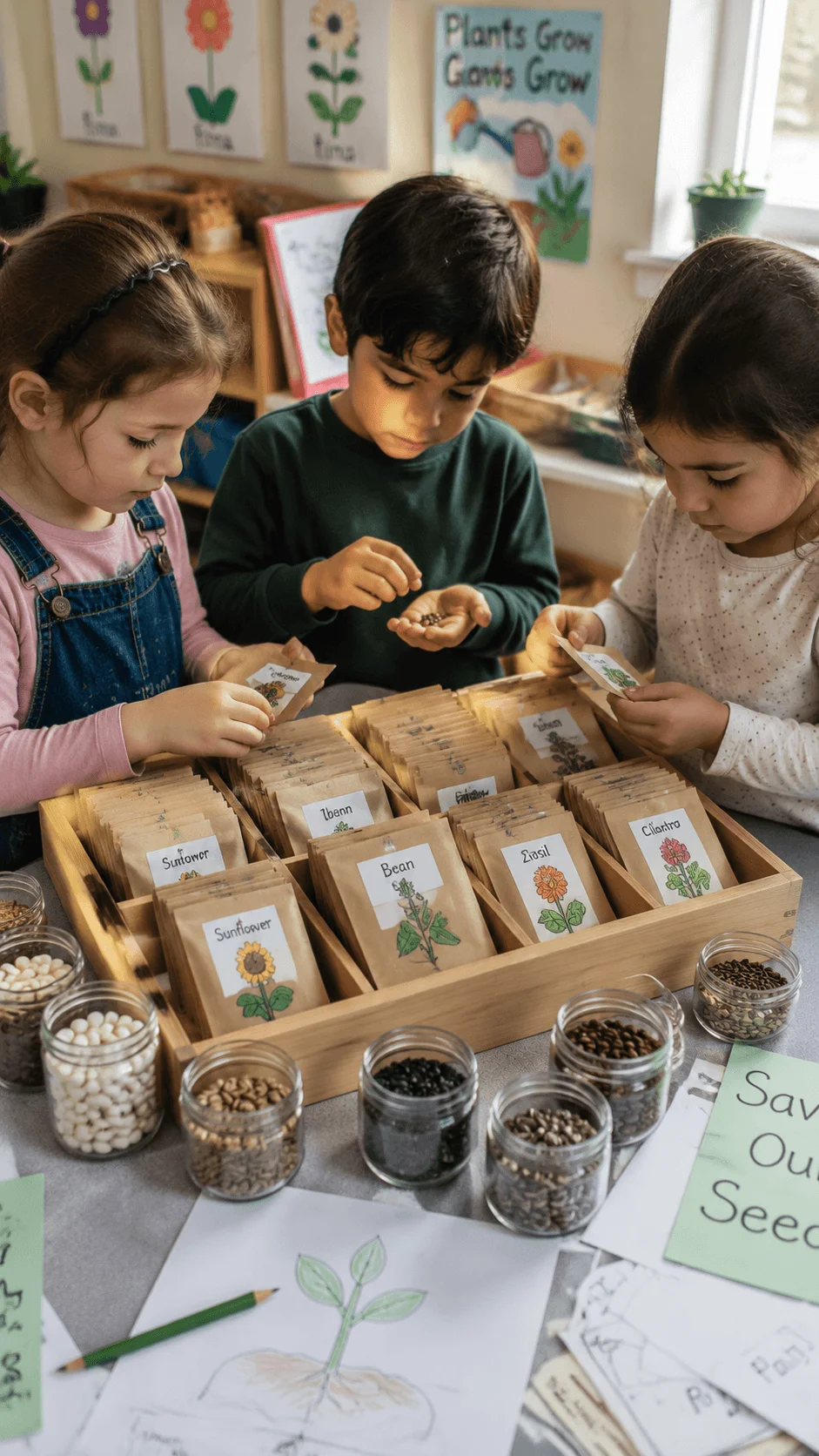
Sustainable learning activities for young children often become stronger when they include a complete cycle. Children see the seed, plant it, care for it, observe growth, and possibly collect new seeds later.
Teachers must check all seeds for safety. They should avoid toxic plants, invasive species, strong allergens, treated seeds, and plants unsuitable for local conditions. They should also follow school rules before accepting seeds from families.
The activity teaches patience because plants grow slowly. It also shows children that sharing knowledge and resources can strengthen a community.
How Teachers Can Improve Kindergarten Sustainability Activities
Teachers can make sustainable activities for kindergarten more effective by connecting them with normal learning rather than treating them as special events. A garden can support science, counting, drawing, and storytelling. A repair workshop can support problem solving and communication. A weather calendar can support maths and vocabulary.
Repetition also matters. Children may need to practise the same habit many times before it becomes familiar. Teachers can repeat observations, routines, and discussions without making them feel like tests.
Adults should model the behaviour they want children to learn. A teacher who reuses paper, cares for books, turns off unused lights, and respects insects gives children a clear example.
Children should receive meaningful choices. They may choose which plant to observe, which reusable material to use, or which classroom role to try. Choice increases engagement and confidence.
Inclusive planning remains essential. Teachers can adapt activities for children with limited mobility, visual differences, hearing differences, allergies, sensory needs, or communication challenges. A child who cannot join a garden walk may help record observations from photographs. A child who dislikes touching soil may use a tool, wear gloves, or observe another part of the activity.
Families can support learning at home through simple routines. They may observe weather, care for a plant, reuse a box, repair a book, or discuss food portions. Teachers should not pressure families to buy special products or complete complex projects.
Common Mistakes in Sustainability Lessons for Kindergarten
One common mistake involves buying large amounts of new material for recycled crafts. A project may use one reused box but require new glitter, plastic decorations, foam sheets, and extra packaging. Teachers should think about the full material use rather than calling every craft sustainable.
Another mistake involves frightening children with environmental disasters. Young children may not understand scale, distance, or long term risk. Serious messages can create fear without building useful skills. Adults should focus on care, curiosity, and realistic actions.
Teachers should never pressure children to finish food, touch insects, handle dirty waste, or participate in uncomfortable sensory experiences. Sustainability learning should respect health, culture, disability, and personal boundaries.
Adults should also avoid blaming families for transport, housing, food, or purchasing choices. Many decisions depend on cost, work, location, health, and access. Children should not feel responsible for circumstances they cannot control.
Unsafe materials create another risk. Natural objects may have sharp points, mould, insects, or toxic residue. Reusable packaging may contain allergens or harmful substances. Teachers should inspect everything carefully.
One classroom activity does not make a school completely sustainable. A garden, recycling bin, or art project can support learning, but schools should avoid exaggerated claims. Honest reflection teaches children more than perfection.
Conclusion
Sustainable activities for kindergarten can help young children build responsibility, creativity, observation skills, cooperation, and respect for nature. Through journals, gardens, repair projects, stories, weather records, and shared classroom routines, children begin to understand how everyday choices affect people, materials, and living things.
The most effective activities remain practical, positive, inclusive, and age appropriate. They do not depend on fear, expensive supplies, or complicated scientific language. They allow children to explore real situations, ask questions, make small decisions, and learn through repetition.
Regular experiences create more value than one day celebrations or decorative crafts. When children care for a plant, repair a book, observe an insect, or reuse a material, they develop habits that connect learning with everyday life.
Sustainable activities for kindergarten work best when adults guide them with patience and honesty. Small actions will not solve every environmental problem, but they can help children understand that they belong to a shared world and can care for it through thoughtful daily choices.