Eco Friendly Packaging Ideas for Food
Food packaging plays an important role in protecting meals, extending freshness, improving transportation, and creating a memorable customer experience. However, traditional packaging often depends heavily on single use plastic and materials that create long lasting waste. This has encouraged businesses and packaging designers to explore eco friendly packaging ideas for food that reduce unnecessary waste while still providing the strength and protection that food products require.
In 2026, sustainable food packaging has moved beyond simple paper bags and cardboard boxes. New materials made from seaweed, agricultural waste, fruit residues, mushrooms, natural polymers, and advanced fiber systems are attracting attention. At the same time, businesses are exploring reusable containers, recyclable structures, and packaging technologies that can help reduce food waste.
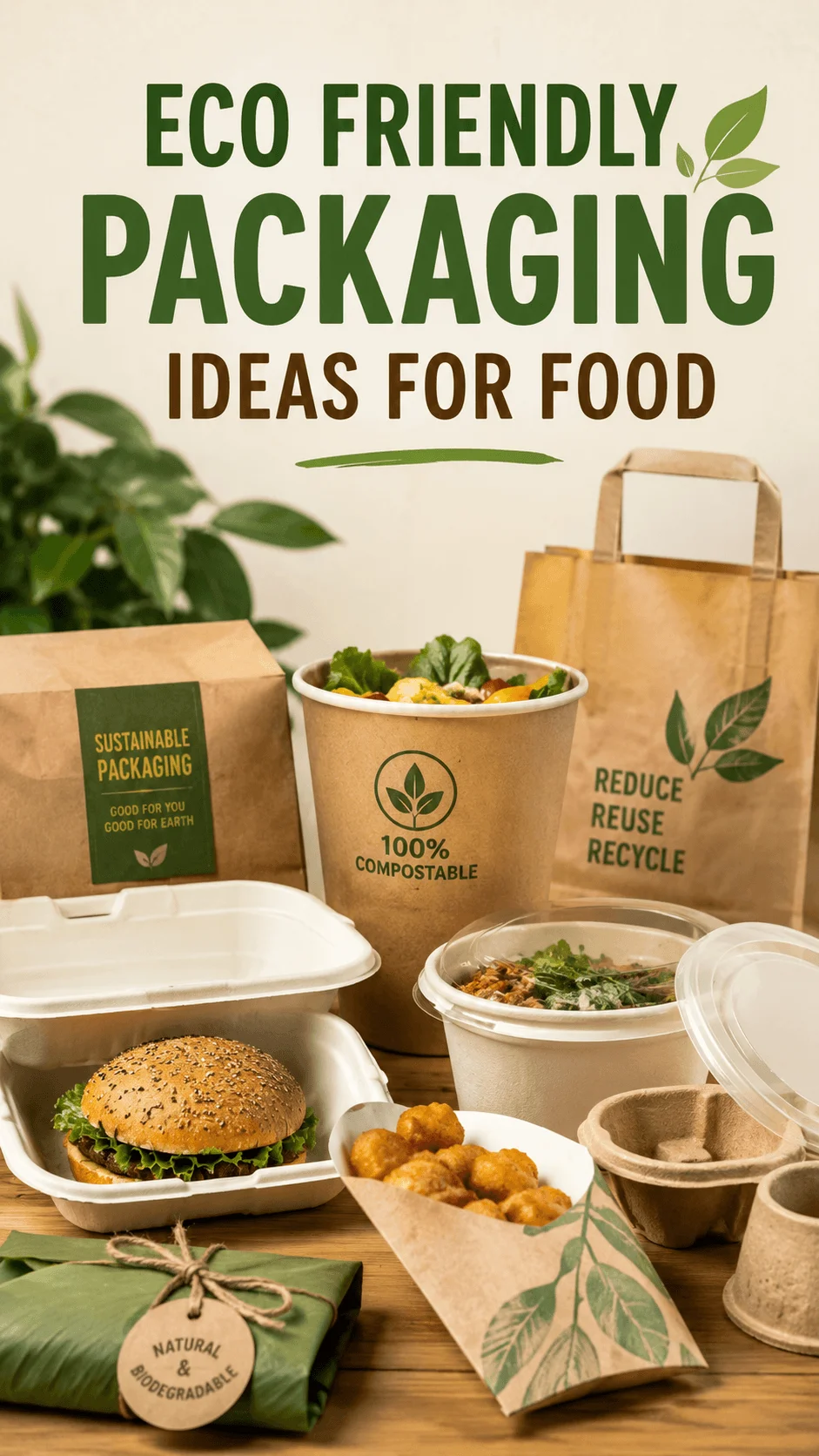
The most interesting development is that sustainable packaging no longer follows one single approach. Some solutions focus on compostability, while others focus on recycling, reuse, renewable materials, or reducing the amount of material required. The right choice depends on the food, the packaging purpose, the local waste system, and how the packaging will be used.
Why Sustainable Food Packaging Is Becoming More Important in 2026
The food industry uses enormous amounts of packaging because food needs protection from moisture, oxygen, heat, contamination, physical damage, and temperature changes. Packaging also needs to remain convenient for customers who buy takeaway meals, snacks, drinks, bakery products, frozen foods, and prepared meals.
The challenge comes when packaging performs its job for only a few minutes or hours but remains in the environment for a much longer period. This has increased interest in materials that use renewable resources, support recycling systems, encourage reuse, or break down under appropriate composting conditions.
Consumers are also becoming more interested in how products are packaged. A food brand that reduces unnecessary packaging can communicate its environmental values while creating a different experience for customers. For smaller food businesses, packaging can even become part of the brand identity.
Another important development involves the connection between packaging waste and food waste. Packaging does not only create waste itself. Good packaging can protect food and prevent premature spoilage. Therefore, the most sustainable solution is not always the material that looks the most natural. A packaging material that causes food to spoil quickly could create a larger environmental problem.
This is why modern eco friendly food packaging ideas need to consider the entire life cycle of the package, from raw material production to manufacturing, transportation, use, collection, recycling, composting, reuse, or disposal.
Seaweed and Algae Packaging
Seaweed and algae packaging represents one of the most interesting emerging directions in sustainable food packaging. Researchers and packaging developers have explored seaweed based films, coatings, and other materials because seaweed grows without requiring the same agricultural resources as many traditional crops.
The idea is particularly interesting because seaweed contains natural compounds that can form films and gels. These properties allow researchers to investigate its use in flexible packaging and edible films for certain food applications.
A simple example could involve a small food brand looking for an alternative to conventional individual plastic wrapping. Depending on the material and food product, a seaweed based film could potentially provide a lightweight protective layer. Some seaweed materials can also work as coatings rather than complete containers.
The visual appeal of seaweed packaging makes it especially interesting for brands that want packaging to communicate sustainability. A natural material can support a minimalist product design while giving customers a story behind the package.
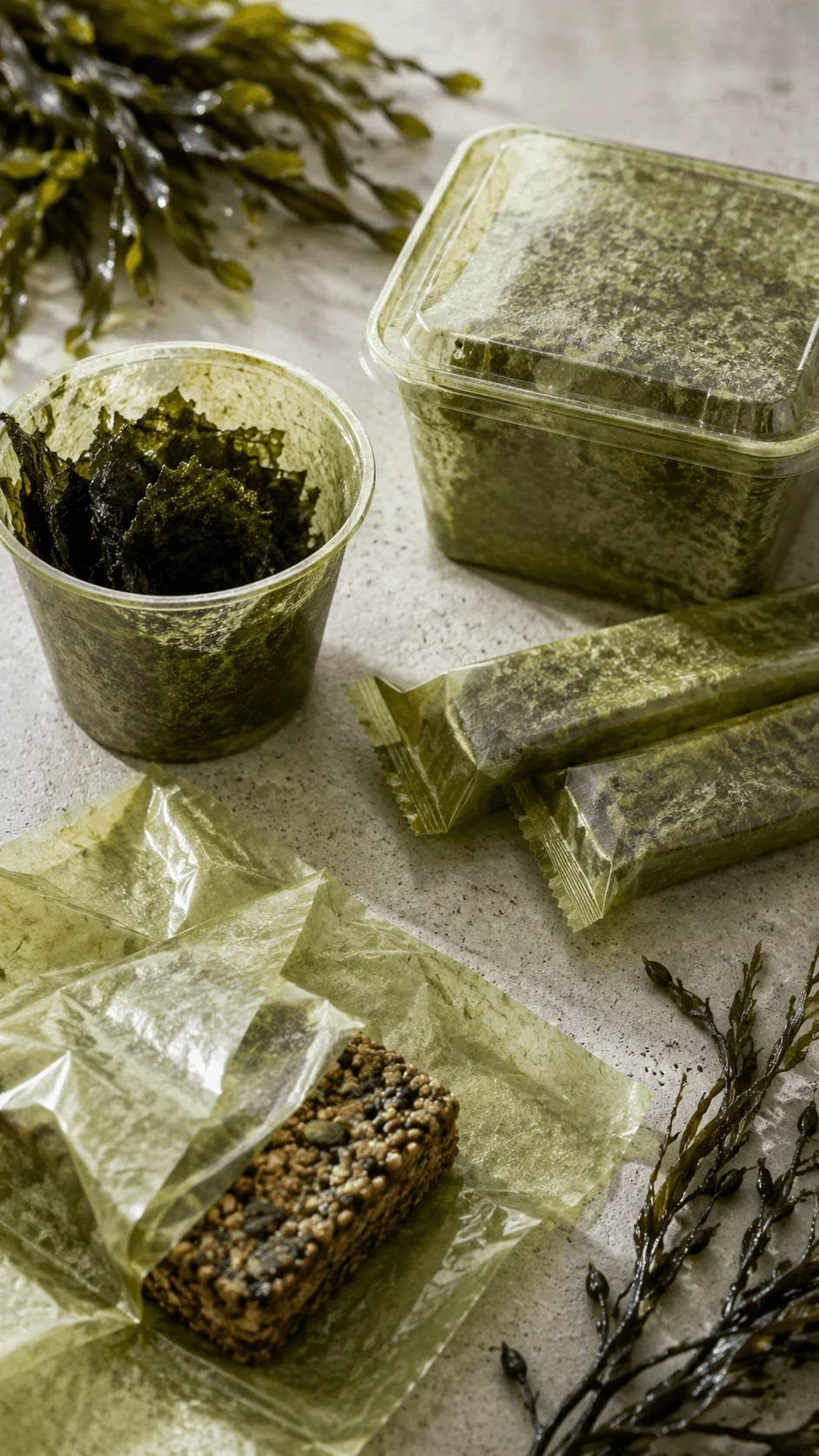
However, seaweed packaging still has limitations. Moisture resistance, strength, shelf life, manufacturing scale, and cost can affect where it works effectively. Food packaging needs to protect its contents rather than simply look environmentally friendly. Seaweed based materials therefore need appropriate formulation and testing before businesses can use them for specific foods.
The technology also remains more emerging than conventional paper or molded fiber packaging. That makes it an excellent example of an innovative sustainable packaging direction for 2026, but businesses should distinguish between commercially available products and research focused materials.
Fruit Waste and Pectin Packaging
Fruit waste packaging offers an especially interesting approach because it connects food waste with packaging production. Instead of viewing fruit peels, seeds, and other processing residues only as waste, researchers can investigate whether useful compounds from these materials can become packaging ingredients.
Pectin provides one example. This natural material occurs in many fruits and has film forming properties that make it interesting for biodegradable packaging research. Researchers can investigate how pectin and other compounds from fruit processing can form films or coatings for specific food applications.
The concept creates a circular relationship between food production and packaging. A food manufacturer could potentially use residues from fruit processing as a source of valuable materials instead of sending all of that waste toward disposal.
Fruit based packaging can also create interesting branding opportunities. A company selling dried fruit, snacks, confectionery, or natural food products could potentially use packaging that reflects the origin of its materials.
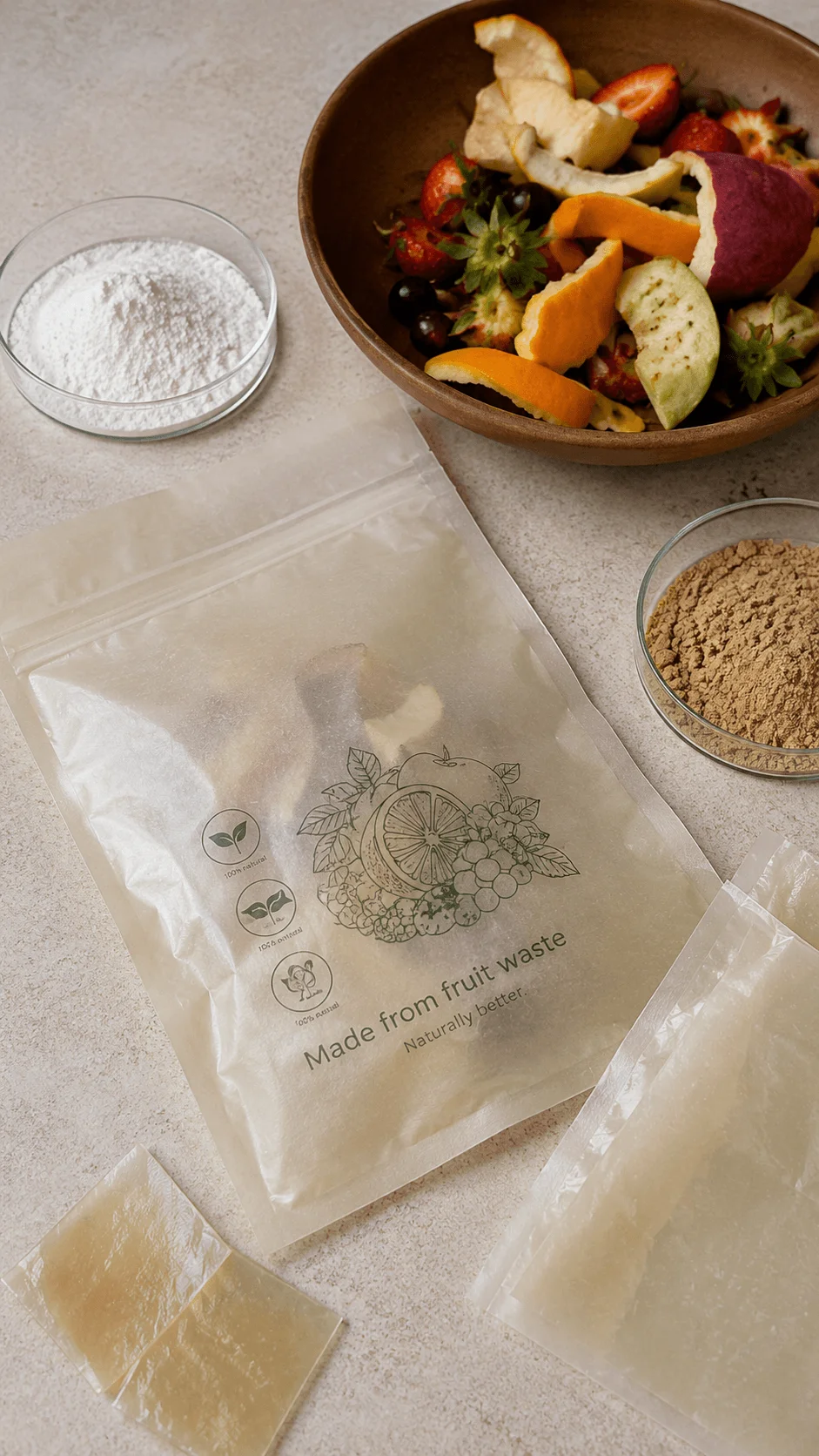
However, fruit waste does not automatically become suitable packaging simply because it comes from a natural source. Manufacturers need to consider strength, moisture resistance, oxygen protection, food safety, shelf life, and production costs.
This makes fruit waste packaging one of the more promising biodegradable food packaging ideas to watch, particularly as researchers continue developing materials that turn agricultural and food processing residues into useful products.
Mushroom and Mycelium Packaging
Mushroom packaging has gained attention because it uses mycelium, the threadlike structure that forms the vegetative part of fungi. Mycelium can grow around suitable agricultural materials and bind them into molded structures.
The result can resemble molded foam or other protective packaging. This makes mycelium particularly interesting for applications where packaging needs to protect food products or containers during transportation.
The biggest attraction comes from the material’s biological origin. Mycelium can grow using agricultural residues as feedstock, creating a potential connection between agricultural waste and packaging production.
For food businesses, mycelium could become useful for protective packaging around products that need additional cushioning during transportation. It may also suit certain specialty food brands that want packaging with a distinctive natural appearance.
The material has another interesting advantage from a design perspective. Manufacturers can create molded shapes for specific products rather than relying on generic packaging sizes. This can help brands create packaging that fits a product more precisely.
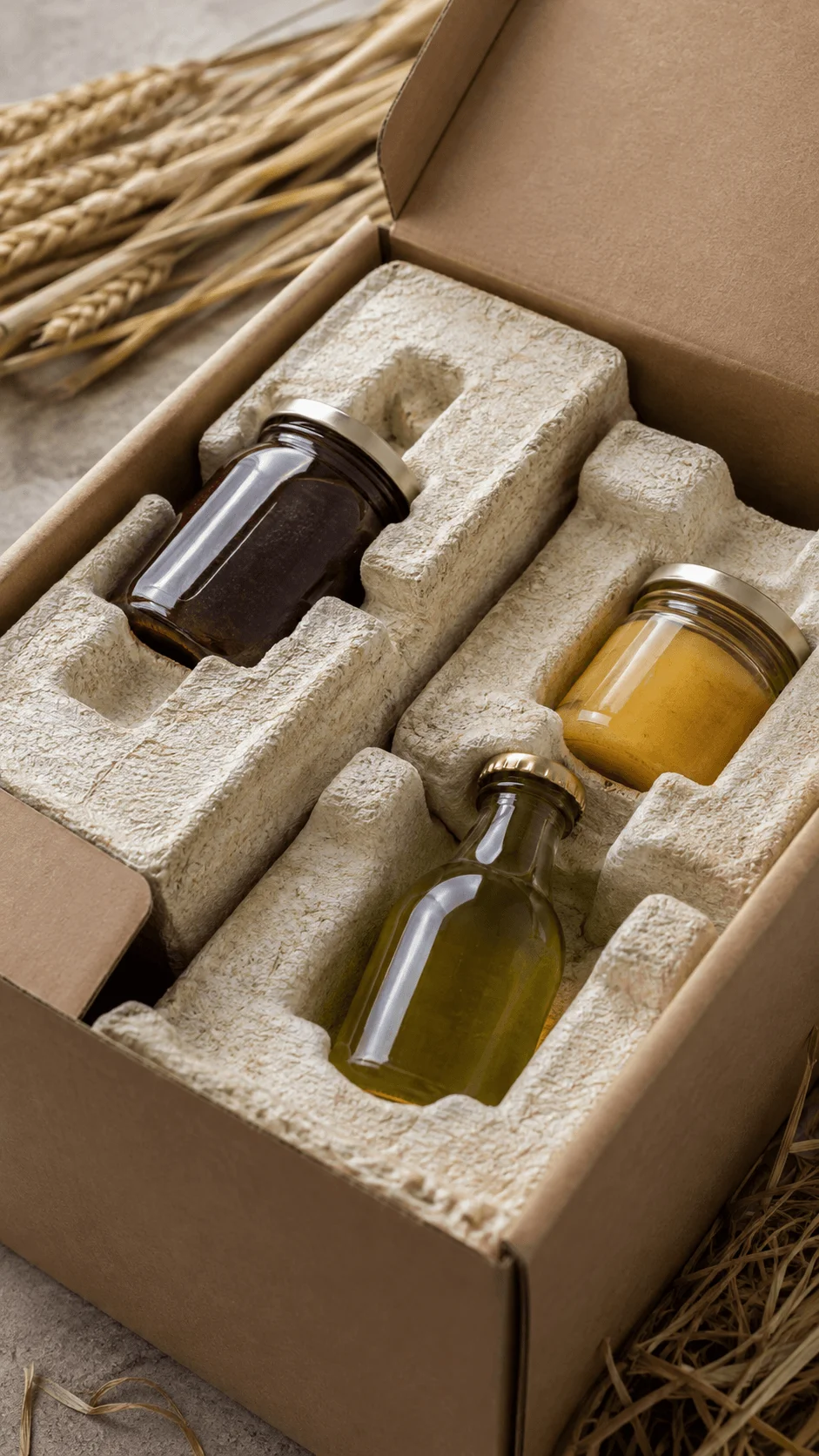
Despite its potential, mycelium packaging does not replace every type of food packaging. Direct food contact applications require appropriate testing and regulatory consideration. Moisture exposure can also affect material performance, depending on the formulation and coating.
For these reasons, mycelium is best presented as an innovative material with growing potential rather than a universal replacement for plastic. Its combination of biological materials and agricultural residues makes it one of the more distinctive sustainable food packaging ideas for modern brands.
Sugarcane Bagasse Packaging
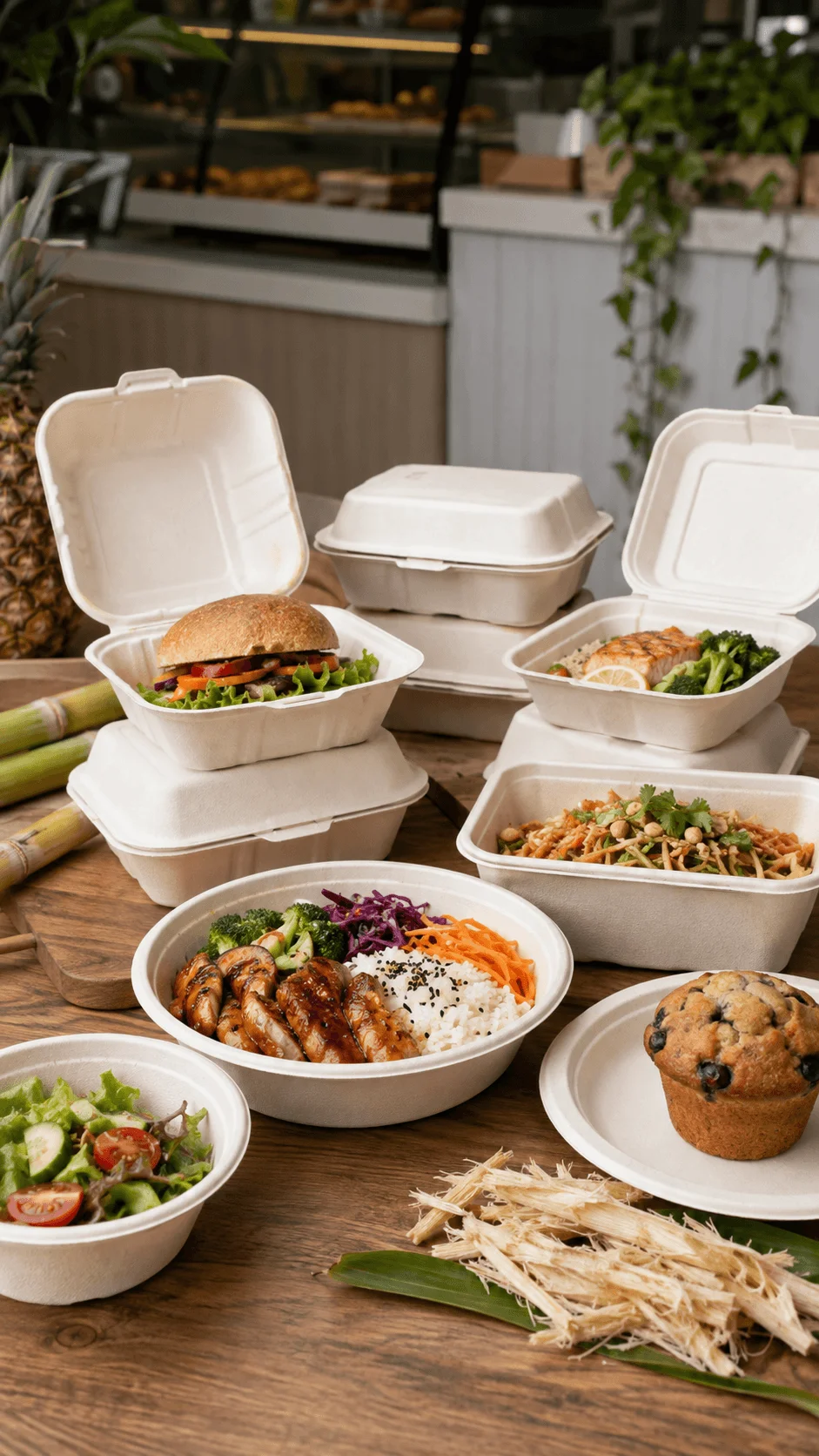
Sugarcane bagasse is the fibrous material left after sugarcane processing. Manufacturers can process these fibers into molded containers, plates, bowls, trays, and other food service products.
Unlike some emerging packaging technologies, bagasse packaging already has practical applications in restaurants, cafés, catering businesses, takeaway services, and other food operations. This makes it one of the more accessible choices for businesses that want to reduce their dependence on conventional plastic food containers.
Bagasse works particularly well for products that require a rigid container. A restaurant can use molded bagasse bowls for meals, while a bakery or catering company can use suitable fiber trays for food presentation and transportation.
The natural appearance of bagasse can also support a simple sustainable brand identity. Businesses can combine molded fiber containers with minimal printing and other thoughtful packaging choices to create a consistent visual style.
Another important benefit comes from its use of an agricultural residue. Instead of treating sugarcane fiber only as waste, manufacturers can transform it into useful products.
Still, businesses should not assume that every bagasse product has identical environmental performance. Different manufacturing processes, coatings, additives, transportation distances, and disposal systems can influence the overall impact.
Businesses should also choose containers based on the type of food they serve. Hot meals, oily foods, sauces, soups, and very moist products can place different demands on packaging. The container needs to maintain its structure and protect the food throughout its intended use.
For businesses looking for practical eco friendly food packaging ideas, bagasse can therefore provide a more readily available option than some emerging materials.
Edible Food Packaging
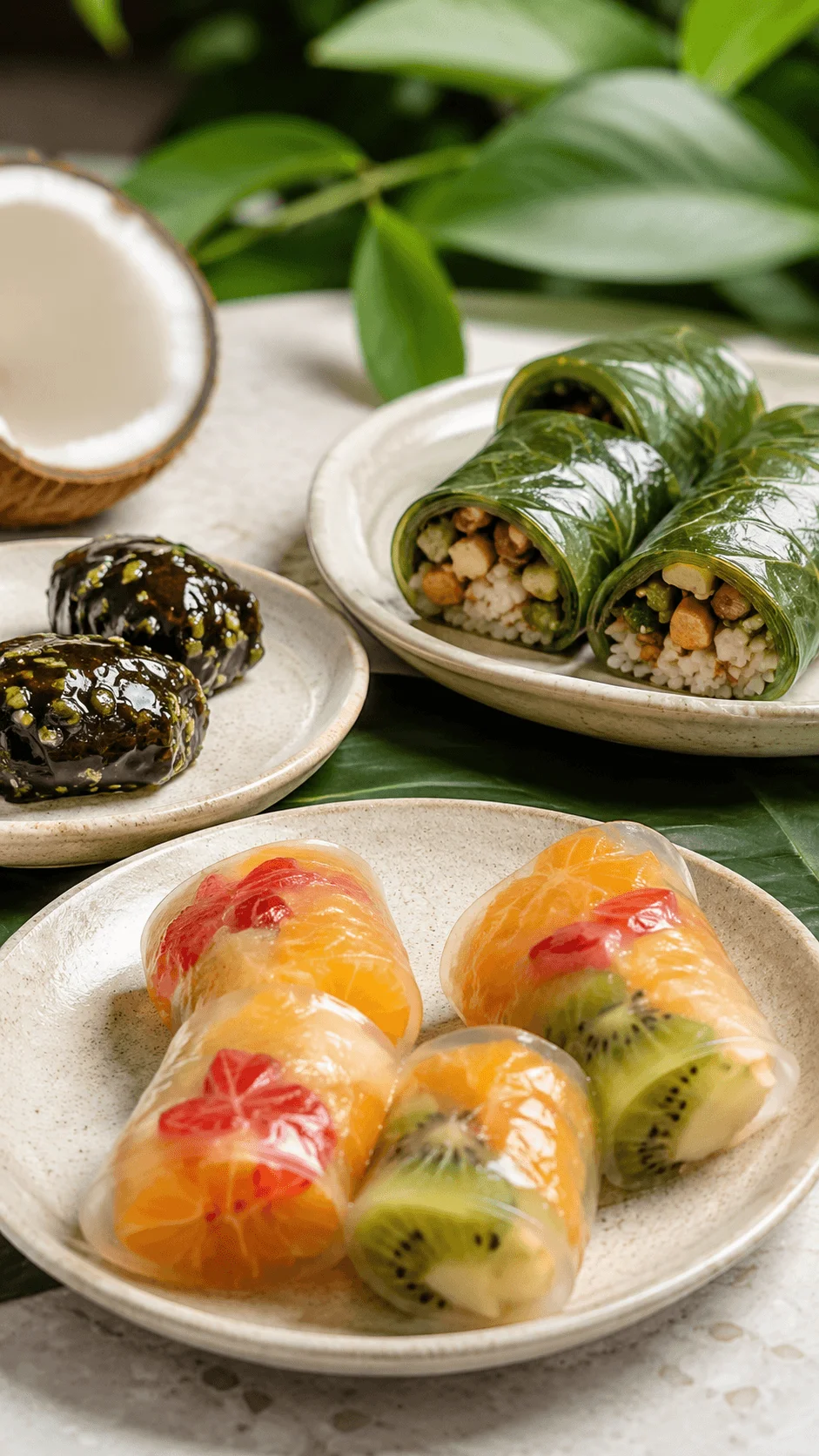
Edible packaging takes the idea of sustainable packaging even further by creating films, coatings, or other structures that people may be able to consume along with the food.
Researchers have investigated edible materials made from substances such as seaweed derivatives, starches, proteins, cellulose based materials, and other natural polymers. These materials can form thin layers around certain food products.
One potential application involves individual portions of food where a thin edible film could replace a conventional wrapper. The concept could also work for certain dissolvable ingredients or products where consumers can use the packaging without removing it.
The major appeal comes from reducing the need for disposal. Instead of removing a wrapper and throwing it away, the consumer may consume the food and its edible protective layer together when the material and product design allow it.
Edible packaging can also create a memorable customer experience. Imagine receiving a product where the protective layer becomes part of the food rather than becoming waste. This could give innovative food brands an unusual way to differentiate themselves.
However, edible packaging faces important practical challenges. The material must remain safe, stable, and suitable for the food throughout storage. It also needs to handle moisture and other environmental conditions without losing its intended properties.
Consumer acceptance can also influence adoption. People may feel comfortable eating certain edible films but may expect different handling for other products.
Therefore, edible packaging represents an exciting area within innovative food packaging ideas, but its practical use depends heavily on the product, material, food safety requirements, and manufacturing process.
More sustainable packaging does not always mean choosing the newest material. The most effective solution depends on matching the packaging to the food while considering its complete environmental impact.
Compostable Molded Fiber Containers
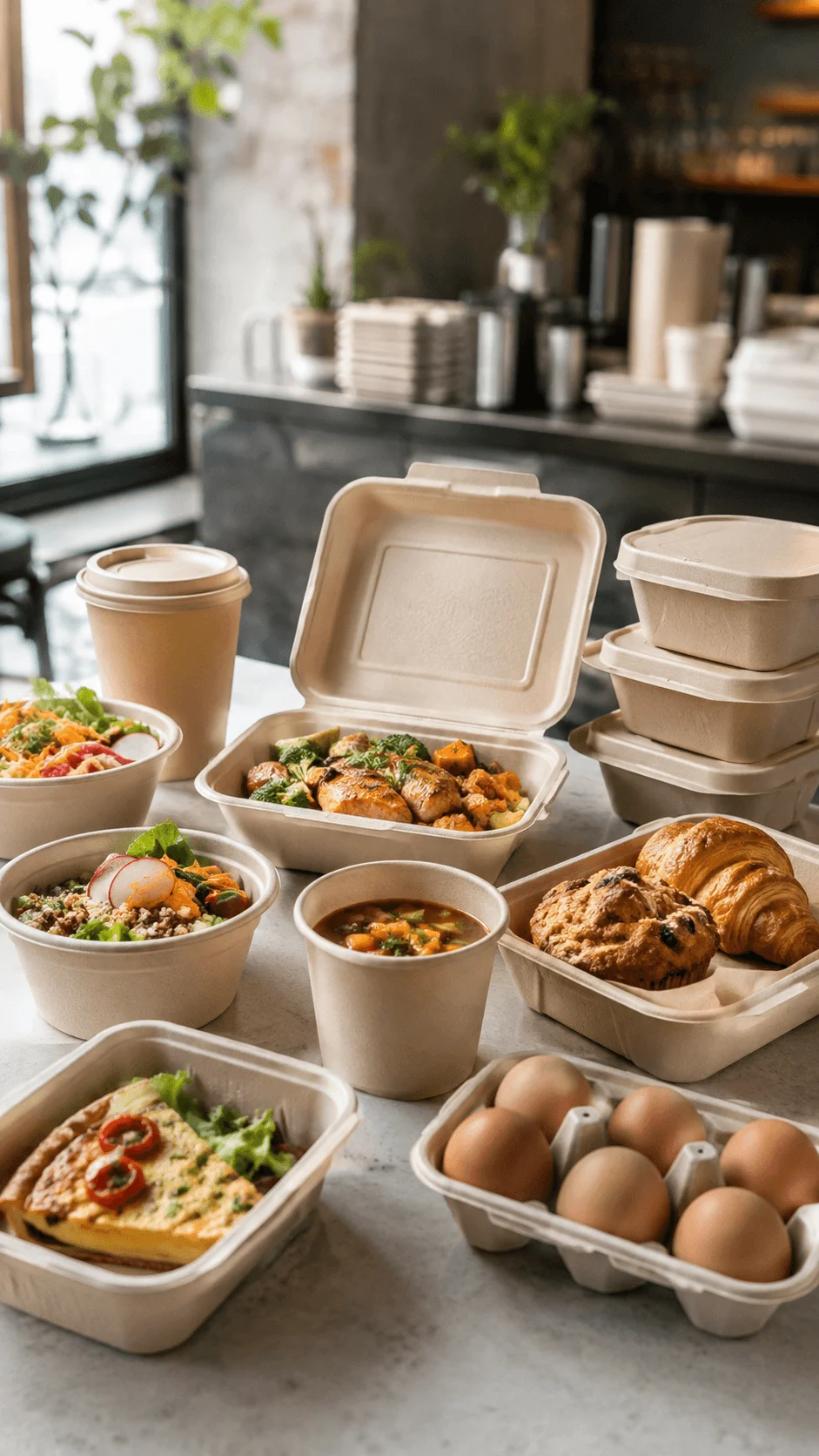
Molded fiber packaging has become an important part of the movement toward more sustainable food packaging because manufacturers can shape plant based fibers into bowls, trays, cartons, cups, and other useful forms. Materials such as recycled paper fibers and agricultural residues can provide the foundation for these products.
The biggest advantage of molded fiber comes from its versatility. A restaurant can use a fiber bowl for a hot meal, while a bakery can use a molded tray for pastries or desserts. Food delivery businesses can also use fiber containers when they need rigid packaging that protects meals during transportation.
Modern molded fiber packaging has also moved beyond the simple brown container associated with older paper products. Manufacturers can create smoother surfaces, different shapes, and more refined designs that allow brands to maintain a professional appearance while reducing their reliance on conventional plastic containers.
Another interesting development involves barrier technology. Food packaging often needs protection against water, grease, oils, and other substances. Researchers and packaging manufacturers are therefore developing coatings and treatments that can improve the performance of fiber materials without relying heavily on conventional plastic structures.
Businesses should still examine the disposal instructions carefully. The word compostable does not mean that every product will break down in every environment. Some products require industrial composting facilities with controlled conditions.
For this reason, molded fiber represents one of the more practical compostable food packaging choices when businesses select products that match their food requirements and local waste management system.
Recyclable Mono Material Pouches
Flexible food pouches traditionally use several different layers because each layer can provide a different function. One layer might provide strength, another might protect against moisture, and another might provide a barrier against oxygen. The problem appears when those layers become difficult to separate during recycling.
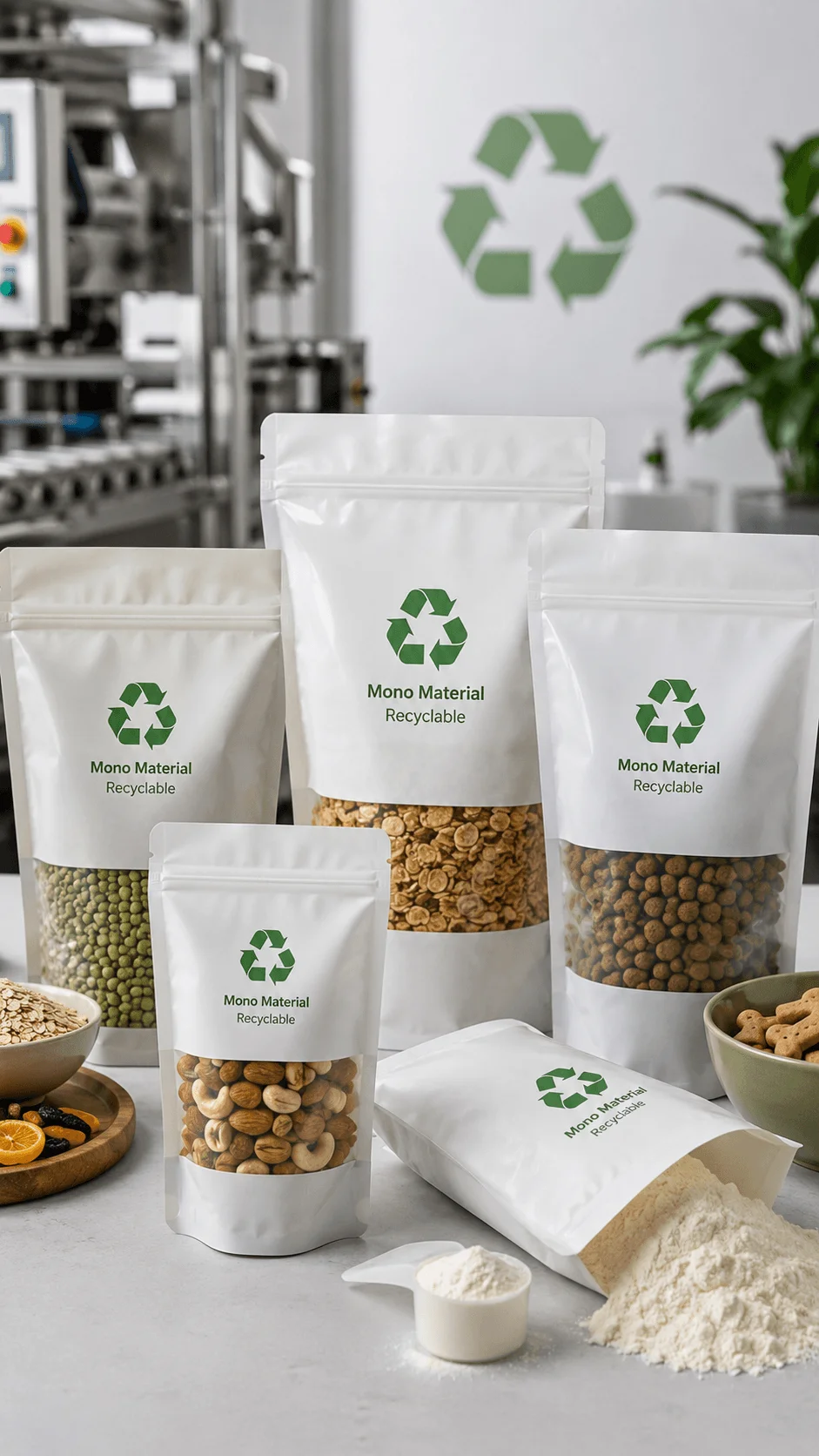
Mono material packaging attempts to simplify this structure by using one primary type of material across the package. Manufacturers can engineer the material to provide several required properties while keeping the overall structure easier to process within appropriate recycling systems.
This approach is particularly interesting for products such as snacks, dried foods, cereals, pet food, powdered products, and other packaged goods that commonly use flexible pouches.
A major advantage of mono material packaging comes from its potential compatibility with established recycling systems. Instead of automatically treating flexible packaging as disposable, brands can explore structures designed with end of life considerations from the beginning.
The concept also shows why sustainable packaging involves more than choosing a material that comes from plants. A recyclable package can have environmental advantages when the local recycling system can actually collect and process it.
For food companies, the transition to mono material packaging may also require changes to packaging machinery, printing systems, sealing methods, and barrier technology. Manufacturers therefore need to consider the entire production process.
As packaging technology develops, recyclable mono material structures are becoming an increasingly important part of sustainable food packaging ideas, especially for packaged foods that cannot easily use rigid containers.
Bio Based Barrier Coatings
Barrier coatings may not be as visually obvious as a seaweed wrapper or mushroom container, but they could have a major influence on the future of food packaging.
Paper and fiber materials naturally have limitations when they encounter water, grease, oils, or oxygen. Food products often require protection from these elements, which is why packaging manufacturers have traditionally used additional barrier layers.
Bio based barrier coatings aim to improve the performance of renewable or fiber based packaging through coatings derived from biological or naturally sourced materials. Researchers are investigating polymers and other materials that can provide useful protective properties while supporting more sustainable packaging structures.
This technology could help expand the number of foods that businesses can package using fiber based materials. A paper based container may work well for dry food but struggle with oily or wet food unless it receives appropriate treatment.
The development of better coatings could therefore help bridge the gap between conventional plastic packaging and fiber based alternatives.
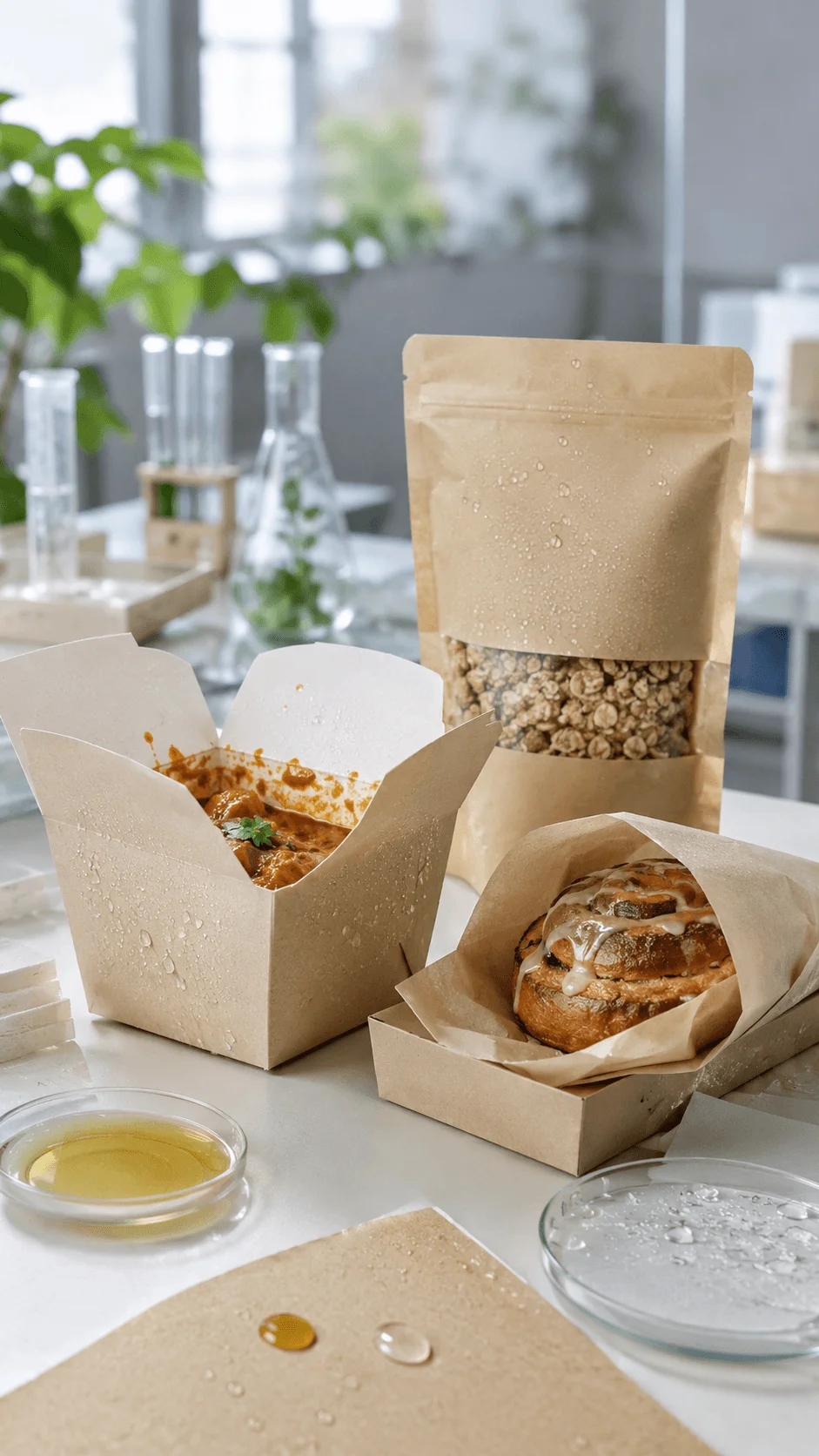
A takeaway business could potentially use fiber containers with suitable barrier technology for meals containing sauces or oils. A bakery could use coated paper packaging for products that release moisture. A food manufacturer could also explore coated fiber structures for packaged products that require additional protection.
The important point is that the coating itself matters. A package should not receive a sustainability label simply because its main structure contains paper. Businesses need to understand what the coating contains and how the finished package behaves at the end of its useful life.
Bio based coatings represent a particularly promising area because they focus on solving one of the biggest technical challenges facing eco friendly packaging ideas for food: providing reliable food protection without creating unnecessarily complicated packaging structures.
Reusable Deposit Return Food Containers
One of the most significant changes in sustainable packaging involves moving away from the idea that every food purchase needs a new container.
Reusable deposit return systems provide another approach. Customers receive food in a reusable container and pay a deposit or participate in a return system. After using the container, they return it so the business or service can clean and prepare it for another use.
This model can work particularly well in restaurants, cafés, university campuses, offices, food courts, and organized takeaway systems.
The environmental benefit comes from repeated use. A single container can serve many customers over its useful life instead of becoming waste after one meal.
The success of a reusable system depends heavily on logistics. Businesses need reliable collection, cleaning, storage, transportation, and redistribution systems. Customers also need a convenient way to return containers.
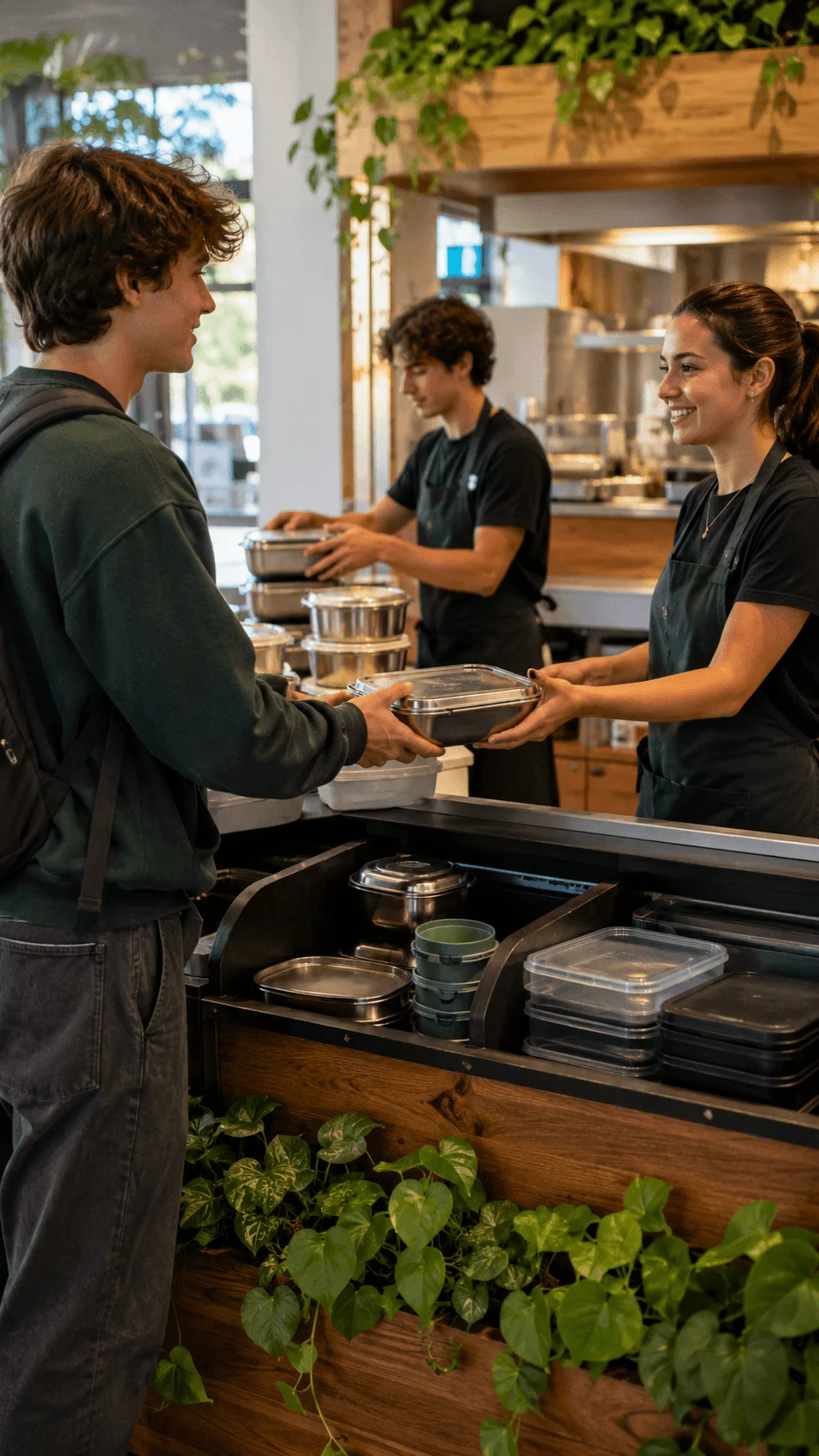
This means reusable packaging does not automatically create an environmental benefit simply because a container can be used again. The system needs enough repeated uses to justify the resources involved in manufacturing, washing, and transporting the containers.
For local food businesses, a simple return system could begin with a small number of products. A café might introduce reusable containers for takeaway customers who visit regularly. A restaurant could offer reusable meal containers to customers within a specific delivery area.
Deposit return systems also create an opportunity for businesses to build stronger relationships with customers. A convenient return program can encourage repeat visits while reducing dependence on disposable packaging.
Among modern eco friendly food packaging ideas, reusable systems are particularly important because they challenge the assumption that sustainability always requires finding a better disposable material.
Agricultural Waste Packaging
Agricultural waste packaging takes inspiration from materials that farmers and food processors already produce as byproducts.
Rice husks, wheat straw, corn residues, sugarcane fibers, palm fibers, and other plant residues can contain useful structural components. Researchers and manufacturers can process some of these materials into fibers, boards, molded products, films, or other packaging structures.
The concept is attractive because it creates a second use for materials that might otherwise have limited value. Instead of relying entirely on newly produced raw materials, packaging manufacturers can incorporate residues from existing agricultural systems.
This approach also fits naturally into the circular economy. Agriculture produces resources, food manufacturers process those resources, and some resulting residues can return to the manufacturing system as packaging material.
A food business could use agricultural fiber packaging for takeaway containers, trays, boxes, protective inserts, or other applications depending on the material’s properties.
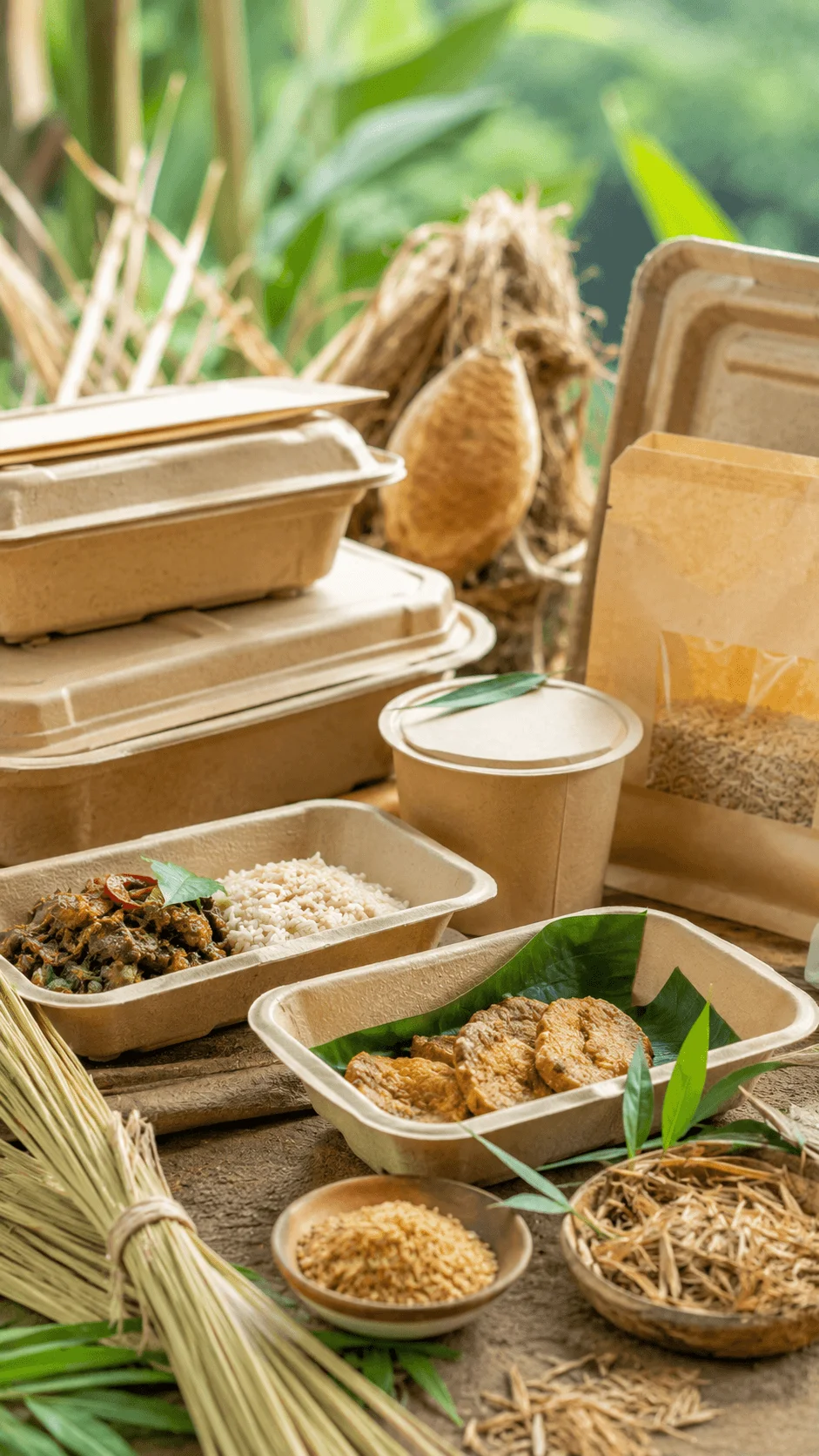
The appearance can also become part of the product experience. Some agricultural fiber products have natural textures that work well with brands focused on organic foods, local products, natural ingredients, or environmentally responsible lifestyles.
However, agricultural waste materials can vary considerably. The properties of rice husk fiber will differ from those of wheat straw or palm fiber. Manufacturers therefore need to process and test each material carefully.
Transportation also matters. If an agricultural residue travels extremely long distances before becoming packaging, some of its environmental advantage can decrease. Sustainable packaging requires consideration of the entire supply chain rather than only the original material.
Agricultural waste packaging remains one of the most interesting sustainable food packaging materials because it combines waste reduction with renewable resource use.
Chitosan Based Food Packaging
Chitosan based packaging belongs to a more technical category of emerging food packaging materials. Chitosan is a natural polymer derived from chitin, a material found in the shells of certain crustaceans and other biological sources.
Researchers have investigated chitosan for food packaging because it can form films and has properties that may be useful for protecting food. Scientists are also studying how chitosan can work with other natural polymers and active ingredients to create packaging with specific functions.
The material is especially interesting for research into films and coatings. Instead of producing a thick container, manufacturers could potentially use a thin protective layer around a food product or as part of a more complex packaging structure.
Research into chitosan packaging also connects with the broader development of active food packaging. Scientists are exploring materials that can interact with the packaged food environment rather than simply acting as a passive physical barrier.
However, chitosan packaging remains less familiar to everyday consumers than paper, bagasse, or molded fiber. Production costs, sourcing, material properties, processing requirements, and regulatory considerations can influence its practical use.
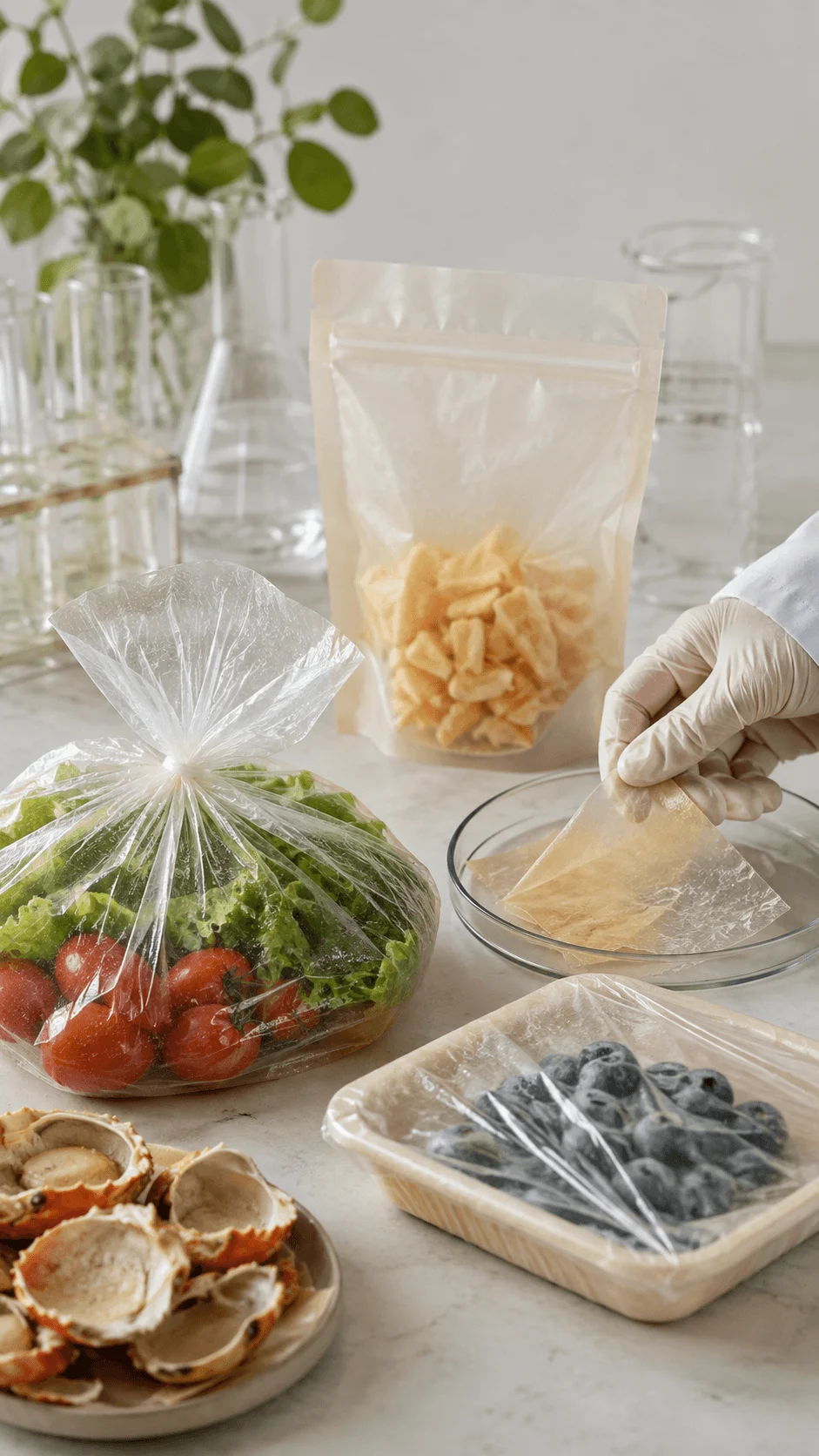
Its suitability also depends on the source and formulation. Businesses should never assume that a natural polymer automatically works for every food product.
Chitosan therefore fits best into the emerging side of biopolymer food packaging. It is a useful concept to understand because advances in natural polymers could eventually create new alternatives to conventional packaging films and coatings.
Smart Sustainable Food Packaging
Smart packaging takes sustainable food packaging into a more technological direction. Instead of simply protecting the food, smart packaging can provide information about conditions inside or around the package.
Some smart packaging concepts use indicators, sensors, labels, or other technologies to monitor factors such as temperature, freshness, or changes associated with food quality.
The sustainability connection comes from food waste. Packaging can sometimes help prevent food from being discarded unnecessarily by providing better information about the condition of the product.
For example, a freshness indicator could potentially give consumers more useful information than relying only on a printed date. A temperature indicator could also help show whether a temperature sensitive product experienced unsuitable conditions during transportation.
Smart packaging can also help businesses understand how products move through the supply chain. This information could support better inventory management and help companies identify situations where food products frequently experience quality problems.
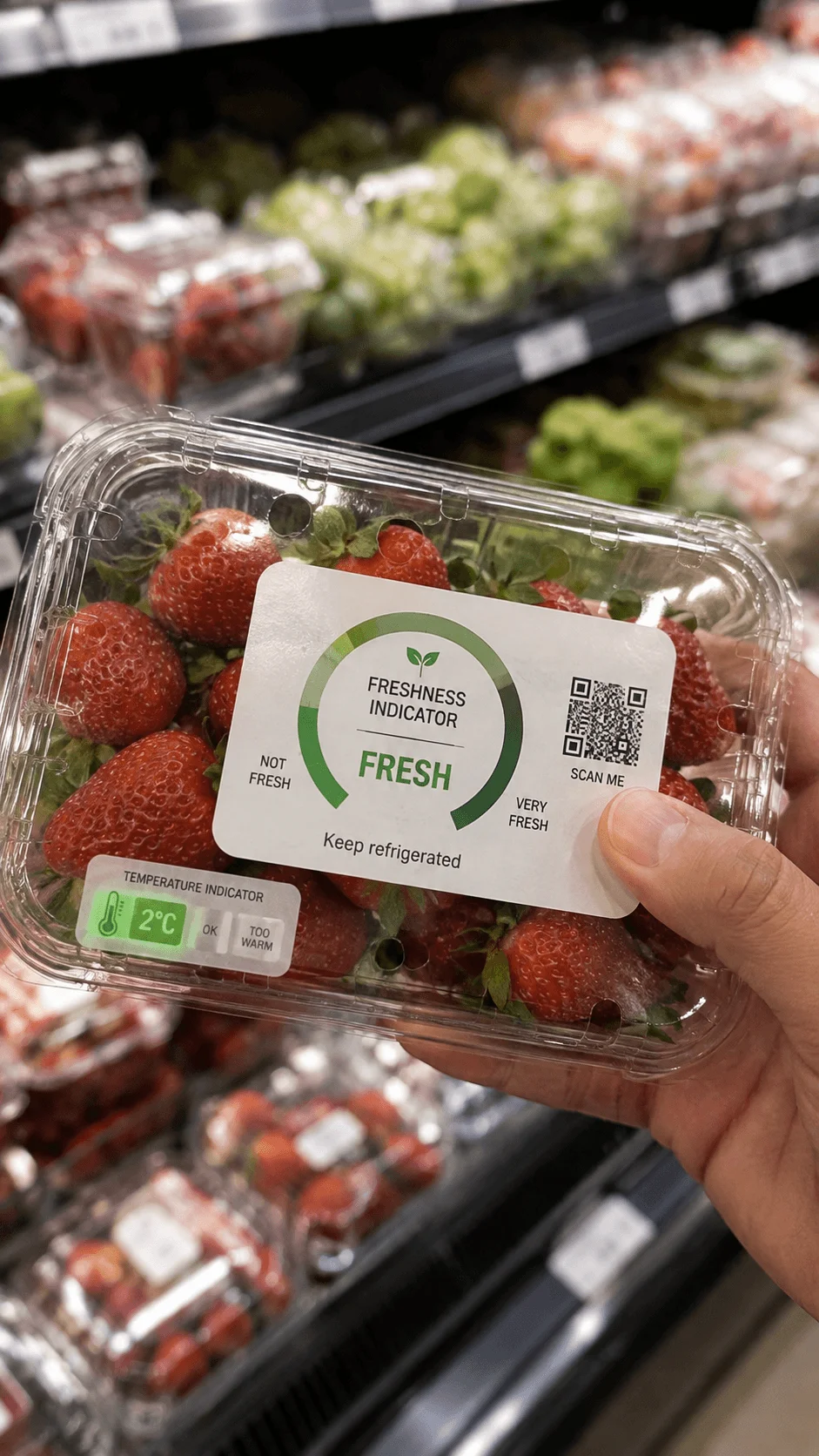
However, smart packaging introduces another consideration: electronic components, sensors, inks, and other technologies can complicate recycling. A package does not automatically become sustainable because it contains a technology designed to reduce food waste.
The best systems will need to balance functionality with material simplicity and end of life considerations.
As technology improves, smart packaging could become an important part of innovative food packaging ideas, especially for products where freshness, temperature, and quality monitoring have significant value.
Common Mistakes When Choosing Sustainable Food Packaging
One common mistake involves assuming that every natural looking material is automatically sustainable. A brown paper appearance does not tell customers how the material was produced, what coatings it contains, or what will happen after disposal.
Another mistake involves confusing biodegradable and compostable packaging. These terms describe different end of life characteristics, and specific products may require specific environmental conditions before they break down effectively.
Businesses can also make mistakes by ignoring local recycling and composting infrastructure. A package may technically qualify for recycling but still have limited practical value if local facilities cannot process it.
Using too much packaging creates another problem. Replacing plastic with a larger quantity of another material does not automatically create the best environmental outcome.
Food protection should also remain a priority. If sustainable packaging allows moisture, oxygen, heat, or contamination to damage food, the resulting food waste can undermine the original environmental goal.
Finally, businesses should avoid unsupported environmental claims. Calling packaging completely zero waste or completely harmless can mislead customers when the real environmental impact depends on manufacturing, transportation, use, and disposal.
Conclusion
The future of food packaging is moving toward a much broader understanding of sustainability. Eco friendly packaging ideas for food now include renewable materials, agricultural residues, edible films, advanced fiber containers, recyclable mono material structures, reusable systems, natural polymers, and smart technologies.
Some solutions such as sugarcane bagasse and molded fiber already provide practical options for many food businesses. Other concepts, including seaweed films, fruit waste materials, chitosan packaging, and smart packaging, continue to develop as researchers and manufacturers solve technical and commercial challenges.
The best packaging choice will depend on the food product, required protection, expected shelf life, budget, customer experience, and local waste management system. A package should not receive a sustainability label simply because it contains a natural material. Its entire life cycle matters.
For food businesses, the most effective approach is to reduce unnecessary material, select packaging that protects food properly, encourage reuse or responsible recycling where possible, and choose compostable options only when appropriate infrastructure exists.
As packaging technology continues to develop in 2026, businesses have more opportunities to move away from unnecessary single use plastic while still maintaining the quality and convenience customers expect. The most successful sustainable packaging solutions will combine practical performance with thoughtful material choices and a clear understanding of what happens to the package after the customer finishes the food.