
Sustainable Christmas Table Decorations with Natural Materials
Christmas dinner feels especially welcoming when the table reflects the season without creating a mountain of disposable decorations. Sustainable Christmas Table Decorations with Natural Materials bring together simple greenery, fruit, wood, fabric and handmade details. The result can feel elegant enough for a special dinner while still being affordable, comfortable and practical for the people gathered around it.
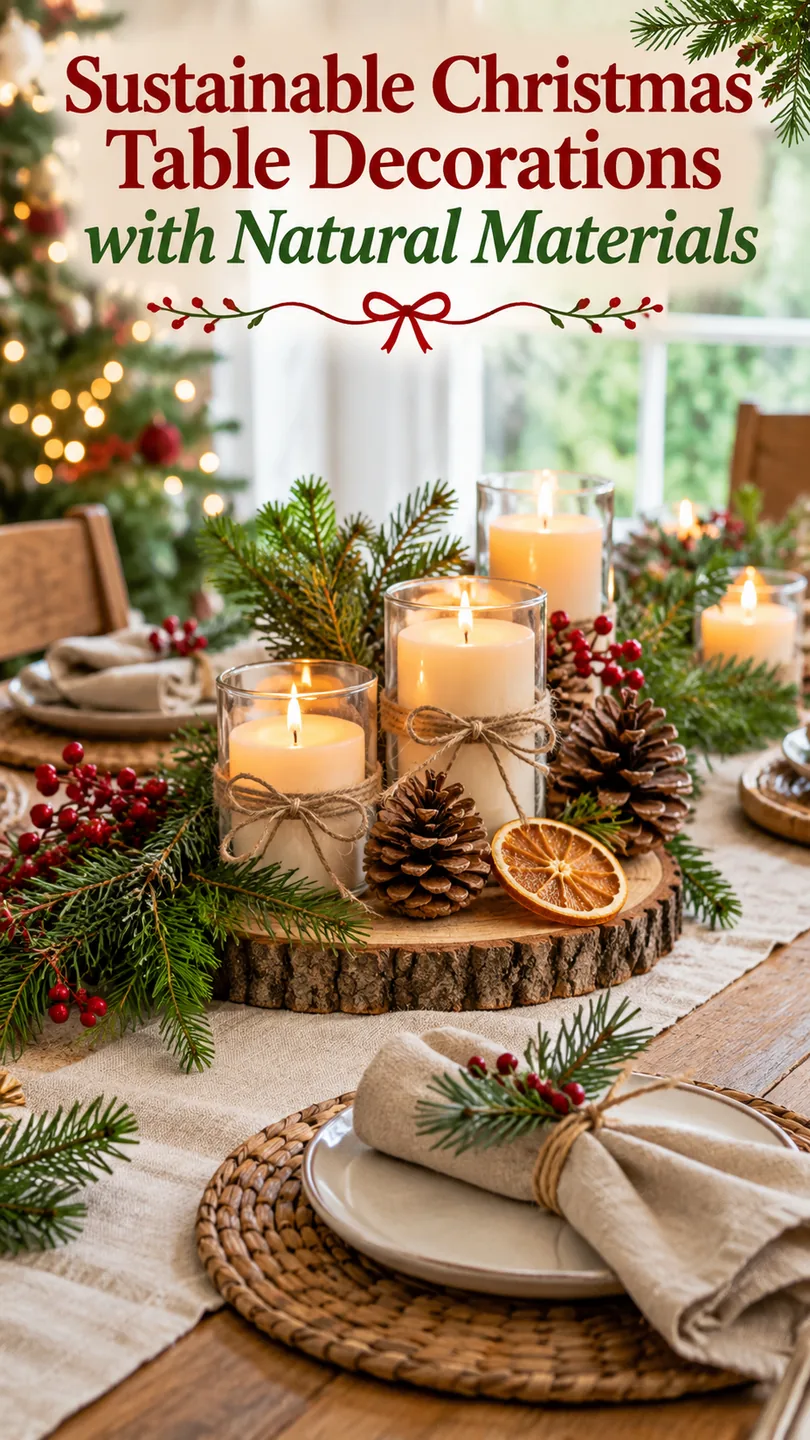
You do not need an entirely new set of holiday dishes or expensive store displays. Begin with what you already own, then add a few thoughtful pieces from your garden, pantry or local market. These twelve ideas show how to build a beautiful natural Christmas tablescape, use materials responsibly and pack away the reusable details for another celebration.
Fresh Evergreen Table Runner
A narrow line of evergreen branches makes an inviting centerpiece without hiding the wood or linen beneath it. Collect a modest amount of cedar, spruce or other locally appropriate foliage from permitted sources, or use trimmings left over from decorating. Place the greenery along the middle of a washable runner, overlapping stems to give the arrangement a soft, continuous shape. Keep its height below the guests’ sight lines so everyone can talk comfortably.
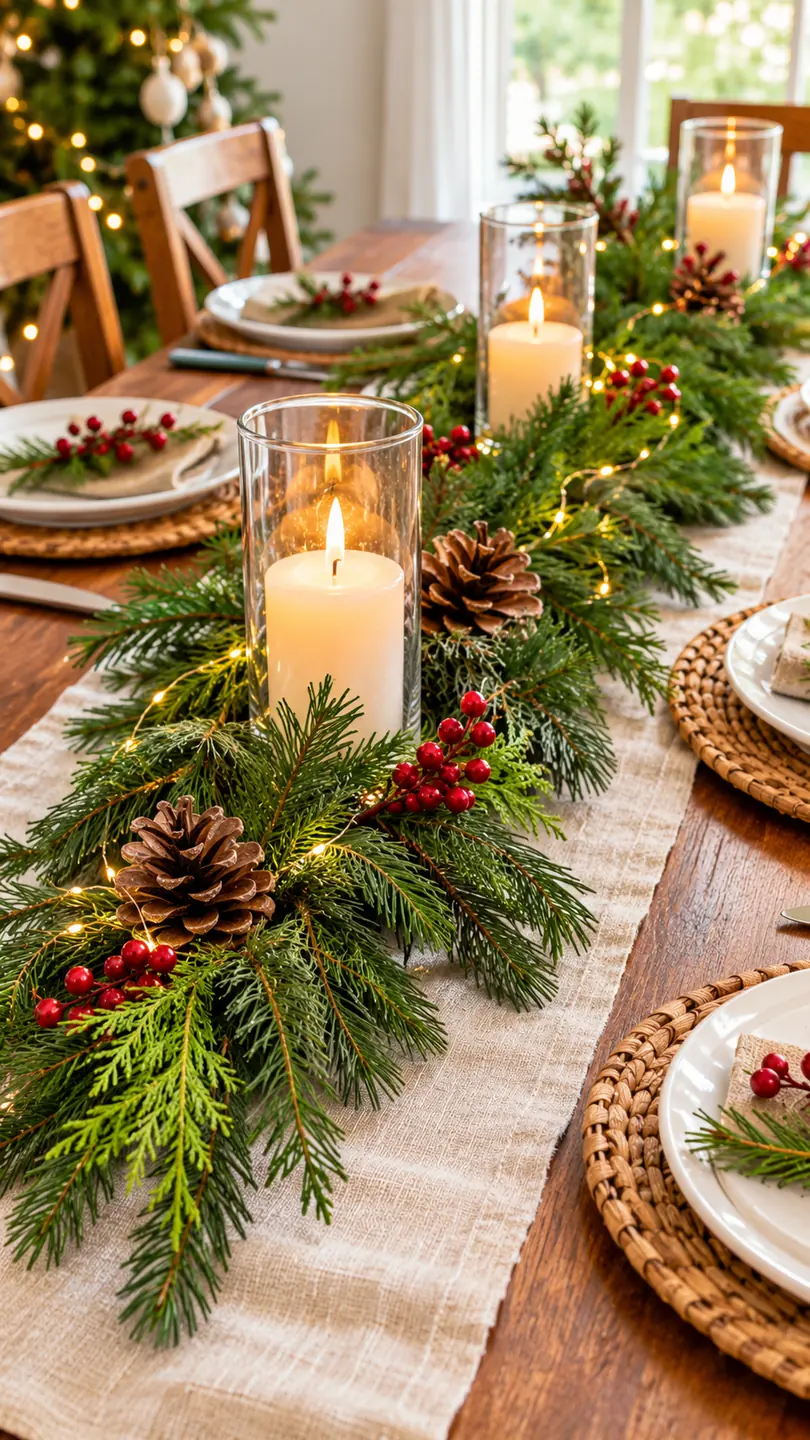
Rather than covering every inch, leave small gaps for serving bowls. Add a few cones or citrus slices where the branches naturally separate. Set a waterproof barrier beneath any damp stems to protect the table. If you have pets, check that the chosen plants are safe for your household, and keep foliage away from food and heat. A restrained runner usually makes more impact than a crowded display.
Dried Orange and Cinnamon Centerpiece
Dried orange slices add glowing amber color to a green and neutral palette. Arrange slices in a shallow ceramic dish with a few cinnamon sticks and clean pinecones, creating a centerpiece that does not compete with the meal. Use citrus you already have or dry extra slices ahead of time to reduce food waste. Their translucent appearance is particularly attractive when placed beside a window during daylight.
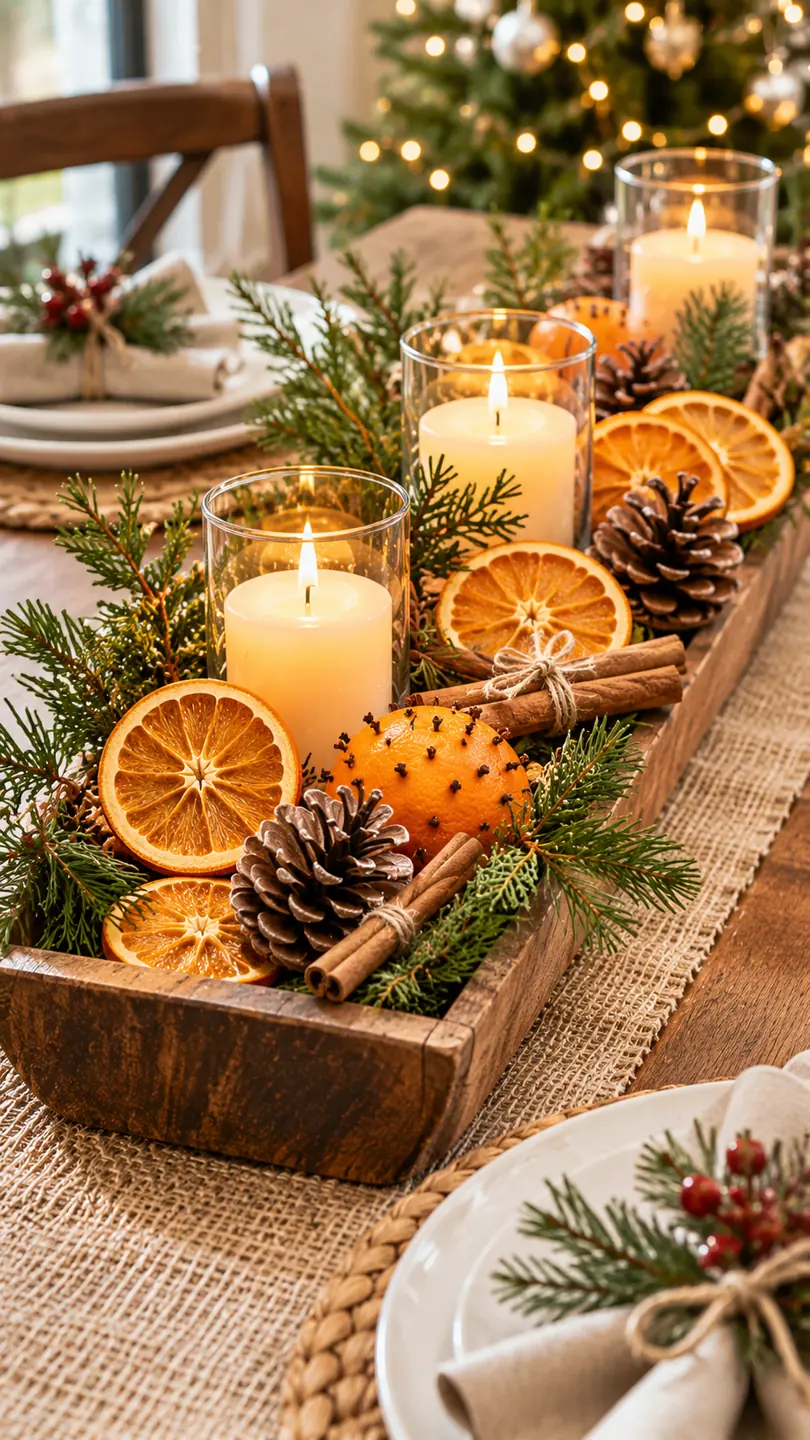
For a farmhouse table, pair the arrangement with cream linen. For a more modern look, use a simple white bowl and leave generous empty space around it. Keep decorative dried fruit separate from anything intended for eating, particularly if it has spent time in storage. Once the holiday ends, save completely dry decorations in a ventilated container and discard anything showing dampness or mold.
Pinecone and Moss Woodland Display
A woodland scene can look detailed without relying on plastic miniature trees or artificial snow. Group fallen pinecones of different sizes on a reusable wooden tray and fill some of the spaces with responsibly sourced preserved moss or small pieces of evergreen. The varied heights create interest while the tray keeps everything contained. A few natural stones can help anchor the composition.
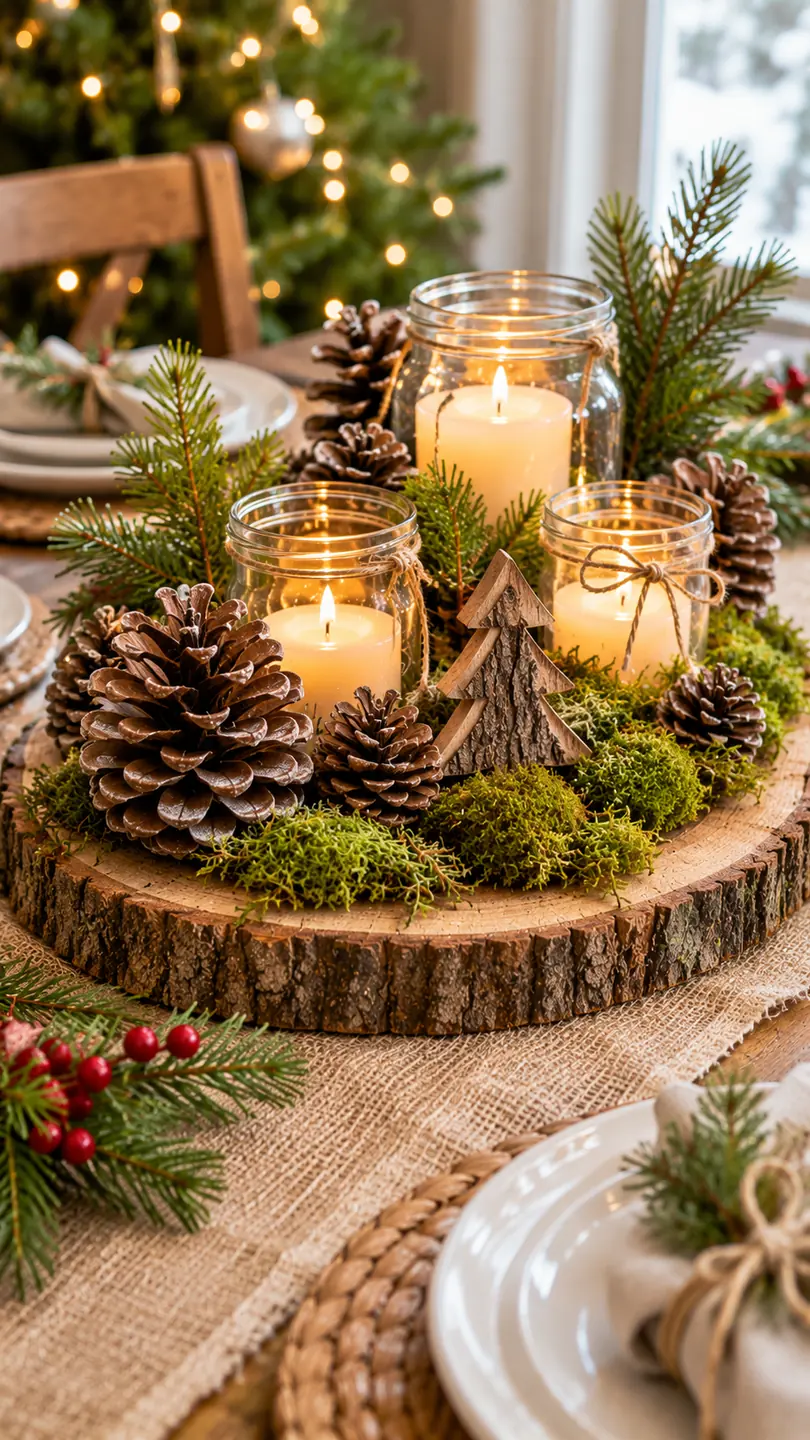
Collect only what local rules allow, and avoid taking moss from sensitive habitats. Brush debris from cones before placing them near tableware, then allow them to dry thoroughly. Use a tray you already own so cleanup takes seconds when dinner arrives. This is especially helpful for a small dining table, where a centerpiece should move easily rather than becoming part of the meal.
Reusable Linen Napkins with Rosemary
Cloth napkins immediately make a Christmas place setting feel thoughtful, and they are useful long after the holiday. Fold a cotton or linen napkin on each plate and tuck in a small sprig of culinary rosemary. Tie it loosely with reusable cotton string or ribbon saved from a previous celebration. Its fine leaves introduce a festive tree shape without requiring a separate ornament.
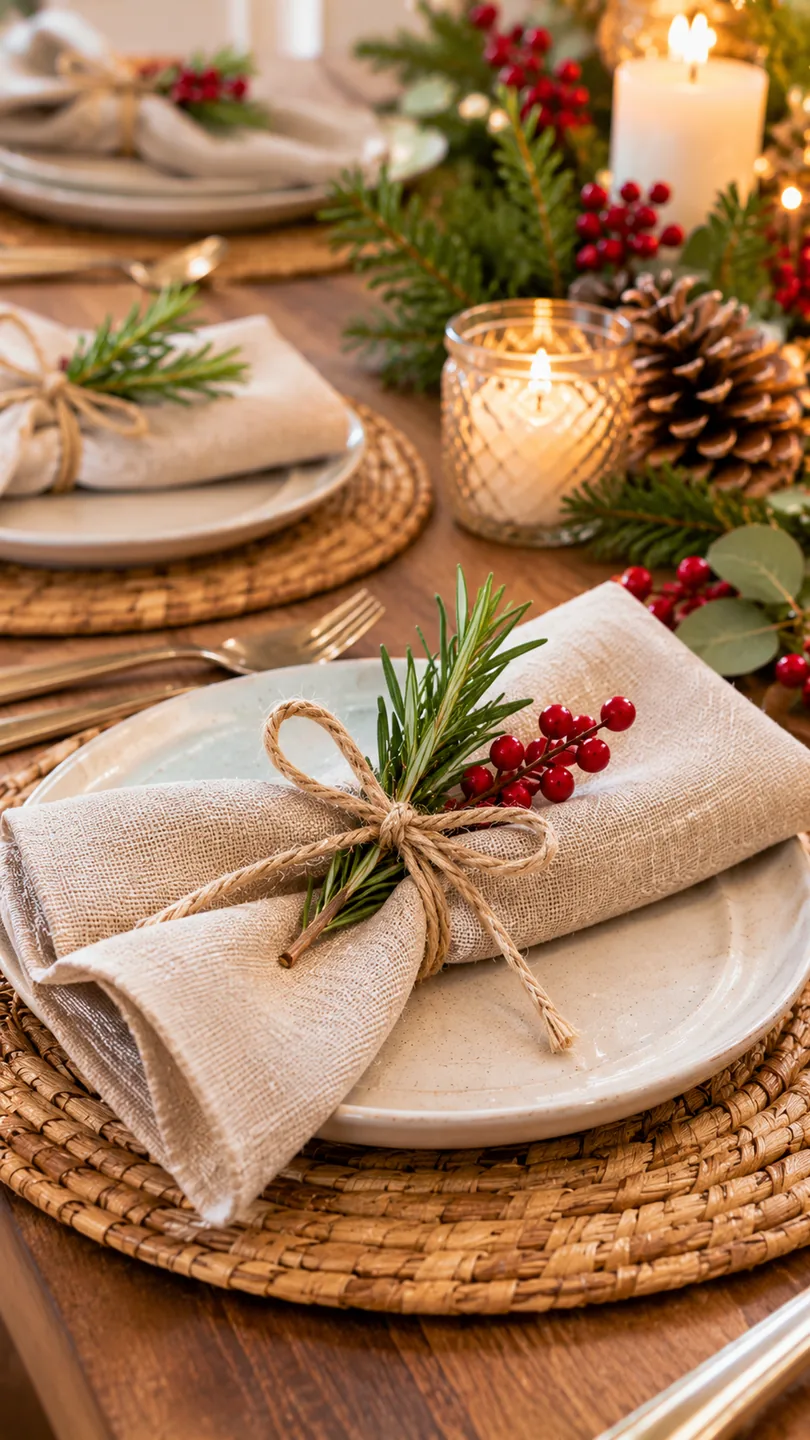
Choose napkins in ivory, sage, rust or another shade you already use at home. If you have only mismatched linens, repeat the same folding style to make the collection look intentional. Wash and store the napkins for birthdays and ordinary meals. Place herbs beside rather than directly on eating surfaces if you are unsure how they were grown or handled.
Wood Slice Place Settings
Small wooden rounds can serve as natural place markers, bread plate accents or decorative bases for a tiny arrangement. Reuse smooth wood slices from an earlier craft project or purchase durable pieces you expect to keep for years. Write names on removable recycled paper cards instead of permanently marking the wood, allowing the rounds to return to the table for future gatherings.
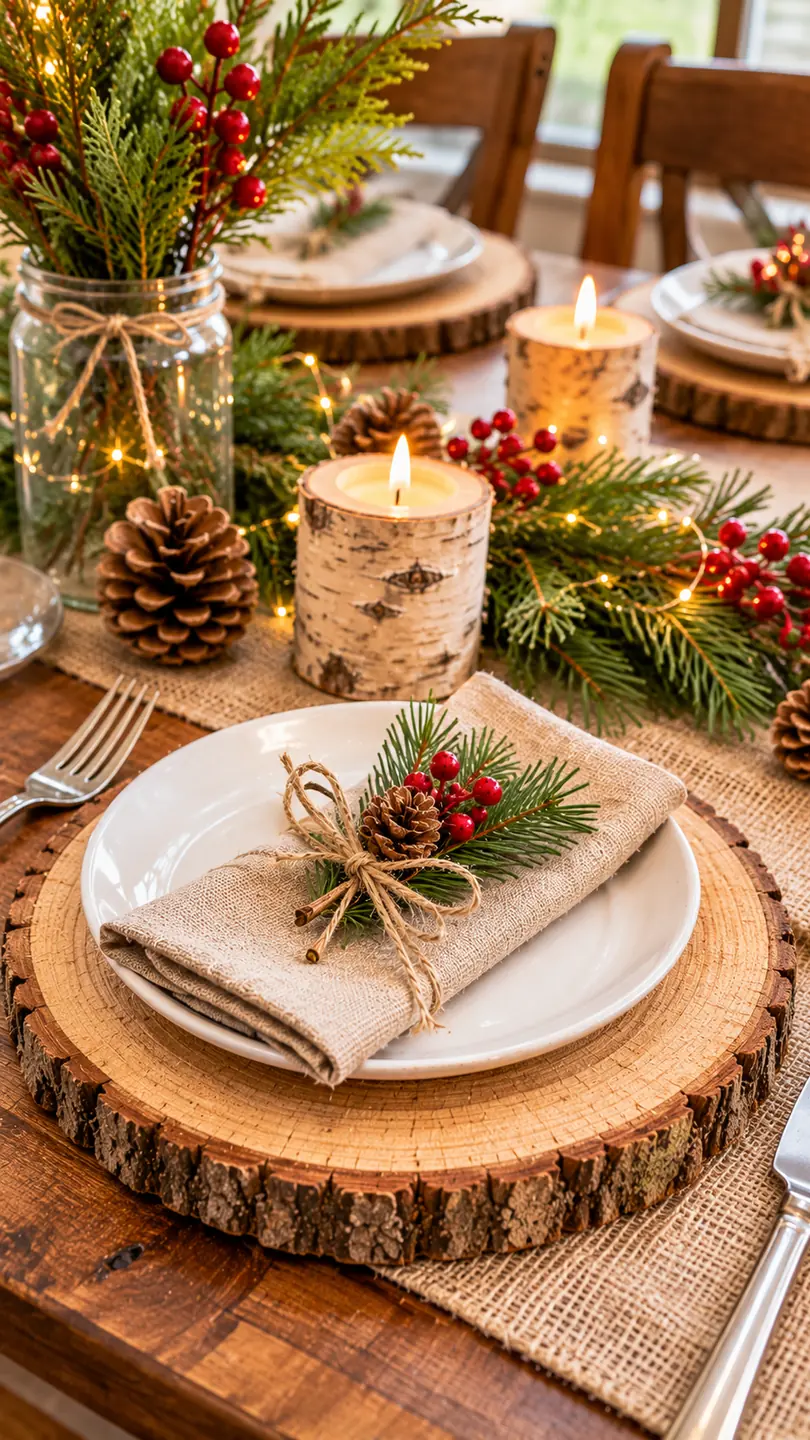
Wood looks especially appealing with simple pottery and woven textiles. Check for splinters, rough edges and unstable surfaces before putting pieces near dishes or glassware. Do not place uncovered food directly on craft wood unless it has a finish appropriate for food contact. A small stack of wooden rounds stores neatly and offers more flexibility than decorations that say Christmas in permanent lettering.
Seasonal Fruit Bowl Centerpiece
One of the most economical natural Christmas table decoration ideas is a bowl of fruit that guests can enjoy afterward. Fill a ceramic or wooden bowl with clementines, red apples, pears and pomegranates in colors that suit the rest of the table. Add a few leafy sprigs around the outside rather than burying fruit under decoration. The arrangement feels abundant without requiring anything disposable.
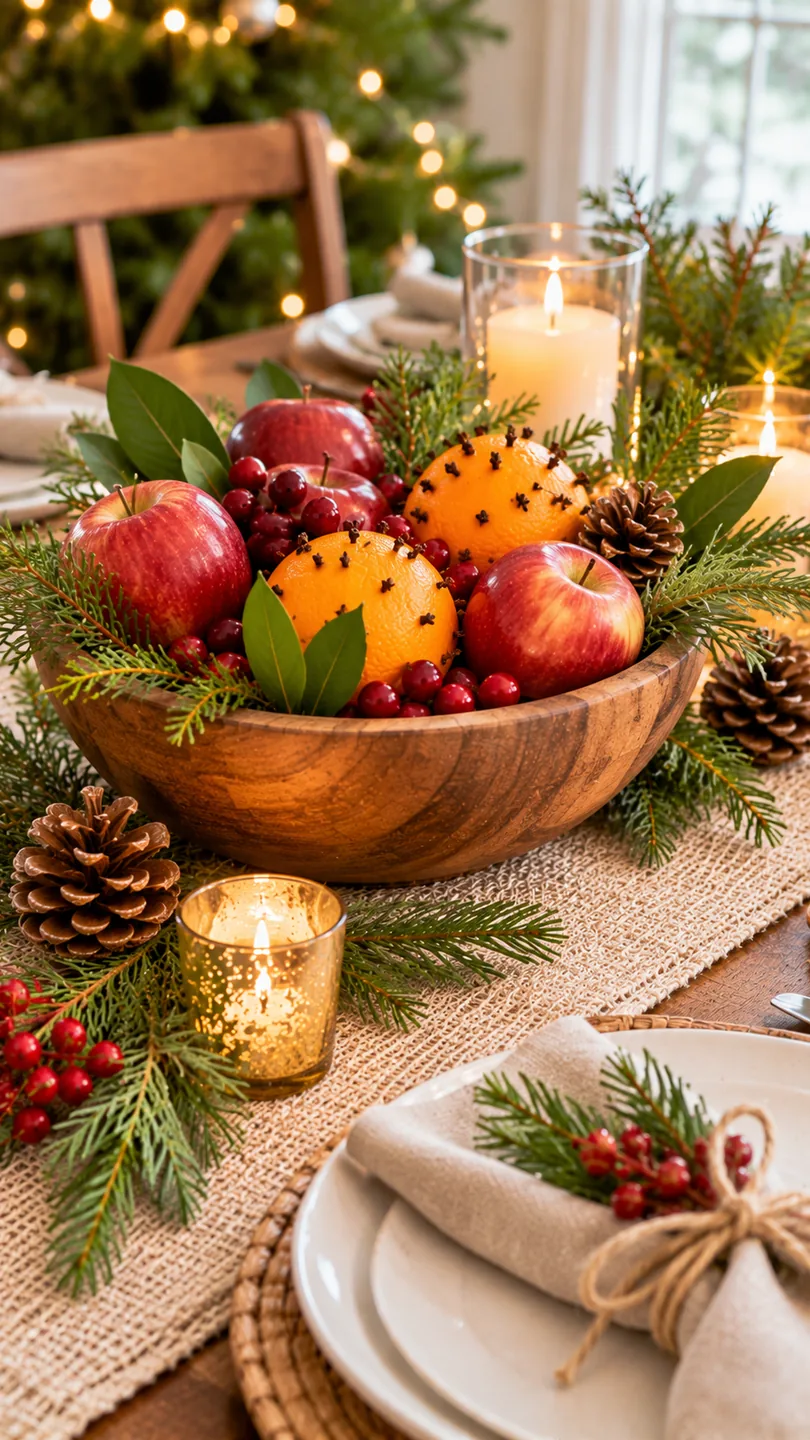
Select fruit you plan to eat soon, and avoid buying more than the household can realistically finish. Whole fruit lasts better than cut fruit during a long meal, and an elevated bowl frees space for plates. After dinner, move the centerpiece to the kitchen and make it part of breakfast or dessert. Using food that will be eaten gives the arrangement a purpose beyond its appearance.
Natural Woven Table Mats
Woven placemats made from durable natural fibers add warmth and texture even when you use ordinary dishes. Rattan, seagrass, jute or washable cotton can complement an evergreen centerpiece without introducing more holiday themed objects. If you already own neutral mats, bring them out with simple ceramic plates and a fabric napkin. The combination works for both relaxed family meals and more formal dinners.
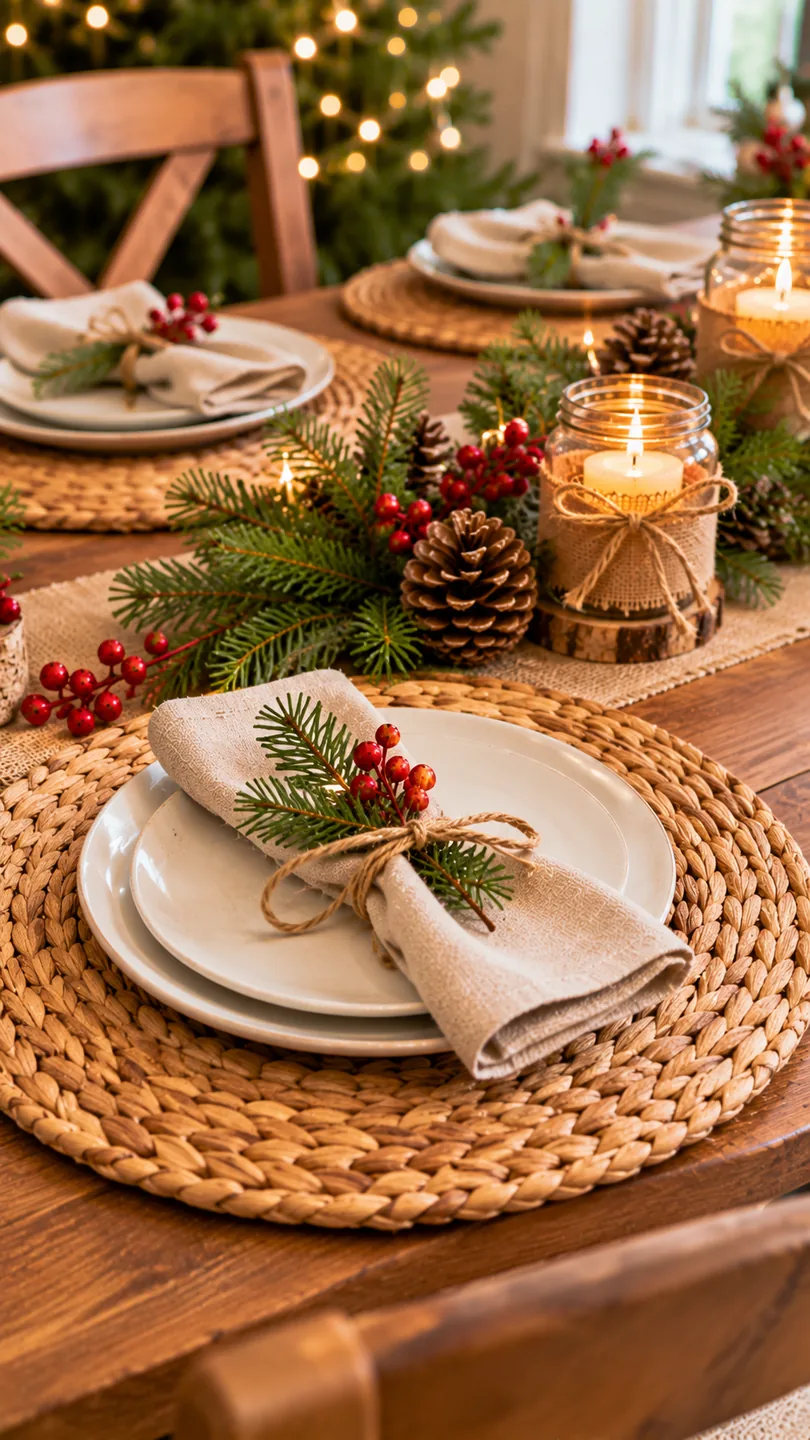
Before buying a new set, consider whether your existing mats can serve the same purpose. Choose a weave that does not shed heavily or catch on glass stems, and follow its cleaning instructions after dinner. If natural fiber placemats are impractical for messy meals with children, washable cotton is a useful alternative. Durability matters more than the material looking rustic in a photograph.
Twig and Recycled Paper Name Cards
Personalized name cards can bring a charming handmade detail to each guest’s seat. Cut small rectangles from clean leftover card stock or uncoated paper packaging, then write guests’ names in a consistent style. Rest each card against a short fallen twig or secure it with reusable string. The natural shapes give the setting a quiet woodland mood, especially with plain white plates.
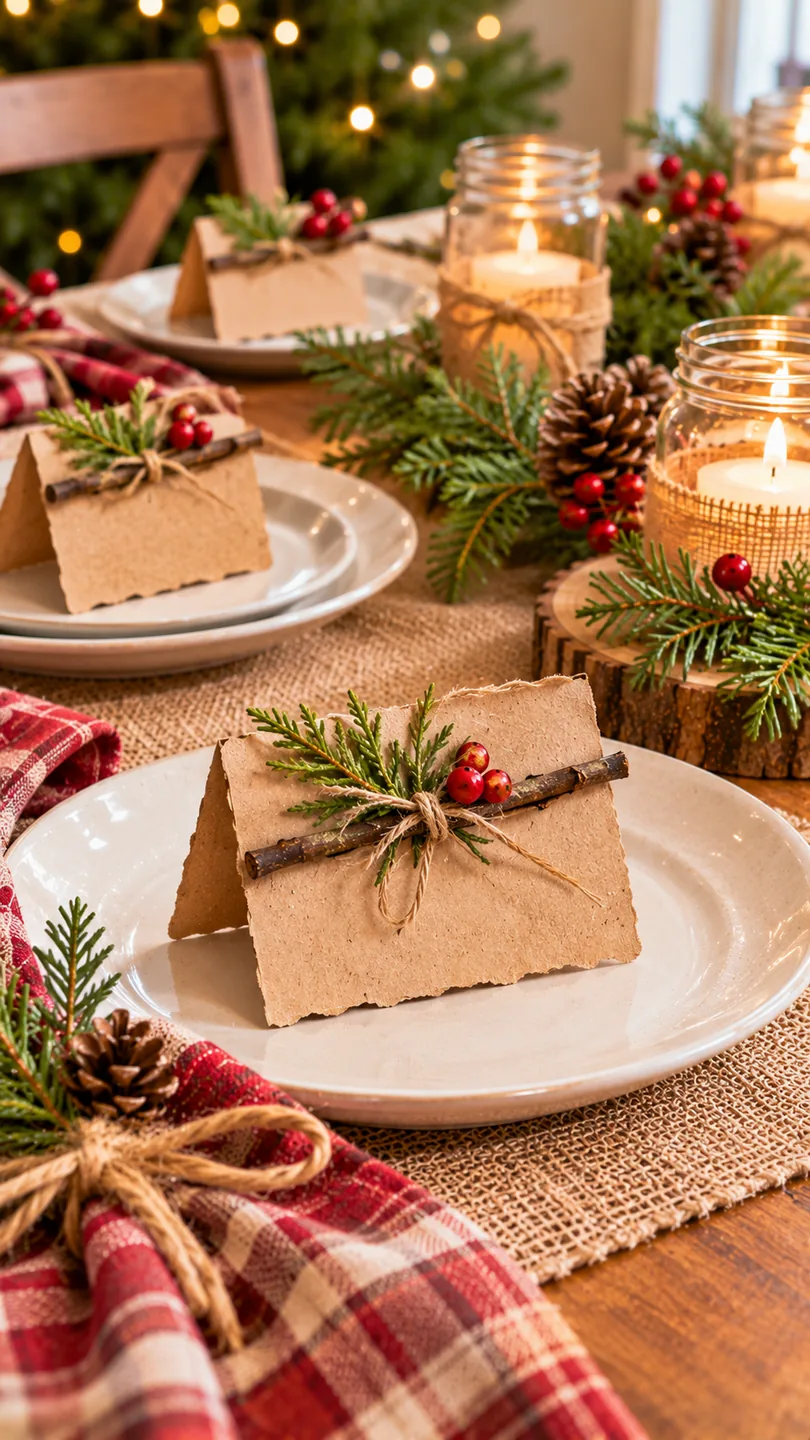
Make the cards a family activity by inviting children to help choose paper colors or draw simple leaf motifs. Avoid sharp twigs or pieces that wobble and fall into serving dishes. After the meal, recycle clean plain paper where local collection rules allow and keep the reusable supports. This small project is a good way to create something personal without buying an entire package of disposable place markers.
Potted Herbs as Living Centerpieces
Living herbs can decorate the table and continue growing after the holiday. Arrange small pots of rosemary, thyme or another suitable edible herb on a waterproof tray. Wrap the pots in scraps of washable fabric if you want to hide plastic nursery containers, but leave enough access for watering. Their familiar foliage makes the table feel fresh and their subtle scent suits a winter meal.
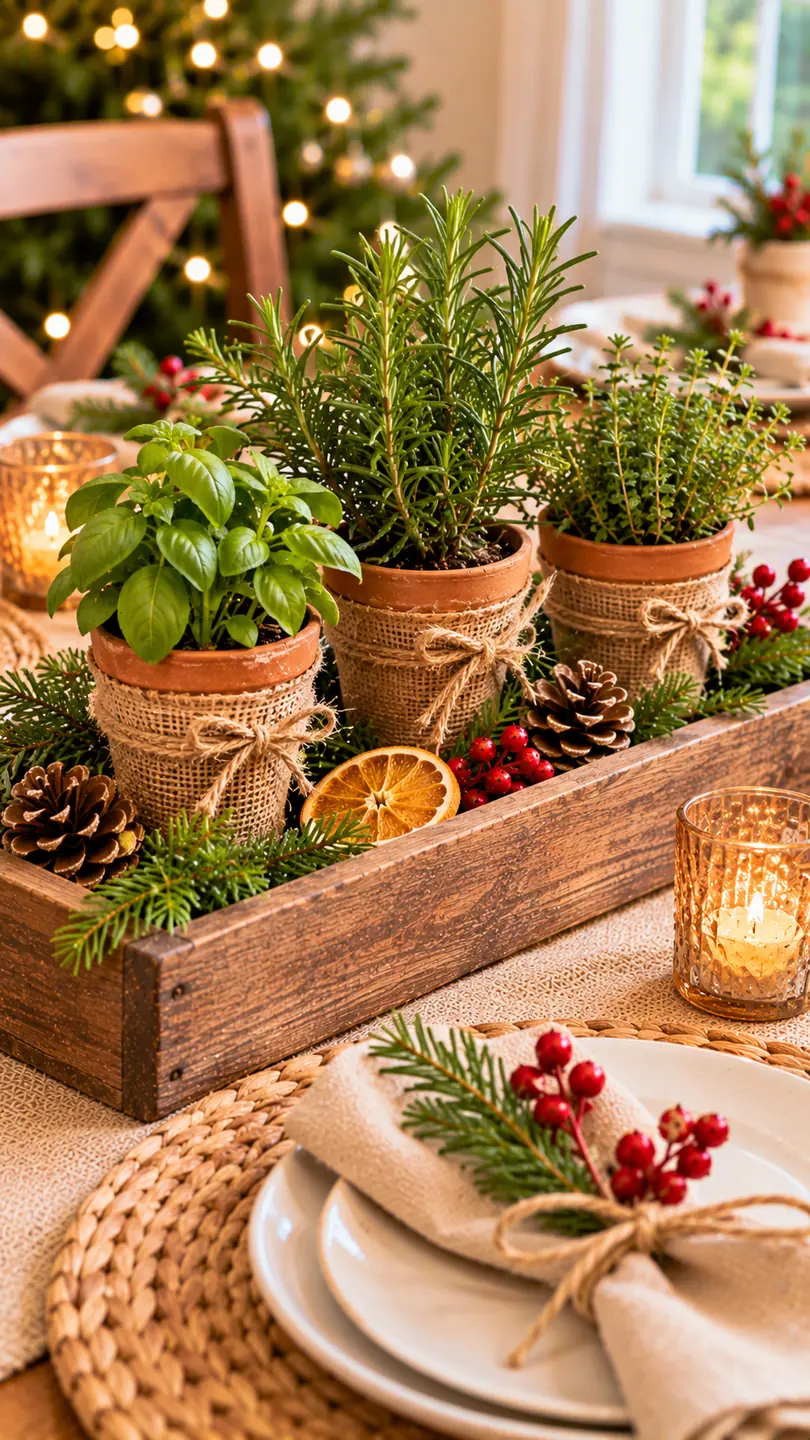
Keep the display low and choose just a few healthy plants rather than crowding the center. Check leaves for pests before bringing them indoors, and avoid letting irrigation water reach the table linen. Move the pots to a bright suitable spot after dinner and continue caring for them according to the plants’ needs. Unlike cut arrangements, a living centerpiece may stay useful well into the new year.
Cotton Fabric Scrap Table Runner
A runner made from leftover cotton or linen creates a personal holiday foundation without another seasonal shopping trip. Combine compatible fabric scraps into a simple patchwork strip, or lay a long piece of clean fabric across the center with the edges neatly turned under. Earthy shades, soft checks and plain cream pieces work especially well with green branches and natural wood.
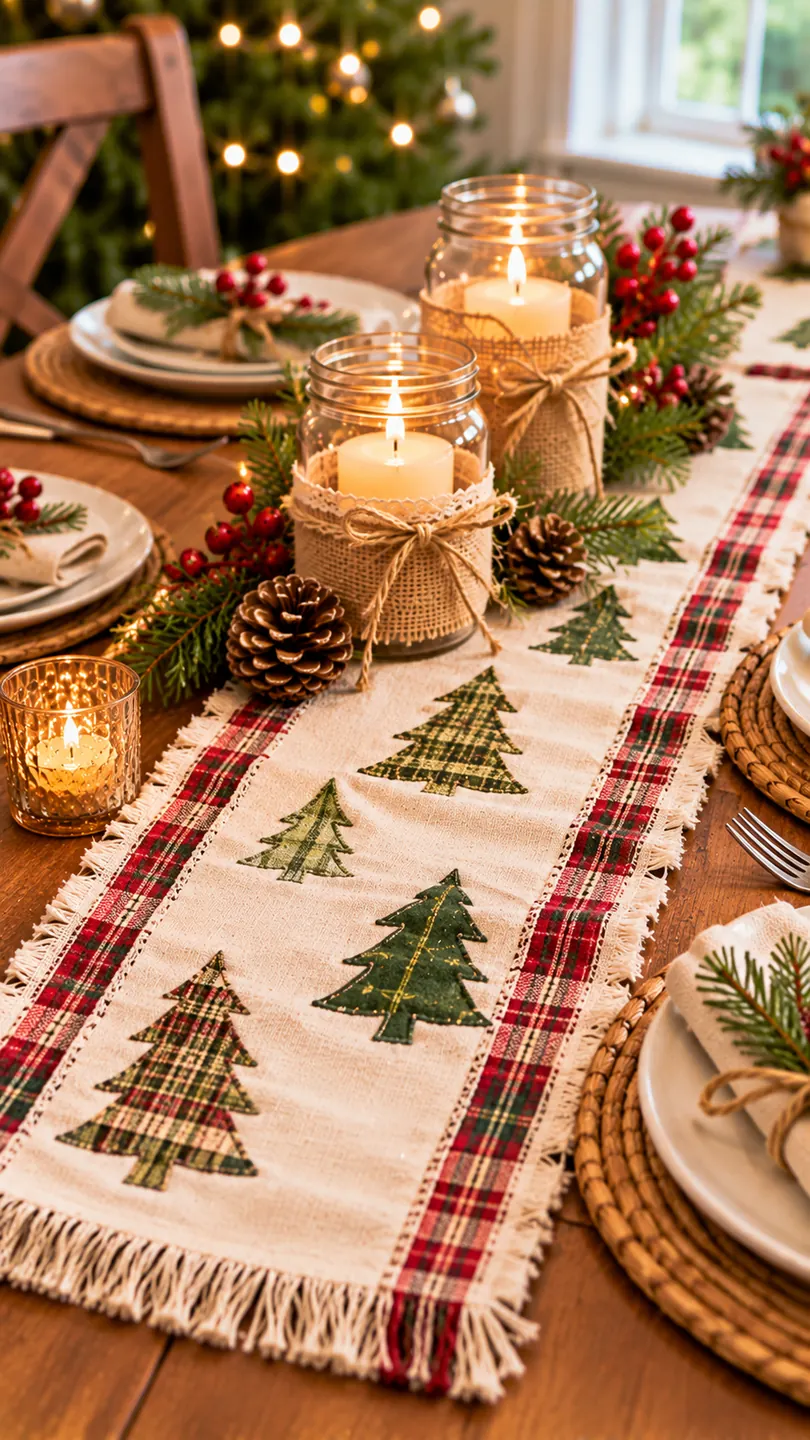
Make the runner wide enough to frame the centerpiece but narrow enough to leave room for plates and glasses. If you do not sew, a neatly folded length of fabric can look just as intentional as a stitched project. Choose washable fabric and avoid delicate trims that will snag during dinner. After Christmas, use the same runner for winter breakfasts or fold it into your regular linen cupboard.
Acorn and Walnut Bowl Accents
Small natural textures make a tabletop feel considered when used sparingly. Fill a few little ceramic bowls with clean fallen acorns, walnuts in their shells or other seasonal items that are safe for your household. Place them between larger serving pieces rather than scattering loose objects around individual plates. These modest clusters give the eye a place to rest and add variety beside evergreen foliage.
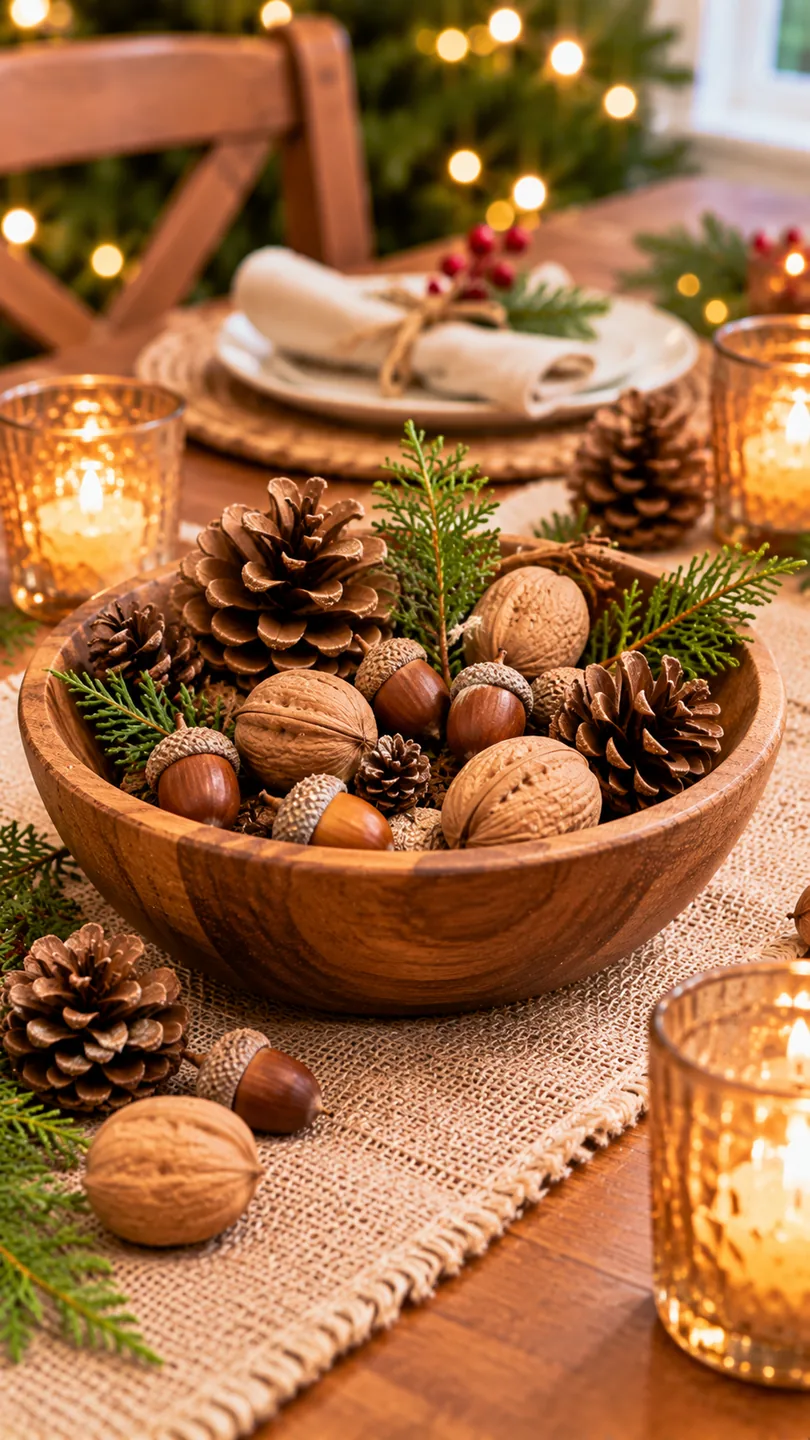
Keep decorative nuts away from people with relevant allergies and do not use unknown wild nuts as edible snacks. Wash bowls before returning them to food service. If children or pets might handle or swallow tiny objects, skip acorns entirely and use larger, safer decorative elements. The aim is a warm natural impression, not a table covered with small items that guests must keep moving aside.
Reusable Glass Lanterns with Natural Greenery
Soft lighting makes a holiday table inviting, particularly for an evening meal. Repurpose clean glass jars as containers for battery operated lights, then surround their bases with a small wreath of greenery or a few dried orange slices. The light reflects off the glass while the natural materials provide the festive character. Reusing sturdy jars also avoids buying themed decorations that may only appear once a year.

Choose cool running battery lights and keep batteries securely enclosed, especially around children. Never put branches, dried fruit or fabric beside an open flame. Set the jars on stable, dry surfaces and keep them below conversation height. After dinner, remove the greenery, clean the glass and return it to ordinary household use. A few glowing points usually feel calmer and more welcoming than a table full of flashing lights.
How to Plan a Natural Christmas Table That Still Works for Dinner
Begin with the actual dining needs rather than a photograph of an empty table. Count the guests, place the plates and glasses, then check where serving dishes will stand. A centerpiece that looks lovely before dinner should not stop anyone from passing food or seeing the person across from them. On a narrow table, use one movable tray or several tiny arrangements instead of a long dense garland.
Build a simple palette from two or three colors already present in your home. Deep green, warm cream and amber make an easy starting point, while natural wood ties the materials together. Repeat one detail, such as rosemary or citrus, in a couple of places. Repetition creates a finished look without forcing you to buy additional objects.
Choosing and Caring for Natural Materials Responsibly
The greenest material is often the one you already own. Reuse dishes, jars, fabric and trays first, then seek locally available trimmings or seasonal produce for anything missing. Collect fallen branches or cones only where permitted and take modest amounts. Avoid protected plants and habitats. If an item needs a special purchase, think about whether it can be used next year or at another celebration.
Inspect natural materials for insects, moisture and mold, and keep them separated from food preparation surfaces. Fresh foliage can wilt indoors, so assemble delicate arrangements close to the meal and protect wood surfaces from water or sap. Keep any greenery away from open flame and verify plant safety when children or pets are present. After the event, store only fully dry reusable pieces and dispose of spent organic materials according to local composting rules.
How to Keep the Christmas Table Affordable and Low Waste
Set a small decorating budget after checking your cupboards, linen drawer and holiday storage box. You may already have enough for a complete table: a plain runner, mismatched cloth napkins, a fruit bowl and a few jars can become a coordinated setting. Borrow a serving tray or extra napkins if needed rather than buying objects for a single dinner.
When the celebration ends, sort materials by their next use. Wash linen, pack away clean cones and wooden pieces, return jars to the cupboard and eat the centerpiece fruit. Compost suitable untreated plant matter where facilities accept it. Skip glitter, glued mixed materials and disposable plastic accents that complicate reuse. A sustainable table succeeds when it is easy to enjoy and easy to put away.
Conclusion
Sustainable Christmas Table Decorations with Natural Materials do not have to be elaborate to feel special. Thoughtful greenery, useful fabric, seasonal fruit and a handful of reusable objects can make the dining room feel festive while leaving plenty of space for a relaxed meal. Start with one idea that suits your home, make practical choices about safety and care, and let each gathering inspire a table you can enjoy again next year.


