Reusable DIY Christmas Advent Calendar Ideas for Kids
Reusable DIY Christmas Advent Calendar Ideas for Kids can make the December countdown more personal while reducing the need for a new calendar each year. Rather than opening another disposable package every morning, children can discover a family activity, a favorite story, or a small thoughtful surprise inside something you have made together.
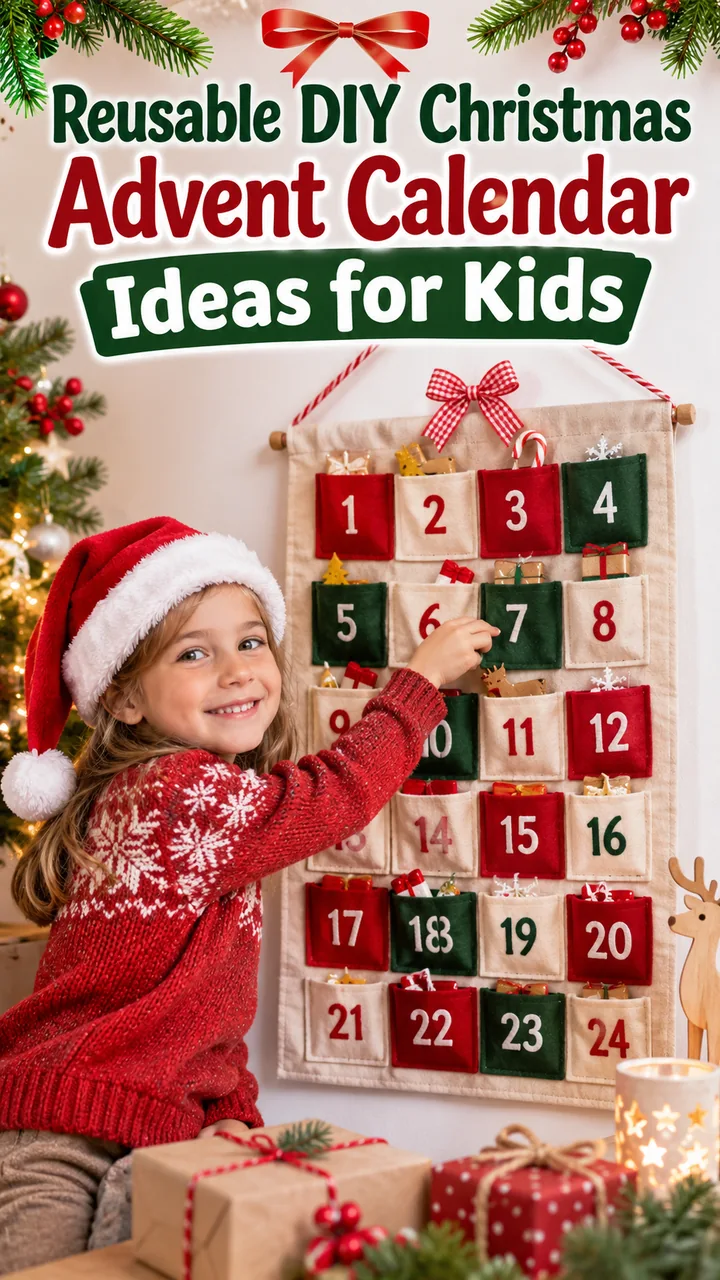
The best homemade calendars balance excitement with convenience. Some take only envelopes and string, while others become treasured fabric or wooden decorations. These twelve designs offer different budgets, craft skills, ages, and home sizes, with practical tips for preparing, filling, and saving them for next Christmas.
Sew a Fabric Pocket Wall Calendar
A fabric pocket calendar is a lovely project for families who want a decoration that returns every December. Choose sturdy cotton, canvas, or an old curtain as your backing. Cut twenty four rectangles from fabric scraps, leaving extra material along their edges for stitching. Arrange the pockets in neat rows, then sew each pocket around its sides and bottom. Keep the openings wide enough for little hands to reach inside.
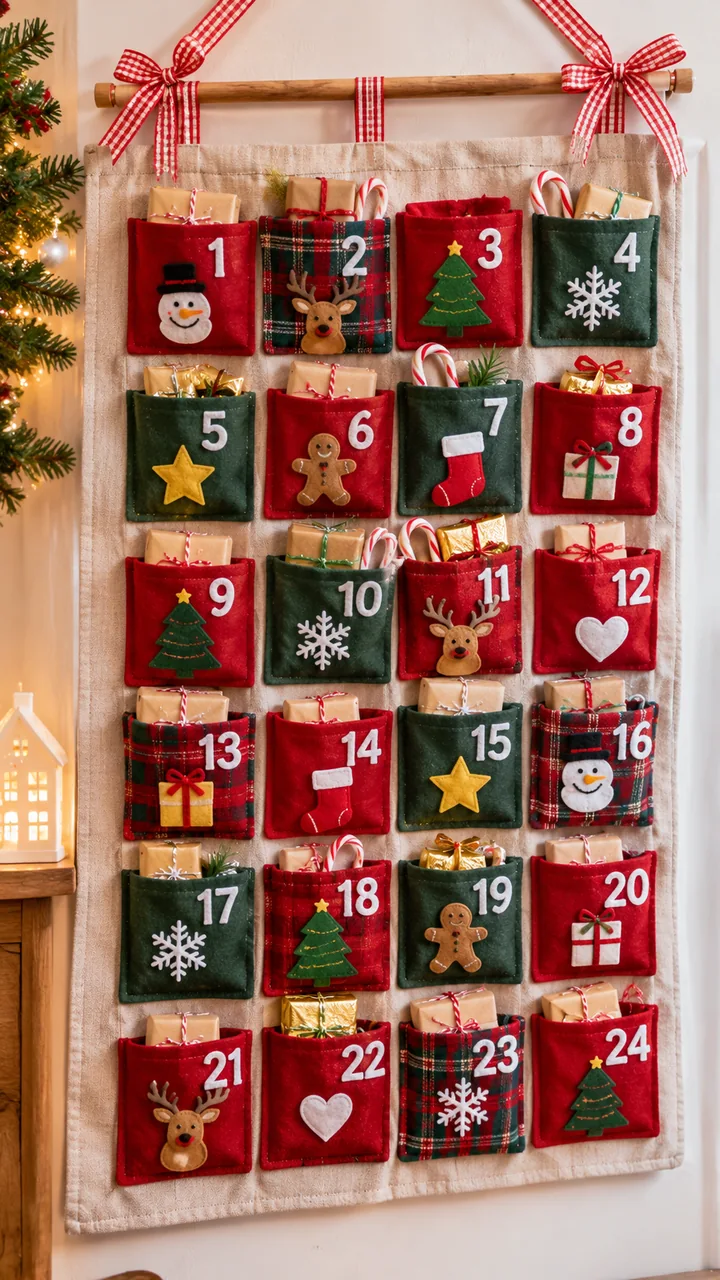
Add numbers with embroidery, fabric paint, or sewn patches. Fold the top of the backing around a wooden dowel and stitch a sleeve so the calendar hangs neatly. It can hold small notes, reusable activity cards, or individually wrapped snacks. Parents should handle cutting and sewing tools, while children can help select colors and sort the cards. At the end of Christmas, empty the pockets and roll the fabric loosely for storage. Using washable, durable fabric makes this project especially practical.
Hang Refillable Drawstring Bags on a Branch
Small cloth bags turn an ordinary branch into a woodland inspired Christmas countdown. Collect twenty four reusable cotton or linen pouches, or sew simple bags from unwanted shirts. Label each with a removable numbered tag rather than painting permanent numbers if you want flexibility in future years. Choose a smooth, clean branch and hang it securely on a wall before attaching the bags.

Spread the bags across the branch so children can see every number. Fill them with paper activity prompts, larger ornaments, or little surprises that fit comfortably. A lightweight branch works best because heavy gifts can bend it or pull down the display. Keep the hanging cord out of younger children’s reach and use a firmly fixed support. Next year, wash the bags if needed, switch the activities, and hang everything again. This design creates a warm rustic display without buying a new countdown calendar each season.
Create a Wooden Drawer Advent House
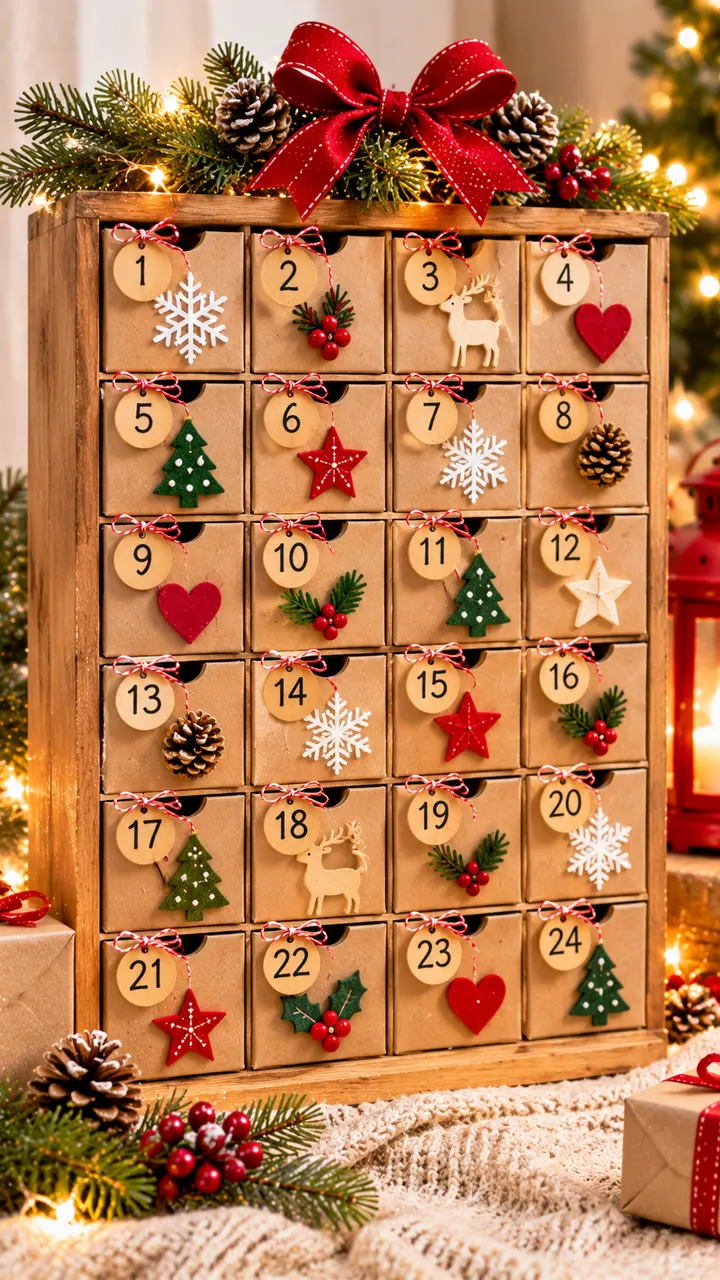
A little wooden house with twenty four drawers looks charming on a shelf and can serve a family for many holidays. Start with an unfinished craft organizer that already has suitable drawers rather than making complicated wooden joints. Check the internal drawer dimensions before deciding on fillings. A folded note will fit almost anywhere, while a toy or cookie may need a roomier compartment.
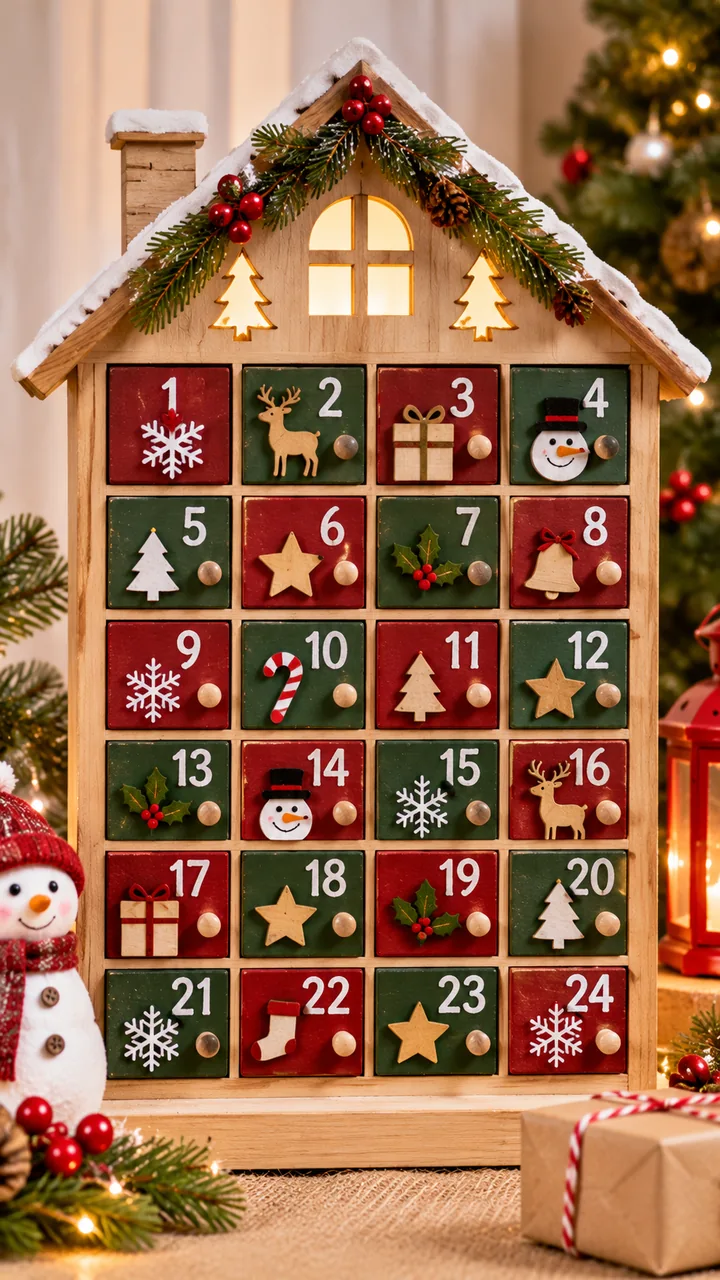
Paint the outer house in a simple Christmas palette, then number the drawers in a clear, readable style. Consider a removable paper backdrop if children enjoy changing the theme. Put the house on a stable surface where it will not be knocked over. Older children can help paint with age appropriate, water based craft supplies under adult guidance. After December, wipe the drawers clean and store the structure in a dry box. The result feels like a familiar family decoration each year.
Turn Old Socks Into a Mini Stocking Garland
Clean, mismatched socks can become a cheerful garland with very little new material. Choose twenty four small socks or make simple stockings from old sweaters and fleece scraps. Add a number to each cuff using a fabric marker or stitched cloth label. A row of stockings looks especially playful along a mantel or on a wide wall.

Attach them with sturdy clips to a securely mounted ribbon, leaving enough space so every opening is easy to reach. Instead of stuffing them with disposable toys, tuck in notes for baking cookies, reading together, or choosing a Christmas song. If you have multiple children, let them take turns opening the day’s stocking. Avoid dangling garlands across walkways or near heat sources. After the season, gather the stockings in one cloth bag and keep the clips for the next countdown. It is a particularly satisfying way to reuse fabric that would otherwise be forgotten.
Make a Felt Christmas Tree With Removable Ornaments
A felt tree calendar becomes a daily decorating game instead of a series of gifts. Cut a large tree silhouette from firm green felt and prepare twenty four soft felt ornaments in different shapes. Number the ornaments on their backs and place them in a pouch beside the tree. Each day, a child adds one ornament until the tree is full on Christmas Eve.
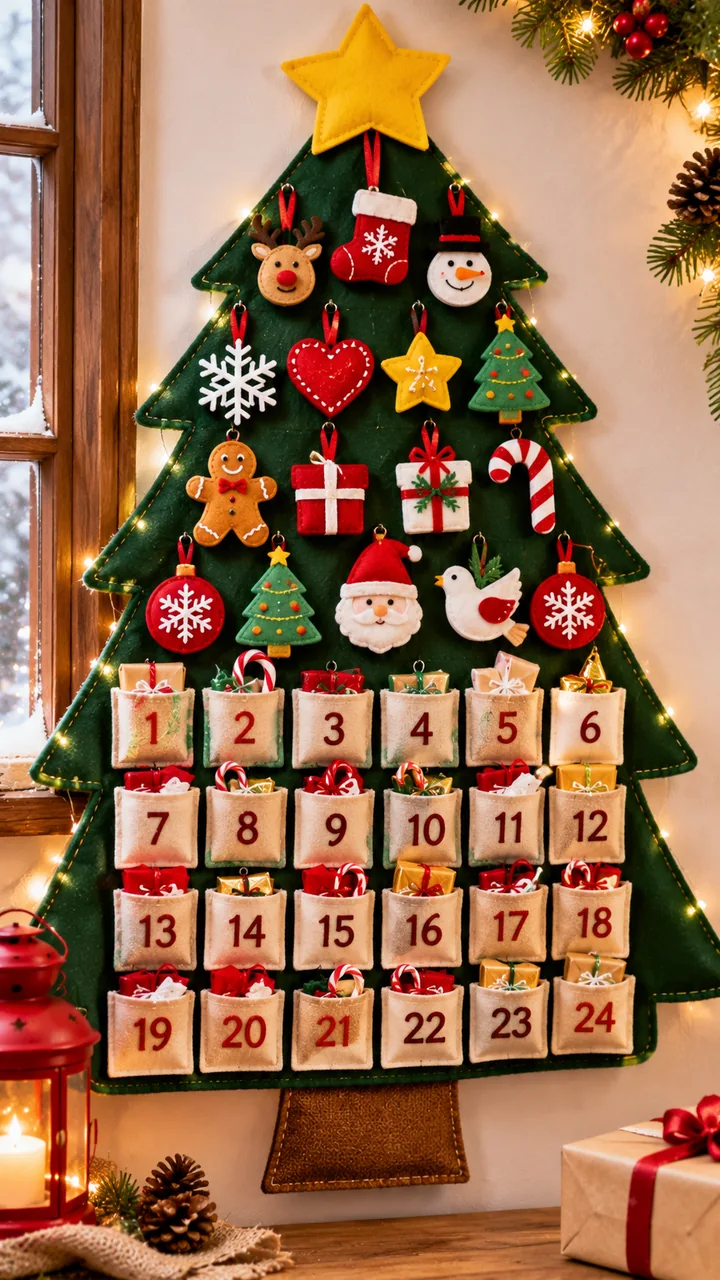
Use wide felt shapes that are easy to handle, and stitch decorations securely instead of attaching tiny beads or loose embellishments. Attach the tree to a fabric backing or suitable wall display and make sure the finished arrangement stays firmly in place. Children can help choose ornament shapes such as stars, mittens, snowflakes, or birds. Once Christmas passes, remove all the ornaments, stack them flat, and fold the tree carefully. The same soft pieces can be used for imaginative play or brought back every December with almost no preparation.
Arrange Reusable Envelopes in a Christmas Display
An envelope calendar is ideal when storage space and crafting time are limited. Use twenty four sturdy envelopes and reinforce their flaps with small paper tabs if you expect frequent handling. You can also fold envelopes from leftover cardstock or clean packaging. Number the fronts and arrange them in a tree shape on a large board, or hang them from clips on a line.
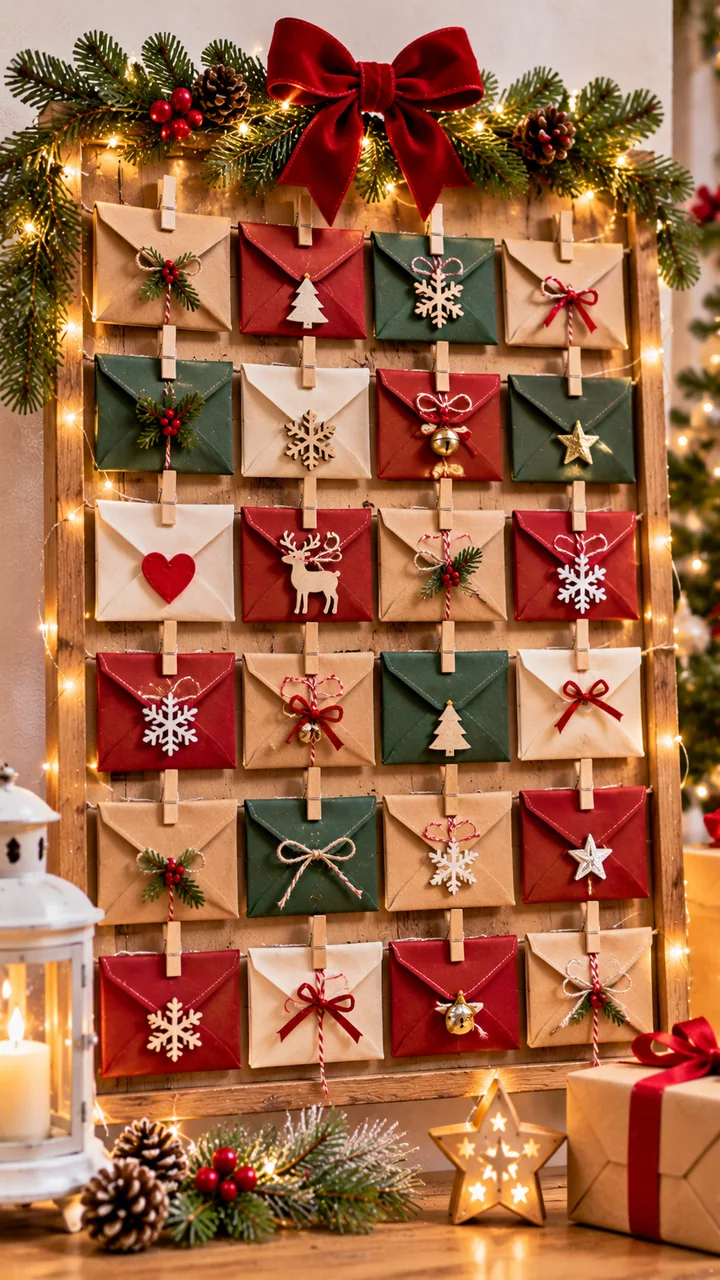
Fill each envelope with one family activity rather than an item that needs packaging. Children could discover a bedtime story, a homemade ornament project, or a neighborhood lights walk. For younger children, use simple drawings on the cards so they can understand the surprise without reading. Keep envelopes out of damp areas and encourage gentle opening instead of tearing. At the end of the month, flatten and bundle them together. Although paper wears faster than sewn cloth, careful storage can make the same envelopes useful for several Christmas seasons.
Upcycle Small Boxes Into a Stackable Calendar
Small gift boxes, sturdy packaging cartons, and clean jewelry boxes can become an imaginative Christmas village. Save boxes throughout the year, choosing a similar range of sizes so the display will stack neatly. Cover worn surfaces with reused wrapping paper or paint, then add large numbers to the lids. Arrange the boxes on a low shelf in a stable pattern rather than building an easily toppled tower.
Boxes are excellent for gifts that do not fit into narrow pockets. You might place a reusable holiday ornament in one, a handwritten clue in another, and a family experience card in the next. Make sure every lid opens smoothly so children do not accidentally pull down neighboring boxes. Replace flimsy containers as they wear and retain the stronger ones. You can rearrange the boxes each December.
Build a Pegboard Countdown With Activity Cards
A reusable pegboard or corkboard makes a tidy calendar for families who prefer activities over sweets. Attach twenty four numbered pockets or large cards to a board, leaving enough room for children to move each day’s card to a completed area. A neutral background works year after year.
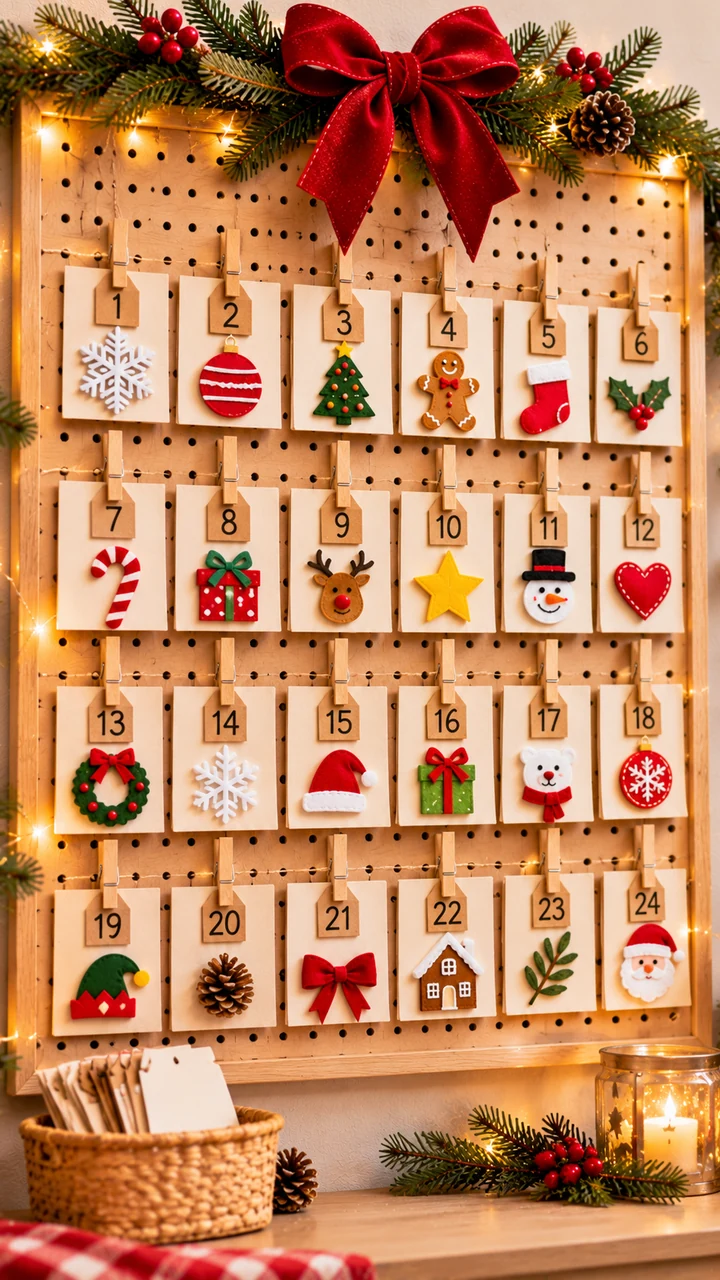
Write plans on thick, reusable cards, such as making paper snowflakes, writing a thank you note, or helping prepare a holiday meal. Leave a few cards blank so you can change plans when weather or family schedules shift. If using clips or pins, choose child safe fasteners and let adults manage any sharp attachments. Hang the board at a comfortable height on sturdy wall fixtures. Once the season ends, file the activity cards in an envelope behind the board. This approach keeps the focus on shared time rather than collecting twenty four gifts.
Craft a Refillable Cardboard Tube Village
Cardboard tubes from clean household packaging can make a collection of little Christmas cottages. Wrap each tube in reused decorative paper and add a simple folded roof that lifts off to reveal a paper note. Stand the tubes upright inside a shallow box or on a firm tray so the whole village remains organized. Twenty four small houses give children a playful neighborhood to explore.
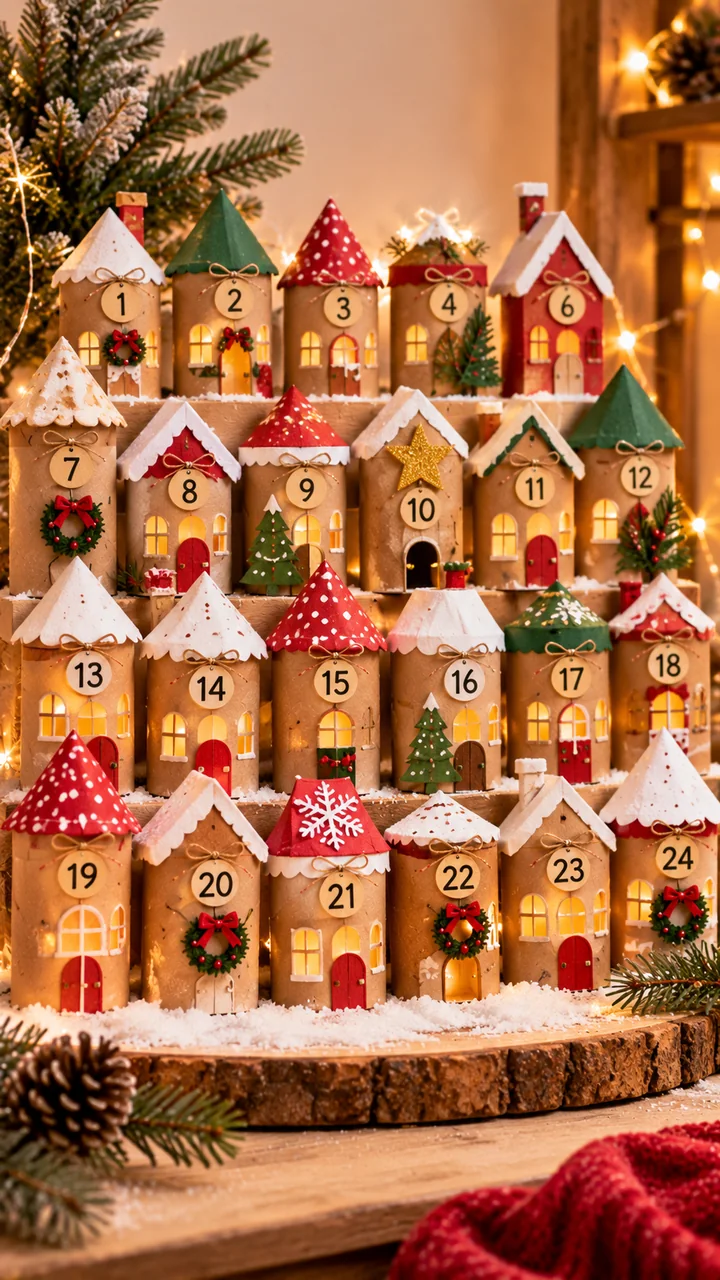
Decorate the roofs with paper snowflakes, colored doors, or windows drawn with markers. Older children can design each house while adults supervise cutting. Keep the finished tubes dry and choose lightweight fillings, because cardboard bends under pressure. This is a lower cost way to test a homemade calendar before committing to a fabric or wooden version. Store each house inside a box with tissue between delicate roofs, and repair pieces next December. Reusing clean materials and refreshing only damaged parts keeps the project resourceful.
Design a Christmas Book Countdown Basket
A book countdown does not require twenty four new books or twenty four disposable wrappers. Gather favorite holiday stories, winter picture books, and library books that can be returned on time. Place them in a sturdy basket and add twenty four numbered reusable fabric bands or large paper cards. Each evening, the child selects the day’s book for a cozy read together.
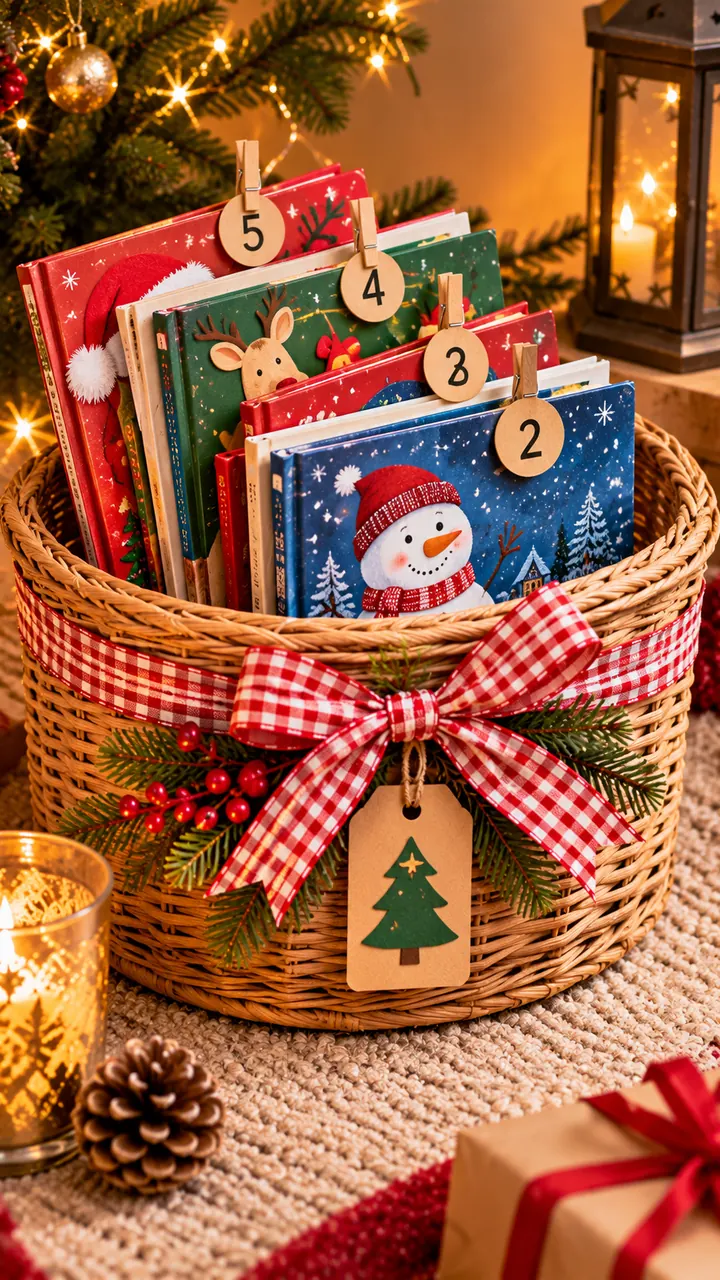
If your family owns fewer than twenty four books, repeat beloved stories or pair some days with a storytelling prompt. This makes the tradition accessible without excessive shopping. Younger children can help decorate the basket with a washable ribbon, while older children can take turns reading aloud. Keep borrowed books separate so they are not lost inside the holiday decorations. At the end of December, return library books promptly and put reusable bands with the basket. The real gift is a calm daily moment together, not the number of objects under the tree.
Fill Reusable Jars With Twenty Four Surprise Notes
A jar calendar is a clever option for a small home because the entire countdown fits on a table. Choose a clean, wide container with a safe, easy to open lid, and prepare twenty four folded cards. Number each card clearly and arrange them in the jar with the next number near the top, or let children search for the number of the day.
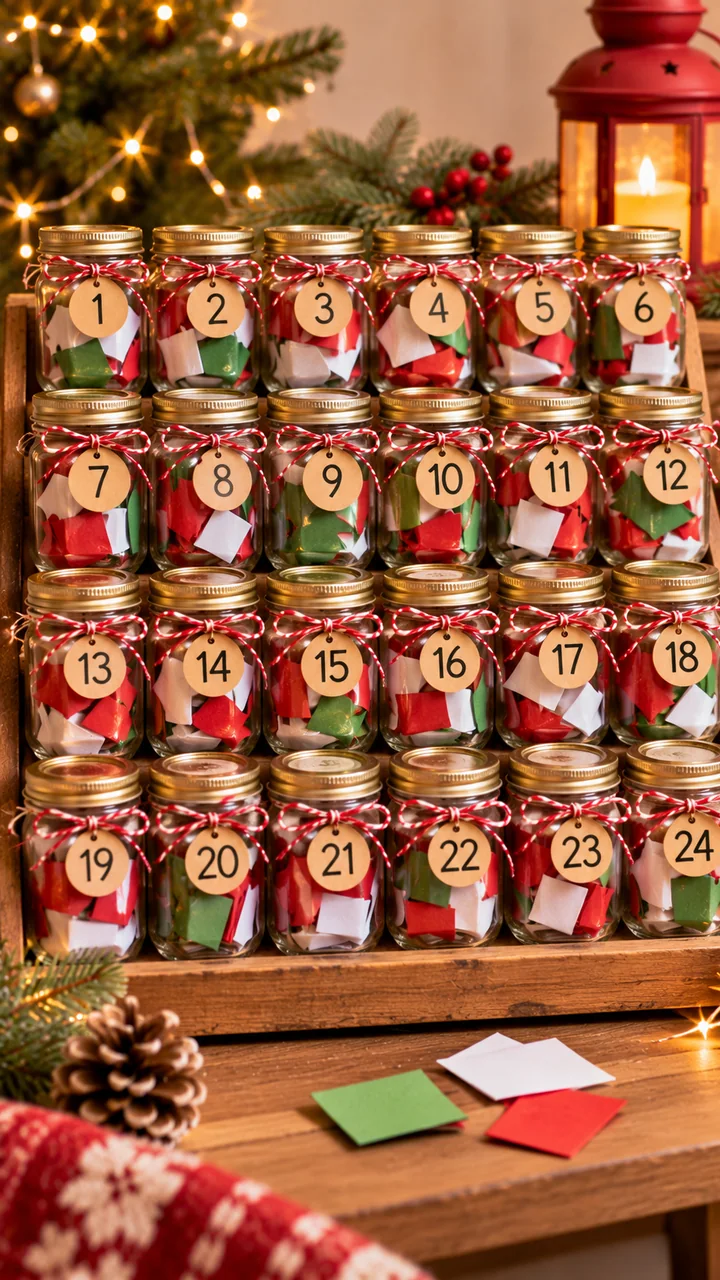
Fill the cards with tiny seasonal challenges, kindness prompts, and playful family choices. Try inviting everyone to share a favorite memory, drawing a Christmas picture, or helping set the dinner table. Use sturdy paper so the same cards can be reused and adapted with a few replacements. For very young children, choose an unbreakable container rather than glass and avoid small decorative fillers. The jar takes little storage space after Christmas and can be used for other household activities during the rest of the year.
Make a Reversible Fabric Banner With Countdown Flaps
A fabric banner with twenty four liftable flaps combines a wall decoration with a daily surprise. Start with a large rectangle of durable cloth and attach smaller fabric squares along their top edges so they open like doors. Number each outside flap and hide a stitched symbol, a flat pocket, or an activity card beneath it. Use festive colors on one side and a more neutral pattern on the reverse for different decorating styles.
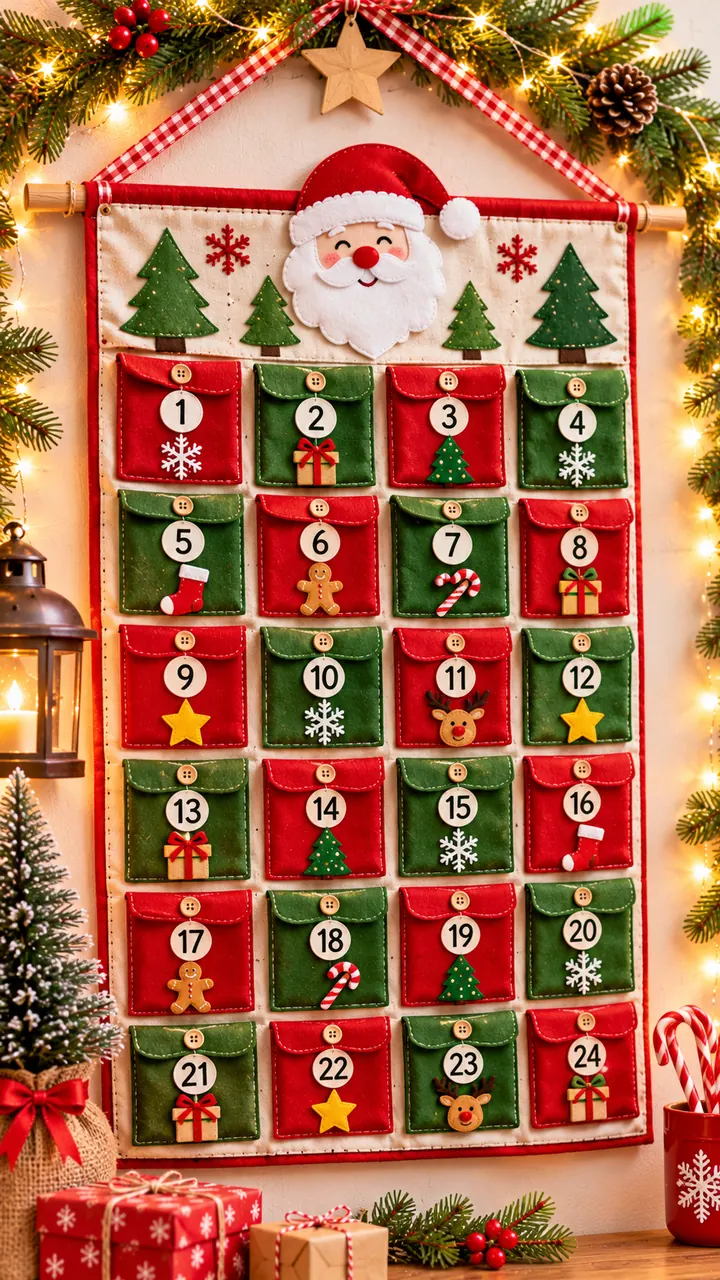
Before sewing, draw a simple grid so all the flaps line up and do not overlap. Stitching is more durable than temporary adhesive for a banner that will open repeatedly. Children can choose the symbols and help organize the dates while an adult completes the sewing. Display the finished banner on a firmly attached rod, away from radiators and open flames. When the holidays finish, close every flap and roll the banner with the fabric facing outward. It becomes an heirloom style project that can change its surprises without replacing the whole calendar.
How to Choose the Best Reusable Advent Calendar for Your Family
Start with your child’s age, the space available at home, and what you want the daily surprise to contain. A soft felt tree works well for hands on decorating, while a pocket banner suits folded notes and small wrapped treats. Drawers and boxes can hold slightly larger items, but always measure openings before buying supplies.
Plan for the entire month before building. Most Christmas countdown calendars use twenty four dates, beginning on December 1 and ending on December 24. If your family likes including Christmas Day, design a separate twenty fifth space from the beginning. For shared calendars, agree whether siblings will open surprises together or alternate days.
Meaningful Advent Calendar Fillers That Create Less Waste
You do not need twenty four purchased gifts to make an exciting countdown. Write cards for family movie night, making hot cocoa, reading a favorite story, creating a greeting card, or visiting a local holiday display. Other days can invite children to help choose a festive meal, play a familiar board game, make decorations from scrap paper, or call a relative.
When you do include small objects, choose useful age appropriate items rather than disposable novelty pieces. Think of a favorite snack, a sturdy ornament to use again, or a craft material your family already needs. Match the activity to the actual day: a long outing may work on a weekend, while a short story fits a busy school night. Keep a few flexible cards for busy days.
Safety, Cleaning and Storage Tips for Years of Reuse
Choose materials that withstand repeated opening, folding, and handling. Avoid loose magnets, button batteries, and small detachable decorations for younger children. Keep cords, hanging loops, and tiny fillers away from toddlers, and ask an adult to supervise cutting, sewing, hot glue, or wall mounting. A calendar should stay stable even when an enthusiastic child reaches for the next surprise.
After Christmas, remove food and crumbs, wipe clean wooden surfaces, and wash fabric pieces according to their materials. Let everything dry completely before storing it. Place cards, clips, and numbers in a labeled pouch so you are not searching for pieces next November. A dry box protects paper and fabric from moisture and helps preserve your work. Repair a loose seam or worn flap before the following season rather than starting over.
Conclusion
A thoughtful Advent countdown does not have to rely on new purchases every December. Fabric pockets, miniature stockings, wooden drawers, playful felt ornaments, and simple activity cards can all become traditions that children recognize and enjoy. Choose a style that fits your time and space, prepare age appropriate surprises, and store everything carefully when the celebrations end.
The most memorable part of Reusable DIY Christmas Advent Calendar Ideas for Kids is often what happens after each opening: a story shared, a decoration made, or an ordinary evening turned into a small celebration. Start with materials you already have and let the tradition grow naturally with your family.