Eco Friendly Christmas Crafts for Kids Using Recycled Materials
Eco Friendly Christmas Crafts for Kids Using Recycled Materials can turn an ordinary afternoon into a celebration of imagination. Instead of starting with expensive craft kits, families can look inside their recycling box for clean cardboard, paper tubes, egg cartons, old cards, and colorful packaging. These everyday objects become ornaments, garlands, festive decorations, and thoughtful little gifts with a few familiar art supplies.
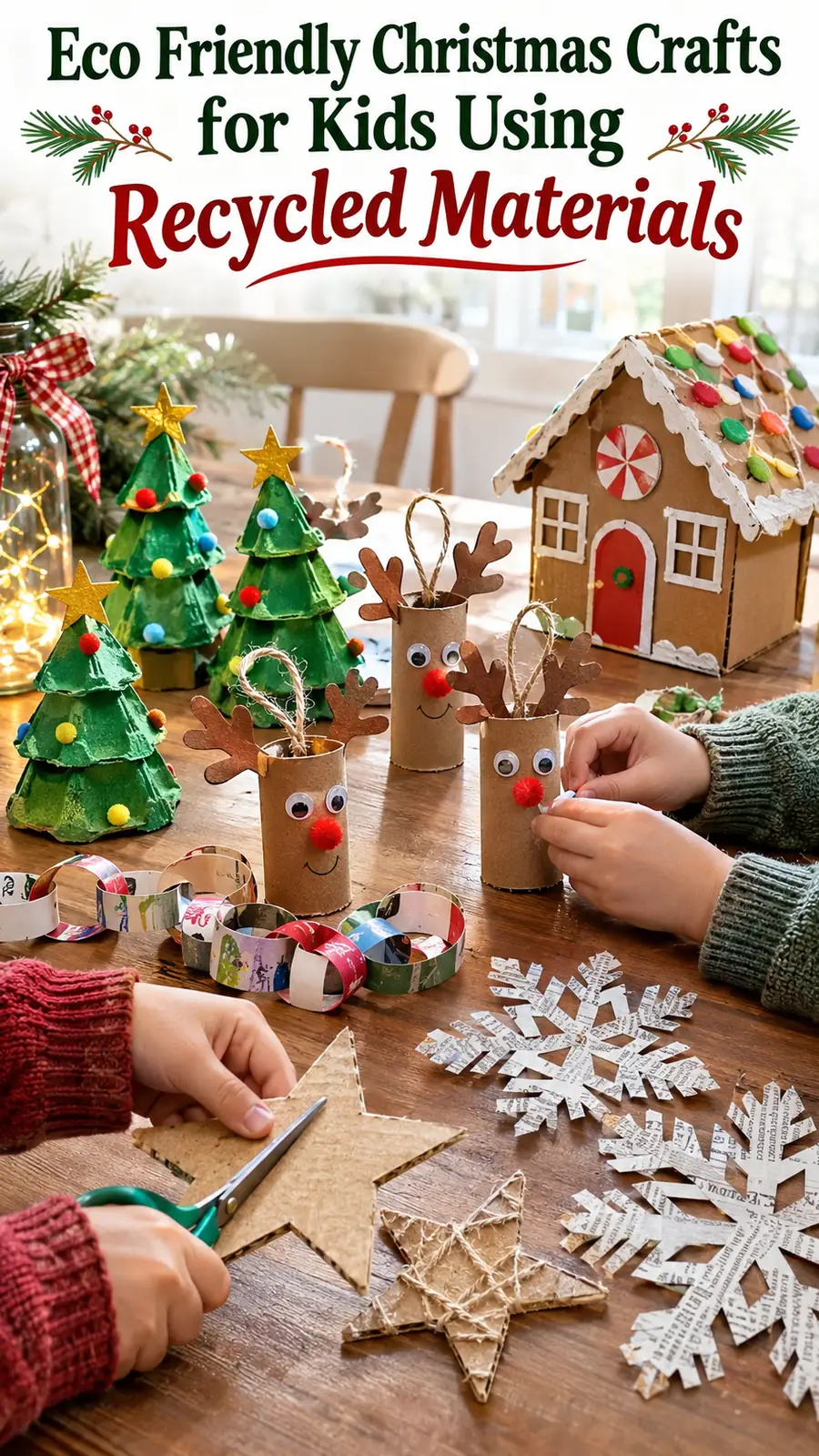
The twelve ideas below are designed for family tables and classrooms, with room for different ages and skill levels. Each project encourages children to give something a second life while making their own decisions about colors, shapes, and patterns. You will also find practical guidance on safe preparation, avoiding unnecessary purchases, and storing favorite creations for another Christmas.
Cardboard Tube Reindeer Ornaments
Empty paper towel tubes can become charming reindeer ornaments with just a little cutting, folding, and drawing. Flatten a clean tube gently, then ask an adult to cut it into wide rings. Children can reshape each ring into a reindeer face and attach ears made from leftover brown paper. Draw friendly eyes and a red nose with washable markers, or add a small circle cut from an old greeting card. A loop of previously used ribbon turns the finished character into a lightweight ornament.
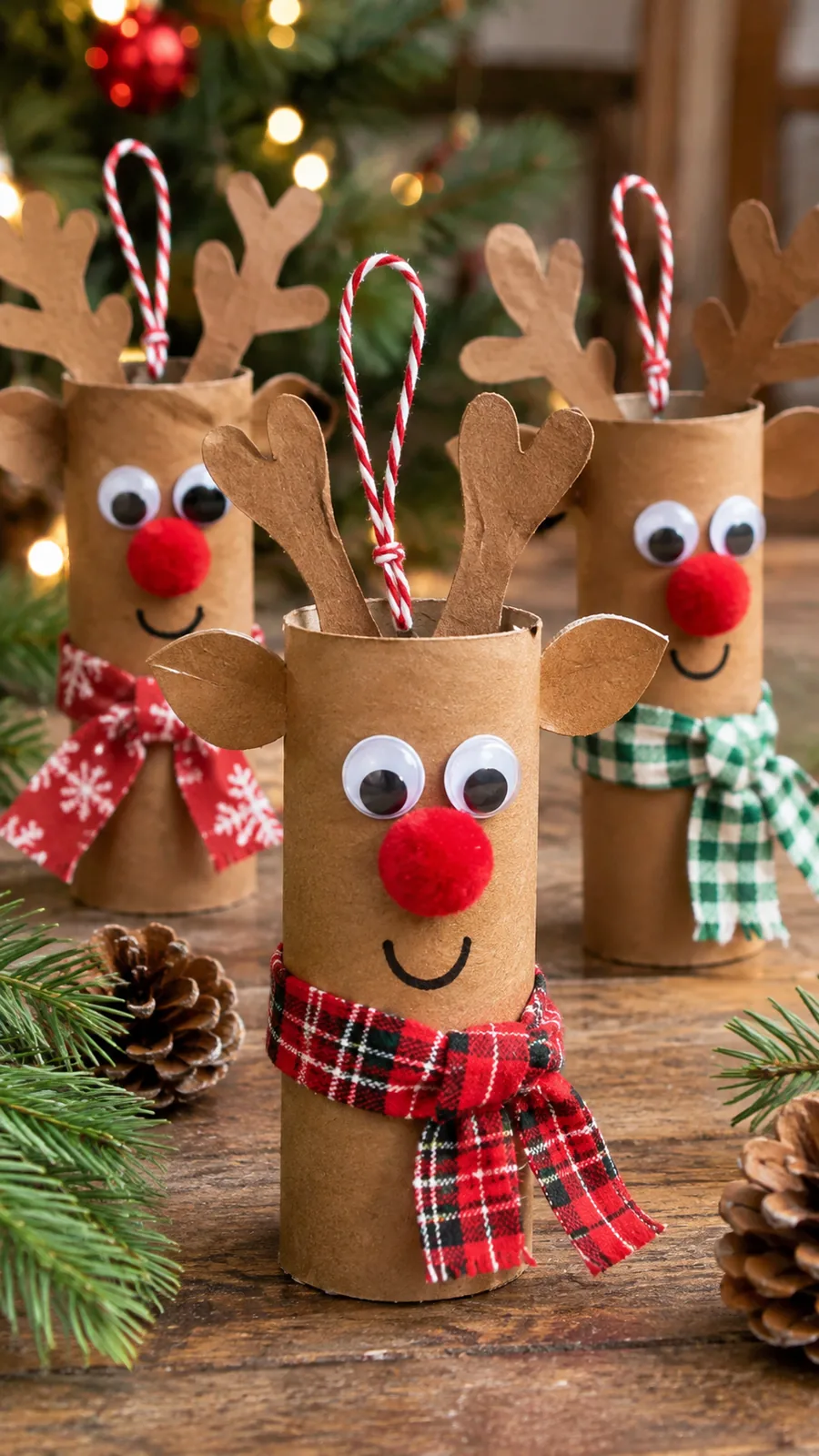
For a classroom activity, let every child choose a different expression rather than following one identical design. Younger children can decorate pieces that an adult has already prepared, while older kids can plan the shapes and assemble their own. Save any offcuts for another project. These little reindeer look sweet hanging from a tree, tied onto a present, or displayed across a mantel. Avoid loose tiny decorations for children who might put them in their mouths.
Egg Carton Christmas Tree Decorations
A cardboard egg carton already has the rounded cups needed to build miniature Christmas trees. Separate several clean, dry cups with adult help and paint their exteriors green. Once dry, stack three cups from largest looking to smallest to create a tiered silhouette. A child can attach tiny stars and circles punched from scrap wrapping paper or unwanted mail. A small cardboard disk below the bottom cup helps the tree stand on a shelf.

This craft suits children who enjoy painting and arranging shapes. Instead of buying embellishments, collect colorful paper scraps, clean fabric remnants, and saved gift ribbon. Give each tree a different personality through patterns, contrasting shades, and paper ornaments. If you want to hang the tree, an adult can add a secure string loop before assembly. Leave enough drying time between painting and joining the pieces, since damp cardboard can lose its shape. The result is festive, affordable, and easy to store after Christmas.
Cereal Box Gingerbread House Village
Old cereal boxes make an excellent base for a miniature gingerbread village that does not involve food waste. Open each clean, empty box and ask an adult to cut out simple house fronts, side walls, and roof panels. Children can cover the pieces with brown recycled paper or leave the natural cardboard visible. Draw windows, doors, icing swirls, and candy shapes using crayons. Assemble the houses with paper tape and child friendly glue, then place them on a reused cardboard tray.

A village becomes especially interesting when each child designs a different building. One might create a bakery, another a toy shop, and another a cozy cottage with a paper wreath. Add snow from torn white scrap paper rather than plastic confetti. For an evening display, place battery operated lights beside the houses, never a flame. Once the holidays finish, fold down any removable sections and keep them flat for the following season. This project encourages storytelling as well as creative construction.
Magazine Page Paper Chain Garland
Colorful old magazines, unwanted catalogs, and leftover gift wrap can become a Christmas garland without buying fresh decorations. Tear or cut paper into strips of similar width, then join the first strip into a loop using a small amount of glue or tape. Thread the next strip through that loop and close it to begin a chain. Continue until the garland reaches the length needed for a doorway, shelf, or classroom wall.
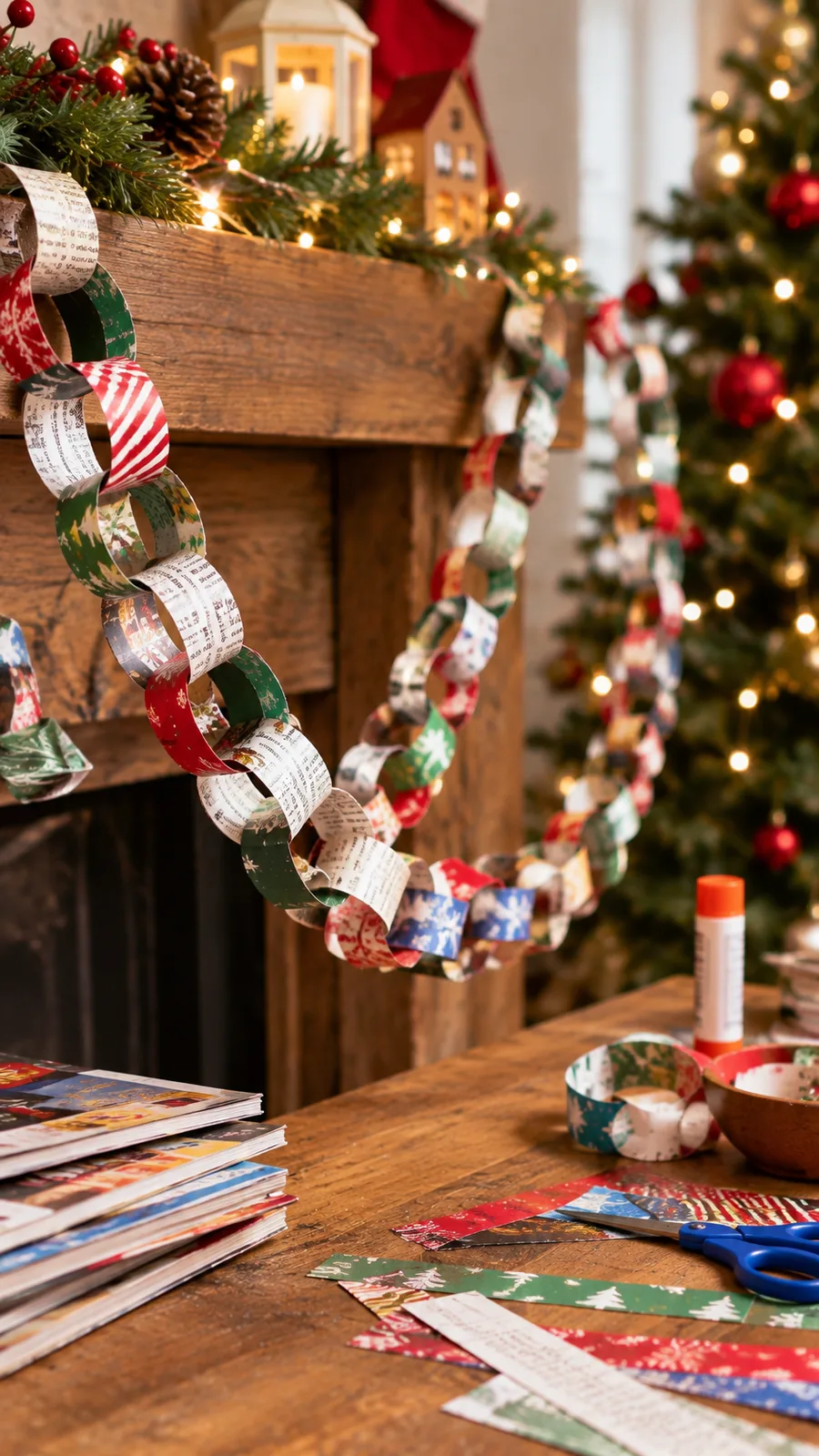
Invite children to experiment with color sequences. Red and green pages create a traditional look, while silver, blue, and white pages feel snowy and calm. Older children can plan repeating patterns or measure how many loops fit along a display area. For younger children, prepare wider paper strips that are easier to handle. Choose dry indoor locations because thin magazine paper can soften in damp conditions. At the end of the season, store the garland in a roomy box or carefully separate the loops for another paper project.
Scrap Cardboard Star Ornaments
Delivery boxes and cereal cartons contain enough sturdy material for a collection of handmade stars. Draw a large star outline on the cardboard and let an adult prepare the cut shapes for younger children. Kids can decorate the surface with colored pencil, leftover yarn, small pieces of discarded wrapping paper, or a collage of newspaper headlines. Natural brown cardboard also looks lovely with simple white paint dots.

To create a coordinated tree, make several stars in different sizes while repeating one or two colors. Older children may enjoy comparing symmetrical shapes or sketching patterns before decorating. A reused ribbon loop attached securely near the top transforms each star into a hanging ornament. Keep heavy layers of glue to a minimum so the cardboard does not warp. A cardboard star can also serve as a gift label when a name is written on the back. After Christmas, keep the stars in a dry envelope between sheets of paper for reuse.
Newspaper Snowflake Window Decorations
Ordinary newspaper can create delicate snowflakes with far more character than store bought window decals. Cut or tear a sheet into a square and fold it several times with adult guidance. Carefully snip small shapes along the folded edges using appropriate child safe scissors. Unfold slowly to reveal the surprise pattern, then flatten the paper beneath a book before displaying it.
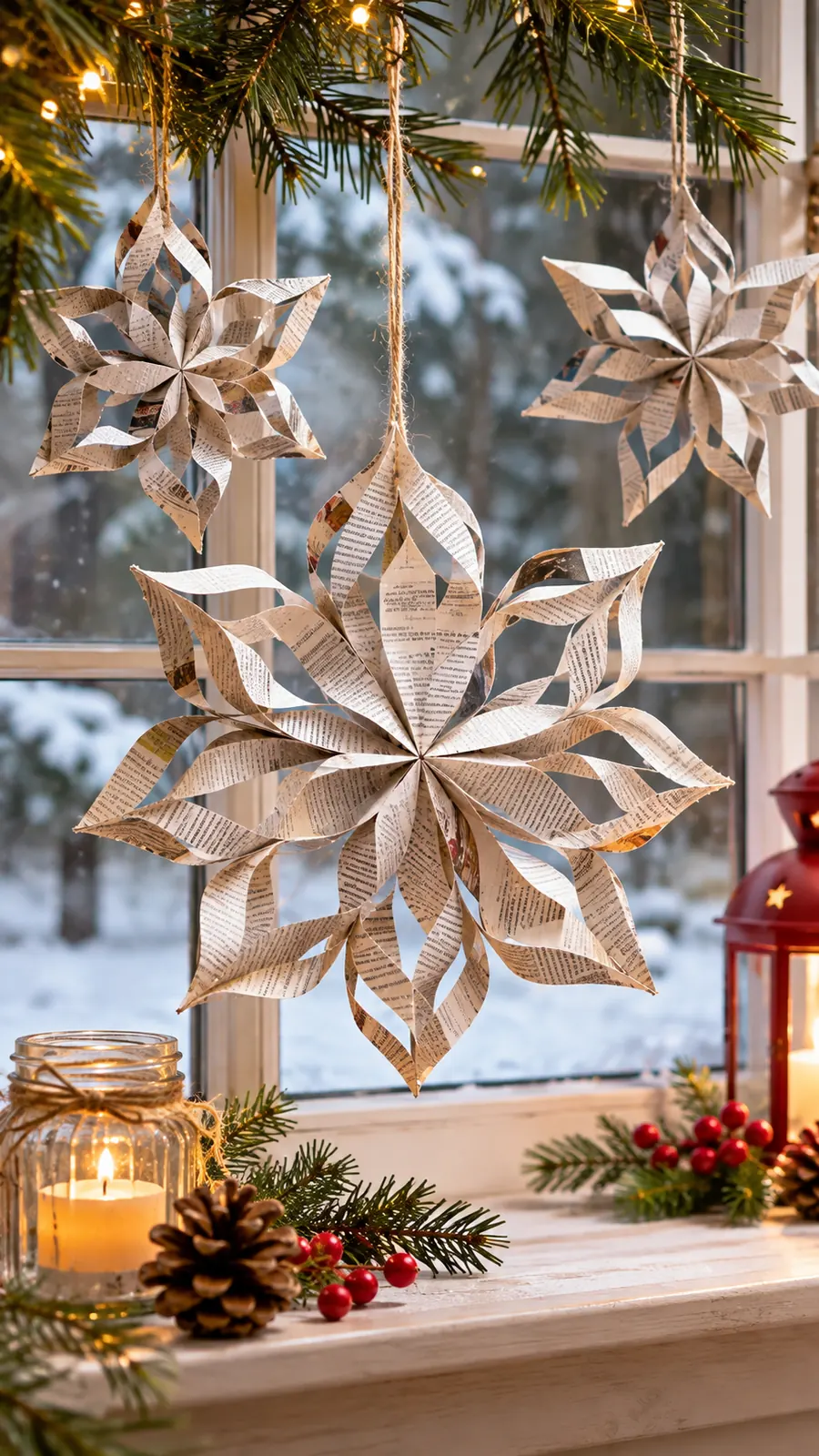
Try using plain newspaper, old notebook pages, or unwanted office paper to compare the designs. Children can explore how repeated cuts create symmetry, making this an easy connection between art and math. Put a small piece of removable tape on the corners to attach snowflakes to a window, or hang them from a paper garland. Keep paper away from heaters and light fixtures. For preschoolers, adults can prepare the folded pieces and help with the cutting, while children enjoy unfolding and choosing where each snowflake belongs. Save intact snowflakes in a folder to use next winter.
Used Greeting Card Gift Tags
Christmas cards from previous years often feature beautiful illustrations that deserve another season. Turn them into personalized gift tags by selecting areas with attractive colors, letters, or patterns. An adult can help cut out rectangles, circles, trees, or simple mitten shapes. Children can write a recipient’s name on the blank reverse side, or glue a small scrap of plain reused paper over existing handwriting.
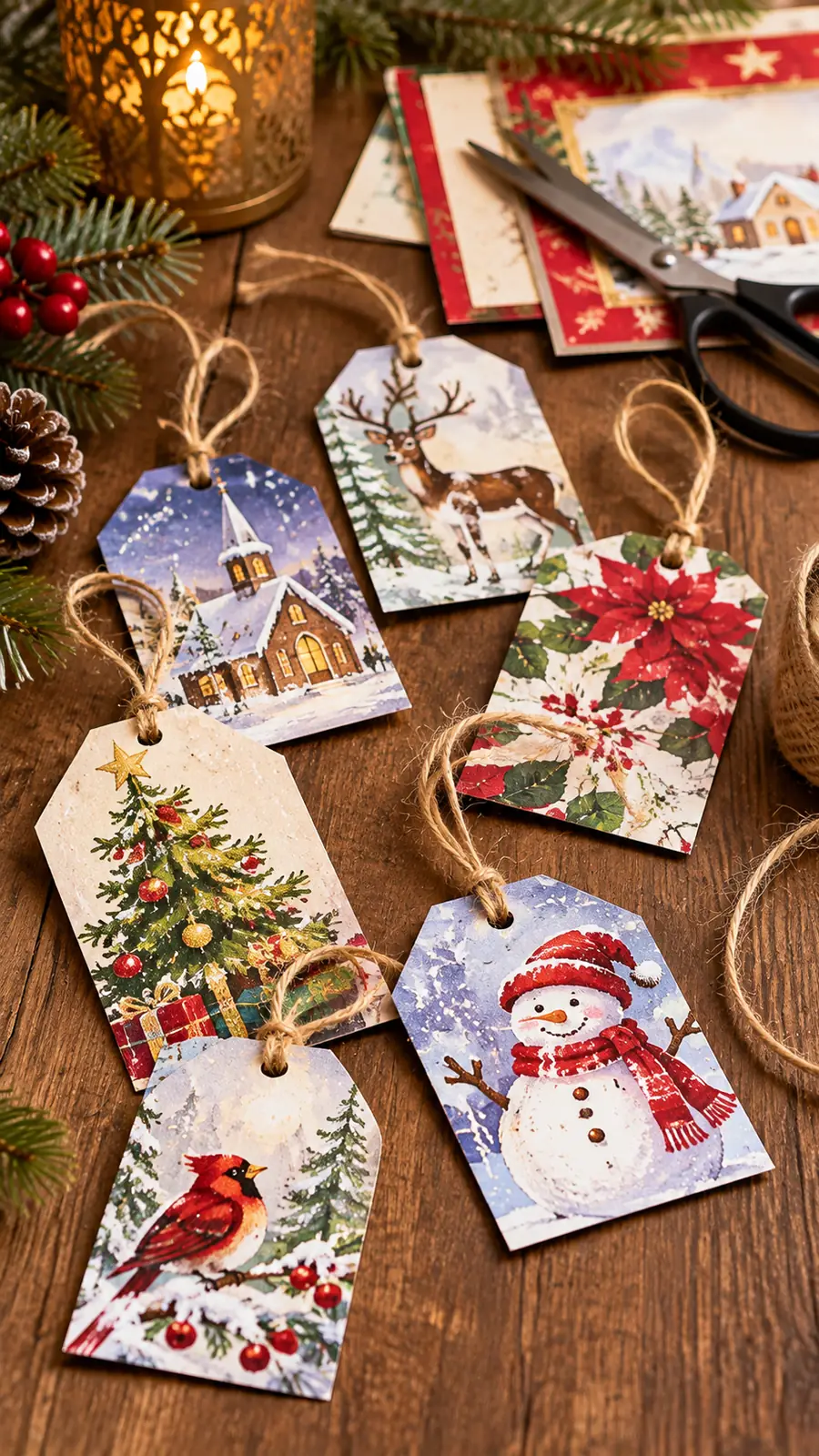
Add a short length of saved ribbon to each tag, or simply tape the tag onto wrapped gifts. For a family tradition, invite everyone to decorate one tag with a small message or drawing. The tags give children a meaningful role in gift preparation and help them notice the value of materials already in the home. Avoid sharing personal messages that remain visible on old cards. A small envelope or tin keeps unused tags organized for future birthdays and holidays. These are practical Christmas crafts rather than decorations that need to be thrown away in January.
Fabric Scrap Christmas Tree Collage
Small fabric scraps from worn clothing, old pillowcases, and leftover sewing projects can become textured Christmas tree artwork. Start with a clean cereal box panel as the background. Arrange green fabric pieces into a triangular tree shape and use a narrow strip of brown fabric for its trunk. Children can experiment with layering, stripes, and contrasting textures before attaching everything with child friendly craft glue.
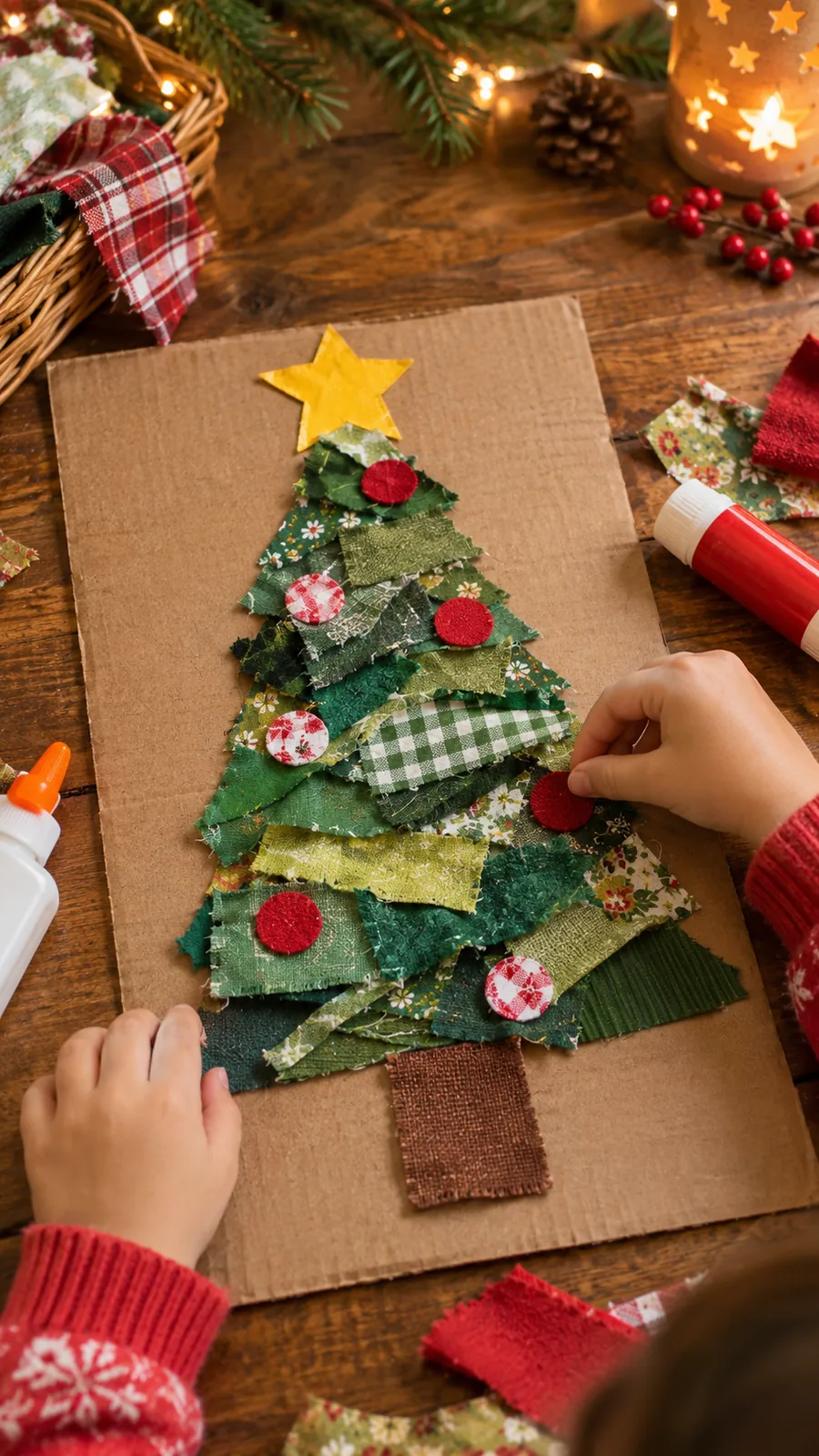
Use smaller fabric circles as ornaments, and cut a star from an unwanted piece of yellow paper. If fabric pieces have fraying edges, fold them under or leave them as a soft decorative feature. This activity works particularly well for children who prefer arranging materials to drawing. It can become a framed keepsake with a handmade cardboard border or a greeting card for a relative. Keep buttons, beads, and other small loose parts away from younger children. By choosing fabric remnants instead of buying new felt sheets, families give existing textiles one more useful purpose.
Paper Bag Santa Gift Puppets
Plain paper bags left over from shopping or lunches are perfect for making playful Santa puppets. Position a clean bag so its folded bottom forms the puppet face. Children can color a red hat, draw eyes, and add a beard made from torn white scrap paper. Use strips cut from old newspapers to add texture to the hat trim and the fluffy beard without buying new materials.
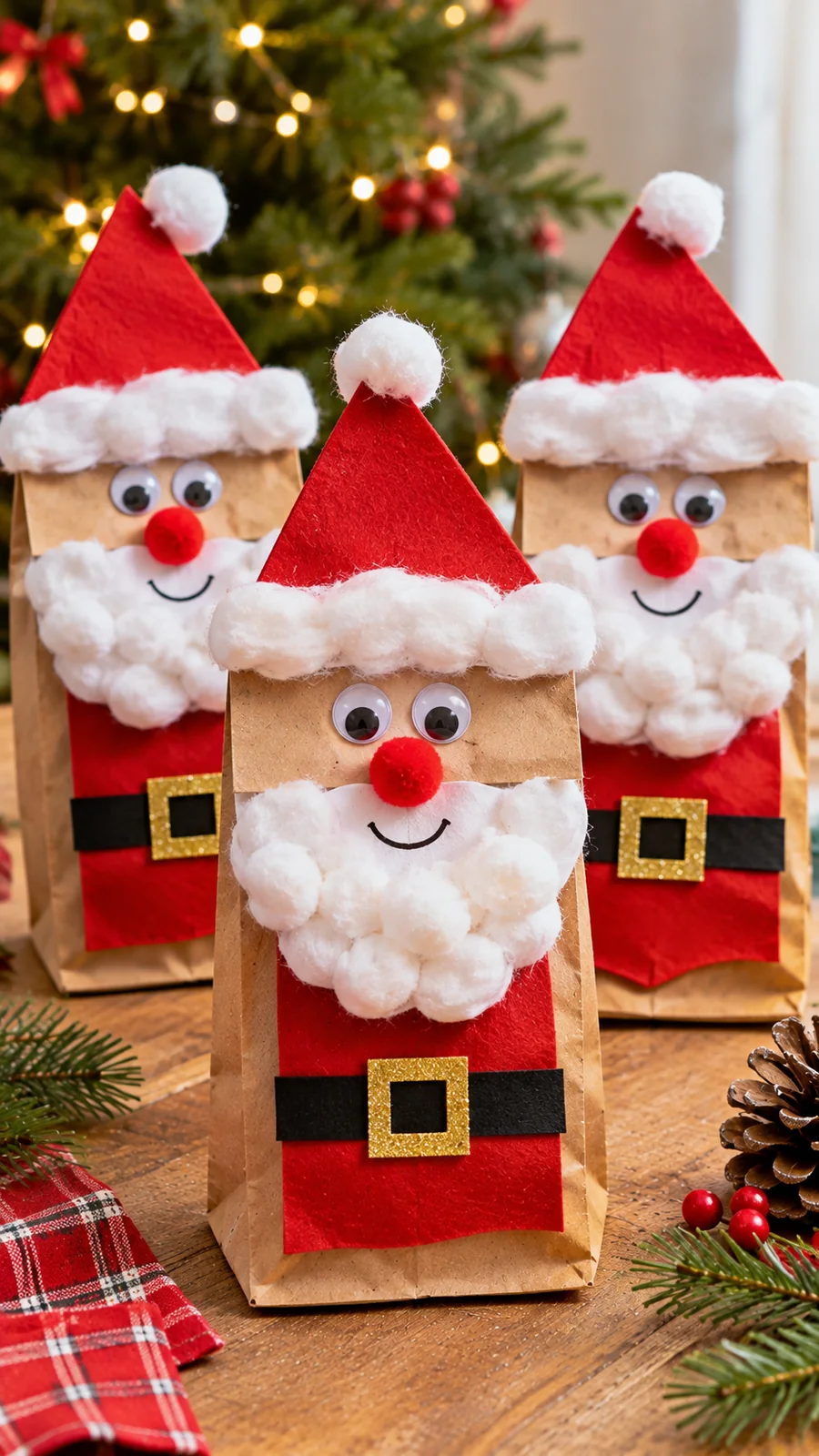
The folded section of the bag moves when a hand goes inside, allowing the character to speak during a Christmas story. Kids can create a whole cast, including elves, snowmen, and friendly winter animals, using the same basic bag shape. Store finished puppets flat to prevent creasing. Rather than treating the craft as disposable, keep the puppets for next year’s storytelling games.
Jar Lid Winter Scene Ornaments
Clean, smooth jar lids can become miniature winter scenes using scraps of paper and fabric. Choose lids without sharp edges and have an adult check every one before crafting. Cut a circle of reused card to fit inside each lid, then let children draw a snowy landscape, Christmas tree, or tiny village. Glue the finished scene into place and add a neat border made from fabric remnants or leftover string.
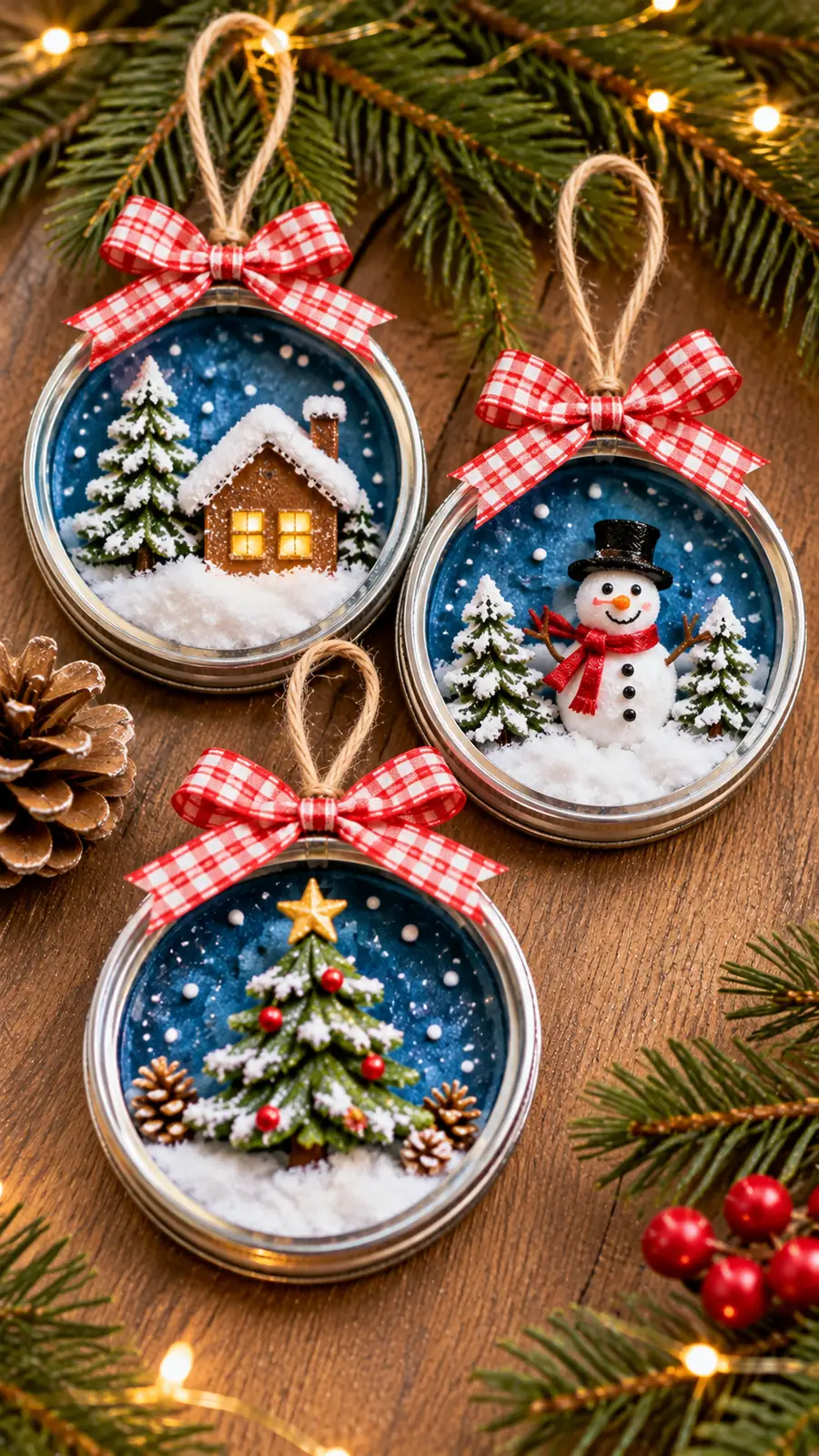
A saved ribbon loop can hang the ornament if an adult attaches it securely, or the lid can simply rest upright on a shelf. Older children may create layered scenes with a foreground tree and distant hills, while younger kids can focus on a single colorful illustration. Avoid glass containers, sharp metal edges, and tiny loose pieces in activities for young children. These small keepsakes make thoughtful handmade gifts, especially when a child’s name and the year are written on the back. Store them separately so the decorated faces do not rub against one another.
Cardboard Tube Holiday Lanterns
A simple cardboard tube can become a glowing holiday decoration when paired with a battery operated light. First, have an adult prepare a few decorative openings in a clean tube, using simple star or circle shapes. Children can paint the cardboard and attach pieces of thin reused colored paper behind the openings for a stained glass effect. Once the paint and glue are fully dry, place the tube around a cool battery operated light.
Group several lanterns on a windowsill or shelf to create a cheerful winter display. Use different paper colors and hole arrangements so each lantern casts its own pattern. An adult should check that the light remains cool and supervise its use. Never add a candle, match, or other open flame, and never leave the lantern near a heater. The paper lantern idea shows how ordinary packaging can become seasonal decor without a large shopping list. Remove the light and store the tubes carefully for reuse in the following year.
Recycled Paper Christmas Countdown Pockets
A homemade countdown display gives children something festive to enjoy throughout December. Start with an old sturdy cardboard box panel and twelve or twenty four envelopes made from used paper, depending on your family’s tradition. Fold each paper piece into a simple pocket, seal the sides with glue, and arrange the pockets on the board. Number them with marker and let children decorate the borders with pieces of old wrapping paper.
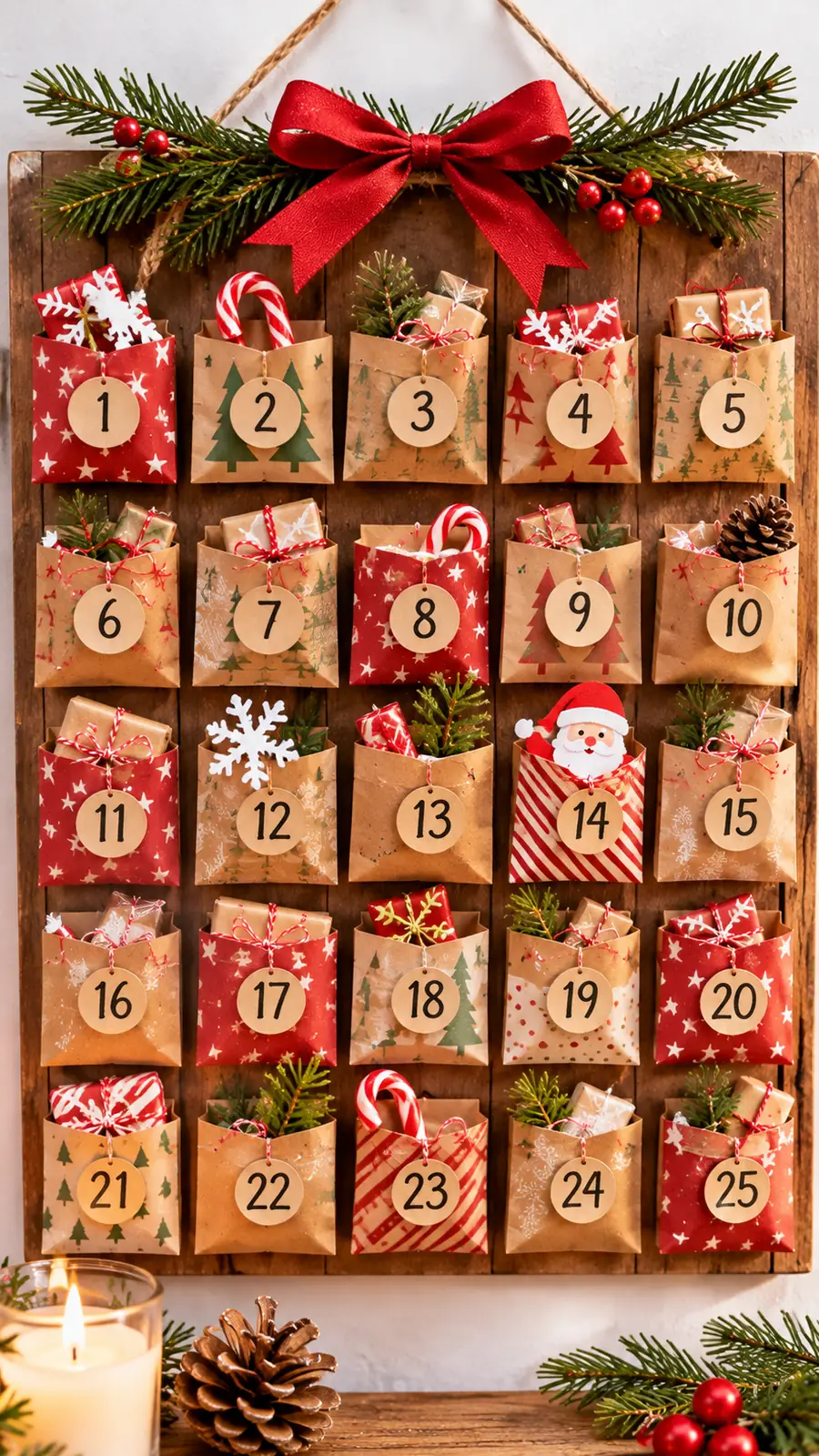
Inside each pocket, place a written family activity such as reading a favorite story, singing a carol, drawing a snowy scene, or making a card for someone. Choosing shared moments instead of disposable trinkets keeps the project focused on connection and creativity. Children can help pick activities that fit a realistic schedule. Leave the pockets unsealed at the top so they can be refilled each year. Hang the board where small children can reach it without climbing. Once December ends, empty the pockets, flatten the display if possible, and save it for another season.
How to Prepare Recycled Craft Materials Safely
Gather supplies gradually from items already used at home. Favor clean paper packaging, cardboard tubes, dry egg cartons, discarded magazines, and fabric offcuts. Wash and completely dry any appropriate containers before reuse. Discard materials with food residue, mold, sharp edges, loose staples, or unknown coatings. Adults should prepare difficult cuts and check for small components before children begin.
Set up a protected table with washable paint, child safe scissors, glue sticks, and a container for scraps. Choose projects according to each child’s skills, not just age. Keep small pieces away from children who may swallow them, and use battery operated lights instead of flames. When making Eco Friendly Christmas Crafts for Kids Using Recycled Materials, safety and an enjoyable experience matter more than making every finished project look perfect.
Make Your Christmas Craft Session Less Wasteful
Start with what you already have instead of buying a new set of supplies for every project. Put paper in one box, cardboard in another, and fabric remnants in a reusable pouch. Ask children to sketch a design before cutting material, so fewer useful pieces become offcuts. Reuse gift ribbon, old greeting cards, and the clean backs of printed sheets whenever possible.
Consider the end of each decoration’s life before assembling it. Projects made mostly from one type of material may be easier to reuse or sort later than pieces covered in mixed coatings and plastic embellishments. Local recycling rules vary, and decorated items are not automatically recyclable. Keep favorite crafts for next Christmas, repurpose the rest, and check local guidance for anything you plan to recycle. The most useful lesson is that thoughtful reuse begins before a craft is made.
Conclusion
Eco Friendly Christmas Crafts for Kids Using Recycled Materials invite children to see familiar packaging in a completely new way. A cardboard tube can become a reindeer or lantern, an egg carton can turn into a tree, and a well loved greeting card can find new life as a gift tag. The best projects use easy materials, leave room for imagination, and create decorations worth saving.
Choose a few ideas that match your child’s interests and keep the process relaxed. Simple preparations, appropriate adult supervision, and a plan for storing finished projects can make holiday crafting easier for everyone. With a little creativity, these recycled Christmas crafts build traditions around making and reusing instead of buying something new every year.