12 Sustainable School Design Ideas For Future Green Schools
Sustainable school design ideas are transforming the way educational spaces are planned, built, and experienced around the world. Schools are no longer viewed as simple buildings with classrooms, corridors, and playgrounds. Instead, modern education is moving toward environmentally responsible spaces that support student wellbeing, reduce resource consumption, and prepare young generations for a changing world. As climate challenges increase and communities search for smarter solutions, schools are becoming important examples of how architecture can work together with nature and technology.
Traditional school buildings often consume large amounts of energy, water, and construction materials. Many older designs depend heavily on artificial lighting, mechanical cooling, and materials that create environmental damage. Future schools require a different approach that combines sustainability with comfort, creativity, and learning. This is where sustainable school design ideas become important because they create educational environments that reduce environmental impact while improving the experience of students and teachers.
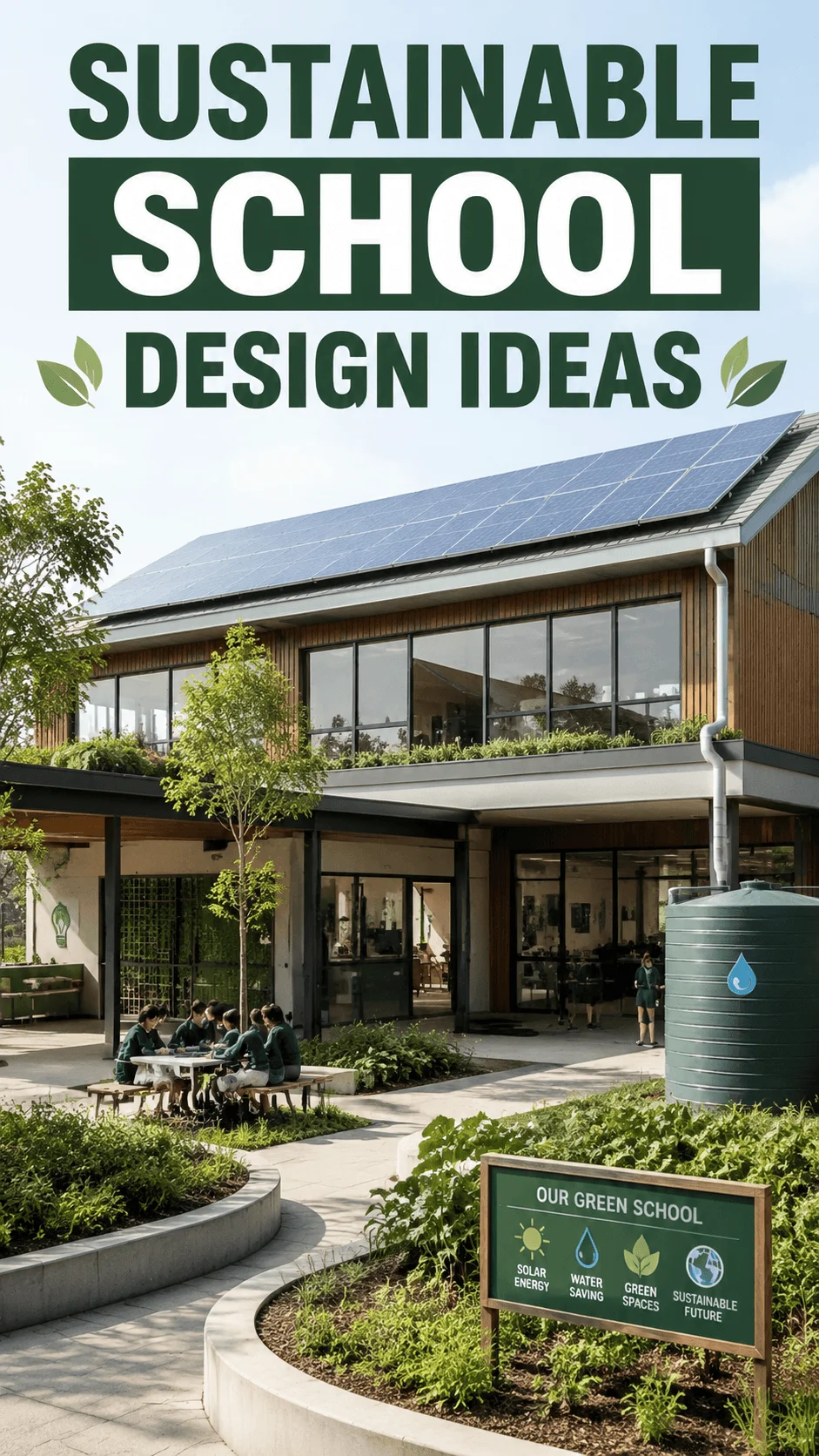
Modern green schools are designed around the idea that the building itself can become a learning tool. Students can understand renewable energy by observing solar systems, learn about ecosystems through school gardens, and develop environmental responsibility by interacting with sustainable spaces. A well designed school does not only teach sustainability through textbooks but demonstrates sustainable living through everyday experiences.
The growth of eco friendly school building ideas is also connected with rising energy costs, climate change concerns, and increasing awareness about healthy learning environments. Architects, educators, and governments are now exploring future school architecture that combines renewable energy, smart technology, natural environments, and climate responsive designs. These innovations show that schools can become healthier, more efficient, and more inspiring places for future generations.
Why Sustainable School Design Is Important For The Future Of Education
Schools influence the habits, values, and knowledge of future generations. When students spend years inside environmentally responsible buildings, sustainability becomes a natural part of their daily lives. A school that uses renewable energy, manages waste responsibly, and creates connections with nature provides practical lessons that extend beyond traditional education.
One major reason sustainable school design is becoming more important is the need to reduce environmental impact. Buildings contribute significantly to global energy consumption and carbon emissions. Educational buildings operate for many hours every day, making energy efficiency an important factor. Through better insulation, renewable energy systems, efficient lighting, and smart management technologies, schools can significantly reduce their environmental footprint.
Another important benefit involves student health and academic performance. Research in architecture and education shows that natural light, fresh air, greenery, and comfortable indoor environments can improve concentration and overall wellbeing. Future schools are moving toward designs that support both environmental goals and human needs. Concepts such as biophilic design, outdoor learning spaces, and natural ventilation systems create healthier environments where students can feel more connected and engaged.
Sustainable schools also help communities become more environmentally aware. A school can influence thousands of students, families, and local residents. When students participate in recycling programs, gardening projects, renewable energy monitoring, and conservation activities, sustainability becomes a shared community responsibility.
The future of education requires spaces that support creativity, collaboration, and environmental awareness. Sustainable school design ideas provide a pathway toward buildings that are not only efficient but also inspiring. They represent a shift from schools being passive structures to becoming active participants in creating a healthier planet.
Net Zero Energy School Design With Solar Power Systems
One of the most important trends in modern sustainable architecture is net zero energy school design. These schools aim to produce the same amount of energy that they consume throughout the year. Instead of depending completely on external energy sources, they generate clean power through renewable systems and reduce unnecessary energy usage through efficient design.
Solar energy plays a major role in these schools. Large solar panels installed on rooftops, parking areas, or specially designed structures can provide electricity for classrooms, laboratories, lighting systems, and other school facilities. Some advanced schools combine solar panels with battery storage systems, allowing them to save excess energy and use it when sunlight is unavailable.
However, achieving energy independence requires more than installing solar panels. The entire building must work efficiently. Architects use advanced insulation materials, energy efficient windows, natural lighting systems, and smart climate controls to reduce energy demand. These features allow schools to use less electricity while maintaining comfortable learning environments.
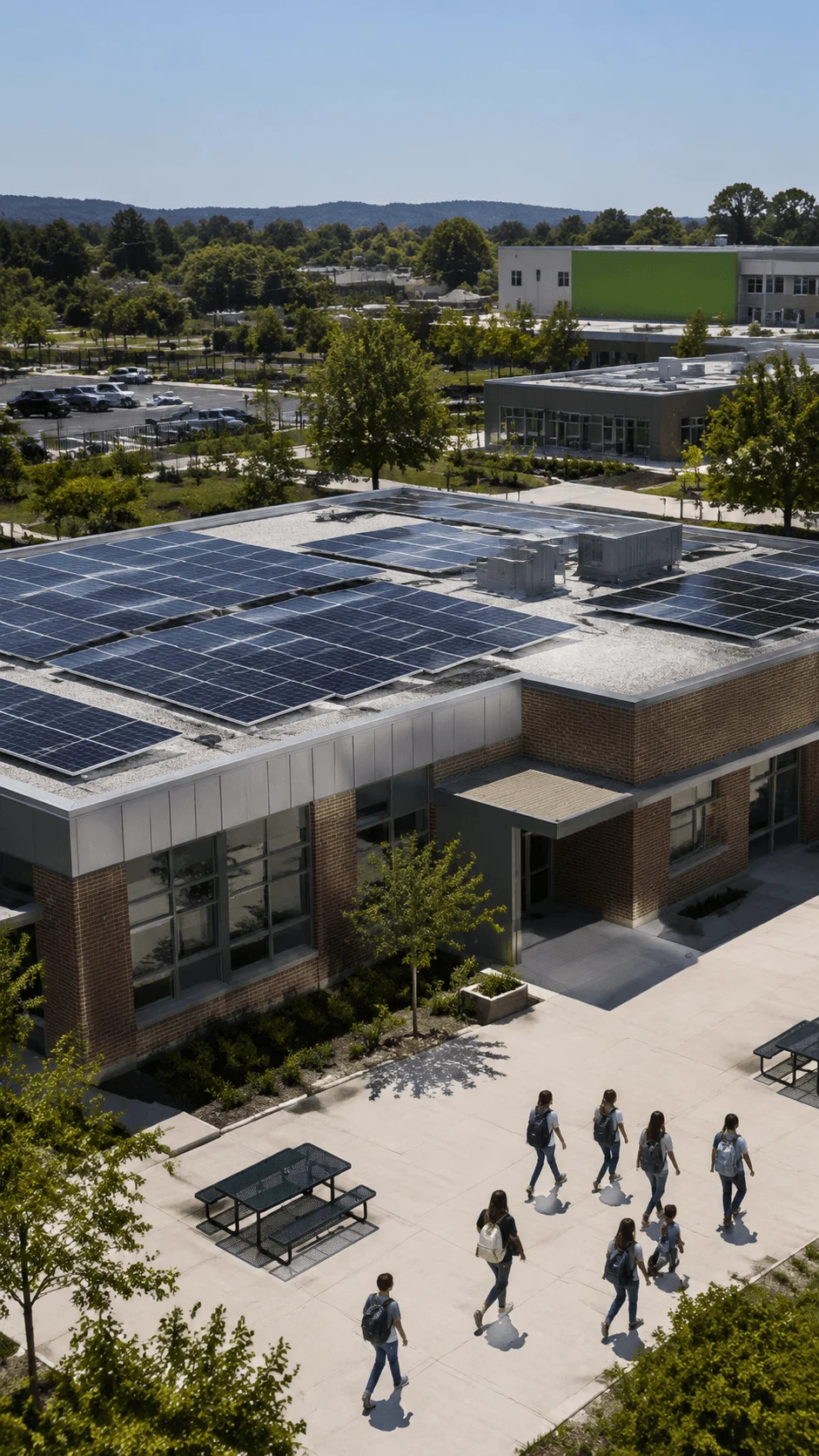
Net zero energy schools also provide valuable educational opportunities. Students can observe how renewable energy systems operate and understand concepts related to science, technology, and environmental responsibility. Solar monitoring displays inside schools can show real time energy production, helping students connect classroom knowledge with practical examples.
The popularity of this approach continues to grow because it addresses both environmental and economic challenges. Although renewable systems require initial investment, they can reduce long term operating costs. Schools can redirect saved resources toward educational programs while reducing their contribution to carbon emissions.
Among modern sustainable school design ideas, net zero energy buildings represent a powerful example of how architecture can support climate solutions. They demonstrate that schools can become energy producers rather than only energy consumers.
Biophilic School Design With Nature Integrated Classrooms
Biophilic school design ideas focus on creating stronger connections between students and the natural world. This approach is based on the understanding that humans naturally benefit from interaction with nature. Instead of separating indoor learning spaces from outdoor environments, biophilic designs bring natural elements directly into schools.
Modern classrooms are increasingly incorporating features such as indoor plants, living walls, natural materials, garden areas, and views of outdoor landscapes. These elements create a calmer and more comfortable atmosphere for students. Natural environments can reduce stress, encourage creativity, and improve the overall learning experience.
One important feature of biophilic schools is the use of natural lighting. Large windows, skylights, and carefully planned building orientations allow more sunlight to enter classrooms. Natural ventilation systems also improve indoor air quality by allowing fresh air movement without excessive dependence on mechanical systems.
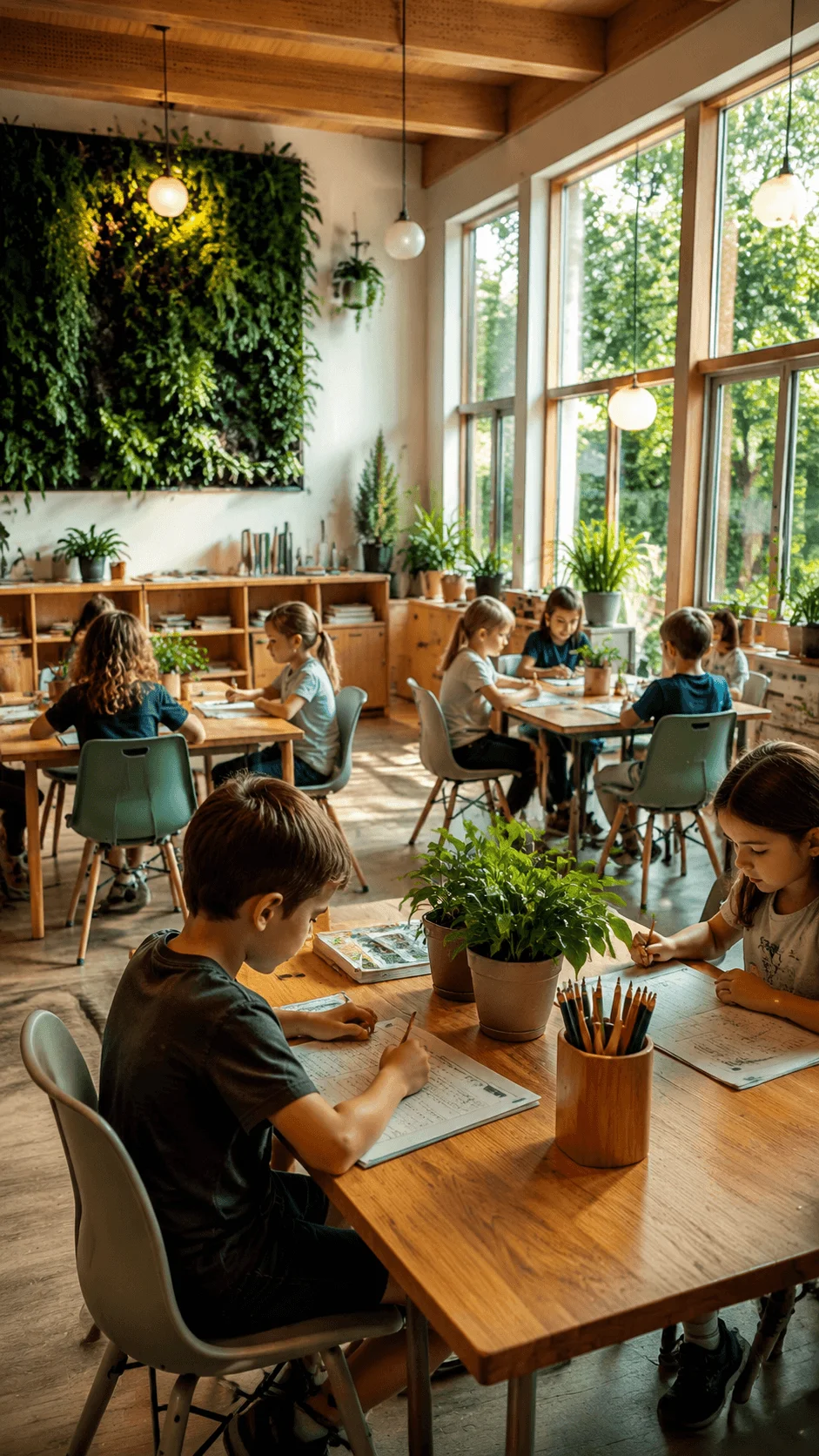
Outdoor learning areas are another important part of nature integrated schools. Instead of limiting education to indoor classrooms, schools can create gardens, environmental laboratories, and nature exploration spaces. These areas allow students to learn about biology, agriculture, climate systems, and sustainability through direct experiences.
Biophilic design also supports environmental education. When students see plants growing inside their classrooms or participate in maintaining school gardens, they develop stronger connections with ecological systems. They begin to understand the importance of protecting natural resources.
Future school architecture will likely include more nature based learning environments because they combine sustainability with human wellbeing. These designs prove that green spaces are not simply decorative features but essential parts of successful educational environments.
Climate Resilient School Buildings For Future Challenges
Climate change has created new challenges for building design. Rising temperatures, extreme weather events, flooding, and changing environmental conditions require schools to become more adaptable. Climate resilient school design focuses on creating buildings that can continue operating safely during environmental challenges.
Modern climate resilient schools use materials and strategies that help them withstand difficult conditions. Buildings may include stronger structures, flood protection systems, heat resistant materials, and improved drainage solutions. These features help protect students and maintain educational activities during emergencies.
Heat management is becoming especially important as temperatures increase in many regions. Schools are adopting designs that reduce indoor heat through better insulation, shaded outdoor areas, reflective roofing materials, and natural cooling systems. These approaches create comfortable learning environments without excessive energy consumption.
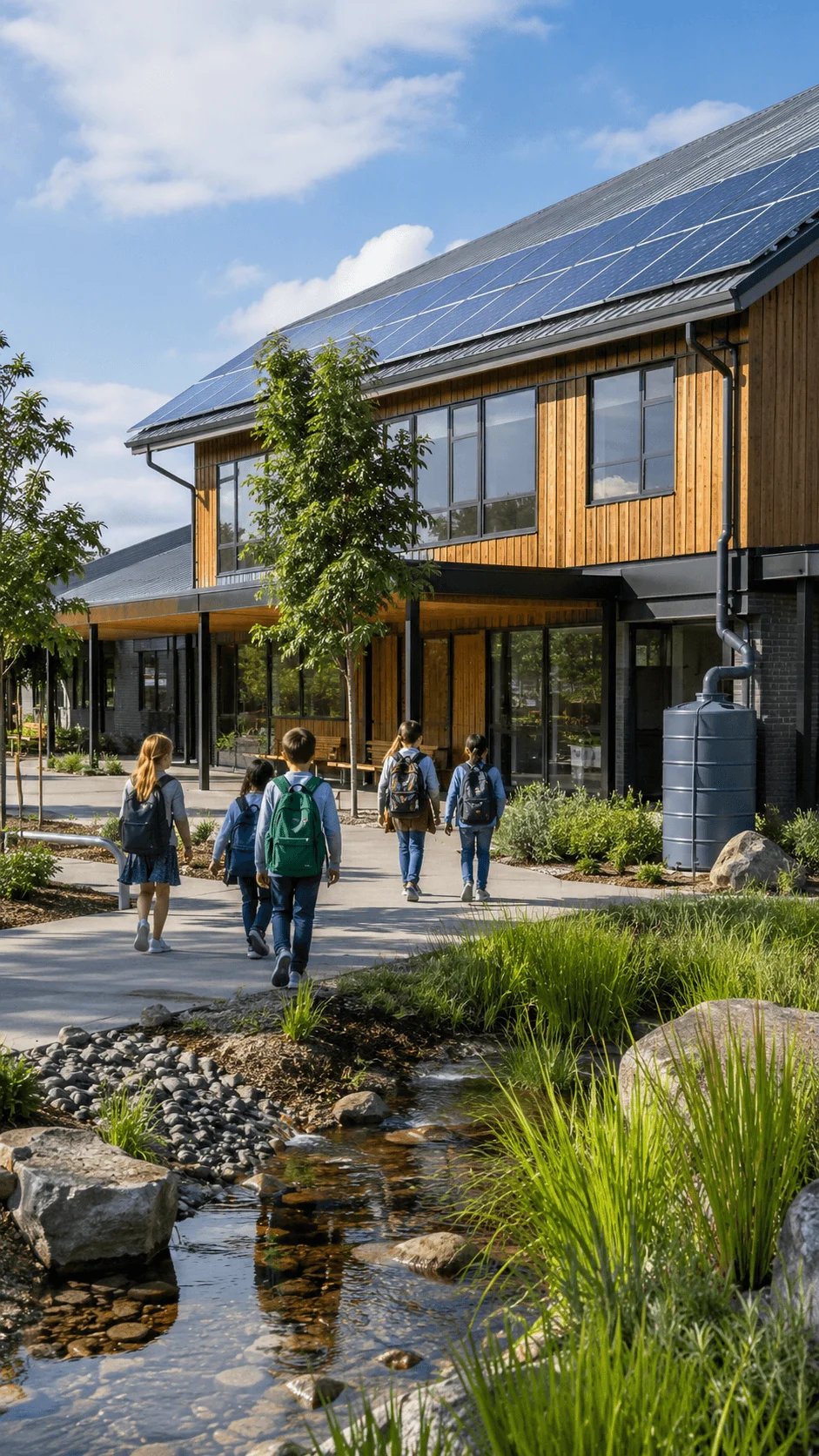
Water management is another major component of climate resilient schools. Rainwater collection systems, permeable surfaces, and smart irrigation methods help schools manage water resources more effectively. These solutions reduce pressure on local water supplies while preparing schools for changing climate conditions.
Climate resilient schools also teach students about adaptation and environmental responsibility. When students see how their school responds to climate challenges, they gain practical knowledge about sustainability and resilience.
As environmental conditions continue to change, climate resilient school design will become a necessary part of future educational planning. These buildings represent a proactive approach that protects communities while supporting long term sustainability.
Smart Sustainable Schools Using Artificial Intelligence Technology
Technology is becoming a major part of modern school architecture. Smart sustainable school design combines digital systems, artificial intelligence, and automation to improve energy efficiency, comfort, and resource management.
Artificial intelligence can help schools analyze building performance and automatically adjust systems according to real needs. Smart sensors can monitor temperature, lighting, air quality, and energy usage. These systems allow buildings to reduce waste by using resources only when necessary.
For example, intelligent lighting systems can adjust brightness depending on natural sunlight levels. Smart climate systems can control heating and cooling based on classroom occupancy. Water monitoring technology can identify leaks and prevent unnecessary consumption.
AI technology also supports better decision making. School administrators can analyze energy data and identify areas where improvements are needed. This allows schools to create more efficient operations while reducing costs.
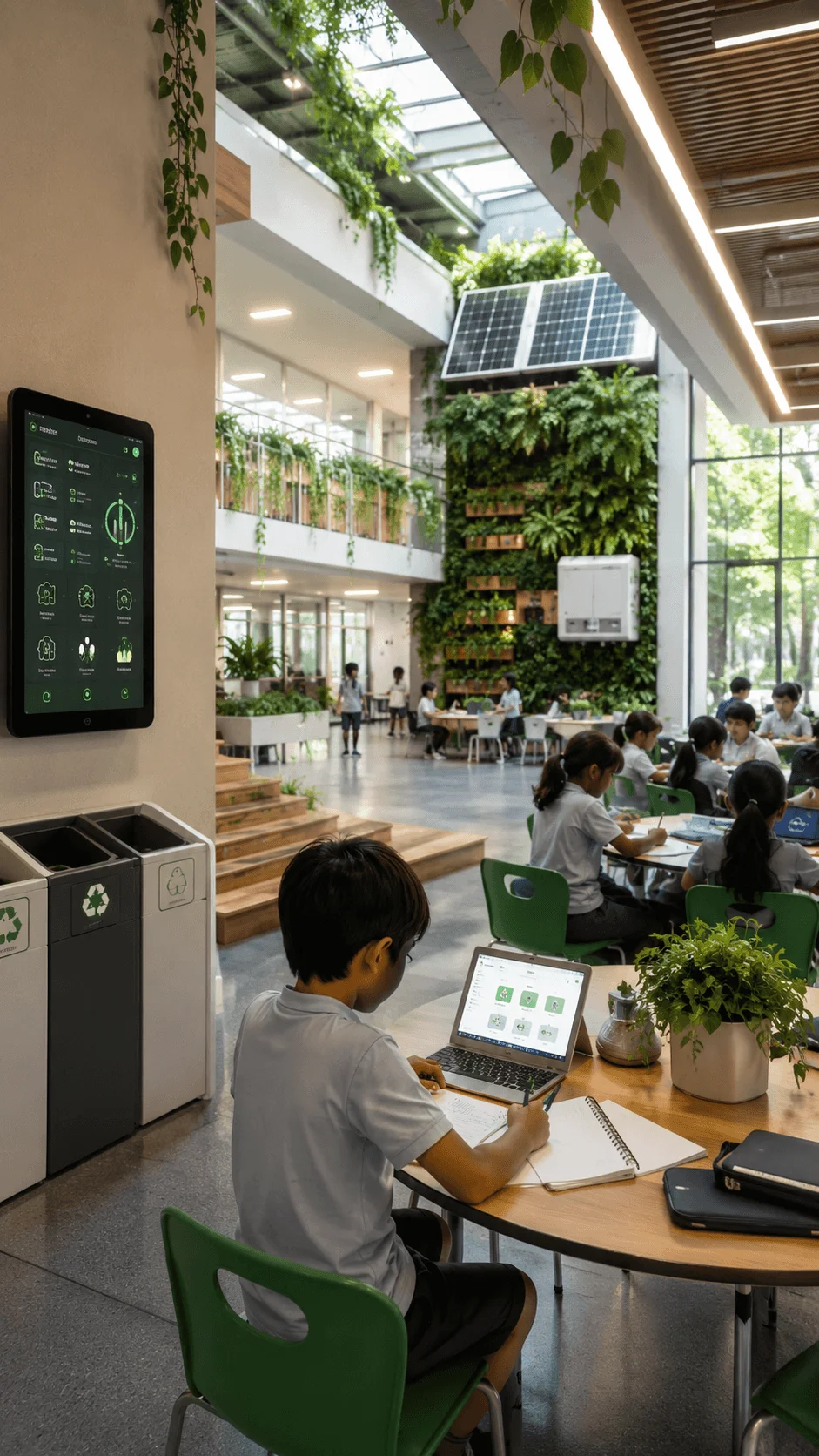
Beyond energy management, smart schools create better learning environments. Improved air quality monitoring and temperature control help students remain comfortable and focused. Technology can also support interactive learning by connecting students with real time information about their school’s sustainability performance.
Smart sustainable school design represents the connection between education, technology, and environmental responsibility. As artificial intelligence continues to develop, future schools will become more intelligent, efficient, and responsive to human needs.
Passive Solar School Architecture For Energy Efficiency
Passive solar school design is becoming an important approach in future school architecture because it focuses on reducing energy consumption through intelligent building planning. Instead of depending mainly on mechanical heating and cooling systems, passive solar buildings use natural elements such as sunlight, airflow, and building orientation to maintain comfortable indoor conditions.
The basic idea behind passive solar design is to work with the local climate rather than against it. Architects carefully study the position of the sun, seasonal temperature changes, and natural wind patterns before designing the building. Classrooms can be positioned to receive appropriate amounts of sunlight during colder months while using shading systems to prevent overheating during warmer seasons.
Large windows, thermal materials, insulated walls, and strategically placed openings help maintain comfortable temperatures naturally. These features reduce the need for air conditioning and artificial heating, which lowers energy consumption and operating costs.
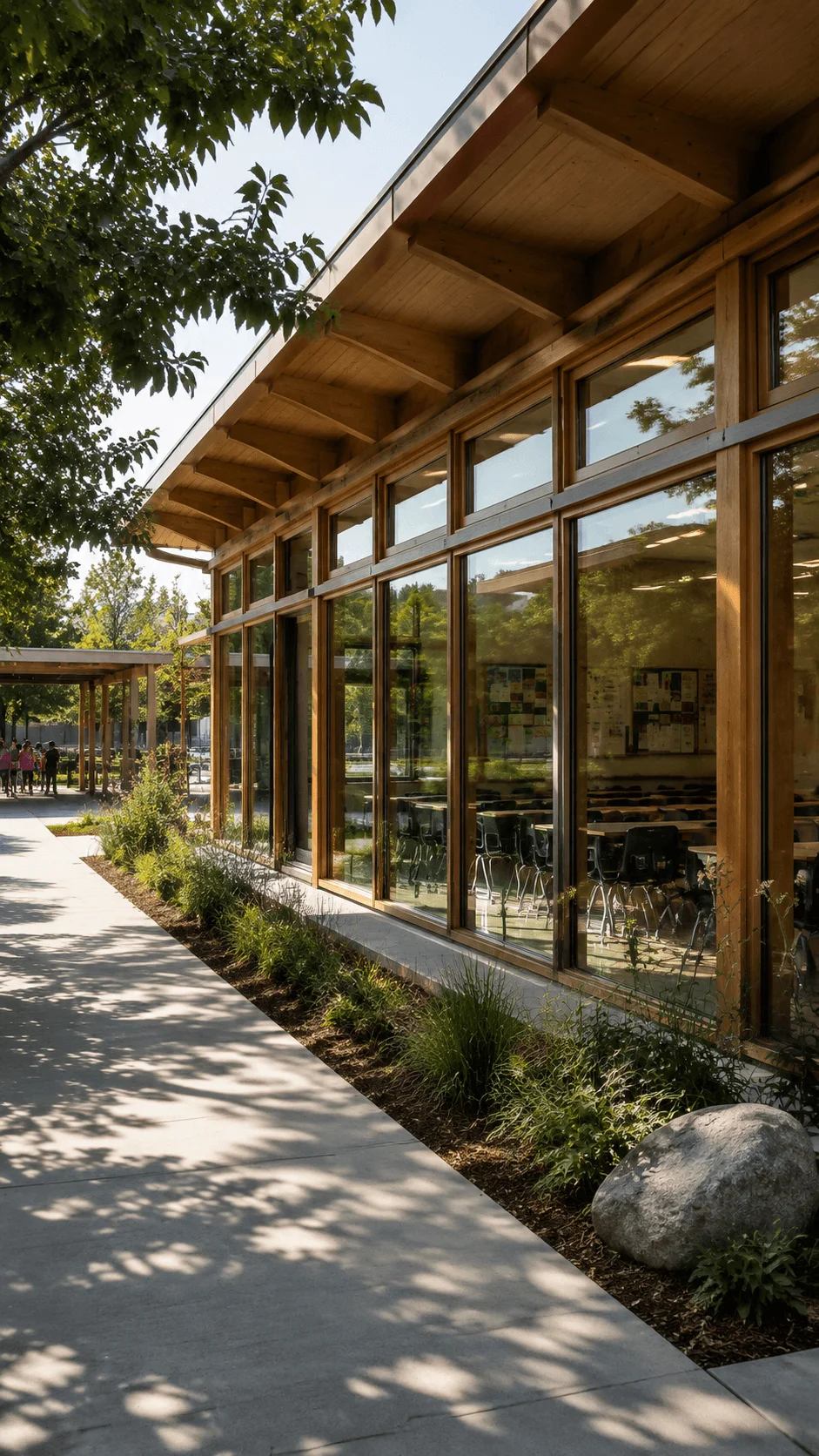
Passive solar school design also improves the learning environment. Natural daylight creates brighter classrooms and reduces dependence on artificial lighting. Students benefit from spaces that feel more connected to outdoor conditions, creating a healthier and more comfortable atmosphere.
Another advantage of passive solar architecture is its long term sustainability. Once the building is designed correctly, it continues to save energy throughout its lifespan. Schools can use these designs to demonstrate how thoughtful architecture can reduce environmental impact without sacrificing comfort.
Among modern sustainable school design ideas, passive solar architecture represents a simple yet powerful solution. It shows that sustainability does not always require complicated technology. Sometimes, better planning and understanding of natural systems can create highly efficient learning spaces.
Green Roof School Design Ideas Creating Living Learning Spaces
Green roof school design ideas are gaining attention because they transform unused rooftop areas into valuable environmental spaces. Instead of traditional roofs that absorb heat and increase building temperatures, green roofs use vegetation and growing systems to create natural insulation.
A green roof usually includes layers of plants, soil, drainage systems, and protective materials. These living roofs help reduce heat absorption, manage rainwater, and improve local biodiversity. During hot weather, plants provide natural cooling by reducing the amount of heat transferred into the building.
Schools can also use green roofs as educational spaces. Students can learn about gardening, ecosystems, food production, and environmental science through direct experiences. A rooftop garden can become an outdoor classroom where students understand natural processes in a practical way.
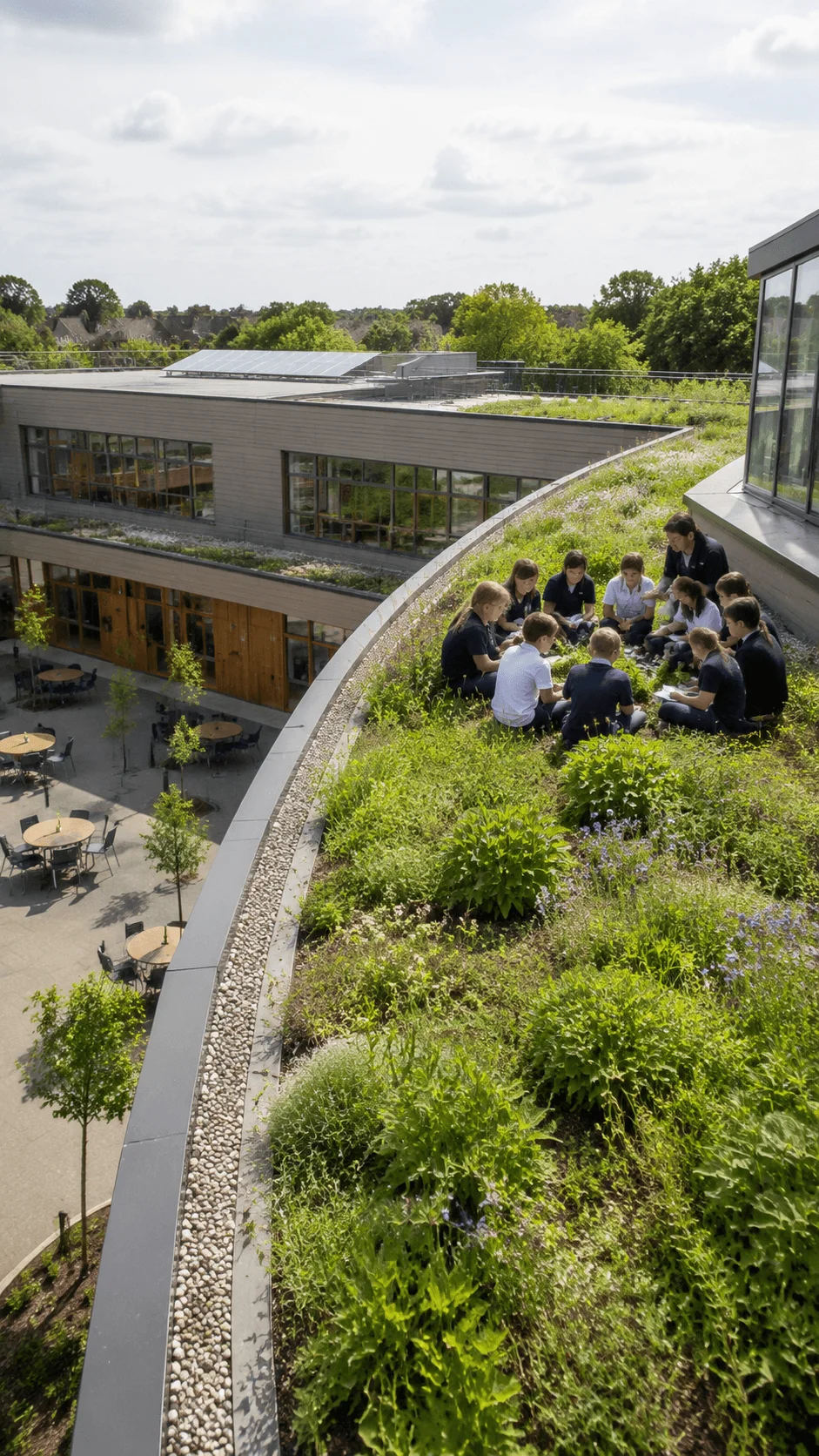
Green roofs also support better water management. During rainfall, vegetation absorbs and stores part of the water, reducing pressure on drainage systems. This approach becomes especially useful in areas that experience heavy rainfall or flooding.
Beyond environmental benefits, green roofs create more attractive and inspiring school environments. They introduce natural elements into urban areas where green spaces may be limited. Students who spend time around nature often develop stronger environmental awareness.
As cities become more crowded, green roof systems will become an important part of future school architecture. These designs demonstrate how buildings can provide benefits beyond their basic functions.
Circular School Design Using Recycled And Sustainable Materials
Circular school design focuses on creating buildings that reduce waste and keep materials valuable for as long as possible. Traditional construction often follows a linear system where resources are extracted, used, and eventually discarded. Circular design replaces this approach with a system based on reuse, repair, and regeneration.
Schools following circular principles carefully select construction materials with their entire lifecycle in mind. Architects may use recycled materials, renewable resources, and components that can be reused or repaired in the future.
For example, recycled wood, reclaimed materials, recycled metals, and sustainable construction products can reduce the environmental impact of school buildings. Furniture and interior elements can also follow circular principles by using durable designs that avoid frequent replacement.
Circular school design ideas also encourage students to understand responsible consumption. A school building itself can become a demonstration of how resources should be valued rather than wasted.
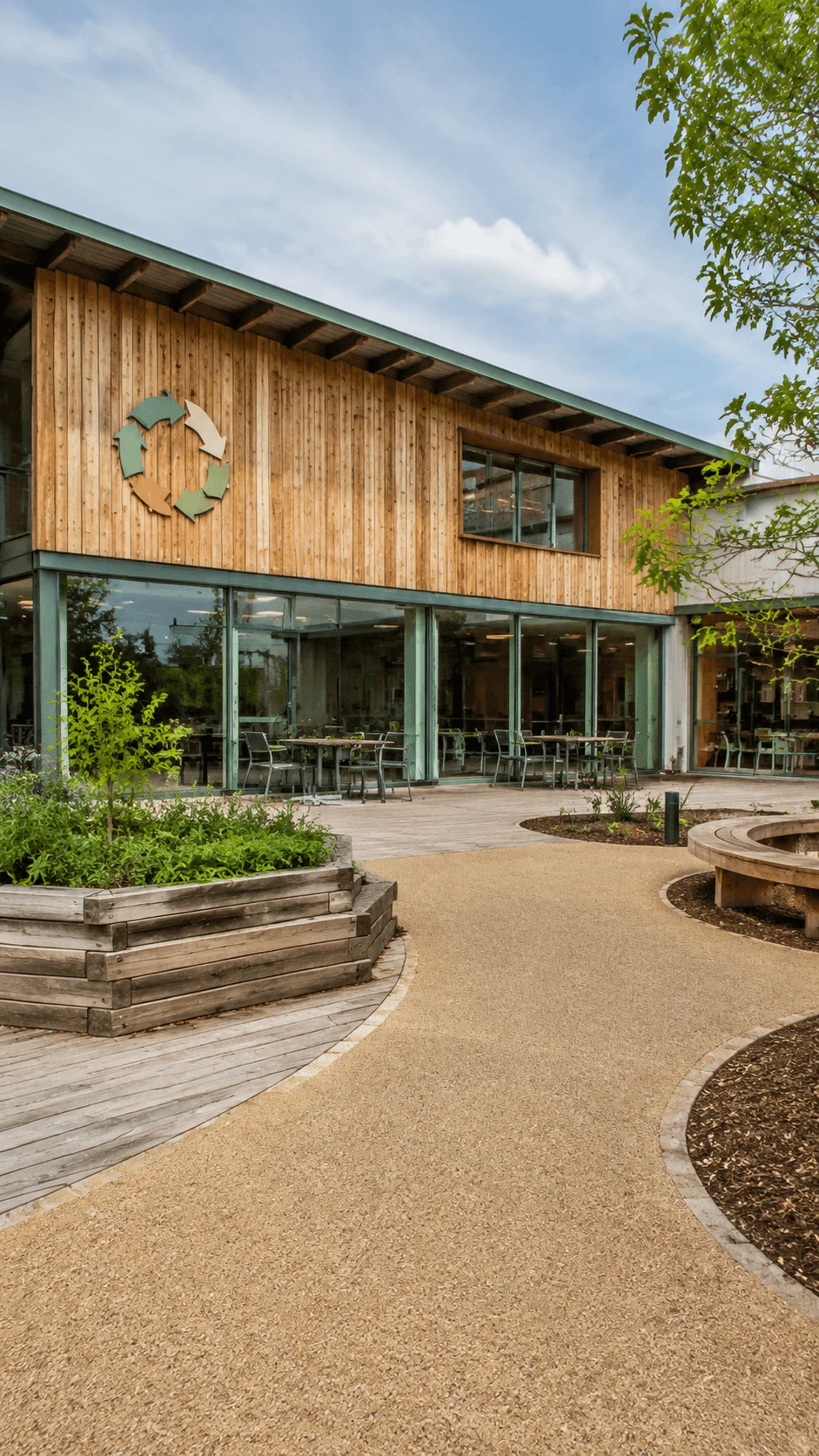
Another important feature of circular design is flexibility. Buildings should adapt to future needs instead of becoming outdated quickly. Movable classrooms, adaptable spaces, and repair friendly structures allow schools to change without requiring complete reconstruction.
Circular approaches represent a major shift in sustainable architecture. They focus not only on reducing environmental damage but also on creating systems where buildings continue providing value throughout their entire lifespan.
Modular Sustainable School Buildings For Flexible Education
Modular sustainable school design is becoming increasingly popular because it offers flexibility, speed, and lower environmental impact. Modular buildings are created using prefabricated sections that are manufactured in controlled environments and assembled at the school location.
This approach reduces construction waste because materials are measured and used more efficiently during manufacturing. It also reduces construction time, allowing schools to expand facilities faster when student populations increase.
Modern modular schools are very different from temporary structures of the past. Today, architects create attractive and comfortable modular buildings with advanced insulation, energy efficient systems, and sustainable materials.
One major advantage of modular schools is adaptability. Educational needs change over time, and schools require spaces that can evolve. Modular classrooms can be expanded, rearranged, or relocated according to future requirements.
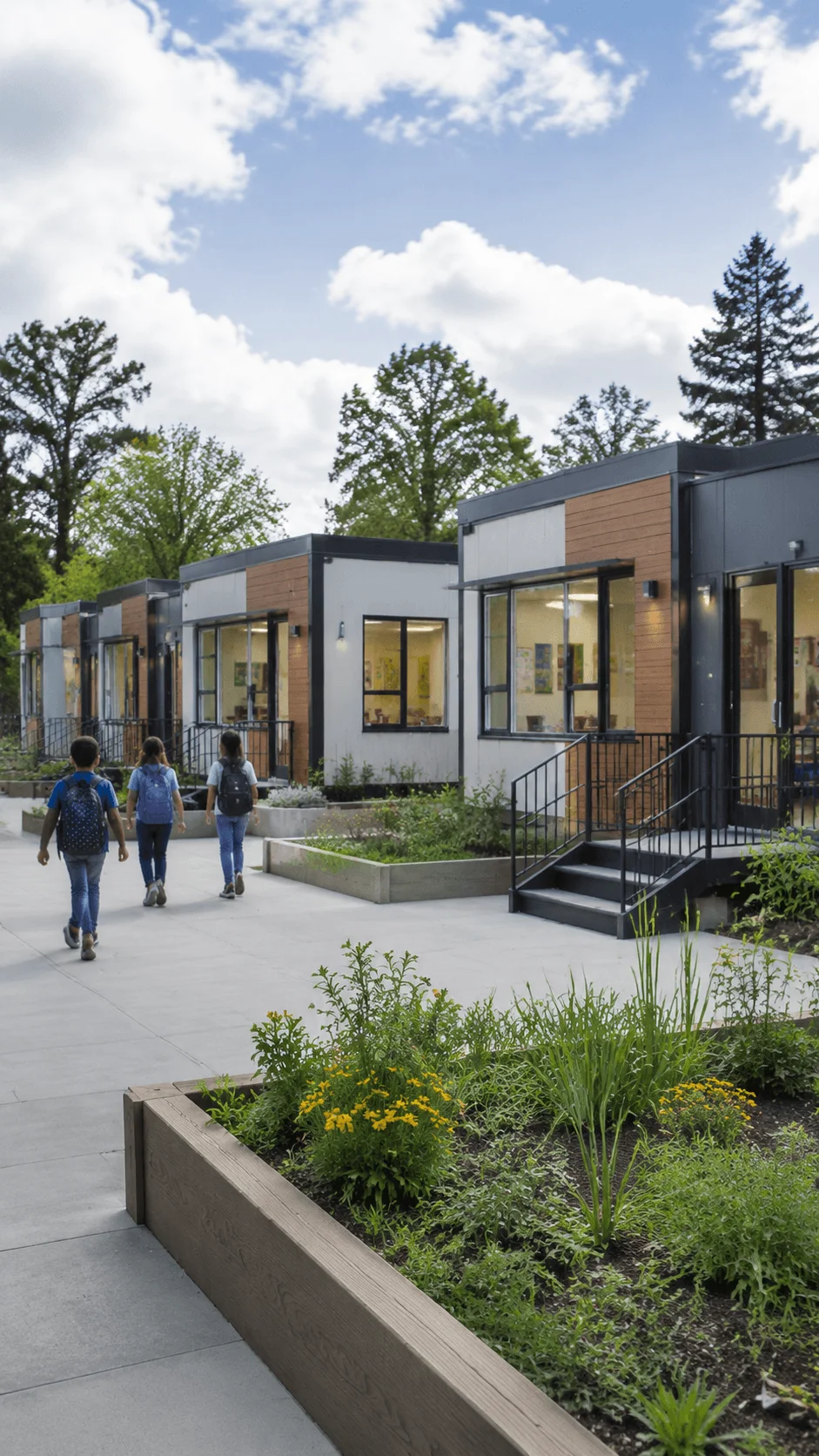
These buildings are especially useful in areas where communities need affordable educational facilities quickly. They can provide high quality learning spaces while reducing construction costs and environmental impact.
Modular sustainable school design shows how innovation can make education more accessible. It combines efficient construction methods with environmentally responsible principles, making it an important direction for future schools.
Zero Waste School Design Ideas Supporting Responsible Communities
Zero waste school design ideas focus on reducing the amount of waste produced during construction and daily school operations. A truly sustainable school does not only use renewable energy but also manages resources responsibly.
Waste reduction begins with building design. Architects can create spaces that encourage recycling, composting, and responsible consumption. Schools can include dedicated waste sorting areas, composting facilities, and systems that reduce unnecessary packaging.
Cafeterias can play an important role in zero waste strategies. Schools can introduce reusable containers, food waste management systems, and composting programs that reduce landfill contributions.
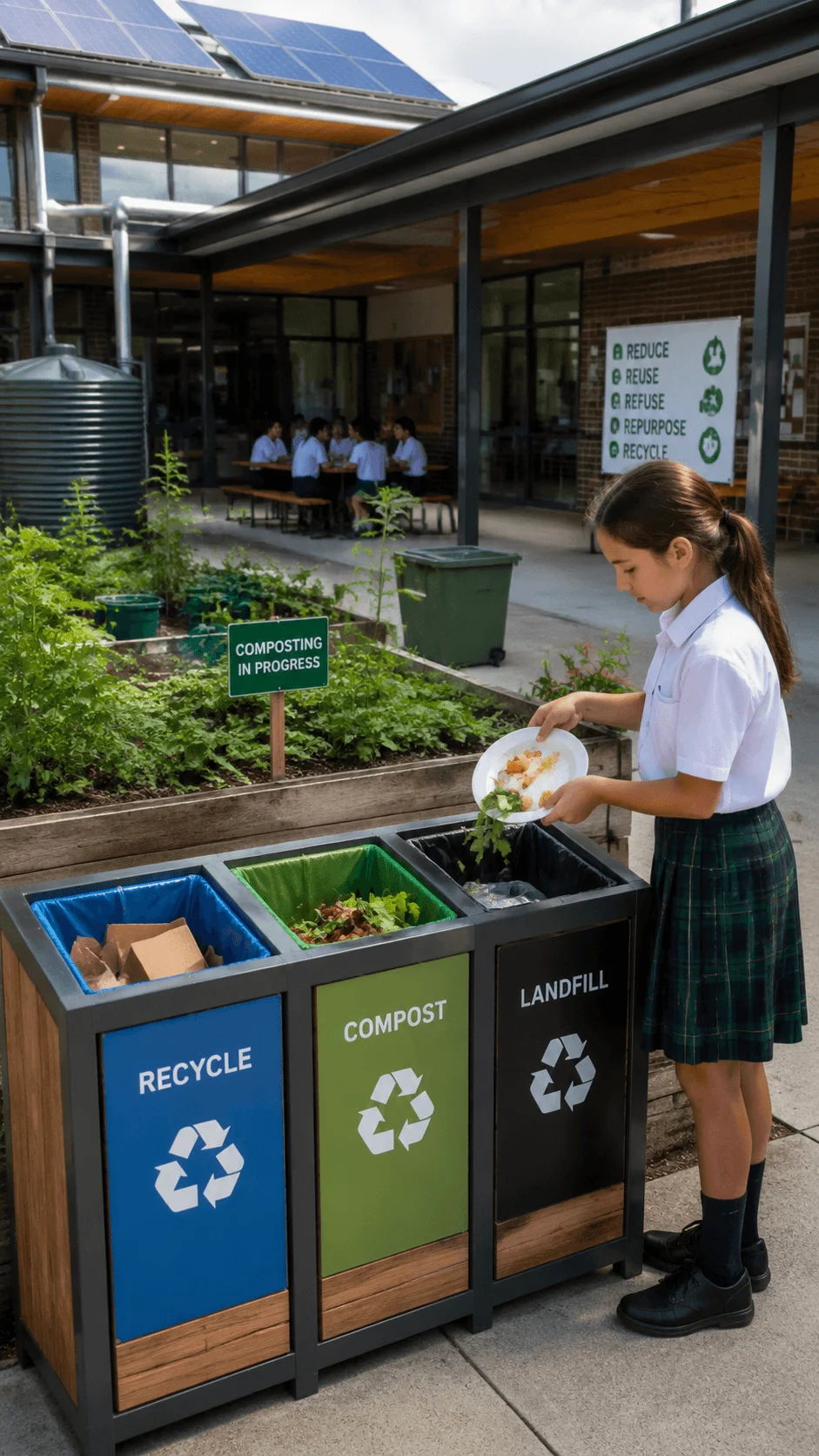
Students become active participants in these systems. When schools create visible waste reduction programs, students learn practical lessons about environmental responsibility. They understand that small daily choices can create significant environmental benefits.
Zero waste approaches also influence purchasing decisions. Schools can choose durable furniture, reusable materials, and products with lower environmental impact. This reduces long term costs while supporting sustainability goals.
Among sustainable school design ideas, zero waste concepts are important because they change behaviour as well as buildings. They show that sustainability depends on both physical design and human participation.
Water Efficient School Architecture For Resource Conservation
Water efficient school architecture focuses on reducing water consumption and creating smarter systems for managing this valuable resource. As many regions face water shortages, schools are exploring innovative ways to conserve and reuse water.
Rainwater harvesting is one of the most common strategies. Schools can collect rainwater from rooftops and store it for gardening, cleaning, or other non drinking purposes. This reduces dependence on external water supplies.
Greywater recycling systems can also improve efficiency. These systems reuse water from sinks and other sources after proper treatment. The recycled water can support landscaping and reduce overall consumption.
Smart irrigation systems provide another solution by adjusting watering schedules according to weather conditions and soil conditions. This prevents unnecessary water use while maintaining healthy green spaces.
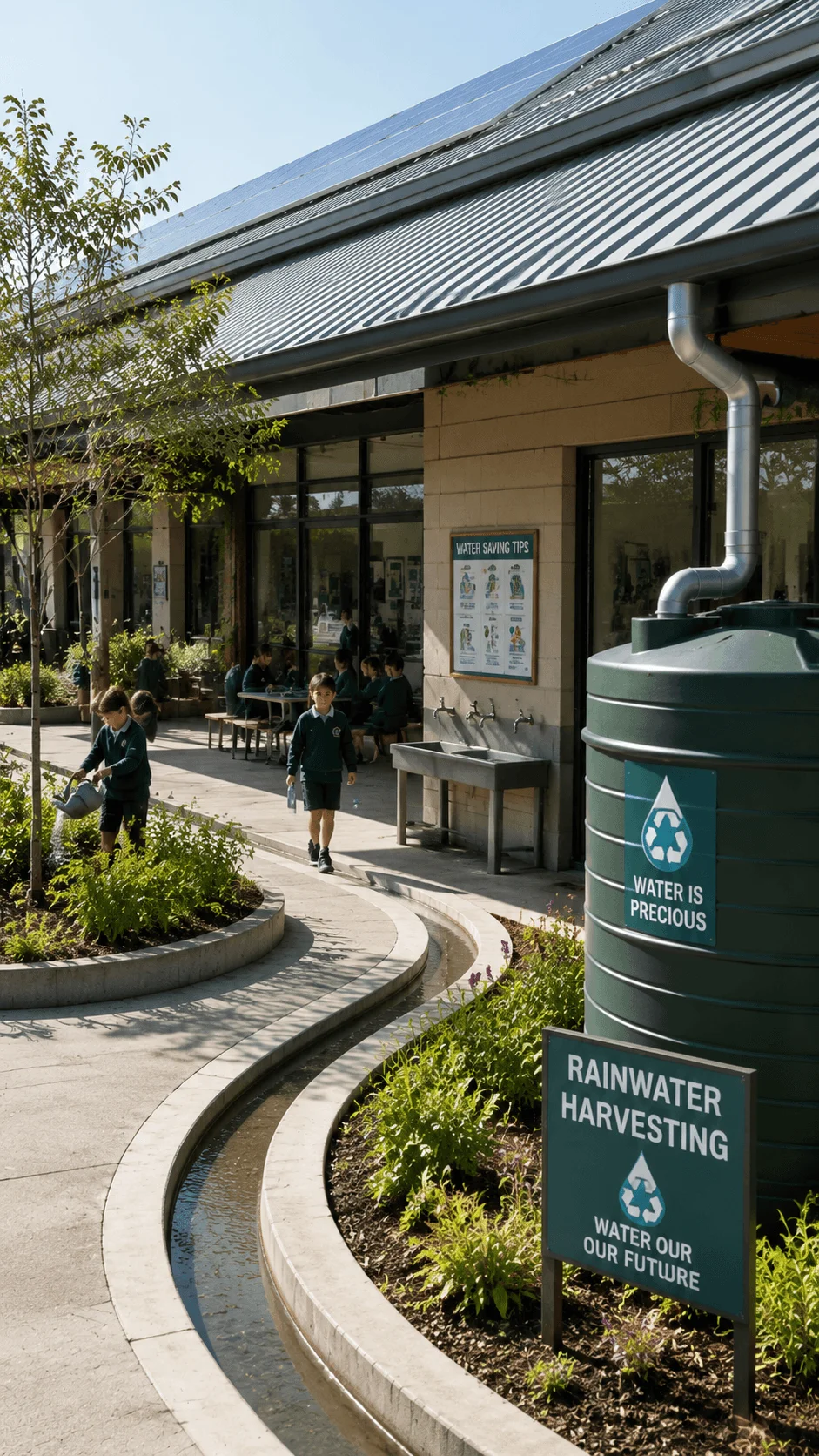
Water efficient schools also create educational opportunities. Students can observe water conservation systems and understand the importance of responsible resource management.
Future school architecture will increasingly focus on water security because climate change continues to affect global water availability. Sustainable water systems will become a necessary part of environmentally responsible educational buildings.
Sustainable Outdoor Learning Spaces Connecting Students With Nature
Outdoor learning space design ideas are changing traditional concepts of classrooms. Instead of limiting education to indoor rooms, modern schools are creating outdoor environments where students can learn through direct interaction with nature.
Outdoor classrooms, environmental gardens, science areas, and natural play spaces provide opportunities for practical learning. Students can study plants, weather patterns, ecosystems, and sustainability through real experiences.
These spaces also improve student wellbeing. Spending time outdoors can reduce stress, encourage physical activity, and support creativity. Nature based learning environments create a balance between academic activities and natural exploration.
Outdoor spaces can include seating areas, shaded learning zones, gardens, and biodiversity areas. These designs allow schools to continue educational activities while reducing dependence on traditional indoor spaces.
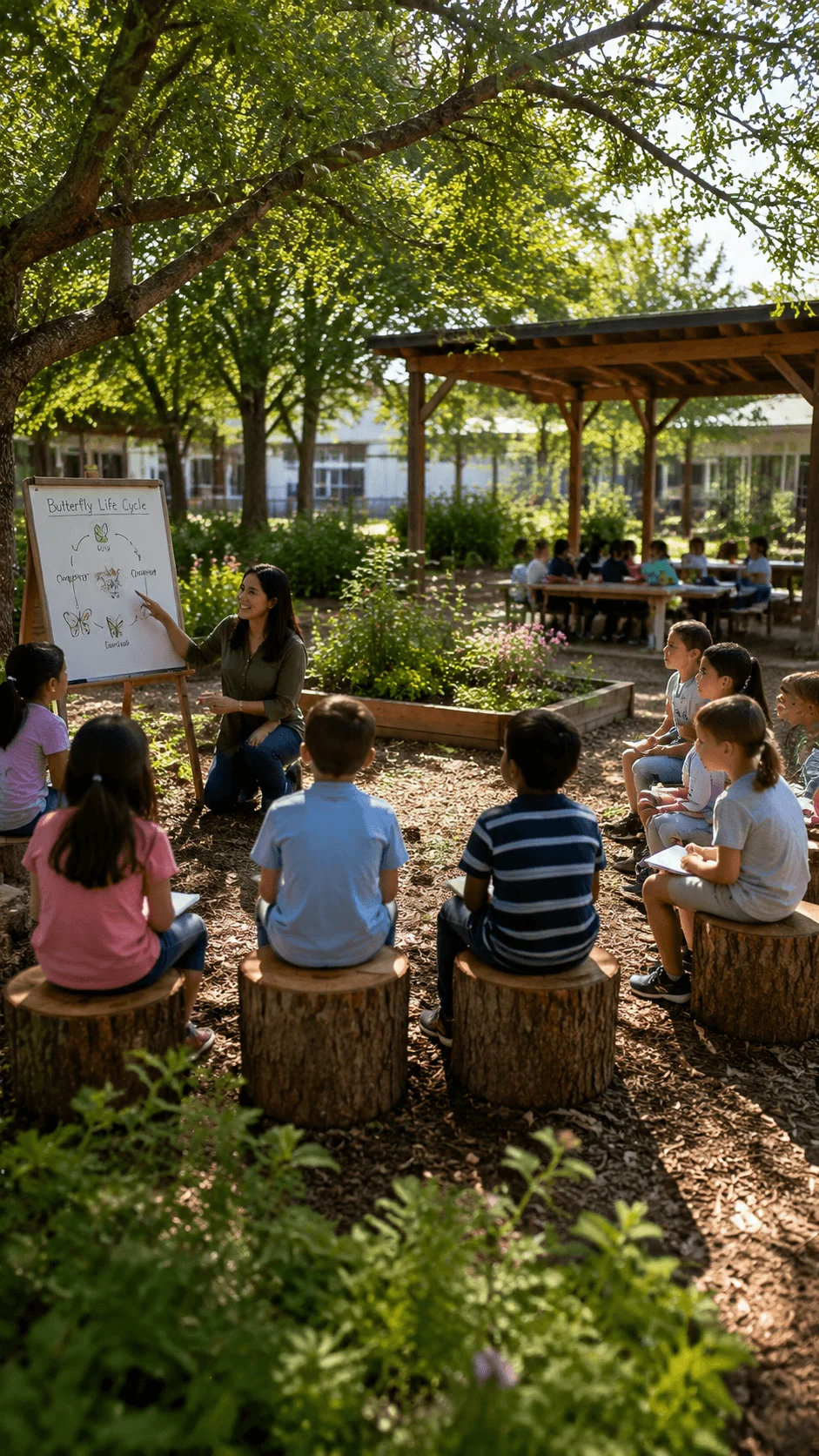
Sustainable outdoor areas also strengthen community connections. School gardens and environmental projects can involve families and local communities, creating shared responsibility for sustainability.
As education continues to evolve, outdoor learning spaces will become an important feature of future schools. They represent a movement toward more flexible, interactive, and environmentally connected learning environments.
Carbon Negative School Design Creating Climate Positive Buildings
Carbon negative school design represents one of the most advanced concepts in sustainable architecture. While many buildings focus on reducing emissions, carbon negative buildings aim to remove more carbon from the atmosphere than they produce.
These schools combine multiple sustainability strategies, including renewable energy generation, carbon storing materials, regenerative landscaping, and highly efficient building systems.
Materials such as sustainably produced timber and innovative low carbon construction products can help store carbon within the building structure. Landscaping strategies can also support carbon absorption by increasing vegetation around the school.
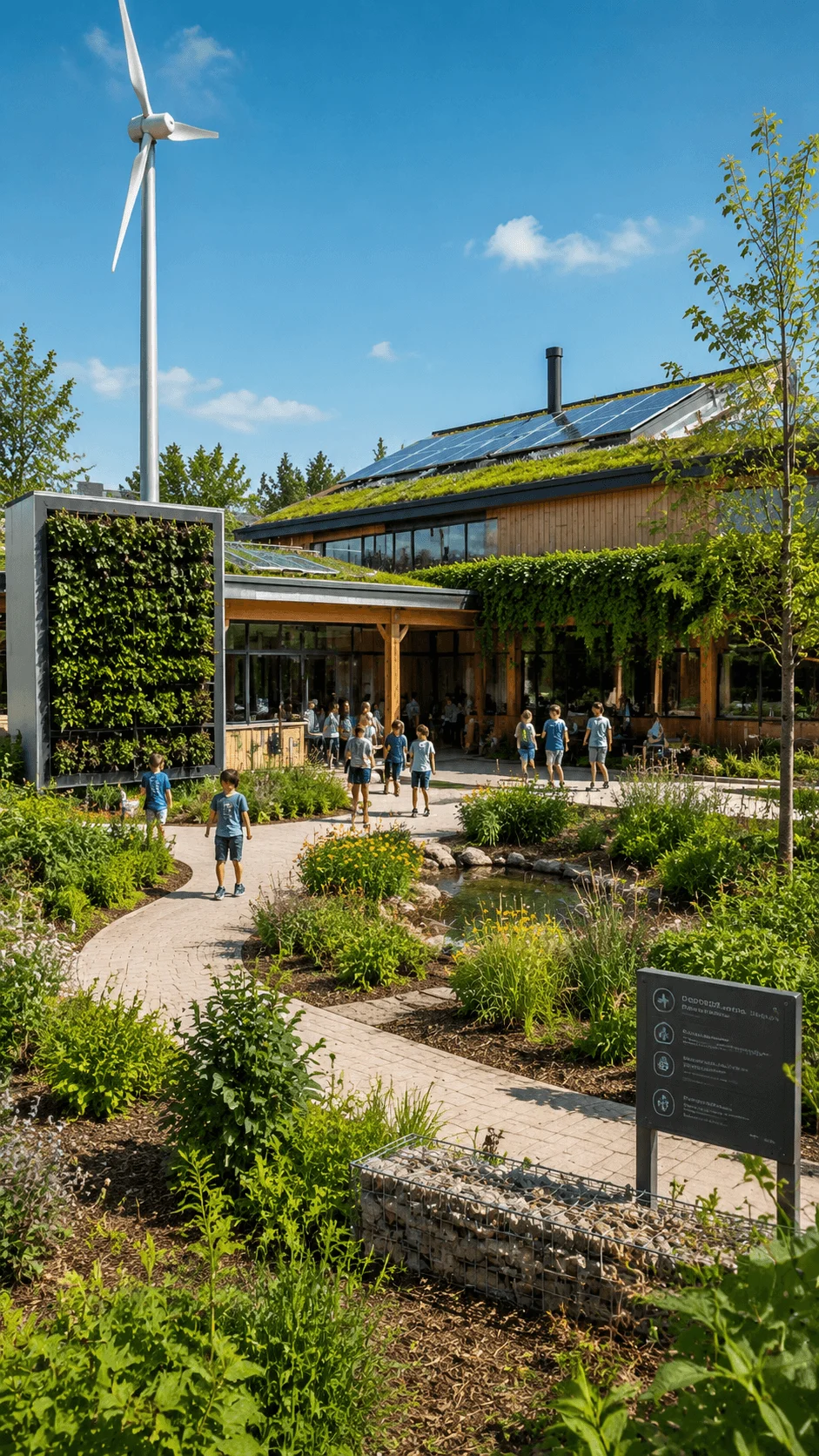
Carbon negative schools may generate more renewable energy than they consume and use extra production to support wider community needs. These buildings become active contributors to climate solutions rather than simply reducing damage.
Although carbon negative schools are still developing, they represent the future direction of sustainable architecture. They challenge designers to think beyond reducing harm and focus on creating positive environmental impacts.
The Future Of Sustainable School Architecture
The future of schools will depend on the combination of sustainability, technology, and human centred design. Future school architecture will not only focus on reducing environmental impact but also on creating spaces that improve learning experiences.
Artificial intelligence will help buildings become smarter by managing energy, water, and indoor environments automatically. Renewable energy systems will continue becoming more efficient and affordable. Advanced materials will allow architects to create stronger, lighter, and more environmentally responsible structures.
Schools will also become more connected with their communities. Green campuses, shared gardens, renewable energy systems, and environmental learning programs will allow schools to become sustainability centres for entire neighbourhoods.
The future of sustainable school design ideas will involve buildings that adapt to climate conditions, support student wellbeing, and teach environmental responsibility through everyday experiences. These schools will demonstrate that architecture can become part of the solution to global environmental challenges.
Conclusion
Sustainable school design ideas represent a major transformation in the way educational spaces are imagined and created. Future schools will no longer focus only on providing classrooms and facilities. Instead, they will become living examples of sustainability, innovation, and environmental responsibility.
From solar powered net zero buildings and nature integrated classrooms to climate resilient structures and carbon negative designs, these concepts show how architecture can support both people and the planet. Each approach provides unique benefits, but together they create a vision of schools that are healthier, smarter, and more adaptable.
The importance of sustainable schools extends beyond environmental protection. These buildings influence how students learn, how communities develop, and how future generations understand their relationship with nature. When students experience sustainability through their surroundings, they gain practical knowledge that can shape their decisions throughout life.
As technology continues to improve and environmental challenges become more urgent, sustainable school design will become an essential part of future education. Schools have the opportunity to lead by example and demonstrate that responsible design can create spaces where learning and sustainability grow together.