12 Sustainable Activities for Babies in 2026
Sustainable activities for babies can help families create meaningful play experiences without constantly buying new toys or producing unnecessary waste. Babies learn through touch, movement, sound, repetition, and interaction with the people around them. They do not need complicated environmental lessons. Instead, they benefit from simple activities that use safe household objects, reusable materials, natural surroundings, and thoughtful family routines.
Many parents feel pressure to purchase a new toy for every stage of development. However, babies often show strong interest in ordinary objects such as wooden spoons, cotton cloths, cardboard boxes, cups, and containers. These familiar items can support curiosity when parents select them carefully and provide direct supervision.
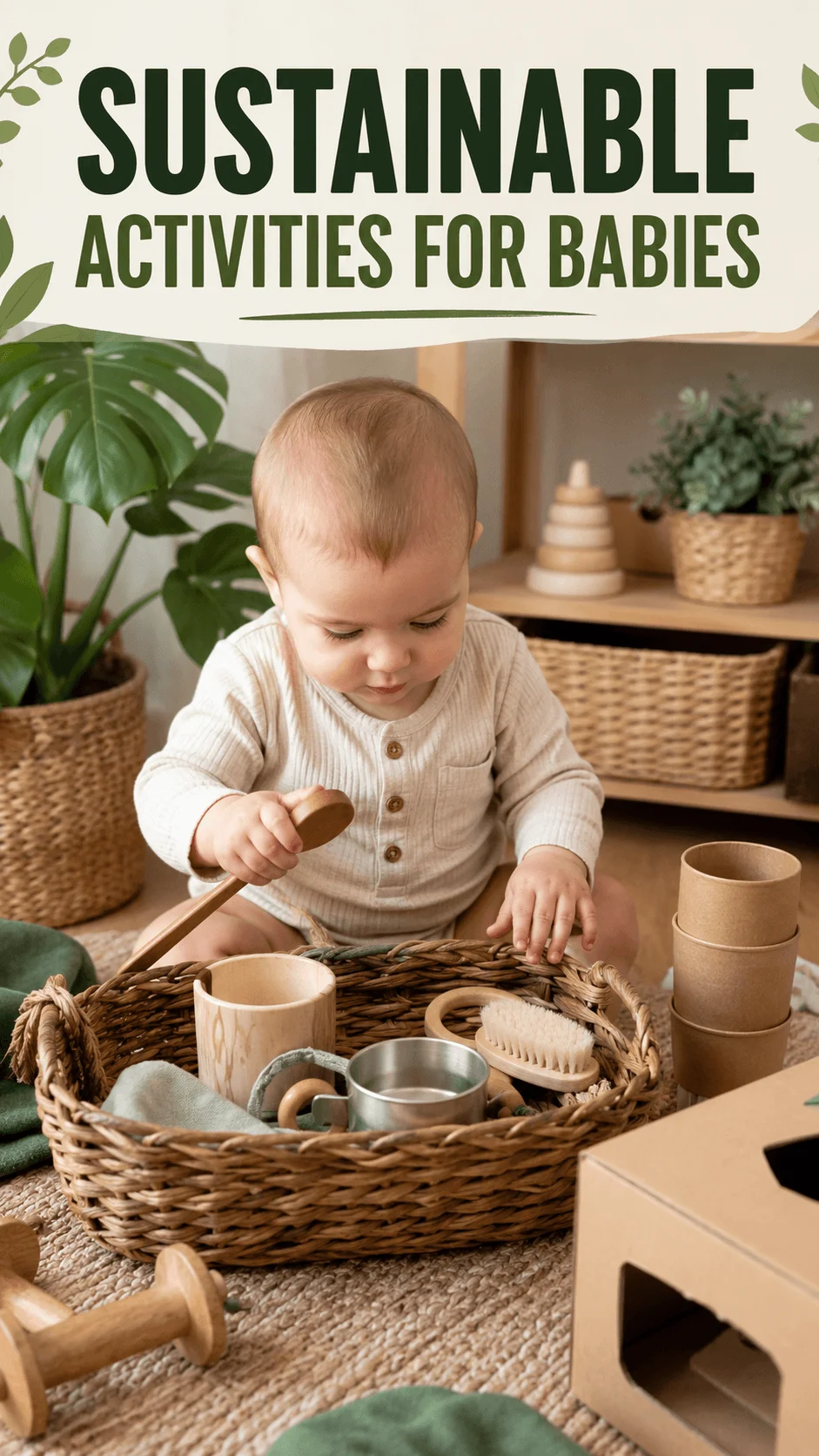
Sustainable baby play also encourages families to slow down and observe what truly interests their child. A baby may spend several minutes touching one textured cloth, listening to leaves move outside, or tapping a metal cup against the floor. These simple moments may support concentration, sensory awareness, movement, and early communication.
The goal is not to create perfect activities for photographs. The goal is to provide safe, useful, and age appropriate experiences that respect the baby and reduce unnecessary consumption.
Why Sustainable Baby Activities Matter
Sustainable baby activities can benefit both the child and the household. They reduce the need for large collections of short lived toys and encourage parents to use resources they already own. This approach may also reduce clutter and help babies focus on a smaller number of meaningful objects.
When too many toys surround a baby, the play area can feel visually overwhelming. A simpler environment often makes it easier for the baby to notice individual shapes, sounds, textures, and movements. Parents can observe which objects attract attention and which activities match the baby’s current abilities.
Sustainable activities for babies also support a culture of care. When a parent washes a fabric toy, repairs a loose seam, borrows a book, or rotates an existing object, the baby sees that useful things deserve attention. The baby may not understand sustainability as a concept, but repeated family habits create an early foundation for respect and responsibility.
Simple play can also strengthen the connection between parent and baby. Parents can respond to facial expressions, sounds, reaching movements, and signs of tiredness. This type of interaction can feel more personal than placing the baby in front of a flashing electronic toy.
Sustainability at this age should remain practical. Parents do not need to buy expensive products labelled as green. Using fewer items, borrowing when possible, choosing washable materials, and spending more time outdoors can make baby play more environmentally thoughtful.
Montessori Inspired Sustainable Play for Babies
A household treasure basket can introduce a baby to different shapes, textures, temperatures, sounds, and weights. Parents can place several large and safe household objects in a shallow basket or container and offer them during supervised floor play.
Suitable objects may include a wooden spoon, silicone spatula, stainless steel cup, cotton cloth, large soft brush, smooth wooden ring, and securely stitched fabric pouch. Each object should remain large enough to prevent swallowing and strong enough to withstand pulling, dropping, tapping, and mouthing.
A baby may hold one object, turn it over, move it between both hands, tap it on the floor, or compare it with another object. These simple actions may support hand control, coordination, attention, and sensory exploration.
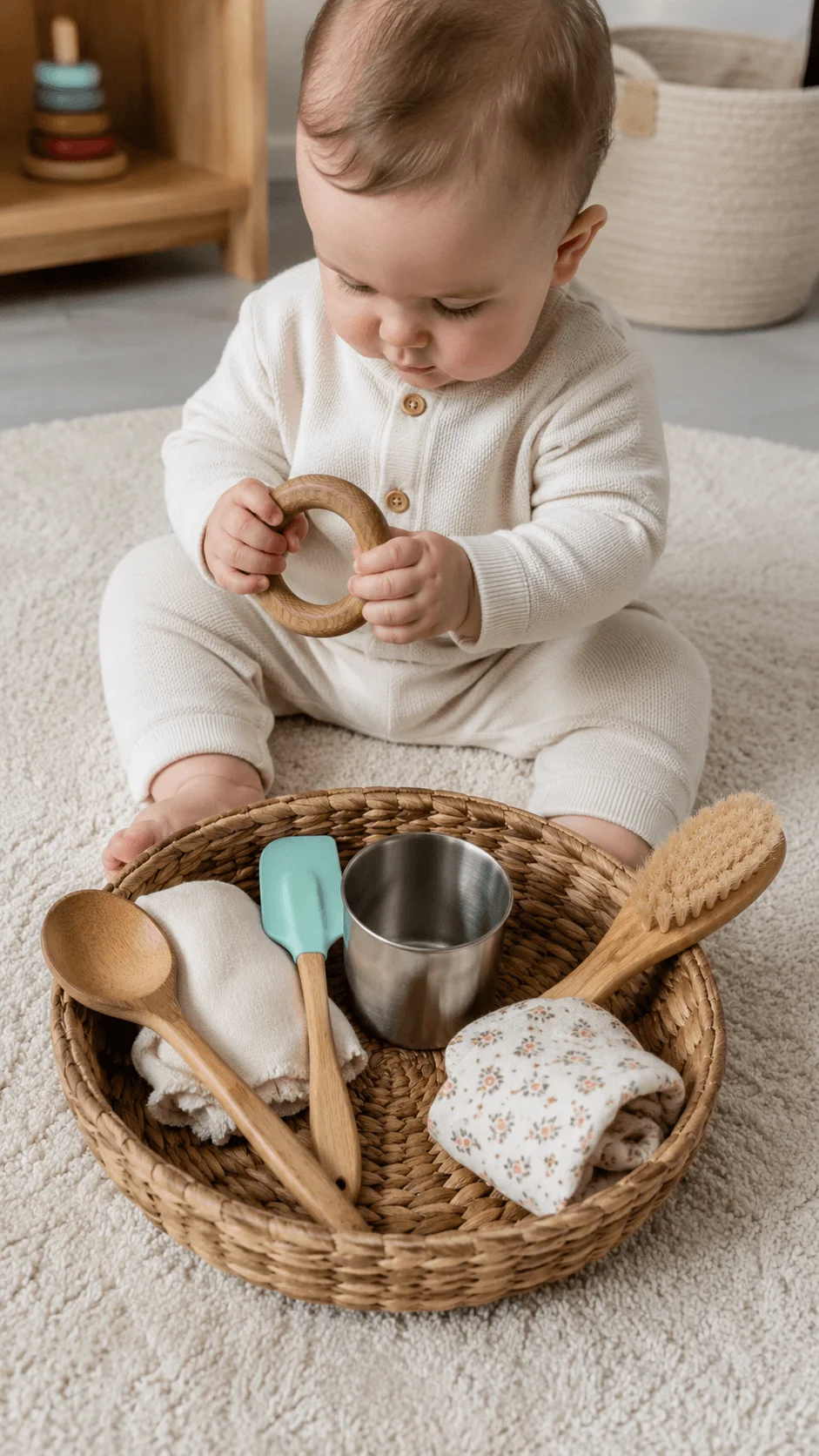
This activity also shows how sustainable activities for babies can use everyday resources instead of specially packaged toys. Parents can clean the objects after use and return them to the household when the baby loses interest.
Younger babies may explore one object while lying on their backs or during supported sitting. Older babies may sit independently and choose between several items. Crawling babies may move toward the basket and remove objects one at a time.
Parents should inspect every object before each session. They should avoid anything with cracks, sharp edges, loose parts, peeling material, small openings, long cords, or detachable decorations.
Low Waste Toy Rotation for Infants
Toy rotation allows parents to refresh the play environment without buying more products. Instead of placing every available toy in front of the baby, parents can offer a small collection and store the remaining items out of sight.
A simple rotation may include one grasping toy, one soft item, one book, one rolling object, one container, and one sound making item. Parents can change a few objects when the baby loses interest or develops a new skill.
The purpose is not to follow a strict schedule. Parents should watch the baby and respond to current preferences. Some babies may enjoy the same object for several weeks, while others may become interested in something different after a few days.
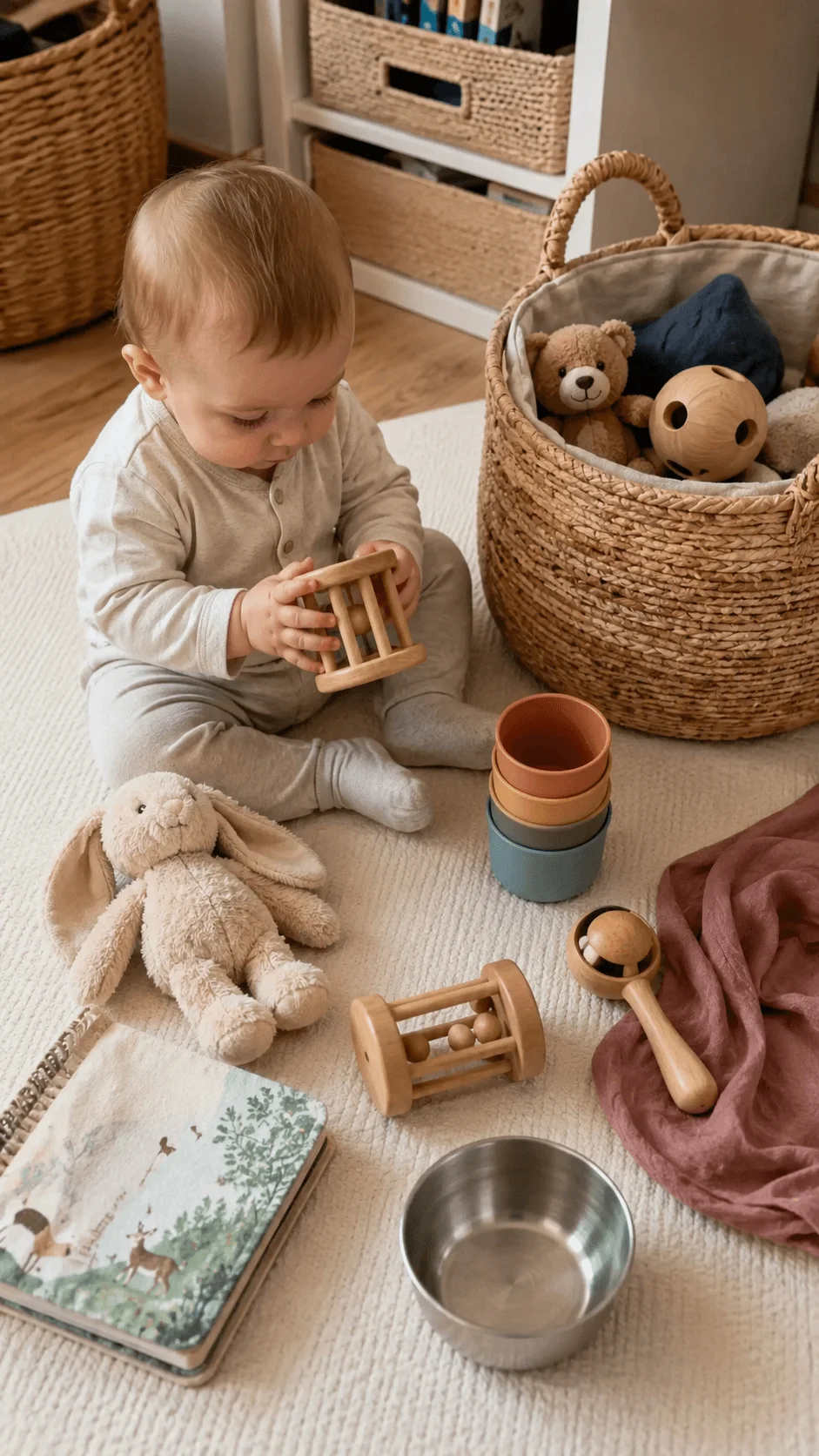
Toy rotation can make familiar objects feel new again. A stacking cup that disappears for a week may attract fresh attention when it returns. This process can extend the useful life of toys and reduce the urge to purchase new ones.
Parents can also rotate household materials. A cotton scarf, wooden spoon, stainless steel bowl, fabric book, reusable cup, or large cardboard tube may provide variety without adding permanent clutter.
This low waste approach can support focused play and may help families identify which objects their baby genuinely enjoys.
Eco Friendly Nature Activities for Babies
A nature sound listening walk requires no toys or craft materials. Parents can take the baby outside in a stroller, sling, or carrier and pause in a calm place to notice sounds.
Birds, moving leaves, wind, rain, footsteps, distant water, and gentle animal sounds can create a rich listening experience. Parents can name the sounds using simple words and repeat them slowly.
A younger baby may respond by becoming still, turning the head, widening the eyes, or changing facial expression. An older baby may point, smile, vocalize, or imitate a simple sound.
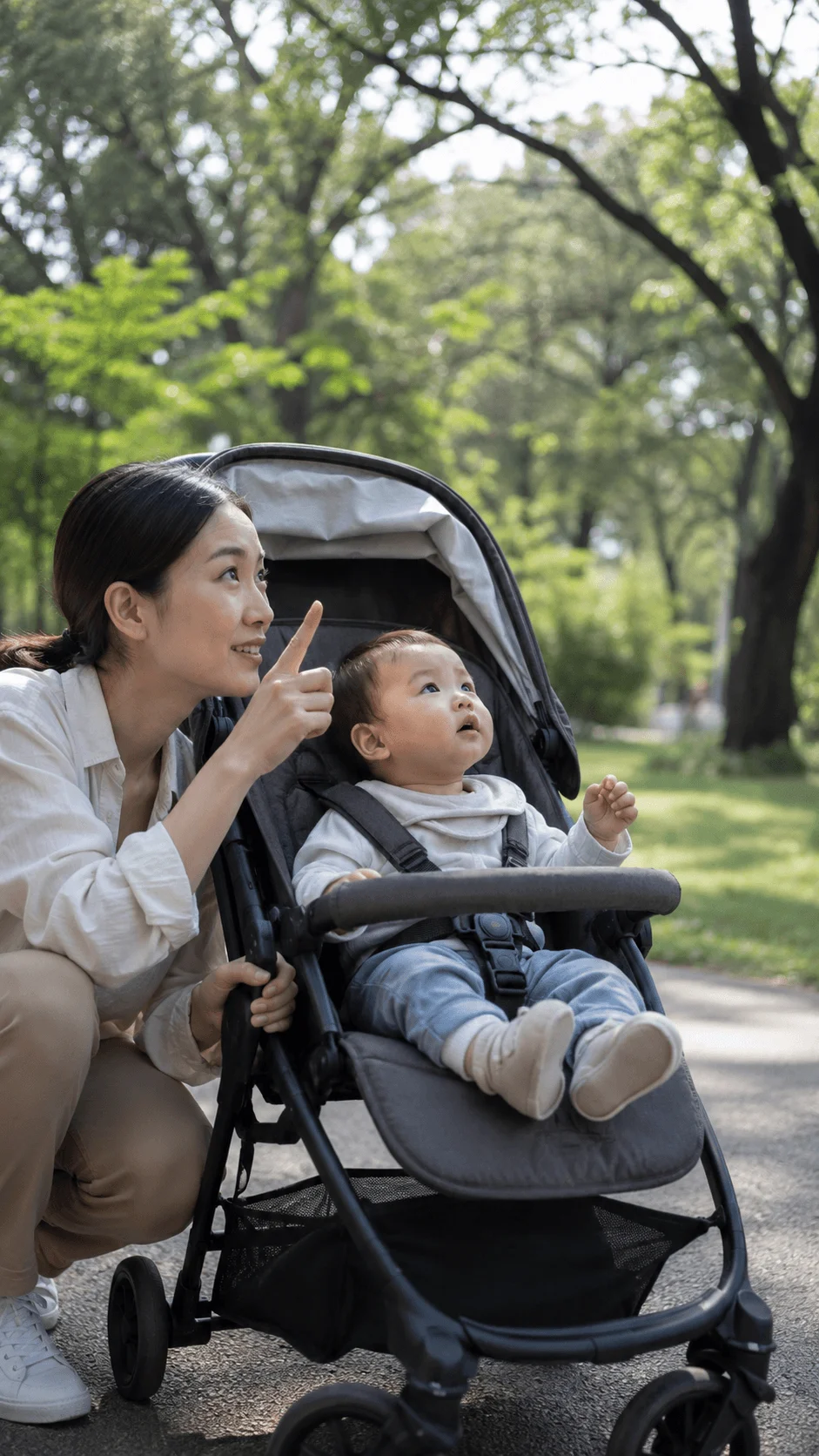
Nature based activities can support early language, listening, attention, and emotional connection. They also introduce the baby to changing weather, light, movement, and outdoor rhythms.
Families do not need access to a large park. A shaded garden, balcony, open window, quiet street, or small courtyard may provide enough sensory variety.
Parents should consider temperature, shade, air quality, and noise. They should avoid direct harsh sunlight and crowded areas that may overwhelm the baby.
This is one of the simplest sustainable activities for babies because it produces no waste and requires no preparation.
Natural Light and Shadow Tummy Time
Natural light can make tummy time more interesting without electronic screens or battery powered toys. Parents can place the baby on a firm and safe surface near filtered daylight.
Soft shadows from curtains, leaves, or a parent’s hand can move slowly across the floor. The baby may follow the shadow with the eyes, lift the head, turn the body, or reach toward the movement.
These actions may support visual tracking, head control, upper body strength, and curiosity. The activity can remain brief, especially for younger babies who tire quickly during tummy time.
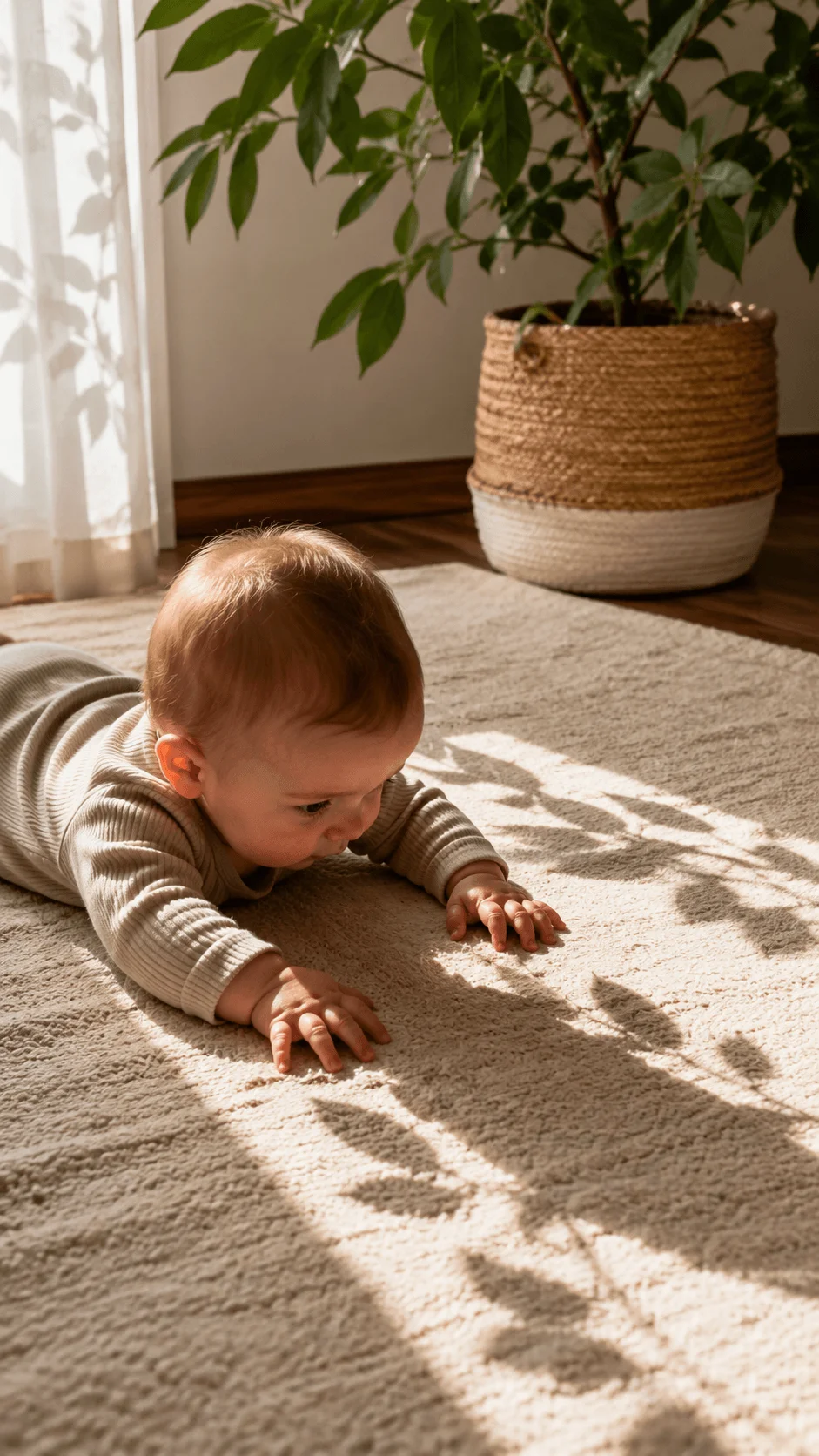
Parents can also place a large plant outside the baby’s reach and allow moving leaves to create changing shadows. The plant should remain secure, non toxic, and impossible for the baby to grab.
The baby must remain awake and directly supervised. Parents should keep loose cloths, cords, hanging decorations, and small objects away from the play area.
Direct sunlight can make the baby uncomfortable and may overheat the space. Soft natural light works best.
Sustainable Sensory Play With Reusable Fabrics
A reusable fabric texture garden can introduce babies to a variety of surfaces. Parents can collect large pieces of clean and washable fabric made from cotton, muslin, denim, fleece, corduroy, or linen.
Old clothing can work well if the fabric remains strong and free from small decorations. Parents should remove buttons, loose threads, zippers, beads, sequins, and elastic loops.
The fabrics can be placed beside the baby during supervised floor play. A baby may kick a piece of cloth, rub it between the fingers, pull it closer, squeeze it, or move it from one hand to the other.
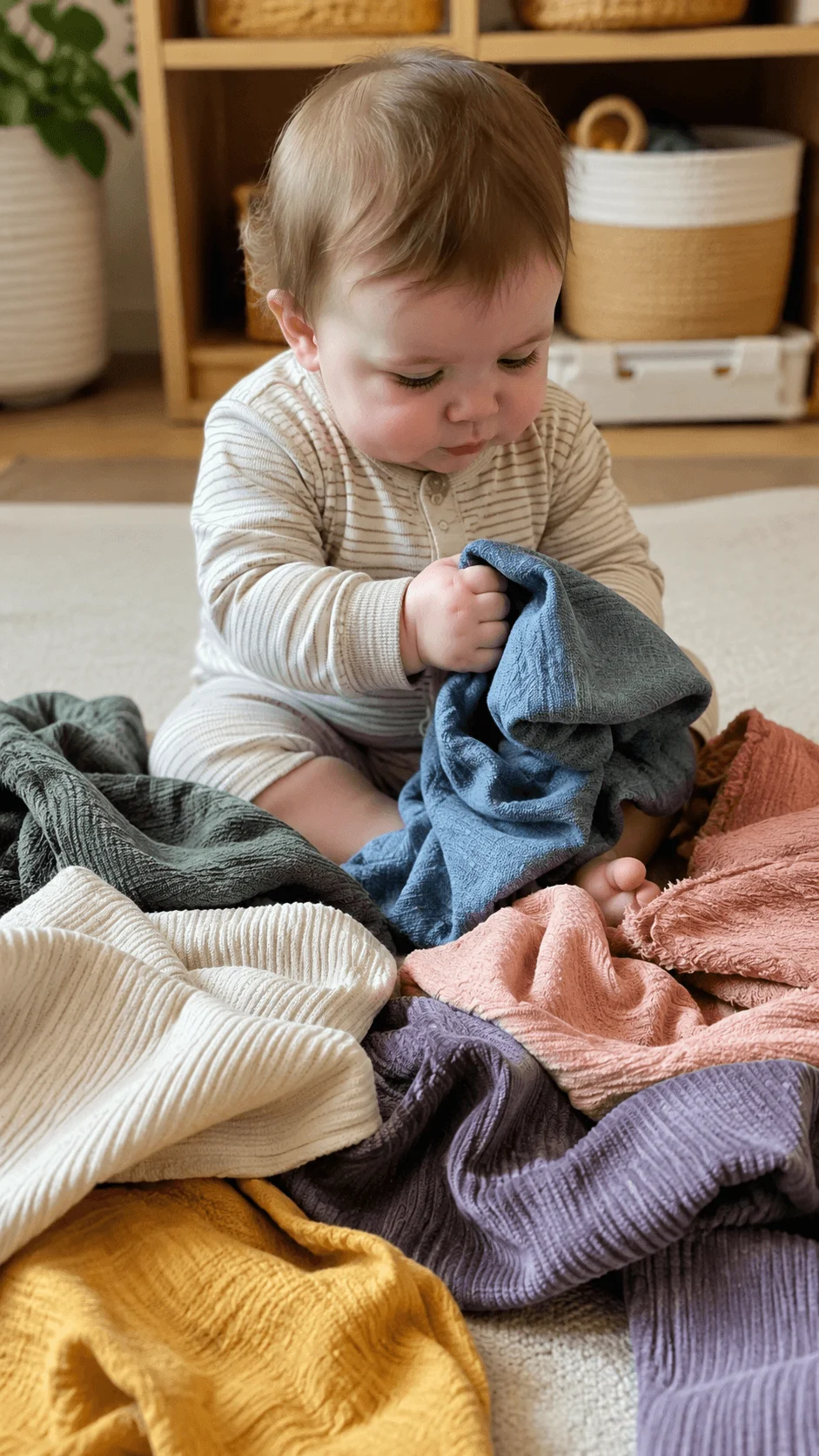
Parents can describe each texture with simple words such as soft, smooth, thick, light, or rough. Repeating these words may support early language and sensory understanding.
The fabrics can serve many purposes after the activity. Families can wash them, repair them, turn them into cleaning cloths, save them for another child, or use them for future household projects.
This makes reusable fabric play one of the most practical sustainable activities for babies. It avoids disposable sensory materials and gives old textiles another useful purpose.
Baby Safe Herb and Plant Smell Activities
Smell often receives less attention than touch, sight, and sound, but it can create a gentle sensory experience. Parents can hold a living herb plant or a securely held bundle of fresh herbs near the baby and allow the baby to notice the scent.
Mint, basil, and rosemary may work well when the family already uses them in cooking. The parent should hold the plant and prevent the baby from grabbing or chewing loose leaves.
The parent can say the name of the herb and describe the scent in simple language. The baby may lean closer, turn away, smile, or show a change in expression.
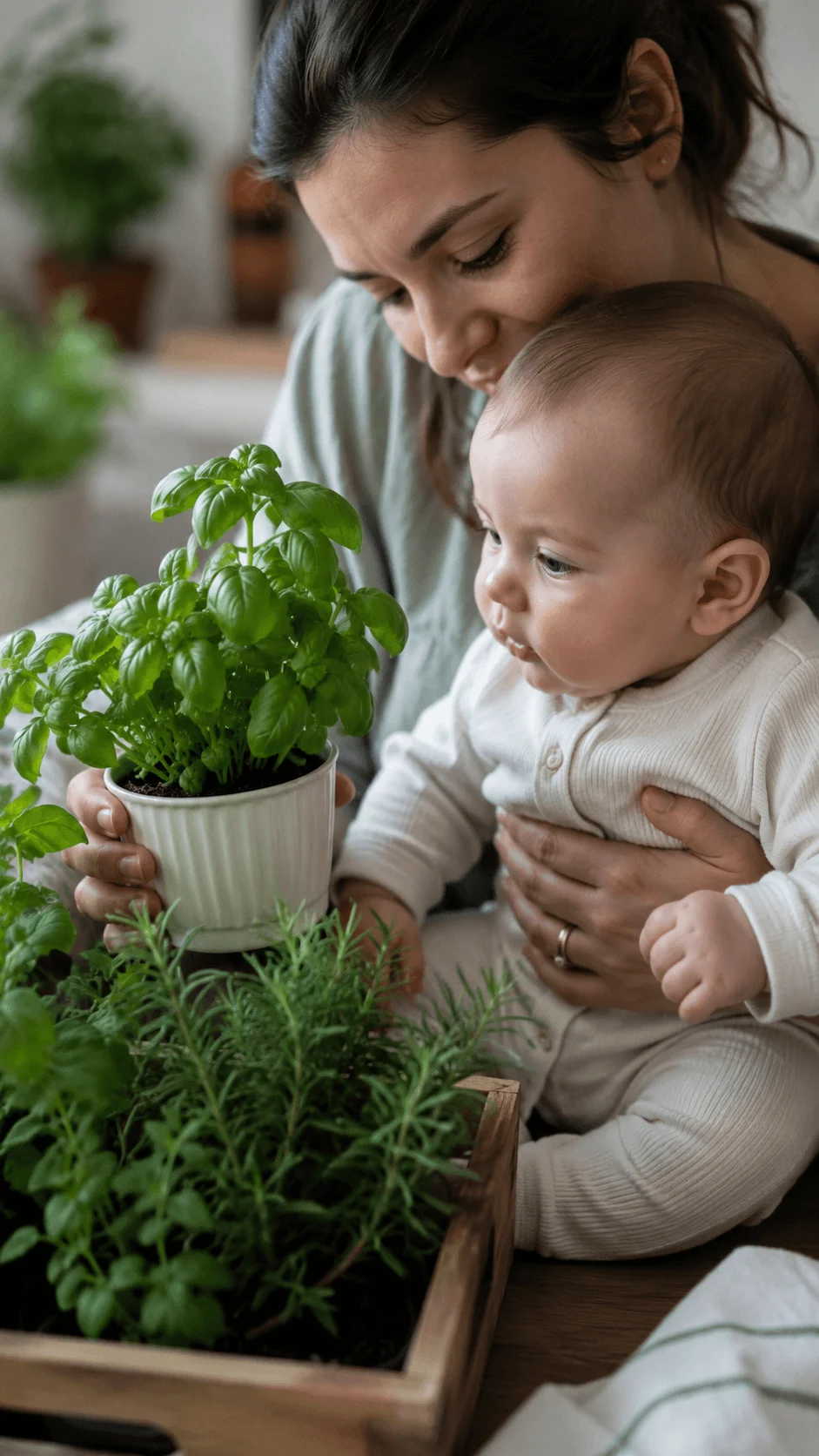
This activity may support smell awareness, curiosity, and language. It also helps babies experience plants as part of everyday family life.
Parents should not use essential oils, perfume, scented sprays, or concentrated plant extracts. Strong fragrances may irritate the baby and are not necessary for the activity.
Every plant should be checked for safety. Parents should avoid toxic species and stop immediately if the baby shows discomfort, coughing, skin irritation, or breathing difficulty.
Growing herbs at home can also support sustainable family habits because one plant can provide food, fragrance, and repeated learning experiences.
Zero Waste Water Activities for Babies
Water painting allows babies to create temporary marks without paper, paint, glitter, or disposable wipes. Parents can provide a damp reusable cloth, wide soft brush, or clean sponge and place the baby near a safe reusable surface.
A dark washable mat, smooth outdoor tile, reusable tray, or clean board can work well. The baby can pat, drag, wipe, squeeze, and move the wet material across the surface.
The water creates visible marks that slowly disappear as they dry. This simple change may support cause and effect learning, hand movement, attention, and early creativity.
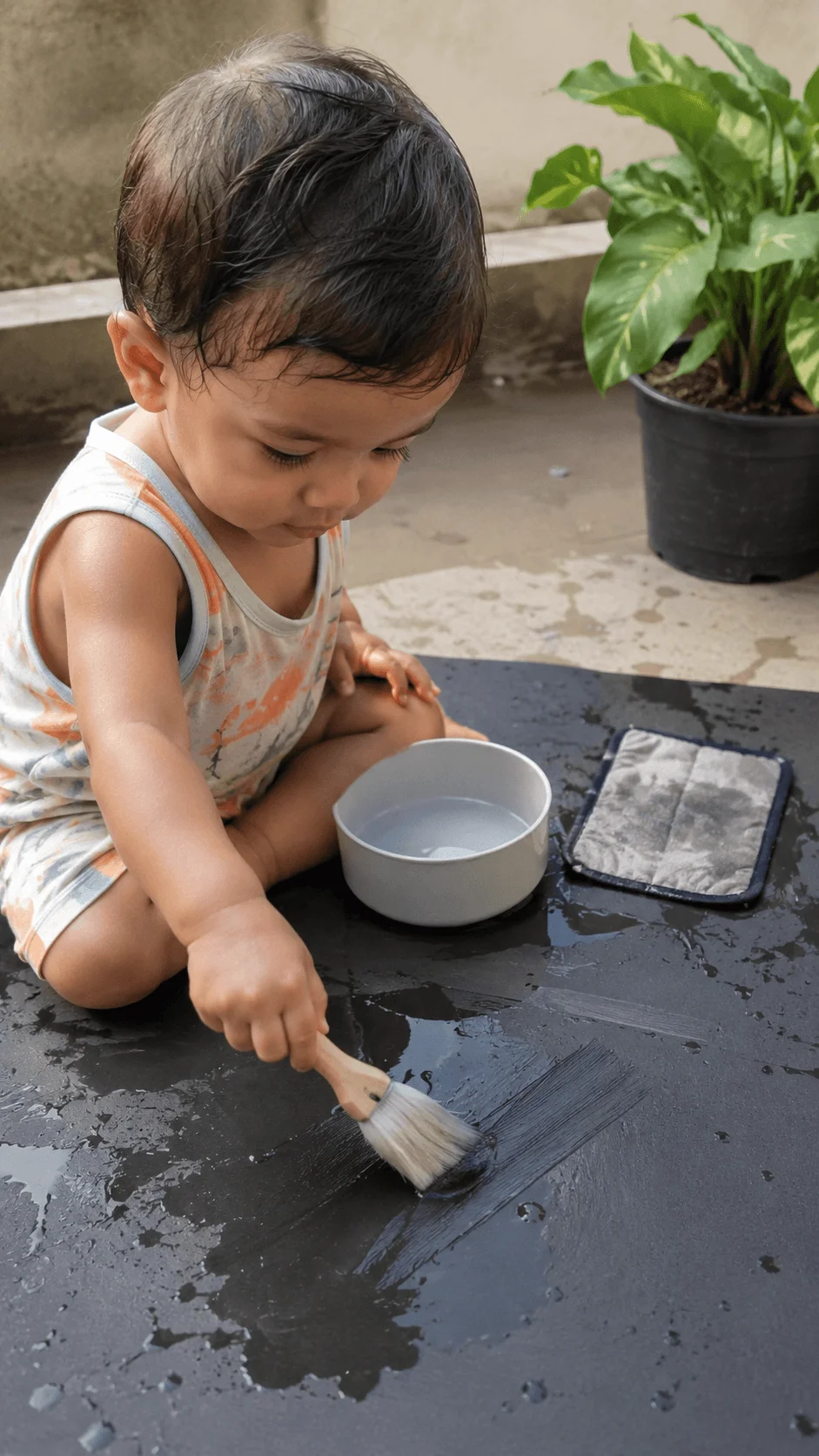
Parents only need a small amount of water. A damp cloth may provide enough moisture for the whole activity.
Water safety remains essential. Babies can face danger around even shallow water. Parents must stay within immediate reach and should never leave a bowl, cup, tray, or bucket of water beside the baby without supervision.
Families can include water painting among sustainable activities for babies because it creates almost no waste and uses washable materials.
Taste Safe Leftover Food Sensory Play
A small amount of baby safe food can become a useful sensory activity when it comes from the baby’s normal meal. Parents may use mashed banana, plain oatmeal, soft vegetable puree, mashed avocado, or another familiar food.
The food can go directly onto a clean highchair tray. The baby may pat it, spread it, squeeze it, smell it, taste it, and move it with the fingers.
This activity may support hand control, food familiarity, self feeding practice, and sensory confidence. It can also help babies explore texture before they become comfortable eating larger amounts.
Parents should not prepare extra food only for play. Using a small portion that might otherwise be wasted keeps the activity responsible.
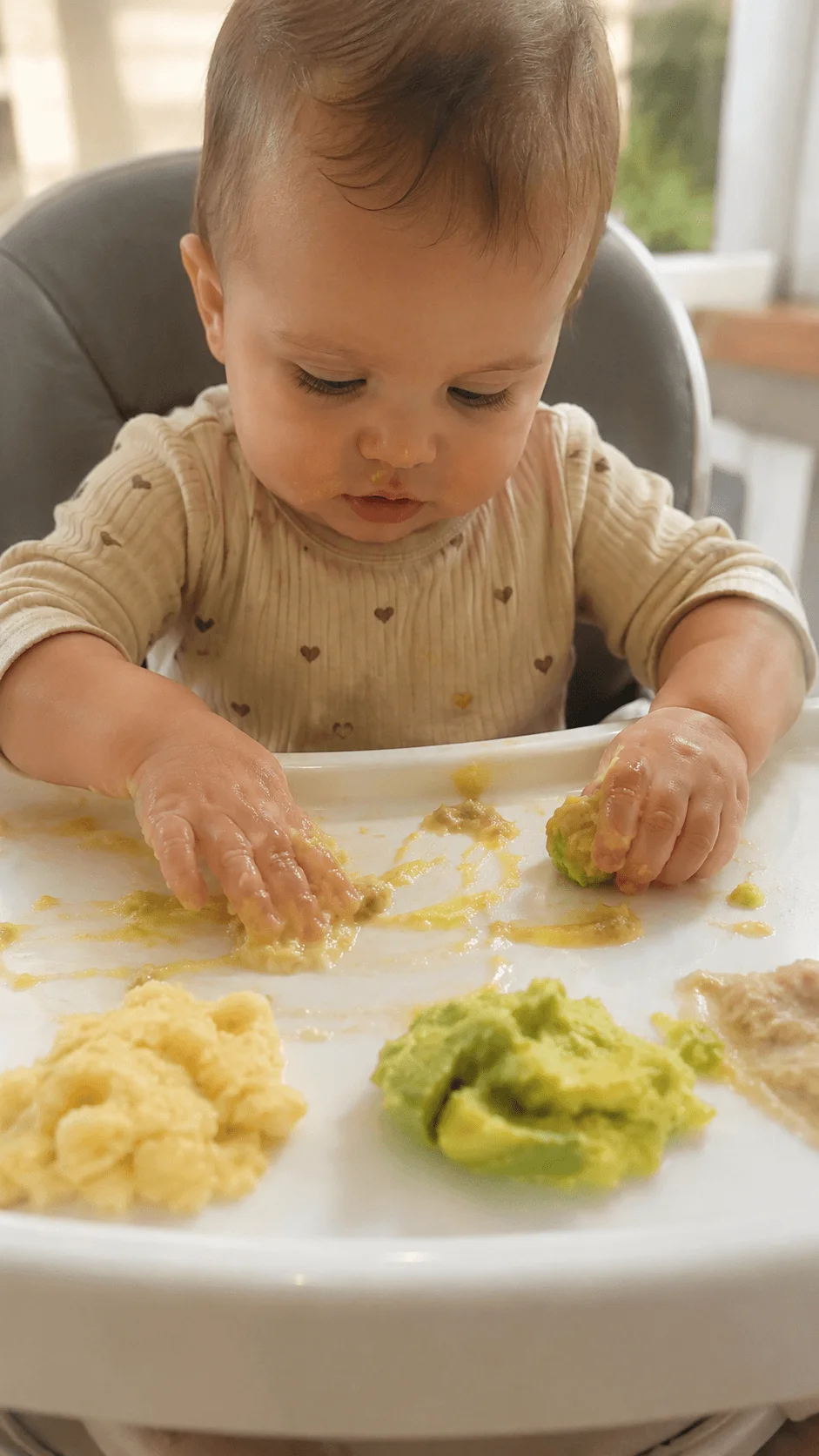
The baby should sit upright and show signs of feeding readiness. Parents must consider known allergies, safe texture, choking risk, and the baby’s ability to manage food.
Direct supervision remains necessary. Parents should stop the activity if the baby becomes tired, distressed, or places too much food in the mouth.
This activity avoids unsafe sensory fillers such as dried beans, uncooked rice, beads, and water beads.
Recycled Cardboard Play for Crawling Babies
A strong and clean cardboard box can become a crawling destination, peekaboo screen, tunnel, hiding place, or object permanence activity.
Parents can place the box on its side and sit behind it. They can appear through a large opening, hide a familiar toy near the edge, or encourage the baby to crawl around the box.
The baby may look inside, reach through an opening, push the box, crawl toward it, or search for an object that disappeared from view. These actions may support movement, spatial awareness, problem solving, and curiosity.
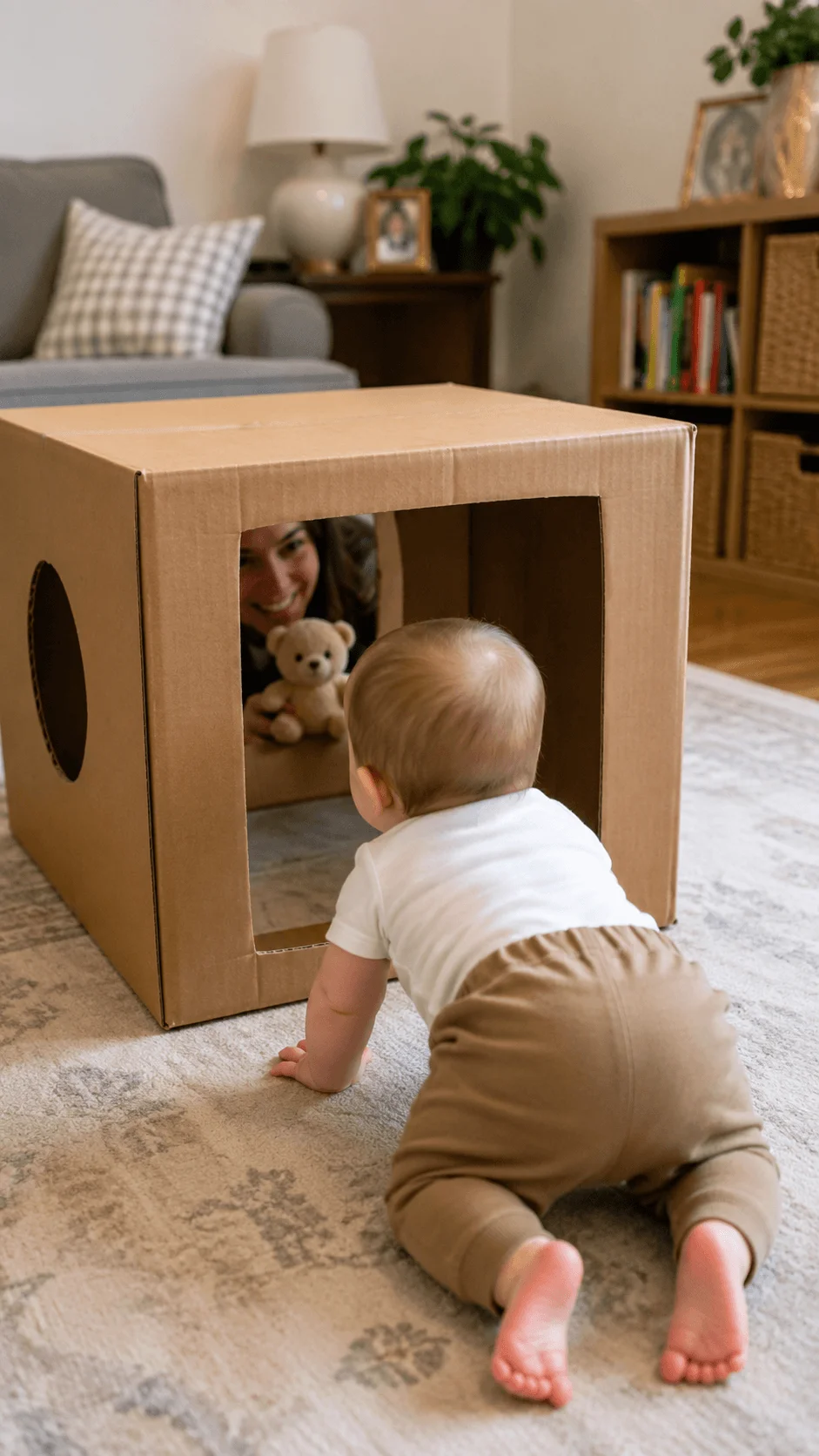
Cardboard play gives packaging a second purpose before recycling. It also shows that sustainable play does not need expensive equipment.
Parents should remove staples, loose tape, plastic windows, sharp edges, damaged sections, and small labels. They should never use a box that contained chemicals, dirty items, or unsafe products.
The box should remain stable and open enough to prevent the baby from becoming trapped. Parents should stay close and remove the box if it begins to collapse.
Reusable Cup Water Play for Babies
A simple refill and pour station can use a stainless steel cup, silicone cup, spoon, reusable tray, and washable cloth.
Younger sitting babies may hold an empty cup, tap it, turn it over, or place a spoon inside. Older babies may dip the spoon into a tiny amount of water, squeeze a damp cloth, or practise moving water from one container to another.
These actions may support grasping, wrist movement, hand control, concentration, and cause and effect learning.
Parents do not need to buy a special water table or pouring set. Everyday reusable objects can provide the same type of exploration.
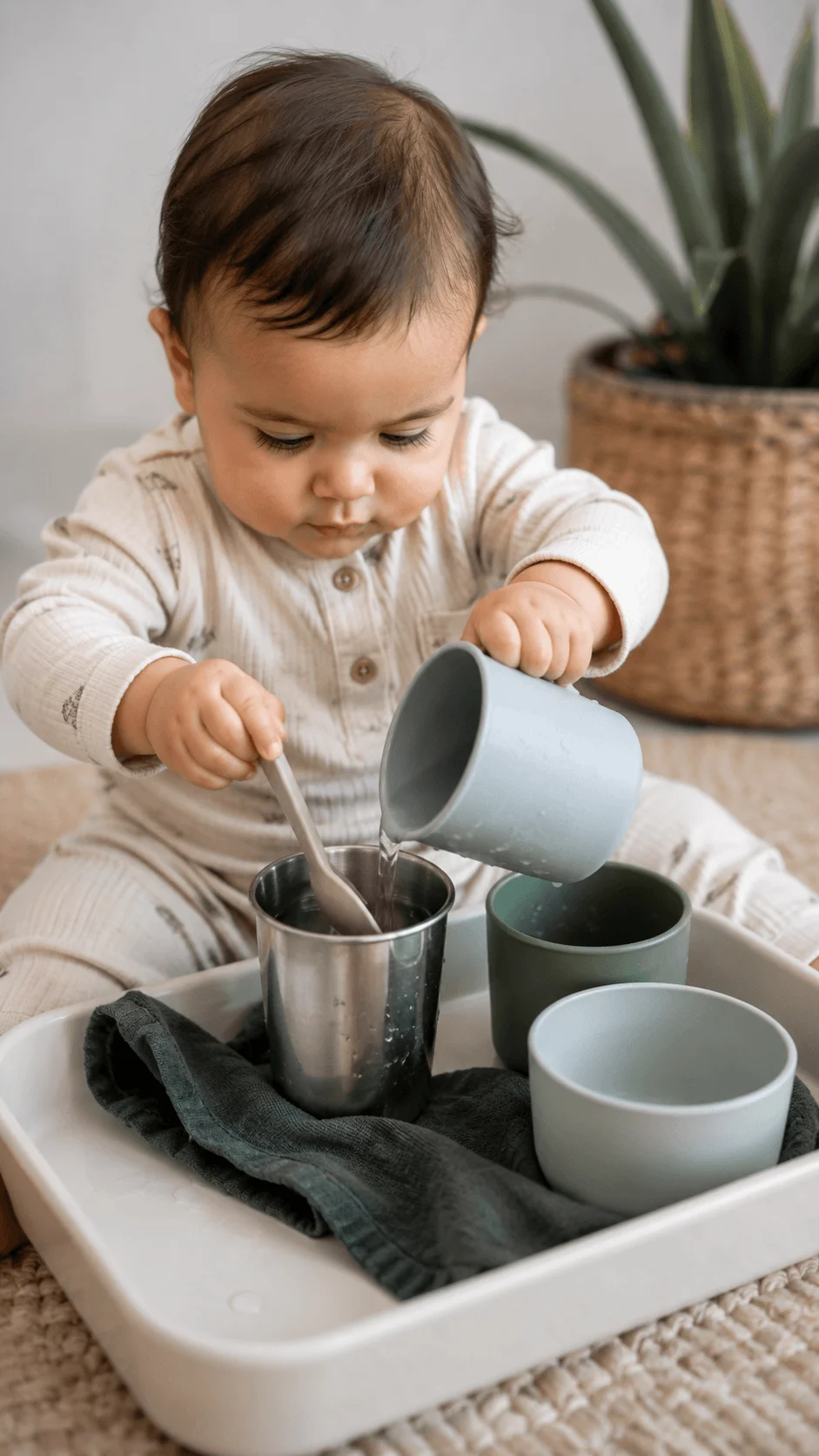
The washable cloth can also become part of cleanup. Parents can show the baby how they wipe spilled water and dry the cups for later use.
This simple routine adds care and responsibility to sustainable activities for babies. The baby sees that materials can be used, cleaned, and stored again.
Parents must use only a tiny amount of water and maintain direct supervision throughout the activity.
Teaching Sustainability Through Repair and Care
Babies learn a great deal by watching adults. A parent can allow the baby to observe while cleaning a wooden toy, repairing a loose seam, folding reusable cloths, wiping a board book, or checking an object for damage.
The baby should remain at a safe distance from needles, scissors, glue, tools, broken parts, and small repair materials.
Parents can narrate the process with short phrases such as we clean it, we care for it, we fix it, and we use it again. Repetition may help the baby connect words with actions.
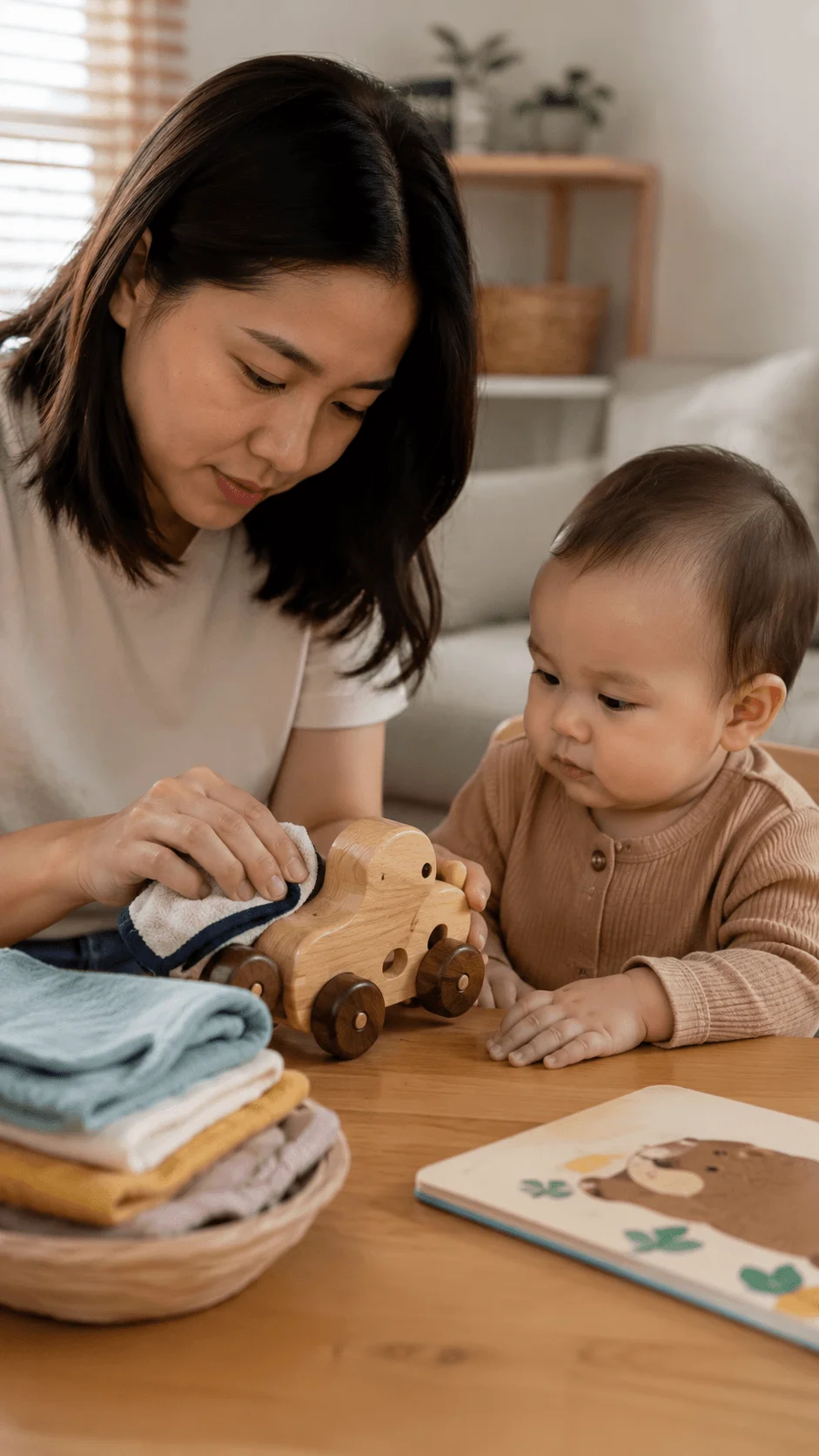
The baby does not need to understand the environmental meaning. The value comes from seeing that useful objects receive care instead of immediate replacement.
This approach broadens the meaning of sustainable play. Sustainability does not only involve recycled crafts or nature activities. It also involves maintenance, patience, and respect for belongings.
Repair observation can become part of normal family life. Parents do not need to create a special lesson. A few calm minutes during a household task can provide enough experience.
Borrowed Books and Toys for Sustainable Baby Play
Borrowing can give babies access to variety without increasing household clutter. Families may borrow board books, fabric books, stacking cups, large wooden toys, or other age appropriate items from libraries, toy libraries, relatives, friends, or community groups.
Parents can introduce one borrowed object at a time and observe how the baby responds. The item can return when the borrowing period ends.
Borrowing can reduce spending, extend product life, and lower demand for new manufacturing and packaging. It can also help parents learn which toy categories genuinely interest their baby before they buy anything.
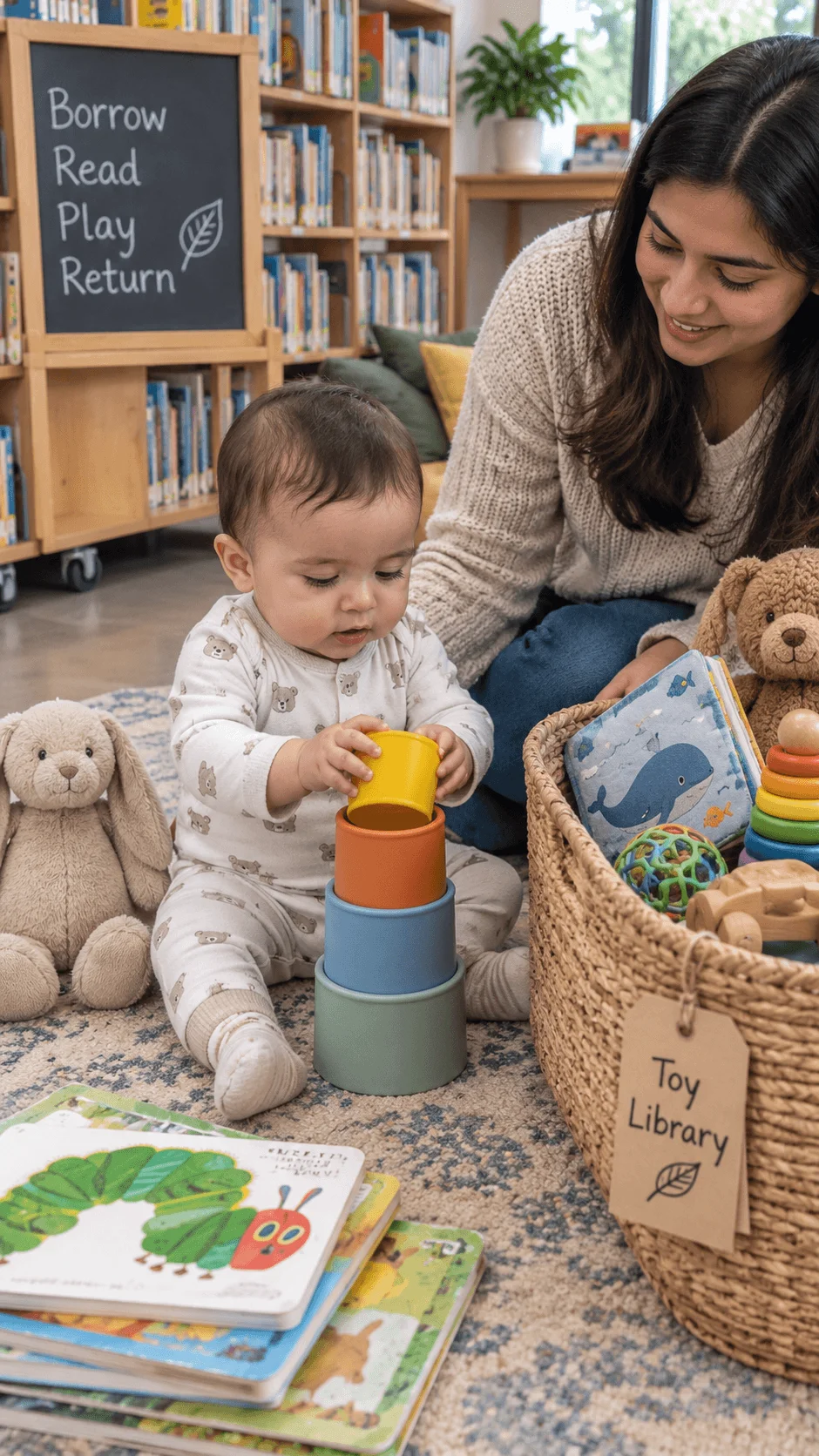
Families should inspect every borrowed item carefully. They should check for cracks, loose pieces, damaged fabric, exposed batteries, magnets, missing parts, sharp edges, dirt, mould, and safety recalls.
Parents should clean washable items according to the maker’s instructions. They should remove any object that cannot be cleaned safely or appears damaged.
Borrowing supports sustainable activities for babies by encouraging sharing and reducing unnecessary ownership.
Sustainable Activities for Babies at Different Ages
Babies develop at different rates, so parents should observe ability rather than rely only on age. Head control, sitting, grasping, crawling, feeding readiness, balance, and attention can help parents select suitable activities.
Newborns to three months often benefit from calm experiences. Soft natural light, gentle outdoor sounds, face to face interaction, short tummy time sessions, and simple fabric textures may work well. Activities should remain brief and should respect the baby’s need for feeding, sleep, and comfort.
Babies aged three to six months may show stronger visual tracking, reaching, grasping, kicking, and rolling. Parents can offer one safe household object, a soft fabric, natural shadow movement, or a calm listening walk.
Babies aged six to nine months often begin sitting, transferring objects between hands, banging items, and exploring through the mouth. Treasure baskets, reusable cups, fabric play, cardboard discovery, and food sensory experiences may suit this stage.
Babies aged nine to twelve months may crawl, pull to stand, point, drop objects, imitate sounds, and practise early pouring. Parents can introduce more active cardboard play, water painting, borrowing activities, and supervised exploration with several safe objects.
Parents should stop any activity when the baby becomes tired, hungry, overwhelmed, or uninterested.
Safety Tips for Eco Friendly Baby Activities
Recycled, natural, homemade, or eco friendly does not automatically mean safe. Parents must inspect every material carefully before allowing a baby to touch it.
Babies often explore with their mouths. Small objects can create serious choking risks. Parents should avoid buttons, bottle caps, beads, stones, magnets, batteries, dried beans, uncooked rice, water beads, small wooden pieces, and loose decorations.
Sharp edges, peeling paint, broken plastic, loose fabric threads, long cords, staples, damaged cardboard, and unsecured lids can also create danger.
Parents should clean reused objects before each session and remove them when they show wear. A household item that worked safely one week may become unsafe after cracking or loosening.
Strong fragrances, essential oils, scented sprays, and unknown plants do not belong in baby sensory play. Parents should choose mild materials and check every plant for safety.
Food activities require upright sitting, age appropriate texture, awareness of allergies, and direct supervision. Water activities require constant attention, even when the amount of water appears very small.
Parents should remain close enough to act immediately. They should never leave the baby alone during sensory play.
How to Create Low Waste Baby Play at Home
Families can make baby play more sustainable without changing every part of their lifestyle. Small choices can create meaningful results over time.
Parents can buy fewer toys and select durable items that work across several stages. They can rotate existing toys, borrow before buying, accept safe second hand products, and pass useful items to another family.
Washable materials often provide better long term value than disposable supplies. Cotton cloths, reusable cups, stainless steel bowls, fabric books, and strong wooden objects can support many different activities.
Families should not assume that buying a new product with an eco label always represents the most sustainable choice. Manufacturing, packaging, transport, and disposal still use resources. The object already available at home may offer greater environmental value.
No material activities also deserve attention. Songs, peekaboo, facial imitation, outdoor listening, movement games, and nature observation can support development without producing waste.
Daily routines can become learning opportunities. Folding laundry, preparing food, walking outside, cleaning toys, and putting objects away can all introduce babies to care, order, and reuse.
These habits make sustainable activities for babies easier to maintain because they fit naturally into family life.
Common Mistakes During Sustainable Baby Play
One common mistake involves buying many new products simply because they appear environmentally friendly. Sustainable play should reduce unnecessary consumption, not replace one large collection with another.
Another mistake involves using unsafe recycled materials. A bottle cap, damaged container, loose cardboard piece, or decorated fabric may appear creative but can create choking or injury risks.
Parents may also copy activities designed for toddlers. Loose rice, dried pasta, paint, glue, beads, stones, and water beads do not suit babies who explore with their mouths.
Complicated crafts often benefit the adult more than the baby. Babies do not need polished projects or decorative sensory stations. They need safe opportunities to touch, move, listen, observe, and interact.
Families should avoid wasting food only for sensory play. A very small portion from a normal meal provides enough material.
Parents should also avoid excessive water, glitter, disposable wipes, plastic decorations, and single use craft supplies.
Social media can create pressure to design perfect play areas. However, the baby’s comfort, safety, and interest matter more than appearance.
No activity should continue when the baby shows signs of stress, tiredness, hunger, discomfort, or overstimulation.
Conclusion
Sustainable activities for babies can support sensory exploration, movement, curiosity, communication, bonding, and early connection with nature. They can also help families reduce waste, spend more thoughtfully, and value the objects they already own.
Babies do not need expensive activity centres, overflowing toy boxes, or complicated craft supplies. A clean household object, reusable cloth, small amount of water, sturdy cardboard box, quiet outdoor walk, or borrowed book can create a meaningful experience.
The best sustainable baby activities remain simple, safe, washable, reusable, and appropriate for the baby’s current abilities. Parents can begin with one activity, observe the baby carefully, and make changes according to interest and development.
When families use less, care for belongings, borrow more, and spend time together, they create a practical foundation for low waste living. These everyday experiences make sustainable activities for babies both valuable and realistic.