Best Sustainability Activities for Employees in 2026
Sustainability activities for employees help organisations turn environmental goals into practical workplace action. In 2026, companies are moving beyond simple recycling reminders and one day awareness events. They now want activities that involve employees, improve daily systems, build useful skills, reduce unnecessary consumption, and produce results that teams can measure over time.
Employees often respond more positively when sustainability feels relevant to their work and personal experience. A poster near a recycling bin may create awareness, but it rarely changes an entire workplace culture. People become more engaged when they can investigate a problem, suggest a solution, test an idea, and see evidence that their contribution made a difference.
Modern workplace sustainability should not place all responsibility on individual workers. Company policies, purchasing decisions, travel expectations, building systems, suppliers, technology, and management choices often create a much larger impact. Effective activities allow employees to participate while encouraging leaders to improve the systems that shape daily behaviour.
The following ideas focus on participation, learning, cooperation, innovation, and measurable improvement. Businesses can adapt them according to their size, location, budget, industry, employee needs, safety requirements, accessibility standards, and working arrangements.
Why Workplace Sustainability Activities Matter
Workplace sustainability activities give employees a practical role in environmental improvement. Many people understand that waste, pollution, resource use, and climate change matter, but they may not know how their everyday work connects with these issues. A well designed activity helps them understand that connection without using guilt or fear.
These activities can also strengthen teamwork. Employees from different departments often solve problems in different ways. A finance employee may notice unnecessary spending. A designer may identify excessive packaging. An office manager may understand why supplies go unused. A technology employee may recognise inefficient digital systems. When people combine their knowledge, they often create stronger solutions than one sustainability manager could develop alone.
Employee sustainability engagement activities can support workplace motivation because they give people a sense of ownership. Employees usually care more about an initiative when leaders invite their ideas and provide resources to test them. Participation becomes meaningful when the company acts on useful suggestions instead of using sustainability only as a public relations message.
Businesses can also gain practical value. Reduced waste may lower disposal costs. Shared equipment may prevent duplicate purchases. Better meeting design may save time. Repair programs may extend the life of useful items. Commute experiments may reveal ways to improve attendance, flexibility, and employee wellbeing.
The strongest sustainability activities for employees create environmental and organisational benefits at the same time. They make the workplace more thoughtful, efficient, collaborative, and responsive to employee experience.
Employee Carbon Budget Challenge
An employee carbon budget challenge gives teams a clear way to examine the environmental impact of workplace decisions. Instead of telling employees to be greener, the company creates a realistic reduction target for a department, project, event, or month.
Teams can review commuting, business travel, office energy, printing, food, deliveries, supplier choices, meetings, and purchasing. They can then identify which changes offer the greatest improvement without damaging essential work.
For example, a sales team may notice that several employees travel separately to the same client area. They could combine visits, use shared transport, or replace one meeting with a video call. An events team may compare local catering with long distance deliveries. An office department may reduce unnecessary printing and create a better system for reusable materials.

The activity should focus on learning rather than competition. Leaders should avoid rewarding only the department with the lowest total impact because different teams have different responsibilities. A logistics team cannot operate in the same way as a remote design team. Companies should compare progress against each team’s starting point.
Employees can record actions, estimated savings, practical difficulties, and lessons. The organisation can then identify which ideas deserve permanent support.
This employee carbon reduction challenge becomes more useful when leaders remove barriers. Employees may want to use public transport, but unsuitable schedules or unsafe travel routes may prevent them. They may want to reduce printing, but a client or internal policy may still require paper documents. The company should treat these barriers as opportunities for system improvement.
Workplace Repair Cafe
A workplace repair cafe creates a shared space where employees can repair suitable items instead of discarding them. People may bring clothing, bags, bicycles, small furniture, office accessories, lamps, toys, or simple household objects.
The idea supports a circular economy because it extends the useful life of products. It also helps employees see repair as a normal and valuable choice rather than an inconvenient alternative to buying something new.
A company can organise the activity monthly, quarterly, or during a sustainability week. Employees with sewing, bicycle repair, woodworking, or basic maintenance skills can volunteer to help. Local professionals may also provide demonstrations or repair support.
Safety requires careful planning. Employees should not attempt dangerous electrical repairs unless they have suitable qualifications. The company should create clear rules about accepted items and should provide safe tools, protective equipment, supervision, and appropriate workspaces.
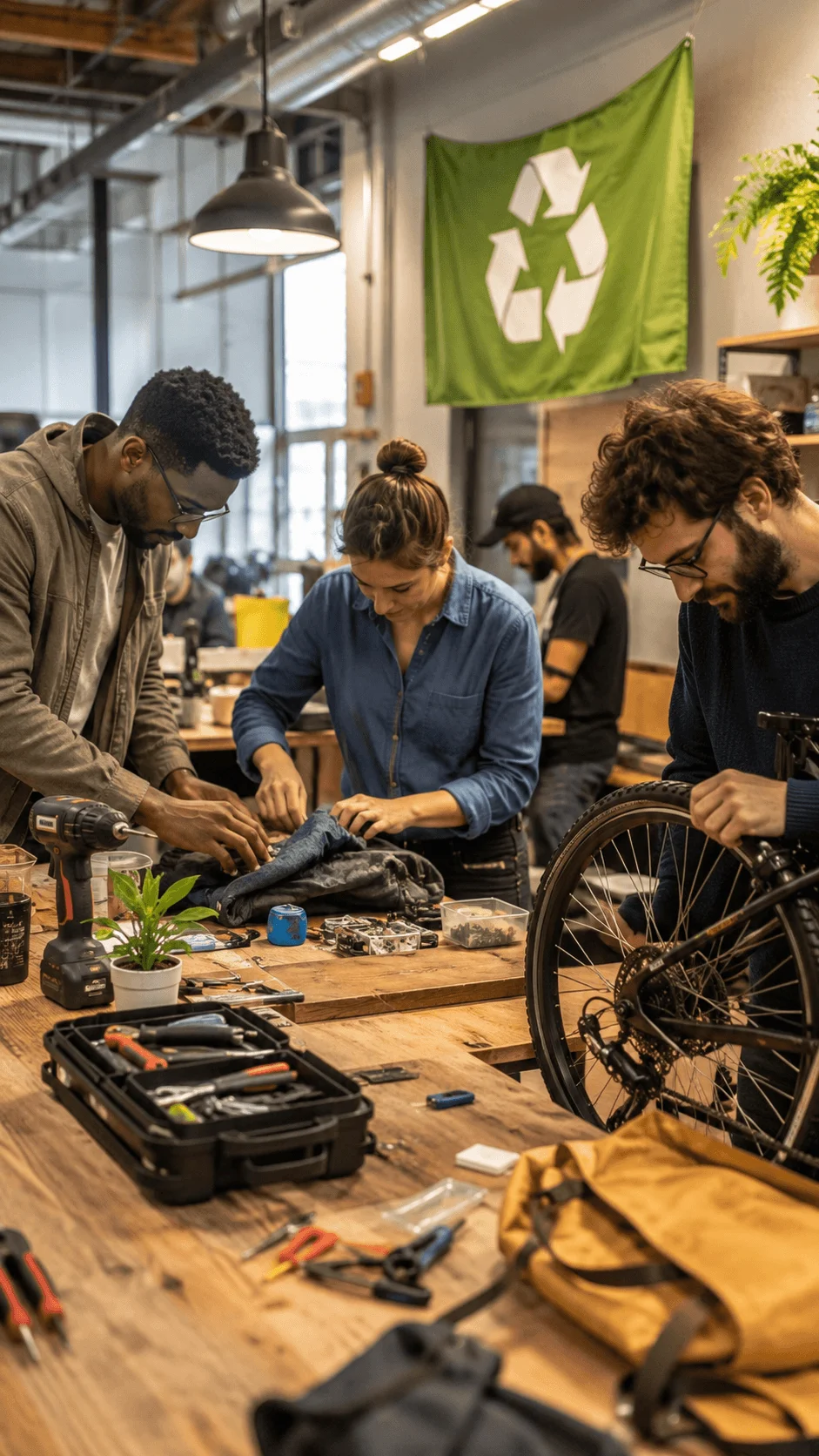
Workplace repair cafe ideas can also support social connection. Employees from different departments may meet while repairing items and sharing practical knowledge. These conversations can create relationships that normal meetings do not provide.
The company can measure the number of items repaired, estimated replacement purchases avoided, employee participation, and common repair needs. If several office chairs require the same repair, the organisation may identify a purchasing or maintenance problem. The cafe can therefore reveal wider issues with product quality and procurement.
Remote employees can join through an online repair demonstration or receive access to a local community repair event. Small businesses can partner with nearby organisations to share costs and expertise.
Sustainability Skills Exchange
A sustainability skills exchange allows employees to teach one another through short, practical sessions. Each person shares knowledge connected with their professional role or personal experience.
A finance employee may explain how departments can compare the full cost of reusable and disposable products. A procurement specialist may discuss supplier questions. A designer may show how thoughtful design reduces material waste. A technology employee may explain energy settings and device care. An events coordinator may share ways to plan lower waste meetings.
This activity works because it connects sustainability with real work. Employees often lose interest when training remains too general. A broad presentation about environmental responsibility may create awareness, but role specific knowledge helps people act.
The company can invite employees to host sessions that last fifteen to thirty minutes. The sessions may take place during lunch, team meetings, learning events, or online workshops. Leaders should recognise participation without creating pressure for employees who do not feel comfortable presenting.

Sustainability workshop ideas for employees should include discussion and application. After each session, participants can identify one change they can test in their own work. This keeps the exchange focused on practical improvement.
A marketing team may review the environmental claims it uses in campaigns. A human resources team may rethink disposable onboarding materials. A product team may discuss durability and repair. A facilities team may examine energy and water systems.
The organisation can build an internal library of recorded sessions, templates, case studies, and employee suggestions. Over time, the skills exchange can develop sustainability knowledge across the company instead of keeping it within one department.
Digital Carbon Cleanup Day
A digital carbon cleanup day helps employees organise digital systems, reduce unnecessary storage, improve device performance, and extend the life of workplace technology.
Employees can review duplicate cloud files, outdated shared folders, old downloads, unused applications, unnecessary email subscriptions, and large files that no longer support active work. Teams can also improve file naming, permissions, storage rules, and archiving systems.
The activity should avoid exaggerated claims about deleting a few emails. Digital sustainability involves more than an empty inbox. It includes responsible data management, efficient software use, secure storage, device maintenance, and thoughtful technology replacement.
Technology teams can guide employees so they do not remove important records or create security problems. The company should explain which documents employees must retain and which systems require professional management.

Employees can also review screen brightness, sleep settings, charging habits, software updates, and equipment care. A device that remains useful for another year may create greater value than a symbolic digital cleanup.
Remote and hybrid employees can participate easily because the activity does not depend on a shared office. Teams can schedule one focused hour, provide clear instructions, and track completed tasks.
The company can measure storage reduced, unused software removed, folders reorganised, subscriptions cancelled, and devices retained through better maintenance. The greatest benefit may come from improved efficiency because employees spend less time searching for documents and managing confusing systems.
Sustainable Commute Experiment Week
A sustainable commute experiment week invites employees to test realistic alternatives to their normal travel routine. The goal does not require everyone to cycle or walk. Instead, each participant chooses one suitable change.
Employees may use public transport, share a car, work remotely for part of the week, walk one section of the journey, combine errands, adjust travel times, or use a company shuttle.
The experiment should examine more than environmental impact. Employees can compare cost, time, convenience, stress, comfort, safety, and accessibility. This information helps the company understand why people choose certain travel methods.
An employee may discover that public transport saves money but adds significant travel time. Another may find that flexible hours make the same route much easier. A worker with mobility needs may require a completely different solution.

A sustainable commuting challenge for employees should never shame people who cannot change their transport. Housing location, family responsibilities, disability, shift schedules, weather, and local infrastructure all affect commuting choices.
Companies can support participation through flexible arrival times, secure bicycle storage, changing facilities, transport information, shared ride systems, or remote work policies.
The activity can produce useful data about employee needs. If many workers report that a later start time improves public transport access, the company may consider a policy change. This turns a temporary experiment into long term workplace improvement.
Employee Led Waste Audit
An employee led waste audit helps teams understand what the workplace throws away and why. Employees can examine paper, food, packaging, disposable cups, damaged equipment, unused supplies, and recycling mistakes.
The activity should focus on systems rather than personal blame. Employees often create waste because the workplace gives them limited options. A poorly labelled bin can cause contamination. Large catering orders can create food waste. Cheap equipment may break quickly. Automatic printing settings may use unnecessary paper.
Teams can select a safe sample of workplace waste and record common materials. They should use gloves and follow health and safety rules. Certain workplaces may require professional support because medical, chemical, industrial, or confidential waste needs special handling.
An office waste audit activity becomes valuable when employees identify the cause of each problem. The company can then choose one or two realistic improvements.
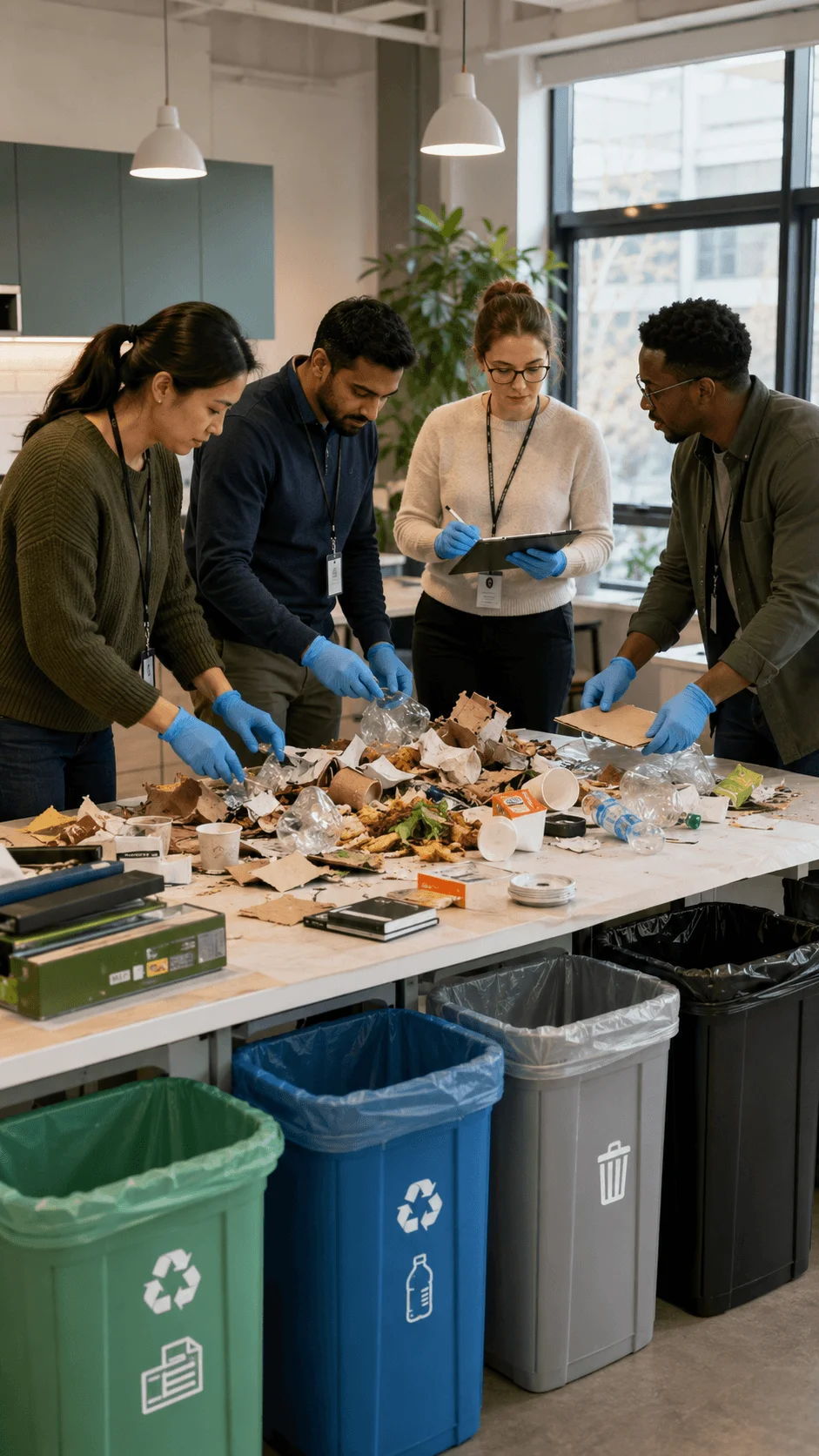
A team may introduce clearer recycling signs. An office may replace disposable kitchen items with washable alternatives. A manager may adjust meeting catering according to confirmed attendance. A purchasing department may order supplies in smaller quantities.
The organisation can repeat the audit after several weeks or months. This allows employees to compare results and see whether the new system worked.
Waste audits can reveal financial issues as well. Unopened supplies, discarded equipment, and unused food represent lost money. Sustainability activities for employees often gain stronger management support when they show both environmental and operational value.
Sustainable Meeting Design Challenge
A sustainable meeting design challenge asks employees to rethink how meetings use time, travel, energy, food, paper, and physical space.
Many companies focus only on disposable cups or printed agendas. A deeper review examines whether the meeting needs to happen, who truly needs to attend, whether virtual participation works, how long the session should last, and whether the chosen location creates unnecessary travel.
Employees can compare several meeting formats. A short online update may replace a long in person meeting. A complex planning session may still benefit from face to face discussion. The goal involves choosing the most appropriate format rather than assuming that one option always creates less impact.
Teams can also review catering. They can confirm attendance before ordering food, offer suitable portion sizes, provide reusable serving items, and consider dietary needs.

A company may create a simple sustainable meeting standard after the challenge. The standard could encourage digital documents, clear agendas, realistic attendance lists, shared travel, responsible catering, and suitable room sizes.
This activity supports environmental responsibility and workplace wellbeing. Employees often experience meeting overload, travel stress, and wasted time. Better meeting design can improve focus and productivity while reducing unnecessary resource use.
The company can measure travel avoided, paper reduced, food waste prevented, meeting hours saved, and employee satisfaction.
Office Biodiversity Mapping
Office biodiversity mapping encourages employees to observe the living environment around their workplace. They can record trees, birds, insects, native plants, shaded areas, water sources, and possible habitats.
The activity helps employees notice that biodiversity exists in cities, business parks, factories, schools, and small outdoor spaces. Even a building with limited land may support insects, birds, and plants.
Employees can create a simple seasonal map using photographs, drawings, digital records, or observation notes. They may notice which flowers attract pollinators, where birds rest, or which areas become too hot and dry.
The company can use these observations to guide improvements. It may add native plants, reduce harmful chemical use, install bird safe window markings, create shaded areas, or improve care for existing green spaces.
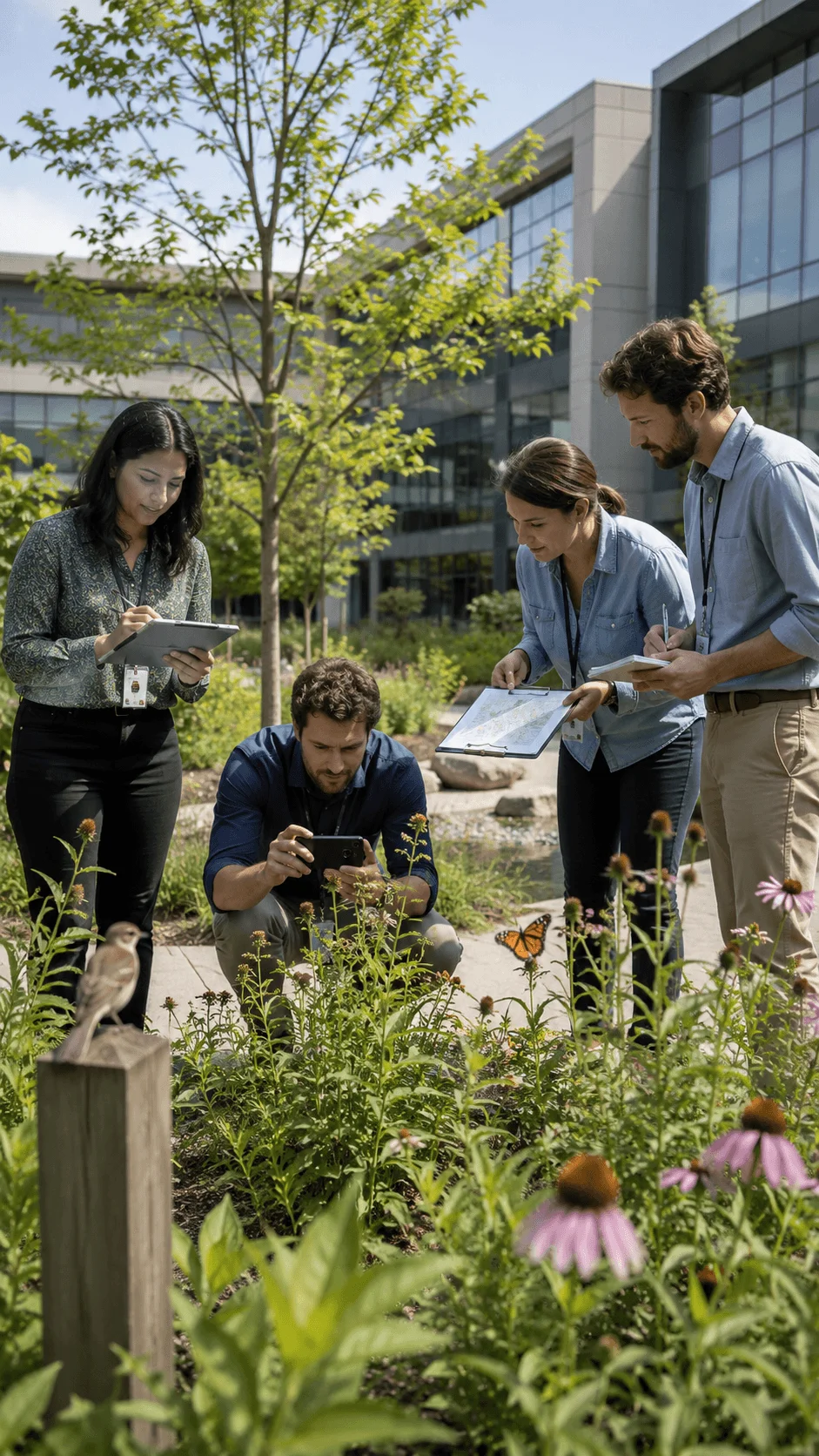
Workplace biodiversity activities require responsible behaviour. Employees should not disturb nests, capture animals, feed wildlife unsuitable food, or introduce plants without checking local conditions.
Remote workers can map a nearby park, balcony, garden, or view from a window. Employees who cannot access outdoor spaces can help organise records, research native species, or support a local conservation organisation.
The activity should not become a claim that a few plants cancel out larger business impacts. Instead, it can help employees understand local ecosystems and support thoughtful improvements.
Circular Office Supply Library
A circular office supply library allows departments to share items that they only need occasionally. These may include cables, cameras, presentation equipment, storage boxes, event decorations, reusable signs, repair tools, display stands, and specialist office materials.
Many companies buy duplicate items because employees do not know what already exists. Departments may store similar equipment in separate rooms, which increases spending and creates unnecessary waste.
The company can create a simple catalogue with photographs, locations, borrowing rules, and return dates. A staff member or small team can manage the system.
Sustainable office supply sharing works best when the company makes borrowing easy. If the process takes too long, employees may return to purchasing new items. Clear ownership and regular maintenance also prevent confusion.
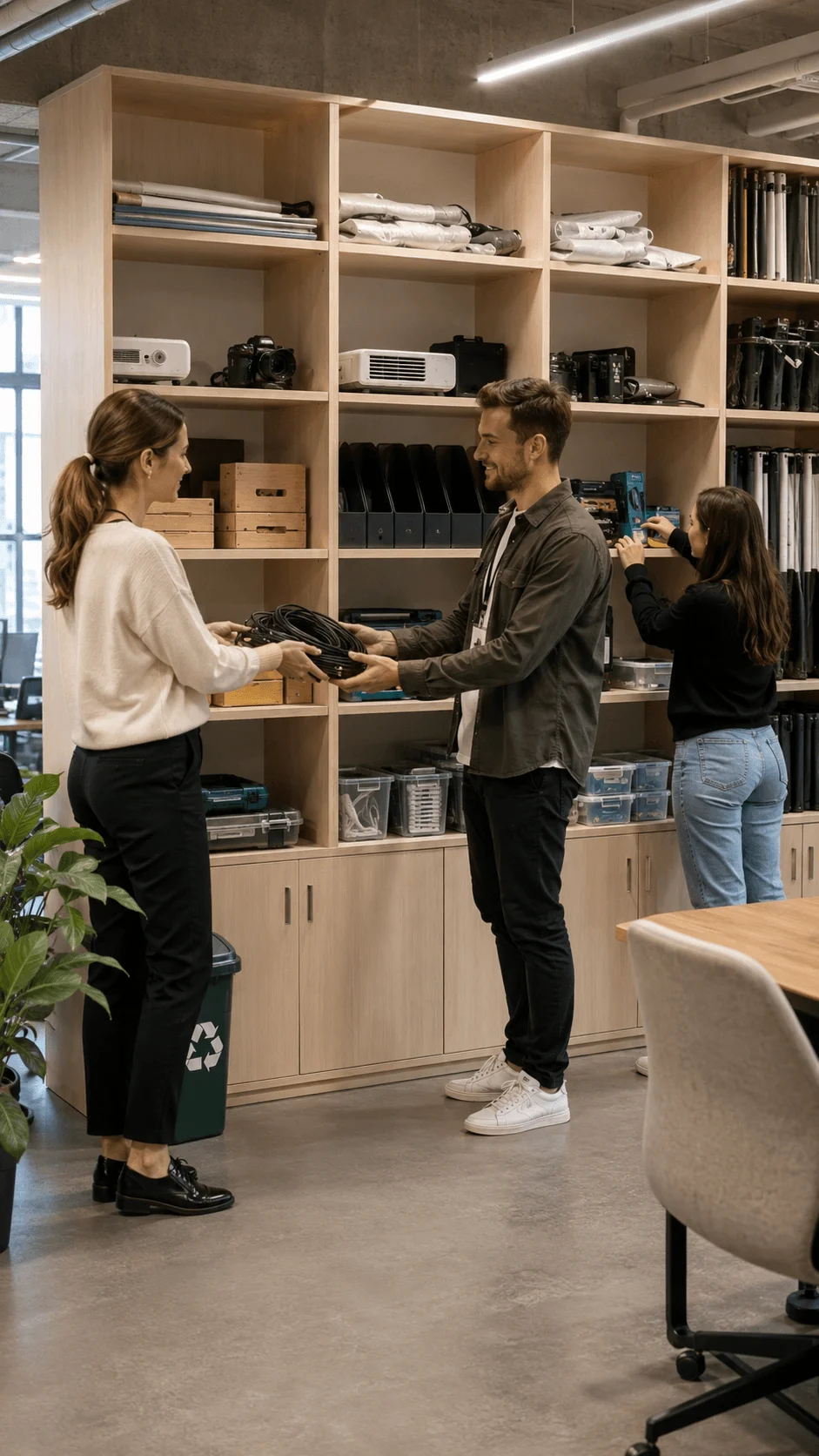
The library can include reused packaging, event materials, folders, name badge holders, and display items. Teams can also return extra supplies after a project instead of hiding them in storage.
The organisation can track avoided purchases, borrowing frequency, item condition, and repair needs. This information may help purchasing teams understand which products offer the best durability.
Small businesses can create a basic shared cupboard. Larger organisations may use an internal booking system. Remote teams can apply the same idea to digital subscriptions, software licences, and equipment loans.
Food Waste Rescue Lab
A food waste rescue lab allows employees to investigate why food goes unused during meetings, events, cafeteria service, training sessions, and normal office days.
Food waste may result from poor attendance estimates, large portions, limited dietary options, unclear labels, unsuitable storage, or automatic catering orders.
Employees can collect information without handling unsafe food. They may record how much remains, which items people avoid, and which events create the most waste. The company can then test a practical solution.
A meeting organiser may request meal confirmation in advance. A cafeteria may offer more flexible portion sizes. An office kitchen may improve storage labels. A company may work with a suitable food redistribution organisation when local rules allow it.
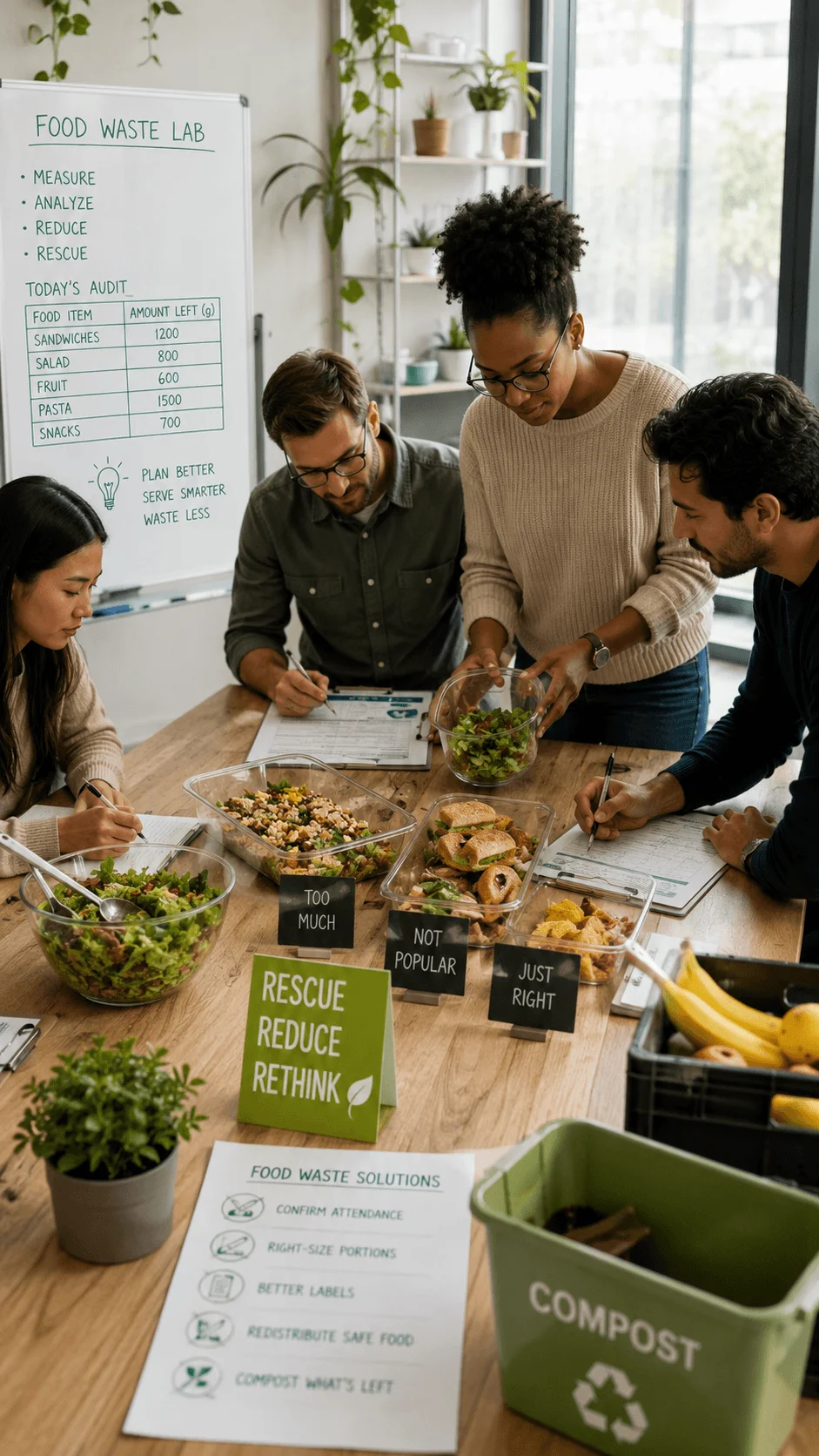
Food safety must remain a priority. Employees should not share food that has stayed at an unsafe temperature or lacks clear preparation information. Companies should follow local regulations and professional guidance.
An employee food waste challenge should respect personal needs. Dietary restrictions, allergies, religious practices, health requirements, and cultural preferences affect food choices. The goal should improve planning rather than pressure employees to eat unwanted food.
The company can measure food purchased, food served, leftovers, compost collection, participation, and employee satisfaction. The activity may also reduce catering costs while creating a more inclusive food system.
Green Process Hackathon
A green process hackathon brings employees together to improve one workplace system that creates avoidable waste, emissions, or resource use.
Cross functional teams can examine packaging, deliveries, onboarding materials, printing, customer returns, supplier communication, office energy, product design, or business travel.
Each team selects a specific problem and develops a realistic solution. The proposal should explain the expected benefit, required budget, possible risks, implementation steps, and measurement method.
For example, a retail team may redesign product return packaging so customers can reuse it. A human resources team may replace parts of a disposable welcome kit with durable or digital resources. A logistics team may combine deliveries more efficiently.

Sustainability hackathon ideas for employees work well because they use knowledge from across the organisation. Employees who work directly with a process often understand its weaknesses better than senior leaders.
The company should provide access to relevant information and decision makers. Employees may lose trust if leaders celebrate ideas but never test them. Management should select at least one realistic proposal for a trial and explain why other suggestions cannot move forward.
The organisation can measure ideas submitted, trials launched, waste reduced, costs saved, and employee participation. A successful project can become a permanent process and inspire future innovation.
Skills Based Environmental Volunteering
Skills based environmental volunteering allows employees to support environmental organisations through their professional knowledge.
A developer may improve a nonprofit website. A designer may create educational material. An accountant may help with budgeting. A writer may develop grant applications. A marketer may improve outreach. An analyst may organise environmental data. A legal professional may review suitable documents.
This approach can create more lasting value than a single cleanup event because employees contribute specialised skills that an organisation may not be able to afford.
Companies should begin by asking environmental partners what support they actually need. A volunteering project should respond to the organisation’s priorities rather than the company’s desire for publicity.

Environmental volunteering ideas for employees should include clear expectations, suitable time limits, and respect for professional boundaries. Employees should not provide regulated advice unless they have permission and suitable qualifications.
Remote employees can participate easily because many projects involve digital work. Companies can provide paid volunteer hours, project coordination, and recognition.
The organisation can measure volunteer time, completed projects, partner feedback, and longer term results. The most important measure should remain the value created for the partner organisation.
Sustainability Activities for Remote Employees and Hybrid Teams
Sustainability activities for remote employees require flexibility. Companies should avoid assuming that every worker has the same home, equipment, schedule, or local opportunities.
Remote employees can join digital skills exchanges, process hackathons, responsible technology sessions, local biodiversity observations, community volunteering, and commute experiments on office days.
Companies should not pressure employees to share private energy bills, home photographs, or personal purchasing information. Participation should remain voluntary, and employees should choose activities that suit their circumstances.
Hybrid teams can combine online and local options. An office may host a repair cafe while remote employees attend a digital repair workshop. A central team may complete a waste audit while remote workers review digital systems.
Sustainability activities for small businesses can remain simple. A company does not need a large budget or full environmental department. It can begin with a shared supply system, one waste review, a short skills exchange, or a meeting design experiment.
Large organisations may create local versions across offices and regions. They should allow teams to adapt activities according to local laws, climate, transport systems, working cultures, and community needs.
How to Measure Employee Sustainability Engagement Activities
Measurement helps companies understand whether an activity created real improvement. It also prevents sustainability from becoming a collection of attractive events with no lasting value.
Organisations can track participation, but they should not treat attendance as the only sign of success. A small project that changes a purchasing policy may create more value than a popular event that produces no long term action.
Teams can record waste reduction, avoided purchases, repaired items, storage improvements, commute changes, food waste, implemented ideas, volunteer hours, and employee feedback.
Companies should compare results with a clear starting point. If a department wants to reduce paper use, it needs to understand normal consumption before the activity begins.
Employee feedback adds important context. Workers can explain which actions felt useful, which barriers remained, and what support they need. Leaders should share results honestly, including problems and lessons.
The strongest sustainability activities for employees continue after the original event. A repair cafe may influence procurement. A waste audit may improve bin systems. A hackathon may change packaging. A commute experiment may support flexible working.
How Companies Can Avoid Greenwashing
Greenwashing happens when a company promotes environmental claims that appear stronger than its real actions. Employee activities can become part of this problem when organisations use them for publicity while ignoring larger business impacts.
A company should report results honestly and avoid exaggerated language. It should not claim that a small office activity made the entire business sustainable.
Leaders should provide budgets, time, tools, and decision making support. Employees may become frustrated when management asks them to reduce small personal impacts while the company continues wasteful purchasing, unnecessary travel, or irresponsible supplier practices.
Participation should remain voluntary and respectful. Companies should not create guilt, public rankings, or pressure around personal lifestyle choices.
Transparent measurement builds trust. Organisations can explain what changed, what did not change, and what they plan to improve next.
Sustainability activities for employees should support wider business action. They work best when companies also review energy, products, suppliers, transport, waste systems, investment decisions, and long term strategy.
Conclusion
Sustainability activities for employees can turn environmental responsibility into practical workplace improvement. The most effective ideas give employees a clear role, respect different circumstances, address real systems, and produce results that people can see.
A carbon budget challenge can improve decision making. A repair cafe can extend product life. A skills exchange can spread knowledge. A waste audit can reveal hidden problems. A process hackathon can transform an inefficient system.
Companies should not treat these activities as temporary entertainment. They should listen to employee ideas, remove barriers, provide resources, measure results, and continue the changes that work.
When organisations approach sustainability activities for employees with honesty and long term commitment, they can strengthen teamwork, develop useful skills, reduce waste, improve workplace systems, and create a culture in which environmental responsibility becomes part of everyday work.