Sustainable Agriculture Projects Model Ideas
Sustainable agriculture has become one of the most important topics in environmental education as schools encourage students to explore innovative ways to grow food while protecting natural resources. A sustainable agriculture projects model helps students understand how modern farming combines science, technology, and environmental responsibility to produce healthy crops without harming the planet. As climate change, water scarcity, and soil degradation continue to affect farming communities across the world in 2026, project based learning gives students the opportunity to discover practical solutions through creativity and experimentation.
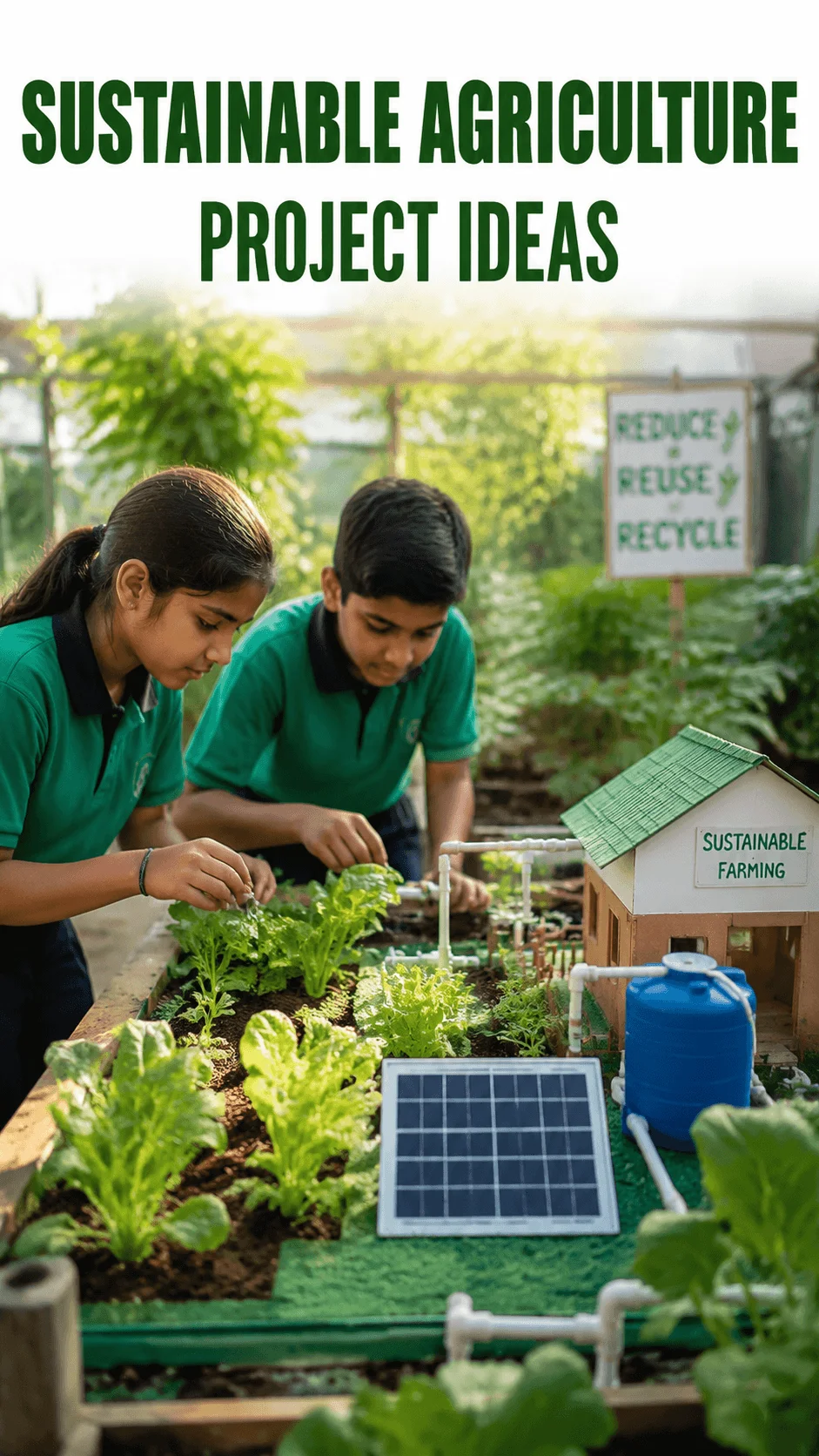
Teachers increasingly include agriculture projects in science fairs and classroom exhibitions because they connect multiple subjects in a meaningful way. Students learn about biology, geography, engineering, renewable energy, and environmental science while designing models that reflect real world farming practices. These hands on activities also inspire young learners to think about future careers in agriculture, sustainability, and technology while developing problem solving and presentation skills.
What Is a Sustainable Agriculture Model Project?
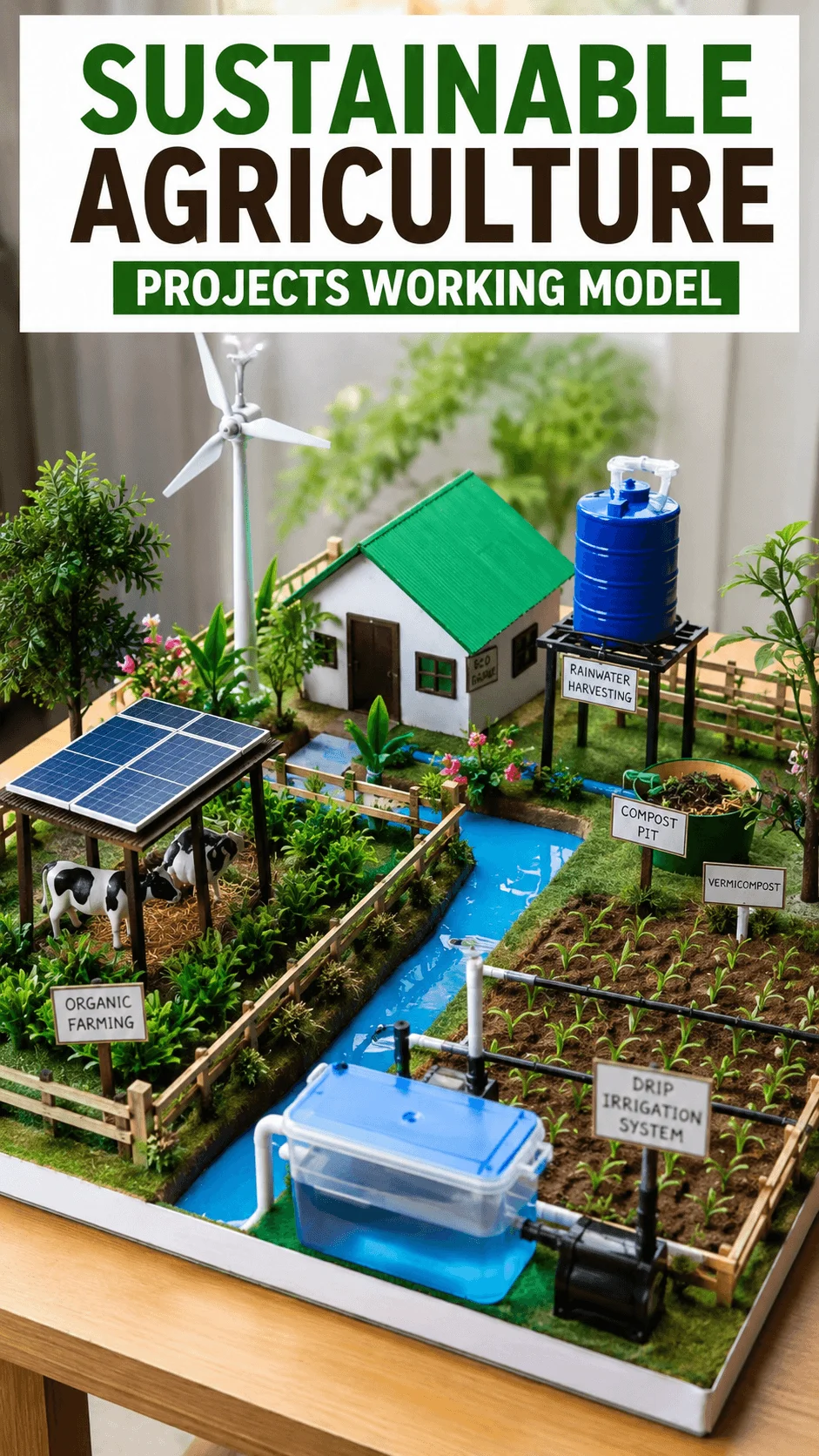
A sustainable agriculture model project is a small scale representation of farming methods that protect the environment while producing food efficiently. Instead of focusing only on crop production, these projects demonstrate how farmers can conserve water, improve soil health, reduce pollution, and use renewable energy to create a more balanced agricultural system. Students use simple materials such as cardboard, recycled containers, paper, clay, and craft supplies to build models that explain these farming concepts in an engaging way.
Schools encourage these projects because they make scientific ideas easier to understand. Reading about sustainable farming in a textbook provides valuable information, but creating a model allows students to visualize how different systems work together. For example, a model can show how rainwater reaches crops, how solar panels generate electricity for irrigation, or how compost improves soil fertility. This practical approach helps students connect classroom lessons with real life environmental challenges.
A sustainable agriculture model project also encourages creativity and innovation. Every student can personalize the design by adding moving parts, labels, miniature crops, or interactive demonstrations that make the presentation more interesting. As sustainable farming continues to evolve with new technologies, these projects introduce students to modern agricultural practices that are already transforming farms around the world.
Benefits of Sustainable Farming Project Ideas
Sustainable farming project ideas offer much more than an attractive science exhibition model. They help students understand the importance of protecting natural resources while meeting the growing demand for food. As the global population continues to increase, farmers must produce more crops using fewer resources. Learning about sustainable agriculture encourages students to think critically about these challenges and explore practical solutions.
These projects also develop important academic skills. Students research environmental issues, organize information, design creative models, and explain scientific concepts to teachers and classmates. This process improves communication, analytical thinking, and confidence while making learning more enjoyable.
Another major benefit is environmental awareness. Students discover how healthy soil, clean water, biodiversity, and renewable energy all play important roles in successful farming. Instead of viewing agriculture as simply growing crops, they begin to understand the complex relationship between nature, technology, and food production. These experiences often inspire young learners to adopt environmentally friendly habits in their own communities.
Innovative Sustainable Farming Project Ideas for School Students
Climate Smart Farming Model
Climate change has become one of the biggest challenges facing agriculture today. Rising temperatures, changing rainfall patterns, floods, and droughts can reduce crop production and threaten food security in many parts of the world. Climate smart farming focuses on helping farmers adapt to these changing conditions while reducing environmental impact. This approach has become one of the fastest growing sustainable farming practices in 2026 because it combines traditional agricultural knowledge with modern technology and resource management.
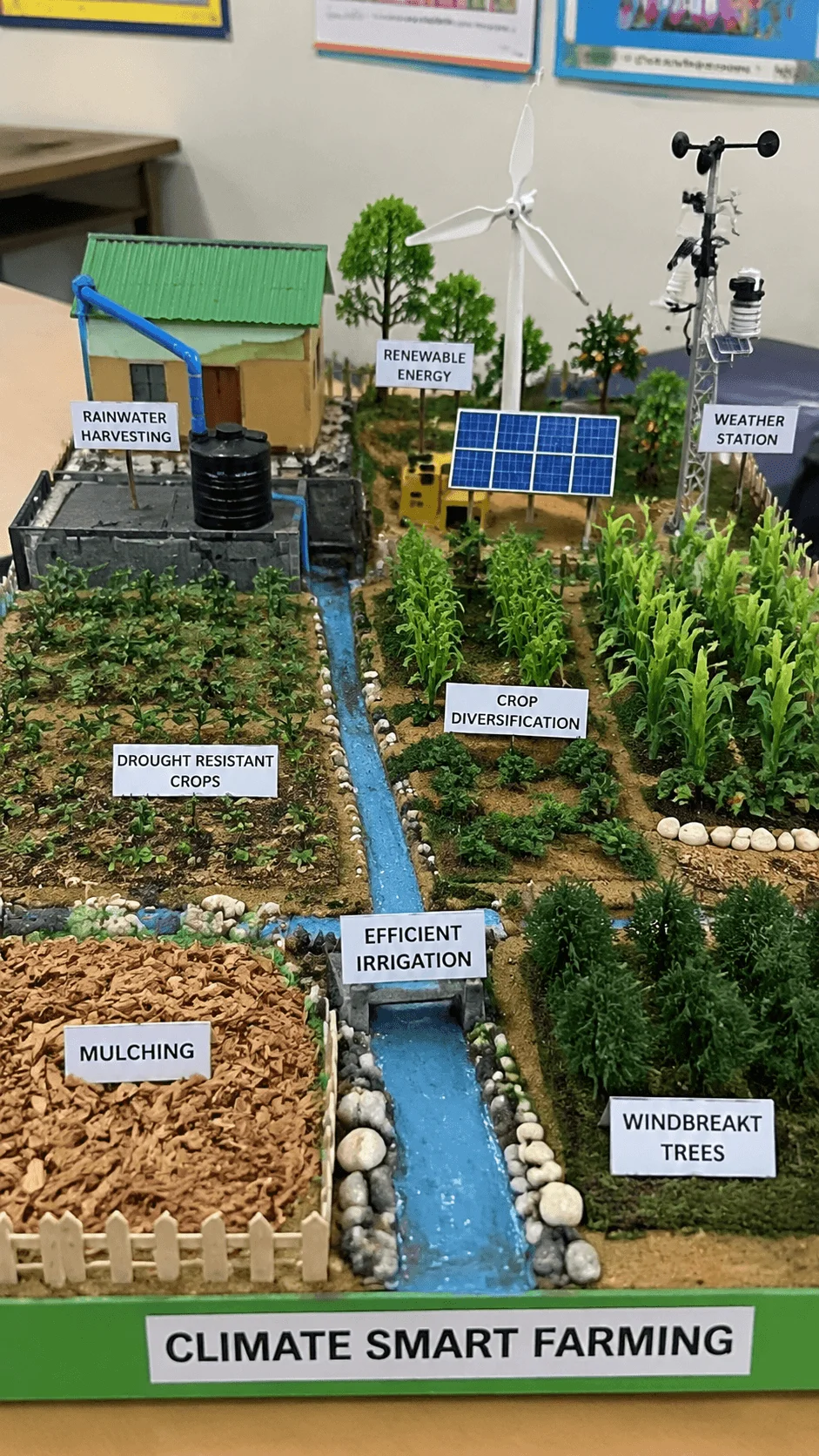
Students can demonstrate this concept by creating a model that includes rainwater harvesting systems, drought resistant crops, efficient irrigation channels, windbreak trees, and solar powered equipment. The project can also highlight methods such as mulching, crop diversification, and water conservation to show how farmers protect their fields during extreme weather.
Building this model helps students understand that agriculture must continuously adapt to changing environmental conditions. They learn how thoughtful planning and sustainable practices can improve crop yields while conserving valuable natural resources. Adding labels, miniature weather stations, or movable water flow systems can make the project more interactive and visually appealing during classroom presentations.
AI Smart Irrigation System
Artificial intelligence is changing agriculture in remarkable ways. Modern farms increasingly use smart sensors and automated irrigation systems to monitor soil moisture, weather conditions, and plant health. Instead of watering entire fields on a fixed schedule, intelligent systems deliver water only when crops actually need it. This technology reduces water waste while helping farmers grow healthier plants with fewer resources.
An AI smart irrigation model allows students to explore how technology supports sustainable agriculture. The project can include miniature crop fields connected to water pipes, moisture sensors, solar panels, and a small control unit representing an automated irrigation system. Arrows and labels can illustrate how data moves from sensors to the irrigation system before water reaches the crops.
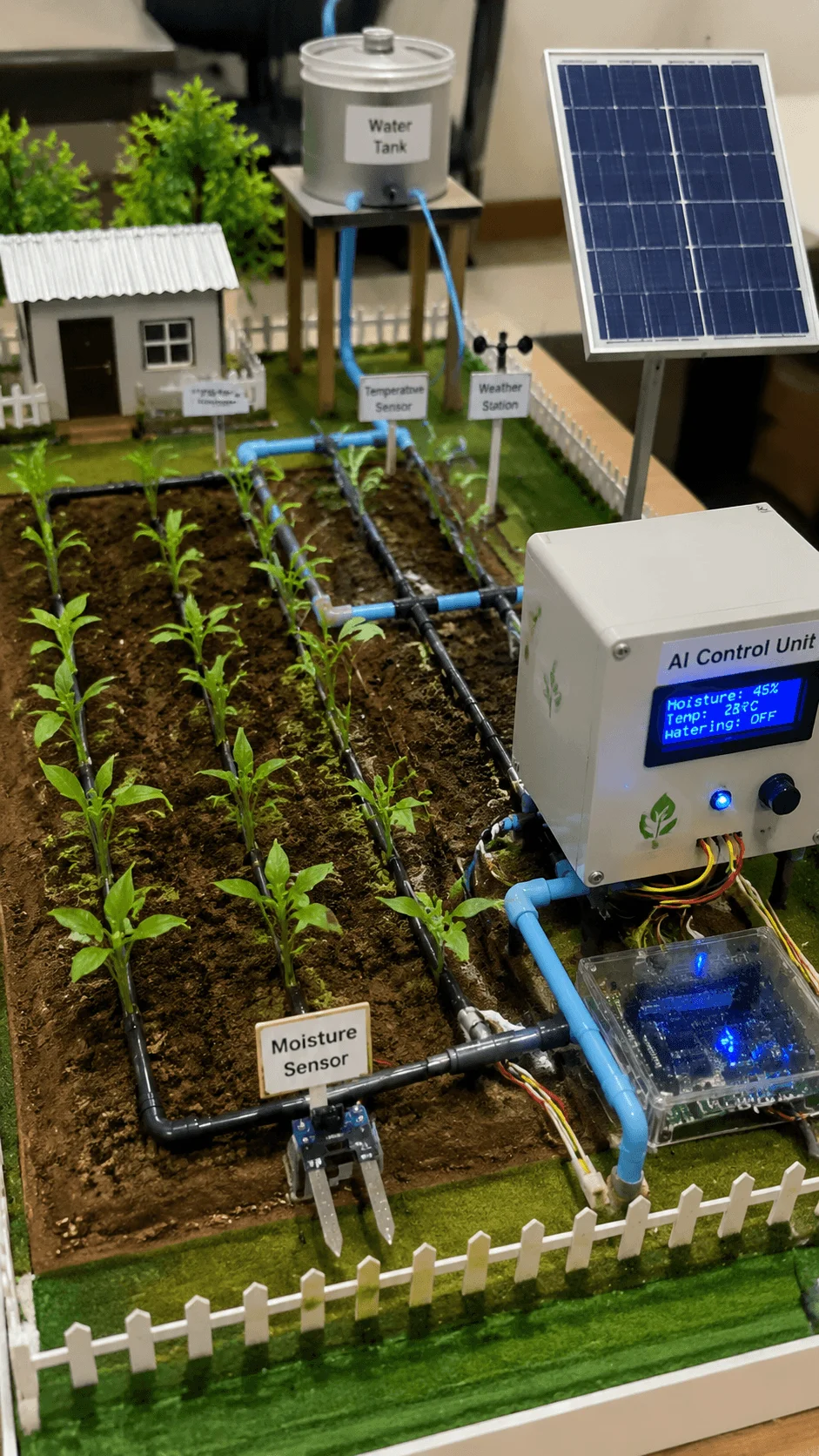
This project introduces students to engineering, computer science, and environmental conservation at the same time. They discover that technology can solve practical farming problems while protecting freshwater supplies. Since water shortages affect many regions around the world, smart irrigation has become one of the most valuable innovations in sustainable agriculture.
Regenerative Farming Model
Healthy soil forms the foundation of every successful farm, yet years of excessive chemical use and intensive cultivation have damaged farmland in many regions. Regenerative farming focuses on rebuilding soil health by working with nature instead of against it. Farmers improve biodiversity, increase organic matter, reduce soil erosion, and create stronger ecosystems that support long term agricultural productivity.
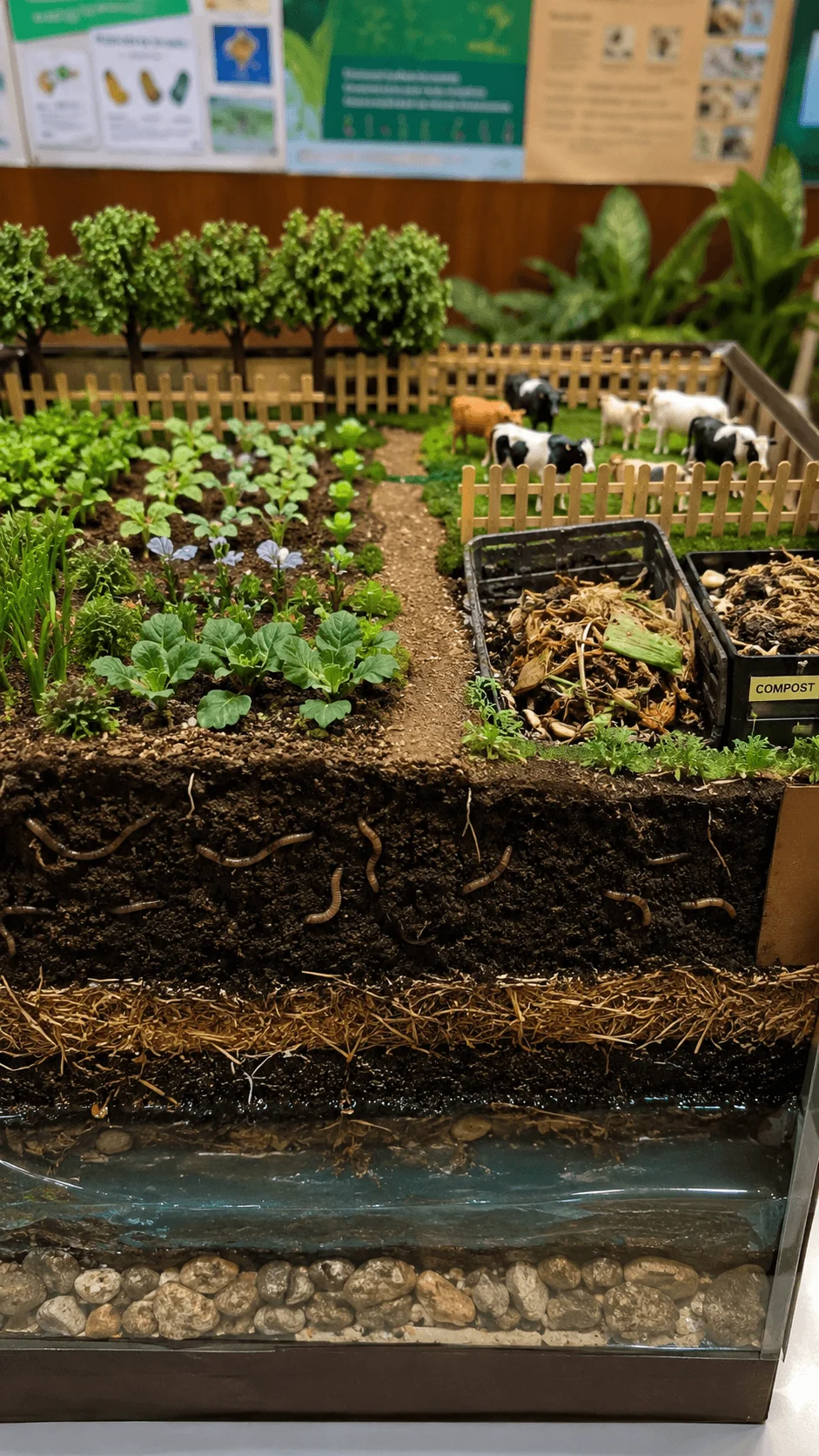
A regenerative agriculture model can demonstrate these principles through healthy crop fields, compost areas, earthworms, cover crops, and trees surrounding farmland. Students may also include livestock grazing areas to explain how carefully managed animals contribute nutrients back into the soil. This creates a complete picture of a balanced farming system where every part supports the others.
The project teaches students that healthy soil stores more water, supports beneficial microorganisms, and produces stronger crops with fewer chemical fertilizers. It also introduces the concept of restoring natural ecosystems rather than simply maintaining current farming practices. Because soil restoration has become a global priority in 2026, regenerative farming continues to attract attention from scientists, governments, and farmers alike.
Vertical Farming Model
As cities continue to expand and farmland becomes more limited, vertical farming offers an innovative solution for producing fresh food in smaller spaces. Instead of growing crops across large fields, farmers cultivate plants on multiple stacked levels inside specially designed buildings. This method allows vegetables and herbs to grow throughout the year while using significantly less land than traditional farming.
Students can create a vertical farming school project by building a multi level structure from cardboard or recycled materials. Small shelves filled with miniature plants can represent growing layers, while LED lights, water pipes, and ventilation systems illustrate how indoor farms maintain ideal growing conditions. Transparent sections help viewers understand how each level functions within the complete farming system.
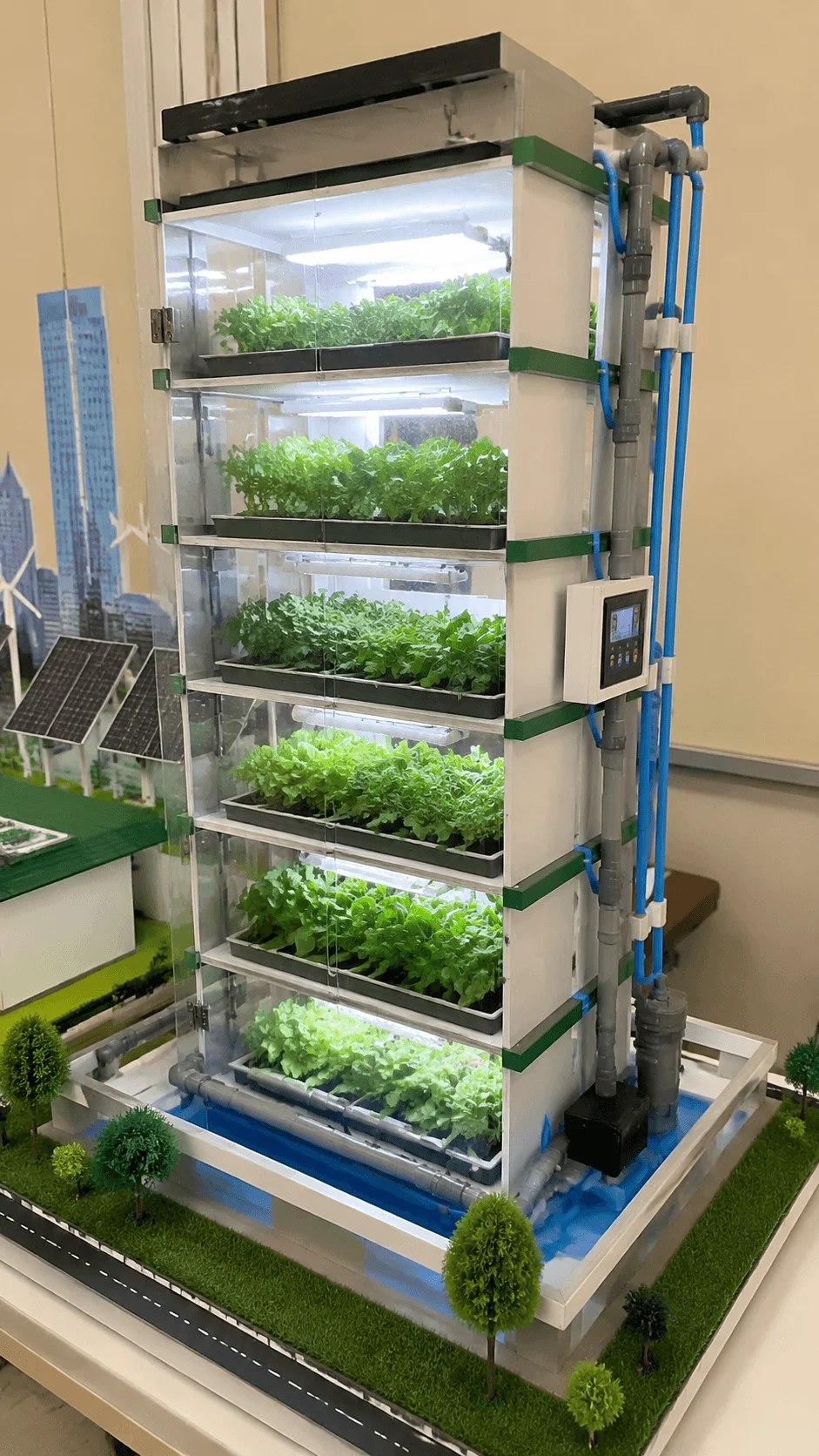
This project introduces important ideas about urban agriculture, efficient land use, and food security. Students learn that modern farming is no longer limited to rural areas. By growing food closer to consumers, vertical farms reduce transportation needs and create fresh produce in densely populated cities. As more countries invest in indoor agriculture, this concept continues to shape the future of sustainable food production.
Hydroponic Farming System
Hydroponics demonstrates that plants do not always need soil to grow successfully. Instead, their roots receive nutrient rich water that supplies everything required for healthy development. This innovative farming method uses far less water than conventional agriculture while producing high quality vegetables in controlled environments. As freshwater conservation becomes increasingly important, hydroponic farming continues to gain popularity in schools, research centers, and commercial farms.
A hydroponic farming model can include water reservoirs, nutrient pipes, growing trays, and leafy vegetables supported by lightweight materials. Students can use transparent containers to show how nutrient rich water flows continuously around plant roots before returning to the storage tank for reuse. This simple demonstration clearly explains the recycling process that makes hydroponics so efficient.
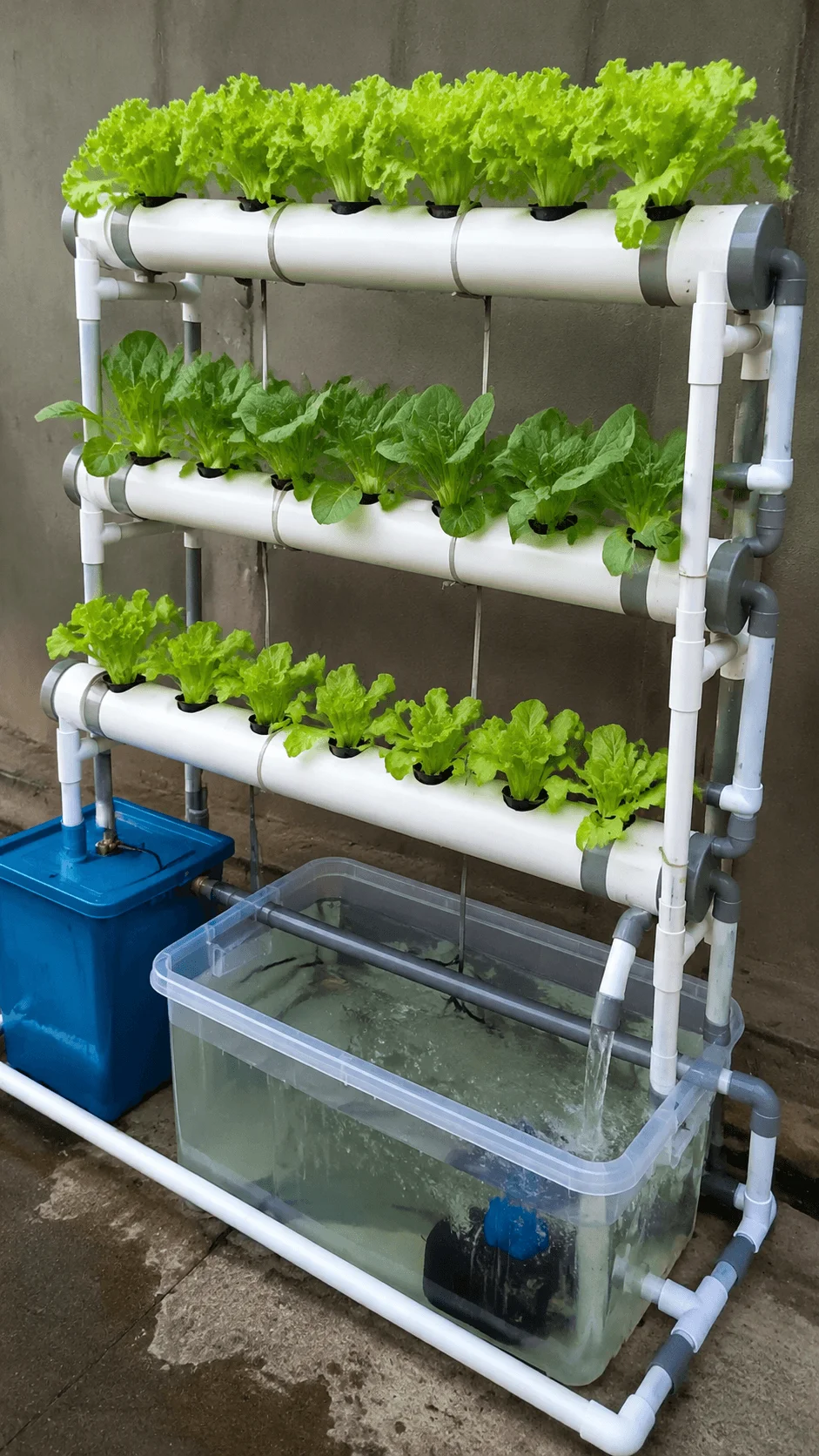
Working on this project helps students understand plant biology, water conservation, and sustainable food production. It also encourages discussions about how technology can help communities grow fresh vegetables even in places where fertile farmland is limited.
Agrivoltaics Model
Agrivoltaics combines agriculture with solar energy by allowing crops and solar panels to share the same land. Instead of choosing between farming and renewable energy, this innovative approach allows both systems to work together. Solar panels generate clean electricity while providing partial shade that protects certain crops from excessive heat and reduces water evaporation. Farmers benefit from two sources of income while using land more efficiently.
Students can represent this concept by creating a field with miniature solar panels placed above rows of vegetables or flowers. Small irrigation channels, storage batteries, and surrounding greenery help demonstrate how renewable energy supports agricultural activities. Labels explaining electricity generation and crop protection make the model easy for viewers to understand.
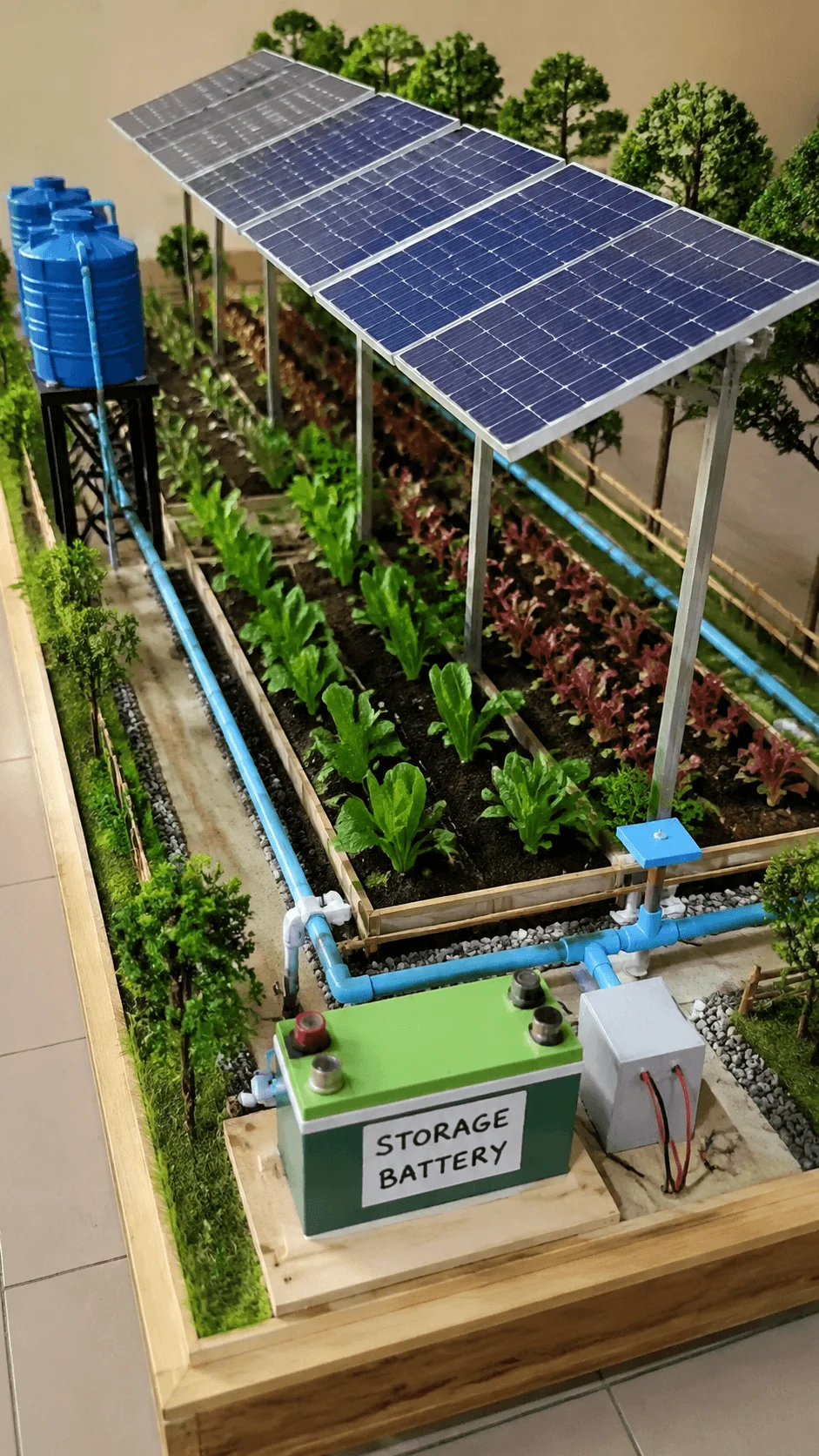
This project introduces students to renewable energy, sustainable farming, and climate friendly agriculture within a single presentation. It also shows how creative thinking can solve multiple environmental challenges at once. As countries continue investing in clean energy and sustainable food production, agrivoltaics has emerged as one of the most exciting innovations shaping modern agriculture.
Precision Agriculture Model
Precision agriculture is transforming the way farmers manage their fields by using technology to make informed decisions. Instead of treating an entire farm the same way, farmers collect detailed information about soil conditions, crop health, and weather patterns to apply water, fertilizer, and other resources only where they are needed. This approach reduces waste, lowers production costs, and helps protect the environment.
A precision farming model can represent a modern farm equipped with drones, GPS guided tractors, weather stations, and soil sensors. Students can use colored markers or small signs to show how different parts of a field may require different amounts of water or nutrients. Adding miniature satellites or digital control panels helps explain how data supports farming decisions.
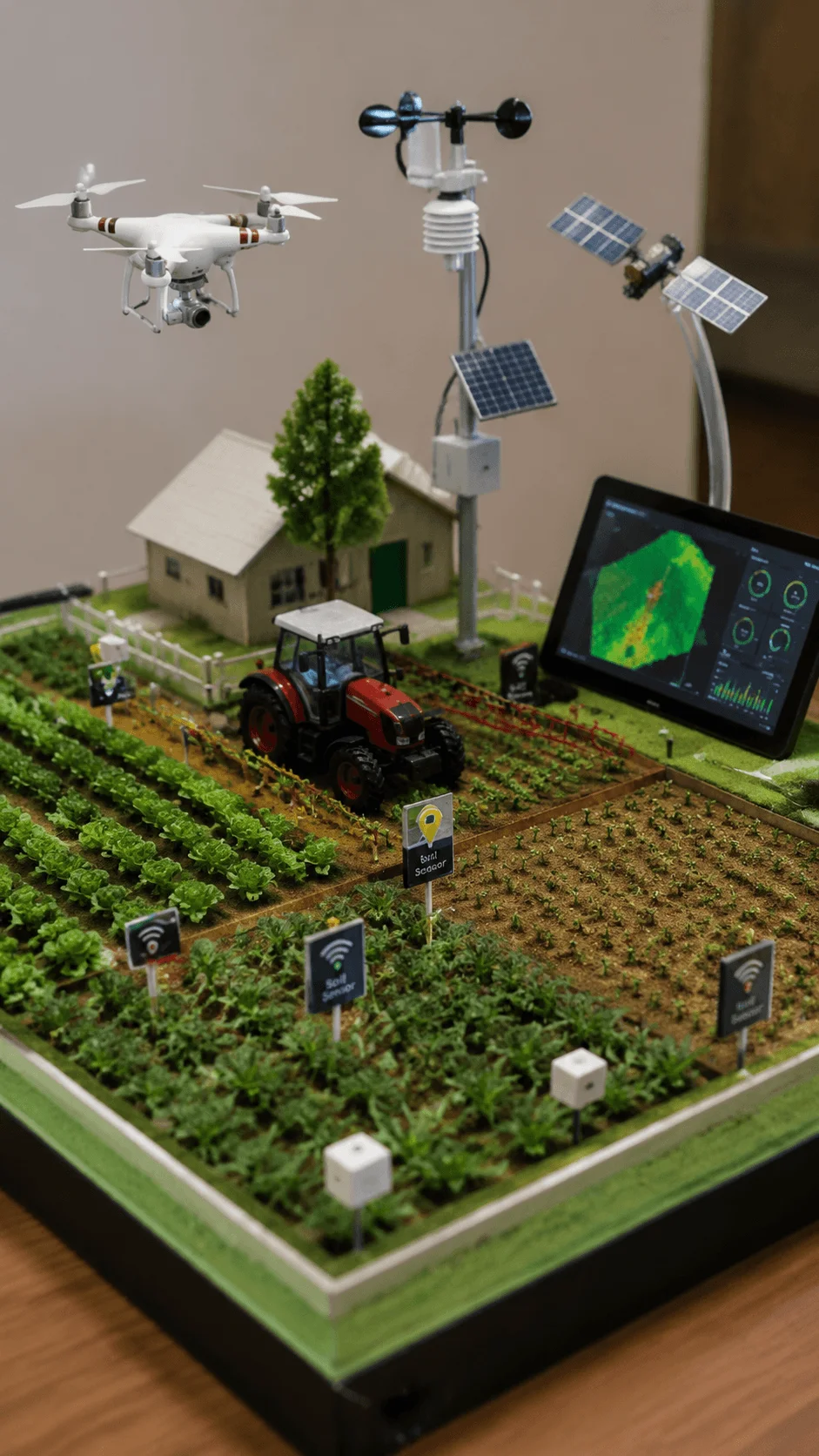
This project introduces students to the growing role of technology in agriculture while demonstrating that sustainable farming depends on accurate information rather than guesswork. As digital agriculture continues to expand across the world, precision farming is becoming an essential part of modern food production and an excellent choice for an agriculture science fair project.
Biochar Soil Improvement Model
Healthy soil is one of the most valuable resources on Earth, and biochar has become an increasingly popular solution for improving soil quality in sustainable farming. Biochar is a charcoal like material produced by heating plant waste in a low oxygen environment. When farmers mix it into the soil, it helps retain moisture, stores nutrients, and creates a better environment for beneficial microorganisms. It can also lock carbon into the ground for many years, making it an important tool for reducing greenhouse gas emissions.
Students can create a biochar agriculture project by designing a farm that includes a simple biochar production area, compost section, and crop field. Labels can explain how agricultural waste becomes biochar and how it improves soil over time. Different soil layers can show the difference between untreated soil and soil enriched with biochar.
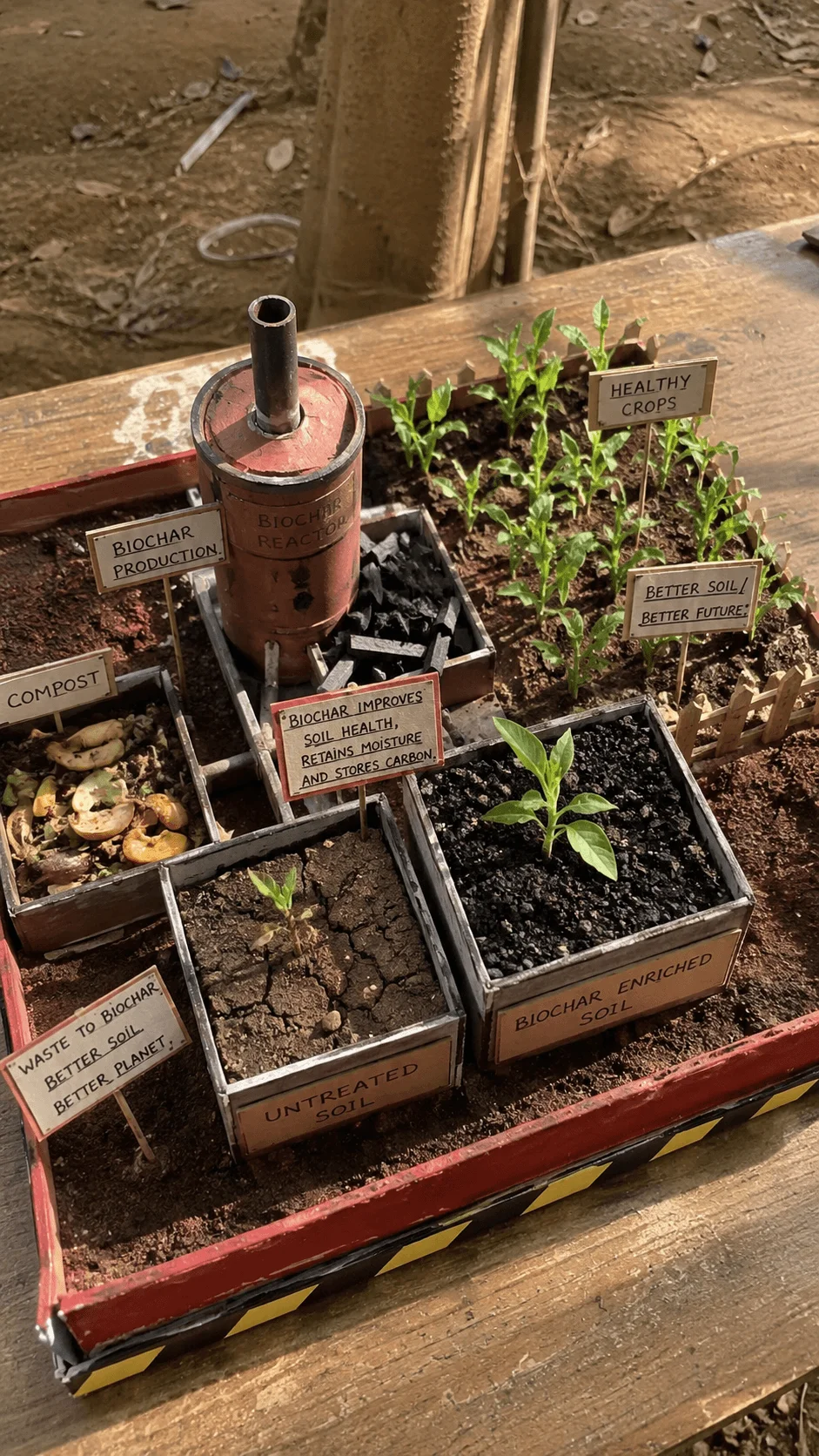
This project teaches students about recycling natural resources instead of throwing them away. It also demonstrates that many farming challenges can be solved by improving the soil rather than relying only on chemical fertilizers. Because biochar supports both healthy crops and climate action, it has become one of the most promising innovations in sustainable agriculture.
Circular Farm Waste Recycling Model
Traditional farming often produces large amounts of waste, but sustainable agriculture encourages farmers to view waste as a valuable resource. Circular farming creates systems where crop residues, animal manure, and organic waste return to the farm as compost, natural fertilizer, or renewable energy. This approach reduces pollution while making farms more self sufficient.
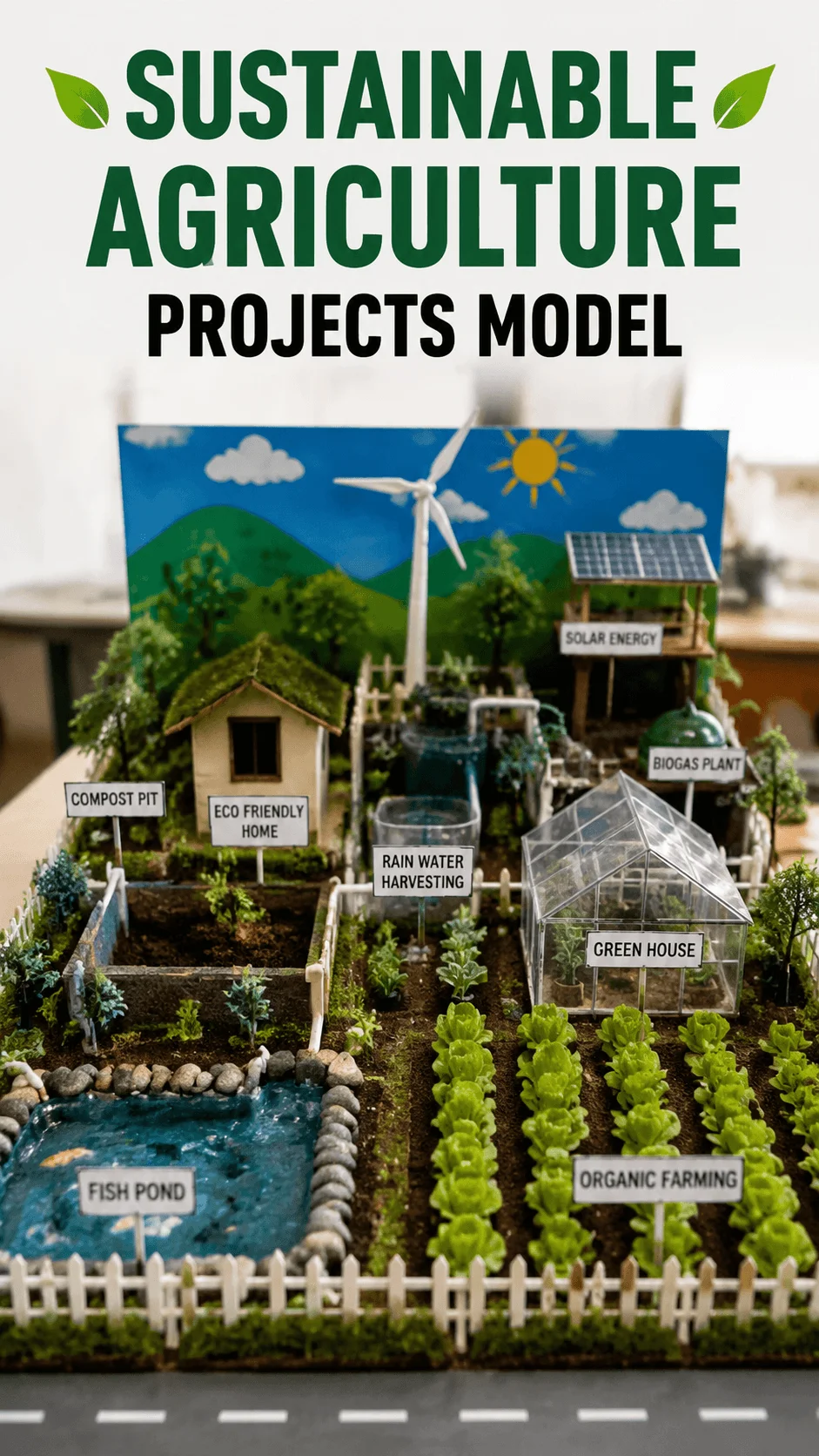
A circular farming model can include crop fields, livestock areas, compost bins, and a small biogas plant connected through arrows that illustrate the continuous recycling process. Students can demonstrate how kitchen waste becomes compost, how manure produces biogas, and how both support healthier crops. This creates an easy to understand visual explanation of the circular economy in agriculture.
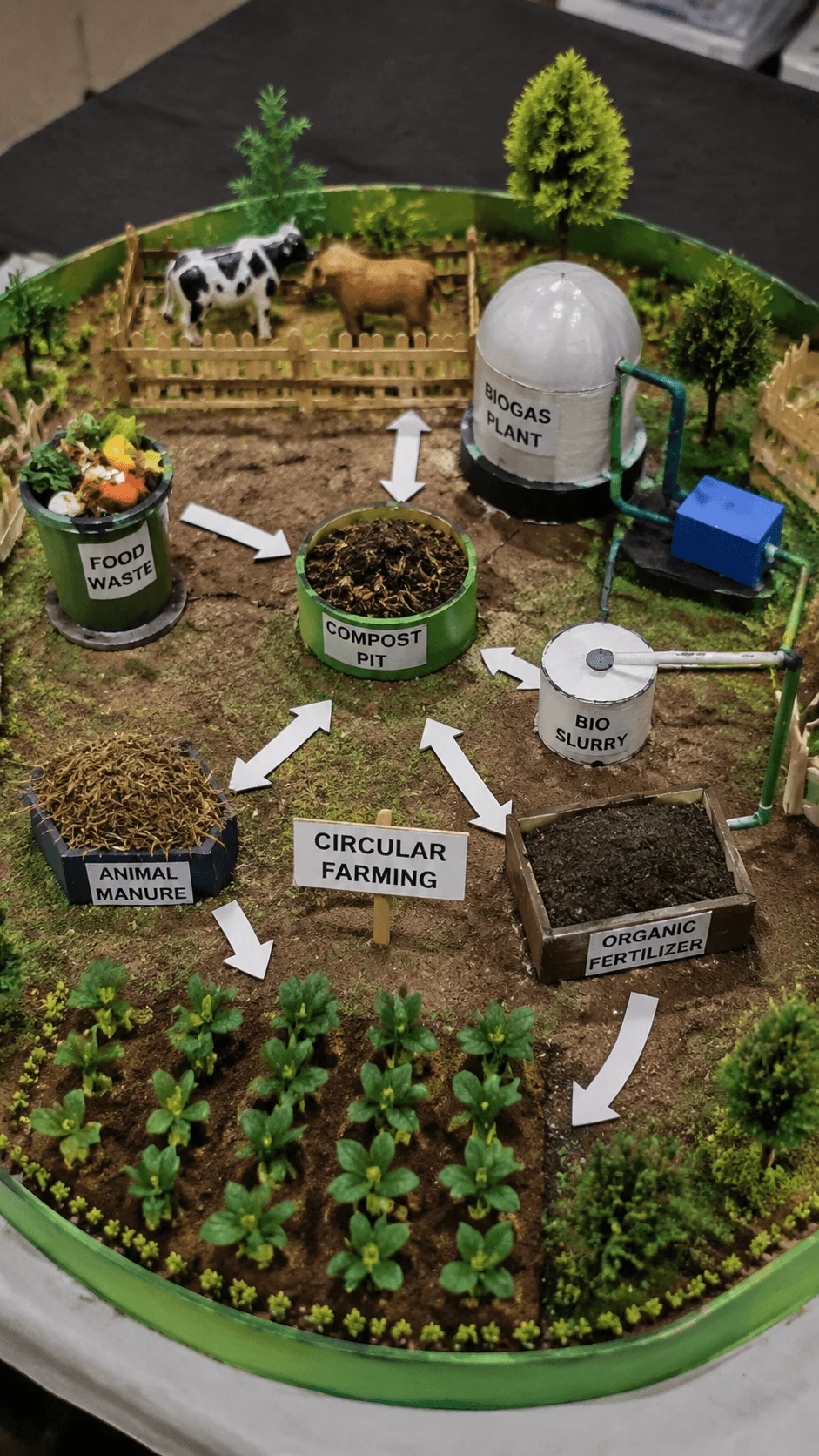
Working on this project helps students recognize that sustainability involves reducing waste at every stage of food production. They also learn that recycling resources within the farm protects the environment while lowering operating costs. As more farmers adopt circular farming systems, this concept continues to gain importance in agricultural education.
Pollinator Friendly Farm
Many flowering plants depend on bees, butterflies, birds, and other pollinators to produce fruits, vegetables, and seeds. Unfortunately, habitat loss, pollution, and climate change have reduced pollinator populations in many regions. Pollinator friendly farming aims to create safe environments where these important species can thrive while supporting healthy crop production.
Students can design a model that includes colorful flower strips, vegetable gardens, fruit trees, bee hotels, butterfly habitats, and small ponds. These features demonstrate how farms can provide food and shelter for beneficial insects while increasing biodiversity. Labels explaining pollination make the project educational for viewers of all ages.
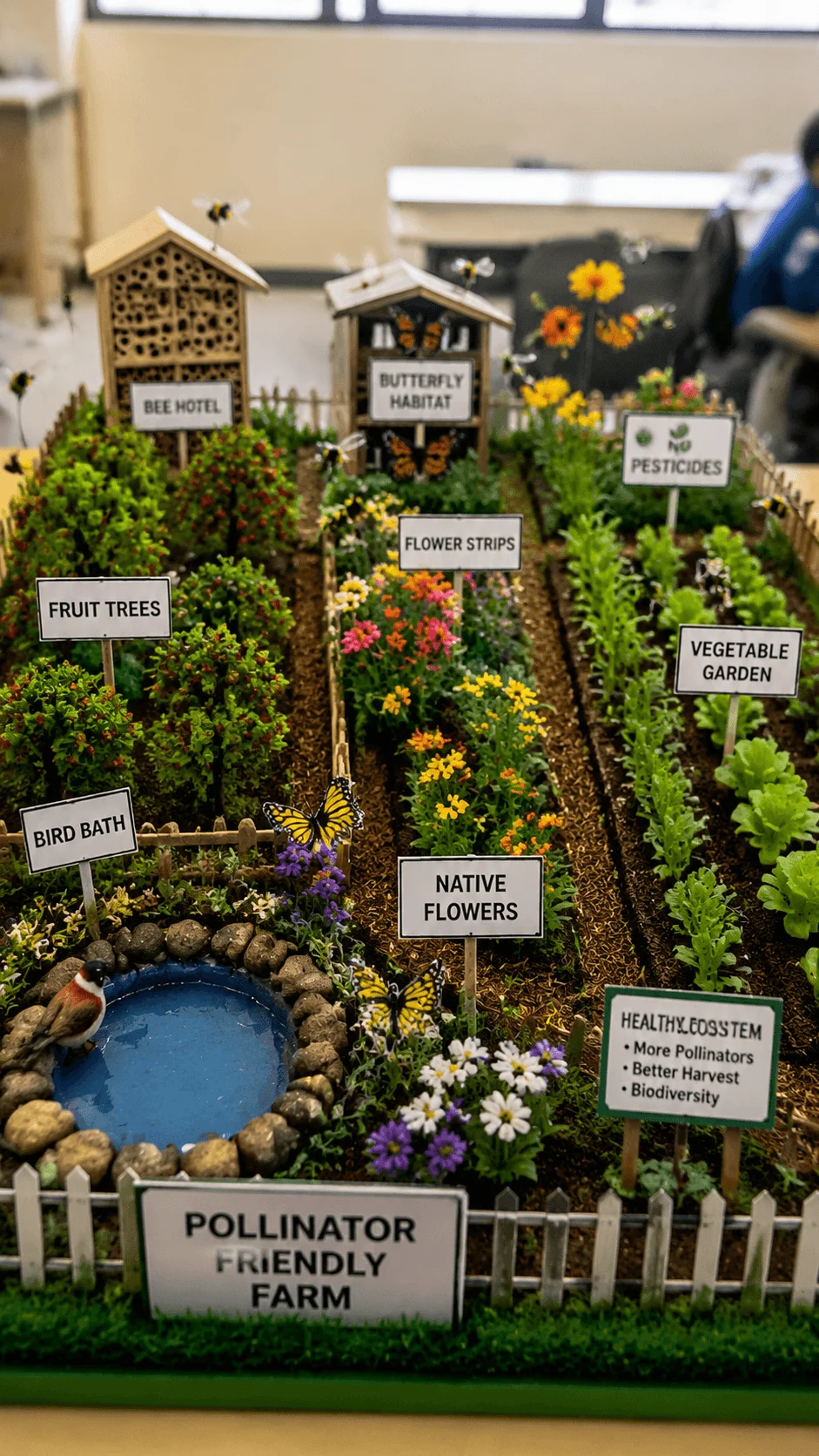
This model teaches students that successful farming depends on healthy ecosystems rather than crops alone. They discover that even small actions, such as planting native flowers or reducing pesticide use, can help protect pollinators and improve harvests. As biodiversity conservation becomes a global priority, pollinator friendly farming represents an inspiring and practical sustainable agriculture model project.
Smart Greenhouse Model
Greenhouses have supported crop production for many years, but today’s smart greenhouses use advanced technology to create ideal growing conditions. Sensors monitor temperature, humidity, light intensity, and soil moisture, while automated systems adjust fans, irrigation, and lighting without constant human supervision. These improvements help farmers grow crops more efficiently while conserving resources.
A smart greenhouse model can feature transparent walls, solar panels, ventilation systems, automatic sprinklers, and digital control panels. Students can use simple moving parts or labels to show how sensors respond to changing environmental conditions. Including rainwater harvesting or renewable energy systems makes the project even more sustainable.
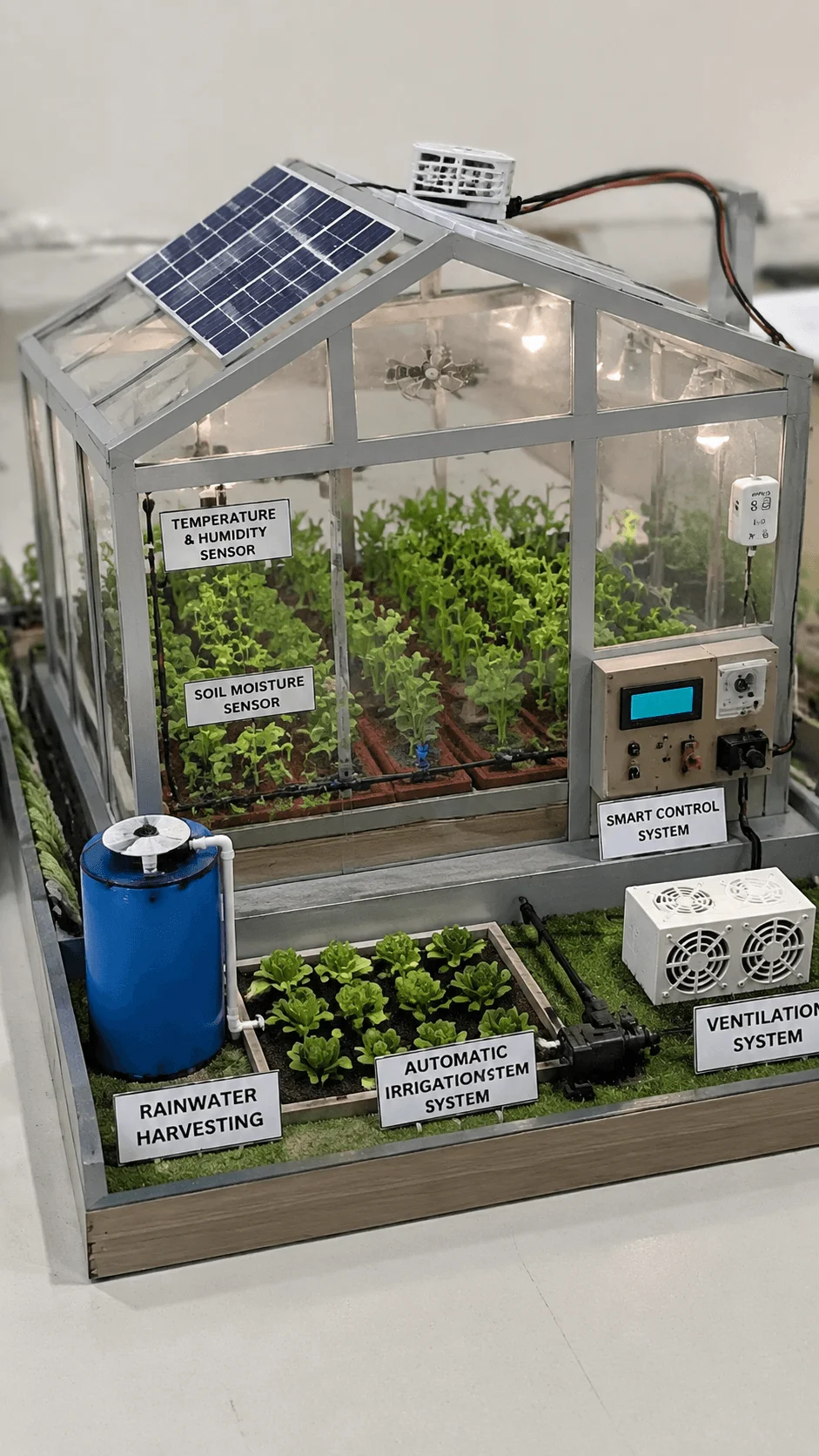
This project combines environmental science with engineering and technology. Students learn how automation improves crop quality while reducing energy and water consumption. As climate conditions become less predictable, smart greenhouses are becoming an important solution for reliable food production around the world.
Carbon Farming Model
Carbon farming focuses on reducing greenhouse gases by capturing carbon dioxide from the atmosphere and storing it in plants and healthy soil. Farmers achieve this through practices such as planting trees, growing cover crops, reducing soil disturbance, and improving pasture management. These methods not only help fight climate change but also improve soil fertility and crop productivity.
Students can create a carbon farming project that includes crop fields, tree plantations, healthy soil layers, and signs illustrating the movement of carbon from the atmosphere into the ground. Comparing a healthy sustainable farm with a degraded field can make the environmental benefits easier to understand.
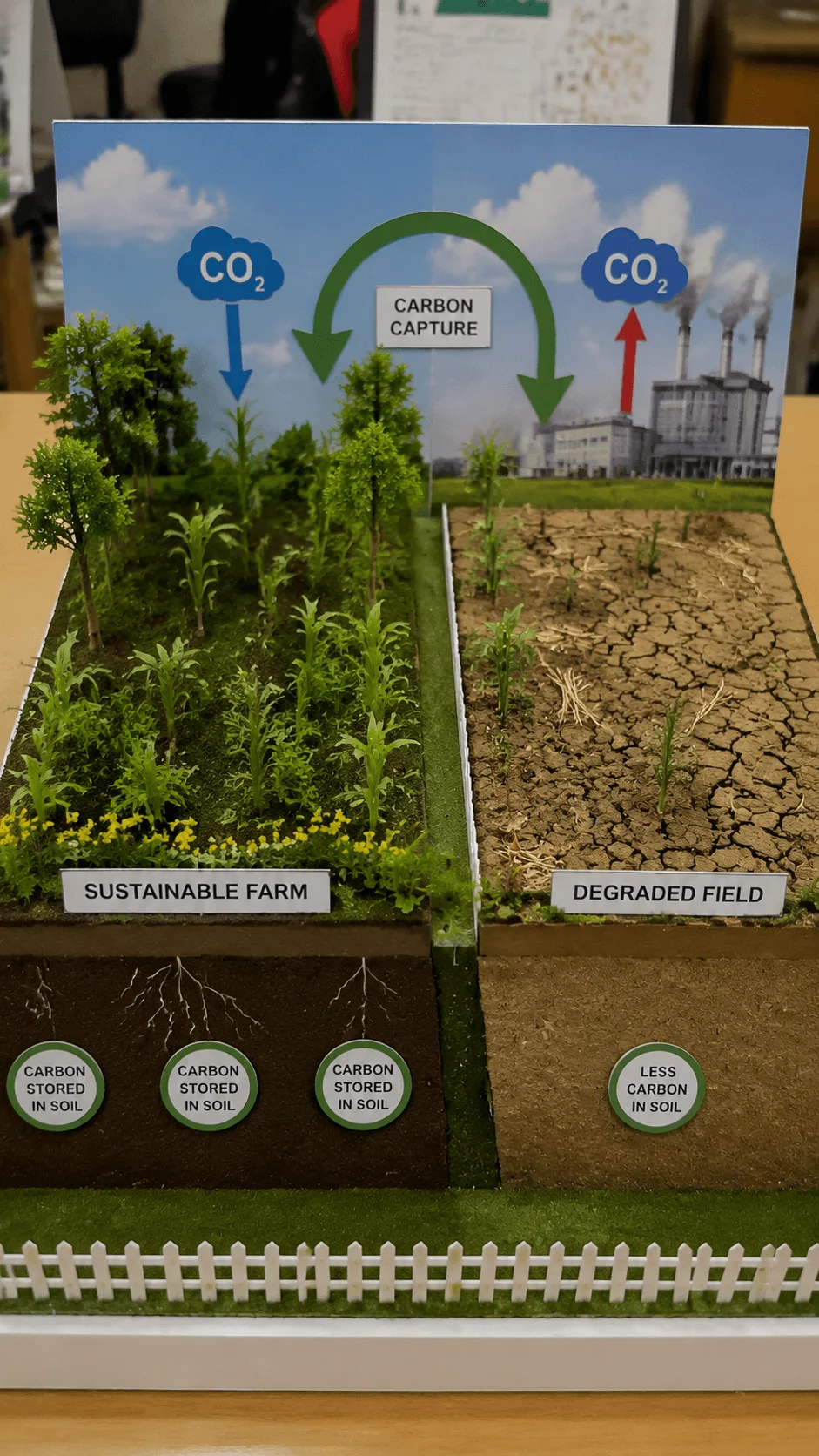
This project encourages students to think about agriculture as part of the solution to climate change rather than part of the problem. It demonstrates how responsible farming practices can produce food while protecting the planet for future generations. As governments and researchers continue investing in climate friendly agriculture, carbon farming is becoming one of the most significant trends shaping the future of farming.
Why Sustainable Agriculture Will Shape the Future
Agriculture faces enormous challenges as the global population grows and natural resources become increasingly limited. Farmers must produce more food while protecting soil, conserving water, reducing pollution, and adapting to climate change. Sustainable farming offers practical solutions by combining traditional knowledge with modern technology to create more resilient agricultural systems.
Innovations such as artificial intelligence, renewable energy, precision agriculture, hydroponics, and regenerative farming are already changing how food is produced around the world. These technologies improve efficiency while reducing environmental impact, making farming more productive and sustainable for future generations.
School projects play an important role in preparing young people for this future. They encourage students to think creatively, solve real world problems, and understand that every individual can contribute to environmental protection through informed choices and innovative ideas.
Conclusion
A sustainable agriculture projects model is much more than a school assignment. It introduces students to the future of farming by demonstrating how innovation, science, and environmental responsibility work together to produce healthy food while protecting natural resources. From climate smart farming and AI powered irrigation to biochar, carbon farming, and smart greenhouses, each project highlights a different solution to the environmental challenges facing agriculture today.
These models encourage curiosity, creativity, and critical thinking while helping students understand the importance of sustainable food production. They also show that modern agriculture is constantly evolving through new technologies and eco friendly practices that benefit both people and the planet.
Whether you are preparing an agriculture model project for school, a science fair presentation, or an educational exhibition, choosing a topic that reflects current sustainable farming trends will make your project more meaningful and engaging. By exploring these innovative ideas, students not only create impressive models but also develop a deeper appreciation for the role agriculture plays in building a healthier and more sustainable future for everyone.