12 Sustainable Activities for Children in 2026
Sustainable activities for children turn environmental learning into practical experiences that help young people understand nature, waste, food, energy, wildlife, and responsible daily choices. Instead of asking children to memorize environmental facts, these activities encourage them to observe problems, ask questions, test solutions, and reflect on what they discover. This practical approach makes sustainability easier to understand because children can connect each lesson with their home, school, neighborhood, and everyday routines.
Children often learn more effectively when they can touch, build, measure, draw, compare, repair, and explore. A simple investigation into food waste can teach planning and responsibility. A wildlife observation journal can introduce biodiversity and patience. A repair project can show why caring for existing belongings sometimes creates more value than buying something new.
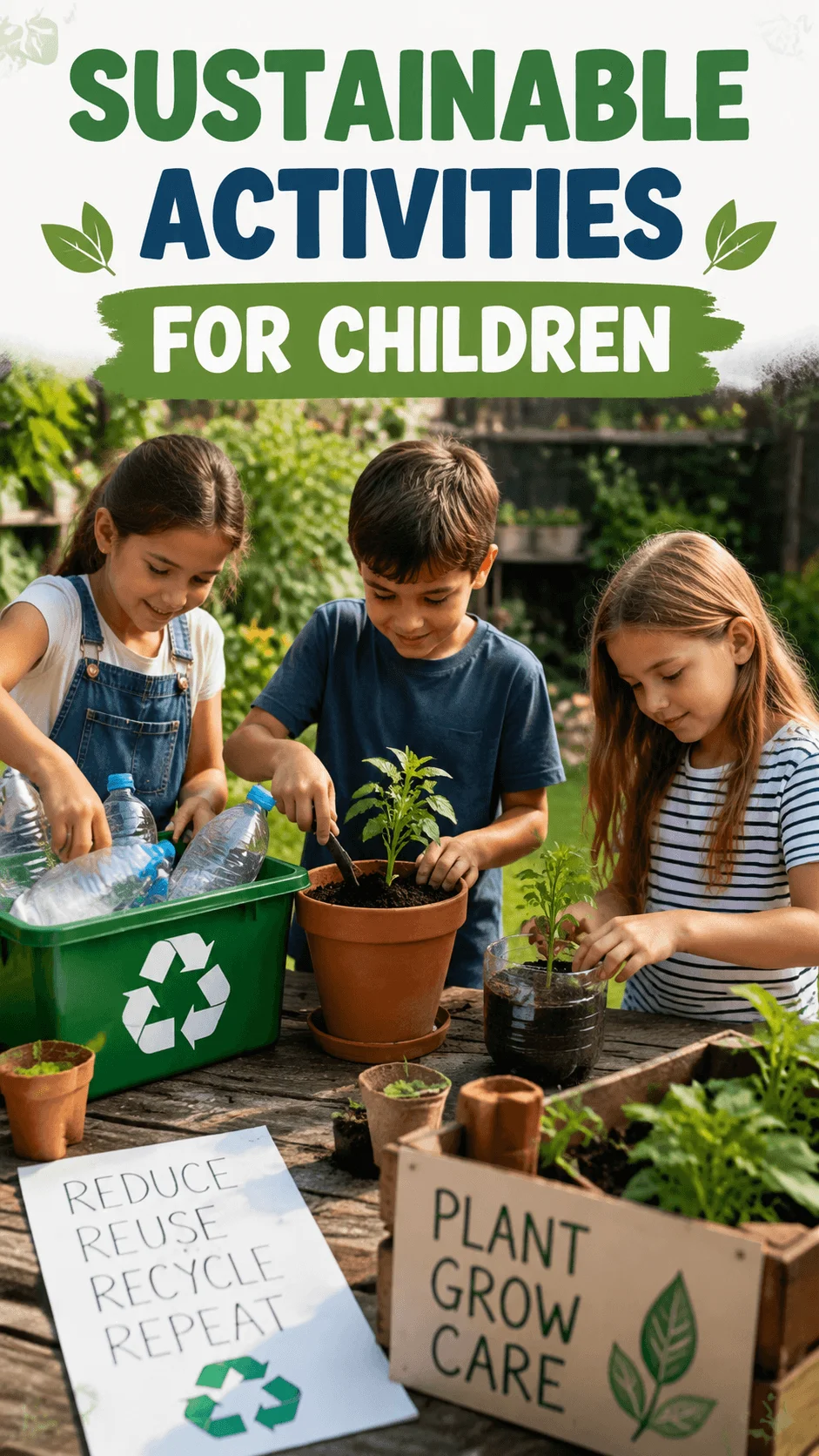
Environmental education should also remain positive and realistic. Children should never feel responsible for solving climate change or correcting every environmental problem around them. Adults can help them develop awareness without creating fear, guilt, or pressure. The goal involves building curiosity, care, confidence, and thoughtful habits that may continue as children grow.
The following ideas move beyond common suggestions such as planting a tree or making a craft from a bottle. They introduce current themes including citizen science, repair culture, digital responsibility, biodiversity mapping, food waste measurement, sustainable design, and practical resource awareness.
Why Sustainable Activities for Children Matter
Sustainable activities for children can support academic learning while developing useful life skills. Children may practice science when they observe plant growth, mathematics when they measure food waste, geography when they map wildlife, and literacy when they write environmental stories. These experiences make sustainability part of broader learning instead of treating it as a separate subject.
Practical environmental learning also strengthens observation skills. Children begin to notice details that adults may overlook. They may discover which flowers attract the most insects, which foods remain uneaten, which devices stay on in empty rooms, or which household items could receive a simple repair. These observations can lead to meaningful conversations about how systems work.
Social and emotional learning also plays an important role. Group projects encourage cooperation, patience, listening, and shared decision making. Children learn that different people may suggest different solutions to the same problem. They also discover that families have different budgets, schedules, housing conditions, dietary needs, transport options, and access to outdoor spaces.
For this reason, adults should avoid presenting sustainability as a competition. One child may walk to school, while another may live too far away. One family may grow vegetables, while another may live in a small apartment. One classroom may have access to technology, while another may rely on paper based activities. Every child should have a suitable way to participate.
Biodiversity Detective Activities for Children
A biodiversity detective activity encourages children to observe living things in their surroundings. They may look for birds, insects, flowers, trees, fungi, seeds, leaves, grasses, or signs of animal activity. A garden works well, but children can also use a balcony, courtyard, school entrance, public park, or view from a window.
Children can create an observation notebook and record the date, weather, location, colors, shapes, movements, and sounds they notice. Younger children may draw a butterfly or match leaf colors. Older children may compare species, count sightings, research habitats, or study changes across several weeks.
This activity introduces biodiversity in a simple and memorable way. Children learn that even a small area may support many forms of life. A patch of flowers may attract bees and butterflies. A tree may provide shade, shelter, food, and nesting space. Fallen leaves may support insects and help protect soil.
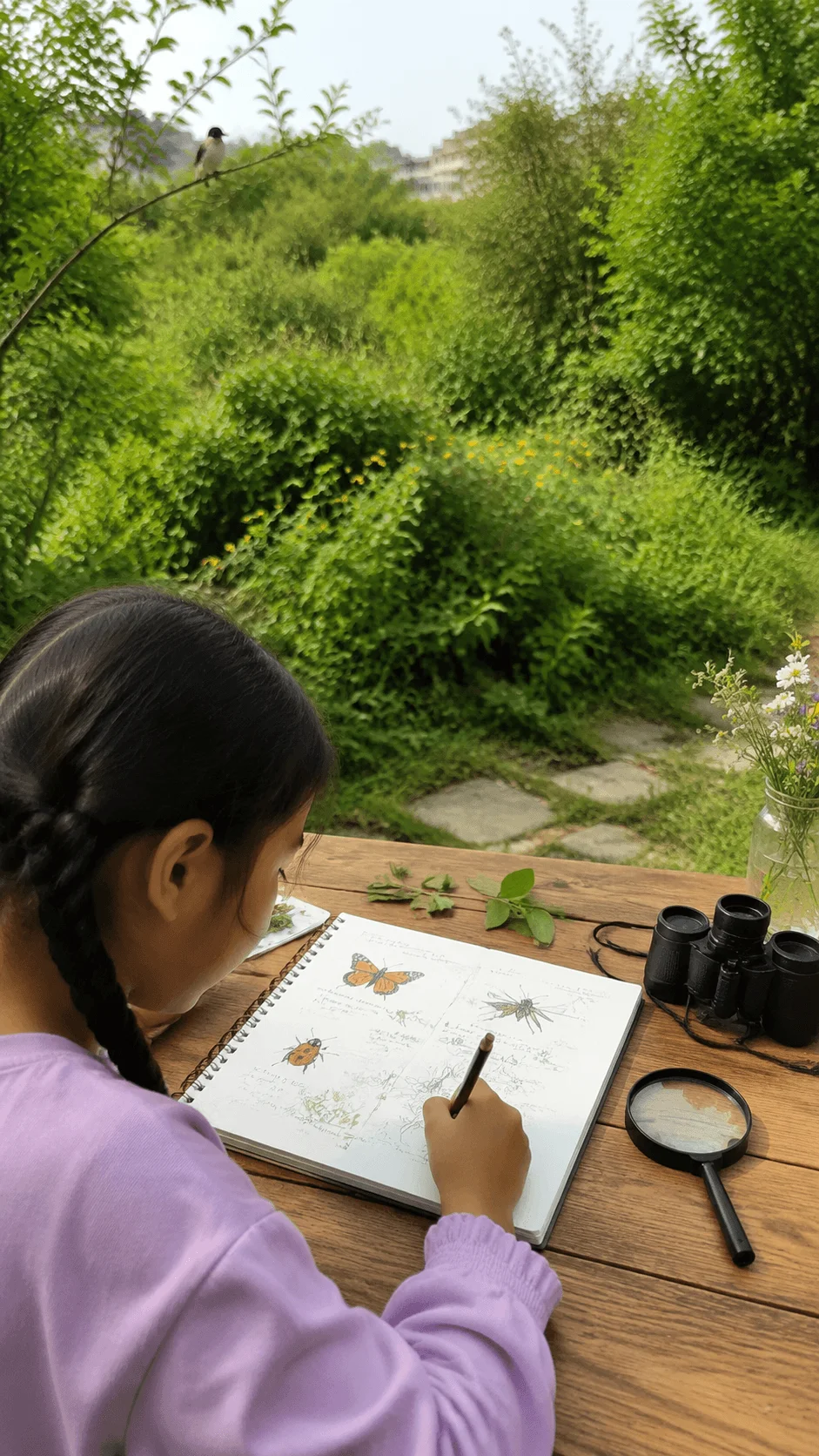
Adults should guide children to observe without causing harm. They should not touch unknown plants, disturb nests, capture insects, remove fungi, or chase wildlife. Photography and drawing often provide safer alternatives to collecting natural objects.
Children who cannot visit outdoor spaces may still participate. They can observe birds from a window, study a houseplant, watch safe wildlife videos, or compare photographs from different habitats. The purpose involves careful observation rather than access to a perfect natural area.
Family Food Waste Sustainability Activity
A family food waste investigation helps children understand why food gets thrown away. During several days, families can notice what remains after meals, what expires before use, what returns uneaten from lunchboxes, and what ingredients remain forgotten in storage.
Children can record observations with drawings, simple notes, or measurements. They may notice that large portions create leftovers, certain fruits spoil quickly, bread gets forgotten, or a weekly meal produces more waste than expected. These patterns can guide realistic improvements.
Families may decide to serve smaller first portions, prepare better shopping lists, store food more clearly, freeze suitable leftovers, or use older ingredients before opening new ones. Children can help organize a safe refrigerator shelf or suggest meals that use ingredients already available.
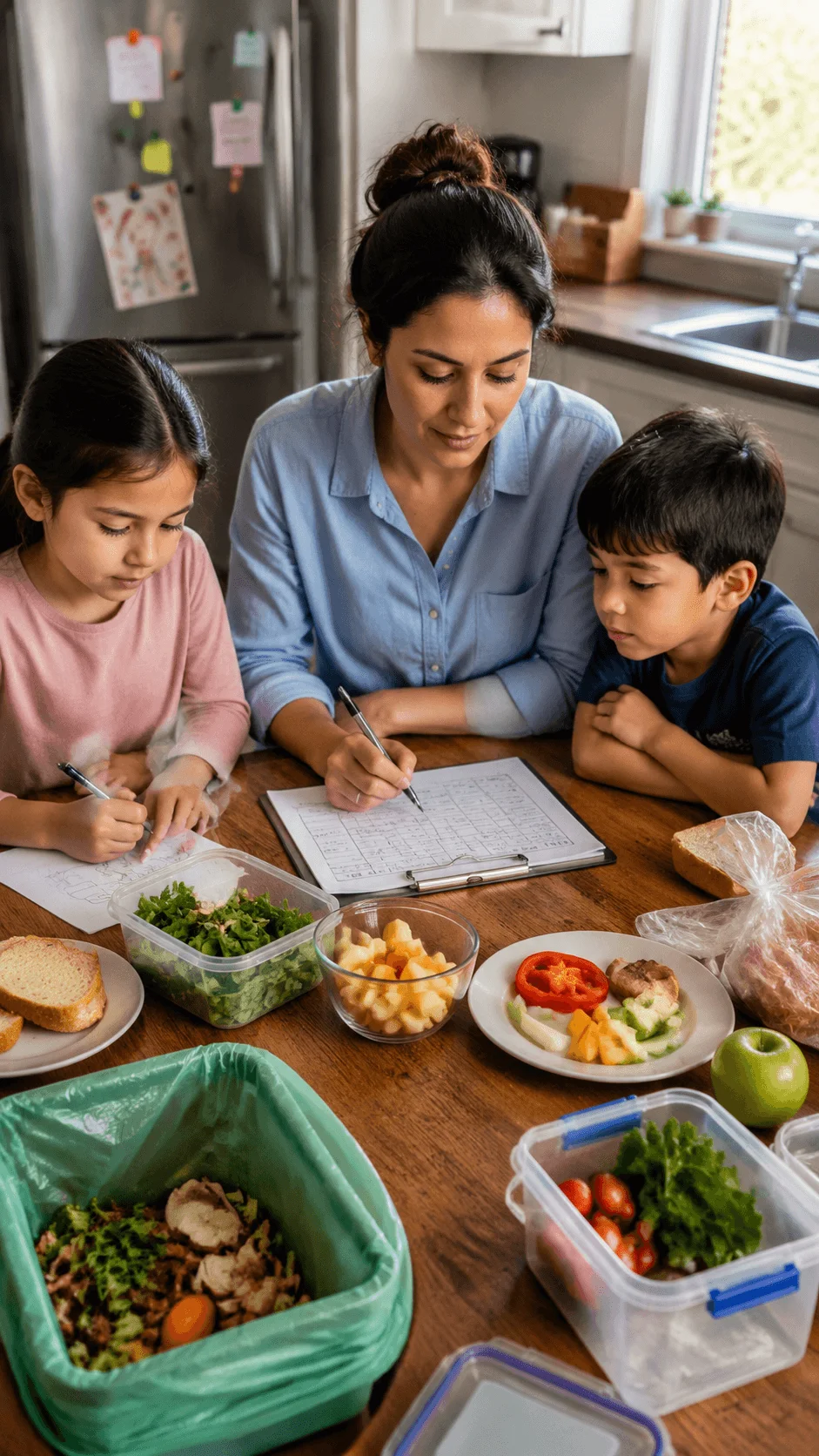
The activity should never shame children for leaving food. Allergies, sensory needs, health requirements, religious practices, appetite changes, and food preferences all affect eating. Adults should focus on planning and storage rather than forcing anyone to finish unwanted food.
Children must not handle spoiled food, raw meat waste, sharp containers, or unsafe kitchen materials. Adults can manage the waste while children observe from a safe distance.
Among sustainable activities for children, food waste investigations work especially well because they connect environmental awareness with family routines, money, nutrition, planning, and respect for resources.
Repair and Circular Economy Activities for Children
A repair workshop teaches children to examine whether a damaged item can receive a safe second life. Suitable examples may include taping a torn book, cleaning a toy, fixing a loose decoration, sewing a button with adult help, organizing missing game pieces, or decorating a scratched storage box.
The process should begin with observation. Children can study the item and ask what went wrong. They can decide whether cleaning, joining, covering, replacing, or strengthening a safe part may solve the problem. This simple design process encourages patience and logical thinking.
Repair culture introduces the circular economy in an age appropriate way. Children learn that products do not always need immediate replacement. An item may still have value even when it looks old or develops a minor problem.
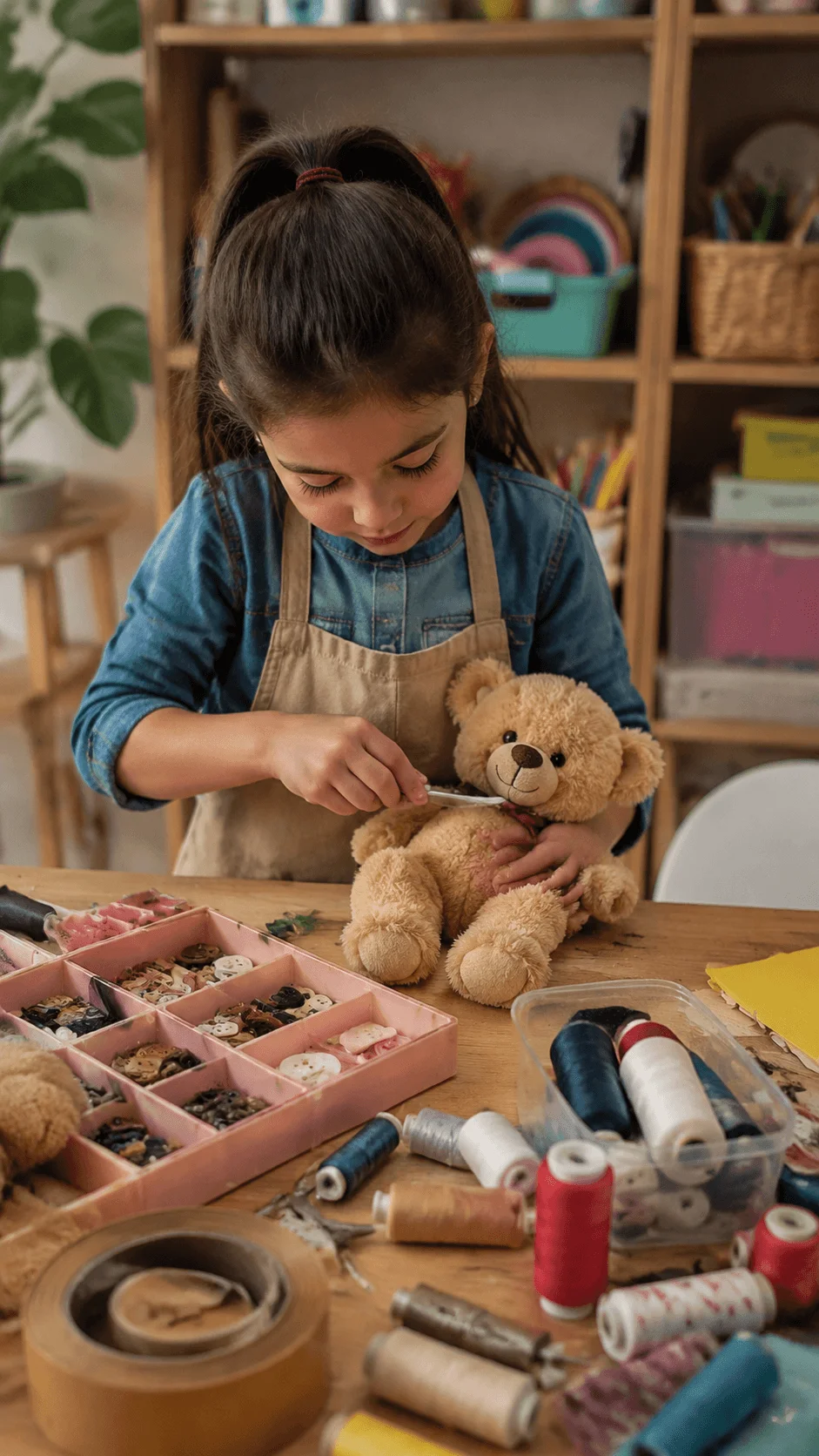
Adults must control safety. Children should never repair electrical devices, batteries, chargers, glass, sharp tools, damaged wires, mechanical equipment, or anything that may cause injury. Younger children can help clean, sort, match, hold safe materials, or choose decorative improvements.
Older children may complete simple supervised sewing, paper repair, or basic craft restoration. The final discussion can focus on what changed, which materials helped, and whether the repaired item now works as intended.
This activity develops confidence because children can see a clear result. It also encourages care for belongings and reduces the idea that replacement always offers the easiest solution.
Mini Carbon Awareness Challenge
A mini carbon awareness challenge helps children connect everyday habits with energy, transport, waste, and resource use. The activity should avoid complex calculations or exaggerated claims. Children do not need to calculate an exact carbon footprint to understand that some choices use more resources than others.
Each child can choose a few realistic actions for one week. They may switch off unused lights, use daylight, carry a reusable bottle, care for clothing, borrow a book, share toys, avoid unnecessary printing, or walk a short distance when an adult confirms that it is safe.
Families and teachers should focus on reflection instead of competition. Children can discuss which action felt easy, which one created difficulty, and which habit may continue. A child who cannot change transport should not feel less successful than someone who can walk or cycle.
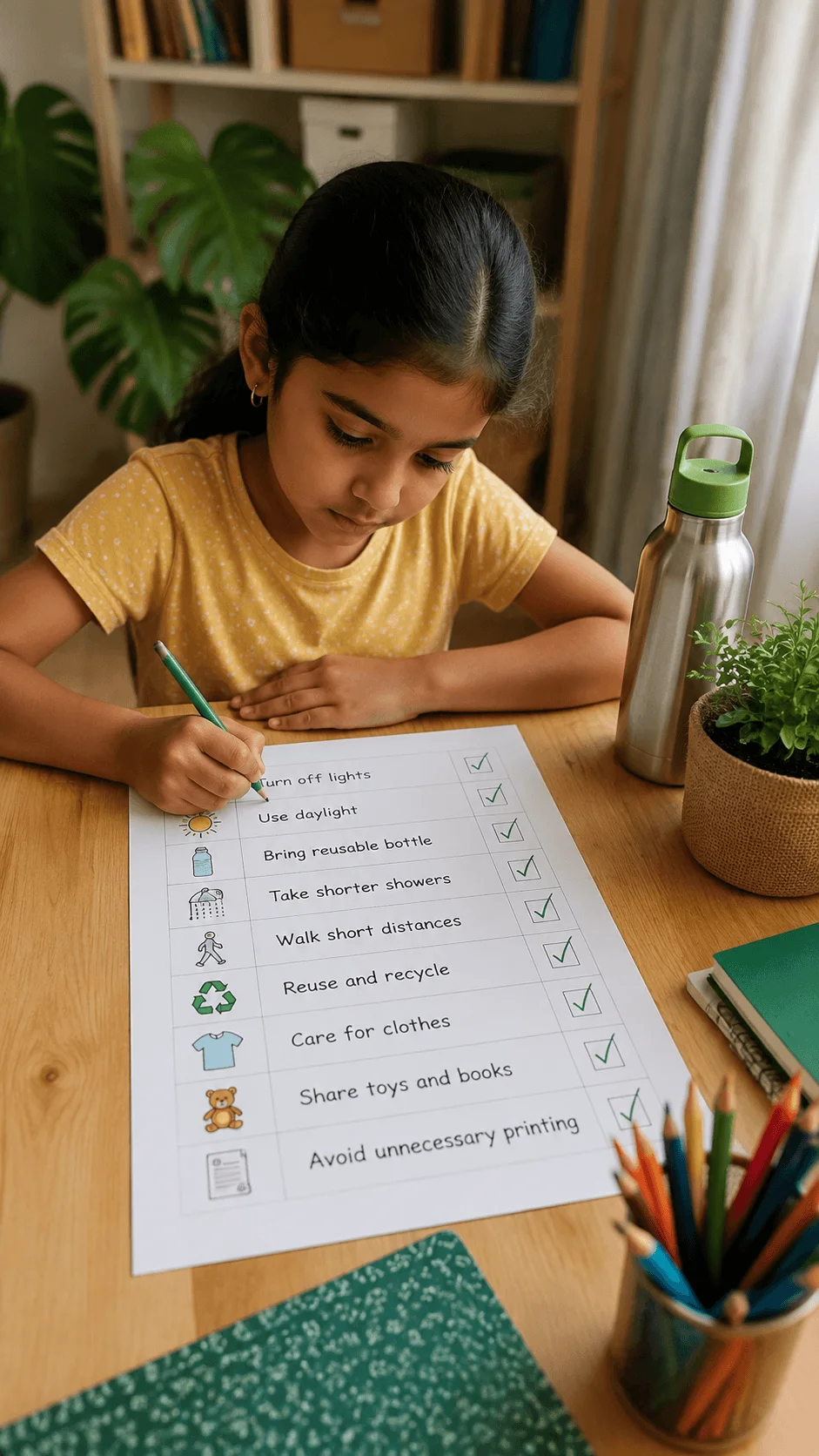
A simple journal may help children notice their progress. Younger children may draw symbols, while older children may write brief reflections. The final result matters less than the thinking process.
Sustainable activities for children should encourage realistic choices rather than perfection. Adults can explain that homes, schools, and communities often need larger system changes, while small personal habits still provide useful learning opportunities.
Pollinator Observation Journal
A pollinator journal invites children to watch bees, butterflies, moths, flies, beetles, birds, and other visitors around flowers. Children can record the flower color, weather, time, number of visitors, and length of each visit.
This activity helps children understand pollination and the connection between insects, plants, seeds, fruits, and food systems. It also teaches patience because pollinator observation requires quiet attention.
Children can compare observations from sunny, cloudy, windy, and cool days. They may discover that certain flowers attract more visitors or that activity changes at different times.
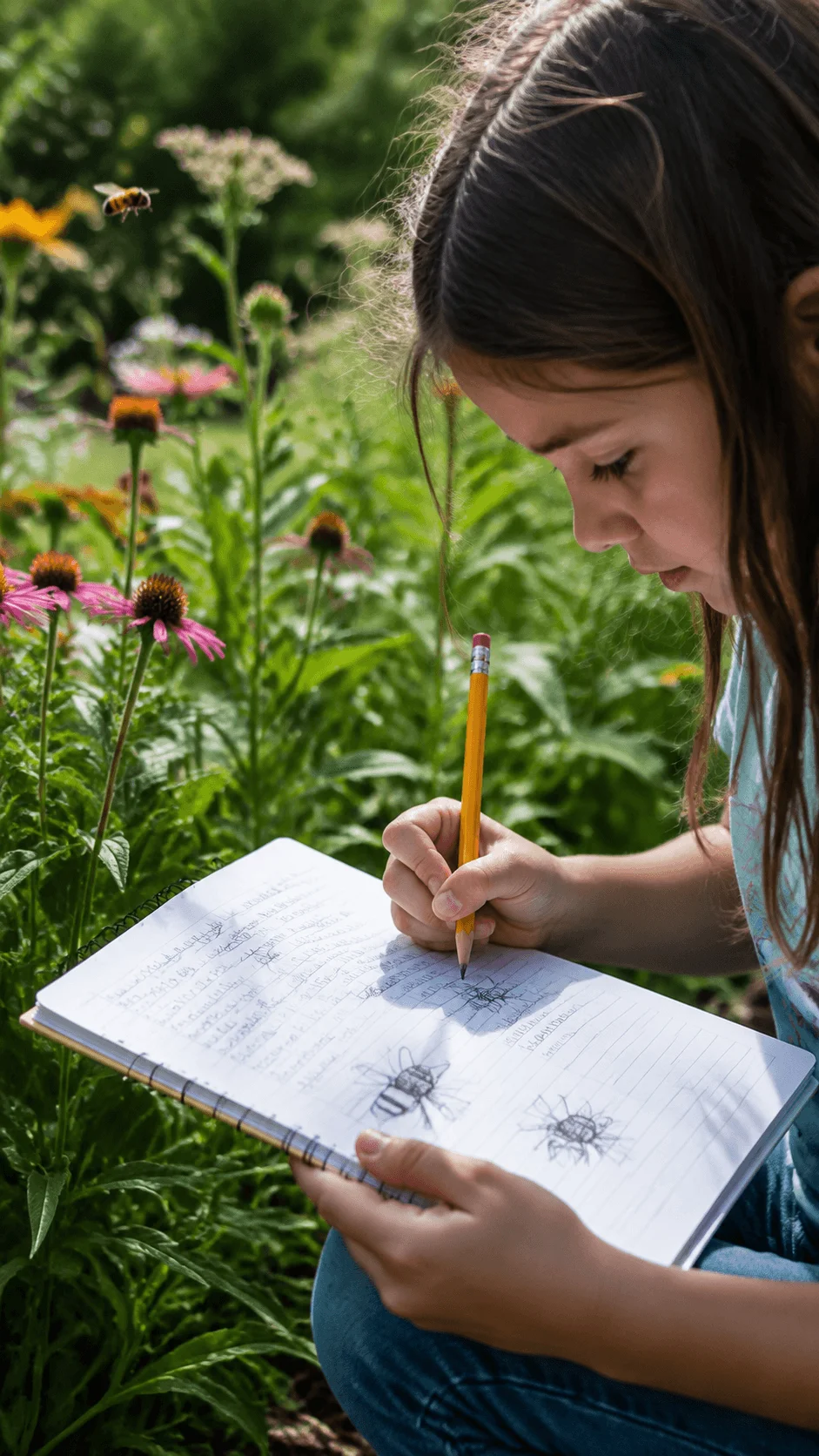
Younger children can draw pollinators and count basic sightings. Older children can create simple tables, compare species, or research which plants support local pollinators.
Safety should remain central. Children must observe from a suitable distance, avoid touching insects, and never disturb nests. A child with allergies or fear of stings should tell an adult before participating.
Children without a garden may observe flowers near a school, visit a public park with an adult, study images, or watch suitable educational videos. The activity can still teach pollination even without direct access to flowers.
Digital Sustainability Activities for Children
Digital cleanup introduces children to responsible technology use. It may involve organizing school folders, removing duplicate photographs with permission, deleting unused safe files, cleaning device cases, reviewing notifications, or organizing downloads.
Adults should explain that digital sustainability includes more than deleting emails. It also involves caring for devices, protecting privacy, managing storage, using software responsibly, and extending the useful life of technology.
Children can learn to close unused applications, reduce unnecessary downloads, adjust screen brightness, use sleep settings, and store chargers carefully. Older children may organize cloud folders or review unused applications with a parent.
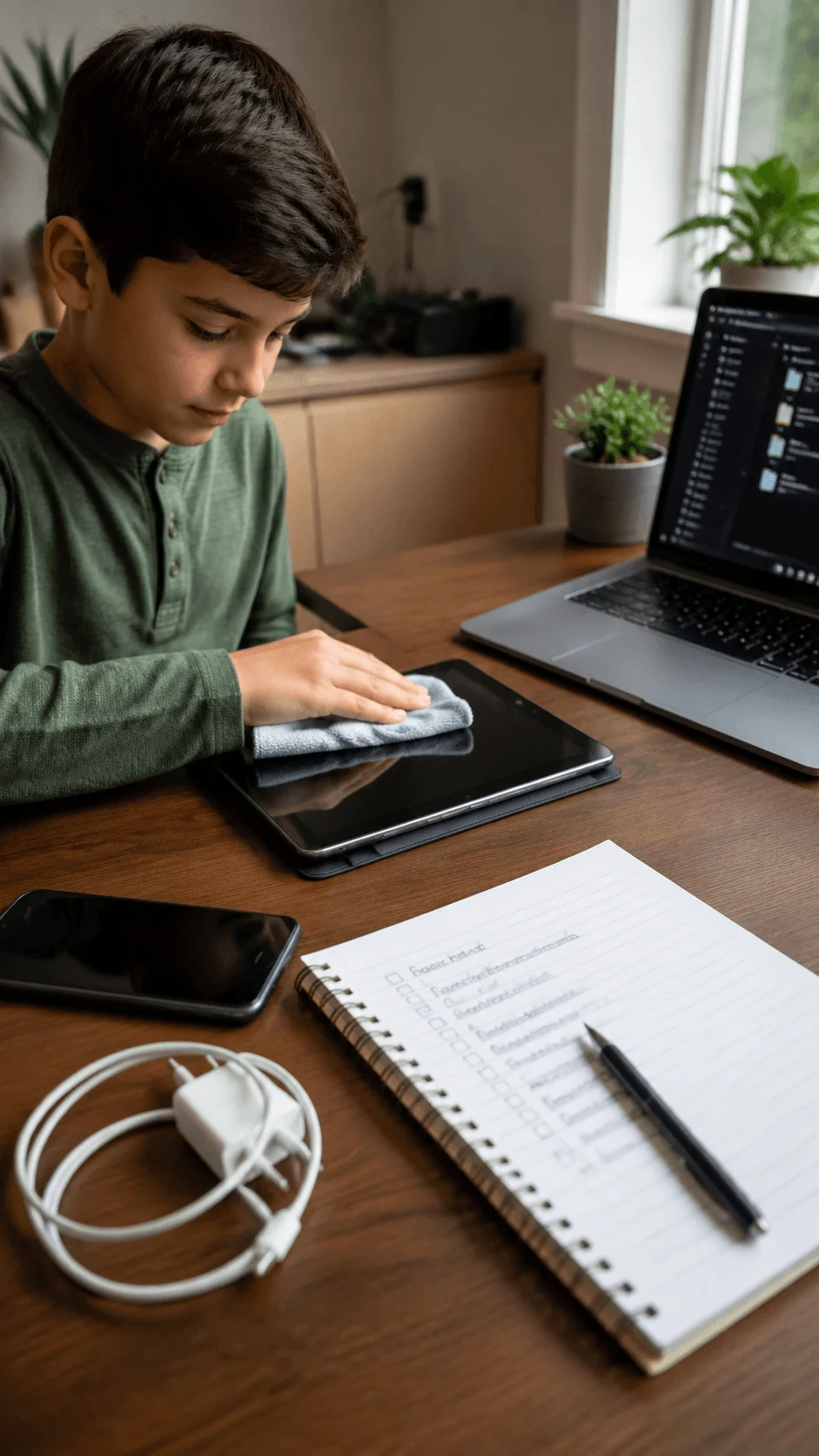
Permission remains essential. Children should never delete family photographs, schoolwork, accounts, applications, or important files without adult approval. They should also avoid changing security settings or sharing personal information.
This activity can improve focus and organization while helping children understand that digital spaces require care. A well maintained device may remain useful longer, which supports both practical and environmental goals.
Digital responsibility has become an important part of sustainable learning because technology now shapes education, entertainment, communication, and family life.
Nature Sound Mapping
Nature sound mapping encourages children to explore a place through listening. They can sit quietly in a safe location and notice birds, insects, wind, leaves, water, footsteps, traffic, voices, dogs, or machinery.
Children can draw themselves in the center of a page and place each sound around the page according to its direction. They may use symbols, words, lines, or drawings to represent loud, quiet, near, or distant sounds.
This activity develops concentration and environmental awareness. It also introduces sound pollution by helping children compare natural sounds with human made noise.
Children may repeat the activity at different times. Morning sounds may differ from afternoon sounds. A park may sound different after rain. A school courtyard may change during lessons and break time.
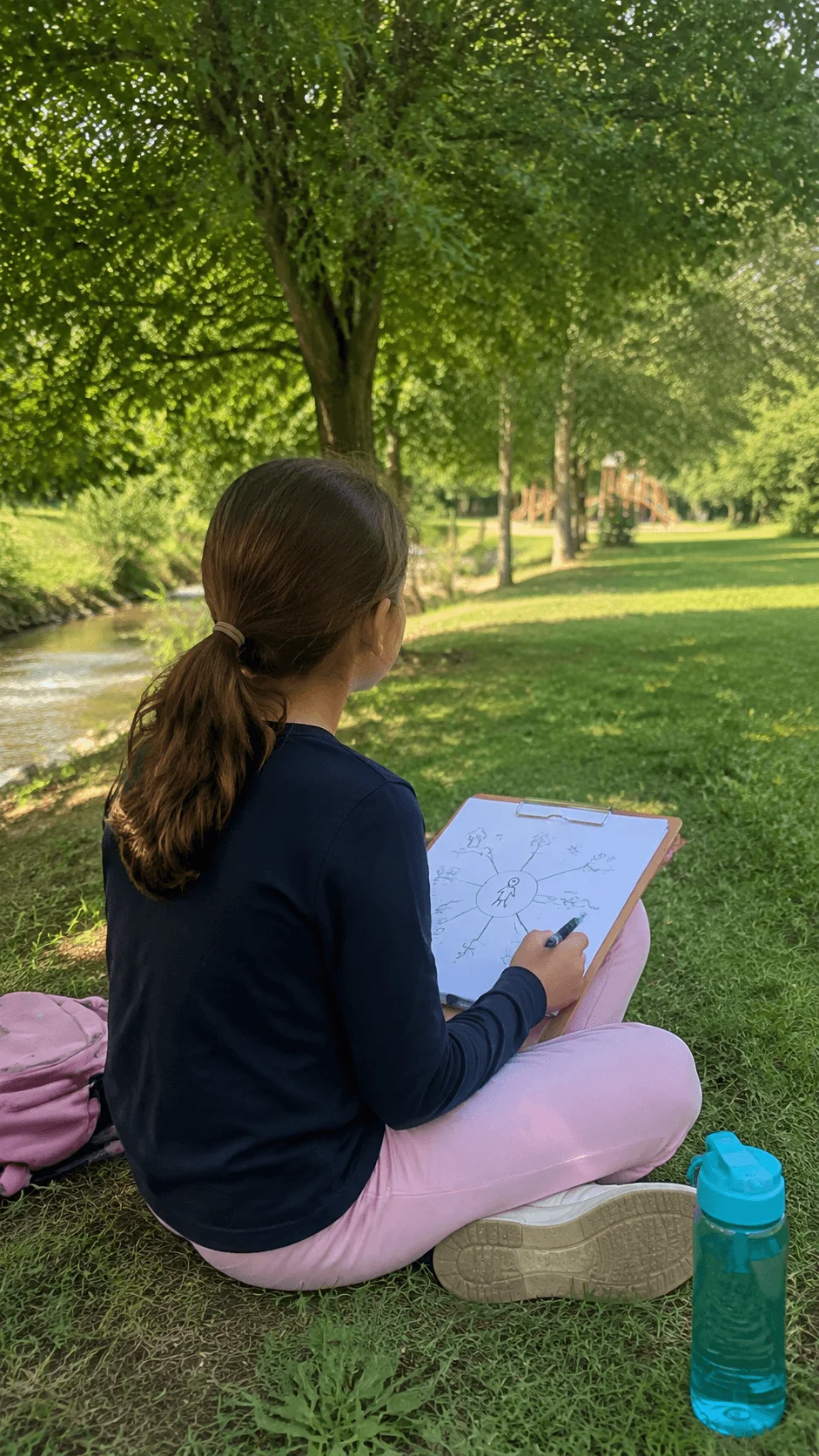
Adults should choose safe areas away from dangerous roads, deep water, construction sites, and isolated locations. Children should never wear headphones during the activity because they need awareness of their surroundings.
Children with hearing differences can focus on vibration, movement, visual changes, or other sensory information. The activity should adapt to each child rather than requiring one specific form of participation.
Plastic Free Lunchbox Design Challenge
A lunchbox design challenge asks children to study how food packaging enters their daily routine. They may notice wrappers, bags, bottles, napkins, disposable cutlery, cartons, and individual snack packages.
The child can then design a practical lunchbox that uses fewer disposable items. The plan may include reusable containers, a washable napkin, a refillable bottle, and suitable portions.
The goal should not involve judging families that use packaged food. Cost, food safety, time, school policies, allergies, storage, availability, and convenience all influence lunch choices. Children should identify possible improvements without blaming parents or classmates.
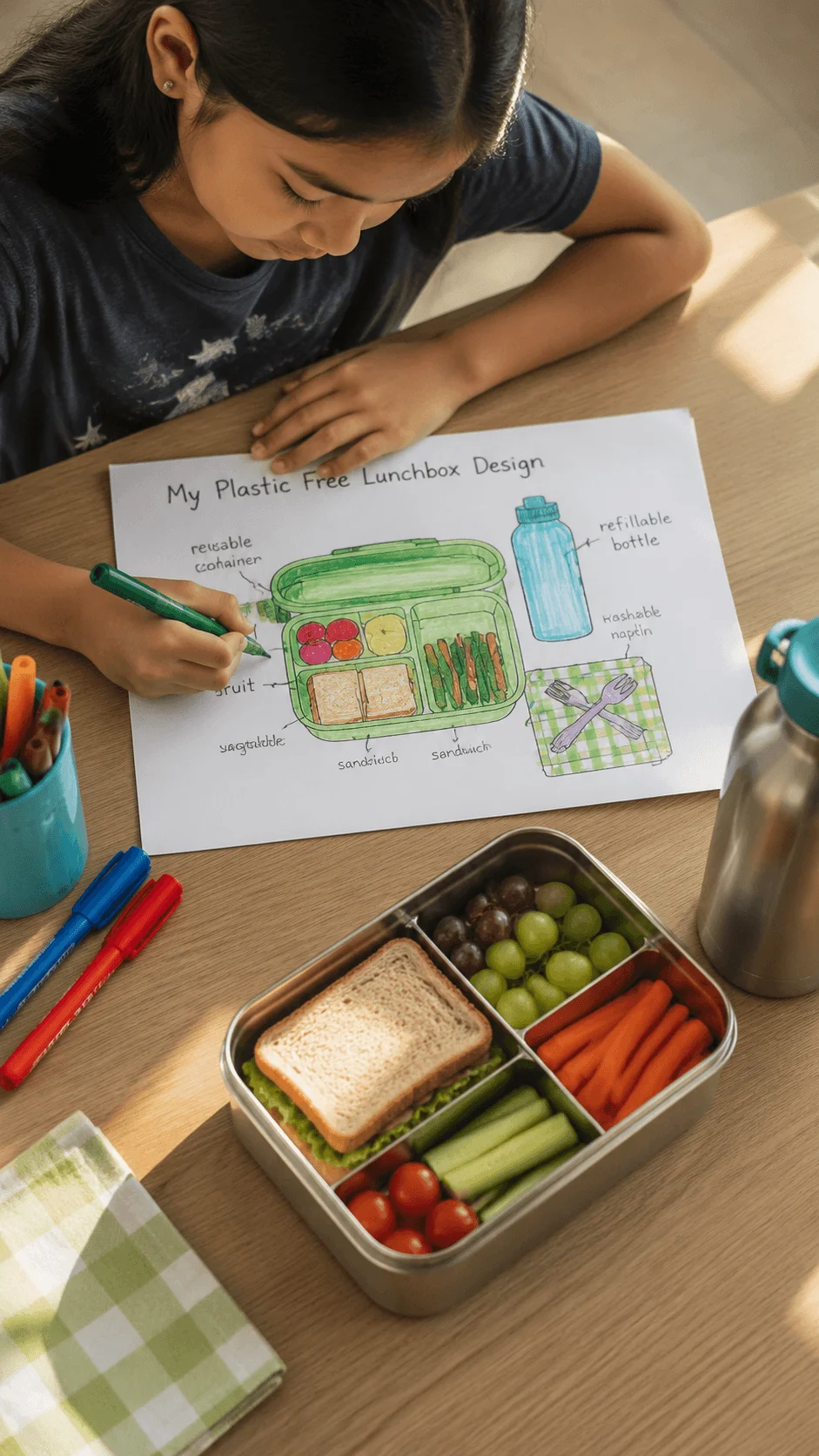
Younger children may draw their ideal lunchbox. Older children can compare packaging from two meals, test different containers, or study which options prevent leaks and protect food.
Food safety must remain more important than reducing packaging. Adults should ensure clean containers, suitable temperatures, allergy awareness, and safe storage.
This challenge combines sustainable design with planning and problem solving. Children learn that a good solution must work in real life, not only look environmentally responsible.
Home Energy Detective Game
A home energy detective game helps children notice how families use electricity and heating or cooling. They may observe unused lights, televisions playing in empty rooms, open refrigerator doors, devices charging longer than necessary, or rooms that could use daylight.
Children should complete the activity with an adult. They can walk through the home and identify safe changes without touching electrical equipment.
Younger children may search for unused lights. Older children may compare appliance labels, discuss seasonal energy use, or review electricity bills with an adult.
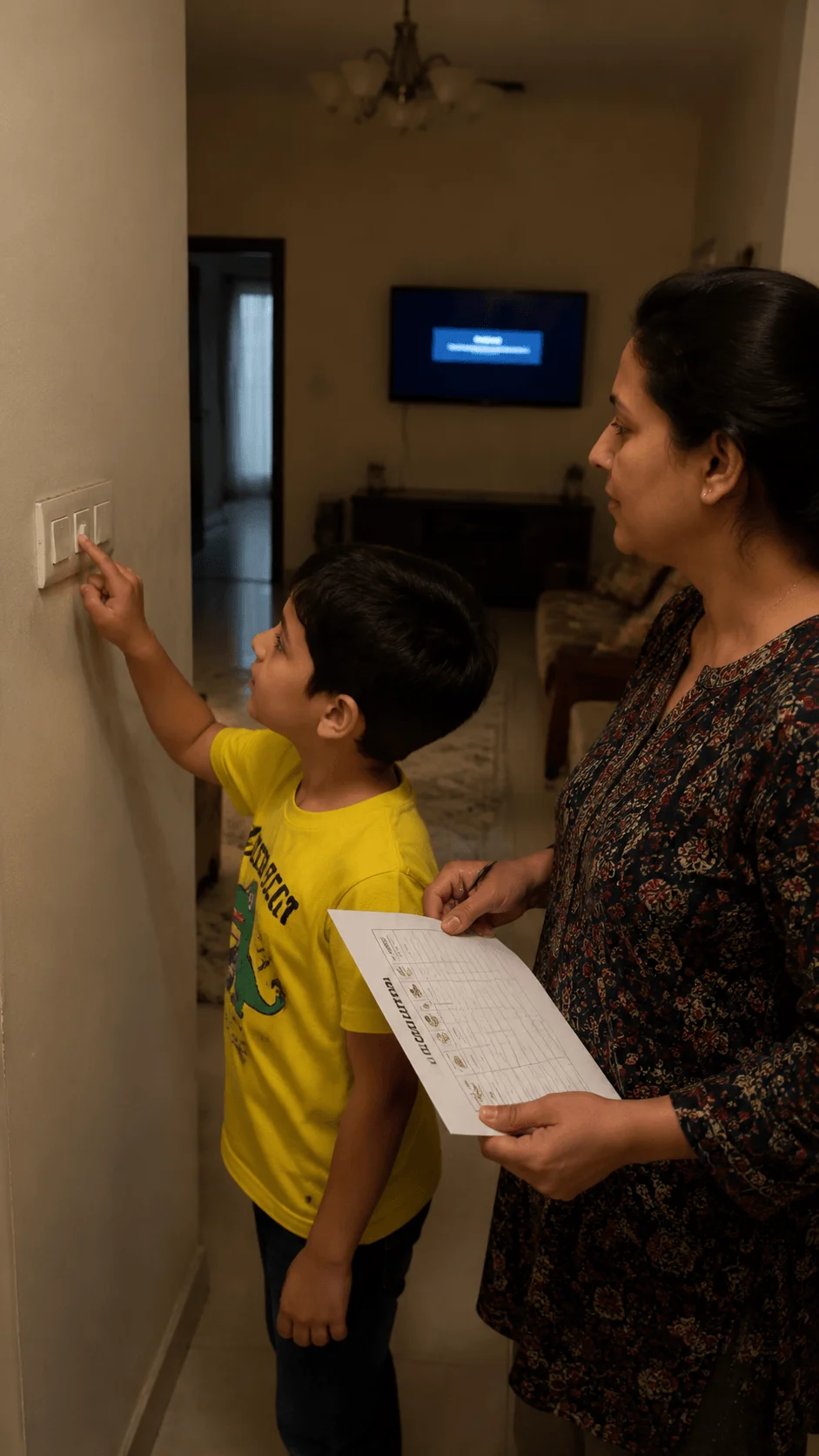
Children must never inspect sockets, wires, fuse boxes, damaged plugs, or heavy appliances. They should not adjust heating, cooling, or electrical equipment without permission.
Adults should keep the activity positive. The child can suggest improvements rather than blaming family members. A simple change, such as closing a door or switching off an empty room light, can become a practical lesson.
Home energy awareness works well within sustainable activities for children because it connects environmental learning with household costs, comfort, routines, and safety.
Community Wildlife Mapping
Community wildlife mapping allows children to record habitats and living things in their local area. They may map trees, flower beds, hedges, ponds, insects, bird activity, shaded areas, water sources, fallen leaves, and green roofs.
Children can use paper, drawings, photographs, or simple digital maps with adult permission. They may mark places where wildlife appears common and areas where habitats seem limited.
This activity introduces citizen science, geography, biodiversity, and community awareness. Children learn that environmental observation can support better local decisions.
A school may use the findings to improve a garden, protect existing plants, add bird safe window markings, or create pollinator friendly spaces. A community group may compare observations across seasons.
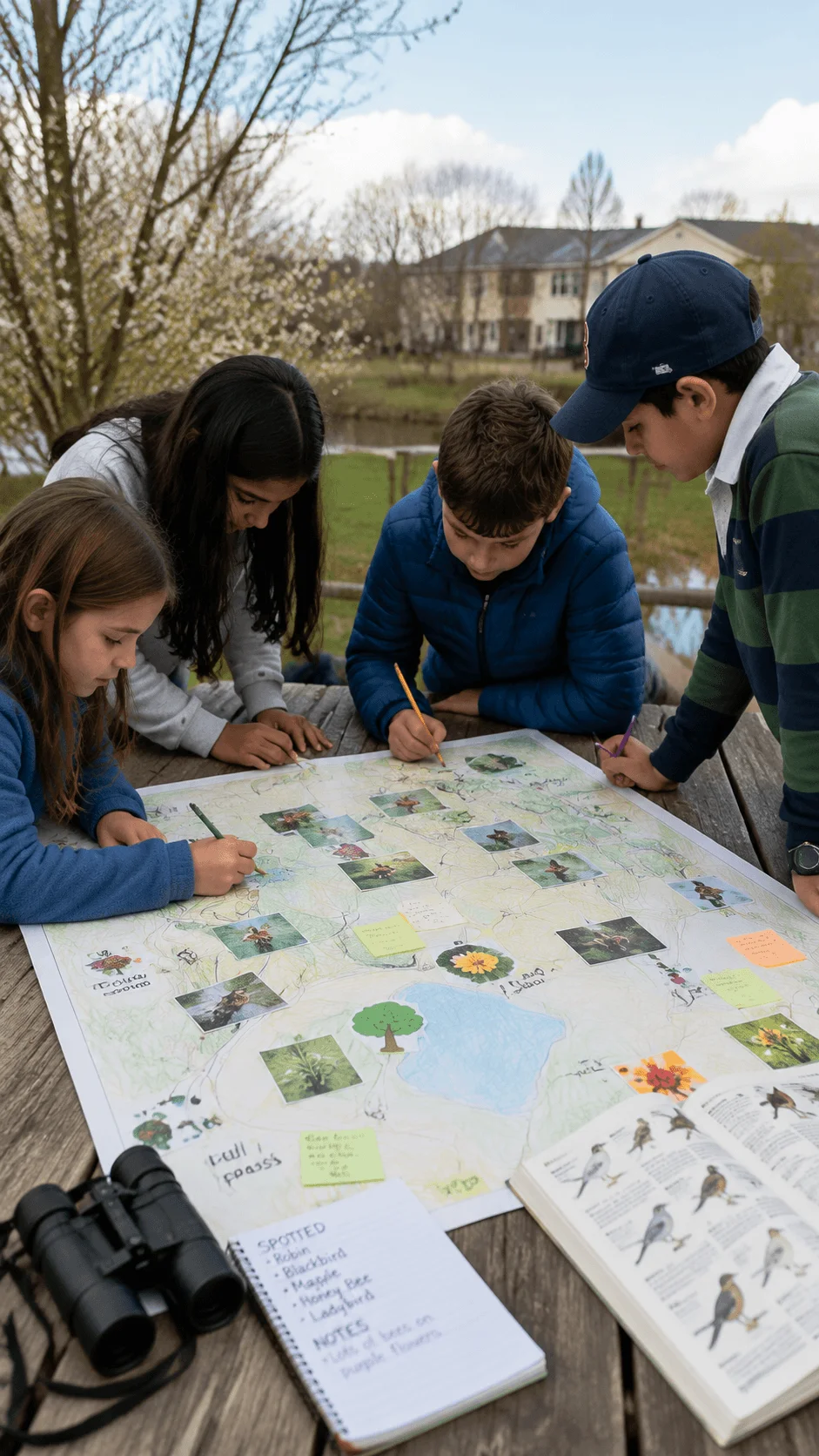
Privacy requires attention. Children should not share private addresses, exact nest locations, or sensitive wildlife information publicly. Adults should review all photographs and maps before publication.
Children should observe wildlife without disturbing it. They must not enter private land, touch nests, feed unknown animals, or damage plants.
Community mapping can help children see that sustainability involves shared spaces and collective responsibility, not only individual household habits.
Creative Zero Waste Storytelling Activity
An upcycled storytelling challenge invites children to create characters, settings, puppets, or models from clean reused materials. Suitable materials may include cardboard, paper rolls, fabric scraps, magazines, boxes, paper bags, and old wrapping paper.
Adults should inspect every item before use. They must remove staples, sharp edges, dirty packaging, tiny choking hazards, and unsuitable containers.
Children can create a story about repairing a toy, protecting a habitat, reducing waste, sharing resources, or helping a community solve an environmental problem.
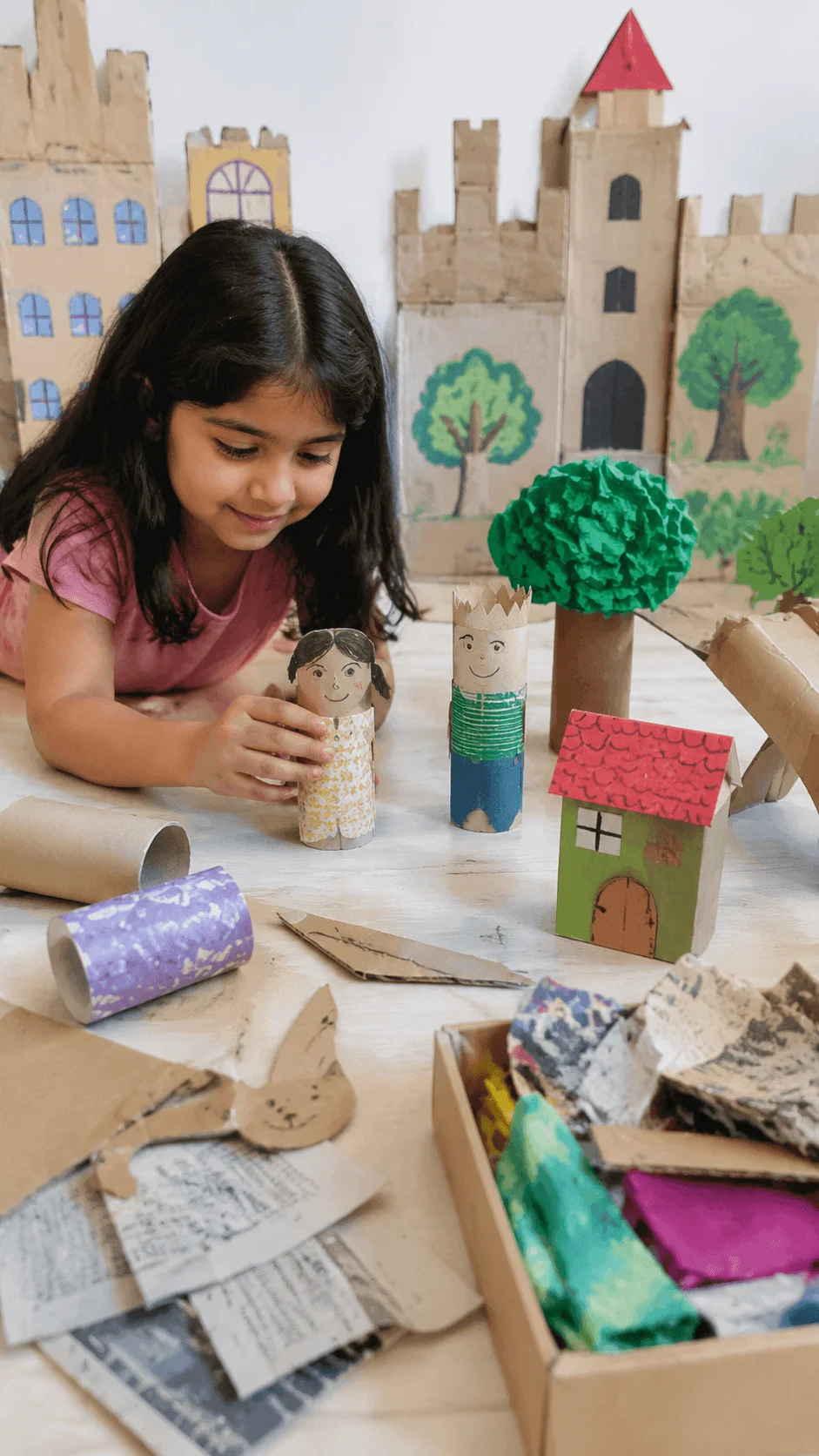
Younger children may tell a simple picture story. Older children can write scripts, perform a short play, create a model scene, or make a supervised stop motion video.
The activity should focus on imagination and communication rather than producing more clutter. Children can take their creations apart afterward and sort reusable materials for another project.
This form of sustainable learning combines literacy, art, teamwork, and environmental thinking. It also gives children space to explore complex ideas through creative play.
Sustainability Science Experiment Station
A sustainability science station brings several small experiments into one safe learning area. Children can compare plant growth in light and shade, observe how natural materials decompose, test a basic water filtration model, explore solar warmth, or compare how different soils absorb water.
A plant experiment may involve placing similar plants in different light conditions and recording changes. Children can measure height, count leaves, or draw weekly observations.
A decomposition activity may compare a leaf, paper, fruit peel, and a safe synthetic material in separate transparent containers. Adults should manage hygiene and prevent children from touching decaying materials.
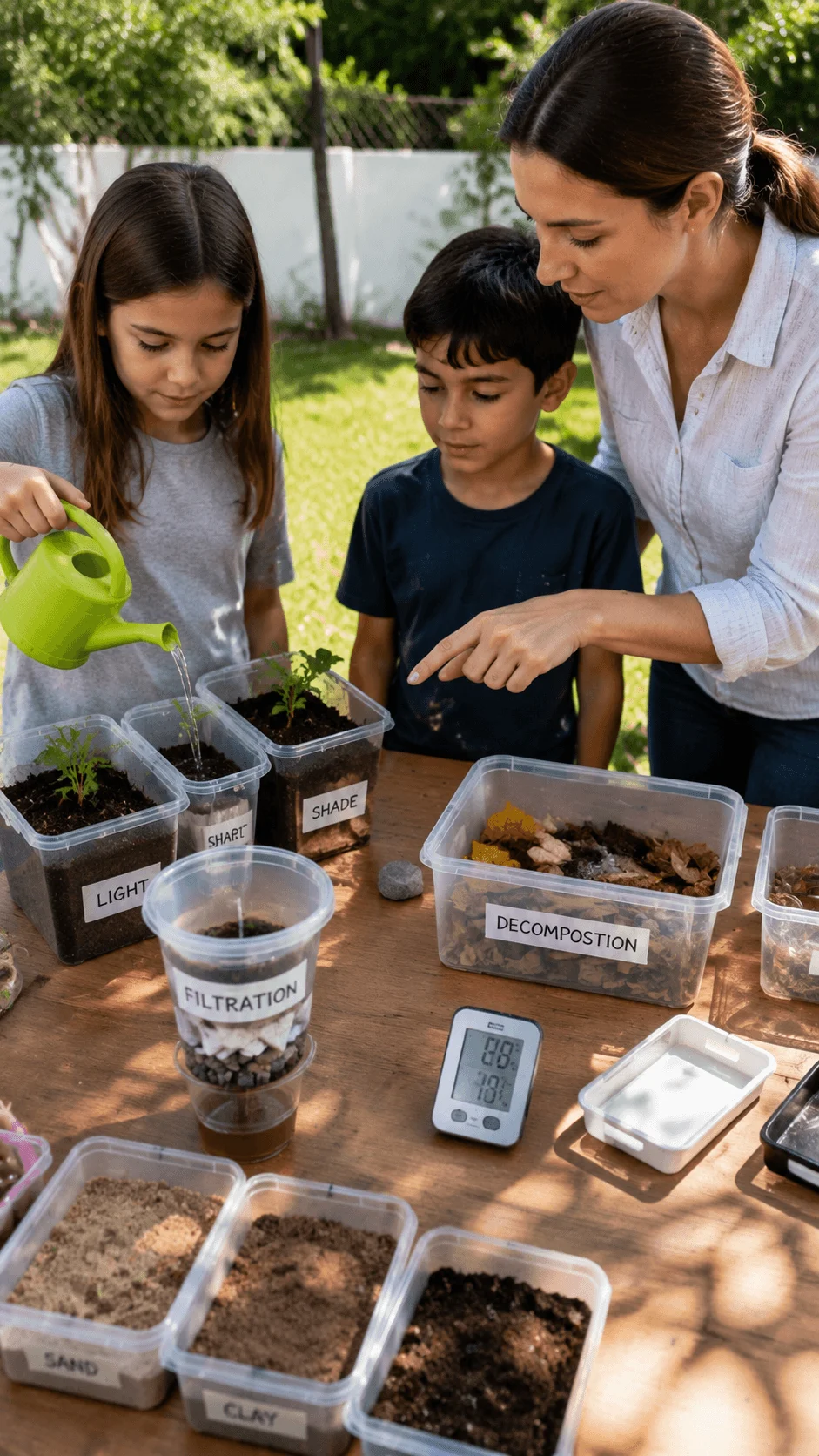
A basic filtration model may use clean gravel, sand, cloth, and dirty water created with soil. Adults must explain that the filtered water remains unsafe to drink.
A solar warmth experiment may compare containers placed in sunlight and shade. Children can observe temperature changes while an adult manages safe equipment.
These experiments teach prediction, observation, measurement, comparison, and conclusion writing. Younger children can focus on visible changes. Older children can control variables and record detailed results.
Among sustainable activities for children, science stations provide strong opportunities for inquiry because children can test ideas and see how different conditions affect outcomes.
Adults should avoid flames, harmful chemicals, unsafe plants, contaminated water, sharp tools, and unknown substances. Every experiment should match the child’s age and ability.
How Parents and Teachers Can Make Sustainable Learning Meaningful
Adults can make environmental activities more effective by connecting them with the child’s interests. A child who enjoys drawing may prefer a biodiversity journal. A child who enjoys numbers may track food waste. A child who likes building may enjoy repair or lunchbox design.
Adults should ask open questions rather than providing every answer. They may ask what the child noticed, what caused a result, which solution worked best, or what they would change next time.
The discussion after an activity often matters as much as the activity itself. Children can explain what surprised them, what felt difficult, and what they want to investigate next.
Parents and teachers should also focus on progress rather than perfection. One carefully completed activity may create more learning than several rushed projects.
Sustainable activities for children become more meaningful when adults listen seriously to children’s observations. A small idea may reveal a problem that adults have ignored.
Children also need honest explanations. Adults should avoid claiming that one reused container or one deleted file will solve a major environmental issue. Instead, they can explain how small actions support learning while communities, businesses, and governments also carry responsibility.
Adapting Environmental Activities for Different Ages and Abilities
Younger children often learn best through drawing, sorting, matching, listening, touching safe materials, and short observation periods. They may need clear instructions and frequent adult support.
Older children can measure, compare, research, design, calculate, test, record, and present results. They may also connect activities with science, geography, mathematics, writing, or technology.
Children with mobility needs can participate through photography, mapping, planning, organizing records, or online observation. Children with sensory needs may use quieter environments, gloves, visual instructions, or alternative materials.
A child with communication differences may show learning through drawings, photographs, symbols, demonstrations, or recorded observations. Written reports should never become the only accepted form of participation.
Adults should adapt the activity to the child rather than expecting the child to adapt to a rigid project. There is no single correct way to learn about sustainability.
Inclusive sustainable activities for children allow every participant to contribute according to their strengths, comfort, access, and interests.
Making Sustainable Activities Part of Everyday Life
Sustainability does not need to feel like additional homework. Families and schools can connect it with normal routines such as cooking, shopping, cleaning, walking, organizing, reading, and caring for belongings.
A child may help plan how to use vegetables before they spoil. A classroom may share art supplies instead of opening new packs. A family may repair a book, use daylight, organize digital files, or observe birds during a walk.
Adults should model thoughtful choices instead of only giving instructions. Children notice how adults handle waste, food, energy, transport, shopping, and damaged belongings.
Simple conversations can create valuable learning. During shopping, adults may compare packaging. During cooking, families may discuss food storage. During cleaning, children may decide which materials can receive another use.
The most effective sustainable activities for children often begin with questions about ordinary life. Why did this food go to waste? Where does this packaging go? Why do insects visit this flower? Can we repair this item? What happens when a device remains on?
These questions help children build awareness without turning sustainability into punishment, fear, or pressure.
Conclusion
Sustainable activities for children make environmental learning practical, positive, and memorable. Through biodiversity observation, food waste tracking, repair projects, sound mapping, energy awareness, science experiments, and creative design, children can develop curiosity, responsibility, patience, cooperation, and problem solving skills.
These experiences also show that sustainability connects with many parts of life. It involves how people use food, energy, technology, materials, public spaces, and everyday belongings.
Children should never feel responsible for solving large environmental problems. Adults can help them understand that families, schools, communities, businesses, and governments all have different roles.
Parents and teachers can begin with one activity that matches the child’s age, interests, abilities, available resources, and surroundings. A simple observation or small practical project can lead to meaningful learning.
When children receive opportunities to explore, ask questions, test ideas, and discuss results, they can build a respectful and thoughtful relationship with nature, resources, belongings, and their community.