Eco Friendly Activities for Kids in School
Finding engaging eco friendly activities for kids in school can help children understand sustainability through real experiences rather than simply reading about environmental problems in textbooks. In 2026, schools are increasingly exploring hands on projects that allow students to investigate waste, water, energy, biodiversity, food, and the natural world around them. These activities can turn ordinary classrooms and school grounds into places where children ask questions, collect information, solve problems, and discover how their everyday choices affect the environment.
Modern environmental education does not have to mean giving children complicated lessons about climate change or asking them to memorize recycling rules. A simple waste investigation, school garden, energy challenge, or outdoor observation project can create meaningful learning opportunities. When teachers connect these experiences with science, mathematics, art, language, and technology, sustainability becomes part of everyday education instead of a topic students encounter only during special environmental events.
The following ideas focus on practical school projects that encourage curiosity, creativity, teamwork, and responsible decision making. They are suitable for different age groups and can be adjusted according to the resources available at each school.
Why Eco Friendly School Activities Matter in 2026
Children learn particularly well when they can connect an idea with something they can see and experience themselves. Telling students that wasting resources harms the environment is useful, but allowing them to investigate how much paper their classroom throws away can make the concept much more meaningful.
This is one reason hands on environmental activities for kids are becoming increasingly valuable in education. Students can investigate a real situation, think about possible solutions, test an idea, and discuss what happened. The process develops environmental awareness while also building communication, teamwork, observation, and problem solving skills.
Schools also provide an ideal setting for sustainability projects because students can work together on problems that directly affect their surroundings. A school may have unnecessary waste, water consumption, unused outdoor spaces, excessive energy use, or limited biodiversity. These issues can become learning opportunities.
Teachers do not need expensive equipment to introduce these projects. Many activities can begin with simple observations, classroom materials, notebooks, measuring tools, or recycled resources. The most important element is creating a project where students have an active role rather than simply receiving information.
School Waste Audit Challenge
A school waste audit gives students the opportunity to investigate what actually happens to the waste produced in their classroom or school. Instead of simply telling children to recycle more, the project encourages them to look closely at their own habits and discover where unnecessary waste comes from.
A teacher can begin by asking students what they think their classroom throws away during a normal school day. Students may mention paper, food packaging, tissues, plastic containers, broken stationery, or other everyday items. Before collecting anything, the teacher should establish clear safety rules and ensure that students only work with clean and appropriate materials.
Once students understand the rules, they can observe and record the types of waste generated during a particular period. The teacher can help them organize the information into broad categories. Students can then discuss which materials could have been avoided, reused, recycled, or replaced with longer lasting alternatives.
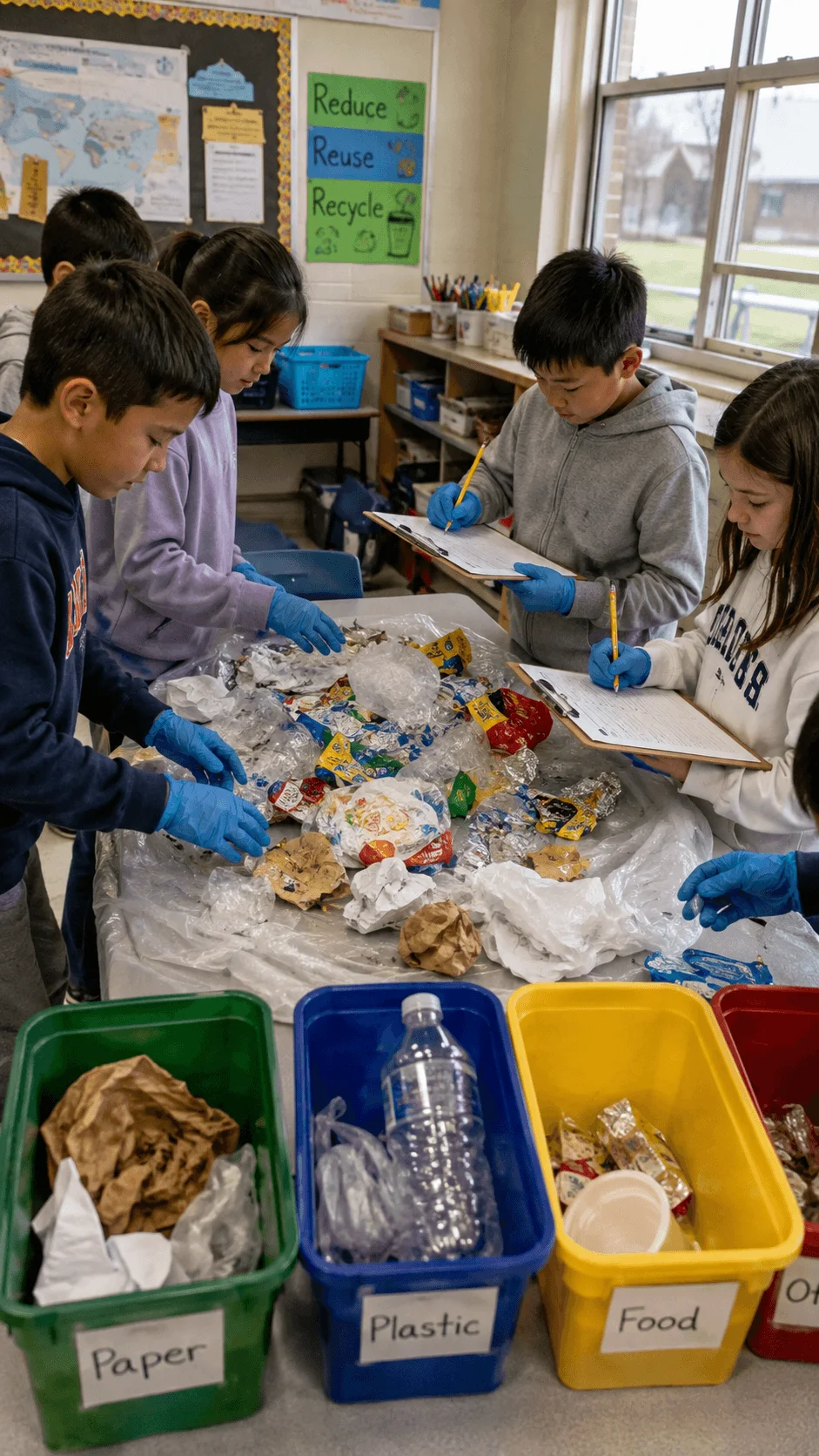
The project becomes even more interesting when students turn their observations into a classroom challenge. They could choose one area where they want to reduce waste and monitor their progress over several weeks. For example, a class might discover that it uses a large amount of paper and decide to reduce unnecessary printing.
This activity provides an excellent opportunity to introduce simple data skills. Older students can calculate percentages or compare results between different weeks, while younger children can create drawings or simple charts showing the types of waste they observed.
The most important lesson is that waste reduction begins before something reaches the trash container. Students learn to think about consumption, reuse, and prevention rather than focusing only on disposal.
Food Waste to Compost Project
Food waste provides another excellent opportunity for sustainability learning because it connects what students eat with soil, plants, natural cycles, and resource use. A compost project can help children understand that some materials we commonly throw away can return nutrients to the soil under appropriate conditions.
Teachers can begin by discussing what happens to leftover food after students finish eating. Children may already know that food goes into a trash container, but they may not understand what happens afterward. This creates an opportunity to introduce decomposition and the role of natural organisms in breaking down organic material.
A supervised school composting project can then become a longer learning experience. Students can observe suitable organic material and learn which materials the school’s composting system accepts. The teacher should manage the composting process and establish clear rules so children only handle safe materials.
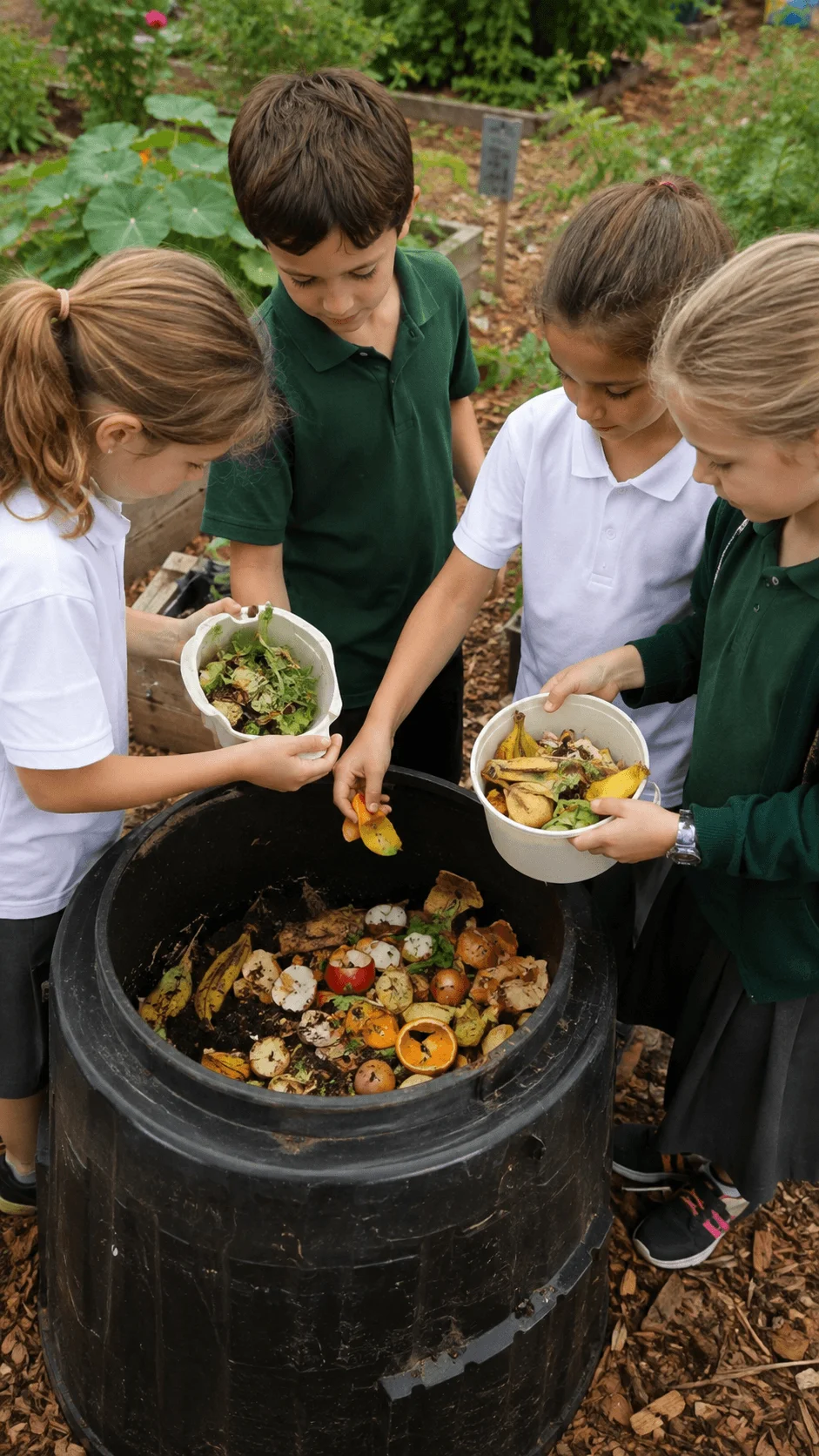
Students can record observations as the compost changes over time. They may notice differences in appearance, texture, or smell as the material breaks down. Older students can investigate the conditions that help decomposition, while younger students can focus on observing changes and understanding the basic idea of returning organic material to the soil.
The project can become even more meaningful when the finished compost supports a school garden. Students can see a connection between food waste, decomposition, soil, and plant growth. This creates a complete learning cycle rather than treating composting as an isolated activity.
Teachers can also connect the project with mathematics by asking students to observe how much food waste their class produces over a certain period. The goal does not need to involve complicated calculations. Even simple comparisons can help students understand that individual choices can contribute to a larger environmental outcome.
Food waste projects also encourage students to think about how much food they take and what happens when they do not finish it. This makes the activity relevant to everyday life as well as school sustainability.
Eco Brick Building Challenge
An eco brick project can introduce students to the idea of creative material reuse while encouraging them to think about the difficulties associated with certain types of plastic waste. The activity works particularly well as a design and discussion project rather than simply as a construction exercise.
Teachers can first introduce the problem of materials that are difficult to recycle through ordinary systems. Students can discuss why reducing unnecessary plastic use is preferable to simply finding another place for discarded material.
If a school chooses to demonstrate an eco brick concept, teachers should manage the project carefully and use only appropriate clean materials. Students should never handle unknown, contaminated, sharp, or potentially dangerous waste.
The creative part comes when students think about how reused materials could contribute to a useful school project. They might explore ideas for garden structures, educational displays, models, or other teacher approved demonstrations.
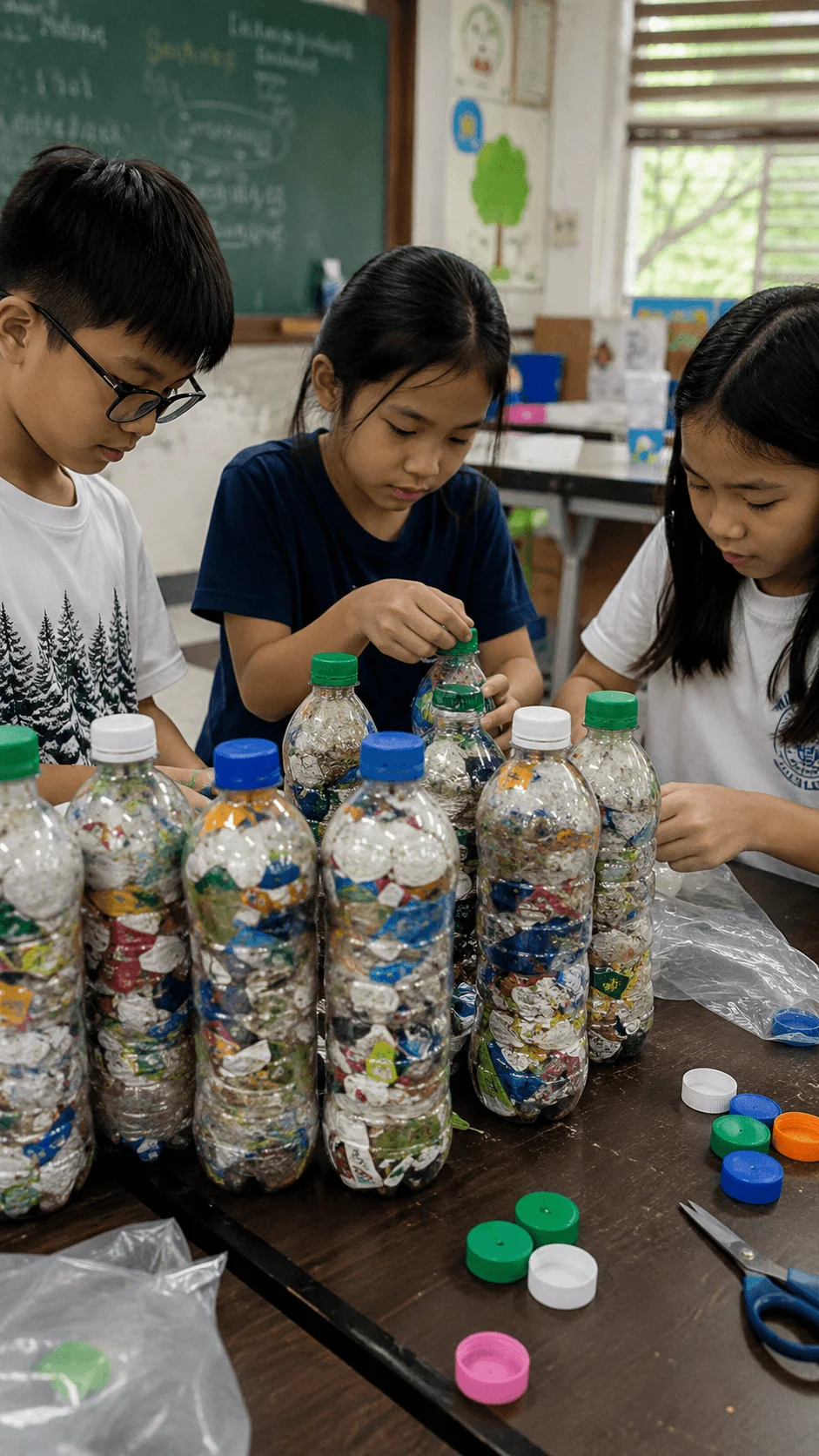
The real educational value comes from the questions surrounding the project. Students can ask where materials come from, how long products are used, what happens when people throw them away, and whether reuse can reduce demand for new materials.
Older students can take the activity further by researching different approaches to plastic waste management and comparing reuse with reduction and recycling. Younger students can focus on identifying materials and creating simple designs with safe classroom resources.
This makes the activity a useful example of green school activities for kids because it combines environmental thinking with creativity and design.
Mini School Pollinator Garden
A small pollinator garden can transform an unused corner of school grounds into an outdoor learning space. Students can observe plants, insects, seasonal changes, and relationships between living organisms while developing a stronger connection with nature.
The project can begin with a simple question: what living things already exist around our school?
Students can explore an appropriate outdoor area with their teacher and observe plants and insects from a safe distance. They can draw what they see or record observations in a nature journal. This first stage helps students recognize that biodiversity exists even in places they may normally ignore.
The teacher can then introduce the idea of creating a small garden that supports local biodiversity. Plant choices should suit the local climate and school conditions, and adults should handle any gardening tasks that require tools or specialized knowledge.
Students can participate in age appropriate activities such as planning the layout, measuring the garden area, observing plant growth, creating signs, or documenting insects that visit the space.
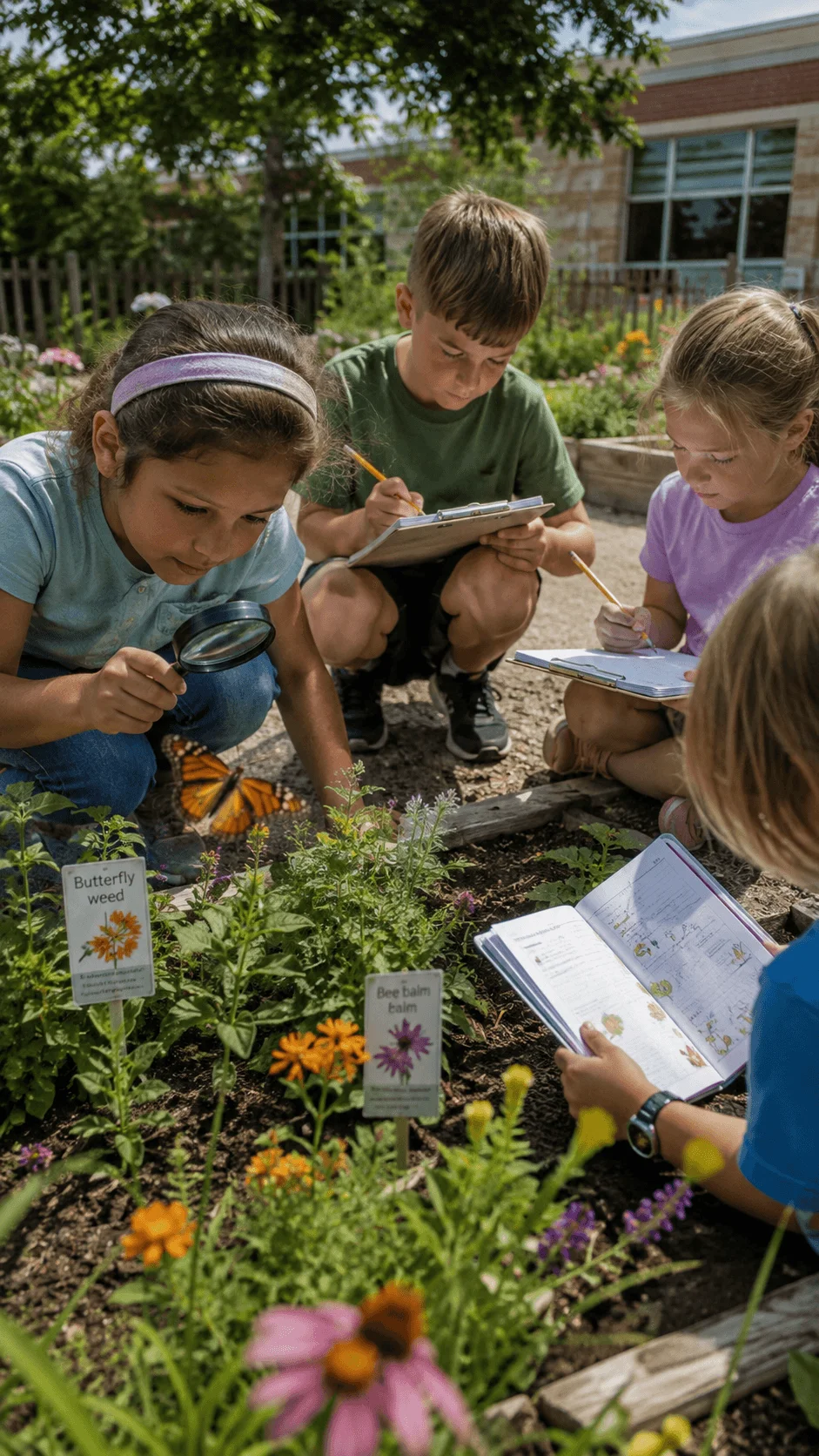
The garden can become a long term classroom resource. Students can return throughout the year to observe changes. They may notice different insects appearing at different times or see how plants respond to changing weather conditions.
Younger children can focus on colors, shapes, insects, and simple observations. Older students can investigate habitats, food webs, plant adaptations, and biodiversity.
The project also connects naturally with art. Students can draw plants and insects, create nature journals, or design educational signs for other students.
A school pollinator garden therefore becomes more than a gardening project. It creates a living classroom where children can directly observe ecological relationships.
School Energy Detective Challenge
The school energy detective challenge turns students into investigators who look for opportunities to use electricity more responsibly.
Rather than giving children a lecture about energy conservation, teachers can ask them to investigate how their classroom uses energy throughout the day. Students might observe lights, fans, computers, projectors, or other equipment and consider when these resources are actually needed.
The teacher should establish clear boundaries. Students should observe and report energy use rather than touching electrical equipment, switches, sockets, or wiring unless the teacher considers the action safe and appropriate.
Students can create an observation record showing when equipment is being used and when something appears unnecessary. For example, they might notice that lights remain on in an empty room or that equipment stays powered after a lesson finishes.
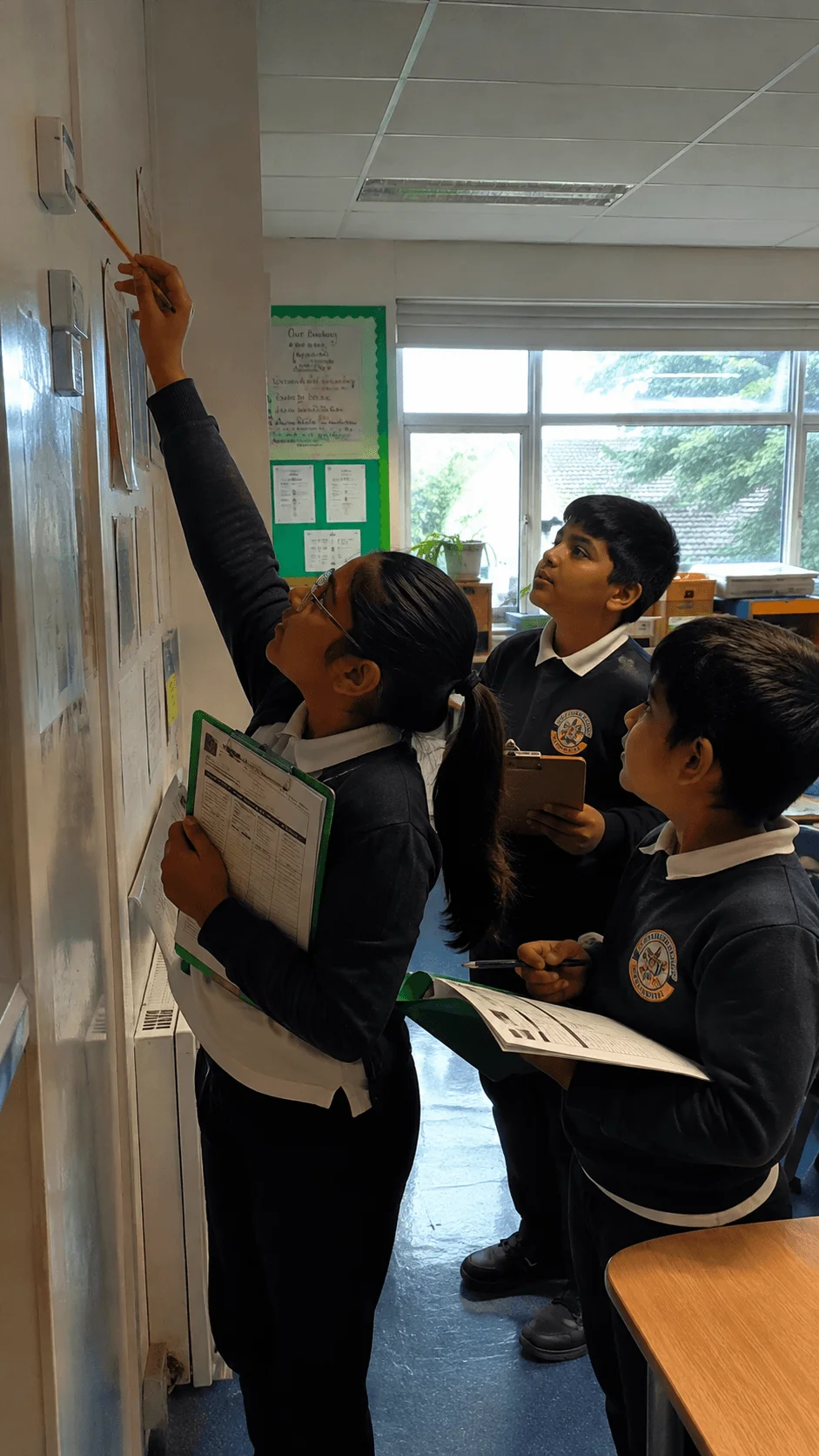
After gathering observations, students can discuss practical solutions. They could create classroom reminders, suggest energy saving habits, or present their findings to teachers and school administrators.
This activity can also introduce basic mathematics. Students can compare how many lights operate in different rooms or record how often certain energy saving opportunities appear during the school day.
Older students can investigate energy efficiency in greater depth and research renewable energy technologies. Younger students can focus on simple habits such as switching off appropriate lights when a room is empty under teacher guidance.
The project teaches an important lesson about sustainability: environmental action does not always require a large project. Sometimes meaningful change begins by noticing an everyday habit and finding a better way to manage it.
Water Footprint Investigation
Water is another resource that students interact with every day but may rarely think about in detail. A water footprint investigation encourages children to explore how their school uses water and where unnecessary consumption might occur.
Teachers can introduce the activity by asking students where they see water being used around the school. Students may identify drinking fountains, sinks, bathrooms, gardens, cleaning areas, and other locations.
Students can then make supervised observations about how water is used in these areas. The goal is not to interfere with school plumbing or equipment but to understand everyday patterns.
For example, students might observe whether taps remain running unnecessarily or consider how watering practices affect a school garden. They can discuss practical ways to use water responsibly without compromising hygiene or safety.
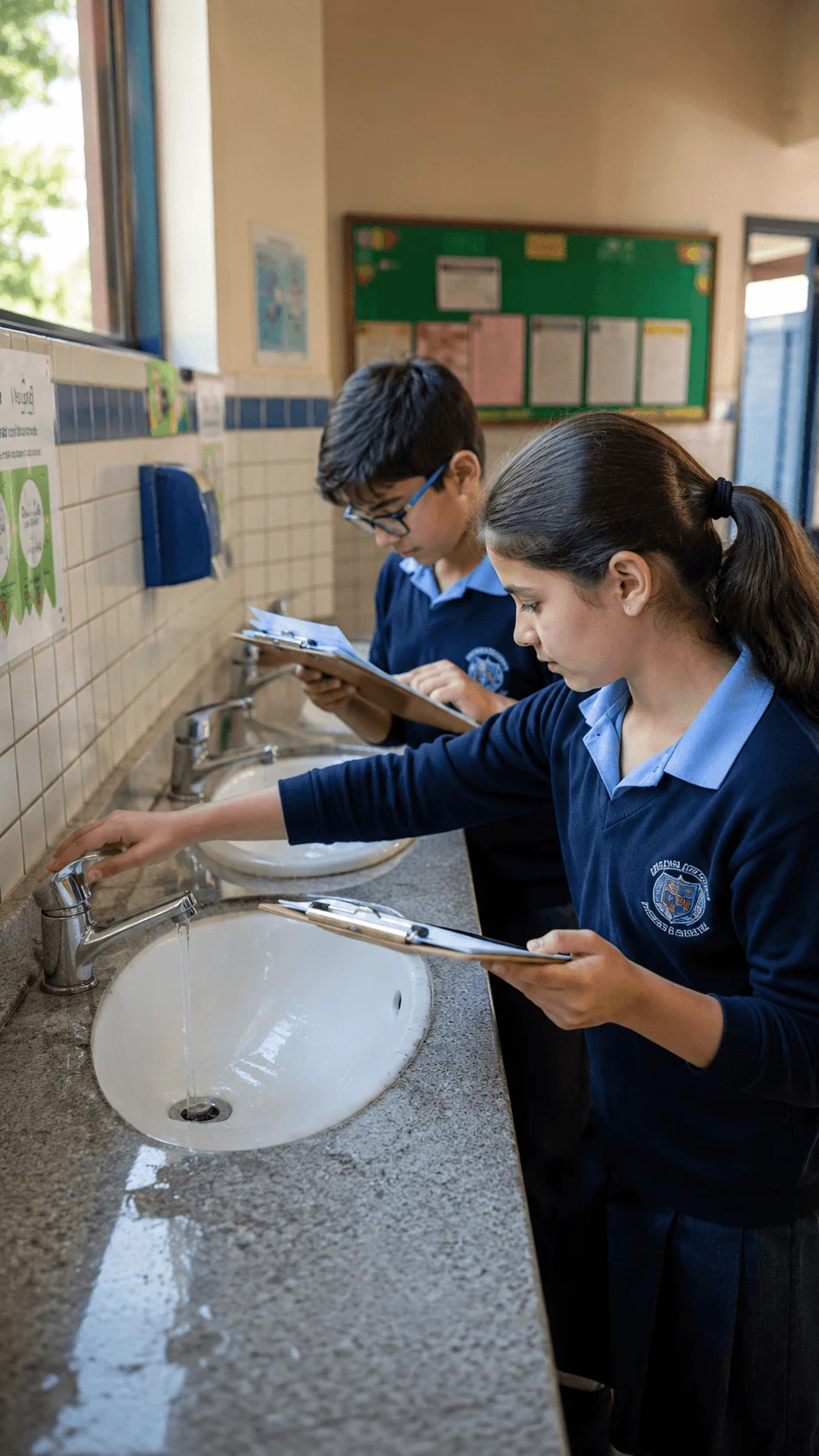
The activity works particularly well when students connect their observations with mathematics. Older students can work with teacher provided measurements or estimates and create simple charts. Younger students can create drawings showing where water comes from and how people use it.
The teacher can also introduce the idea that saving water involves more than simply turning off a tap. Water supports agriculture, food production, ecosystems, and communities, so responsible water use connects classroom habits with wider environmental issues.
A water investigation can therefore become one of the most useful sustainability activities for students because it encourages them to notice an invisible part of everyday resource consumption.
Upcycled Packaging Design Challenge
Packaging provides an excellent way to introduce children to sustainable design because students encounter boxes, wrappers, containers, bottles, and other packaging almost every day. An upcycled packaging design challenge asks students to look at these familiar objects differently and consider how their design could become more sustainable.
Teachers can begin by showing students several examples of everyday packaging and asking simple questions. Why does this product need packaging? Could the package use less material? Could someone reuse it? Could the design make recycling easier? Could the same product use a refillable container instead?
Students can then create their own packaging concepts using safe and clean classroom materials. They might redesign a snack box, create a reusable container for school supplies, or develop packaging for an imaginary product.
The activity becomes more valuable when students explain the reasoning behind their designs. They can discuss the materials they selected, how long the packaging could remain useful, and what might happen to it after the customer finishes using the product.
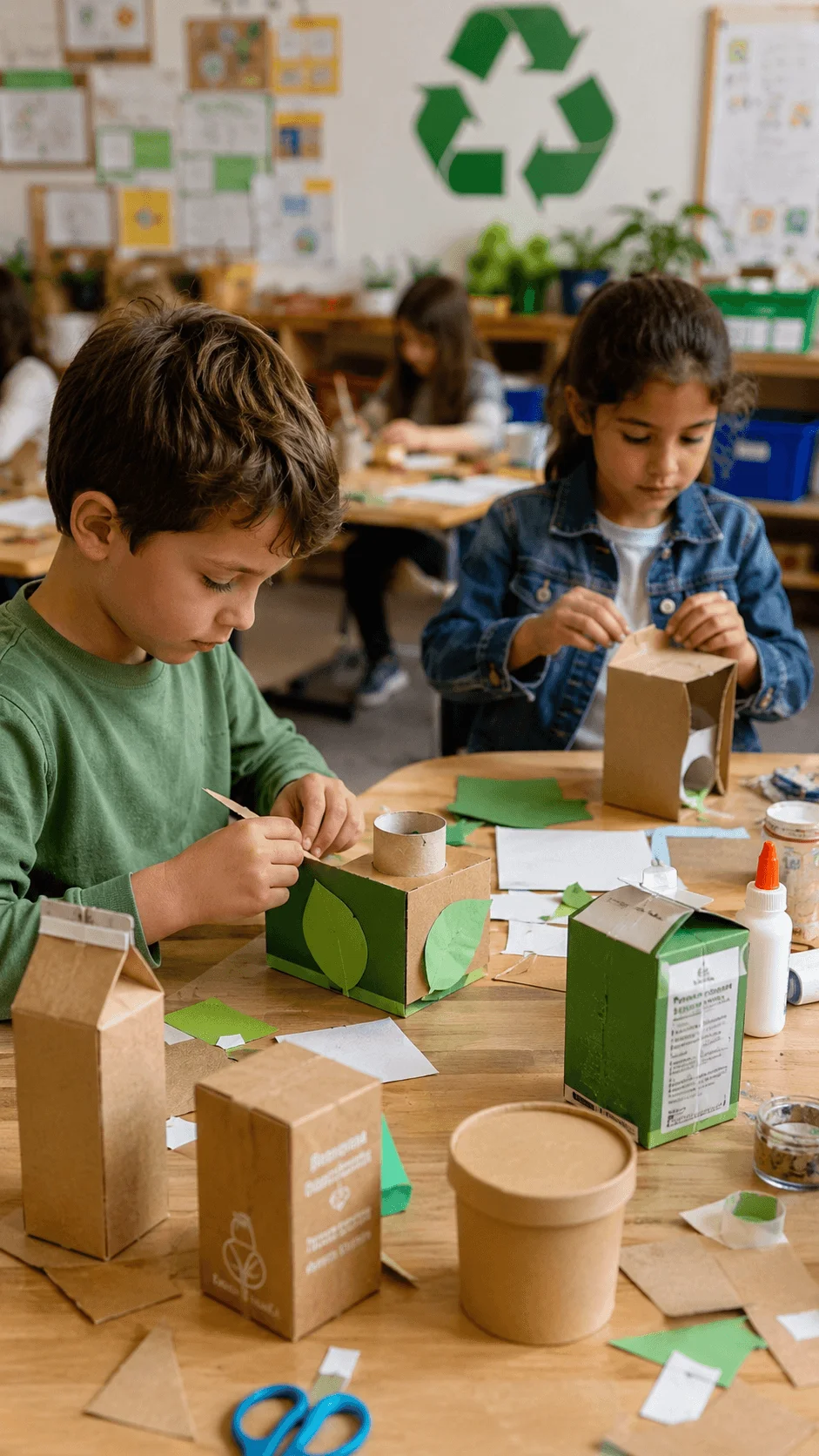
Older students can explore concepts such as material efficiency, product life cycles, and sustainable design. Younger students can concentrate on creativity and reuse by turning cardboard boxes, paper, and other suitable materials into new designs.
Teachers can also connect this project with art and technology. Students can sketch their ideas before creating models and then present their designs to classmates.
A classroom could even hold a small design exhibition where students explain how their packaging attempts to reduce unnecessary material use. This transforms an ordinary craft project into one of the more meaningful eco friendly classroom activities because students think about how products are designed before they become waste.
Nature Biodiversity Survey
A nature biodiversity survey encourages students to investigate the living world around their school. Instead of simply telling children that biodiversity matters, the activity allows them to discover how many different forms of life already exist in their surroundings.
The project can start with an outdoor observation session. With teacher supervision, students can explore suitable areas of the school grounds and look for plants, insects, birds, and other organisms that they can safely observe.
Students can record their observations in notebooks. Younger children might draw the plants and animals they notice, while older students can create more detailed records containing names, locations, dates, and observations.
The teacher can then introduce the concept of biodiversity and explain that different living organisms play different roles within ecosystems. Students can discuss why a school with several types of plants and insects may support a wider range of life than an area with very little vegetation.
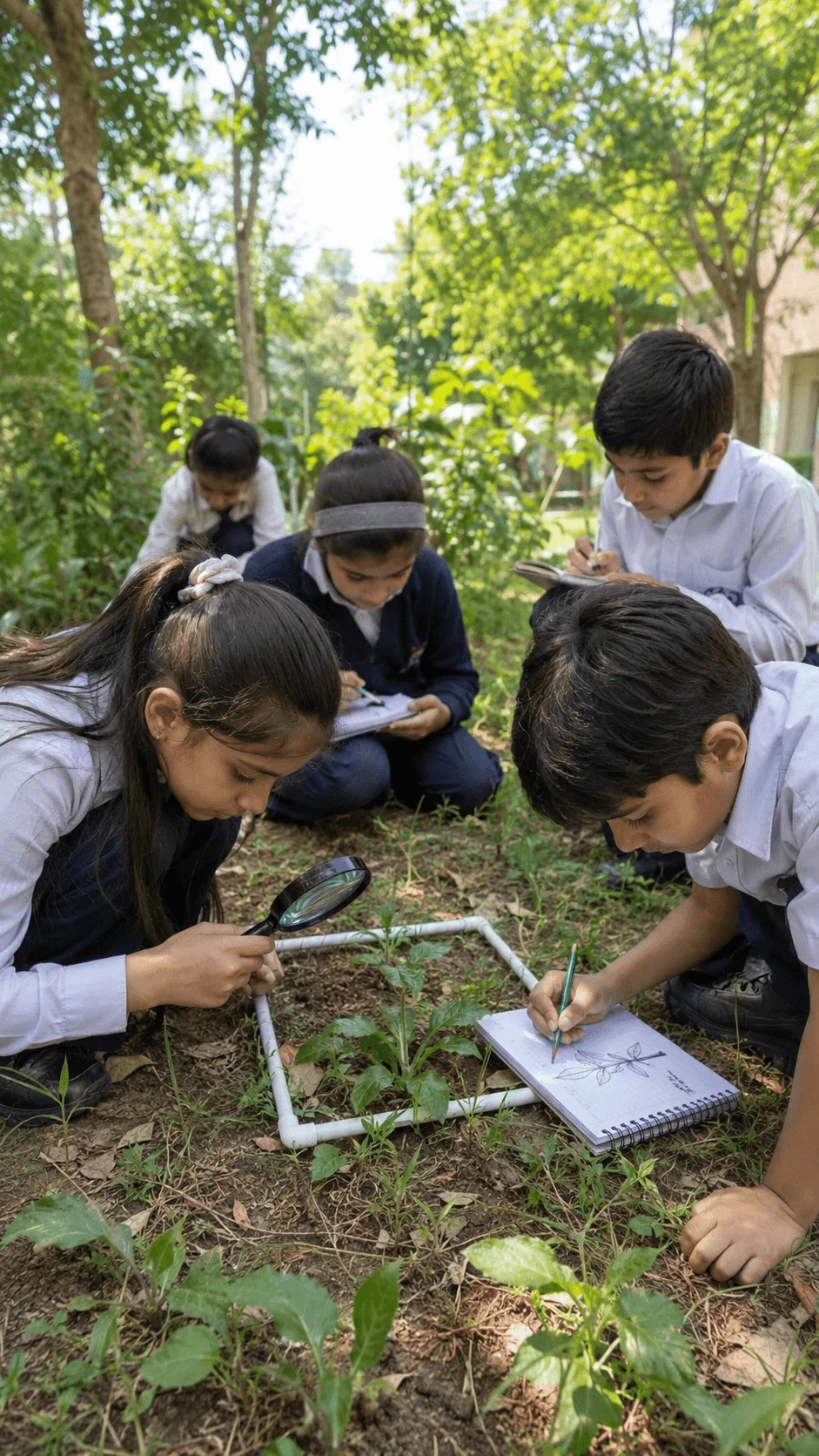
The activity can develop into a simple biodiversity map. Students can identify areas where they observed different organisms and create a visual representation of their school grounds.
This project works especially well as a long term activity. Students can repeat the survey at different times of the year and compare their observations. They may notice that some plants bloom during particular seasons or that different insects appear at different times.
Older students can investigate habitats, food relationships, adaptation, and ecosystem connections. Younger students can focus on observation, drawing, classification, and basic nature vocabulary.
These school biodiversity activities also provide an excellent opportunity to encourage children to spend time outdoors. Rather than viewing the school grounds simply as a place to walk between classrooms, students begin to see them as a small ecosystem that they can study and appreciate.
Climate Data Classroom Project
Climate and weather can seem like complicated subjects to young students, but a simple classroom data project can make environmental observation much easier to understand.
Teachers can ask students to record suitable environmental information over a period of several weeks. Depending on the equipment available, this might include temperature, rainfall, cloud conditions, or other basic weather observations.
Students can record their observations in a classroom chart. Over time, they can look for patterns and changes in the information they collected.
The main purpose of the activity is not to ask children to make large claims about global climate patterns from a small dataset. Instead, it teaches them how scientists use observations and data to understand the world.
Older students can calculate averages, compare measurements, create graphs, and discuss why weather conditions change. Younger children can use drawings, symbols, and simple charts to record what they see.
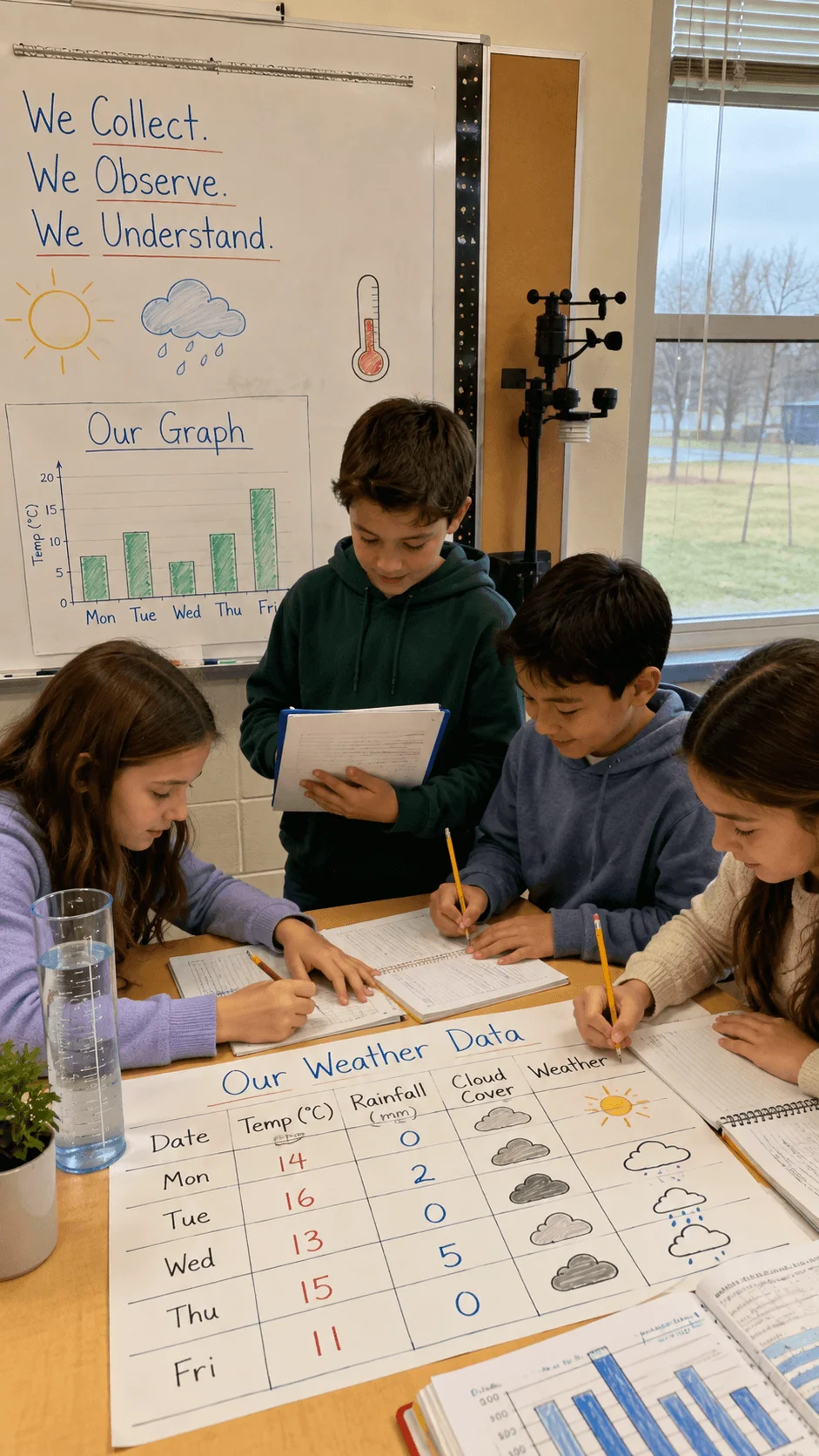
The project can also introduce students to digital tools. A teacher can show older students how to enter observations into a spreadsheet and create a basic graph. This connects environmental education with mathematics and technology.
Teachers can extend the activity by asking students to think about how weather affects the school environment. They might consider how rainfall affects plants, how hot weather affects outdoor activities, or how seasonal changes influence the school garden.
This makes climate related learning more concrete. Students are not simply reading about environmental conditions. They are becoming observers who collect information and use evidence to understand what they see.
These climate activities for elementary students can also help develop critical thinking because children learn that environmental questions require careful observation and evidence.
Student Eco Audit and Action Plan
A student eco audit gives children an opportunity to identify an environmental issue at their own school and think about how they could improve it.
The activity begins by allowing students to observe their surroundings. They might notice unnecessary paper waste, litter, excessive water use, inefficient energy habits, or areas where the school could support more biodiversity.
Instead of immediately giving students the solution, teachers can encourage them to investigate the problem first.
Students can ask questions about what they have observed. How often does the problem occur? Where does it happen most often? What might be causing it? Who does it affect? What could realistically improve the situation?
The teacher can help students organize their findings and choose one manageable issue.
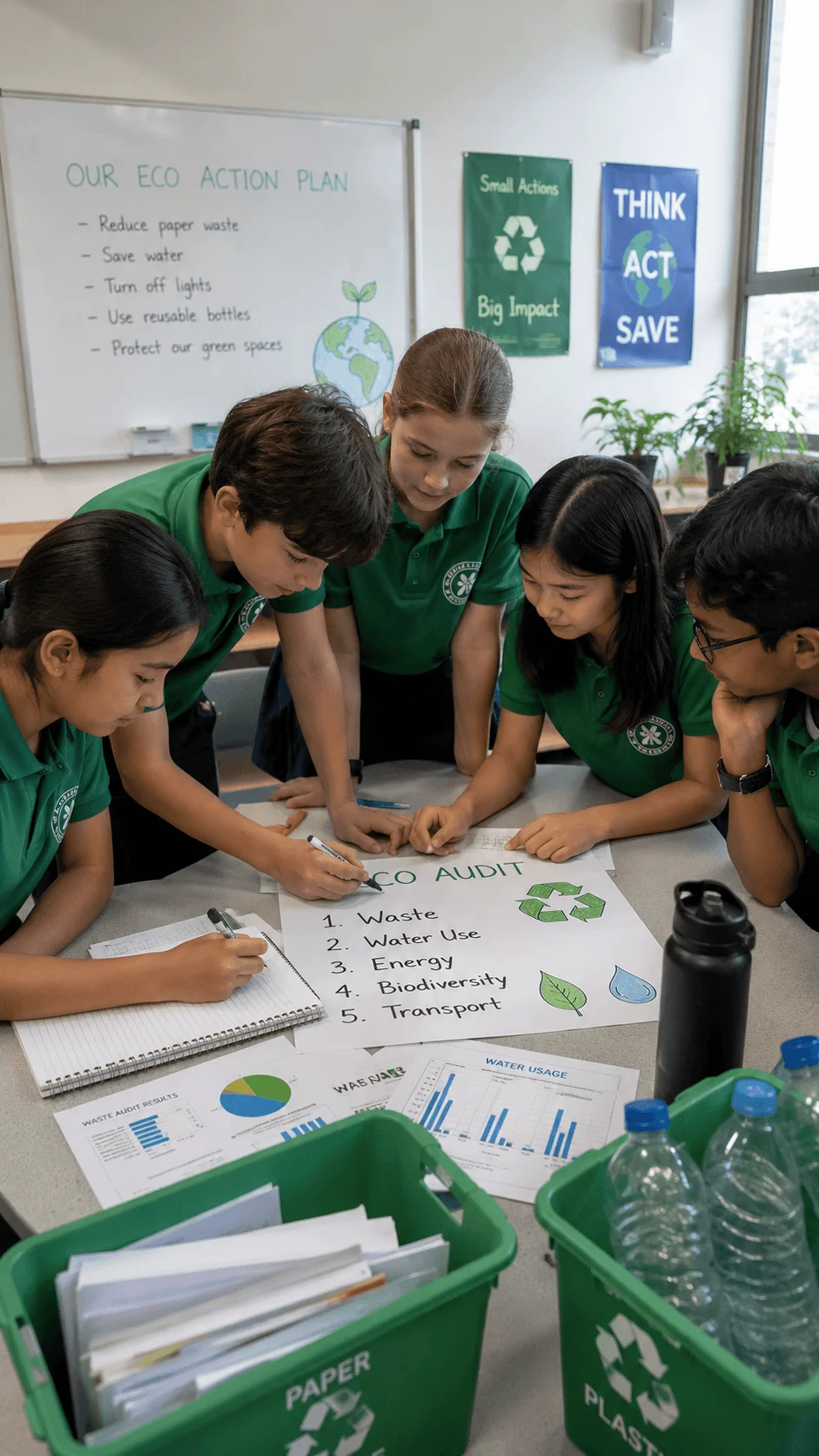
For example, a class might discover that students frequently leave reusable water bottles at home and purchase disposable bottles instead. The class could discuss possible reasons and consider whether better access to refill stations or awareness activities could help.
Another class might notice that large amounts of paper end up in classroom waste. Students could investigate why this happens and propose ways to reduce unnecessary printing or improve paper reuse.
The important part is giving students a role in the decision making process.
Once students choose an action, they can establish a simple way to evaluate the result. They might compare observations from before and after the project.
This makes the activity more than an environmental discussion. It becomes a complete cycle of observation, investigation, planning, action, and evaluation.
Older students can prepare presentations for school administrators or an eco club. Younger students can work with teachers to create simple classroom changes.
These student sustainability projects can help children understand that environmental responsibility does not belong only to governments, scientists, or large organizations. Schools and students can also identify problems and contribute to practical solutions.
Outdoor Sustainability Classroom
One of the simplest ways to make sustainability education more engaging is to take learning outside.
The school grounds can become an extension of the classroom where students observe plants, investigate natural materials, measure spaces, study weather, create artwork, or explore local habitats.
A science lesson could involve observing leaves, insects, soil, or plant growth. A mathematics lesson could involve measuring the dimensions of a garden or calculating how much space different plants occupy.
Art students could create nature inspired drawings, while language students could write descriptions based on what they observe outdoors.
The advantage of outdoor learning is that students encounter real examples instead of relying entirely on pictures or textbook descriptions.
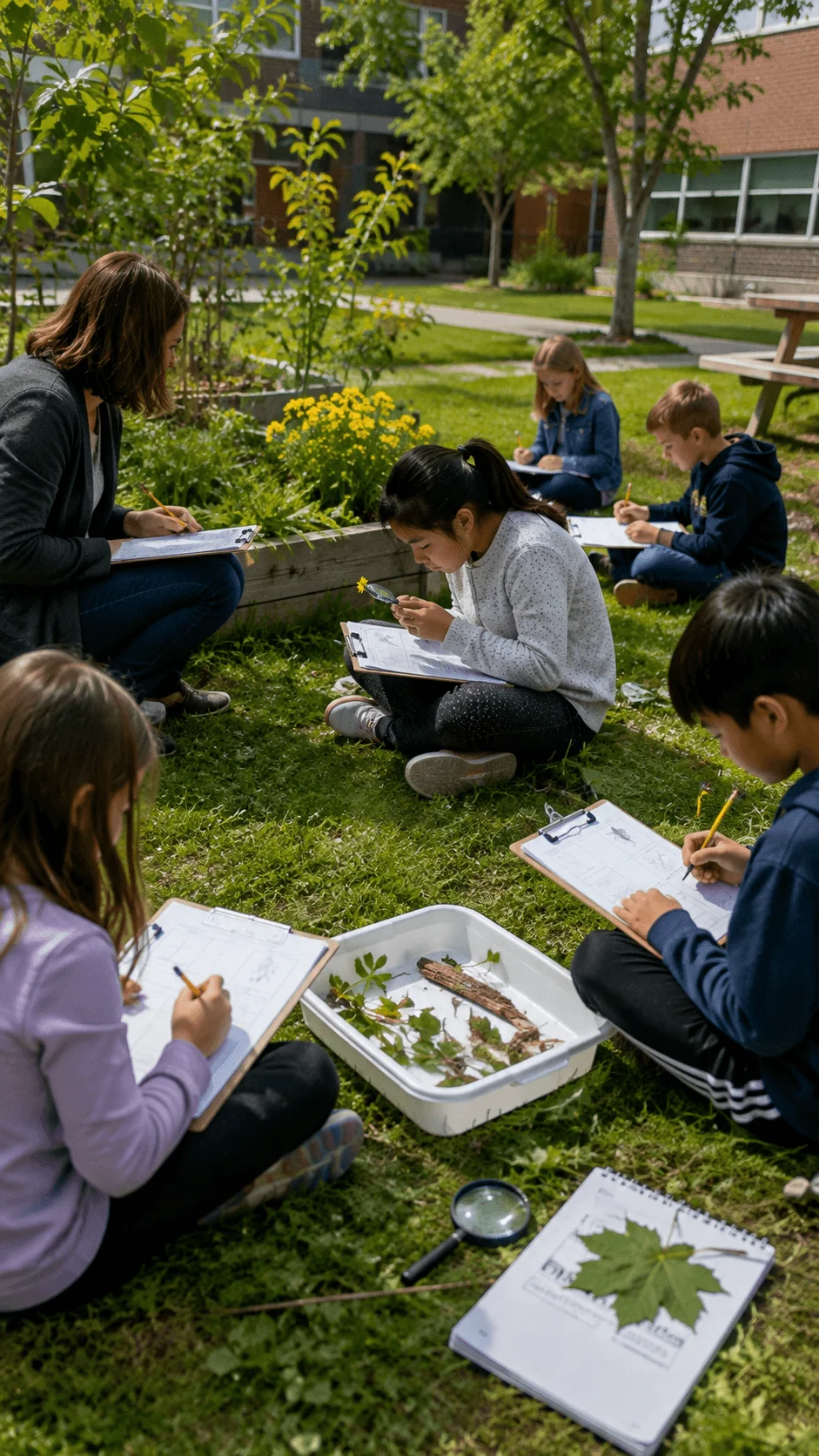
A teacher discussing plant adaptation, for example, can encourage students to examine plants growing around the school. Students can compare differences in leaf shapes, sizes, textures, and growth patterns.
The same approach works with sustainability concepts. Students can investigate shaded and sunny areas, observe how plants respond to different conditions, or identify locations where the school could improve green spaces.
Outdoor learning does not require a large garden or special environmental center. Even a small school yard can provide opportunities for observation.
Teachers can also create seasonal activities. Students might observe changes in plants during different months, record weather conditions, or revisit the same area several times to see what has changed.
For younger students, outdoor activities can focus on sensory observation and simple questions. Older students can conduct investigations, record data, and develop explanations based on evidence.
This makes outdoor learning a valuable part of sustainability activities for elementary students because it connects environmental concepts with direct experience.
Sustainability Storytelling and Short Film Project
Environmental education does not always have to involve experiments, gardening, or data collection. Creative communication can also help children understand sustainability.
A sustainability storytelling project allows students to choose an environmental topic and communicate what they have learned through stories, comics, posters, presentations, or short videos.
Teachers can begin by asking students to identify an environmental issue that interests them. The topic could involve waste, water, biodiversity, food, energy, pollution, or protecting local natural spaces.
Students can then research the basic facts with appropriate teacher guidance and decide what message they want their project to communicate.
A younger student might create a short illustrated story about a character learning to reduce waste. Older students might create a short educational video explaining a school sustainability project.
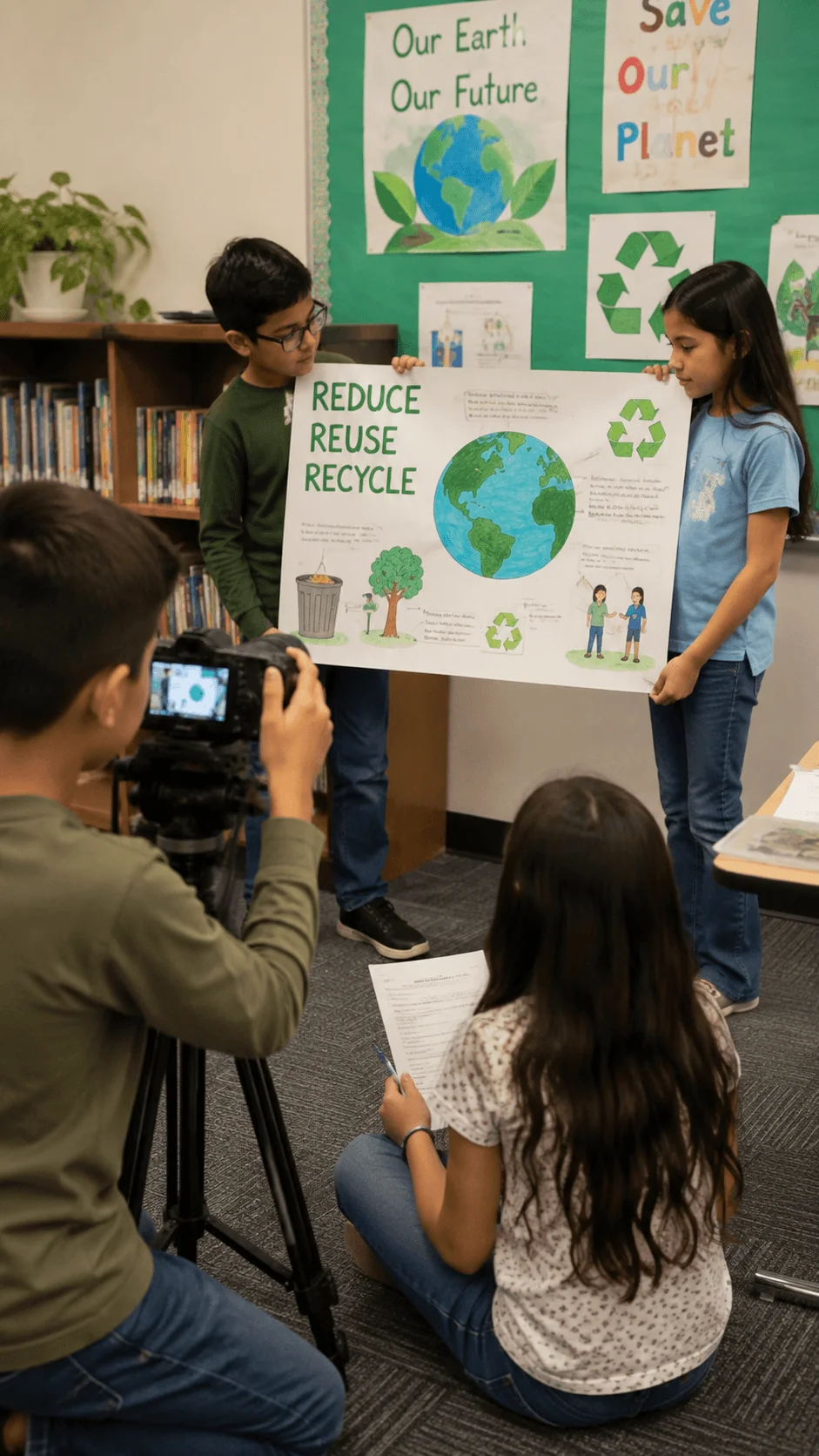
The focus should remain on understanding and communication rather than creating a technically perfect production.
Students can write a script, create artwork, organize scenes, record narration, or present their work to classmates. Working in small groups can also encourage collaboration because students can divide creative responsibilities.
The activity connects naturally with English, art, technology, and media literacy. Students learn how to communicate information clearly while thinking about an environmental issue.
Teachers can make the project more meaningful by asking students to include both a problem and a realistic solution. This encourages them to move beyond simply describing environmental problems.
For example, a story about excessive waste could show how students investigate their classroom waste and introduce a practical reduction plan.
A short film about biodiversity could show students discovering different species around their school and explaining why those organisms matter.
Creative environmental projects for elementary students can therefore help children become not only learners but also communicators who can share environmental ideas with others.
Conclusion
The best environmental activities give children more than information. They give them opportunities to observe real situations, ask questions, investigate problems, develop ideas, and take meaningful action.
The 12 activities discussed here show that sustainability education can take many forms. Students can investigate classroom waste, explore food composting, redesign packaging, study biodiversity, investigate energy and water use, collect environmental data, develop school action plans, learn outdoors, and communicate environmental ideas through creative projects.
What makes these projects particularly valuable is their connection to real life. Children can see the waste produced in their classroom, observe plants and insects around their school, investigate how resources are used, and consider practical improvements. These experiences can make environmental concepts easier to understand and more memorable.
Schools also do not need to introduce every project at once. A teacher can begin with one manageable activity and gradually develop it into a larger sustainability project. A simple observation can become a research project, and a classroom project can eventually involve the wider school community.
Ultimately, eco friendly activities for kids in school work best when students become active participants rather than passive listeners. When children have the opportunity to investigate environmental issues and see how their decisions can make a difference, sustainability becomes something they experience rather than something they simply study.