Sustainability Projects School Kids Can Try in 2026
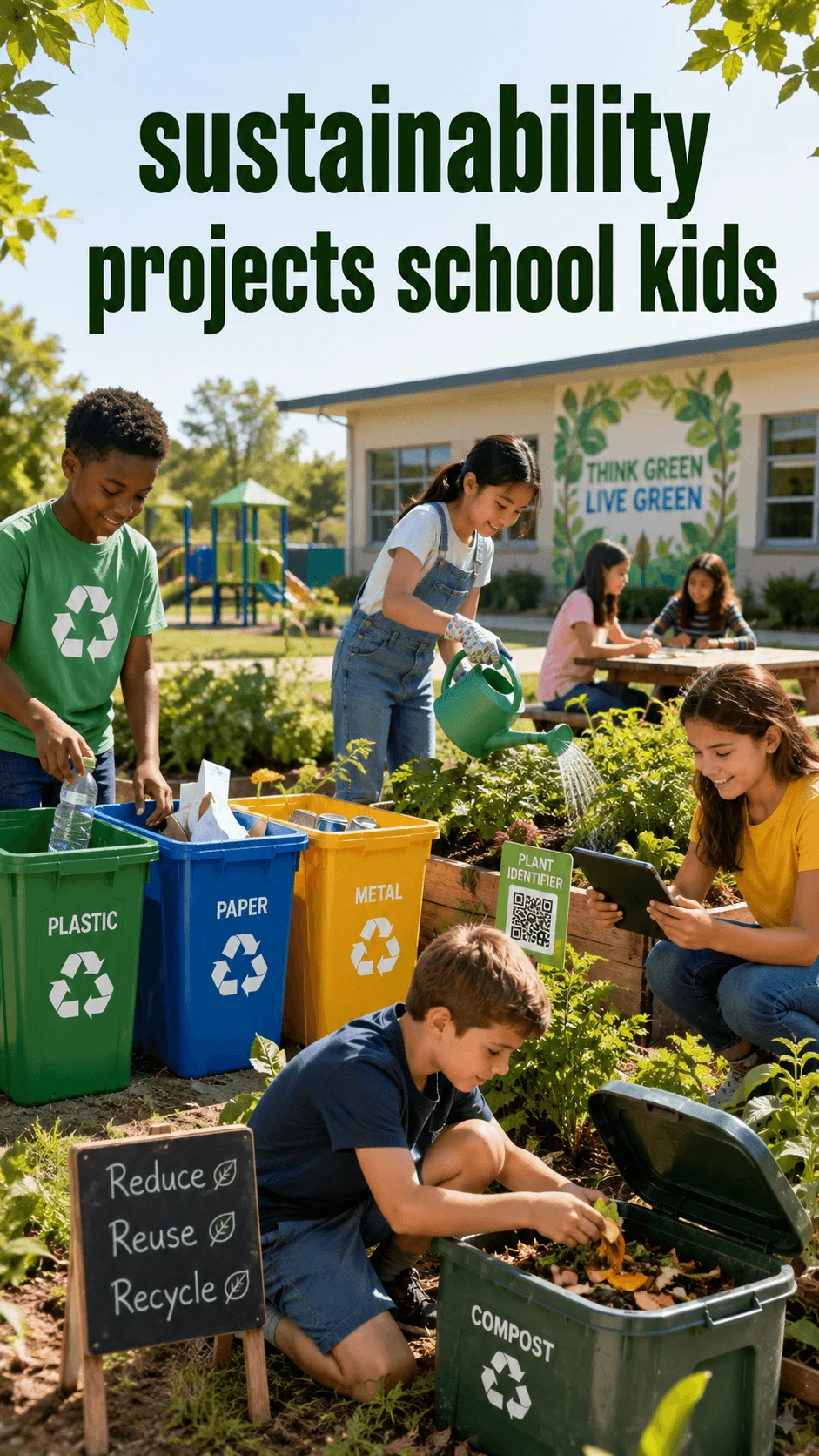
Sustainability projects school kids can do today are no longer limited to planting a tree or making a recycling poster. Schools now want practical, creative, and modern projects that help children understand climate change, waste reduction, water conservation, biodiversity, and responsible living through real action. When students take part in these projects, they do not only learn science from books. They see how their daily habits affect the planet and how small changes inside a school can create a cleaner and healthier environment.
Why Sustainability Projects for School Kids Matter Today
Sustainability projects school kids participate in help them connect classroom learning with real life problems. A child may read about plastic pollution, but the lesson becomes much stronger when that child measures how many plastic wrappers appear in the school dustbin after lunch. A student may hear about water scarcity, but the idea becomes meaningful when students check leaking taps and calculate how much water the school wastes each day. These experiences build awareness, responsibility, and problem solving skills.
Modern schools also need these projects because children will grow up in a world shaped by climate challenges. Heat waves, water shortages, pollution, food waste, and loss of biodiversity already affect many communities. When schools introduce sustainability projects for school kids, they help students become thoughtful citizens who understand both the problem and the solution. These activities also encourage teamwork because students must observe, plan, test, record, and improve their ideas together.
The best thing about school sustainability projects is that they can fit almost every subject. Science teachers can connect them with experiments. Math teachers can use them for data collection. English teachers can ask students to write reports and awareness messages. Art teachers can help students design posters, labels, displays, and recycled material models. In this way, sustainability becomes a complete learning experience instead of a one day activity.
How Modern School Sustainability Projects Are Changing Learning
Sustainability projects school kids try in 2026 look very different from older school activities. Many new projects now include technology, digital learning, artificial intelligence, QR codes, smart tracking, and climate adaptation. Students are not just told to save the environment. They are encouraged to investigate problems, collect evidence, and suggest practical solutions.
This change makes learning more active. For example, instead of only saying that waste should be recycled, students can create a smart recycling station and track which class separates waste correctly. Instead of only learning about plants, they can map school biodiversity and identify which areas need more native plants or pollinator friendly spaces. Instead of only reading about global warming, they can study how classroom temperature changes when the roof, windows, or outdoor shade improves.
These projects also teach leadership. Students learn how to present ideas to teachers, request support from the principal, involve parents, and motivate other students. A good sustainability project gives children confidence because they see that their work can produce visible results. A cleaner playground, a greener garden, a lower waste count, or a better water saving plan can make students proud of their contribution.
12 Trending Green School Project Ideas for 2026
AI Waste Sorting Challenge for School Kids
The AI waste sorting challenge is one of the most modern sustainability projects school kids can explore in 2026. In this project, students learn how artificial intelligence can help identify recyclable and non recyclable waste. Younger students can create posters or simple models that show how smart bins work, while older students can use basic image recognition tools, coding platforms, or presentations to explain how machines can separate paper, plastic, metal, and organic waste.
This project matters because waste management has become a major problem in schools and cities. Many recyclable items end up in general waste because people do not know where to place them. Through this project, students can study common school waste items, take photos, sort them into categories, and design an awareness campaign around correct disposal. They can also create a pretend smart bin using cardboard, labels, and sensors if resources are available.
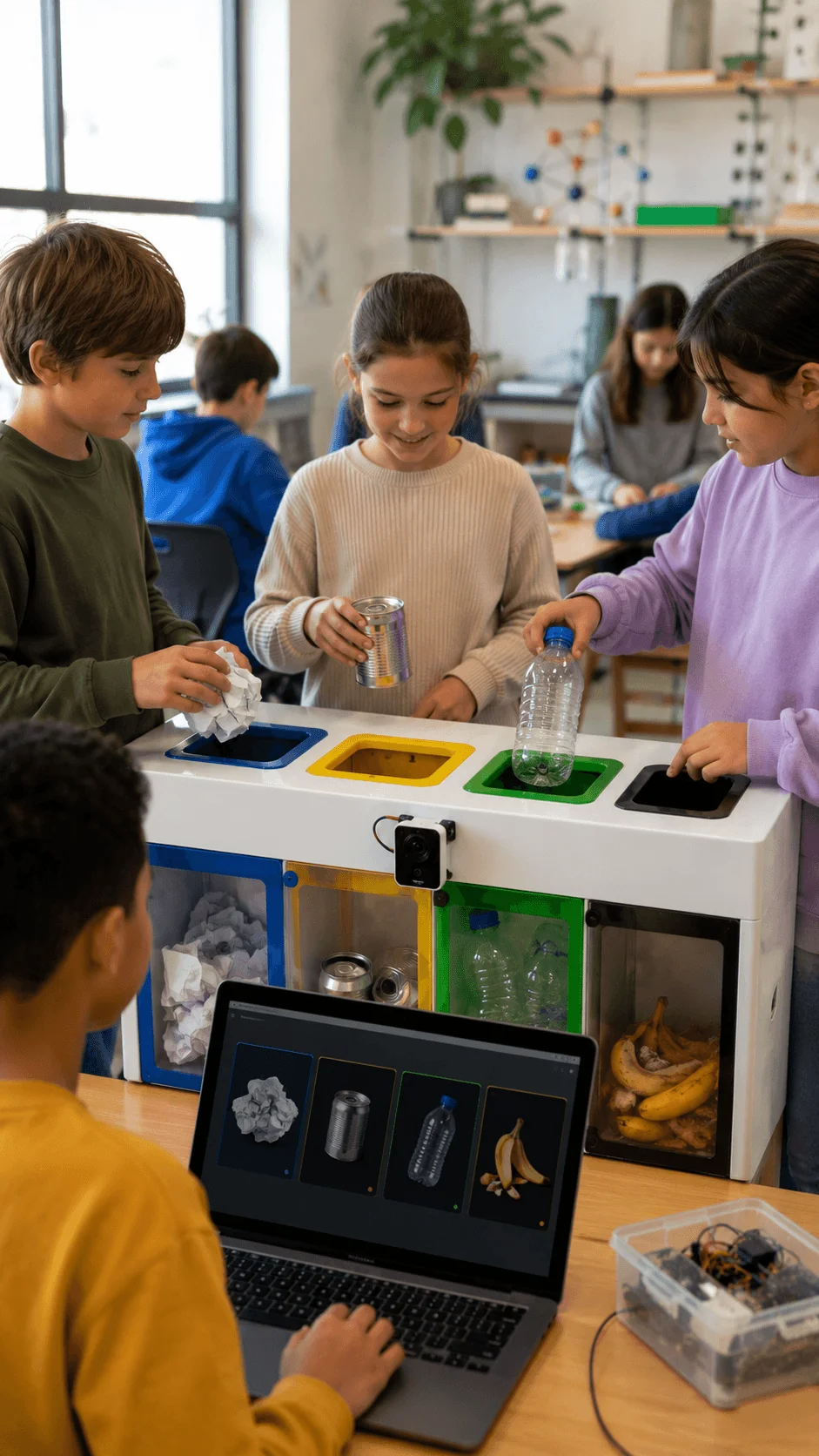
Students learn technology, environmental science, and critical thinking at the same time. They understand that artificial intelligence should not only serve entertainment or business. It can also help solve environmental problems. This makes the project exciting for students who enjoy technology and gives teachers a strong way to connect digital skills with sustainability.
Smart Recycling Station as a School Sustainability Project
A smart recycling station is a practical and visible project that can improve the whole school environment. Instead of placing ordinary bins in a corner, students design a clear recycling area with separate containers for paper, plastic, metal, organic waste, and general waste. They can add color labels, simple instructions, class wise tracking charts, and QR codes that explain what goes into each bin.
This is one of the most useful sustainability projects school kids can lead because it changes daily habits. Many schools already have bins, but students still mix waste because the system looks confusing or boring. A smart recycling station solves this by making waste sorting simple and attractive. Students can observe common mistakes and improve the labels based on what they see.
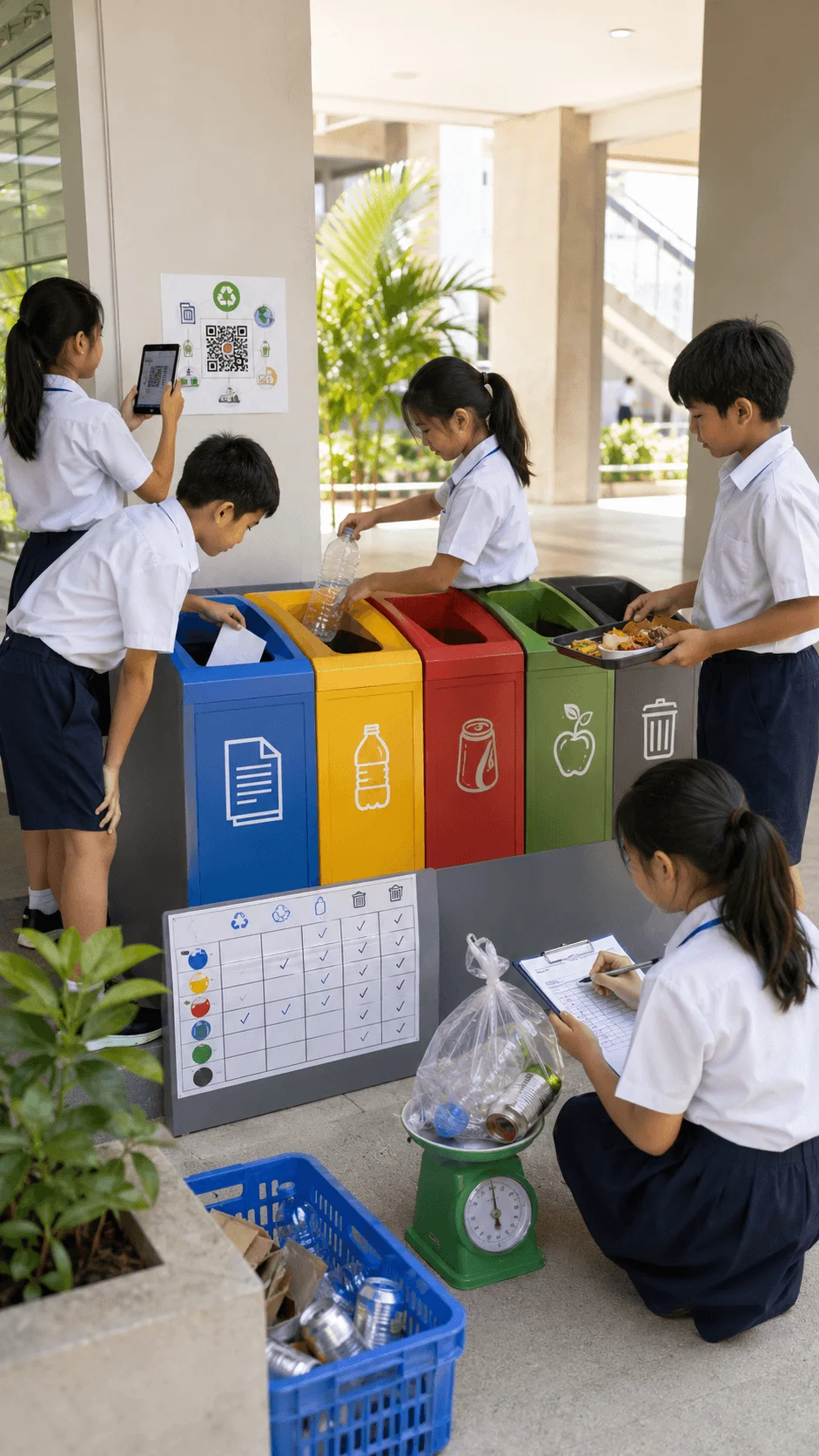
The project also becomes measurable. Students can weigh recyclable materials every week, compare results between classes, and calculate how much waste the school diverts from landfills. This data gives the project real value. It also helps children understand that sustainability needs regular effort, not just one event on Earth Day.
Biodiversity Mapping as an Eco Friendly Project for Students
Biodiversity mapping helps students discover the living world inside their school campus. In this project, children observe trees, flowers, insects, birds, grass patches, garden corners, and small habitats around the school. They record what they find and create a map that shows where different species live. This activity turns the school into an outdoor classroom.
This is a powerful idea because many children do not notice nature around them. They may walk past the same tree every day without knowing its name or value. Through biodiversity mapping, students learn that even a small school garden can support bees, butterflies, birds, and soil organisms. They can also identify weak areas where the school needs more plants, shade, or habitat protection.
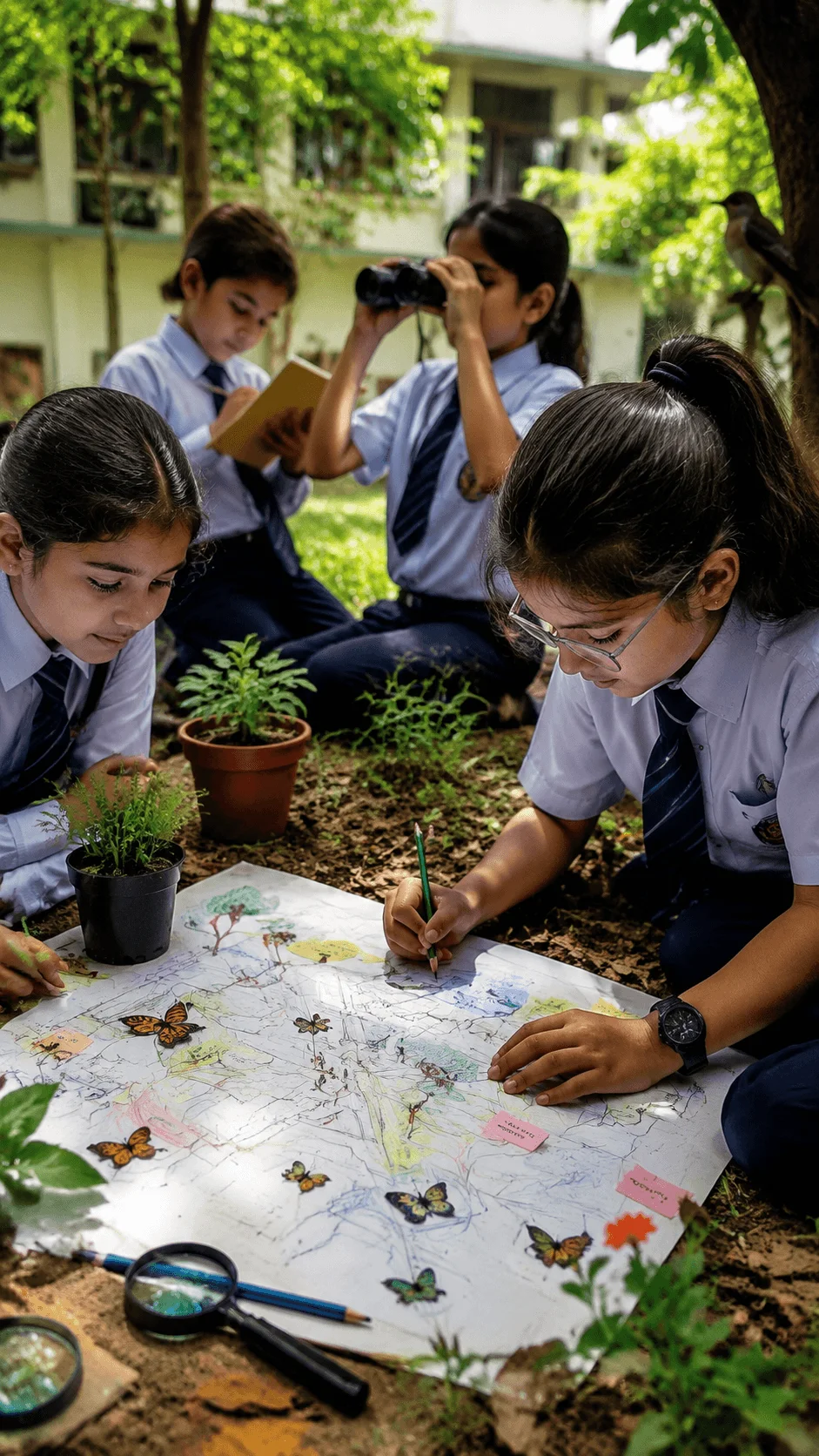
Teachers can connect this project with science, geography, art, and writing. Students can sketch leaves, photograph insects, count birds, or write short descriptions of plants. The final biodiversity map can be displayed in the hallway or library. Over time, students can update it and compare seasonal changes. This makes the project long lasting and educational.
QR Code Nature Trail for Sustainable School Activities
A QR code nature trail combines environmental learning with digital creativity. Students choose important trees, plants, garden areas, water points, or compost spaces around the school and place QR codes near them. When someone scans a code, it opens a student made page, video, audio note, or short article about that natural feature.
This is one of the freshest sustainability projects school kids can create because it makes the school campus interactive. A simple tree can become a learning station. A small garden can teach visitors about pollinators. A compost bin can explain how food waste turns into soil. Students can write the content themselves, record short voice explanations, or design pages with photos and facts.
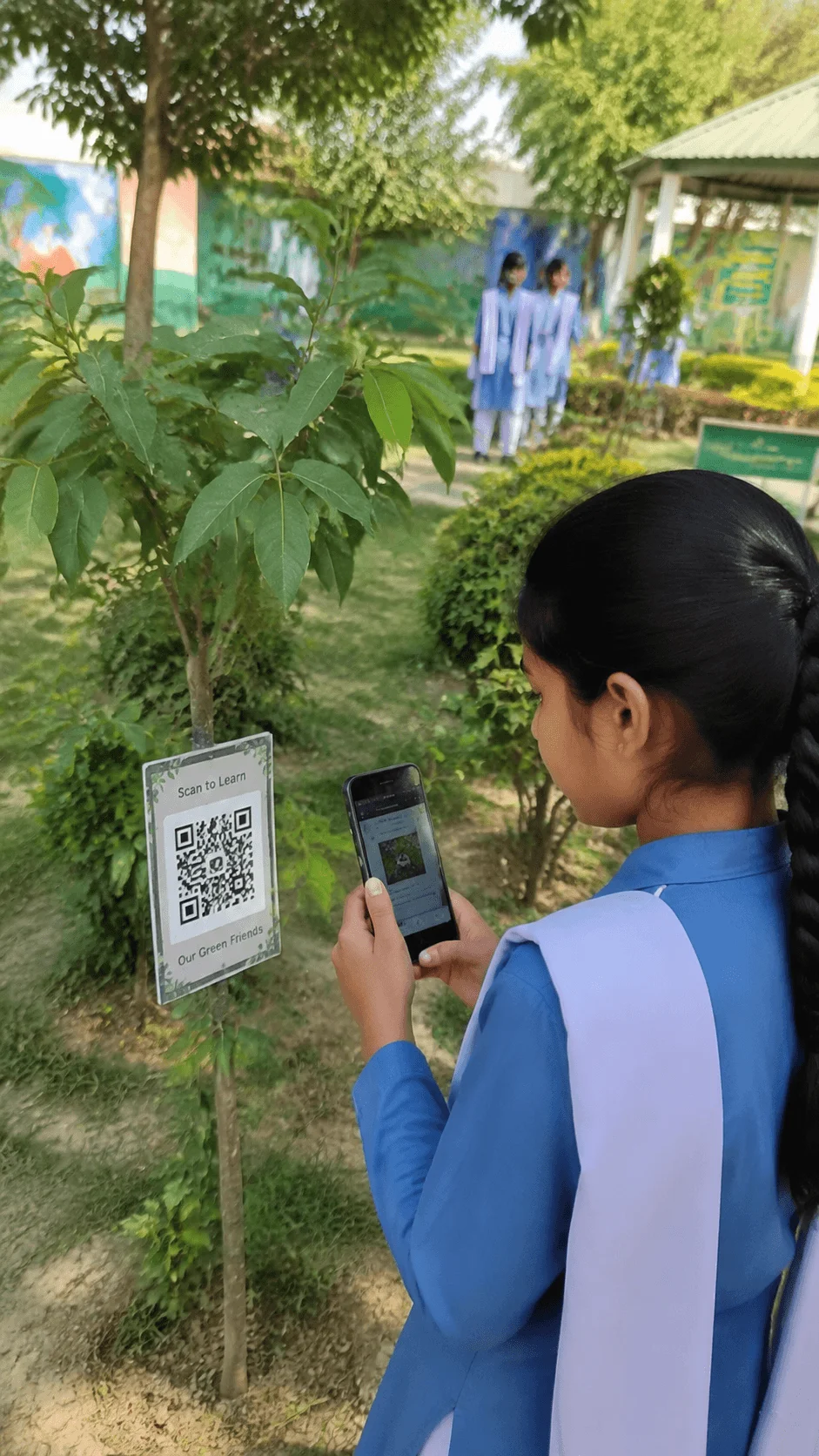
This project helps children learn research, writing, digital communication, and environmental awareness. It also gives the school a modern look. Parents and visitors can scan the codes during events and see student work. The project encourages students to take pride in their campus because they become guides and educators for others.
Climate Resilient Playground Project for School Kids
A climate resilient playground project teaches students how schools can adapt to heat, heavy rain, and changing weather. Students observe their playground and ask important questions. Which areas become too hot during break time? Where does rainwater collect? Does the playground have enough shade? Are there plants that can survive local weather conditions?
After observation, students suggest improvements such as shade trees, rain gardens, grassy corners, permeable ground surfaces, benches under trees, or small water absorbing garden beds. The project does not need to become expensive. Even a simple student report with drawings and measurements can help school leaders understand what changes the playground needs.
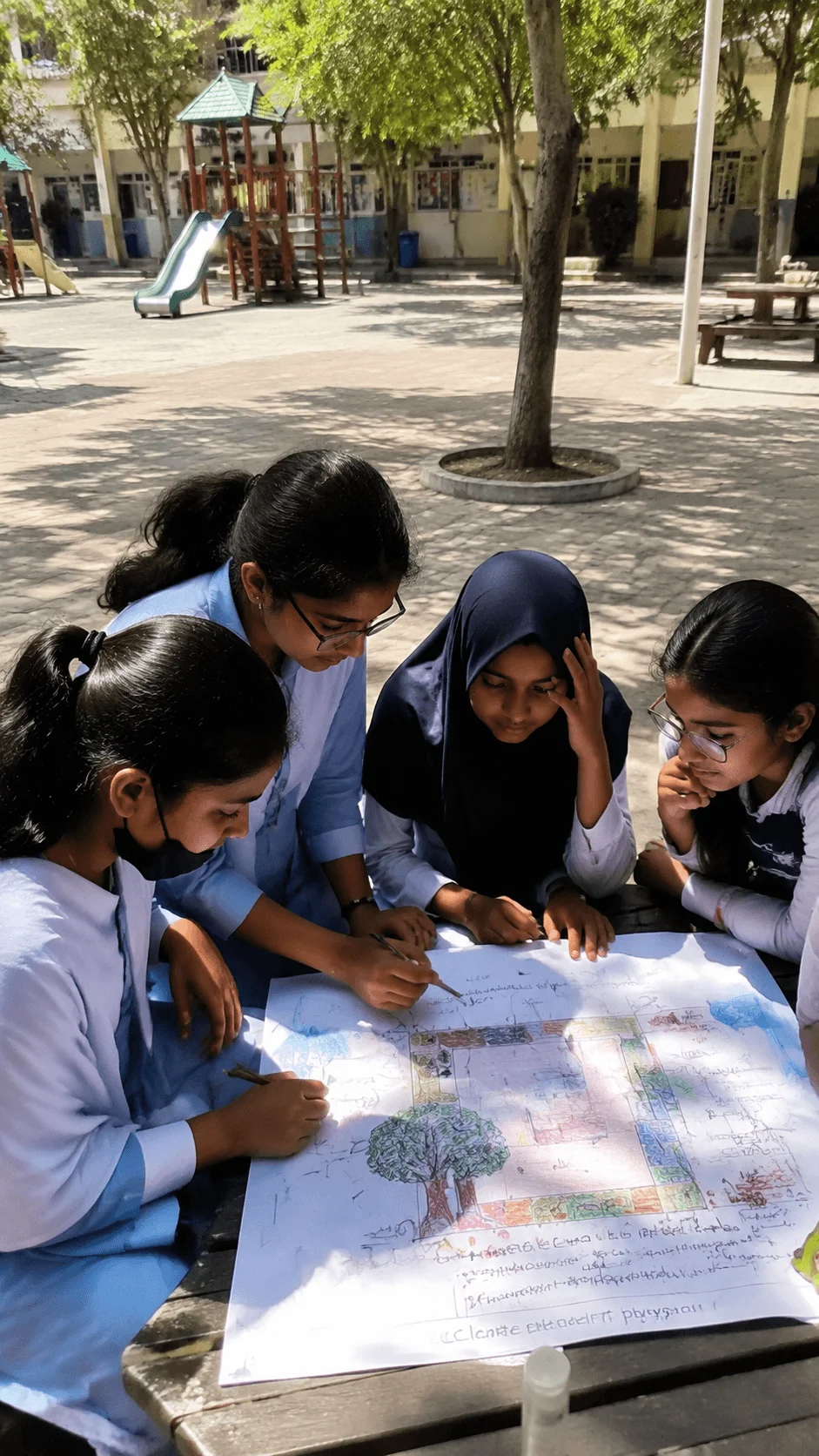
This project is valuable because climate change affects children directly. A very hot playground can reduce outdoor play and make students uncomfortable. Poor drainage can create muddy or unsafe spaces after rain. Through this project, students learn that sustainability also means designing safer and healthier spaces for people.
Cool Roof Classroom Project for Greener Schools
A cool roof classroom project helps students understand how buildings can reduce heat. In many schools, classrooms become very hot during summer because roofs and walls absorb sunlight. Students can study temperature differences between shaded and unshaded areas, compare rooms on different floors, or test small model roofs using white paint, reflective sheets, or shade materials.
This is a practical green school idea because it connects climate science with daily comfort. Students can record classroom temperature in the morning, afternoon, and after simple cooling changes. If the school allows, they can propose reflective roof paint, window shades, indoor plants, or outdoor tree planting to reduce heat.
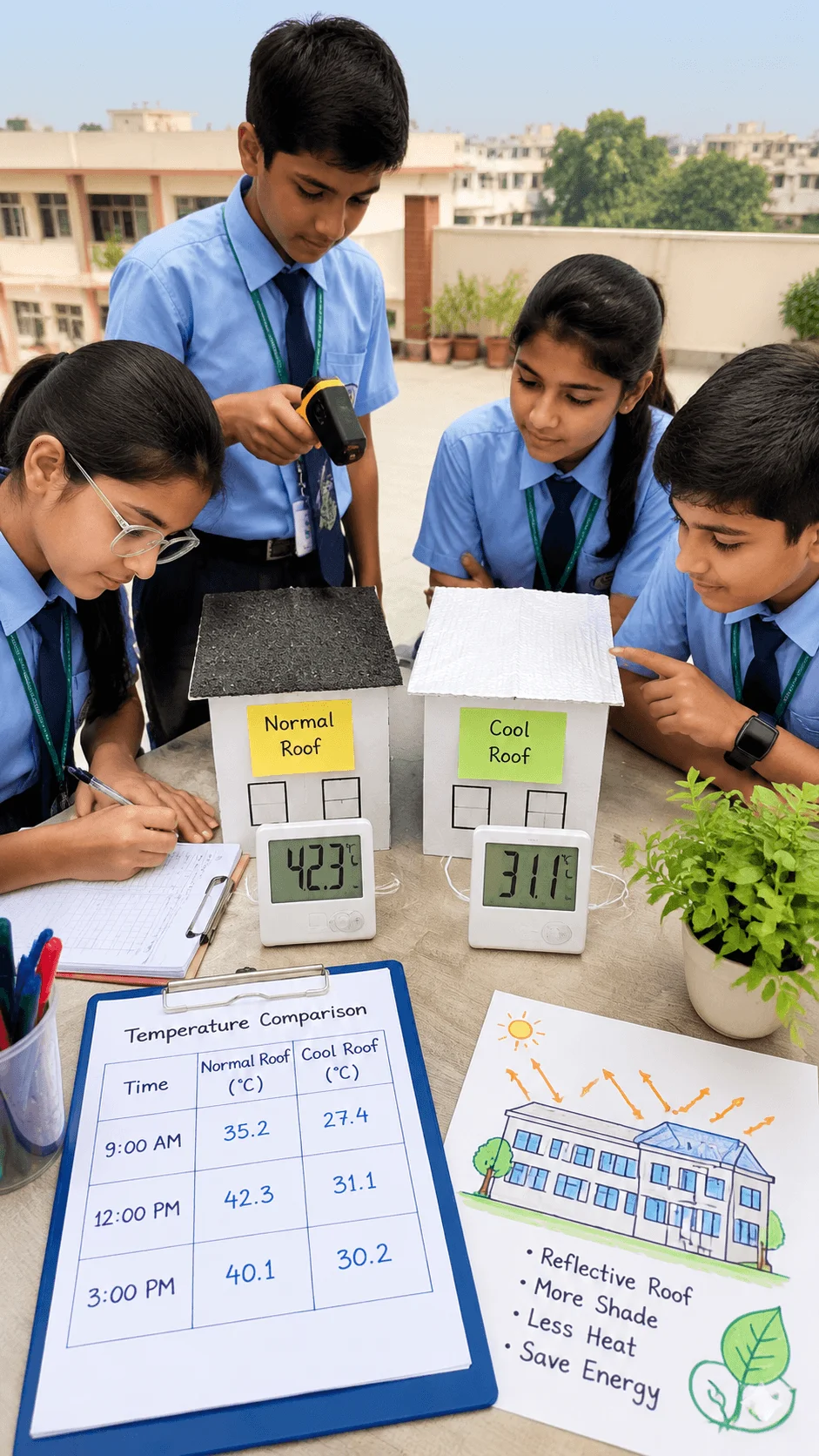
The project teaches students that sustainability is not only about nature. It also includes smart design. A cooler classroom can improve focus, reduce fan or air conditioning use, and save energy. Students also learn how simple materials and design choices can make buildings more climate friendly.
E Waste Collection Drive for Environmental Awareness
An e waste collection drive focuses on old electronic items such as broken chargers, unused headphones, batteries, keyboards, computer mice, and outdated devices. Students first learn why electronic waste can harm the environment when people throw it into normal bins. Then they organize a safe collection campaign with teacher guidance and connect with a responsible recycling service if possible.
This is one of the most important sustainability projects school kids can do because electronic waste is growing quickly. Many families keep old devices at home because they do not know how to dispose of them. A school drive can raise awareness and help the community handle e waste more responsibly.
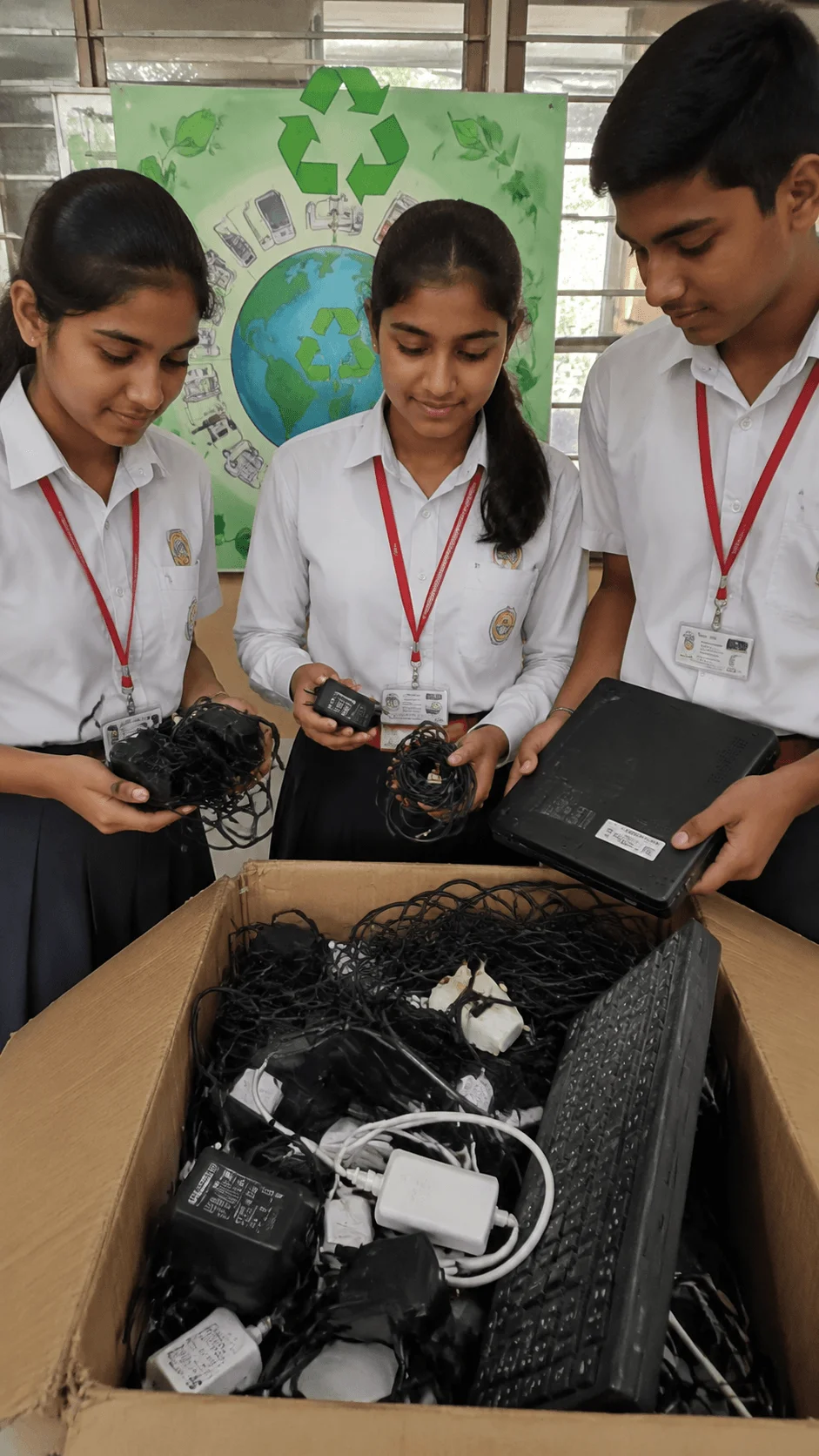
Students can create posters, classroom announcements, and information cards explaining the danger of toxic materials in electronics. They can also count collected items and prepare a final report. This project builds responsibility because children learn that modern technology has an environmental cost.
Plastic Free Lunch Week for School Sustainability
Plastic free lunch week is a simple project with strong impact. Students observe how much plastic appears during lunch time, including wrappers, disposable bottles, plastic spoons, snack packets, and cling film. Then they challenge classes to bring reusable lunch boxes, refillable bottles, cloth napkins, and snacks with less packaging.
This activity works well because it focuses on a daily habit. Students can immediately see the difference between a normal lunch day and a plastic free lunch day. They can count waste before the challenge and after the challenge, then display the results on a school board. This makes the achievement visible and encourages more students to join.
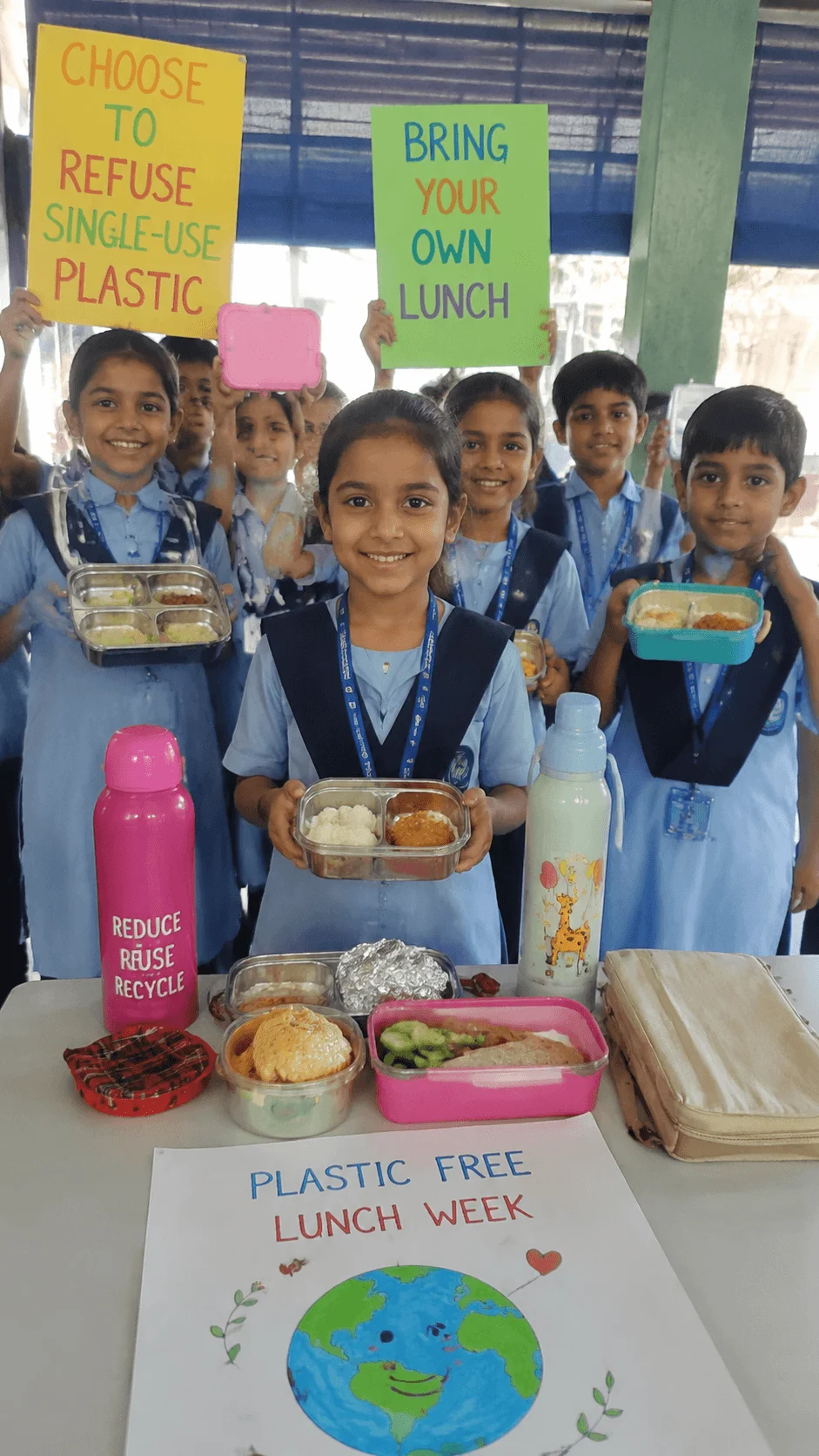
Among sustainability projects school kids enjoy, this one is easy to start because it does not require expensive materials. It needs planning, communication, and family support. Teachers can involve parents by sending a simple note explaining the purpose of the challenge. Over time, the school can turn one week into a regular monthly habit.
Mini Compost Science Lab for Young Learners
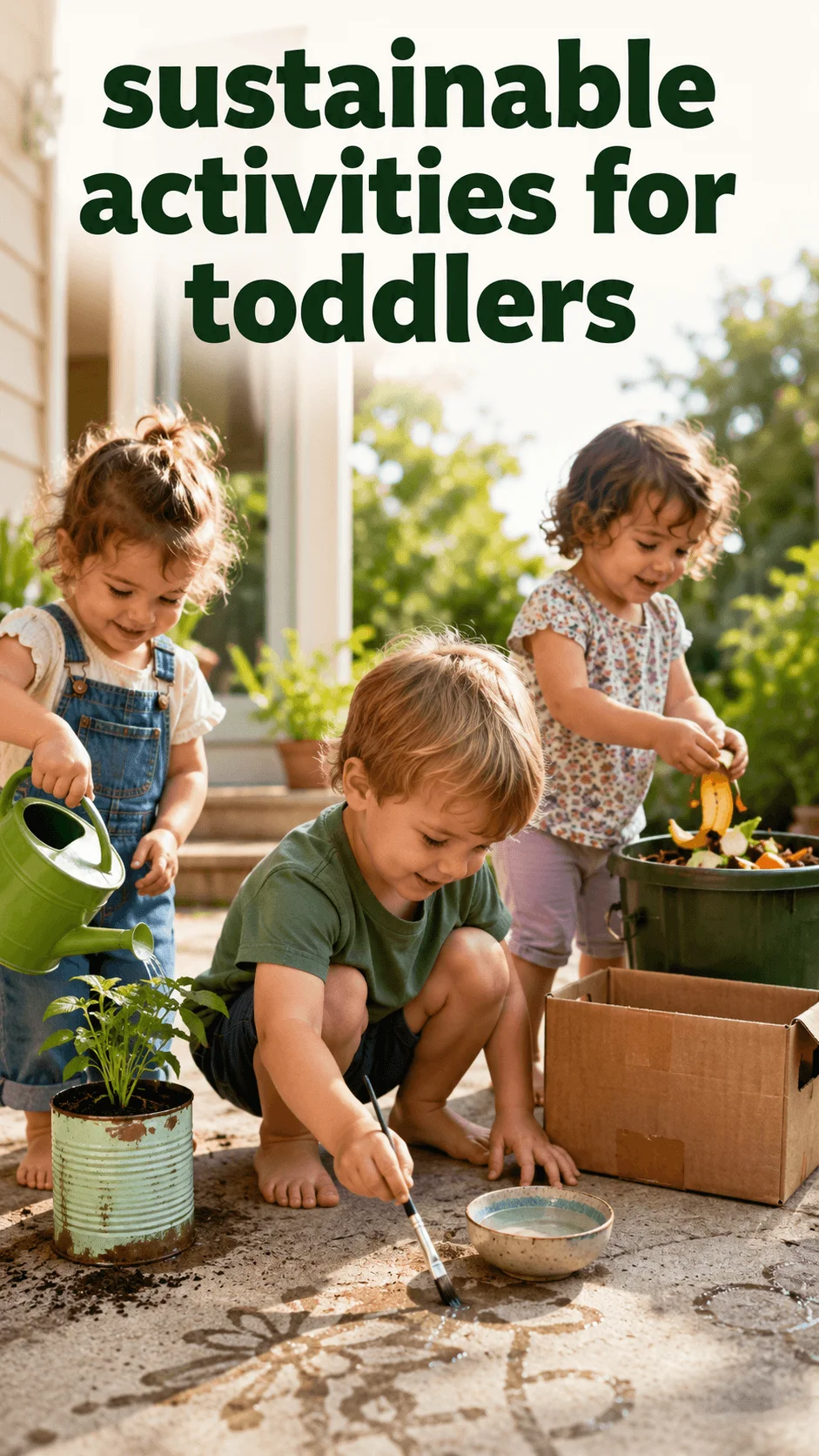
A mini compost science lab allows students to study how organic waste turns into useful soil. Students can use fruit peels, vegetable scraps, dry leaves, soil, and a container with air holes. They observe changes in smell, texture, moisture, and decomposition over several weeks. This turns composting into a real science experiment.
This project helps children understand the value of food waste. Instead of seeing peels and leftovers as useless garbage, students learn that nature can recycle them into nutrients. The compost can later support a school garden, plant pots, or tree beds. This creates a complete cycle from waste to soil to plant growth.
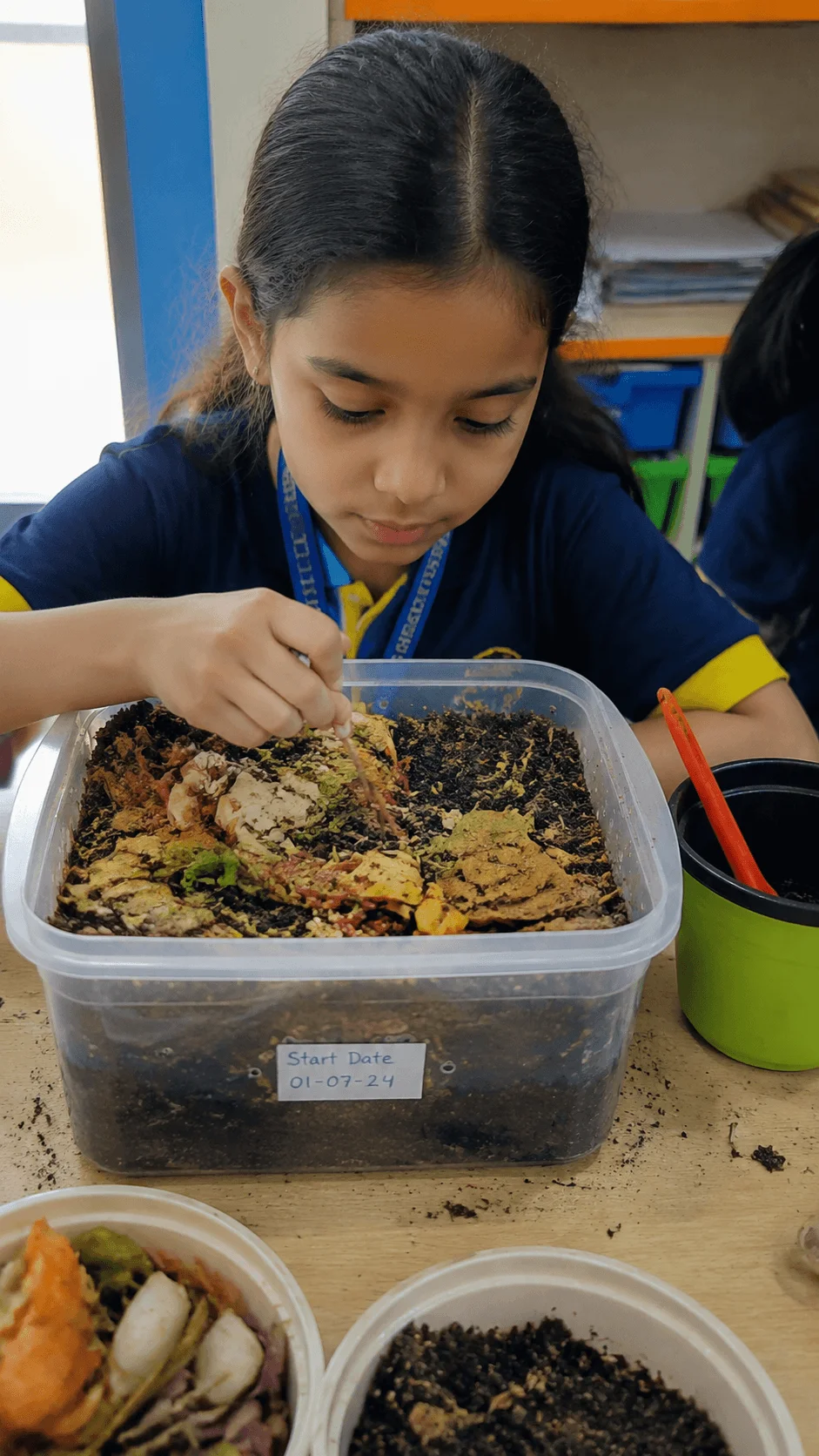
Teachers can make the project more meaningful by asking students to record observations in a compost journal. They can compare wet and dry compost, study which materials break down faster, and learn why plastic does not decompose like organic matter. This hands on learning makes environmental science simple and memorable.
Water Saving Audit as a Practical Eco Project
A water saving audit teaches students to investigate how their school uses water. They can check taps, toilets, drinking areas, garden hoses, cleaning routines, and handwashing stations. With teacher support, students can note leaks, wasteful habits, and areas where water saving signs or better systems could help.
This is one of the most useful sustainability projects school kids can complete because water is a basic need and many schools waste it without noticing. A single leaking tap can waste a surprising amount of water over time. Students can measure drops, estimate waste, and prepare a simple action plan for school management.
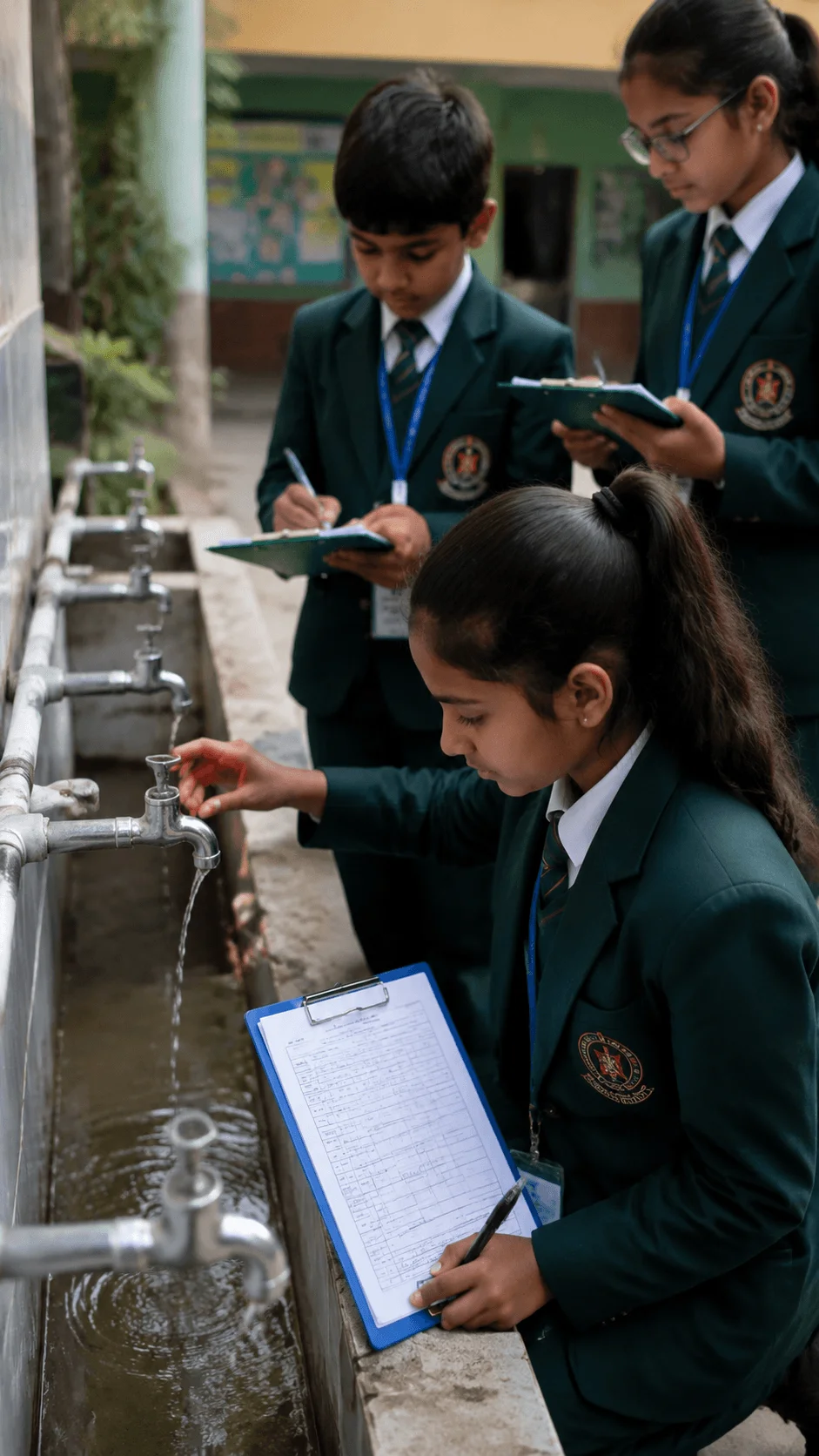
The project also builds a sense of responsibility. When students place reminder signs near taps or present water saving tips in assembly, they influence the behavior of the whole school. They learn that conservation starts with observation and small daily actions.
Student Led Green Budget Proposal
A student led green budget proposal gives children a chance to think like planners and leaders. Students identify one environmental improvement their school needs, such as recycling bins, garden tools, shade plants, water saving devices, compost containers, or reusable classroom materials. Then they prepare a simple proposal explaining the cost, benefit, and expected impact.
This idea stands out because it moves beyond awareness. Students learn that good environmental change often needs planning, budgeting, and communication. They can research prices, compare options, and present their proposal to teachers, the principal, or a parent committee. Even if the school cannot fund the idea immediately, the process teaches valuable life skills.
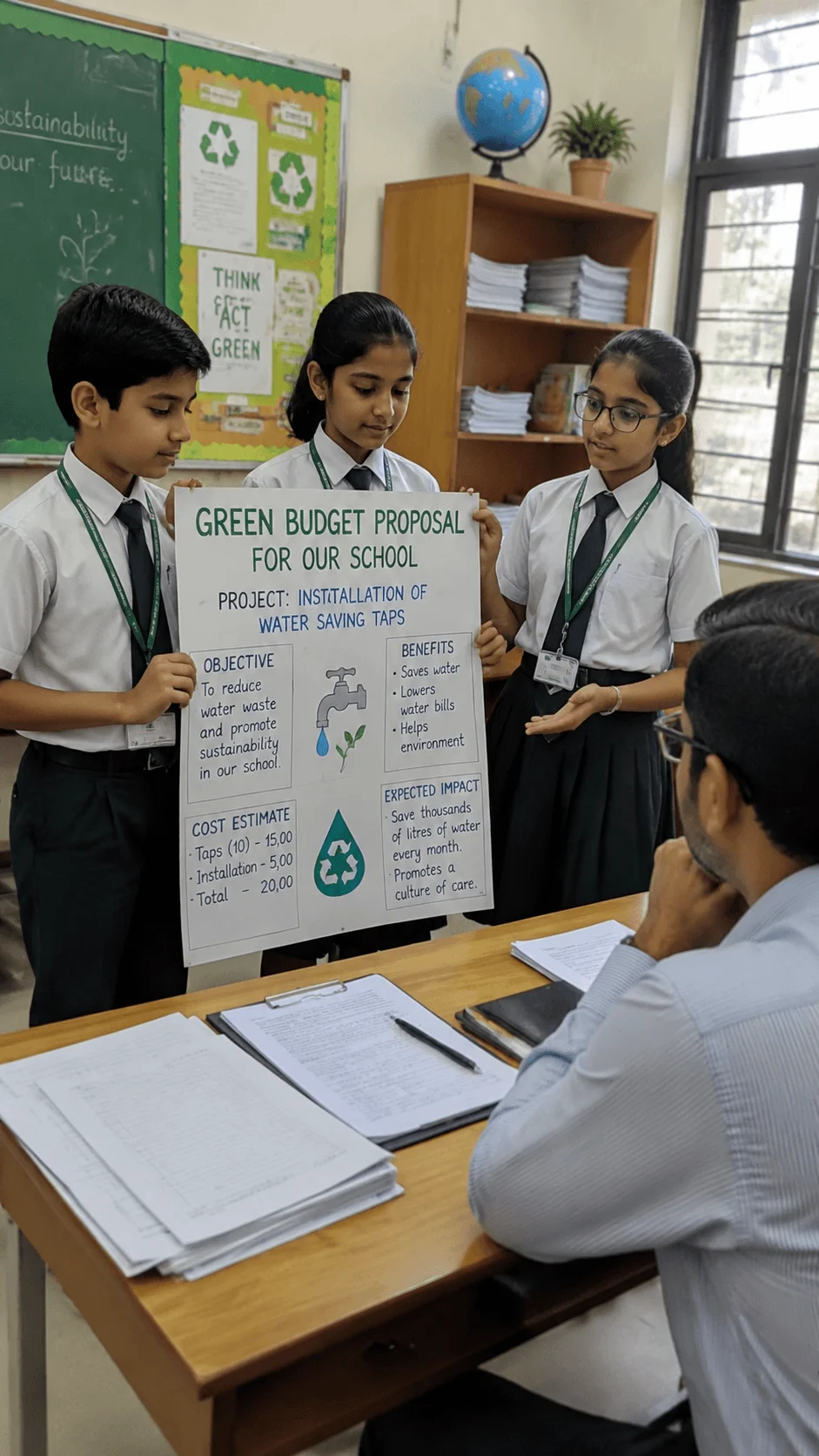
This project also makes sustainability more realistic. Students understand that schools must make choices with limited resources. They learn how to support their ideas with evidence and explain why a small investment can bring long term benefits.
Sustainable School Badge Challenge
A sustainable school badge challenge turns eco friendly behavior into a fun achievement system. Classrooms can earn badges for saving energy, reducing plastic, recycling correctly, keeping plants alive, saving water, or joining clean up activities. The badges can appear on classroom doors, notice boards, or digital school pages.
This is one of the most engaging sustainability projects school kids can join because it creates motivation and friendly competition. Younger students especially enjoy visible rewards. Older students can help design the badge system, track progress, and verify results. The challenge can continue for a term or the whole school year.
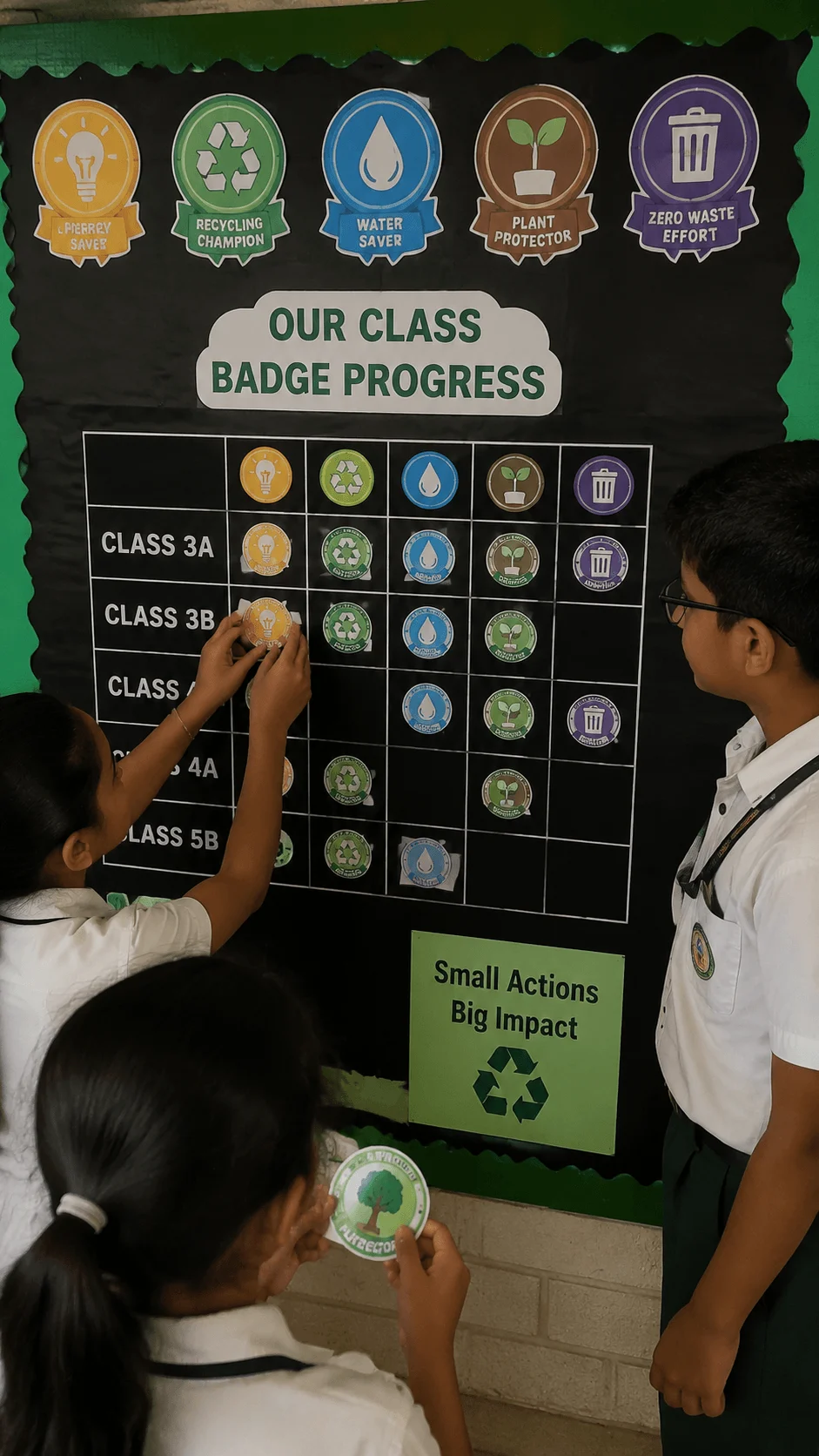
The badge system works best when it rewards real action, not only promises. For example, a class earns a water saver badge after reducing careless tap use for a month. Another class earns a zero waste effort badge after improving lunch waste results. This makes sustainability part of school culture.
How Teachers Can Make Sustainability Projects School Kids More Effective
Teachers can make sustainability projects school kids attempt more successful by keeping them practical, measurable, and connected to daily school life. A project should not feel like extra work with no purpose. Students need to see what problem they are solving and how their actions can improve the school.
The best approach starts with observation. Teachers can ask students to look around the campus and identify real problems. Is there too much plastic after lunch? Are classrooms too hot? Does the school waste water? Are there empty spaces that could support plants? When students begin with real evidence, they feel more connected to the solution.
Teachers should also allow students to take ownership. Children can design posters, record data, speak in assembly, create digital content, or present reports. When students lead the project, they develop confidence and communication skills. A teacher can guide the process, but the strongest learning happens when students make decisions and solve problems themselves.
It also helps to share results. A school can display waste reduction charts, biodiversity maps, compost photos, water saving updates, or badge achievements. These visible results inspire other students and show parents that the school values practical environmental education. Over time, these projects can become part of the school identity.
Conclusion
Sustainability projects school kids can try in 2026 should be practical, modern, and meaningful. Schools can still use simple ideas like composting, recycling, and water saving, but they can make them stronger by adding technology, data tracking, student leadership, and real world problem solving. Projects such as AI waste sorting, QR code nature trails, biodiversity mapping, cool roof studies, e waste drives, and climate resilient playground plans help students understand the future they will inherit.
The goal is not to make every school perfect in one day. The goal is to help children start with small actions and build long term eco friendly habits. When students see that their choices can reduce waste, save water, protect nature, and improve their school, they become more responsible learners and better citizens. With the right guidance, sustainability projects school kids complete today can shape greener schools and a more thoughtful generation tomorrow.