12 Eco Friendly Craft Activities for Students
Crafting gives students an enjoyable way to explore their creativity, but it can also teach them how to make better choices about the materials they use. Eco friendly craft activities for students turn everyday items such as cardboard, paper, fabric scraps, bottle caps, and old clothing into creative projects instead of sending them straight to the trash. These activities help students understand that many materials still have value even after their original purpose has ended. At the same time, they encourage imagination, practical skills, teamwork, and environmental awareness. Schools can use sustainable crafts during regular classroom lessons, environmental campaigns, eco club activities, and special events such as Earth Day. The best part is that many projects require materials that students can already find at home or around the classroom. With a little creativity, ordinary waste can become artwork, useful objects, educational models, and collaborative school displays.
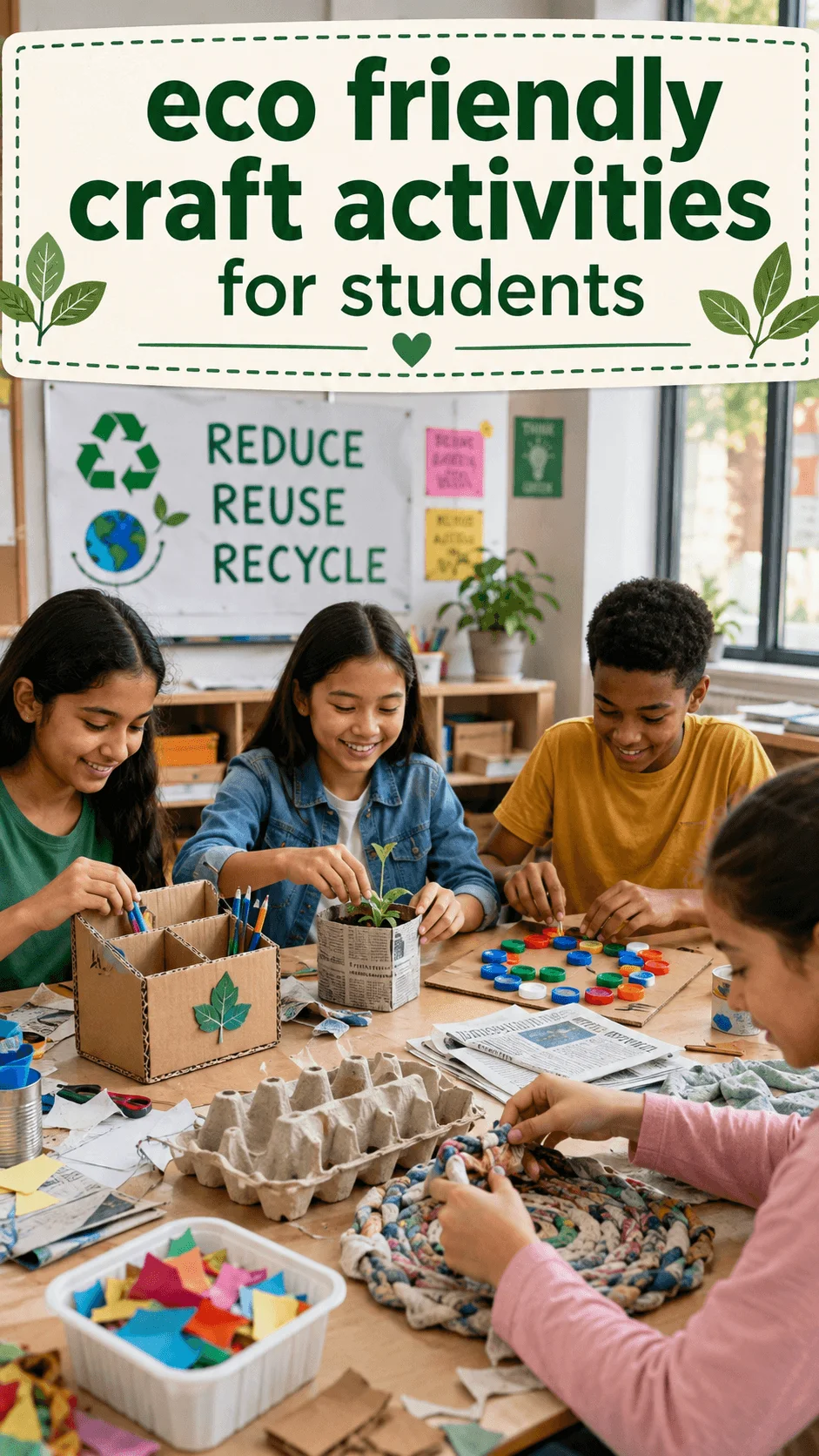
Why Sustainable Crafts for Students Are Valuable
Sustainable crafts offer more than an entertaining break from traditional schoolwork. They give students an opportunity to learn through direct experience. Instead of simply hearing about waste reduction, students can actually see what happens when they give an old object a new purpose.
These projects also encourage students to think creatively about problems. When a student receives an old cardboard box and needs to turn it into a useful object, they must consider its shape, strength, size, and possible uses. That process naturally develops planning and problem solving skills.
Eco friendly crafts for students can also encourage responsible consumption. Students begin to recognize that they do not always need new materials to create something interesting. A cereal box, old newspaper, unused fabric, or damaged piece of packaging may already provide everything they need.
Teachers can also connect crafting with subjects such as science, art, environmental studies, mathematics, and design. For example, students creating a cardboard model of a sustainable house can explore renewable energy and building design while developing their artistic skills.
Another important benefit comes from teamwork. Some projects work especially well when students create one large piece together. A recycled bottle cap mural or school waste exhibition can require students to share ideas, divide responsibilities, and solve creative problems as a group.
Sustainable crafting can also make students more observant. They may start noticing materials that normally disappear into the trash without a second thought. Pencil shavings, paper scraps, old magazines, and packaging can suddenly become potential art supplies.
Eco Friendly Crafts for Students Using Everyday Materials
The following ideas focus on materials that students can commonly find at home, in classrooms, or through responsible school collections. Each project offers a different way to combine creativity with environmental learning.
1. Upcycled Cardboard Desk Organizers
Old cardboard packaging can become a surprisingly useful classroom craft. Instead of throwing away cereal boxes, delivery boxes, or other clean cardboard containers, students can redesign them into desk organizers for pencils, notebooks, rulers, art supplies, and other school materials.
The project begins with choosing cardboard pieces that have enough strength to hold the intended items. Students can then decide how many compartments they want and how large each section should be. This planning stage makes the activity more interesting because students are not simply decorating a ready made object. They are designing something according to their own needs.
Students can cut and arrange the cardboard into different sections before covering the surfaces with reused paper, old magazine pages, fabric scraps, or other suitable decorative materials. They can create themes based on their favorite subjects, nature, space, animals, or school colors.
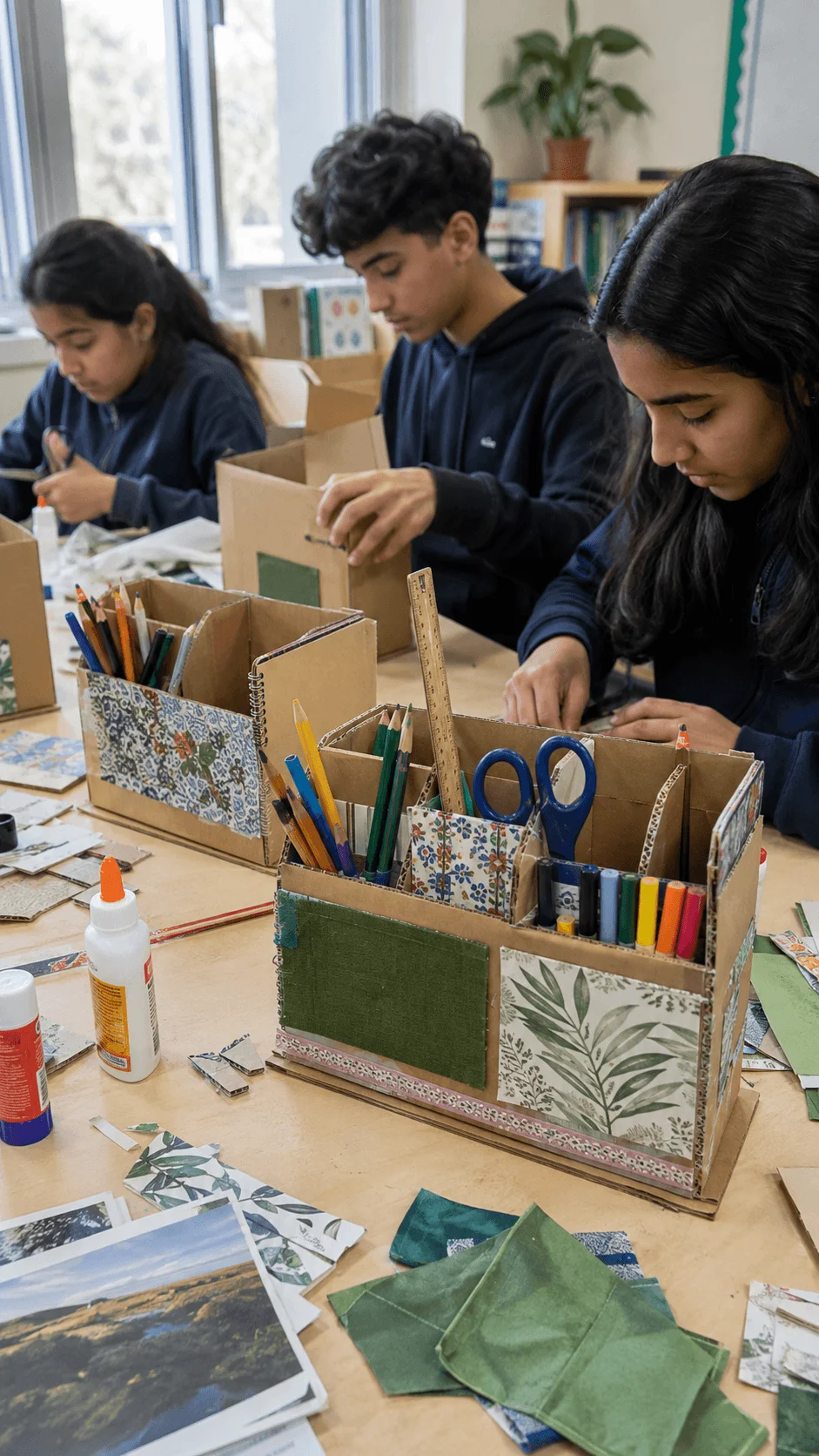
The project provides an excellent opportunity to discuss packaging waste. Students can think about how many cardboard boxes enter homes and schools every week and what happens when people immediately discard them. By turning one box into a useful classroom object, students experience the idea of reuse in a practical way.
Teachers can extend the activity by asking students to design an organizer with a specific number of compartments. This introduces simple measurement and planning while keeping the activity creative.
The finished organizer also serves an ongoing purpose. Students can use it throughout the school year instead of creating something that only serves as temporary decoration. That makes this one of the most practical eco friendly craft ideas for students.
2. Pencil Shaving Crafts for Students
Pencil shavings usually fall into the trash without anyone thinking twice about them. However, their curved shapes and natural wood appearance can make them interesting materials for artwork.
Students can arrange clean pencil shavings into flowers, leaves, butterflies, animals, landscapes, or abstract patterns. The natural curves of the shavings can create petals and decorative shapes without requiring large amounts of additional material.
A simple flower design can begin with several pencil shavings arranged around a central point. Students can glue them carefully onto reused paper and then add other reused materials to complete the picture. They might use small paper scraps for stems and leaves or combine pencil shavings with drawings to create a mixed media artwork.
This project encourages students to look at waste differently. A tiny piece of material that normally seems useless can become an important part of an artwork when someone approaches it creatively.
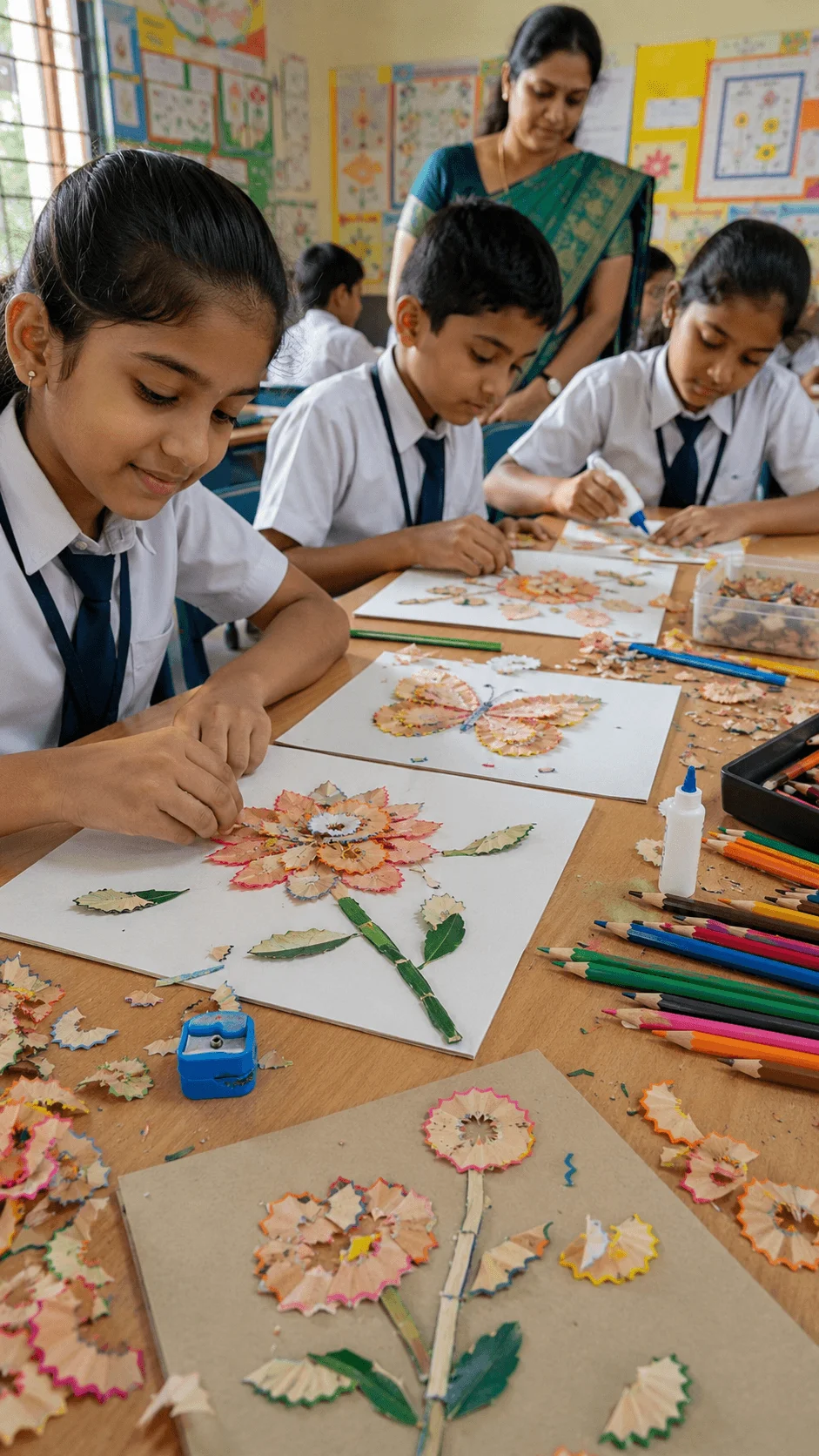
Teachers can use the activity to introduce discussions about responsible consumption and the materials found in everyday school supplies. Students can consider where pencils come from, why sharpening creates waste, and how creative reuse can give some discarded materials another purpose.
Pencil shaving art also works well as a classroom display. A teacher could create a themed exhibition featuring flowers, animals, or environmental scenes made entirely from reused classroom materials.
The activity requires careful handling because pencil shavings can have sharp edges. Teachers should choose age appropriate methods and supervise younger students during the activity.
3. Newspaper Crafts and Seedling Pots
Old newspapers offer another useful material for sustainable classroom projects. Students can turn newspaper sheets into small seedling pots and combine crafting with gardening.
The activity begins by shaping strips or sheets of newspaper into small containers. Students can fold and press the paper into a suitable form and create several pots for planting. Once the pots are ready, they can add suitable growing material and plant seeds.
The project becomes much more meaningful when students continue caring for the plants. Instead of ending when the craft is finished, the activity can continue for several weeks as students observe germination and plant growth.
Teachers can connect this project with lessons about plants, soil, food production, paper use, and natural cycles. Students can record changes in their plants and compare growth over time.
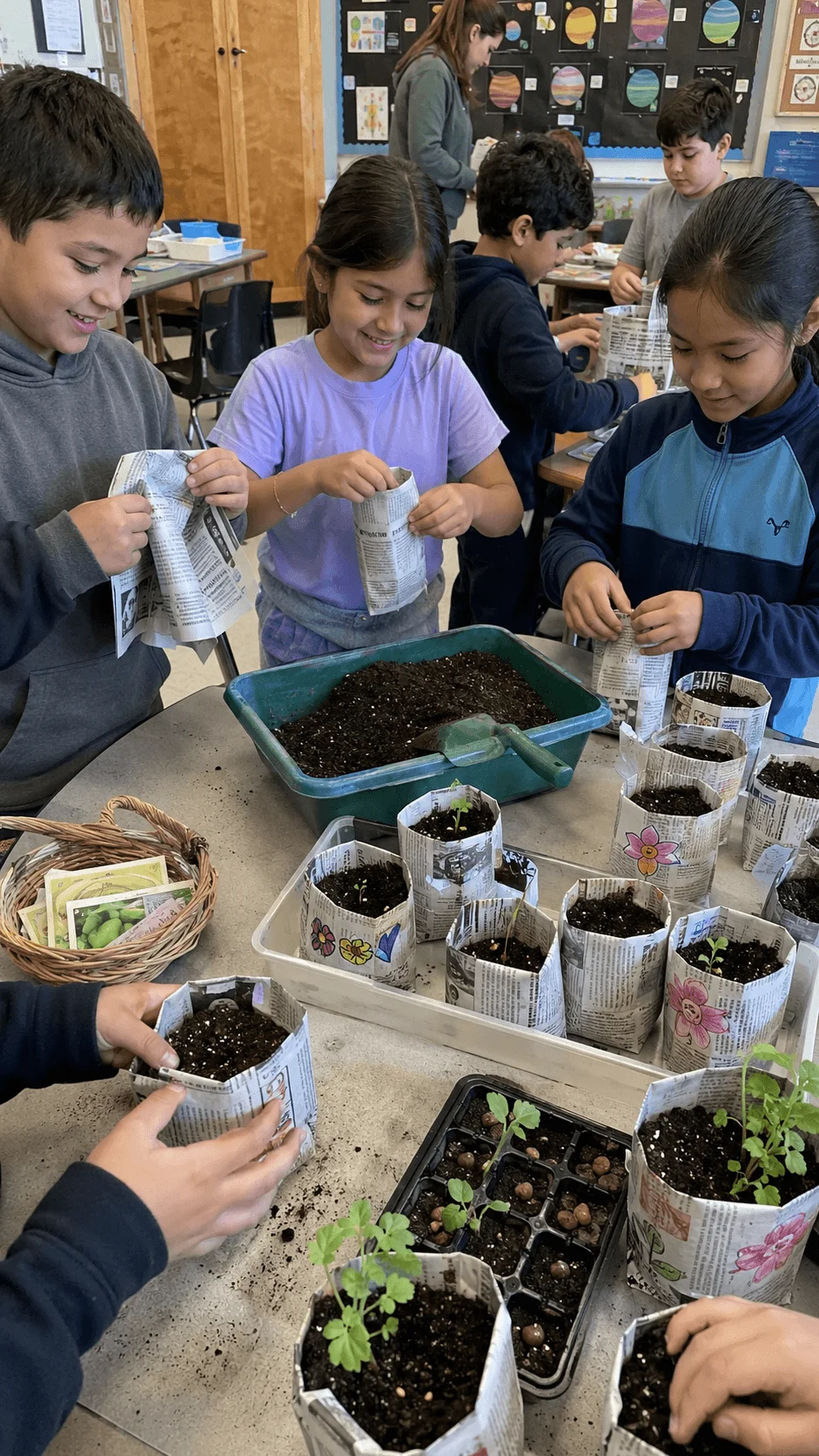
Newspaper seedling pots also demonstrate an important sustainability concept. Materials do not always need to return to the recycling system immediately. Sometimes people can extend their usefulness through another purpose first.
Students can personalize their pots with simple drawings or labels made from reused paper. They can also create a small classroom garden where each student looks after one plant.
This makes newspaper seed pots a strong example of sustainable crafts for students because the project combines creative work with a living element.
4. Bottle Cap Art Projects for Students
Bottle caps can become colorful components of large collaborative artwork. Clean and suitable caps can provide different shapes and colors that students can arrange into murals, animals, flowers, landscapes, environmental symbols, or geometric patterns.
Rather than asking every student to make a separate small craft, teachers can turn this into a group project. The class can first decide what they want the final artwork to represent. They might choose a forest scene, ocean life, Earth, a recycling symbol, or another environmental theme.
Students can then work in groups on different parts of the design. One group might prepare the background while another creates animals or plants. Another group can organize the bottle caps according to color or size.
This approach makes the activity about more than decoration. Students must communicate with one another and consider how their individual pieces will fit into one larger composition.
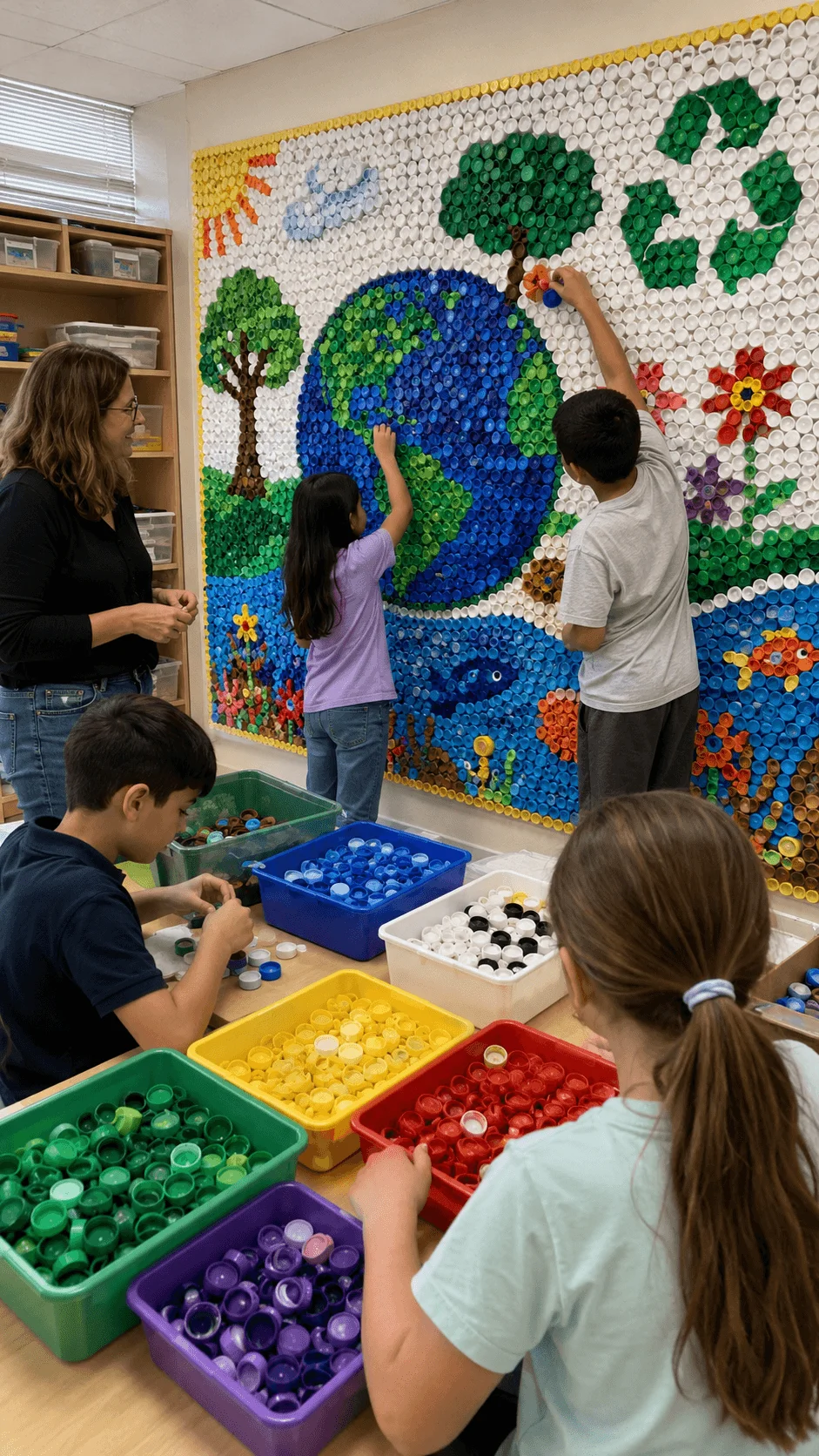
The project can also introduce a discussion about plastic consumption. Teachers can explain that creative reuse does not replace responsible waste reduction, but it can help students think more carefully about materials and their possible second uses.
Once complete, the mural can become a permanent classroom or school display. A short explanation beside the artwork can tell visitors what materials students used and what sustainability message the project represents.
Bottle cap murals work particularly well for environmental awareness events because the finished artwork can attract attention from students, teachers, and visitors.
5. Upcycled T Shirt Projects for Students
Old T shirts provide students with an opportunity to explore textile reuse. Instead of allowing unwanted clothing to become waste, students can turn suitable shirts into reusable tote bags or other simple fabric projects.
A T shirt tote bag offers a particularly useful result because students can actually use the finished item to carry books, notebooks, art supplies, or other belongings.
The project also gives teachers an opportunity to introduce the idea of textile waste. Clothing requires materials, energy, water, transportation, and manufacturing processes before it reaches a customer. Extending the useful life of an existing garment can therefore become a simple way to discuss responsible consumption.
Students can personalize their bags with drawings, fabric scraps, reused buttons, or simple designs. They can create environmental messages or artwork that reflects their interests.
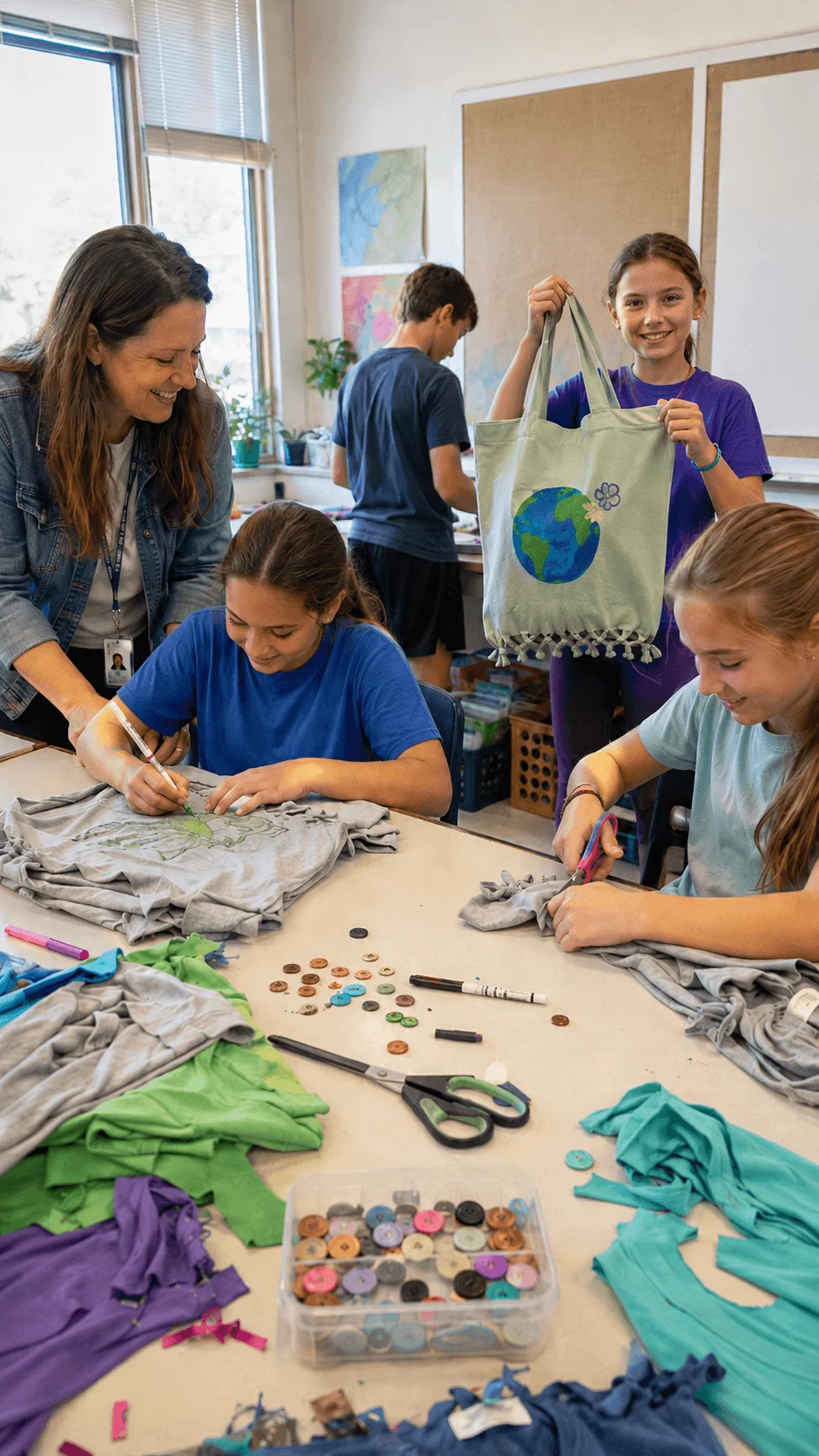
The project can also become a design challenge. Teachers could ask students to create a bag for a particular purpose and explain why their design works. Students might need to think about size, storage, appearance, and strength.
Older students can explore more advanced sewing or fabric techniques under appropriate supervision, while younger students can focus on simpler no sew approaches that suit their age and classroom setting.
The finished bags can also support a school sustainability campaign. Students could use them when carrying books or supplies and explain how they gave an unwanted garment a new purpose.
6. Nature Crafts for Students
Nature provides another source of inspiration for creative classroom projects. Students can use suitable fallen leaves, fallen flowers, bark textures, and other naturally fallen materials to create prints, collages, patterns, and artwork.
The most important lesson involves collecting materials responsibly. Students should use items that have already fallen naturally rather than damaging living plants. This simple rule helps connect the creative activity with respect for nature.
Leaf printing offers one easy approach. Students can place a leaf beneath or above paper and use suitable art materials to capture its shape and texture. Different leaves can produce different patterns, allowing students to compare natural forms.
Students can also arrange fallen leaves into temporary pictures of animals, landscapes, or abstract designs. They can photograph the finished arrangement before returning the natural materials outdoors when appropriate.
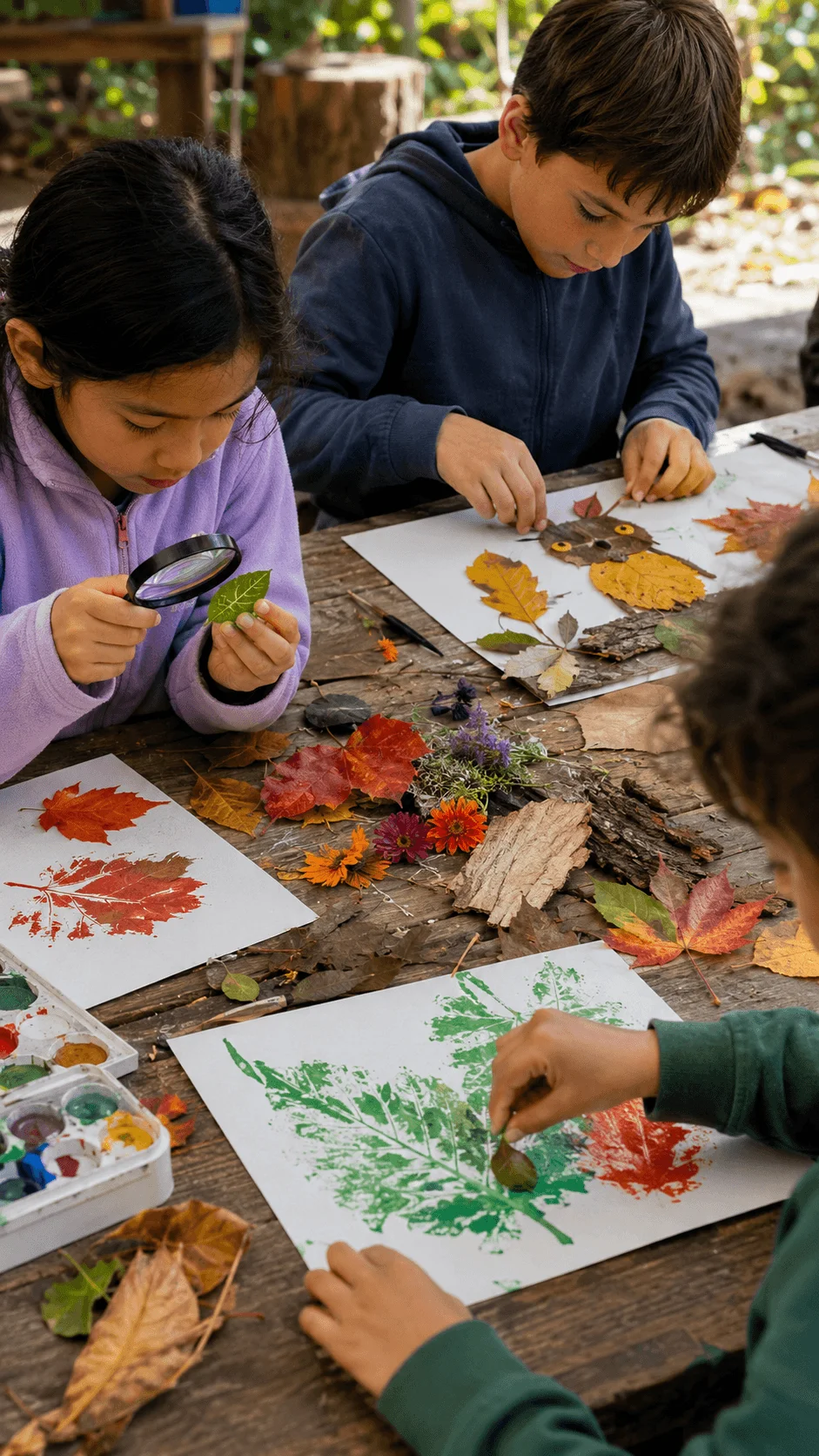
This type of project encourages students to observe details they might normally overlook. They can examine leaf shapes, veins, textures, sizes, and patterns while creating artwork.
Teachers can connect the activity with science lessons about plants and ecosystems. Students can discuss why leaves have different shapes and how plants interact with their environments.
Nature based projects also remind students that sustainable creativity does not always require manufactured craft supplies. The natural world can provide inspiration and materials when students approach it responsibly.
7. Egg Carton Crafts for Students
Used cardboard egg cartons can become useful materials for creative classroom projects. Their individual sections already provide convenient spaces for holding soil and seeds, making them suitable for simple mini planters.
Students can carefully separate the sections of a clean egg carton and use them as small planting containers. They can decorate the outside with reused paper or leave the cardboard in its natural form. After adding suitable growing material, students can plant seeds and place the containers in an appropriate location where they can receive the conditions needed for growth.
The project becomes more engaging when students take responsibility for observing their plants. They can keep a simple growth journal and record changes over several days or weeks. This turns a short craft activity into a longer learning experience.
Teachers can connect the project with lessons about plant life cycles, soil, food production, and resource conservation. Students can discuss how a material that once held food can serve another purpose before entering the waste stream.
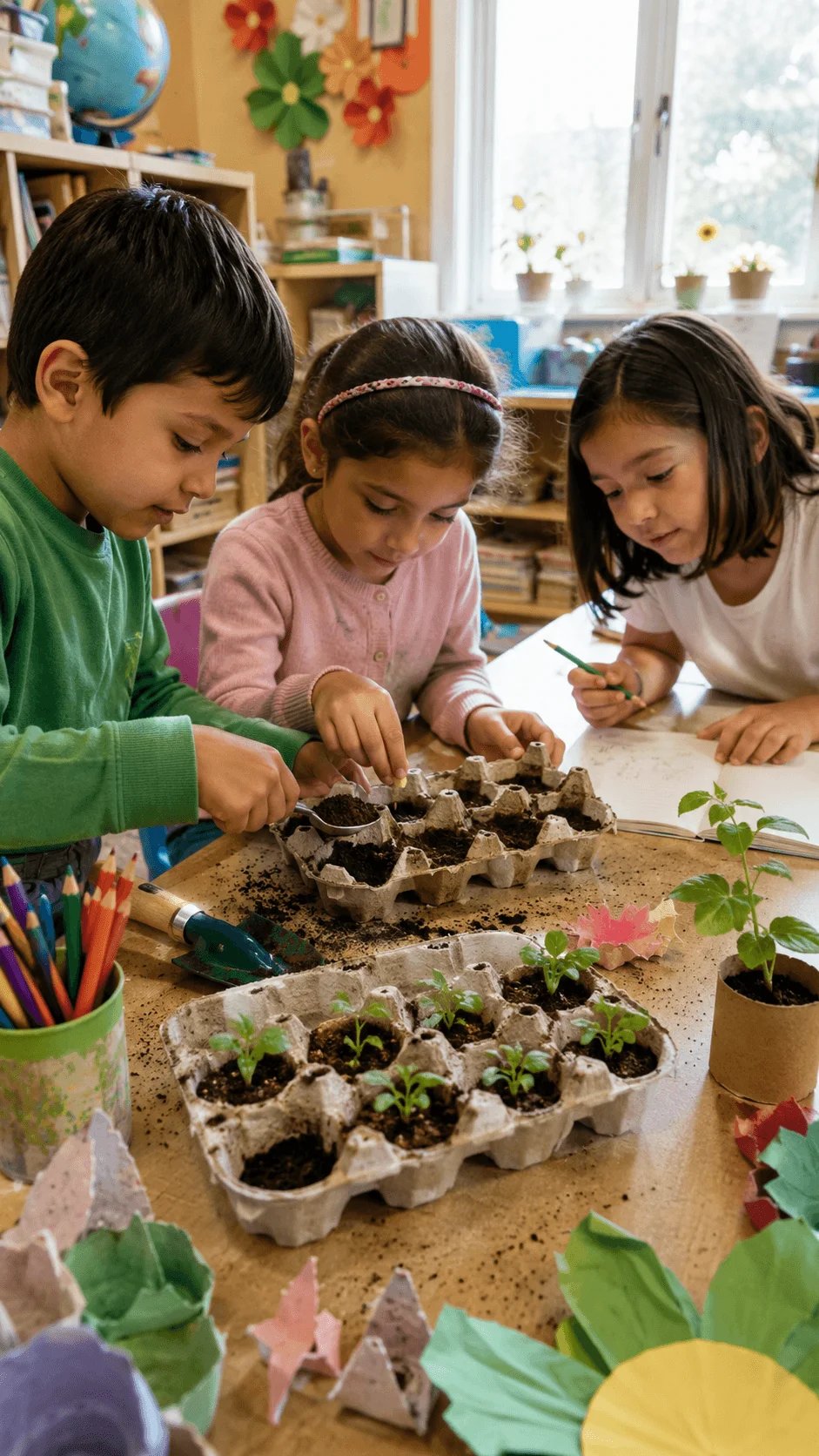
Students can also transform egg cartons into other classroom crafts, such as small storage trays, paint palettes, insect models, flower displays, and nature themed artwork. This encourages them to think beyond one obvious use for a discarded object.
Egg carton planters work particularly well in classrooms with limited space because several small plants can fit together in one area. An eco club could also create a larger collection of seedlings and later move suitable plants into a school garden.
8. Recycled Paper Crafts for Students
Paper remains one of the most useful materials for creative reuse because classrooms produce plenty of it. Instead of immediately throwing away suitable paper scraps, students can explore the process of making new handmade paper.
The activity begins with collecting appropriate used paper. Students can tear it into small pieces and soak it in water before turning it into pulp using a suitable classroom method. The pulp then spreads across a screen or similar surface to form a new sheet.
Once students remove excess water and allow the sheet to dry, they can examine how old paper has become a completely new material. This transformation makes the sustainability lesson particularly visible.
Students can use their handmade paper to create greeting cards, bookmarks, small artworks, gift tags, labels, or classroom decorations. They can also add suitable natural textures or small pieces of reused paper during the process to create different visual effects.
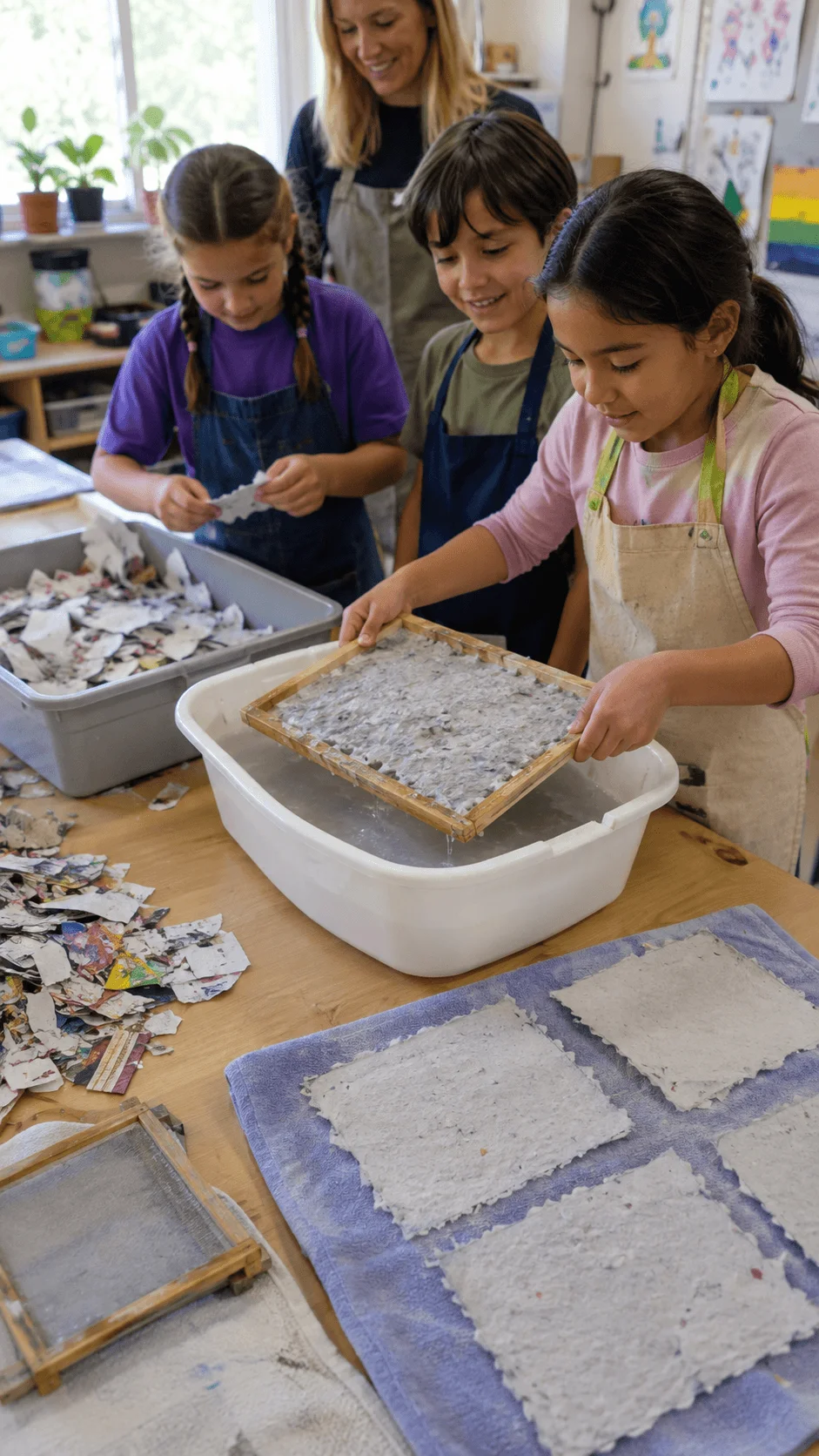
The activity provides an excellent opportunity to discuss paper consumption. Students can think about how much paper a school uses during a typical week and consider ways to reduce unnecessary printing and waste.
Teachers can connect handmade papermaking with environmental studies and explain the importance of using resources responsibly. Students can also compare the appearance and texture of newly made recycled paper with ordinary commercial paper.
Recycled papermaking requires more preparation than some of the other projects, but the educational value makes it worthwhile. Students do not simply create an object. They experience a simplified version of how a discarded material can become a useful new resource.
This makes recycled paper crafts for students particularly valuable for lessons where teachers want students to understand the idea of material cycles.
9. Cardboard Projects for Students
Cardboard architecture can turn an ordinary classroom craft into a creative design challenge. Students can use discarded boxes and packaging to build models of sustainable houses, schools, bridges, renewable energy systems, or entire eco friendly communities.
The project can begin with a simple question: What would a sustainable school or city look like?
Students can sketch their ideas before building. They might design buildings with large windows for natural light, green spaces, rooftop gardens, bicycle areas, rainwater collection systems, or renewable energy features.
Once students have a plan, they can use suitable cardboard pieces to create the structure. Different groups can take responsibility for different sections of a larger model. One group might build houses while another creates roads, gardens, parks, or renewable energy features.
This project offers excellent opportunities for interdisciplinary learning. Art students can focus on appearance and presentation. Science students can explore energy and environmental concepts. Students interested in mathematics can work with measurements and proportions. Those interested in design can consider how people will use the buildings.
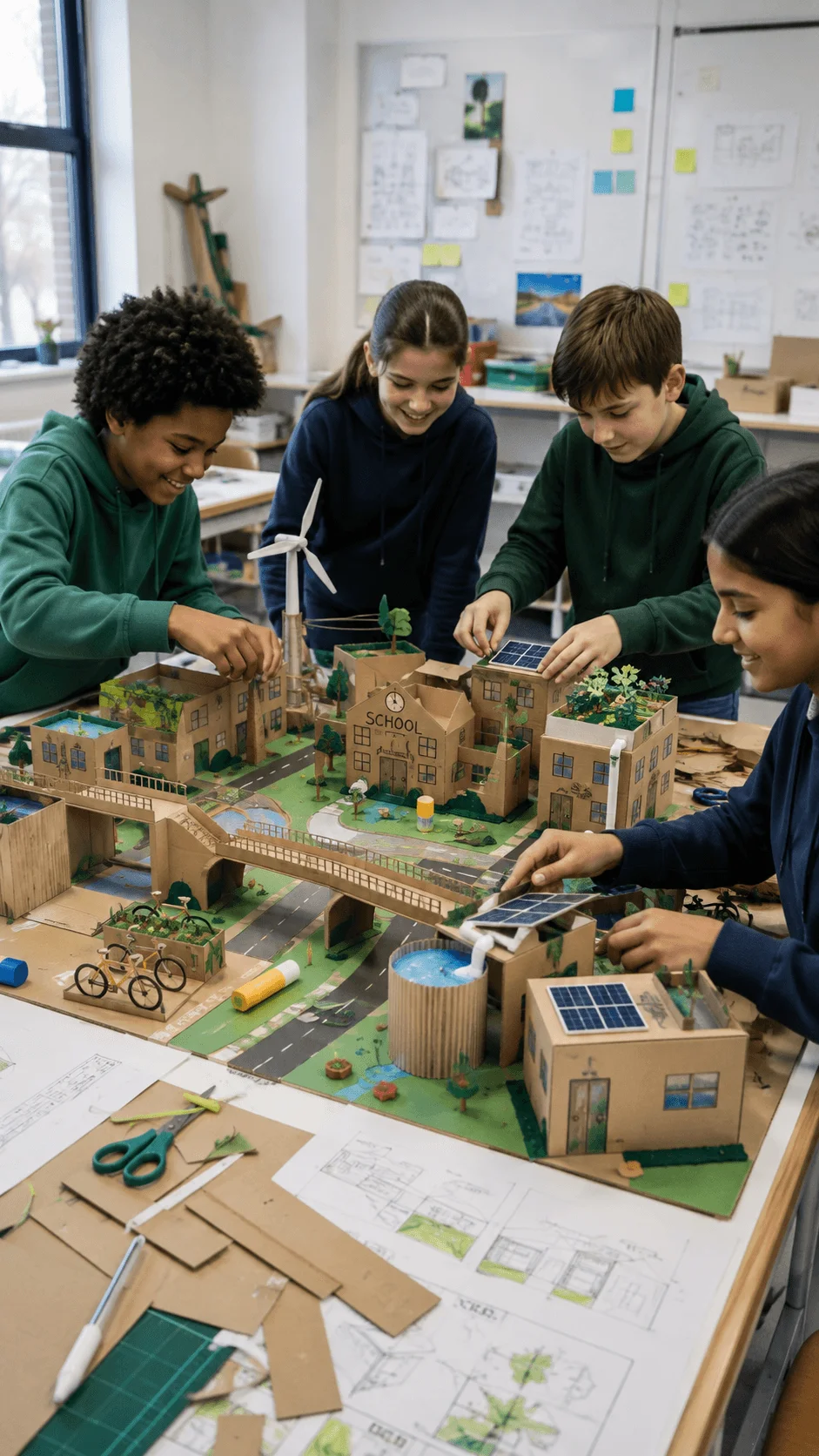
The project also teaches students that discarded packaging can become a building material for creative models. Instead of purchasing new construction materials for every school design activity, teachers can encourage students to work with what they already have.
A classroom can turn the finished structures into a miniature sustainable community. Students can then explain their designs to classmates and describe the environmental choices they included.
These cardboard projects for students are especially useful because they combine creative expression with problem solving and sustainability.
10. Fabric Scrap Crafts for Students
Fabric scraps can provide another creative way to discuss textile reuse. Students can collect suitable leftover pieces from old clothing or previous sewing and craft projects and use them to make bracelets, decorations, small artworks, or other simple creations.
Fabric has many different textures, colors, and patterns, so students can experiment with combinations that create unique designs. They can braid strips together, arrange pieces into patterns, or combine different textures to create decorative artwork.
A simple fabric bracelet project can begin with several narrow strips of fabric. Students can arrange the strips, braid or twist them using an age appropriate method, and secure the finished piece appropriately.
The activity gives students an opportunity to personalize their projects. They can select colors based on their interests or create patterns representing nature, school themes, or environmental messages.
Teachers can use the activity to introduce textile waste and the concept of extending the useful life of clothing. Students can discuss why people sometimes throw away clothing and consider whether an unwanted garment could have another use.
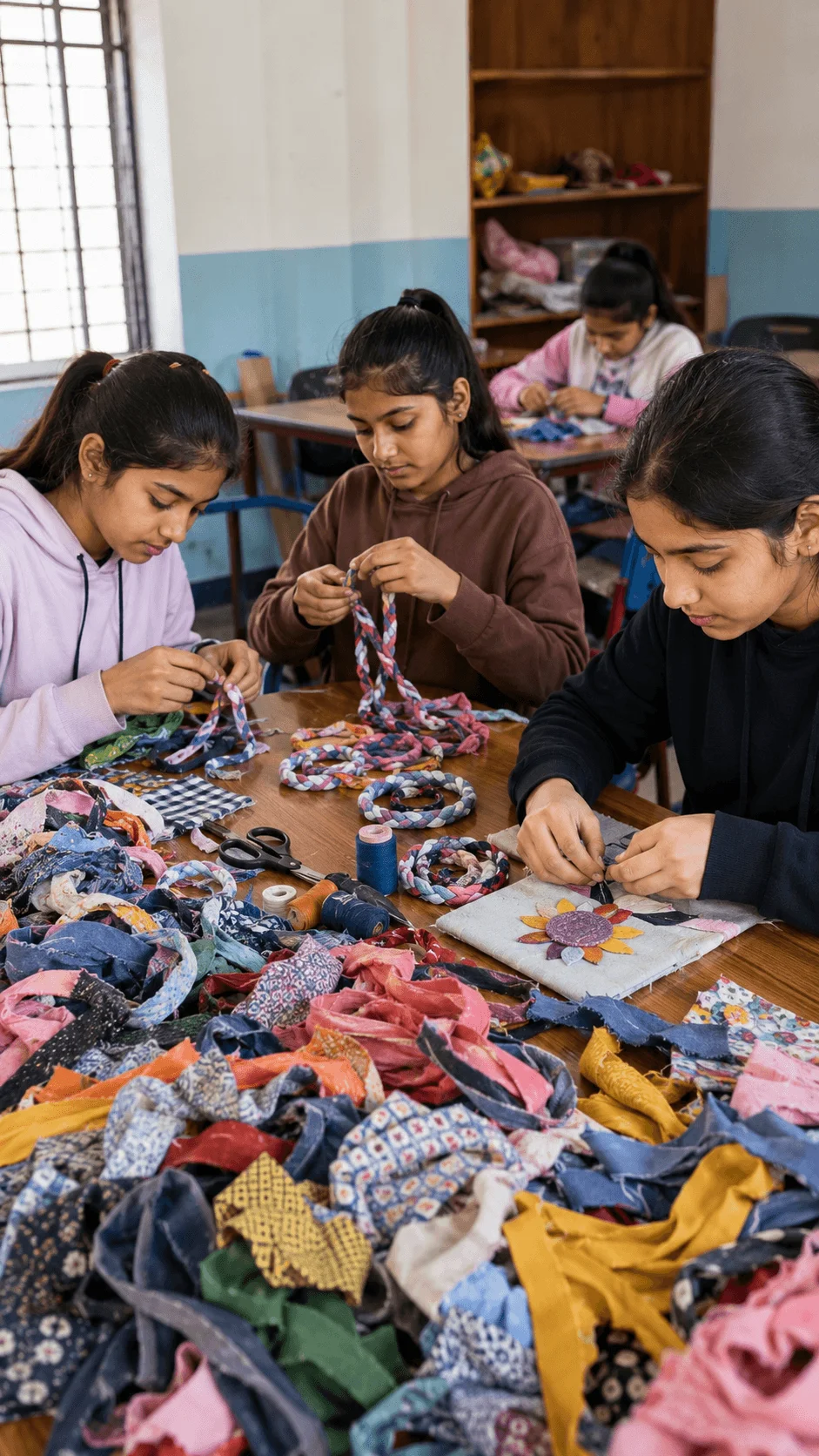
Fabric scrap crafts also work well as a group activity. Students can exchange suitable scraps and share ideas instead of every student needing a new set of materials.
For older students, the project can become more advanced through simple sewing, patchwork, or textile art. Younger students can focus on basic arranging, braiding, and decorating methods that match their abilities.
By turning small leftover pieces into something attractive, students learn that even material scraps can have creative value.
11. Natural Clay Eco Sculptures
Sculpture gives students another opportunity to explore sustainable material choices. Suitable natural or biodegradable clay materials can provide a foundation for small sculptures featuring animals, plants, environmental symbols, or imaginative creations.
Students can begin by choosing an environmental theme. One student might create a bird, another might create a tree, while another might design a small representation of the Earth or an ecosystem.
The focus should not only remain on the final sculpture. Teachers can encourage students to think about the material itself. Where did it come from? Can it be reused? What happens to it after the activity? These questions help students understand that sustainability also involves considering the complete life of a material.
Students can experiment with texture and shape while creating their sculptures. They can press natural textures into suitable clay surfaces or create patterns inspired by leaves, stones, animals, and other elements of nature.
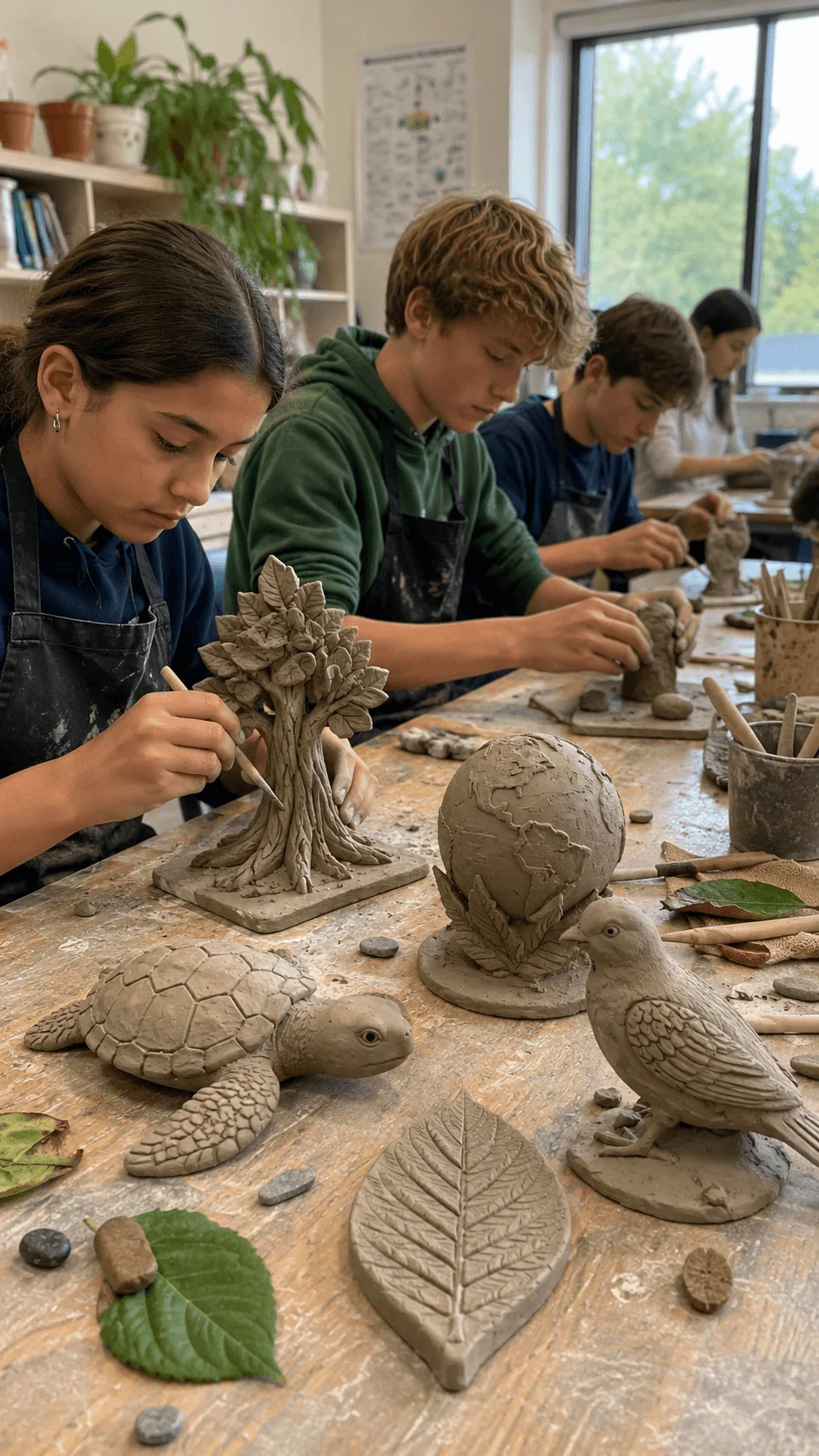
The activity can also support storytelling. After completing a sculpture, students can explain what they created and describe the environmental message behind it.
For example, a student creating a sea turtle could discuss ocean environments and the importance of keeping waste away from waterways. Another student creating a tree could talk about forests and the role plants play in ecosystems.
Teachers should select materials and methods that are suitable for the classroom and the students’ age group. The goal is to encourage thoughtful material use rather than simply creating another decorative object.
Natural clay sculptures can therefore become both art projects and opportunities for environmental reflection.
12. Recycled School Waste Art Exhibition
A recycled school waste art exhibition can bring many of the previous ideas together into one large collaborative project. Instead of asking students to create individual crafts, the entire class or eco club can work toward a shared exhibition.
Students can collect clean and suitable discarded materials from the school environment. These might include cardboard, paper scraps, old magazines, packaging, bottle caps, fabric pieces, and broken pencils.
Before creating anything, students can discuss what they want their exhibition to communicate. They might choose themes such as reducing waste, protecting wildlife, conserving water, caring for forests, or creating a more sustainable school.
The class can divide the project into different sections. One group might create a large recycled mural while another builds cardboard models. Another group can prepare smaller artworks using paper and fabric scraps.
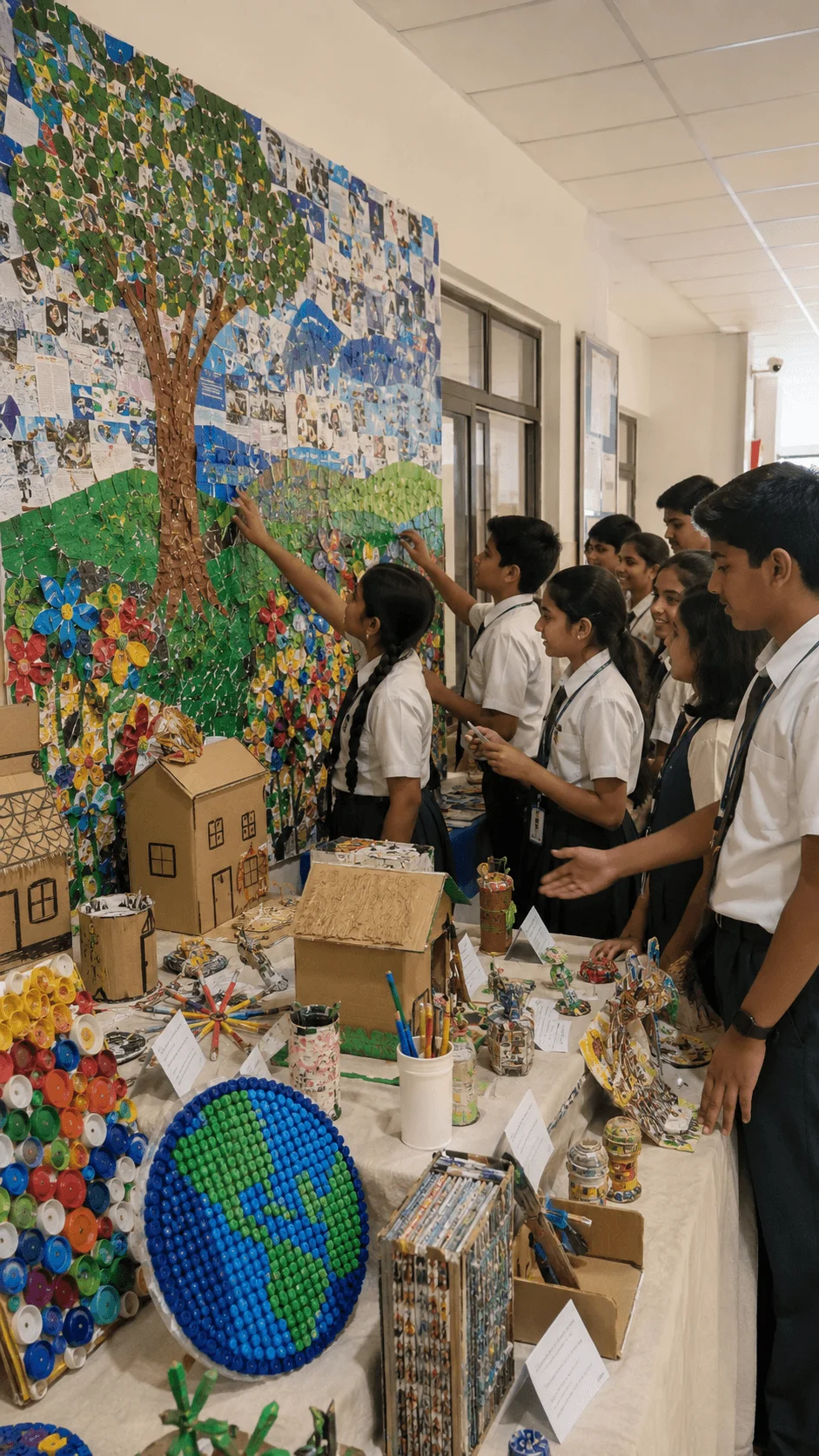
Students can also create signs that explain the materials they used and the environmental message behind each artwork. This gives them an opportunity to practice communication and presentation skills.
The finished exhibition could appear in a school hallway, library, classroom, or another appropriate space. An eco club could invite other students and teachers to visit and learn about the project.
This type of project has an important advantage because students can see how individual contributions become part of something larger. One student might contribute a few bottle caps while another creates a cardboard structure, but together their work can create a meaningful environmental display.
The exhibition can also become an annual school tradition. Each year, students could select a new environmental theme and create artwork from materials that would otherwise have become waste.
Among all the eco friendly craft activities for students, this idea has some of the greatest potential for teamwork, creativity, and school wide environmental awareness.
Turning Waste Into Creative Opportunities
One of the most valuable lessons students can gain from sustainable crafting is learning to look at ordinary objects differently.
A cardboard box can become a model building. A newspaper can become a seedling pot. A fabric scrap can become part of a bracelet. Pencil shavings can become artwork. Bottle caps can become part of a large mural.
This way of thinking encourages students to pause before throwing something away. Instead of immediately asking whether an item belongs in the trash, they can consider whether they can reuse, repair, redesign, or transform it.
That mindset can extend beyond craft activities. Students may begin to notice opportunities to reduce waste in other parts of school life, such as using both sides of paper, reusing folders, sharing supplies, or finding new purposes for classroom materials.
The goal is not to turn every discarded object into a craft. Sustainable thinking also involves knowing when something should enter an appropriate recycling or waste system. The important lesson is to make thoughtful choices rather than treating everything as disposable.
Conclusion
Eco friendly craft activities for students provide a simple and engaging way to connect creativity with environmental responsibility. These projects allow students to work with everyday materials while developing practical skills, imagination, teamwork, and awareness of waste.
From cardboard organizers and pencil shaving artwork to recycled paper, fabric crafts, natural sculptures, and large school exhibitions, each activity offers a different way to explore sustainability. Students can discover that useful creative materials often exist around them instead of requiring a shopping trip for new supplies.
Teachers can make these projects even more meaningful by connecting them with science, art, gardening, design, environmental studies, and school sustainability programs. When students understand why they are reusing materials, the craft becomes more than an enjoyable classroom activity.
The most important lesson is that sustainability can begin with small choices. When students learn to look at discarded materials as potential resources, they develop a more thoughtful relationship with the objects they use every day. By turning waste into creativity, schools can help students build practical habits and a stronger understanding of responsible resource use.