Eco Friendly Project Ideas for Students
Students can learn about sustainability in a much more meaningful way when they turn environmental problems into practical projects. The best eco friendly project ideas for students do more than create attractive school displays. They encourage students to investigate real problems, collect information, develop creative solutions, and understand how everyday choices affect the environment. In 2026, students have more opportunities than ever to explore topics such as plastic pollution, biodiversity, renewable energy, food waste, environmental data, and sustainable materials.
Modern sustainability projects can also connect environmental education with science, technology, mathematics, design, and community awareness. This makes them useful for classrooms, science fairs, environmental clubs, school exhibitions, and independent research.
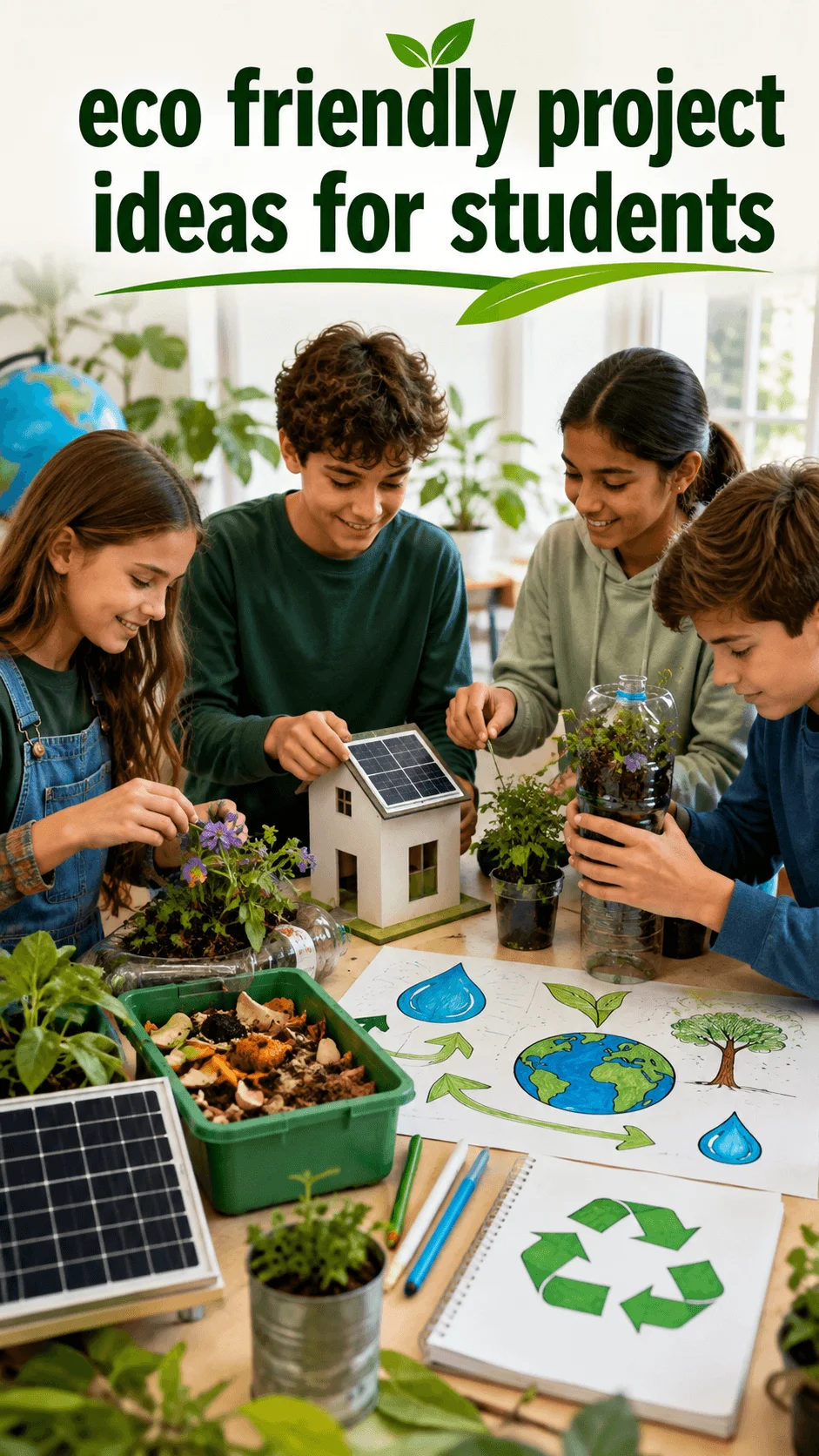
If you are looking for sustainable project ideas for students, the following projects offer a mixture of research, observation, creativity, technology, and practical action. They are designed to help students move beyond traditional recycling activities and explore environmental challenges from a fresh perspective.
1. Microplastic Investigation Project
Microplastic pollution has become an increasingly interesting topic for environmental science because tiny plastic particles can come from many everyday sources. A microplastic investigation project allows students to explore the problem of plastic pollution from a scientific and research based perspective.
The basic idea is to investigate where small plastic particles may come from and how human activities contribute to plastic pollution. Students can begin by researching common sources of microplastics, including the breakdown of larger plastic items, synthetic materials, packaging, and other everyday products.
Students do not need to perform complicated laboratory experiments to make this project valuable. They can investigate plastic waste around their school, study nearby environmental areas with appropriate permission, document common sources of plastic litter, and research how plastic materials gradually break down.
The project becomes much more interesting when students create a record of their observations. They could photograph different types of plastic waste, categorize the sources, and organize their findings into charts. They could also compare two different locations and discuss why one location appears to have more plastic waste than another.
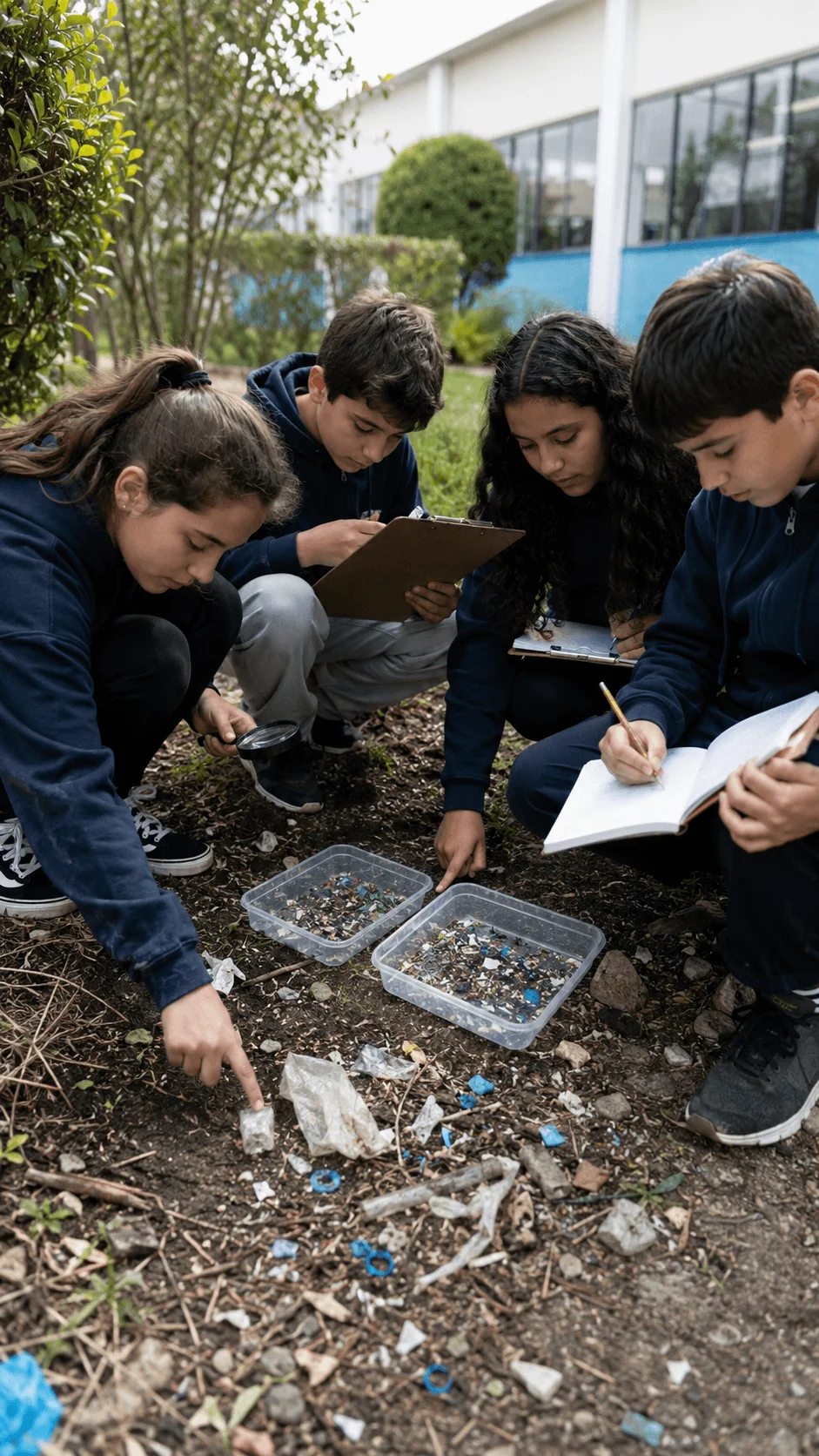
Another approach is to create an educational investigation explaining how larger plastic products can eventually break into smaller particles. Students can research the environmental concerns surrounding microplastics and present the information through a school display, presentation, or research report.
This is one of the most useful environmental projects for students because it connects an everyday material with a much larger environmental issue. Students can learn about pollution, waste management, research methods, observation, data organization, and responsible consumption.
Older students can take the project further by studying published research about microplastics and comparing different pollution prevention strategies. Younger students can focus on identifying plastic waste and learning how reducing unnecessary plastic use can help prevent pollution.
2. Biodegradable Packaging From Food or Agricultural Waste
What if waste from food production could become part of a useful new material? That question forms the foundation of one of the most creative eco friendly projects for students.
Biodegradable packaging projects introduce students to the idea that waste does not always have to be treated as something useless. Certain organic materials can become the starting point for research into alternative materials. Students can explore how fruit peels, plant fibers, crop residues, and other organic materials have been studied for potential uses.
The project can begin with a simple investigation into conventional packaging. Students can research why plastic packaging is widely used, what makes some packaging difficult to dispose of responsibly, and why researchers are exploring alternative materials.
Students can then investigate existing biodegradable packaging innovations. They can compare different materials and examine properties such as flexibility, strength, moisture resistance, durability, and biodegradability. Instead of simply copying an existing product, students can develop their own packaging concept based on a particular environmental problem.
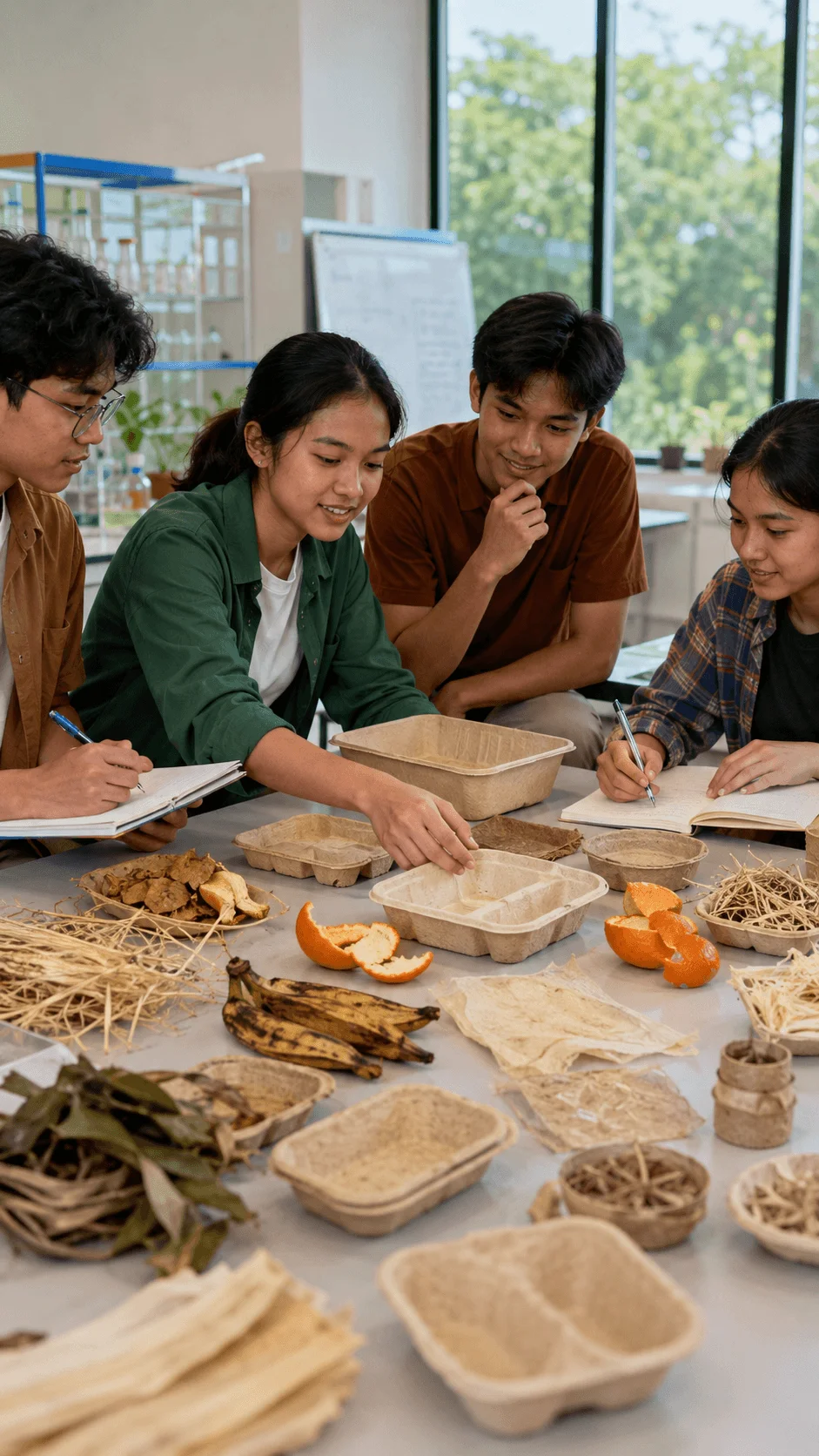
For example, a student might design a concept for packaging small food items using plant based materials. Another student might research how agricultural residues could be transformed into packaging materials instead of being discarded.
Where appropriate and under suitable adult supervision, students can create simple demonstrations using safe materials. However, the research and design side of the project can be just as valuable as making a physical prototype.
This project introduces the circular economy in a way that students can understand. The circular economy focuses on keeping materials useful for longer and finding ways to reduce waste. Students begin to see waste as a potential resource rather than simply something that needs to disappear.
The idea also connects sustainability with product design, science, creativity, entrepreneurship, and innovation. High school students can investigate material science and existing research, while younger students can focus on designing packaging concepts and learning about biodegradable materials.
3. School Air Quality Monitoring Project
Air quality is another excellent topic for eco friendly science projects for students because students can investigate the environmental conditions around the places where they study and live.
Schools can be located near busy roads, construction areas, industrial zones, parking areas, or other potential sources of dust and pollution. A school air quality project gives students an opportunity to investigate these environmental factors and understand why clean air matters.
The project can begin with research into common sources of air pollution. Students can study traffic emissions, dust, smoke, construction activity, and other factors that may affect local air conditions.
Students can then collect suitable environmental information using school approved monitoring equipment or reliable publicly available data. They might compare observations from different locations or different times of day. For example, they could investigate whether environmental conditions appear different near a busy road compared with a quieter part of the school.
The important part of this project is not simply collecting numbers. Students should learn how to interpret information carefully. They can organize their observations into tables, create charts, identify patterns, and discuss possible explanations without making unsupported conclusions.
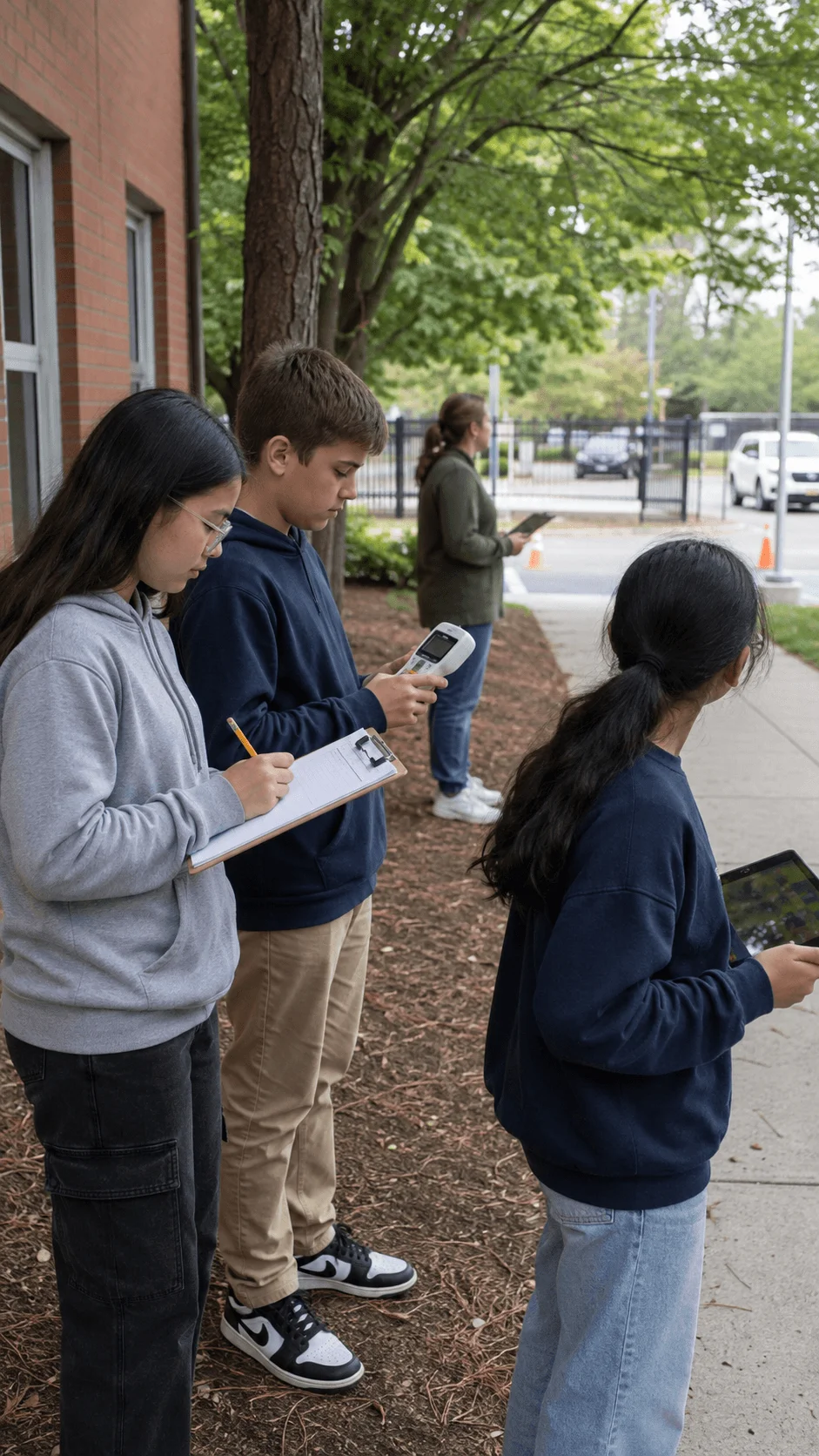
The project can also include a school awareness component. After researching air quality, students could create an educational presentation explaining how communities can reduce pollution and improve environmental conditions.
This project combines science with technology and data analysis. Students learn that environmental problems can be investigated through evidence rather than assumptions.
Younger students can focus on observing sources of dust and pollution and learning about clean air. Older students can explore environmental monitoring, data interpretation, and the limitations of small datasets.
4. Pollinator Friendly School Garden
A pollinator friendly school garden can turn an ordinary outdoor space into a living environmental classroom. Instead of simply planting decorative flowers, students can design a small habitat that supports biodiversity and gives them an opportunity to observe relationships between plants, insects, and their surroundings.
Pollinators play an important role in many ecosystems. Bees, butterflies, moths, and other animals can help transfer pollen between flowers. Students can investigate why these organisms need suitable habitats and how changes in land use can affect biodiversity.
The first stage of the project can involve researching plants that are appropriate for the school’s local climate and growing conditions. Students can investigate which plants provide suitable food or habitat for pollinators and which species are suitable for the available space.
Students can then create a garden design. They might draw a map showing where different plants could grow and explain why they selected them. If the school approves the project, students can help establish the garden and monitor changes over time.
The garden can become a long term environmental project. Students can keep a journal documenting plant growth, flowering periods, and observations of visiting insects. They can create educational signs that explain the importance of biodiversity and encourage other students to protect local habitats.
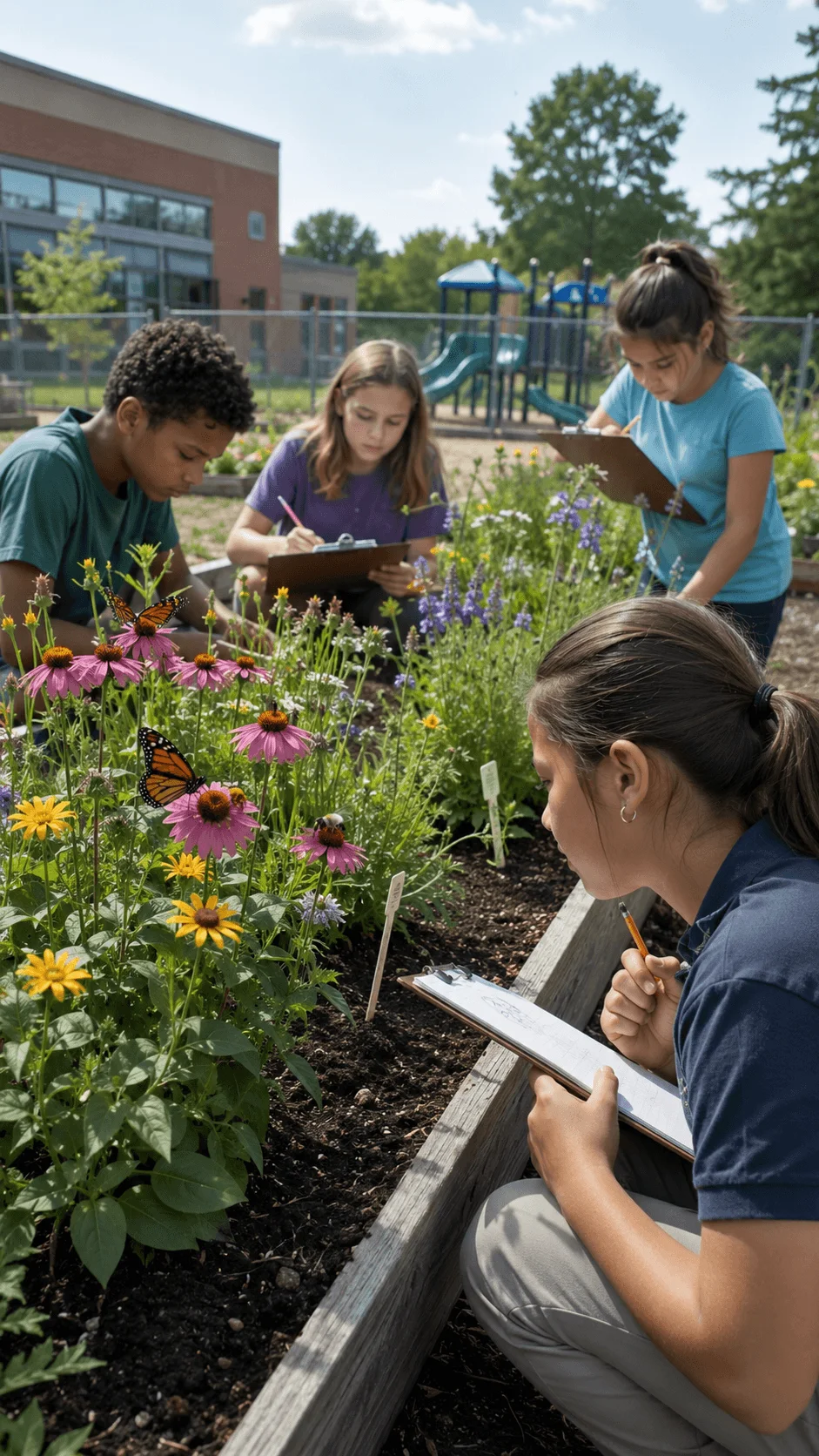
The project also provides an opportunity to connect several subjects. Science students can investigate ecosystems and biodiversity. Art students can create signs and garden designs. Mathematics students can measure the garden area and track plant growth. Language students can prepare educational materials.
This makes the project much more than gardening. It becomes a practical lesson about ecosystems, biodiversity, habitat creation, observation, and environmental responsibility.
5. Smart Water Conservation Audit
Water conservation is a familiar sustainability topic, but students can make it much more meaningful by turning it into an investigation.
A smart water conservation audit asks students to examine how water is used around their school and identify opportunities to reduce unnecessary use. Instead of simply creating posters that tell people to save water, students investigate actual conditions and develop recommendations based on their observations.
Students can begin by identifying areas where water is commonly used. These may include washrooms, gardens, drinking areas, kitchens, laboratories, or other school facilities. With permission from school staff, students can observe how water is being used and identify possible sources of unnecessary consumption.
They can record observations and organize them into a simple report. For example, they might investigate whether taps are being left running unnecessarily, whether outdoor areas receive more water than they need, or whether students understand basic water conservation practices.
The project can then move toward solutions. Students could develop recommendations for reducing unnecessary water use, improving awareness, maintaining school gardens efficiently, or encouraging responsible habits.
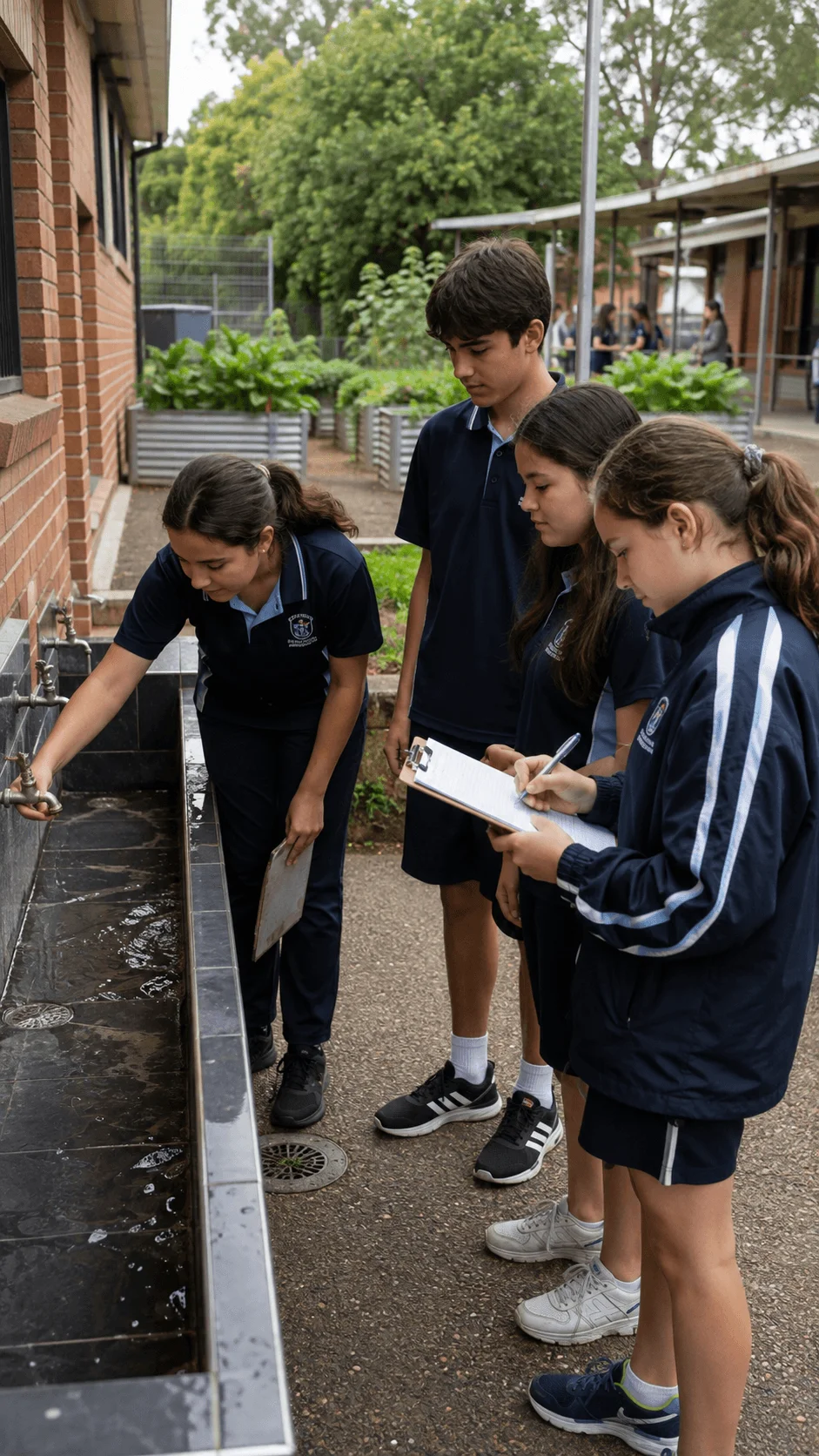
One particularly useful part of the project is comparing conditions before and after an awareness campaign. Students could document the original situation, introduce an educational campaign, and then conduct another observation later. This helps them understand how environmental projects can involve both investigation and action.
A water audit also teaches students about resource management. Water may appear to be easily available when a tap is opened, but supplying, cleaning, transporting, and managing water requires infrastructure and resources.
Younger students can focus on identifying ways to avoid wasting water. Older students can create more detailed audits and analyze the information they collect.
6. School Climate Data Project
Students encounter weather every day, but collecting and analyzing environmental data can help them understand it from a completely different perspective. A school climate data project turns everyday observations into a practical research activity.
Students can track suitable information such as temperature, rainfall, humidity, or seasonal changes. They can collect their own observations where appropriate or use reliable weather and environmental datasets.
The project should focus on understanding patterns rather than making exaggerated conclusions. A few weeks or months of school observations cannot prove a long term climate trend, but the data can teach students how environmental monitoring works.
Students can create tables and graphs showing how measurements change over time. They can compare different weeks, months, or seasons and discuss the factors that may influence the observations.
For example, students could examine how temperature changes between different months. They could investigate whether rainfall patterns appear different during different parts of the year or compare environmental conditions between two locations.
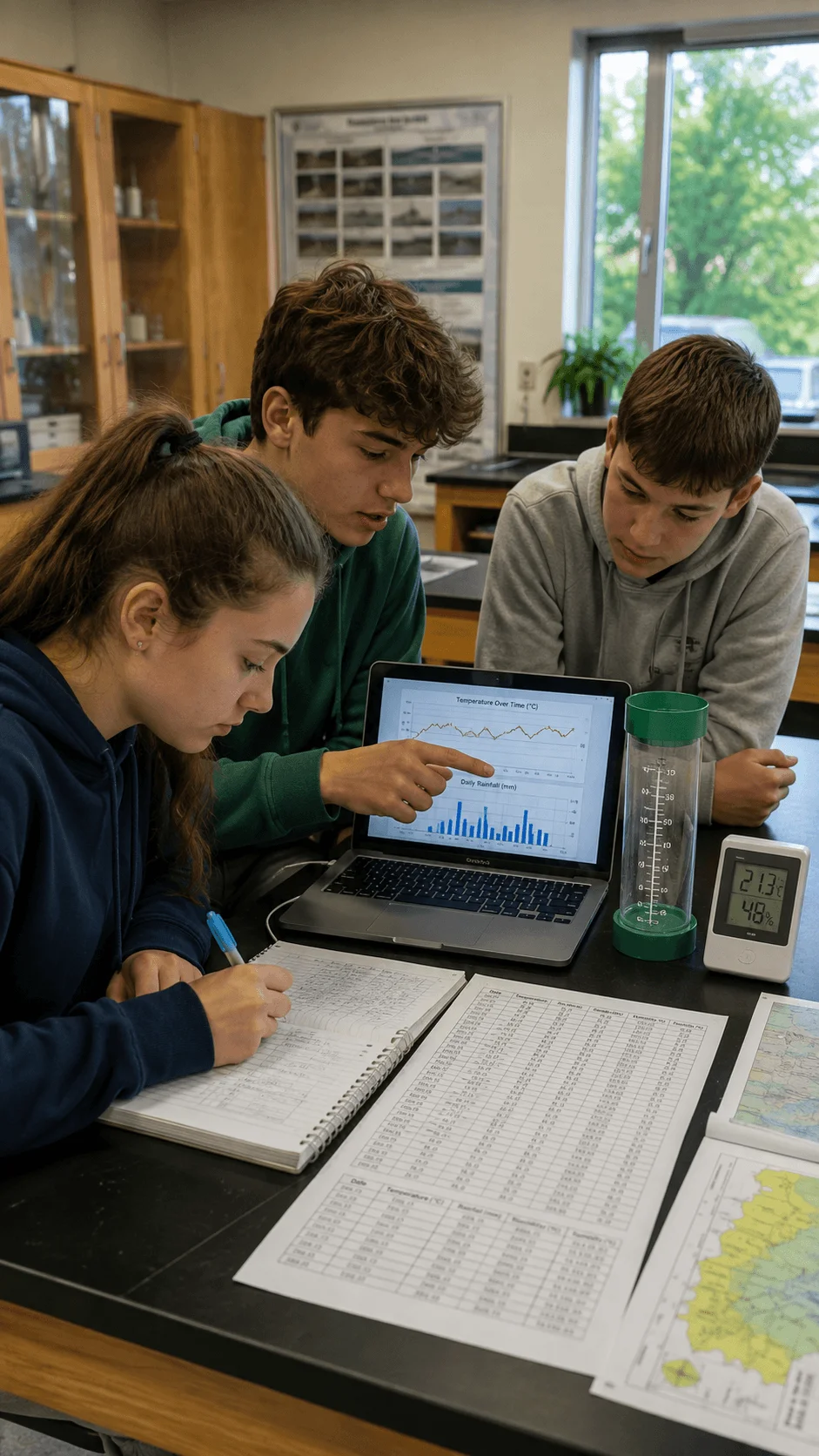
The project becomes even more interesting when students ask questions about their data. Why did temperatures change? What environmental factors might explain a particular observation? How does local weather information differ from a long term climate dataset?
These questions encourage students to think like researchers.
A school climate data project also connects sustainability with mathematics and technology. Students learn how to organize information, create graphs, identify patterns, communicate findings, and distinguish between observation and interpretation.
For younger students, the project can focus on recording daily weather observations. Older students can explore datasets, statistical concepts, environmental monitoring, and the difference between weather and climate.
This makes it one of the more modern student sustainability projects, especially for classrooms that want to combine environmental education with data literacy.
7. Food Waste Composting Experiment
Food waste is one of the most practical environmental issues students can investigate because it happens every day in homes, schools, cafeterias, and communities. A food waste composting experiment gives students a chance to understand what happens to organic materials after people throw them away.
Instead of treating composting as simply putting food scraps into a container, students can turn it into an investigation. They can learn how microorganisms and natural processes break down organic materials and why composting can return nutrients to the soil.
Students can begin by researching how much food waste a school produces and which types of organic waste are commonly discarded. They can then learn which materials are generally suitable for a school composting system and why proper management matters.
A classroom project could involve maintaining a small educational composting system with suitable organic materials and documenting changes over time. Students can observe changes in texture, appearance, moisture, and volume. They can keep a project journal and record what they notice at different stages.
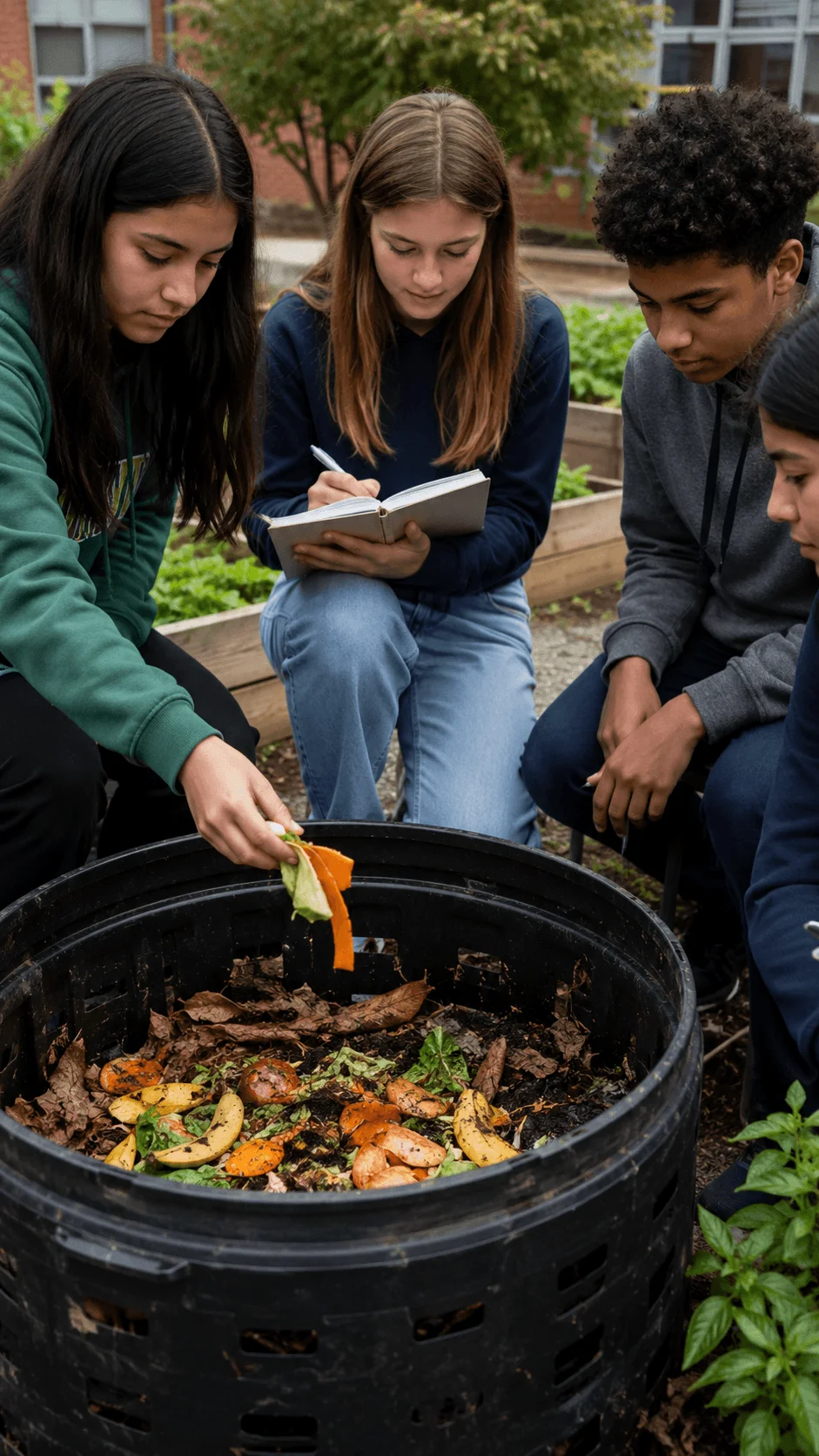
The project can also compare different composting conditions. Students might investigate how moisture, airflow, temperature, and the types of organic materials influence decomposition. Any practical setup should follow appropriate school guidance and avoid unsuitable materials.
This idea gives students a direct connection between biology and sustainability. They can learn that decomposition plays an important role in natural ecosystems and that organic waste can become a useful resource instead of simply becoming discarded waste.
The project can also lead to a wider school sustainability campaign. After completing their investigation, students could explain how food waste can be reduced and how composting can fit into a broader waste management strategy.
Younger students can focus on observing decomposition and learning about organic waste. Older students can maintain detailed records, analyze observations, investigate decomposition science, and prepare a report about their findings.
8. Solar Energy Efficiency Challenge
Solar energy is a popular topic for school projects, but students can make it much more meaningful by moving beyond the traditional solar panel model. A solar energy efficiency challenge allows students to investigate how their school uses energy and explore how renewable energy could become part of a broader sustainability strategy.
The project can begin with an investigation of electricity use in classrooms and other school areas. Students can observe lights, fans, computers, air conditioning systems, and other electrical equipment with permission from teachers or school staff.
They can then research where energy may be used unnecessarily and explore practical ways to reduce consumption. This introduces an important sustainability concept: using less energy can work alongside producing energy from renewable sources.
Students can also investigate how solar power works and how sunlight can be converted into electricity. They can research the potential uses of solar energy at their school and create a proposed solar energy plan.
For example, students might design a concept for solar powered outdoor lighting, classroom equipment, water heating, or another suitable application. They can research the advantages and limitations of their proposed solution and explain how it could contribute to a more sustainable school.
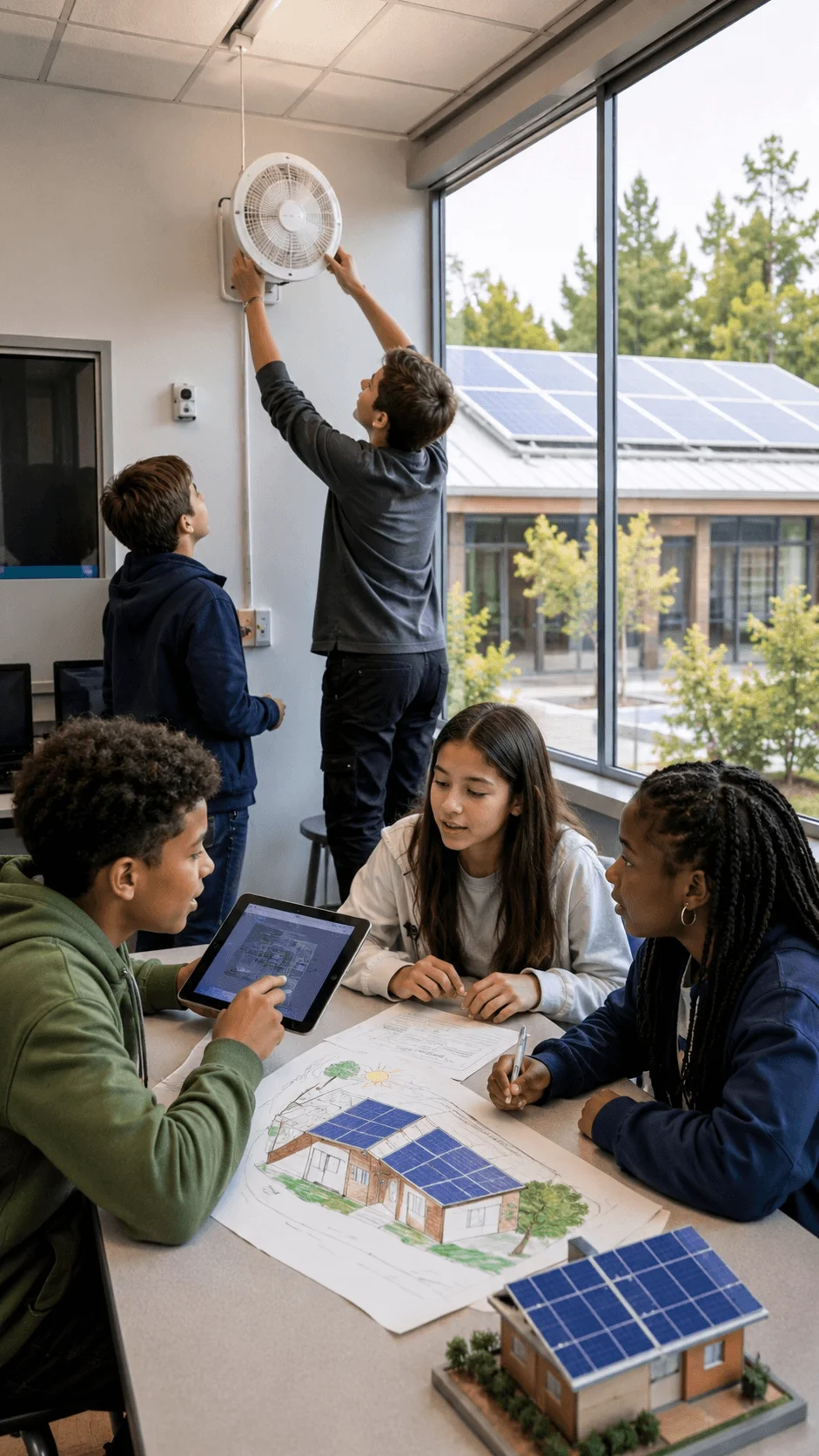
The project does not require students to install actual solar equipment. A research report, school presentation, architectural concept, scale model, or digital design can all demonstrate the idea effectively.
Students can also compare renewable energy with conventional energy sources and discuss why energy efficiency remains important even when renewable energy is available.
This makes the project especially useful for students interested in science, engineering, architecture, technology, and environmental studies.
Younger students can explore the basic idea of solar energy and energy conservation. Older students can investigate energy consumption, solar technology, efficiency, and potential applications in greater depth.
9. School Plastic Reduction Challenge
Plastic is everywhere in modern life, which makes it an excellent subject for a practical school sustainability project. Instead of simply encouraging students to recycle, this project focuses on understanding where unnecessary plastic comes from and finding ways to reduce it at the source.
Students can begin by observing the types of single use plastic commonly found around their school. With appropriate permission, they can document packaging, disposable containers, plastic bottles, wrappers, or other common sources.
The purpose is not to criticize individual students. Instead, students should look at the overall pattern and ask an important question: where could the school reduce unnecessary plastic use?
Students can organize their observations into categories and identify the most common types of plastic waste. They can then research possible alternatives and consider which solutions would actually be realistic for their school.
For example, students might investigate reusable water bottles, refill stations, reusable food containers, reduced packaging, or improved purchasing practices. They can compare the advantages and limitations of different approaches.
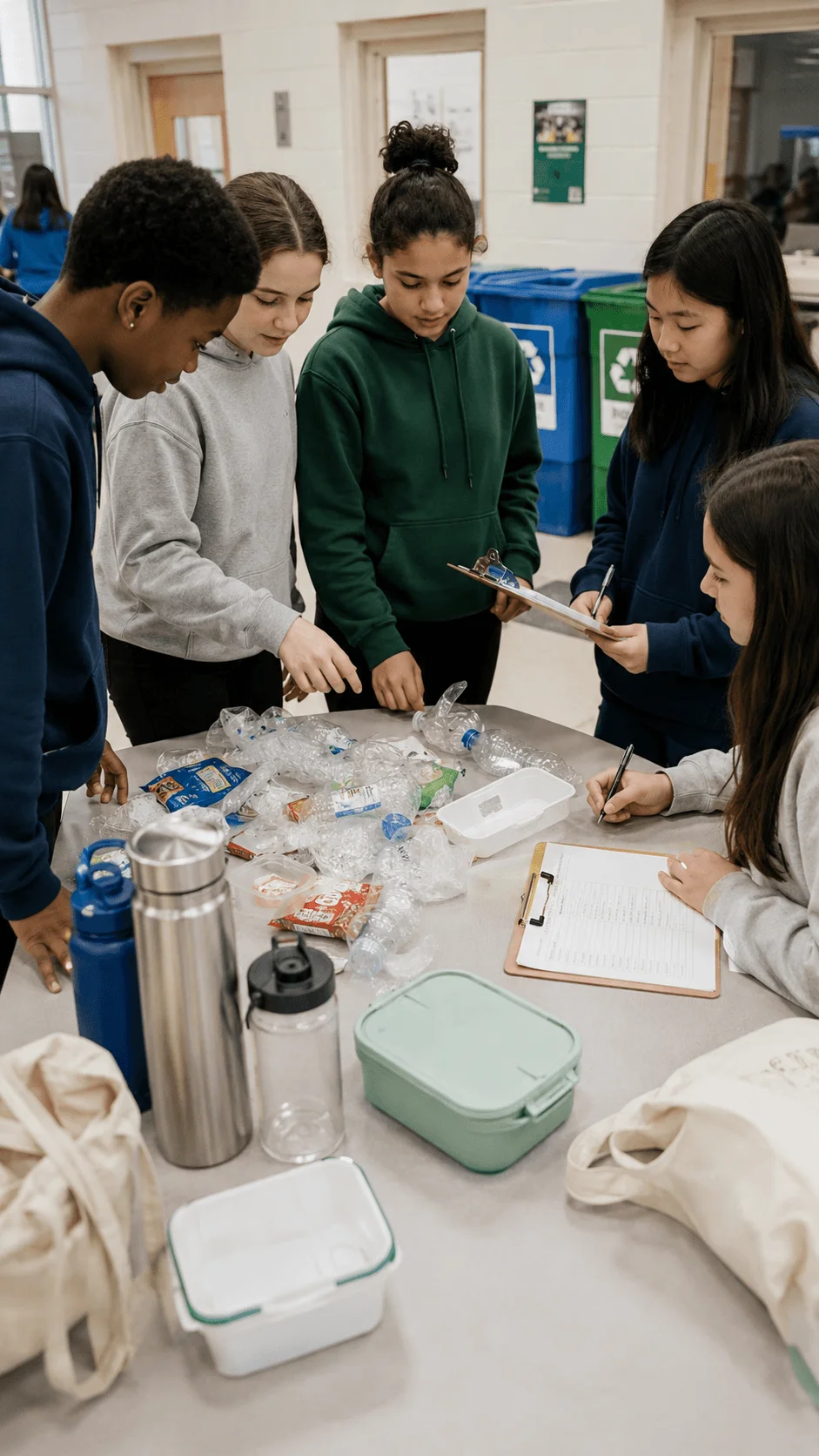
The project can then become a school wide challenge. Students could create educational materials explaining the problem and encourage practical changes. After some time, they can repeat their observations and compare the results.
This approach makes the project more powerful because students are not simply learning about plastic pollution. They are identifying a local problem, developing a possible solution, implementing an action, and evaluating the outcome.
The project also teaches an important sustainability principle. Recycling has value, but reducing unnecessary material use can prevent waste from being created in the first place.
Younger students can focus on identifying different types of plastic and learning about waste reduction. Older students can investigate consumption patterns, compare alternatives, analyze their findings, and develop a detailed school plastic reduction proposal.
10. Sustainable Transportation Mapping Project
The way people travel to school can become an interesting environmental investigation. A sustainable transportation mapping project allows students to explore how transportation choices affect energy use, traffic, air quality, and the local environment.
Students can begin by learning about the different ways people travel to school. These may include walking, cycling, public transportation, carpooling, school buses, motorcycles, and private cars.
With appropriate school permission and privacy considerations, students can conduct an anonymous survey about transportation habits. They can organize the results and look for broad patterns rather than collecting personal information.
Students can then create a map showing different transportation options around the school. The map might identify walking routes, cycling opportunities, public transportation stops, traffic congestion areas, or places where safer transportation infrastructure could be useful.
The project can become even more interesting when students investigate why people choose particular transportation methods. Convenience, distance, safety, cost, weather, and available infrastructure can all influence transportation choices.
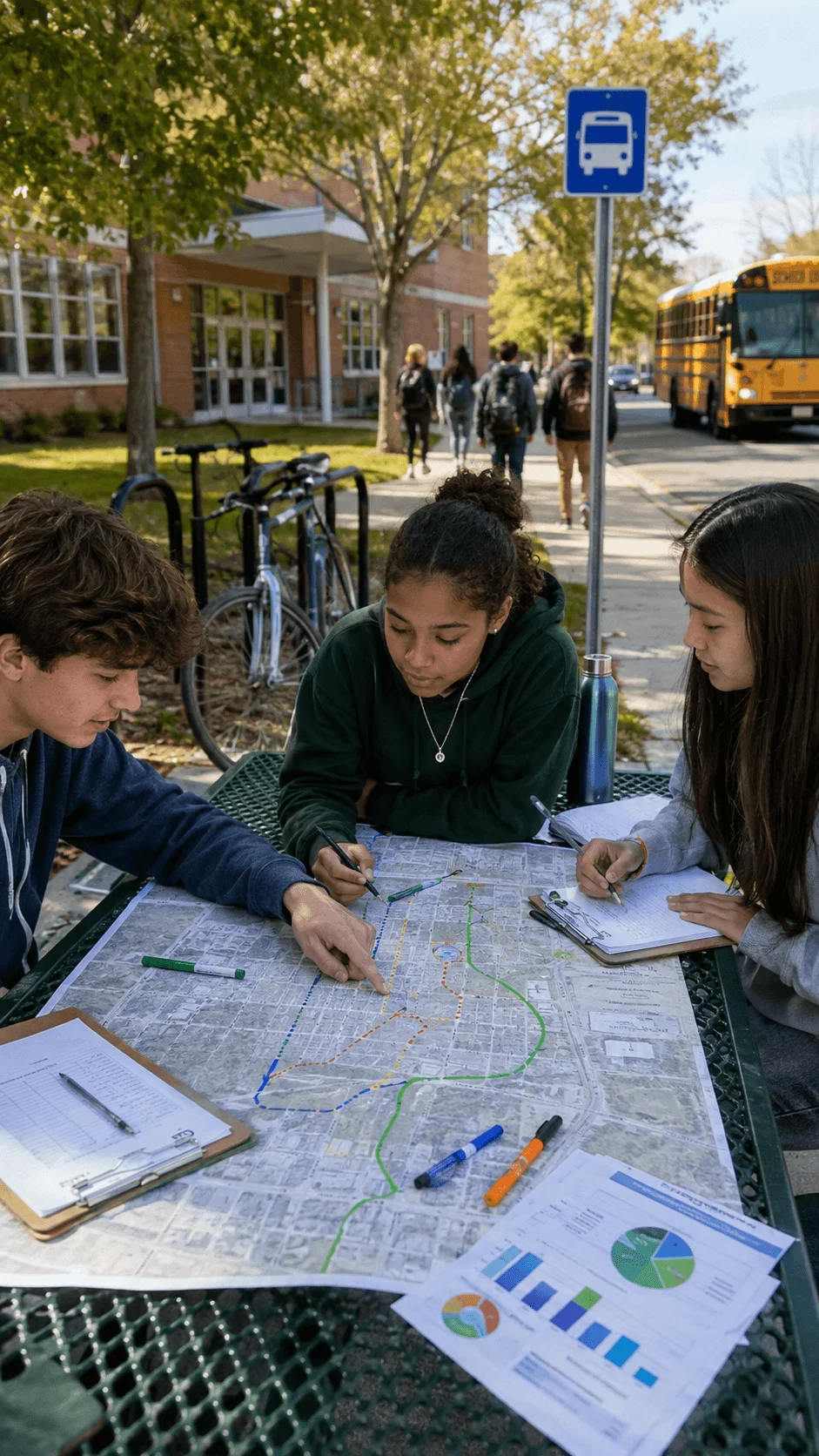
Students can research which transportation options generally use less energy or produce fewer emissions and then consider which alternatives could realistically work in their community.
The project does not require students to tell everyone how they should travel. Instead, it teaches them to examine transportation as a community planning issue and understand the environmental factors connected with mobility.
This makes it an excellent choice for students studying geography, environmental science, mathematics, social studies, or urban planning.
Younger students can create simple maps and learn about walking and cycling. Older students can conduct anonymous surveys, analyze transportation data, research sustainable mobility, and develop recommendations for their school.
11. Agricultural Waste Innovation Project
Agricultural waste can become the foundation for one of the most creative sustainable project ideas for students. Every agricultural system produces materials that may have little immediate value, but students can investigate whether some of those materials could serve another purpose.
The project begins with a simple question: what happens to agricultural materials after the useful part of a crop has been harvested?
Students can research crop residues, fruit and vegetable waste, plant fibers, seed shells, leaves, stems, and other agricultural materials. The exact materials will depend on the local region and the type of agriculture around the community.
Instead of viewing these materials only as waste, students can investigate potential applications. Research areas might include biodegradable packaging, paper alternatives, composting, natural fiber products, soil improvement, or other sustainable uses.
The most interesting part of the project is the innovation process. Students can choose one agricultural waste material and investigate how researchers, businesses, or communities have attempted to use similar materials.
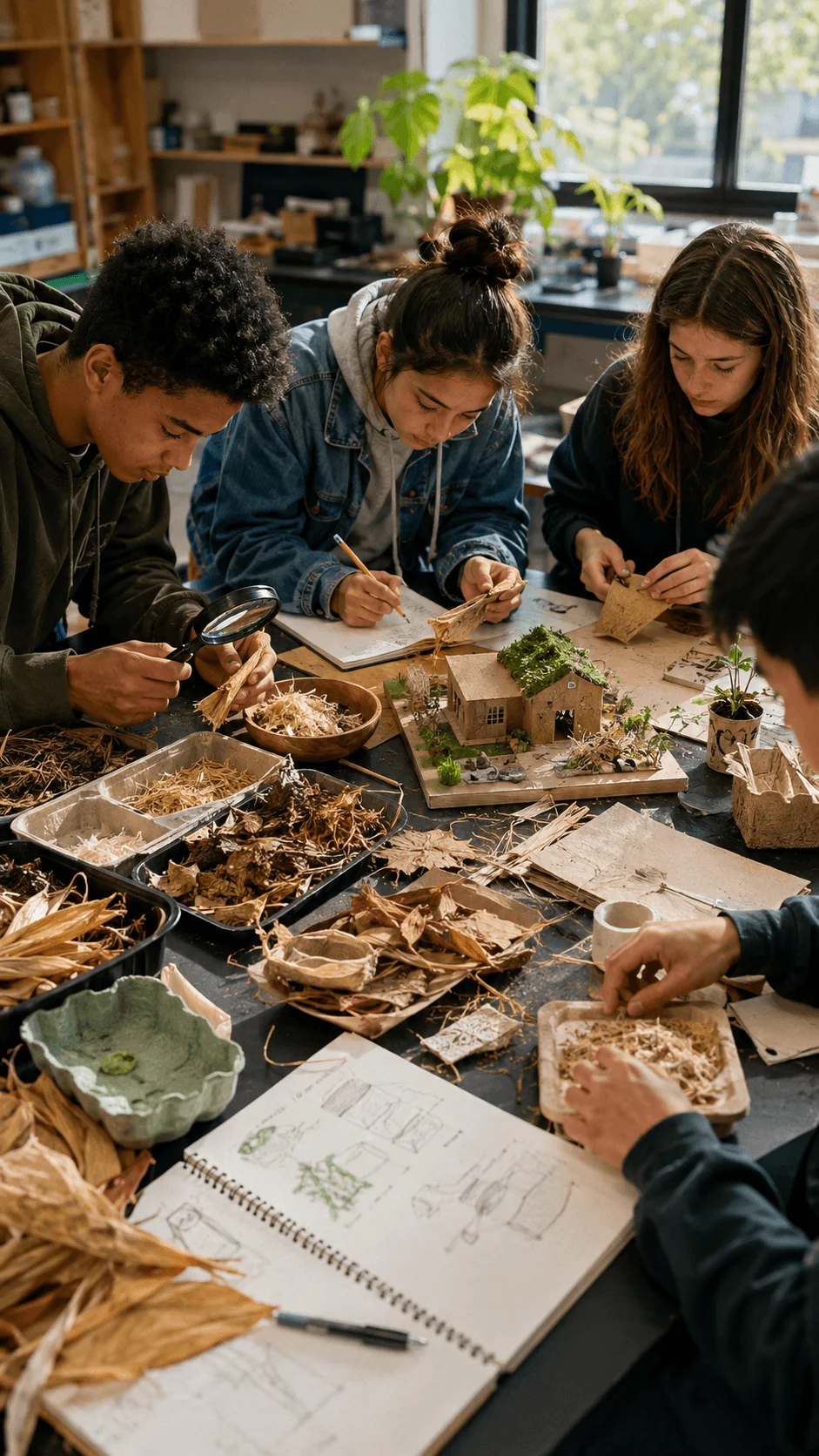
They can then design their own concept. The concept might be a packaging product, a material alternative, a school garden application, or another practical solution.
Students do not necessarily need to produce a finished commercial product. A research presentation, material comparison, design drawing, model, or safe prototype can demonstrate their thinking.
This project introduces students to circular economy principles because it asks them to consider how materials can remain useful rather than becoming waste.
It also connects environmental science with product design and entrepreneurship. Students begin to understand that sustainability can involve creating new solutions rather than simply reducing consumption.
The idea is especially suitable for older students who want a project with an innovation or science fair component. Younger students can research agricultural waste and design ideas for giving discarded plant materials a new purpose.
12. Student Environmental Sensor Project
Technology can make environmental education much more interactive. An environmental sensor project allows students to use suitable digital tools to collect information about their surroundings and understand how environmental conditions change.
Students can explore measurements such as temperature, humidity, light levels, or suitable air quality information. The exact measurements depend on the equipment available and the students’ age and technical skills.
The project can begin with a question about the school environment. For example, students might want to know whether different areas of the school experience different temperature or light conditions.
Students can then collect environmental information using suitable equipment under teacher supervision. They can organize the data in a spreadsheet, create charts, and look for patterns.
The real value of the project comes from asking questions about the information. Why is one location warmer than another? Why does a particular area receive more light? How do environmental conditions change during different times of the day?
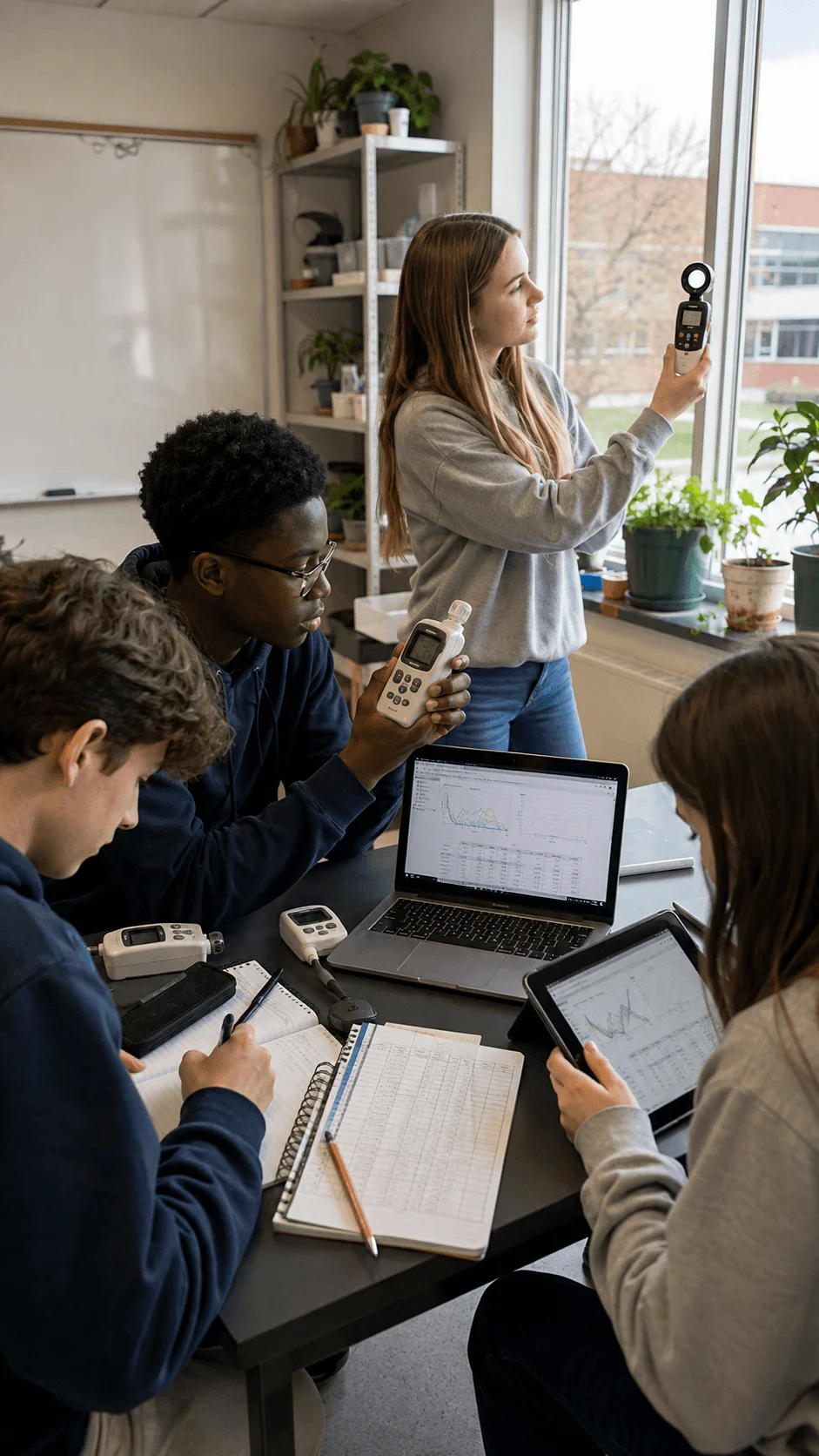
Students can then prepare an environmental report explaining what they observed and what further questions they would like to investigate.
This project combines environmental science with technology, mathematics, and data analysis. It can also introduce students to concepts that are increasingly important in modern environmental research, including monitoring, sensors, digital data, and evidence based decision making.
Younger students can work with simple measurements and teacher provided tools. Older students can explore more advanced data collection and environmental monitoring concepts.
The project also provides a natural opportunity for students to discuss how technology can help communities understand environmental problems.
How to Choose the Right Eco Friendly Project
Choosing among different eco friendly project ideas for students can sometimes be more difficult than completing the project itself. The best choice depends on the student’s age, interests, available resources, school requirements, and the environmental issue they want to explore.
A strong project should give students something meaningful to investigate. Instead of choosing an idea simply because it looks impressive, students should ask whether the project helps them understand a real environmental problem.
Students should also consider what they can realistically complete. A simple project with strong research and clear observations can be more valuable than an ambitious project that cannot be completed properly.
Interest matters as well. A student who enjoys technology might prefer an environmental sensor project, while someone interested in nature might enjoy a pollinator garden. Students interested in design may prefer biodegradable packaging or agricultural waste innovation.
The best projects also leave room for questions. A project becomes more interesting when students can investigate something, discover information, and develop their own conclusions.
Making Student Sustainability Projects More Meaningful
A sustainability project becomes more powerful when students move through the complete process of identifying a problem, researching it, investigating evidence, developing a possible solution, and communicating what they learned.
Students should not feel that every project needs to produce a perfect solution. Environmental problems are often complicated, and even professional researchers continue to investigate them.
The purpose of a school project is to develop curiosity and practical understanding.
Teachers can encourage students to ask questions before deciding on their final project. What environmental problem do they notice? Why might it be happening? What information would help them understand it? What solution could they investigate?
Students can also make their projects more meaningful by connecting them to their own school or community. A local investigation often feels more relevant than simply copying an environmental experiment from a textbook.
Documentation is another important part of the process. Students can maintain research notes, photographs, charts, observations, designs, and reflections throughout the project. These materials can help them explain not only the final result but also how their thinking developed.
Why Eco Friendly Projects Matter for Students
Modern eco friendly project ideas for students can teach lessons that extend far beyond environmental science. They can help students become better researchers, communicators, designers, problem solvers, and critical thinkers.
A student investigating plastic pollution learns how to gather evidence. A student designing biodegradable packaging learns about materials and innovation. A student monitoring environmental conditions learns about data. A student creating a pollinator garden learns about ecosystems.
These experiences show students that sustainability is not one single subject. It connects science, technology, mathematics, design, economics, health, geography, and community planning.
Projects can also help students understand that environmental improvement often begins with small observations. A leaking tap, unnecessary plastic packaging, food waste, poor habitat, or inefficient energy use can become the starting point for a much larger investigation.
Conclusion
The best eco friendly project ideas for students encourage young people to look at environmental challenges differently. Instead of simply memorizing facts about pollution, climate change, waste, or conservation, students can investigate real problems and explore practical solutions.
The 12 ideas in this article offer many different ways to approach sustainability. Students can investigate microplastic pollution, explore biodegradable packaging, monitor air quality, create pollinator habitats, audit water use, analyze environmental data, study composting, investigate solar energy, reduce school plastic waste, map transportation, explore agricultural waste, or use environmental sensors.
What makes these projects especially valuable is their connection to real life. Students can observe their surroundings, ask questions, collect information, develop ideas, and communicate what they discover.
A successful sustainability project does not need to solve a global environmental problem. Its purpose is to help students understand how environmental problems work and how thoughtful actions can contribute to positive change.
By choosing a project that matches their interests and resources, students can turn sustainability into an experience rather than simply a lesson. These sustainable project ideas for students can inspire curiosity, creativity, scientific thinking, and a stronger understanding of the responsibility everyone shares in protecting the environment.