Eco Friendly Aesthetic Dining Room Ideas for 2026
An eco friendly aesthetic dining room can be much more than a collection of natural materials and sustainable furniture. In 2026, sustainable dining spaces are becoming warmer, more sophisticated, personal, and visually interesting. Instead of relying only on rustic wood, plain colors, or minimalist decoration, homeowners are combining earthy palettes, handcrafted pieces, organic shapes, vintage furniture, natural textures, and thoughtful lighting to create dining rooms that feel both beautiful and responsible.
The dining room also has an opportunity to become one of the most atmospheric spaces in a home. A beautiful table, comfortable seating, warm lighting, natural materials, and carefully selected decoration can turn everyday meals into a more enjoyable experience. The best part is that creating a sustainable dining space does not always require buying everything new. Reusing furniture, choosing durable pieces, supporting craftsmanship, and selecting materials that can remain attractive for years can all contribute to a more thoughtful interior.
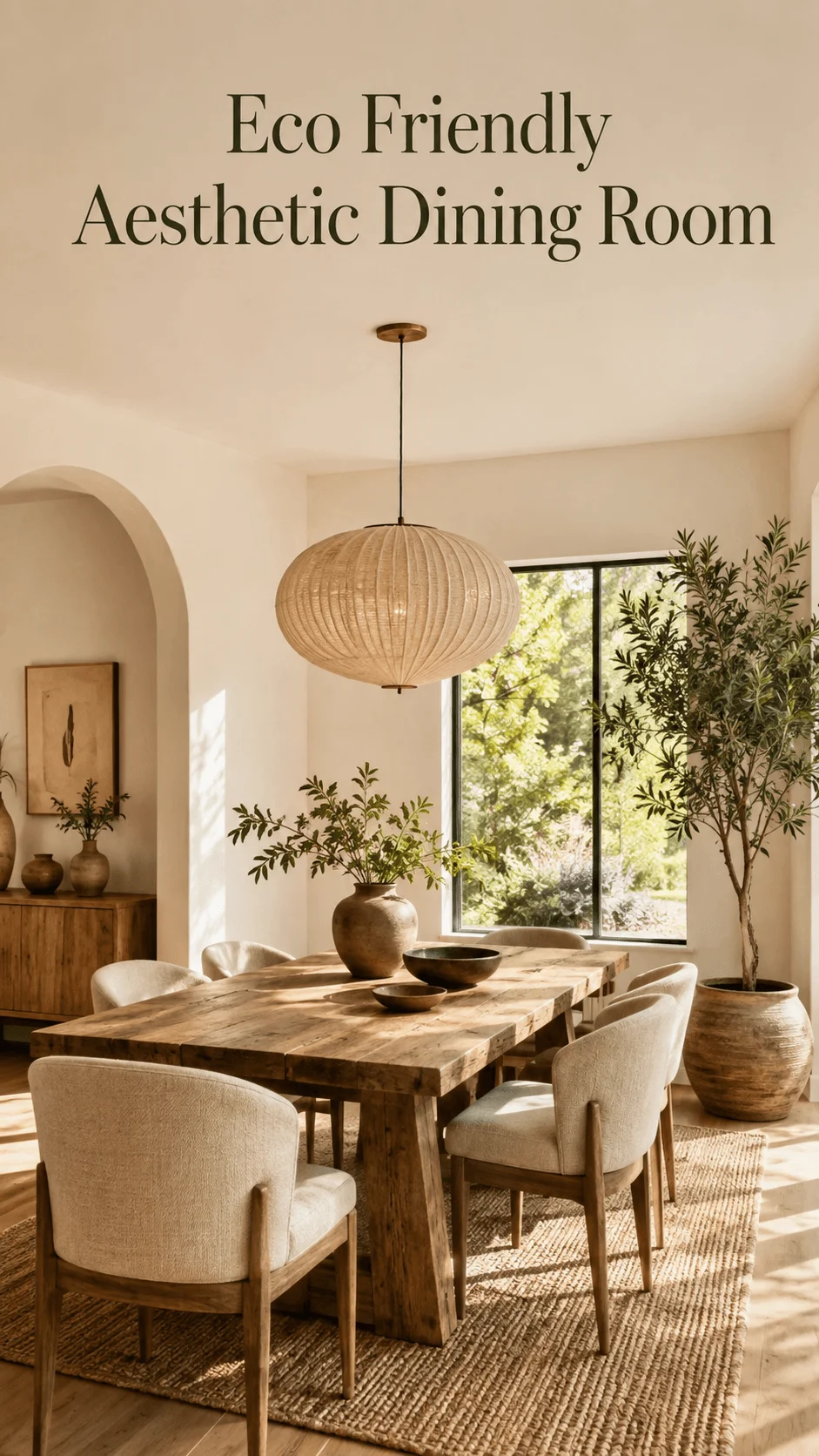
If you want a dining room that feels modern while maintaining a strong connection with nature, these 12 eco friendly dining room ideas offer plenty of inspiration for 2026.
Warm Japandi Ideas for an Eco Friendly Dining Room
Japandi continues to appeal to homeowners who want a dining room that feels calm, organized, and connected to natural materials. The style brings together the simplicity associated with Japanese interiors and the warmth commonly found in Scandinavian design. However, the latest interpretation feels less stark and more inviting.
A warm Japandi dining room can start with a simple wooden table in oak, ash, walnut, or another naturally attractive timber. Instead of surrounding it with perfectly matching furniture, introduce subtle variations through linen covered chairs, woven seats, handmade ceramics, and softly textured accessories. These details prevent the room from looking overly polished or manufactured.
Color also plays an important role. Warm cream, beige, soft brown, muted green, clay, and natural wood tones can create the relaxed atmosphere associated with this style. You can introduce darker accents through a sculptural light fixture, dining chairs, artwork, or a sideboard.
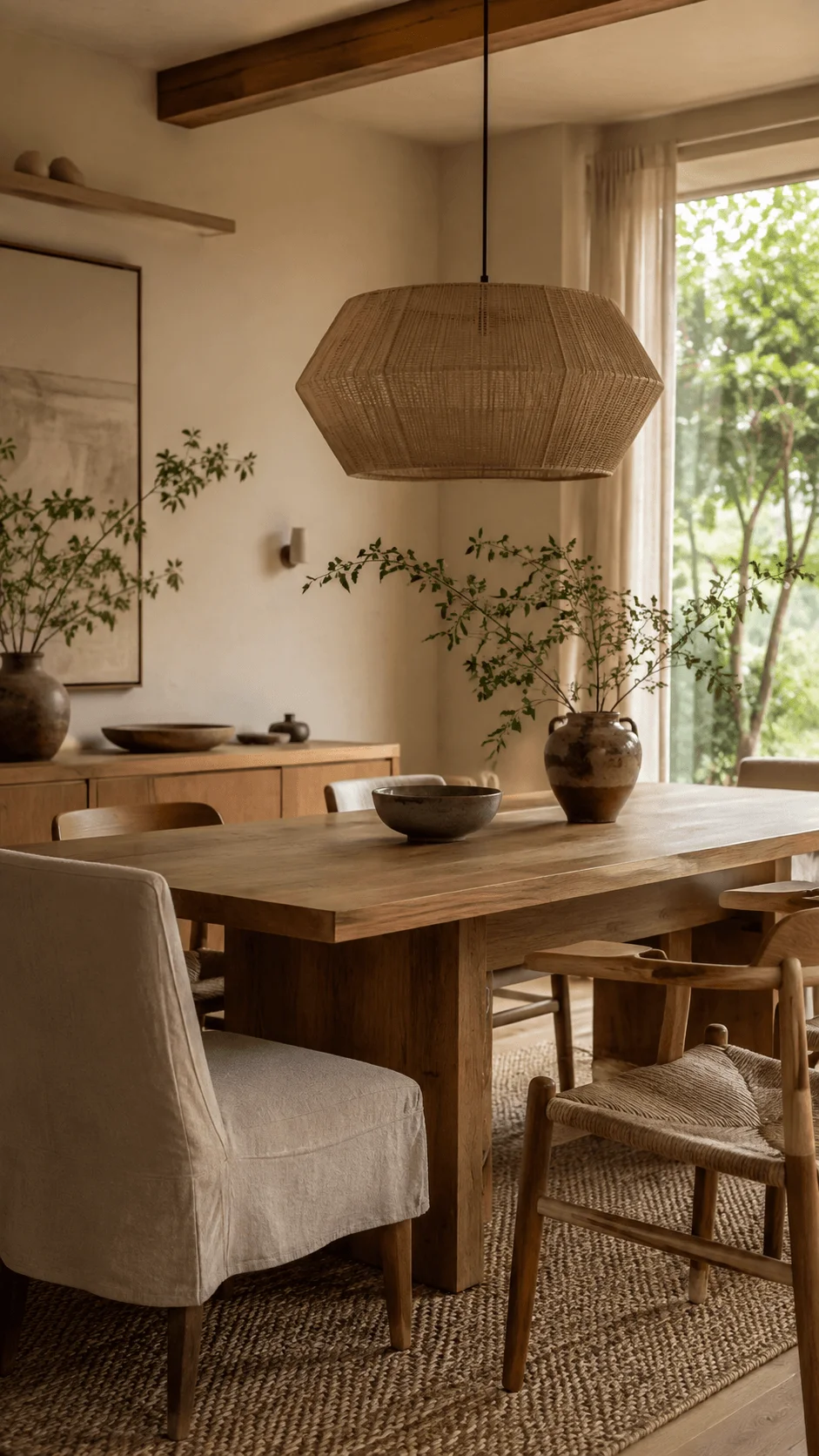
The sustainability advantage comes from keeping the room intentional. Rather than filling the dining area with decorative objects, choose a smaller number of useful and attractive pieces. A solid dining table, comfortable chairs, a beautiful pendant light, and a few handcrafted accessories may create more impact than a room filled with unnecessary decoration.
Natural materials also help Japandi interiors age gracefully. Wood develops character over time, linen becomes softer with use, and handmade ceramics can provide small variations that make the room feel personal. This approach creates a sustainable aesthetic dining room without making sustainability the only visual theme.
Reclaimed Wood for a Natural Sustainable Dining Space
The dining table often acts as the heart of the room, so choosing an interesting material can transform the entire atmosphere. Reclaimed wood offers a particularly attractive option because its natural imperfections give furniture a sense of history.
Instead of a perfectly uniform surface, reclaimed wood may show variations in grain, knots, texture, and tone. These details make the table feel individual rather than mass produced. A substantial reclaimed wood table can become the foundation for an organic modern dining room while adding warmth to contemporary interiors.
You do not need to create a completely rustic dining room around a reclaimed table. In fact, combining an aged wooden table with modern elements can create a more sophisticated result. Consider pairing the table with curved chairs, a sculptural pendant light, simple linen curtains, and contemporary artwork. A warm cream or muted olive wall can provide an attractive background without competing with the wood.
Another advantage is longevity. A well constructed dining table can remain useful for many years, and durable furniture can reduce the temptation to replace pieces whenever interior trends change. Look for construction quality as well as appearance when selecting a table.
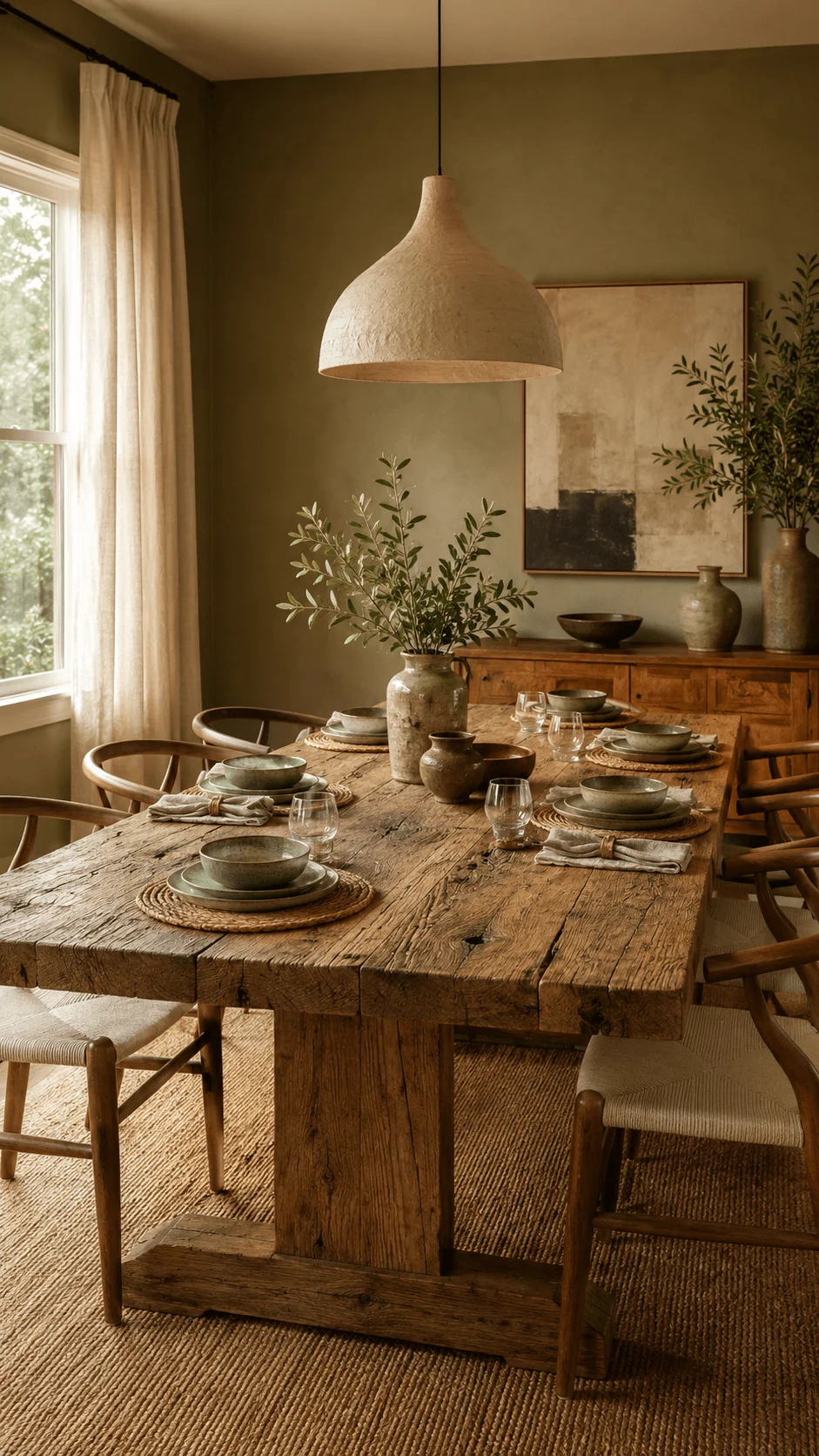
You can also soften the heavier appearance of reclaimed wood with lighter materials. Linen seat cushions, woven placemats, handmade ceramics, and natural fiber rugs can create balance.
The goal is not to make every surface look aged. One character rich wooden table can provide enough natural texture for the entire room. The remaining elements can stay relatively simple, allowing the table to become the visual centerpiece.
Biophilic Dining Room Ideas for a Nature Inspired Aesthetic
Biophilic design has become increasingly important in contemporary interiors because it focuses on creating a stronger visual and sensory relationship with nature. In a dining room, this concept can extend far beyond simply placing several small plants on shelves.
Start by considering natural daylight. If the dining room receives good sunlight, avoid unnecessarily heavy window treatments that block it during the day. Light can reveal the natural grain of wood, highlight textured walls, and make earthy colors appear more dynamic.
Plants can then strengthen that connection with nature. Instead of scattering many small plants throughout the room, consider one substantial plant or indoor tree that creates a strong focal point. Depending on the space, an attractive leafy plant beside a sideboard or near a window can provide enough greenery without overwhelming the room.
You can also bring nature indoors through materials and artwork. Stone surfaces, wood furniture, woven fibers, botanical artwork, natural branches, handmade ceramics, and nature inspired patterns can all contribute to a biophilic dining room.
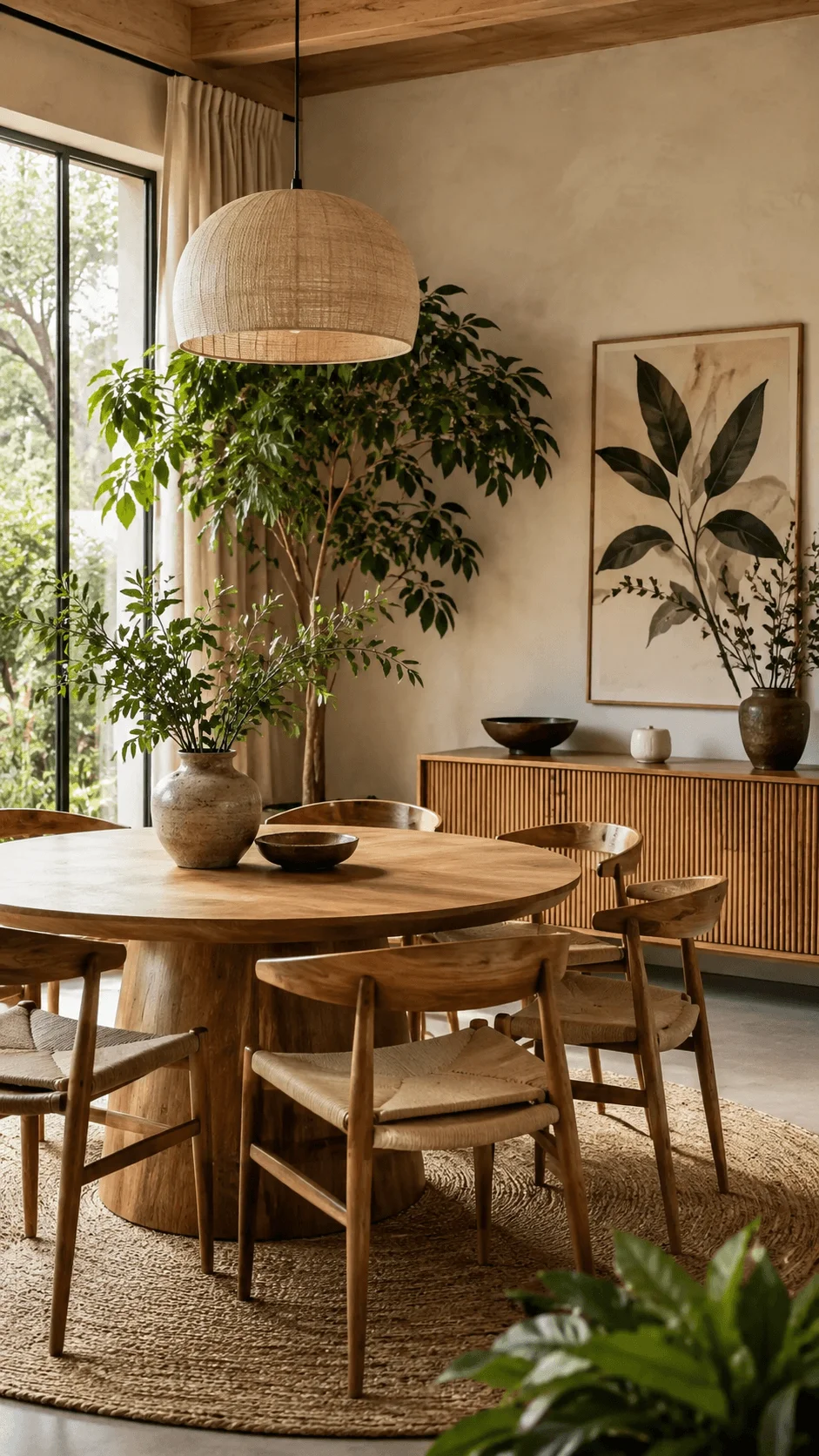
Organic shapes are particularly effective here. A round dining table, curved chair backs, an irregular mirror, or a softly shaped rug can make the room feel less rigid.
The key is balance. A biophilic dining room should feel connected to nature without looking like an indoor garden. Combine greenery with warm wood, natural fabrics, earthy colors, and plenty of breathing space.
For an eco friendly dining room design, this approach is especially useful because many of the visual elements already come from natural or durable materials.
Natural Fiber Textures in Eco Friendly Dining Room Decor
A room can contain beautiful furniture and still feel visually flat if every surface has the same texture. Natural fibers offer an easy way to introduce warmth and depth while maintaining a relaxed aesthetic.
Jute and sisal can work well as dining room rugs because their woven surfaces add subtle visual interest beneath the table. Linen can soften dining chairs, curtains, and table textiles. Rattan and seagrass can introduce additional woven elements through chairs, baskets, lighting, or decorative accessories.
The secret is to layer these materials without making the room feel overloaded. For example, a wooden table can sit above a simple natural fiber rug while linen curtains frame the windows. A woven pendant can then repeat the texture overhead.
You can also use small details to bring natural fibers onto the dining table. Woven placemats, fabric napkins, and a simple textured table runner can make everyday meals feel more considered.
Neutral colors work particularly well with this approach. Beige, cream, tan, warm brown, and muted green allow the textures to become the main visual feature.
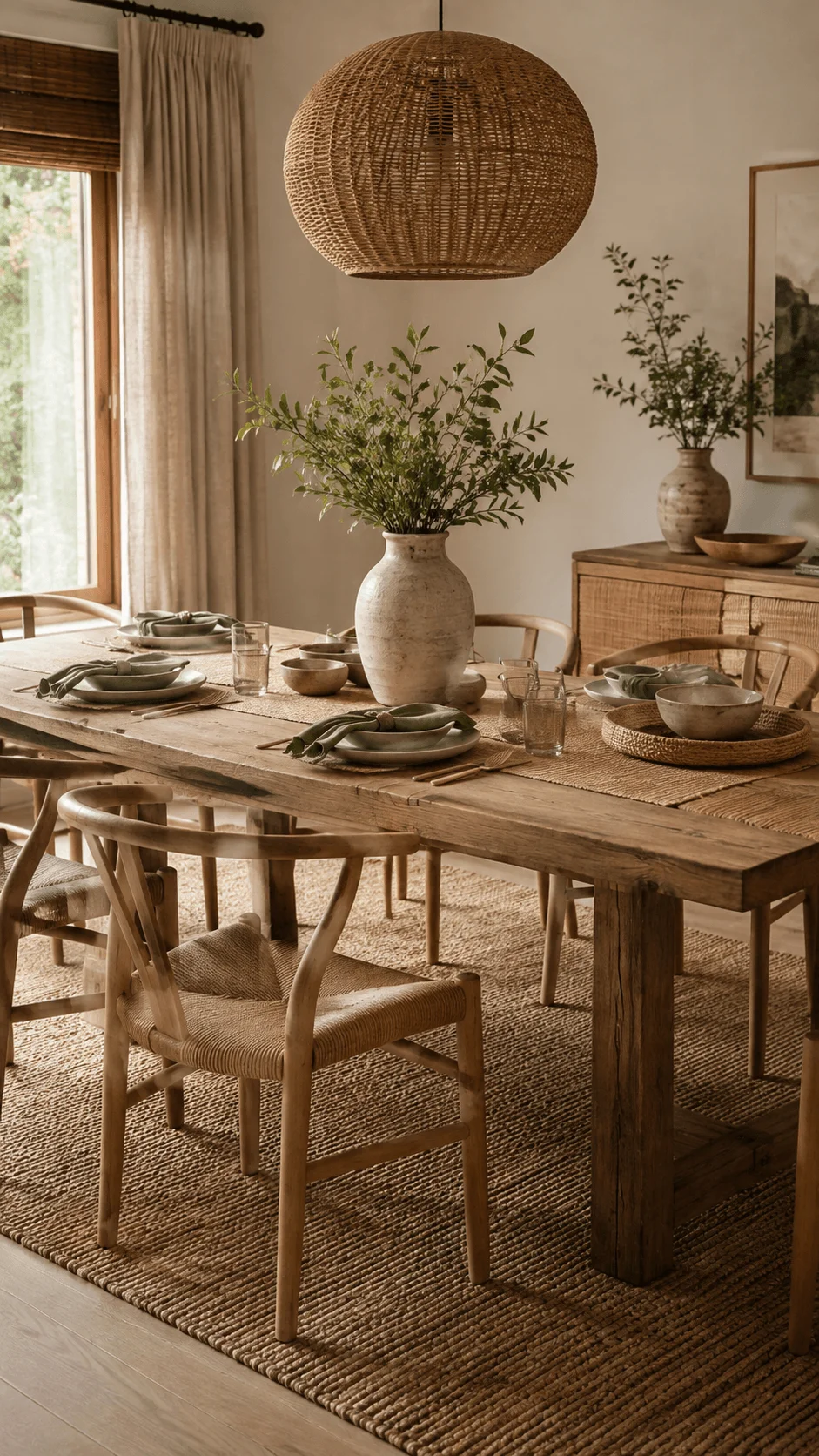
Texture becomes even more important when you prefer minimalist decoration. Rather than adding numerous objects to make the room interesting, you can allow the materials themselves to provide character.
This makes natural fiber layering a practical part of eco friendly dining room decor because the room gains personality through materials rather than excessive decoration.
Sculptural Lighting for a Sustainable Dining Room
Lighting can completely change the personality of a dining room. During the day, natural daylight may dominate the space, but once evening arrives, the dining light becomes one of the most important visual features.
In 2026, sculptural lighting is particularly useful for creating a dining room that feels intentional. A large woven pendant, organic shaped fixture, natural fiber shade, or elegant paper inspired light can draw attention toward the dining table.
The fixture should complement the proportions of the table. A small light above a large table can appear insignificant, while an oversized fixture can overwhelm a compact dining area. Consider the scale of the furniture before selecting the light.
Warm illumination can also make sustainable materials look more inviting. Wood develops a richer appearance under warm light, while handmade ceramics and natural fabrics gain additional depth.
Energy efficient bulbs can support the sustainability goals of the room, while dimmable lighting gives you more control over the atmosphere. Bright illumination can work for family meals or homework, while softer light can create a more intimate setting for dinner.
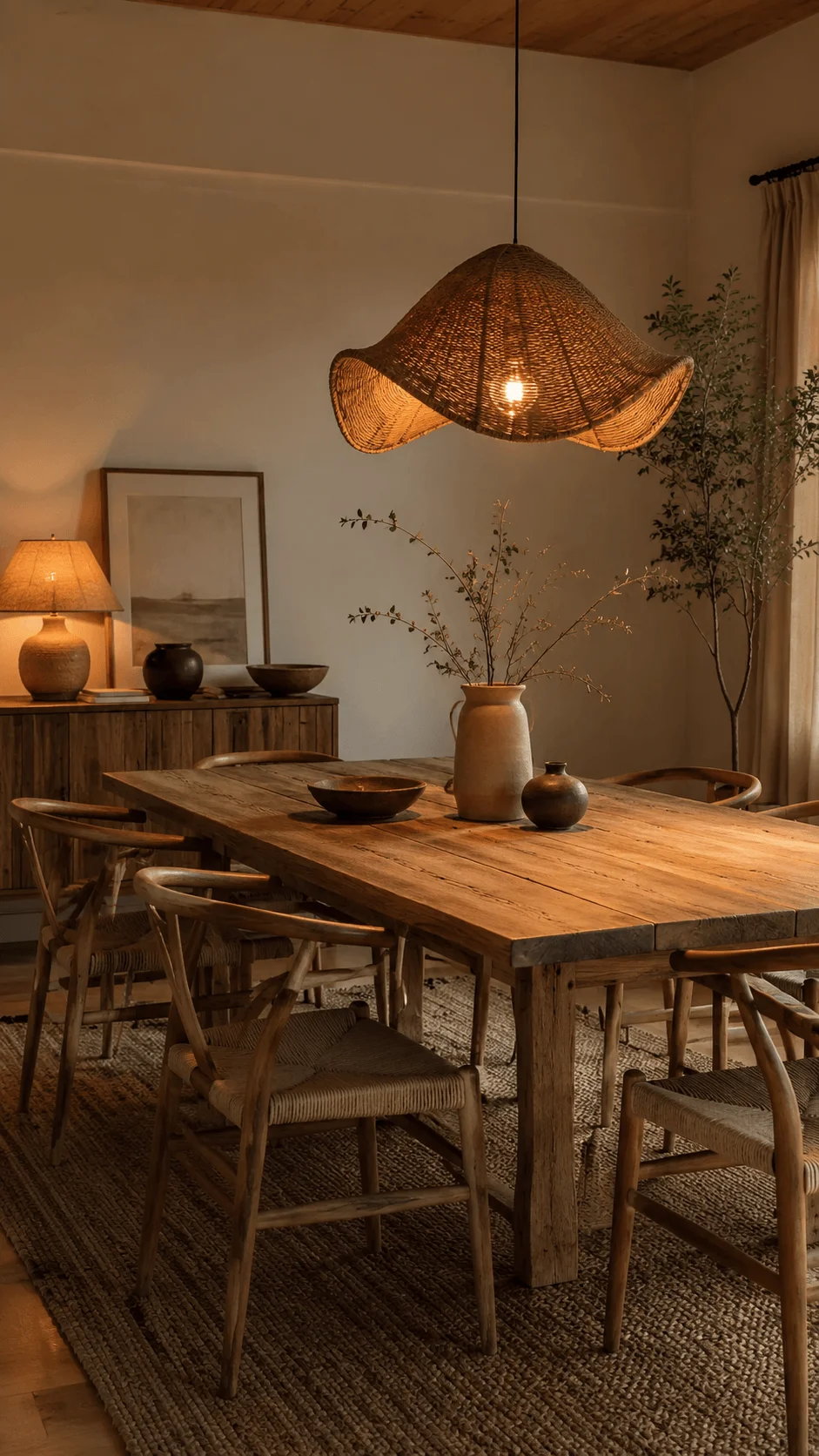
You can also combine different sources of illumination rather than relying entirely on one overhead fixture. A small table lamp on a sideboard, subtle wall lighting, or carefully positioned ambient lighting can make the room feel more layered.
A thoughtful lighting plan allows a natural dining room aesthetic to remain beautiful throughout the entire day rather than only looking attractive in photographs taken in natural sunlight.
Moody Earthy Colors for a Natural Dining Room Aesthetic
One of the most noticeable changes in contemporary dining room design is the growing interest in warmer and deeper colors. Cold gray interiors and extremely bright white rooms are making room for chocolate brown, earthy green, terracotta, muted olive, warm cream, clay, soft charcoal, and other grounded shades.
These colors work particularly well with sustainable materials because they naturally complement wood, stone, linen, ceramics, rattan, and greenery.
Chocolate brown can create a rich backdrop for a lighter wooden dining table. Muted olive can work beautifully with natural oak and woven textures. Terracotta can bring warmth to a room filled with cream textiles and handmade ceramics.
You do not need to paint every wall a deep color to achieve this look. A single accent wall can create a dramatic focal point, while the remaining walls stay warm and neutral. Alternatively, use deeper colors through curtains, chairs, artwork, table linens, or decorative objects.
The amount of natural light should influence your choices. A dining room with large windows can often support deeper shades comfortably, while a darker room may benefit from warm cream or soft beige walls combined with darker furniture.
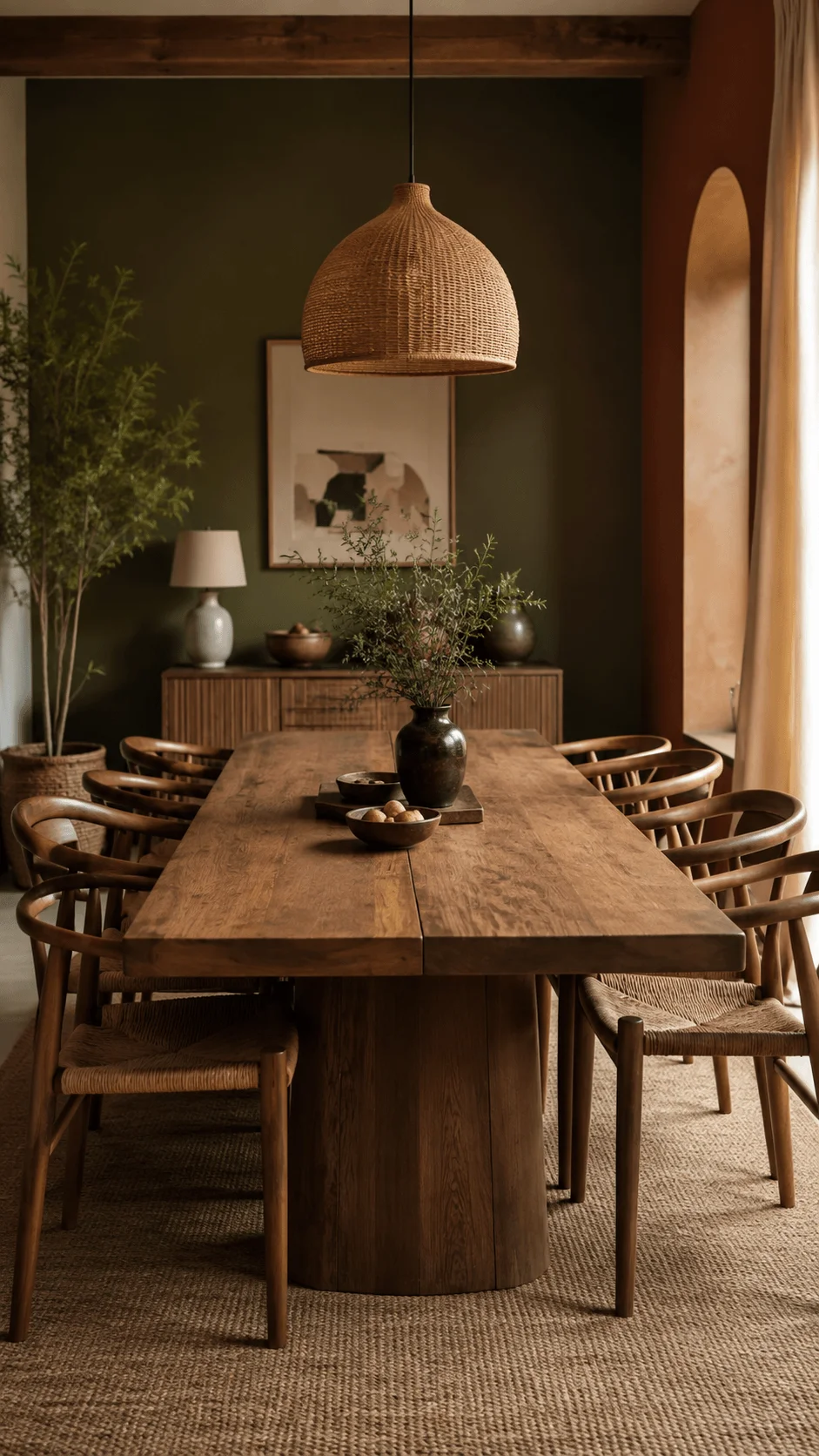
The combination of earthy color and natural texture can make a dining room feel sophisticated without requiring expensive decoration. Current 2026 dining room coverage also highlights warmer palettes, natural materials, textured surfaces, and more atmospheric dining environments.
The result is a dining space that feels grounded and intimate rather than cold or overly formal.
Handmade Ceramics for an Authentic Sustainable Dining Room
Handmade ceramics can add a small but powerful layer of personality to a dining room. Unlike perfectly uniform factory produced tableware, artisan pieces often contain subtle variations in shape, glaze, texture, and color.
A handmade ceramic bowl on a dining table can become a decorative object even when you are not using it for meals. A few handmade plates or cups can bring warmth to an otherwise simple table setting.
You do not need to replace your entire collection. Start with a few pieces that you genuinely enjoy. A handcrafted vase, serving bowl, or set of distinctive mugs can provide enough character to make the dining area feel more personal.
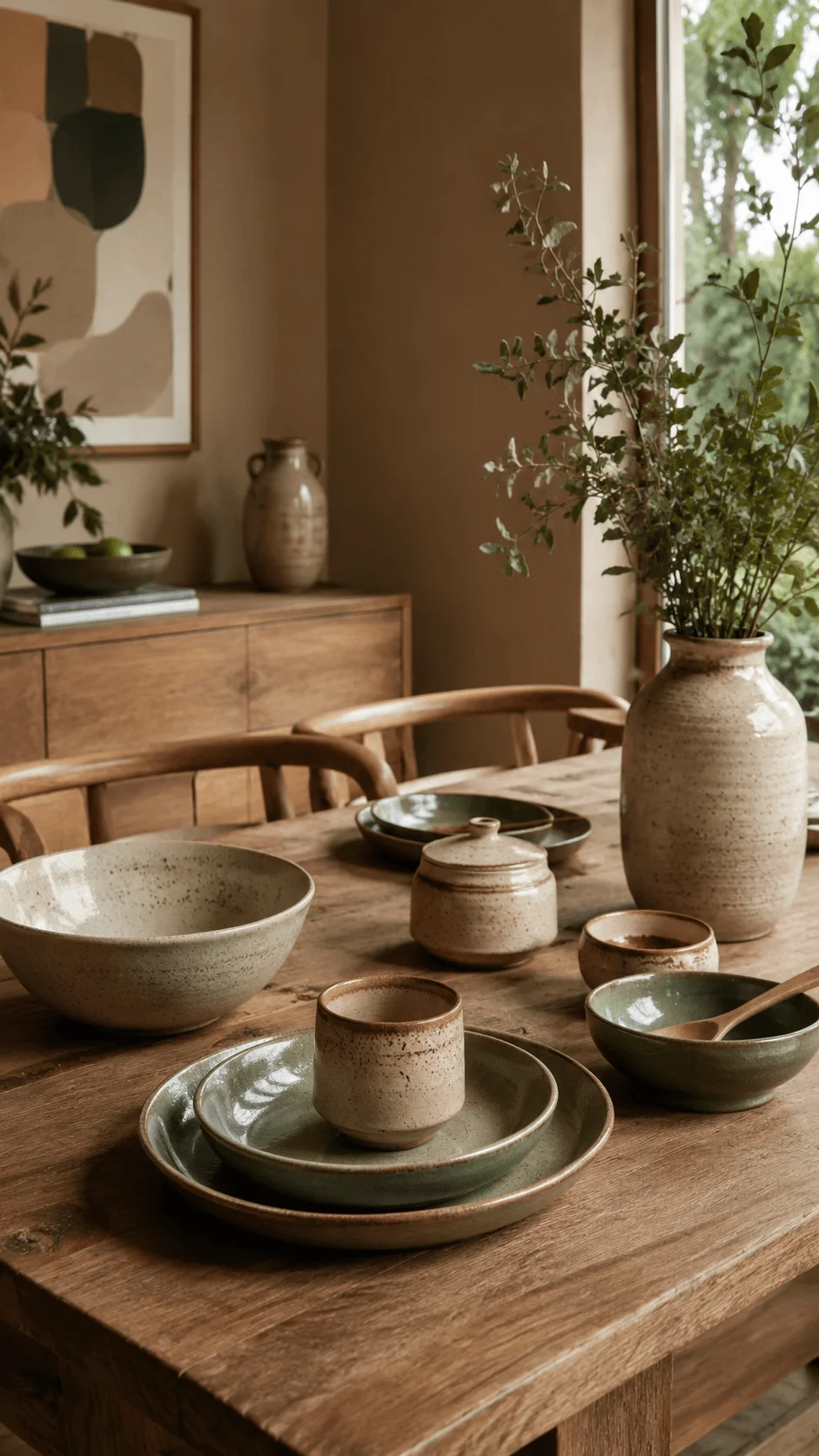
Natural glaze colors can work especially well with an eco friendly dining room aesthetic. Think soft cream, earthy brown, muted green, clay, sand, and subtle blue tones. These shades complement wood, linen, plants, and natural fiber textures.
Handmade ceramics also work beautifully with mix and match tableware. Instead of trying to create a perfectly coordinated dining table, allow small differences to become part of the aesthetic.
This creates a room that feels collected over time rather than decorated all at once.
Vintage Furniture for an Eco Friendly Dining Room
Vintage and secondhand furniture can bring character to a dining room while supporting a more thoughtful approach to decorating. Instead of purchasing an entirely new dining set, you can give an existing table, chair, cabinet, or sideboard another chapter in its life.
A vintage dining table can become especially attractive when paired with newer pieces. For example, an older wooden table can look fresh with contemporary upholstered chairs and a modern sculptural pendant. This combination creates contrast while preventing the room from looking like it came from a single furniture collection.
You can also introduce vintage elements through smaller pieces. An old wooden sideboard can provide storage for tableware, while a vintage mirror can reflect natural light and make the dining area feel larger. Secondhand artwork, decorative bowls, and serving pieces can add personality without requiring major changes to the room.
The most appealing aspect of vintage furniture is often its individuality. Small scratches, variations in wood color, unusual handles, and distinctive silhouettes can make a room feel more personal.
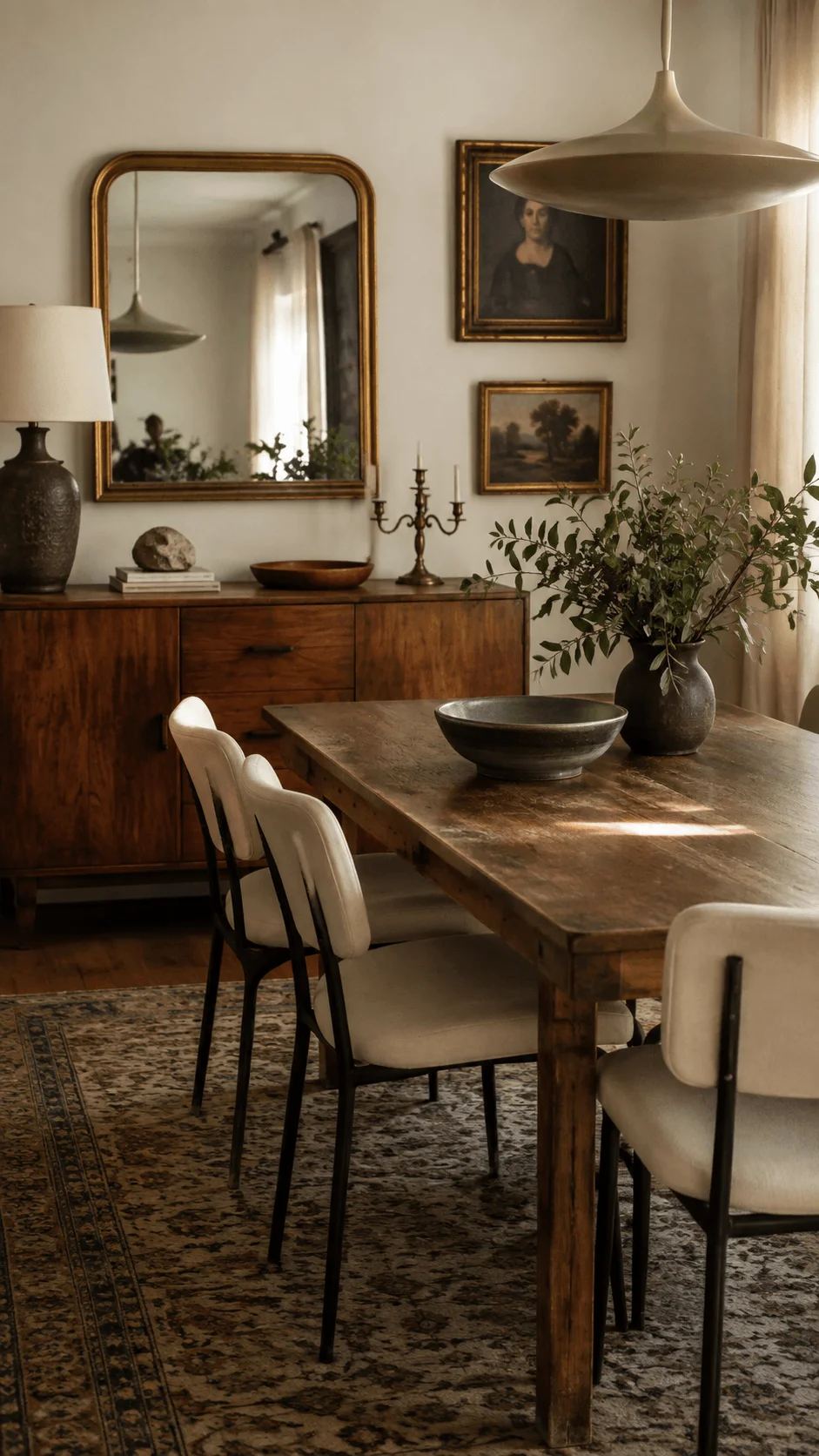
When choosing secondhand furniture, focus on quality and practicality. A beautiful piece that does not function well in your room may eventually become clutter. Measure the available space and consider how the furniture will interact with the dining table, chairs, and walking areas.
Vintage pieces also make it easier to create an interior that does not look overly coordinated. Combining different periods and styles can produce a sophisticated, collected atmosphere.
For a sustainable dining room design, this approach makes particular sense because you can work with furniture that already exists rather than automatically replacing everything when you redesign the space.
Organic Modern Dining Room Furniture
Straight lines are no longer the only option for contemporary dining spaces. Softer silhouettes and organic shapes can make a room feel more relaxed, welcoming, and visually interesting.
A round dining table can immediately change the atmosphere of a dining area. Its softer outline encourages conversation and can work particularly well in rooms where a large rectangular table would feel too formal.
Curved dining chairs provide another opportunity to introduce organic forms. A rounded chair back can soften the appearance of a substantial wooden table, while a curved bench can create a more casual seating arrangement.
You can continue the theme through other details. An organically shaped mirror, rounded pendant light, curved sideboard, sculptural vase, or softly shaped rug can repeat the visual language without making everything appear identical.
Natural materials work especially well with these forms. Wood, rattan, linen, stone, clay, and woven fibers already have an organic quality, so combining them with curved furniture can create a cohesive natural dining room idea.
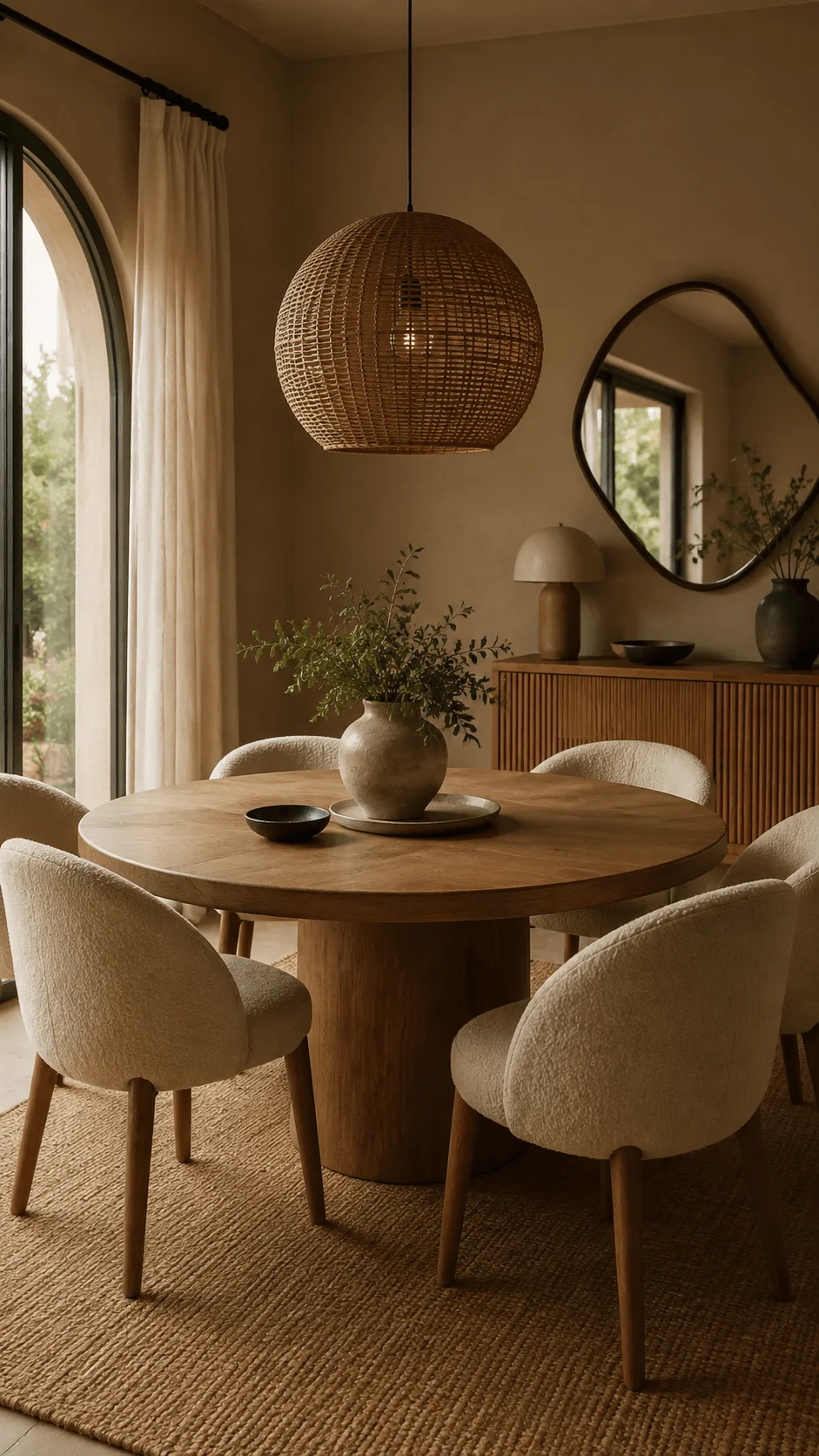
The important thing is not to use curves everywhere. Too many sculptural objects can make the space feel busy. Instead, select one or two noticeable shapes and allow the remaining furniture to provide balance.
For example, a round wooden table can become the main organic element while the chairs remain relatively simple. Alternatively, straight furniture can surround a sculptural light fixture or organically shaped artwork.
This approach creates a modern dining room that feels softer without sacrificing functionality.
Restaurant Inspired Sustainable Dining Spaces
One of the more interesting directions in current interior design is the influence of restaurant interiors on residential dining spaces. Homeowners are increasingly interested in creating dining rooms that feel atmospheric, intimate, and intentionally designed rather than simply placing a table and chairs in an open area.
You can adapt this idea while maintaining an eco friendly dining room aesthetic.
Comfortable seating should be one of the first considerations. A built in banquette can create a cozy dining corner, especially when combined with a sturdy wooden table and warm textiles. If built in seating is not practical, a long upholstered bench can create a similar effect.
Lighting plays an equally important role. Restaurant interiors often rely on warm and layered illumination rather than harsh overhead lighting. You can recreate this atmosphere with a sculptural pendant above the dining table, dimmable bulbs, and subtle ambient lighting.
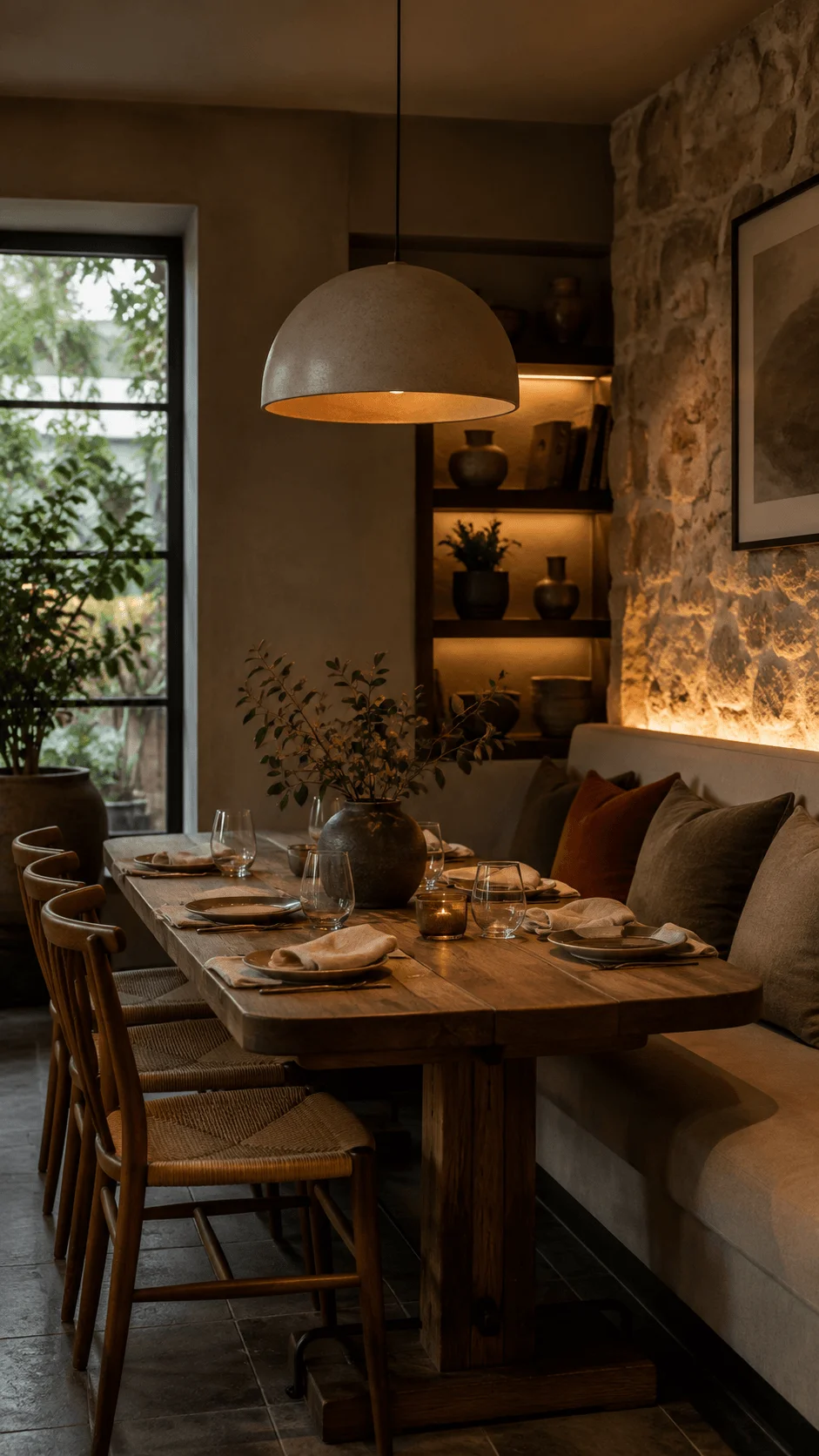
Material selection can keep the look connected to sustainability. Reclaimed wood, natural stone, linen upholstery, vintage furniture, handmade ceramics, and woven materials can create an environment that feels refined without relying heavily on artificial finishes.
You can also make the dining table itself more atmospheric. A simple ceramic vase, seasonal branches, linen napkins, and understated tableware can make the setting feel special without turning every meal into a formal event.
The goal is to create a dining room that feels welcoming and memorable rather than theatrical. The space should still feel like part of your home.
This restaurant inspired direction is particularly useful if you want your dining room to feel sophisticated while retaining the warmth associated with natural materials.
Natural Textured Walls for an Eco Friendly Dining Area
Walls often receive less attention than furniture, yet they can completely change the appearance of a dining room. A textured wall can provide depth and visual interest without requiring numerous decorative objects.
Limewash inspired finishes are especially attractive for natural interiors because their subtle variation creates a soft, aged appearance. Mineral inspired finishes and understated plaster effects can produce a similar sense of depth.
If you prefer wallpaper, look for designs inspired by leaves, branches, grasses, organic shapes, or subtle natural patterns. The goal does not need to be a highly decorative wall. A quiet texture can sometimes create a more sophisticated result.
Color also matters. Warm cream, clay, beige, muted green, soft brown, and earthy gray can work beautifully with natural furniture.
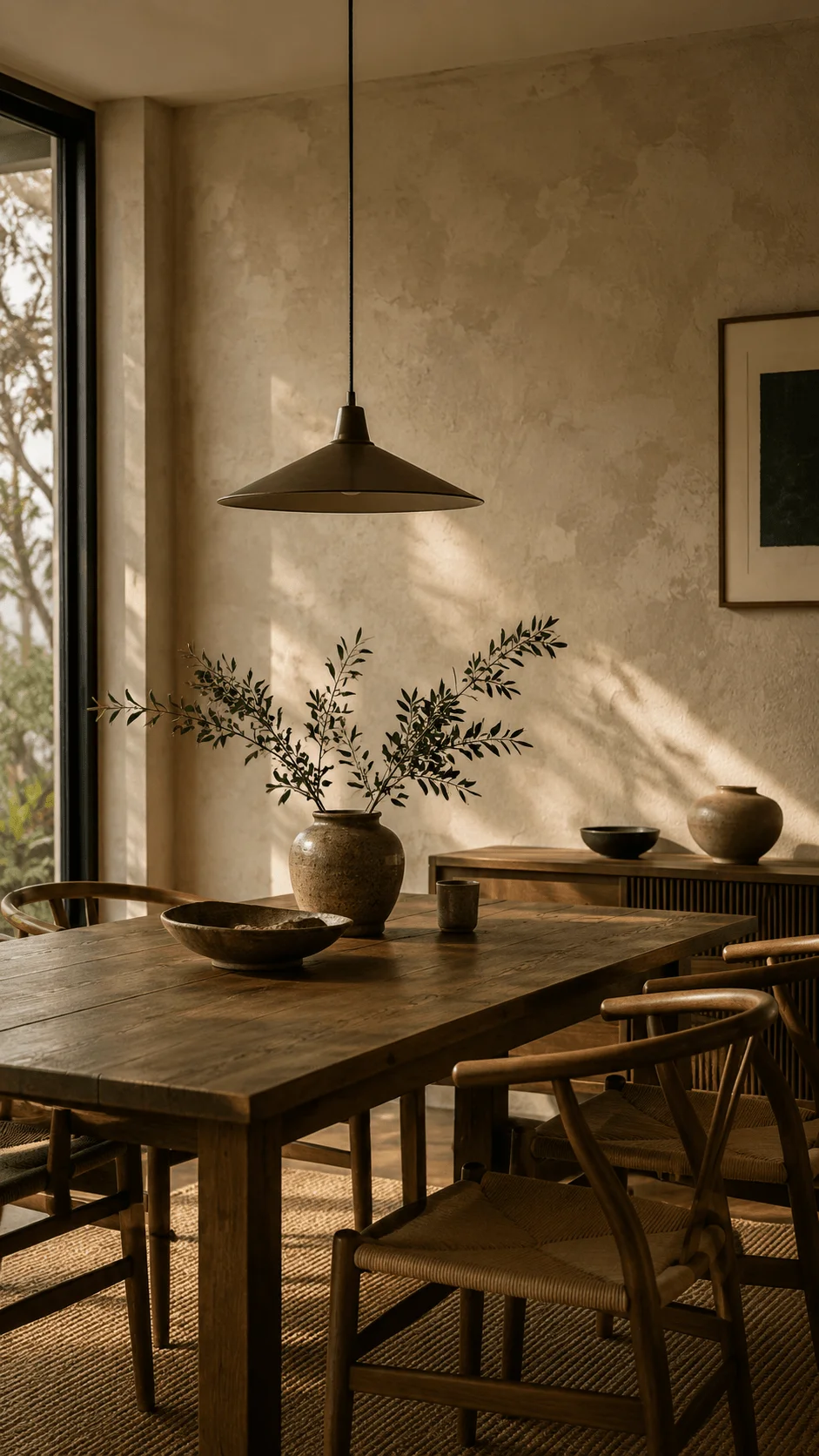
A textured wall becomes particularly interesting when daylight moves across it. Small variations in the surface can create changing shadows throughout the day, giving the room a sense of movement without adding additional decoration.
You can use this technique behind the dining table to create a focal point. A wooden table placed against a warm textured wall can look striking with a simple pendant above it and a few handmade ceramics on the table.
Low impact paint choices can also support the sustainability goals of the room. However, the visual result should remain the priority. The most successful eco friendly dining room decor looks beautiful first and communicates sustainability through thoughtful choices rather than obvious labels.
Mix and Match Seating for a Personalized Sustainable Dining Room
Perfectly matching dining chairs can make a room look polished, but they are not the only way to create a cohesive dining space. Mixing different seating styles can make the room feel more relaxed and individual.
One simple approach is to combine a bench with individual chairs. A wooden bench can sit on one side of the table while comfortable chairs occupy the opposite side. This arrangement can also make seating more flexible when you have guests.
Another option is to combine vintage chairs with newer pieces. You could use similar colors to connect them visually even when their shapes differ.
For example, different wooden chairs can share a warm natural finish. Alternatively, chairs with different silhouettes can feel connected through cream upholstery or woven seats.
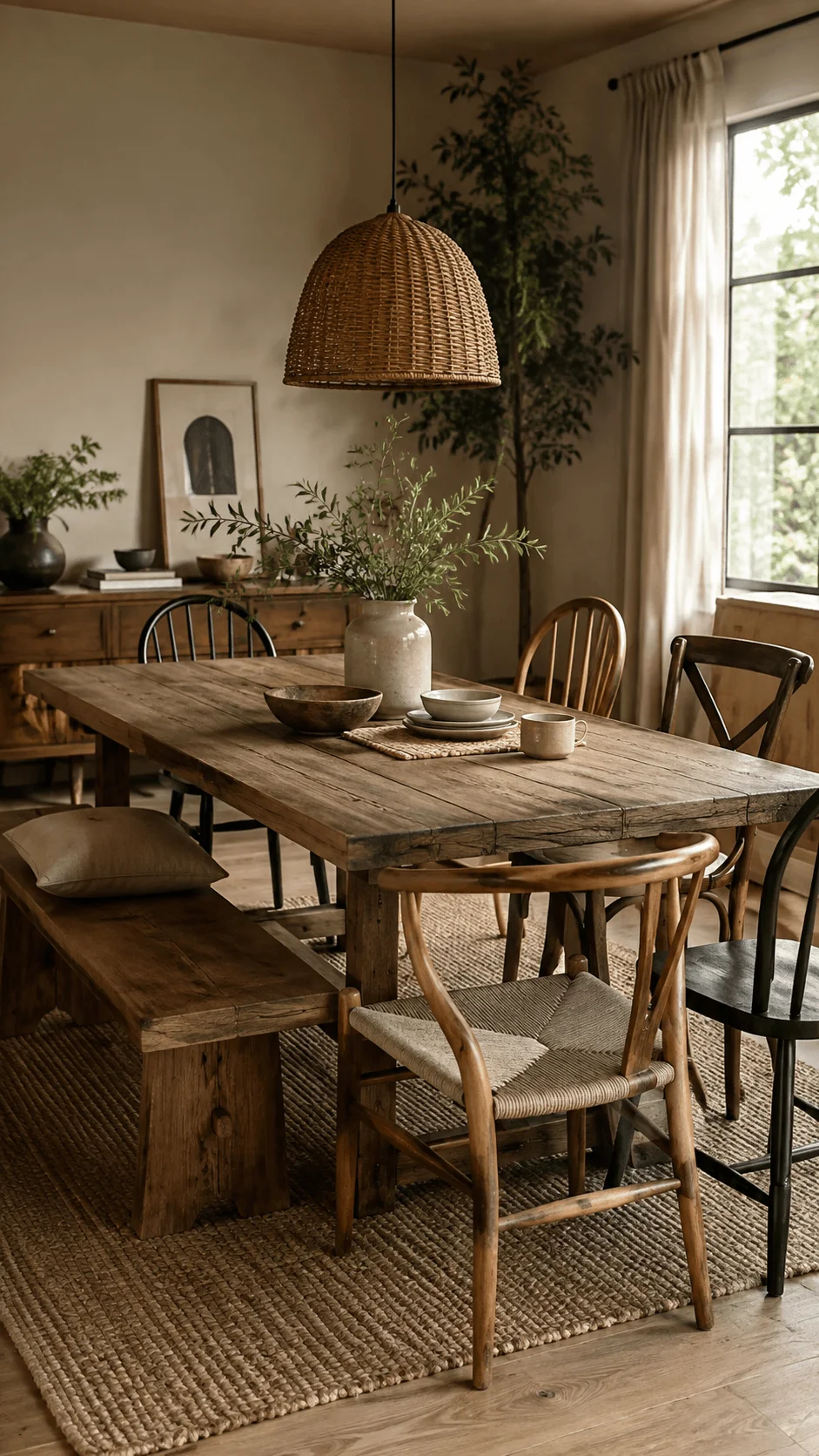
The same principle works with materials. You might combine wooden chairs with a rattan chair or upholstered seating as long as the colors and proportions remain balanced.
Mixing seating can also help you reuse furniture you already own. Instead of replacing every chair simply because one or two pieces look different, you can make those differences part of the design.
This creates a more personal sustainable dining room because the furniture can tell a story.
The key is to establish one or two connecting elements. Similar colors, related materials, repeated shapes, or a consistent overall mood can make different chairs look intentional rather than random.
How to Combine Eco Friendly Dining Room Ideas Without Overdecorating
Using sustainable materials does not mean that you need to incorporate every natural element available. In fact, the strongest dining rooms often rely on restraint.
Start with one foundation piece. For many rooms, this will be the dining table. A beautiful reclaimed wood table can establish the material direction immediately. From there, choose furniture and decoration that support its character.
For a warm Japandi inspired room, you could combine a simple oak table with linen chairs, handmade ceramics, a woven pendant, and a muted cream wall. A single large plant could add the biophilic element without making the room feel crowded.
Another approach could combine a vintage wooden table with contemporary curved chairs, an earthy olive wall, a sculptural light, and a natural fiber rug. The vintage furniture would provide history while the newer pieces would keep the room feeling current.
You can also create a more dramatic atmosphere by pairing walnut furniture with chocolate brown walls, warm cream textiles, handmade ceramics, and soft lighting. This combination can make the dining area feel intimate and sophisticated.
The important principle is balance.
If your table has a strong wood grain, you may not need a heavily patterned rug. If your pendant light has a sculptural shape, keep other decorative elements relatively simple. If the walls have strong texture, choose furniture with quieter silhouettes.
An eco friendly aesthetic dining room should not feel like a showroom filled with sustainability themed products. It should feel like a real room where people want to sit, eat, talk, and spend time together.
Choose materials that you enjoy seeing and touching. Select furniture that feels comfortable. Keep objects that have meaning rather than adding decoration simply to fill empty surfaces.
Sustainability and aesthetics work best together when every piece has a purpose.
Conclusion
An eco friendly aesthetic dining room does not need to look plain, rustic, or overly focused on sustainability. The most successful spaces combine responsible choices with beautiful design, comfort, personality, and longevity.
Warm Japandi furniture, reclaimed wood, biophilic elements, natural fibers, sculptural lighting, earthy colors, handmade ceramics, vintage furniture, organic shapes, textured walls, and flexible seating can all contribute to a dining room that feels current in 2026.
You do not need to use every trend at once. Start with the materials, colors, furniture, and textures that genuinely suit your home. Reuse pieces when possible, choose durable furniture when you need something new, and allow your dining room to develop gradually.
A sustainable dining space should ultimately feel like somewhere you want to spend time. When natural materials, thoughtful design, personal objects, and practical choices come together, you can create a dining room that looks beautiful today while remaining meaningful and useful for years to come.