12 Eco Friendly Tree Stump Garden Ideas
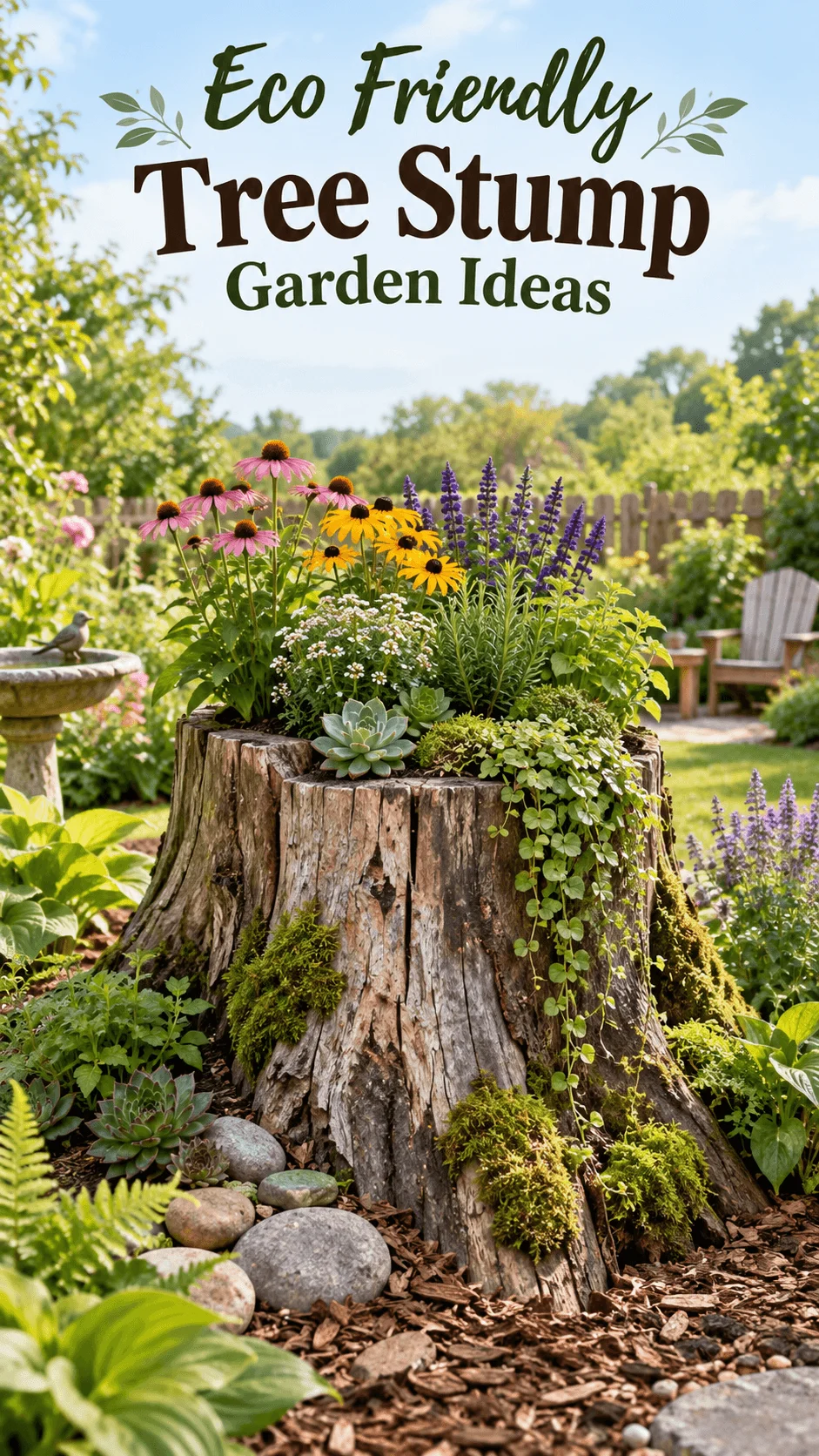
An old tree stump does not always have to become garden waste. With a little creativity, it can become part of a beautiful and practical outdoor space. These eco friendly tree stump garden ideas show how gardeners can reuse existing wood for planting, wildlife habitat, natural decoration, and useful garden features. Instead of removing every stump and replacing it with new materials, you can work with what your garden already provides. A weathered stump can add character while creating opportunities for native plants, pollinators, herbs, succulents, and other forms of garden life. Whether you have a large backyard or a small garden, the natural shape of an old stump can inspire a surprisingly wide range of sustainable designs.
Why Reusing a Tree Stump Is an Eco Friendly Garden Choice
When a tree comes down, gardeners often think about removing the remaining stump as quickly as possible. However, an old stump can have value long after the tree itself has disappeared. Leaving a suitable stump in place allows natural decomposition to continue while giving you an opportunity to incorporate the wood into your landscape.
Reusing an existing stump also means you do not necessarily need to purchase another decorative feature or planter. The wood already exists in your garden, so you can work around its shape, texture, and position. This approach fits well with sustainable gardening because it encourages gardeners to make better use of existing materials.
An aging stump can also contribute to garden biodiversity. As wood gradually breaks down, it can provide shelter and food sources for various small organisms. Mosses and fungi may colonize the surface, while surrounding plants can create additional cover for wildlife.
However, you should always inspect a stump before turning it into a garden feature. A stump that sits near a walkway, leans dangerously, or shows signs of structural instability may need professional attention. You should also consider whether the stump has signs of disease that could affect nearby plants.
Once you determine that the stump is suitable, its unusual shape can become an advantage. Cracks, hollows, exposed roots, and weathered surfaces can all contribute to a natural garden design.
12 Eco Friendly Tree Stump Garden Ideas
1. Native Pollinator Tree Stump Garden
One of the most rewarding ways to reuse an old stump involves turning it into a small pollinator garden. Instead of treating the stump as an object that needs to look perfect, allow it to become part of a planting area designed around native flowers and beneficial insects.
If the stump has a natural hollow, you may be able to use that space as a planting pocket when its condition allows. You can also place suitable plants around the base and allow their foliage to soften the edges of the wood. The combination of weathered timber and flowering plants creates a natural focal point.
Choose plants according to your local climate, sunlight, soil, and available moisture. Native flowering plants can provide valuable resources for local pollinators because they have developed alongside the wildlife in their region.
Think beyond a single flowering plant. A more effective garden design can include several plants that bloom at different times. This approach can create changing colors and textures throughout the growing season while providing food for pollinators over a longer period.
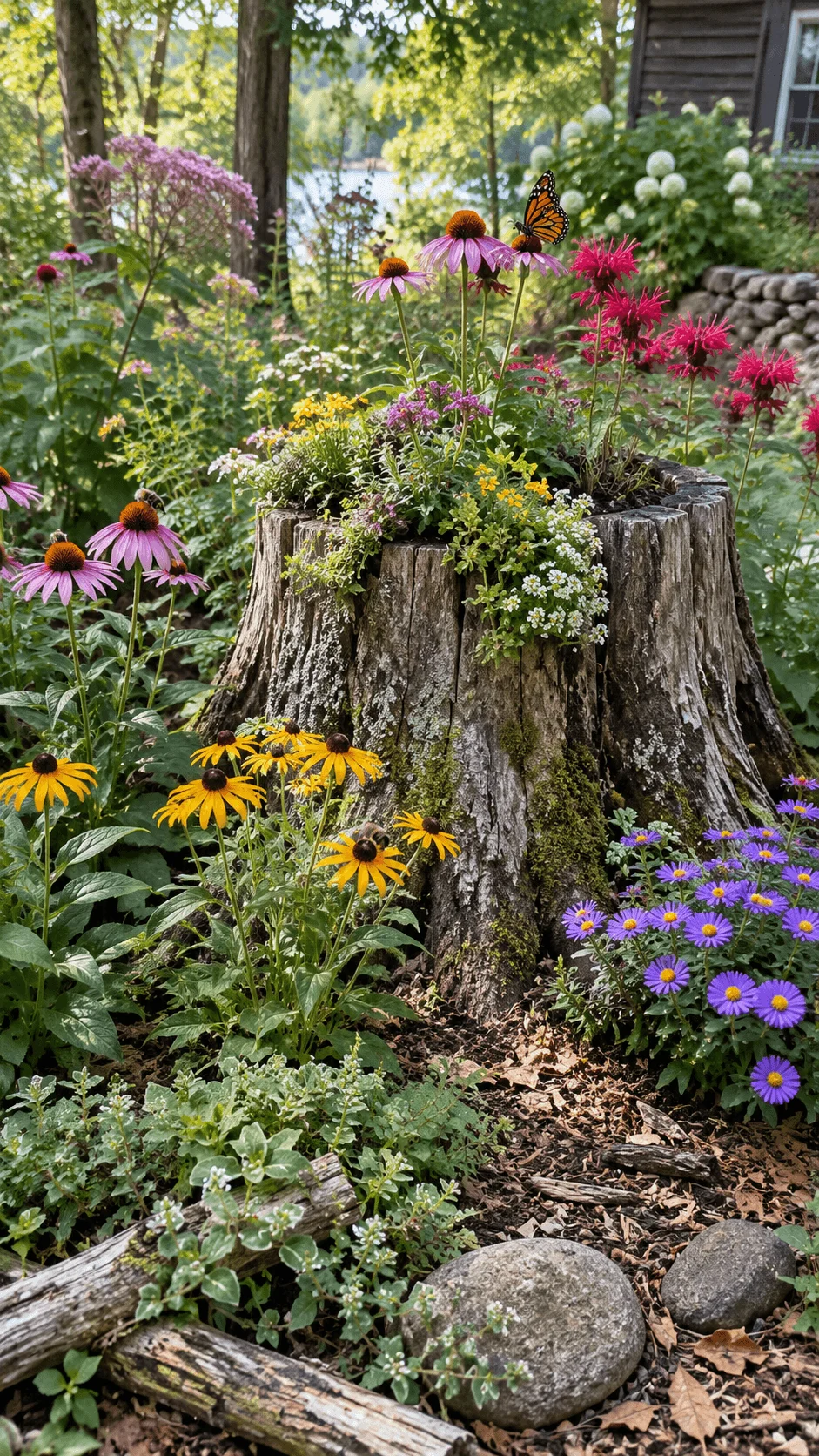
You can also surround the stump with low growing plants, stones, fallen branches, or natural mulch. These additions help connect the stump with the rest of the garden instead of making it look like an isolated planter.
A native pollinator stump garden works especially well in informal landscapes where you want the garden to feel connected to nature. The slightly imperfect appearance of old wood can actually make the planting area feel more established and authentic.
2. Mini Stumpery for Wildlife
If you want your stump garden to do more than look attractive, consider creating a miniature stumpery. A stumpery uses old wood, stumps, logs, branches, and woodland plants to create a natural habitat area.
You can use your existing stump as the central feature and build the surrounding landscape gradually. Add naturally fallen branches, pieces of bark, stones, moss, and suitable shade loving plants around it. You do not need to make everything symmetrical. A loose and natural arrangement often works better.
The beauty of a stumpery comes from allowing natural processes to become part of the design. As wood ages, its appearance changes. Moss may spread across damp surfaces, fungi may appear, and small creatures may use gaps beneath pieces of wood as shelter.
Ferns and other foliage plants can work particularly well around a stump in a shaded garden. Their delicate leaves contrast with the rough texture of old wood and create a woodland inspired atmosphere.
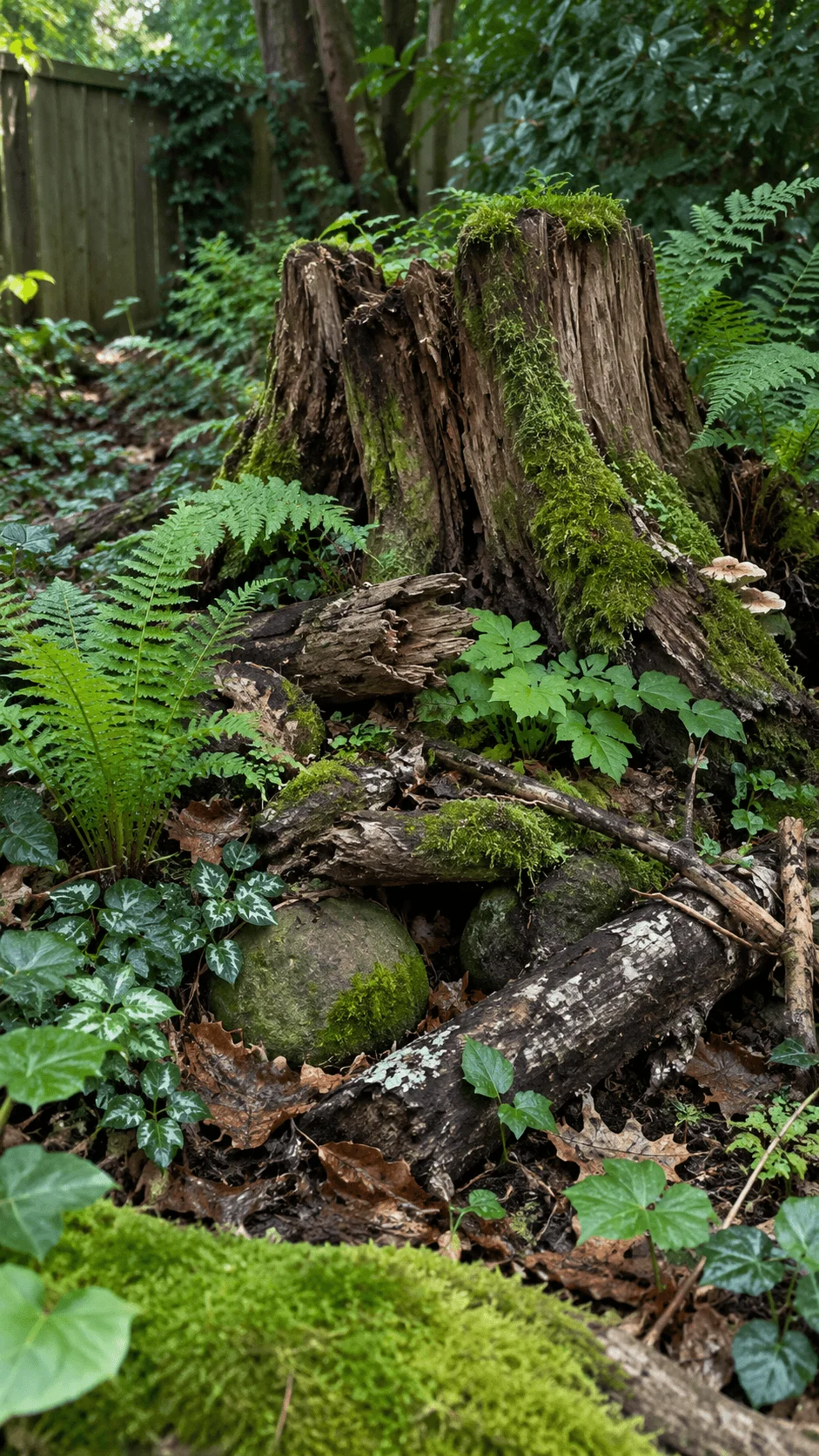
A mini stumpery can also provide an excellent solution for gardeners who want to encourage more biodiversity without redesigning their entire yard. Even a relatively small area can introduce different textures and habitats.
Avoid adding too many artificial decorations. The natural materials already provide plenty of visual interest. Let the changing condition of the wood become part of the garden’s character.
3. Tree Stump Succulent Garden
A weathered tree stump can make an excellent focal point for a succulent garden when the location provides appropriate growing conditions. Succulents offer unusual shapes, textures, and forms that contrast beautifully with rough natural wood.
This idea works particularly well when the stump sits in a sunny and relatively dry part of the garden. If the stump contains a natural cavity that can safely hold planting material, you can use that space for suitable plants. Otherwise, place succulents around the base and allow them to visually connect the wood with the surrounding landscape.
Drainage deserves particular attention. Many succulents dislike consistently wet conditions, so avoid creating a planting arrangement that holds excessive moisture around their roots. Choose a suitable growing medium and consider the natural rainfall and humidity in your area.
You can create visual interest by combining plants with different forms. Some succulents grow upward, while others spread outward or create compact clusters. Combining contrasting shapes can make a small stump feature look much more substantial.
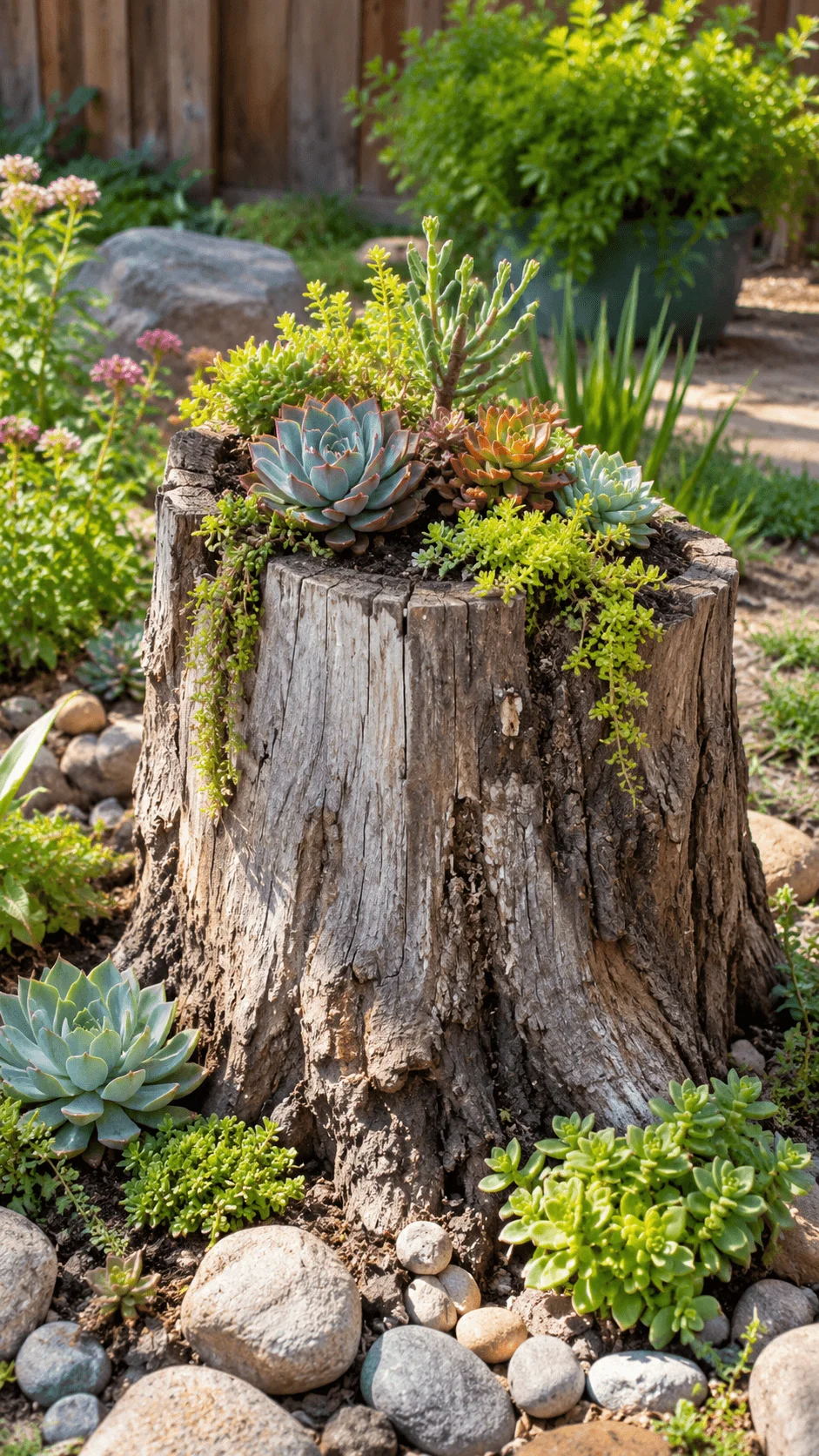
Small stones and gravel can complement the arrangement without overwhelming the natural wood. Choose materials that suit the existing landscape rather than covering the stump with excessive decoration.
A succulent stump garden can also suit modern landscapes because its combination of weathered wood, stone, and sculptural plants creates a simple but distinctive appearance.
4. Tree Stump Mushroom Garden
An old stump can become a fascinating part of a garden centered around fungi and natural decomposition. Mushrooms play an important role in breaking down organic material, making fungi a natural part of the life cycle of old wood.
Rather than trying to make the stump look new, you can allow its changing appearance to become the main feature. As the wood ages, fungi and other organisms may gradually colonize it, creating different textures and colors.
You can enhance the surrounding area with woodland plants, moss, fallen leaves, and other natural materials. This creates a setting where the stump looks like an intentional part of a miniature woodland ecosystem.
If you want to explore mushroom growing, research species that suit your local environment and follow reliable horticultural guidance. Never eat mushrooms simply because they appear on your stump or in your garden. Correct identification matters because some wild mushrooms can cause serious illness.
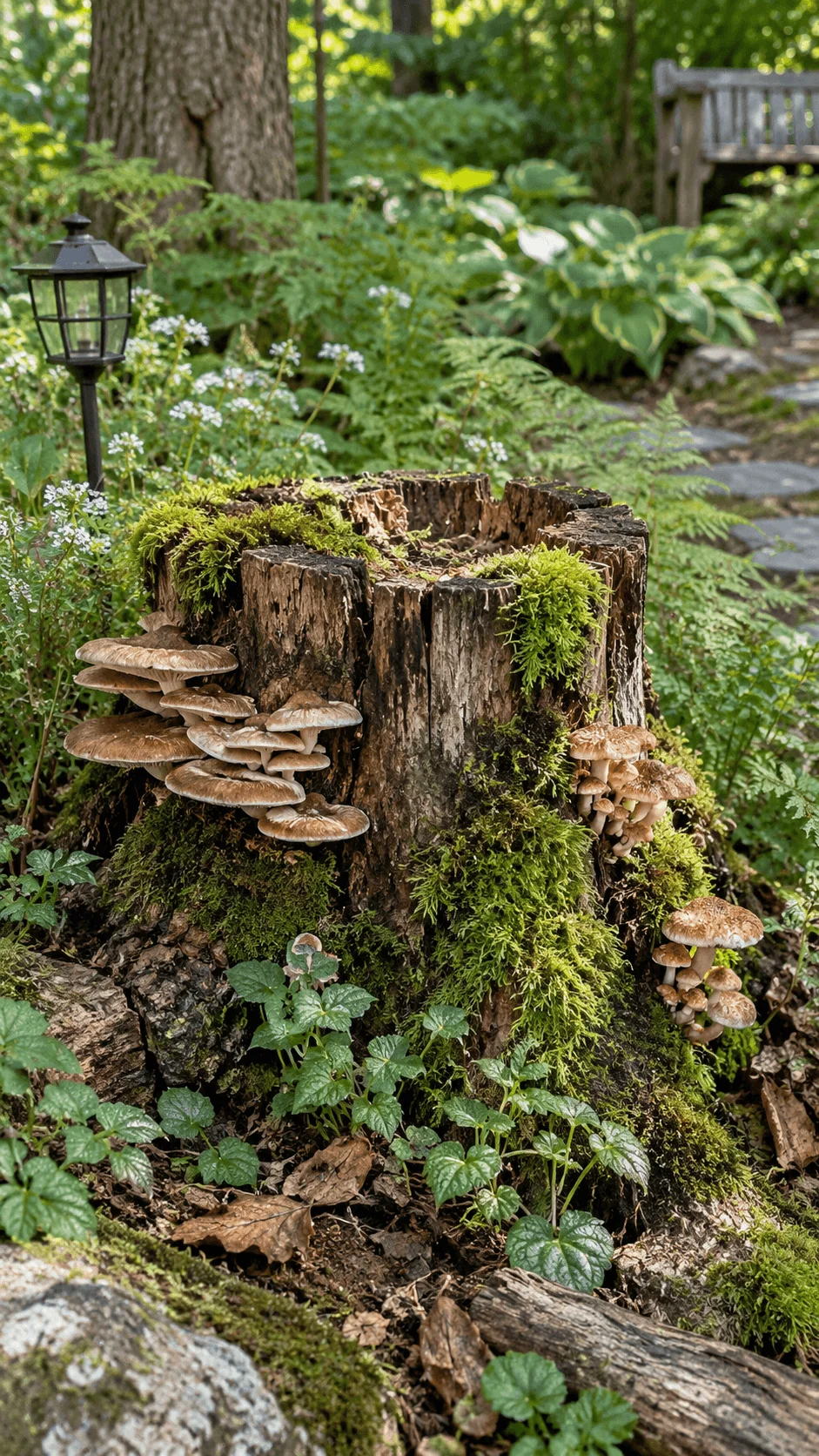
The strongest ecological aspect of this idea comes from appreciating decomposition itself. Many gardeners view decaying wood as something unattractive that they need to remove. A sustainable garden can take a different approach by recognizing that decomposition supports natural cycles.
This idea works especially well for gardeners who enjoy naturalistic landscapes and want to observe how their garden changes over time.
5. Green on Green Tree Stump Garden
A green on green garden can give an old stump a sophisticated and contemporary appearance. Instead of depending on bright flowers, this approach focuses on different shades of green, leaf shapes, textures, and plant heights.
The stump provides a dark, weathered foundation while foliage plants create layers around it. Moss can soften rough surfaces, while ferns can introduce delicate textures in shady areas. Ground covers can spread around the base and visually connect the stump with the surrounding planting beds.
You can create additional depth by combining plants with different leaf sizes. Large leaves can contrast with small delicate foliage, while upright plants can provide contrast against low growing ground covers.
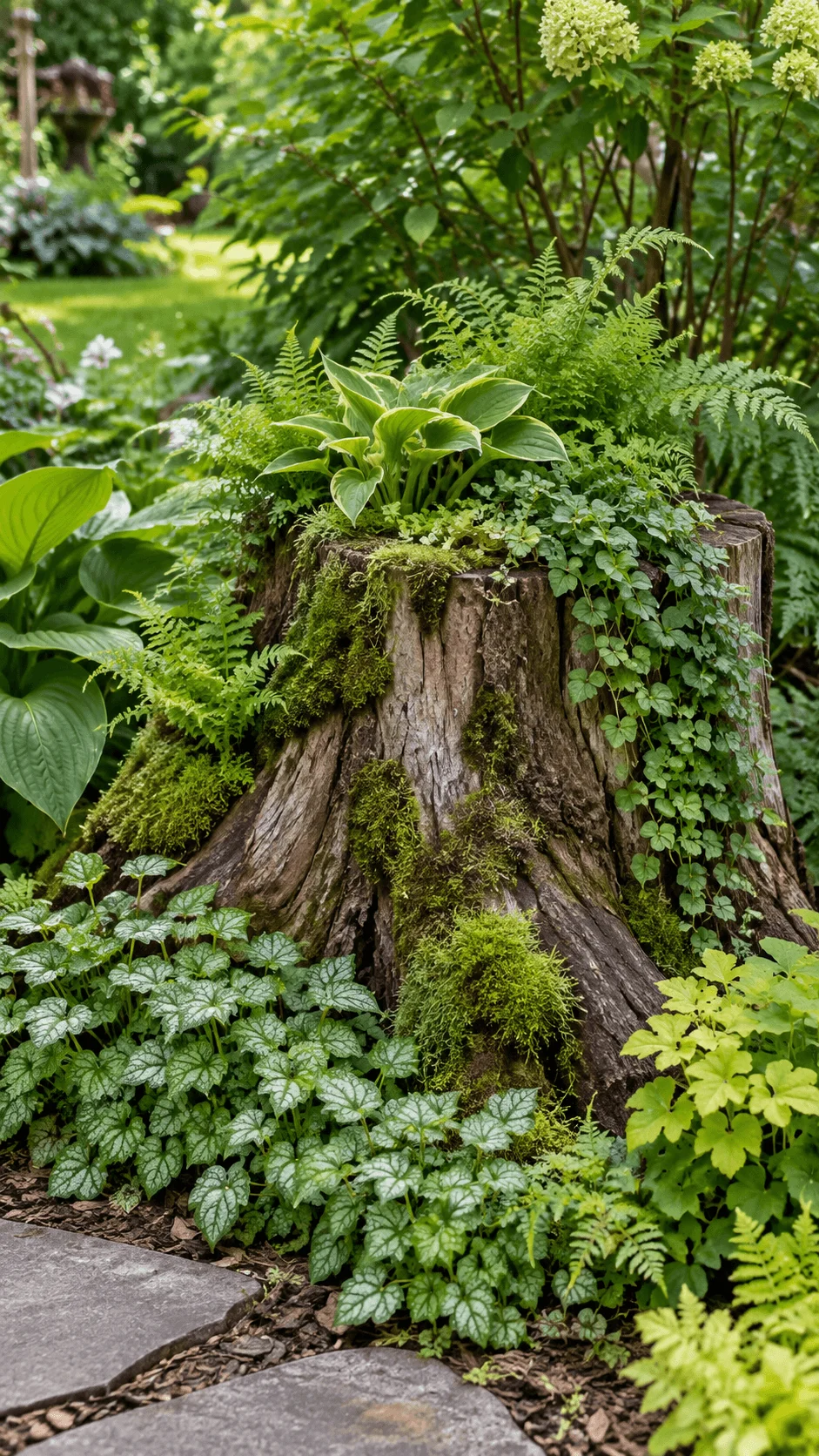
This style works particularly well if you prefer a calm and natural garden rather than a highly colorful flower display. The changing textures keep the feature interesting even when few plants are flowering.
The key is to avoid making every plant look identical. The beauty of a green on green design comes from variation. Different shades and textures can create depth without requiring excessive decoration.
This approach also works well when you want your stump to appear integrated into the landscape. Rather than placing a bright planter directly on top of the wood, you allow plants to gradually surround and visually absorb the stump.
6. Tree Stump Herb Garden
An old stump can also become a useful herb growing area, particularly in a small garden where every available space matters. Instead of using the stump only as decoration, you can incorporate edible plants into the design.
The first consideration should be sunlight. Many herbs prefer plenty of light, although specific requirements vary from plant to plant. Check the conditions around your stump before choosing what to grow.
If the stump has enough natural depth for planting, you can explore whether it can safely support a small herb planting pocket. A shallow cavity may work better for smaller plants, while a larger area could accommodate a broader selection.
Good drainage remains important because excessive moisture can damage both plants and the stump. Avoid creating a container like environment that traps water after rain.
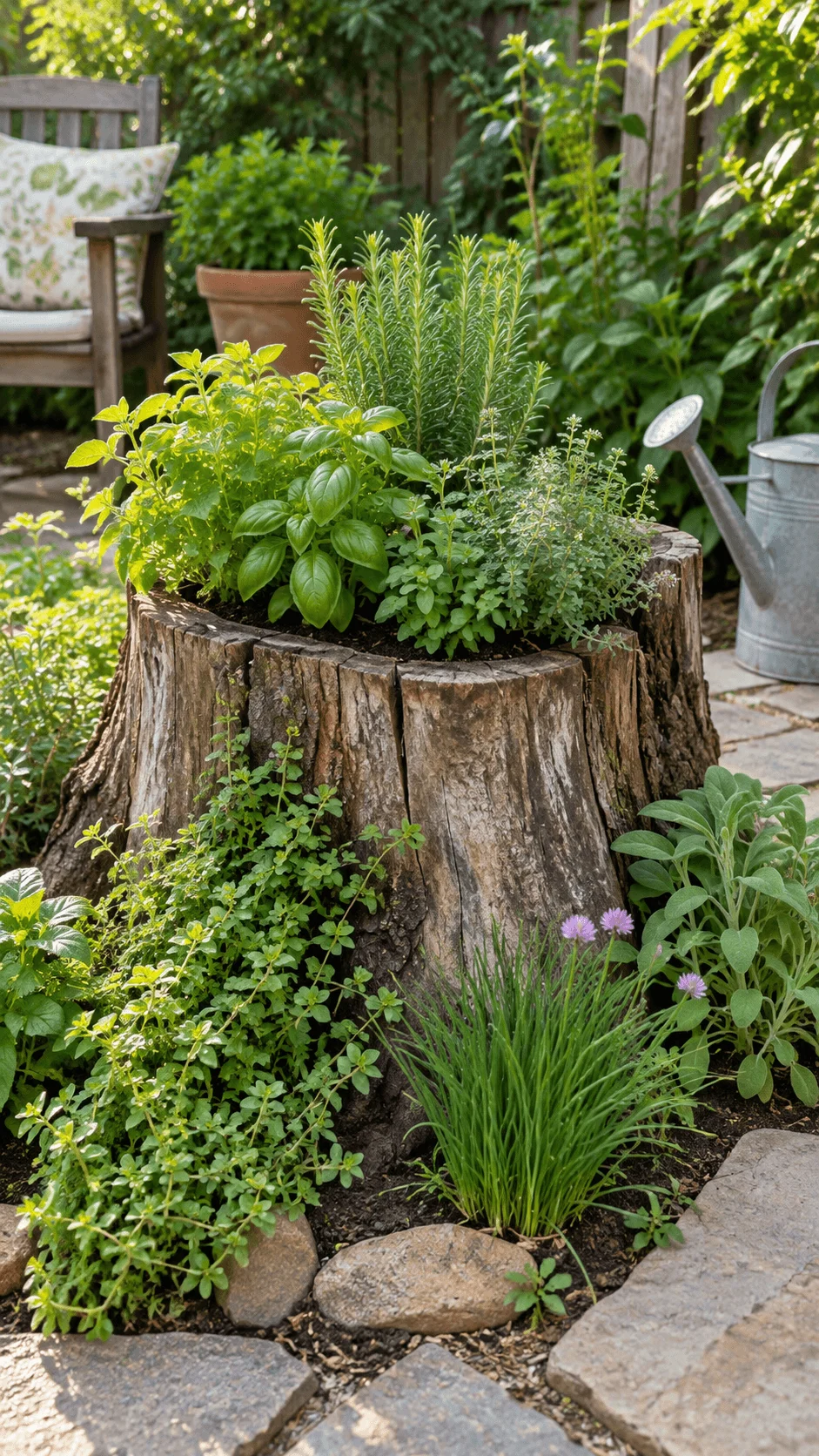
You can also use the area surrounding the stump for additional herbs. This allows you to create layers, with taller plants closer to the stump and lower growing varieties around its base.
A stump herb garden can work particularly well near an outdoor sitting area or kitchen garden where you can easily reach the plants. The weathered wood also adds a rustic quality that suits informal garden designs.
Beyond its appearance, the idea demonstrates one of the most useful principles of sustainable gardening: a garden feature can serve more than one purpose. Your stump can provide structure, visual interest, habitat, and space for useful plants at the same time.
7. Tree Stump Pollinator Station
A tree stump can become the centerpiece of a small pollinator station when you design the surrounding space specifically for bees, butterflies, and other beneficial insects. This approach takes the idea of a stump garden beyond decoration and turns it into a functional part of the garden ecosystem.
Start by looking at the amount of sunlight the stump receives during the day. Many flowering plants that attract pollinators prefer sunny locations, although you can also create a pollinator friendly planting area in partial shade by choosing plants that tolerate lower light.
Instead of filling the area with one type of flower, create variety. Different flower shapes can attract different insects, while plants that bloom during different seasons can provide food across a longer period. Native plants can be particularly valuable because local pollinators often have established relationships with regional plant species.
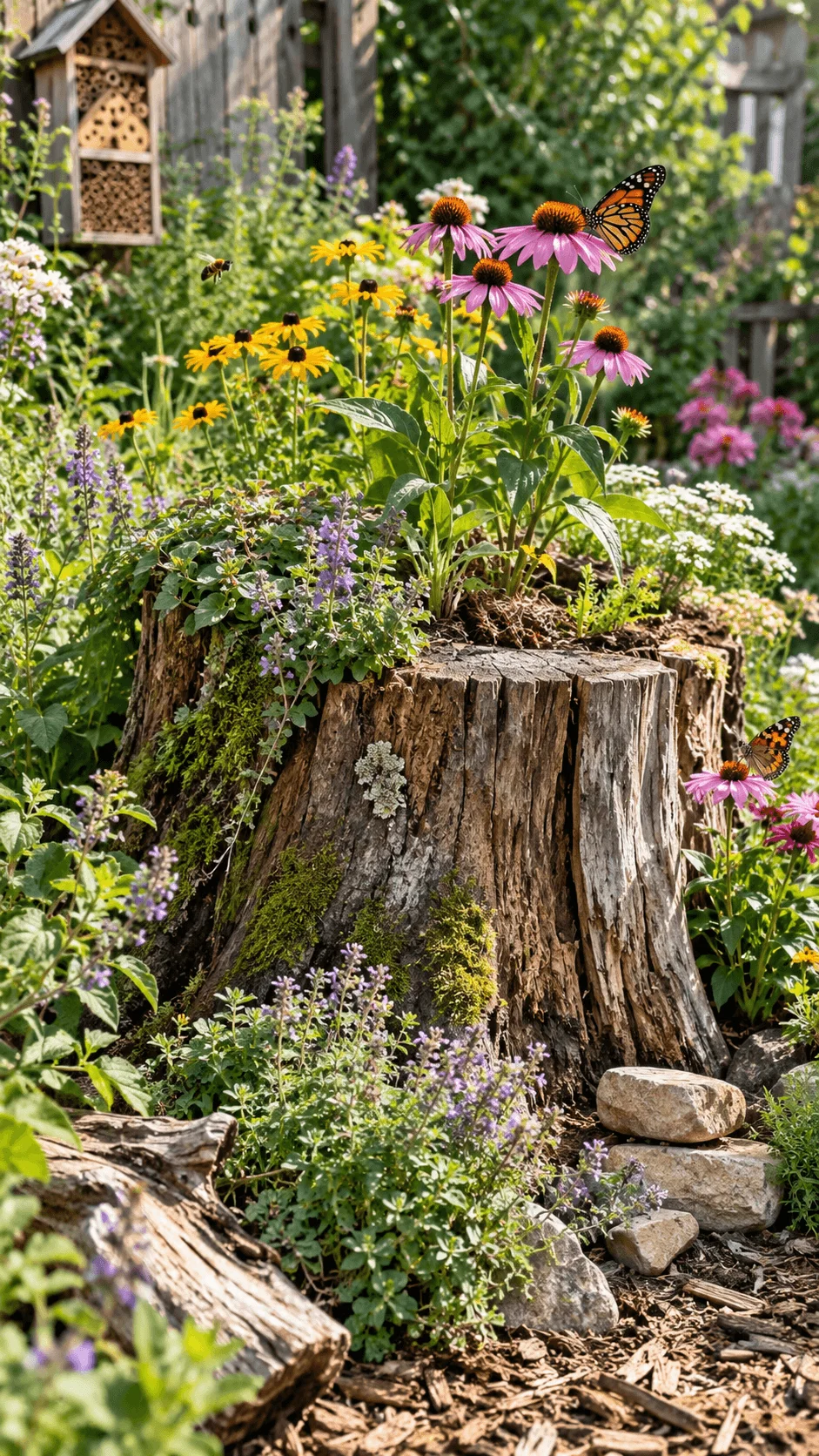
The stump itself can provide visual structure within the planting area. Allow flowers and foliage to grow around its edges rather than completely hiding the wood. You can add natural stones, fallen branches, or small areas of bare soil to create additional texture and habitat.
Avoid excessive garden cleaning around the feature. Fallen leaves and natural plant material can contribute to the habitat, although you should still keep paths and frequently used areas clear.
A pollinator station can work in a large backyard as well as a compact urban garden. Even a small planting area can introduce more diversity into an otherwise heavily landscaped space.
8. Tree Stump Rock Garden
Combining an old stump with rocks and drought tolerant plants creates a striking natural feature that works especially well in sunny areas. The rough texture of weathered wood provides an interesting contrast against smooth stones, gravel, and compact plants.
Begin by considering the natural shape of the stump. Rather than covering it completely, use rocks to frame its base and create a gradual transition into the surrounding garden. Larger stones can provide structure, while smaller gravel can fill gaps and create a cleaner appearance.
Suitable drought tolerant plants can add color and texture without demanding constant watering, provided they suit your local climate. Succulents, certain ground covers, and other plants adapted to dry conditions can work well in appropriate environments.
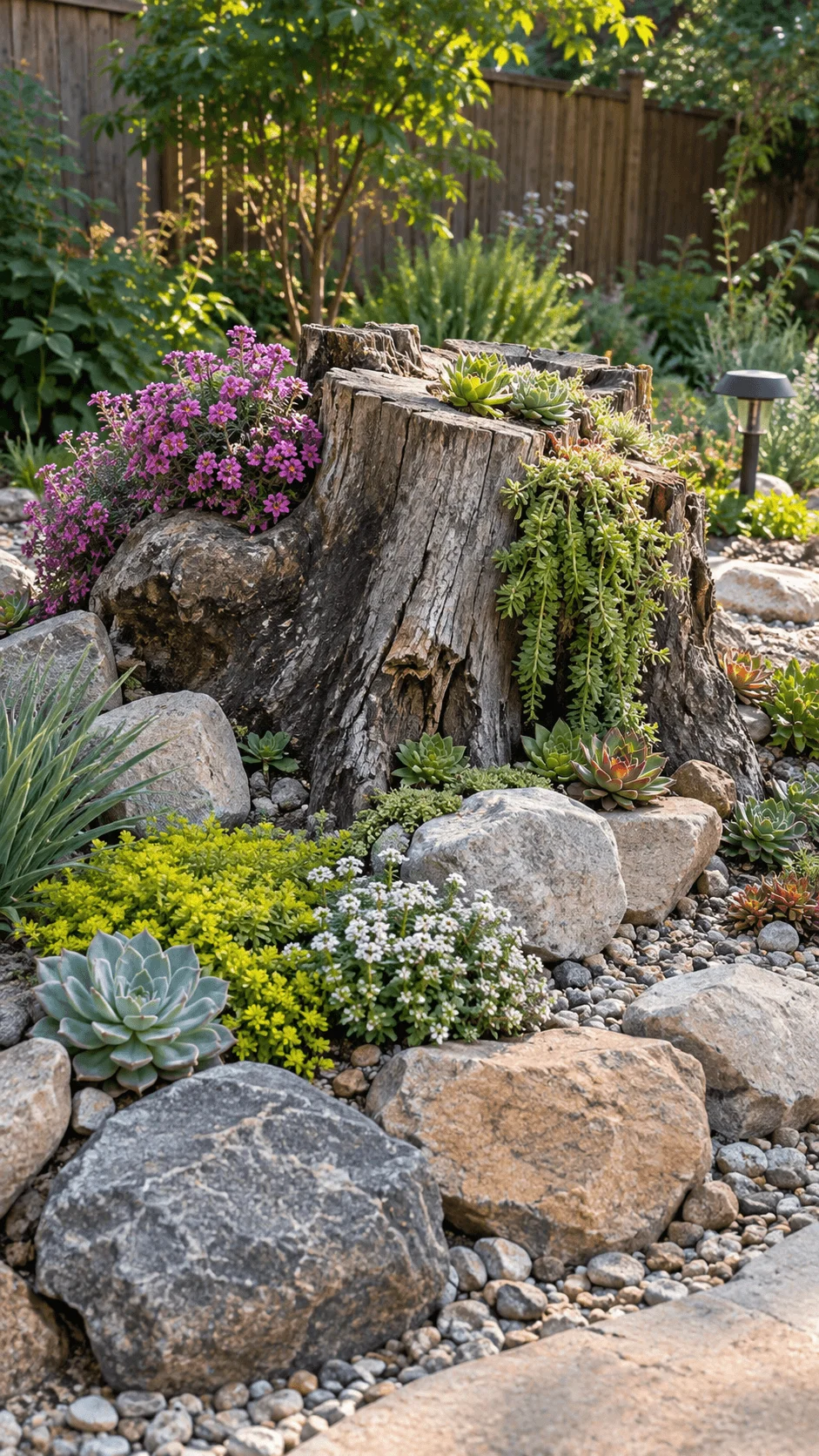
Drainage becomes particularly important in a rock garden. Water should move away from areas where plants cannot tolerate prolonged moisture. The arrangement should also prevent soil from washing away during heavy rain.
The best rock gardens look natural rather than carefully manufactured. Vary the size and placement of stones instead of creating perfectly symmetrical patterns. Allow some plants to spread naturally between rocks and around the stump.
This is one of the most useful eco friendly tree stump garden ideas for gardeners who want a low maintenance feature. By combining an existing piece of wood with durable natural materials and suitable plants, you can create a landscape feature without relying heavily on manufactured decorations.
9. Natural Tree Stump Bird Bath
An old stump can provide a natural support for a bird bath and create a simple wildlife feature in the garden. The stump gives the bird bath a grounded appearance while allowing you to build additional habitat around it.
Choose a stump that remains stable and sits in a suitable location. Birds need a clear view of their surroundings, so avoid placing the bath in a position where dense vegetation completely blocks their view. At the same time, nearby shrubs and plants can provide useful cover when birds need protection.
The height of the bird bath should also suit the type of bath you choose. Make sure the container sits securely and cannot easily tip over.
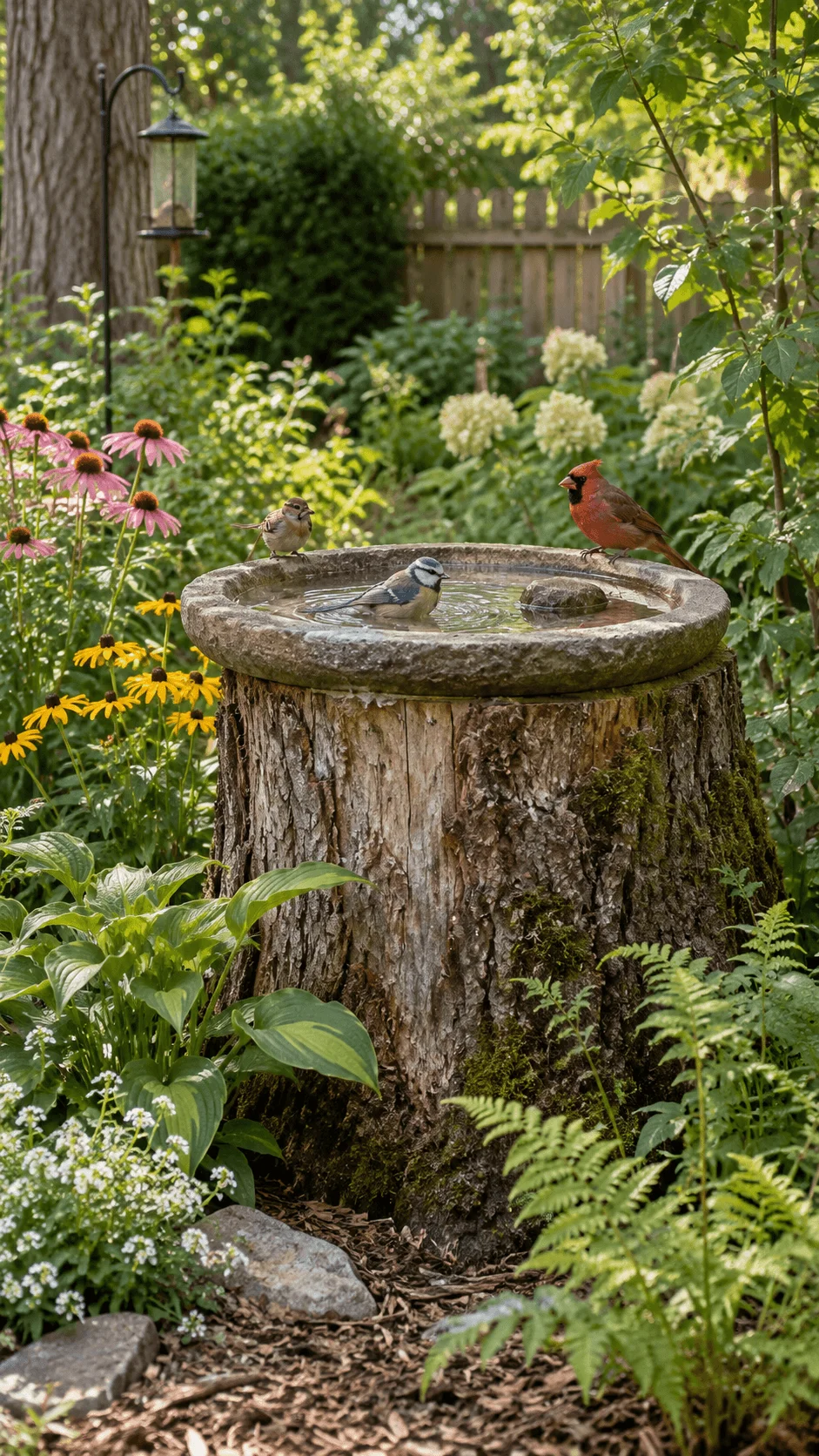
Keep the water clean by replacing it regularly and maintaining the basin according to its material and location. A clean water source can make the feature more useful for visiting birds.
You can make the area more attractive by planting native vegetation around the stump. Flowering plants can support insects, while shrubs can provide shelter and additional garden structure.
Rather than thinking of the bird bath as a decorative object placed on a stump, consider designing the entire area as a small wildlife corner. The combination of water, plants, natural wood, and shelter creates a much more meaningful garden feature.
10. Eco Friendly Tree Stump Fairy Garden
A tree stump can provide a wonderful foundation for a miniature fairy garden, especially if you want to create a playful feature without filling your garden with plastic decorations.
The natural shape of the stump can become part of the miniature landscape. A hollow can resemble a tiny woodland room, while exposed roots can become miniature pathways or borders. Moss can soften the surface and create the appearance of an old forest floor.
Use natural and reclaimed materials whenever possible. Small stones can form pathways, twigs can become tiny fences, and pieces of bark can create miniature structures. Fallen leaves can contribute to the woodland appearance while helping the feature blend into the surrounding garden.
You can also incorporate small living plants that remain suitable for the available space. Mosses, small ground covers, and other compact plants can create a living miniature landscape.
The most sustainable approach involves using what you already have rather than buying large quantities of new decorations. A few carefully chosen natural details can create more character than a crowded collection of artificial objects.
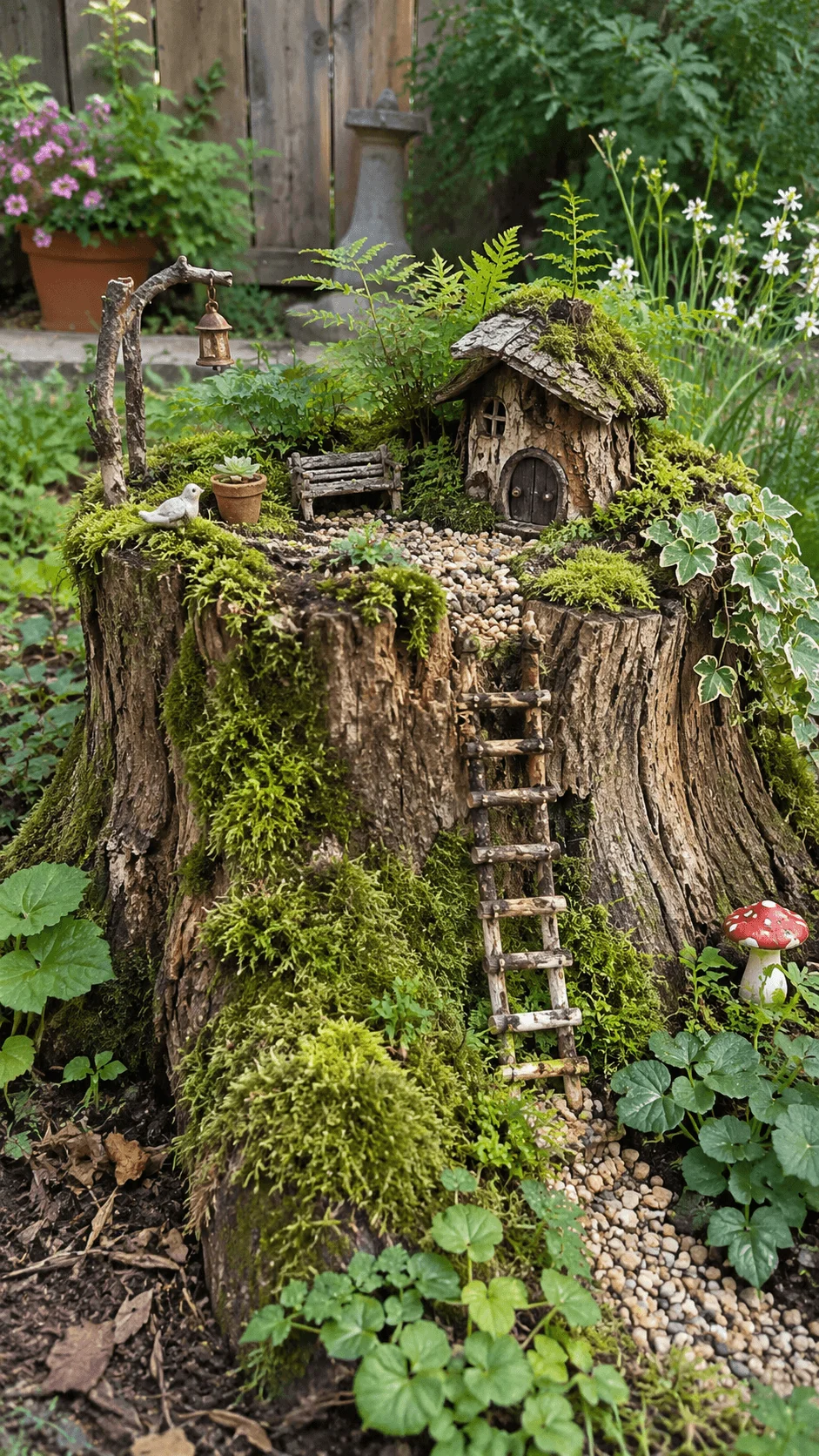
This idea works particularly well for family gardens because children can help arrange natural materials and observe how plants and moss change over time.
The result does not need to look perfect. In fact, a slightly wild appearance often makes a stump fairy garden feel more like a genuine miniature woodland.
11. Living Tree Stump Trellis
If you have limited garden space, consider turning an old stump into part of a vertical planting feature. A living tree stump trellis can give climbing plants a natural visual anchor while making better use of vertical space.
The stump does not necessarily need to support the entire weight of a mature climbing plant. Instead, you can use it as an anchor for a suitable support structure that allows the plant to climb upward.
Choose plants according to the sunlight, available space, and climate. Fast growing climbers can require regular pruning, so consider how much maintenance you are prepared to provide before selecting a plant.
The location also matters because climbing plants can spread beyond the original planting area. Give them enough room and provide appropriate support as they grow.
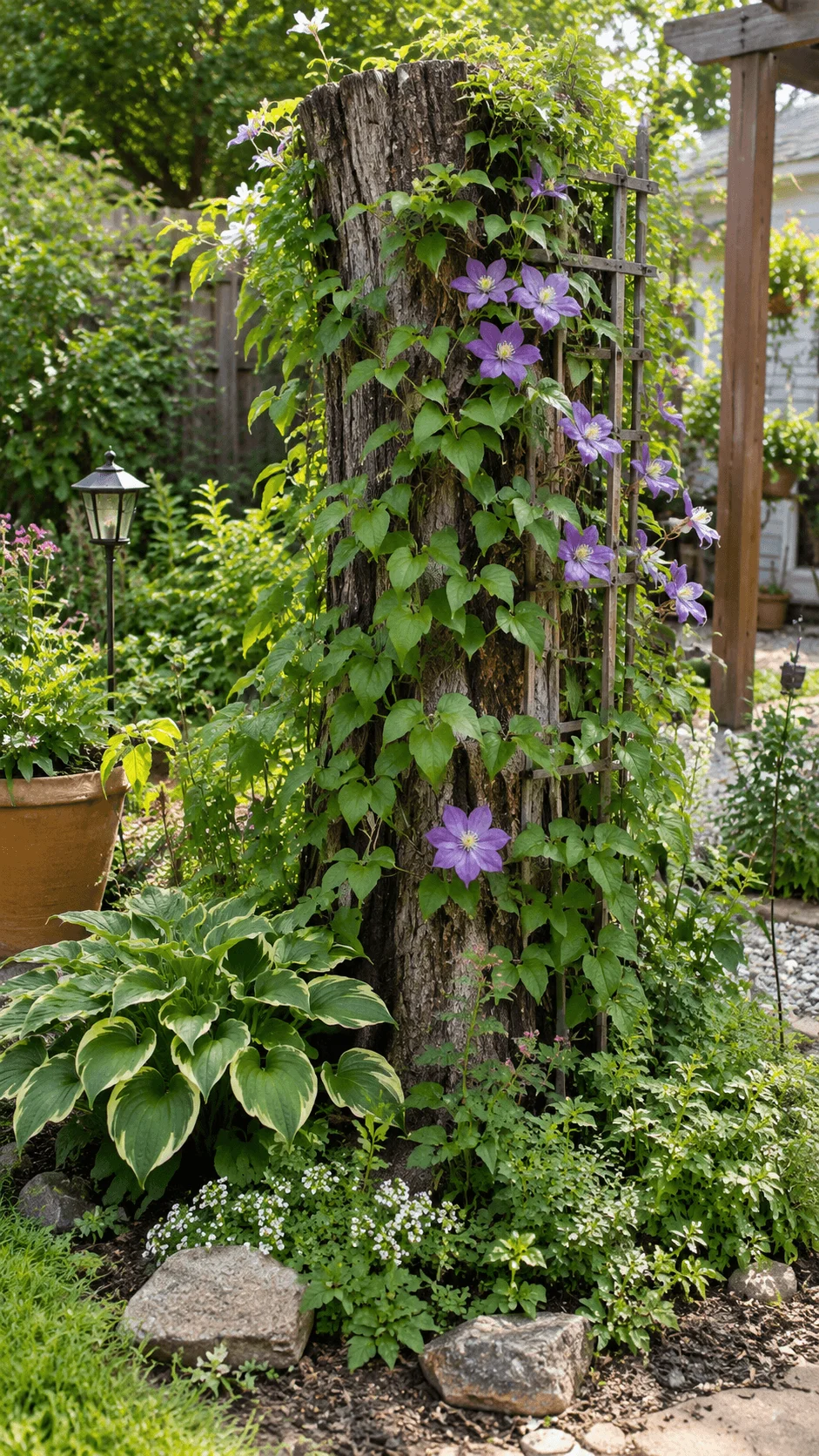
A vertical arrangement can transform an otherwise ordinary stump into a living garden feature. During the growing season, foliage can gradually surround the wood and create a green focal point.
This idea works especially well in small gardens where horizontal planting space is limited. Instead of removing the stump and losing an existing structural element, you can incorporate it into a vertical garden design.
You can also combine climbing plants with lower growing plants around the base. This creates several layers and makes the entire area feel more connected to the surrounding landscape.
12. Natural Tree Stump Garden Seat
A stable old stump can become a simple garden seat when its size and position make it suitable for sitting. This approach requires very little decoration because the natural wood already provides character.
Before using a stump as seating, inspect it carefully. It should remain stable and strong enough to support normal use. A heavily decayed or unstable stump may not be appropriate for this purpose.
If the surface allows it, you can smooth the top to create a more comfortable sitting area. However, avoid removing so much natural character that the stump loses its connection with the landscape.
Several stumps can also become part of a larger outdoor seating area. You can position them around a garden space and combine them with existing natural features.
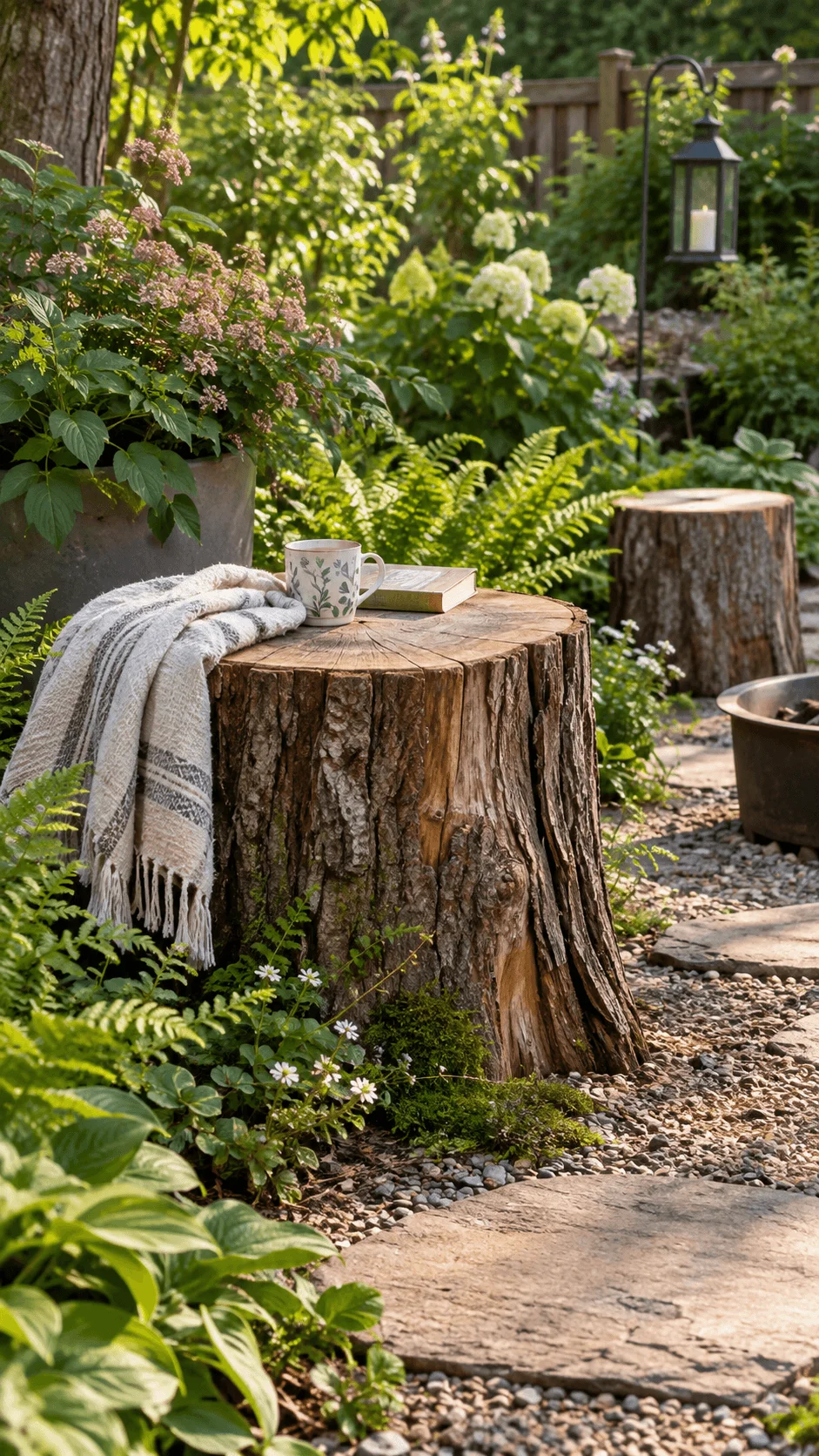
Surround the seating area with plants, gravel, stones, or fallen wood to create a cohesive design. A few simple additions can turn the stump into a quiet place for reading, relaxing, or enjoying the garden.
This is a good example of sustainable reuse because you are giving an existing material a new purpose instead of replacing it with a manufactured garden seat.
How to Choose the Right Sustainable Tree Stump Garden Idea
The best stump garden design depends heavily on the characteristics of the stump itself. Its size, shape, location, age, condition, and surrounding environment should influence your decision.
Start with sunlight. A stump in full sun can support very different plants from one beneath a dense tree canopy. Succulents and many flowering plants prefer bright conditions, while mosses and ferns often perform better in suitable shaded locations.
Next, consider moisture. A stump in an area that stays wet after rainfall may not suit plants that need excellent drainage. Similarly, a very dry location may require plants that can tolerate limited water.
The size of the stump also affects what you can create. A broad stump may offer enough room for several plants, while a narrow stump may work better as a natural stand, seating feature, or vertical garden anchor.
Think about the existing garden style as well. A rough stump surrounded by moss and ferns can suit a woodland garden, while gravel and succulents can create a more contemporary appearance.
Most importantly, inspect the stump’s stability. If it sits close to a path, seating area, building, or other structure, make safety a priority.
Common Mistakes to Avoid With Tree Stump Gardens
One common mistake involves choosing plants without considering the conditions around the stump. A beautiful plant may struggle if the area receives too much shade, excessive moisture, or intense sunlight.
Poor drainage can also cause problems, especially when gardeners turn a stump cavity into a planting area. Make sure the growing environment suits the plants you choose.
Another mistake involves over decorating the stump. Too many artificial objects can hide the natural character that makes old wood attractive in the first place.
Gardeners should also avoid assuming that every decaying stump makes suitable seating or structural support. A stump that looks solid from the outside may have significant internal decay. Check its condition carefully before using it for anything that requires stability.
Do not automatically remove every piece of decomposing wood from the garden. Some old wood can contribute to habitat and natural decomposition. At the same time, remove or professionally assess wood that creates a genuine safety problem.
Finally, avoid choosing plants solely because they look good in photographs. Consider their mature size, water needs, climate requirements, and potential to spread before introducing them to your garden.
Conclusion
Old tree stumps can become far more than leftover pieces of wood. With thoughtful planning, they can support plants, provide wildlife habitat, create natural focal points, and add useful features to an outdoor space. These eco friendly tree stump garden ideas show that sustainable gardening often starts with making better use of what you already have. A stump can become a pollinator garden, miniature stumpery, succulent display, herb garden, bird bath feature, or even a natural seat.
The most successful designs work with the stump’s existing character rather than trying to hide it. By choosing suitable plants, reusing natural materials, conserving water, and allowing beneficial decomposition, you can create a garden feature that feels both beautiful and connected to nature. Instead of seeing an old stump as garden waste, consider what it could become in your landscape.