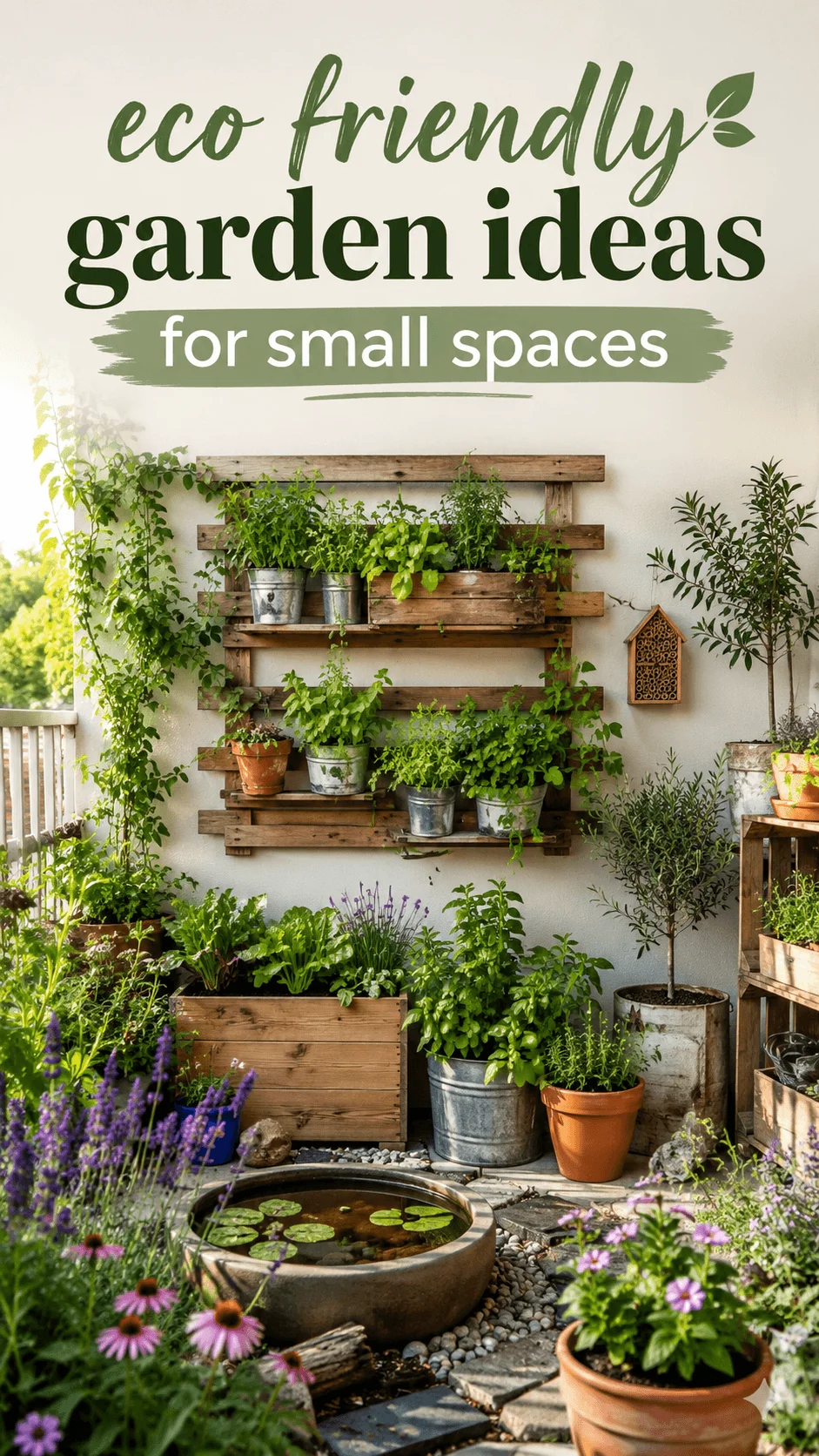
12 Eco Friendly Garden Ideas With Pots
Eco friendly garden ideas with pots are becoming more creative in 2026 as gardeners move beyond ordinary seasonal flowers and start using containers for biodiversity, food growing, water conservation and naturalistic planting. Pots can now become miniature gardens that support useful plants, attract visiting insects and make small outdoor spaces feel greener without requiring a complete landscape redesign. Even a balcony, terrace, patio or compact backyard can become more sustainable when gardeners choose plants, containers and watering methods carefully.
Container gardening also gives people more flexibility than permanent garden beds. Pots can move when sunlight changes, plants can be grouped according to their water needs and gardeners can experiment with different planting styles before making larger changes. This makes sustainable container garden ideas especially useful for renters and people who have very little soil available.
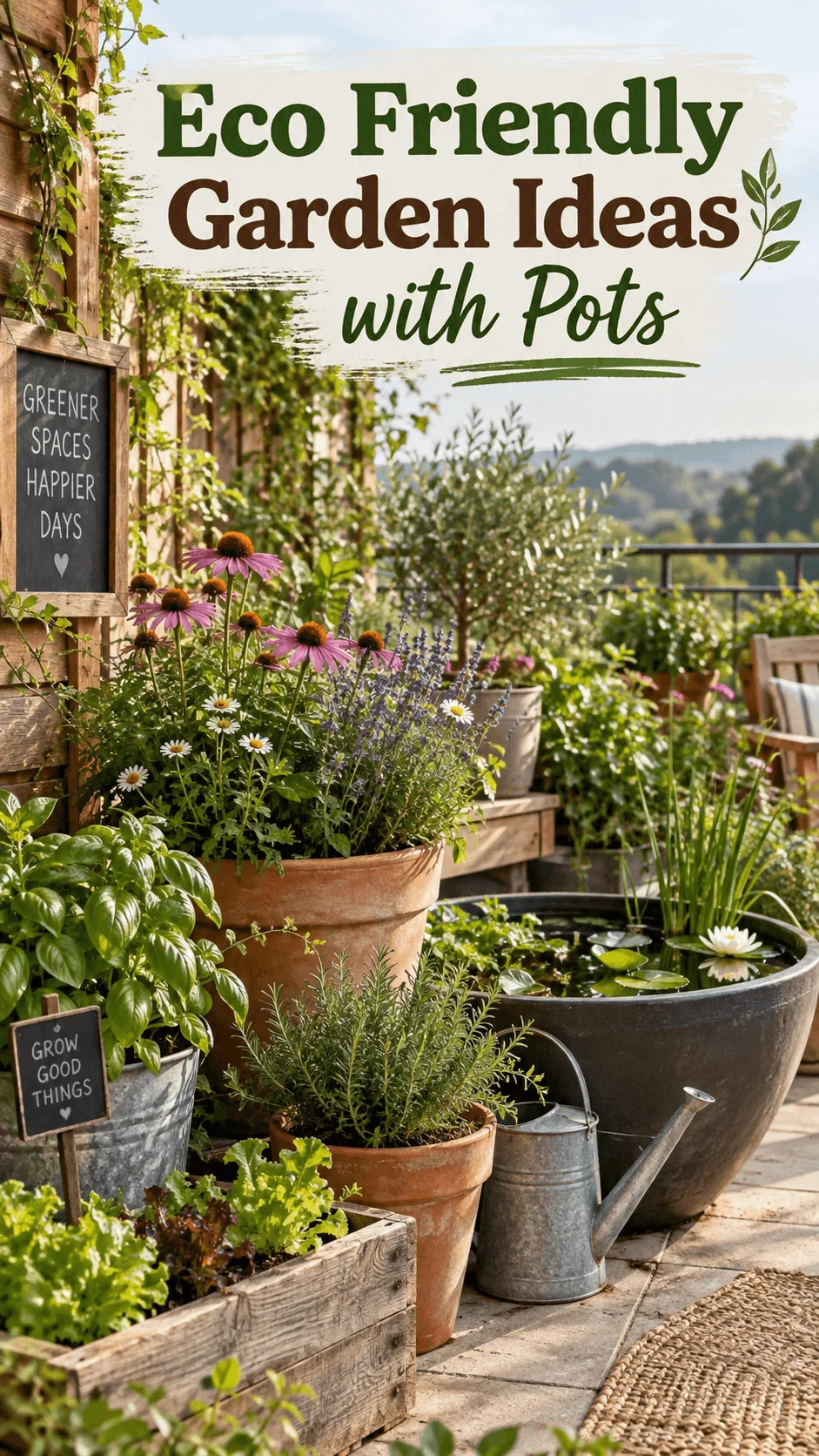
The challenge is that containers can also consume considerable water and encourage frequent replacement of plants if gardeners rely heavily on short lived displays. A better approach focuses on durable pots, perennial plants, native species, peat free growing media, efficient watering and materials that already exist. The following eco friendly garden ideas with pots show how containers can become attractive, productive and environmentally thoughtful parts of a modern garden.
Create an Eco Friendly Pollinator Garden in Pots
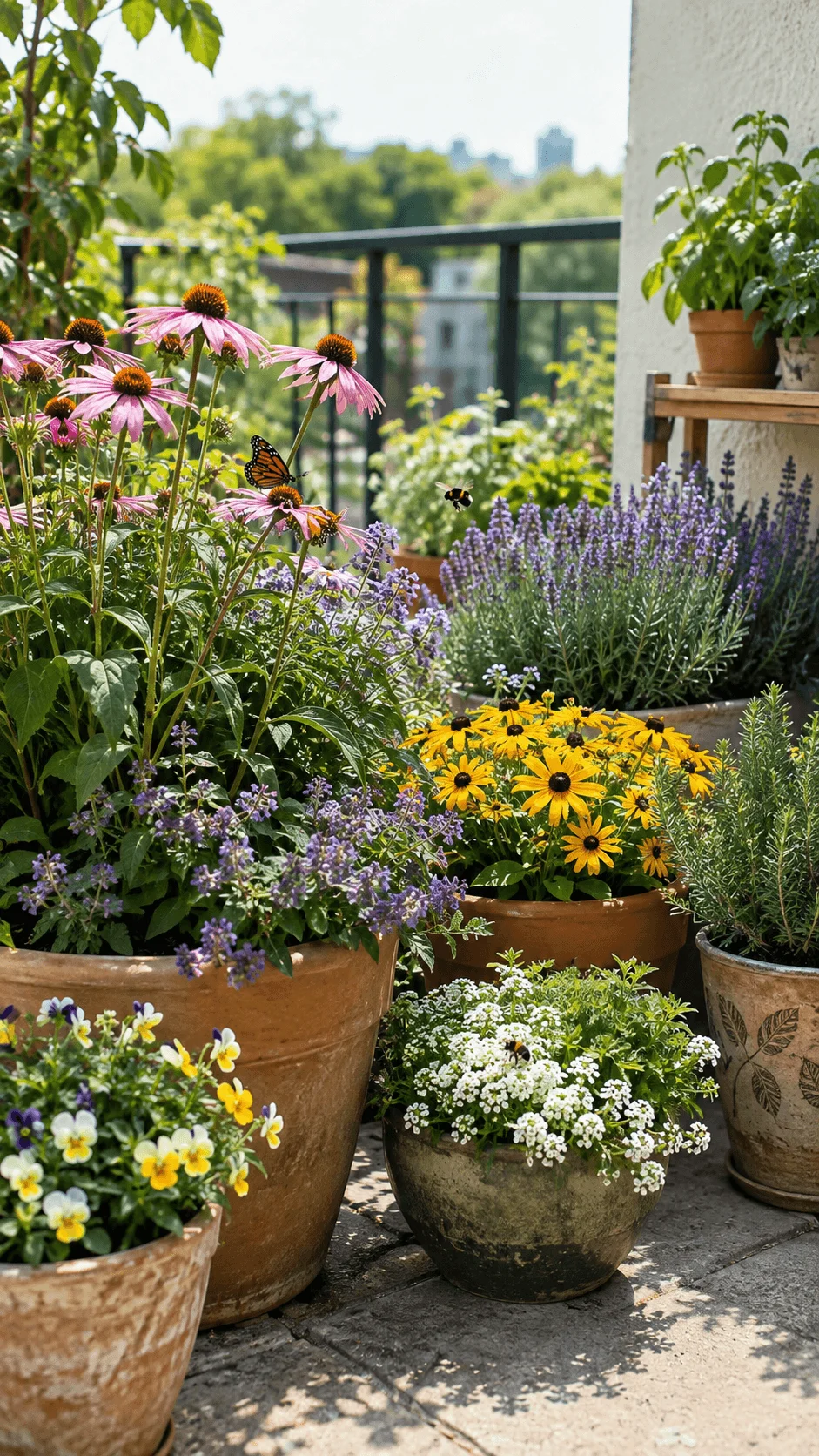
A pollinator garden does not need a large flower bed. A collection of carefully planted containers can provide flowers, shelter and visual interest in a much smaller area. This approach works especially well on patios, balconies and paved courtyards where planting directly into the ground may not be possible.
Start by choosing plants that suit your local climate and growing conditions. Native plants can be particularly useful because local insects may already recognize and use them, although gardeners should always check which species are genuinely native to their own region. One plant cannot meet every need, so a stronger pollinator garden in pots contains several species that flower at different times.
Plant height also matters. Taller flowering plants can provide structure, medium plants can create the main display and lower plants can soften the edges of containers. When several pots sit close together, they can look like one connected planting area instead of isolated decorative objects.
Sunlight, drainage and mature plant size still determine whether the garden succeeds. Containers need enough root space, and flowering plants need watering that matches their natural requirements. Avoid unnecessary pesticide use around the pots because insects visiting flowers may come into direct contact with residues.
Among all eco friendly garden ideas with pots, this one offers an appealing combination of color, biodiversity and flexibility.
Grow a Climate Resilient Container Garden With Drought Tolerant Plants
Containers often dry faster than ordinary garden beds because their growing medium has limited volume and receives heat from every side. This makes water management one of the biggest challenges in eco friendly container gardening.
A climate resilient container garden starts with plant selection. Choose species that naturally tolerate the temperatures and rainfall patterns of your area. Depending on the climate, suitable choices may include ornamental grasses, drought tolerant perennials, Mediterranean herbs or succulents.
Larger pots can help because they hold more growing medium and usually remain moist longer than tiny containers. Mulching the surface with an appropriate organic or mineral material can also reduce evaporation and protect the soil from intense sun.
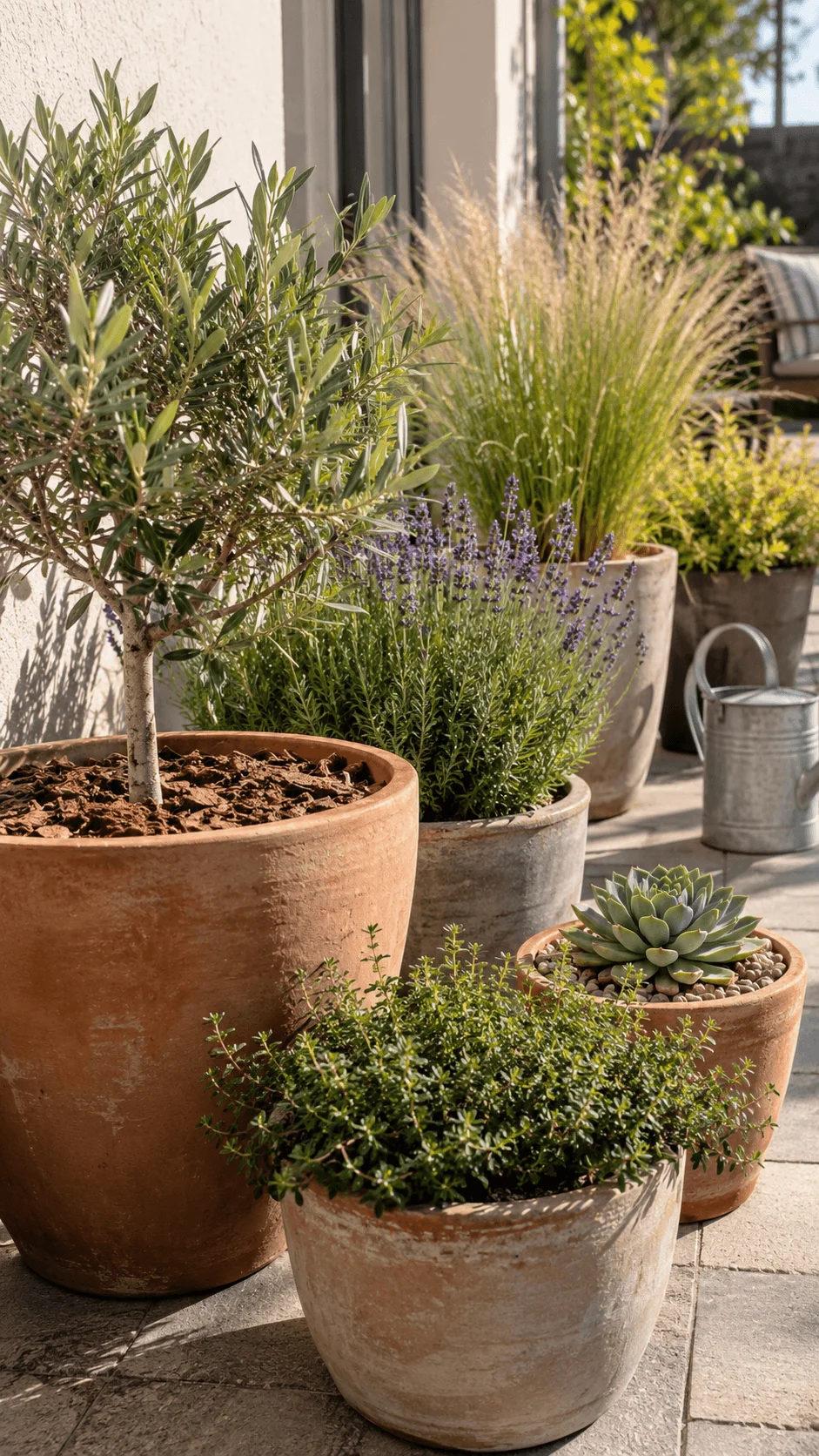
Placement matters just as much as plant choice. A pot beside a bright wall can experience more heat than the same pot in an open garden. Paved patios can also reflect heat upward. Observe the location throughout the day before choosing plants.
Drought tolerant plants still need water, especially while establishing their roots. The goal is not to eliminate watering but to create a low water container garden that copes better with dry periods and requires less constant attention.
Save Water With Self Watering Garden Pots
Self watering containers have become increasingly useful for gardeners who want more consistent moisture without watering every pot every day. These containers usually store water in a reservoir beneath the growing medium and allow moisture to move upward gradually.
This design can work particularly well for herbs, compact vegetables and other plants that prefer relatively even moisture. It can also help on balconies and patios where wind and heat cause containers to dry quickly.
A self watering system still needs management. The reservoir needs refilling, overflow drainage must remain clear and gardeners should check the growing medium rather than assuming the container always contains the correct amount of moisture.
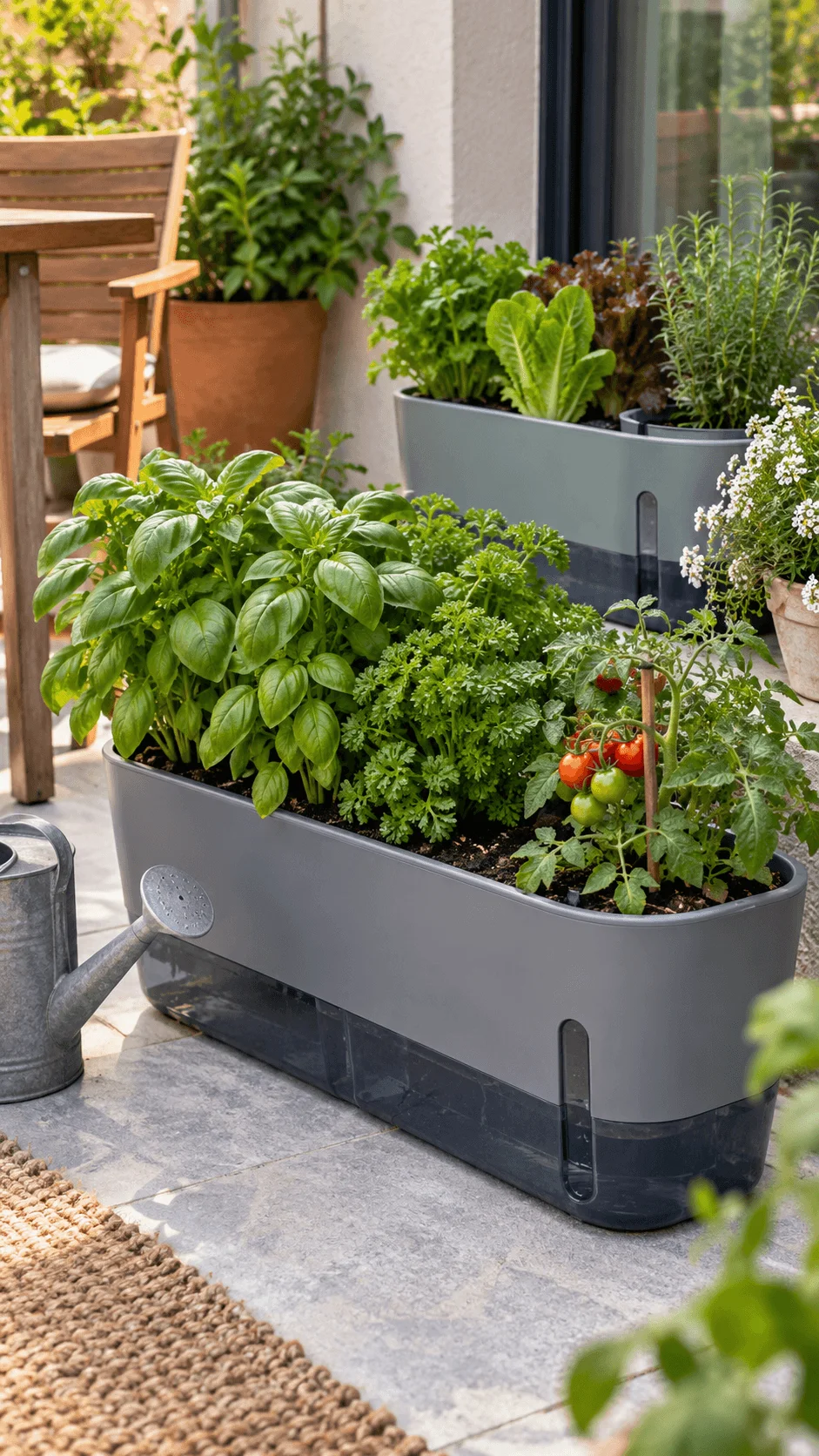
Grouping several self watering pots together can create a productive water saving container garden. Basil, parsley, leafy vegetables and other suitable crops can grow close to a kitchen or outdoor dining space.
Water saving systems make eco friendly garden ideas with pots more practical because they address one of the biggest weaknesses of container gardening while still allowing gardeners to create attractive displays.
Create a Naturalistic Meadow Garden in Large Pots
Naturalistic planting has become an important influence on modern container design. Instead of filling a pot with perfectly arranged seasonal bedding plants, gardeners can create looser combinations inspired by meadows and informal perennial gardens.
Large containers work especially well for this style because they provide enough root space for several compatible plants. Ornamental grasses can add movement while flowering perennials create color and softer shapes.
The most attractive naturalistic container garden often changes throughout the year. Flowers may dominate in one season, while foliage, grasses and seed heads become more noticeable later. This gives the garden a longer visual life than a display designed around one short flowering period.
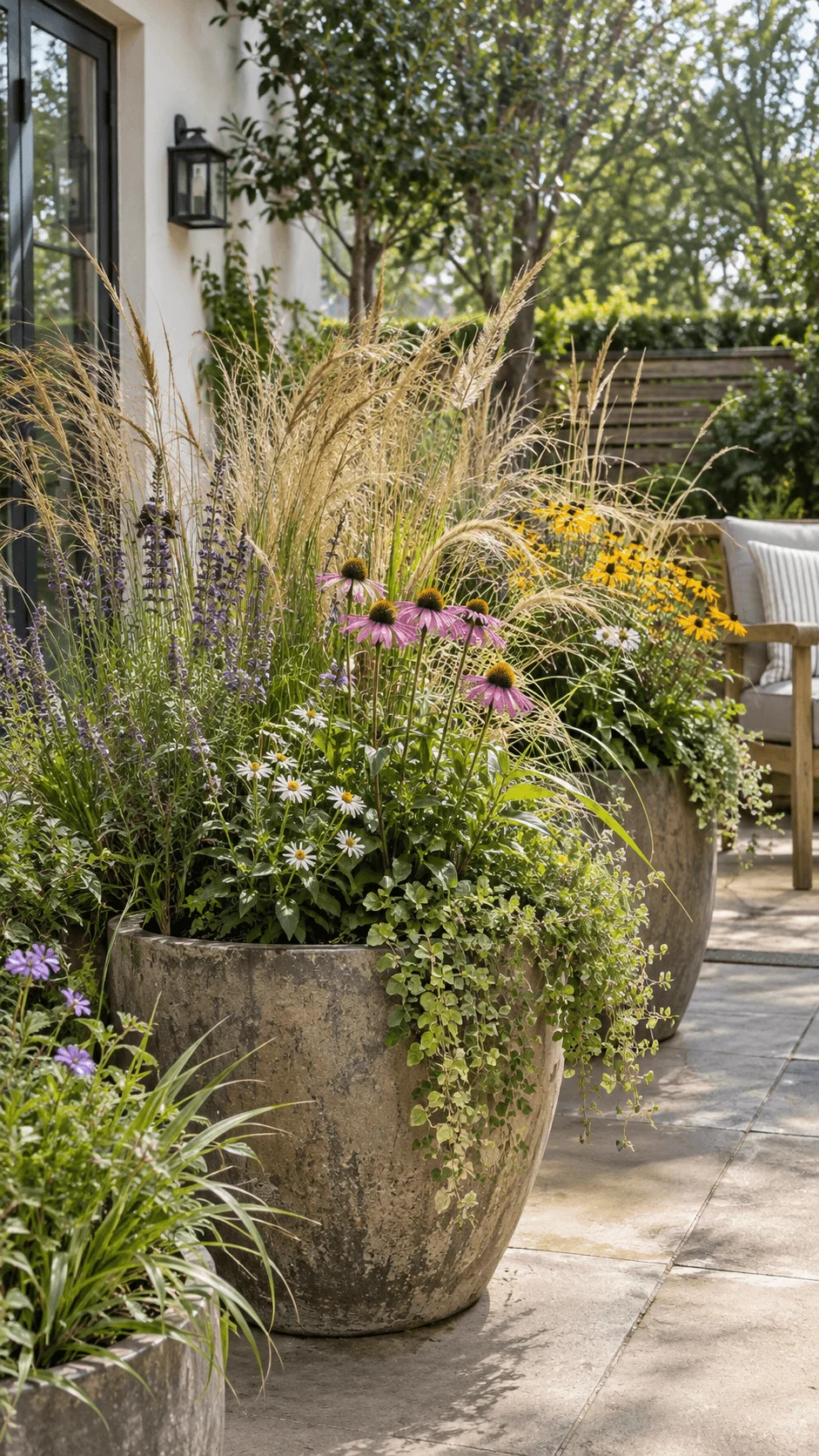
Several large containers positioned close together can create the impression of one connected meadow garden in pots. Place them near a seating area, entrance or patio where the movement of grasses and flowers becomes part of the experience.
This approach also works well with perennial plants that return for several seasons, reducing the need to replace the entire display every year.
Turn Recycled Containers Into Sustainable Garden Pots
Buying new pots is not always necessary. Reusing a suitable container that already exists can create character while extending the useful life of an object that might otherwise become waste.
Old buckets, wooden crates, nursery pots, metal containers and damaged terracotta can sometimes become useful planters. The important question is whether the object can safely hold plants and withstand outdoor conditions.
Drainage should always come first. Water needs somewhere to escape, otherwise roots can remain saturated for long periods. The depth of the container also determines which plants can grow successfully. A shallow container may suit compact herbs or flowers, while larger plants need more space for roots.
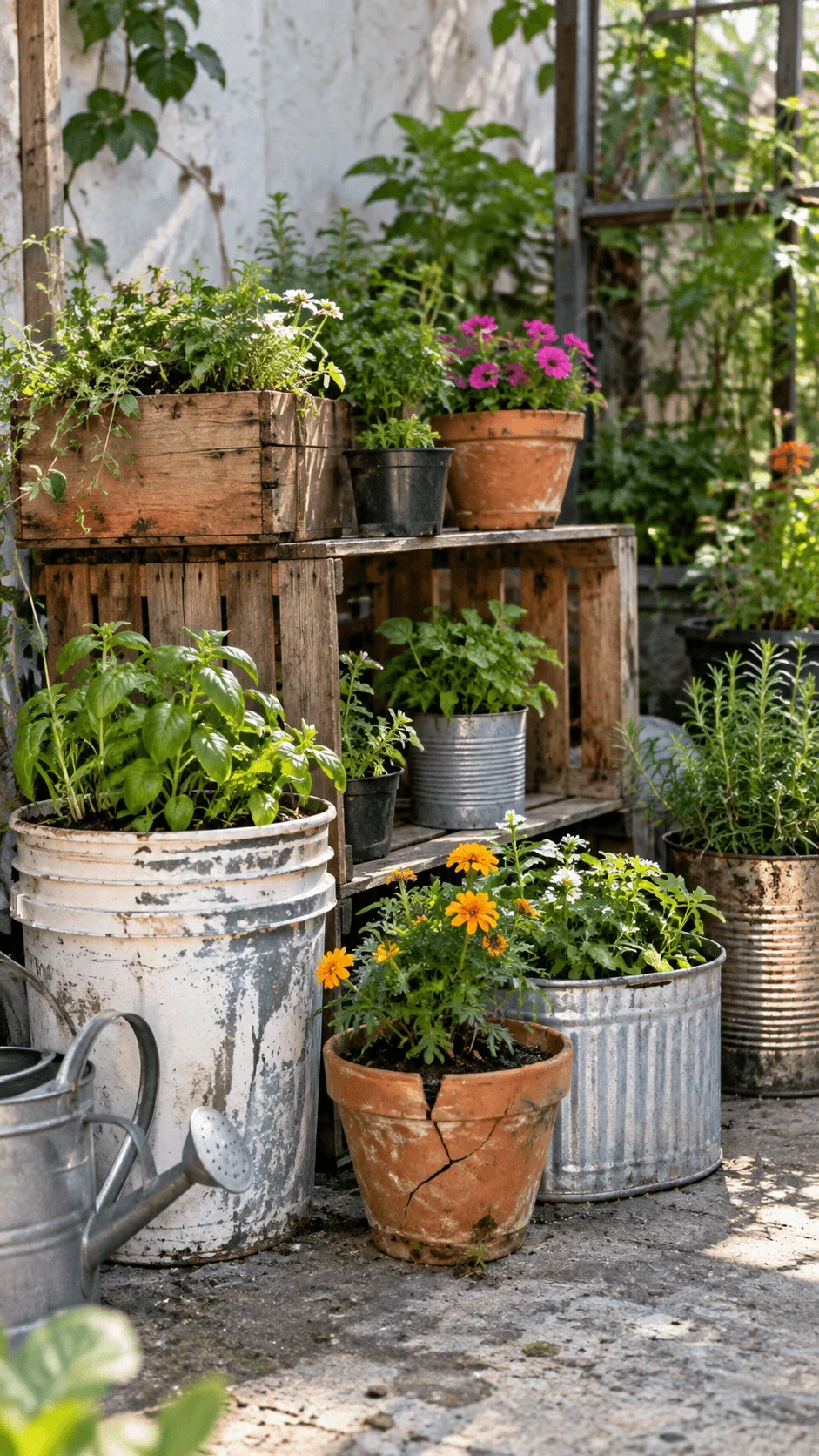
Gardeners should avoid using containers that previously held hazardous chemicals, particularly when growing edible plants.
Recycled pots garden ideas can also look intentional. Repeating similar plants, grouping containers by material or using a consistent arrangement can turn a collection of reclaimed objects into a cohesive garden feature.
This is one of the easiest eco friendly garden ideas with pots to try because it can begin with materials you already own.
Build a Low Carbon Container Garden With Peat Free Compost
The container itself receives most of the attention in pot gardening, but the growing medium inside it can be just as important.
Peat free container gardening has become a major part of more sustainable growing. Gardeners can choose commercially available peat free mixes and combine them with suitable compost or other materials depending on the plants being grown.
Homemade compost can also contribute organic matter when it has matured properly. Leaf mould may help in certain mixes, especially where gardeners want to make better use of garden materials that would otherwise go to waste.
A sustainable potting mix should match the plant rather than follow one universal recipe. Plants with different drainage and nutrient requirements may need different growing conditions.
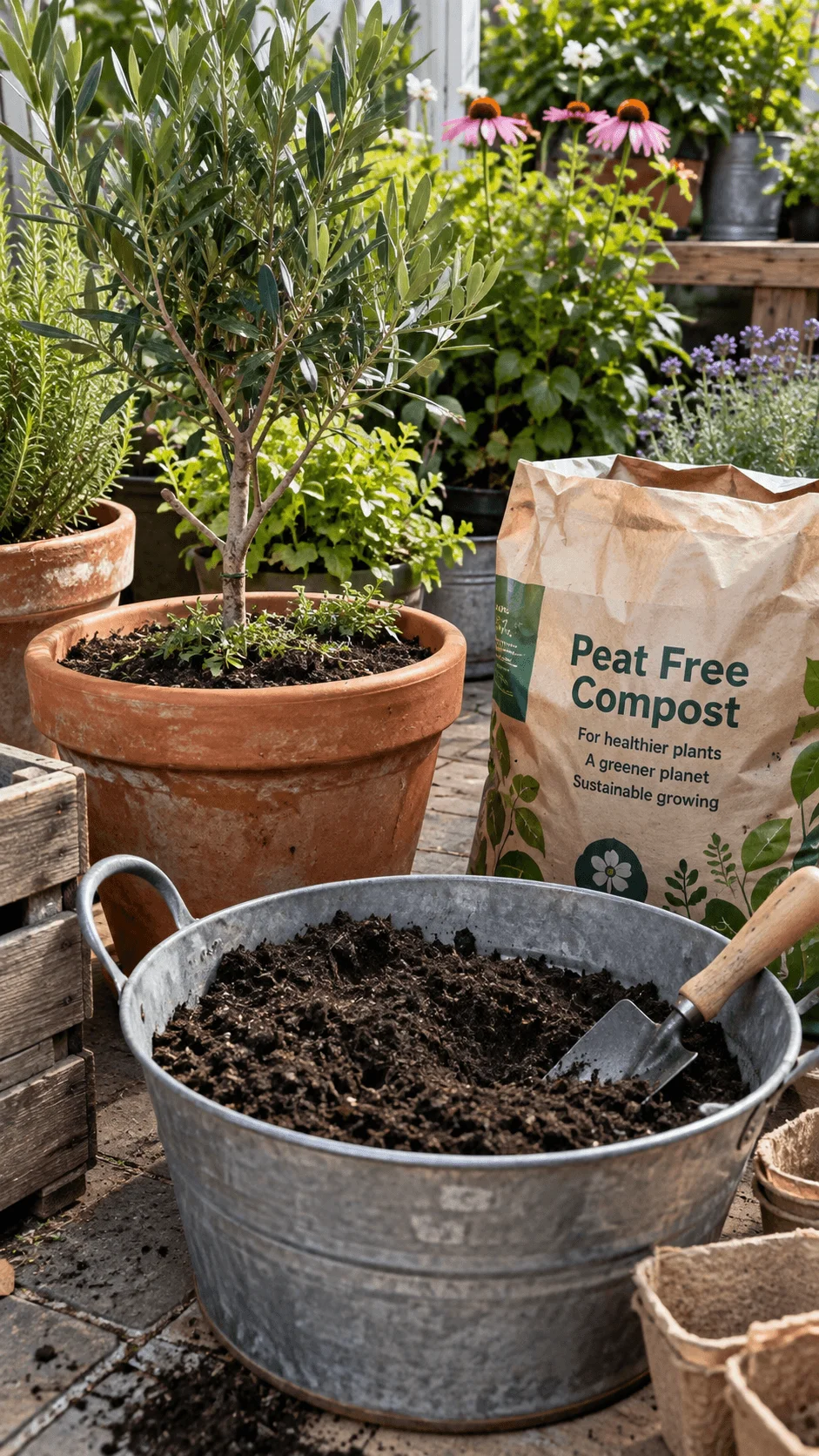
Long term planting can also reduce unnecessary replacement. Perennials, shrubs and compact trees can remain in suitable containers for several years with careful feeding, pruning and occasional repotting.
These choices make eco friendly garden ideas with pots more meaningful because sustainability depends on the entire growing system, not simply the appearance of the container.
Grow a Sustainable Mini Orchard in Pots
A traditional orchard requires considerable space, but a small collection of suitable fruit plants can grow successfully in containers.
Compact and dwarf fruit varieties work best because they develop within a more manageable size. Gardeners should choose varieties specifically recommended for container growing rather than placing any fruit tree into a pot and hoping it remains small.
Large containers provide greater root space and help stabilize taller plants. Fruit crops also need adequate sunlight, consistent watering and appropriate feeding during the growing season.
Pollination can become an important consideration. Some fruit varieties produce better crops when compatible plants grow nearby, while others can produce fruit without another tree. Check the requirements before buying plants.
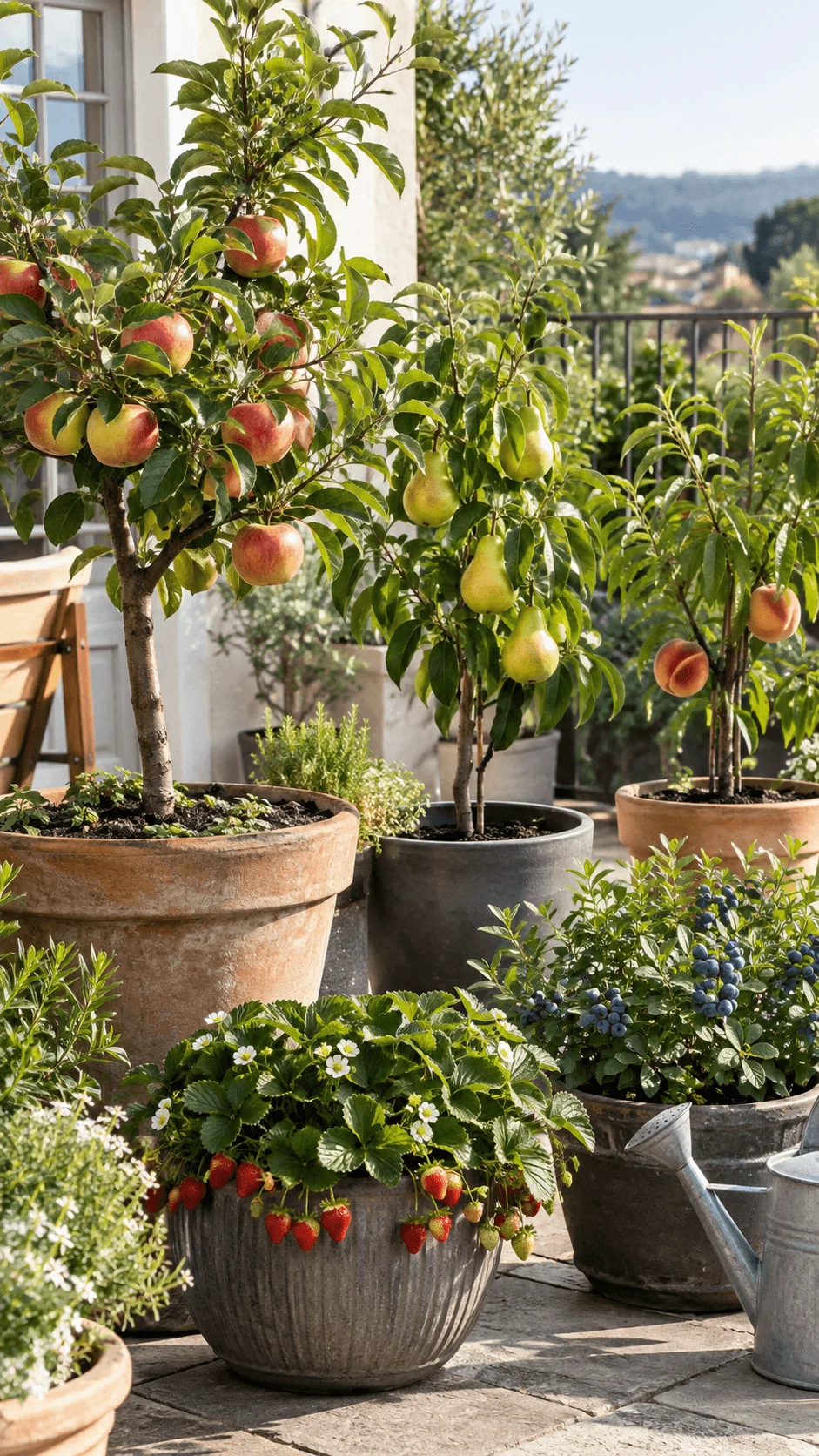
Berries can complement compact fruit trees and add variety to a fruit garden in containers. Strawberries, blueberries or other locally suitable fruits can make a patio productive without taking over the entire space.
A mini orchard in pots works particularly well for gardeners who want their containers to provide food as well as decoration.
Combine Herbs Vegetables and Pollinator Flowers in Pots
A container does not have to serve only one purpose. Large pots can combine edible plants with flowering species and create a garden that looks attractive while also providing useful harvests.
The key is choosing compatible plants. Herbs, compact vegetables and flowers should have similar sunlight and watering requirements. They should also have enough room to reach their mature size without competing excessively for root space.
A large sunny planter might contain culinary herbs with compact vegetables and suitable flowering plants around the edges. The herbs provide fragrance and harvests, while flowers can add color and attract visiting insects.
Gardeners should identify edible flowers carefully before consuming them because ornamental plants are not automatically safe to eat.
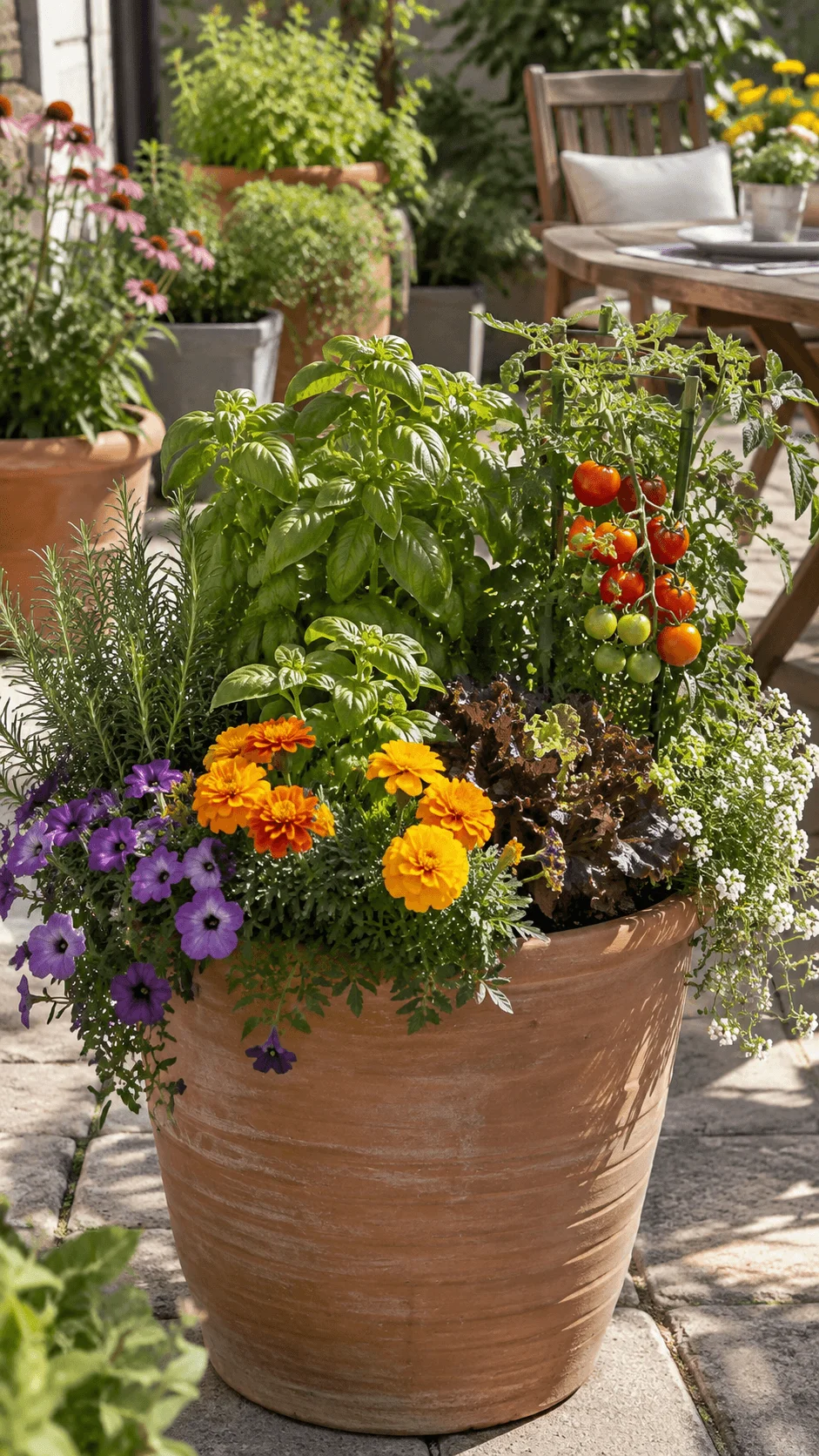
This type of edible container garden can work beautifully near a patio table or outdoor kitchen. Several containers can create a small productive garden that still feels decorative.
Among eco friendly garden ideas with pots, combining edible and ornamental planting makes particularly good use of limited space.
Create a Wildlife Friendly Container Pond
A watertight container can become a small aquatic garden and add an entirely different habitat to a container based landscape.
Choose a stable container that can safely hold water and place it where you can maintain it easily. Extremely hot locations may cause water temperatures to rise quickly, so partial protection from the strongest afternoon sun can help in some climates.
Suitable aquatic plants add structure and create places for insects and other small creatures to rest. Gardeners should also provide a safe route out of the water for wildlife that enters the container.
Rainwater can be useful where local conditions and water quality allow it. Avoid adding unnecessary chemicals because they can affect the small ecosystem developing inside the pot.
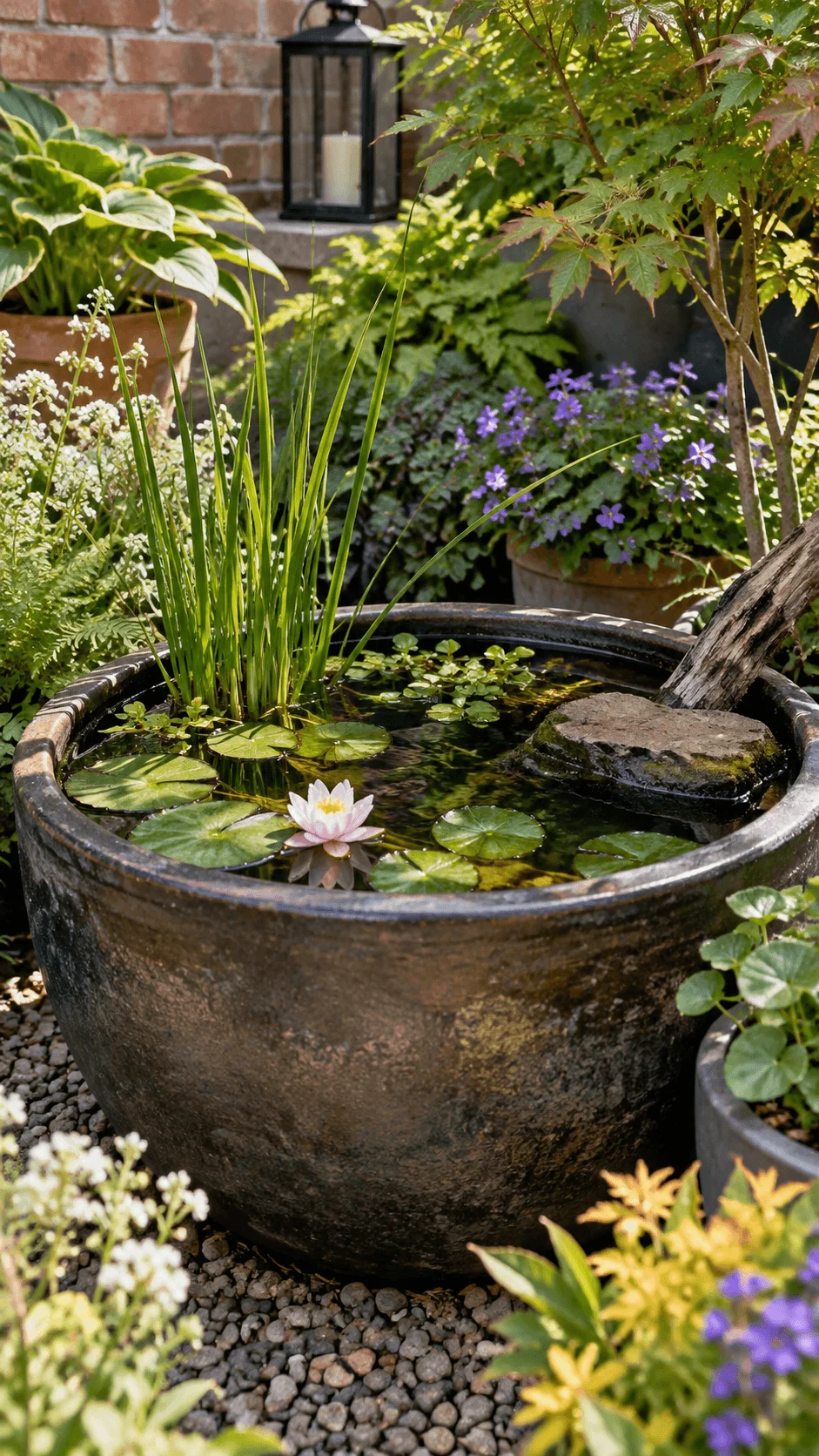
Position the pond among other containers rather than leaving it isolated. Ferns, grasses, flowers and leafy plants around the water can make the feature look like part of a miniature garden.
A wildlife pond in a pot will not replace a natural pond, but it can add valuable diversity to a small garden.
Build a Sustainable Vertical Pot Garden for Small Spaces
Small gardens often have more vertical space than ground space. Tiered containers allow gardeners to use walls, shelves, railings and other secure structures for planting.
A vertical garden with pots can contain herbs, flowers, compact vegetables and trailing plants. Placing trailing plants higher allows foliage to cascade downward and visually connect different levels.
Watering requires careful planning. Upper pots may dry faster because they receive more wind and sun, while lower pots may receive water draining from containers above.
Weight also matters. Wet growing medium becomes heavy, so shelves, railings and wall supports need enough strength to hold the containers safely.
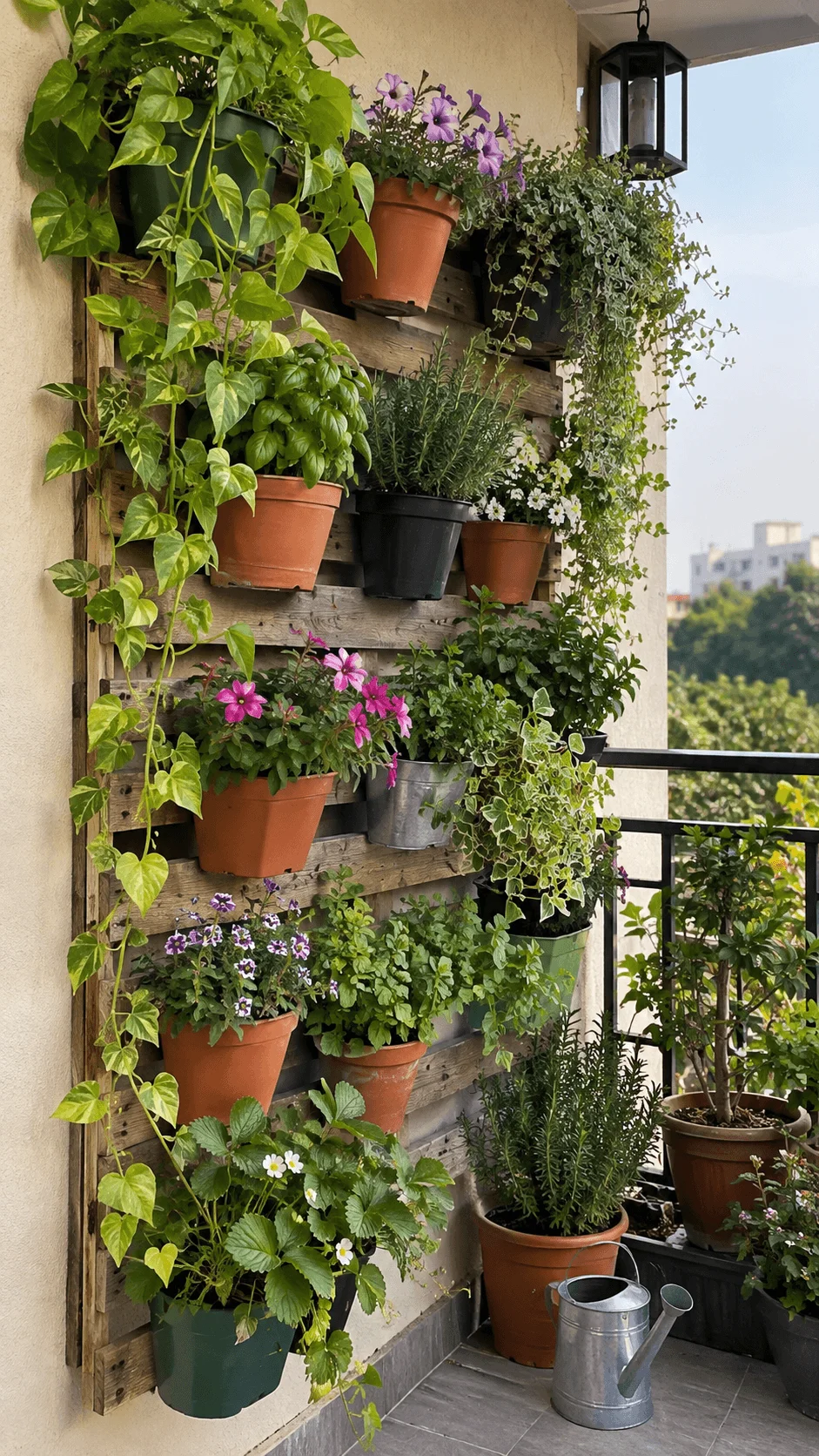
Existing shelving or reclaimed structures can sometimes become part of the design when they remain stable outdoors.
Vertical growing makes eco friendly garden ideas with pots more accessible to people who only have a balcony, tiny courtyard or narrow patio.
Use Large Garden Pots for Long Lived Perennial Planting
Many container gardens rely on dozens of small pots that need frequent watering and constant seasonal replacement. Using fewer large containers can create a calmer garden and support longer lived plants.
Large garden pots can hold compact shrubs, ornamental grasses, perennial flowers and small trees that suit container culture. Their greater soil volume gives roots more room and can reduce how quickly the growing medium dries.
Gardeners should think about mature plant size before planting. A shrub that looks small at the garden center may become too large for a container after several seasons.
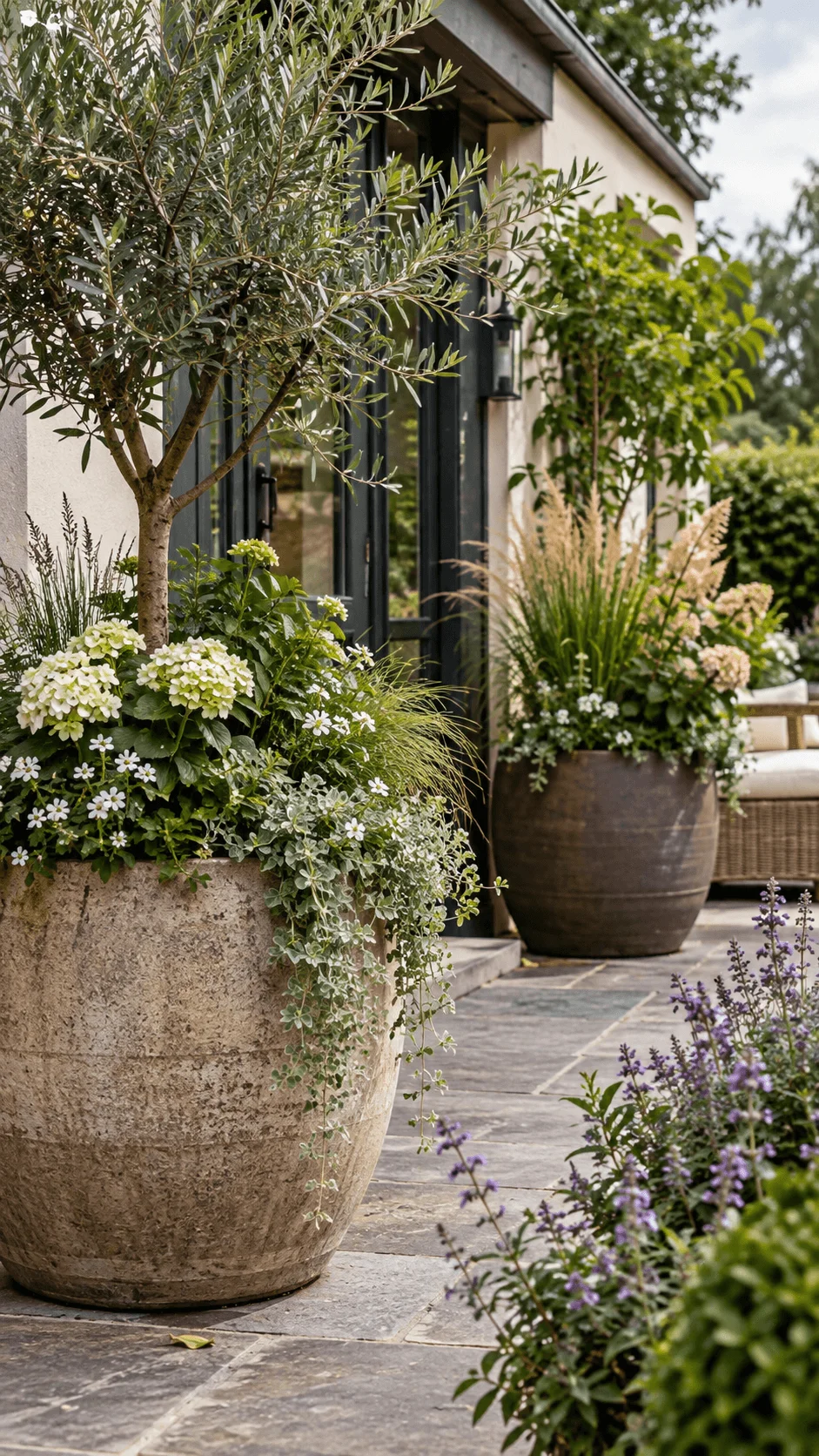
Large pots also become extremely heavy once filled, so choose their location before adding soil and plants.
Two substantial containers can frame a doorway, while three or four can define the edge of a seating area. Durable containers that remain useful for many years fit particularly well with sustainable container garden ideas.
Design a Low Maintenance Green Container Garden
Flowers do not need to dominate every container garden. Foliage can create an elegant display through differences in leaf shape, texture, size and tone.
A green container garden might combine upright grasses, broad leaves, trailing plants and compact evergreen shrubs. Ferns can work beautifully in suitable shaded conditions, while herbs and ornamental grasses can suit sunnier locations.
Grouping several pots together helps the plants visually overlap and creates the impression of a fuller planting area.
Foliage based containers can also provide interest outside the main flowering season. Leaves, stems and plant structure often remain attractive for longer periods than short lived blooms.
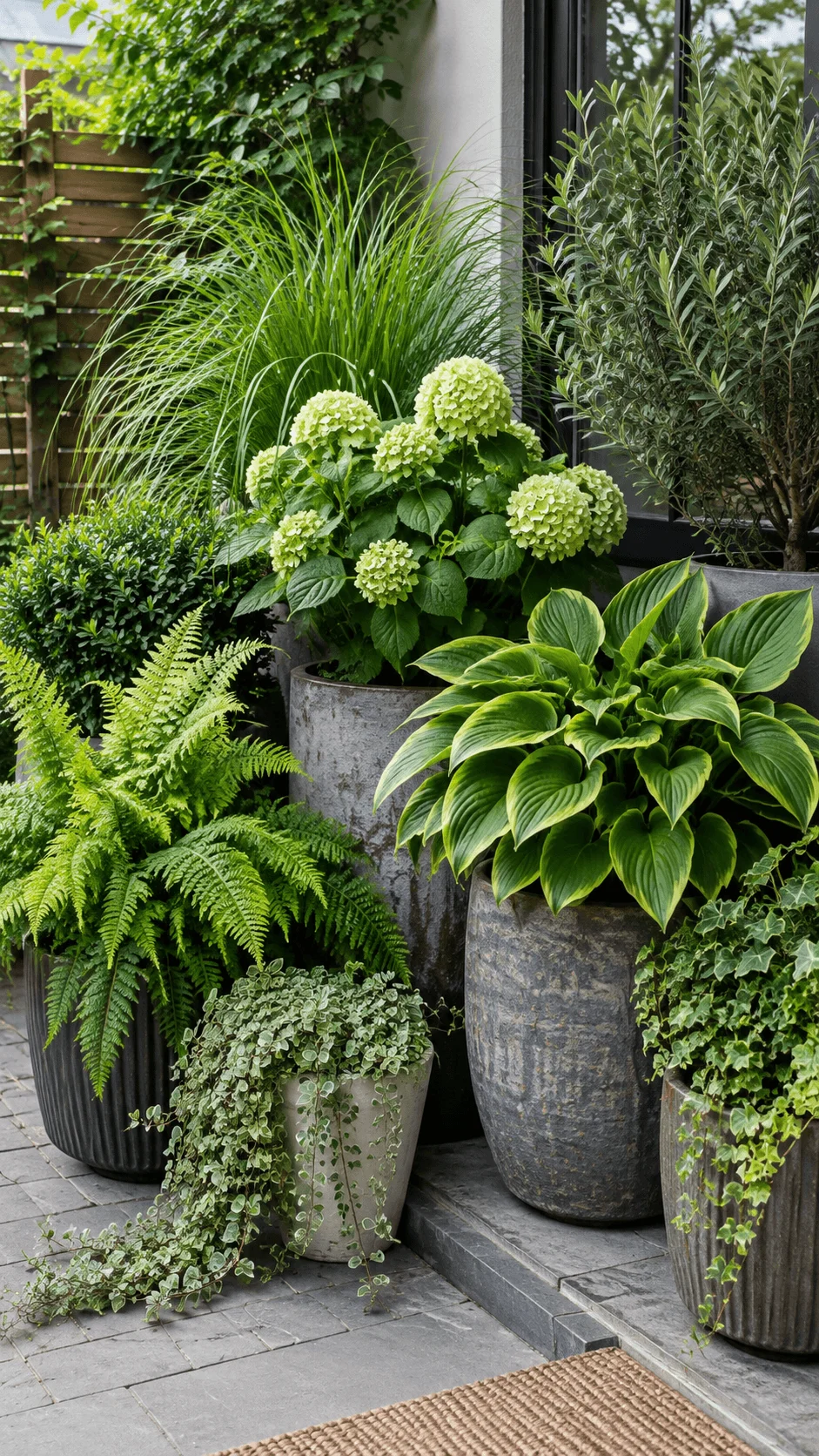
Low maintenance does not mean maintenance free. Gardeners still need to water, prune, feed and repot plants when necessary.
This style gives eco friendly garden ideas with pots a more sophisticated appearance while reducing dependence on temporary flowering displays.
How to Make Any Pot Garden More Eco Friendly
You do not need to replace every container to create a more sustainable garden. In many cases, the best place to start is with pots you already own.
Keep containers in use for as long as possible. Clean them, repair minor damage where practical and move older pots into less prominent areas rather than discarding them immediately.
Choose plants that suit the size of each container and the amount of sunlight available. Plants that constantly struggle often require more water, fertilizer and replacement.
Watering technique also makes a significant difference. Check the growing medium before watering instead of following a rigid daily routine. Water thoroughly when plants need moisture and consider collecting rainwater where local conditions make this practical.
Mulching the surface of large pots can reduce evaporation and help moderate soil temperature. Peat free growing media and mature compost can also support a more thoughtful container system.
Perennials, shrubs and other long lived plants can reduce the cycle of buying and discarding seasonal displays. Native plants may also contribute to local biodiversity when they suit container growing and local conditions.
The most practical eco friendly garden ideas with pots usually combine several small improvements rather than relying on one perfect product.
Choosing Sustainable Pots and Container Materials
Different pot materials behave differently, so the most sustainable choice depends on how long the container lasts, where it comes from and how well it suits the plant.
Terracotta has a classic appearance and allows moisture to move through its porous walls, but it can dry quickly and may crack in harsh freezing conditions. Ceramic pots often retain moisture better and can last many years when handled carefully.
Wood can provide a warm natural appearance, although constant moisture may eventually cause deterioration. Durable timber and appropriate construction can extend its useful life.
Metal containers can create a distinctive modern or recycled look, but they may become hot in strong sunlight. Consider where they will sit before planting sensitive roots.
Recycled plastic containers can remain lightweight and durable for years. Reusing an existing plastic pot often makes more sense than discarding it simply to buy a container marketed as environmentally friendly.
The best sustainable garden pots are usually the ones that suit the plant, survive local conditions and remain useful for a long time.
Conclusion:
Eco friendly garden ideas with pots show that container gardening can contribute much more than seasonal decoration. Pots can become pollinator gardens, productive mini orchards, naturalistic planting displays, wildlife features and water conscious growing spaces.
The most sustainable approach rarely requires buying everything new. Existing containers can support better plants, more efficient watering and longer lasting displays. A gardener might begin by replacing some seasonal flowers with perennials, adding one native pollinator container, reusing an old pot or experimenting with peat free growing media.
Small changes can gradually reshape the entire garden. A balcony with three carefully planted containers can become more useful and attractive than a large collection of plants that constantly need replacement. A patio can provide herbs, fruit, flowers and habitat when gardeners choose each pot with a clear purpose.
The best eco friendly garden ideas with pots combine beauty with practical decisions about water, materials, plant choice and long term care. By treating each container as part of a larger garden system, you can create an outdoor space that feels greener, more useful and better suited to the way modern gardens are evolving in 2026.