Eco Friendly Kids Painting Ideas for 2026
Children’s art becomes even more meaningful when creativity connects with nature, simple materials and genuine exploration. Eco friendly kids painting ideas are becoming an appealing way to introduce children to painting while encouraging them to notice natural colors, textures and materials around them. In 2026, this style of children’s art is moving beyond basic craft activities and embracing earthy palettes, natural pigments, recycled surfaces, process art and beautiful photography.
The most interesting part is that you do not need an expensive art room or elaborate decorations to create an attractive painting experience. Leaves, flowers, cardboard, natural colors, recycled paper and everyday materials can become part of the creative process. When you photograph these moments in natural light, the finished images can feel authentic, warm and artistic.
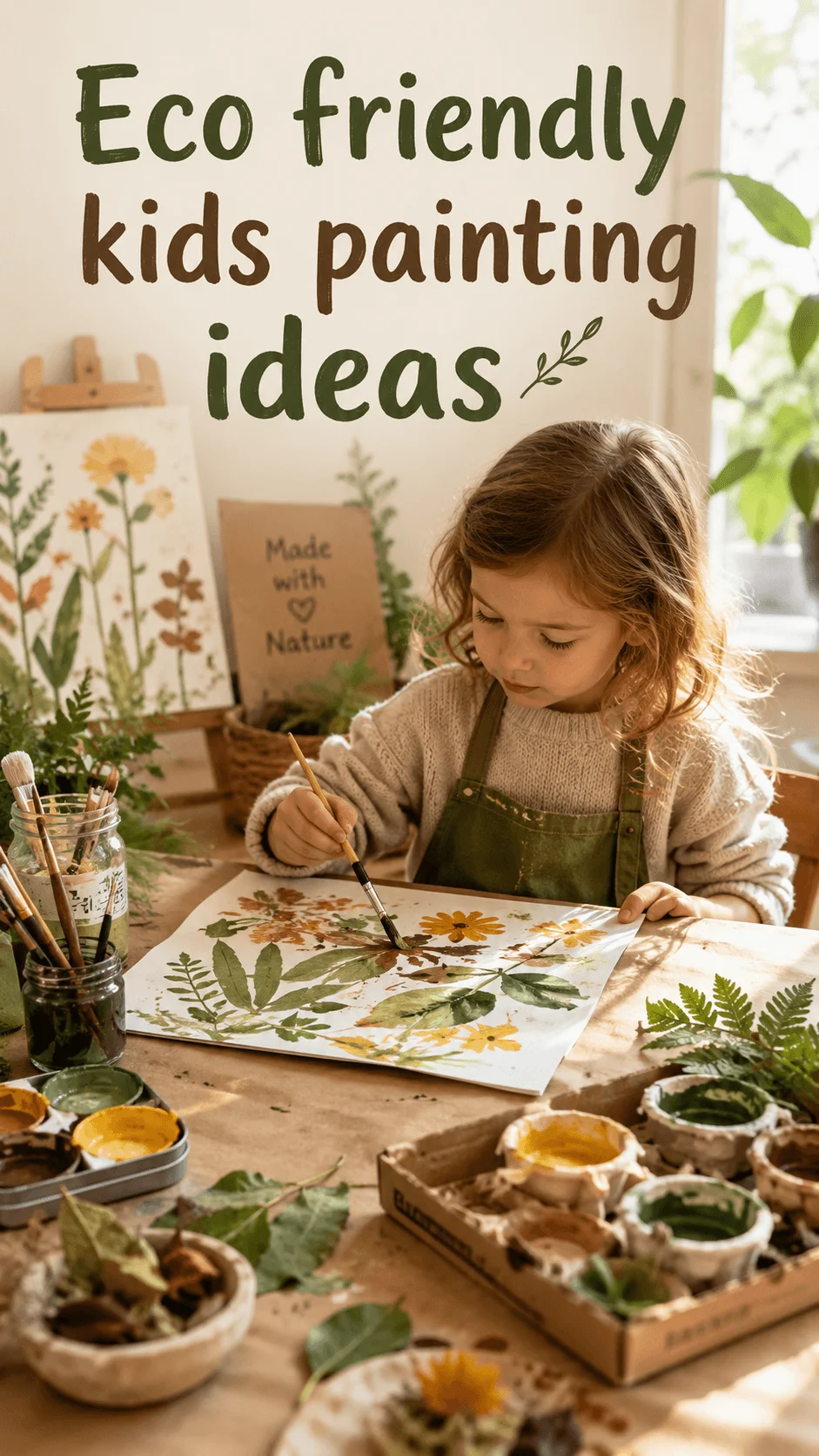
This guide explores twelve creative ideas that combine sustainable art with an aesthetic nature inspired approach. The first six ideas focus on natural pigments, earthy colors, nature materials, recycled surfaces and botanical inspiration.
Why Eco Friendly Kids Painting Ideas Are Trending in 2026
The popularity of eco friendly kids painting ideas reflects a wider interest in creative activities that use fewer new materials and encourage children to interact with the natural world. Parents and teachers are increasingly interested in activities that allow children to experiment rather than simply follow a fixed craft template.
Natural textures have also become an important part of modern children’s art aesthetics. A piece of cardboard can provide an interesting surface, while a leaf can create a completely different mark from an ordinary paintbrush. These small differences make the artwork feel personal and unpredictable.
The visual style is important too. Earthy greens, warm browns, muted yellows, terracotta shades and soft neutrals create a calm appearance that works beautifully in photographs. Instead of trying to make every painting look polished, the current aesthetic celebrates fingerprints, uneven brush marks, paint splashes and other signs of the creative process.
Photography adds another dimension. A photograph does not have to show only the finished artwork. It can capture a child’s hands mixing colors, a leaf covered in paint, a recycled cardboard surface or a collection of natural materials beside the painting. These details turn a simple activity into a visual story.
How to Create an Eco Friendly Aesthetic for Kids Art
Creating an attractive children’s art setup does not require a large collection of decorative props. Start with a simple surface such as unfinished wood, recycled cardboard or neutral fabric. These backgrounds allow the artwork to remain the main focus while adding natural texture to the photograph.
Natural daylight works particularly well. Place the artwork close to a bright window or take the activity outdoors in a comfortable shaded area. Soft daylight can reveal the texture of paper, cardboard, paint and natural materials without making the scene look overly artificial.
You can also bring small pieces of nature into the composition. A few leaves, flowers, twigs or stones can sit around the artwork when they relate to the creative idea. Keep the arrangement simple so the photograph does not become crowded.
The goal is not perfection. A slightly messy paint palette, visible brush marks and small imperfections can make the photograph feel more genuine. This approach fits the growing preference for authentic visual storytelling in contemporary photography.
Natural Pigment Painting for Kids
Natural pigment painting is one of the most interesting natural painting ideas for kids because it allows children to explore where colors come from. Instead of relying entirely on conventional paint colors, children can investigate suitable natural sources that produce different shades.
Turmeric can inspire bright yellow tones, while beetroot can create pink or reddish hues. Certain berries, flowers and plant materials can also provide interesting colors when prepared appropriately. The exact result varies according to the material, preparation method and amount of water used, which makes the process part of the experiment.
The activity can begin with a simple color exploration. Children can observe a natural material, predict what color it might produce and then compare their prediction with the result. This transforms painting into an experience involving observation and discovery.
The resulting artwork often has a softer and less predictable appearance than conventional children’s paintings. That quality works especially well with an aesthetic photography style. Place the natural pigment source beside the paper and photograph both together. For example, a small arrangement of beetroot, paper and the resulting pink artwork can tell a visual story without requiring additional decorations.
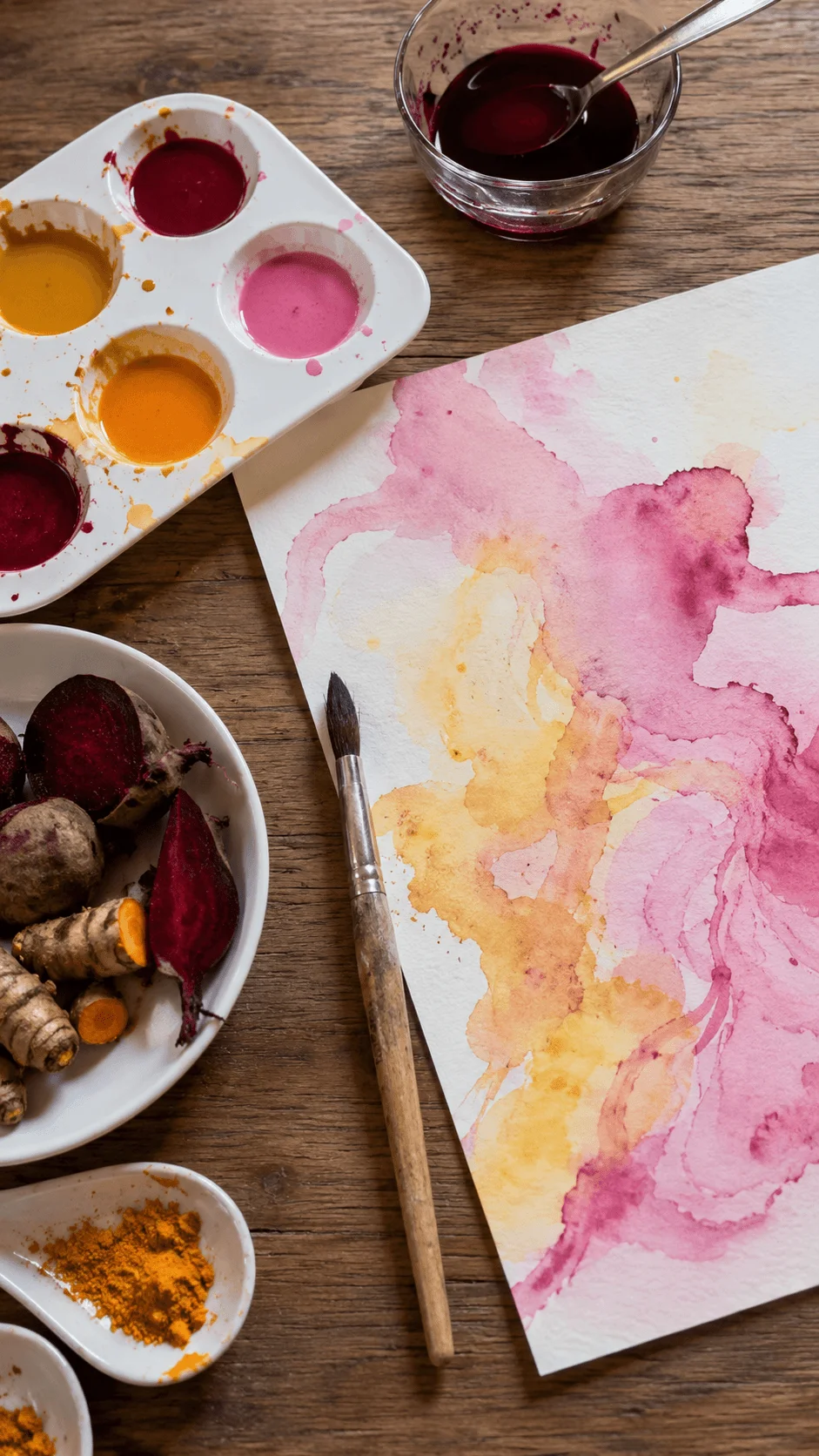
Close up photography can reveal the subtle differences in color and texture. A photograph of the paint itself can also become part of the article’s visual appeal. Soft daylight, neutral backgrounds and simple compositions work particularly well.
Natural pigments can also encourage conversations about plants, food, color and nature. Children begin to see ordinary materials differently when they realize that the world around them can provide creative inspiration.
Wilderkind Inspired Nature Painting
The Wilderkind aesthetic has become an interesting nature inspired direction for creative work in 2026. It draws attention to forests, plants, woodland creatures, insects and the feeling of reconnecting with the natural world. This makes it an excellent source of inspiration for nature inspired kids art.
Children can paint imagined forests filled with trees, mushrooms, butterflies, birds or small woodland animals. They can also create abstract versions of these subjects using simple shapes and earthy colors.
The important part is to let children interpret nature in their own way. One child might create a dense green forest, while another might use only a few brown lines and small circles to represent trees and flowers. Both approaches can produce interesting artwork because the focus remains on imagination rather than technical perfection.
For an aesthetic presentation, use colors that resemble the natural environment. Soft greens, warm browns, muted yellow and earthy orange can create a cohesive appearance. You can place a few leaves or small natural objects around the painting when photographing it.
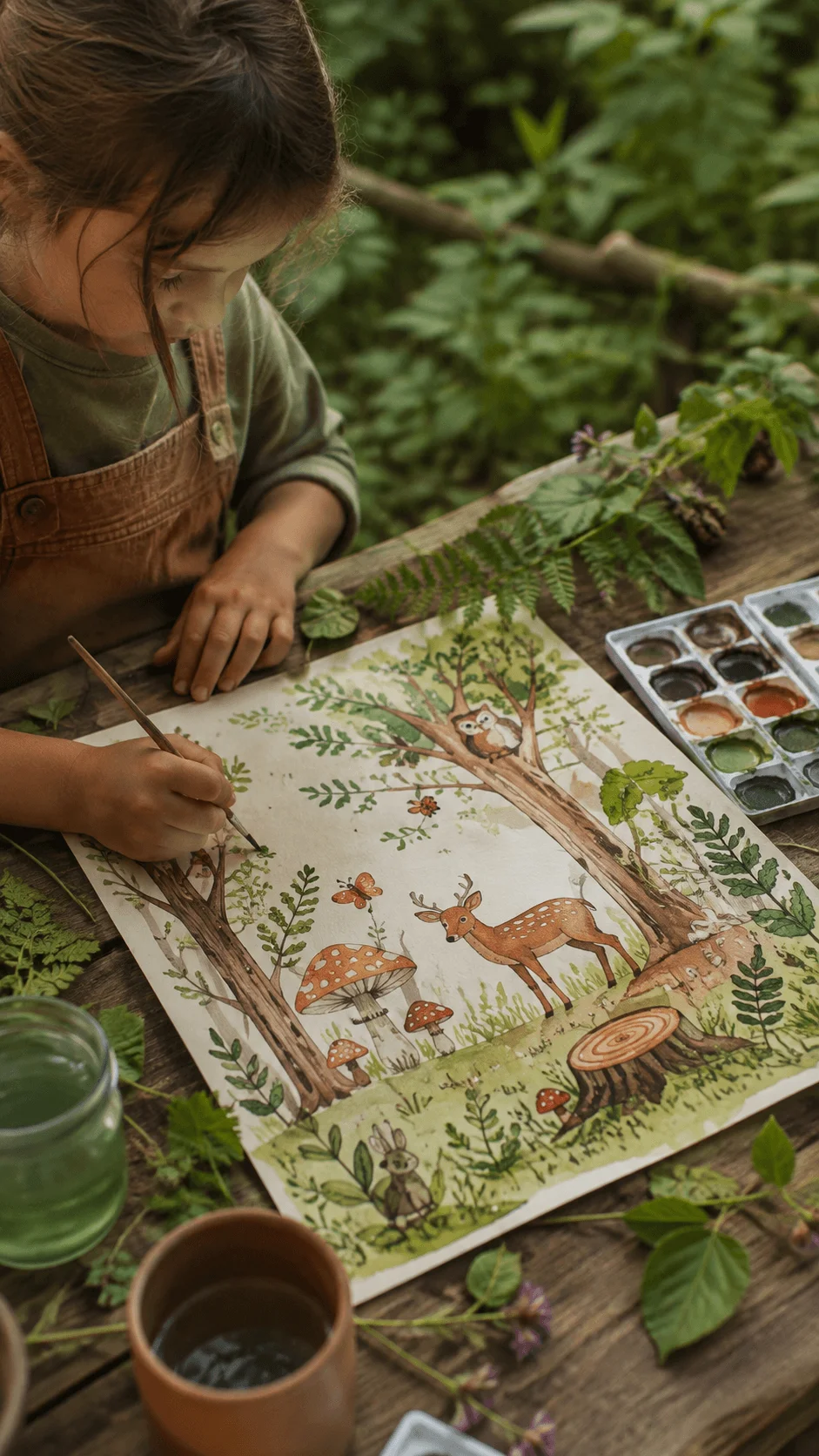
Outdoor photography can make this idea particularly effective. A child’s forest painting can sit on a wooden surface surrounded by greenery, or the child can be photographed working on the artwork in a natural setting. Keep the background soft and uncluttered so the painting remains easy to see.
This idea also creates an opportunity for storytelling. Ask the child what lives inside their painted forest or what happens there. Their answers can become part of the story behind the artwork.
Earth Tone Painting Ideas for Kids
Earth tones are another strong direction for aesthetic kids painting ideas in 2026. Instead of using every bright color available, children can experiment with a smaller palette inspired by soil, leaves, clay, stones and sunlight.
Warm beige, muted green, ochre, terracotta and brown can create a surprisingly rich painting. Children can mix different shades and discover how small changes affect the final result.
The beauty of this approach comes from simplicity. A painting does not need dozens of colors to look interesting. Different brush pressures, overlapping shapes and textured marks can create variety even when the color palette remains limited.
Parents and teachers can introduce the idea by taking children outside and asking them to notice colors in their surroundings. A dry leaf might inspire a muted brown, while grass could inspire several shades of green. A clay surface might provide inspiration for terracotta.
These paintings photograph beautifully against neutral surfaces. A wooden table, plain paper background or natural fabric can complement the artwork without competing with it.
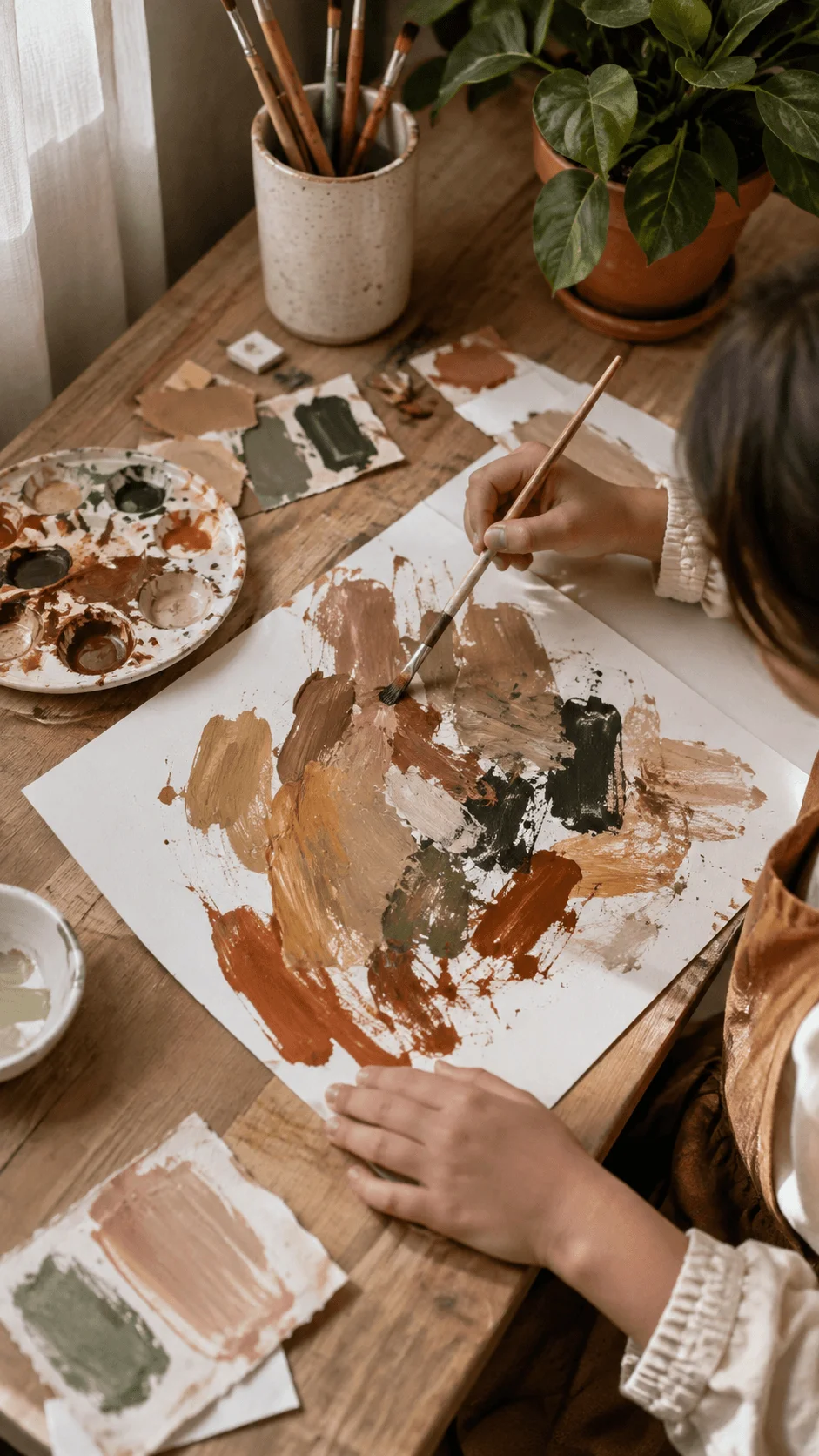
For a more artistic photograph, experiment with close and wide compositions. A close photograph can highlight brush marks and layered colors, while a wider photograph can show the child creating the artwork. Natural window light can bring out subtle variations in earthy colors.
The idea also works well for children who enjoy abstract art. They do not need to paint recognizable objects. They can simply explore how different earth inspired shades interact with one another.
Painting With Natural Loose Parts
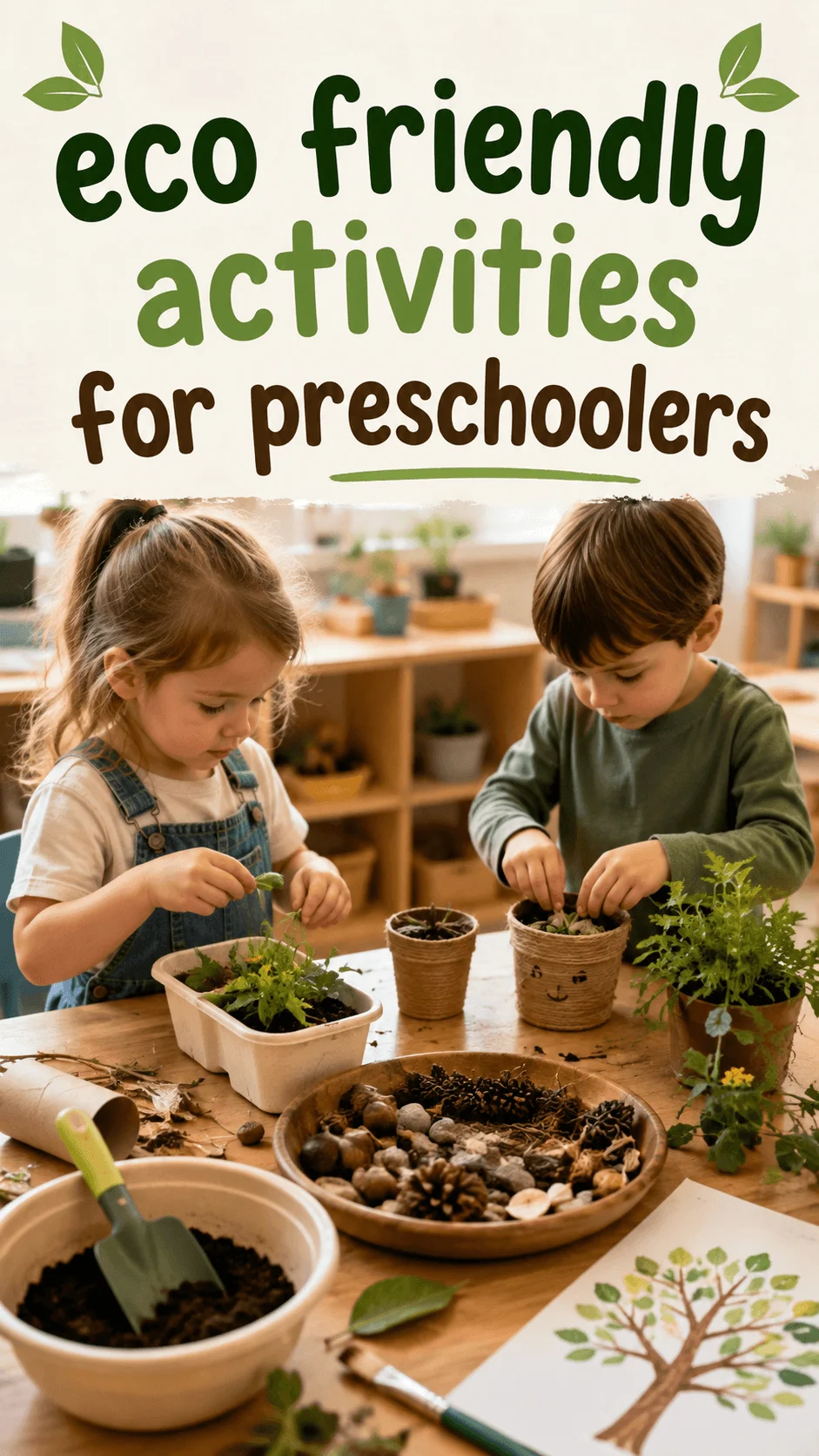
Natural loose parts can transform an ordinary painting activity into a tactile creative experience. Instead of giving children only brushes, provide suitable natural objects such as leaves, flowers or small twigs that can create different marks on paper.
Each object produces its own texture. A leaf might create a broad impression, while a small twig can produce thin lines. A flower can create a soft repeated shape. Children can experiment with pressing, dragging or lightly stamping these objects through paint.
This is one of the strongest eco friendly painting ideas for kids because the natural materials themselves become part of the creative experience. The child does not simply paint an image. They investigate how different surfaces interact with paint.
Process art works especially well here. There does not need to be a predetermined final picture. Children can experiment freely and discover unexpected patterns as they work.
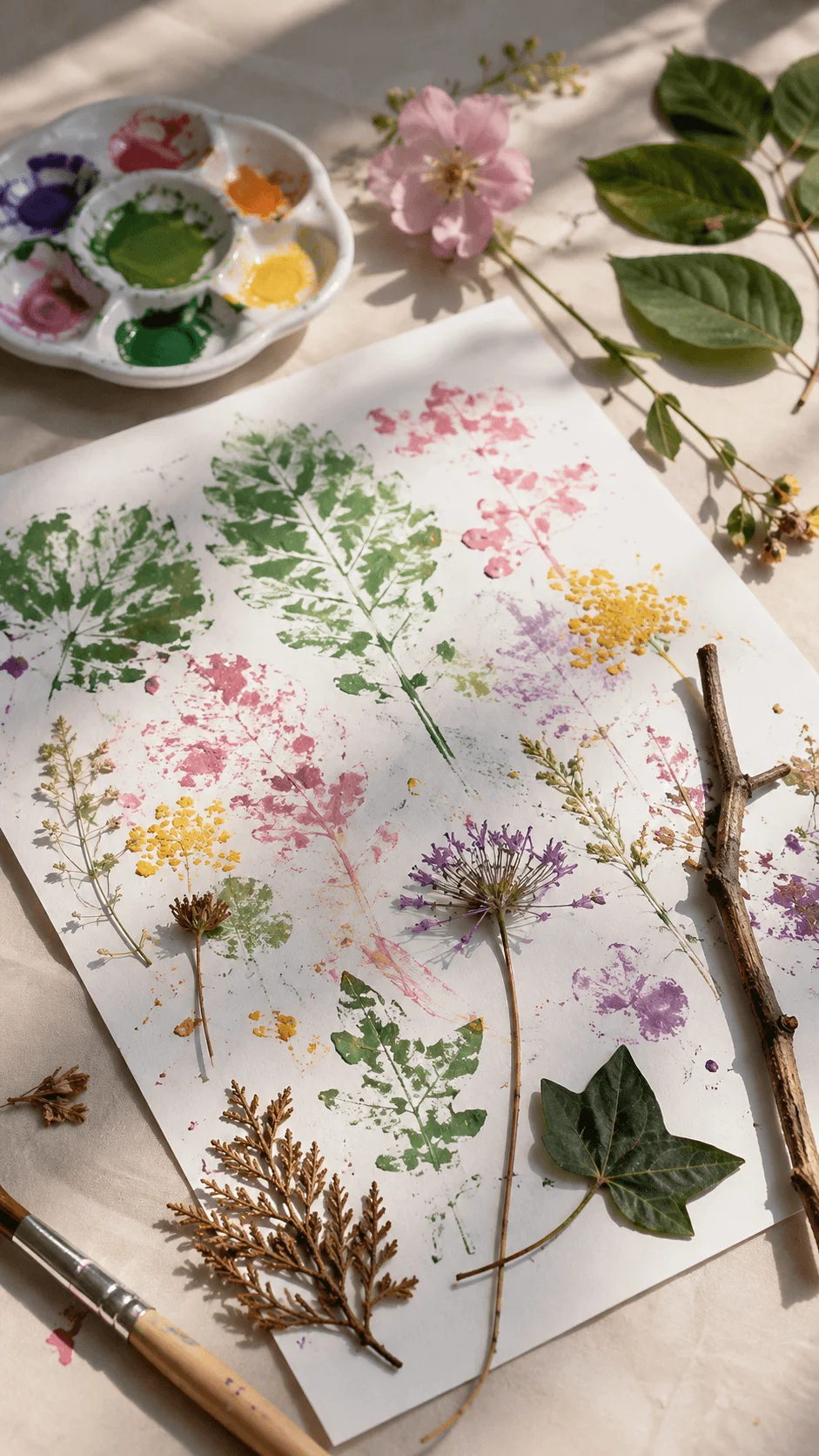
The photography possibilities are equally interesting. Photograph the natural objects before the activity, during the painting process and beside the finished artwork. Close up images can show the textures left behind by leaves and flowers.
A neutral background helps these details stand out. Soft natural light can also reveal raised paint, overlapping marks and the texture of the paper.
The finished artwork may look abstract, but that is part of its appeal. The marks represent an actual experiment with nature and materials, giving the photograph a genuine creative story.
Recycled Cardboard Painting Ideas
Recycled cardboard can provide a simple and characterful alternative to ordinary paper. Clean cardboard packaging can become a painting surface, giving children an opportunity to transform something that might otherwise be discarded.
The texture of cardboard can influence how paint spreads. Some areas may absorb paint differently, while edges and folds can create interesting visual details. Children can use these characteristics as part of their artwork rather than trying to hide them.
This approach is particularly useful when creating sustainable kids painting ideas at home or in a classroom. The activity does not depend on purchasing a new canvas for every painting. An ordinary piece of cardboard can become a completely new creative surface.
Children can paint abstract patterns, landscapes, animals, flowers or imaginary scenes. They can also combine cardboard shapes with painted areas to create layered artwork.
Photography can emphasize the transformation. Photograph the original cardboard before painting, then capture the child working on it and finally photograph the completed piece. This creates a simple visual story showing how an everyday material became artwork.
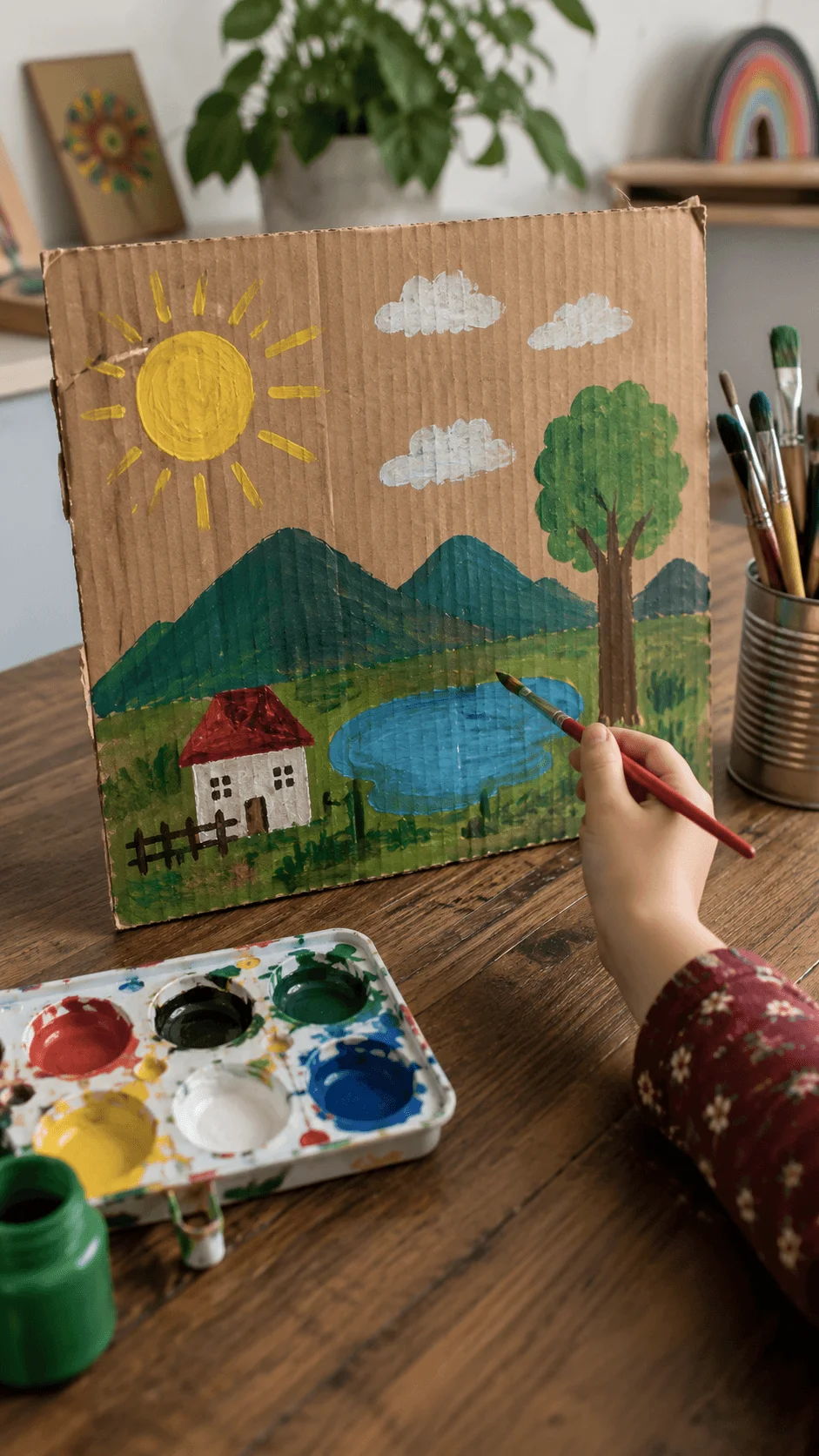
For an aesthetic photograph, place the finished cardboard painting on a wooden surface or another neutral background. Keep the original packaging texture visible where possible. The contrast between the ordinary material and the creative result can make the image especially engaging.
The imperfections of cardboard also complement the handmade quality of children’s art. Small dents, uneven edges and visible fibers can add character rather than making the artwork look unfinished.
Botanical Painting Ideas for Kids
Botanical painting gives children a wonderful opportunity to turn simple observations from nature into creative artwork. Instead of asking children to reproduce a perfect flower or leaf, encourage them to notice shapes, patterns, veins and textures and then interpret those details through paint.
Leaves can create particularly interesting patterns. A child might study the lines running through a leaf and turn them into branches, abstract patterns or imaginary landscapes. Flowers can inspire circular shapes, repeated marks and colorful compositions. Even a single leaf can become the starting point for an entire painting.
This approach works well with natural painting ideas for kids because nature provides the visual inspiration without requiring complicated themes. Children can explore the difference between smooth and rough surfaces, large and small shapes and light and dark colors.
The activity can become even more interesting when children create botanical prints. A suitable leaf can receive a thin layer of paint before the child presses it gently onto paper. The resulting pattern reveals details that might otherwise go unnoticed.
Photography can emphasize these details beautifully. Take a close photograph of the leaf beside the print so readers can see the relationship between the natural object and the artwork. Another photograph can show the child’s hands creating the print.
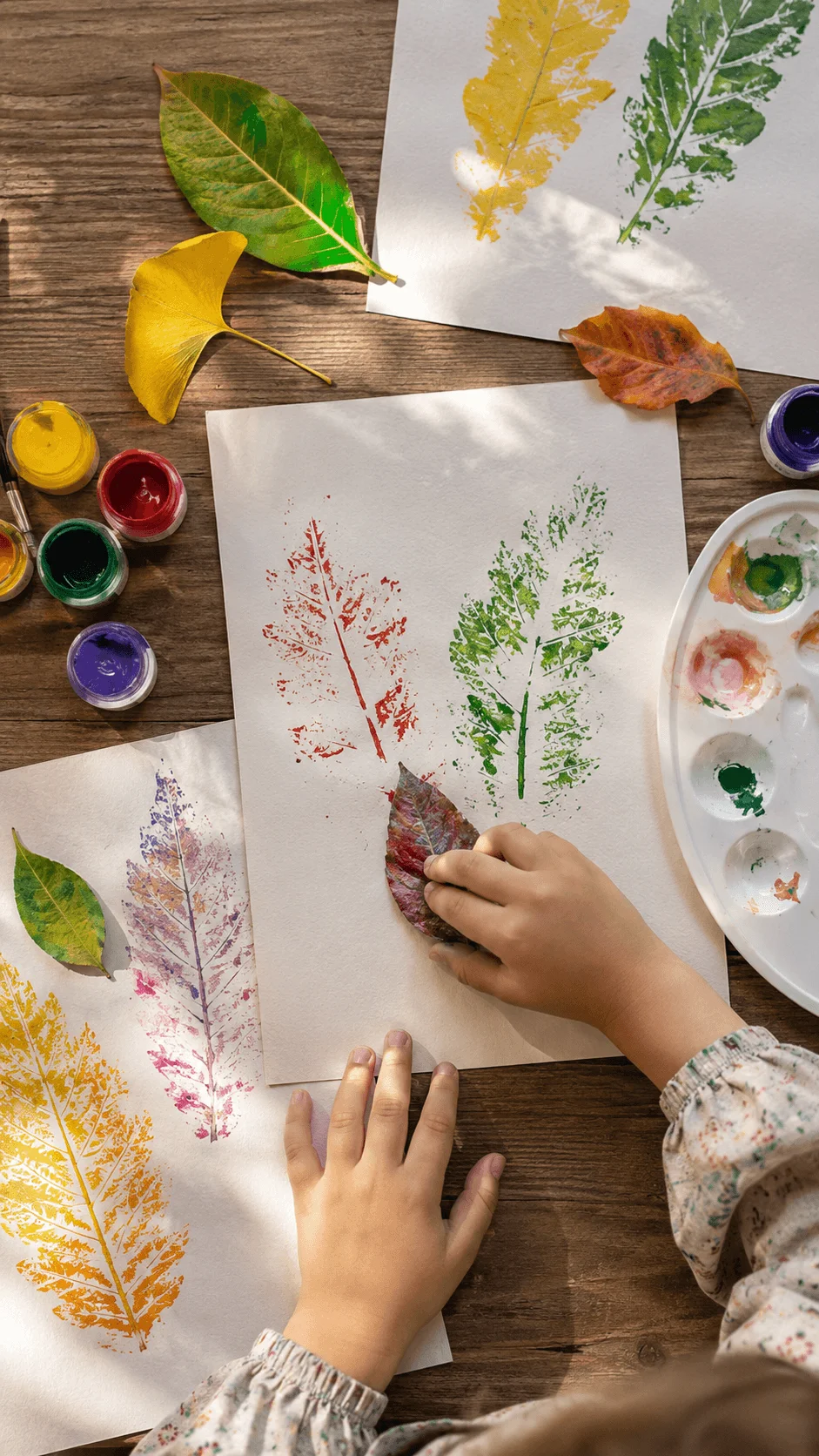
Natural light works especially well for botanical art because it reveals fine details. Soft daylight can highlight leaf veins, paint texture and subtle color variations without making the image look overly processed.
You can also photograph several finished botanical paintings together. Arrange them on a simple neutral surface and allow small differences between each painting to remain visible. The variation makes the collection feel handmade and authentic.
Eco Friendly Process Art and Photography
Process art focuses on the experience of creating rather than achieving a predetermined final result. This makes it particularly suitable for children because they can experiment with color, movement, texture and materials without worrying about whether their artwork looks exactly like an example.
Eco friendly process art can involve recycled paper, cardboard, natural painting tools and simple reusable materials. Children might drag a leaf through paint, create patterns with a twig or mix several earthy colors together to see what happens.
The most important part is freedom. Instead of telling a child exactly what to paint, provide an interesting collection of materials and allow them to decide how to use them.
This also creates excellent photography opportunities. A finished painting only shows the final result, while process photography can capture the story behind it. A photograph of a child’s paint covered hands, for example, immediately communicates that someone created the artwork.
Photograph the child while they experiment with different tools and colors. Capture moments when they pause to observe the paint or discover an unexpected pattern. These candid moments often feel more genuine than carefully posed photographs.
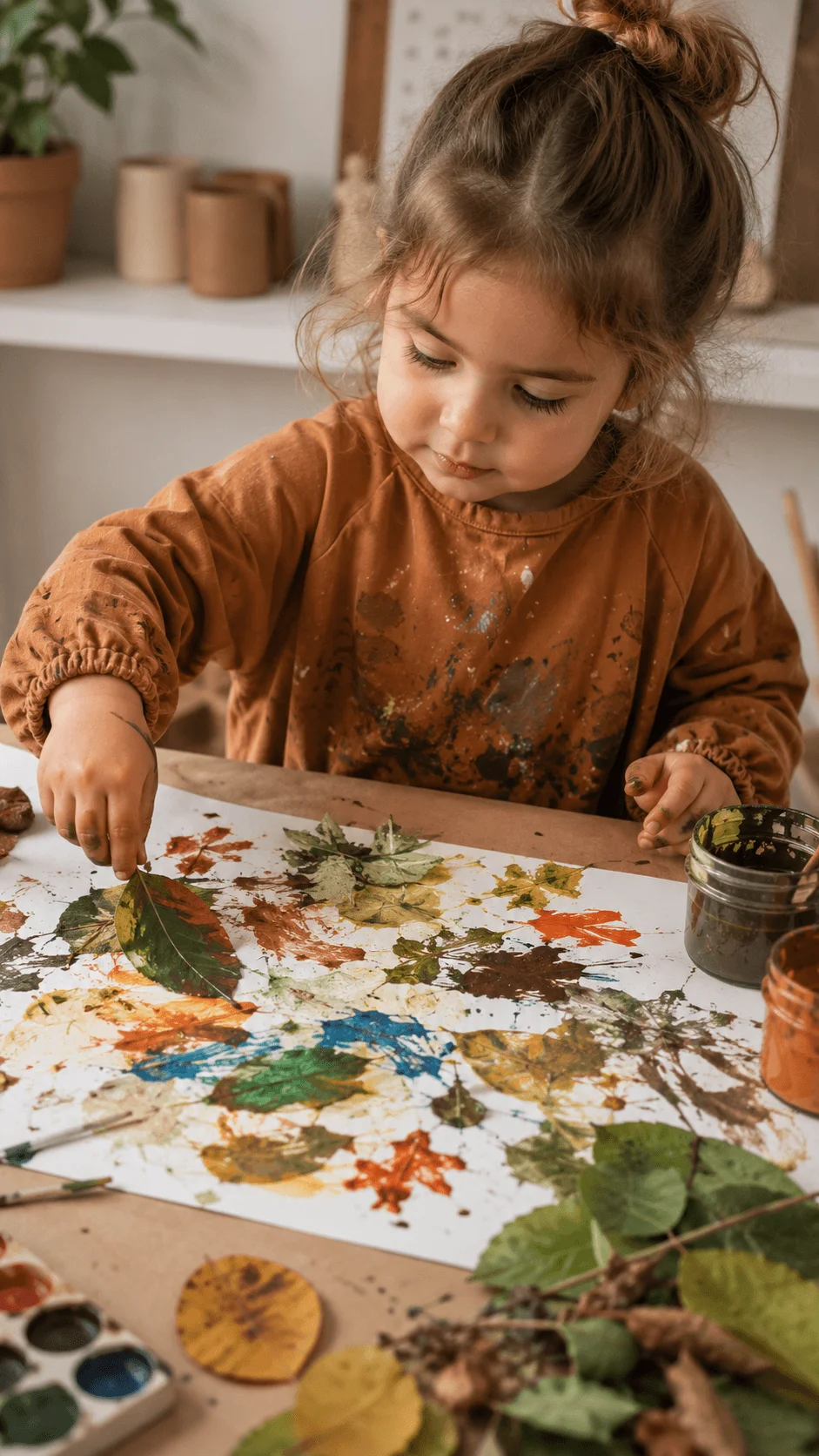
You can also photograph details such as a brush touching the paper, a leaf leaving a painted impression or two colors mixing together. These small images can complement the main photograph and create a complete visual story.
The finished artwork does not need to look perfect. In fact, uneven marks, overlapping colors and unexpected shapes can make process art more interesting. The purpose is to preserve the child’s creative decisions rather than produce a polished adult style painting.
Natural Light Photography for Kids Art
Photography plays an important role when presenting eco friendly kids painting ideas because even a simple artwork can look beautiful when photographed thoughtfully. Natural light provides one of the easiest ways to create a soft and authentic appearance.
A large window can provide excellent light during the day. Place the artwork close to the window while avoiding harsh direct sunlight. Soft daylight can reveal paper texture and subtle color differences without creating strong reflections.
Outdoor shade can also work well. A covered patio, garden table or shaded area can provide enough light while keeping the scene comfortable for the child.
Think about the direction of the light. Side lighting can emphasize texture and brush marks, while light coming from the front can produce a more evenly illuminated image. Experiment with different positions rather than relying on one setup.
Background selection matters too. A complicated background can distract from the painting. Wooden surfaces, plain fabric, neutral paper and natural outdoor settings can provide visual support without taking attention away from the artwork.
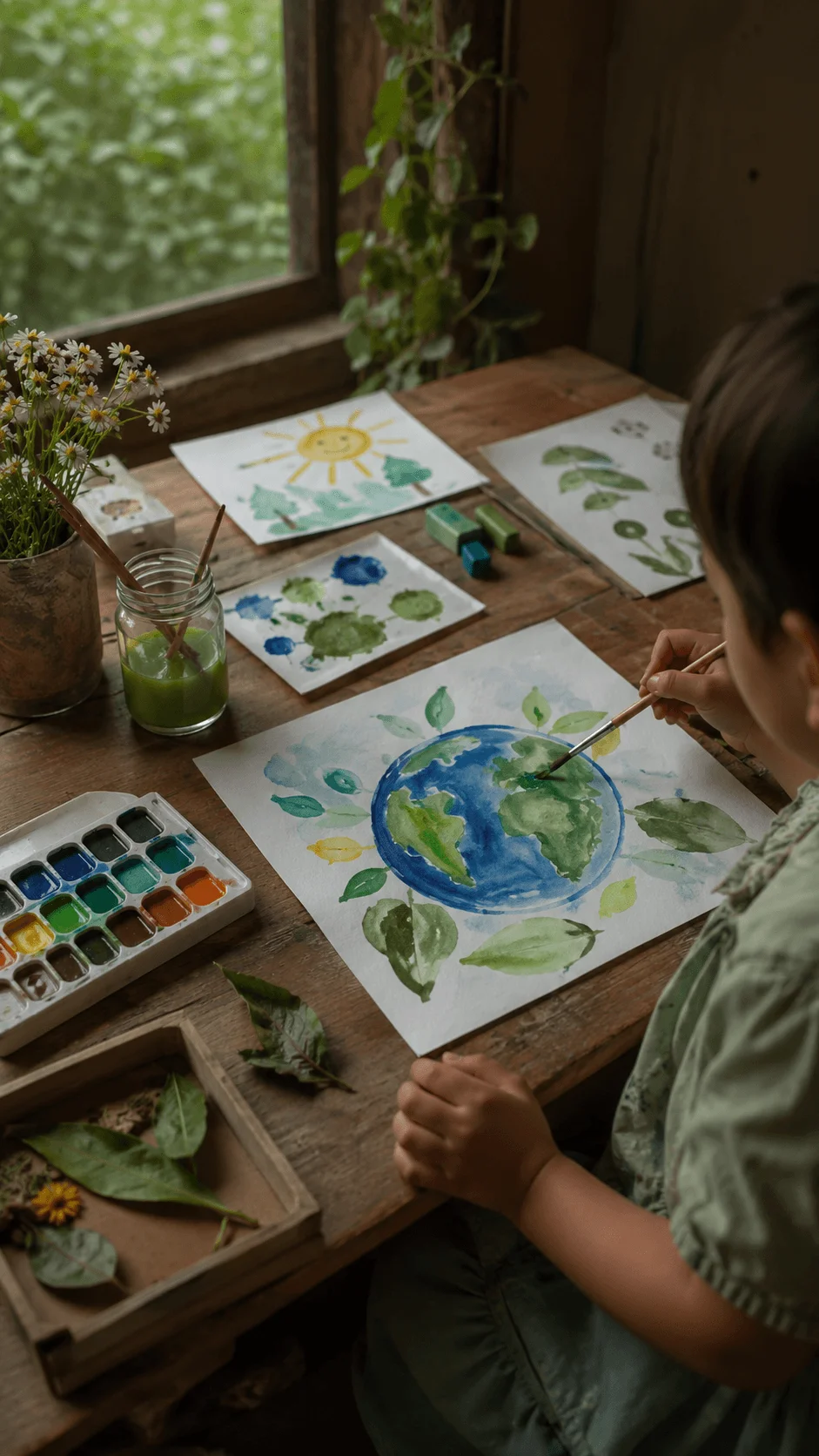
Do not feel that every photograph needs to show the entire painting. A close crop can reveal interesting brush strokes or natural textures. A wider photograph can show the child, materials and surroundings.
The strongest images often combine several perspectives. One photograph can show the complete artwork, another can show the process and another can focus on an interesting detail.
Upcycled Painting Palette Ideas
Painting palettes do not always need to come from a new art supply purchase. Suitable clean household objects can sometimes become useful painting surfaces, allowing families to reuse materials they already have.
A clean old tray, reusable container or another appropriate washable surface can hold small amounts of paint during an activity. The goal is to give an existing object another creative purpose.
This idea fits naturally into eco friendly kids art ideas because the sustainability message becomes part of the activity itself. Children can learn that creativity does not always require buying something new.
The palette can also become part of the photography. Rather than removing the messy palette from the final photograph, consider including it beside the finished artwork. Small paint marks can show how the colors developed during the activity.
Arrange the palette, brushes and artwork on a simple surface. Add a few natural objects if they relate to the painting. For example, a leaf inspired painting could include the leaves that inspired the color choices.
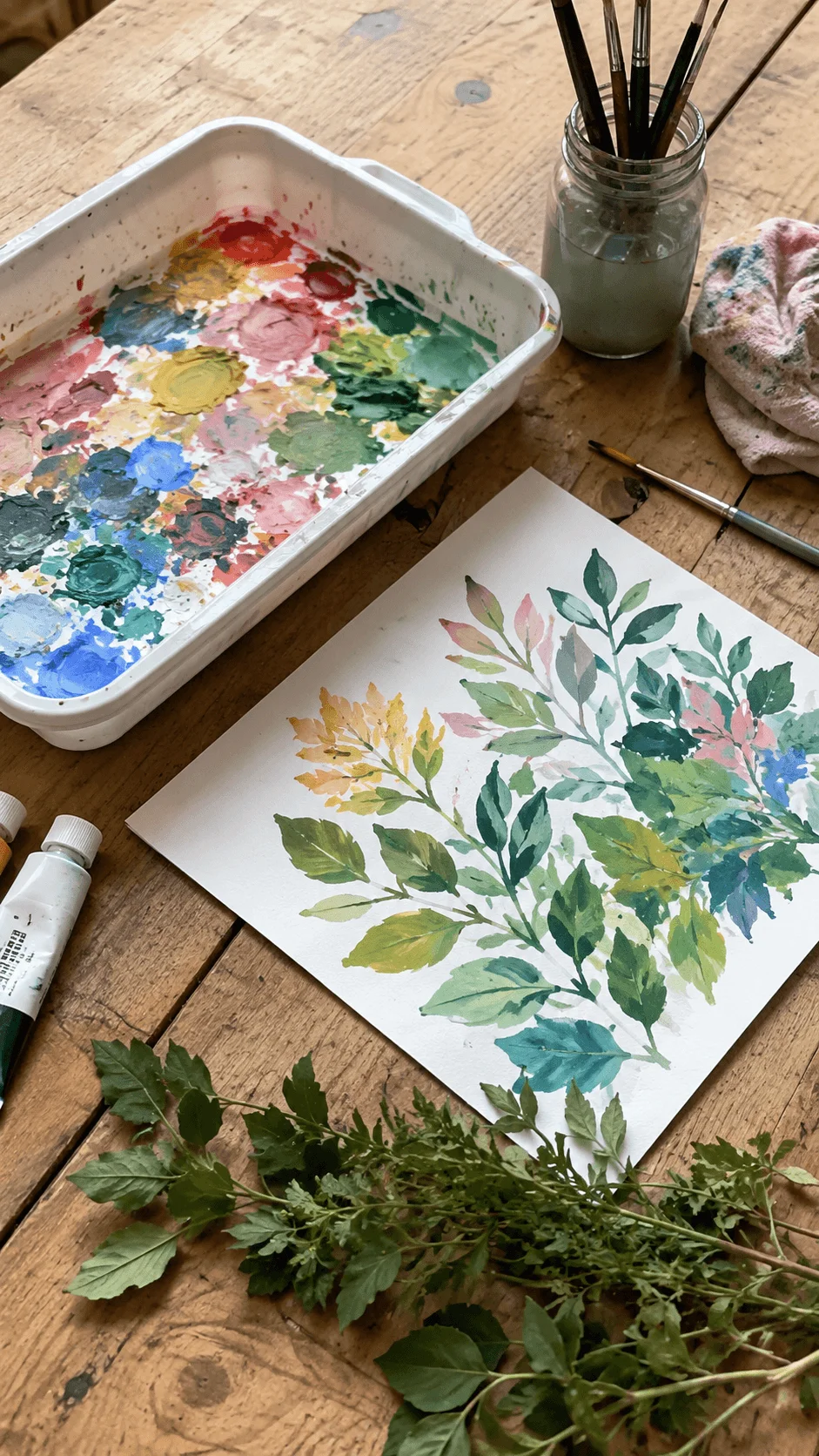
Keep the arrangement natural rather than perfectly symmetrical. A slightly casual composition can communicate the feeling of an active creative workspace.
This approach is especially effective for photographs intended for blogs and Pinterest because the image tells a story quickly. A viewer can immediately understand that the artwork came from an actual creative session rather than a digitally designed concept.
Natural Color Exploration Art
Nature provides an enormous range of colors that children encounter every day. Natural color exploration encourages them to slow down and notice these variations.
A child might compare several shades of green found in leaves or notice how flowers range from pale to intense colors. Stones, soil, bark, fruits and other natural objects can also inspire color observations.
The purpose is not necessarily to reproduce the exact color. Instead, children can create their own interpretation. A collection of green leaves might inspire a painting containing several completely different shades of green.
This makes the activity useful for nature painting ideas for kids because it connects artistic experimentation with observation.
You can create a simple color exploration session by placing several natural objects near the painting area. Ask the child what colors they notice and which ones they would like to recreate.
The resulting artwork can become a visual record of their observations. Some children might create abstract color fields, while others might turn the colors into landscapes or imaginative creatures.
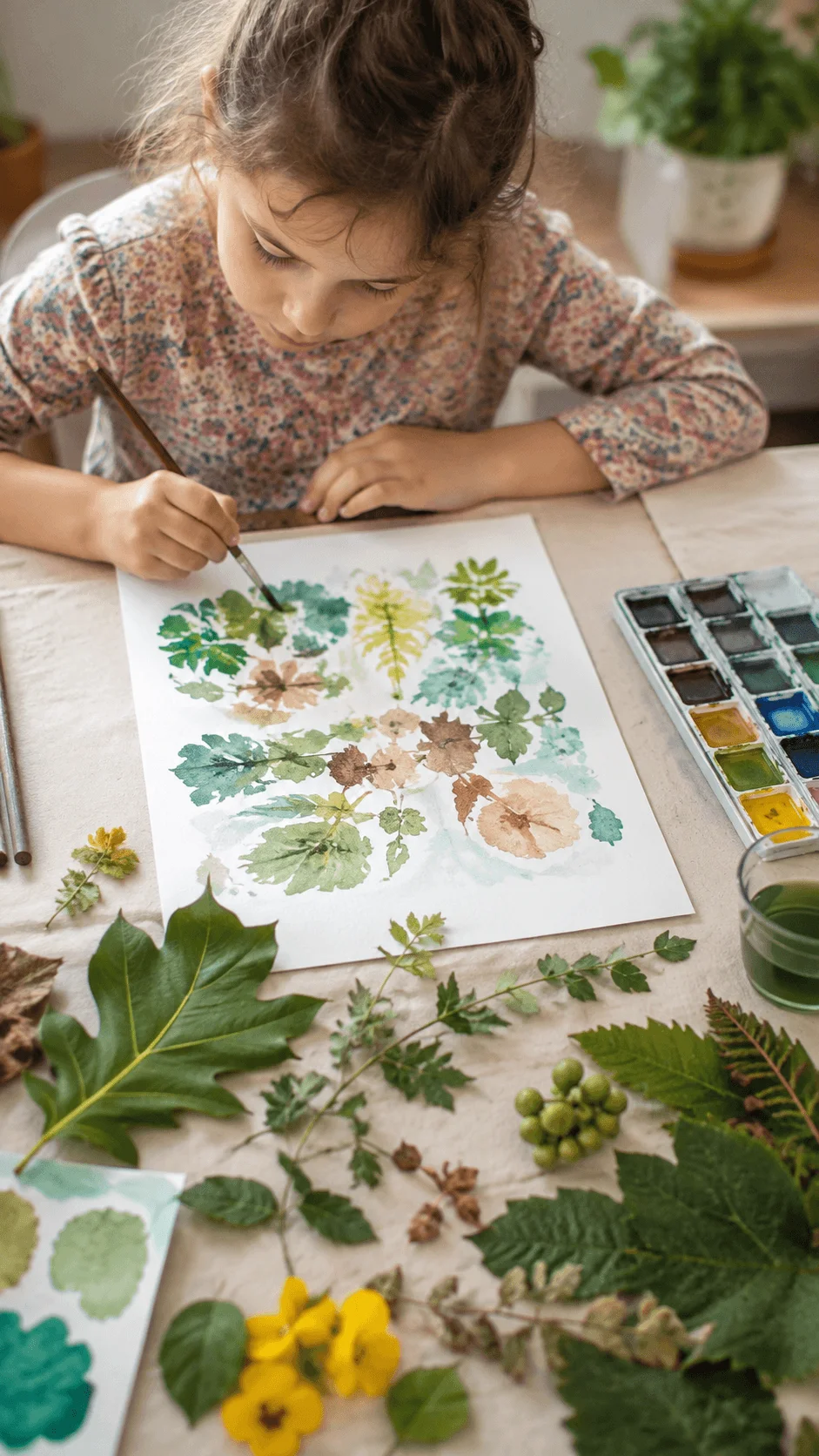
Photography can strengthen the idea by showing the natural inspiration alongside the artwork. Place the leaves, flowers or other objects near the finished painting and photograph them together.
A close photograph can focus on the relationship between the natural object and the painted color. A wider image can show the complete arrangement.
This style works particularly well with earthy palettes because the natural objects provide both the inspiration and the visual context.
Eco Art Storytelling Scenes
A painting can become much more interesting when it forms part of a story. Instead of photographing the artwork by itself, create a simple scene that communicates something about the child’s imagination.
For example, a child who paints a forest could create a small nature inspired scene around the artwork. Leaves, twigs and other suitable objects can suggest the environment represented in the painting.
The purpose is not to create an elaborate miniature set. A few carefully chosen elements are enough.
This approach combines eco friendly kids art projects with photography and storytelling. The artwork remains the central element while the surrounding materials provide context.
Ask the child questions about the painting. What happens in the forest? Who lives there? What colors did they choose and why? Their answers can help shape the photograph.
The scene can also represent the creative process. Place the artwork beside the materials used to create it, such as leaves, recycled cardboard or natural color inspirations.
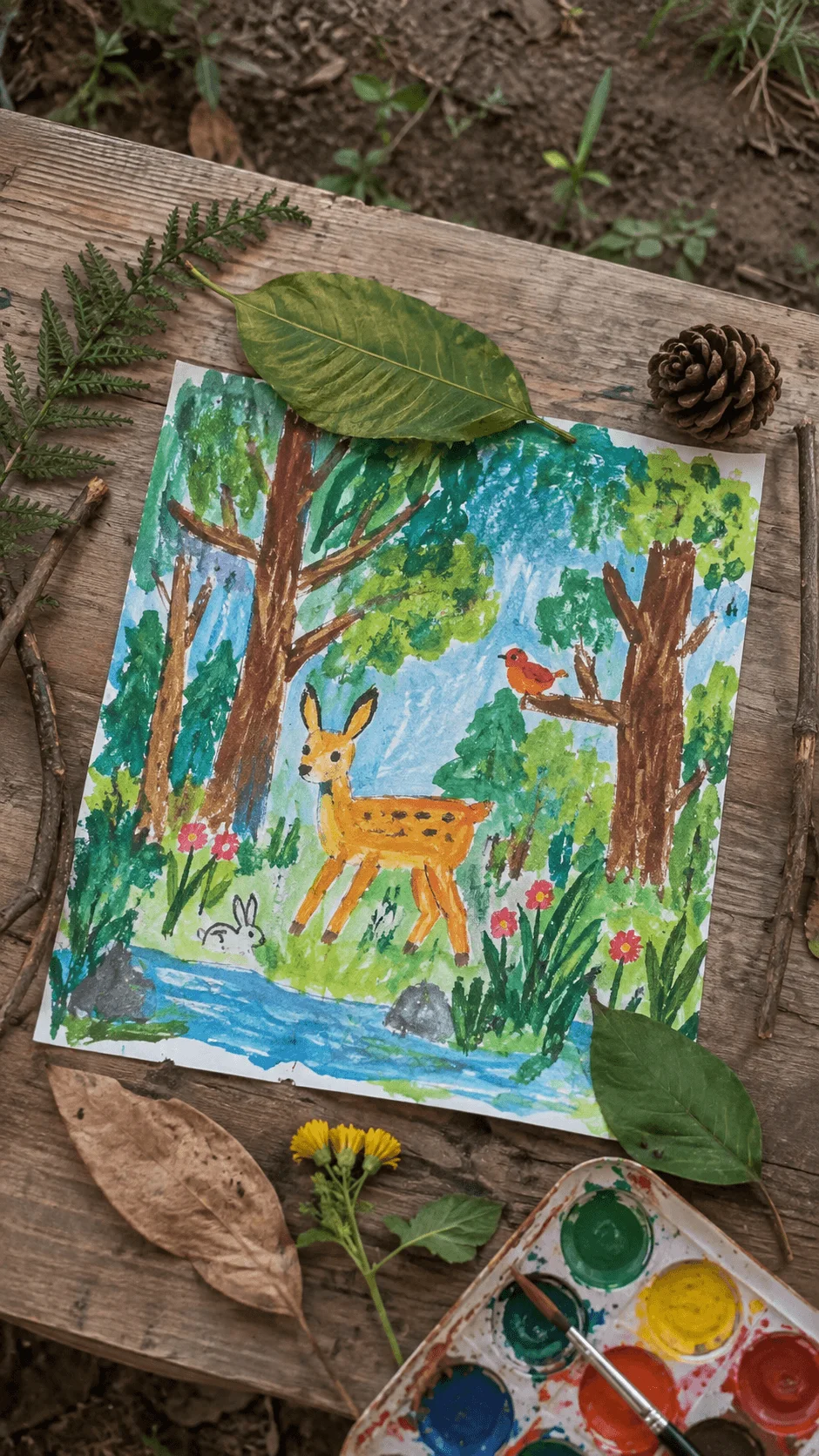
Natural backgrounds work especially well. A wooden table, garden surface or neutral fabric can provide enough texture without overwhelming the painting.
For Pinterest style photography, vertical compositions can work particularly well because they provide room to show the artwork, creative materials and surrounding environment in one frame.
The most important thing is to keep the scene believable. Avoid adding too many decorative objects that have nothing to do with the artwork. The photograph should feel like an extension of the child’s creative world.
Analog Inspired Eco Art Photography
Analog inspired photography can complement handmade children’s artwork because both styles embrace character and imperfection. Instead of aiming for an extremely sharp and polished commercial appearance, photographers can experiment with softer compositions and natural textures.
A gentle film inspired look can work particularly well with earthy colors. Muted greens, warm browns, cream backgrounds and soft terracotta shades already create a visual feeling that pairs naturally with handmade paintings.
Focus on authentic moments rather than excessive editing. A photograph of a child concentrating on a painting can feel more meaningful than a heavily edited image of the finished artwork.
Composition also matters. Slightly imperfect framing can create a documentary feeling. You can photograph the edge of the paper, a paint stained brush or a small natural object partly entering the frame.
Soft light can further strengthen the analog inspired aesthetic. Window light or outdoor shade can create gentle shadows and natural contrast.
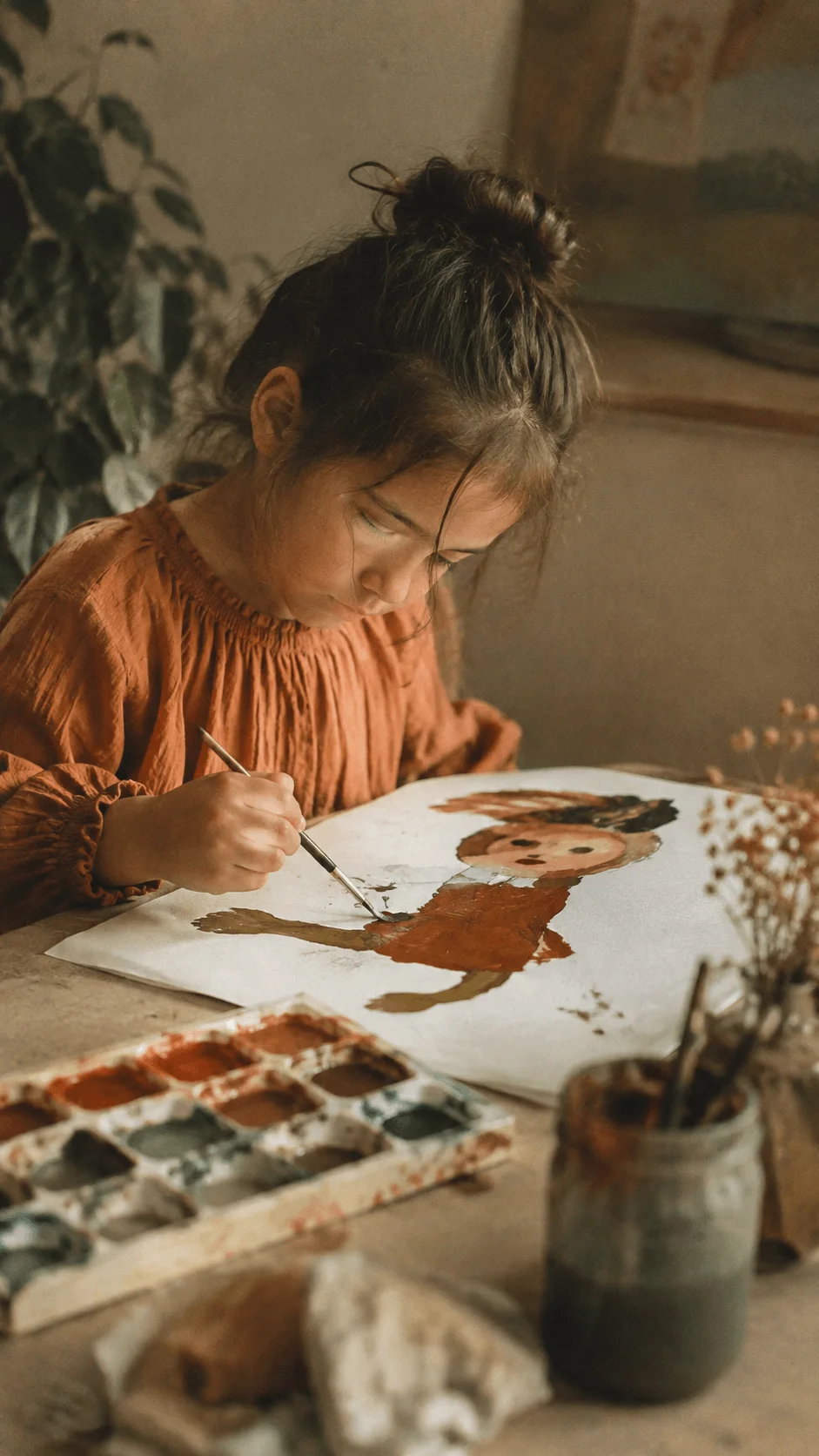
Texture is another important element. Cardboard fibers, rough paper, brush marks, dried paint and natural objects can all contribute to the photograph.
The aim is not to make a digital photograph look artificially old. Instead, focus on the qualities people often associate with analog photography: natural color, subtle texture, authentic moments and imperfect compositions.
This approach can give kids painting photography ideas a more editorial and artistic character while allowing the child’s artwork to remain the central focus.
How to Photograph Eco Friendly Kids Art
Good photography does not require expensive equipment. A smartphone can capture excellent children’s artwork when you pay attention to light, background and composition.
Start by cleaning the camera lens. Then choose soft natural light whenever possible. Avoid placing artwork under harsh overhead lighting because it can create distracting shadows and uneven color.
Place the artwork on a stable surface and photograph it from directly above when you want a clear image of the complete painting. This approach works particularly well for flat artwork.
For more dimensional scenes, photograph from a slightly lower angle. This can show the painting together with brushes, natural materials and the child’s workspace.
Take close up photographs too. Focus on interesting textures, paint marks and natural impressions.
Do not remove every sign of the creative process. A small paint mark on the table or a brush resting beside the artwork can make the photograph feel more authentic.
If you photograph children while they paint, prioritize genuine moments. Let them concentrate on their activity rather than repeatedly asking them to look at the camera.
This documentary approach can make the photographs feel warmer and more natural.
How to Create an Aesthetic Kids Art Setup
An aesthetic setup does not need to look expensive. In fact, simplicity usually works better for nature inspired children’s art.
Start with one neutral background. A wooden table, plain fabric or simple paper can work well.
Then choose a few materials connected to the activity. If the child is creating botanical artwork, leaves and flowers make sense. If they are painting on recycled cardboard, leave some of the cardboard packaging visible.
Use natural light whenever possible. Keep unnecessary objects outside the frame.
Think about texture. Rough cardboard, wooden surfaces, paper fibers and natural objects can make a photograph more visually interesting.
You can also create depth by placing some objects closer to the camera while keeping the artwork clearly visible in the middle or background.
Most importantly, allow the child’s artwork to remain the main subject. The setup should support the painting rather than compete with it.
Choosing Sustainable Materials for Kids Painting
The materials used for children’s art can influence both the creative experience and the overall sustainability of the activity.
Recycled paper and clean cardboard can provide useful painting surfaces. Reusable containers can hold art materials, while natural objects can provide creative tools and textures.
Families can also look for suitable children’s art supplies that clearly explain their material composition and intended use. When choosing products, consider durability and whether the item can be reused rather than focusing only on whether it has an environmental label.
Natural materials can add variety without requiring a large collection of specialized tools. Leaves, flowers and other suitable objects can inspire painting techniques that children might not discover with ordinary brushes alone.
The most sustainable activity is often the one that makes good use of materials already available. A piece of cardboard from household packaging can become a canvas, while an old reusable container can serve as a palette.
This approach also teaches children an important creative lesson: interesting artwork can come from ordinary objects.
Conclusion
Eco friendly kids painting ideas offer much more than simple art activities. They give children opportunities to explore color, texture, nature and personal expression while making creative use of recycled and natural materials.
The strongest ideas do not depend on perfect results. Natural pigment paintings can produce unexpected colors, leaves can create unusual marks, cardboard can add texture and process art can turn experimentation into the main event.
Photography makes these experiences even more memorable. Soft natural light, earthy backgrounds and close up details can transform a simple painting session into a beautiful visual story. Instead of photographing only the finished artwork, capture the hands, materials, textures and moments of discovery that make the activity special.
The 2026 aesthetic also shows that children’s artwork does not need to look overly polished to be beautiful. Authenticity, natural textures, earthy colors and imperfect handmade details can create photographs with genuine character.
Whether you are a parent creating an afternoon activity, a teacher planning a nature inspired art session or a photographer documenting children’s creativity, these ideas provide plenty of opportunities to experiment.
Start with materials that you already have, look to nature for color and texture, and allow children enough freedom to create something uniquely theirs. The result may not look perfect, but that is exactly what can make both the artwork and the photograph worth remembering.