Eco Friendly Events and Festivals: 12 Ideas for 2026
Eco friendly events and festivals are becoming more creative, practical, and environmentally conscious in 2026. Event organizers are moving beyond basic recycling and paperless invitations and exploring better ways to reduce waste, save energy, support local communities, and create memorable experiences. From battery powered stages and solar installations to reusable cups, sustainable food, smart waste systems, and biodiversity activities, modern celebrations can bring sustainability into almost every part of the event.
The growing interest in sustainable events also reflects a change in what attendees expect from celebrations. People increasingly notice how an event handles food waste, transportation, disposable products, energy consumption, and decorations. This creates an opportunity for organizers to make sustainability visible and enjoyable rather than treating it as something that happens behind the scenes.
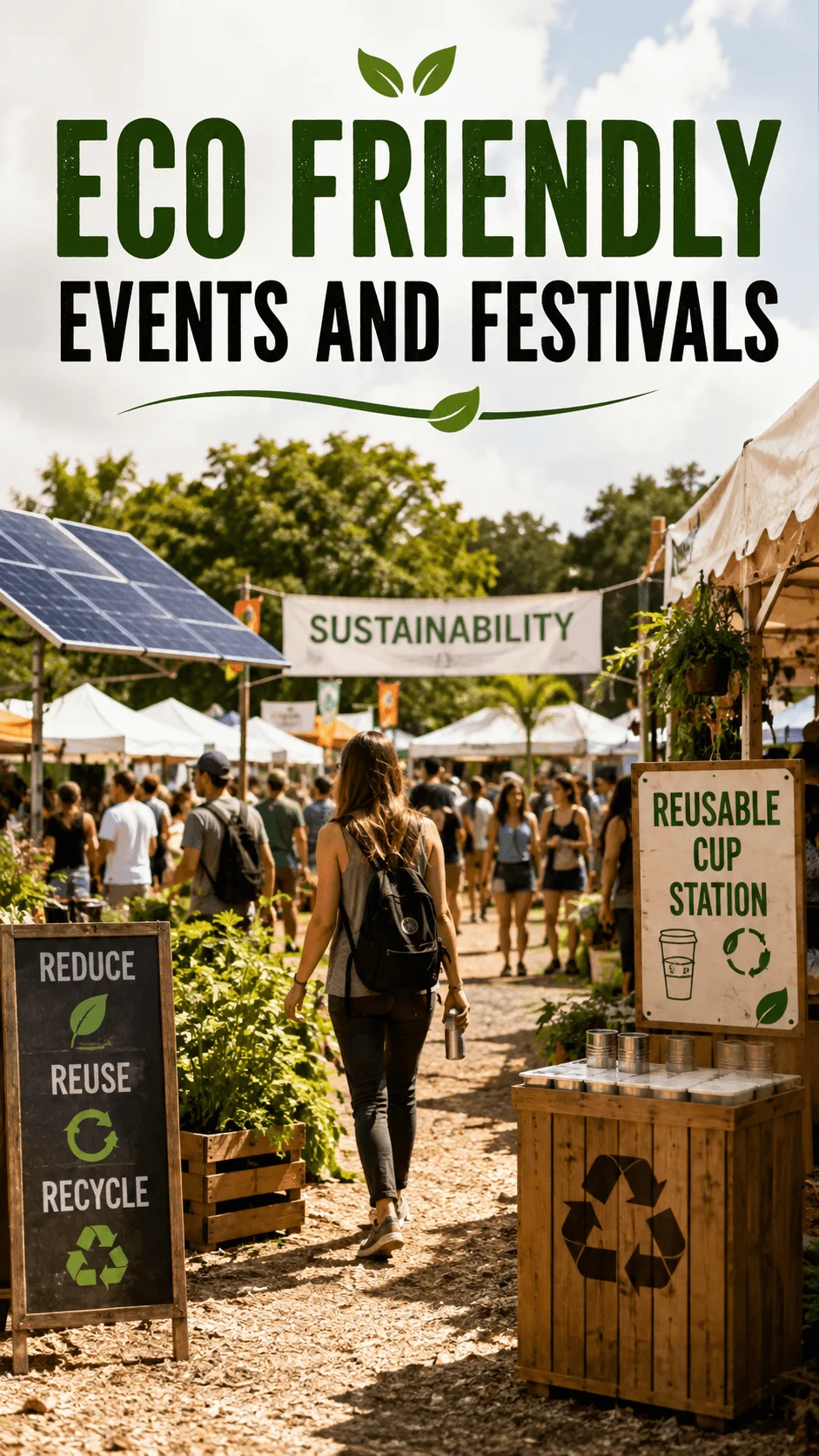
The most exciting ideas for 2026 combine environmental responsibility with creativity and technology. An outdoor festival can use solar powered charging areas, a community celebration can organize a clothing swap, and a large music event can introduce reusable cup systems or smarter waste stations. These approaches show that environmentally friendly celebrations do not have to feel boring or restrictive.
Why Eco Friendly Events and Festivals Matter in 2026
Sustainability has become an increasingly important part of event planning because large gatherings can require substantial amounts of energy, transportation, food, water, and materials. Thousands of people attending one location can create significant demand for temporary infrastructure and services.
At the same time, events provide an unusual opportunity to influence behavior. An attendee who sees convenient refill stations, reusable cups, composting systems, or sustainable transportation options may become more familiar with those practices in everyday life.
Events can also turn environmental education into an experience. Instead of simply displaying a sign asking people to recycle, organizers can create interactive waste stations that explain where different materials belong. Instead of hiding renewable energy equipment, they can use solar installations as educational features.
This approach makes sustainability part of the atmosphere rather than an obligation.
Another important change involves measurement. Organizers increasingly have opportunities to set specific environmental goals and track their progress. Instead of simply describing a festival as green, they can explain how they reduced disposable materials, increased reusable products, improved transportation options, or reduced food waste.
That shift can make sustainability more meaningful and help organizers identify which improvements actually work.
How Sustainable Events Are Changing in 2026
The sustainability conversation around events is becoming broader. Traditional ideas such as recycling, reusable bags, and paperless tickets remain useful, but newer approaches are adding another layer to event planning.
Technology is becoming particularly interesting. Smart waste systems can help attendees sort materials correctly, while energy monitoring systems can help organizers understand how much electricity different parts of an event consume. Battery storage can support temporary power needs, and solar installations can provide electricity for smaller event features.
Circular thinking is also becoming more important. Instead of asking how to dispose of an item after an event, organizers can ask whether they need the item in the first place, whether they can rent it, whether they can reuse it, or whether another organization can use it afterward.
Food is another major area of change. Sustainable festival food can include plant based choices, seasonal ingredients, local suppliers, reusable servingware, better portion planning, and systems for handling surplus food.
The most successful green events and festivals will likely combine several of these approaches rather than depending on one sustainability feature.
12 Eco Friendly Event and Festival Ideas for 2026
1. AI Powered Waste Sorting Stations
Waste sorting is one of the most visible sustainability challenges at busy events. When hundreds or thousands of people throw away food containers, cups, bottles, napkins, and other materials within a short period, even a well planned recycling system can struggle.
AI powered waste sorting stations offer a more interactive approach. Instead of relying entirely on people to understand several different bins, a smart station can provide visual guidance about where an item belongs. Some systems can use cameras, sensors, or digital interfaces to identify materials and guide users toward the appropriate disposal option.
The technology can also make waste education more interesting. An event could use a screen that shows attendees how much material they have helped divert from general waste. This turns an ordinary disposal task into a small sustainability interaction.
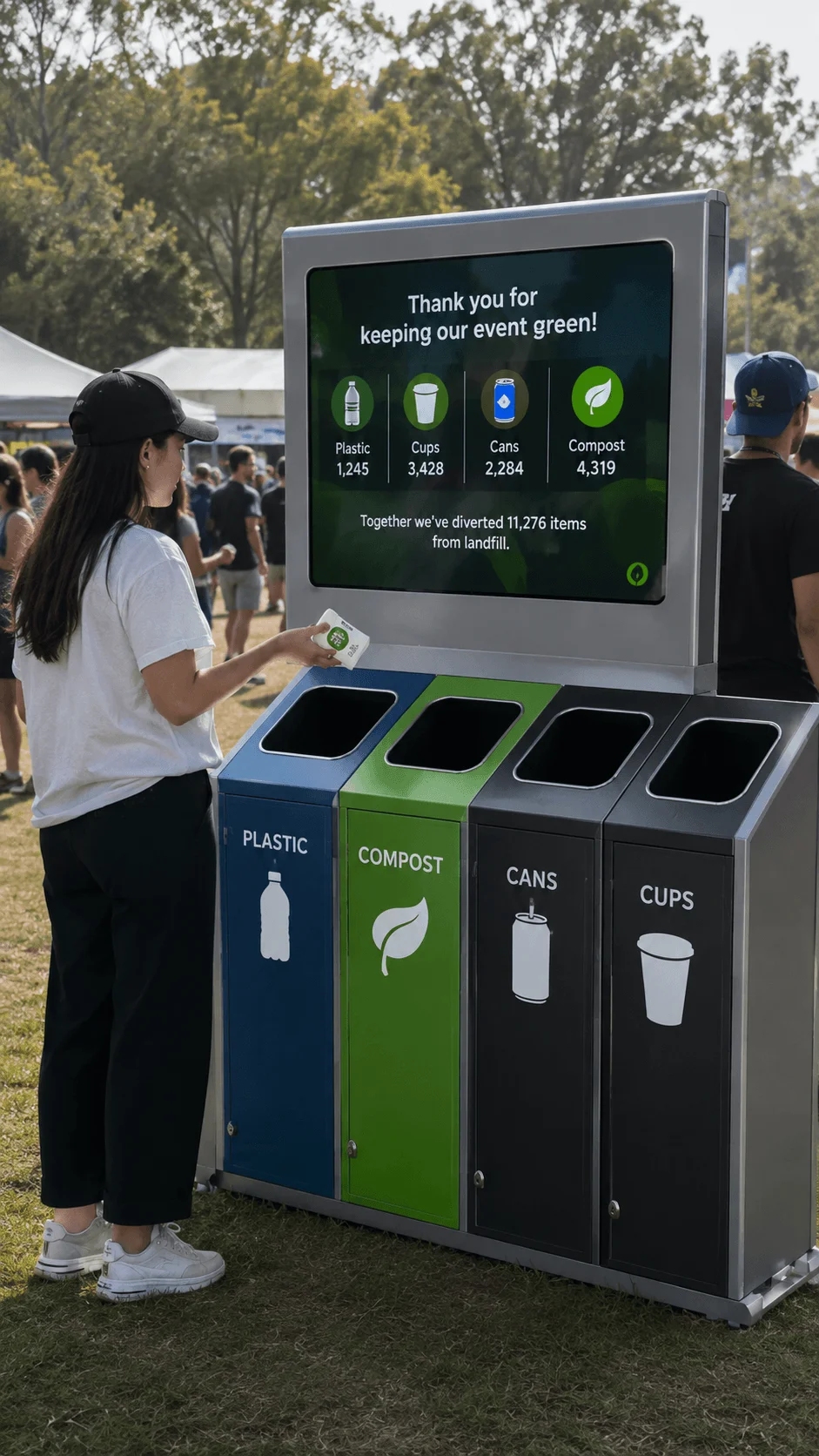
Organizers can place smart stations near food courts, entrances, performance areas, and other locations where people naturally generate waste. Clear signs can explain the system before attendees reach the station.
However, technology alone cannot solve poor waste planning. Event teams still need suitable collection systems, trained staff, appropriate containers, and reliable waste processing partners. The smart station should support a wider waste reduction strategy.
This idea stands out among newer eco friendly event ideas because it combines environmental education with technology. It can make waste sorting easier while giving attendees a visible reminder that their individual choices contribute to the overall environmental performance of the event.
2. Battery Powered Festival Stages
Temporary event power can create a major planning challenge, especially at outdoor festivals where organizers need electricity for sound equipment, lighting, screens, food vendors, charging stations, and other infrastructure.
Battery powered festival stages offer another way to approach this challenge. Large battery energy storage systems can provide electricity for selected event operations and can work alongside mains electricity or renewable energy sources.
For smaller stages, organizers may use battery systems for lighting, sound equipment, charging areas, or interactive installations. Larger events can explore more extensive temporary energy systems based on their power requirements.
The biggest advantage comes from reducing dependence on traditional temporary power arrangements where possible. Battery systems can also support quieter event spaces because they do not create the same engine noise associated with conventional generators.
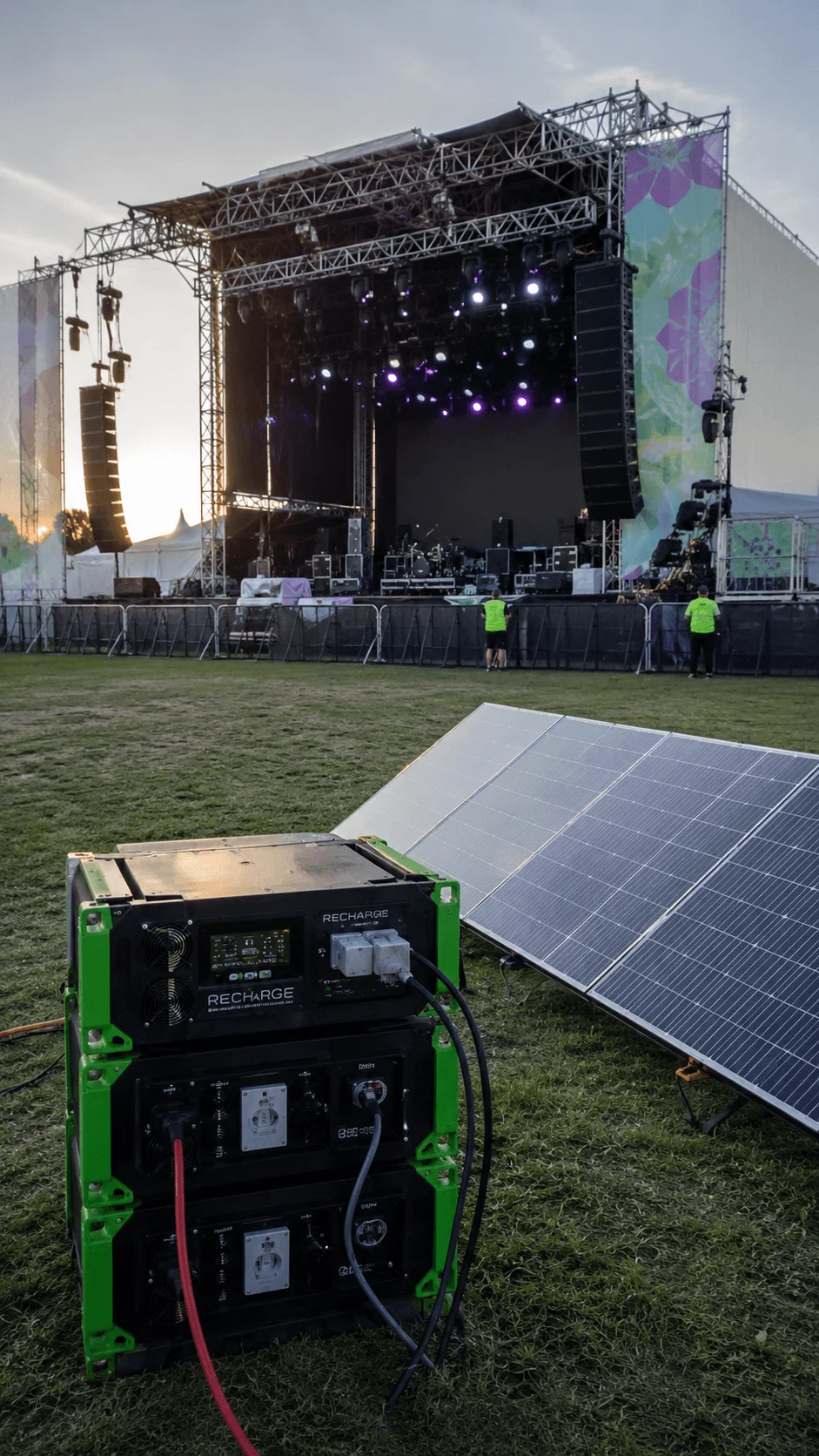
Planning remains essential. Organizers need to calculate expected electricity demand, understand how long equipment will operate, and determine how they will recharge the batteries. They should also consider the equipment required for safe operation and the availability of suitable electricity sources.
A battery powered festival stage can also become part of the event story. Organizers can explain how the stage receives its electricity and encourage attendees to learn more about cleaner temporary power.
As energy technology continues to develop, battery systems could become an increasingly practical component of sustainable festival planning.
3. Solar Powered Outdoor Event Experiences
Solar power can do more at an event than simply provide electricity. In 2026, organizers can turn solar installations into visible parts of the experience.
Solar powered charging stations can allow attendees to recharge phones while learning about renewable energy. Solar lighting can illuminate pathways, seating areas, information points, or decorative installations. Smaller solar powered performance areas can also work well for community events and outdoor gatherings with modest energy requirements.
Another interesting option involves interactive solar installations. For example, an event could create a visible solar energy display that shows how much electricity the panels are generating. This makes renewable energy easier for attendees to understand.
Solar powered outdoor event ideas work particularly well at daytime festivals, garden events, community celebrations, environmental gatherings, and outdoor markets. Organizers can position panels where they receive sufficient sunlight while ensuring that installations do not create obstacles or safety problems.
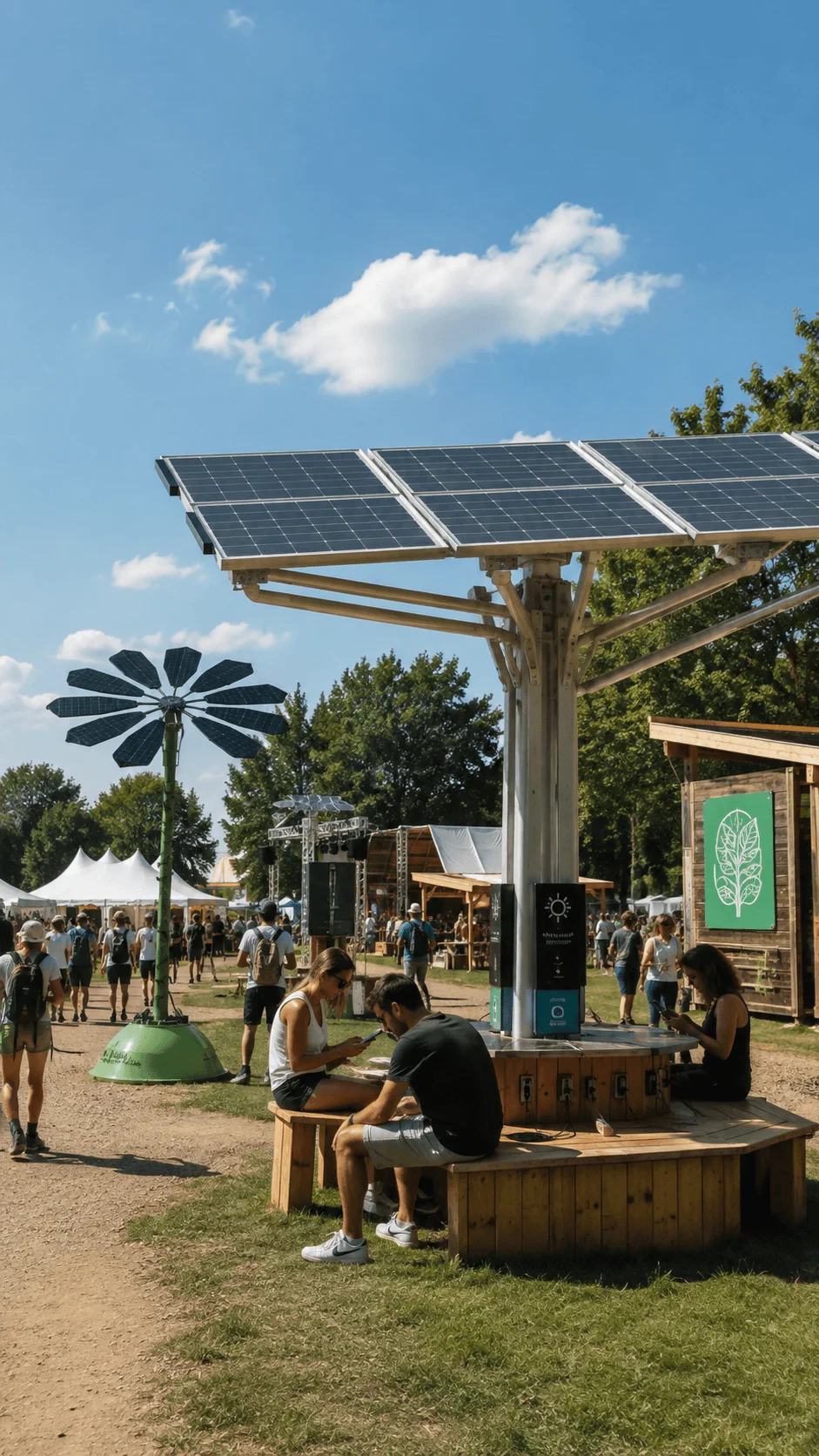
Solar energy can also contribute to the visual identity of an event. Well designed solar installations can become attractive architectural or decorative features rather than equipment that organizers try to hide.
The important thing is to match the solar system with realistic energy requirements. Solar power may work extremely well for smaller applications, while larger events may need a combination of renewable energy, battery storage, and other electricity sources.
4. Reusable Festival Cup Deposit Systems
Disposable drink containers can create large amounts of waste at crowded festivals. Reusable cups offer a practical alternative, particularly when organizers create a simple return system.
A reusable cup deposit system usually asks attendees to pay a small deposit when they receive their drink. After using the cup, attendees return it to a collection point and receive their deposit back or exchange the cup for another clean one.
The success of the system depends heavily on convenience. If attendees have to walk a long distance to return their cups, many may simply leave them behind. Organizers can therefore place collection stations near food areas, exits, entrances, and other high traffic locations.
Clear communication also matters. Signs should explain the deposit system before people purchase drinks. Staff at beverage stations can remind customers how the return process works.
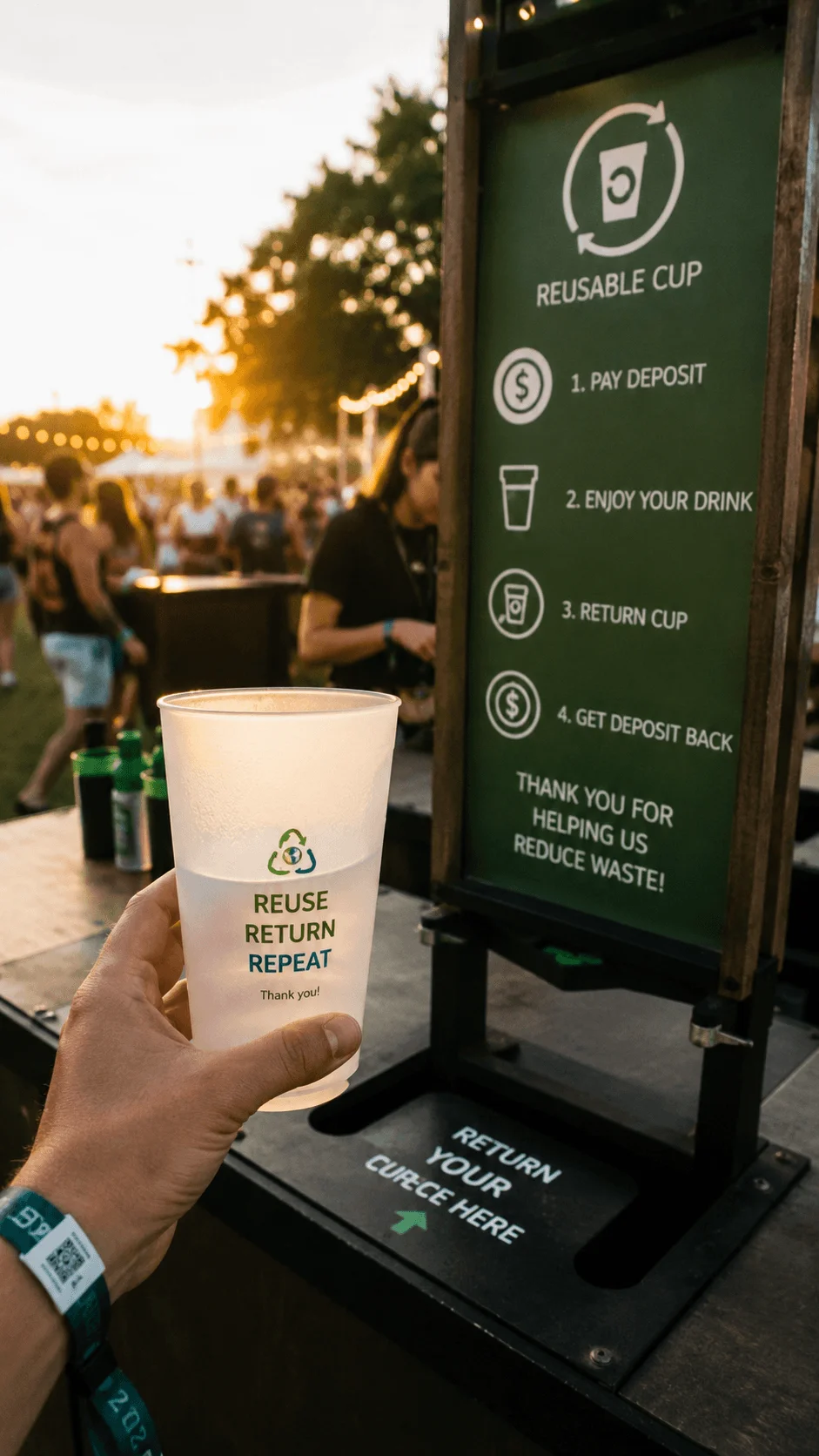
The cups themselves can become part of the event branding. Organizers can use attractive reusable designs that attendees may enjoy using during the festival and returning afterward.
Reusable festival cups can also encourage a broader shift toward circular event systems. Instead of purchasing a disposable product for a few minutes of use, organizers create a system where the same item can serve many attendees over multiple events.
This approach works especially well when organizers combine reusable cups with other sustainable event ideas, such as refill stations, reusable food containers, and better waste collection.
5. Zero Waste Festival Food Hubs
Food plays a major role in the experience of many festivals, but it can also create significant amounts of packaging and food waste. A zero waste food hub offers a way to rethink the entire food area.
Instead of focusing only on what happens to leftovers, organizers can reduce waste from the beginning. Vendors can offer meals using seasonal ingredients, reduce unnecessary packaging, use reusable servingware, and plan portions carefully.
Plant based food can also become an important part of the food experience. Organizers do not need to remove every traditional meal from the menu. They can instead create appealing plant based options that give attendees more choices.
Local food suppliers can add another dimension. Working with nearby producers and businesses can help connect the event with the surrounding community while creating opportunities to showcase regional ingredients.
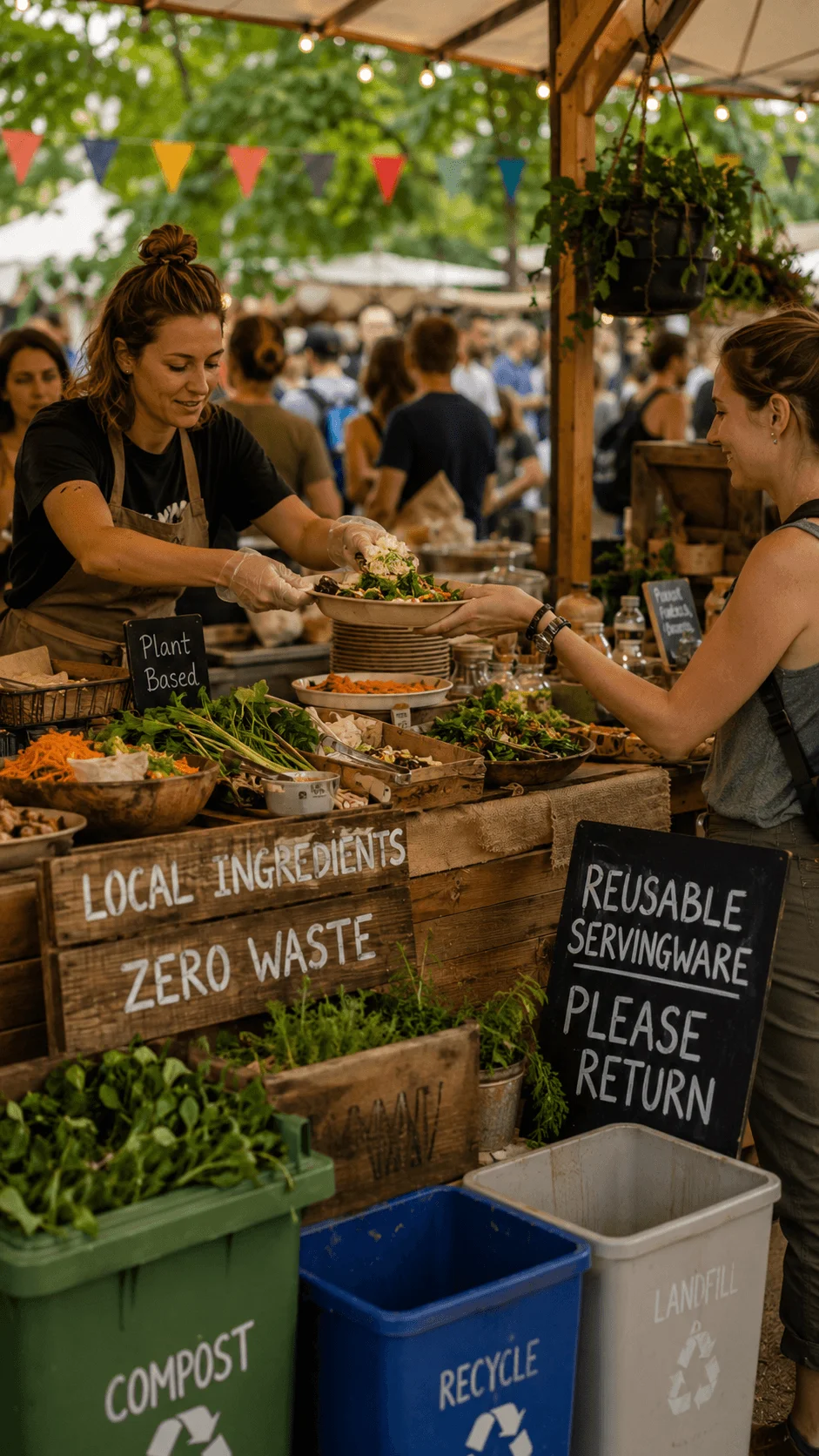
Food surplus deserves careful planning as well. Organizers can establish partnerships that allow suitable untouched food to reach community organizations instead of becoming waste. Remaining food scraps can go into an appropriate composting system where local facilities support that option.
A well designed zero waste food hub should still feel exciting. Colorful food stalls, attractive reusable plates, local ingredients, creative menus, and visible sustainability features can make the area one of the most memorable parts of the event.
The goal is not simply to tell people to waste less. It is to design a food system where producing less waste becomes the natural result of better planning.
6. Composting Toilets for Festivals
Toilets rarely become the most exciting topic at an event, but sanitation can have an important environmental impact, especially at outdoor festivals.
Composting toilets provide an alternative approach to conventional sanitation systems. They use controlled processes to manage human waste while reducing the amount of water needed for flushing in suitable setups.
This can make them interesting for outdoor festivals, remote locations, nature events, and gatherings where traditional plumbing may not be practical.
However, organizers need to treat sanitation as a serious infrastructure issue. They should consider hygiene, accessibility, servicing, ventilation, placement, capacity, and local regulations before selecting any system.
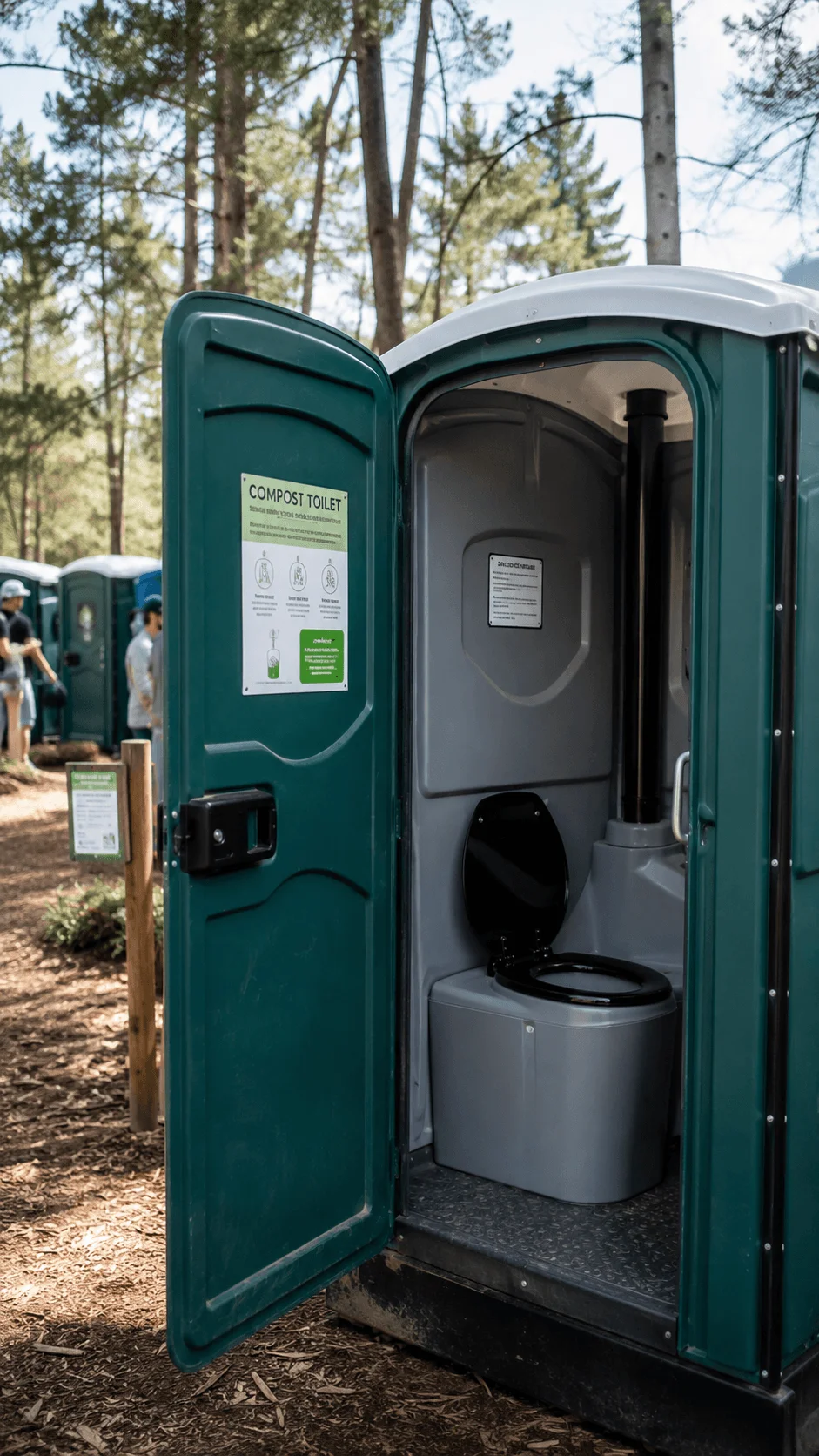
Clear signage can also help attendees understand how to use composting toilets correctly. Staff should monitor facilities throughout the event so that problems receive quick attention.
Composting toilets can fit particularly well into broader sustainable outdoor festival ideas because they address water use and sanitation while reducing reliance on conventional temporary facilities.
They also demonstrate an important principle of sustainable event planning: environmental responsibility should cover less visible parts of an event as well as the features that guests immediately notice.
7. HVO Powered Event Generators
Energy remains one of the biggest considerations when organizers plan large outdoor gatherings. Festivals often need temporary electricity for lighting, sound systems, food vendors, information areas, refrigeration, and other equipment. Where grid electricity or suitable renewable systems cannot meet the demand, temporary generators may still play a role.
HVO, which stands for hydrotreated vegetable oil, has gained attention as an alternative fuel option for some compatible diesel equipment. Event organizers can explore HVO powered generators as part of a broader strategy for reducing the environmental impact of temporary power.
HVO comes from processed renewable feedstocks, although the overall environmental benefits depend on how the fuel is produced and sourced. Organizers should therefore look beyond the label and consider the complete supply chain.
Before choosing HVO generators for festivals, event teams should check whether their equipment supports the fuel and confirm requirements with equipment suppliers. They should also calculate how much energy the event actually needs and identify opportunities to reduce consumption before increasing power generation.
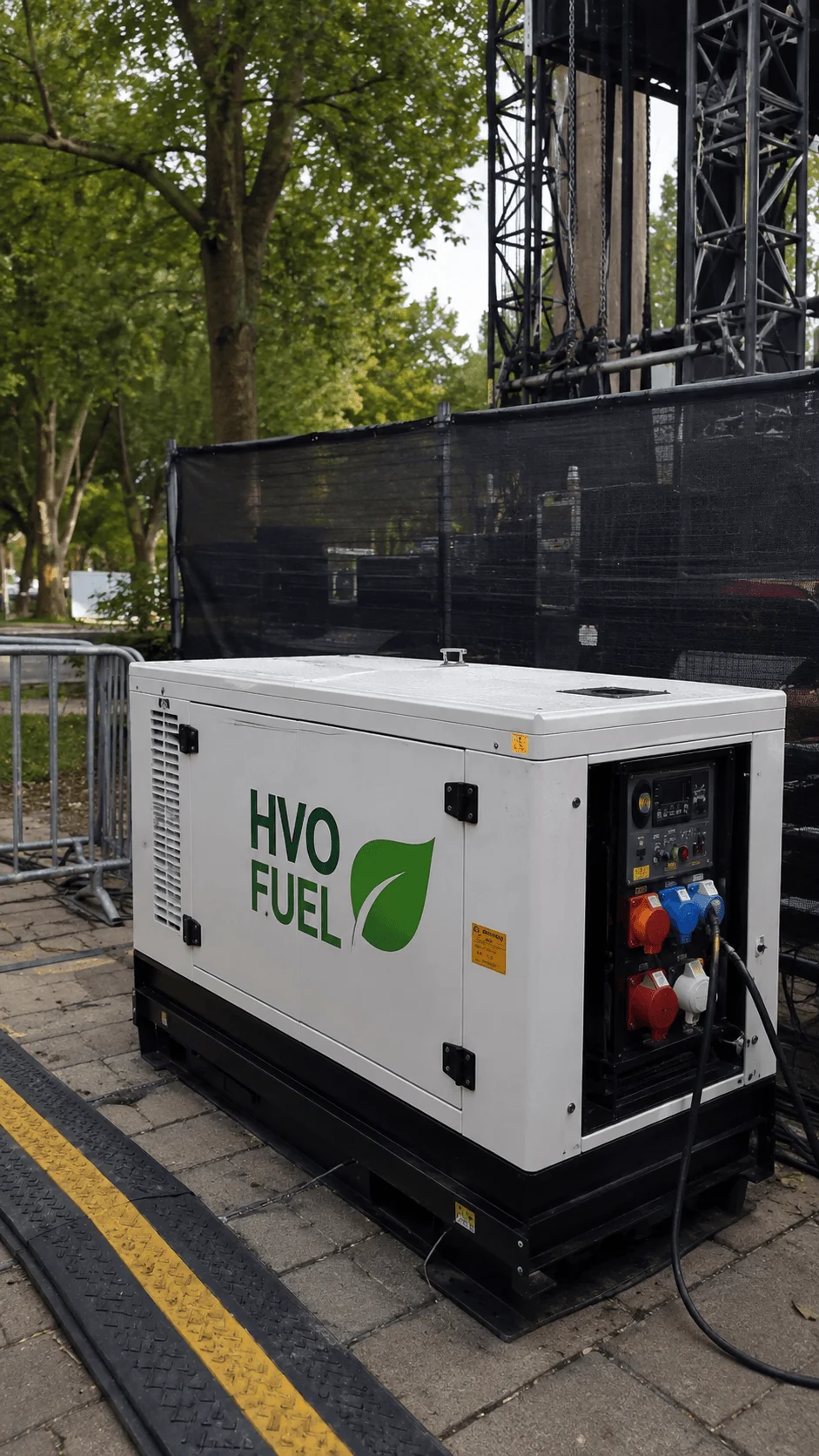
For example, energy efficient lighting can reduce generator demand, while battery storage can handle some temporary electricity needs. Solar installations can also support smaller applications during daytime events.
This makes HVO most useful when organizers treat it as one component of a wider energy strategy rather than a complete sustainability solution.
The idea also fits the broader movement toward cleaner temporary event infrastructure. As organizers look for alternatives to traditional power arrangements, fuel choice, energy efficiency, renewable electricity, and battery storage can all become part of the same conversation.
8. Festival Clothing Swap Stations
Festival fashion can be a fun part of attending an event, but buying a completely new outfit for every celebration can encourage unnecessary consumption. Clothing swap stations offer a creative way to introduce reuse while making sustainability more social.
A festival can create a dedicated space where attendees exchange clothing, accessories, bags, hats, or other suitable items. Someone who no longer wants a particular festival outfit can bring it to the swap area and choose another item to wear.
Organizers can make the experience more engaging by creating a small fashion zone rather than simply placing a clothing rack in a corner. Mirrors, styling areas, repair stations, creative displays, and comfortable changing spaces can make the activity feel like an attraction.
A repair area can add even more value. Simple repairs such as replacing buttons, fixing small tears, or making minor adjustments can give older clothing a longer useful life.
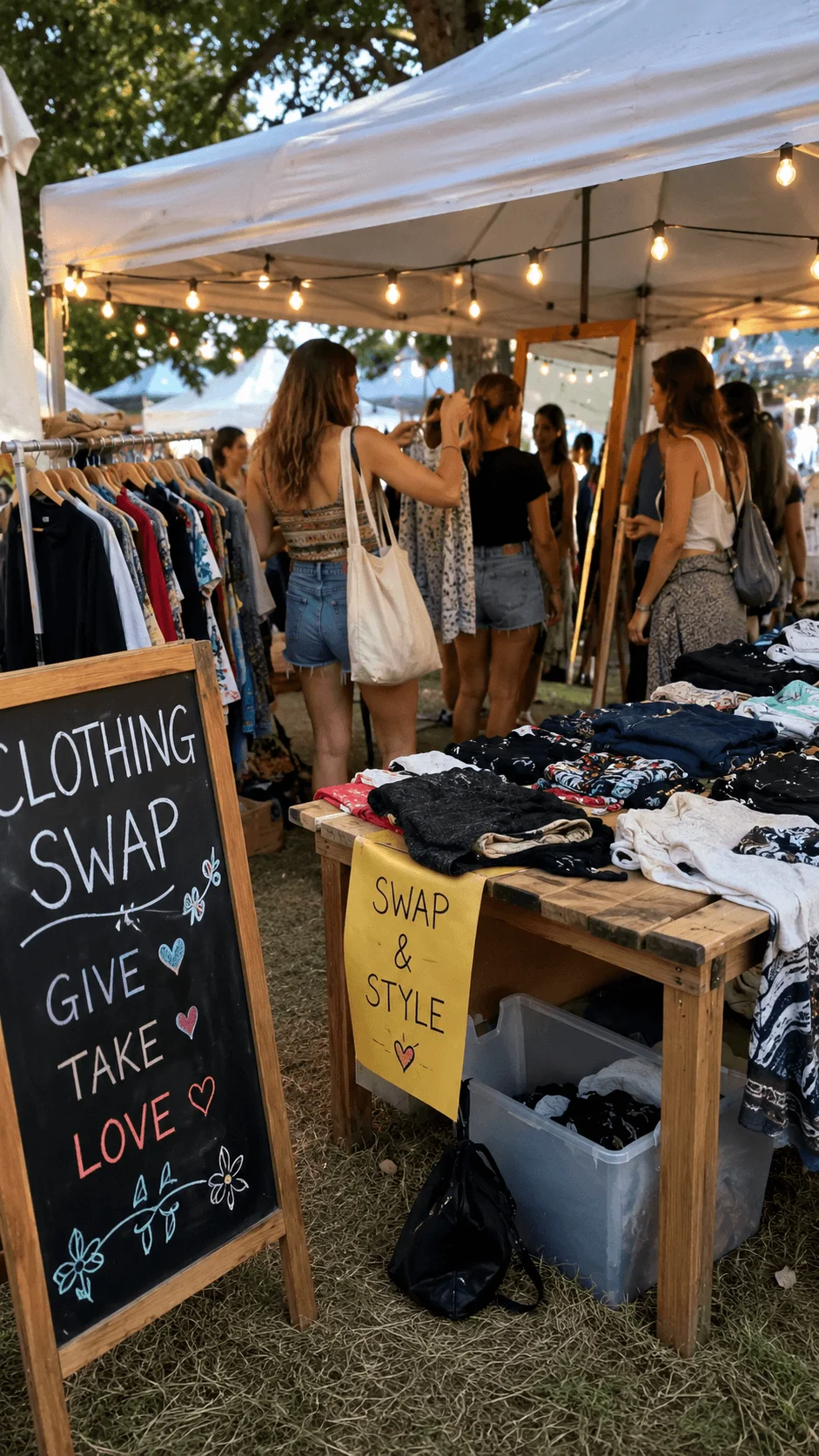
Festival clothing swap ideas can also encourage attendees to think differently about event fashion. Instead of seeing sustainability as avoiding something enjoyable, people can discover that secondhand clothing and clothing exchanges offer more creative possibilities.
Organizers can partner with local secondhand stores, community groups, designers, or clothing organizations to manage the activity. They can also establish clear rules about the condition and type of items accepted.
This approach works particularly well at music festivals, youth events, creative gatherings, community celebrations, and fashion focused events. It combines reuse with entertainment and gives attendees an activity they can remember after the festival ends.
9. Living and Rental Event Decorations
Decorations can completely change the atmosphere of an event, but disposable decorations can create unnecessary waste when organizers throw them away after a single celebration.
Living and rental decorations provide a more circular alternative. Event teams can use plants, reusable structures, fabric installations, modular displays, rented furniture, durable signage, and decorative elements that can appear at multiple events.
Plants can create a natural atmosphere at weddings, community festivals, outdoor markets, conferences, and cultural events. Organizers can choose suitable plants that local suppliers can transport and maintain responsibly.
Rental systems can also reduce the need to purchase new decorations for every event. A collection of reusable arches, lighting structures, signs, seating elements, backdrops, and display systems can serve many different celebrations.

Modular designs offer another advantage. Instead of creating one decoration for one specific theme, organizers can choose pieces that work with different colors, layouts, and event styles.
Eco friendly event decorations can also become more creative when designers focus on durability. Reusable fabric banners, wooden structures, potted plants, modular signs, and adaptable display pieces can create attractive environments without depending on large quantities of disposable materials.
Event organizers should also think about what happens to decorations after the celebration. If a decoration cannot be reused, rented, repaired, donated, or recycled, it may not be the best choice in the first place.
This approach changes the question from “What decorations should we buy?” to “What decorative system can we use again?” That small change can encourage much more sustainable event planning.
10. Low Carbon Festival Transportation Hubs
Transportation can become an overlooked part of event sustainability. When thousands of people travel individually to the same venue, traffic, fuel consumption, congestion, and parking demand can increase quickly.
A low carbon transportation hub can help attendees choose more sustainable ways to reach and leave the event.
Organizers can create dedicated areas for shuttle buses, public transportation connections, bicycles, walking routes, carpooling, and shared rides. Clear information can tell attendees where to find each option and how frequently transportation services operate.
Convenience plays a major role here. People are more likely to choose a lower carbon option when it is easy to understand and does not create unnecessary difficulties.
For example, a festival can provide shuttle services from major transportation points. It can also create secure bicycle parking near the entrance and publish clear walking directions from nearby public transport stations.
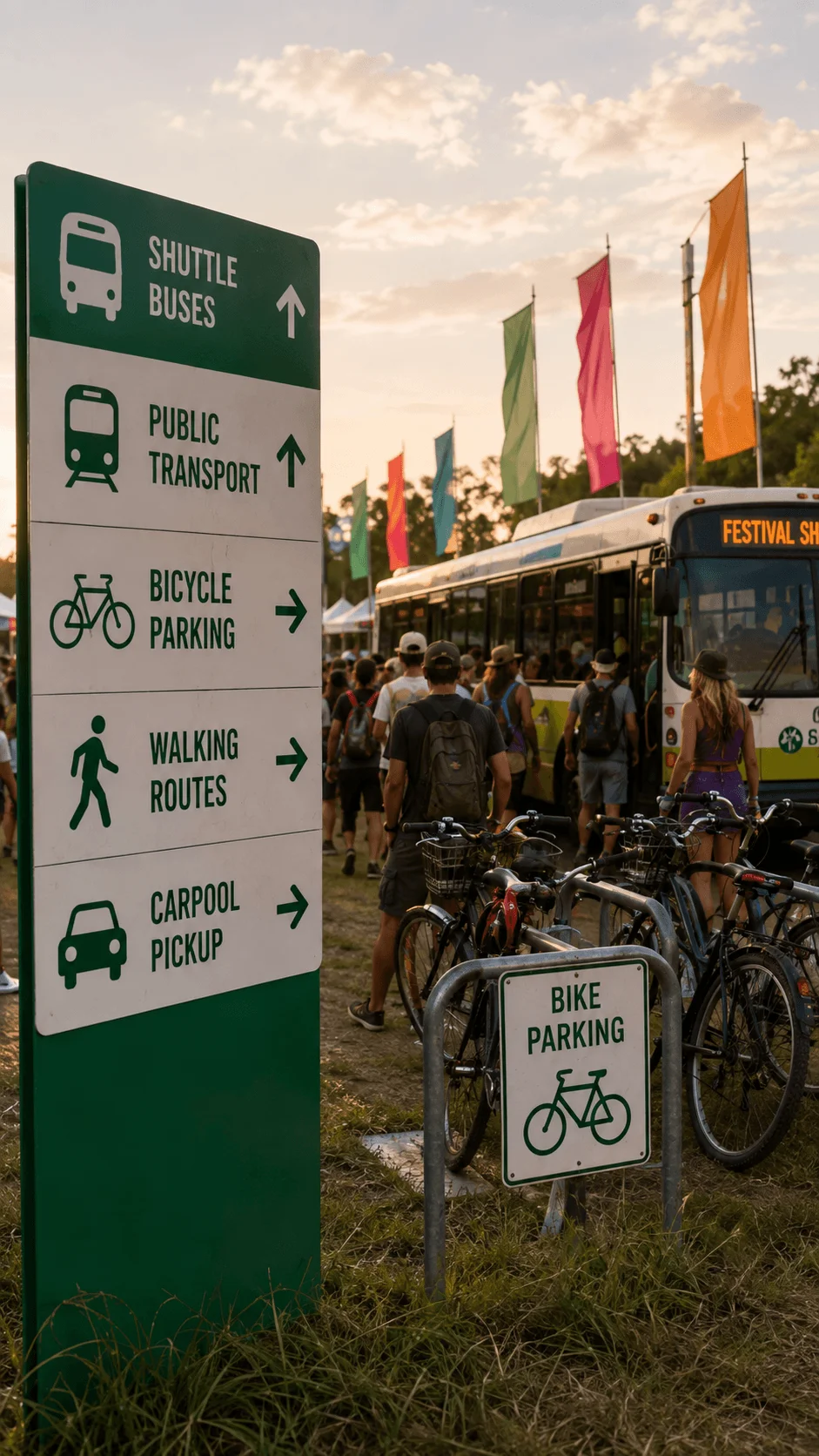
Eco friendly festival transportation can also improve the overall visitor experience. Better transportation planning can reduce traffic around the venue and make arrival and departure less stressful.
Organizers can communicate transportation choices before the event through digital tickets, event websites, emails, and social media. This gives attendees enough time to plan their journey instead of making transportation decisions at the last minute.
Carpooling can provide another practical option for locations where public transport has limited coverage. Organizers can create designated pickup areas and encourage attendees traveling from similar locations to share rides.
The most effective transportation strategy usually combines several options. Not every attendee will cycle or use public transportation, so offering multiple practical choices gives more people an opportunity to reduce the impact of their journey.
11. Biodiversity Festivals and Nature Restoration Activities
Sustainability does not always have to focus on reducing harm. Festivals can also create opportunities to support nature and improve local ecosystems.
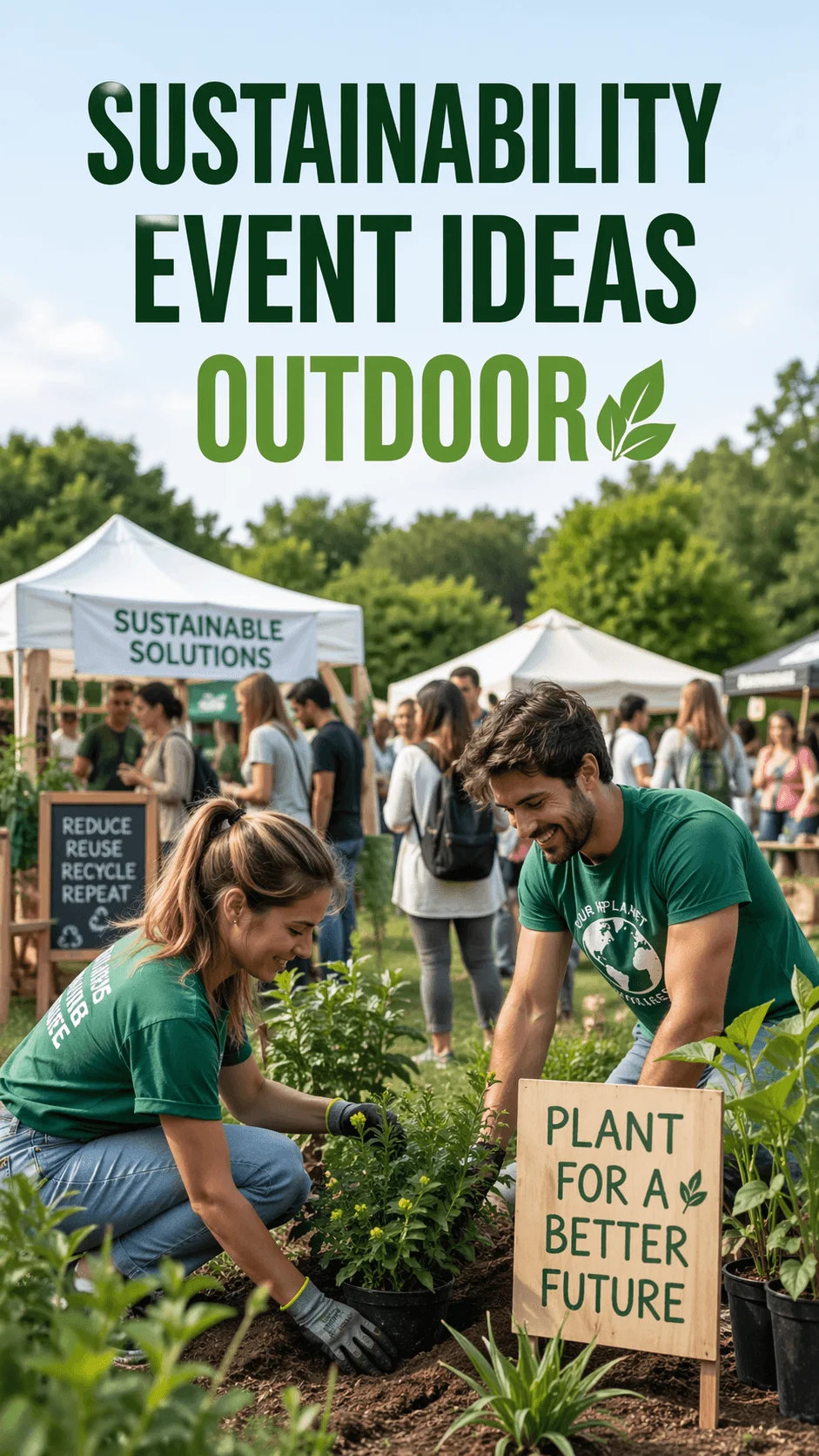
Biodiversity activities can turn an event into a platform for environmental education and restoration. Organizers can introduce native planting projects, pollinator gardens, seed workshops, habitat activities, nature walks, and educational areas focused on local wildlife.
A festival held near a natural area could work with local environmental organizations to identify a suitable restoration activity. A community event might create a small native plant garden that remains after the celebration.
Biodiversity festival ideas can also become interactive experiences. Instead of simply displaying information about plants and wildlife, organizers can invite attendees to learn about native species, plant suitable flowers, create habitat features, or participate in educational workshops.
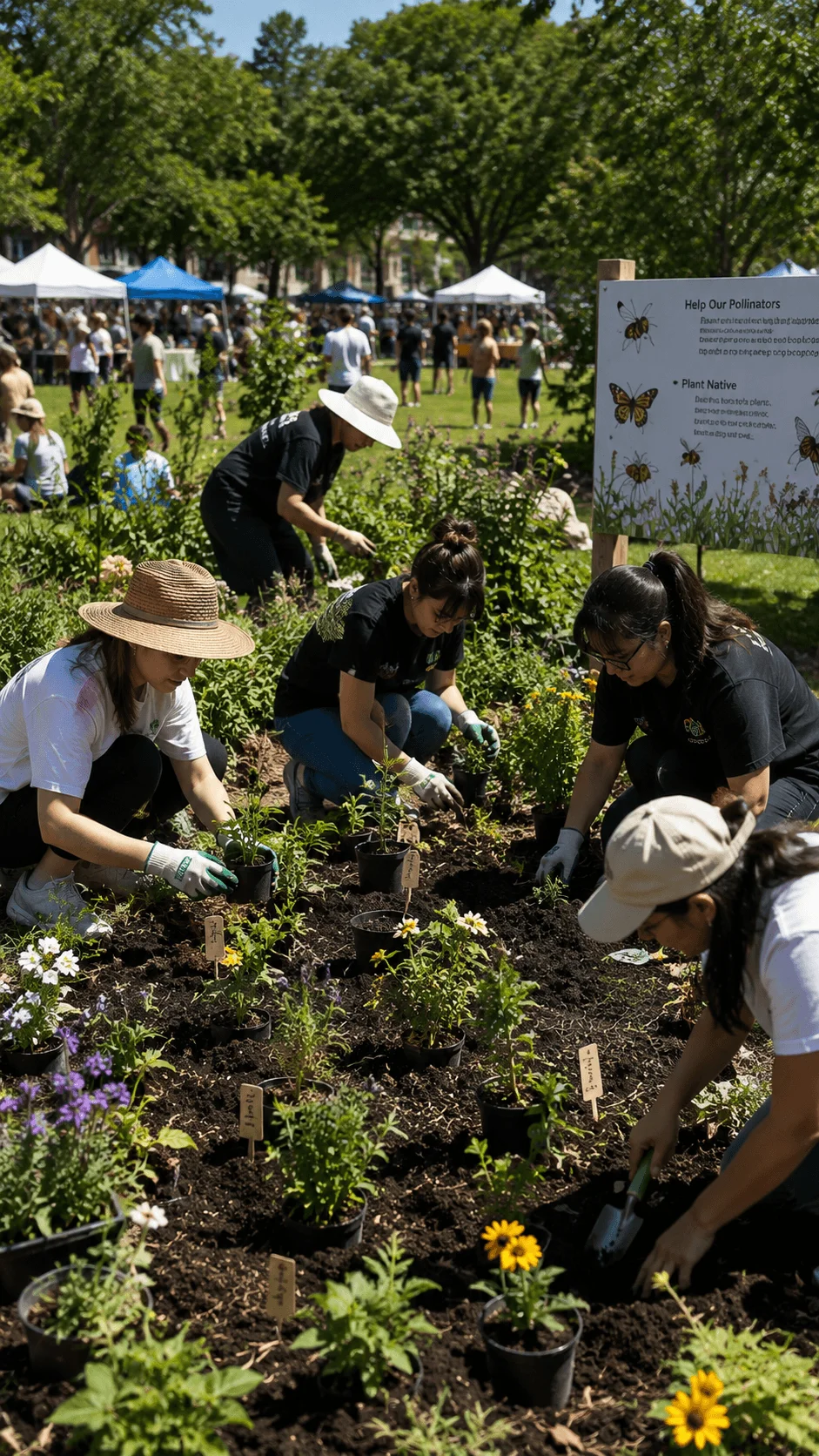
Native plants can be especially useful because they can support local insects and wildlife while creating attractive outdoor spaces. Organizers should work with local experts when selecting species because suitable plants vary significantly between regions.
Nature restoration activities can also give an event a lasting legacy. A music festival might leave behind a community garden. A local celebration could support habitat restoration. A school event could establish a pollinator area that students continue caring for after the event.
This approach changes the meaning of sustainability. Instead of asking only how an event can produce less waste, organizers can also ask how the event can contribute something positive to the surrounding environment.
That idea can make environmentally responsible events more meaningful for both attendees and local communities.
12. Measurable Zero Waste Challenges
Calling an event sustainable means more when organizers can explain what they are actually trying to achieve. Measurable zero waste challenges can turn broad environmental goals into specific actions.
An organizer might establish a target for reducing disposable servingware, increasing reusable products, separating organic waste, reducing food waste, or sending less material to landfill.
The exact goal should match the event’s circumstances. A small community celebration may focus on eliminating disposable cups, while a large festival may create a broader waste management strategy involving multiple material streams.
The important part is measurement. Organizers can track how much waste the event produces, how much material vendors use, and how attendees respond to different collection systems.
Clear communication can also encourage participation. Instead of simply placing recycling containers around the venue, organizers can explain the environmental goal and show attendees how their actions contribute.
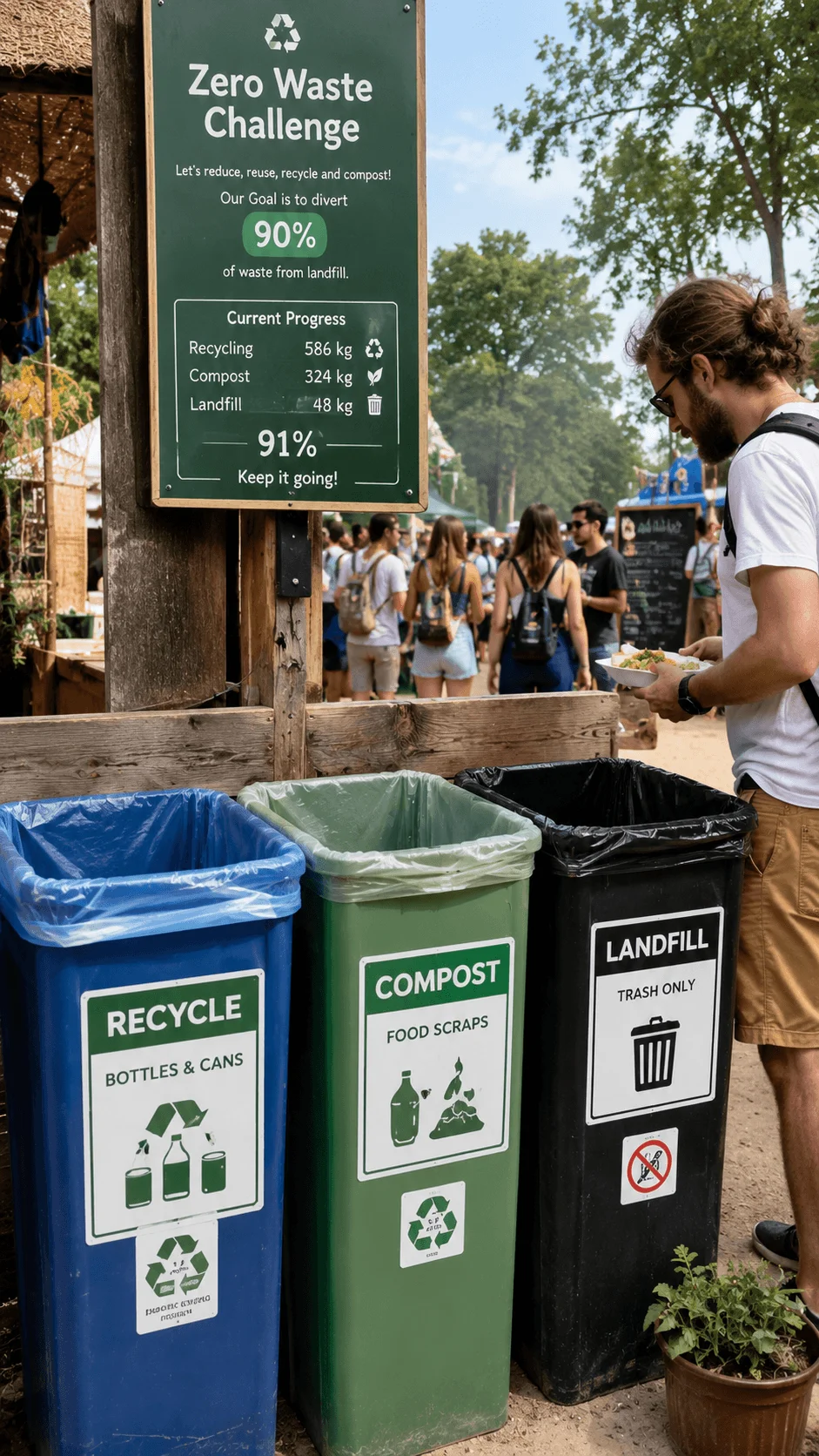
A zero waste event challenge can become part of the event experience. Screens or signs can display progress during the celebration. Organizers can share the final results afterward and explain which strategies worked well.
Transparency matters here. Event teams should avoid making exaggerated claims simply because they introduced a recycling program. Honest reporting creates more trust and helps organizers improve future events.
Zero waste festival ideas work best when organizers reduce unnecessary materials before the event begins. Choosing reusable equipment, reducing packaging, planning food carefully, and working with suppliers can prevent waste rather than simply managing it afterward.
Benefits of Eco Friendly Events and Festivals
Eco friendly events and festivals can create environmental benefits while also improving the overall experience for attendees.
Reducing disposable materials can lower waste. Efficient energy systems can reduce unnecessary energy consumption. Reusable products can support circular systems, while better food planning can reduce unnecessary food waste.
Sustainability can also strengthen community involvement. Local suppliers, environmental organizations, artists, farmers, designers, and community groups can all contribute to an event.
Attendee engagement provides another important benefit. When people participate in recycling, clothing swaps, sustainable transportation, nature activities, or reusable cup programs, sustainability becomes a shared experience.
Some sustainable choices can also improve efficiency. Reusable decorations can serve multiple events, while digital communication can reduce the need for repeated printing.
Most importantly, events can influence habits beyond the venue. Someone who learns about food waste at a festival may think differently about leftovers at home. Someone who experiences a convenient transportation system may become more open to using public transport for future journeys.
The Future of Green Events and Festivals
The future of sustainable events will likely involve deeper integration rather than isolated environmental features.
Renewable energy, battery storage, reusable infrastructure, sustainable food, smarter waste systems, low carbon transportation, and biodiversity activities can work together as one event strategy.
Organizers may also place greater emphasis on measuring environmental performance. Instead of asking whether an event looks sustainable, they can examine what actually happened and where improvements remain possible.
Circular systems could become increasingly important as well. Event teams may rent more equipment, reuse materials across multiple celebrations, design modular infrastructure, and create stronger systems for returning products to circulation.
Technology will continue to support this development, but human participation will remain essential. Even the best waste system cannot work properly if attendees do not understand it. Even an efficient transportation plan needs clear communication.
The most successful sustainable events will therefore combine good infrastructure with good design and simple attendee experiences.
Conclusion
The most exciting eco friendly events and festivals in 2026 are moving beyond basic recycling and paperless communication. Organizers now have opportunities to rethink energy, food, transportation, waste, decorations, sanitation, biodiversity, and attendee participation from the beginning.
Battery powered stages, solar powered experiences, reusable cup systems, zero waste food hubs, composting toilets, HVO powered generators, clothing swaps, reusable decorations, low carbon transportation, biodiversity projects, and measurable waste challenges can all contribute to more responsible celebrations.
Not every event needs to adopt every idea. The best approach is to understand the biggest environmental challenges associated with a particular celebration and choose practical solutions that fit its location, audience, budget, and purpose.
Sustainability can also make an event more memorable. A creative clothing swap can become a social activity. A solar installation can become an educational feature. A biodiversity project can leave something valuable behind after the festival ends.
Ultimately, eco friendly events and festivals are not about achieving perfection. They are about making thoughtful decisions and continually improving the way celebrations use resources. When organizers combine practical sustainability with creativity and enjoyable experiences, they can create events that are better for attendees, communities, and the environment.