Best Sustainability Activities for Companies in 2026
Sustainability activities for companies should create more than a few photographs for social media or a temporary increase in environmental awareness. The strongest activities help employees examine real workplace systems, identify avoidable environmental impacts, and test practical improvements. In 2026, companies must think beyond basic recycling campaigns and reusable bottles. Artificial intelligence use, climate risks, supplier performance, technology waste, water pressure, hybrid work, and environmental claims now influence how businesses approach sustainability.
A useful company activity should connect environmental responsibility with daily decisions. Employees can improve purchasing, meetings, technology use, supplier communication, travel, resource management, and product development. These activities also give workers an opportunity to share knowledge that senior leaders may not have.
The following ideas focus on practical action instead of symbolic promises. Each activity can be adjusted for a small office, large organisation, retail company, factory, warehouse, remote team, or service business. Companies do not need to organise every activity at once. They can begin with one meaningful problem, involve the right employees, measure the results, and improve the process over time.
What Are Sustainability Activities for Companies?
Sustainability activities for companies are organised projects that help employees improve the environmental, social, and operational performance of a business. They may focus on energy, water, waste, transport, technology, purchasing, suppliers, product design, employee knowledge, or business resilience.
A temporary awareness campaign may encourage people to think about an issue, but an effective sustainability activity should also lead to a decision, experiment, policy, or process improvement. For example, an office recycling competition may attract attention for one week. A deeper activity would examine why recyclable materials enter the wrong bins, whether signs are clear, whether cleaning contractors follow the same system, and whether the company purchases materials that local facilities can process.
Successful workplace sustainability activities connect with the company’s actual operations. A software company may focus on digital systems, artificial intelligence tools, and equipment life. A restaurant may examine food waste, water use, refrigeration, and supplier packaging. A manufacturing company may study materials, energy, maintenance, and production waste.
Companies should also consider employee safety, accessibility, privacy, workload, and cultural differences. The goal is not to make employees feel personally responsible for every environmental impact. Instead, the organisation should give them the time, information, authority, and resources needed to improve the systems they use.
Why Sustainability Activities for Companies Matter in 2026
Sustainability activities for companies matter in 2026 because businesses face environmental pressure from several directions at once. Energy demand continues to grow, companies use more digital services, climate events disrupt operations, customers question environmental claims, and suppliers receive more requests for reliable sustainability information.
Artificial intelligence has created new conversations about responsible technology use. Companies now need to examine whether employees use powerful tools for suitable tasks, whether departments pay for duplicate services, and whether automated content creates unnecessary digital work. Climate risks also affect buildings, transport, supply chains, employee safety, and business continuity.
Employees can help companies understand these problems because they work directly with everyday systems. A procurement officer may notice that a cheaper product creates more waste because it breaks quickly. A warehouse worker may identify excessive packaging. A remote employee may explain why a travel policy creates unnecessary journeys. A designer may find a way to reduce materials without lowering product quality.
Corporate sustainability activities also help companies build internal knowledge. When employees understand how environmental responsibility connects with finance, technology, marketing, purchasing, and operations, sustainability becomes part of normal business decisions instead of a separate annual campaign.
1. Workplace AI Energy Investigation
A workplace AI energy investigation helps employees examine how artificial intelligence tools support their work and where unnecessary use may occur. The purpose is not to ban artificial intelligence or make employees feel guilty about every prompt. The activity should encourage thoughtful use, better workflows, and responsible technology decisions.
Different departments may use artificial intelligence for writing, research, customer support, image generation, coding, data analysis, meeting summaries, and internal reports. Employees can review which tools provide real value and which activities create repeated or avoidable work. A marketing team may generate dozens of images before selecting one. A manager may request automated reports that nobody reads. Several departments may pay for similar subscriptions without knowing that another approved tool already exists.

Technology and sustainability teams can organise short discussions with employees from different roles. Participants can identify common tasks, compare available tools, and decide when a simpler program or human decision would work better. The company can then create practical guidelines that explain approved tools, suitable uses, privacy rules, and responsible working methods.
Useful measurements may include duplicate subscriptions removed, unnecessary reports stopped, workflows simplified, and employees trained. The activity should focus on better decisions rather than unsupported claims about the exact environmental impact of individual prompts.
2. Employee Green Skills Exchange
An employee green skills exchange allows workers to teach one another how sustainability connects with their professional knowledge. General environmental presentations often explain large problems without showing employees what they can change in their own roles. Role specific learning makes the subject more practical.
A finance employee may explain how teams can compare the lifetime cost of reusable and disposable products. A procurement specialist may demonstrate how to ask suppliers about packaging, repairability, and materials. A developer may discuss efficient software design and responsible data storage. A facilities manager may explain how building systems affect energy and water use. A marketing employee may teach colleagues how to review environmental claims.
Companies can organise short sessions during team meetings, learning days, or online workshops. Employees may share a simple example, demonstrate a process, or discuss a recent workplace decision. The session does not need to become a formal presentation. Staff members who do not feel comfortable speaking can prepare a written guide, record a short video, or work with another colleague.
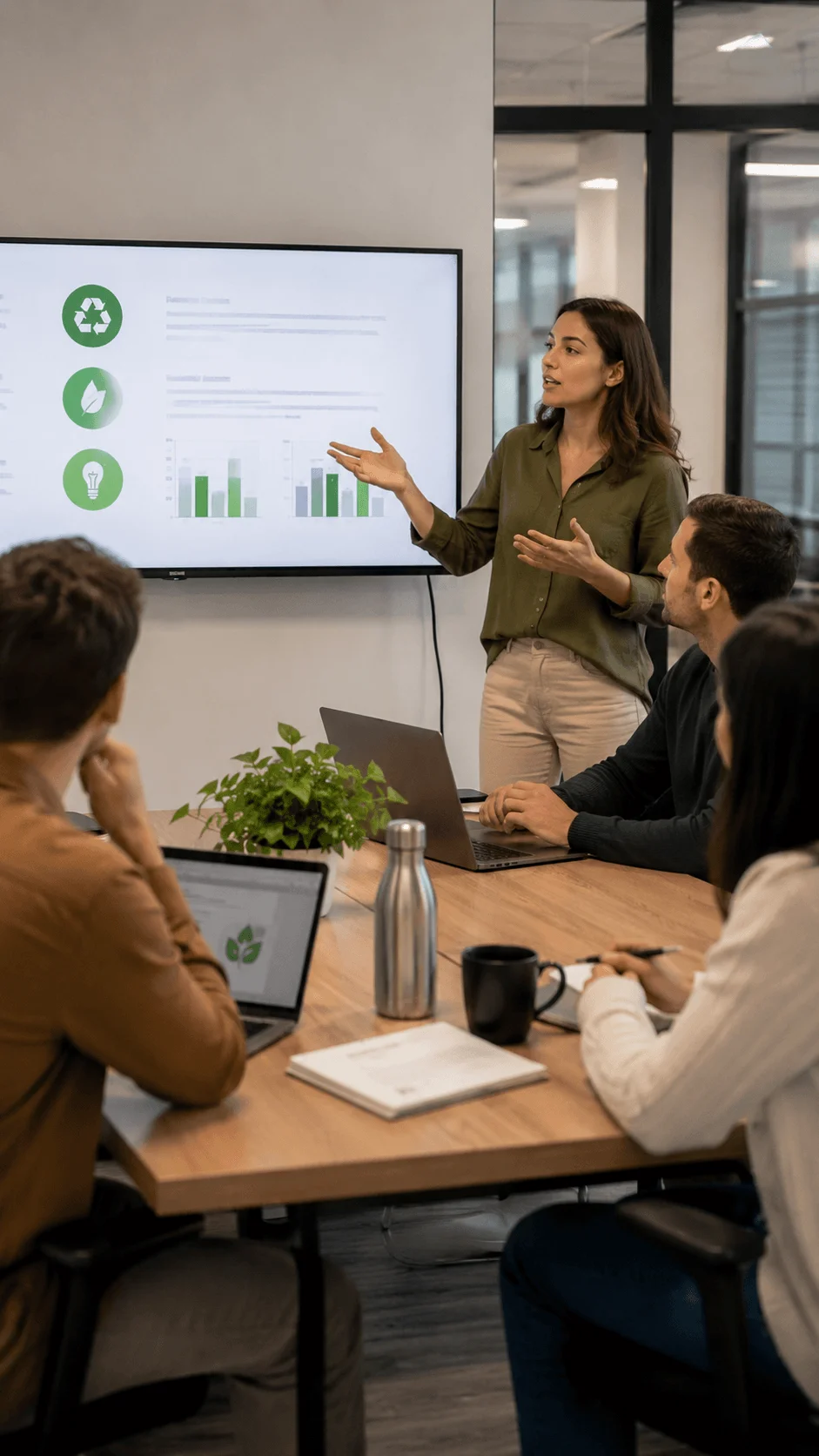
These employee sustainability activities can reveal useful knowledge that already exists inside the organisation. Leaders should give employees enough time to prepare and should recognise their contribution without creating pressure.
The company can track sessions completed, departments involved, ideas tested, and process changes introduced. Employee feedback can also show whether the learning helped people make better decisions.
3. Supplier Sustainability Collaboration Lab
A supplier sustainability collaboration lab brings company employees and selected suppliers together to solve one shared environmental problem. Many businesses send long sustainability questionnaires to suppliers, but questionnaires alone may not improve products, packaging, deliveries, or manufacturing processes.
The company should choose a specific issue that both sides understand. A retailer may want to reduce unnecessary packaging around frequent deliveries. A manufacturer may need better information about recycled material content. A restaurant chain may work with a supplier to improve reusable transport containers. A technology company may examine repair options and spare part availability.
Employees from procurement, operations, finance, logistics, design, and sustainability can participate. The supplier should also involve people who understand production, delivery, cost, and technical limitations. Together, the group can examine the current process, identify barriers, and design a small trial.

A successful activity respects supplier capacity. Smaller suppliers may not have large sustainability teams or advanced reporting systems. Companies should avoid demanding expensive changes without discussing cost, timing, and practical support.
Supplier sustainability engagement activities work best when both sides benefit. Reduced packaging may lower disposal costs. Consolidated deliveries may save fuel and staff time. Better product durability may reduce returns.
Companies can measure trials launched, packaging avoided, delivery frequency changed, supplier data improved, and long term agreements created.
4. Green Claims Evidence Sprint
A green claims evidence sprint helps a company review environmental statements before customers, investors, employees, or regulators question them. Marketing materials often use words such as green, sustainable, natural, recyclable, clean, responsible, and environmentally friendly. These words may sound positive, but they require clear evidence and careful explanation.
The company can bring together employees from marketing, legal, product development, sustainability, sales, and management. The team reviews claims used on websites, packaging, advertisements, presentations, proposals, reports, and social media.

For each statement, the group should ask what evidence supports it, whether the information is current, what part of the product or service it covers, and whether important limitations remain hidden. A package may contain recyclable material, but local facilities may not accept it. A product may use less energy during operation while still creating other environmental impacts.
The team can build an internal evidence library that records each approved claim, its source, responsible owner, review date, and limitations. Employees can use this system before publishing new content.
A green claims audit activity for companies can reduce the risk of misleading communication while improving customer trust. The company can measure claims reviewed, evidence collected, wording corrected, outdated statements removed, and approval procedures created.
5. Hybrid Work Carbon Mapping Challenge
Hybrid work sustainability activities should examine both office and remote working conditions. Companies sometimes assume that remote work always reduces environmental impact because employees commute less. The full picture may include home electricity use, office heating, cooling, lighting, equipment duplication, business travel, and low building occupancy.
A hybrid work carbon mapping challenge asks employees to examine how different working arrangements use resources. The activity does not need to calculate an exact carbon footprint for every worker. Instead, it should identify patterns that can support better decisions.
Employees may share general information about commuting methods, travel frequency, office attendance, and equipment use. Companies should protect privacy and avoid requesting detailed personal energy bills or information about home circumstances unless participation remains voluntary and the purpose is clear.

The findings may reveal that teams travel to the office on different days, which keeps the building open without improving collaboration. The company may decide to create shared attendance days, improve public transport support, reduce unnecessary meetings, or offer better remote access.
Accessibility must remain important. Employees may have mobility needs, family responsibilities, unsafe transport routes, or unsuitable home working spaces.
Sustainability activities for companies should never use environmental goals to remove necessary flexibility. Useful measurements include travel avoided, office occupancy, shared equipment use, meeting patterns, and employee satisfaction.
6. Circular Technology Life Extension Week
A circular technology life extension week encourages employees to maintain, repair, reuse, and reassign workplace equipment before the company replaces it. Electronic waste collections can help with responsible disposal, but they should come after repair and continued use have been considered.
The activity may cover laptops, monitors, phones, chargers, printers, keyboards, headsets, storage devices, and other equipment. Information technology teams can organise device health checks, software cleanup, battery guidance, repair assessments, and accessory collection.
A laptop may seem slow because it needs maintenance rather than replacement. A monitor from one department may meet the needs of another team. Spare chargers may sit unused in storage while new ones are purchased. Small improvements can extend equipment life and reduce unnecessary spending.
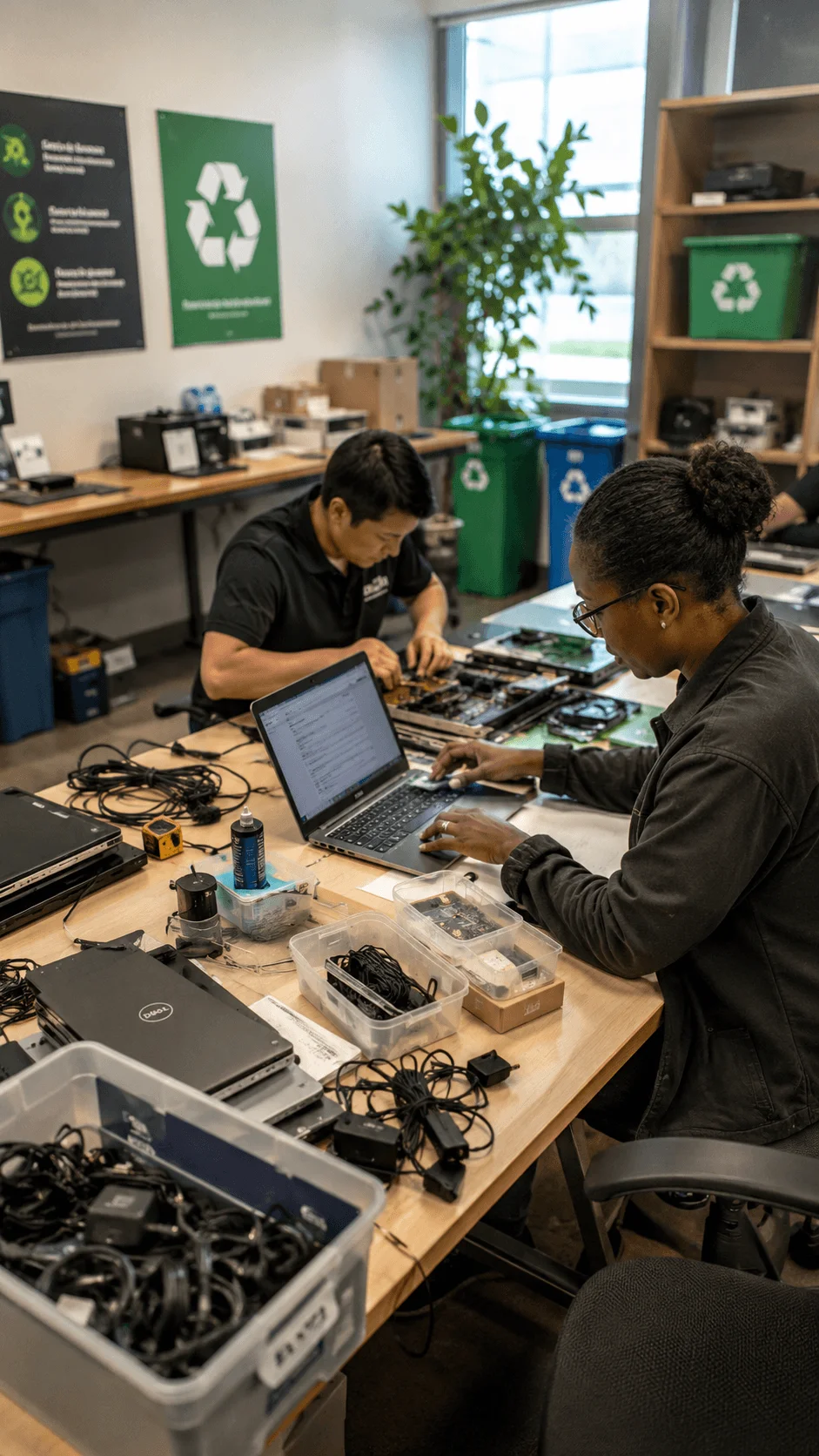
Security remains essential. Technology teams should control data removal, equipment reassignment, refurbishment, and disposal. Employees should not attempt repairs that could damage devices or create safety risks.
A workplace technology life extension activity can also improve purchasing decisions. The company may discover that certain products break more often, lack spare parts, or become difficult to repair.
Useful measurements include devices repaired, equipment reassigned, new purchases avoided, costs saved, accessories recovered, and estimated years of useful life added.
7. Company Climate Risk Mapping Workshop
A company climate risk mapping workshop helps employees identify how heat, flooding, storms, drought, water shortages, transport disruption, and power interruptions could affect daily operations.
Different departments often see different risks. Facilities staff may understand building weaknesses. Warehouse teams may know which storage areas become too hot. Human resources employees may identify worker safety concerns. Procurement teams may notice dependence on suppliers from high risk locations. Customer service teams may understand how disruptions affect clients.
Participants can create a simple map of business locations, suppliers, transport routes, technology systems, and essential services. They can then discuss what may happen if one part of the system becomes unavailable.
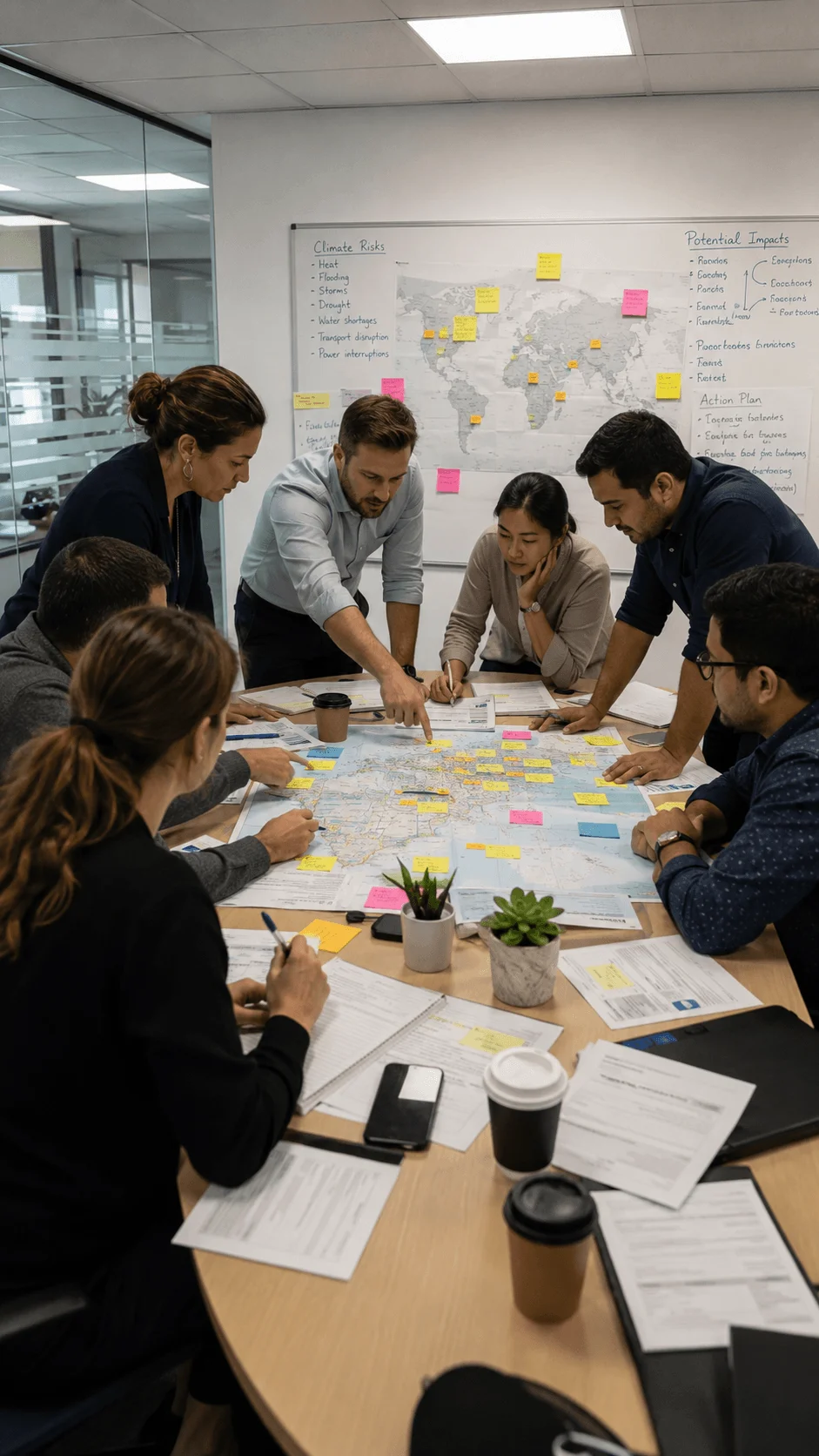
The activity should lead to practical action. A company may improve emergency communication, identify backup suppliers, review cooling systems, provide heat protection, change delivery schedules, create remote work procedures, or protect important equipment from water damage.
A climate risk activity for employees should not create panic or present uncertain predictions as facts. The aim is to improve preparation using available information and local experience.
The company can measure risks identified, action plans completed, emergency procedures updated, responsibilities assigned, and resilience projects funded. Regular reviews can help the organisation respond when conditions, locations, or suppliers change.
8. Sustainable Procurement Experiment
A sustainable procurement experiment asks one department to examine a frequently purchased product or service using more than the initial price. The team compares durability, repairability, energy use, packaging, maintenance, supplier information, delivery, and end of life options.
A low cost office chair may break quickly and require frequent replacement. A slightly more expensive model may last longer, provide repair parts, and create less waste. Similar comparisons can apply to uniforms, laptops, cleaning products, printing materials, packaging, catering supplies, and delivery services.
The procurement team should work with the employees who use the product. Finance staff can examine lifetime cost, while sustainability employees can review environmental information. Facilities staff may understand maintenance requirements. Users can test whether the alternative performs well in real working conditions.

The company can begin with a small trial instead of changing an entire purchasing policy immediately. This approach reduces risk and provides real evidence.
A sustainable procurement employee activity should avoid choosing products based only on attractive environmental language. Suppliers should provide relevant information, and the company should consider performance, safety, accessibility, and cost.
Measurements may include product lifespan, purchases avoided, packaging reduced, maintenance costs, employee satisfaction, and total lifetime value.
9. Internal Carbon Budget Challenge
An internal carbon budget challenge helps employees understand environmental tradeoffs when planning a project, event, campaign, business trip, or product launch. The company gives a team an estimated carbon limit or comparison tool and asks participants to explore different options.
A marketing team may compare a large physical event with a smaller meeting that includes virtual participation. A sales department may review whether several short flights could become one planned journey. A training team may compare printed materials, digital resources, catering, travel, and venue choices.
The activity should not pretend that every estimate is perfectly accurate. Carbon data often includes assumptions and incomplete information. The purpose is to help employees ask better questions and consider environmental impact alongside cost, quality, accessibility, and business value.
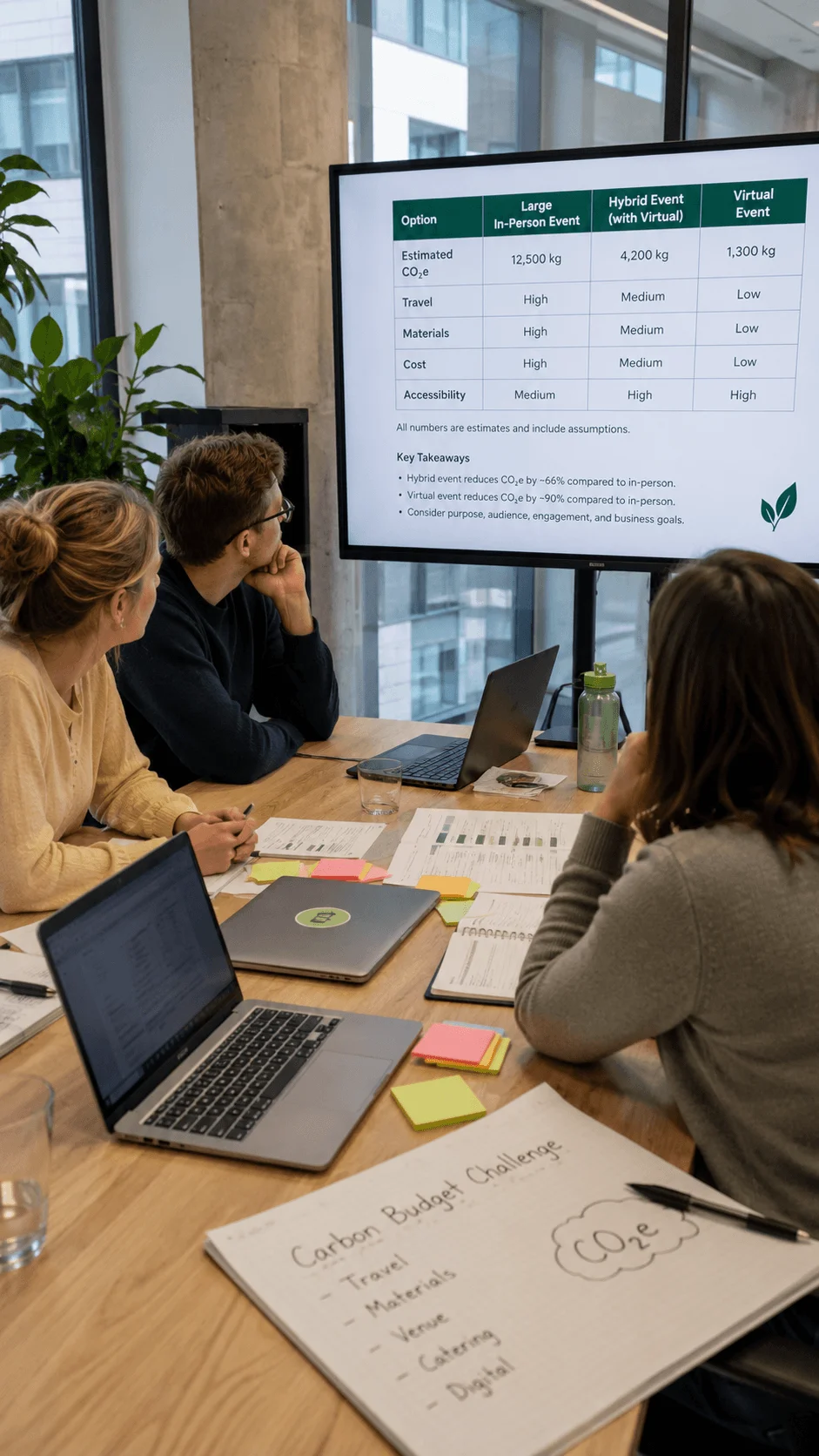
Teams need realistic alternatives. Employees cannot reduce travel if leaders require unnecessary attendance. They cannot choose lower impact materials if procurement rules offer no suitable options. Management must support the process and accept reasonable changes.
An employee carbon budget challenge can improve decision making even when the final option does not have the lowest estimated impact. The team should explain its tradeoffs honestly.
Companies can measure travel avoided, materials reduced, lower impact choices selected, cost changes, and lessons applied to future projects.
10. Water Resilience Workplace Challenge
A water resilience workplace challenge helps employees investigate how the company uses water and where operational problems create waste. The activity should go beyond reminders to turn off taps. Many water issues result from leaking equipment, poor maintenance, inefficient cleaning systems, unsuitable landscaping, cooling processes, or supplier practices.
A small office may review bathrooms, kitchens, and cleaning routines. A restaurant may examine food preparation, dishwashing, ice machines, and leaks. A factory may study production processes, cooling systems, and wastewater. A warehouse may focus on cleaning, fire systems, and outdoor areas.
Employees can report problems, examine maintenance records, and identify areas that require professional assessment. Facilities and operations teams can then select one improvement, such as repairing leaks, adjusting cleaning methods, replacing inefficient fixtures, or improving monitoring.
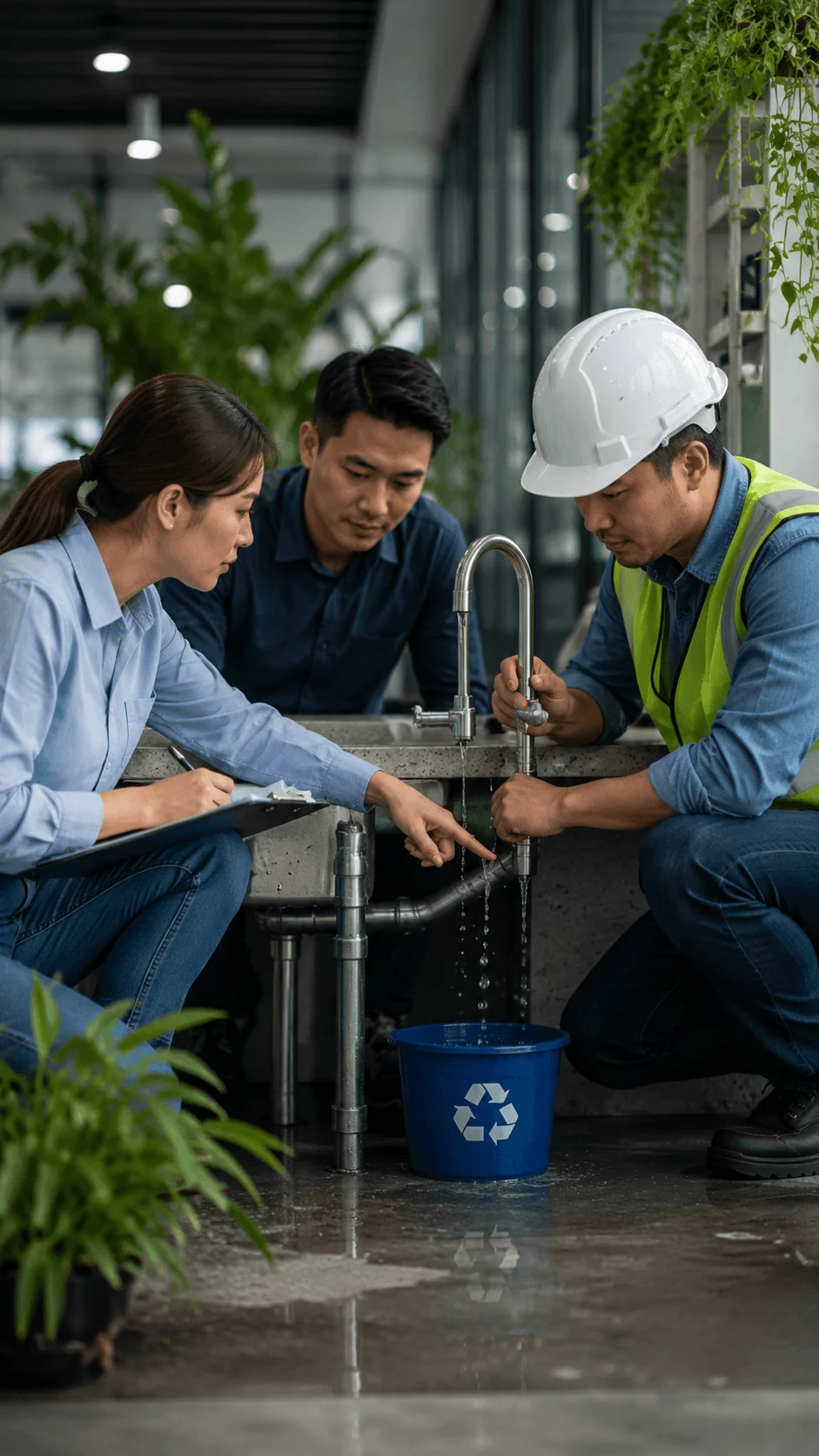
Water conservation activities for companies should consider local conditions. A water saving measure may have greater importance in an area that faces drought or supply pressure.
The activity should also include indirect water use where relevant. Purchasing decisions, food choices, materials, and suppliers may influence water demand beyond the workplace.
Useful measurements include leaks repaired, maintenance response times, water use changes, equipment improvements, employee reports, and resilience plans created.
11. Sustainable Meeting and Event Design Lab
A sustainable meeting and event design lab asks employees to redesign one regular meeting, training session, conference, or company event. The team examines whether the event needs to happen, who should attend, how people will travel, what food will be served, and which materials are required.
The goal is not to make every event virtual. Some discussions, training sessions, and relationship building activities benefit from meeting in person. The company should choose the format that supports the purpose while reducing unnecessary resource use.
Employees can compare room size, attendance, catering quantities, printed documents, promotional gifts, equipment rental, shared travel, and virtual participation. A large meeting may become a smaller working session with a recorded update for other employees. Catering orders may use confirmed attendance instead of estimates based on the maximum room capacity.

Sustainable corporate event activities should also consider accessibility. Virtual options may support some employees, while others may need suitable physical spaces, captioning, transport help, or different communication formats.
The company can create a simple event standard based on the findings. Measurements may include travel avoided, food waste reduced, paper saved, attendance quality, employee feedback, and total event cost.
12. Sustainability Intrapreneurship Challenge
A sustainability intrapreneurship challenge invites employees to identify an environmental or social problem inside the company and design a realistic solution. Unlike a general suggestion box, the activity gives participants a clear structure, access to decision makers, and a chance to test an idea.
Employees may focus on packaging, product returns, energy use, transport, food waste, supplier communication, office materials, digital systems, or equipment repair. Each proposal should explain the problem, suggested experiment, required budget, responsible departments, possible risks, trial period, and measurement method.
A warehouse employee may suggest reusable protection materials for regular deliveries. A customer service team may identify a product return issue that creates unnecessary waste. A developer may propose a simpler digital process that reduces duplicate storage. A human resources employee may redesign disposable onboarding materials.

Senior leaders should commit to testing at least one suitable idea and should explain why other proposals cannot move forward. Employees may lose trust when the company celebrates innovation but provides no budget or action.
The company can offer mentoring, small trial funds, and access to relevant data. Useful measurements include proposals submitted, trials launched, processes changed, costs saved, and employee participation.
How to Choose Sustainability Activities for Companies
Choosing sustainability activities for companies requires a clear understanding of the organisation’s real impacts. A small office, factory, retailer, warehouse, restaurant, technology company, and remote team will not need the same approach.
Companies should begin by examining where they use energy, water, materials, transport, technology, and supplier services. Employee feedback can help identify systems that create waste, frustration, unnecessary cost, or repeated work. Leaders should also consider climate risks, safety requirements, customer expectations, and available data.
The selected activity should match the organisation’s authority and resources. A small company may not be able to change an entire supply chain, but it may improve one product category or work closely with one supplier. A large organisation may need a controlled trial before applying a change across many locations.
Accessibility also matters. Activities should not exclude employees because of disability, job role, shift pattern, location, family responsibility, or access to technology. Frontline employees may need paid time and practical support to participate.
The best starting point is often one meaningful problem that employees already understand. The company can establish a simple baseline, run the activity, review the results, and decide whether to expand it. Several focused improvements usually create more value than many weak campaigns.
How to Encourage Employee Sustainability Participation
Employee participation grows when companies make activities relevant, respectful, and practical. Workers need to understand why the activity matters, how much time it requires, and what leaders will do with the results.
Companies should provide paid participation time where possible. Asking employees to complete environmental projects outside normal working hours may reduce participation and create resentment. Managers should also give clear instructions, suitable tools, and access to necessary information.
Participation should remain voluntary when activities involve personal habits, commuting, home working, or personal data. Companies should never shame employees who cannot change their transport, diet, schedule, or working location. Disability, cost, safety, housing, family responsibilities, and local infrastructure influence personal choices.
Recognition can support engagement, but it should celebrate useful contributions rather than create unhealthy competition. Teams may value a thank you from leadership, an opportunity to present their work, or funding for a successful trial more than prizes.
Leaders must also respond to employee ideas. When workers identify a problem, management should explain what will happen next. Even when the company cannot approve a suggestion, an honest explanation protects trust.
Strong sustainability engagement activities for employees create a visible connection between participation and real workplace improvement.
How to Measure Sustainability Activities for Companies
Companies should measure sustainability activities for companies using indicators that match the specific project. A technology repair activity requires different measurements from a supplier workshop or water challenge.
Before the activity begins, the team should establish a simple baseline. This may include current purchasing levels, equipment replacement rates, travel frequency, water use, waste quantities, supplier practices, or employee knowledge. The baseline does not need to be perfect, but it should provide a reasonable point of comparison.
After the activity, the company can measure changes such as purchases avoided, equipment repaired, packaging reduced, travel removed, leaks fixed, ideas tested, supplier actions completed, and costs saved. Employee feedback may reveal whether the new process works in practice.
Companies should explain the limits of their data. A short experiment may show a promising direction without proving a permanent environmental benefit. Estimates should remain clearly labelled, and leaders should avoid turning uncertain results into exaggerated public claims.
Measurement should continue after the activity ends. A new process may work for one month and then disappear when responsibilities become unclear. Reviews after several weeks or months can show whether the change became part of normal operations.
Simple and honest measurement helps companies learn, improve, and decide which activities deserve more investment.
Common Mistakes in Corporate Sustainability Activities
One common mistake is choosing an activity mainly because it creates attractive publicity. Employees may lose trust when a company promotes a cleanup day while ignoring larger problems in purchasing, travel, production, or supplier management.
Another mistake involves blaming employees for impacts created by company systems. Workers cannot reduce disposable packaging if procurement continues buying it. They cannot use public transport if schedules, safety, or local infrastructure make it impractical. Leaders should change the systems that shape employee choices.
Companies may also create environmental competitions that embarrass workers or pressure them to share personal information. Activities involving commuting, home energy, food, health, or family circumstances require careful privacy and accessibility planning.
A lack of follow through can damage participation. Employees may spend time developing ideas only to receive no response, budget, or decision. Management should explain which proposals will move forward and why.
Companies should also avoid exaggerated claims. One event, repair week, or supplier meeting does not make an organisation sustainable. Environmental progress usually requires repeated action, investment, policy changes, and honest reporting.
Sustainability activities for companies work best when leaders connect them with real business decisions. Recycling, awareness days, and volunteering may still provide value, but they should not replace deeper improvements in operations, purchasing, products, technology, and supply chains.
Conclusion
The strongest sustainability activities for companies help employees improve the systems they use every day. They connect environmental responsibility with technology, purchasing, suppliers, meetings, water, transport, climate resilience, and workplace learning.
Companies do not need to launch all 12 ideas at the same time. A better approach is to choose one problem that matters, involve employees who understand it, provide suitable resources, and test a realistic solution. Leaders should measure the results, listen to feedback, explain limitations, and continue successful improvements.
Modern corporate sustainability requires more than symbolic campaigns. Employees should have opportunities to share knowledge, question inefficient processes, and develop practical ideas. Management must support their participation with time, information, authority, and visible action.
When companies treat sustainability as a process of learning and improvement, workplace activities can create lasting value. Small experiments may lead to better policies, lower costs, stronger resilience, more responsible communication, and meaningful environmental progress.