Sustainable Activities for Preschoolers in 2026
Sustainable activities for preschoolers help young children understand nature, materials, food, water, plants, and living things through simple play. Children between three and five years old do not need complicated environmental lessons. They learn more effectively when they touch safe natural objects, observe insects, care for plants, reuse clean materials, and notice how everyday choices affect their surroundings.
Preschool sustainability activities can fit naturally into classroom routines, outdoor play, family time, and creative learning. A teacher may introduce one activity during a short group session, while a parent may repeat the same idea at home using materials that already exist. The purpose does not involve teaching children to worry about environmental problems. It involves helping them develop curiosity, care, responsibility, and respect for the world around them.
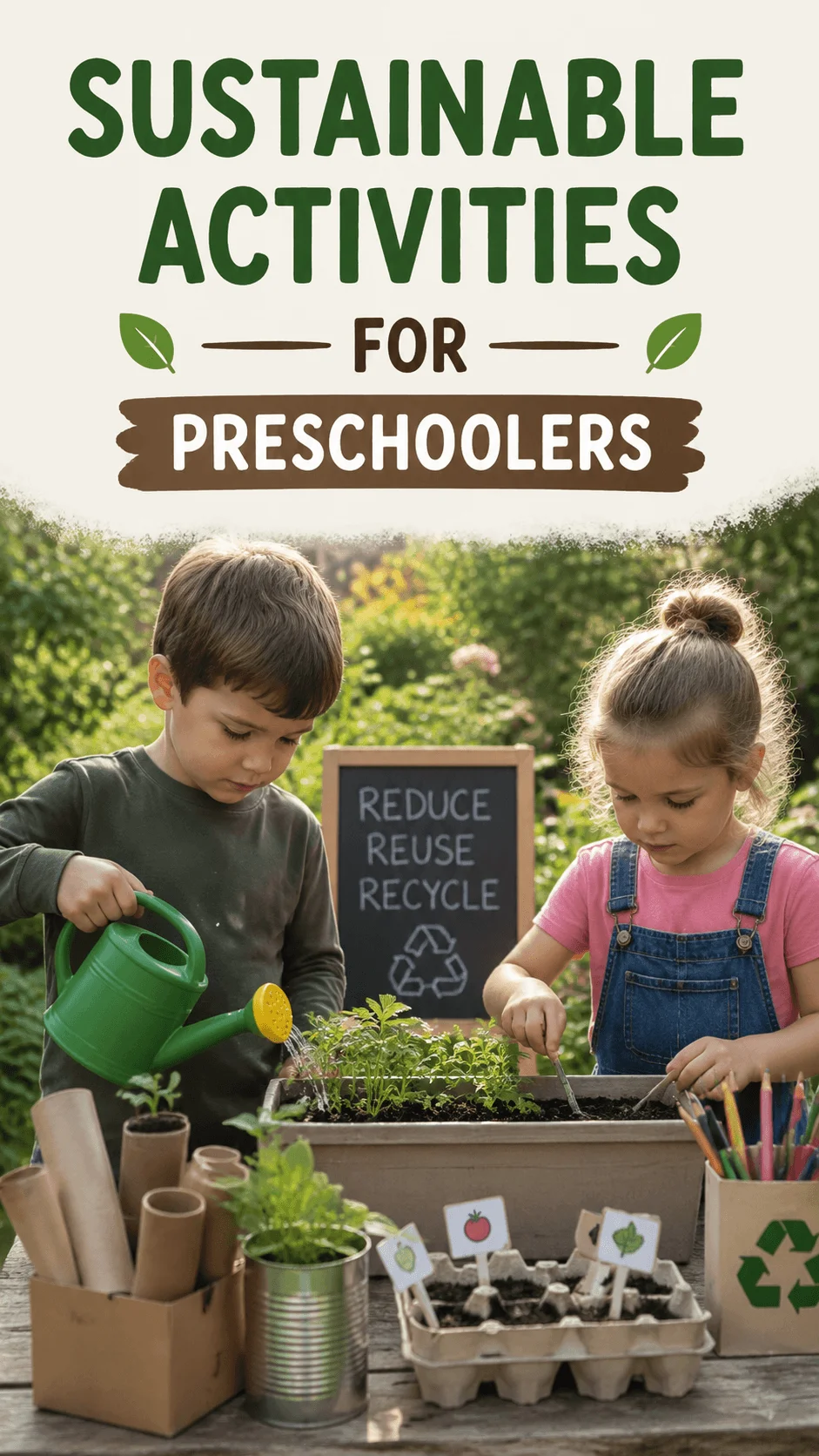
The best sustainable activities for preschoolers remain practical, positive, and suitable for short attention spans. They allow children to explore at their own pace and ask questions without pressure. They can also support communication, fine motor control, early science, imagination, cooperation, and sensory development.
Why Preschool Sustainability Activities Matter
Young children learn by watching adults, copying actions, repeating routines, moving their bodies, and exploring objects directly. They often understand an idea more clearly when they can see and experience it.
A child may not fully understand a long explanation about saving water. However, the child can understand why a plant needs a careful amount of water. A preschooler may not remember a formal definition of reuse, but the child can understand that a clean container can become a drum, a planting pot, or a storage box.
Environmental activities for preschoolers also help children notice simple connections. Rain changes the soil. Flowers attract insects. Food comes from plants and farms. Some materials can serve another purpose before adults throw them away. These observations build early environmental awareness without creating fear or guilt.
Adults play an important role in this learning. Children notice when a teacher turns off a tap, stores materials for future use, avoids damaging plants, or treats insects gently. These small actions often teach more than a formal lesson.
Sustainable activities for preschoolers should also remain inclusive. Some children enjoy touching soil, leaves, and water, while others prefer watching from a distance. Adults should allow children to choose how they participate. Observation, pointing, drawing, using tools, and talking all count as meaningful involvement.
Nature Texture Treasure Hunt
A nature texture treasure hunt encourages children to notice how natural materials look and feel. Adults can guide children through a garden, schoolyard, park, or safe outdoor area and invite them to explore different surfaces.
Children may notice smooth stones, rough tree bark, soft grass, dry leaves, damp soil, bumpy seed pods, cool shade, or warm sunlight. An adult can introduce descriptive words such as smooth, rough, soft, hard, dry, wet, heavy, light, warm, and cool.
The activity works best when adults encourage observation instead of collecting everything. Children can touch a tree gently, look closely at a leaf, or compare two stones without removing living plants. This approach teaches respect for nature and helps children understand that outdoor spaces belong to many living things.
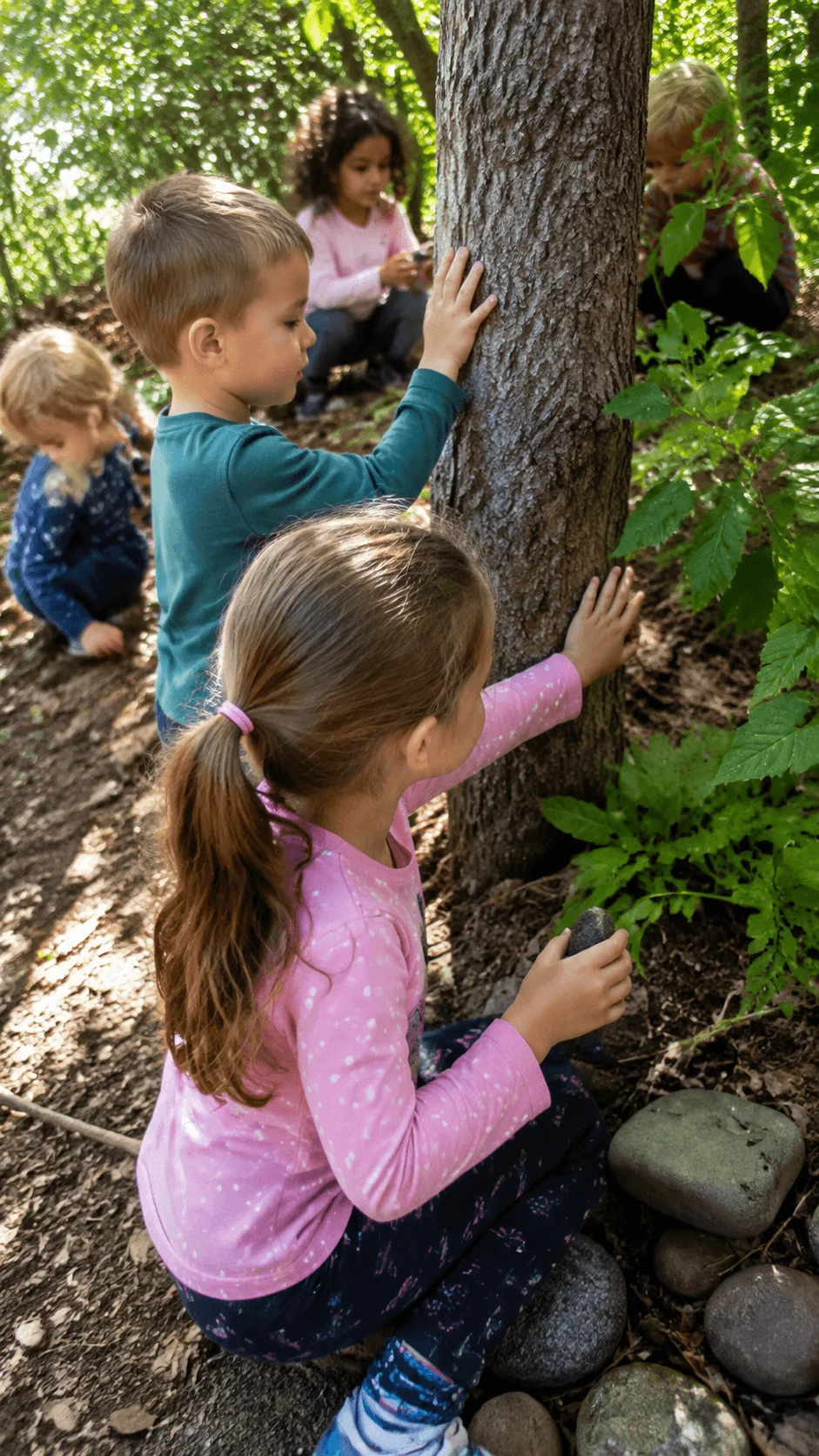
Nature based preschool activities like this support vocabulary, sensory learning, comparison, attention, and communication. A child may explain that one stone feels colder than another or that one leaf feels softer than tree bark. These simple descriptions strengthen language and early scientific thinking.
Teachers can adapt the activity indoors by creating a nature discovery table. They can place safe stones, large leaves, pinecones, wood pieces, and seed pods on separate trays. Adults should inspect every item before use and remove sharp, dirty, mouldy, or unsafe materials.
Children with sensory sensitivities can use gloves, tongs, brushes, or magnifying tools. They can also observe without touching. Adults should check for poisonous plants, insects, animal waste, allergens, and choking risks before the activity begins.
Pollinator Discovery Garden
A pollinator discovery garden allows children to care for plants while observing butterflies, bees, moths, beetles, and other small visitors. This activity can take place in a garden bed, window box, balcony pot, reused container, or small outdoor corner.
Adults should choose flowers that suit the local climate and growing conditions. Children can help fill pots with soil, place seeds or small plants, water them carefully, and observe new growth over time.
Pollinator activities for preschoolers work best when children can return to the same plants regularly. They may notice that one flower attracts more insects than another. They may count butterflies, compare flower colours, draw what they see, or notice how the garden changes across several weeks.
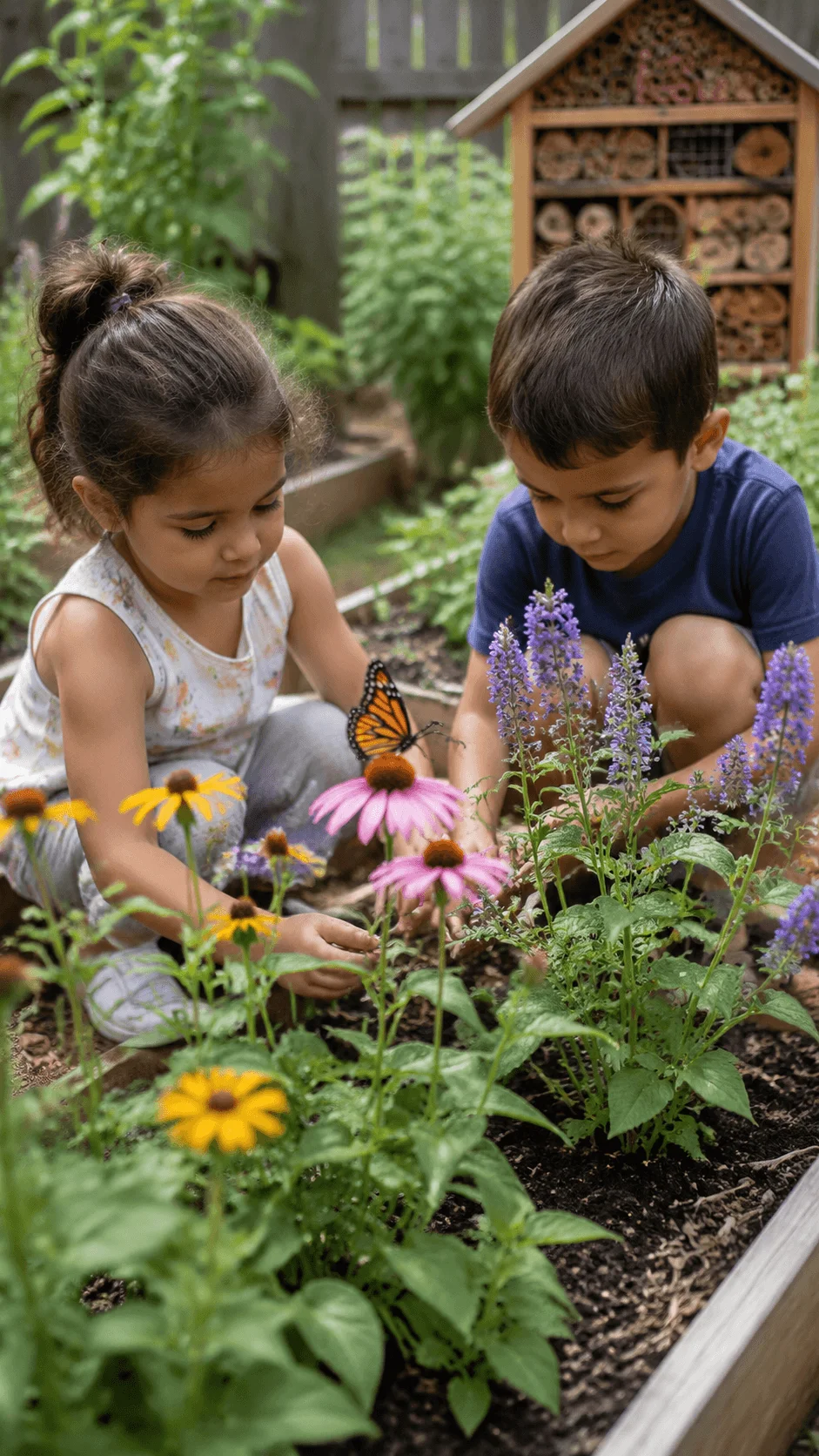
Adults can explain pollination in simple language. They may say that some insects visit flowers and carry tiny pieces of pollen from one flower to another. This process helps many plants produce seeds, fruit, or new growth.
The activity supports patience, responsibility, observation, counting, drawing, and early science. It also helps children develop respect for insects. Adults should remind children to watch from a safe distance and avoid touching, chasing, or trapping pollinators.
Teachers and parents should consider allergies, stings, plant safety, and handwashing. They should avoid chemical sprays near children and pollinators. Families without outdoor space can observe insects through a window, visit a community garden, or look at photographs of local pollinators.
Loose Parts Nature Play
Loose parts nature play gives children open materials that they can use in many different ways. Suitable objects may include large stones, pinecones, sticks, leaves, shells, wood pieces, and seed pods.
Children can arrange these materials into faces, roads, animals, pretend gardens, towers, patterns, or imaginary homes. One child may create a small village, while another may sort stones by size. A group may work together to build a pretend habitat for insects or birds.
Open materials encourage children to make decisions and test ideas. There is no single correct result. Children can move the pieces, change the design, rebuild a structure, or create a new story.
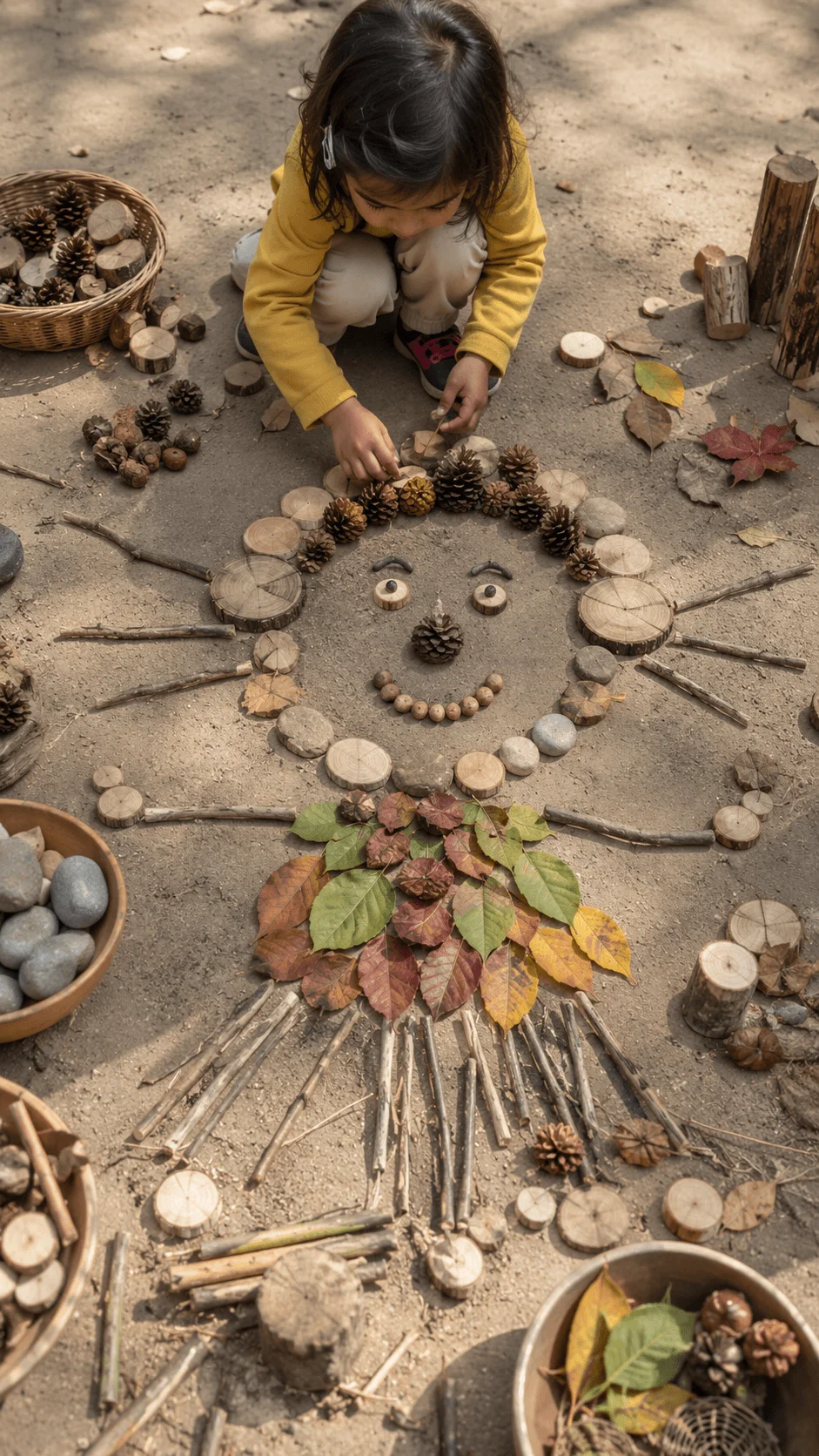
This form of preschool nature exploration supports creativity, spatial awareness, balance, early mathematics, communication, and fine motor control. Children may compare shapes, count objects, create repeated patterns, or describe where each item belongs.
Adults should prepare the space and allow children to lead the play. They can ask what the child is building or what might happen next, but they should avoid taking control.
Safety remains essential. Adults should remove sharp sticks, poisonous seeds, mouldy objects, and pieces small enough to create a choking risk. They should clean suitable materials and store them in a dry place for future use.
Mini Weather Station and Green Learning
A simple weather station helps children notice sunlight, clouds, wind, rain, temperature, and seasonal change. It can become part of a short daily classroom or home routine.
Children can look outside each morning and choose a weather symbol for the day. They may place a sun, cloud, raindrop, or wind picture on a chart. Adults can also introduce a windsock, safe rain container, or thermometer that children use with supervision.
Children can compare today with yesterday. They may notice that the wind moves leaves, clouds change shape, or one side of the playground stays cooler because it has more shade.
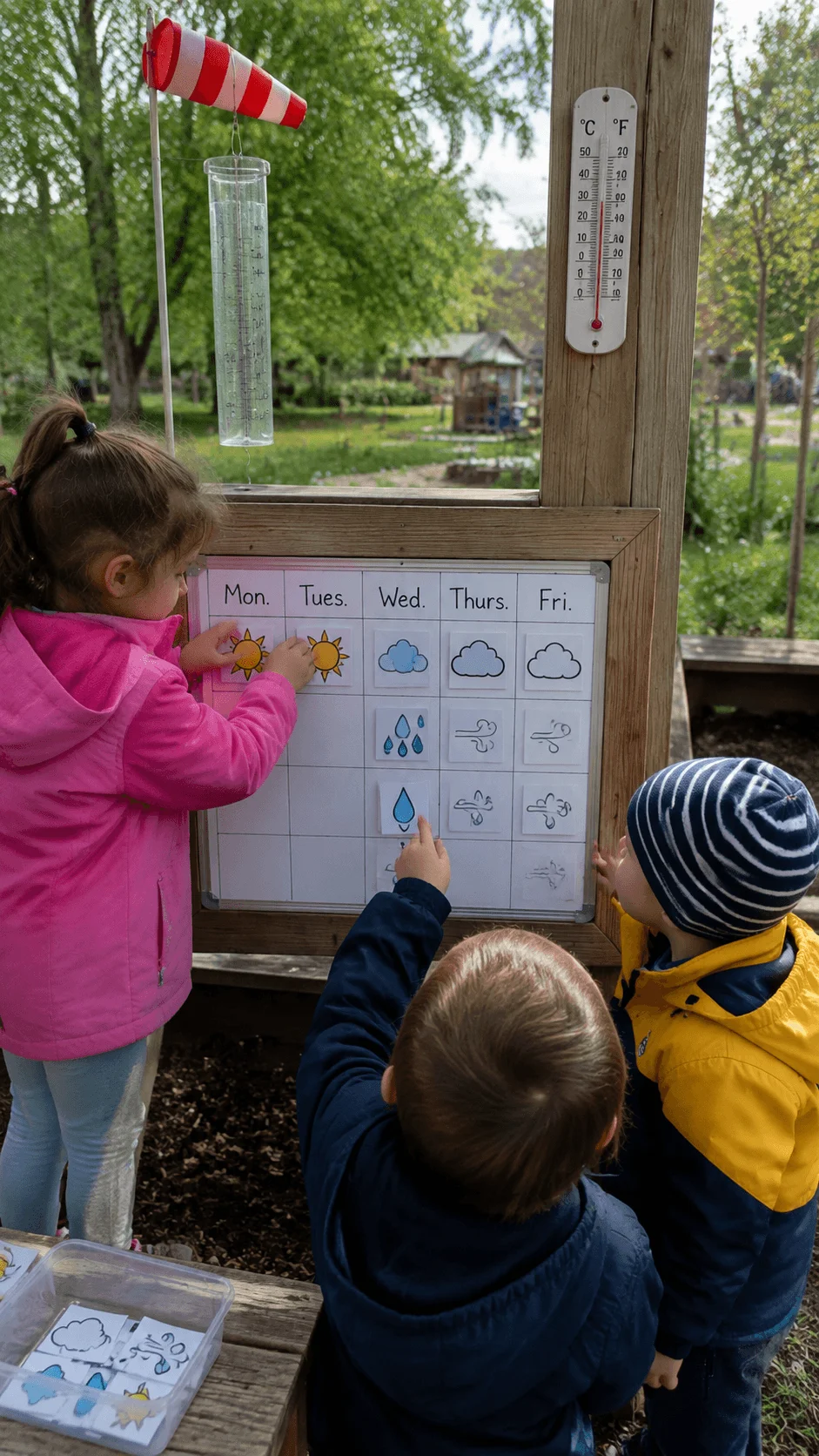
These green activities for preschoolers connect weather observation with daily choices. Children can discuss whether plants need water, which clothes feel suitable, where animals may find shade, or why puddles disappear after sunshine.
The activity should focus on curiosity instead of complex climate explanations. Young children can notice patterns without carrying adult concerns.
Weather observation supports prediction, memory, vocabulary, counting, and early science. Adults should keep children indoors during storms, extreme heat, strong winds, or unsafe conditions. They should also provide sun protection, suitable clothing, and close supervision.
Food Waste Activities for Preschoolers
A food waste investigation can help children notice how food gets used and why some food remains uneaten. Adults should approach the topic with care and avoid blaming children.
Teachers or parents may notice leftover fruit, unfinished snacks, large portions, or food that became damaged before anyone used it. Children can help observe which foods remain and discuss simple reasons.
A child may receive more food than needed. Another child may dislike an unfamiliar texture. Food may also go to waste because adults ordered too much, stored it poorly, or prepared it too early.
Food waste activities for preschoolers should never pressure children to clean their plates. Adults can encourage children to begin with a small portion and ask for more when they remain hungry.
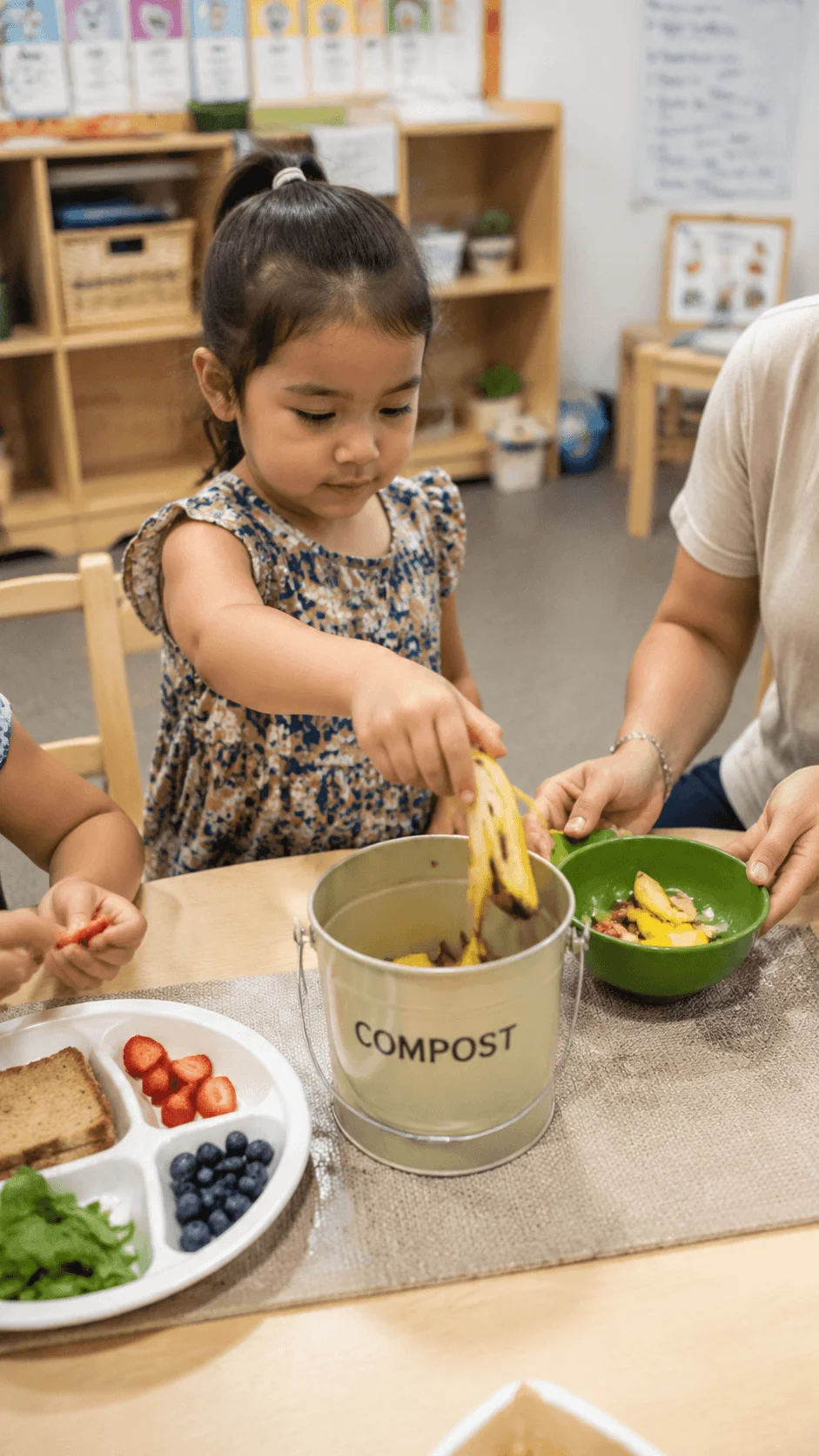
Children can also help store fruit, use ripe ingredients in a simple recipe, or place suitable scraps into a managed compost system. Adults must control hygiene and decide which items belong in the compost.
This activity supports counting, comparison, planning, responsibility, and communication. It also helps children understand that food requires time, water, energy, soil, and care.
Adults should respect allergies, medical needs, cultural preferences, religious practices, and different appetites. The goal involves better planning and careful use, not guilt.
Recycled Music Makers
Recycled music makers combine creativity, sound, movement, and reuse. Children can create simple instruments from clean cardboard tubes, strong boxes, safe tins, paper, fabric scraps, and secure containers.
A strong container may become a drum. A sealed container with suitable large materials inside may become a shaker. Children can tap different boxes and compare their sounds.
Adults can invite children to explore loud and soft sounds, fast and slow rhythms, or high and low tones. A group may create a short classroom performance or follow a simple rhythm during movement time.
Recycled art activities for preschoolers become more meaningful when children understand why adults saved the materials. An adult can explain that the box had one use before and now has a new purpose.
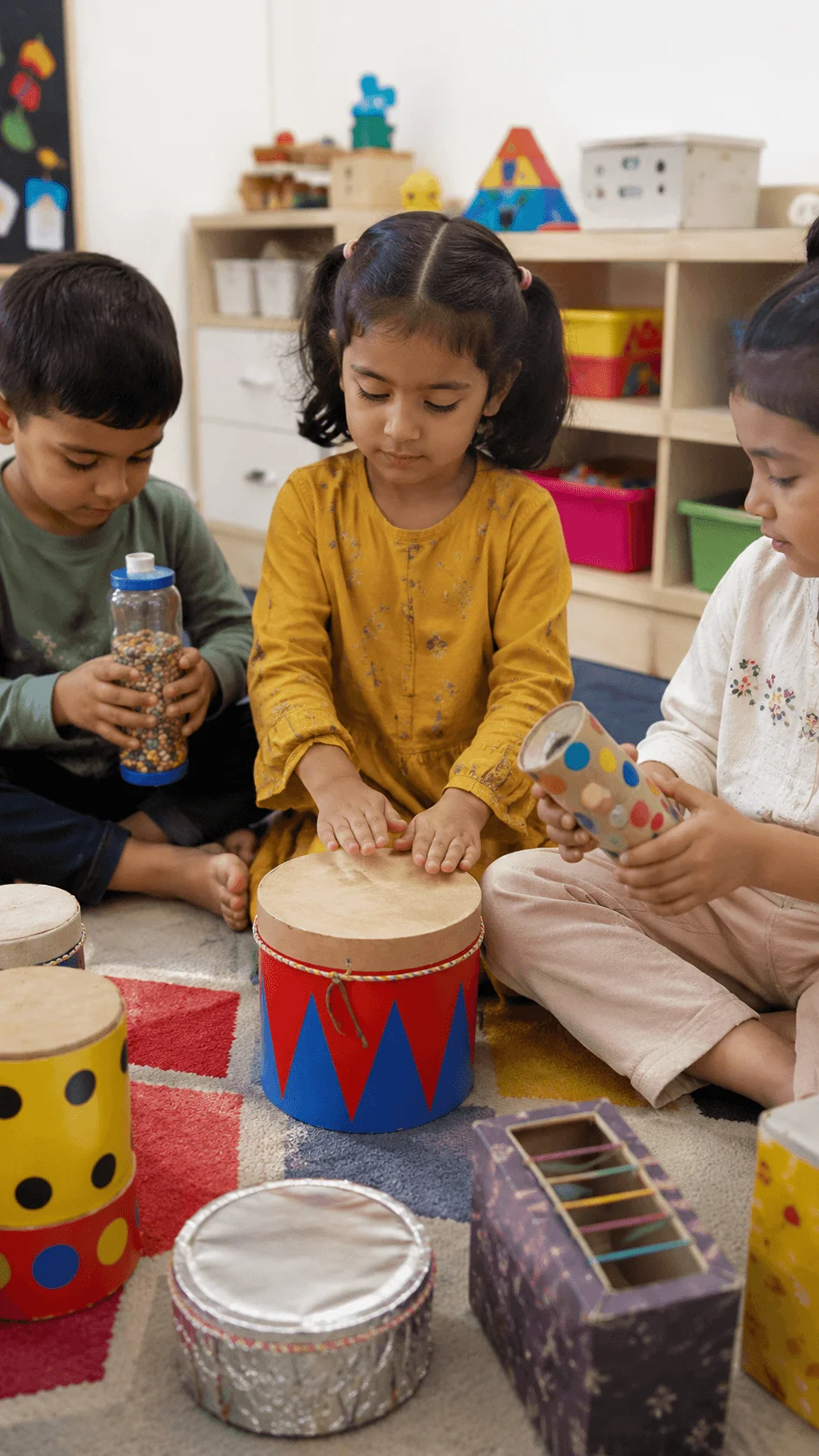
Children can decorate the instruments with reused paper, washable paint, or fabric pieces. The creative process supports hand control, listening, coordination, imagination, and self expression.
Adults should prepare difficult parts in advance. They must remove sharp edges, broken plastic, glass, loose caps, and small pieces. Lids should remain secure, and all containers should stay clean.
This activity shows children that an object does not always become waste after its first use. It may still offer value through creative play.
Seed Saving Discovery
Seed saving introduces children to plant life cycles and helps them understand where new plants begin. Adults can choose suitable seeds from safe fruits, vegetables, flowers, or garden plants.
Children may compare pumpkin seeds, bean seeds, sunflower seeds, apple seeds, or pepper seeds. They can observe differences in colour, shape, size, texture, and number.
With adult help, children can place suitable seeds on paper and allow them to dry. They can store dry seeds in labelled paper envelopes and plant some later.
Not every seed will grow. Adults should treat this result as part of the investigation instead of calling it a failure. They can ask what the child noticed or what the seed may need.
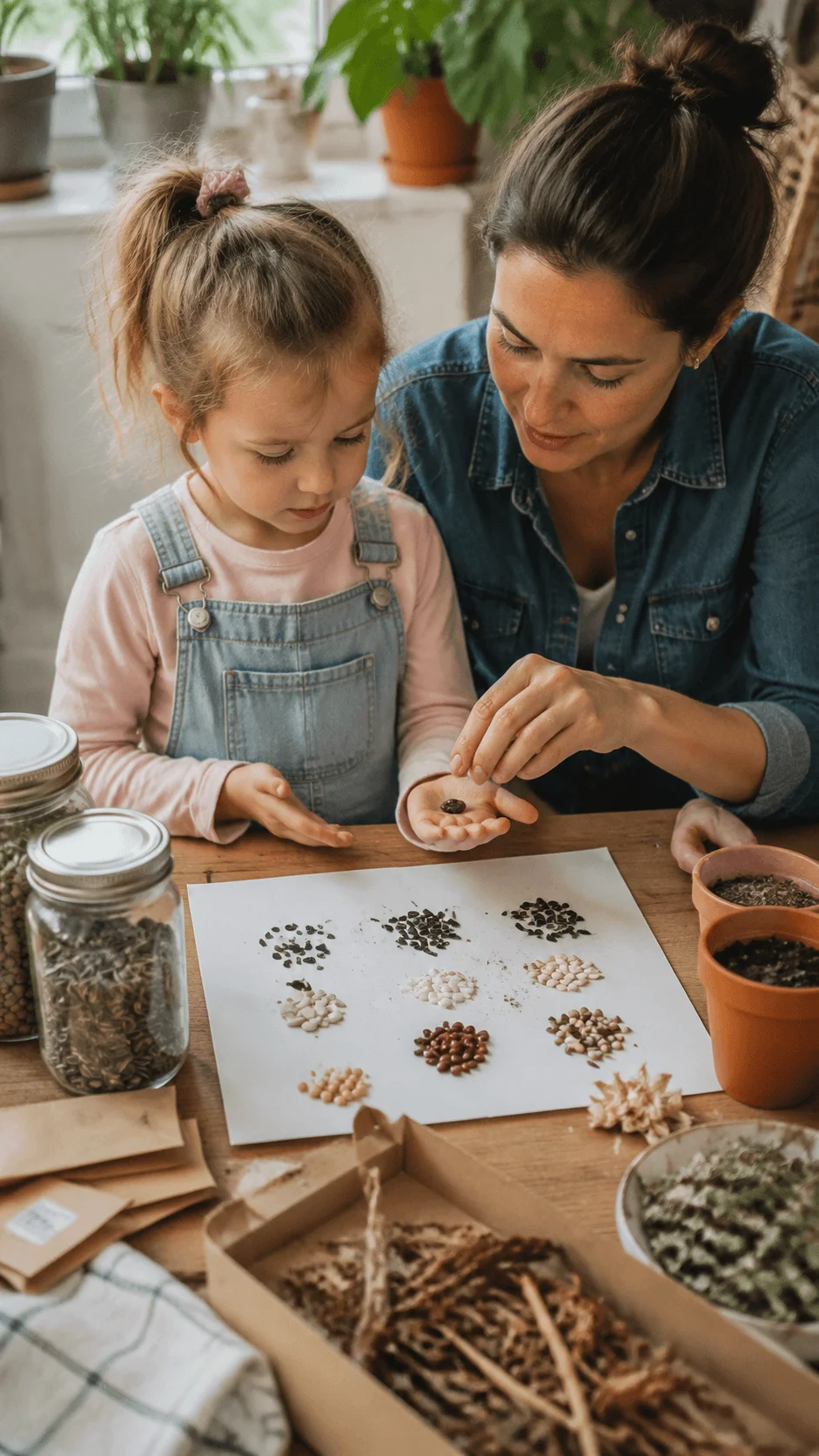
Seed activities support patience, sorting, counting, vocabulary, observation, and responsibility. Children can watch for roots, stems, leaves, and other changes.
Adults must choose safe seeds and avoid poisonous or treated varieties. They should also consider allergies, hygiene, and choking risks. Children should wash their hands after handling soil or plant material.
Sustainable activities for preschoolers often become more powerful when children can observe change over time. Seed growing gives them this opportunity.
Backyard Biodiversity Safari
A backyard biodiversity safari invites children to look for different living things in one place. The location may include a garden, park, schoolyard, balcony, or safe green area.
Adults can explain biodiversity as the variety of plants, animals, insects, and other living things found around us. Children may search for birds, butterflies, ants, worms, flowers, grass, moss, spiders, or trees.
They can record their observations through drawings, picture cards, simple marks, or photographs taken by an adult. Children do not need to identify every species correctly. The activity should focus on noticing differences and asking questions.
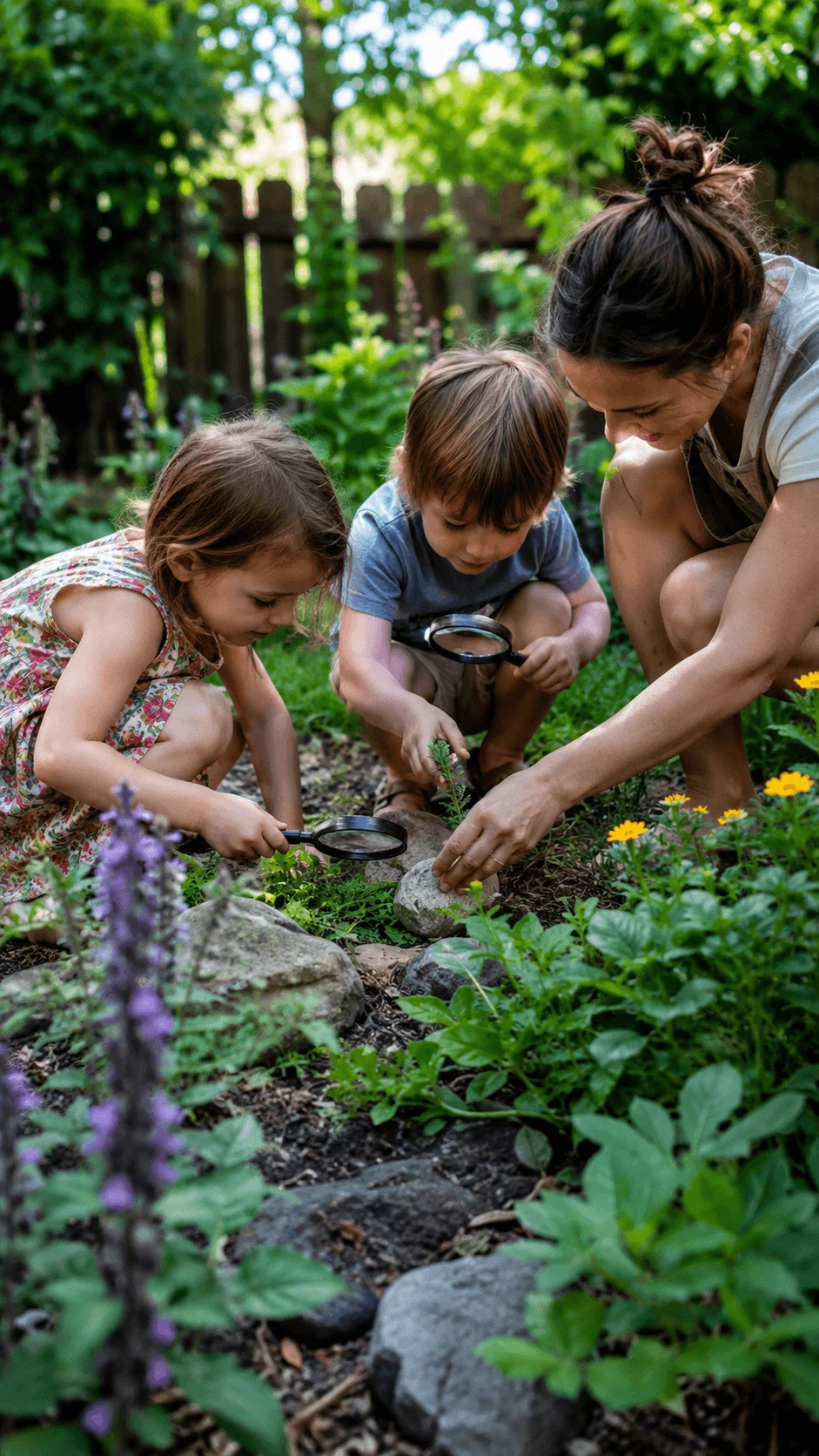
Biodiversity activities for preschoolers teach children to observe without disturbing wildlife. Adults should remind them not to chase insects, touch nests, feed unfamiliar animals, or pull plants from the ground.
Children may notice where insects hide, which flowers attract visitors, or where birds rest. These observations support attention, memory, vocabulary, movement, empathy, and early science.
Adults should check the area for traffic, poisonous plants, animal waste, insects, and unsafe surfaces. Children may need sun protection, suitable clothing, and handwashing after the activity.
Water Conservation Activities for Preschoolers
A water investigation helps children explore dripping, pouring, absorption, movement, and evaporation. Adults can use small cups, droppers, sponges, cloth, soil, leaves, paper, and reusable containers.
Children may predict which material will absorb water first. They can place a few drops on cloth, paper, stone, or soil and compare the results.
They can also observe how water moves through a sponge or how a wet mark becomes smaller in a warm place. Adults should use simple language and allow children to describe what they see.
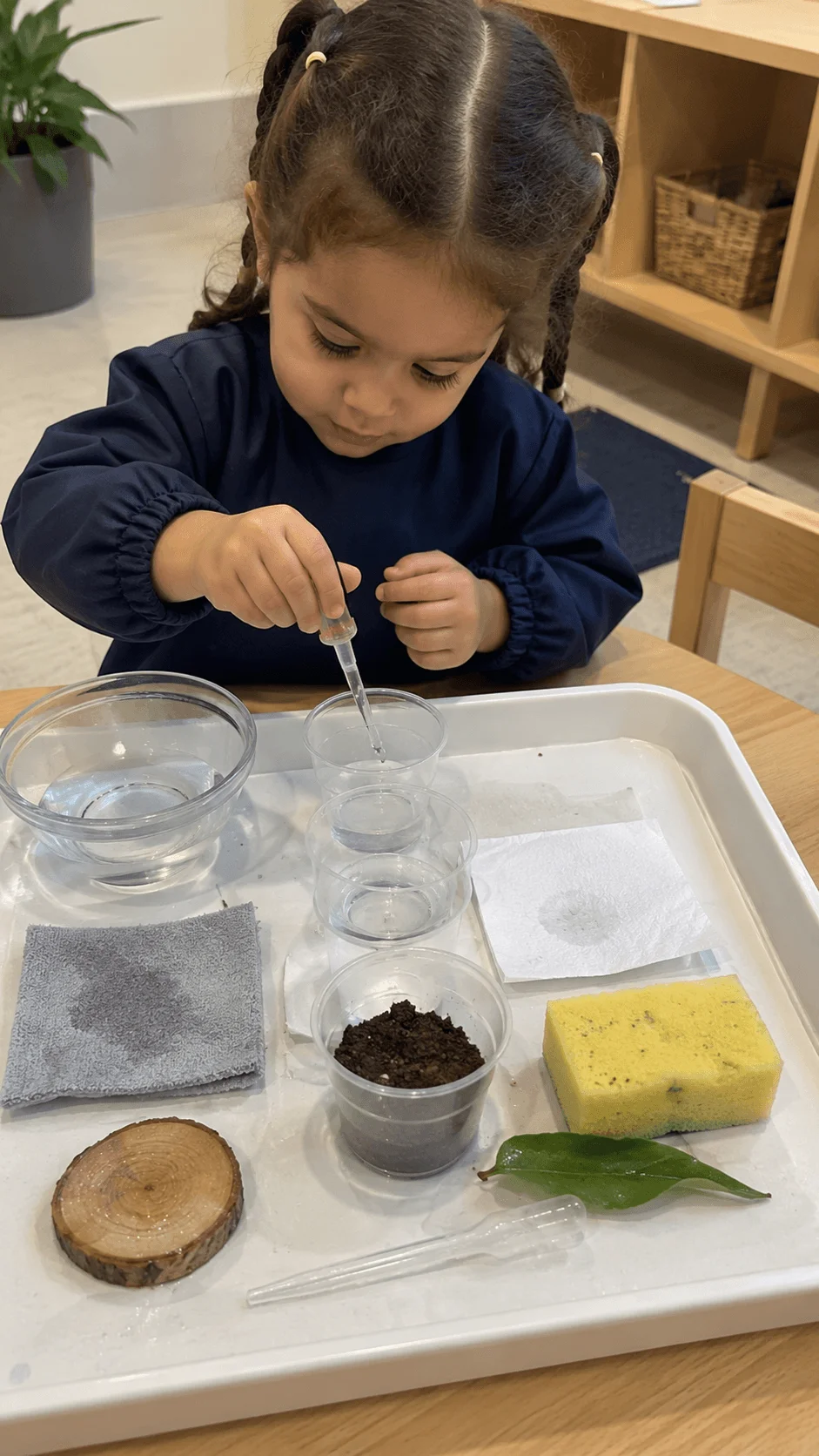
Water conservation activities for preschoolers can connect science play with practical habits. Children can learn to turn off taps when they finish, use only the amount they need, report leaks, and give suitable leftover clean water to plants.
Adults should never make children feel guilty about drinking, washing, or using water for hygiene. The lesson should encourage care rather than fear.
Water play supports hand control, concentration, prediction, comparison, and vocabulary. Adults should wipe spills quickly, keep electrical items away, use clean water, and provide close supervision.
Nature Storytelling With an Eco Story Basket
An eco story basket combines natural materials, reused objects, imagination, and language. Adults can fill a basket with stones, leaves, pinecones, wooden figures, fabric scraps, shells, and cardboard shapes.
Children can use the objects to create stories about forests, rivers, gardens, animals, weather, farms, or families caring for nature.
One child may tell a story about an animal looking for shelter. Another may create a story about a gardener caring for dry plants. A group may imagine that an old box becomes a home for a small creature.
Nature storytelling for preschool children introduces environmental ideas through imagination instead of formal instruction. Children control the story and decide what the objects represent.
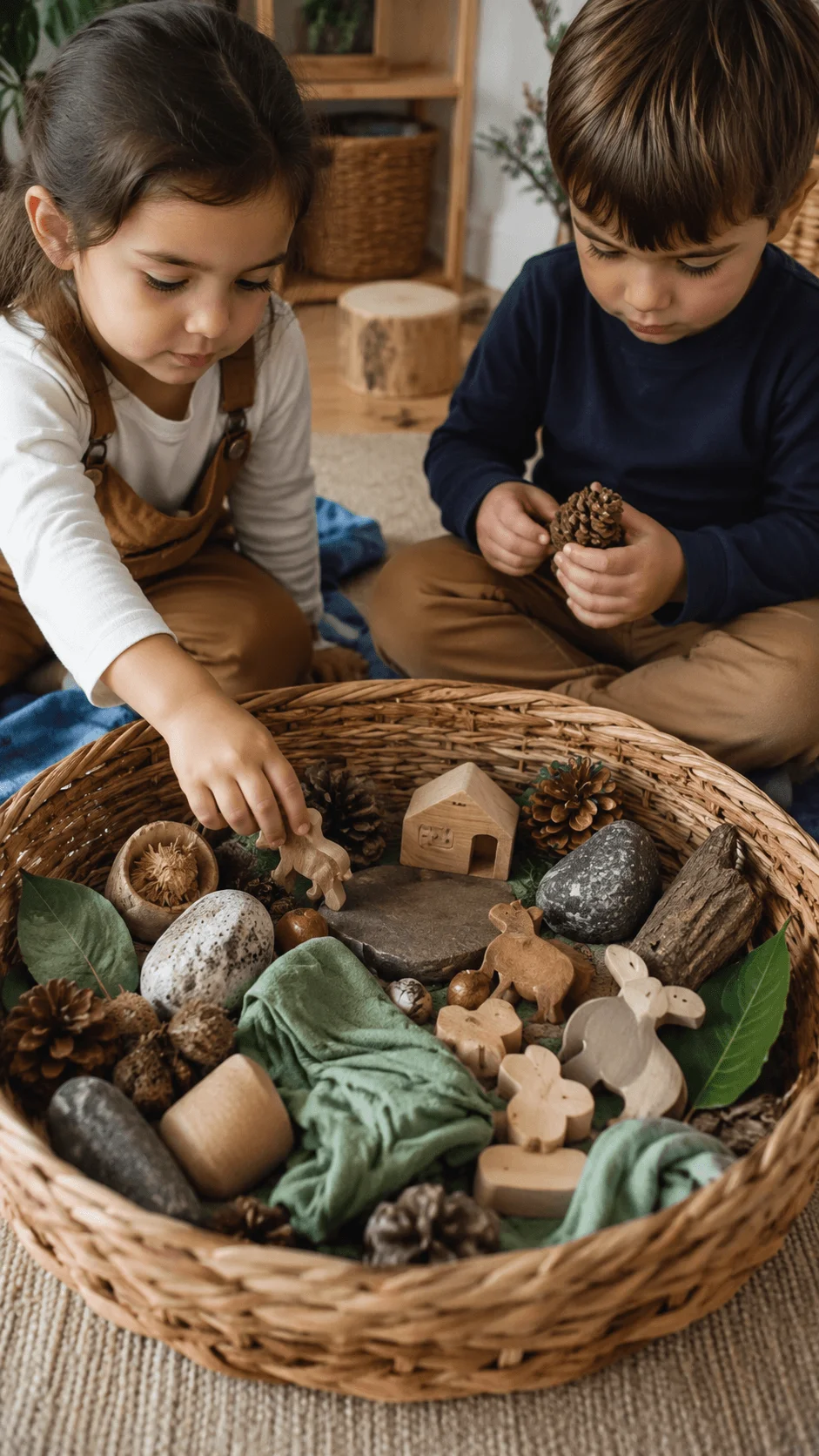
Adults can support the activity with open questions. They may ask what happens next, where the animal will go, or how the characters can care for the garden.
This activity supports sequencing, vocabulary, communication, emotional expression, creativity, and social learning. Children with limited speech can point, arrange objects, use pictures, make sounds, or use communication tools.
Adults should inspect all materials for sharp edges, dirt, mould, allergens, and choking risks.
Sensory Sustainability Activities for Preschoolers
A sustainability sensory bin can include shredded paper, cardboard pieces, dry leaves, pinecones, large seed pods, smooth stones, fabric scraps, wood pieces, and reusable containers.
Children can scoop, pour, sort, compare, count, arrange, and explore the materials. Adults can create a simple theme such as a pretend forest floor, reusable material sorting area, garden, or animal habitat.
Sensory sustainability activities support concentration, hand strength, sorting, vocabulary, imagination, and early mathematics. Children may group materials by texture, shape, colour, or size.
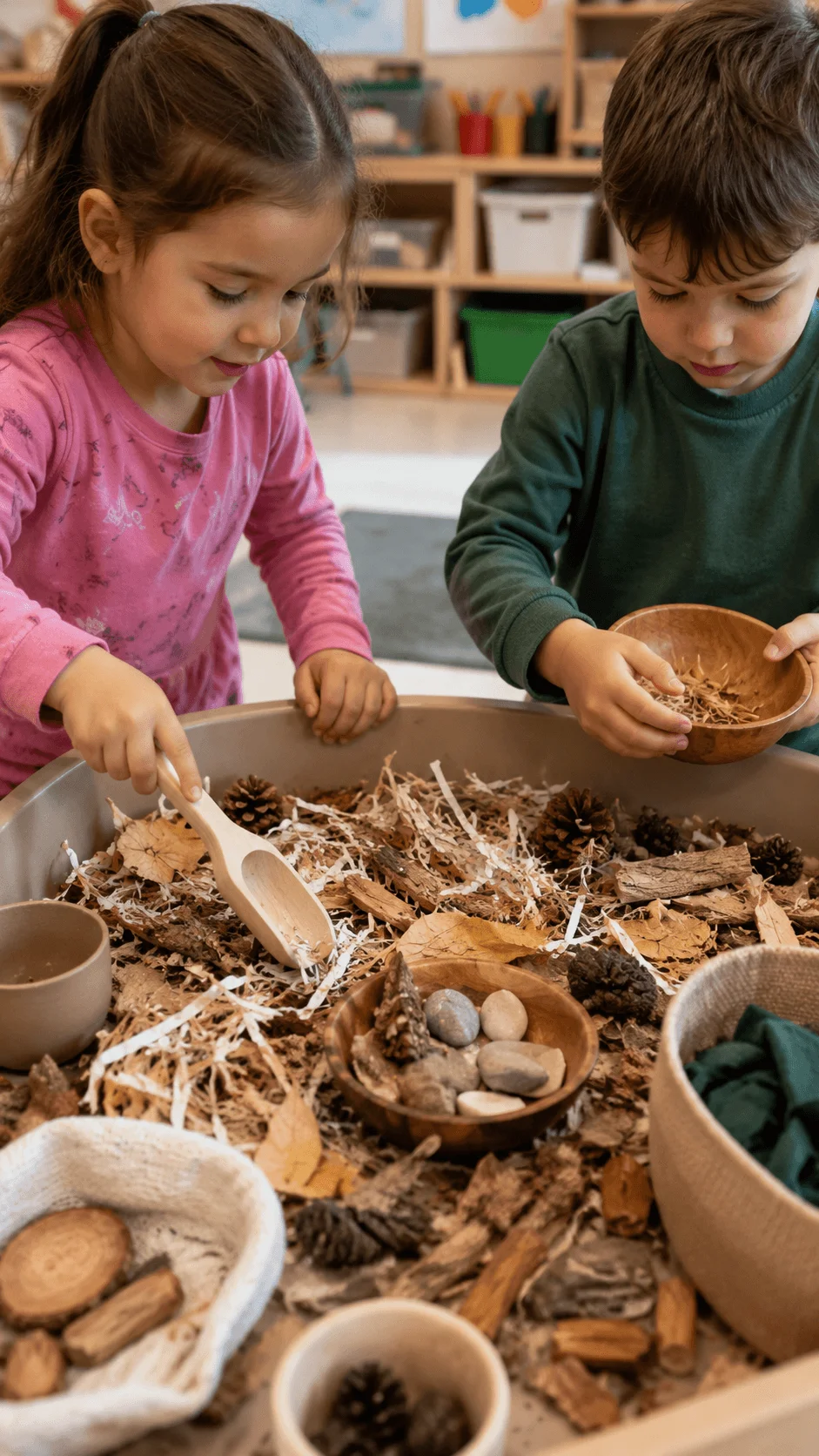
Participation should always remain optional. Some children enjoy touching dry leaves or paper, while others may find certain textures uncomfortable.
Adults can provide tongs, scoops, gloves, separate trays, or larger objects. Children can also observe or direct another person without touching the materials.
Adults should check for dust, mould, sharp edges, allergies, dirt, and choking hazards. They should clean the materials and supervise the activity closely.
Community Nature Mapping for Young Children
Community nature mapping helps children notice natural features in familiar places. Adults can guide children around a preschool, playground, home, garden, balcony, or nearby area.
Children may notice trees, flowers, insects, birds, water, sunny spaces, shaded areas, and garden beds. An adult can draw a simple outline of the location, and children can add colours, stickers, pictures, or marks.
The map does not need to look accurate. It should represent what children notice and remember.
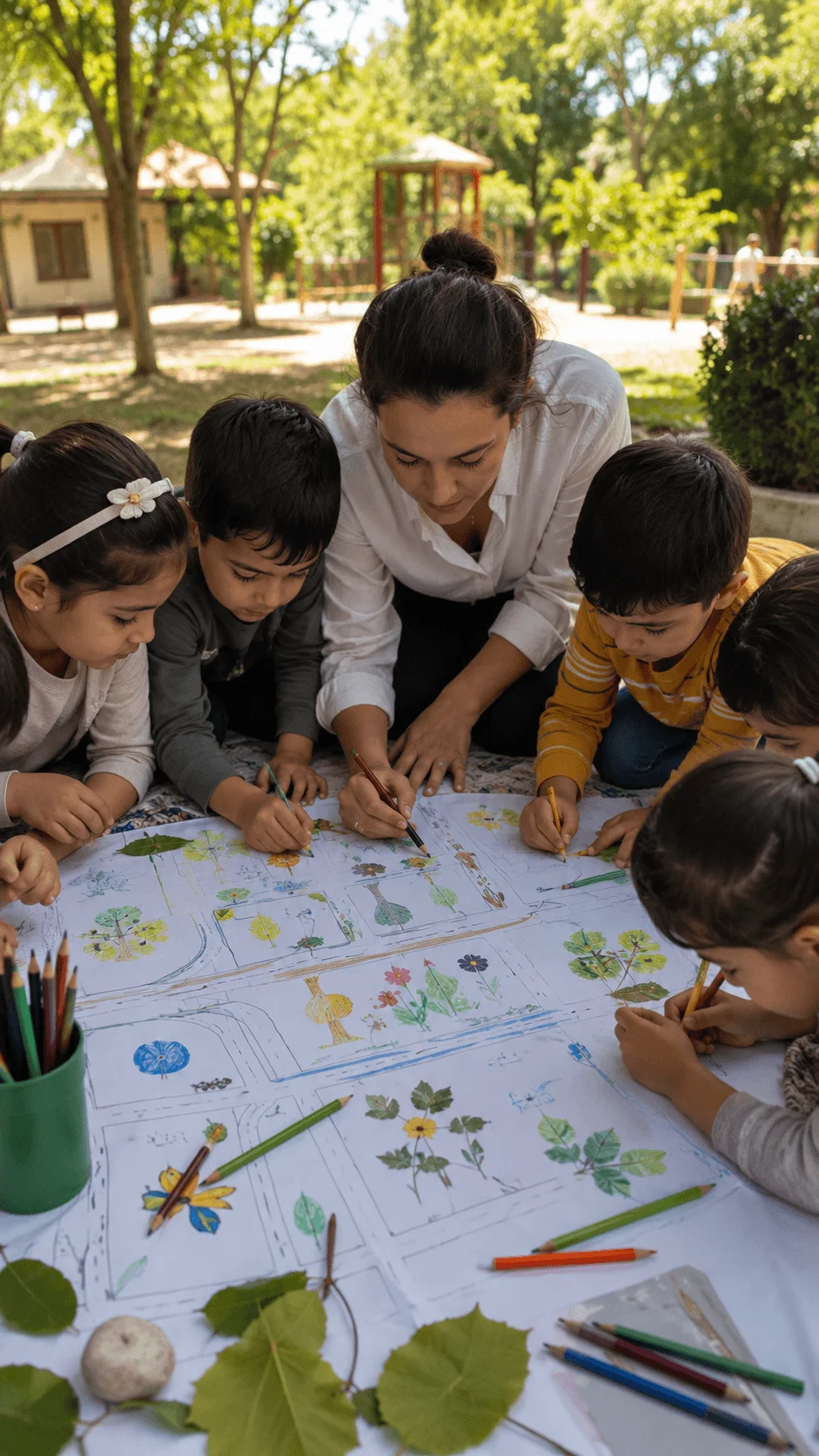
Children can revisit the same map during another season. They may add fallen leaves, new flowers, puddles, dry soil, visiting birds, or changes in shade.
This activity supports spatial awareness, memory, cooperation, communication, art, and observation. It also helps children build a connection with their local surroundings.
Children with limited outdoor access can map a view from a window, an indoor plant area, or a balcony. Adults can also use photographs from a nearby safe space.
Teachers and parents should consider roads, private property, unfamiliar animals, weather, and group supervision.
Developmental Benefits of Environmental Activities for Preschoolers
Sustainable activities for preschoolers offer more than environmental learning. They can support several areas of early development when adults choose suitable tasks.
Pouring, planting, sorting, drawing, building, and handling objects can strengthen fine motor control. Outdoor movement may support balance, coordination, and physical confidence.
Nature observation encourages attention, curiosity, comparison, and memory. Children begin to ask questions about why plants grow, where insects hide, or what happens after rain.
Group activities can support turn taking, listening, sharing, cooperation, and decision making. A group may discuss where to place a stone, how much water a plant needs, or which material belongs in a sensory tray.
Storytelling expands language and helps children organise ideas. Caring for plants and classroom materials introduces realistic forms of responsibility.
Creative reuse also encourages flexible thinking. Children begin to see that one object may serve more than one purpose.
These benefits will not appear in the same way for every child. Children have different interests, abilities, communication styles, and sensory preferences. Adults should adapt each activity and respect individual needs.
How Parents and Teachers Can Support Green Learning
Adults can make sustainable activities for preschoolers more successful by keeping each experience simple. Preschool children often learn best during short sessions that adults repeat over time.
Preparation matters. Adults should inspect materials, remove hazards, prepare the space, and decide how children can participate safely.
Open questions encourage thinking. An adult may ask what the child notices, how two objects feel different, what may happen next, or why an insect visits a flower.
These activities should remain playful. Adults should not turn them into tests or expect children to remember formal definitions.
Low cost materials often work well. Families and teachers can use safe natural objects, clean containers, leftover paper, borrowed tools, and items that already exist.
Repetition also strengthens learning. Children may observe the same tree, garden, weather chart, or map across several weeks and notice new changes.
Inclusion requires flexibility. A child with mobility needs may observe from an accessible path. A child with sensory sensitivities may use tools or watch from a distance. A child with limited speech may use pictures, signs, gestures, or communication technology.
Adults should model the habits they want children to learn. Children notice when adults save materials, close taps, care for plants, and respect wildlife.
Conclusion
Sustainable activities for preschoolers can introduce environmental awareness through play, observation, creativity, movement, storytelling, and everyday routines. These experiences help children notice plants, animals, water, food, weather, and materials in a positive and understandable way.
Young children do not need complicated lessons or frightening messages. They need practical opportunities to care for a plant, observe an insect, reuse a clean object, explore water, reduce simple waste, and ask questions about the natural world.
Consistency matters more than perfection. Parents and teachers can begin with one activity that suits the child, available space, local environment, season, and existing resources.
When adults make sustainability part of normal play, children can develop curiosity, responsibility, and respect for nature. These early habits may grow gradually as children continue learning about the world around them.