12 Sustainable Activities for Toddlers That Make Green Learning Fun
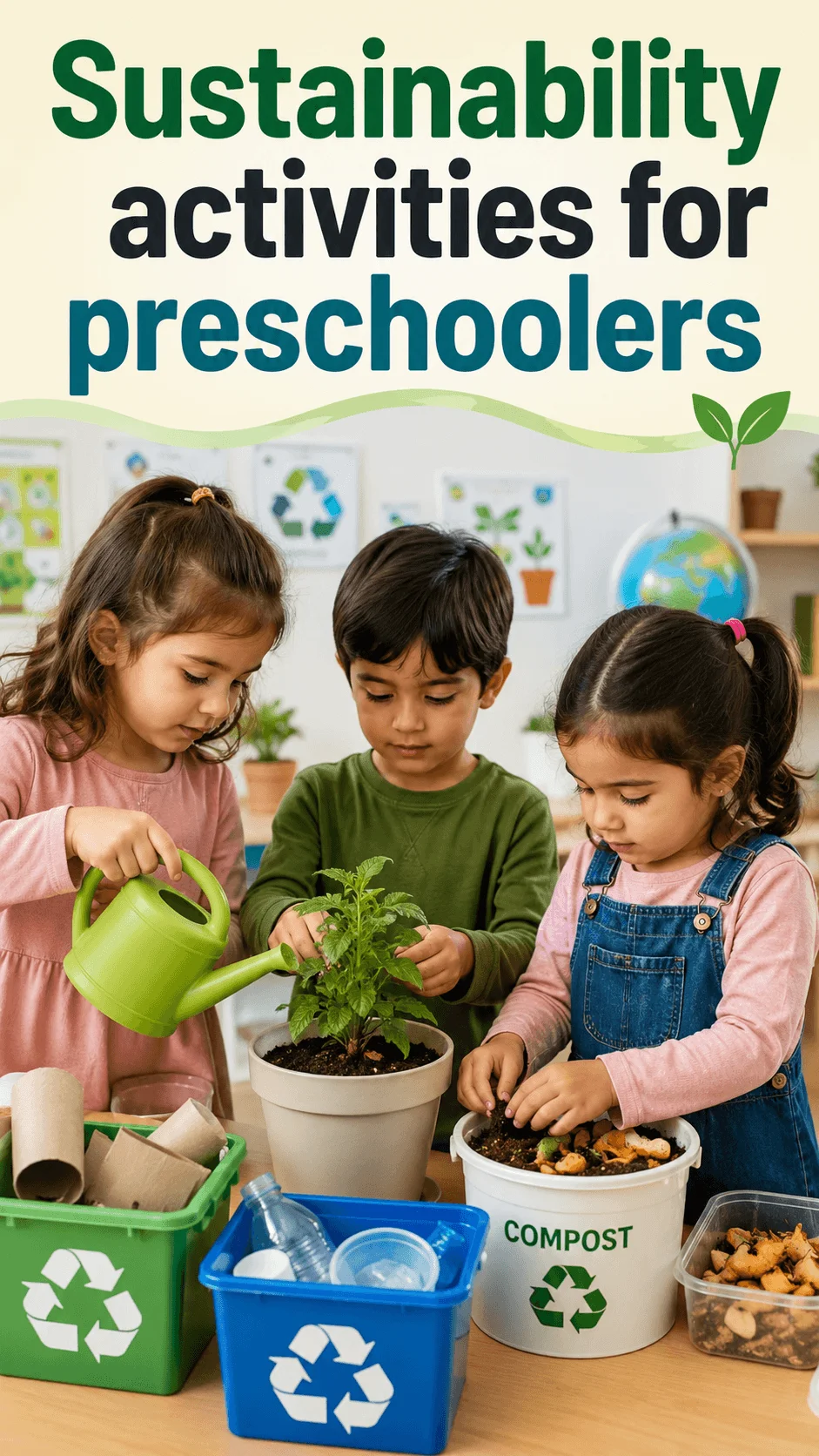
Sustainable activities for toddlers give young children simple ways to explore nature, reuse everyday materials, save resources, and care for the world around them. Toddlers may not understand climate change, pollution, or overconsumption, but they can begin learning that water matters, food should not be wasted, plants need care, and useful objects deserve a second life. These lessons become meaningful when children experience them through play, movement, touch, observation, and family routines.
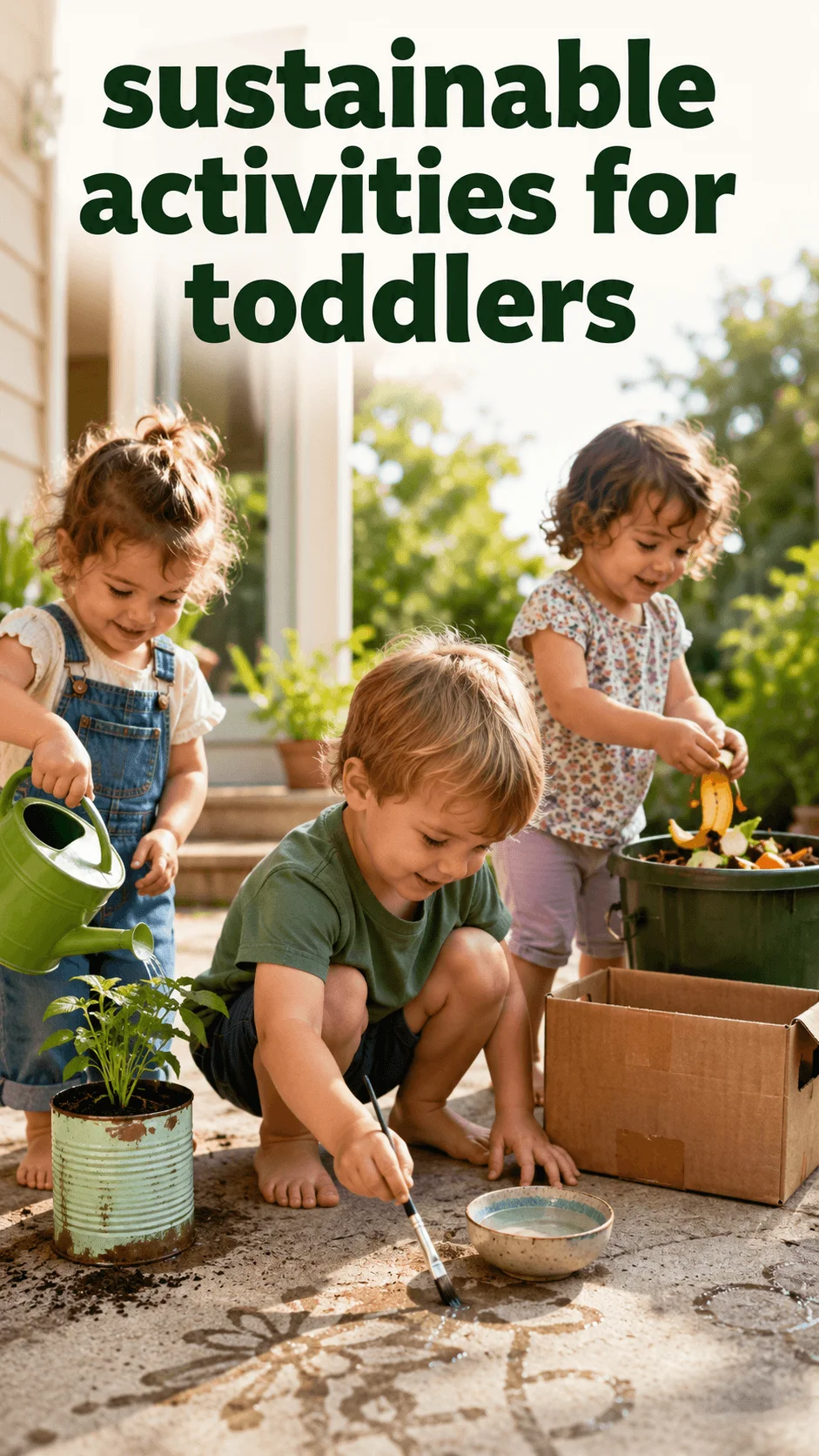
Young children learn by watching adults and repeating what they see. When parents carry reusable bags, repair toys, sort safe recyclable items, compost food scraps, or water plants carefully, toddlers begin to copy those habits. A short activity can become much more than entertainment when it helps a child connect an everyday action with kindness, responsibility, and respect.
The best sustainability activities for toddlers do not require expensive kits or complicated instructions. Families can use cardboard boxes, leftover water, washable containers, safe kitchen scraps, fabric pieces, and natural materials they already have. These activities can reduce waste while supporting creativity, coordination, language development, and early problem solving.
Why Sustainable Activities for Toddlers Matter
Sustainable activities for toddlers help children build positive habits during an important stage of development. Toddlers learn through repetition, so a simple action such as carrying fruit peel to the compost bin can become part of their understanding of daily life. They may not understand the complete process of decomposition, but they can learn that some food scraps help the soil instead of going into the rubbish.
These activities also encourage curiosity. A toddler who watches water disappear from a painted pavement may begin asking where it went. A child who checks a small plant each morning may notice changes in colour, height, and shape. These observations support early science learning without turning play into a formal lesson.
Eco friendly activities for toddlers can also reduce the need for new plastic toys and disposable craft supplies. A clean cardboard box may become a bus, shop, tunnel, or house. A reused bowl may become a tiny garden. A washable cloth may become part of a toy cleaning station. Open ended materials often hold a toddler’s attention because the child can use them in many different ways.
Sustainable play can support emotional development as well. Children begin learning that their actions affect other living things. Refilling a pollinator water station, watering a plant, or gently observing an insect can help toddlers practise care and patience. These small experiences can build a stronger connection with nature over time.
Developmental Benefits of Eco Friendly Activities for Toddlers
Green activities for toddlers can support many areas of early development at the same time. Pouring water strengthens hand control and coordination. Carrying a small compost container encourages balance and movement. Matching colours in nature improves visual recognition and vocabulary. Pressing a fabric patch onto a damaged item supports concentration and decision making.
Sensory learning plays an important role during the toddler years. Children understand the world by touching, smelling, seeing, and hearing. Soil, water, ice, cardboard, leaves, fabric, and safe food ingredients provide different textures and experiences. Sustainable sensory activities for toddlers can offer rich learning without creating large amounts of waste.
Language development also happens naturally during these activities. Parents can introduce words such as wet, dry, soft, rough, heavy, light, grow, repair, reuse, share, and compost. Toddlers learn new words more easily when they connect them with real actions and objects.
Many environmental activities for toddlers also support confidence. A child may feel proud after watering a plant, cleaning a toy, or carrying scraps to the compost bin. These small responsibilities show toddlers that they can help with family routines. Adults should praise their effort rather than expecting perfect results.
Safety Tips for Green Activities With Toddlers
Every activity in this article requires close adult supervision. Toddlers often place objects in their mouths, so adults must remove anything small enough to create a choking hazard. Avoid buttons, beads, tiny stones, loose seeds, broken plastic pieces, and small decorative items.
Parents should inspect all reused materials before giving them to a child. Cardboard should stay clean, dry, and free from sharp staples. Plastic containers should have smooth edges and no cracks. Adults should avoid glass jars, metal cans, electrical objects, rusty materials, and packaging that previously held harmful substances.
Water activities should always use a shallow amount of water. Adults must remain beside the toddler from beginning to end. Children should never play near buckets, ponds, or deeper containers without constant supervision.
Families should also choose safe plants, clean soil, and suitable food ingredients. Parents must consider allergies and choking risks during food related activities. Adults should handle all cutting, cooking, and preparation. Everyone should wash their hands after handling soil, compost, outdoor materials, or food scraps.
Reusable Water Painting Outdoors
Reusable water painting is one of the easiest sustainable activities for toddlers because it requires only water, a container, and a wide brush. Parents can fill a small bowl with a limited amount of water and let the toddler paint on a patio, fence, pavement, large stones, or an outdoor wall that can safely get wet.
The child can make lines, circles, hand shapes, pretend roads, or large patches of water. The marks appear clearly for a short time and then begin to disappear. This gives toddlers a simple introduction to drying and evaporation. Parents can talk about sunlight, warmth, shade, and how different surfaces dry at different speeds.
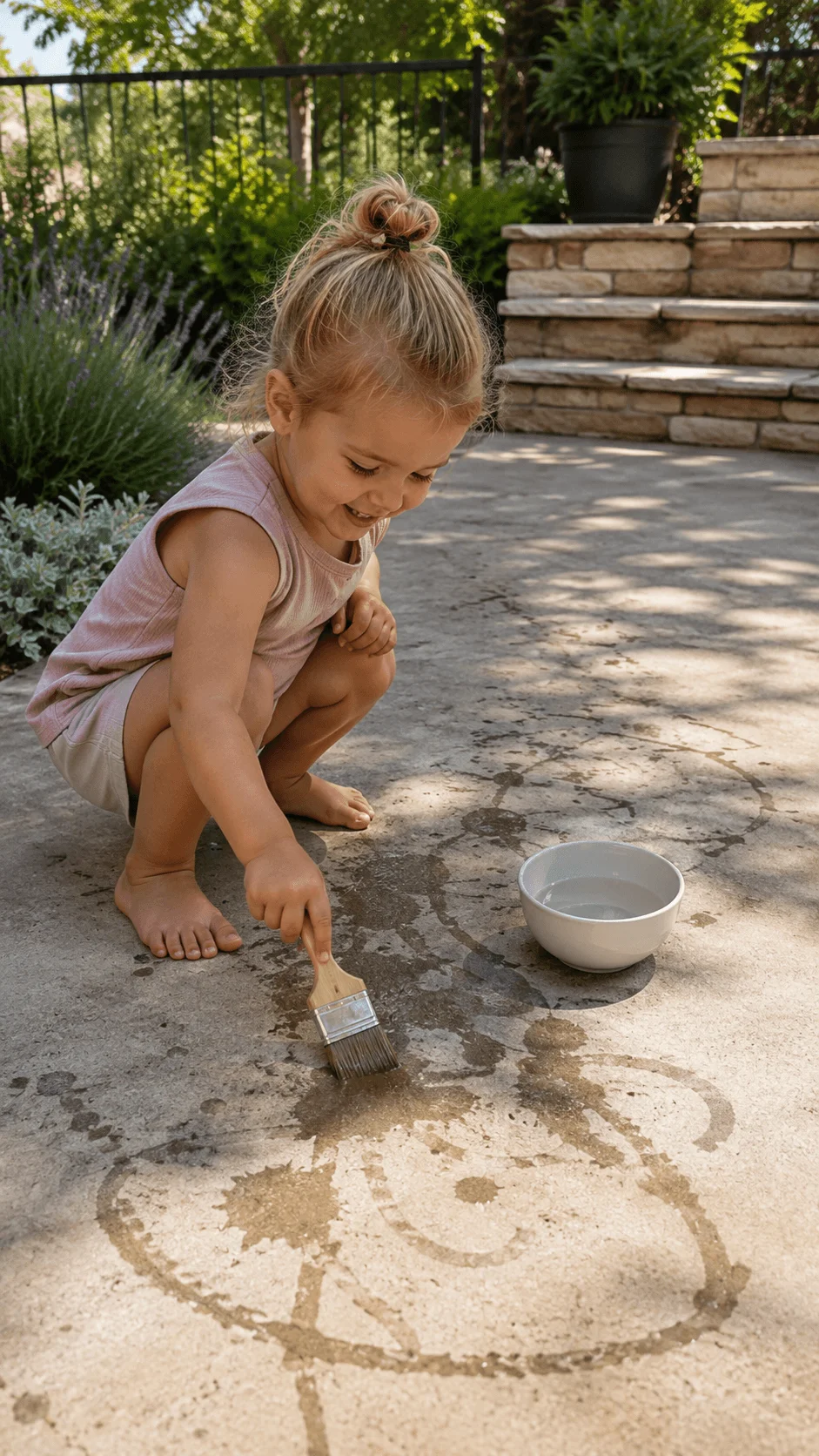
The activity creates art without using paper, paint, glitter, plastic palettes, or disposable craft products. Families can repeat it many times with the same brush and container. It offers creative freedom without leaving behind a pile of finished crafts that may quickly enter the rubbish.
Water painting also supports large arm movements, grip strength, concentration, and visual tracking. Parents can invite toddlers to paint high, low, fast, slowly, in the sun, or in the shade. These simple prompts add movement and vocabulary to the activity.
Adults should use only a small amount of water and supervise closely. A stable container helps prevent slipping, and a shaded outdoor area can make the experience more comfortable during warm weather.
Toddler Food Scrap Rescue Kitchen
A food scrap rescue kitchen helps toddlers discover that imperfect or leftover food can still have value. Parents can collect safe ingredients such as an overripe banana, soft fruit pieces, bread ends, cooked vegetables, or herbs that need to be used soon.
Toddlers can mash a banana, tear soft bread, smell herbs, stir ingredients, or pour prepared food from one bowl to another. An adult should handle all knives, heat, cooking, and ingredient selection. The activity may lead to a smoothie, soft snack, soup mixture, fruit mash, or another simple family recipe.
This type of eco friendly toddler activity introduces food waste prevention in a positive way. Instead of telling children that waste is bad, parents can show them that food can serve another purpose. A soft banana may look different from a fresh one, but it can still taste good in a recipe.
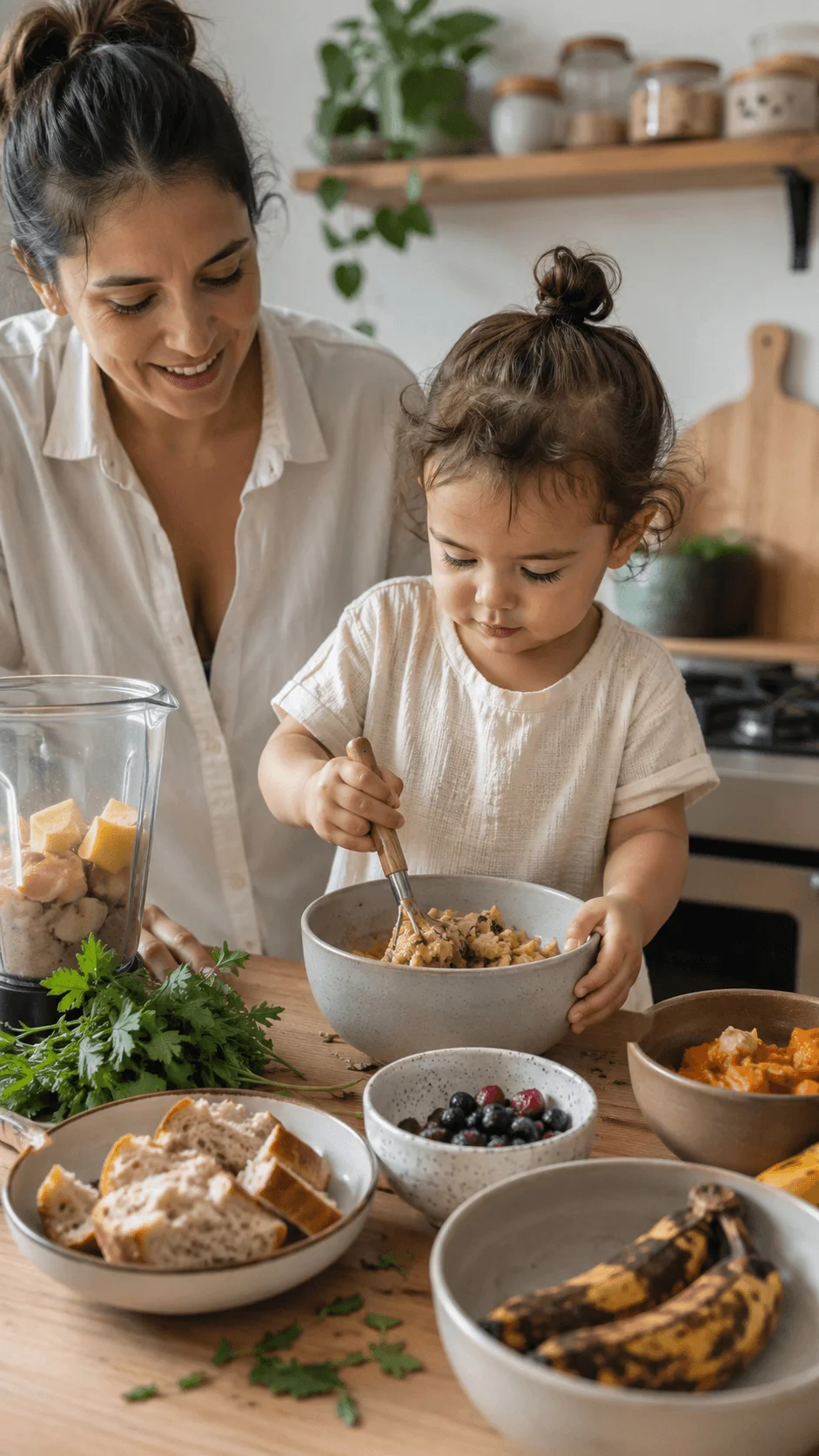
The activity supports sensory learning because toddlers can explore smell, texture, colour, and taste. It can also build food vocabulary and confidence around unfamiliar ingredients. Children may become more willing to touch or taste food when they help prepare it.
Parents must check every ingredient for safety and freshness. Adults should avoid hard foods, whole grapes, nuts, small raw pieces, and anything that creates a choking risk. Families should also consider allergies and wash all hands and surfaces carefully.
Pollinator Water Station
A pollinator water station gives toddlers a gentle way to support bees and other small insects. Families can use a clean reused saucer and several large stones that rise above a very shallow layer of water.
The stones provide landing spaces where insects can rest without entering deep water. Toddlers can help arrange the stones, pour a small amount of water, and check the station with an adult each day. This creates a simple routine that connects water, weather, insects, and caring for living creatures.
Pollinator activities for toddlers can help children develop curiosity without encouraging them to touch wildlife. Parents can sit nearby and describe what they see. They may notice a bee resting, a butterfly passing, or an insect approaching the edge of the saucer.
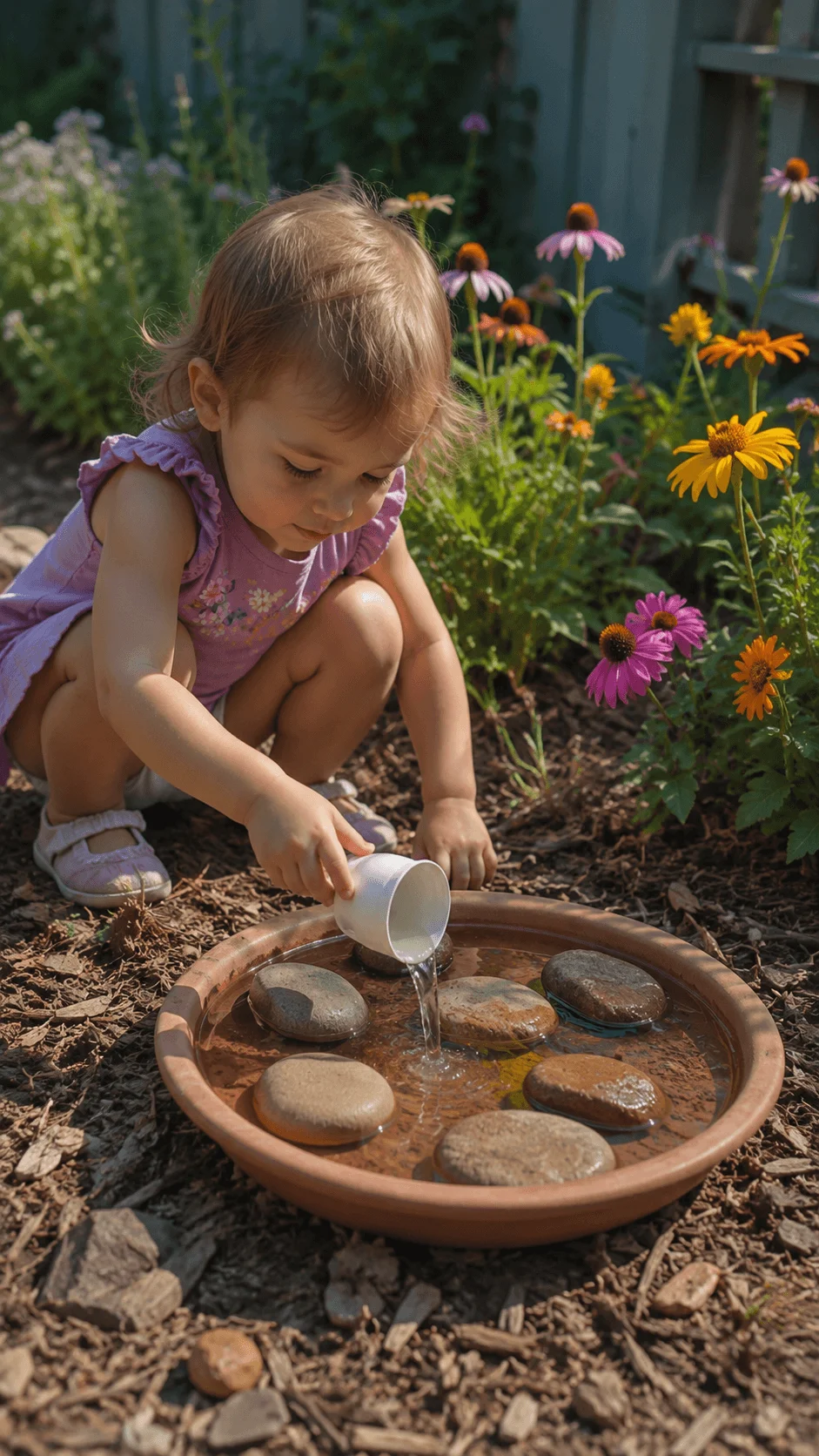
This activity introduces biodiversity in a way that feels concrete. Toddlers can learn that small creatures need safe places, water, and flowers. The lesson becomes stronger when the family places the station near a suitable garden area with safe plants.
Adults should clean and refill the station regularly. The water must remain very shallow. Toddlers should never touch, chase, or trap bees. Parents should choose a location where children can observe safely from a short distance.
Cardboard Delivery Box Town
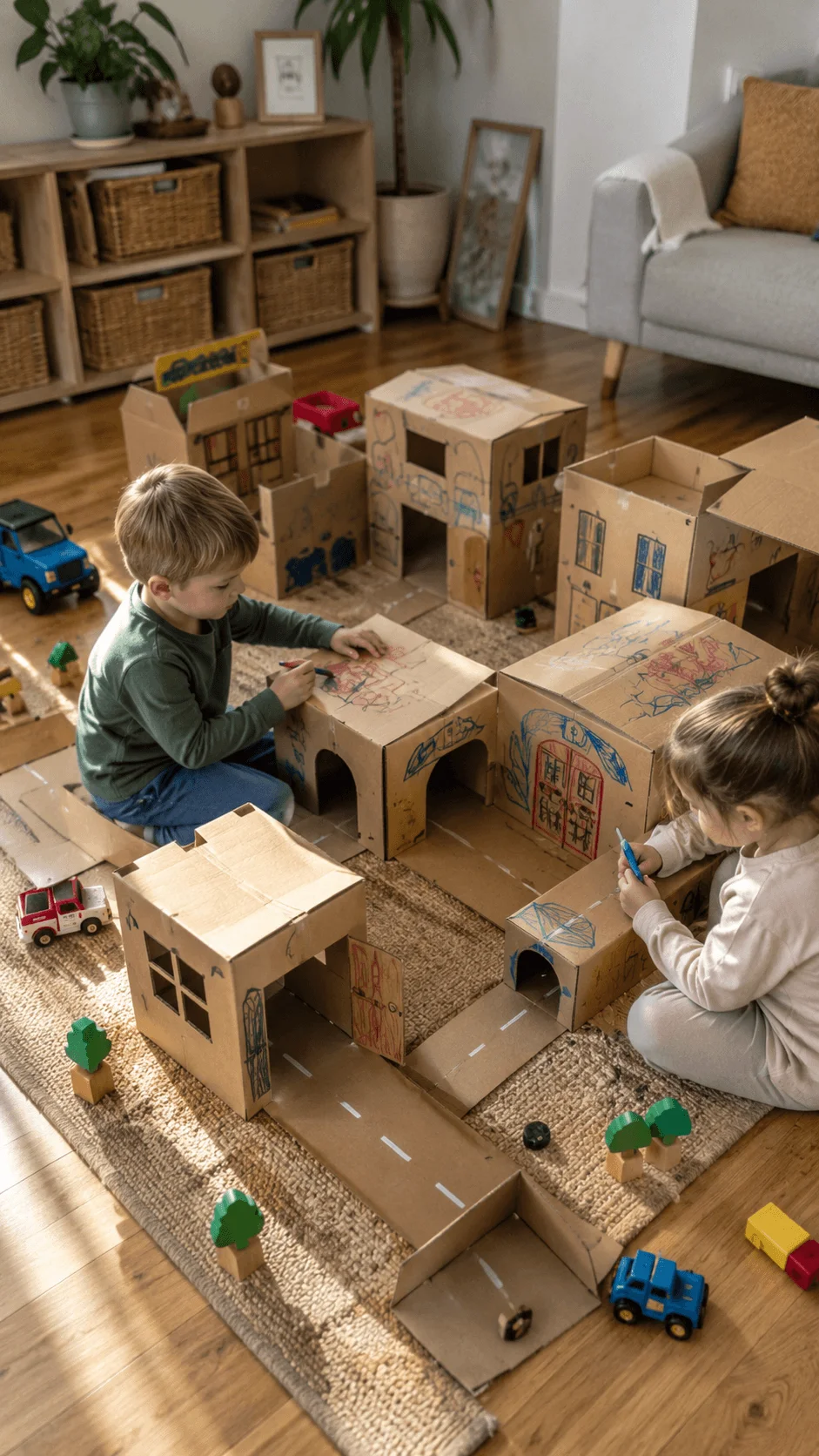
A clean cardboard box can become one of the most flexible low waste toddler activities. Parents can turn delivery boxes into houses, shops, buses, kitchens, tunnels, garages, recycling centres, or animal shelters.
Adults should remove all tape, staples, labels, and sharp pieces before play begins. They can cut safe doors and windows, then give toddlers washable crayons, scrap paper, or paper tape for decoration. The child may add simple marks, pretend signs, or coloured areas.
Cardboard play gives packaging a second use before recycling. It also encourages open ended thinking because the box does not have one fixed purpose. A bus may become a shop the next day, then a tunnel, then a puppet stage.
Disclosure: This section contains sponsored Amazon affiliate links. As an Amazon Associate, I earn from qualifying purchases at no extra cost to you.
This activity supports imagination, storytelling, movement, language, and spatial awareness. Toddlers may crawl inside, open windows, carry toys, or pretend to visit different places. Parents can join the play by asking simple questions about where the bus is going or what the shop sells.
Families do not need to complete the entire town in one day. They can add one box at a time and allow the play area to change. This makes the activity feel more natural and prevents adults from doing most of the creative work.
Wash and Rescue Toy Station
A toy washing station teaches toddlers that caring for belongings can extend their useful life. Parents can place a shallow amount of water in a basin and provide a cloth, sponge, or small brush.
Toddlers can wash muddy outdoor toys, plastic animals, washable blocks, reusable containers, or other safe objects. Parents can show them how to dip the cloth, wipe the toy, rinse it lightly, and place it on a towel to dry.
This activity connects cleaning with reuse and maintenance. Children often receive the message that a dirty or worn item should be replaced. A wash and rescue station offers a different lesson. It shows that people can clean, care for, and continue using what they already own.
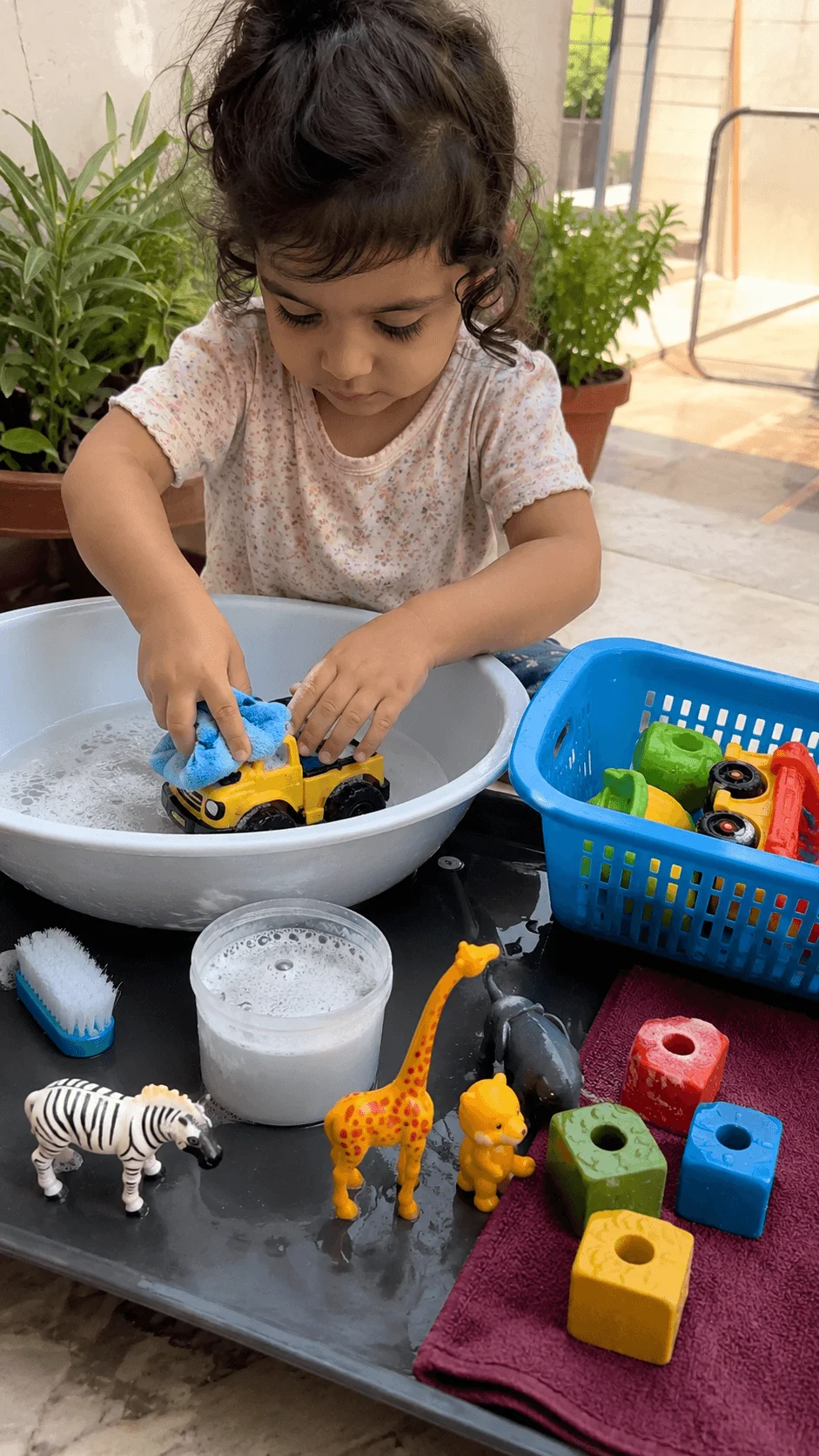
The activity supports sequencing, concentration, coordination, and practical life skills. Toddlers can notice the difference between dirty and clean, wet and dry, or dull and bright.
Adults should avoid electrical toys, battery powered items, damaged toys, and objects with removable small parts. They should use only a small amount of water and remain nearby throughout the activity.
Mini Repair Basket for Toddlers
A mini repair basket introduces the idea that damaged items do not always need to enter the rubbish. Parents can prepare simple objects that need safe and basic attention.
The basket may include a cardboard book that needs paper tape, a fabric bag that needs a large patch, a toy box with a loose label, or a clean sock with a worn area. Toddlers do not need to sew or use real tools. They can choose a patch, press safe tape, smooth fabric, match colours, or pass materials to an adult.
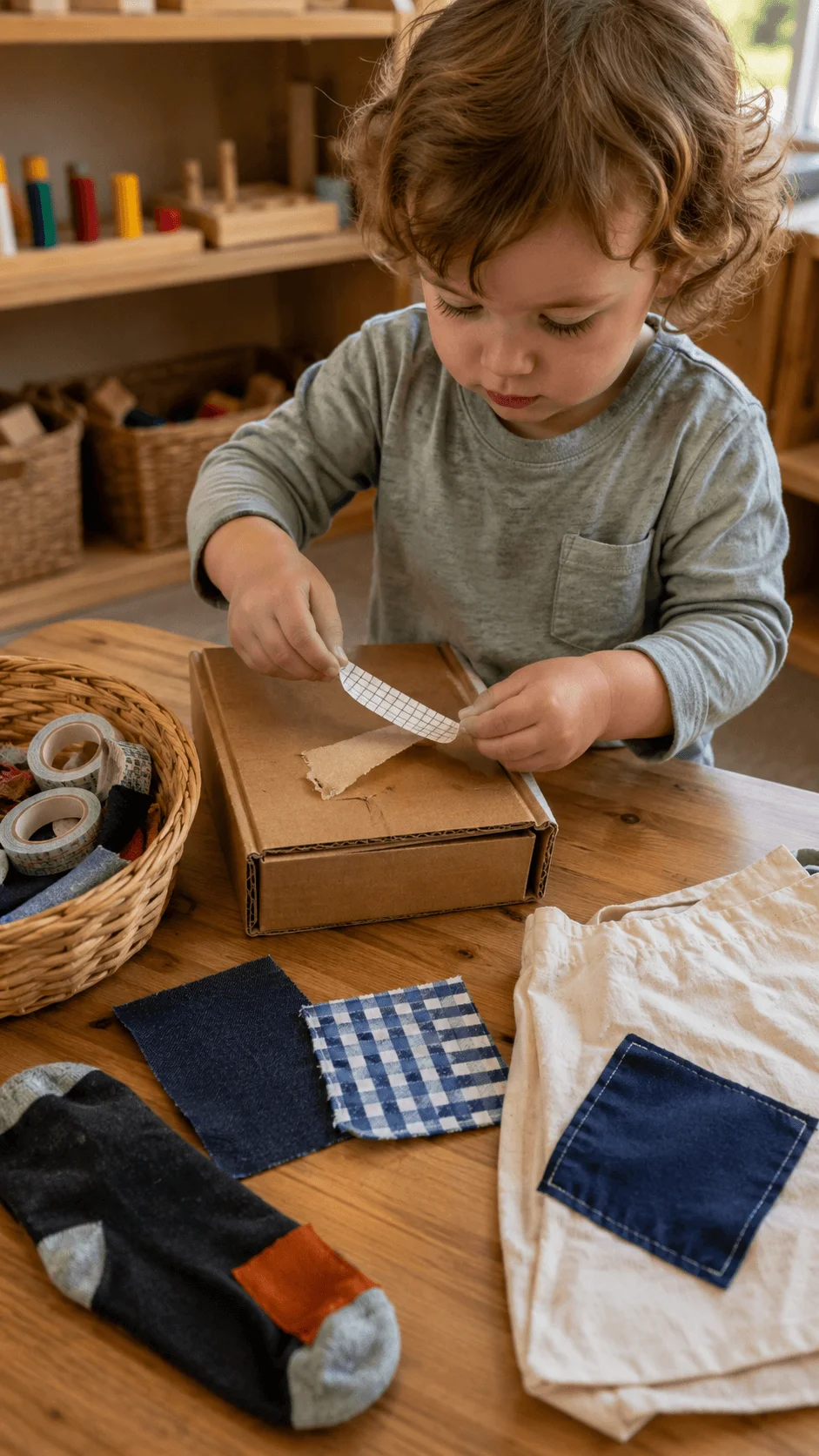
Repair based sustainability activities for toddlers teach care, patience, and respect for possessions. The child begins to see that adults can fix problems instead of immediately buying replacements.
The process also supports matching, decision making, and fine motor control. A toddler may choose between two fabric colours, press down a large patch, or help smooth tape across a cardboard tear.
Parents should keep needles, scissors, glue guns, staplers, and sharp tools completely out of reach. Adults should complete any real repair work while giving the toddler a safe supporting role.
Nature Colour Matching Walk
A nature colour matching walk turns an ordinary outdoor trip into a simple learning experience. Parents can make a reusable colour board from cardboard and add large areas of green, brown, yellow, grey, red, cream, or other familiar colours.
During the walk, the toddler can look for natural objects and outdoor surfaces that match each colour. Green may appear in leaves, brown in bark, grey in stones, and yellow in flowers or dry grass. The child can point, name, or gently touch safe objects.
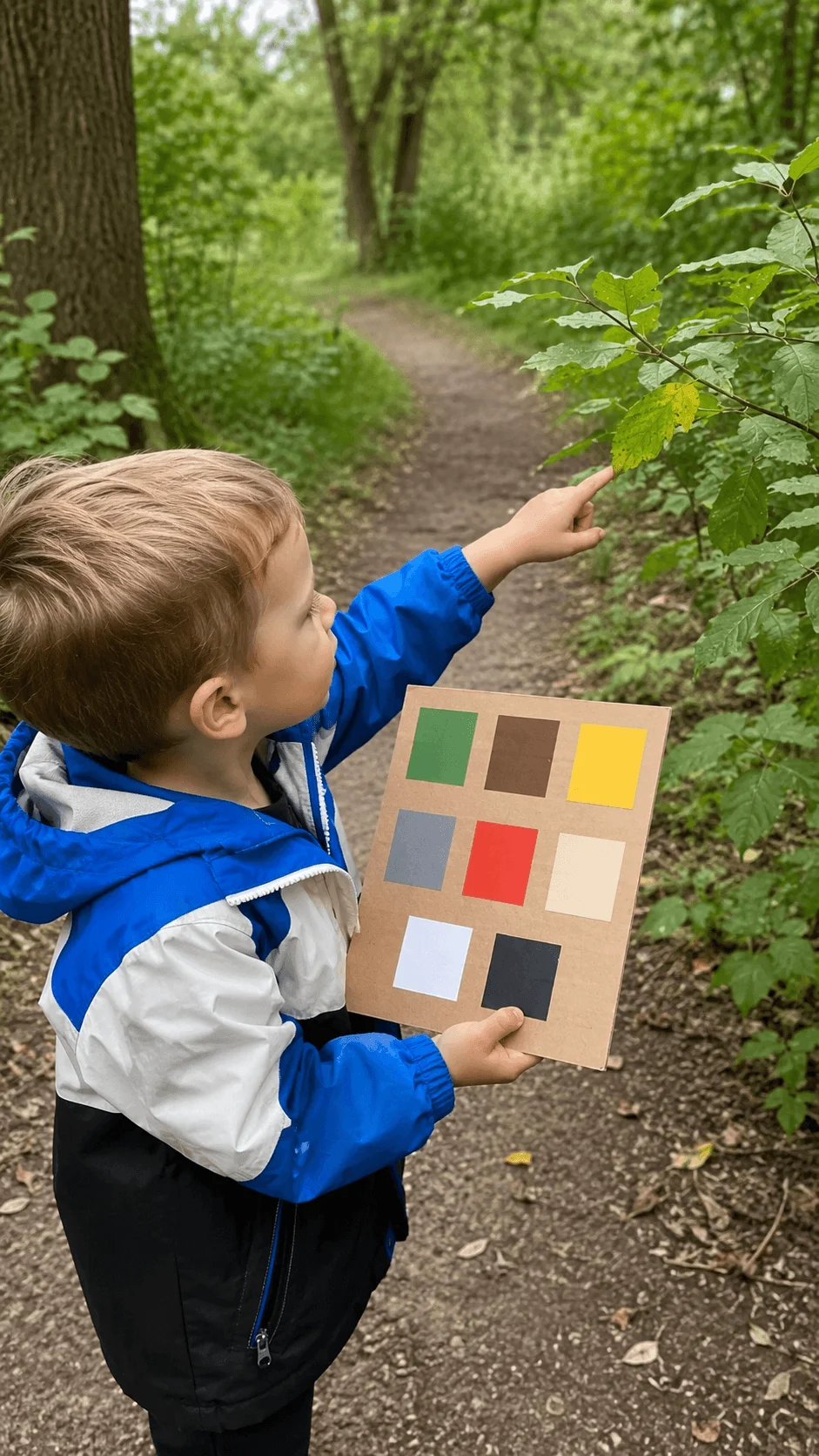
Nature activities for toddlers encourage children to slow down and notice details. Instead of rushing through a park or garden, the child begins looking closely at colour, shape, texture, and light.
The activity supports early colour recognition, vocabulary, observation, and movement. Parents can add words such as bright, dark, smooth, rough, dry, shiny, and soft.
Families should avoid collecting living flowers, pulling leaves, or disturbing insects. The goal is observation rather than taking natural materials home. Adults should also check the area for unsafe plants, sharp objects, traffic, and animal waste.
Leftover Ice Melt Rescue
A leftover ice melt activity offers low waste sensory play while introducing temperature and cause and effect. Parents can freeze leftover drinking water in reusable trays and create large ice pieces for outdoor exploration.
When suitable, adults may add a large herb leaf or flower head that does not create a choking risk. Toddlers can place the ice in a shallow tray and use sunlight, a small amount of warm water, a reusable cloth, or a supervised dropper to help it melt.
The child can watch the ice become smaller, feel the cold surface, and notice the water that appears. Parents can use simple words such as frozen, cold, melt, drip, warm, and wet.
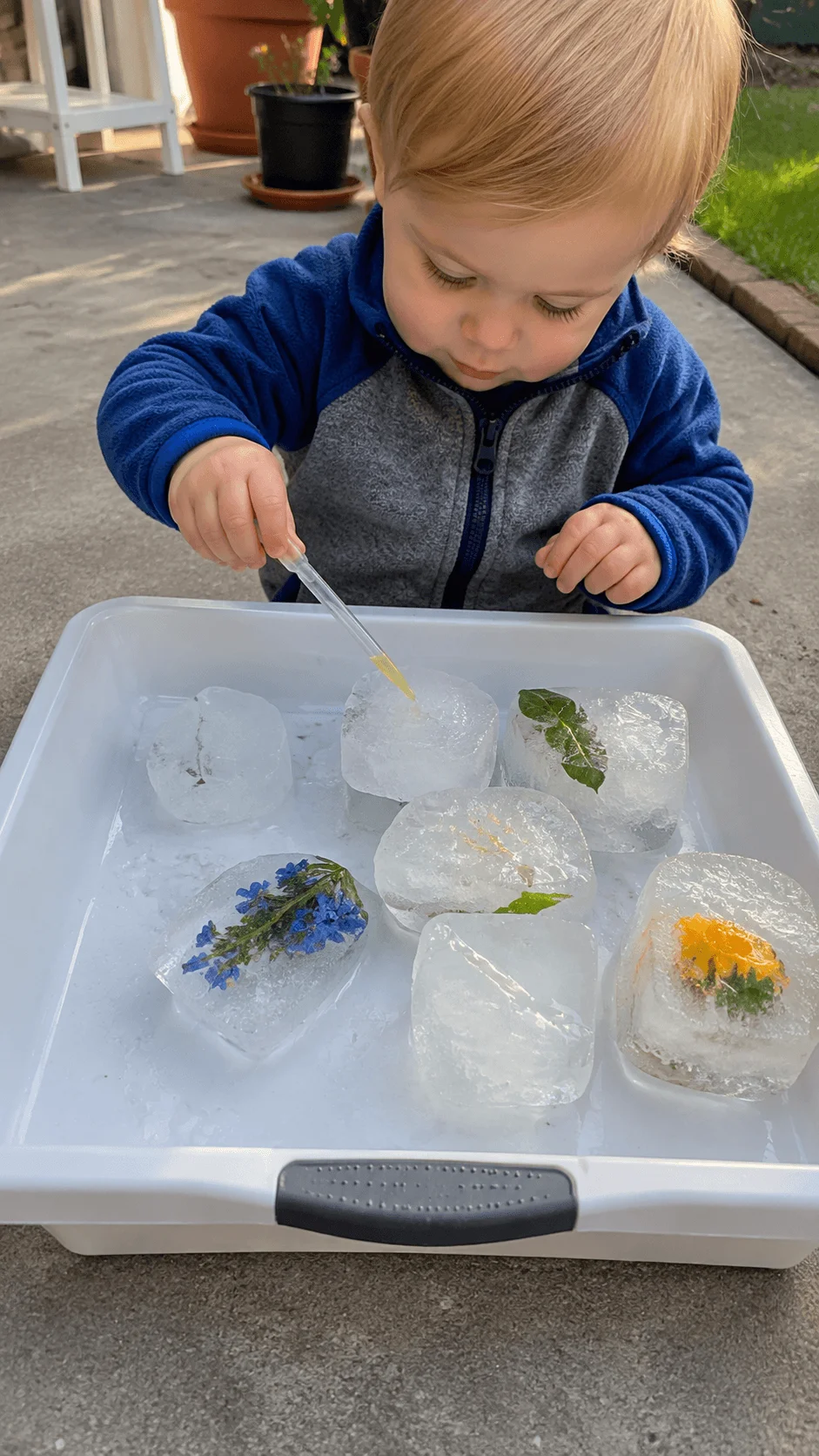
Sustainable sensory activities for toddlers work best when families reuse materials and avoid disposable decorations. There is no need to add glitter, plastic toys, or small craft objects to make the experience interesting.
Adults must supervise closely and remove any loose material as the ice melts. Toddlers should not place large ice pieces in their mouths. The activity should take place in a safe area where spilled water will not create a slipping hazard.
Toddler Compost Delivery Job
A compost delivery job turns a household sustainability habit into a simple toddler responsibility. Parents can give the child a small washable container for carrying suitable scraps to the compost bin.
Safe examples may include banana peel, fruit scraps, vegetable peelings, dry leaves, and small pieces of plain cardboard. An adult should decide what enters the container and remove anything unsuitable.
The toddler can carry the container, walk to the compost area, tip the scraps with help, and return the container for washing. Repeating the same routine helps the child remember each step.
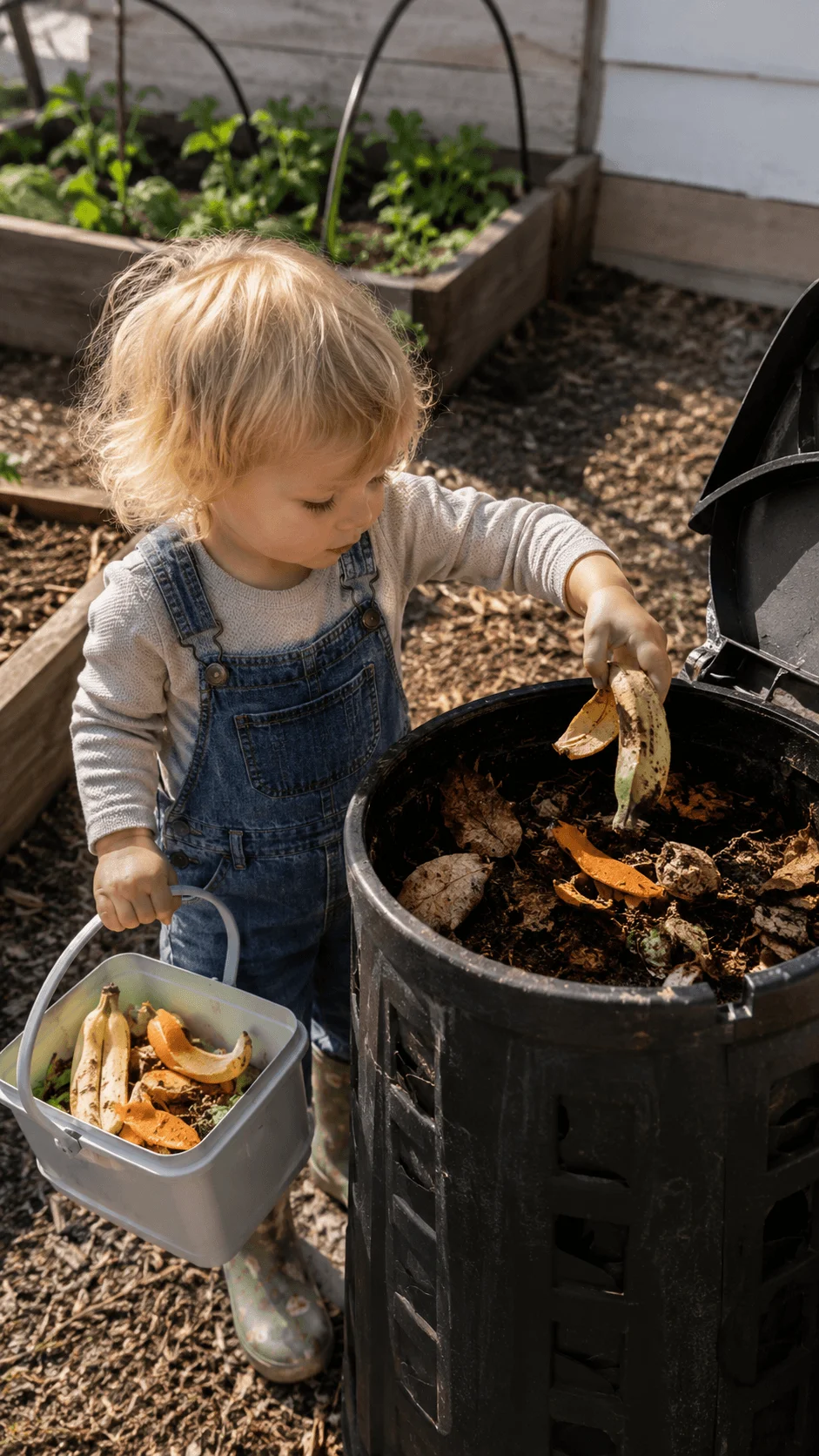
Composting activities for toddlers introduce the idea that some materials can return to the soil. Parents can explain that food scraps break down and help plants grow. The explanation should stay simple and connected to what the child can see.
This activity supports responsibility, memory, movement, and family participation. It also helps toddlers understand that household tasks can have a purpose.
Children should never handle mouldy food, sharp scraps, hot compost, animal waste, or unknown materials. Adults must supervise the entire process and help the child wash hands afterward.
Toy and Clothing Rehoming Day
Rehoming useful belongings can help toddlers learn about sharing, reuse, and responsible consumption. Parents can choose a calm day to look through outgrown clothes, books, or toys that the child no longer uses.
The toddler can help select one or two suitable items, wipe them clean, place them in a reusable bag, and help deliver them to another family or donation location. Parents should use positive language and explain that another child can enjoy the item.
This activity should never feel like punishment. Adults should not force toddlers to give away favourite toys or comfort objects. The goal is to involve the child in a gentle process of passing along useful belongings.
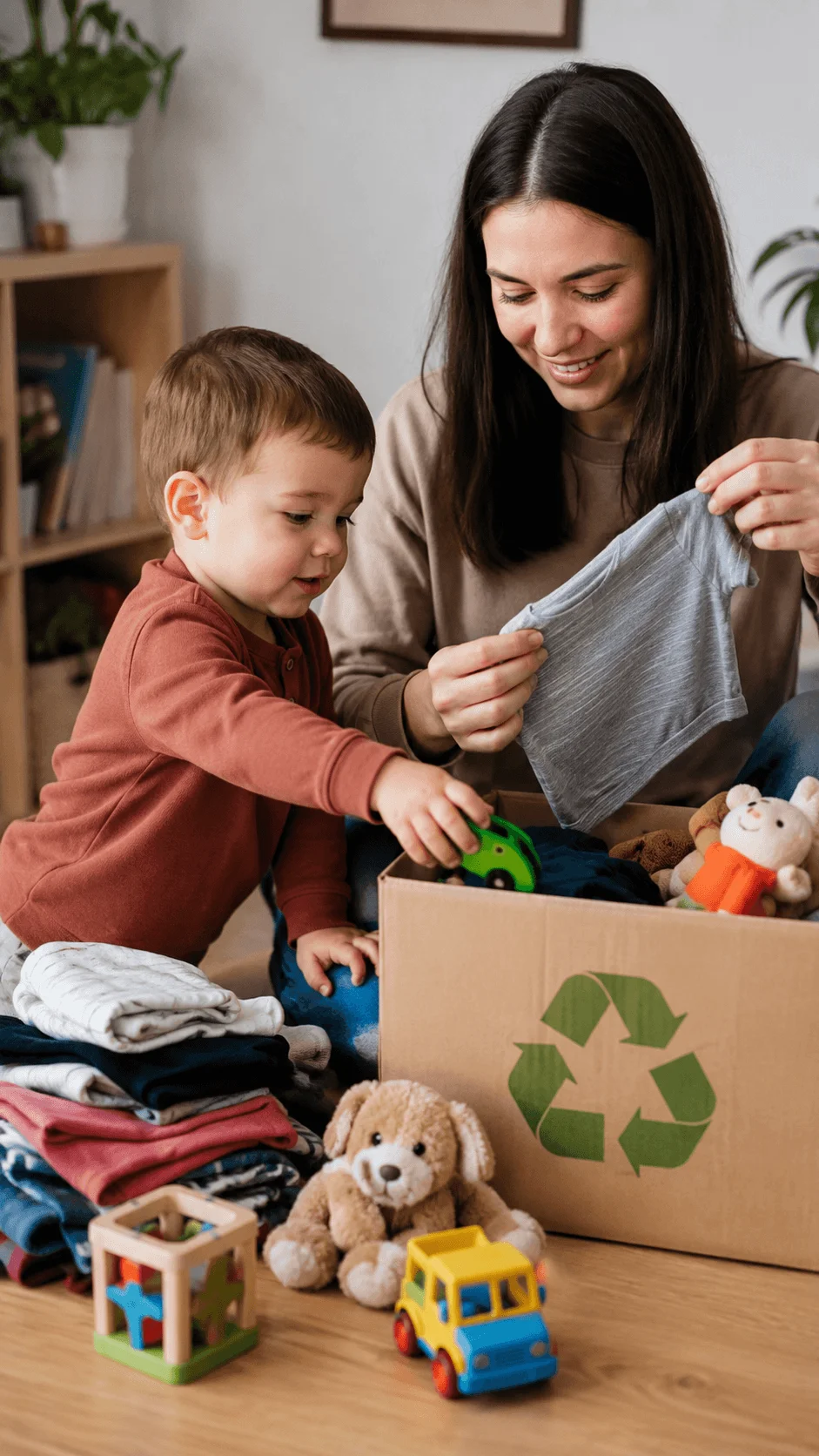
Rehoming extends the life of products and reduces the need for immediate replacement purchases. It can also help families reduce clutter in a thoughtful way.
The activity supports decision making, empathy, responsibility, and language. Parents can talk about size, use, condition, and who may need the item next.
Refill Station Pretend Shop
A pretend refill shop introduces the idea of preventing packaging waste before it begins. Families can create the shop with reusable containers, fabric bags, large scoops, wooden blocks, or other safe materials.
Toddlers can fill containers, return empty packages, pretend to weigh products, and carry their shopping in a reusable bag. Parents can join the play as a customer or shopkeeper.
This activity teaches a different lesson from standard recycling activities for toddlers. Recycling manages waste after people create it, while refill systems can reduce the amount of packaging used in the first place.
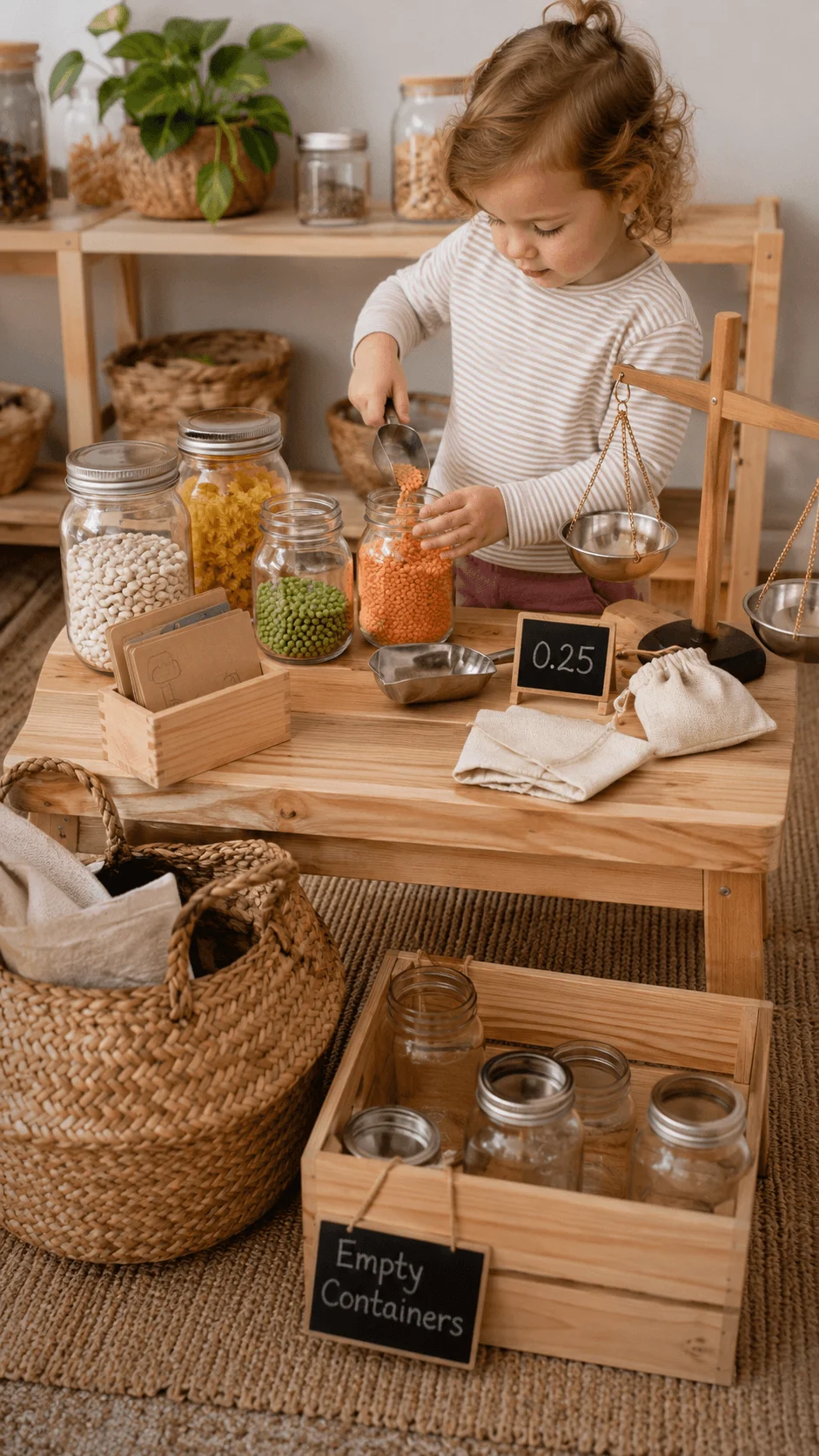
Pretend refill play supports pouring, sorting, counting, hand control, communication, and imagination. Children can practise simple phrases such as more please, all finished, fill it, and use it again.
Adults should avoid glass containers, tiny dry foods, small lids, and hard items that create choking risks. Large safe materials work best for toddlers.
One Bowl Toddler Garden
A one bowl garden gives families a manageable way to introduce growing and plant care. Parents can use one reused food container, bowl, or pot with suitable drainage.
They can choose a fast growing plant that suits the local climate, such as cress, basil, peas, spring onions, or another safe herb. Toddlers can help add soil, place large seeds with support, water gently, and check the plant every day.
Gardening activities for toddlers teach patience because growth does not happen immediately. The child may notice a small shoot, a new leaf, or a change in height. Parents can talk about soil, sunlight, water, roots, and food.
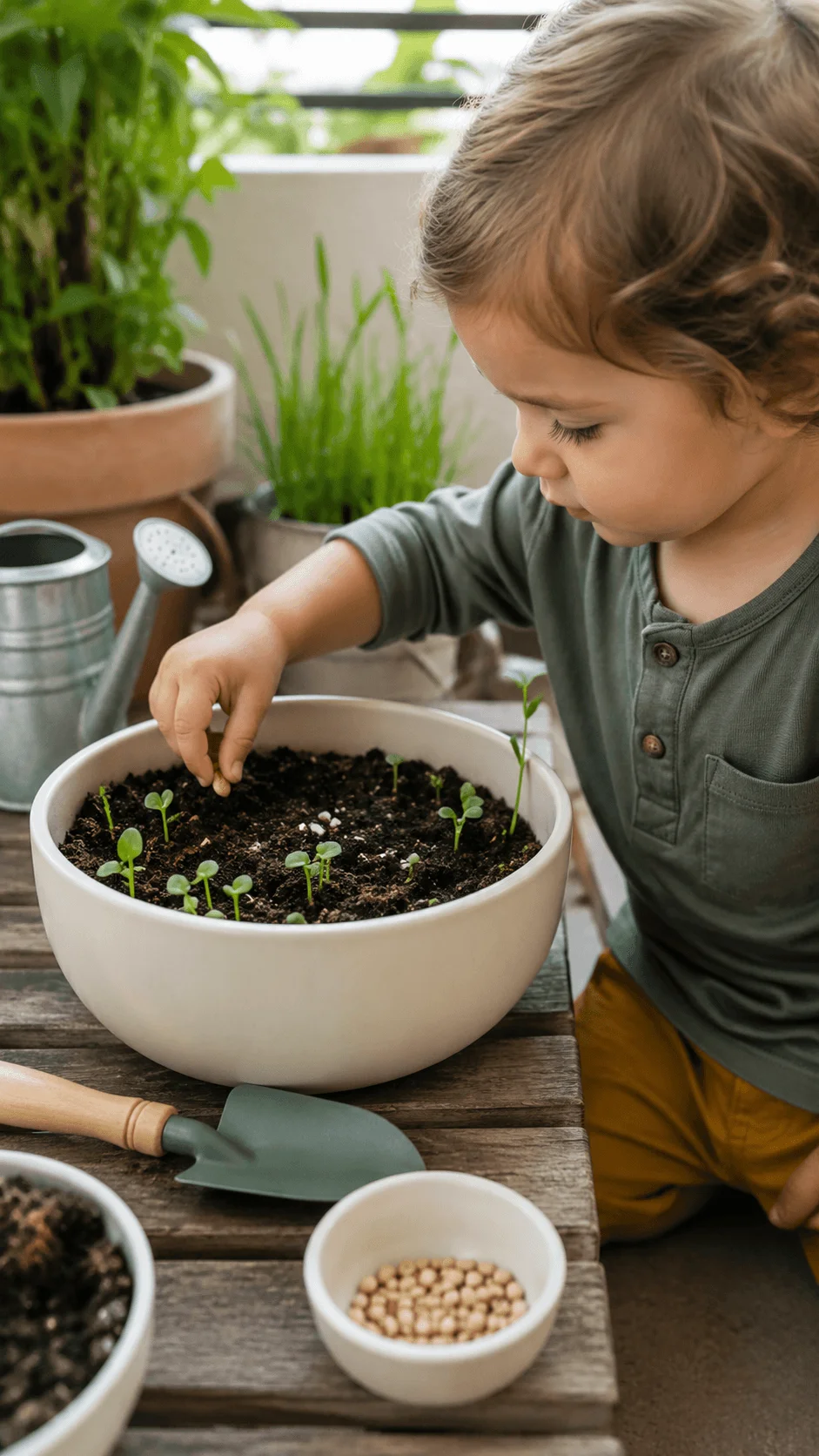
A tiny garden works well for families without a large yard. It can sit near a bright window, on a balcony, or in another safe location.
The activity supports observation, responsibility, fine motor control, and early science learning. It can also help children understand that food begins with plants rather than shops.
Parents should use clean soil, safe seeds, and nontoxic plants. Adults must supervise watering and prevent children from eating soil, unknown leaves, or untreated plant material.
Making Sustainable Activities Part of Everyday Toddler Life
Sustainable activities for toddlers become more effective when families connect them with everyday routines. A child may forget a one time craft, but repeated actions can gradually become familiar habits.
Parents can invite toddlers to carry reusable shopping bags, switch off a tap, place paper in a recycling container, water a plant, use both sides of paper, clean a toy, or return a reusable cup to the kitchen.
Adults should model the habits they want children to copy. Toddlers notice what parents do more than what parents say. A child who sees an adult repair a bag, finish leftovers, or avoid wasting water begins learning through observation.
Simple language works best. Parents can say, “We use it again,” “Plants need water,” “We care for our toys,” or “Food scraps help the soil.” These short phrases connect actions with meaning.
Adults should praise participation and effort. A toddler may spill water, place an item in the wrong container, or lose interest quickly. The purpose is not perfect performance. The purpose is positive involvement.
Choosing Eco Friendly Toddler Activities Without Buying More
Families do not need themed activity kits to teach sustainability. Buying a large collection of new products for one environmental project may create more waste than the activity prevents.
Eco friendly toddler activities at home can use safe materials that families already own. Clean cardboard, fabric scraps, washable containers, reusable brushes, leftover water, old towels, and suitable kitchen ingredients can support many forms of play.
Parents should choose materials that can serve more than one purpose. A brush can support water painting, toy washing, and outdoor cleaning. A container can become a refill jar, sorting bowl, garden pot, or sensory tray.
Durability also matters. A small number of strong, reusable materials can support more play than a large collection of disposable supplies. Families can store useful items neatly and bring them out again when the child shows interest.
Sustainable activities for toddlers should simplify family life rather than create pressure. Parents do not need perfect materials, large spaces, or complicated lesson plans. They need safe opportunities for children to participate in real and meaningful actions.
Conclusion
Sustainable activities for toddlers help young children learn through care, movement, observation, sensory exploration, and simple family responsibilities. Toddlers do not need detailed environmental explanations. They need opportunities to reuse, repair, share, grow, save, and notice.
Water painting can reduce craft waste. A food rescue kitchen can build appreciation for ingredients. A pollinator station can introduce care for insects. Cardboard play can give packaging a second life. Toy washing, repair baskets, compost routines, refill play, and small gardens can all connect sustainability with everyday childhood.
These experiences also support development. Children strengthen coordination, language, imagination, patience, independence, and problem solving while taking part in meaningful routines.
The most effective sustainable activities for toddlers remain simple, safe, and repeatable. Small actions may not look dramatic, but repeated experiences can shape how children treat food, water, plants, animals, toys, and shared resources. When families make sustainability part of ordinary play and daily life, toddlers can begin building habits that may stay with them for many years.