12 Sustainable City Design Ideas For A Greener Future
Cities have always been centres of human progress, innovation, and economic development. However, rapid urban growth has created serious environmental challenges, including pollution, rising energy demand, climate risks, waste accumulation, and pressure on natural resources. To overcome these problems, planners, architects, and environmental experts are developing new approaches based on sustainability and innovation. Sustainable City Design Ideas are becoming essential because they combine technology, nature, and responsible resource management to create healthier and more efficient urban environments for future generations.
The cities of tomorrow will not only focus on constructing more buildings and expanding infrastructure. Instead, they will focus on creating balanced ecosystems where people can live comfortably while reducing their impact on the planet. Modern urban planning is moving towards designs that conserve energy, protect biodiversity, improve transportation systems, and use resources more intelligently.
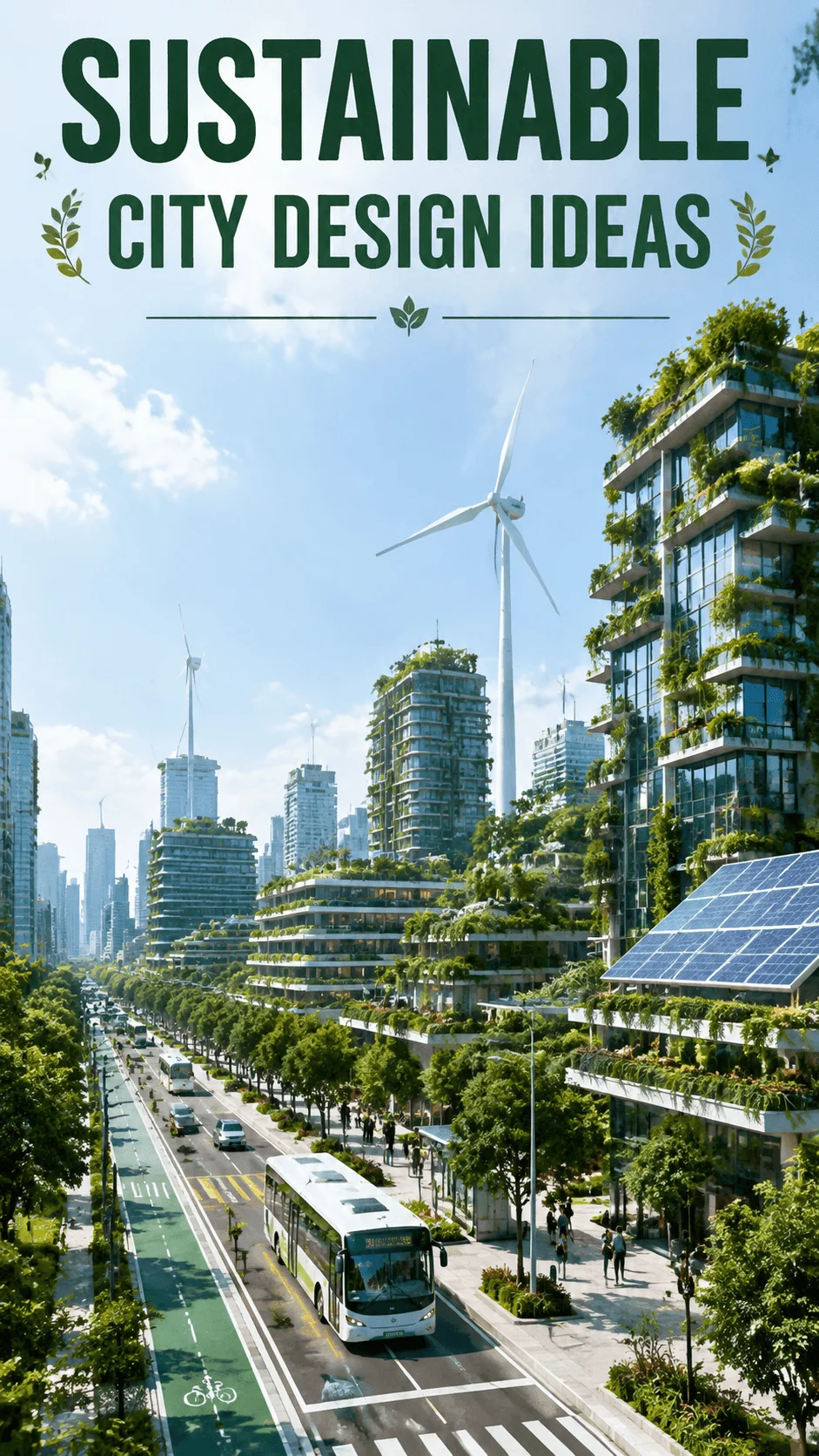
The concept of sustainable cities is no longer limited to adding parks or using renewable energy. It now includes advanced technologies such as artificial intelligence, digital planning systems, smart infrastructure, and circular resource management. These innovations are transforming how cities are designed, developed, and managed.
As climate change continues to influence urban environments, cities need solutions that can adapt to changing conditions. Future city planning concepts are focusing on resilience, self sufficiency, and creating strong connections between people and nature. From AI powered city management systems to vertical forests and renewable energy networks, these approaches are shaping a new era of urban development.
What Are Sustainable City Design Ideas And Why Do They Matter?
Sustainable City Design Ideas refer to innovative approaches used to create urban environments that support human needs while protecting natural resources. These ideas focus on reducing environmental damage, improving quality of life, and developing cities that can continue functioning effectively in the future.
Traditional cities often follow a resource intensive model where large amounts of energy, water, and materials are consumed while producing significant waste. Sustainable urban design aims to replace this approach with smarter systems that use resources efficiently and reduce unnecessary environmental pressure.
A sustainable city combines several important elements, including energy efficient buildings, renewable energy sources, green spaces, clean transportation, advanced waste management, and smart technology. Instead of treating these systems separately, modern planners are creating connected urban networks where each part supports another.
For example, a sustainable neighbourhood may use solar energy to power buildings, collect rainwater for irrigation, recycle waste materials, include green spaces for biodiversity, and provide walking routes that reduce dependence on vehicles. These integrated solutions create healthier communities while lowering carbon emissions.
The importance of sustainable urban planning has increased because cities are home to a growing percentage of the global population. More people are moving towards urban areas in search of employment, education, and better opportunities. Without sustainable development, cities may face increased pollution, overcrowding, energy shortages, and environmental decline.
Future cities must focus on creating a balance between development and environmental protection. Sustainable design does not mean limiting growth. Instead, it encourages smarter growth where technology, architecture, and nature work together.
Why Future Cities Need Sustainable Urban Design Solutions
Modern cities face challenges that previous generations never experienced at such a large scale. Population growth, climate change, and increasing consumption patterns are putting enormous pressure on urban systems.
One of the biggest challenges is climate change. Rising temperatures are causing more frequent heat waves, while changing weather patterns are increasing the risk of floods and extreme storms. Many traditional cities were not designed to handle these conditions, which creates serious risks for residents and infrastructure.
Urban heat is another growing concern. Large areas covered with concrete and asphalt absorb and retain heat, creating higher temperatures compared to surrounding areas. This phenomenon, known as the urban heat island effect, can negatively affect human health and increase energy consumption because people rely more on cooling systems.
Energy demand is also increasing as cities expand. Buildings, transportation networks, and industries require huge amounts of electricity. Sustainable urban development focuses on renewable energy systems and efficient technologies to reduce dependence on traditional energy sources.
Waste management presents another major challenge. Many cities still follow a linear system where resources are extracted, consumed, and discarded. This approach creates pollution and wastes valuable materials. Circular city design ideas aim to transform this system by keeping resources in use for longer periods.
Transportation is another area requiring major change. Traffic congestion, vehicle emissions, and dependence on fossil fuels contribute significantly to urban pollution. Future city planning concepts focus on walkable communities, electric transportation, and intelligent mobility systems.
These challenges demonstrate why cities must adopt innovative solutions. Sustainable development is not only an environmental goal but also a way to improve public health, economic stability, and overall quality of life.
Latest Sustainable City Design Ideas Transforming The Future Of Urban Living
AI Powered Smart City Design
Artificial intelligence is becoming one of the most influential technologies shaping the future of urban environments. AI powered sustainable cities use advanced algorithms, sensors, and real time data analysis to improve how cities operate.
Traditional cities often respond to problems after they occur. For example, traffic congestion is managed after roads become crowded, and energy shortages are addressed after demand exceeds supply. AI changes this approach by allowing cities to predict problems and create solutions before they become serious.
Smart city systems can analyse information from thousands of connected devices placed throughout urban areas. These devices can monitor traffic movement, energy consumption, air quality, water usage, and public services. The collected information helps city managers make better decisions.
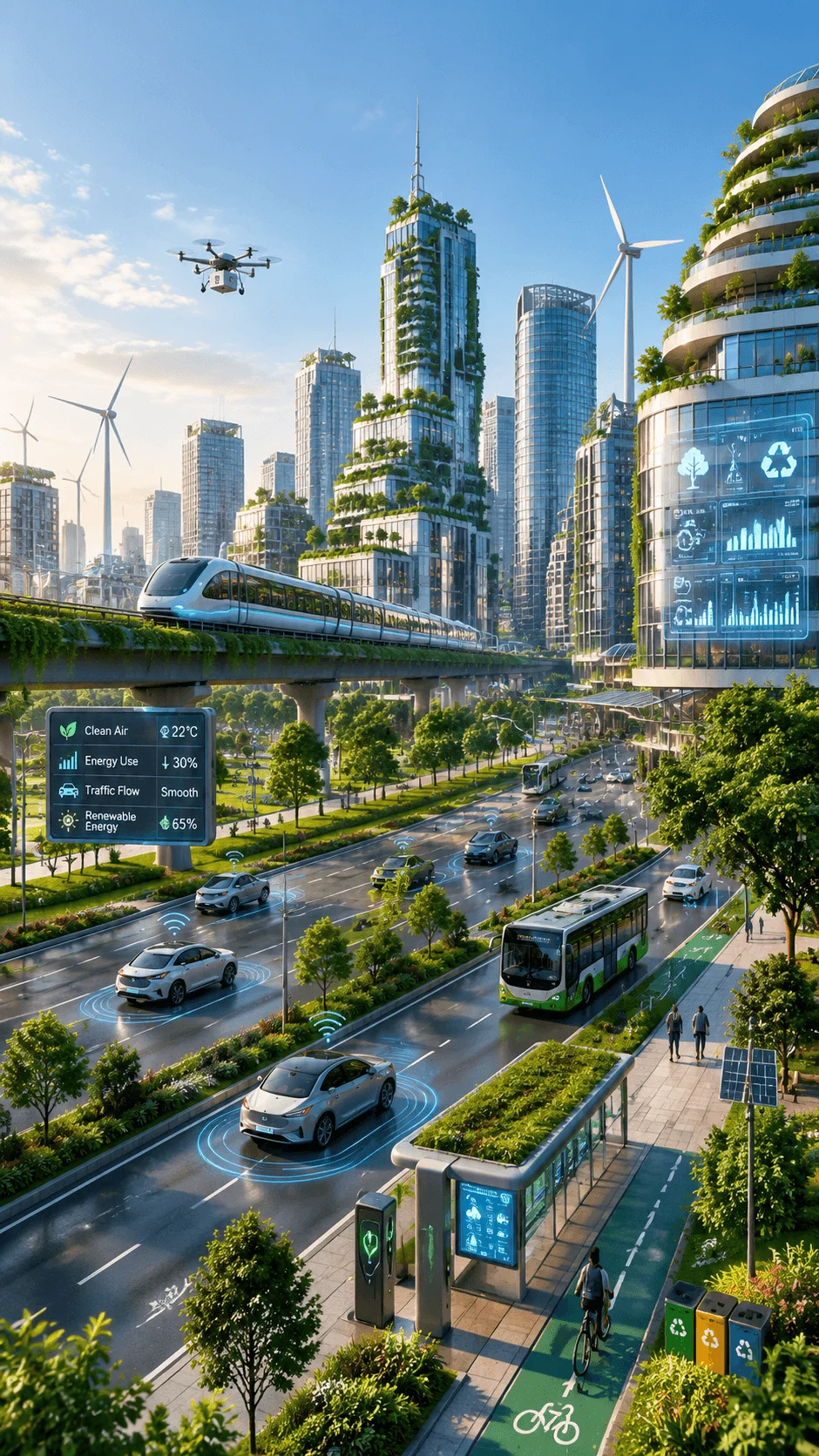
One important application of artificial intelligence is smart transportation. AI systems can analyse traffic patterns and adjust signals automatically to reduce congestion. This improves travel efficiency while reducing vehicle emissions.
Energy management is another major advantage. AI can predict energy demand and optimise electricity distribution. Buildings equipped with smart systems can automatically adjust lighting, heating, and cooling based on occupancy and environmental conditions.
Artificial intelligence can also improve waste management. Smart waste collection systems can identify when containers need emptying, reducing unnecessary collection trips and lowering fuel consumption.
Beyond efficiency, AI can improve safety and public services. Intelligent monitoring systems can help emergency services respond faster, while predictive analysis can identify potential infrastructure problems before they become dangerous.
The combination of technology and sustainability makes AI one of the most important smart sustainable city design concepts. Future cities will increasingly depend on intelligent systems that allow them to use resources more efficiently while improving daily life.
Circular City Design Systems For A Zero Waste Future
Circular city design represents a major shift away from the traditional waste producing urban model. Instead of following a system where resources are taken, used, and thrown away, circular cities aim to create continuous cycles where materials remain valuable.
The traditional linear economy creates several environmental problems because it depends on constant resource extraction. Raw materials are collected, transformed into products, consumed, and eventually become waste. This process increases pollution and places pressure on natural ecosystems.
Circular cities approach resources differently. They focus on designing systems where materials can be reused, repaired, recycled, or transformed into new products. This reduces waste and decreases the need for extracting new resources.
Buildings in circular cities can be designed with materials that are easier to reuse or recycle. Architects are exploring flexible structures where components can be removed and reused instead of destroying entire buildings during renovation.
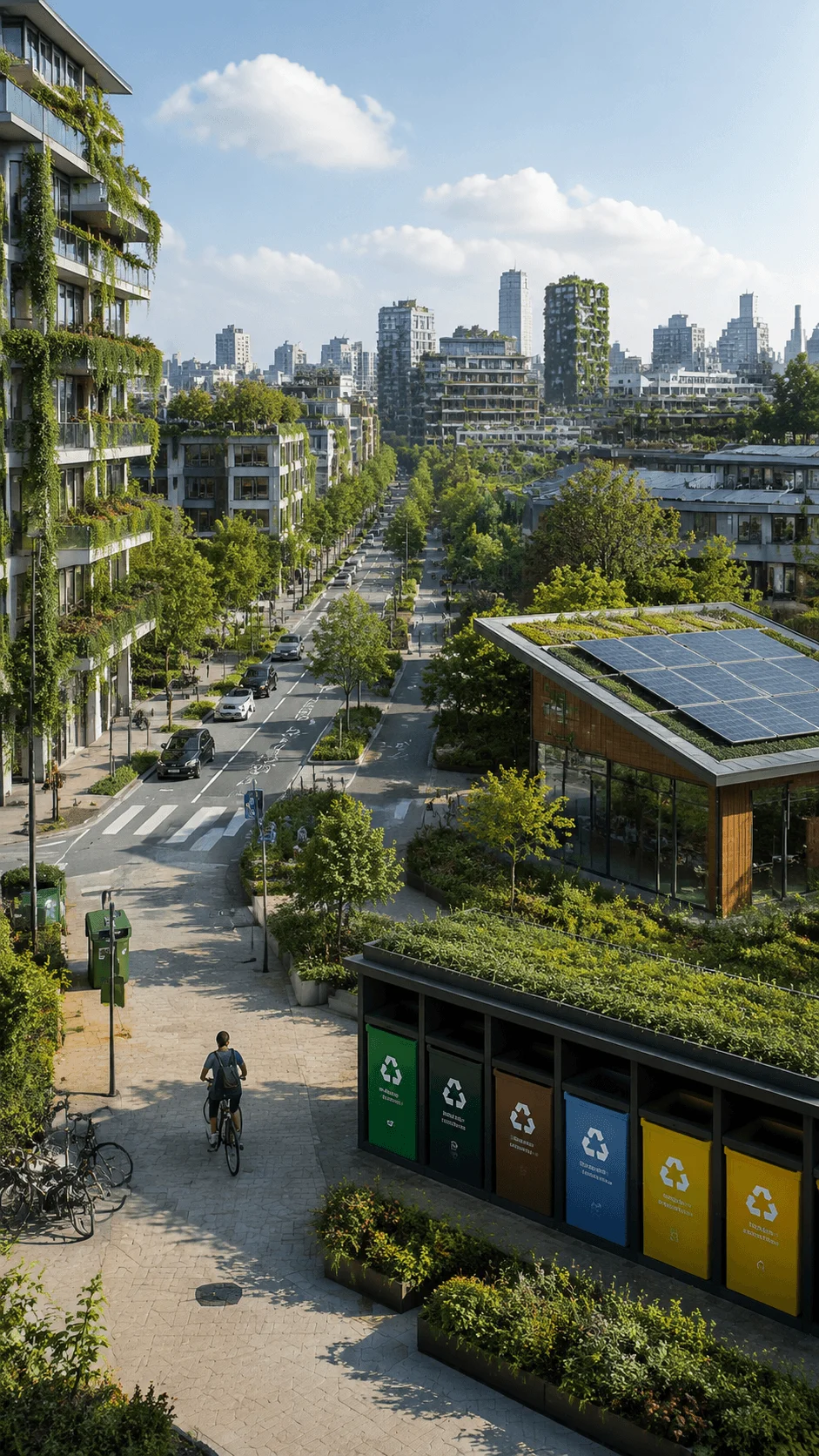
Waste management also becomes more advanced in circular urban systems. Organic waste can be converted into compost or renewable energy, while recyclable materials can return to manufacturing processes.
Circular design also encourages local production. When cities create systems where resources are reused locally, they reduce transportation requirements and strengthen local economies.
Another important aspect is consumer behaviour. Circular cities encourage people to repair products, share resources, and choose sustainable options instead of constantly purchasing new items.
Among modern Sustainable City Design Ideas, circular systems are gaining attention because they address one of the biggest environmental problems facing cities: waste. By changing how resources move through urban areas, circular design can help create cleaner and more sustainable communities.
Vertical Forest Cities And Nature Integrated Buildings
Vertical forest cities represent one of the most visually impressive approaches to sustainable urban development. These designs combine high rise buildings with extensive vegetation, creating structures that function as both living spaces and natural ecosystems.
As cities become more crowded, available land for parks and forests becomes limited. Vertical forests provide a solution by bringing nature into urban environments through trees, plants, and gardens integrated into buildings.
These buildings can provide several environmental benefits. Plants help absorb carbon dioxide, improve air quality, and reduce the amount of heat absorbed by concrete structures. This can help lower temperatures in densely populated areas.
Vertical forests also support biodiversity by creating habitats for birds, insects, and other small species. This is especially important because urban expansion often destroys natural ecosystems.
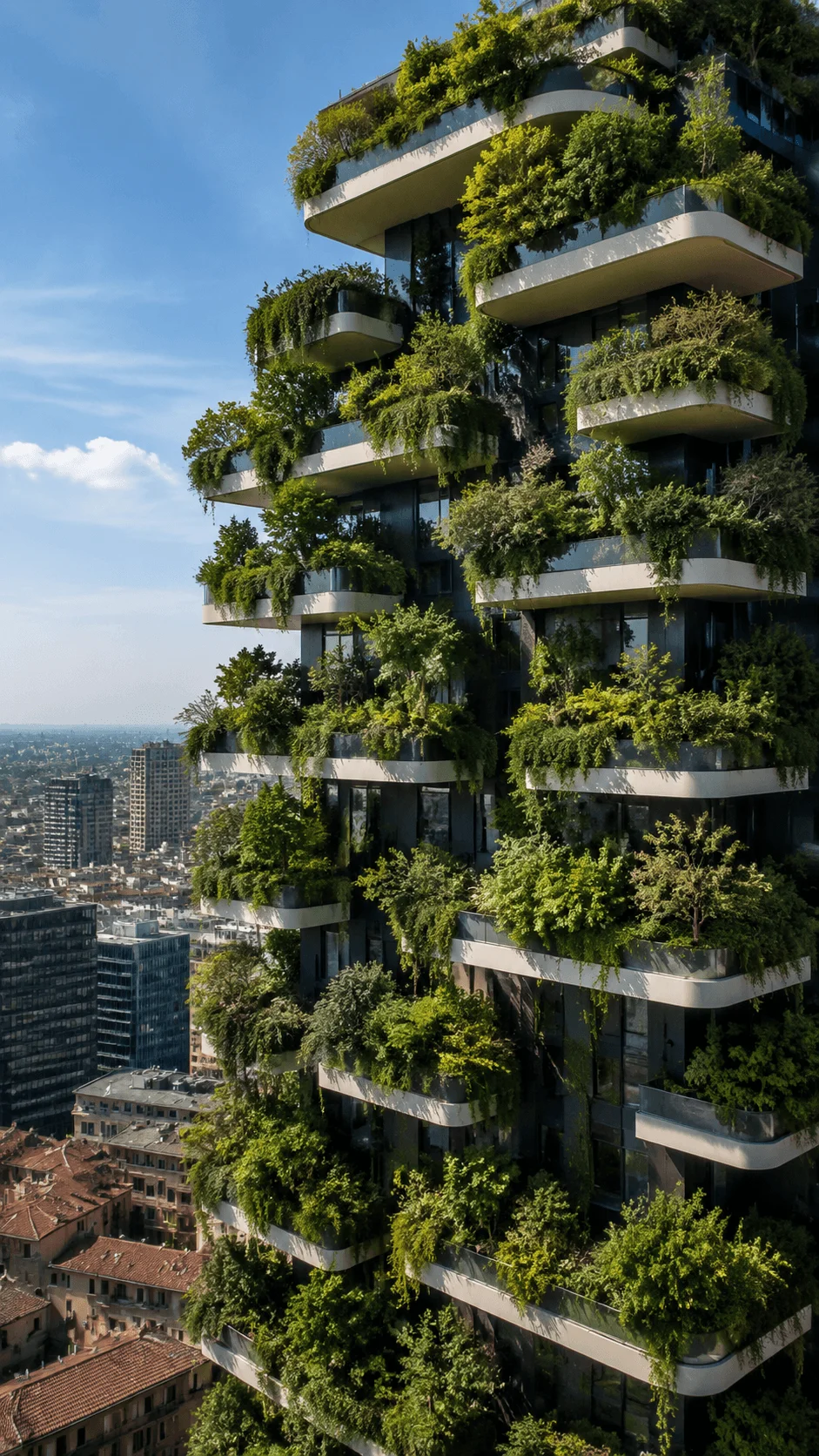
From a human perspective, access to greenery can improve wellbeing. Research has shown that natural environments can reduce stress, improve concentration, and create healthier living conditions.
Architects designing vertical forest buildings must consider important factors such as irrigation systems, plant selection, structural strength, and long term maintenance. Advanced technologies are helping create efficient systems that provide plants with water and nutrients while reducing resource consumption.
Nature integrated architecture demonstrates that future cities do not have to separate urban development from the natural world. Instead, buildings can become part of the environment.
Vertical forest cities represent a powerful example of how green urban design ideas can transform crowded areas into healthier and more sustainable places to live.
Fifteen Minute City Design For Better Urban Living
The fifteen minute city concept focuses on creating neighbourhoods where people can access essential services within a short walking or cycling distance. This approach aims to reduce dependence on cars while creating more connected and convenient communities.
Traditional cities often separate residential areas from workplaces, schools, shopping centres, and healthcare facilities. This separation forces people to travel long distances every day, increasing traffic congestion and pollution.
Fifteen minute city design changes this model by bringing important services closer to residents. A well planned neighbourhood may include schools, markets, parks, medical facilities, and workplaces within easy reach.
This approach provides environmental benefits by reducing vehicle usage and lowering transportation emissions. It also encourages walking and cycling, which improves public health.
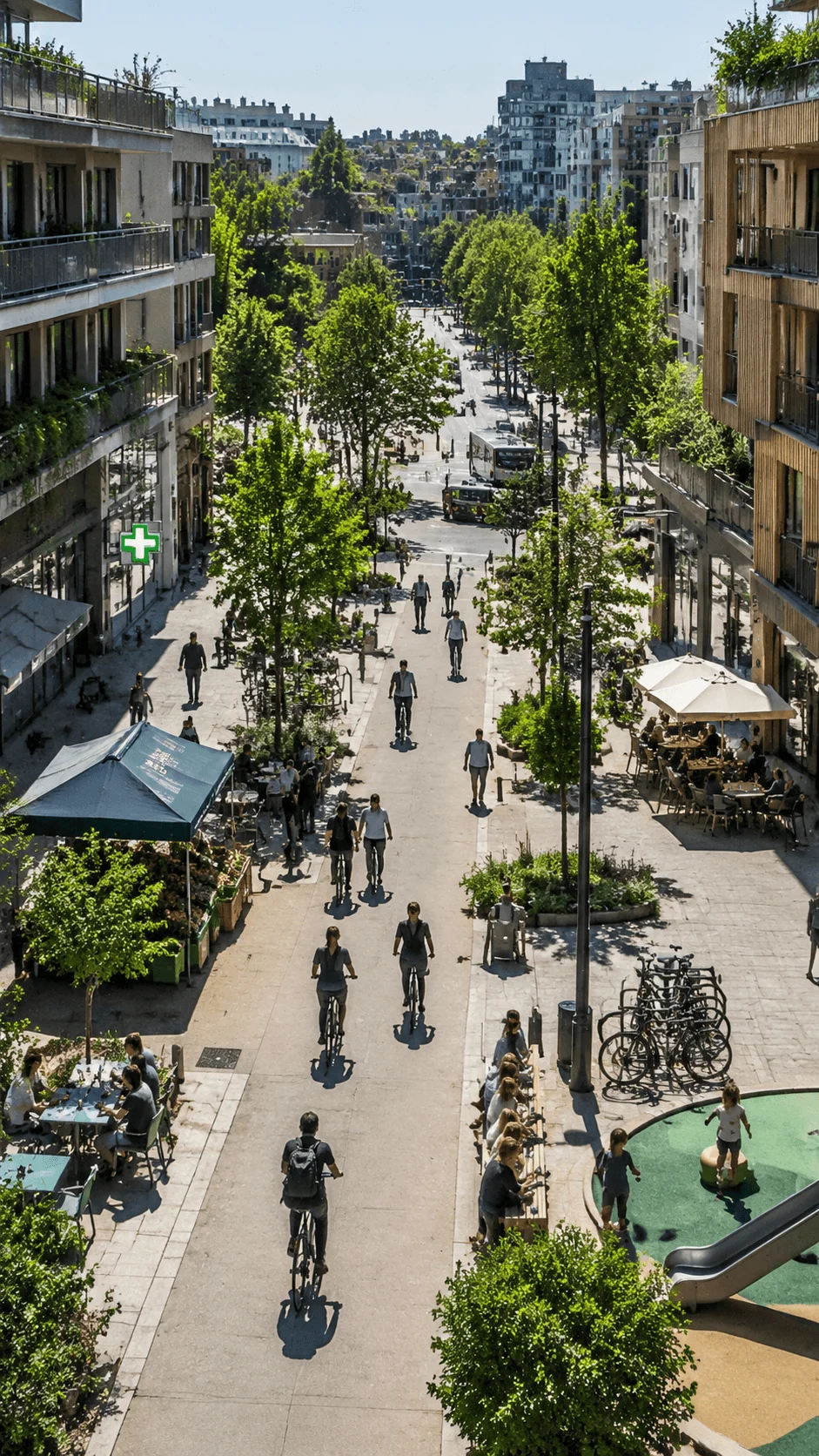
The concept also strengthens local communities. When people spend more time within their neighbourhoods, they often develop stronger social connections and support local businesses.
Technology can further improve fifteen minute cities through smart transportation systems, digital services, and better urban management.
This idea represents a shift from designing cities around vehicles to designing them around people. It focuses on creating comfortable, accessible, and sustainable communities where daily life becomes easier.
Climate Resilient City Design Ideas For Future Environmental Challenges
Climate change has become one of the biggest challenges affecting urban areas around the world. Rising temperatures, extreme weather events, flooding, and water shortages are forcing cities to rethink traditional planning methods. Climate resilient city design focuses on creating urban environments that can adapt to environmental changes while protecting people and infrastructure.
Modern cities need designs that can handle unexpected conditions instead of simply reacting after disasters occur. Climate resilient cities use advanced planning strategies, sustainable materials, natural systems, and intelligent infrastructure to reduce risks.
One important approach is flood resistant urban planning. Cities are developing better drainage systems, rain gardens, permeable surfaces, and water storage solutions to manage heavy rainfall. Instead of allowing rainwater to become a problem, these systems capture and reuse water for different purposes.
Heat management is another important part of climate resilient design. Urban planners are introducing more green spaces, reflective building materials, shaded walkways, and urban forests to reduce extreme temperatures. These solutions help create cooler environments while lowering the need for energy intensive cooling systems.
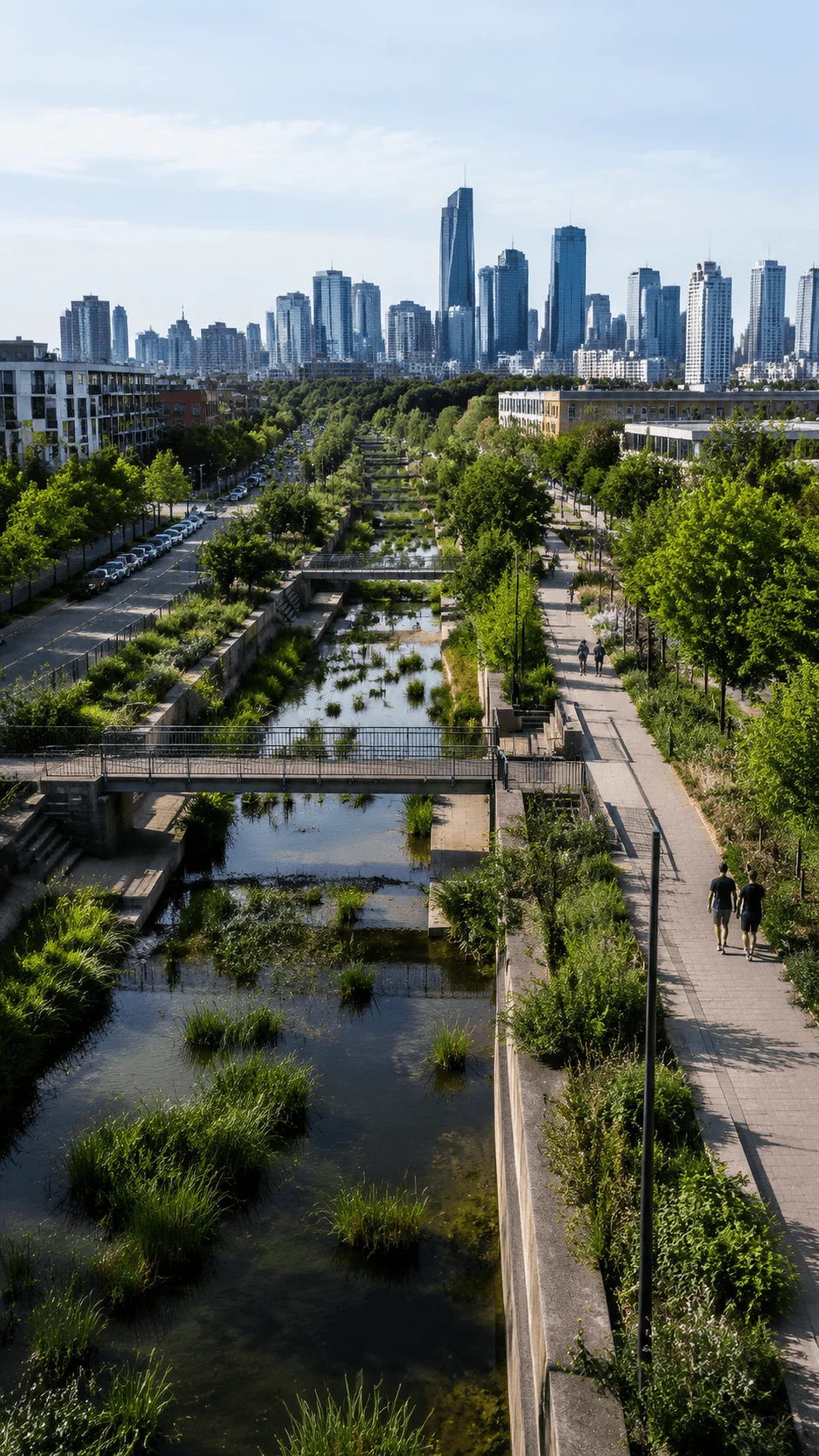
Buildings are also becoming more adaptable. Future structures may include designs that can handle stronger storms, changing temperatures, and limited resources. Energy efficient materials and flexible construction methods allow buildings to remain functional during challenging conditions.
Climate resilience also involves protecting natural ecosystems. Wetlands, forests, and coastal areas can provide natural protection against environmental threats. Instead of replacing these systems, sustainable cities are finding ways to integrate them into urban development.
Among the most important sustainable city design ideas, climate resilience focuses on preparing cities for the future. It ensures that urban areas can continue supporting communities even as environmental conditions change.
Smart Green Infrastructure In Future Cities
Smart green infrastructure combines natural systems with advanced technology to create healthier and more efficient urban environments. This approach represents a major development in green urban design ideas because it connects environmental protection with digital innovation.
Traditional infrastructure mainly focuses on roads, buildings, and utilities. Smart green infrastructure expands this idea by including parks, forests, water systems, and ecological networks as essential parts of city planning.
Green roofs are one example of this approach. These rooftops contain plants that help reduce building temperatures, absorb rainwater, and improve air quality. When combined with smart sensors, green roofs can be monitored and managed more effectively.
Living walls are another innovative solution. These vertical gardens can transform building surfaces into natural filters that reduce pollution and improve urban appearance.
Smart parks are also becoming popular in modern cities. These spaces can include environmental sensors that monitor air quality, soil conditions, temperature, and water usage. This information helps city managers maintain green spaces more efficiently.
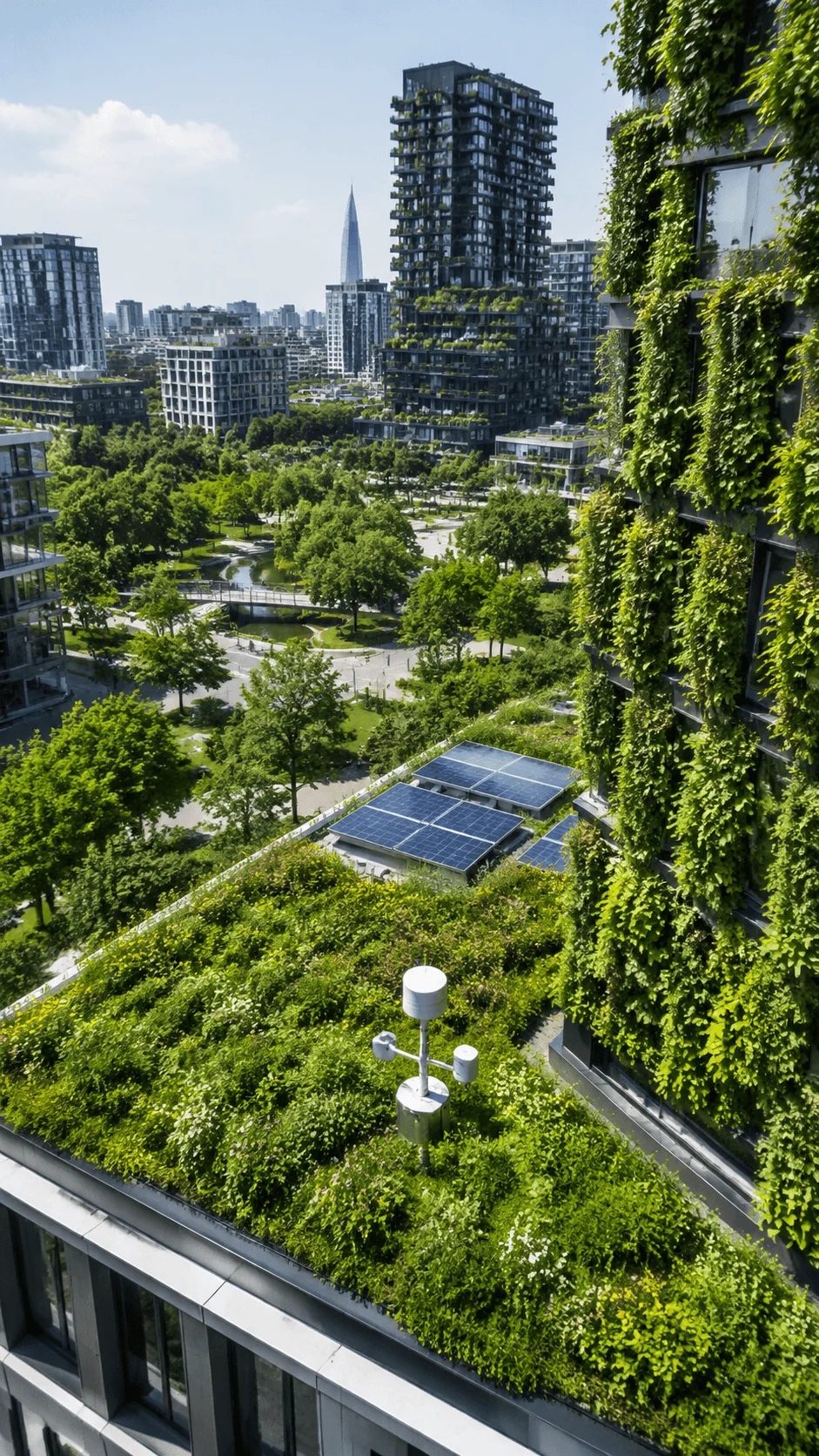
Urban forests are receiving increased attention because they provide multiple benefits. Trees reduce heat, store carbon, support wildlife, and create more attractive public spaces.
Technology allows cities to understand how natural systems perform and how they can be improved. By combining nature with digital tools, smart green infrastructure creates urban environments that are both sustainable and adaptable.
Renewable Energy City Design Concepts
Energy production is one of the most important areas of sustainable urban development. Traditional cities depend heavily on fossil fuels, which contribute to pollution and climate change. Renewable energy city design concepts focus on creating cleaner energy systems that support long term sustainability.
Future cities are increasingly integrating solar power into buildings, transportation systems, and public infrastructure. Solar panels can be installed on rooftops, windows, parking areas, and other available surfaces.
Smart energy networks are also transforming how electricity is produced and distributed. Instead of relying on a central power system, future cities may use interconnected energy networks where homes, businesses, and public facilities can generate and share electricity.
Buildings are becoming active energy producers rather than simple consumers. Energy efficient architecture combined with renewable systems allows structures to create some or all of their own power.
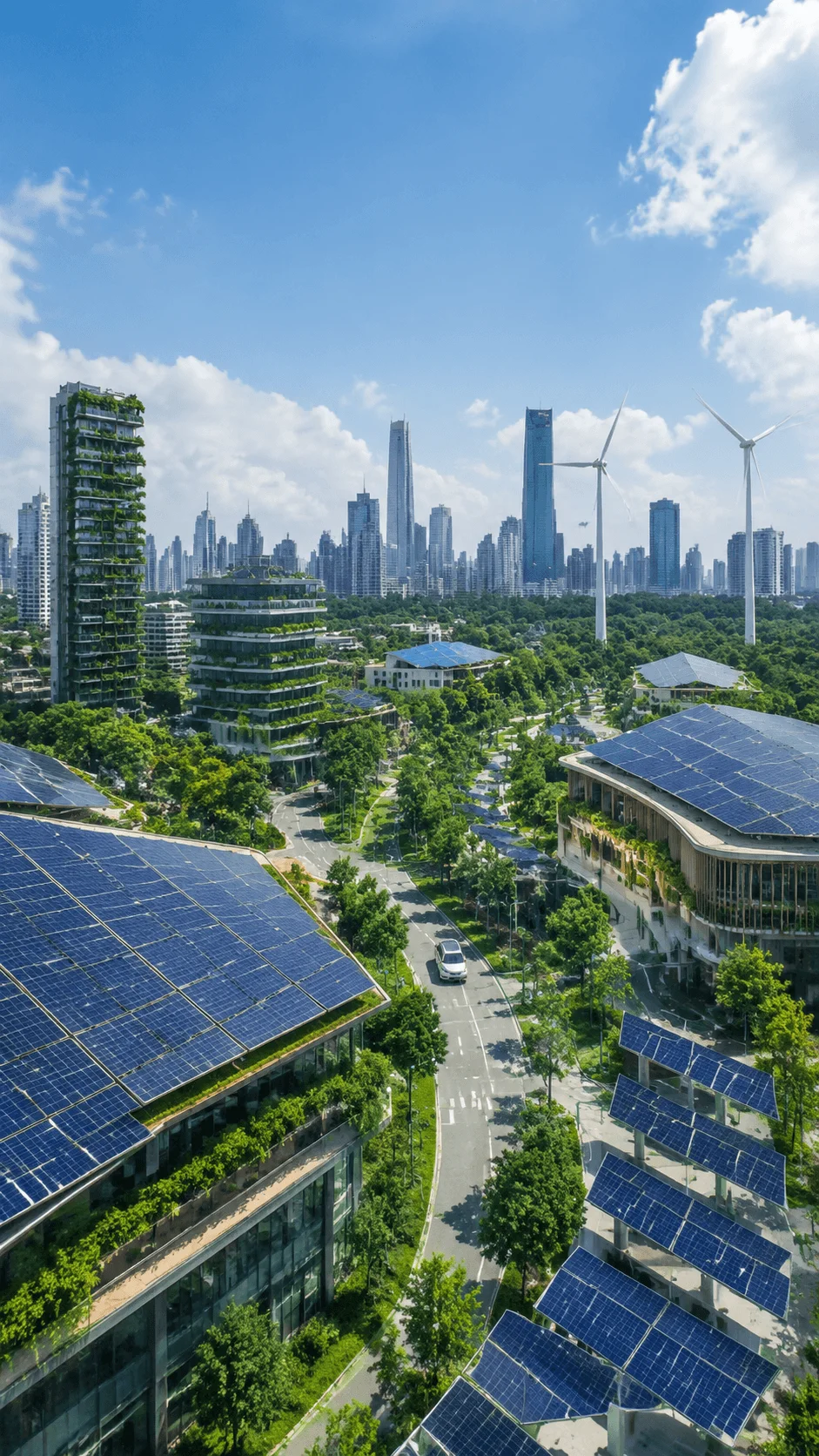
Wind energy can also become part of urban design. While large wind farms are usually located outside cities, smaller systems and innovative building designs may allow urban areas to benefit from wind resources.
Energy storage technology will play an important role in renewable cities. Advanced batteries and smart management systems can store extra energy and provide power when demand increases.
Renewable energy cities are not only better for the environment but can also improve energy security. By reducing dependence on imported fuels and traditional power sources, cities can become more independent and stable.
Biophilic City Design Ideas Connecting People With Nature
Biophilic city design focuses on rebuilding the connection between humans and the natural world. As cities become more crowded and technology becomes more dominant, many planners believe that people need stronger connections with nature for better health and wellbeing.
Modern urban environments often contain large amounts of concrete, artificial materials, and limited greenery. Biophilic design changes this by introducing natural elements into buildings and public spaces.
This approach includes features such as indoor gardens, natural lighting, water elements, wooden materials, green spaces, and open areas that encourage interaction with nature.
The benefits of biophilic design extend beyond appearance. Natural environments can improve mental wellbeing, reduce stress, increase creativity, and create more comfortable living spaces.
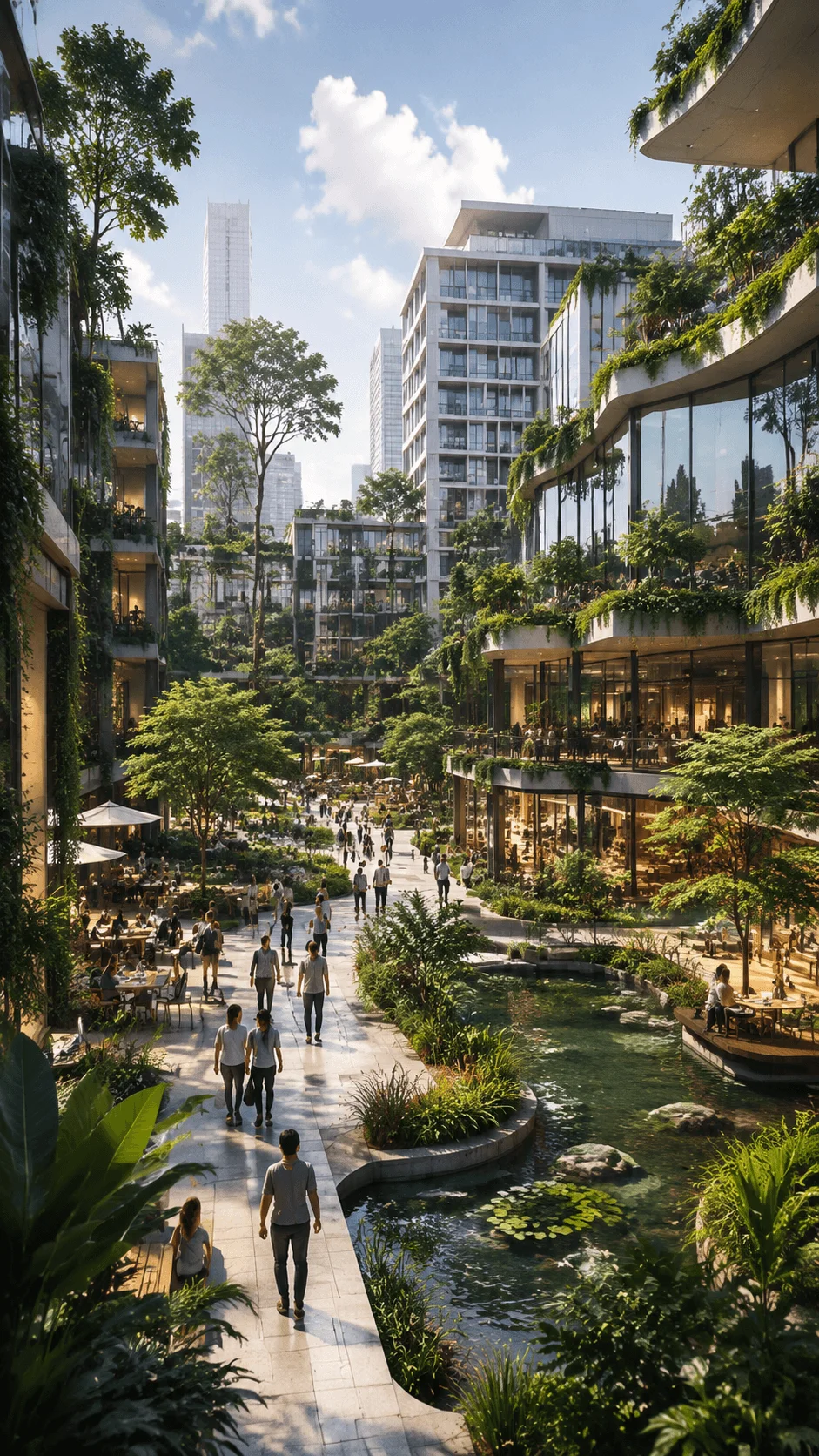
Schools, workplaces, and residential buildings are increasingly adopting biophilic principles. For example, offices with plants and natural lighting can create healthier working environments.
Biophilic cities also support biodiversity. Green corridors and connected natural areas allow plants and animals to survive within urban environments.
Future cities may move beyond simply adding parks. They may integrate nature throughout the entire urban landscape, creating environments where buildings and ecosystems exist together.
These nature based approaches are becoming important parts of Sustainable City Design Ideas because they show that sustainability is not only about technology but also about creating healthier relationships between people and nature.
Vertical Farming Cities Creating Sustainable Food Systems
Food production is becoming a major concern as urban populations continue to grow. Traditional agriculture requires large amounts of land and transportation, which creates environmental challenges. Vertical farming cities offer a new approach by bringing food production closer to urban communities.
Vertical farms use indoor spaces to grow crops through advanced systems such as hydroponics, aeroponics, and controlled environment agriculture. These farms can operate inside buildings, reducing the need for large agricultural areas.
One major advantage of vertical farming is reduced transportation distance. When food is produced within cities, it travels shorter distances before reaching consumers. This can reduce emissions and improve food freshness.
Vertical farming also uses resources more efficiently. Advanced systems can recycle water, control nutrients, and optimise growing conditions.
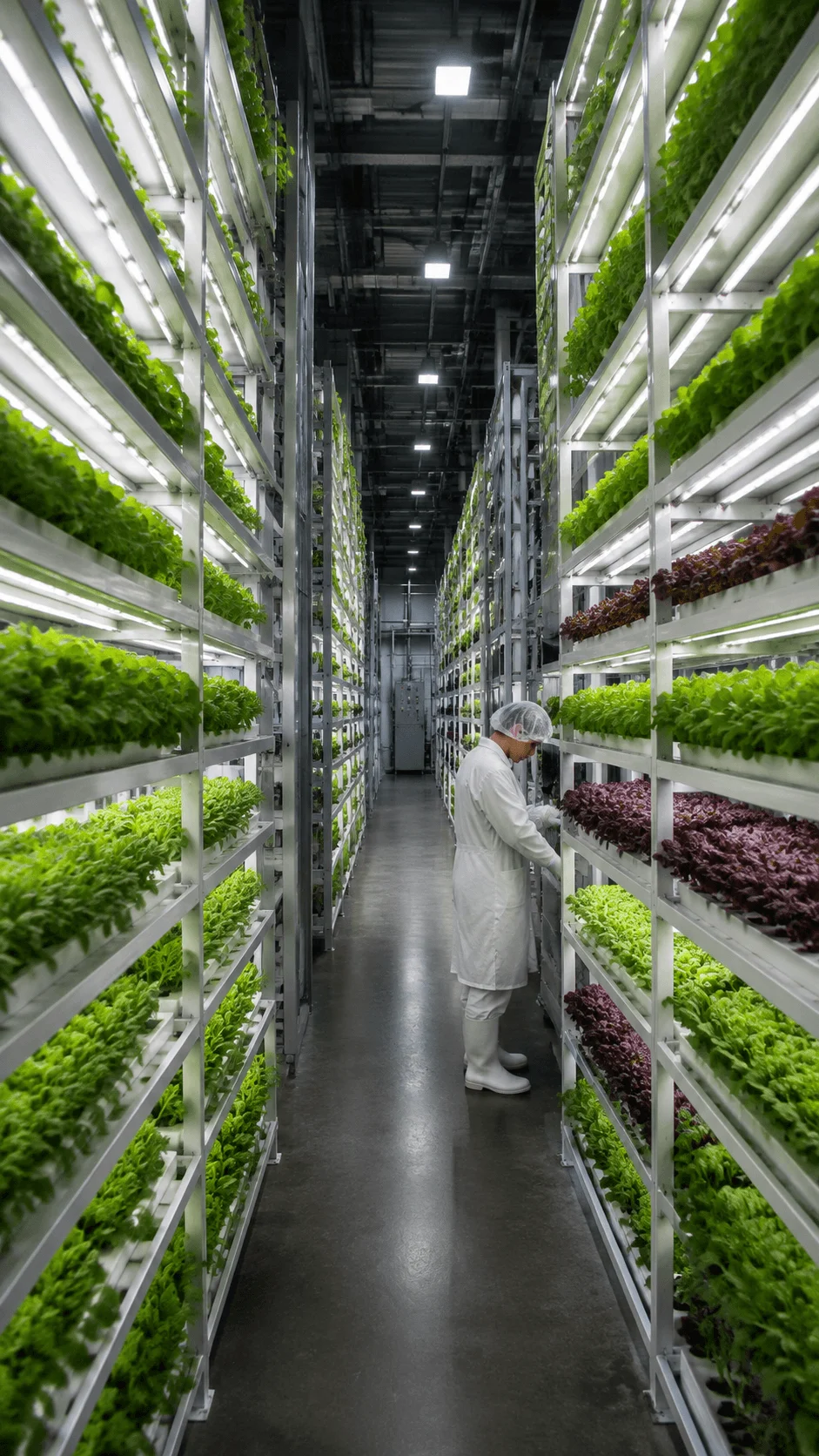
These farms can operate throughout the year because they are protected from extreme weather conditions. This creates a more reliable food supply.
Future sustainable cities may integrate vertical farms into residential buildings, shopping centres, and unused urban spaces. These systems can help cities become more self sufficient while reducing pressure on rural land.
Vertical farming represents an important connection between urban development and sustainable agriculture. It shows how future city planning concepts can solve multiple challenges at the same time.
Digital Twin City Planning For Smarter Decisions
Digital twin technology is becoming one of the most advanced tools in modern urban planning. A digital twin creates a virtual model of a real city, allowing planners to analyse systems, test ideas, and improve decisions before making physical changes.
Traditional planning methods often require expensive experiments and long implementation periods. Digital twins allow cities to simulate different scenarios using real data.
For example, planners can test how a new building may affect traffic flow, energy consumption, or environmental conditions. They can also examine how cities may respond to climate events such as floods or heat waves.
Digital twins collect information from sensors, satellites, transportation systems, and public services. This creates a detailed understanding of how a city operates.
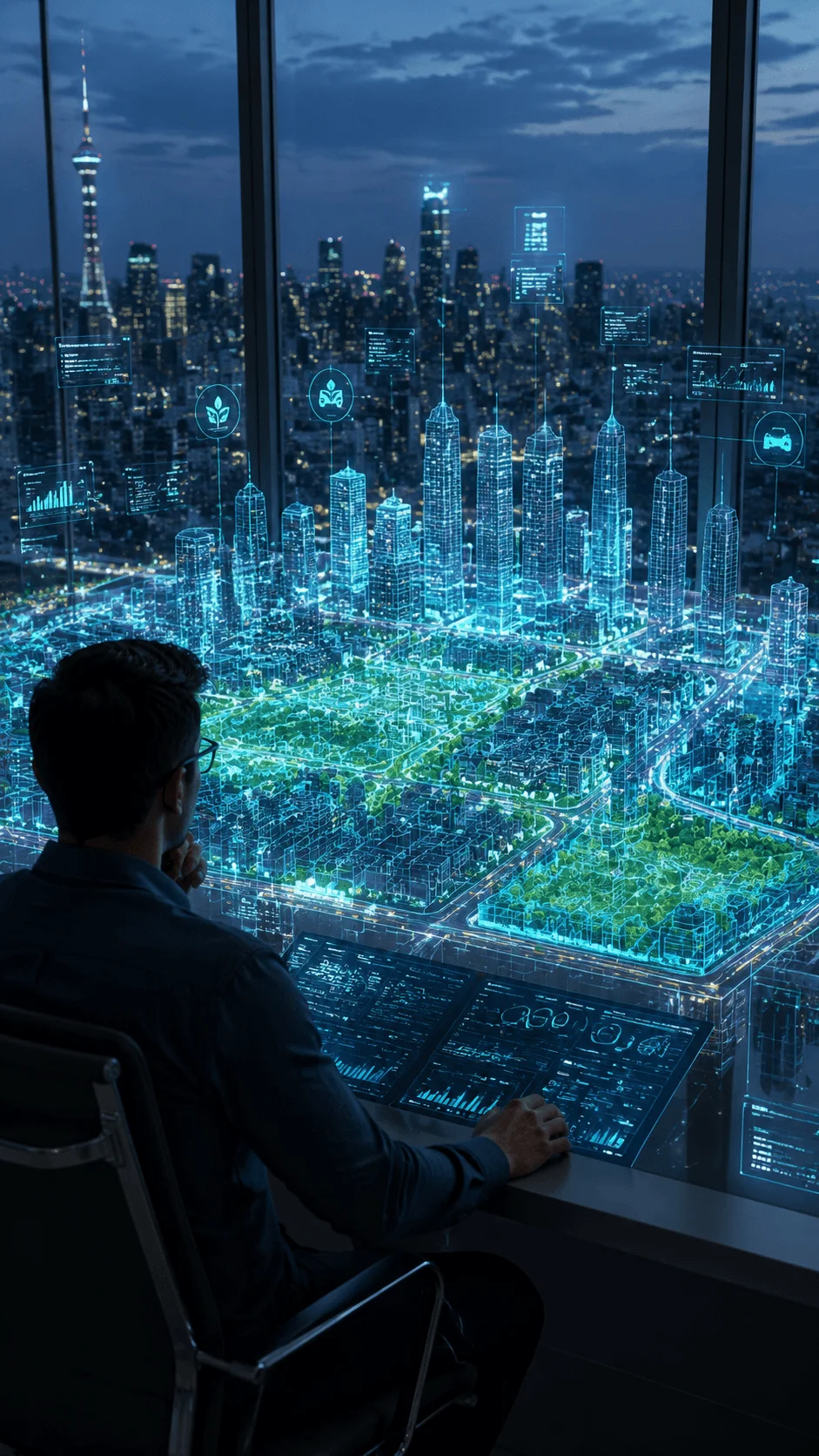
The technology can improve many areas, including infrastructure management, energy efficiency, transportation planning, and emergency response.
As cities become more complex, digital twins will help governments make smarter decisions. They provide a powerful way to understand urban systems and create more efficient solutions.
Digital twin city planning represents the combination of technology and sustainability. It allows cities to experiment, improve, and adapt without unnecessary resource waste.
Bio Inspired Urban Design Solutions
Nature has developed efficient systems over millions of years. Bio inspired urban design uses lessons from natural processes to create better buildings and city systems.
Instead of fighting against environmental conditions, bio inspired designs work with nature. Architects study how trees, plants, and ecosystems manage energy, temperature, and resources.
One example is natural ventilation inspired by biological systems. Some buildings use designs similar to termite structures, which maintain comfortable temperatures without excessive energy use.
Other examples include buildings designed with shapes that improve airflow, structures inspired by plant growth, and materials that imitate natural processes.
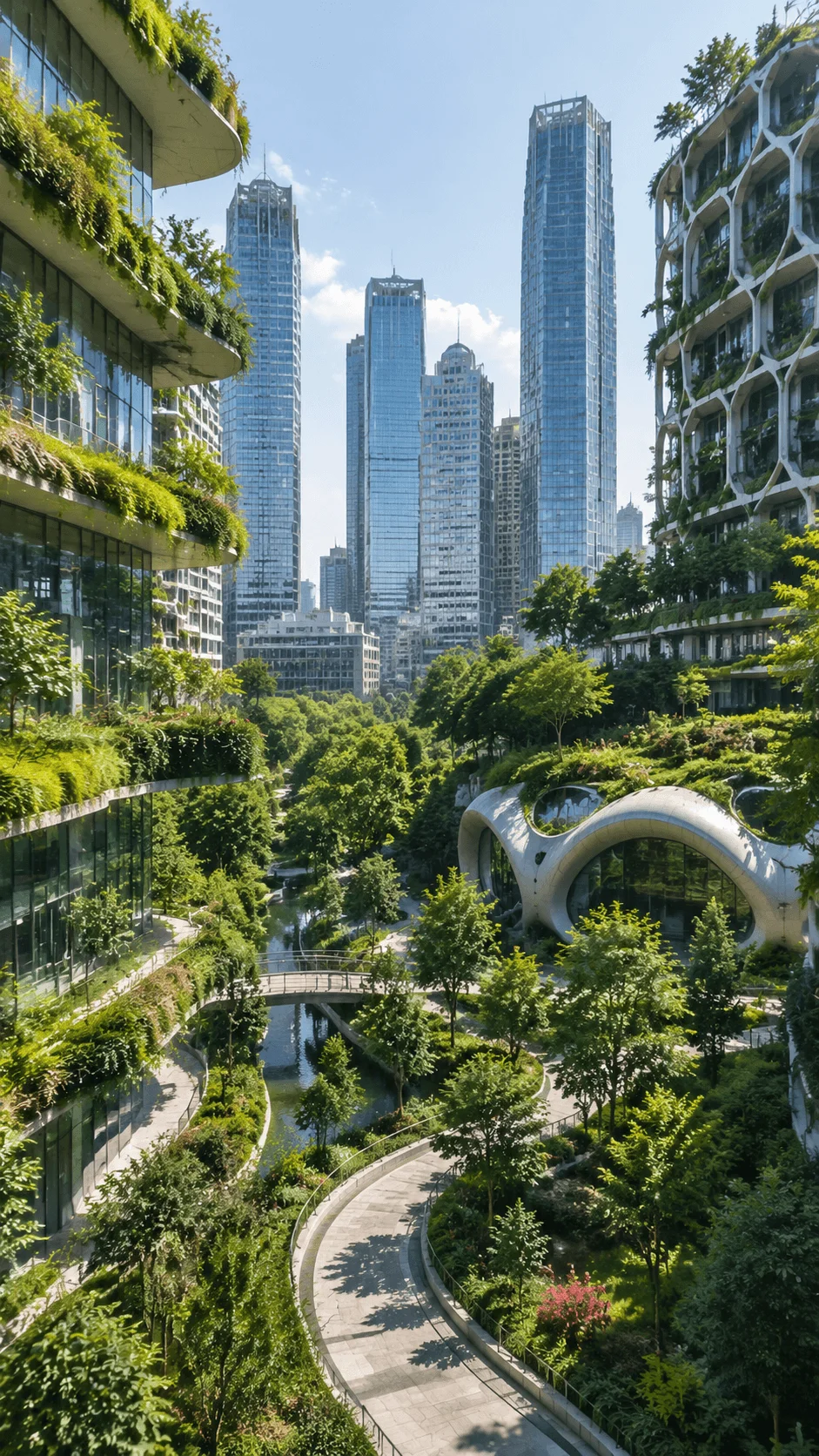
Bio inspired solutions can help cities become more efficient while reducing environmental impact. They encourage designers to think beyond traditional construction methods.
This approach represents a future where cities behave more like living systems. Buildings, infrastructure, and natural environments can work together instead of existing separately.
Self Sufficient Sustainable Cities Of The Future
Self sufficient cities represent one of the most ambitious goals in sustainable urban development. These cities aim to produce their own energy, manage resources efficiently, grow food locally, and reduce dependence on external systems.
A self sufficient city combines multiple sustainable technologies into one connected system. Renewable energy provides electricity, water management systems conserve resources, and urban agriculture supports food production.
Energy independence is a major part of these cities. Solar panels, wind systems, and advanced energy storage can help communities generate their own power.
Water management is equally important. Rainwater collection, recycling systems, and efficient water usage can help cities handle shortages.
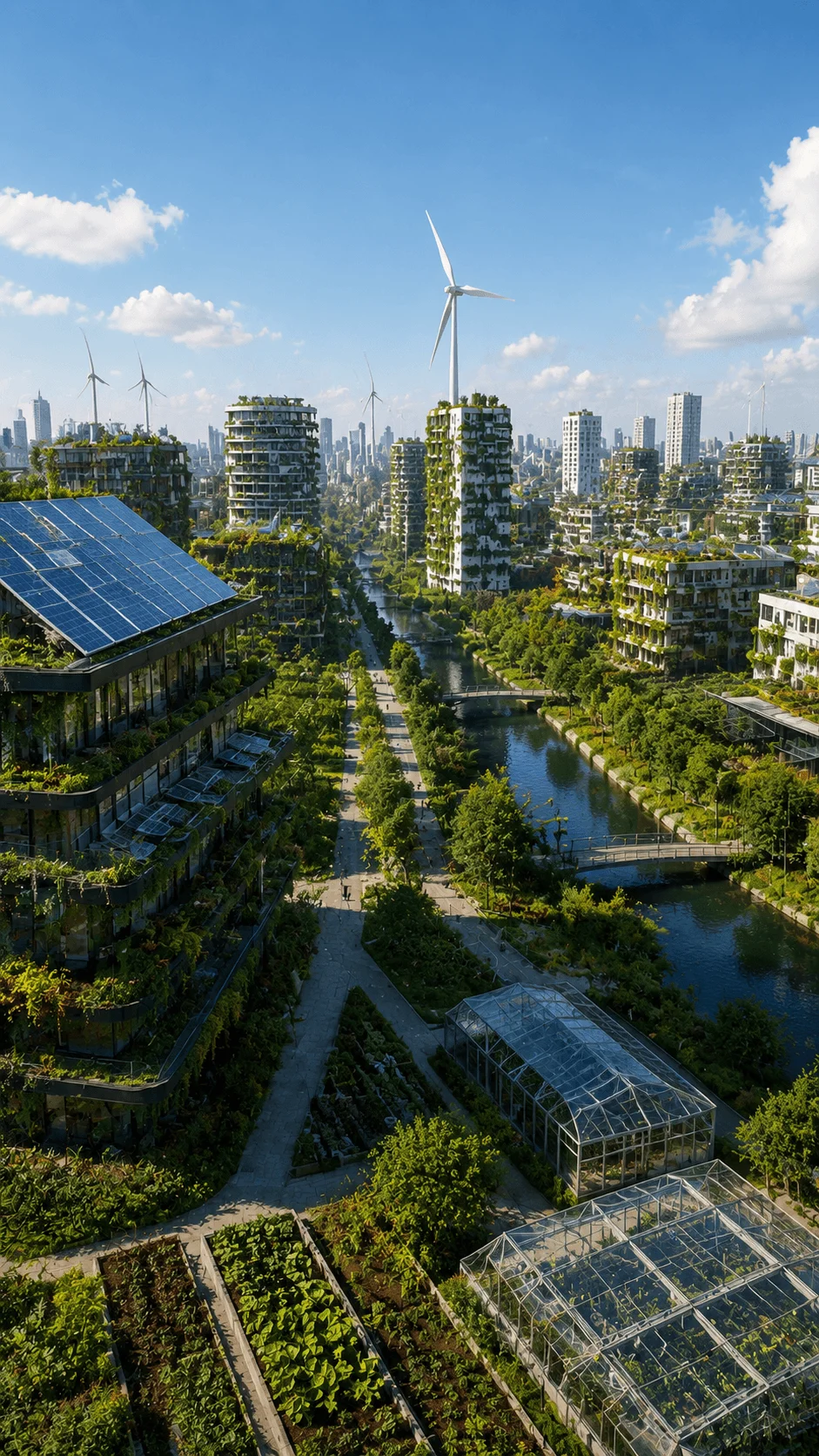
Local food production through vertical farms and community gardens can improve food security. Waste management systems can transform discarded materials into valuable resources.
Self sufficient cities are not only about technology. They also require changes in how communities consume resources and interact with their environment.
These cities represent the future direction of many Sustainable City Design Ideas because they combine environmental responsibility with human independence.
How Technology Is Transforming Sustainable City Design Ideas
Technology is becoming the foundation of future urban development. Artificial intelligence, automation, smart sensors, renewable energy systems, and digital planning tools are changing how cities operate.
Smart technologies allow cities to collect information and make better decisions. Energy systems can become more efficient, transportation can become cleaner, and public services can become more responsive.
The combination of technology and sustainability creates opportunities that were impossible in previous generations. Future cities will use data and innovation to reduce waste, conserve resources, and improve living conditions.
However, technology alone cannot create sustainable cities. Successful urban development requires cooperation between governments, designers, businesses, and communities.
Benefits Of Sustainable City Design For People And The Environment
Sustainable cities provide benefits that extend beyond environmental protection. They create healthier, safer, and more comfortable places for people to live.
Cleaner air, reduced pollution, improved transportation, and increased green spaces can improve public health. Energy efficient buildings can reduce costs while creating better indoor environments.
Sustainable cities also create economic opportunities. Renewable energy projects, green construction, smart technologies, and sustainable industries can create new jobs.
From an environmental perspective, sustainable design reduces carbon emissions, protects ecosystems, conserves resources, and helps communities adapt to climate change.
The success of future cities will depend on their ability to balance human needs with environmental responsibility.
Conclusion
Sustainable City Design Ideas represent a new vision for how humans can create better urban environments. Future cities must move beyond traditional development models and embrace solutions that combine technology, nature, and responsible resource management.
From artificial intelligence and circular systems to renewable energy and nature integrated architecture, these concepts provide practical ways to address modern urban challenges. They show that cities can continue growing while reducing environmental pressure.
The future of urban living depends on creating communities that are efficient, adaptable, and connected with nature. By adopting innovative sustainable solutions, cities can become healthier places for people while protecting the planet for future generations.
The cities of tomorrow will not simply be larger versions of today’s cities. They will be smarter, greener, and designed around the idea that human progress and environmental protection must move together.