Sustainable Development Activities for Kids
Sustainable Development Activities for Kids are one of the best ways to help children understand how their everyday choices can create a healthier planet and a stronger future for everyone. Instead of learning about sustainability only through books, children gain a deeper understanding when they take part in meaningful activities that encourage them to solve problems, work together, and care for the world around them. These hands on experiences make important concepts easier to understand while building habits that can last a lifetime. Whether at home, in the classroom, or during community events, these activities help children become thoughtful individuals who appreciate nature, value resources, and understand the importance of helping others.
As environmental challenges continue to grow, teaching children about sustainable living has become more important than ever. Parents and teachers now look for creative ways to introduce sustainability through fun experiences that inspire curiosity rather than fear. The best sustainable development project ideas for kids encourage exploration, creativity, teamwork, and real world problem solving. They also introduce children to the United Nations Sustainable Development Goals in an age appropriate way, helping them understand that even small actions can contribute to positive global change.
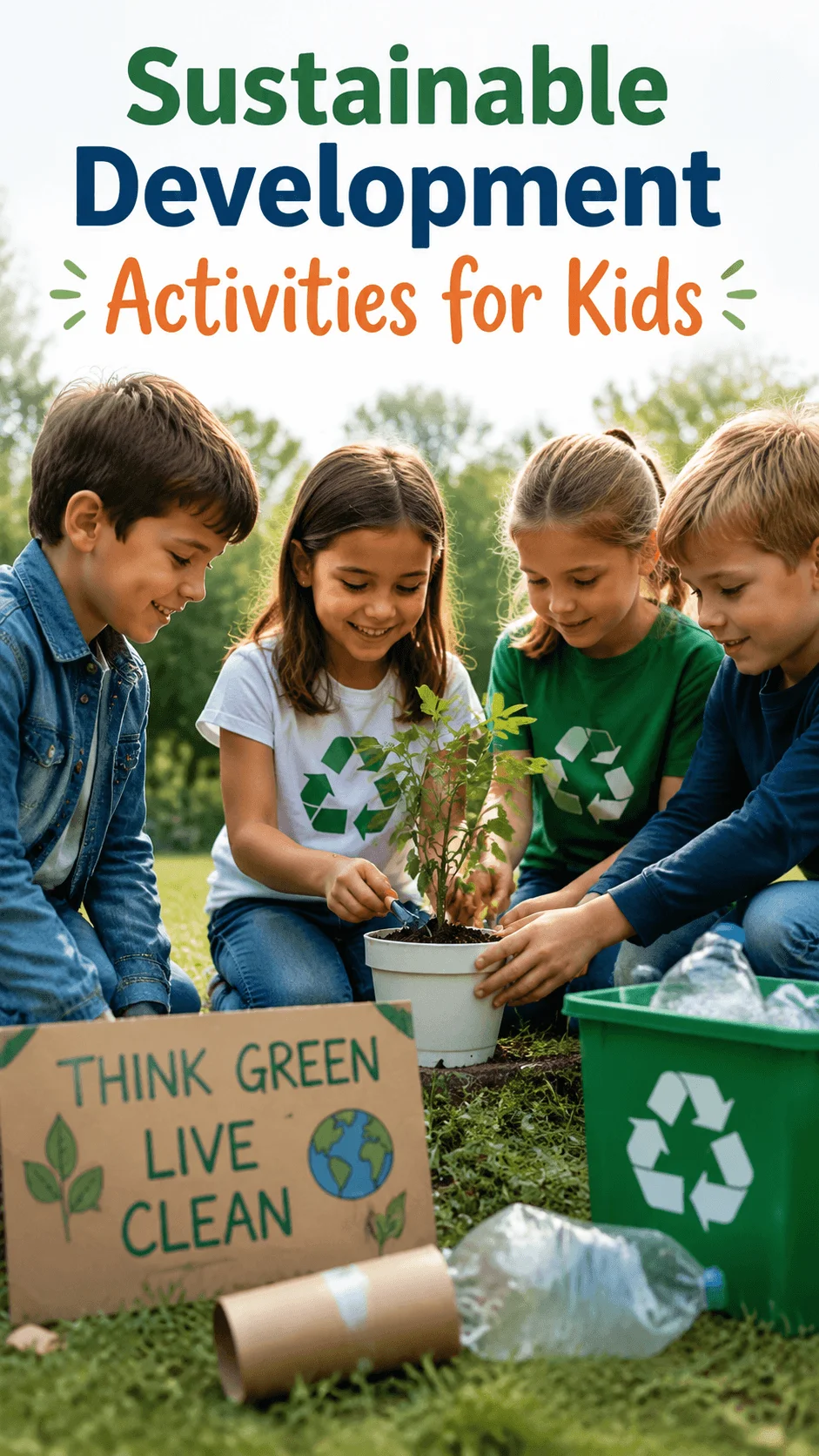
This guide explores twelve creative and modern activities that go beyond traditional recycling projects. Each idea helps children build valuable life skills while developing a genuine interest in protecting the environment and supporting their communities.
Why Sustainable Development Activities for Kids Matter
Children naturally enjoy discovering new ideas, asking questions, and finding creative solutions to challenges. Sustainable Development Activities for Kids make the most of this natural curiosity by transforming important environmental and social topics into exciting learning experiences. Rather than memorising facts, children become active participants who observe, investigate, and create positive change in their own surroundings.
These activities help children understand that sustainability is about much more than protecting nature. They learn how communities work together, why resources should be used wisely, and how thoughtful decisions today can improve life for future generations. Through engaging projects, children begin to recognise the connection between people, the environment, and the economy.
Another important benefit is the development of practical life skills. Many sustainable development classroom activities encourage communication, leadership, teamwork, creativity, and critical thinking. Children learn to analyse problems, test ideas, and reflect on the results of their actions. These experiences strengthen their confidence while preparing them to face future challenges with a positive mindset.
Sustainability projects also encourage empathy and responsibility. When children grow vegetables, reduce waste, or help improve their local community, they begin to understand how their actions affect others. This awareness inspires kindness, respect, and a stronger sense of citizenship.
Parents and teachers also appreciate that sustainable development lesson ideas can be adapted for different age groups. Younger children can enjoy simple observation and creative activities, while older students can complete more detailed investigations and community projects. This flexibility makes sustainability education suitable for both homes and schools.
Perhaps the greatest advantage is that these activities make learning enjoyable. Children remember lessons far better when they actively participate instead of simply listening. They become excited about exploring nature, experimenting with new ideas, and sharing what they discover with friends and family. This enthusiasm often continues into adulthood, creating lifelong habits that support a more sustainable future.
Sustainable Development Project Ideas for Kids That Inspire Real World Learning
1. SDG Mission Challenge
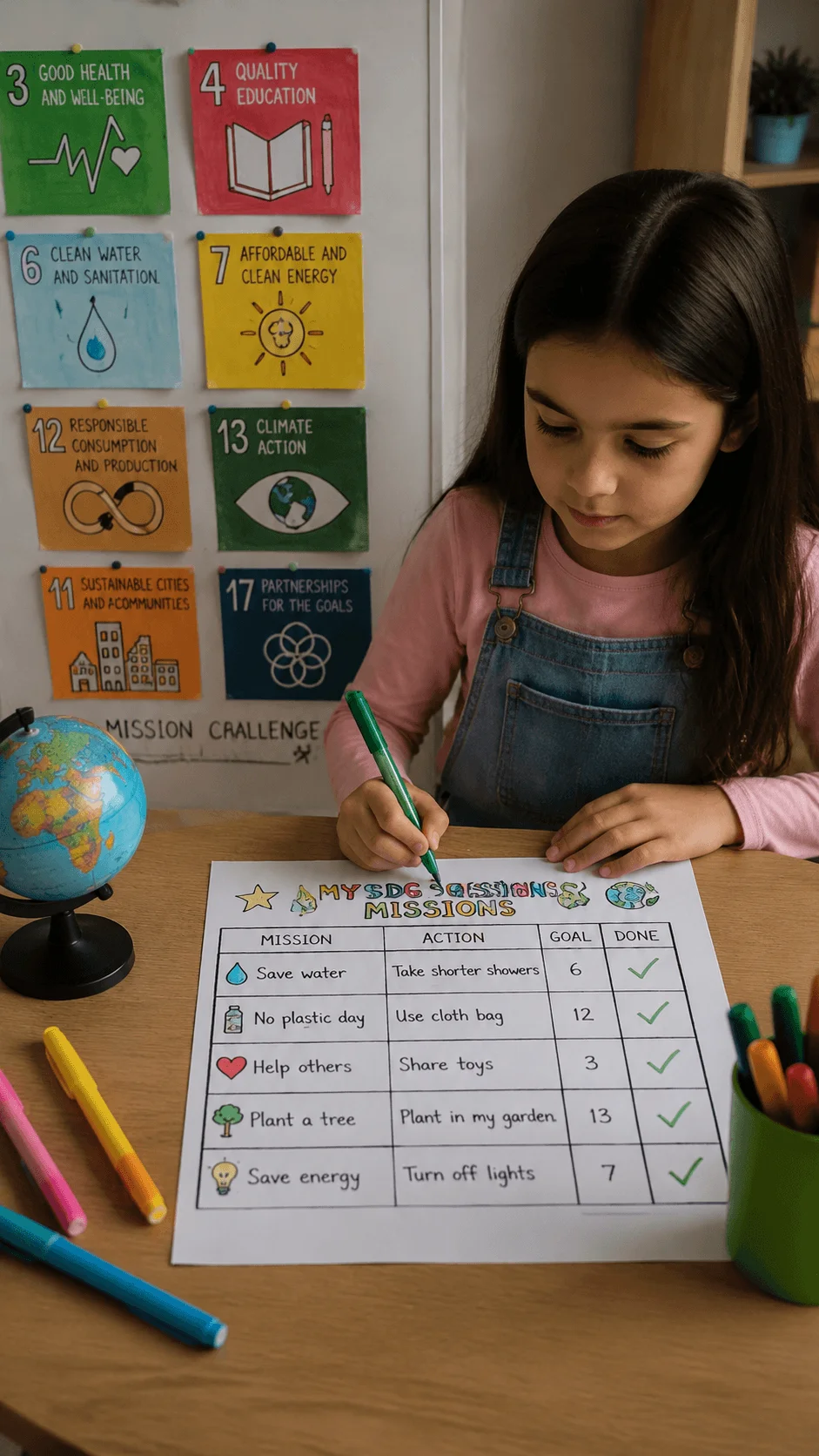
The SDG Mission Challenge is one of the most engaging SDG activities for kids because it transforms global goals into exciting daily missions. Instead of seeing the Sustainable Development Goals as distant international targets, children begin to understand how these goals connect directly to their everyday lives. Every mission encourages children to take action while discovering that even small efforts can create meaningful change.
Teachers or parents can introduce one Sustainable Development Goal at a time and encourage children to complete a related mission throughout the week. For example, one mission might focus on reducing food waste, while another encourages acts of kindness within the community or finding ways to save water at home. After completing each challenge, children can discuss what they learned and how their actions made a difference.
This activity develops leadership, communication, creativity, and decision making skills. It also teaches children that sustainability includes caring for people as well as protecting the environment. As children complete more missions, they become increasingly confident in their ability to contribute to positive change.
The challenge can easily be adapted for different age groups by adjusting the difficulty of each mission. Younger children may complete simple tasks with family support, while older students can design their own sustainability missions and encourage classmates to participate.
Only a few simple materials are needed, such as paper, markers, and a mission tracker. This activity supports several United Nations Sustainable Development Goals, including Quality Education, Climate Action, Responsible Consumption and Production, and Sustainable Cities and Communities.
2. Biodiversity Mapping Adventure
Among the newest biodiversity activities for kids, the Biodiversity Mapping Adventure encourages children to become young nature explorers. Instead of simply observing plants and animals, they investigate the incredible variety of living things that exist in their local environment. This experience helps children appreciate that every insect, bird, flower, and tree plays an important role in maintaining healthy ecosystems.
Children begin by exploring school grounds, local parks, or neighbourhood green spaces. They carefully observe different species and record their findings through drawings, notes, or photographs. As they compare observations over time, they begin to notice seasonal changes, animal behaviour, and plant growth patterns.
This activity strengthens observation skills, patience, scientific thinking, and curiosity. It also helps children understand why protecting biodiversity is essential for maintaining healthy ecosystems. Rather than viewing wildlife as something distant, children recognise that nature exists all around them and deserves care and respect.
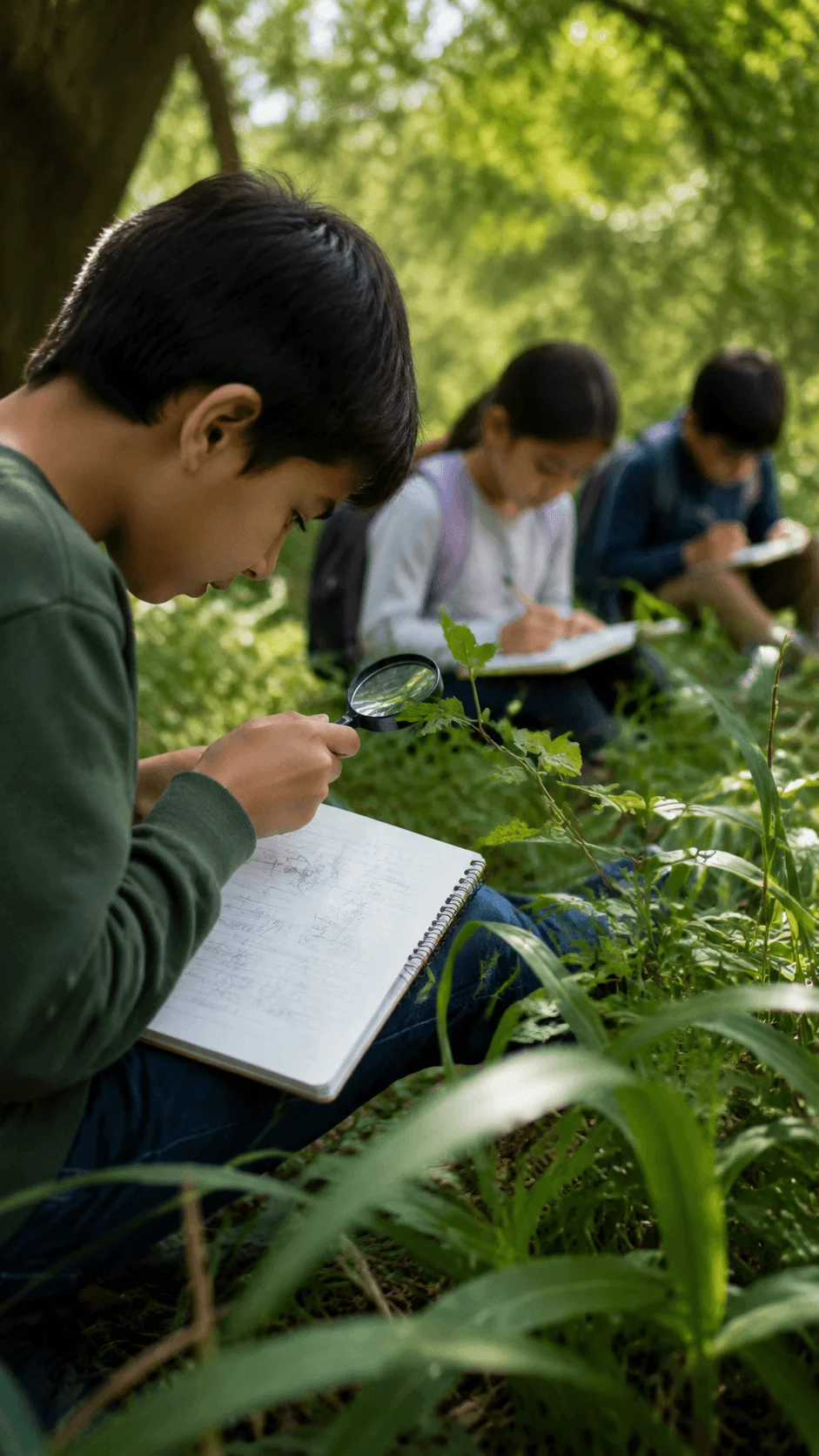
Parents and teachers can expand the project by encouraging children to create nature journals, identify native plants, or research local wildlife. Older students may even compare biodiversity in different locations and discuss why certain habitats support more species than others.
Only notebooks, pencils, and simple identification guides are required. The activity is suitable for a wide range of ages and supports Sustainable Development Goals related to Life on Land, Climate Action, Quality Education, and Sustainable Communities.
3. Classroom Carbon Footprint Investigation
One of the most valuable sustainable development classroom activities introduces children to the concept of carbon footprints through practical investigation rather than complicated scientific explanations. Children discover that everyday decisions about electricity, transport, paper use, and waste all influence the environment.
Students begin by observing how resources are used during a normal school day. They might count how many lights remain on in empty classrooms, estimate paper consumption, or discuss how classmates travel to school. These observations encourage thoughtful conversations about where improvements can be made.
The true value of this activity lies in helping children connect daily habits with environmental responsibility. Instead of simply being told to save energy, they discover practical ways to reduce unnecessary consumption through their own observations. This creates a stronger sense of ownership and responsibility.
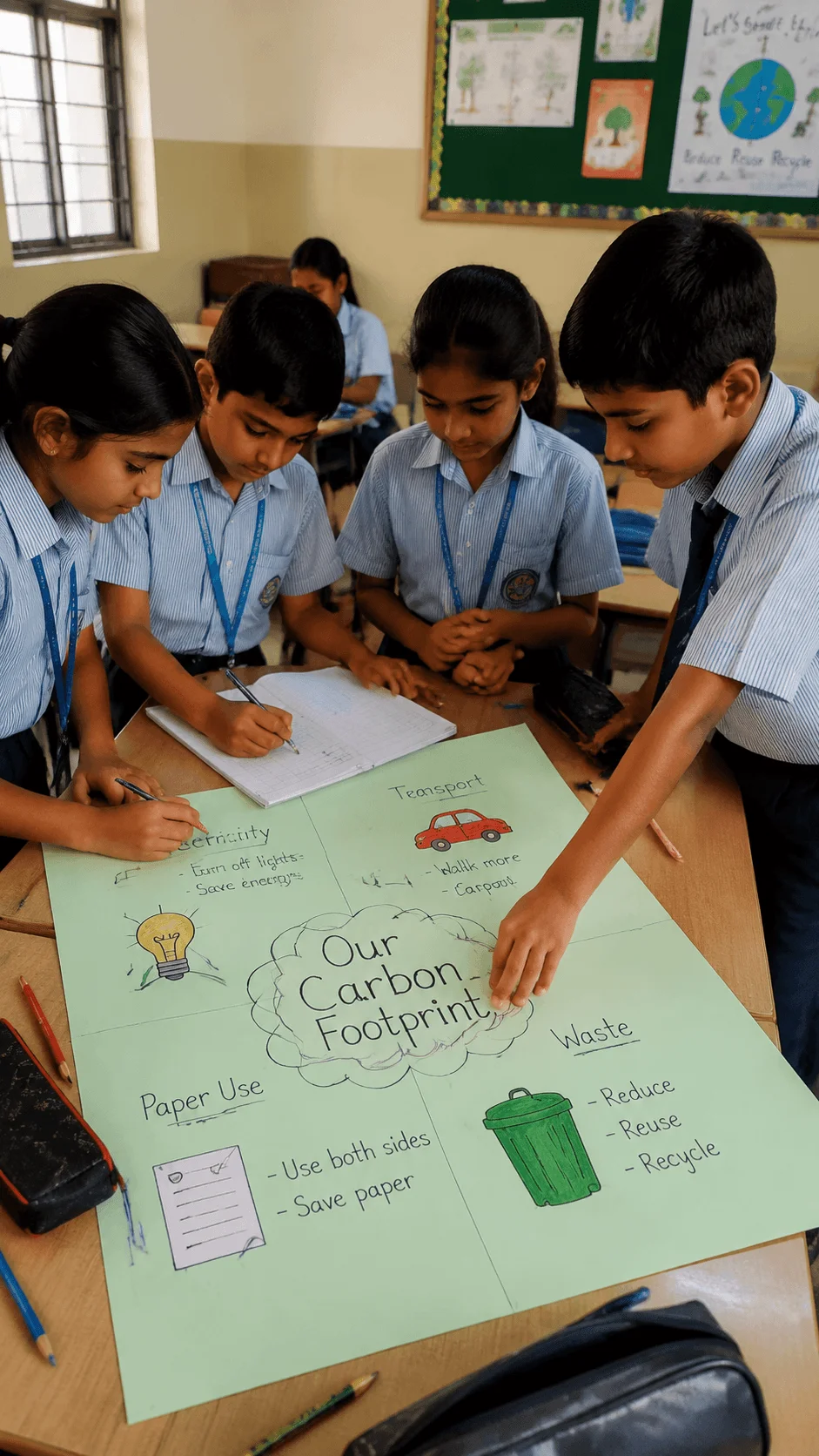
Teachers can encourage students to develop realistic action plans and monitor improvements over several weeks. Children often become enthusiastic about finding creative ways to save energy and reduce waste while sharing their ideas with family members at home.
The project develops analytical thinking, teamwork, communication, and problem solving skills. Only simple recording sheets and basic classroom observations are required. It supports Climate Action, Responsible Consumption and Production, Quality Education, and Sustainable Cities and Communities.
4. Food Waste Detective Project
The Food Waste Detective Project helps children recognise that reducing waste begins with understanding their own daily habits. Instead of simply telling children not to waste food, this activity encourages them to investigate why food is discarded and how simple changes can make a significant difference.
Children observe lunchtime leftovers over several days and identify common patterns. They may discover that certain foods are frequently wasted, portion sizes are too large, or some meals are less popular than others. These observations encourage thoughtful discussions about planning meals more carefully and appreciating the resources required to produce food.
This activity also introduces children to the wider environmental impact of food waste. They learn that growing, transporting, and preparing food requires water, energy, land, and human effort. Throwing food away means these valuable resources are also wasted.
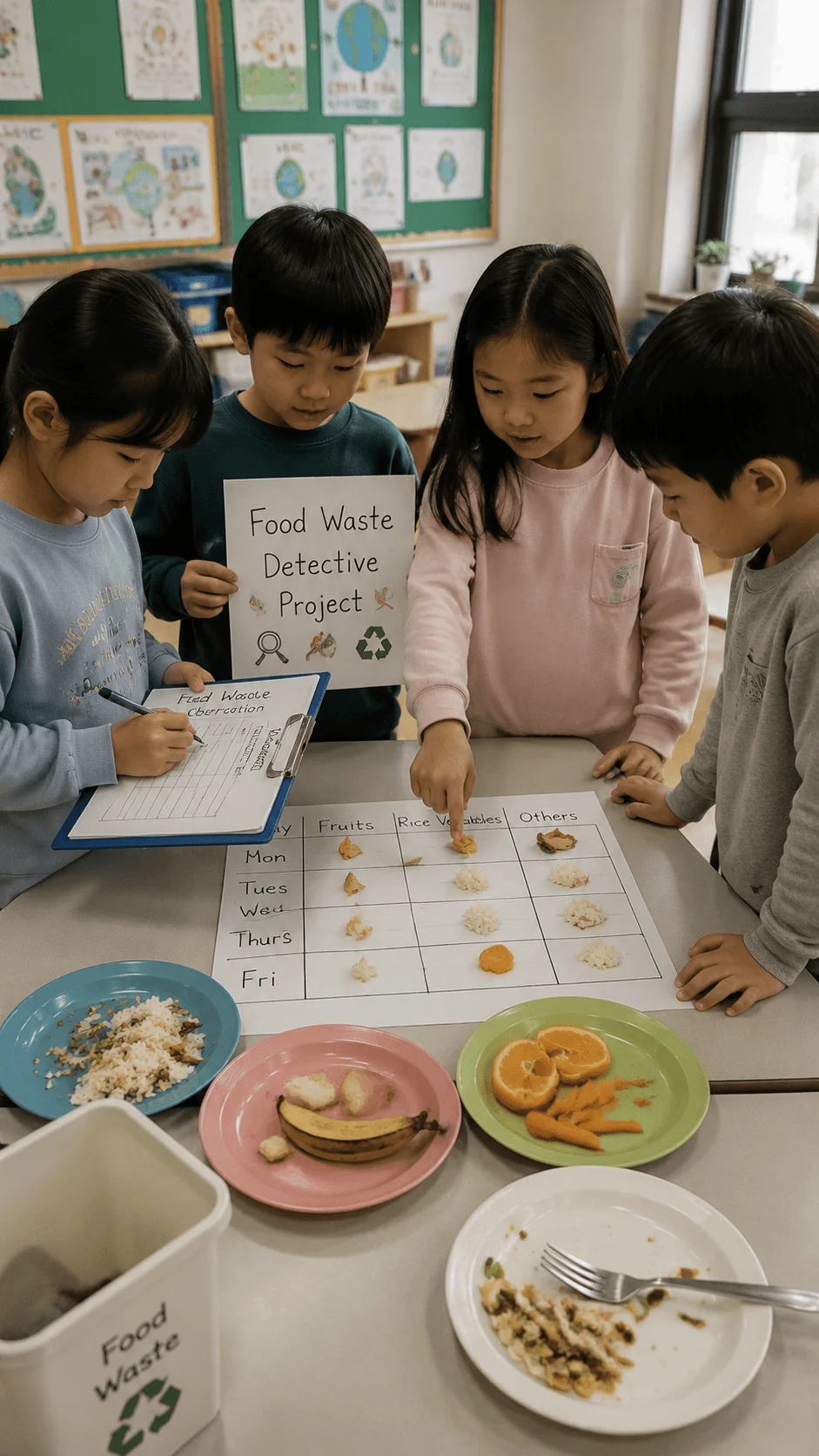
Teachers and parents can expand the project by encouraging children to suggest creative recipes using leftover ingredients or organise awareness campaigns promoting smarter food choices. Older students may compare food waste data before and after introducing new ideas, making the project even more meaningful.
Children develop critical thinking, observation, teamwork, and responsible decision making throughout the investigation. The activity requires only simple recording sheets and classroom discussions while supporting Responsible Consumption and Production, Zero Hunger, Climate Action, and Quality Education.
5. Citizen Science Nature Project
Citizen science has become one of the most exciting ways to connect children with real scientific research. Unlike traditional classroom activities, this project allows children to contribute observations that can support environmental studies while developing a deeper appreciation for the natural world. It shows children that scientific discoveries are not limited to professional researchers because anyone can help collect valuable information.
Children can observe birds, butterflies, insects, trees, or flowers in local parks, school gardens, or their own neighbourhoods. They record what they see in a notebook or through age appropriate nature observation platforms. As they continue making observations over time, they begin to notice seasonal changes, animal behaviour, and patterns within local ecosystems.
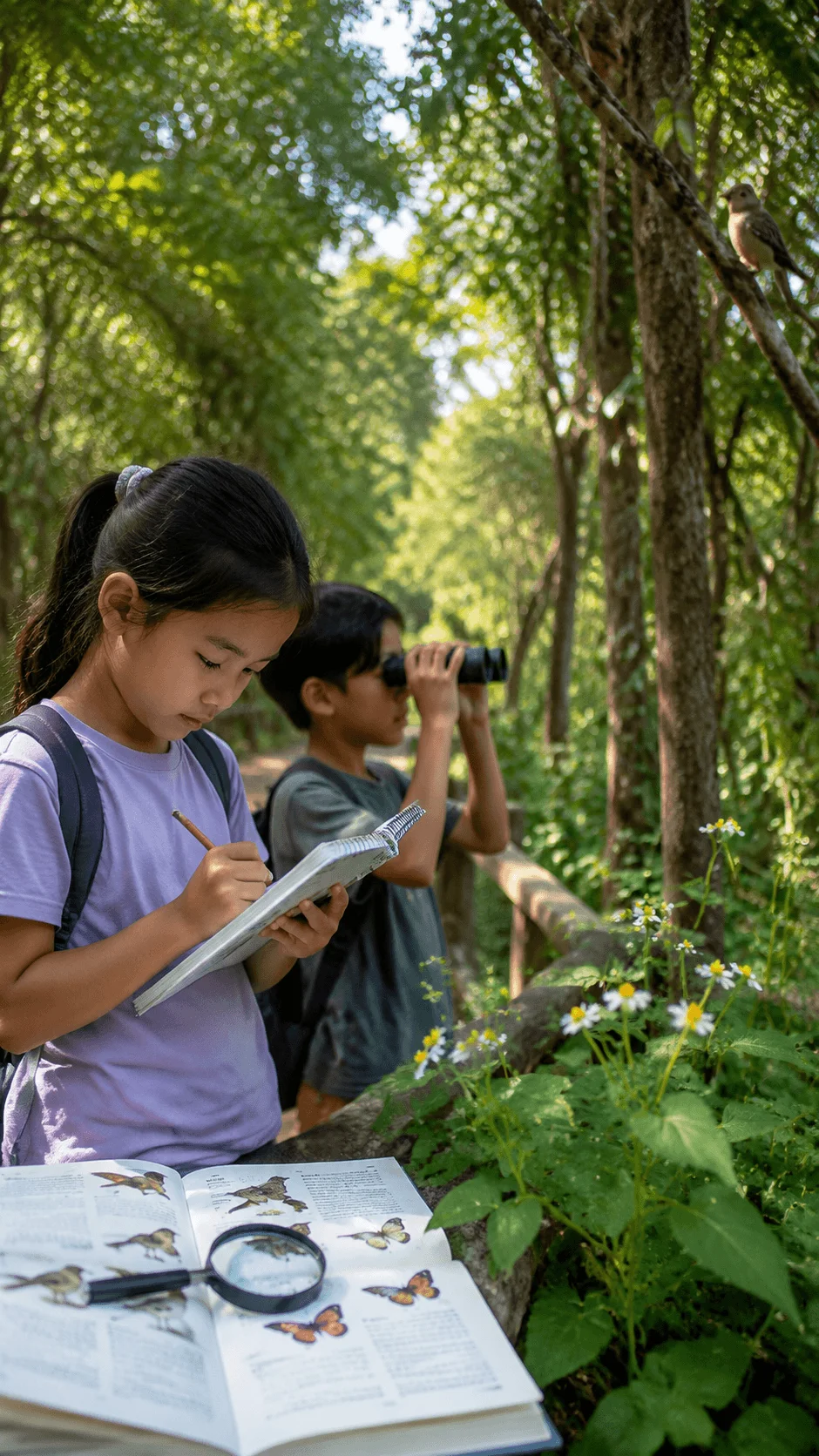
The greatest strength of this activity is that children become active participants instead of passive learners. They develop curiosity, patience, observation skills, and respect for wildlife while understanding that accurate information plays an important role in protecting biodiversity. Teachers can encourage discussions about why certain species are becoming less common and how communities can protect local habitats.
Parents can make the activity even more enjoyable by organising family nature walks or weekend observation sessions. Every new discovery becomes an opportunity for learning and conversation.
This activity requires only a notebook, pencils, and simple identification guides. It is suitable for children of many ages and supports Quality Education, Climate Action, and Life on Land.
6. Climate Resilient Garden
A Climate Resilient Garden introduces children to sustainable gardening while teaching them how plants adapt to changing weather conditions. Rather than planting a traditional garden, children learn why choosing suitable plants, conserving water, and protecting soil are becoming increasingly important around the world.
Children can help prepare garden beds, plant native flowers, vegetables, herbs, or drought tolerant plants, and care for them throughout the growing season. As they watch the plants develop, they begin to understand the relationship between healthy soil, clean water, insects, and successful food production.
This project teaches much more than gardening. Children discover responsibility through regular care, patience as plants grow, and scientific thinking by observing how different conditions affect plant health. They also learn that sustainable food production depends on careful planning rather than wasting natural resources.
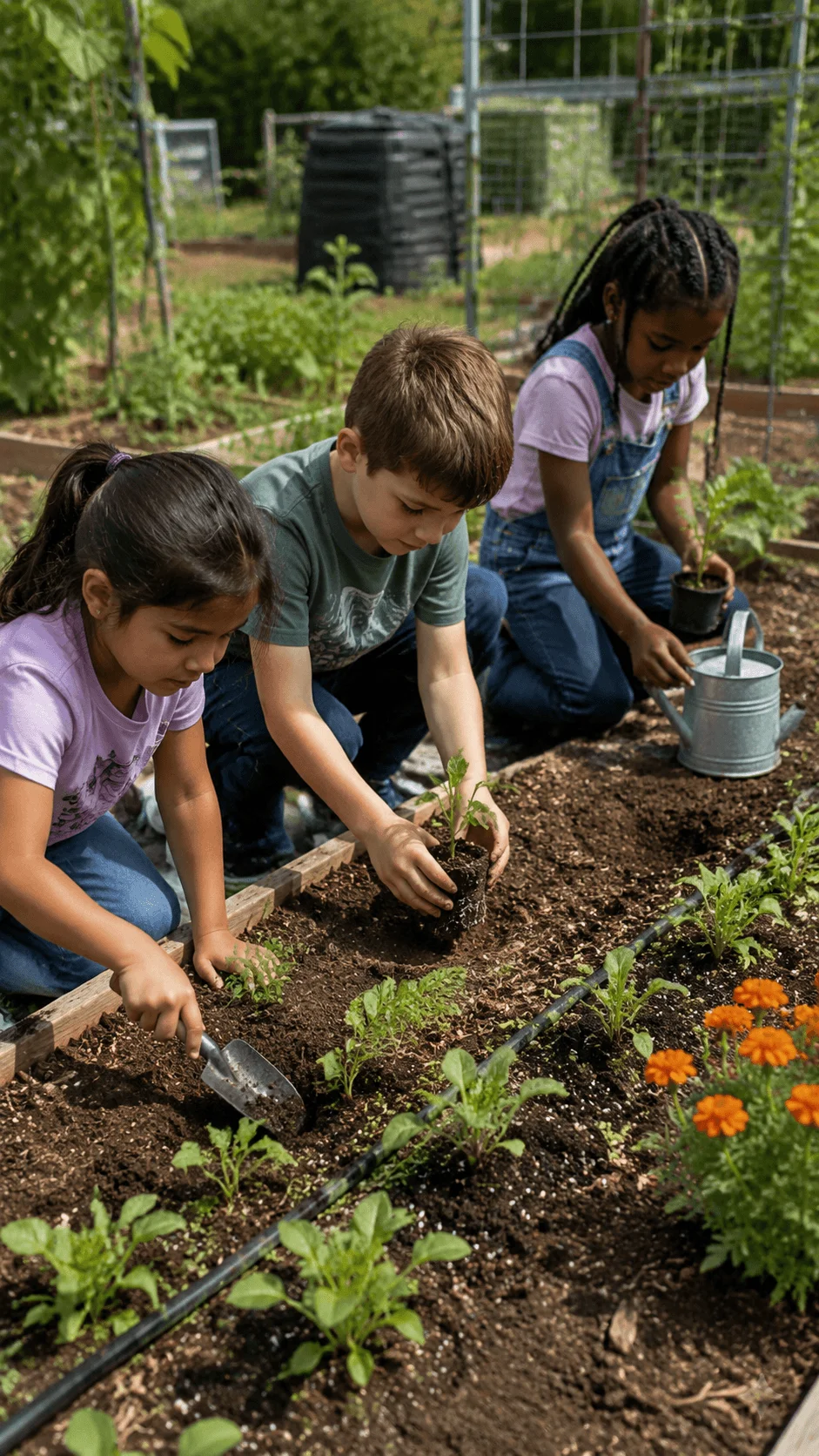
Teachers can expand the learning experience by discussing composting, rainwater collection, pollinators, and seasonal planting. Older children can compare plant growth under different conditions and record their observations in garden journals.
Simple gardening tools, seeds, soil, and watering containers are all that is needed to begin. This activity supports Zero Hunger, Climate Action, Life on Land, Responsible Consumption and Production, and Clean Water and Sanitation.
7. Circular Economy Design Challenge
One of the most creative circular economy activities for students encourages children to see waste as an opportunity rather than a problem. Instead of throwing away unwanted materials, children learn how everyday objects can be redesigned into something useful and valuable.
Teachers or parents can collect clean recyclable materials such as cardboard boxes, plastic bottles, jars, fabric pieces, paper tubes, and containers. Children then work individually or in groups to create practical items such as desk organisers, storage boxes, planters, bird feeders, or decorative objects.
The educational value extends far beyond arts and crafts. Children begin to understand that many products still have value even after their original purpose has ended. This shift in thinking helps develop creativity, innovation, and responsible decision making while reducing unnecessary waste.
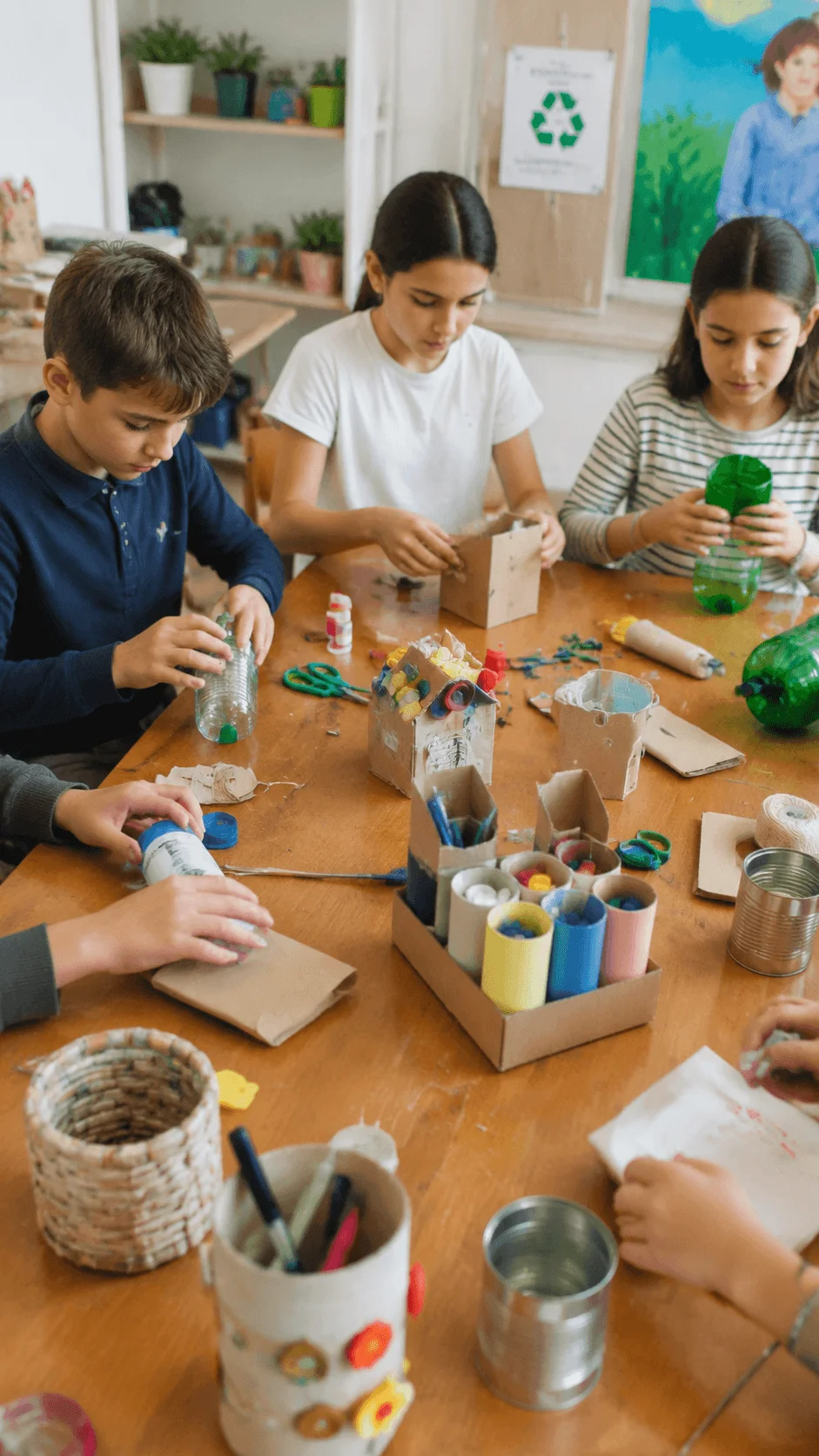
The activity also encourages teamwork and communication because children often exchange ideas, improve each other’s designs, and solve unexpected problems during the building process. Older students can even explain how their designs reduce waste and support sustainable living.
Only simple recycled materials and basic craft supplies are needed. The challenge supports Responsible Consumption and Production, Climate Action, Quality Education, and Sustainable Cities and Communities.
8. Sustainable Innovation Fair
A Sustainable Innovation Fair encourages children to think like inventors who develop practical solutions for everyday environmental challenges. Instead of copying existing ideas, children use their imagination to design original products or systems that could improve sustainability within their homes, schools, or communities.
Children might create ideas for reusable packaging, water saving devices, energy efficient classroom solutions, environmentally friendly school supplies, or simple inventions that reduce waste. They then present their ideas to classmates, teachers, or family members while explaining how their innovation benefits both people and the environment.
This activity develops confidence, creativity, public speaking, research skills, and problem solving. It also introduces children to the idea that innovation plays an important role in creating a more sustainable future. Many children discover that even simple ideas can inspire meaningful improvements.
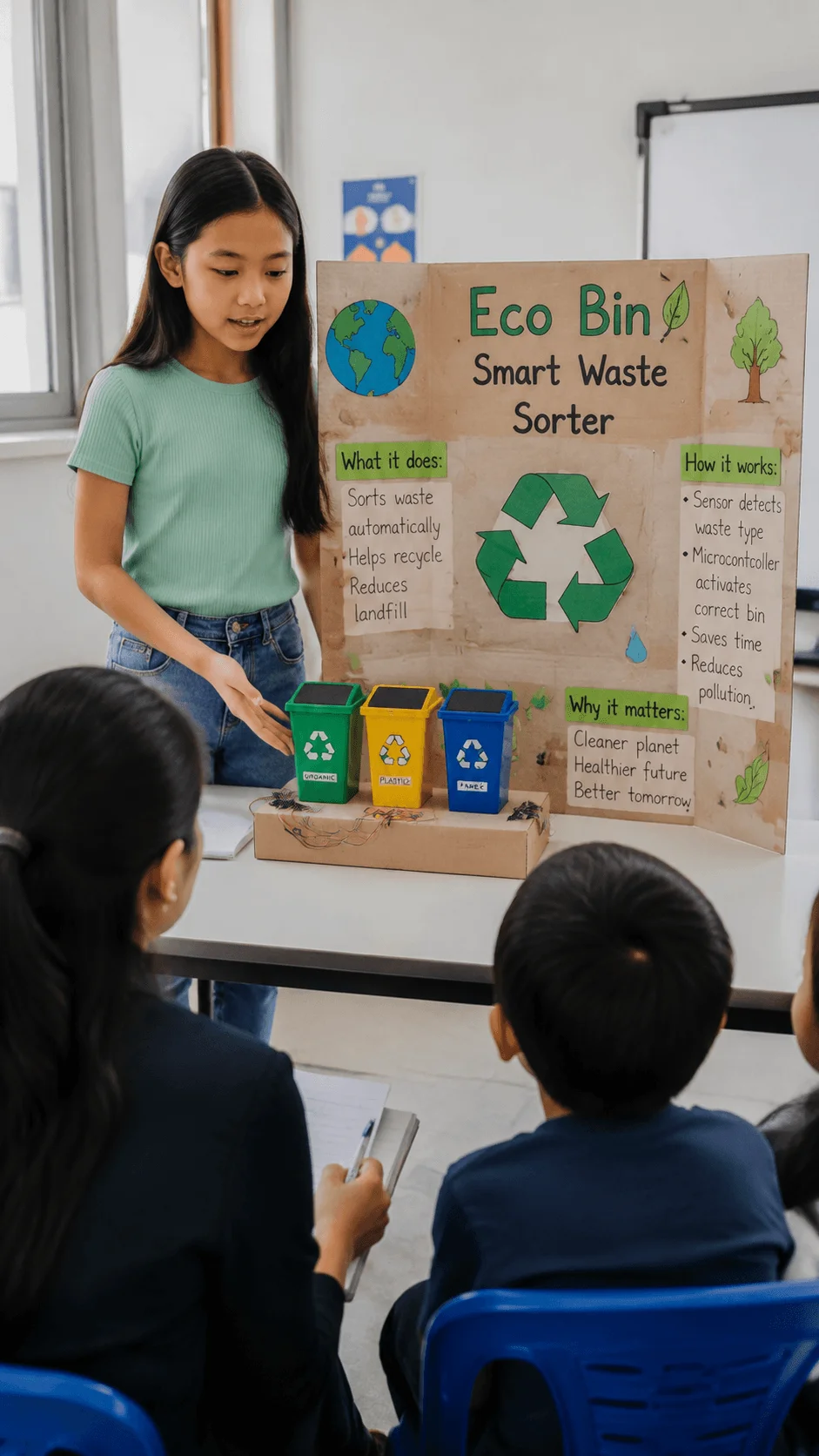
Teachers can encourage students to improve their projects after receiving feedback, helping them understand that successful innovation often develops through continuous learning and refinement.
Only presentation materials, recycled supplies, and creative thinking are required. This activity supports Industry, Innovation and Infrastructure, Quality Education, Climate Action, and Responsible Consumption and Production.
9. Community Sustainability Mapping
Community Sustainability Mapping helps children explore their neighbourhood through a completely new perspective. Instead of simply walking through familiar streets, they begin looking for features that support sustainable living as well as areas that could be improved.
Children identify parks, recycling facilities, bicycle paths, public transport stops, green spaces, community gardens, water sources, and locations where litter or pollution is common. They then create a simple map showing both positive examples and opportunities for improvement.
This project encourages children to understand that sustainability involves entire communities rather than individual actions alone. They learn that thoughtful planning, public services, and community participation all contribute to healthier places to live.
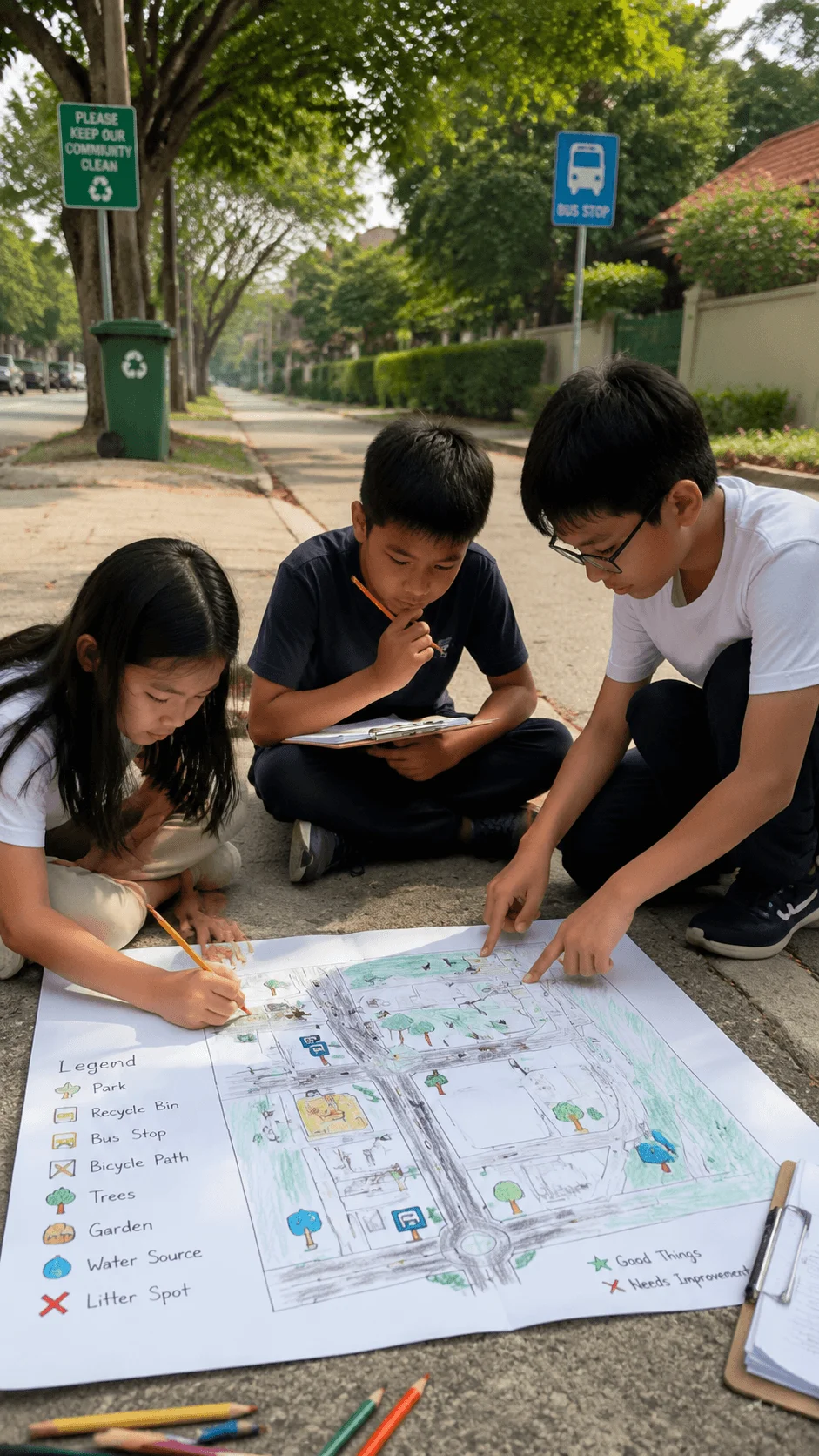
Teachers can encourage students to compare different neighbourhoods or discuss ideas that could improve local sustainability. Parents may also organise family walks that allow children to observe their surroundings more carefully.
The activity strengthens observation, communication, teamwork, and critical thinking while helping children appreciate the importance of active citizenship.
Only paper, pencils, and local observations are required. The activity supports Sustainable Cities and Communities, Climate Action, Life on Land, and Quality Education.
10. Eco Storytelling with Digital Media
Children love telling stories, and digital technology offers exciting new ways to share sustainability messages. Eco Storytelling with Digital Media combines creativity with environmental education by encouraging children to create videos, digital presentations, podcasts, photo journals, or narrated slideshows about sustainable living.
Instead of simply learning facts, children explain ideas through their own words and creative style. They might tell the story of a growing tree, document a recycling project, interview family members about saving energy, or create a short presentation showing how small actions protect nature.
This activity builds communication, creativity, digital literacy, and confidence while helping children understand sustainability on a deeper level. Explaining ideas to others often strengthens their own understanding and encourages long term learning.
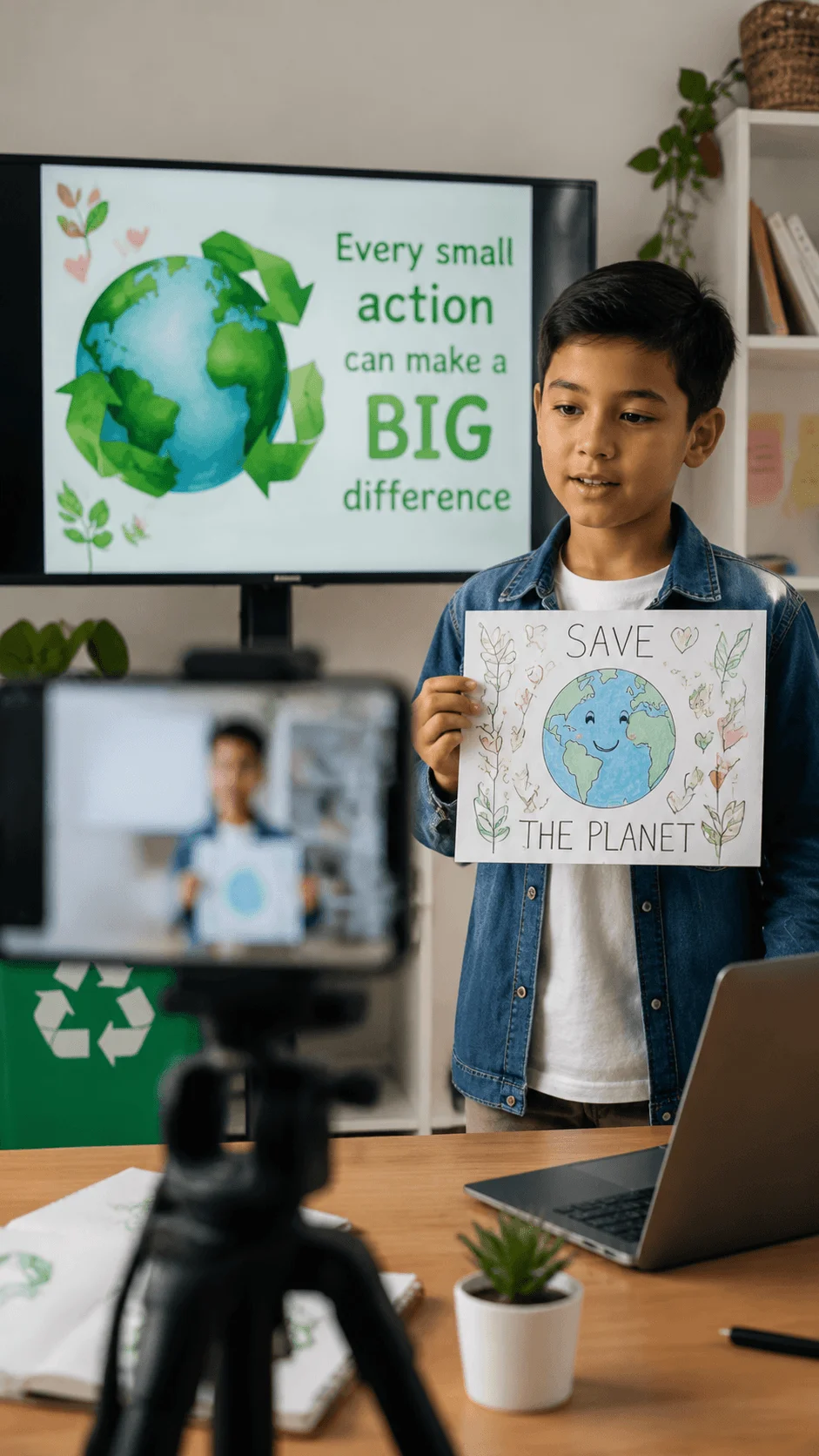
Teachers can organise classroom presentations where children share their projects and discuss what inspired their work. Parents can also encourage children to create digital stories about family sustainability efforts.
Only simple digital devices and creative ideas are needed. The activity supports Quality Education, Climate Action, Responsible Consumption and Production, and Sustainable Communities.
11. Green Entrepreneurship Activity
This activity introduces children to the exciting idea that businesses can solve environmental problems while serving their communities. Instead of focusing only on making money, children learn how entrepreneurs can create products and services that protect natural resources and improve everyday life.
Children begin by identifying an environmental challenge within their school or neighbourhood. They then develop simple business ideas that encourage sustainable living. Examples include reusable shopping bags, handmade recycled notebooks, seed planting kits, compost containers, or reusable gift packaging.
Throughout the project, children learn how creativity, planning, teamwork, and responsibility work together. They also discover that successful businesses often solve real problems instead of simply selling products.
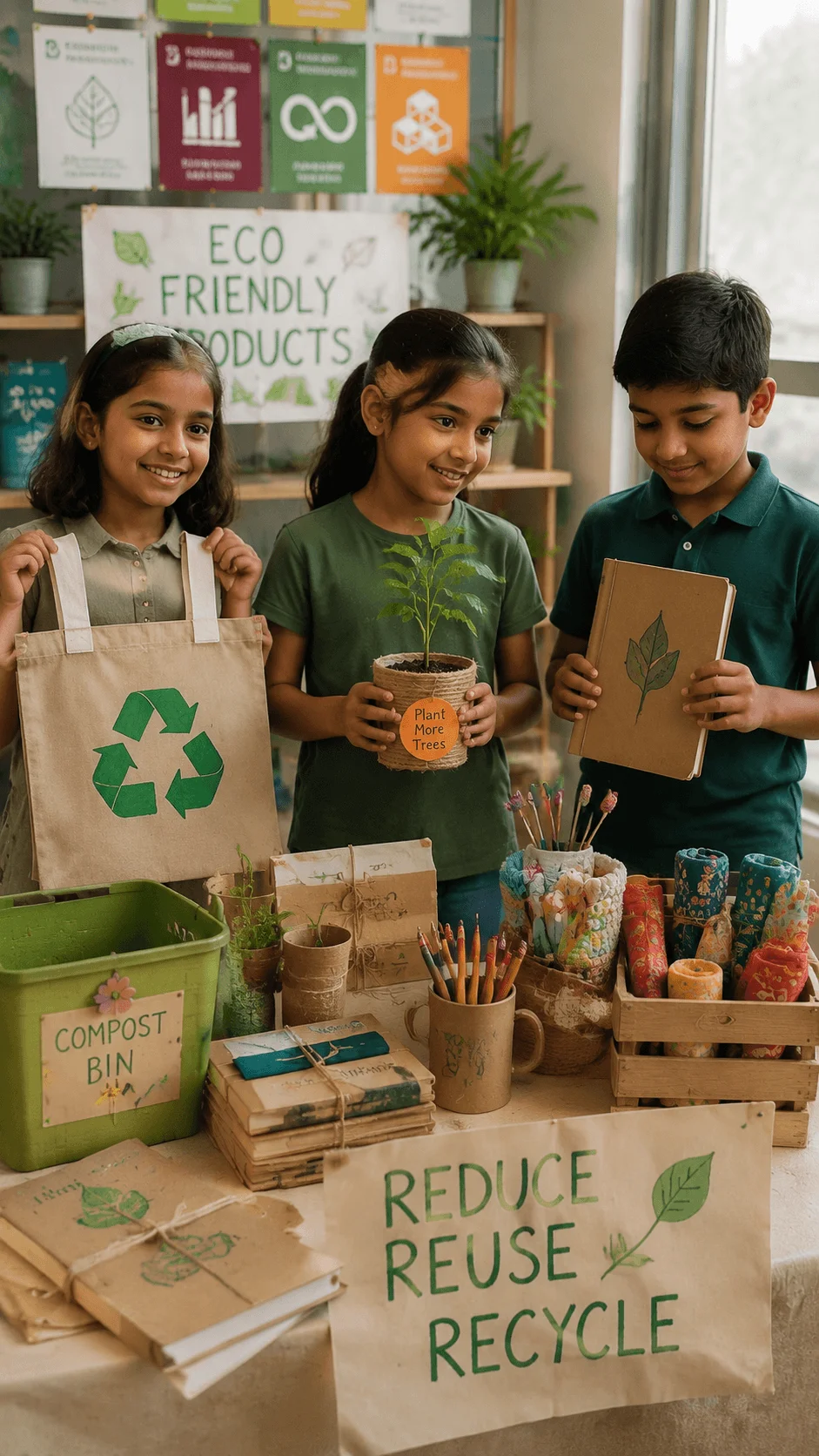
Teachers can organise small classroom exhibitions where children present their ideas and explain how their products benefit both people and the environment. Parents can support the activity by encouraging children to improve their ideas through feedback and discussion.
The project builds leadership, communication, creativity, financial awareness, and innovation while encouraging responsible thinking from an early age.
Simple recycled materials, paper, and presentation supplies are all that are required. This activity supports Decent Work and Economic Growth, Responsible Consumption and Production, Industry, Innovation and Infrastructure, and Quality Education.
12. One Week Sustainable Living Challenge
The One Week Sustainable Living Challenge helps children understand that sustainability is built through daily habits rather than one time events. Each day focuses on a different positive action, allowing children to experience how small changes gradually become meaningful routines.
One day may focus on saving water, another on reducing food waste, another on walking instead of using a vehicle whenever possible, while another encourages caring for plants or reducing unnecessary electricity use. By the end of the week, children realise that sustainability can easily become part of everyday life.
The activity also encourages families and classrooms to work together toward shared goals. Children often become enthusiastic about comparing ideas, discussing their experiences, and celebrating progress. These conversations strengthen motivation and make sustainable habits feel rewarding instead of difficult.
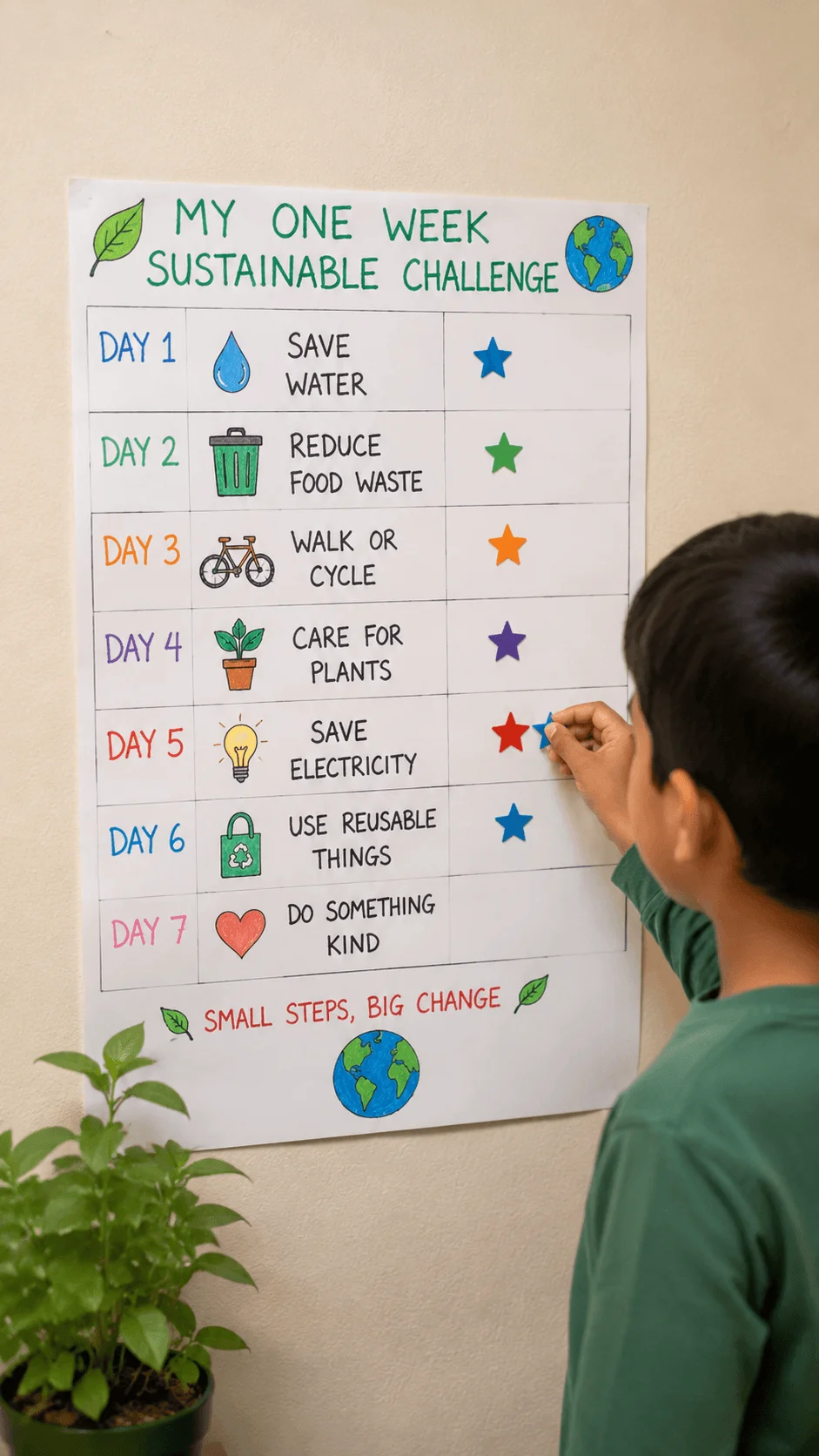
Teachers can extend the challenge by encouraging children to reflect on which activities they enjoyed most and which habits they would like to continue throughout the year.
Only simple daily planning and family or classroom participation are needed. The challenge supports Responsible Consumption and Production, Climate Action, Good Health and Well Being, Clean Water and Sanitation, and Sustainable Cities and Communities.
Tips for Teachers and Parents to Encourage Sustainable Development Activities
Children develop stronger sustainability habits when learning feels enjoyable and meaningful. Parents and teachers should focus on creating opportunities for exploration instead of expecting perfect results. Encouraging children to ask questions, share ideas, and experiment with different solutions builds confidence and keeps them interested.
Real life examples also make learning more memorable. Visiting local parks, community gardens, recycling centres, or nature reserves allows children to see sustainability in action. Simple conversations during daily routines can also reinforce important lessons about saving water, reducing waste, and respecting nature.
Celebrating progress is equally important. Praising effort rather than perfection encourages children to continue learning and trying new ideas. Allowing children to make decisions during projects also helps them develop independence and leadership skills.
Most importantly, adults should lead by example. When children regularly see parents and teachers making sustainable choices, they are far more likely to adopt those habits themselves.
How Sustainable Development Activities Support the United Nations Sustainable Development Goals
These Sustainable Development Activities for Kids introduce children to the values behind the United Nations Sustainable Development Goals in a practical and engaging way. Rather than memorising global goals, children experience them through meaningful actions that connect learning with everyday life.
Activities that reduce waste support Responsible Consumption and Production by encouraging children to use resources wisely. Gardening projects promote Zero Hunger while teaching respect for food production and healthy ecosystems. Biodiversity projects strengthen understanding of Life on Land by helping children appreciate local wildlife and natural habitats.
Energy saving investigations and climate focused activities encourage Climate Action by showing children how daily decisions influence the environment. Community mapping projects highlight the importance of Sustainable Cities and Communities, while collaborative classroom projects strengthen Quality Education through active learning and teamwork.
As children complete these activities, they begin to recognise that every positive action contributes to a healthier planet and stronger communities. This understanding helps them become thoughtful citizens who are prepared to make responsible decisions throughout their lives.
Conclusion
Sustainable Development Activities for Kids provide far more than enjoyable classroom projects. They give children the opportunity to explore the world with curiosity, develop valuable life skills, and understand how their everyday choices influence the future of people and the planet. Through meaningful experiences such as investigating biodiversity, reducing food waste, designing creative solutions, and caring for local communities, children develop confidence, responsibility, and a lasting appreciation for sustainable living.
The greatest strength of these activities is that they transform complex global challenges into practical lessons that children can understand and enjoy. Every project encourages creativity, teamwork, problem solving, and thoughtful decision making while helping children build habits that will benefit them for years to come.
Whether you are a parent, teacher, or homeschool educator, introducing just one of these activities can inspire meaningful conversations and lasting positive change. By encouraging children to take small but consistent actions today, we help prepare a generation that is ready to protect the environment, strengthen communities, and create a more sustainable future for everyone.