DIY Zero Waste Christmas Stockings Using Old Clothes
DIY Zero Waste Christmas Stockings Using Old Clothes offer a creative way to decorate for the holidays without buying another set of seasonal accessories. A forgotten sweater, worn flannel shirt or pair of old jeans can become a practical stocking that adds warmth and personality to the mantel. The best part is that you can choose textures and colors that already belong in your home.
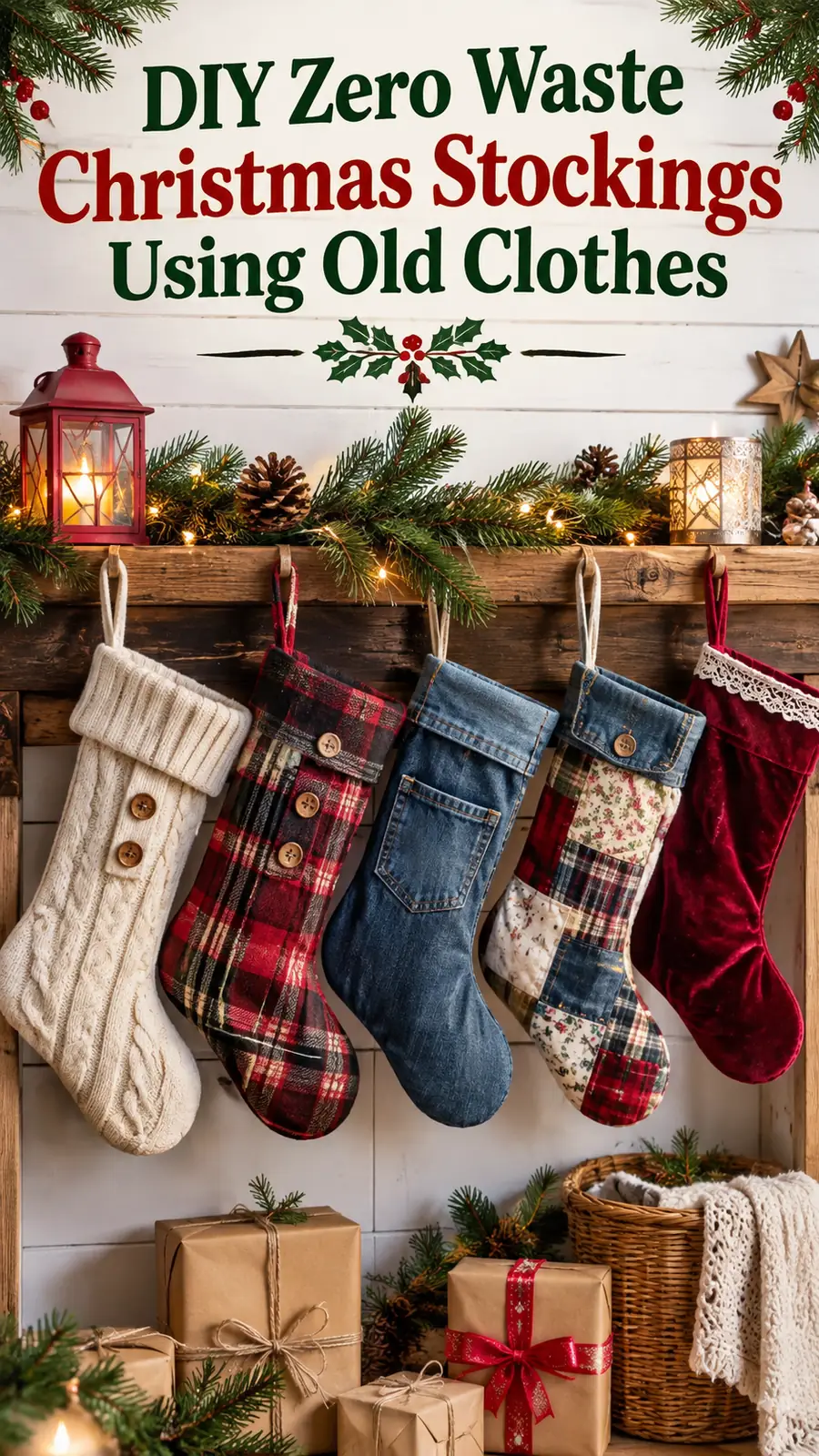
Making Christmas stockings from used clothing can also preserve cherished fabrics and reduce the demand for new materials. Whether you are comfortable with a sewing machine or prefer a simple hand stitched project, these twelve ideas offer a range of looks and skill levels. The guidance below covers which fabrics work best, how to make a lasting stocking, and ways to use leftovers wisely.
Cozy Cable Knit Stockings from Old Sweaters
A sweater that has shrunk or developed a small hole can become one of the coziest stockings on the mantel. Choose a tightly knitted sweater so the fabric holds together after cutting. Cable patterns, ribbed hems and neutral winter colors look particularly lovely in a rustic living room.
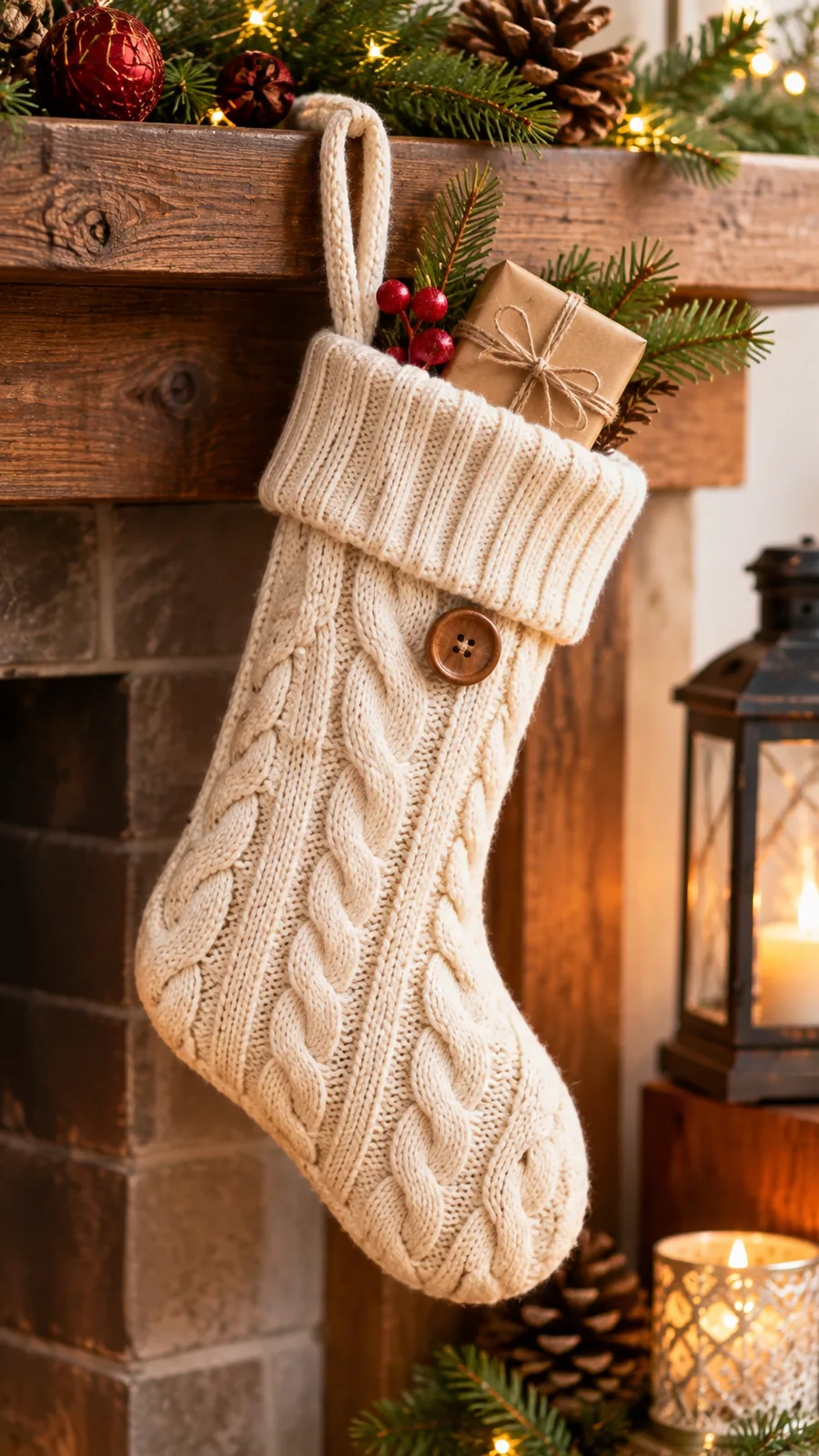
Place a paper pattern over the clean sweater and trace two matching pieces, remembering that the second piece needs to face the opposite direction. Leave about half an inch around the outline for stitching. Join the pieces with their attractive sides facing inward, keep the opening free, and turn the finished shape outward. Save a section of the sweater hem for a matching cuff.
If the knit feels stretchy, add a lining cut from an old cotton shirt. A fabric hanging loop made from a narrow offcut completes the project without requiring a new ribbon.
Rustic Plaid Stockings from Flannel Shirts
Well loved flannel shirts are ideal for farmhouse Christmas decor because their checks already feel festive. Red, forest green, cream and navy combinations can look seasonal without any additional embellishments.
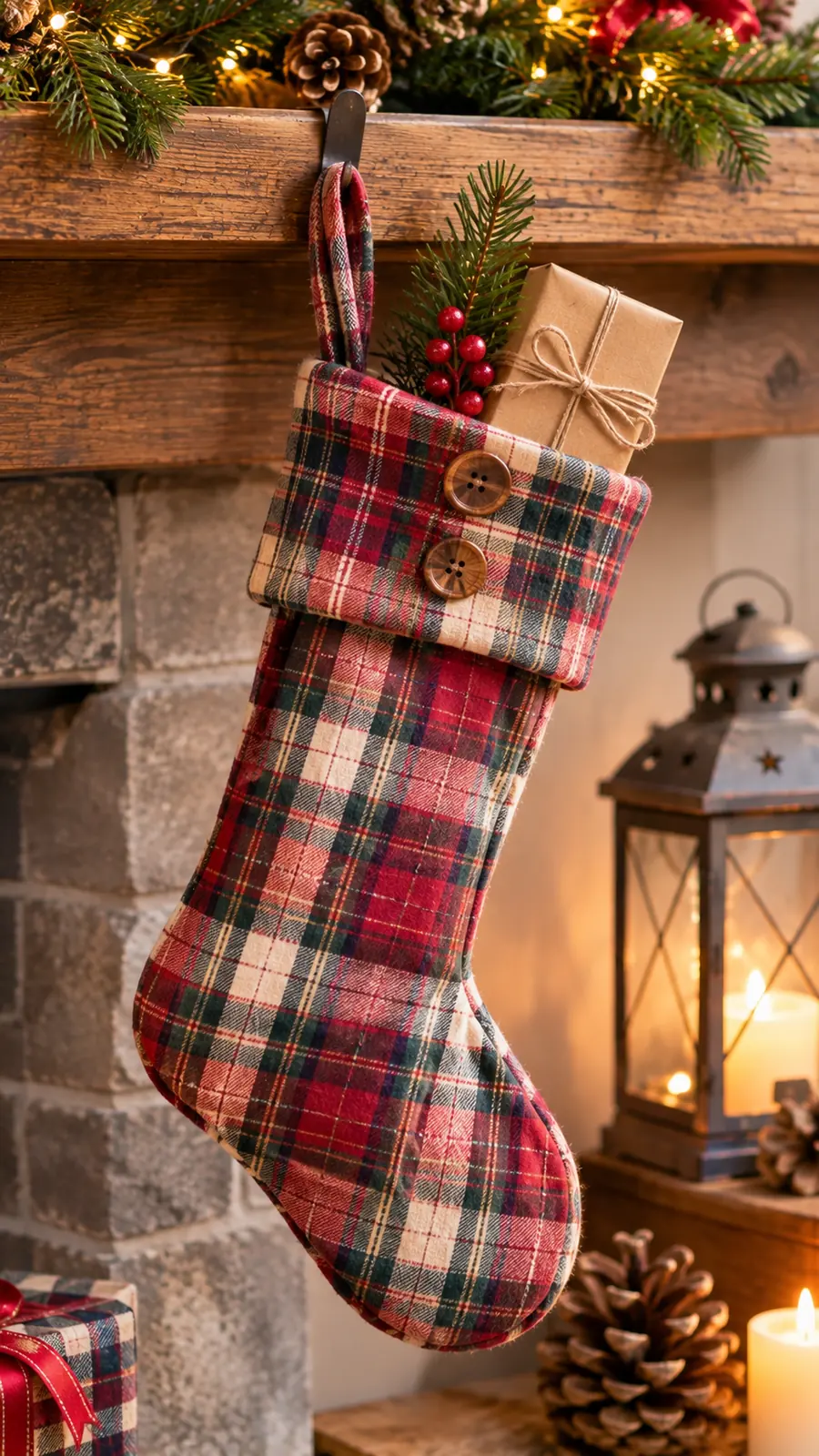
Lay the pattern diagonally across a plaid shirt if you want a playful look, or line up the checks carefully for a more tailored finish. Cut two pieces, join their sides, and add a cuff from a contrasting part of the same shirt. A sleeve or collar may provide enough material for the cuff, depending on the size of the stocking.
Keep an original button or pocket visible on the front for character. Pockets can hold a little handwritten Christmas note rather than heavy gifts. Since flannel is generally easy to stitch, this approach is approachable for beginners.
Denim Christmas Stockings from Worn Jeans
Old jeans make sturdy reusable stockings with a casual, modern finish. Denim works especially well for families that want decorations they can bring out every December without worrying about delicate material.

Open the jeans along a seam and press the fabric flat before tracing the pattern. Try to avoid placing bulky seams exactly where the curved toe will be stitched. Use the lighter reverse side of the denim for a contrasting cuff, or attach a strip from an old cotton shirt for a softer appearance.
An original jeans pocket makes a distinctive decoration on the front. If the pocket will hold a note, attach it before assembling the two stocking panels. Reuse an intact belt loop as the hanging tab, provided its stitching is secure.
Soft Stockings from Outgrown Baby Clothes
Children grow out of clothing so quickly that a few meaningful pieces often remain tucked away in drawers. Turning an outgrown baby outfit into a small Christmas stocking can preserve its memories while giving it a practical role in annual celebrations.
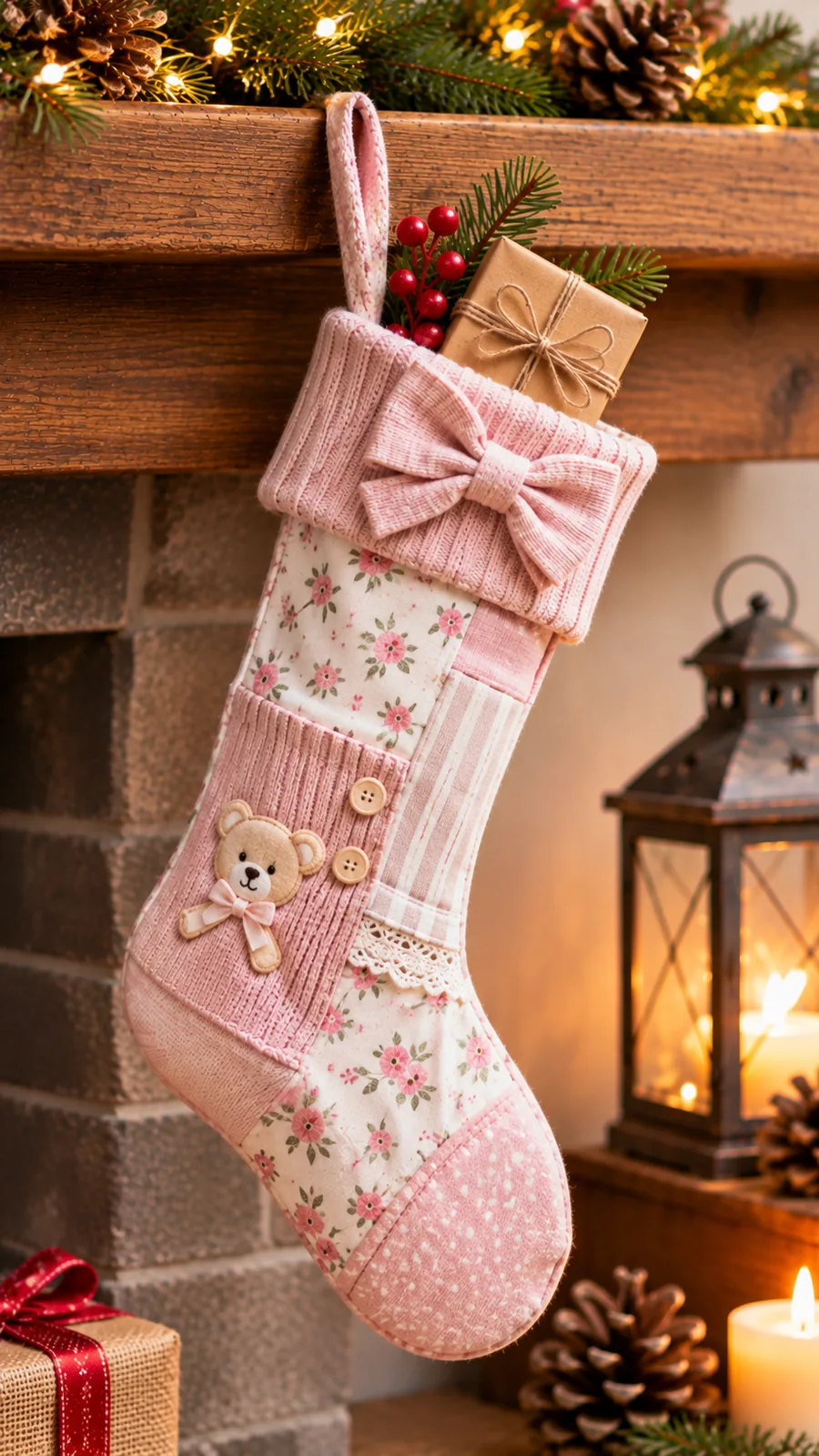
For a miniature stocking, a baby sweater or romper might provide enough fabric on its own. For a full size version, combine several garments into a patchwork panel before tracing the stocking shape. Keep recognizable details such as a tiny pocket, a patterned sleeve or a favorite printed motif near the top.
Use a stable lining so the finished stocking does not stretch under lightweight contents. If preserving the original clothing matters, consider using only damaged pieces or spare fabric instead.
Patchwork Stockings from Mixed Clothing Scraps
Patchwork is a useful solution when no single garment contains enough fabric for an entire stocking. Collect larger pieces from cotton shirts, skirts, old pajamas and other washable textiles.
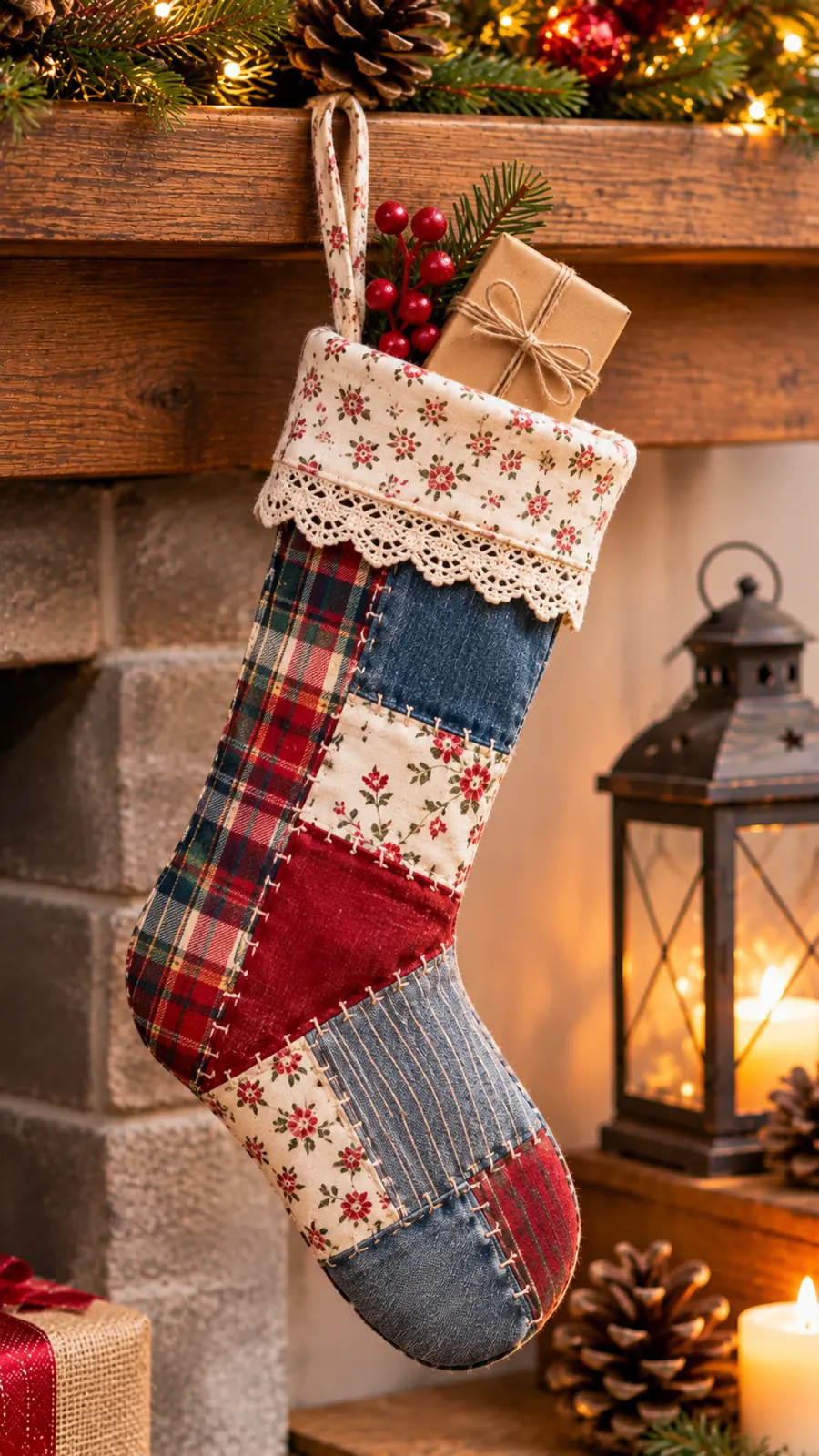
Arrange squares, rectangles or gentle strips into two panels slightly larger than your paper pattern. Join the pieces into each panel first, then trim the panels to the stocking shape. This approach gives you more freedom to mix colors without wasting narrow offcuts. A calm palette of cream, burgundy and muted green suits traditional decor, while bright prints work beautifully in a children’s room.
Back delicate patchwork with a reused lining, and reinforce seams that meet near the heel. Save the tiniest scraps for fabric bows or decorations rather than throwing them away.
Elegant Stockings from Old Velvet Dresses
An outdated velvet dress or skirt can supply fabric for stockings with a more formal, luxurious look. Deep green, burgundy and midnight blue velvet can feel festive even without sequins or plastic decorations.

Velvet has a directional nap, meaning its color and texture can look different when stroked in opposite directions. Position both stocking pieces in the same direction before cutting to maintain a coordinated appearance. Join the panels carefully and avoid stretching the edges. A lining from an old cotton pillowcase or shirt can add strength while keeping the inner surface smooth.
Finish the opening with a narrow cuff from the dress lining or a contrasting cotton remnant. If the garment has reusable covered buttons, arrange a few along the outer edge as decoration.
No Sew Stockings from Felted Wool Clothing
A wool sweater that accidentally shrank may be difficult to wear but surprisingly useful for crafts. When the fabric has become dense and feltlike, its edges may resist fraying better than loose knit fabric.

Trace the stocking shape on two sections of the dense fabric. If you want to avoid stitching, use an existing fabric adhesive suitable for the material, following its label and allowing it to cure fully before hanging. Leave the upper opening unsealed and attach a wide fabric loop securely. This option is best for decorative stockings and extremely lightweight contents, not heavy gifts.
Test the bond on a leftover piece first. For stronger and longer lasting stockings, a hand sewn edge is preferable. Keep the natural wool texture visible and decorate sparingly with scraps from another garment.
Striped Stockings from Old T Shirts
Cotton T shirts offer an easy way to create colorful stockings from clothes that have lost their shape. Their softness is appealing, but stretchy jersey can sag when filled.

Choose a shirt with cheerful stripes, a favorite color or a design worth keeping. Cut the stocking pieces from the shirt and matching pieces from your lining fabric. Join each outer panel to its corresponding lining section before assembling the stocking, or construct a separate lining that fits neatly inside.
A broad cuff from the shirt’s bottom hem can make the finish look intentional. If you have several unwanted shirts, combine their colors into alternating stripes. Avoid stretching the fabric while working, and use the stocking mainly for lightweight treats.
Classic Stockings from Old Button Down Shirts
A cotton button down shirt offers an excellent starting point because its woven fabric is generally stable and easy to shape. White, blue or patterned shirts can become understated stockings that complement almost any Christmas color scheme.

Position the stocking template so the front includes a row of securely fastened buttons, if the shirt is wide enough. Sew the placket closed at the points where the stocking will carry contents. Another option is to use the plain back panel for the body and make a contrasting cuff from the sleeves.
A shirt collar can become a decorative accent near the opening, although it should not interfere with reaching inside. Stitch a hanging loop from folded shirt fabric and secure it through multiple layers.
Quilted Stockings from Old Pajamas
Soft pajamas with cheerful prints can become cozy stockings that suit children’s rooms, guest bedrooms or a relaxed family mantel. Consider pajamas that are worn at the knees but still have usable material elsewhere.
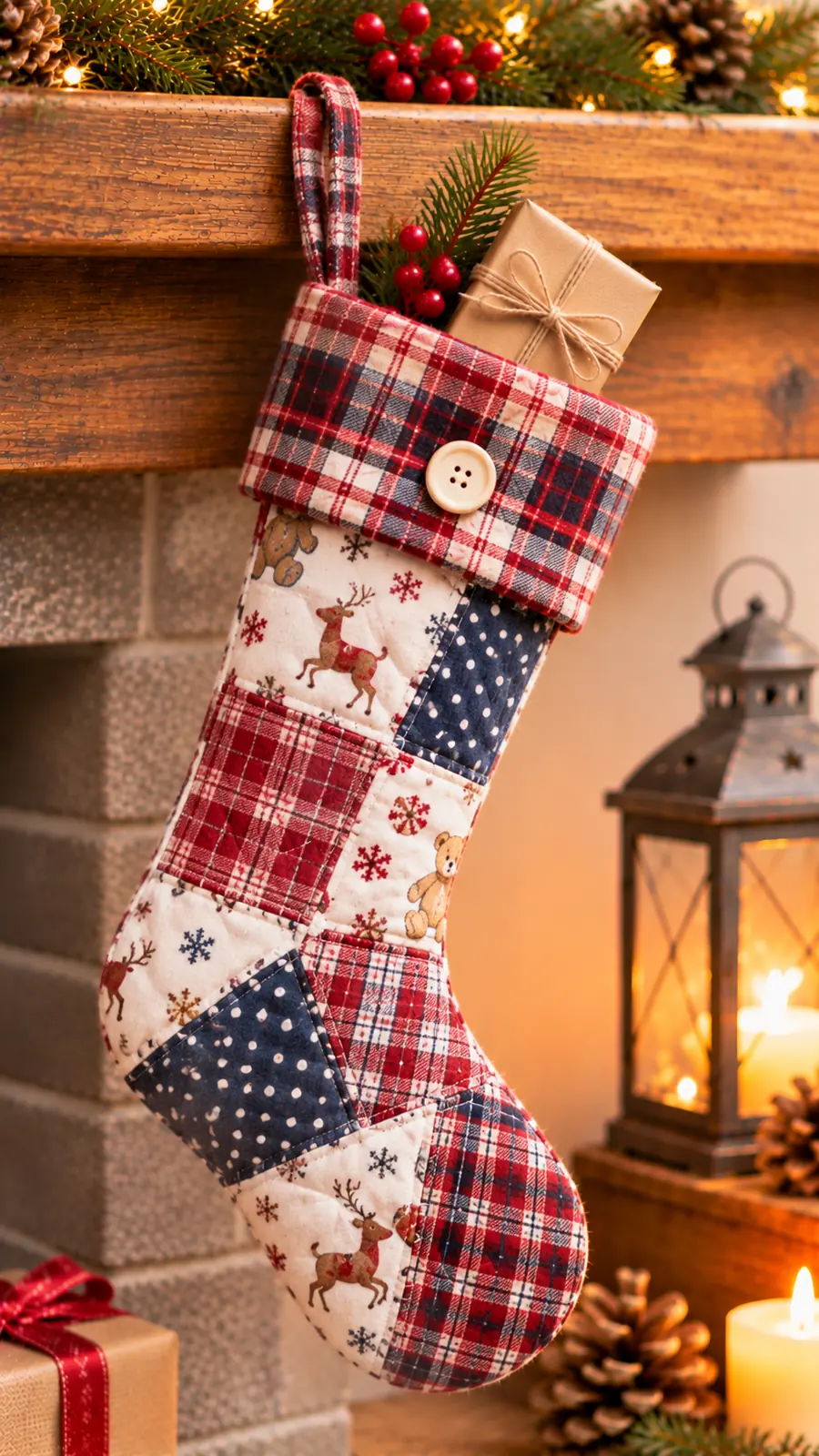
For a quilted appearance, place an old cotton layer behind each patterned panel and stitch gentle, evenly spaced lines across the fabric before cutting the final stocking shapes. This creates subtle texture without requiring newly purchased batting. Keep the extra layers thin enough that the toe can turn neatly.
Match a plain cuff to one of the colors in the pajama print. A small fabric star or heart made from a leftover sleeve adds a personalized touch. Before filling, check that all decorative pieces are firmly attached.
Minimalist Linen Look Stockings from Old Trousers
Old trousers in beige, stone, cream or olive tones can become simple stockings with a natural appearance. Cotton or linen blend trousers are especially useful because they often offer broad fabric panels with little pattern matching required.

Choose an area without heavy pocket seams or worn knees. Trace your stocking pattern and cut two mirrored pieces. Stitch the sides together, then turn the shape and press the curves gently. Use a folded piece of the same trouser fabric for a narrow cuff, or leave the top simply hemmed for a cleaner silhouette.
For a discreet personal detail, embroider an initial using leftover thread or attach a fabric name label from another garment. Avoid loading the stocking with bulky ornaments. The beauty of this design comes from its soft structure and restrained colors.
Personalized Memory Stockings from Family Clothing
Some clothing has sentimental value long after it stops being wearable. A grandparent’s shirt, a child’s favorite sweater or a piece of family holiday clothing can form the basis of a meaningful Christmas stocking.

Choose one garment as the main fabric and incorporate smaller recognizable pieces from others. For example, an old shirt pocket might sit on a sweater stocking, while a tiny plaid cuff recalls another family favorite. Plan the arrangement on paper before cutting, especially if the fabric is limited or irreplaceable.
Stitch the year, a name or a brief message into an accessible corner with contrasting thread. Add a lining to protect fragile fabric and make the stocking easier to handle. Store these keepsakes carefully between holidays and use them for lightweight gifts.
Choose Clothing and Prepare a Reusable Stocking Pattern
Start by checking your wardrobe, repair basket or donation pile for garments that are no longer useful as clothing. Prioritize pieces with permanent stains in small areas, worn knees, damaged sleeves or awkward sizing while keeping the strongest fabric panels for your stocking. Clothing that someone else could still wear may be better donated or passed along.
Wash or clean each garment according to its care label, then dry it fully. Check for weak patches and carefully remove any hard embellishments that might make sewing difficult. Trace an existing Christmas stocking onto reused paper, or draw a rounded boot silhouette with a broad opening. Add approximately half an inch around the sides and bottom for seams. Make sure the two fabric pieces mirror each other. Keep the same template for future years so your family’s stockings have consistent proportions.
A basic set of supplies includes a paper pattern, pins or clips, thread, a needle or sewing machine and fabric cutting tools. You can reuse buttons, fabric loops and cuffs from the garments themselves. The most sustainable choice is often to work with what is already available rather than buying decorative extras.
Make Stockings Durable Enough to Reuse Every Christmas
The best zero waste project is one that lasts. Secure the hanging loop with several lines of stitching and test it gently before displaying the stocking. Reinforce the top corners, where the weight of small gifts tends to pull hardest. For a soft sweater or stretchy shirt, a lining made from an old woven garment will help the finished shape stay neat.
If the stocking will hold heavier contents, avoid relying only on glue or a delicate knit. Hang it from a sturdy stocking holder that is appropriate for the weight, and never suspend heavy filled stockings near candles, flames or exposed heat sources. Fabric decorations should stay clear of active fireplaces and heaters.
After Christmas, empty the stocking, inspect seams and repair loose sections promptly. Spot clean when practical, or follow the care requirements of the most delicate fabric used. Allow everything to dry before storing it flat in a clean, dry fabric bag. Save your pattern with the stockings so repairs and matching additions are easy next year.
Reduce Leftover Fabric Waste Without Buying Extra Supplies
True zero waste is a useful goal, but not every small thread or offcut can become something new. Focus on reducing unnecessary purchases, making durable decorations and using as much of the available textile as reasonably possible. A stocking does not need perfect matching fabric or brand new trim to look special.
Larger scraps can become matching cuffs, reusable gift bows, name patches or small ornaments. Narrow strips can be folded into hanging loops or stitched together into decorative braids. Store useful remnants in one small container for future repairs instead of letting them scatter around the house.
If fabric remains in good condition, consider using it for mending clothing before turning it into decorations. When a garment is unsuitable for either, look into local textile recycling requirements, because programs differ and many do not accept every fiber type. The aim is a sensible, repeatable habit that creates less waste over time rather than an unrealistic promise that nothing will ever be discarded.
Conclusion
DIY Zero Waste Christmas Stockings Using Old Clothes turn forgotten garments into decorations with personality, purpose and a story behind them. Sweaters create cozy texture, flannel and denim provide sturdy charm, and mixed scraps make colorful patchwork designs. The most successful projects begin with fabric that is still strong, a reliable pattern and a secure hanging loop.
Choose one old garment you already own and make a stocking that suits your space. Keep the leftovers for repairs or smaller crafts, care for the finished stocking between seasons, and bring it back every December. That simple tradition can make Christmas decorating feel more thoughtful without filling your home with new seasonal purchases.