DIY Christmas Wreath Ideas Using Natural Materials
DIY Christmas Wreath Ideas Using Natural Materials can turn simple garden finds into inviting holiday decorations with personality. Fresh evergreen branches, twisting vines, seed heads, and dried fruit offer colors and textures that artificial ornaments often cannot match. Whether you love a full traditional door wreath or a quiet modern design, there is a natural approach for almost every decorating style.

These twelve ideas use everyday materials and reusable bases. Choose one for your front door or make smaller wreaths for your home.
Classic Evergreen and Pinecone Wreath
An evergreen wreath creates the familiar woodland look that makes a front door feel welcoming in December. Gather small clippings of fir, cedar, pine, or spruce and combine two different needle textures for depth. A grapevine ring provides a reusable foundation, while a willow hoop works when you want the entire design to feel handmade. Before attaching anything, sort your branches into similarly sized bundles so the finished circle looks intentional rather than crowded.

Lay the first bundle along the ring and secure its stems with reusable florist wire or natural twine. Place the next bundle over the previous stems, following the same direction until the base disappears beneath greenery. Tie three pinecones together with wire around their scales and position them slightly off center. This grouping gives the wreath a focal point without covering the foliage.
For a softer finish, allow a few cedar tips to extend beyond the edge. Hang the wreath in a sheltered, cool place and check it regularly for dropped needles. Choose fresh, flexible branches rather than dry brittle ones, especially when decorating an outdoor entrance.
Dried Orange and Cinnamon Wreath
A wreath filled with warm citrus colors offers a beautiful alternative to shiny ornaments. Start with a slim twig or grapevine base, then place dried orange wheels around one side in overlapping groups. Add cinnamon sticks between the oranges and small clusters of seed pods to create a warm, earthy palette. This design suits kitchens, dining rooms, and doors beneath a covered porch.

Dry thin orange slices completely before assembling so they do not trap moisture against the wreath. You can use a dehydrator or a low oven with adult supervision, following the appliance instructions. Once cool, attach the slices by threading twine through the fruit or securing them with wire. Tie cinnamon sticks into short bundles and position them wherever the arrangement needs more texture.
Keep the dried pieces away from damp locations and direct heat. The fragrance may be subtle and fade over time, but the color and shape remain attractive when stored dry. A small linen bow can add softness without overwhelming the natural materials.
Rustic Bare Twig and Willow Wreath
Not every Christmas wreath needs thick greenery. Bare branches create a sculptural, rustic circle that looks especially striking against a painted front door or simple interior wall. Gather flexible willow stems or grapevine lengths and inspect them for damage. Choose stems that bend without snapping, as brittle branches are harder to weave into a neat shape.

Curve the first long stem into a circle and overlap its ends. Wind a second stem around the first, alternating the points where each stem begins so the hoop stays balanced. Continue adding branches until the ring feels strong enough to hang. Secure loose ends discreetly with twine, then tuck in a few evergreen tips or a modest pinecone cluster at the bottom.
Leave most of the woven frame visible to celebrate its natural shape. This wreath can last for several holiday seasons if you remove fresh decorations after Christmas and store the dry ring in a protected place. Its simple structure also makes it easy to update with new greenery next year.
Eucalyptus and Bay Leaf Wreath
Eucalyptus offers gentle movement and muted green tones, while glossy bay leaves add structure. Together, they create a sophisticated botanical wreath that works well in modern homes. Begin with a sturdy vine hoop and arrange a few branches loosely before fastening them. Look for a mix of rounded leaves and longer stems so the design feels layered rather than flat.

Make short bundles with bay leaves near the base and eucalyptus arching outward. Attach them around the hoop with twine or wire, overlapping the stems. A few small cones provide a seasonal accent, although the greenery alone can be equally beautiful. For an airy look, cover only three quarters of the ring and leave a small section of the vine visible.
Fresh leaves eventually dry and change color, so plan for that transformation rather than expecting the wreath to remain identical all season. Keep it out of reach of pets that might chew the foliage and avoid placing fragrant botanical arrangements directly above food preparation surfaces.
Rosemary and Lavender Herb Wreath
A fragrant herb wreath brings the garden into Christmas decorating without relying on ornaments. Rosemary has narrow, evergreen leaves that look festive, while lavender sprigs add a gentle purple gray accent. Use small cuttings from established plants or leftover herb bundles rather than stripping a plant of all its growth. A narrow willow ring keeps this design light.
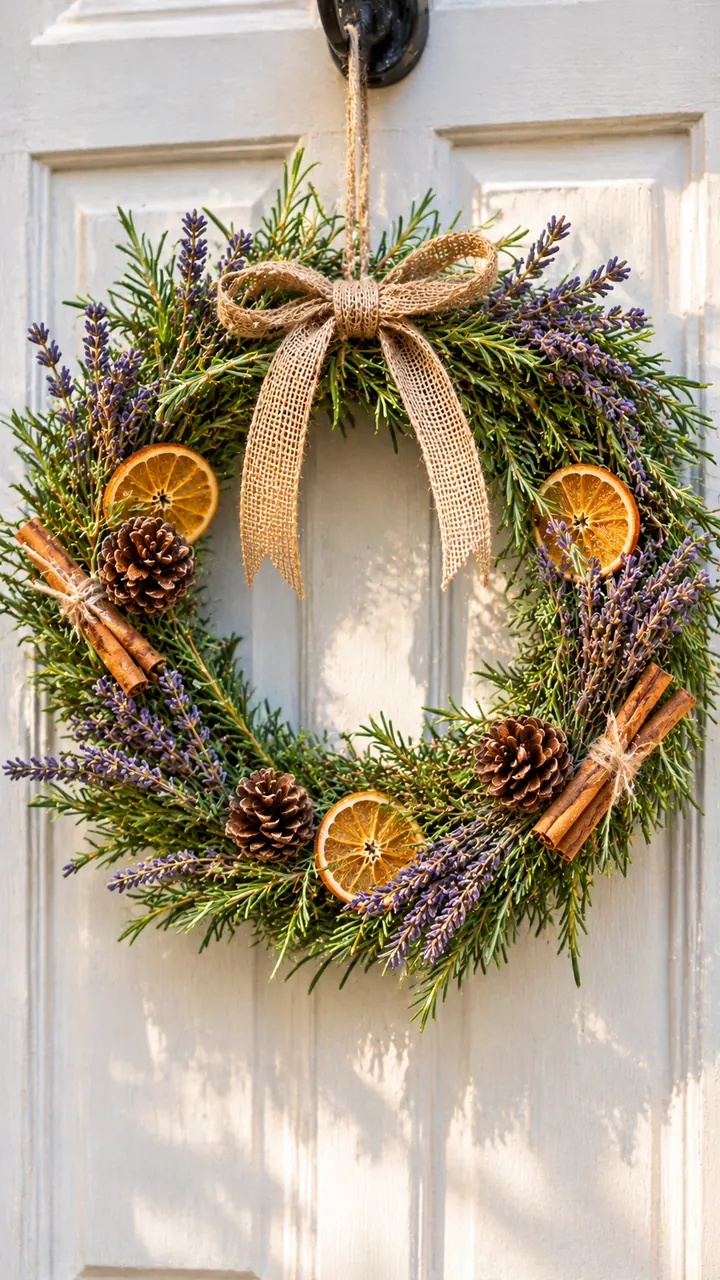
Arrange rosemary tips around the circumference and fasten several at a time, keeping the stems pointed in one direction. Tuck lavender between them at regular intervals for soft color. A little sage can add a third leaf shape, but avoid packing the herbs so densely that their individual textures disappear. A simple cotton ribbon completes the display.
This wreath looks lovely on an interior cupboard or a covered entryway with good ventilation. Herbs dry naturally and may shed, so place a tray below while assembling and handle the finished wreath gently. Use it as decoration, not as a source of cooking herbs after it has been displayed.
Holly and Ivy Woodland Wreath
Holly and ivy bring a traditional Christmas character to a handmade wreath. The pointed holly leaves provide structure, while trailing ivy softens the outline. Work with garden prunings collected with permission and choose a mix of plain green and variegated leaves if they are available. A moss covered base can help support fresh foliage.

Add small holly bundles first, carefully positioning the leaves away from the hanging loop. Fill gaps with ivy stems and allow a few vines to trail naturally along the lower edge. If you want red accents, use decorative rose hips or a securely attached natural ribbon rather than relying on loose berries. Wear gardening gloves when handling sharp holly leaves.
Holly and ivy berries should never be eaten, and fallen material must be kept away from children and pets. Display the wreath where it cannot be pulled down or brushed against constantly. This classic design works particularly well on a sheltered exterior door.
Pinecone and Acorn Forest Wreath
A dry woodland wreath is a clever choice when you want something reusable that requires almost no watering. Collect fallen pinecones and acorns from permitted areas, leaving plenty for wildlife. Choose a variety of cone sizes and inspect each item for insects, moisture, or mold. A tightly woven grapevine ring offers a natural base with gaps that can hold small decorations.
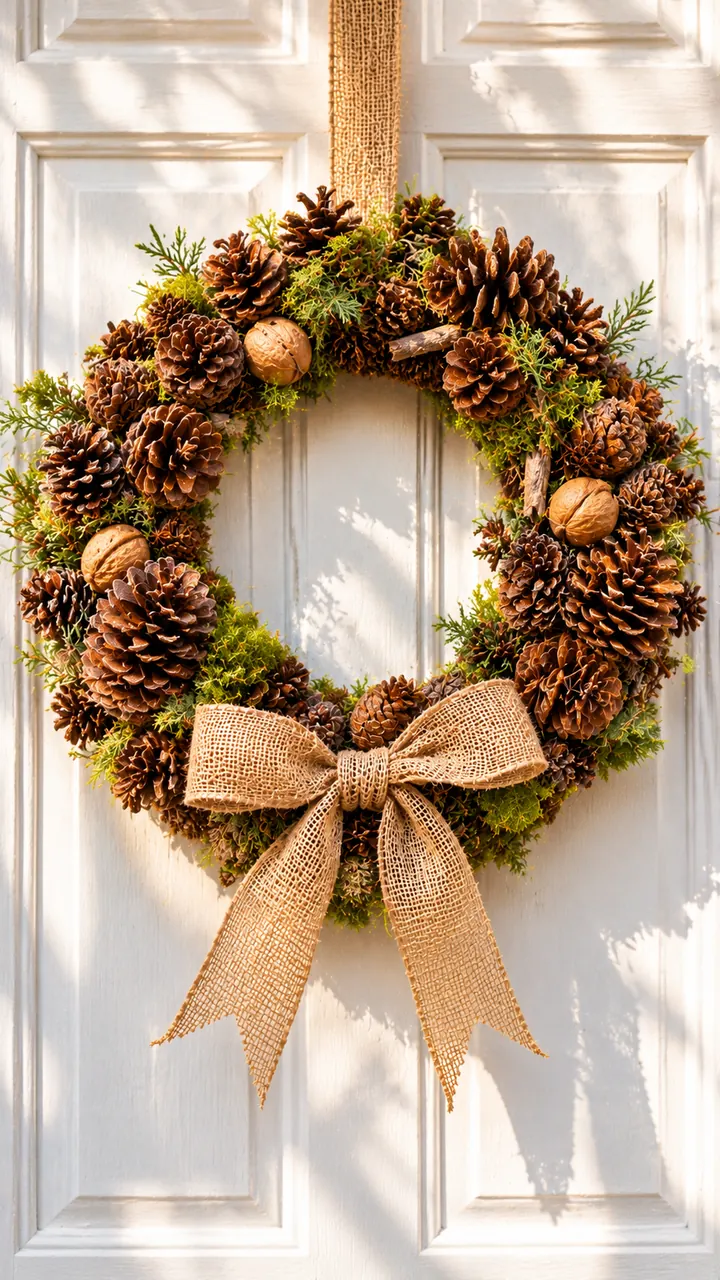
Arrange the largest cones in three separate groups before securing them. Fill the spaces with smaller cones, acorn caps, and a few thin twigs. Use reusable floral wire where possible, wrapping it firmly around cone scales or fastening tied bundles through the base. Try to keep the center opening visible so the wreath does not look like a solid disk.
Because dry nuts and cones can attract curious animals, avoid hanging this wreath near pet resting areas or accessible outdoor feeding spots. Store it in a dry box after the holidays. If something loosens, repair that section instead of discarding the entire wreath.
Dried Hydrangea and Seed Head Wreath
Dried flowers make a natural Christmas wreath feel romantic and vintage. Hydrangea heads introduce soft, papery volume, while grasses and seed heads create delicate movement. Select flowers that have already dried thoroughly and keep the palette limited to cream, tan, faded green, and muted pink for a gentle winter look.
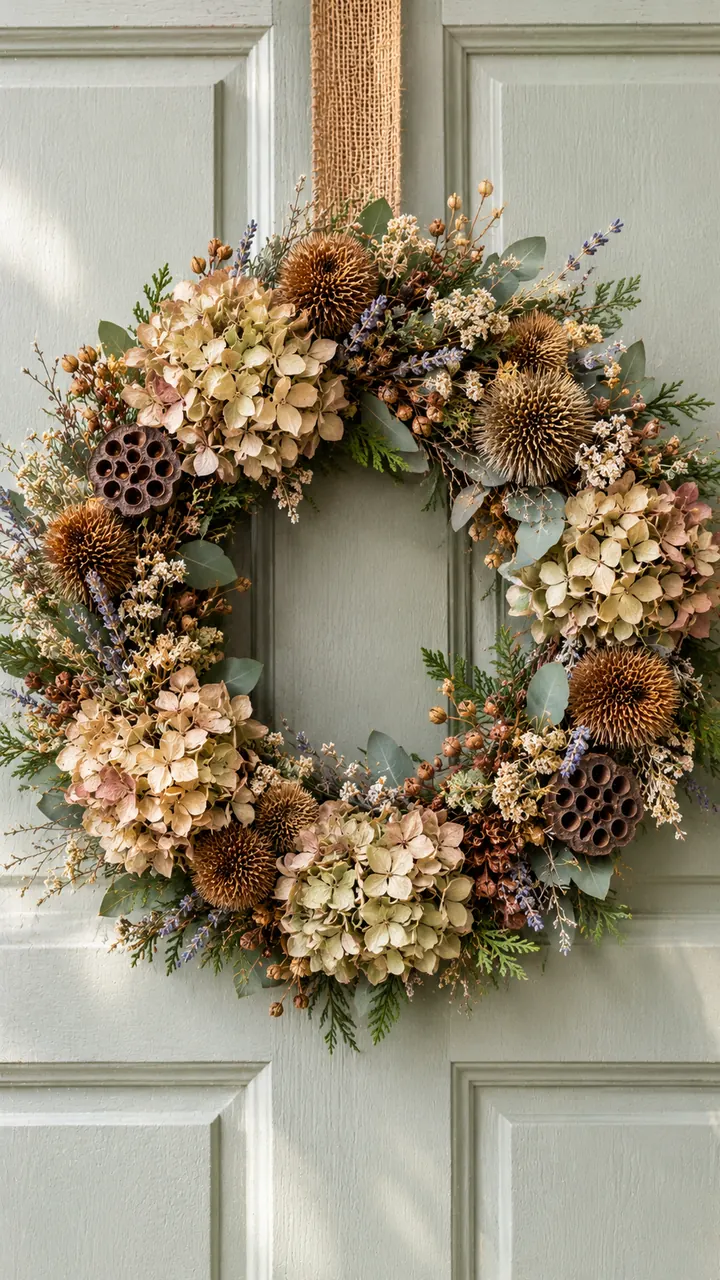
Begin with a twig circle and place the larger hydrangea heads at uneven intervals. Fill between them with clusters of dried grasses or garden seed heads tied into small bunches. Secure the stems into the vine base instead of pressing fragile petals under tight wire. Leave a few bare twigs visible so the materials can breathe visually.
Display this arrangement indoors, away from moisture and strong drafts. Some dried plants are brittle and certain seed heads scatter easily, so choose sturdy varieties and avoid placing the wreath over a busy walkway. Its colors can carry naturally from Christmas into the rest of winter.
Birch Bark and Woodland Branch Wreath
Birch bark introduces a pale, natural contrast to dark evergreen leaves. Rather than peeling bark from living trees, collect pieces that have already fallen or use bark saved from approved pruning work. Pair small clean bark curls with a willow ring and a few cedar sprigs for a quiet Scandinavian inspired appearance.

Build a loose arrangement of branches along one side of the wreath. Slip individual bark pieces between the stems and attach them with thin twine. A few neutral seed pods can break up the pale surfaces. Keep the opposite side mostly open so the curved bark and twig forms become the focus.
Birch bark can curl further as it dries, which adds character but may loosen attachments. Check that each piece is secure before hanging. This wreath is particularly attractive on a dark interior wall or a covered door where rain cannot soften the bark.
Magnolia Leaf and Cedar Wreath
Glossy magnolia leaves provide broad surfaces that contrast beautifully with feathery cedar. If you have access to suitable prunings, choose leaves with rich green upper surfaces and warm brown undersides. The combination makes a dramatic wreath without artificial glitter or ornaments. A strong frame helps support the larger leaves.

Overlap magnolia leaves around the ring with their pointed ends facing the same direction. Turn some leaves over to reveal their brown backs, then tuck cedar branches between them to soften the edges. Keep the attachment points close to the leaf stems, using twine or wire that can be removed later. For balance, make one side slightly fuller than the other.
Magnolia foliage changes as it ages, so use fresh material near the time you plan to display it. Avoid placing the wreath near a heater or strong sunlight. The broad leaves work well on a large door, mantel wall, or covered entrance.
Red Dogwood Stem Winter Wreath
Red twig dogwood creates striking color through its stems alone. This design is especially appealing when you prefer a minimal wreath that celebrates winter branches. Select long, flexible stems from responsible seasonal pruning. Pair the red branches with a little willow or hazel for structure, keeping the overall silhouette open.

Form the first stem into a hoop and weave additional pieces around it. Offset their ends to prevent a bulky patch in one spot. For a contemporary look, leave the red ring almost undecorated. If you prefer something more festive, add a tiny spray of cedar at the base and tie it in place with natural twine.
Because this wreath has little foliage, it avoids the needle drop associated with evergreen arrangements. Let the stems dry completely before storing, and inspect the shape before each reuse. The bold red color looks particularly attractive against white doors or natural wood.
Minimal Asymmetrical Grapevine Wreath
An asymmetrical wreath offers a simple way to highlight natural textures while keeping the design elegant. Start with a visible grapevine ring and decorate only its lower left or right section. Choose a small collection of evergreen sprigs, dried citrus, and two or three pinecones. Limiting the materials helps each one stand out.

Arrange the greenery first so it follows the curve of the hoop, then anchor it with reusable wire. Add a single dried orange slice near the center of the greenery and nestle the cones beside it. Step back and look at the balance before making final adjustments. Leave the other half of the vine ring completely uncovered.
Hang this lightweight wreath on an interior door, in an entry hall, or above a console table. When Christmas ends, remove the seasonal additions and save the grapevine base. You can redesign it next winter without buying another foundation.
How to Choose Natural Materials and a Reusable Base
Choose flexible, healthy greenery. Fir, cedar, and pine create fullness, while willow, grapevine, and hazel form sturdy frames. For dry designs, collect clean fallen cones, bark, seed heads, and flowers. Always obtain permission before gathering materials.
Choose a hoop that matches the planned weight. Small vine rings suit herbs and dried citrus, while larger evergreen arrangements need a firm willow or wire structure. Natural twine is useful for light bundles, and florist wire works better for heavy pinecones. Avoid single use floral foam whenever a reusable frame can do the job. Keep sharp tools with an adult when younger family members help craft.
How to Keep Your Handmade Christmas Wreath Looking Fresh
Fresh and dried wreaths need different care. Evergreen branches stay attractive longer in cool, sheltered conditions than in hot indoor rooms. Check the greenery every few days and lightly mist a suitable moss base when needed, without soaking door paint or dried decorations. Fresh outdoor wreaths may last several weeks, while those in heated rooms often dry much sooner. Individual species and local weather make a difference.
Keep dried orange slices, flowers, cones, and bark protected from rain and condensation. Do not hang wreaths against heaters, candles, open flames, or electrical fixtures. Inspect ribbons and fastenings after windy weather. Before composting greenery, remove all wire, strings, and decorations that cannot break down naturally. Save reusable frames and attachments for next Christmas.
Simple Styling Tips for Doors, Walls, and Small Spaces
Match the wreath to its location. Large evergreen rings suit wide doors, while smaller asymmetrical hoops suit apartment entryways. A restrained color palette lets natural textures stand out.
Pale birch and red dogwood stand out against dark doors, while greenery complements white or wood. Secure and test the hanging loop before display.
Conclusion
The most memorable Christmas wreaths often begin with ordinary natural finds. Pinecones, fallen twigs, evergreen trimmings, dried oranges, and winter stems each bring a different feeling to the season. Choose a style that suits your space, build it around a reliable base, and keep your arrangement simple enough for the materials to shine.
With thoughtful gathering and a little care, these DIY Christmas Wreath Ideas Using Natural Materials can become a satisfying holiday tradition. Save what can be reused, compost suitable greenery after removing attachments, and enjoy creating a different welcoming wreath each year.