Eco Friendly Living Room Ideas for a Stylish Sustainable Home
Creating a sustainable home has become an important goal for many homeowners. As people become more aware of environmental issues and the impact of everyday consumption, interior design is shifting toward more responsible and thoughtful choices. The living room is one of the most important spaces in a home because it is where families gather, relax, and spend a large portion of their time. Designing this space with sustainability in mind can significantly reduce environmental impact while also improving comfort and well being.
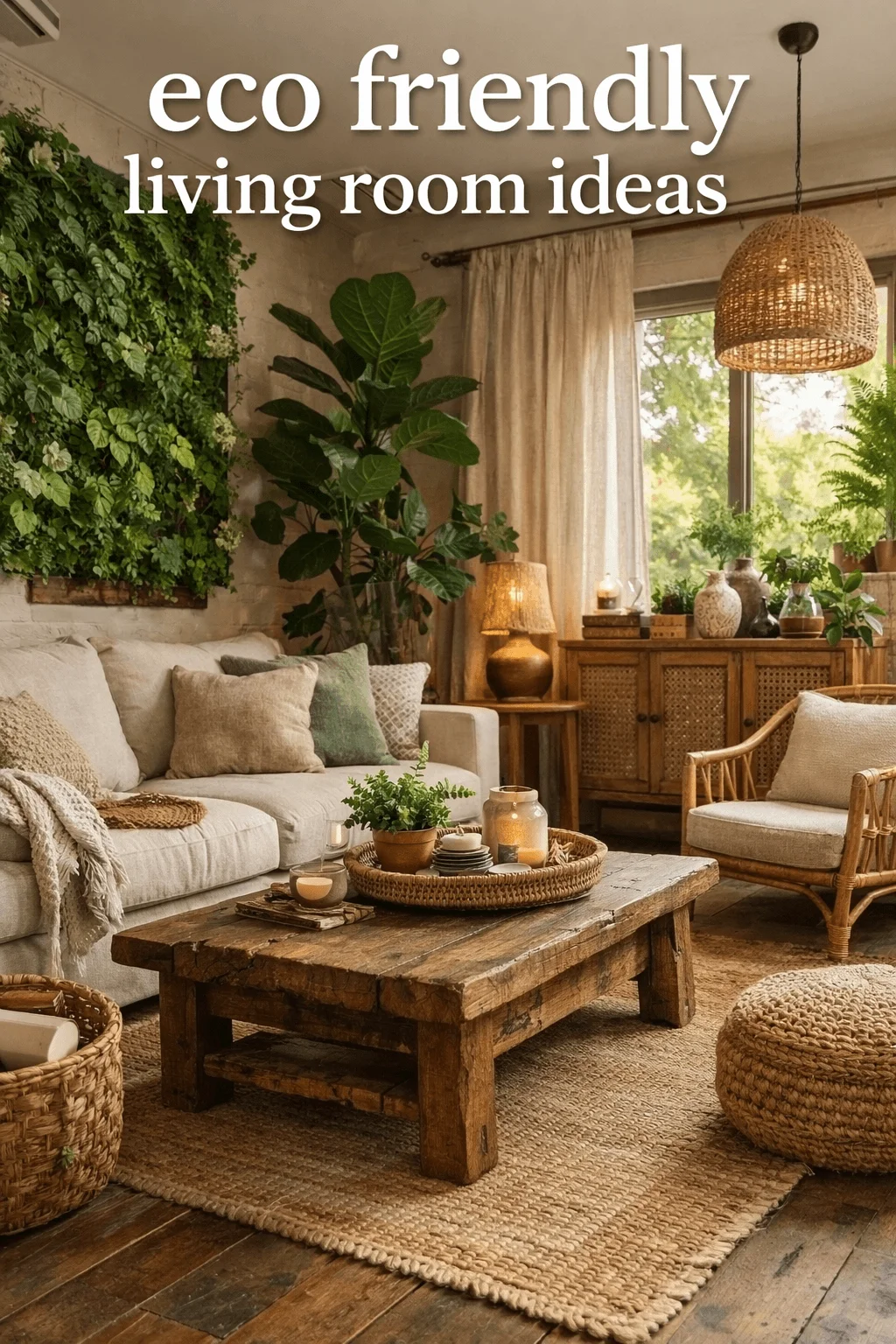
Eco friendly living room ideas focus on using sustainable materials, reducing waste, improving indoor air quality, and choosing furniture and decor that lasts for many years. Rather than following fast changing design trends, sustainable interiors prioritize quality, durability, and natural beauty. A well designed eco friendly living room can feel warm, inviting, and stylish while supporting a healthier planet.
Biophilic Living Room Design With Indoor Plants
Biophilic design is one of the most influential ideas in modern interior design. The concept focuses on strengthening the relationship between humans and nature within built environments. In a living room, this can be achieved by introducing plants, natural light, and materials that reflect the outdoors.
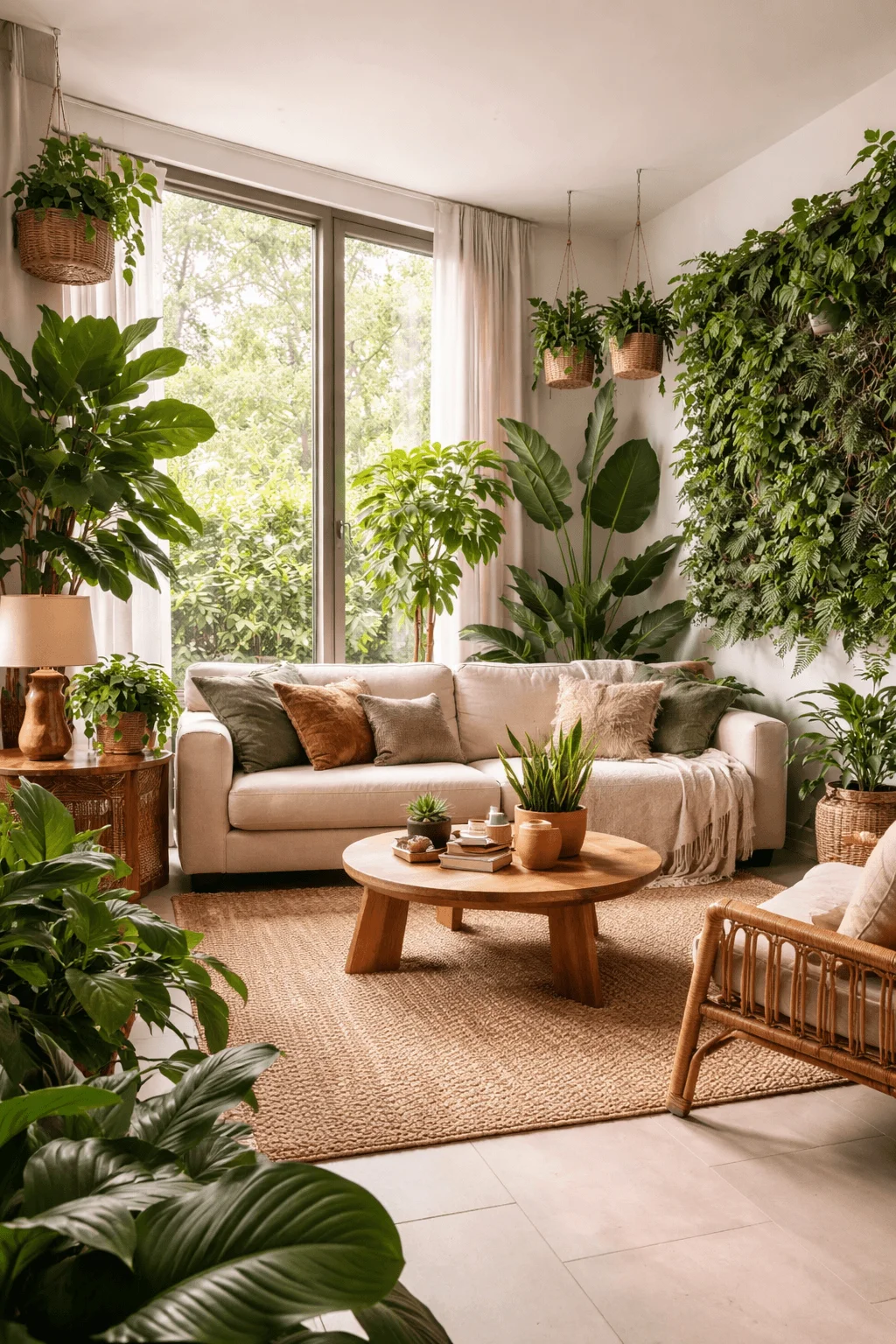
Indoor plants bring life and movement into a living space. Large leafy plants placed near windows can create a strong visual presence and make the room feel vibrant. Smaller plants placed on shelves, side tables, or window sills can add layers of greenery throughout the room. Some homeowners also choose vertical plant displays or living plant walls that turn an ordinary wall into a natural focal point.
Plants also provide functional benefits. They can improve air quality, regulate humidity, and create a calming environment that supports relaxation and mental well being. Even a few carefully chosen plants can dramatically change the atmosphere of a living room.
Reclaimed Wood Furniture
Reclaimed wood furniture has become a popular choice for sustainable interiors because it gives new life to materials that would otherwise be discarded. Instead of cutting down new trees, reclaimed wood comes from older structures such as barns, factories, and historic buildings. These materials are cleaned and repurposed into new furniture pieces.
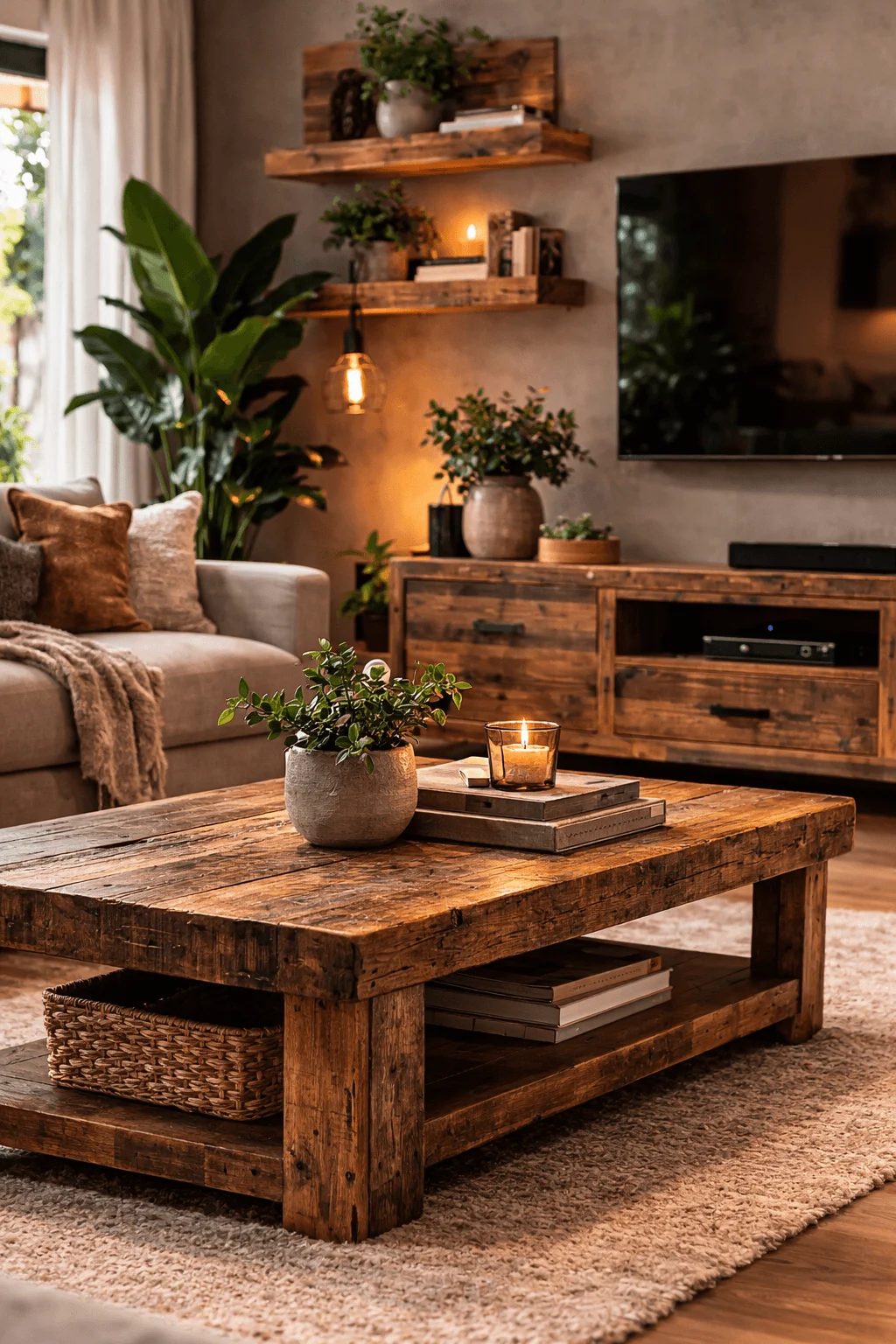
One of the most appealing aspects of reclaimed wood is its unique character. The natural aging of the wood creates textures, grain patterns, and color variations that cannot be replicated with newly manufactured materials. Each piece of furniture becomes one of a kind.
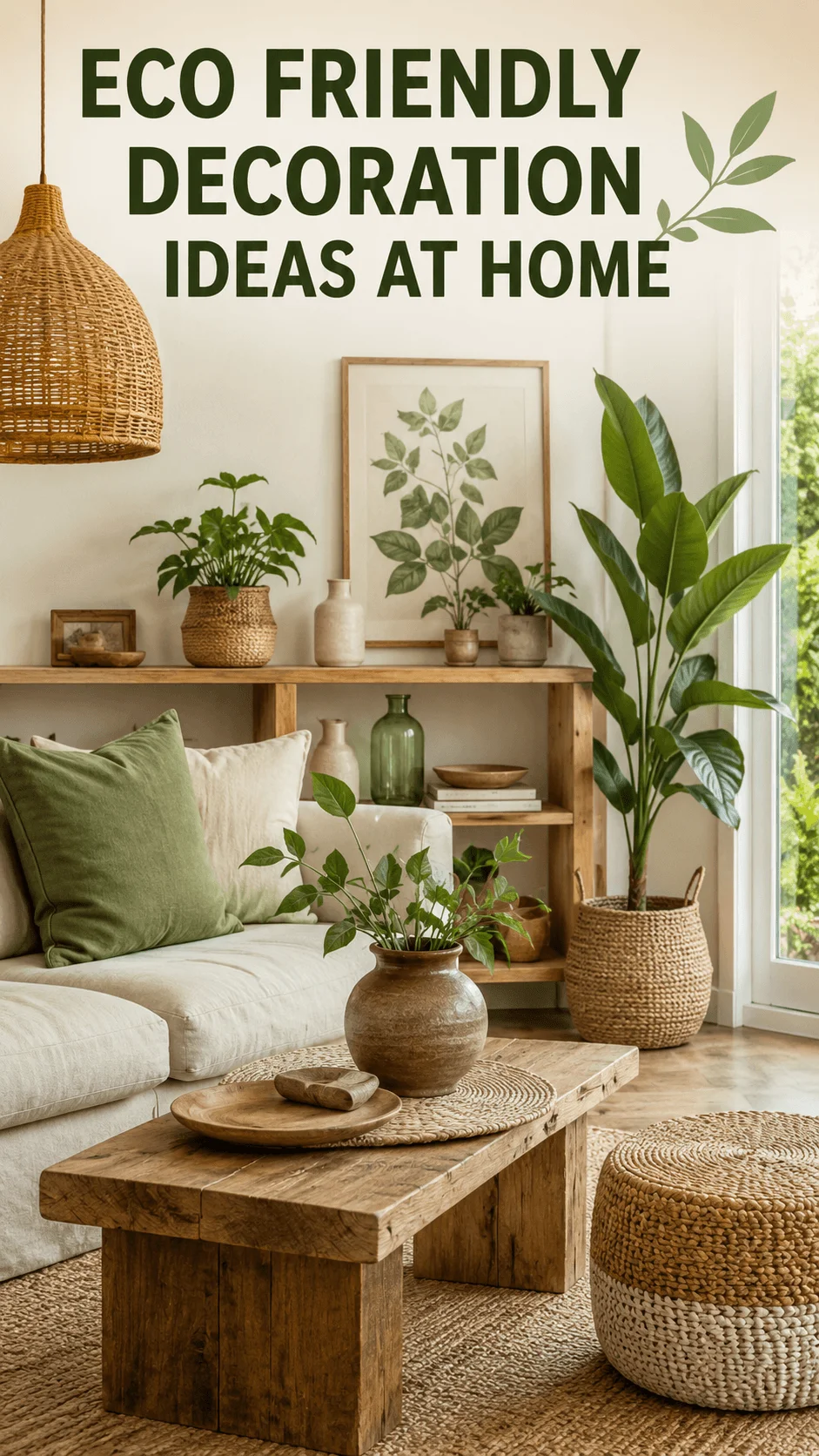
In a living room, reclaimed wood can be used for coffee tables, shelving units, television consoles, and decorative wall panels. These pieces often bring warmth and a sense of history into the space while supporting sustainable building practices.
Sustainable Natural Fabrics
Textiles play a major role in shaping the comfort and style of a living room. Sofas, cushions, curtains, and throws introduce color, softness, and texture into the space. Choosing natural fabrics instead of synthetic materials is an important step toward creating an eco friendly interior.
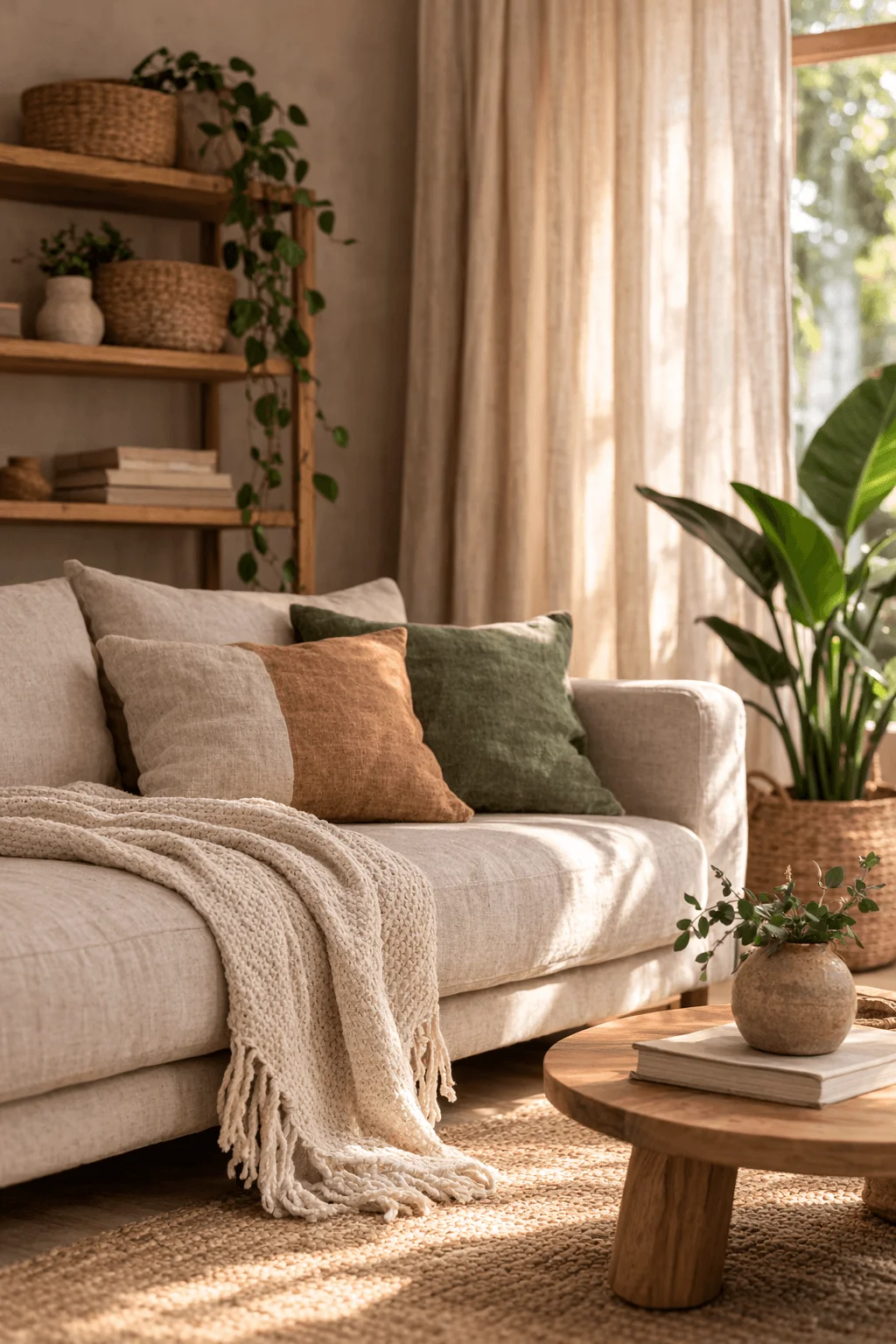
Organic cotton, linen, hemp, and wool are commonly used in sustainable interiors. These fabrics are typically produced with fewer chemicals and are biodegradable at the end of their life cycle. They are also known for their durability and breathability.
A sofa upholstered with natural fabric can feel comfortable throughout the year while maintaining a timeless appearance. Linen curtains allow natural light to pass through softly, creating a relaxed and welcoming environment. Natural textiles also age beautifully and often become softer over time.
Earth Tone Color Palettes
Color plays a powerful role in the atmosphere of a living room. Sustainable interior design often draws inspiration from natural landscapes. Earth tone color palettes are widely used because they create calm and balanced environments that feel grounded and warm.
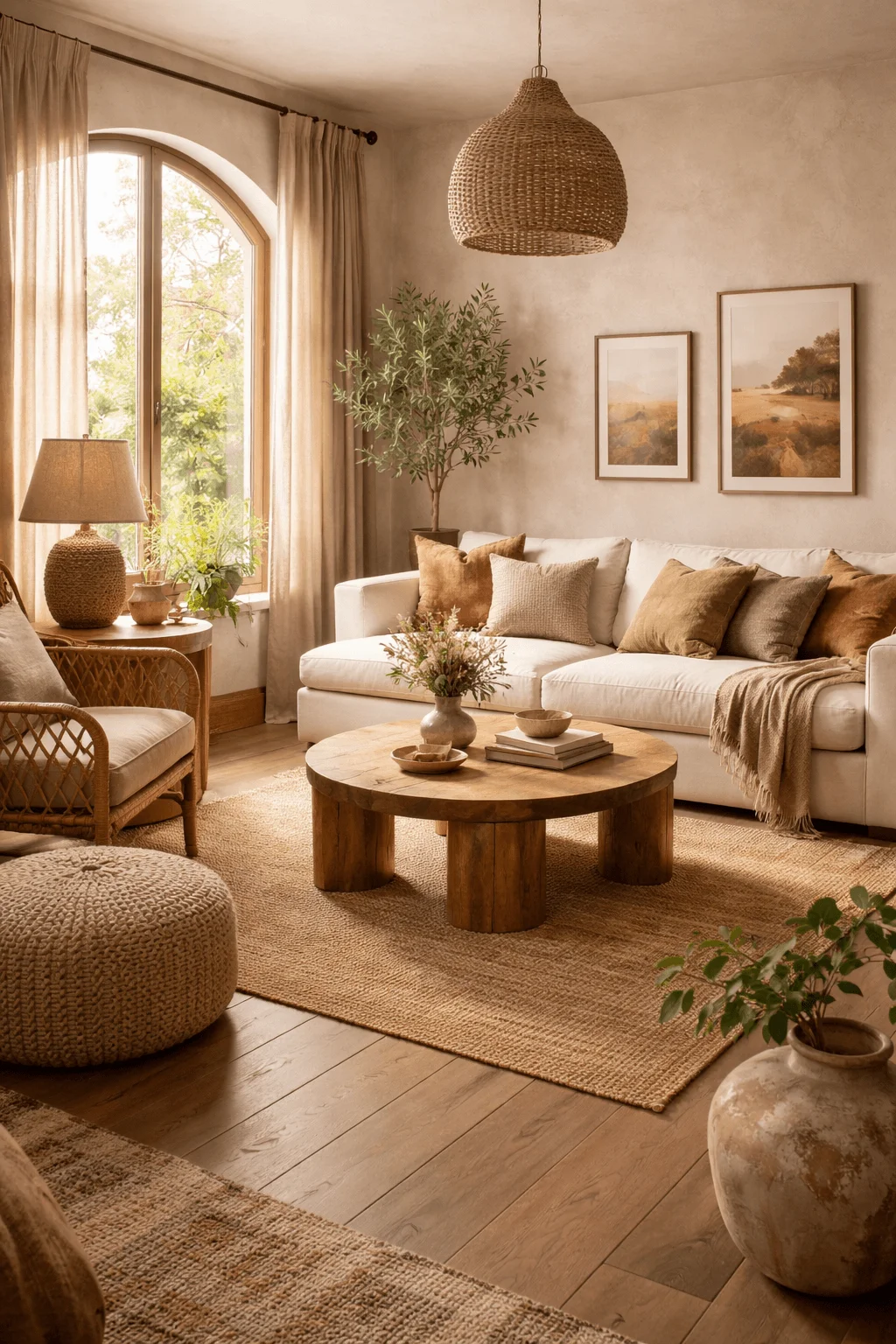
Shades such as clay, terracotta, olive green, sand, and soft brown reflect colors found in soil, plants, and stone. These tones pair naturally with wood furniture, woven fabrics, and natural materials. The result is a harmonious living space that feels comfortable and timeless.
Earth tone palettes also provide flexibility in design. They work well with both traditional and modern furniture styles. A living room designed with these colors often feels inviting and peaceful, making it an ideal environment for relaxation and social gatherings.
Second Hand and Vintage Furniture
Using second hand or vintage furniture is one of the most practical ways to create a sustainable living room. By extending the life of existing furniture, homeowners reduce demand for new production and prevent useful items from ending up in landfills.
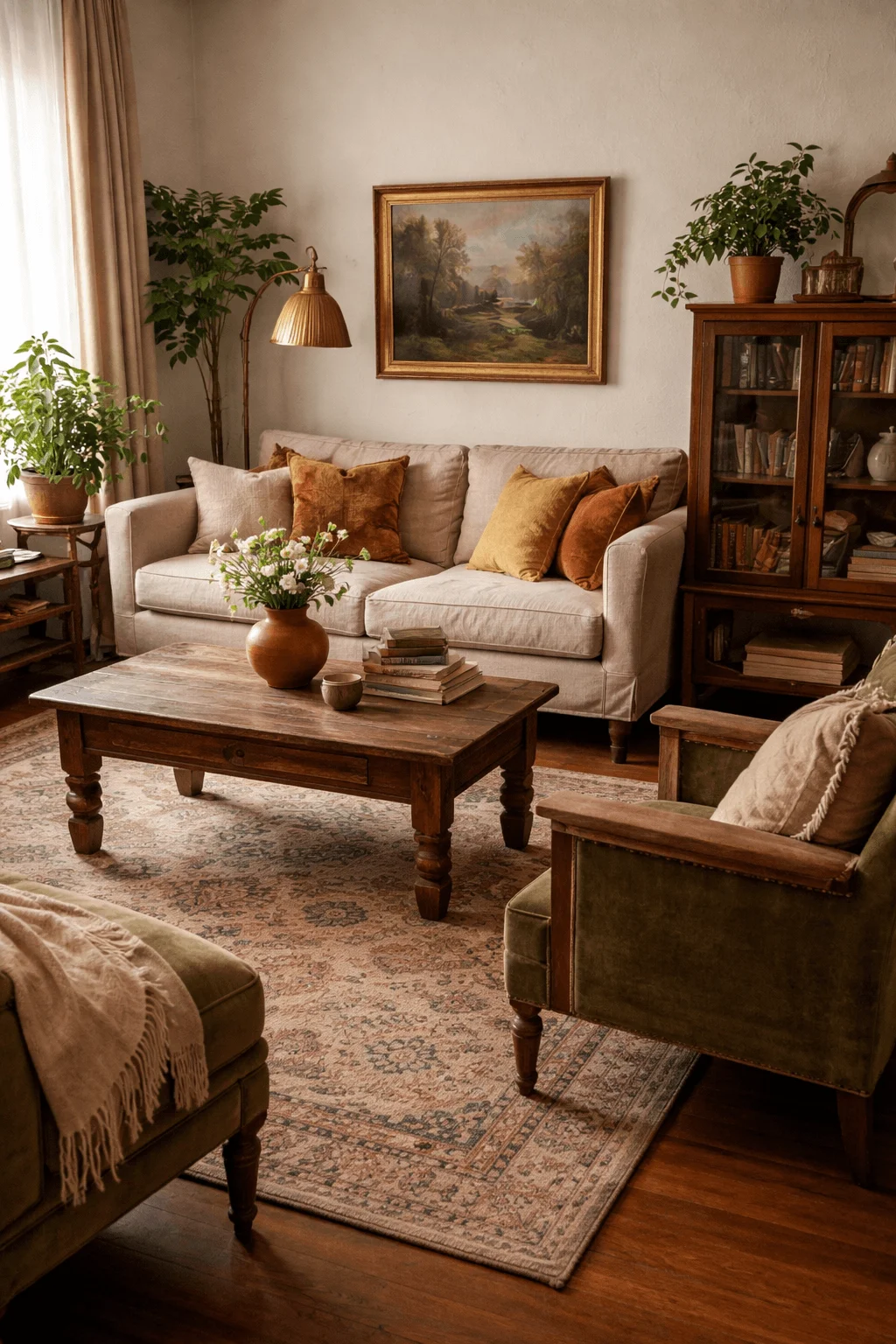
Vintage furniture often has exceptional craftsmanship and durable materials that are difficult to find in many modern products. Older wooden pieces, for example, were often built using solid hardwood and traditional joinery techniques that allow them to last for decades.
Incorporating vintage furniture also adds personality to a living room. Each piece carries its own story and character. A vintage armchair or antique cabinet can become a centerpiece that makes the room feel unique and curated.
Bamboo Furniture
Bamboo is widely recognized as one of the most sustainable materials used in furniture production. Unlike many hardwood trees that take decades to mature, bamboo grows rapidly and can be harvested within a few years. This makes it a highly renewable resource.
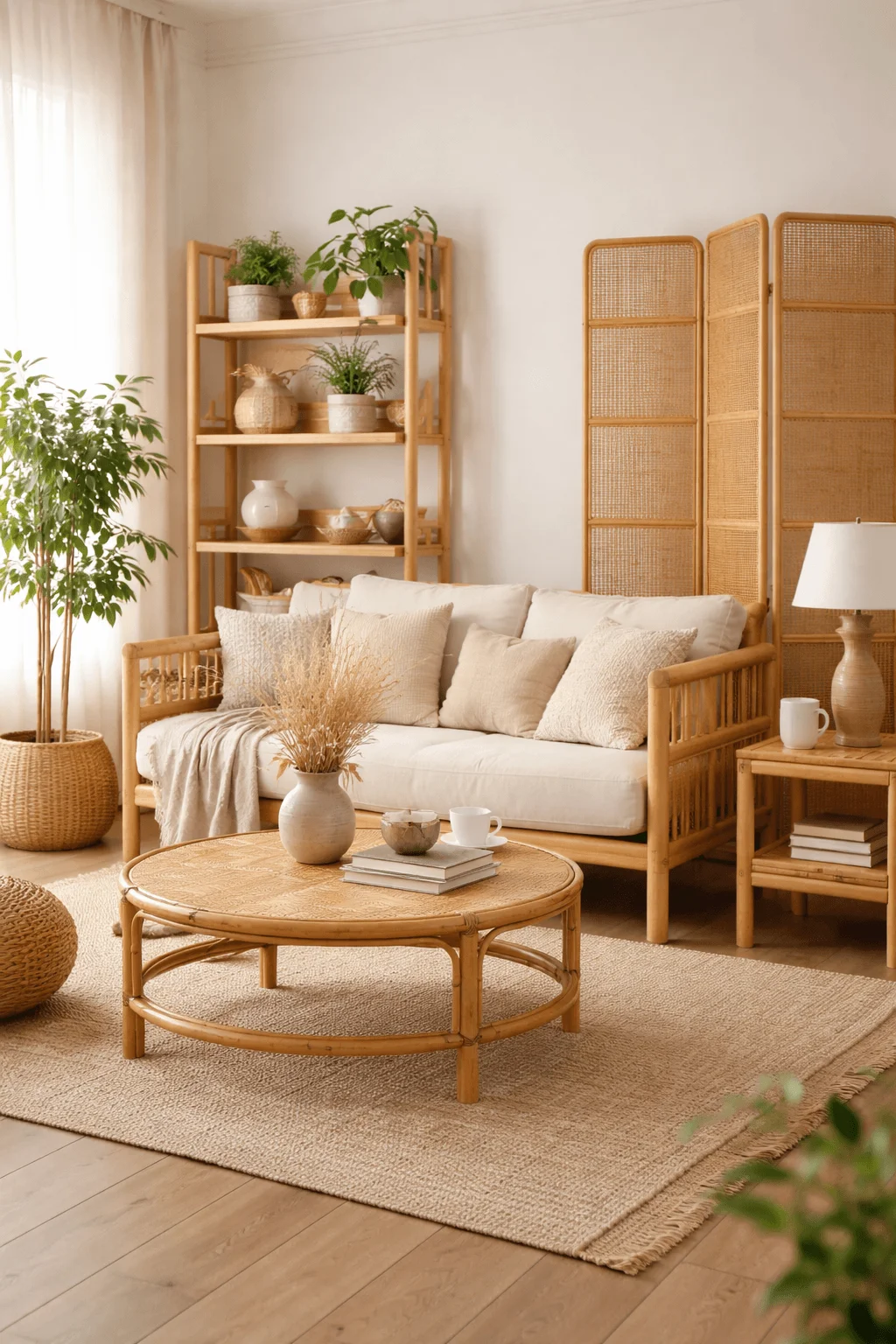
Bamboo furniture has a clean and elegant appearance that suits many interior styles. The material is strong yet lightweight, which makes it practical for items such as side tables, shelving units, and decorative screens.
In addition to its sustainability, bamboo introduces a natural and calming aesthetic to a living room. The warm tones and subtle texture of bamboo complement neutral color palettes and natural fabrics, helping create a cohesive eco friendly design.
Organic and Curved Furniture Shapes
Modern sustainable interiors are moving away from rigid and overly structured furniture designs. Instead, many designers are embracing organic shapes that resemble patterns found in nature. Sofas with curved edges, rounded coffee tables, and soft flowing lines create a more relaxed visual environment.
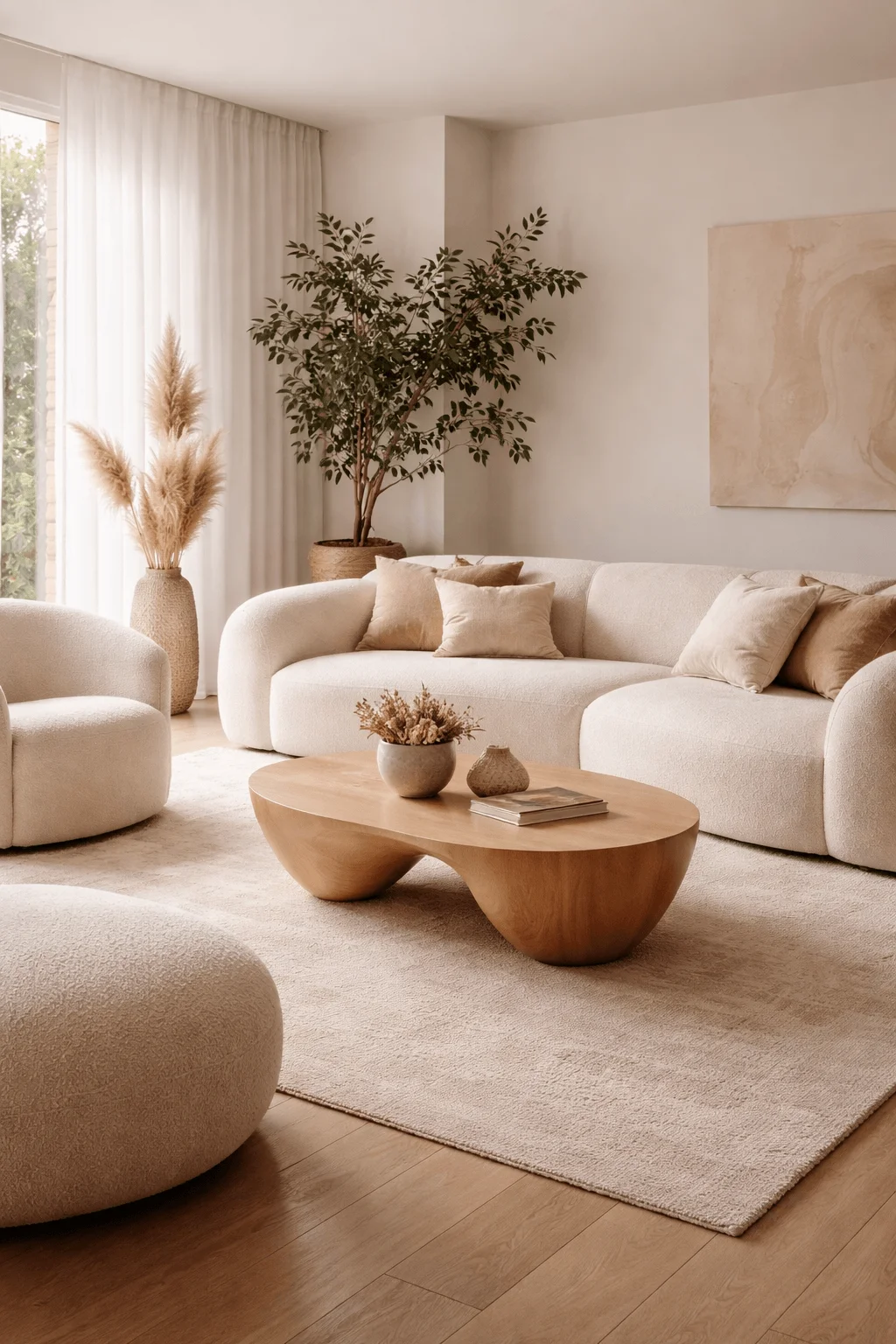
Curved furniture encourages better movement through a room and can make spaces feel more comfortable and welcoming. These shapes also reduce the harsh appearance that sometimes comes from furniture with sharp edges.
When combined with natural materials and soft fabrics, organic furniture shapes can make a living room feel both contemporary and peaceful.
Multifunctional Living Spaces
Sustainability is not only about materials but also about how space is used. Multifunctional living rooms help reduce the need for excess furniture by allowing a single space to serve multiple purposes.
A living room can function as a reading area, workspace, or entertainment space without requiring additional rooms or furniture pieces. Thoughtful layout planning and versatile furniture can make this possible.
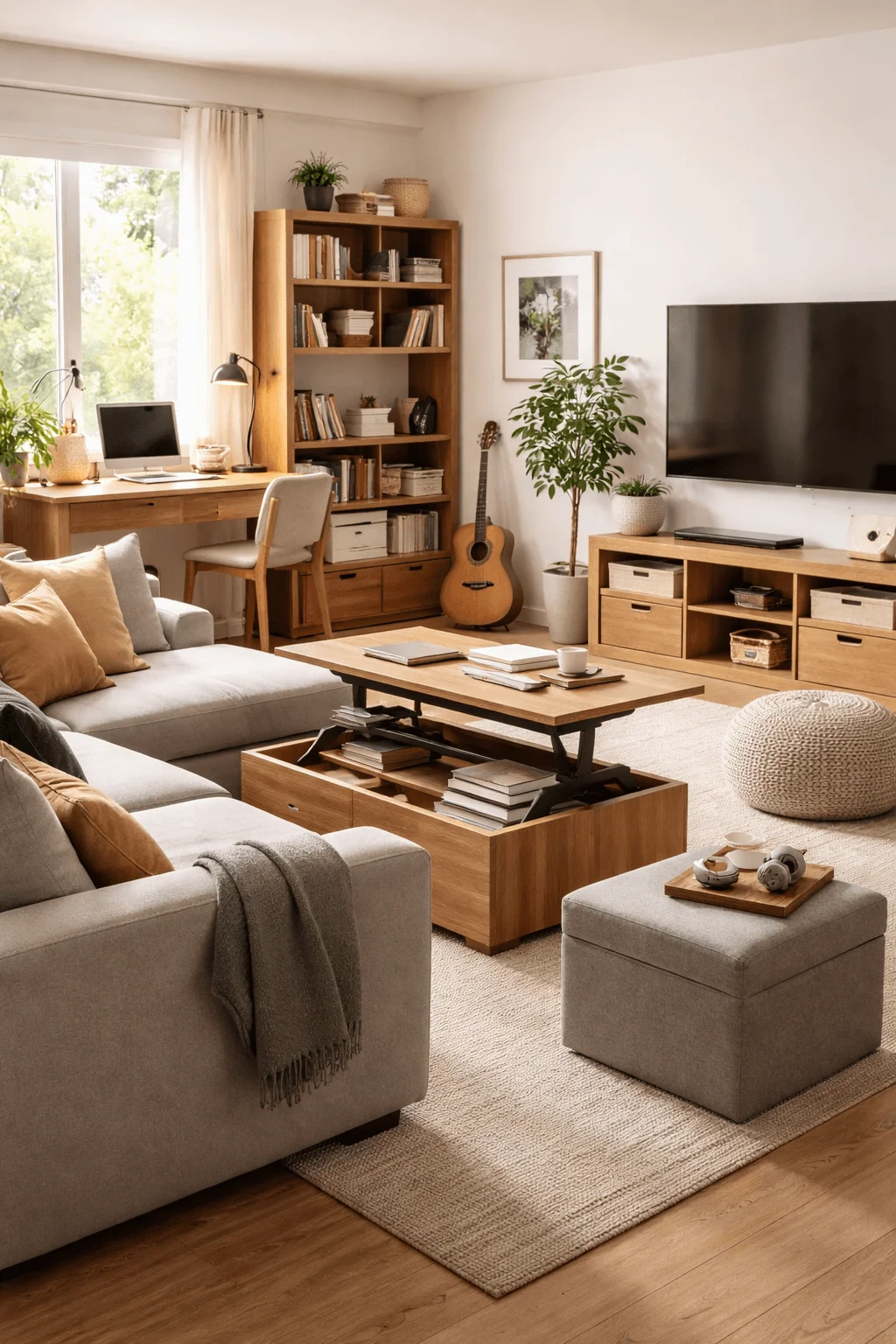
Furniture such as modular sofas, storage ottomans, and expandable tables helps maximize functionality while maintaining a clean and organized environment. By choosing versatile pieces, homeowners can create flexible living spaces that adapt to changing needs.
Locally Made Decor
Supporting local artisans and craftspeople is another important aspect of sustainable living room design. Locally produced furniture and decor typically require less transportation, which reduces environmental impact.
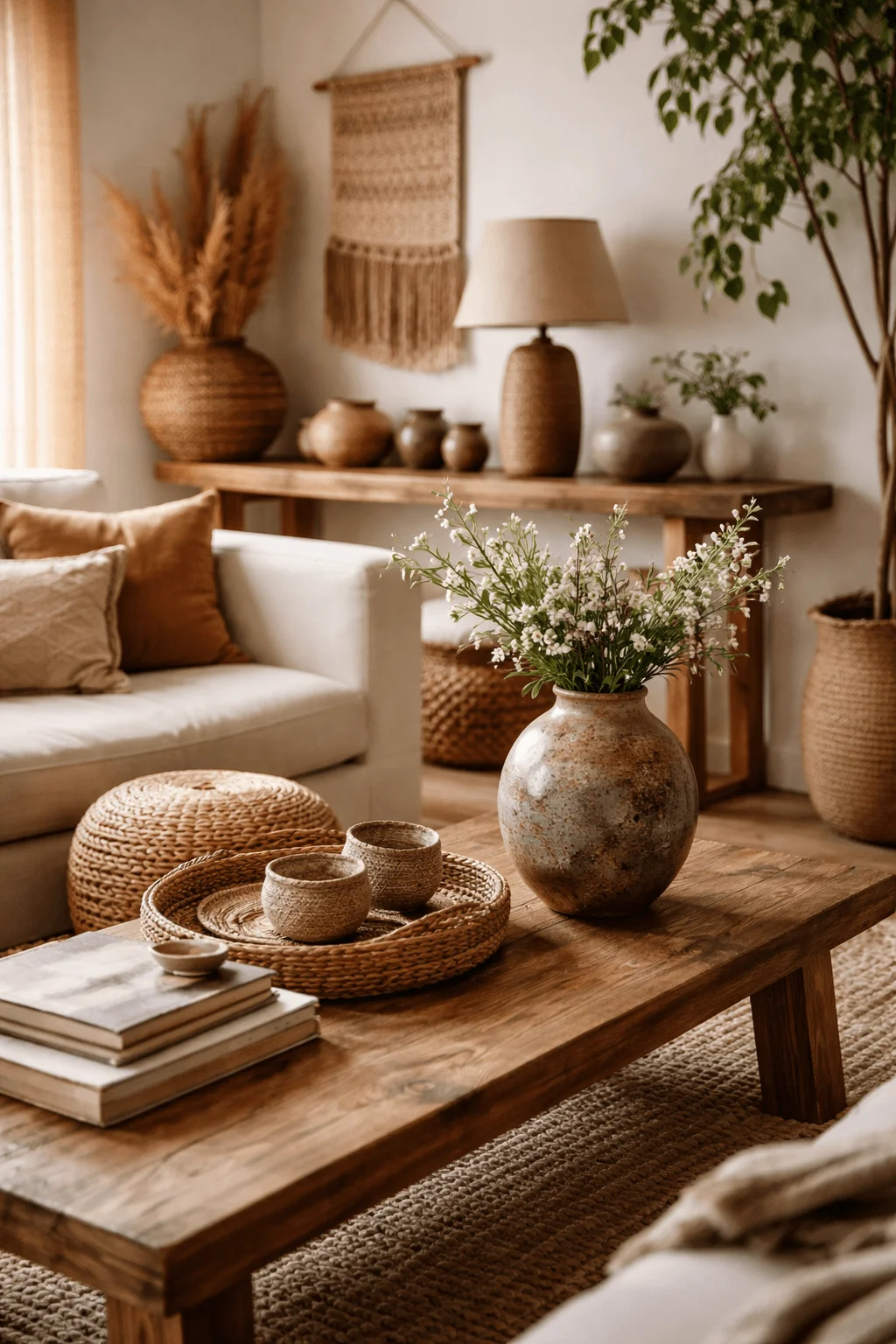
Handmade items also bring authenticity and craftsmanship into the home. A handcrafted ceramic vase or woven basket can add artistic character to a living room while supporting small businesses and traditional craft techniques.
Locally made decor often reflects regional materials and cultural influences, making each piece meaningful and unique.
Eco Friendly Lighting
Lighting choices can have a significant impact on energy consumption in a home. Energy efficient lighting solutions help reduce electricity use while maintaining comfortable illumination.
Light emitting diode bulbs are widely considered one of the most efficient lighting options available. They use far less energy than traditional bulbs and last much longer, which reduces waste.
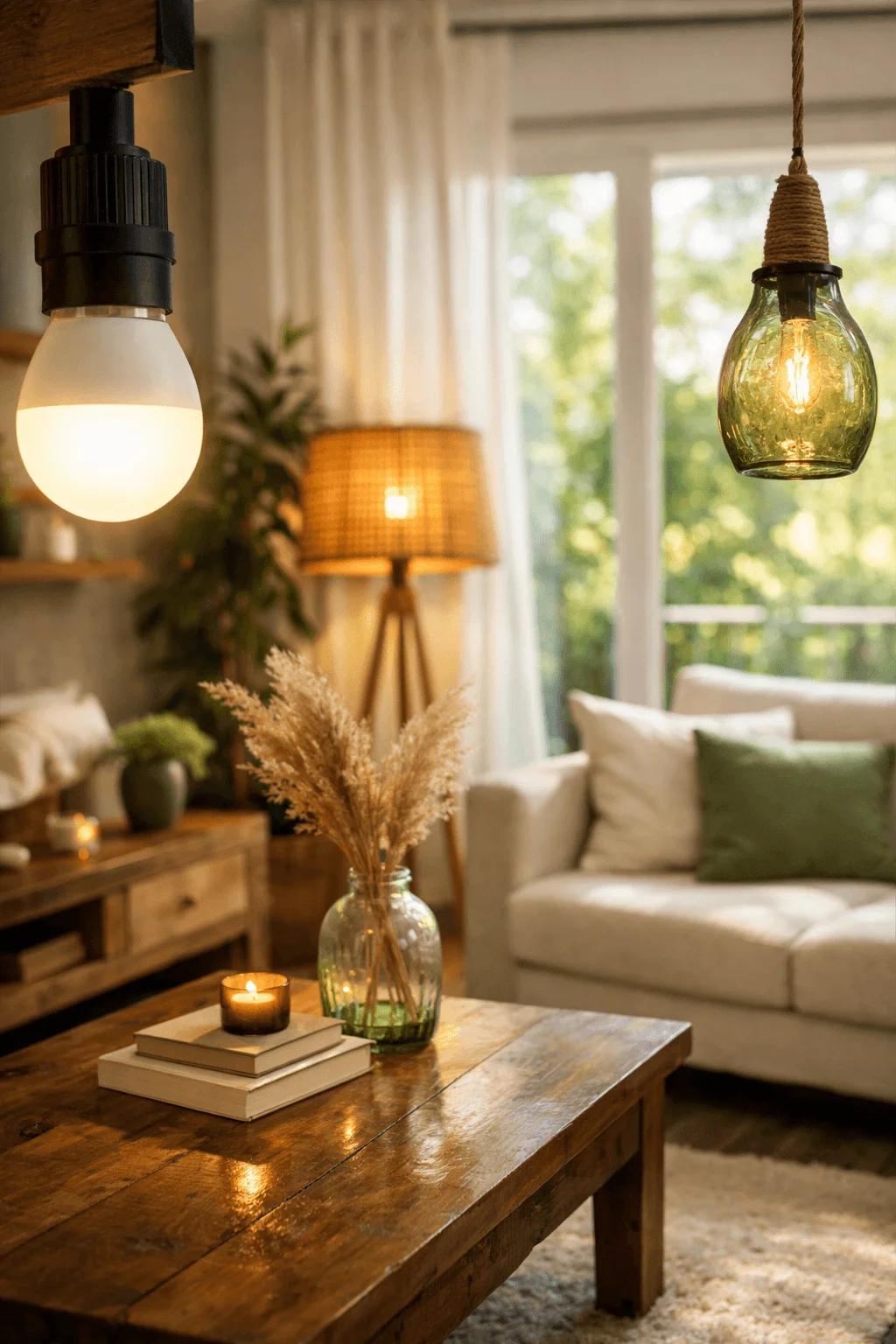
In addition to efficient bulbs, lighting fixtures made from natural or recycled materials can contribute to sustainable design. Lamps made from wood, rattan, or recycled glass can become decorative elements that complement the rest of the living room.
Maximizing natural light is another important strategy. Large windows, light colored curtains, and reflective surfaces can help distribute daylight throughout the room.
Upcycled Decor
Upcycling is the practice of transforming old or discarded materials into new functional items. This creative approach reduces waste while encouraging imaginative design solutions.
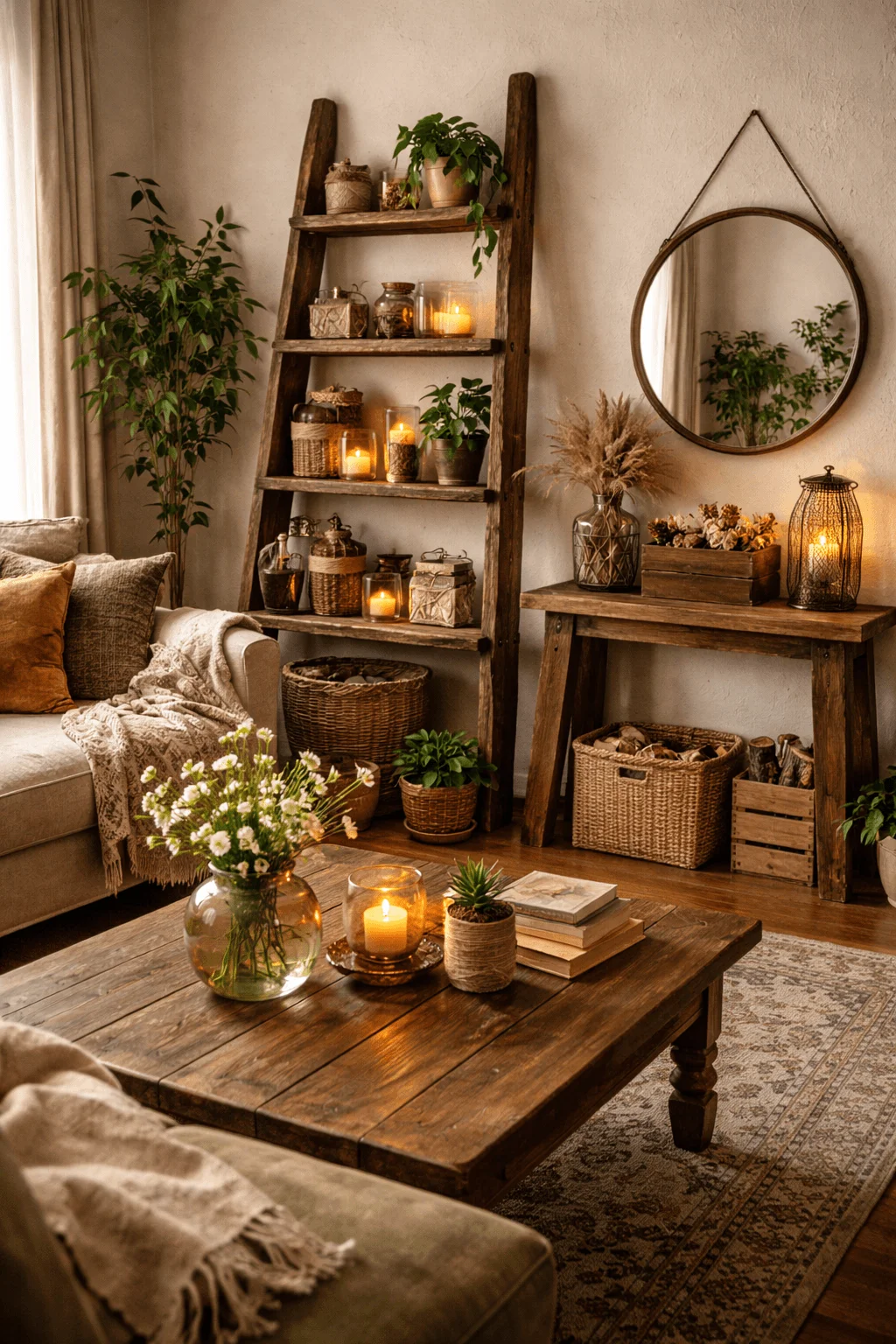
Many homeowners enjoy creating their own upcycled decor projects. An old ladder can become a decorative shelf, reclaimed wood can be turned into picture frames, and glass jars can be reused as candle holders or plant containers.
Upcycled decor adds a personal and artistic touch to a living room. It also reflects a mindset of creativity and sustainability rather than disposable consumption.
Natural Fiber Rugs
Rugs made from natural plant fibers are becoming increasingly popular in sustainable interiors. Materials such as jute, sisal, and seagrass are renewable resources that provide durability and texture.
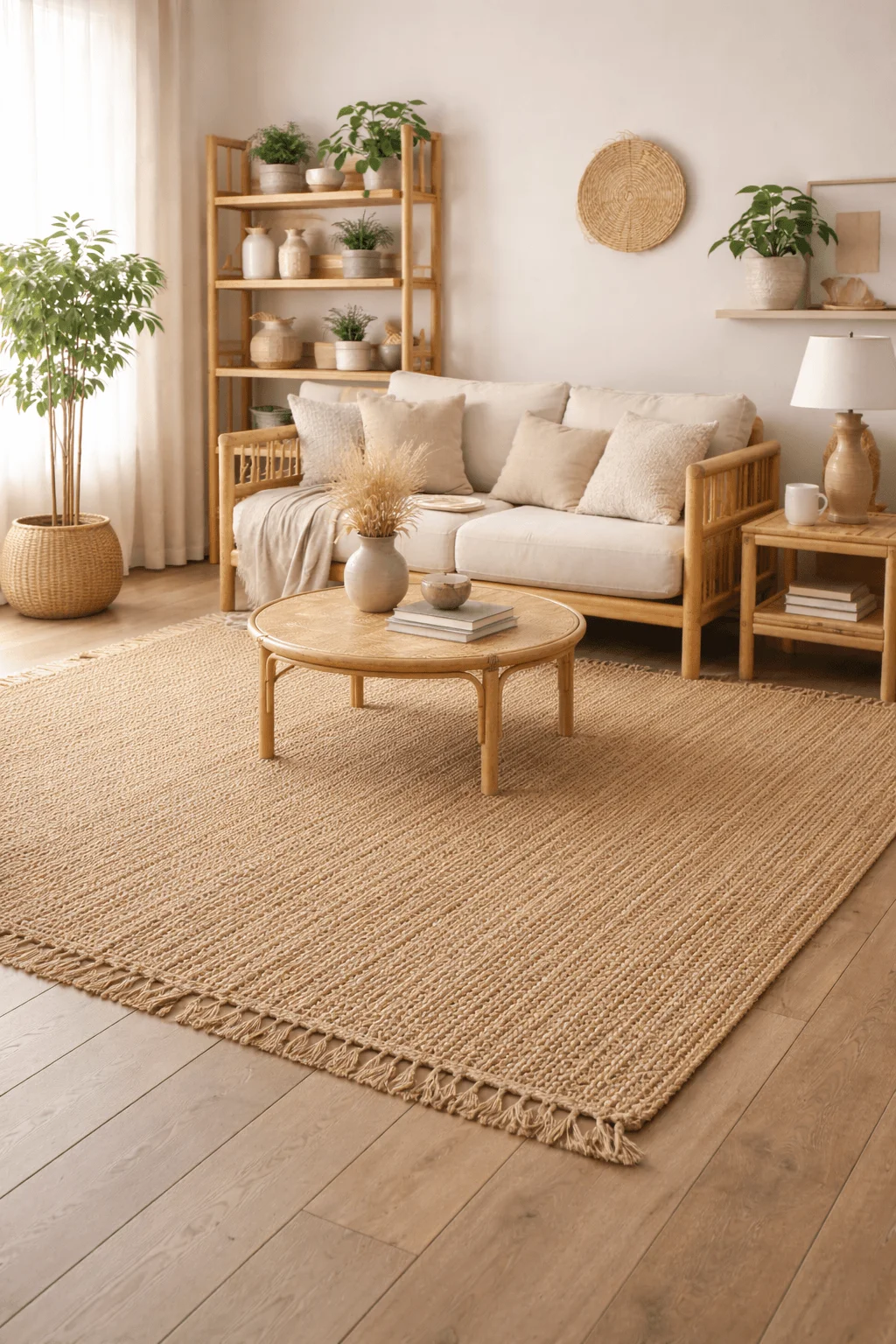
Natural fiber rugs add warmth and depth to a living room without relying on synthetic materials. Their neutral colors and organic patterns work well with many interior styles.
These rugs also tend to be long lasting and easy to maintain. Over time they develop subtle variations in texture that enhance their natural beauty.
Green Accent Walls
A green accent wall introduces a bold natural element into a living room. This can be achieved through living plant walls, preserved moss panels, or botanical themed designs.
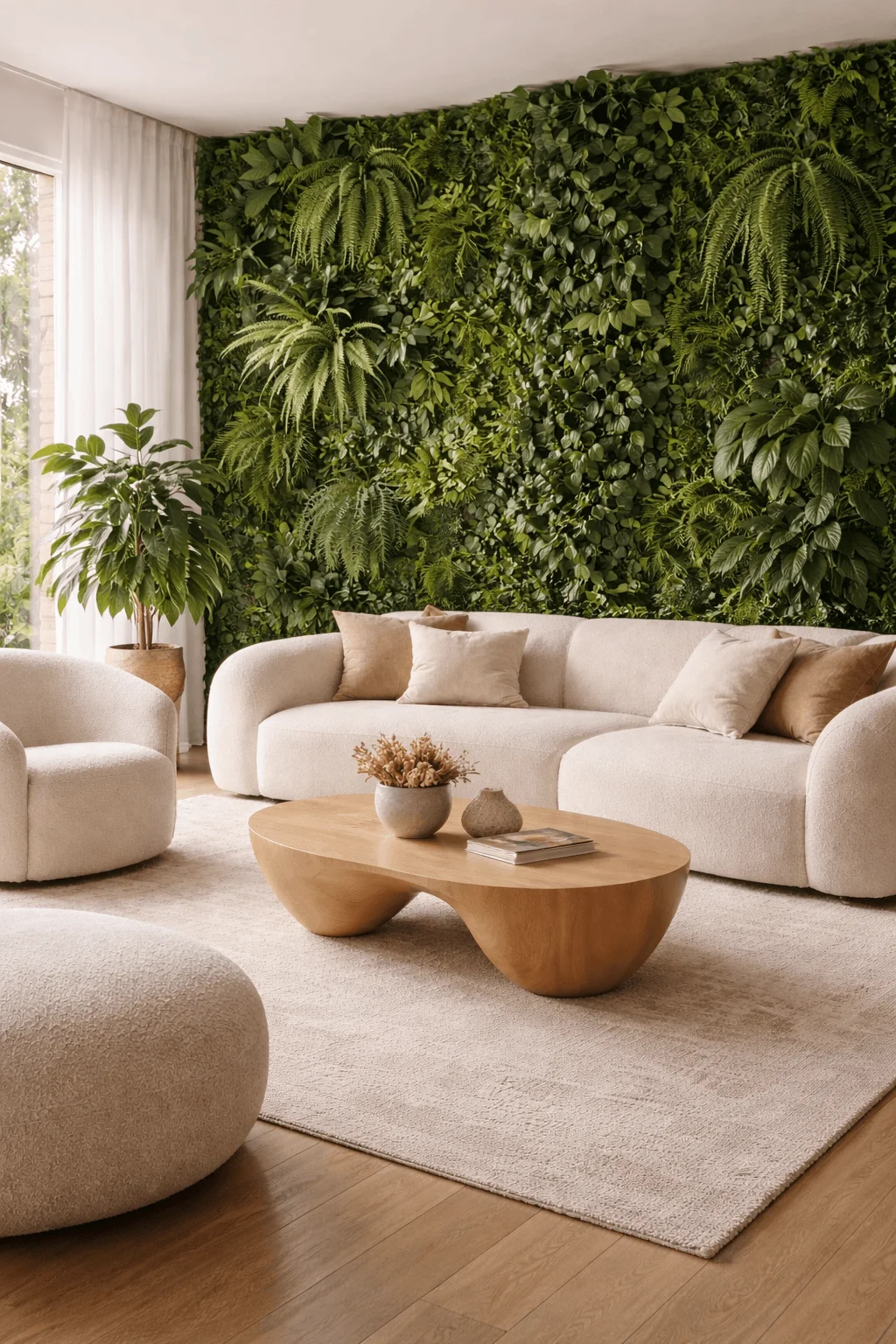
Living plant walls create a striking visual feature while contributing to improved indoor air quality. Moss panels offer a similar natural aesthetic without requiring frequent maintenance.
A green accent wall can transform an ordinary living room into a space that feels vibrant and connected to nature. The presence of greenery often creates a calming atmosphere that encourages relaxation.
Recycled Material Decor
Innovations in sustainable design have led to the creation of decor made from recycled materials. Glass bottles can be melted and reshaped into vases, recycled plastics can be turned into decorative panels, and reclaimed metals can be used for artistic wall pieces.
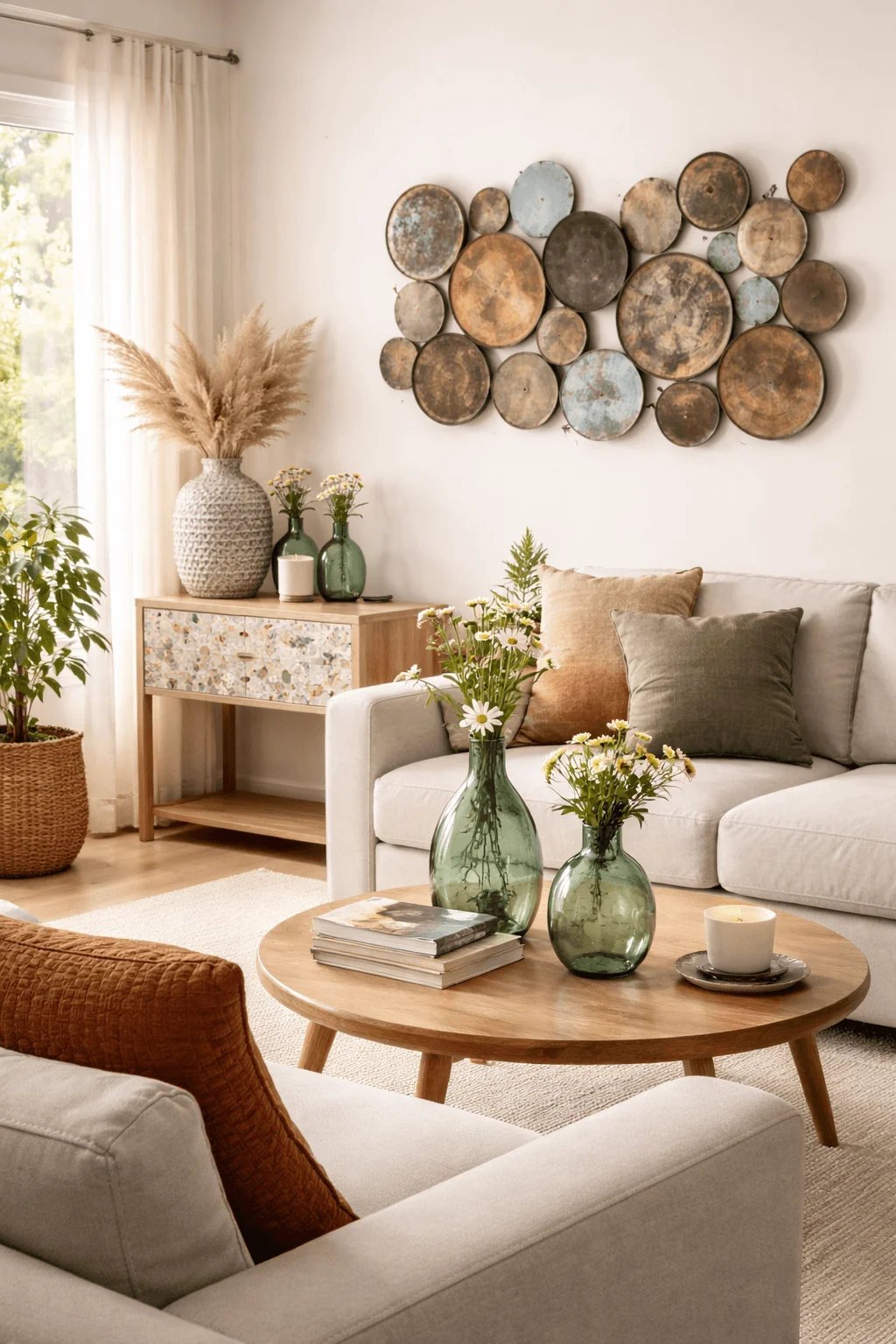
These products demonstrate how waste materials can be transformed into beautiful objects. Using recycled decor reduces demand for new raw materials and encourages circular production systems.
Incorporating recycled pieces into a living room also highlights the creativity and potential of sustainable design.
Layering Vintage and Sustainable Pieces
One of the most interesting design approaches involves combining vintage items with modern sustainable furniture. This layered style creates depth and personality within a living room.
A reclaimed wood coffee table might sit beside a modern sofa made with natural fabrics. A vintage lamp could be paired with handcrafted pottery or woven textiles.
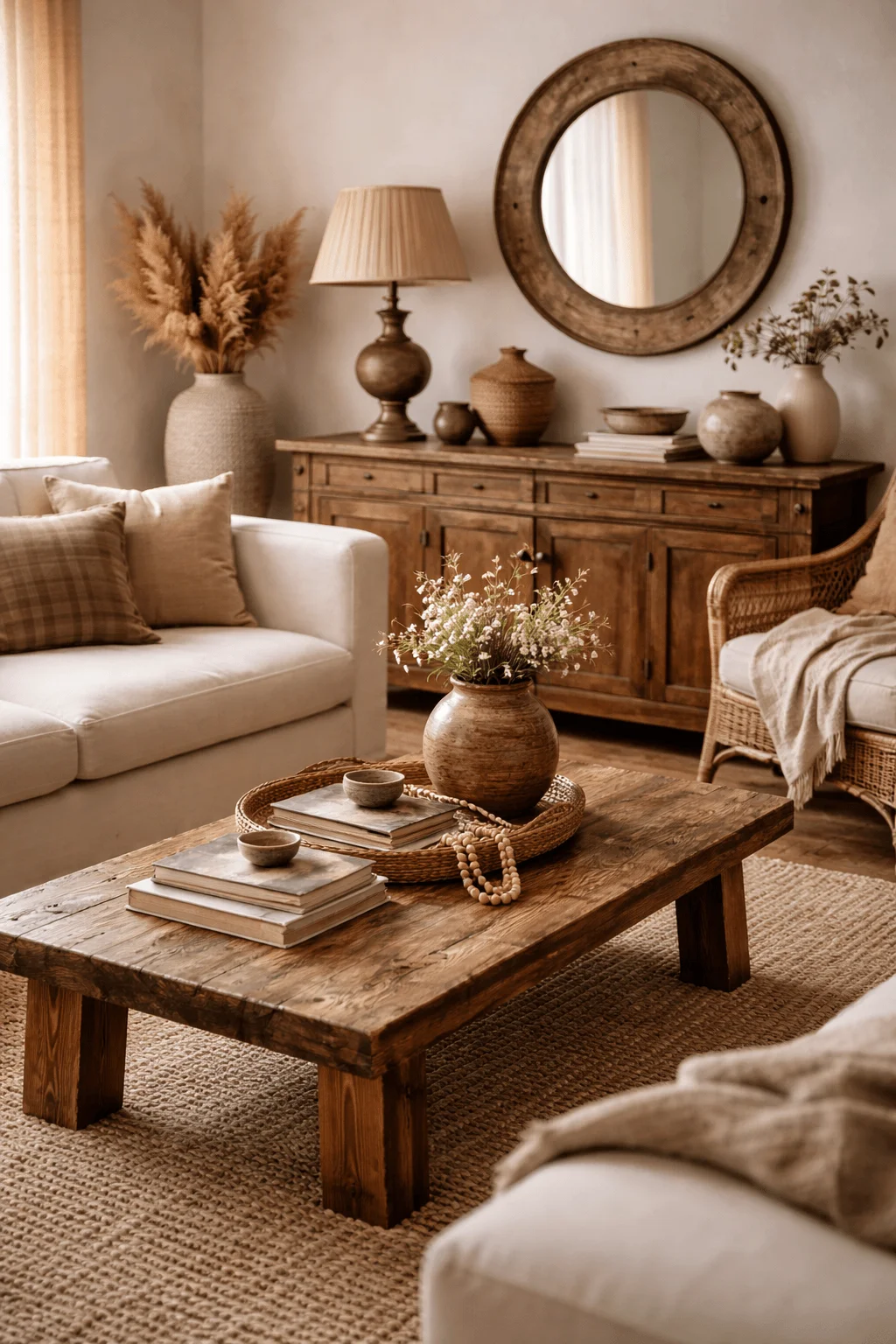
This approach prevents the room from feeling overly uniform or mass produced. Instead, it creates a curated environment where each piece contributes to the overall story of the space.
Conclusion
Eco friendly living room ideas demonstrate that sustainability and beautiful design can exist together. By choosing natural materials, supporting responsible production methods, and reducing waste, homeowners can create living spaces that are both stylish and environmentally conscious.
The key to sustainable design is thoughtful decision making. Instead of focusing on short lived trends, homeowners can prioritize quality, durability, and natural beauty. Simple changes such as adding plants, selecting natural fabrics, or incorporating reclaimed furniture can significantly improve both the environmental impact and comfort of a living room.
Over time, these small choices contribute to a healthier home and a more sustainable lifestyle. A well designed eco friendly living room not only supports the environment but also creates a peaceful space where people can relax, connect, and enjoy everyday life.