Sustainability Activities for Preschoolers 2026 Trends and Ideas
Sustainability activities for preschoolers are becoming an essential part of early childhood education in 2026 because teachers and parents now focus more on building eco awareness from an early age. These sustainability activities for preschoolers help children understand nature, waste, recycling, and responsible behavior in a very simple and playful way. Instead of teaching heavy environmental concepts, preschool learning today focuses on hands on experiences that shape habits for life.
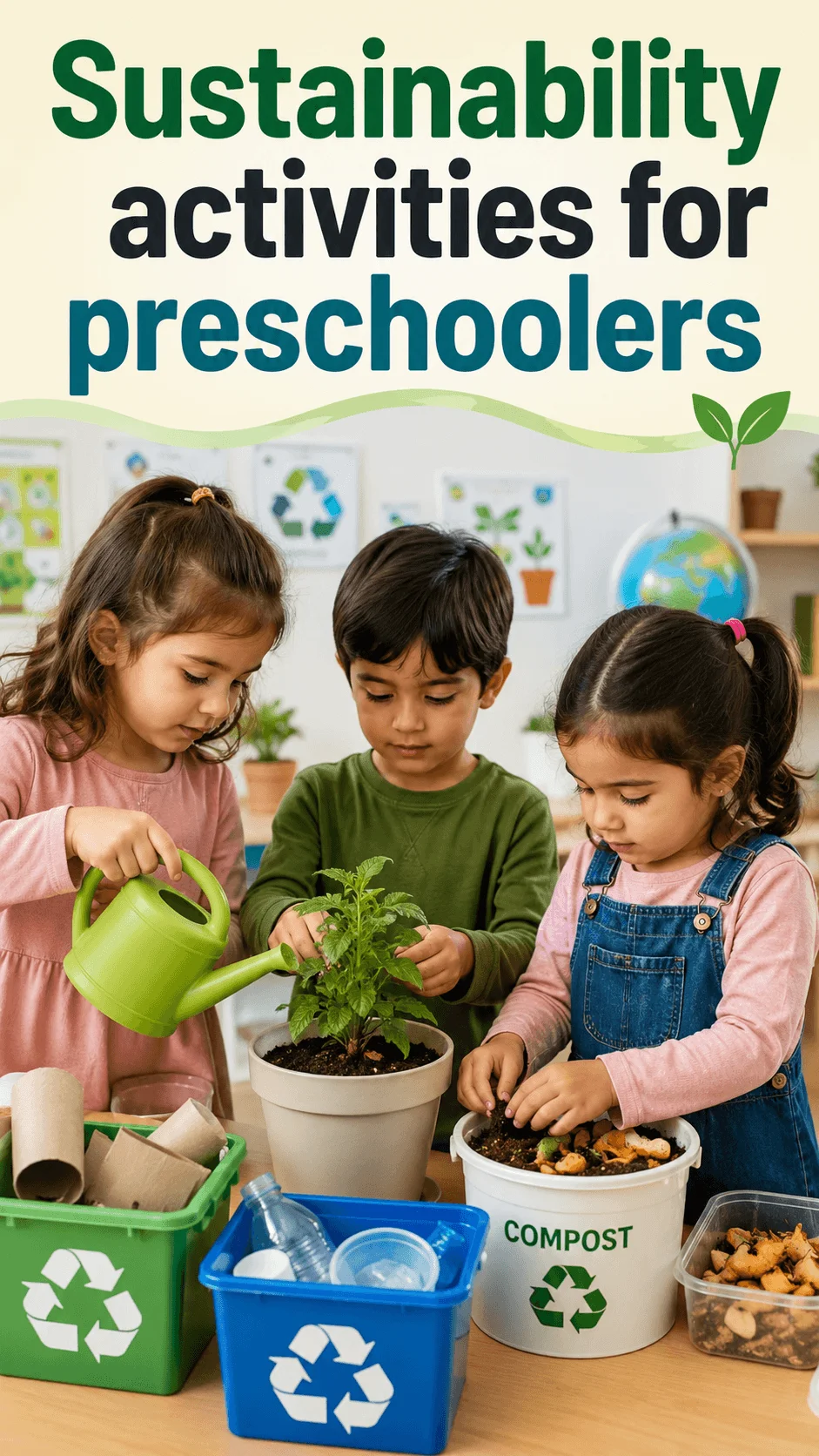
In modern classrooms, sustainability activities for preschoolers are not just extra activities. They are part of daily learning routines that connect children with the real world. When children explore nature, reuse materials, or observe how waste changes into soil, they begin to understand how their actions affect the environment. This early foundation builds curiosity, responsibility, and care for the planet in a natural way.
Why Early Childhood Sustainability Learning Matters
Early childhood is the most powerful stage for habit formation and emotional development. When children are introduced to sustainability activities for preschoolers at this stage, they do not just learn facts, they build values. They start understanding that water should not be wasted, that materials can be reused, and that nature is something to respect and protect.
At this age, children learn best through experience. That is why sustainability activities for preschoolers work so effectively. Instead of explaining pollution in abstract terms, teachers can show children how waste piles up or how plants grow from soil. These real life experiences help children connect learning with action.
Another important reason sustainability learning matters is that it builds emotional connection with nature. When children play in gardens, observe insects, or recycle materials, they develop care and empathy for living things. This emotional connection often becomes the foundation for lifelong environmental responsibility.
Eco Detectives Nature Hunt for Sustainability Awareness
One of the most engaging sustainability activities for preschoolers is the Eco Detectives Nature Hunt. In this activity, children explore outdoor spaces like school gardens or parks and observe leaves, insects, stones, and small natural objects. Teachers guide them to notice colors, shapes, and differences in nature.
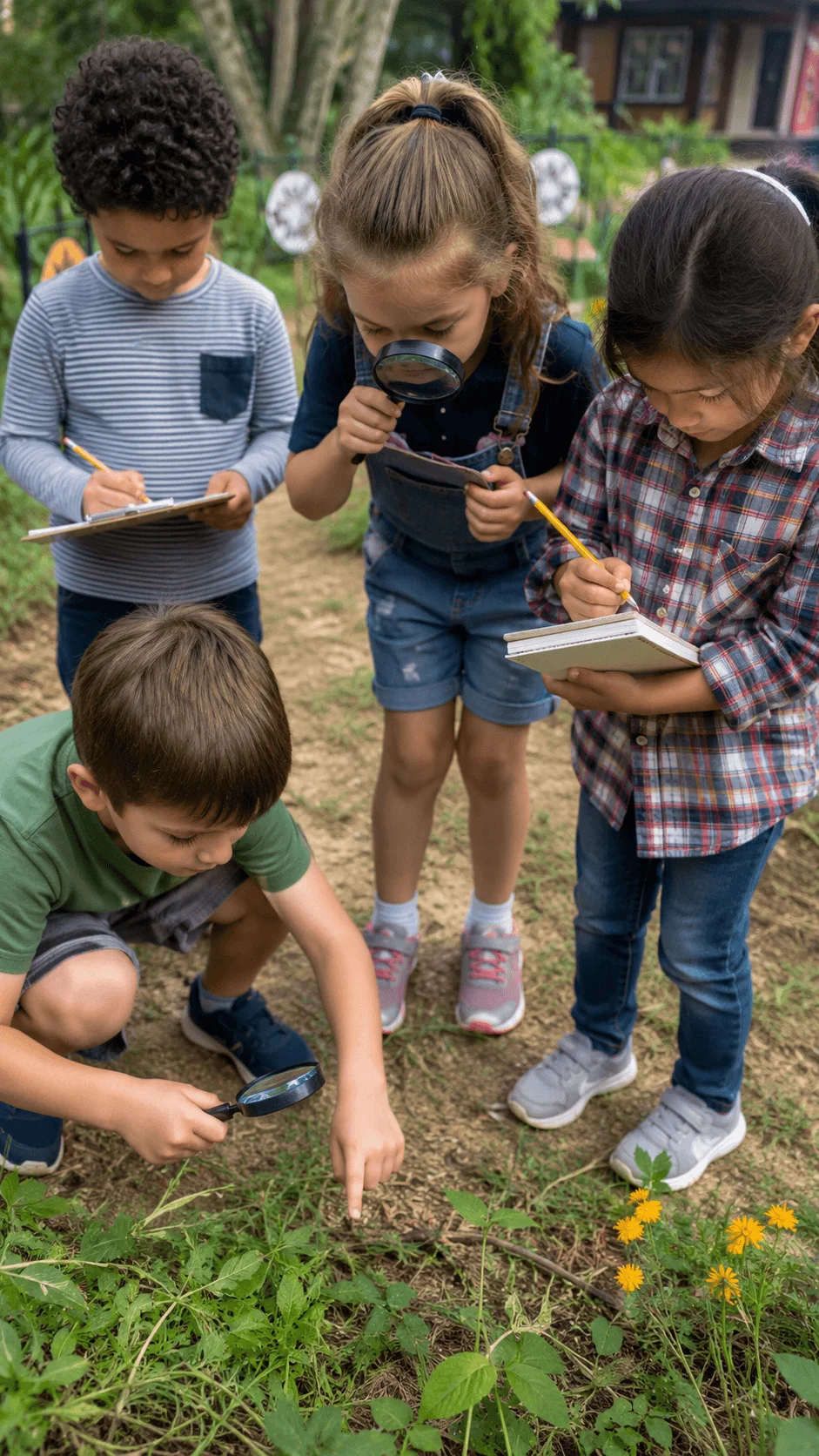
This activity builds observation skills and curiosity. It also helps children understand biodiversity in a very simple way. When children act like detectives, they become more attentive to their surroundings and start appreciating nature instead of ignoring it. Over time, this improves their connection with the environment and supports early environmental awareness.
Recycled Material Maker Stations for Creative Learning
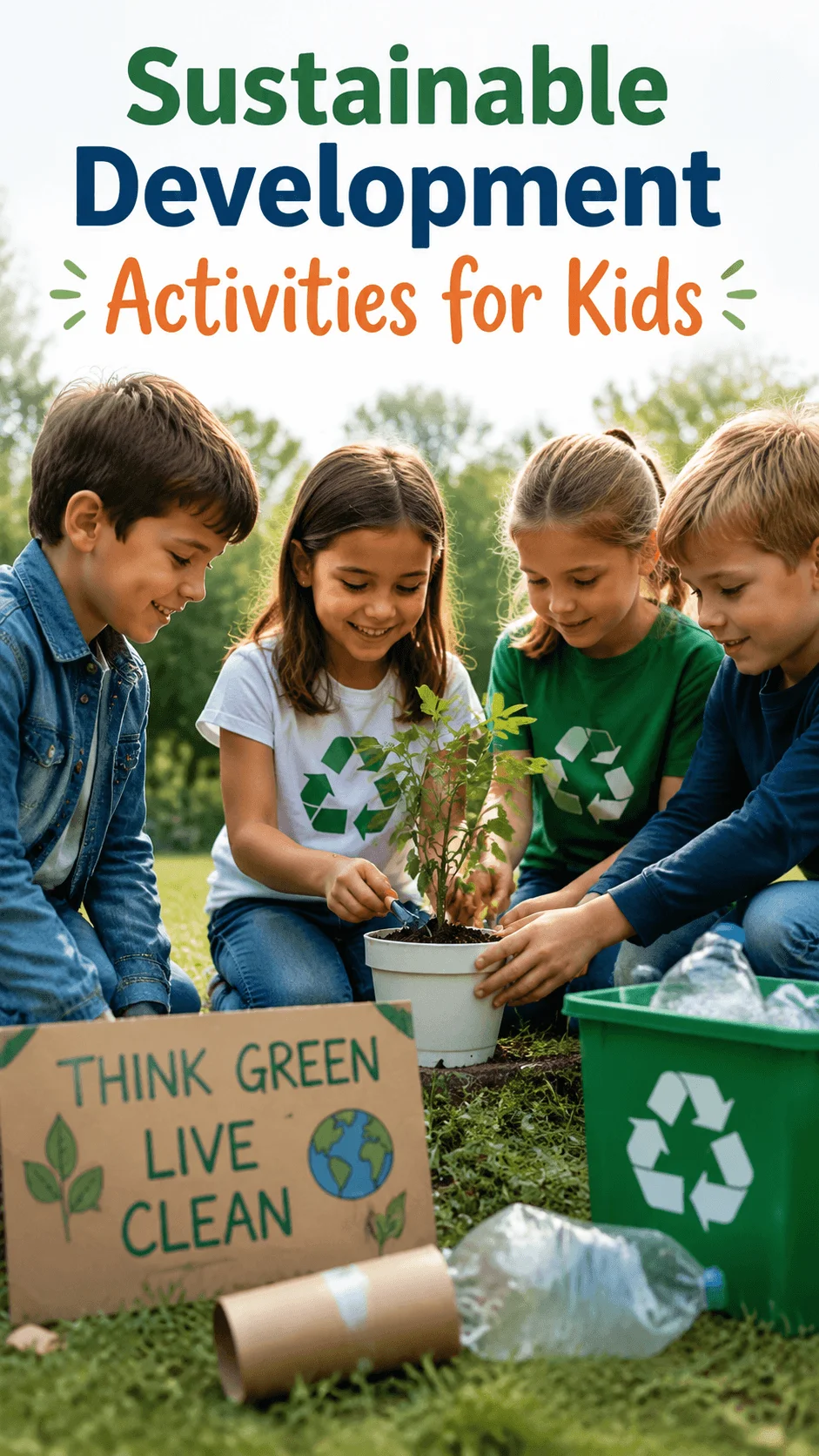
Recycled Material Maker Stations are a powerful example of sustainability activities for preschoolers that combine creativity and environmental thinking. In this activity, children use cardboard, plastic bottles, paper rolls, and fabric scraps to create toys, models, or art pieces.
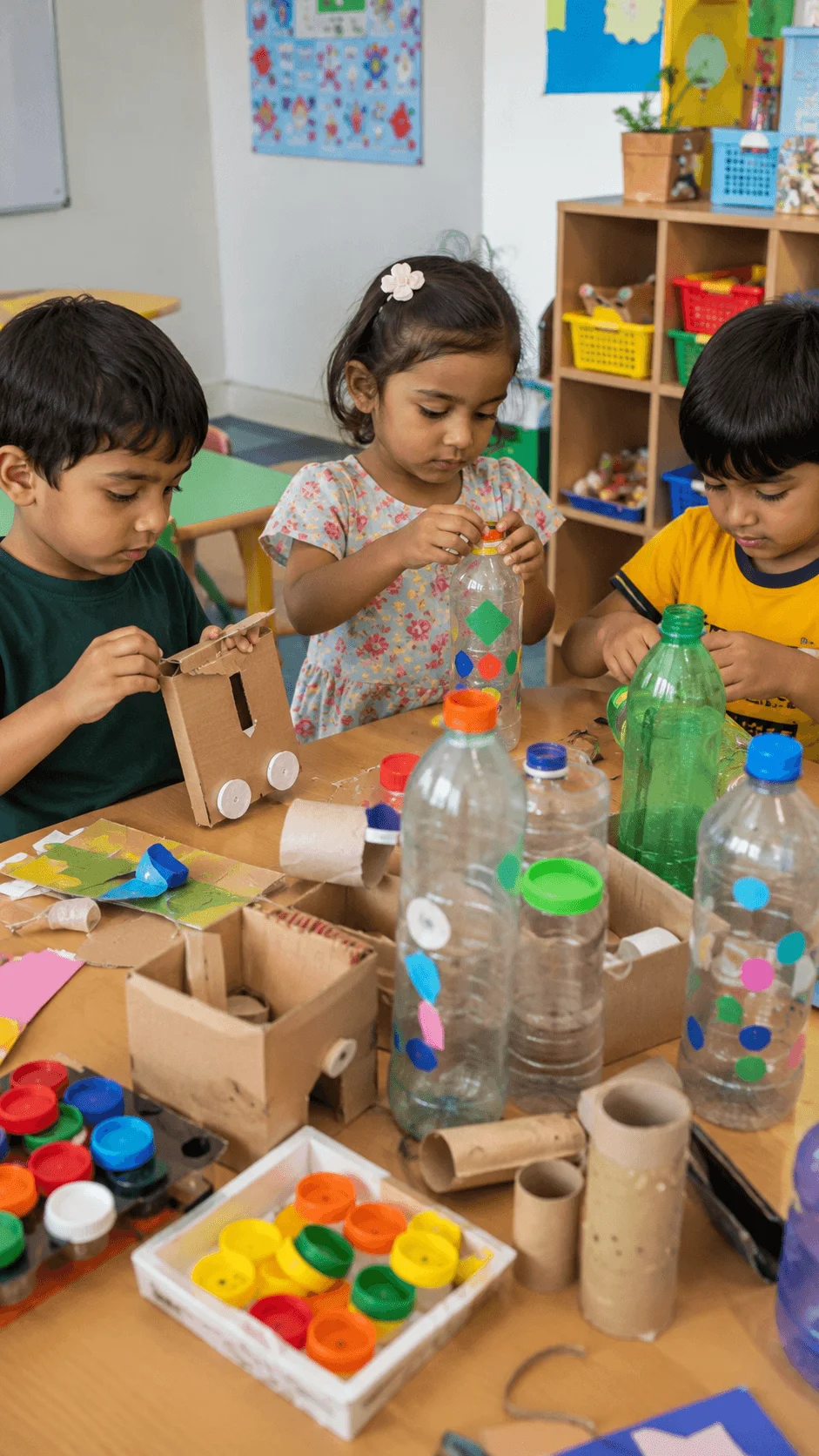
This approach teaches children that waste materials still have value. Instead of throwing things away, they learn to transform them into something new. This develops problem solving skills and creativity while also introducing the concept of recycling in a very practical way.
Children enjoy this activity because it feels like play, but it also builds awareness about reducing waste. It naturally introduces early recycling habits without forcing rules.
Tiny Classroom Garden for Hands On Nature Learning
A Tiny Classroom Garden is one of the most meaningful sustainability activities for preschoolers because it connects children directly with plant life. Teachers can grow herbs like mint, coriander, or small vegetables in pots or garden beds.
Children participate in watering plants, observing growth, and learning how plants need sunlight and care. This experience helps them understand where food comes from and how nature supports human life.
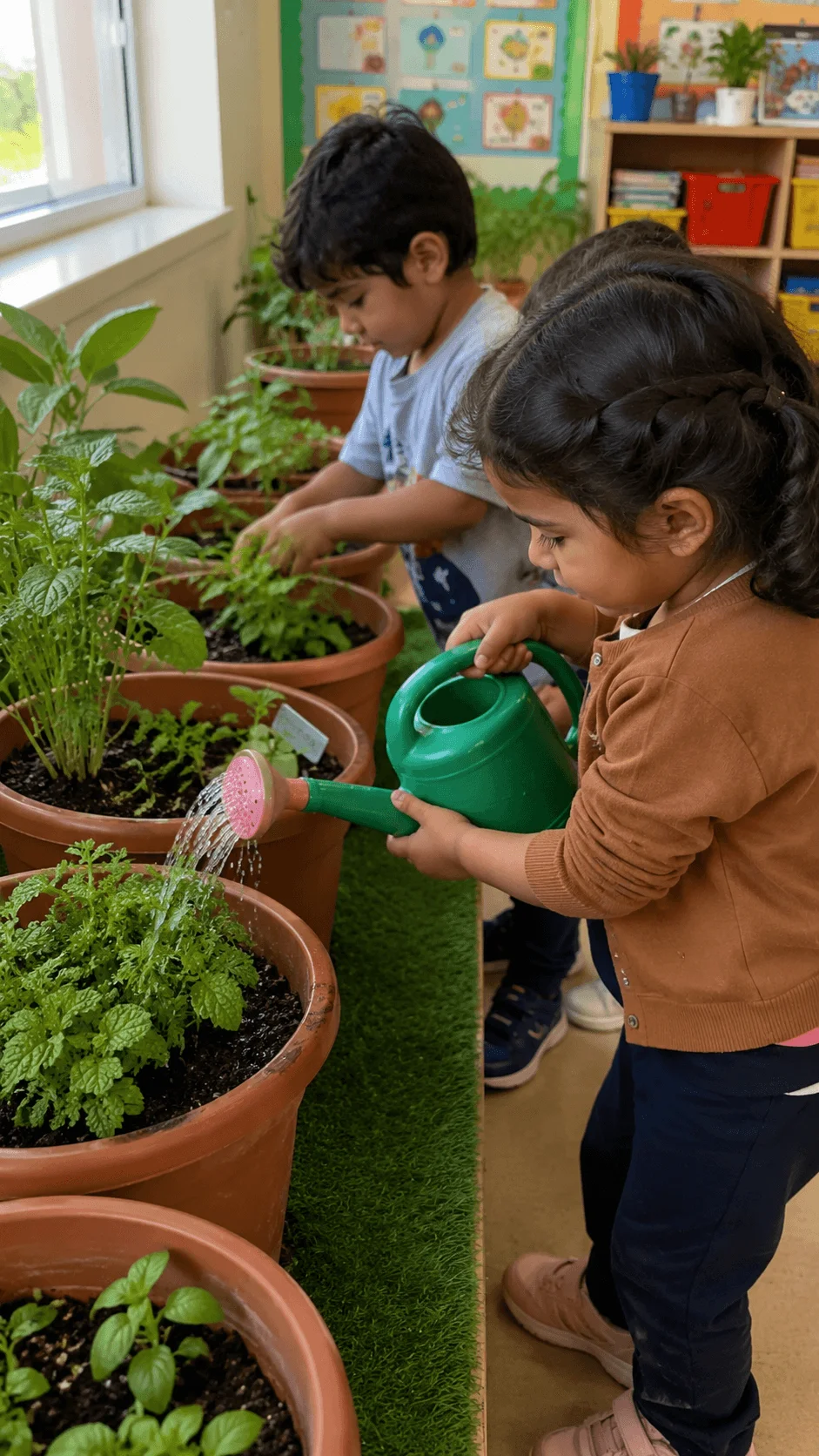
This activity also teaches responsibility. When children take care of plants, they begin to understand the importance of consistency and patience. Watching a plant grow slowly over time creates excitement and emotional attachment, making sustainability learning more powerful.
Water Saving Experiment Play for Early Environmental Awareness
Water Saving Experiment Play is another effective idea in sustainability activities for preschoolers. In this activity, children compare how much water is used in different actions such as washing hands quickly versus leaving the tap running.
Teachers can use simple cups or containers to show water levels. Children can visually see how much water is wasted or saved depending on behavior.
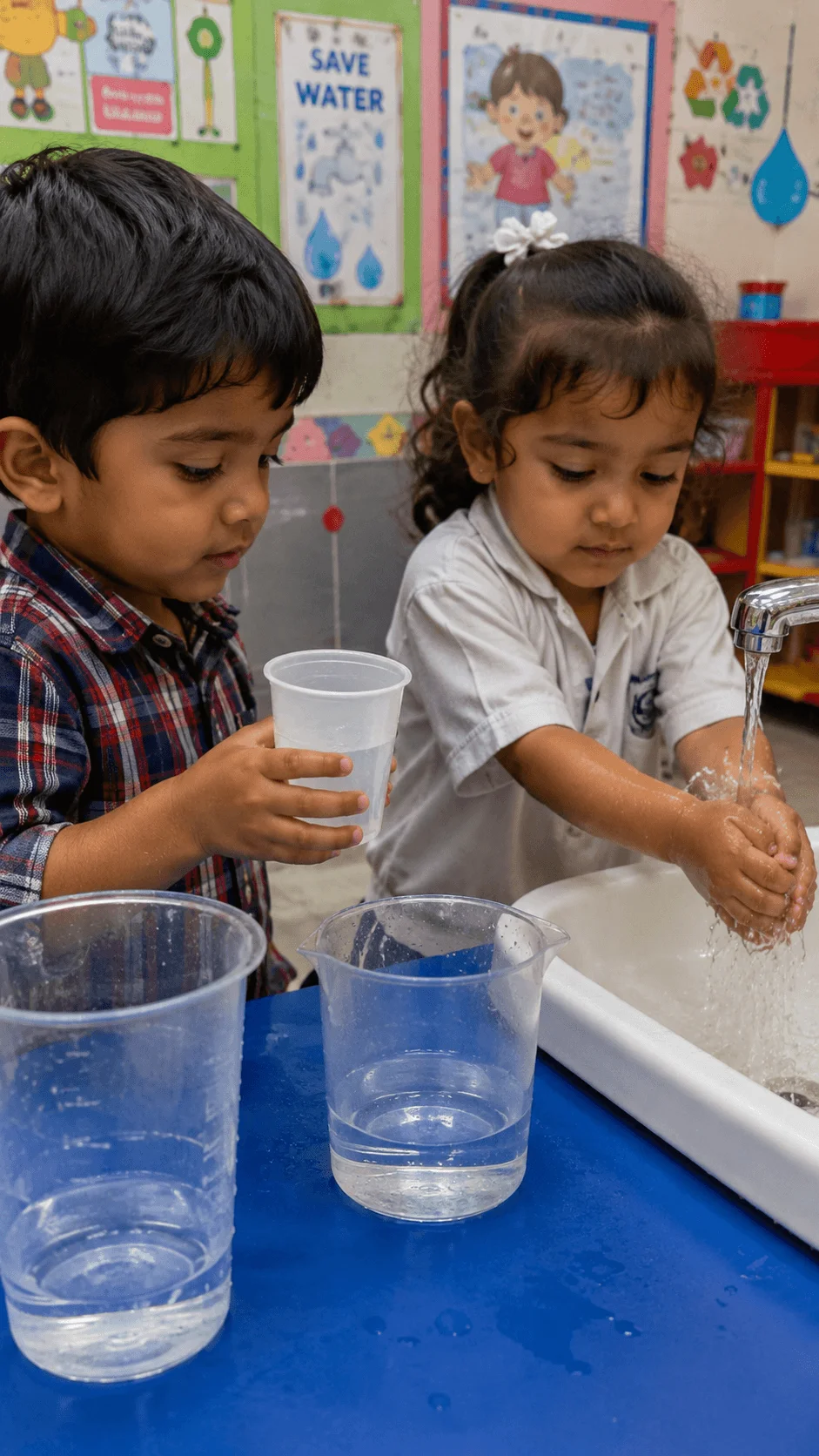
This hands on comparison helps children understand the importance of water conservation in a very practical way. Instead of just being told not to waste water, they experience the difference themselves. This builds early awareness about responsible water usage.
Energy Switch Off Role Play for Daily Habit Building
Energy Switch Off Role Play is a fun and interactive part of sustainability activities for preschoolers. In this activity, children pretend to be classroom helpers responsible for switching off lights, fans, or electronic devices when not needed.
Teachers create a simple role play environment where children take turns being energy guardians. This makes learning playful while also introducing the concept of energy saving.
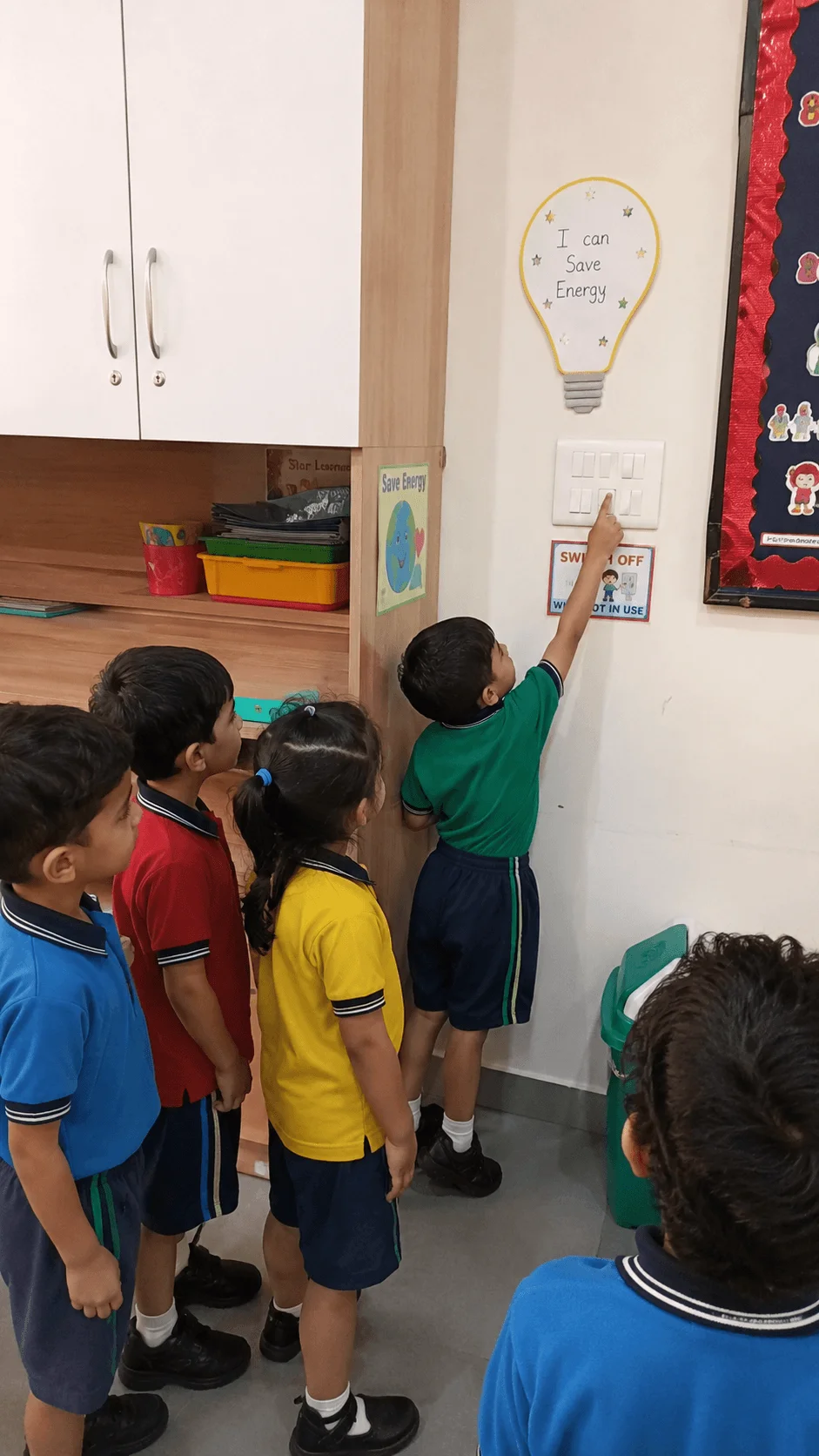
Through repetition, children begin to develop real habits. They start noticing lights or fans left on and may remind others to turn them off. This early awareness builds long term energy saving behavior.
Toy Sorting Game for Reuse Recycle Understanding
Toy Sorting is a simple but highly effective activity in sustainability activities for preschoolers. Children are given different items and asked to sort them into categories like reuse, recycle, or compost with teacher guidance.
This activity helps children understand that not everything goes to waste in the same way. Some items can be reused, some can be recycled, and some return to nature.
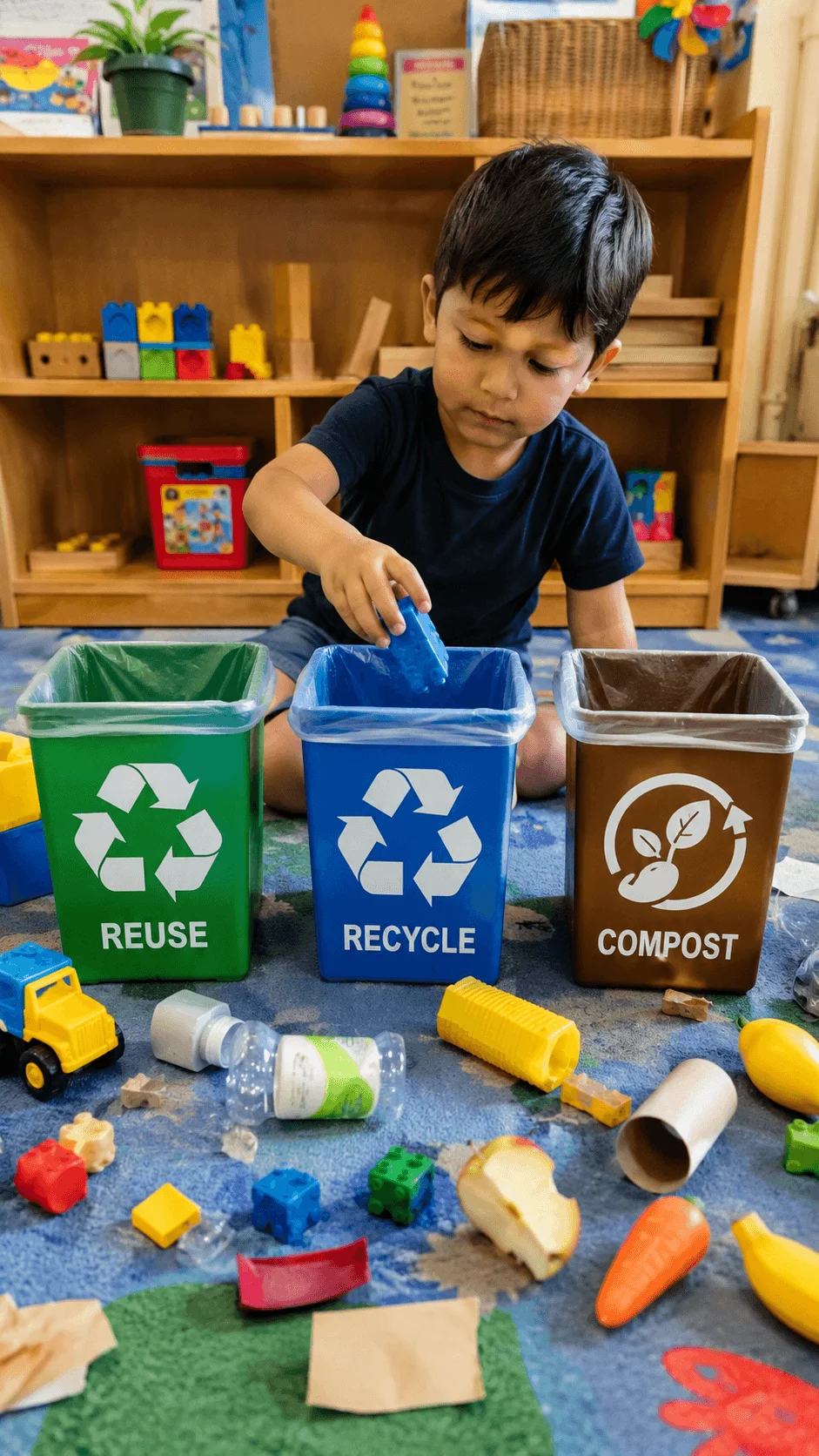
The game format makes learning easy and engaging. Children enjoy sorting objects while also building logical thinking skills. It introduces environmental responsibility in a very age appropriate way.
Zero Waste Snack Time Awareness for Everyday Learning
Zero Waste Snack Time Awareness is a practical example of sustainability activities for preschoolers that connects learning with daily routine. During snack time, teachers guide children to observe packaging, leftovers, and waste materials.
Children learn how to reduce waste by using reusable containers and avoiding unnecessary packaging. They also begin to understand how small choices affect the environment.
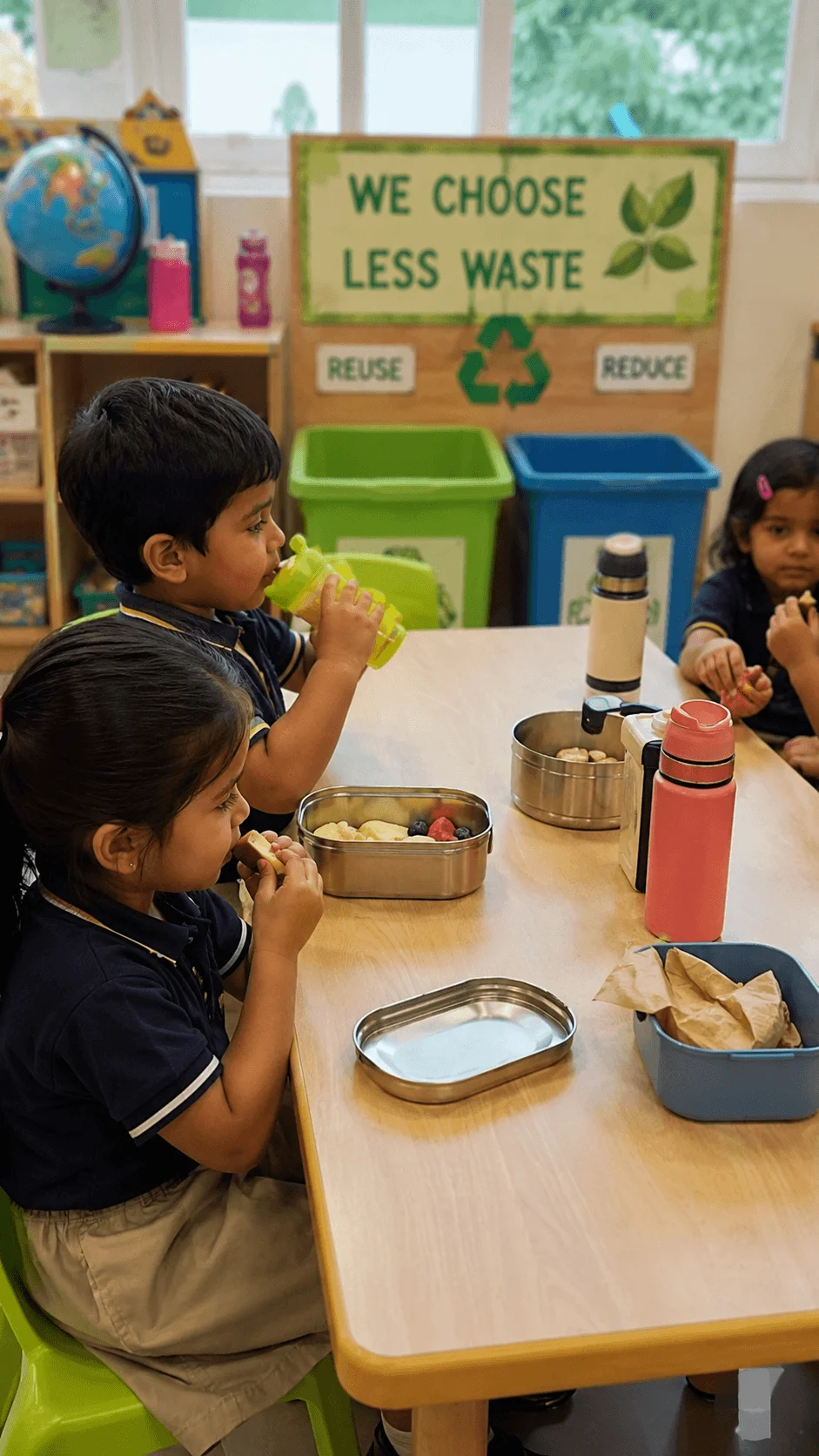
This activity works best because it becomes part of everyday life. Children do not see it as a separate lesson but as a normal habit. Over time, this builds strong awareness about reducing waste in daily routines.
Worm Compost Exploration for Understanding Natural Recycling
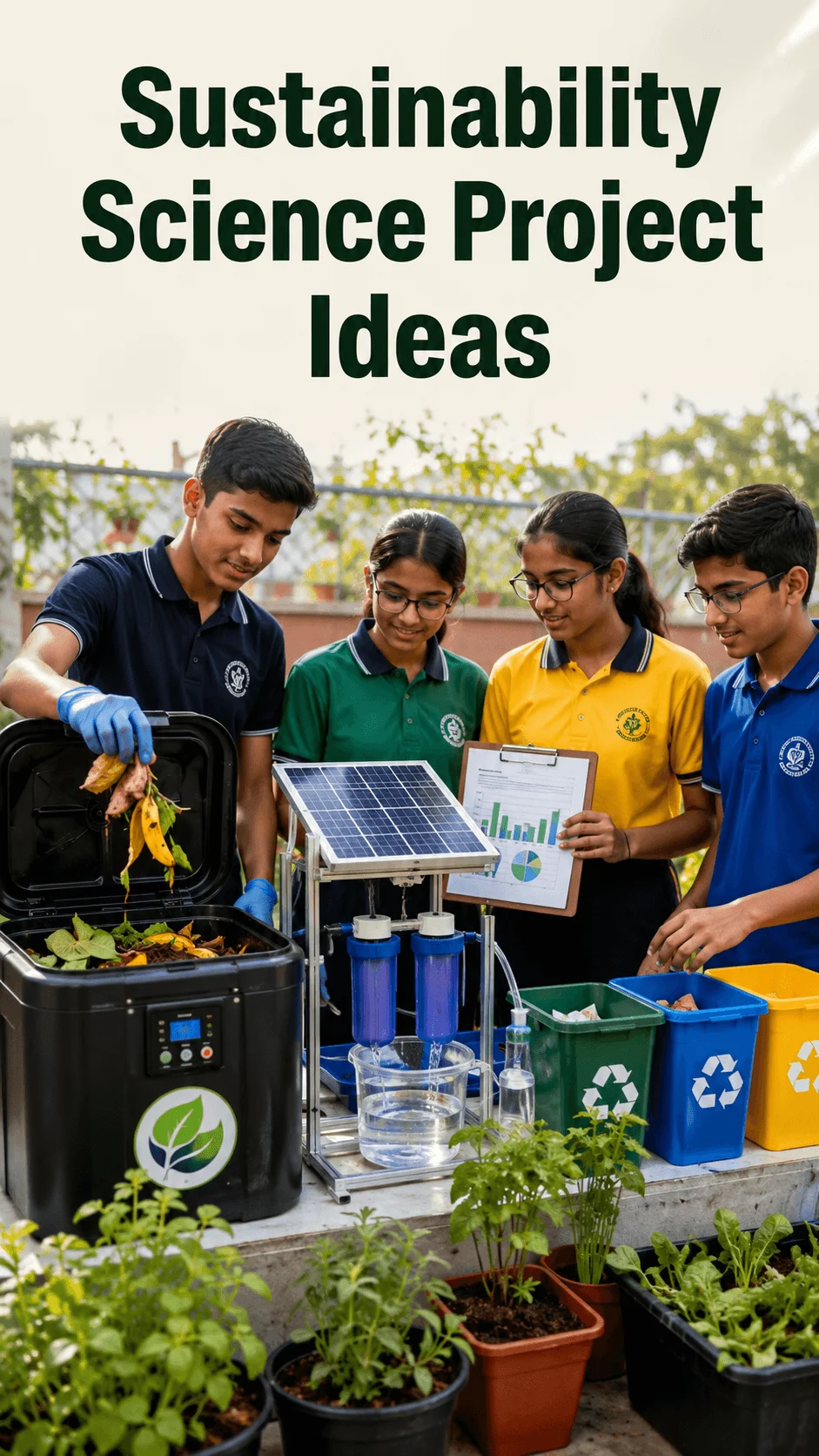
Worm Compost Exploration is one of the most fascinating sustainability activities for preschoolers because it shows children how food waste naturally turns into soil. In this activity, a simple compost bin is created where children can observe worms breaking down fruit peels and vegetable scraps.
Children learn that waste does not just disappear but can become something useful again. This hands on observation builds curiosity and respect for natural processes. When they see how soil is formed, they begin to understand the natural cycle of life in a very simple way.
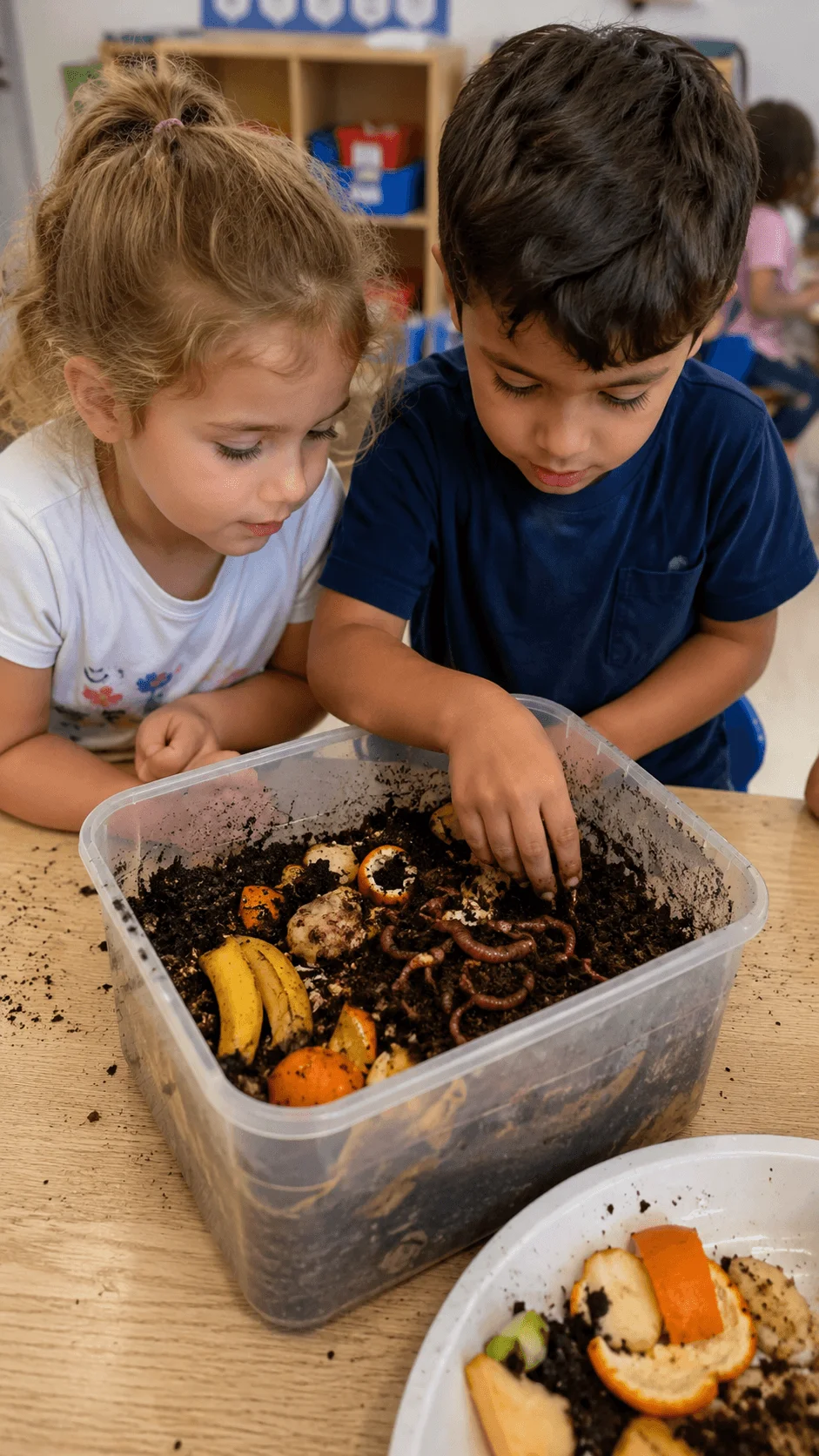
This activity also helps children overcome fear or discomfort about insects. They start seeing worms as helpful creatures that support the environment. Over time, this builds early environmental respect and scientific curiosity.
Nature Art Activities Using Natural Materials
Nature Art Activities are creative sustainability activities for preschoolers where children use leaves, stones, flowers, and twigs to create art instead of plastic based craft supplies. They can make patterns, shapes, or simple pictures using natural materials collected safely from the environment.
This activity helps children connect creativity with nature. They learn that beautiful art does not always require store bought materials. It can come directly from the environment around them.
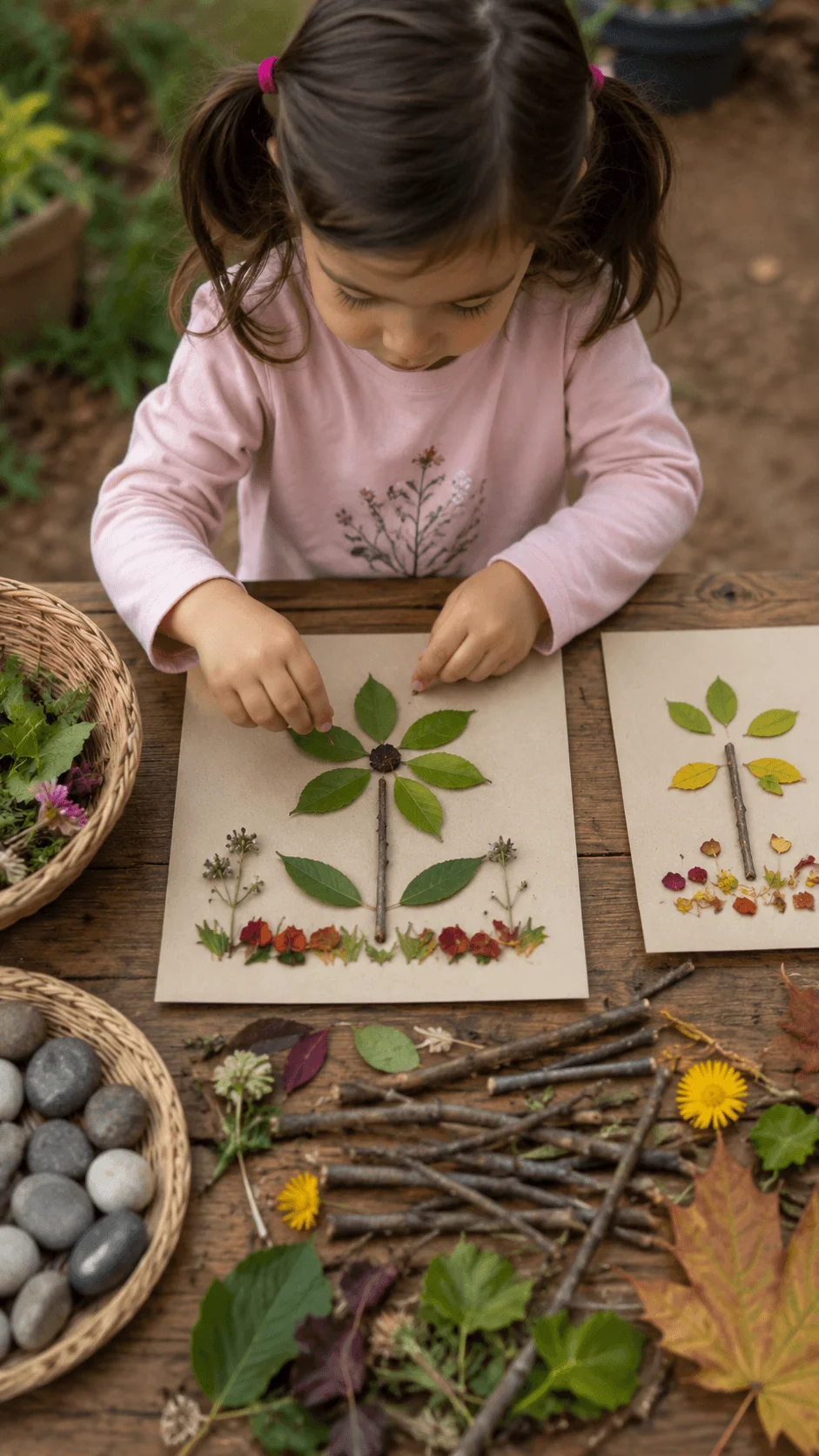
It also encourages mindfulness because children carefully select natural items and observe their textures and colors. This builds appreciation for nature’s diversity and reduces dependence on synthetic materials.
Waste Audit Game for Early Environmental Awareness
The Waste Audit Game is a simple but powerful idea in sustainability activities for preschoolers. In this activity, children observe how much waste is produced in the classroom during a day, such as paper, food wrappers, or plastic items.
Teachers guide them to notice patterns in waste generation. Children begin to understand that daily actions create environmental impact. Even though the concept is simplified, it builds strong awareness about responsibility.
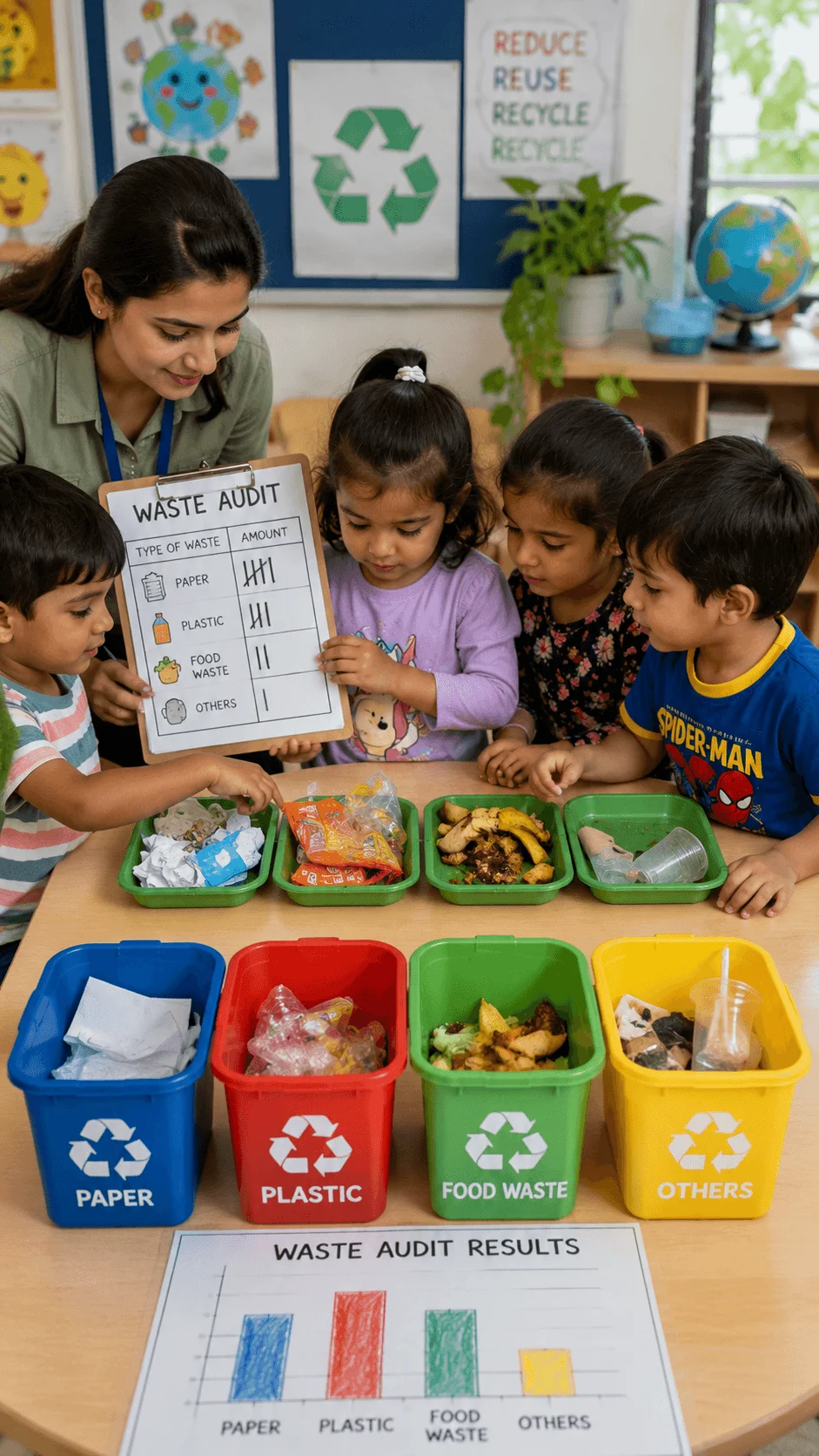
This activity also encourages teamwork because children work together to observe and discuss what they see. It helps them realize that reducing waste is a shared responsibility.
Earth Protector Role Play for Emotional Environmental Learning
Earth Protector Role Play is one of the most engaging sustainability activities for preschoolers because it uses imagination and storytelling. In this activity, children pretend to be guardians of the Earth who solve environmental problems like pollution or littering.
Through role play, children express ideas about protecting nature. They may pretend to clean rivers, plant trees, or stop wasteful behavior. This imaginative learning builds emotional connection with environmental care.
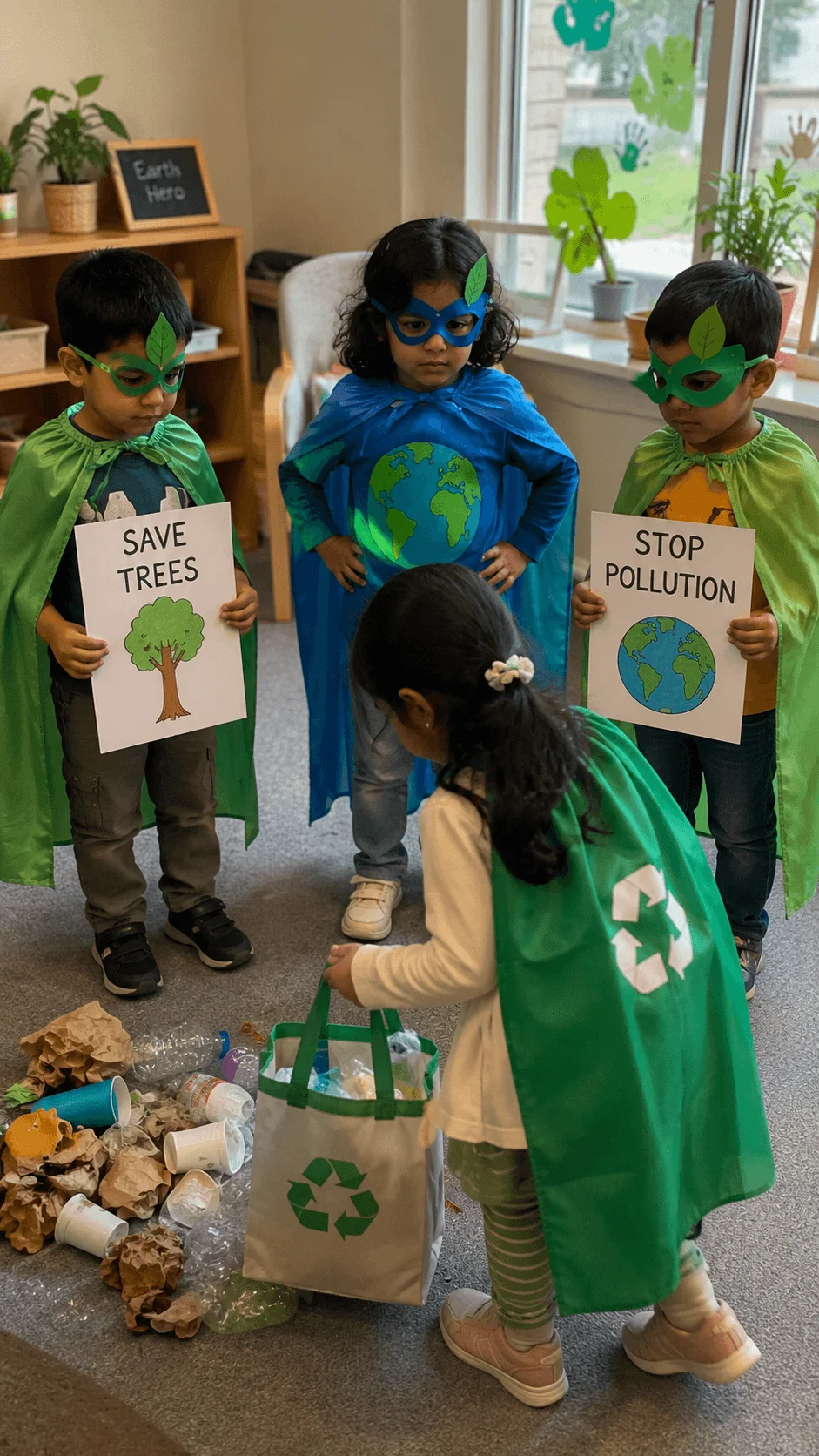
It also strengthens communication skills and confidence. Children feel empowered when they act as protectors, which helps build positive environmental identity from an early age.
Upcycled Planters Project for Creative Sustainability Learning
Upcycled Planters Project is a hands on example of sustainability activities for preschoolers where children turn old cups, cans, or bottles into plant pots. They decorate these containers and then plant seeds inside them.
This activity teaches reuse in a very practical and visible way. Children see how an item that might be considered waste can have a new purpose. It also introduces basic gardening skills.
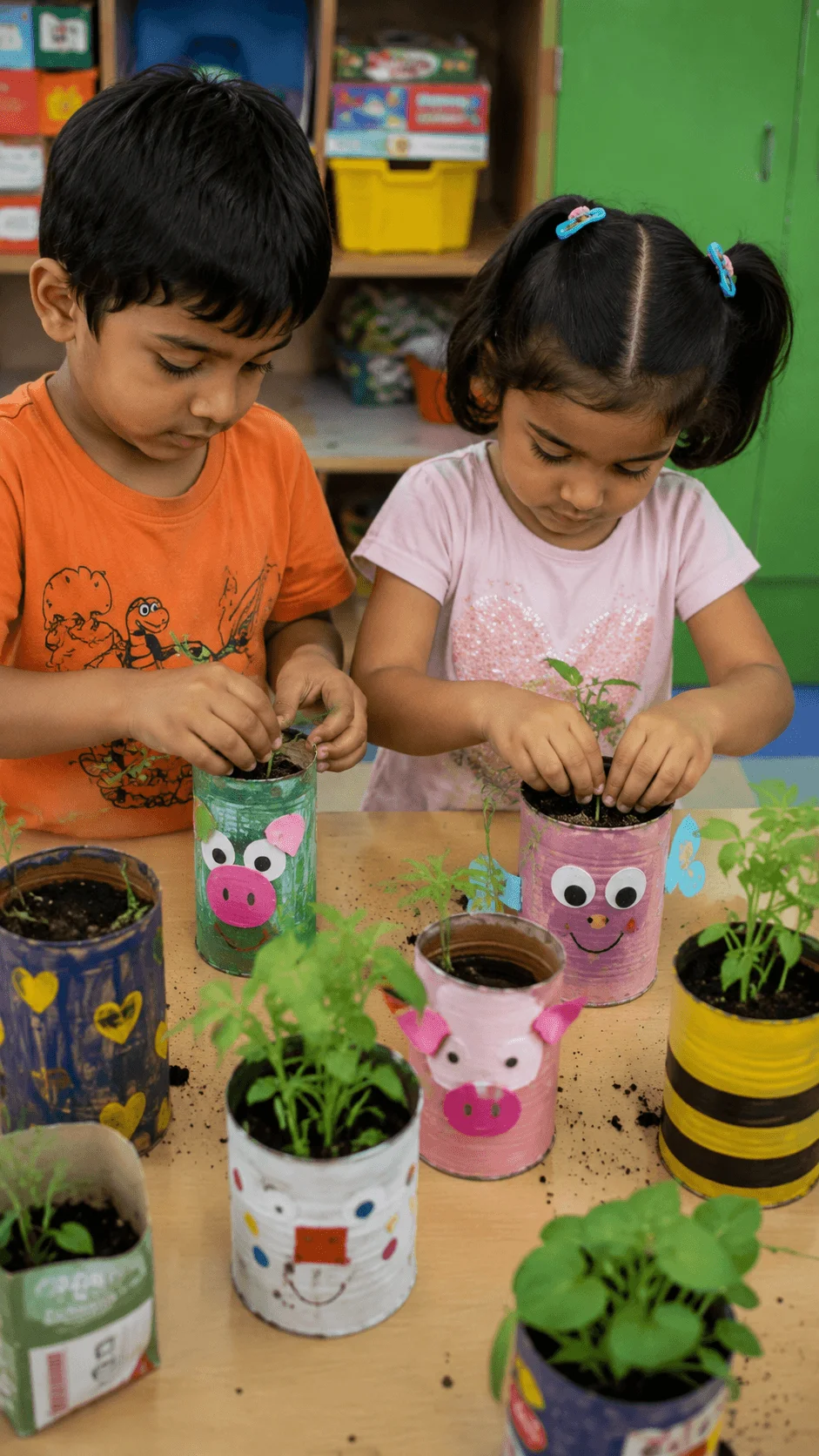
When children care for their upcycled planters, they develop responsibility and patience. Watching plants grow in something they created themselves increases emotional engagement with nature.
Pollinator Awareness Game for Understanding Nature Connections
Pollinator Awareness Game is an interactive activity where children learn how bees and other insects help flowers grow. In this version of sustainability activities for preschoolers, children act as bees moving from flower to flower in a playful classroom game.
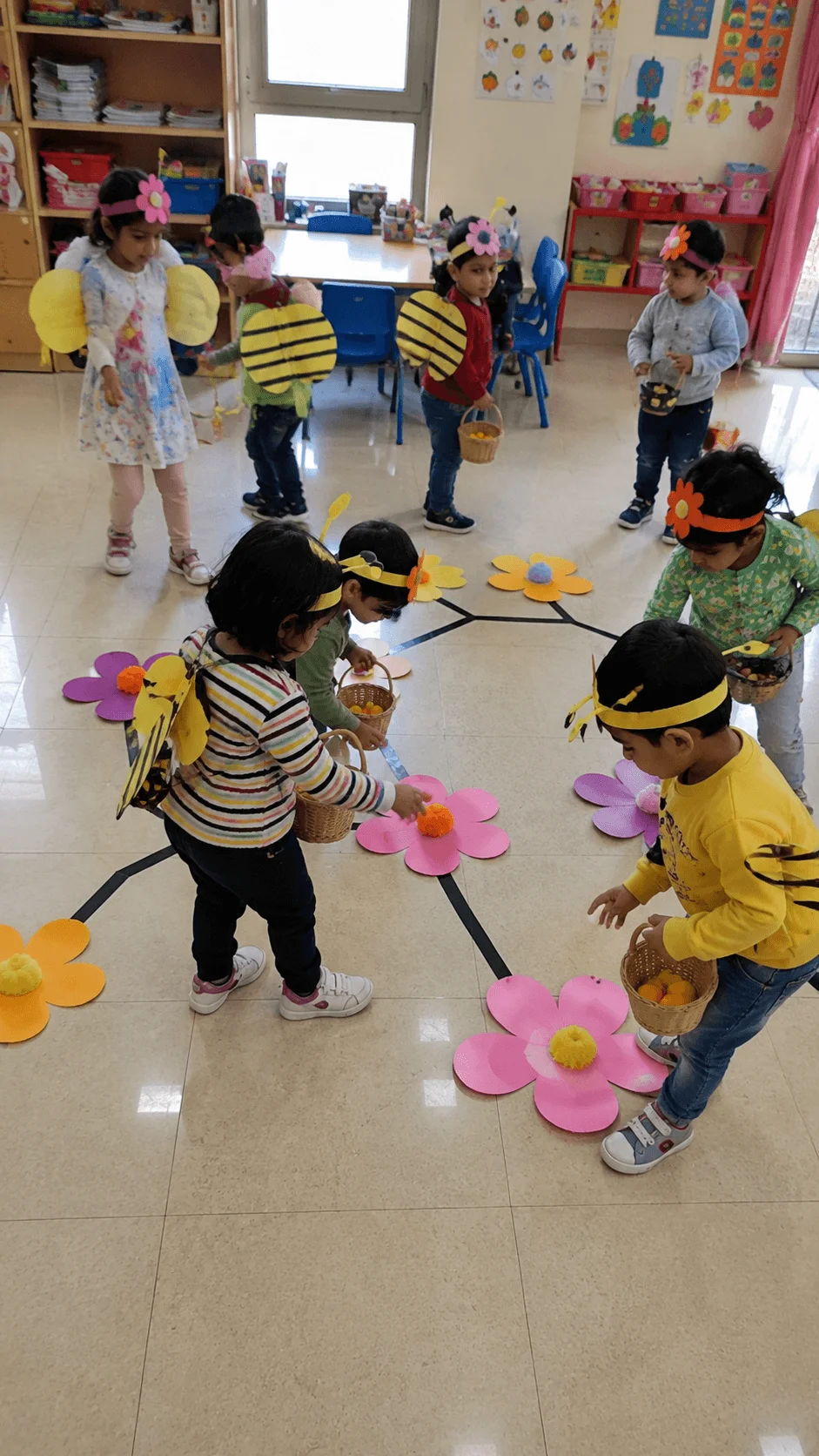
This helps them understand the connection between insects and plant growth in a very simple and physical way. Instead of abstract explanation, they experience the process through movement.
It also builds awareness of how small creatures play a big role in nature. Children begin to respect insects more and understand their importance in the ecosystem.
Green Transport Day Activities for Eco Friendly Habits
Green Transport Day Activities introduce children to eco friendly travel choices like walking, cycling, or using shared transport. In this form of sustainability activities for preschoolers, children discuss or role play different ways of traveling to school.
Teachers can create simple scenarios where children choose between different transport options and learn which ones are better for the environment.
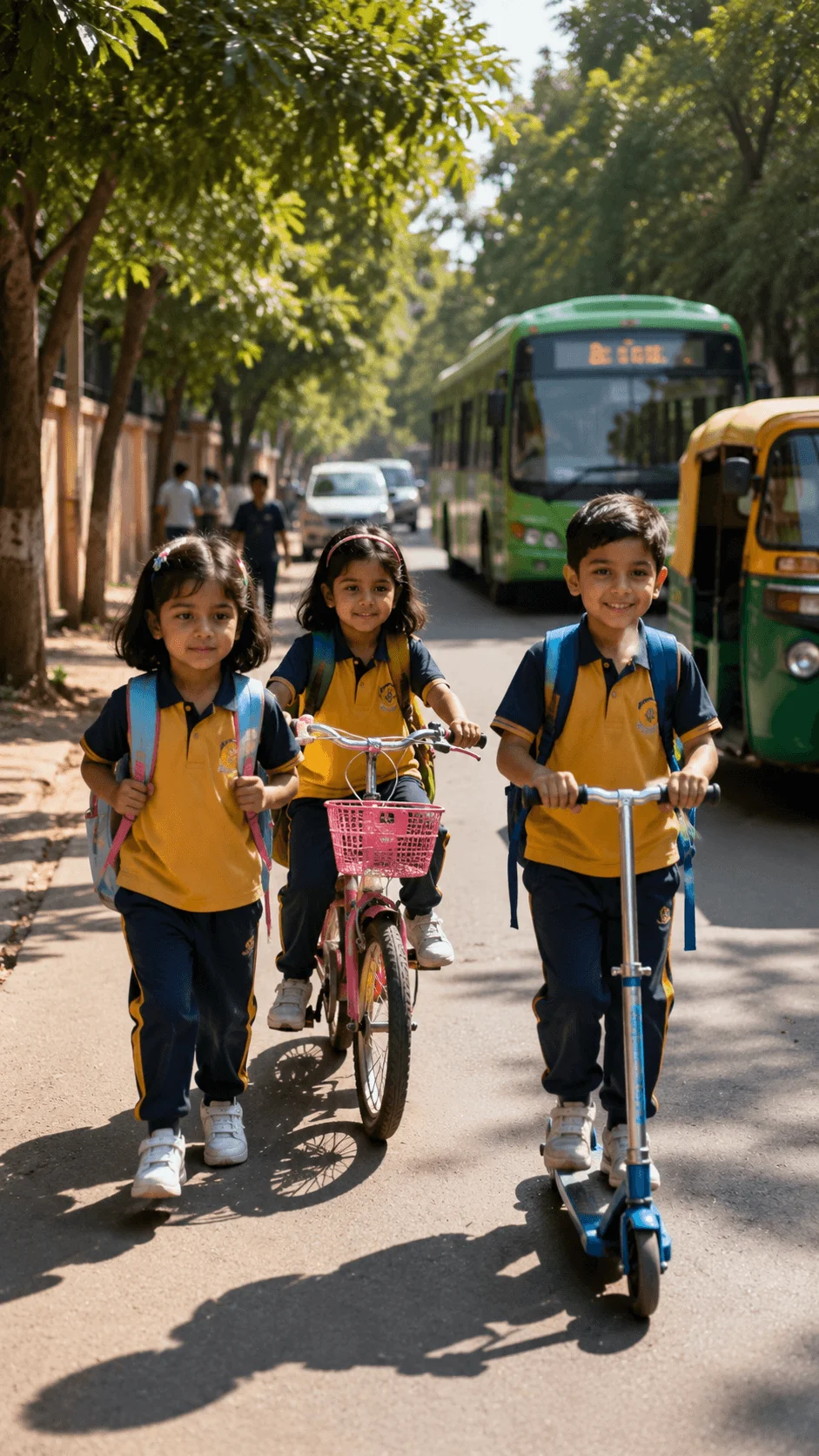
This activity builds early awareness of air pollution and energy use. It helps children understand that even travel choices can impact the planet in small but meaningful ways.
Packaging Comparison Sensory Table for Waste Awareness
Packaging Comparison Sensory Table is a sensory based learning activity where children explore different packaging materials such as cardboard, plastic, and paper. This is one of the most practical sustainability activities for preschoolers because it combines touch, observation, and sorting.
Children feel the differences between materials and discuss which ones are better for the environment. This hands on experience helps them understand waste types more clearly.
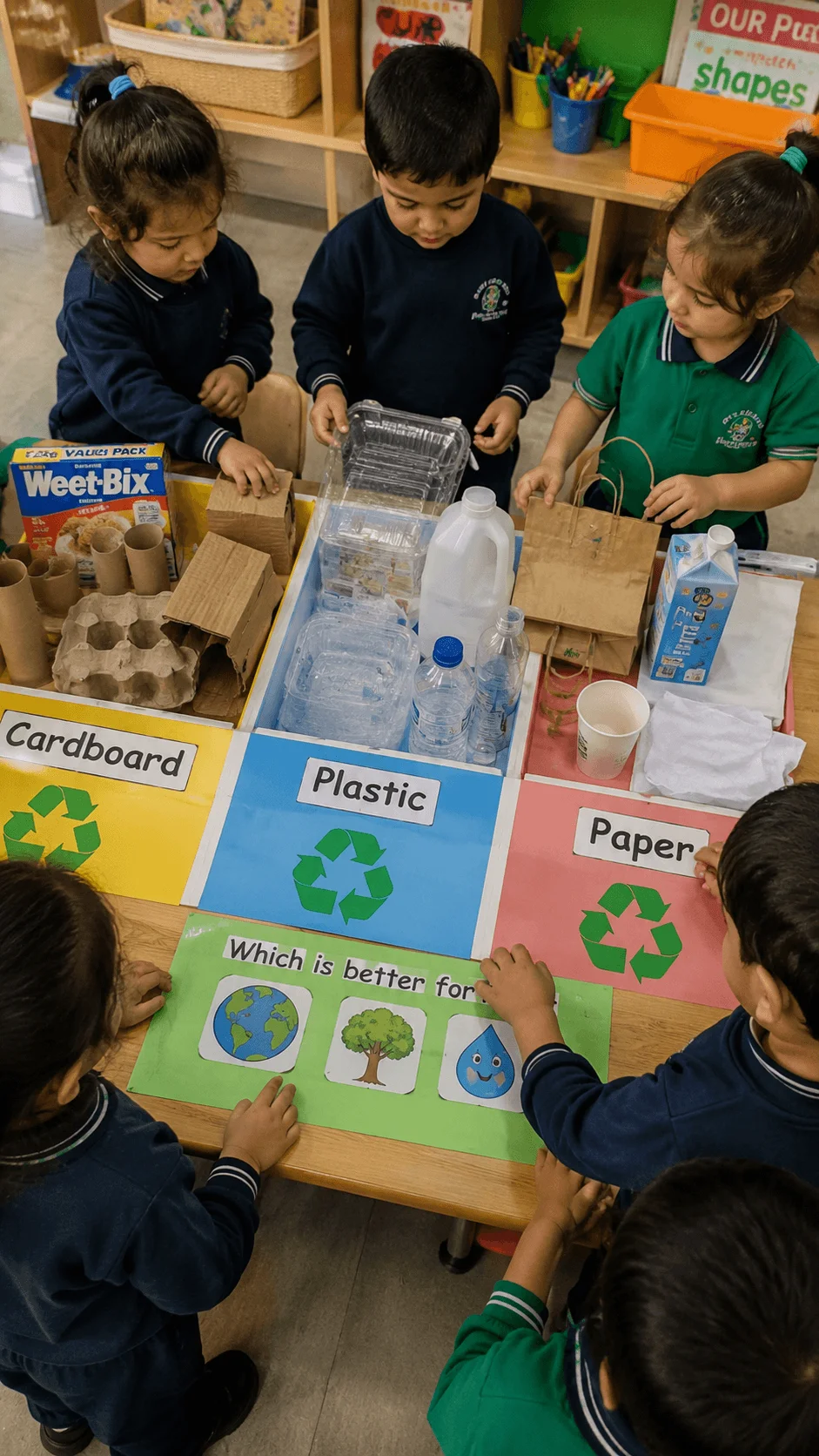
It also develops decision making skills as they begin to recognize which materials are reusable or recyclable. This builds early environmental literacy in a simple and engaging way.
Benefits of Sustainability Learning in Early Childhood
Sustainability learning in early childhood builds strong foundations for lifelong environmental awareness. When children engage in sustainability activities for preschoolers, they develop curiosity about nature and start forming responsible habits early in life.
These activities also support cognitive development by encouraging observation, sorting, comparison, and problem solving. Children learn to think critically about waste, resources, and nature in a very simple and natural way.
Emotionally, sustainability learning helps children develop empathy. They begin to care for plants, animals, and their surroundings. This emotional connection is important because it shapes long term behavior.
It also improves social skills because many activities involve teamwork, sharing, and group participation. Children learn how their actions affect others and the environment around them.
Conclusion
Sustainability activities for preschoolers are becoming an essential part of modern early childhood education because they help children build strong environmental awareness from an early age. These activities do more than teach concepts. They shape habits, emotions, and behaviors that last a lifetime.
When children explore nature, recycle materials, save water, or care for plants, they begin to understand their role in protecting the environment. These small experiences build powerful foundations for responsible thinking.
In 2026, sustainability learning is not just an educational trend. It is a necessary step toward creating environmentally conscious future generations who understand how to care for the planet in simple, practical, and meaningful ways.