12 Eco Friendly Preschool Activities for 2026
Eco friendly preschool activities give young children practical ways to care for materials, living things, water, food, and shared spaces. In 2026, many parents and teachers want learning experiences that create less waste and offer more value than disposable classroom crafts. These activities combine play, creativity, movement, observation, and simple environmental responsibility in ways that preschool children can understand.
Children between three and five years old may not understand complex environmental issues, but they can understand everyday actions. They can repair a book, water a plant, reuse paper, share a toy, collect rainwater, and observe a butterfly without disturbing it. These small experiences help children connect responsible choices with familiar parts of daily life.
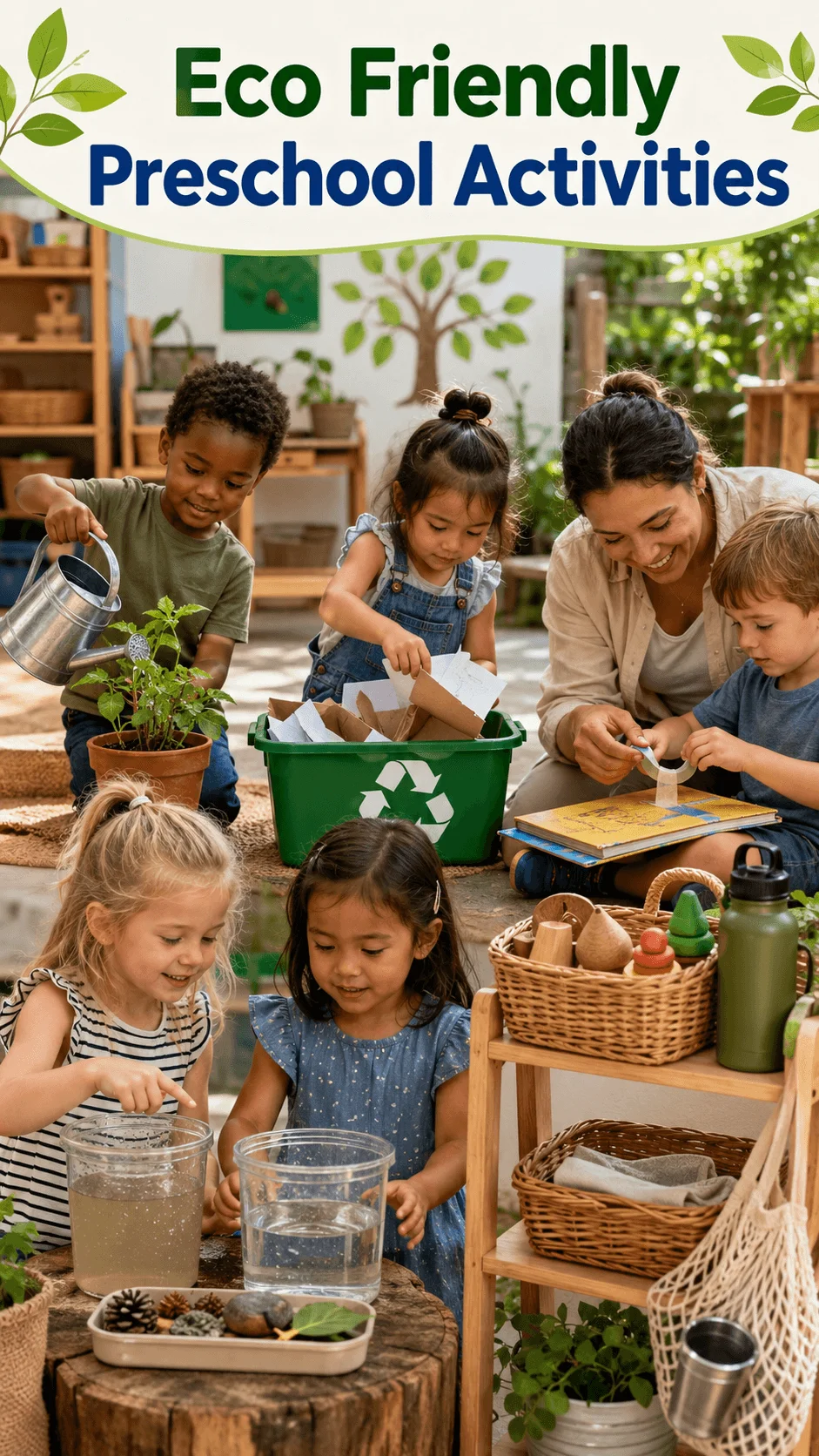
The best eco friendly preschool activities do not depend on expensive supplies or complicated lessons. They use safe materials, simple routines, natural objects, reused resources, and adult guidance. They also support language, early science, fine motor development, teamwork, imagination, counting, sorting, and problem solving.
Why Sustainable Activities for Preschoolers Matter
The preschool years shape many of the habits children carry into later life. Young children learn by watching adults, copying routines, asking questions, and repeating actions. When teachers return reusable materials to a storage basket, children notice. When parents repair an object instead of replacing it immediately, children begin to understand that damaged items may still have value.
Sustainable activities for preschoolers can also strengthen important developmental skills. Sorting food scraps supports colour recognition and comparison. Planting seeds encourages patience and observation. Sharing classroom resources develops communication and turn taking. Exploring shadows introduces early scientific thinking. Repairing toys develops problem solving and respect for shared belongings.
Sustainability education should remain positive during the preschool years. Adults should not frighten children with detailed information about climate change, pollution, or habitat destruction. Young children need hopeful experiences that show them what they can do. Caring for one plant, saving one sheet of paper, or helping repair one toy can give them a realistic sense of responsibility.
Eco friendly preschool activities work best when adults connect them with normal routines. A child who switches off an unused light, places a reusable cup near the sink, or returns a puzzle to the sharing shelf begins to see care and conservation as ordinary behaviour. This approach creates stronger habits than a single environmental lesson taught once a year.
Choosing Safe Materials for Green Preschool Activities
Adults should inspect every reused or natural material before children handle it. Clean cardboard, paper, fabric, wooden pieces, large containers, smooth stones, and safe plant materials can support useful learning. However, teachers must remove sharp edges, broken plastic, rusted metal, staples, loose caps, small objects, mould, dirty packaging, and anything that may create a choking risk.
Parents and teachers should also consider allergies and skin sensitivity. Some children may react to certain plants, seeds, soil, food scraps, paints, or cleaning products. Adults should choose non toxic supplies and avoid unknown plants. They should wash reused containers and remove residue before introducing them to the activity area.
Sharp tools, needles, repair equipment, staplers, heated materials, and strong adhesives should remain under adult control. Children can observe, hold safe pieces, select patches, or test repaired items, but adults should complete dangerous repair steps.
Green preschool activities should not require large purchases of new craft materials. Buying glitter, foam sheets, plastic decorations, and disposable supplies for a sustainability lesson weakens the purpose of the activity. Safe reused materials should support real learning rather than become unnecessary decoration.
Preschool Repair Café for Broken Toys
A preschool repair café gives damaged classroom objects a second chance. Teachers can create a small repair area for torn books, loose toy wheels, ripped fabric toys, incomplete puzzles, and damaged cardboard buildings. Children can help examine each item and decide what may need cleaning, matching, patching, taping, or adult repair.
Begin by placing one damaged object on a low table. Ask the children what they notice. They may identify a missing piece, a torn page, or a loose part. Invite them to sort matching pieces, choose a fabric patch, clean a safe surface, or test the object after an adult completes the repair.
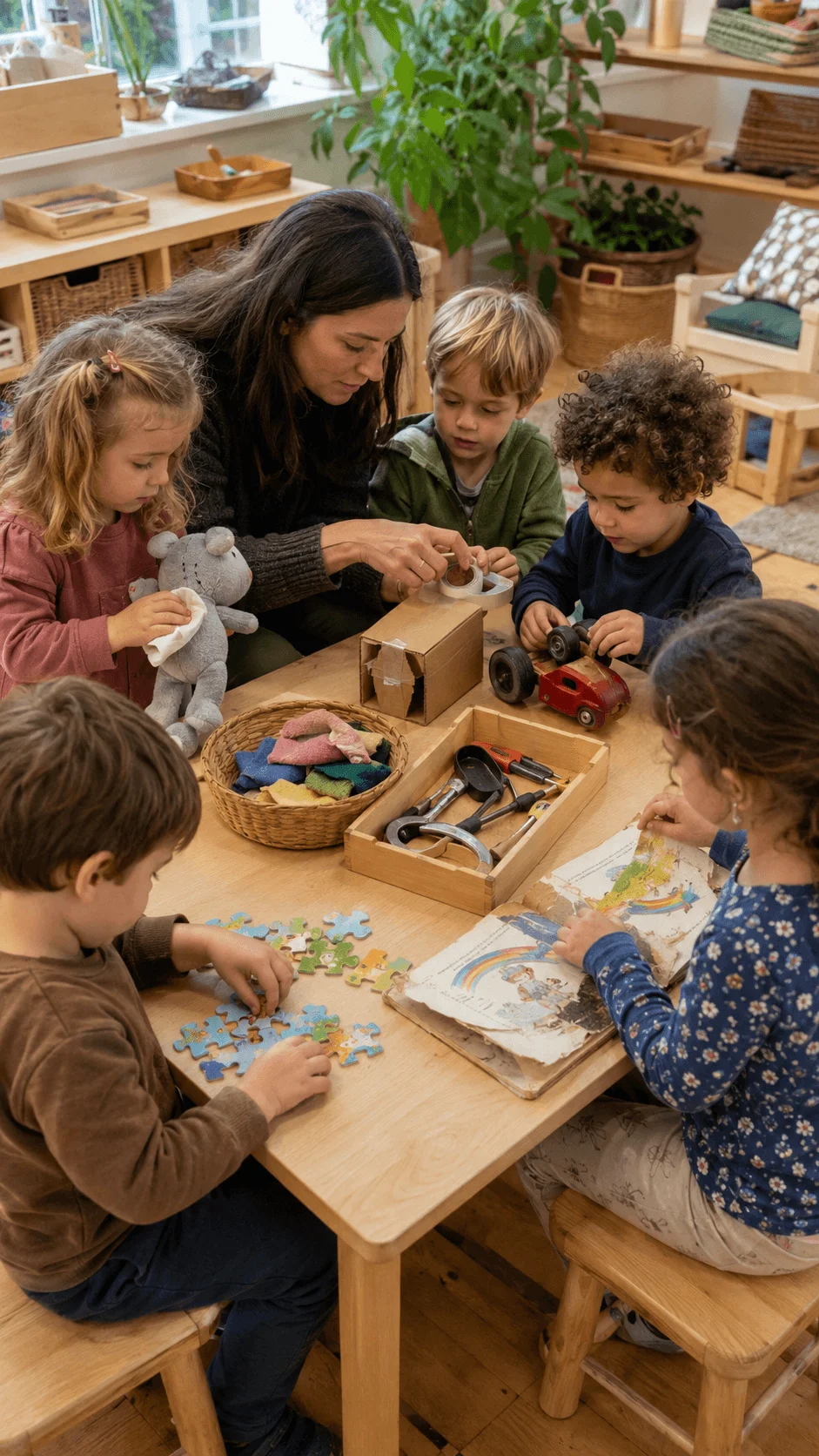
This activity introduces the deeper idea of repair culture. Children often see adults replace objects quickly, so they may assume that anything damaged belongs in the rubbish. A repair café shows that an object can remain useful even after something goes wrong.
The activity develops patience because repairs may take time. It supports problem solving because children must observe the damage and think about possible solutions. It also encourages teamwork and respect for shared classroom materials.
Teachers can keep a repair basket in the classroom. When an item breaks, children can place it in the basket instead of throwing it away. At home, families can create a monthly toy and book check. These simple routines turn eco friendly preschool activities into regular habits rather than isolated projects.
Seed Paper as a Sustainable Sensory Activity
Seed paper allows children to transform used classroom paper into something they can plant. Adults can collect suitable uncoated drawing paper, paper scraps, and clean paper pieces. Children can tear the paper into small sections, place it in water, and help soften it.
An adult can turn the soaked paper into pulp using a safe method. Children can press the wet pulp into simple shapes and add suitable flower or herb seeds. After the paper dries, they can plant it in soil and watch for new growth.
The activity gives children a clear example of material transformation. The paper does not simply move from one bin to another. It becomes part of a new object that supports plant growth. This connection makes the recycling idea easier to understand.
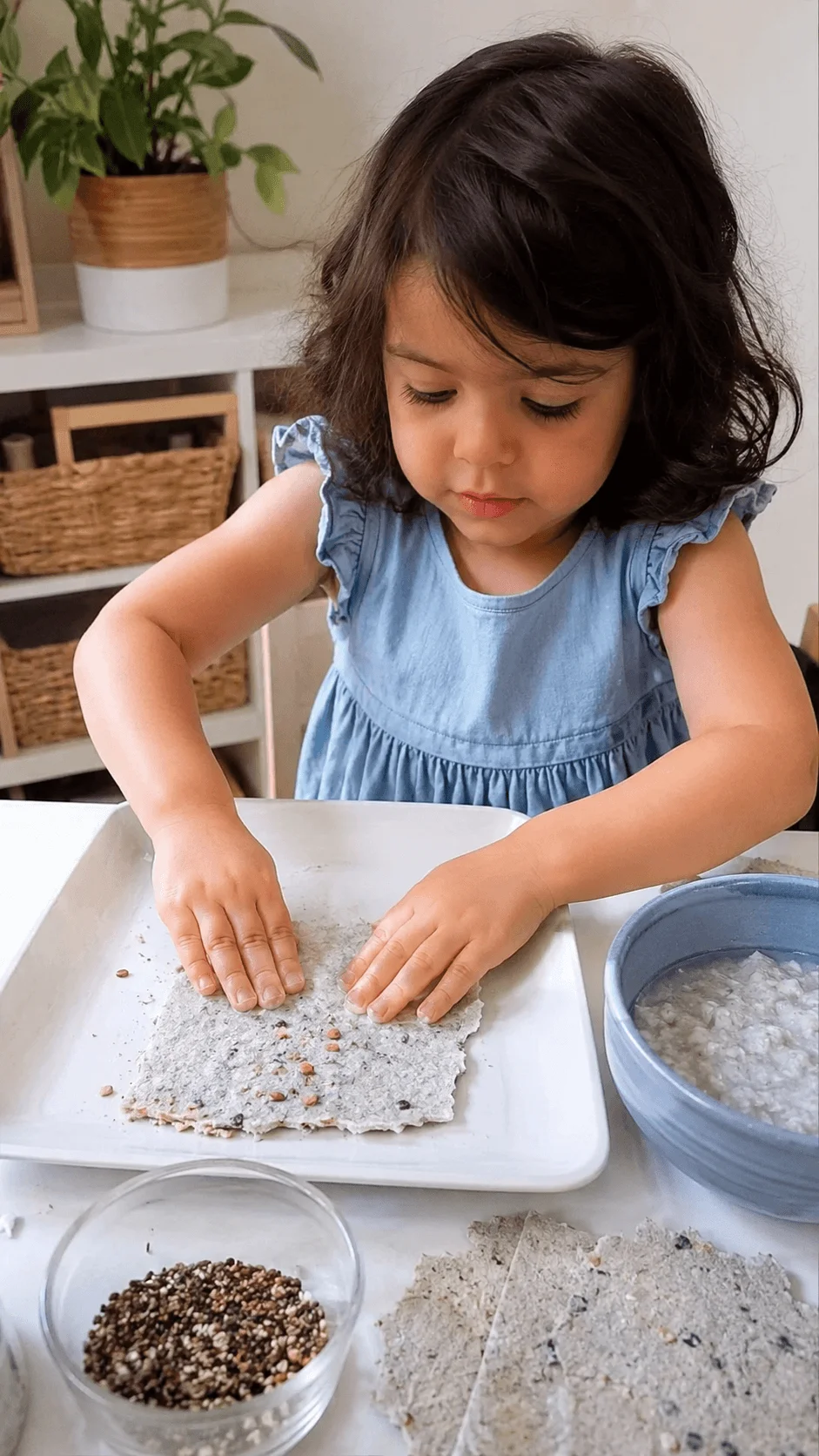
Children strengthen their hands while tearing, squeezing, and pressing the wet paper. They explore texture and moisture through sensory play. They also learn about soil, seeds, watering, sunlight, and patience.
Teachers should choose locally suitable seeds and avoid plants that may spread aggressively. They should not use glossy, heavily coloured, coated, or dirty paper. Adults can compare different paper textures and ask children which type may soften most quickly.
This activity offers more value than a decorative craft that children discard after a few days. It combines art, science, gardening, and reuse in one meaningful preschool experience.
Rainwater Investigation for Preschoolers
A rainwater investigation helps children observe weather and compare quantities. Before rainfall, teachers can place several safe containers outside. The containers can have different shapes or sizes, but adults should make sure they remain stable and easy to inspect.
After the rain, children can compare the collected water. They can use words such as more, less, full, empty, deep, and shallow. Teachers can add simple marks to transparent containers so children can see different water levels.
The class can use suitable collected rainwater for garden plants. This action helps children understand that rain can support living things. It also creates a natural connection between weather and plant care.
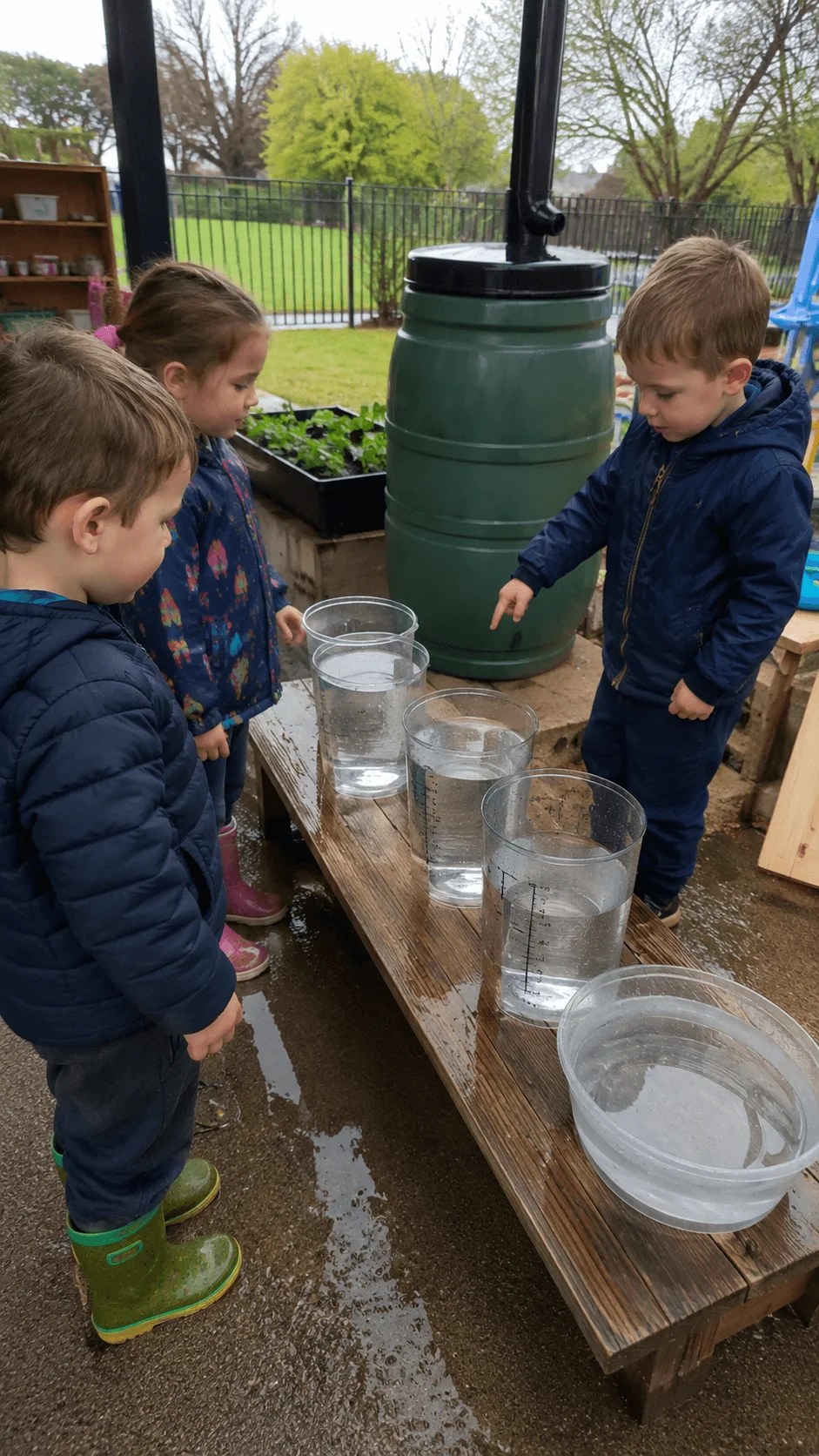
Adults can explain the water cycle in simple language. Water rises into the air, forms clouds, and returns as rain. Preschool children do not need a complicated scientific explanation. Direct observation gives them a strong starting point.
The activity supports prediction, comparison, early measurement, vocabulary, and responsibility. Children can record rainy and dry days with drawings or reusable weather symbols.
In areas with limited rainfall, teachers can demonstrate collection during a controlled outdoor water activity. They should still use small amounts and avoid wasting clean water.
Adults must empty containers regularly and should never allow children to drink collected water. They should also prevent mosquito breeding, avoid slippery areas, and supervise children near wet surfaces.
Loose Parts Nature Based Preschool Activities
Loose parts play uses open ended materials that children can arrange, combine, move, and reuse. Teachers can offer sticks, stones, pinecones, bark, seed pods, shells, leaves, fabric scraps, cardboard circles, and safe wooden pieces.
Children may build bridges, nests, animal shelters, roads, towers, villages, gardens, or imaginary landscapes. The activity has no single correct result. Each child can explore shape, balance, space, and structure in a personal way.
Adults should avoid encouraging children to glue every piece together. When children dismantle their creations, the same materials can support future play. Teachers can photograph a finished structure before returning the objects to the storage basket.
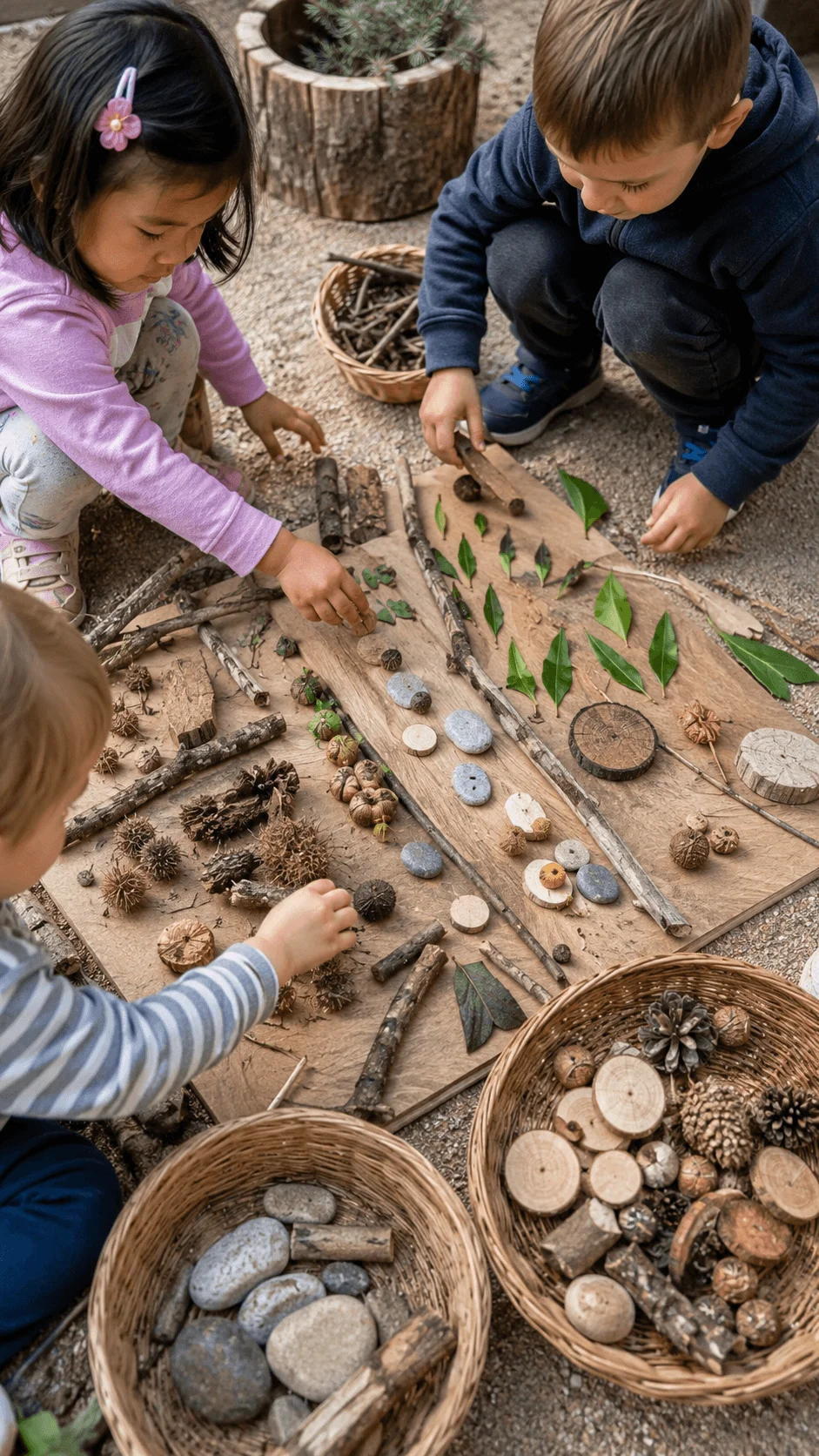
Loose parts nature based preschool activities produce less waste than many traditional crafts. They do not require new plastic decorations, glitter, or large amounts of glue. They also support imagination, planning, storytelling, cooperation, and flexible thinking.
Children should collect natural materials responsibly. Adults must explain that they should not remove living plants, nests, insects, eggs, or large amounts of material from one place. Fallen and abundant materials usually offer safer options.
A small indoor classroom can use baskets of clean natural objects and reused materials. An outdoor setting can create a larger construction area. In both cases, adults should check pieces for sharp points, splinters, dirt, and choking risks.
Classroom Sharing Library for Mindful Consumption
A classroom sharing library helps children understand that they can enjoy an item without owning a separate copy. Teachers can create a borrowing area for books, puzzles, costumes, toy vehicles, musical instruments, art tools, and dramatic play materials.
Picture cards and name symbols can make the system easy to follow. A child can place a card beside the borrowed item and return it when finished. Teachers can use baskets or labelled shelves to create a clear return area.
This activity supports mindful consumption because it reduces the need for duplicate materials. It also teaches responsibility, patience, fairness, organisation, and care.
Conflicts may happen when several children want the same object. Teachers can use a simple timer, a waiting picture, partner play, or a turn taking routine. These moments provide useful social learning rather than reasons to remove the activity.
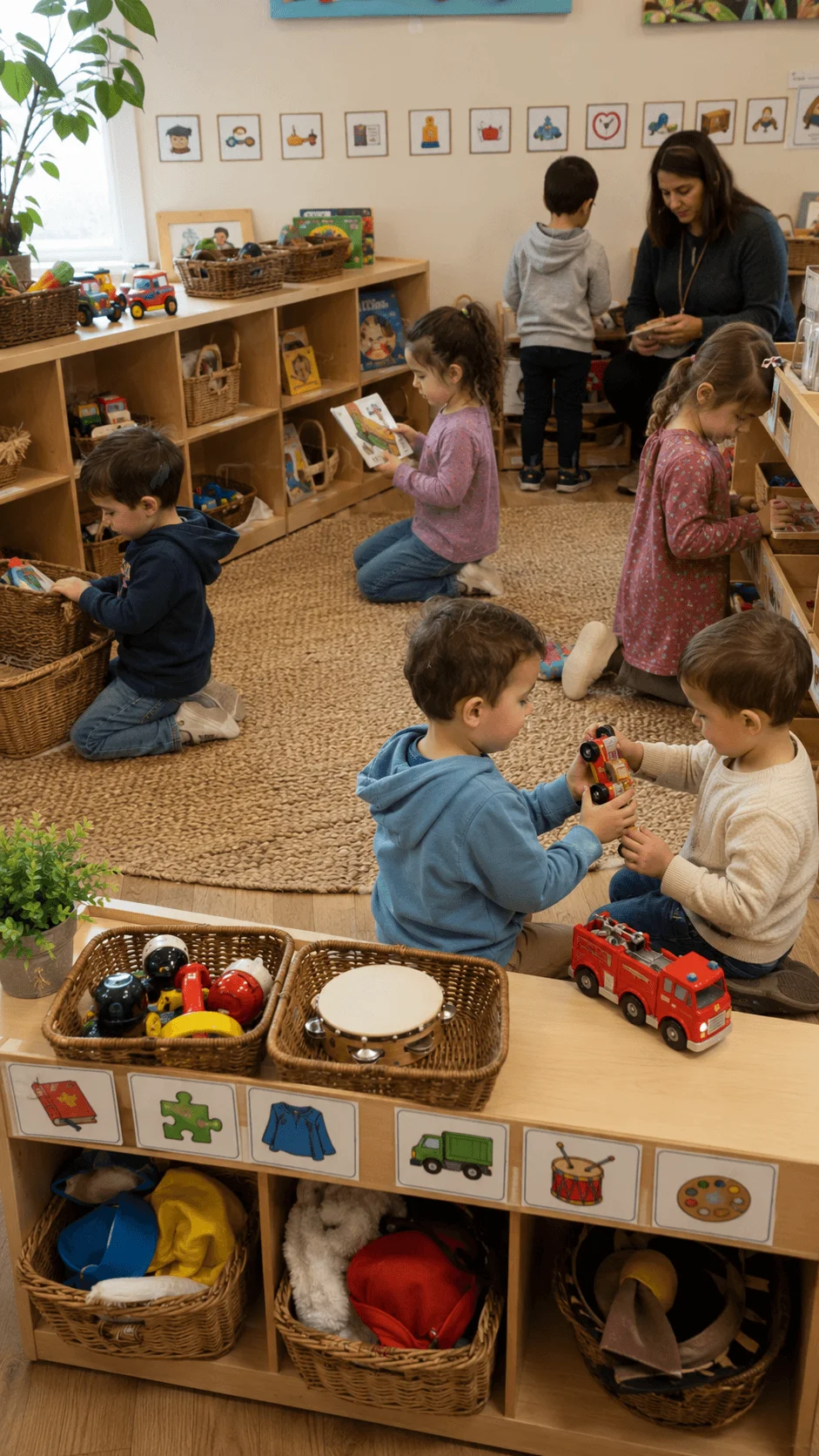
Adults should clean shared items regularly and remove unsuitable materials when illness spreads through the classroom. They should also select durable items that can handle repeated use.
Families can adapt the idea through a trusted toy exchange with relatives, neighbours, or parent groups. Children can choose an item to share and learn that another person may enjoy it for a while.
Among all eco friendly preschool activities, sharing systems offer one of the clearest ways to connect sustainability with social development.
Pollinator Gardens and Preschool Environmental Activities
A pollinator garden gives children a living space to care for and observe. Teachers can use locally suitable flowers, herbs, and native plants that provide food or shelter for butterflies, bees, birds, beetles, and other small visitors.
Children can help prepare soil, add seeds, water plants, place picture labels, and observe changes. They can draw visiting insects or use reusable counters to record what they see.
Adults should explain pollination in simple terms. Some insects and birds move between flowers and help plants produce seeds or fruit. Children do not need to catch or touch the visitors to learn about them.
The activity supports patience because plants need time to grow. It develops observation because children notice colour, size, movement, and seasonal change. It also introduces biodiversity and habitat care.
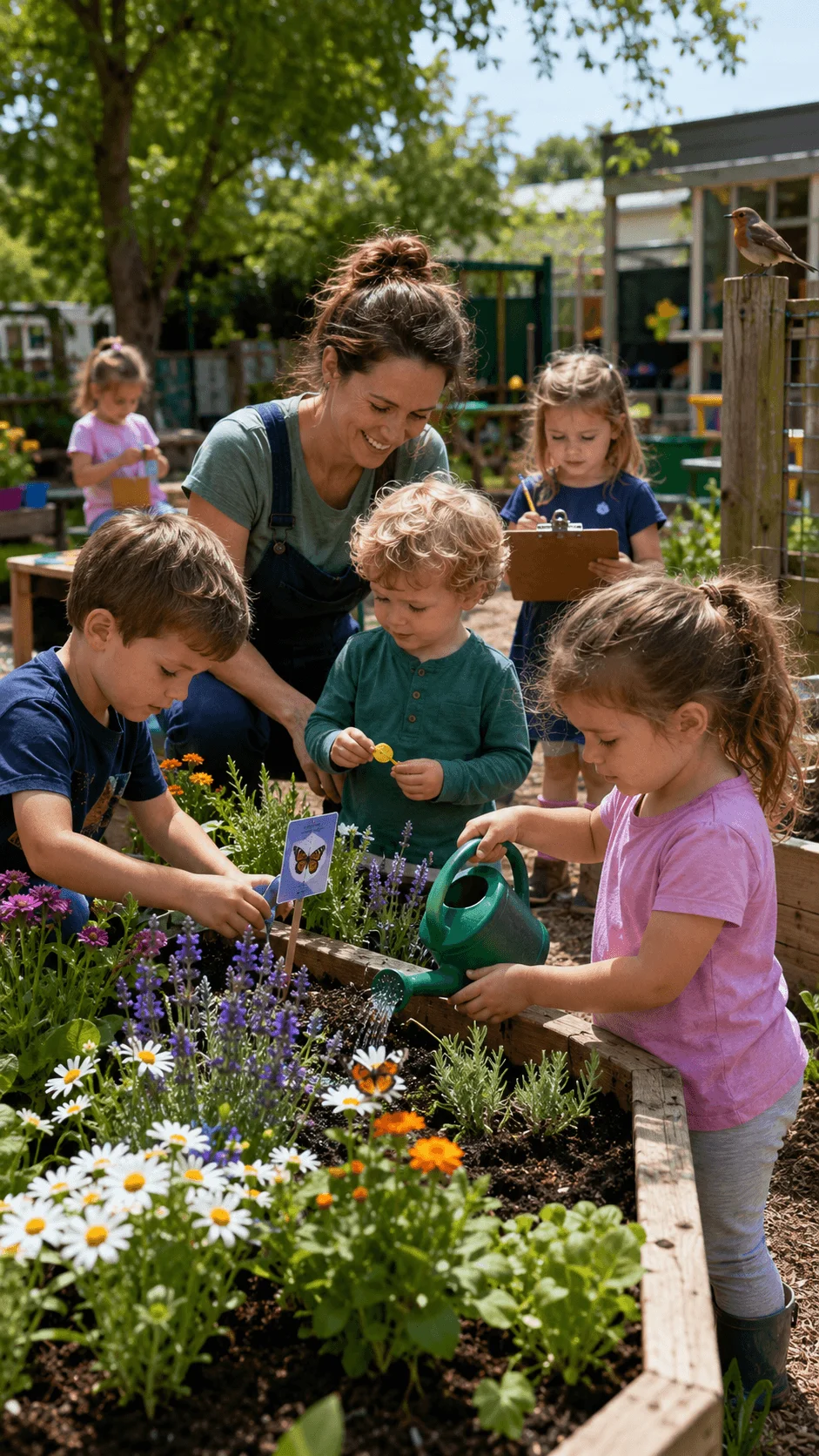
Teachers should check every plant for safety and suitability. They should consider allergies, local climate, growing conditions, and pesticide exposure. Children should observe insects from a respectful distance.
A preschool without a garden can use pots, window boxes, or raised containers. Even a small planted area can show children that living things need food, water, sunlight, and shelter.
These preschool environmental activities also help children understand that care continues after planting. They must water, observe, and protect the space over time.
Food Scrap Rainbow and Zero Waste Preschool Learning
A food scrap rainbow turns compost learning into a colour and sorting activity. Teachers can collect clean fruit and vegetable scraps or use realistic picture cards. Children can group the materials into red, orange, yellow, green, purple, brown, and white sections.
After sorting by colour, the class can decide which scraps belong in a compost container. Adults can explain that some food parts break down and eventually help create rich material for soil.
The activity supports colour recognition, comparison, vocabulary, smell, texture, and early science. It can connect with snack time, gardening, a compost bin, or a worm farm.
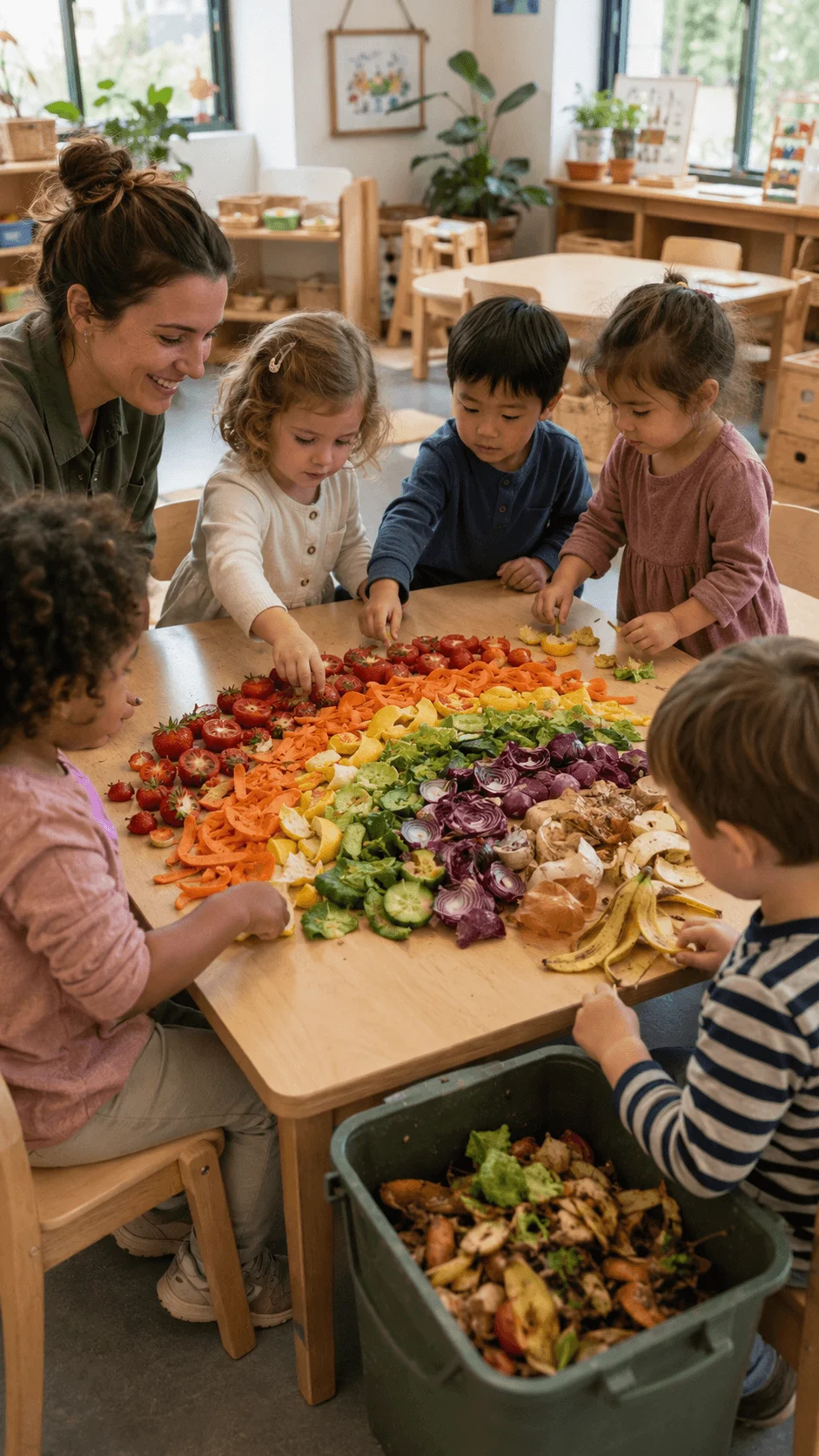
Teachers should make it clear that composting does not mean wasting edible food. Children can learn to take suitable portions and save untouched food when safe. The compost container should receive peels, cores, and scraps that people cannot eat.
Adults must consider allergies, spoiled food, hygiene, and hand washing. Children should not handle mouldy or unsafe scraps.
Zero waste preschool learning becomes more meaningful when children can follow the full process. They can see scraps enter the compost, observe changes over time, and later use finished compost around plants.
Solar Shadow Playground Exploration
Shadow play introduces sunlight, movement, shape, and time through direct observation. Children can trace shadows from trees, playground equipment, blocks, or large toys. They can use chalk, stones, rope, or reusable markers.
The class can return later and compare the shadow positions. Children may notice that a shadow has moved, grown shorter, or become longer. Teachers can invite them to predict where it may appear next.
Adults can explain that sunlight creates light and warmth. When an object blocks the light, a shadow appears. This explanation gives children enough information without overwhelming them.
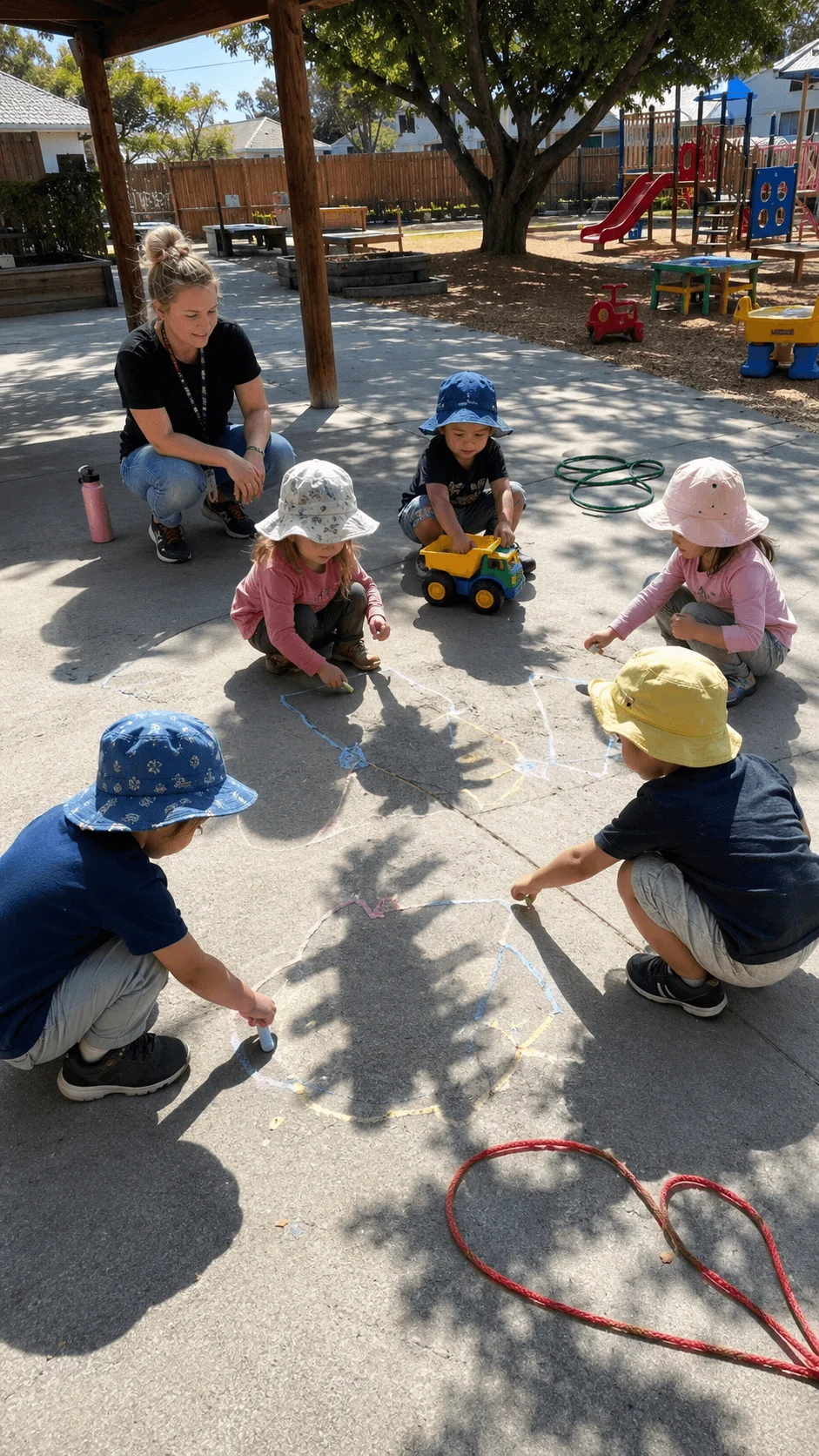
The activity develops observation, prediction, comparison, shape recognition, movement, and early time awareness. Cloudy days and seasonal changes can add new questions.
Teachers should plan the activity during a safe part of the day. Children need hats, hydration, shaded rest, and suitable supervision. Adults should avoid long periods of direct sun exposure.
Solar shadow exploration requires very few materials, which makes it one of the easiest hands on sustainability activities for outdoor learning.
Reusable Packaging Pretend Shop
A reusable packaging pretend shop brings sustainability into dramatic play. Teachers can set up cloth bags, baskets, refillable containers, cardboard packages, clean jars made from safe materials, wooden food toys, and pretend money.
Children can shop, pack items, return containers, refill pretend products, compare packaging, and take turns working at the counter. The shop can include a return station, refill area, produce section, and reusable bag shelf.
Role play helps children explore choices without turning the activity into a lecture. They can notice that one item has several layers of packaging while another uses a reusable container.
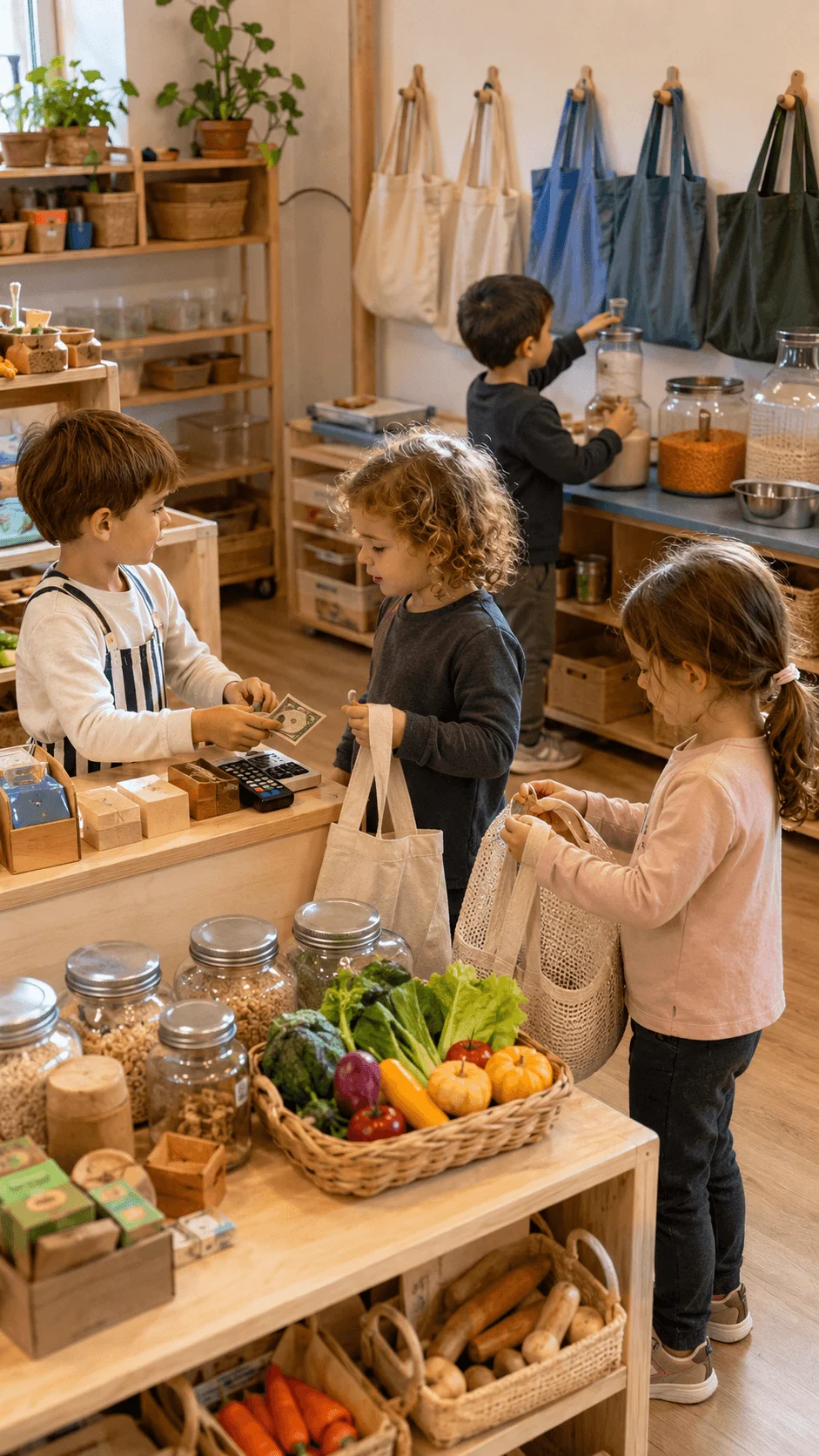
The activity supports counting, vocabulary, communication, cooperation, imagination, and decision making. It also introduces the idea that shopping choices can affect how much waste people create.
Teachers should avoid presenting every packaged object as bad. The goal should involve comparison and thoughtful choice rather than guilt.
Adults must remove glass, sharp packaging, dirty containers, loose caps, and small choking hazards. They can refresh the activity throughout the year by turning the shop into a farmers market, garden store, refill centre, or community exchange space.
Tiny Habitat Mapping as Nature Based Learning
A tiny habitat mapping walk encourages children to look closely at familiar outdoor spaces. They can explore tree bases, damp soil, flower patches, grass, leaf piles, shady corners, stones, puddles, branches, and bird resting places.
Teachers can help children create a simple map using drawings, photographs, symbols, or reusable markers. Each symbol can represent a place where a living thing may find food, water, air, shade, or shelter.
The activity teaches children that a garden contains many connected spaces. A damp area may support worms, while flowers may attract insects. A tree can provide shade, nesting space, or resting places.
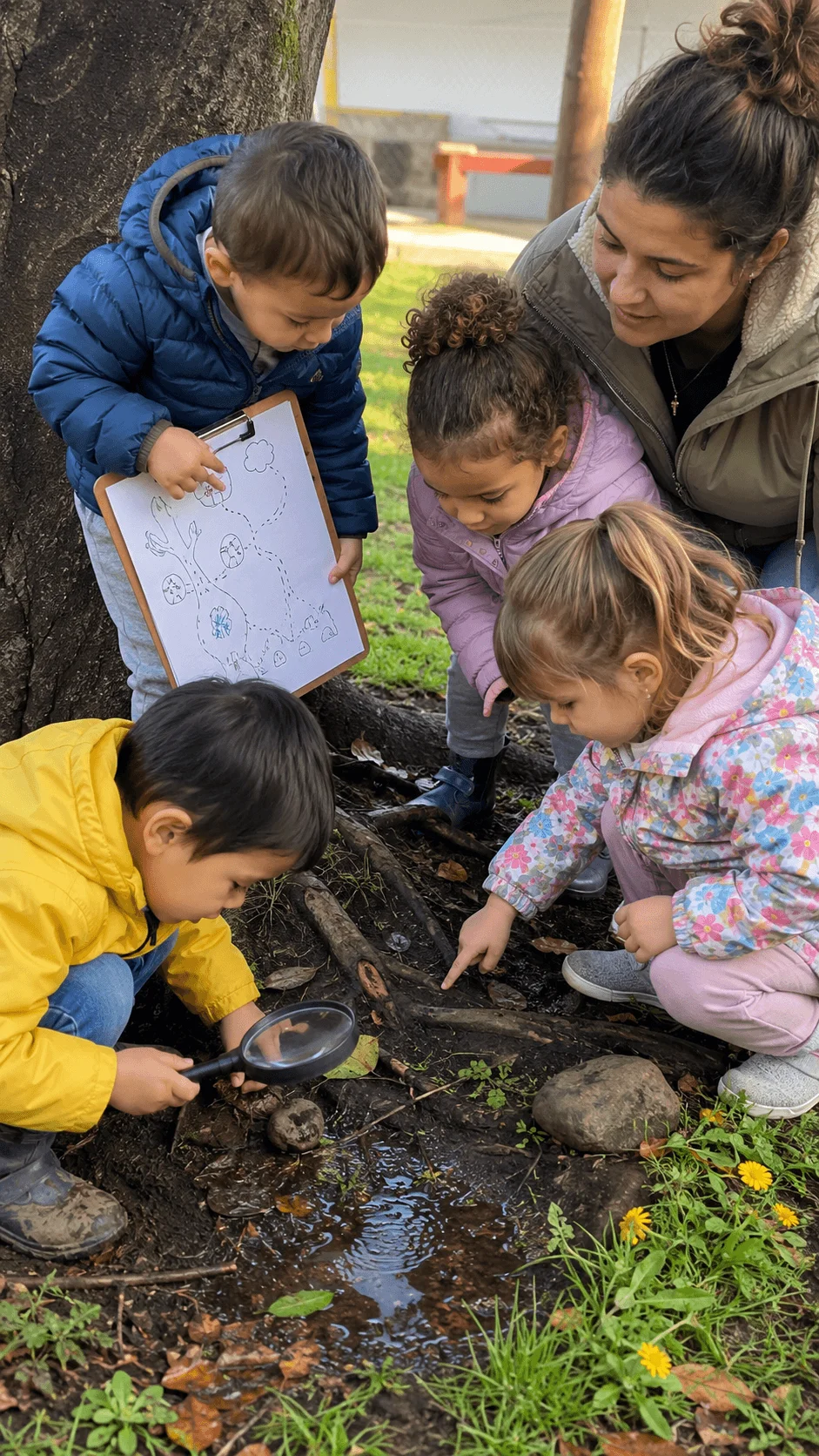
Children develop memory, direction, vocabulary, early mapping, empathy, and observation. They can revisit the same location during another season and compare changes.
Adults should explain the difference between observing and disturbing a habitat. Children should not pull apart nests, move animals, or damage plants.
Indoor settings can adapt the activity by mapping classroom plants, window views, or photographs of nearby habitats. Teachers must supervise outdoor exploration and check for unknown plants, uneven ground, insects, and water hazards.
Water Painting and Evaporation Activities
Water painting gives children a creative experience without producing piles of painted paper. They can use brushes and small containers of water to paint on pavement, stones, fences, or another approved outdoor surface.
As the water begins to dry, the pictures become lighter and disappear. Teachers can explain that the water moves into the air through evaporation.
Children can compare paintings in sunlight and shade. They may notice that one dries faster. Wind, temperature, surface texture, and sunlight can create additional changes.
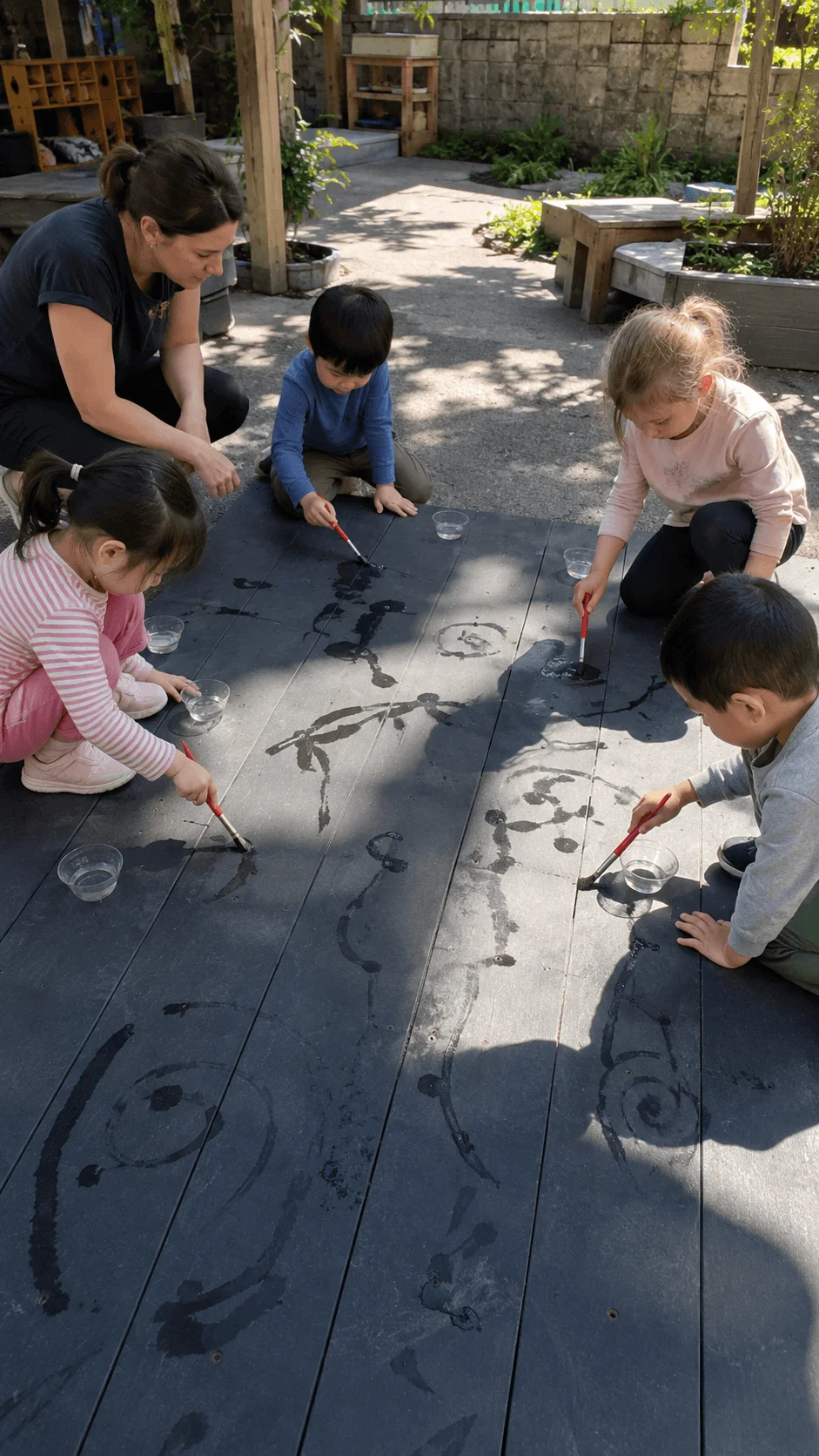
The activity supports fine motor control, creativity, patience, prediction, comparison, and early science. It also shows that an art experience does not always need to produce a permanent object.
Adults should provide small water containers and refill them only when necessary. Low waste preschool activities should still encourage careful water use.
Teachers must avoid slippery areas and unsuitable walls. Indoors, children can use reusable dark trays, chalkboards, or another surface that shows temporary water marks.
Water painting works well for children who enjoy large movements, repeated designs, letters, shapes, or imaginative scenes.
Child Led Classroom Waste Detective Day
A waste detective day allows children to investigate how the classroom uses materials. Teachers can invite them to look for wasted paper, food, water, packaging, disposable cups, tissues, damaged toys, forgotten supplies, and unused craft scraps.
Children can place picture tokens or simple symbols near areas where they notice waste. The activity should focus on observation rather than blame. Teachers should never embarrass a child for making a mistake.
After the investigation, the class can discuss one realistic improvement. Children may choose to use both sides of paper, create a reusable scrap tray, check taps, repair damaged objects, or organise art materials more carefully.
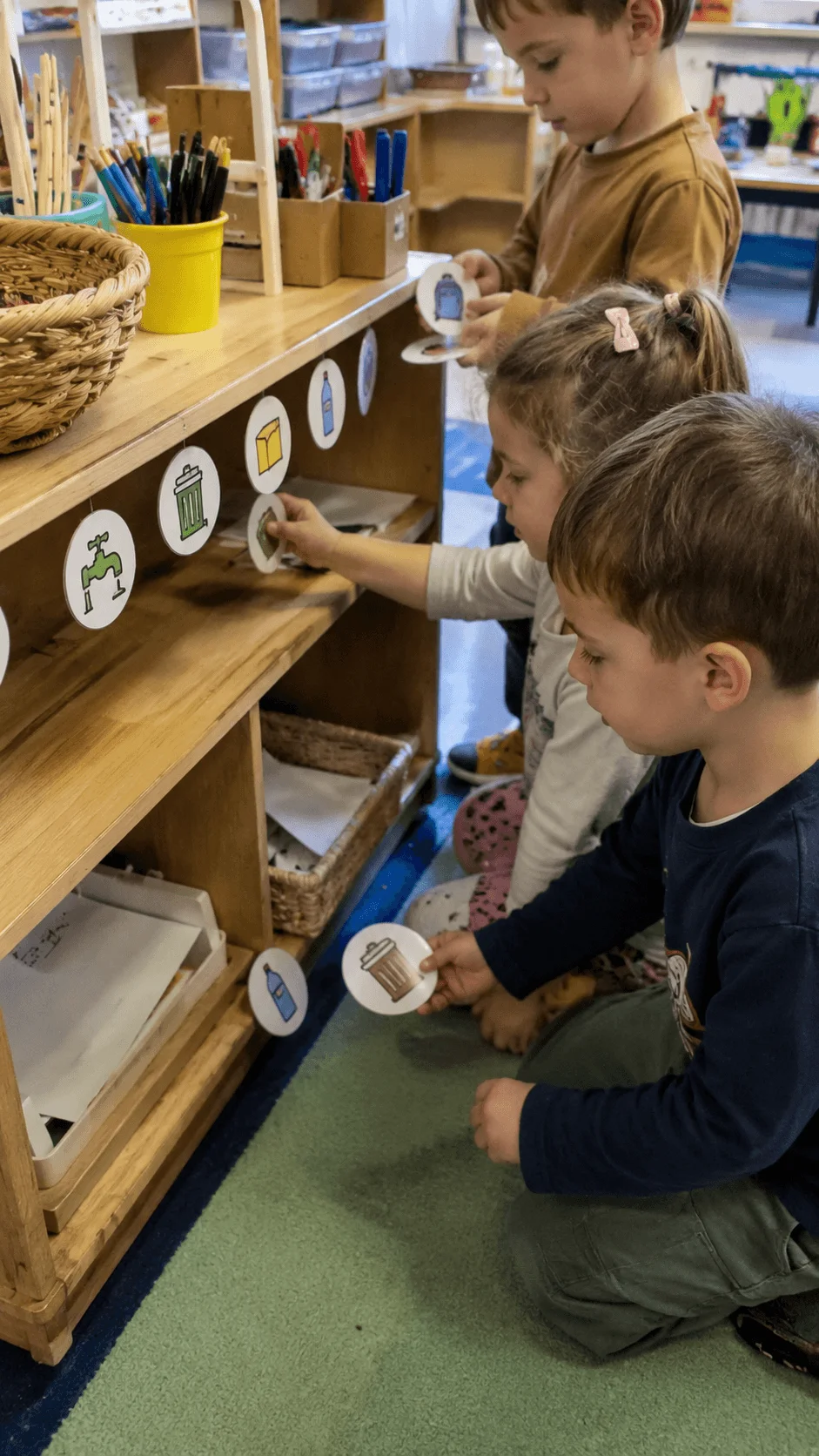
One clear change can create a stronger habit than a long list of rules. The class can review the change after several days and notice what improved.
The activity supports communication, counting, decision making, cooperation, observation, and responsibility. It also gives children a voice in classroom routines.
This child led approach makes eco friendly preschool activities feel relevant because children help identify the issue and choose the next step.
Making Sustainability Part of Everyday Preschool Life
Sustainability becomes meaningful when children experience it every day. Teachers can introduce reusable snack containers, washable cups, cloth bags, plant care, paper reuse, shared materials, waste sorting, and regular outdoor time.
Adults should model each action. A teacher who closes a running tap, repairs a book, or saves a clean paper scrap shows children what responsible behaviour looks like.
Classroom jobs can support regular participation. One child may check plants, another may organise the sharing shelf, and another may place reusable paper in the art tray. These tasks should remain simple and suitable for the child’s age.
Songs, stories, visual reminders, and dramatic play can reinforce sustainable routines. Repetition matters because preschool children need many opportunities to practise the same action.
Adults should praise effort without creating competition. Sustainability should not become a contest about which child saves the most or makes the fewest mistakes. Children need encouragement, patience, and clear examples.
Eco friendly preschool activities create the greatest impact when they connect with ordinary choices. A single activity may introduce the idea, but daily routines help the habit grow.
Common Mistakes in Preschool Sustainability Activities
Some environmental crafts create more waste than they prevent. Teachers may use disposable plates, glitter, plastic decorations, foam sheets, new packaging, and laminated worksheets while describing the project as sustainable. A better activity should reduce unnecessary materials and support real learning.
Reused materials must still remain safe. Adults should not assume that every box, bottle, lid, fabric piece, or natural object belongs in a preschool activity. Cleanliness, size, condition, and age suitability matter.
Teachers should also avoid frightening language. Detailed descriptions of environmental disasters can make young children anxious. Preschool education should focus on care, curiosity, and manageable actions.
Adults should never force children to touch worms, insects, soil, food scraps, or unfamiliar textures. They can offer observation tools, gloves, picture cards, or another role.
Water experiments should use controlled amounts of water. Nature activities should not damage habitats. Repair projects should keep sharp tools under adult control.
Another common mistake involves teaching sustainability only during Earth Day. Children build habits through repetition. Daily choices matter more than one themed event.
Conclusion
Eco friendly preschool activities help children learn through movement, observation, creativity, conversation, and direct experience. They can support early science, social development, fine motor skills, responsibility, and respect for shared resources.
A child does not need to understand every environmental problem to develop meaningful habits. Repairing a toy, sharing a puzzle, observing a butterfly, reusing paper, collecting rainwater, and caring for a plant can each create a valuable lesson.
Parents and teachers do not need expensive equipment or complicated projects. Safe materials, thoughtful routines, adult modelling, and regular practice can turn simple ideas into lasting learning experiences.
The strongest eco friendly preschool activities remain positive, practical, playful, and connected with daily life. Adults can begin with one manageable activity and gradually make care, reuse, sharing, conservation, and respect for nature part of the normal preschool routine.