Sustainable T Shirt Design and Printing Ideas 2026
Sustainable t shirt design and printing has moved beyond simple green slogans and organic cotton labels. In 2026, designers, printing businesses, and clothing brands are exploring new ways to combine creative artwork with responsible fabrics, durable printing, transparent sourcing, and circular production. Consumers now look more closely at how shirts are made, how long prints last, and what happens to garments after people stop wearing them. This shift has created new opportunities for artists and businesses that want to produce meaningful clothing without relying on wasteful methods.
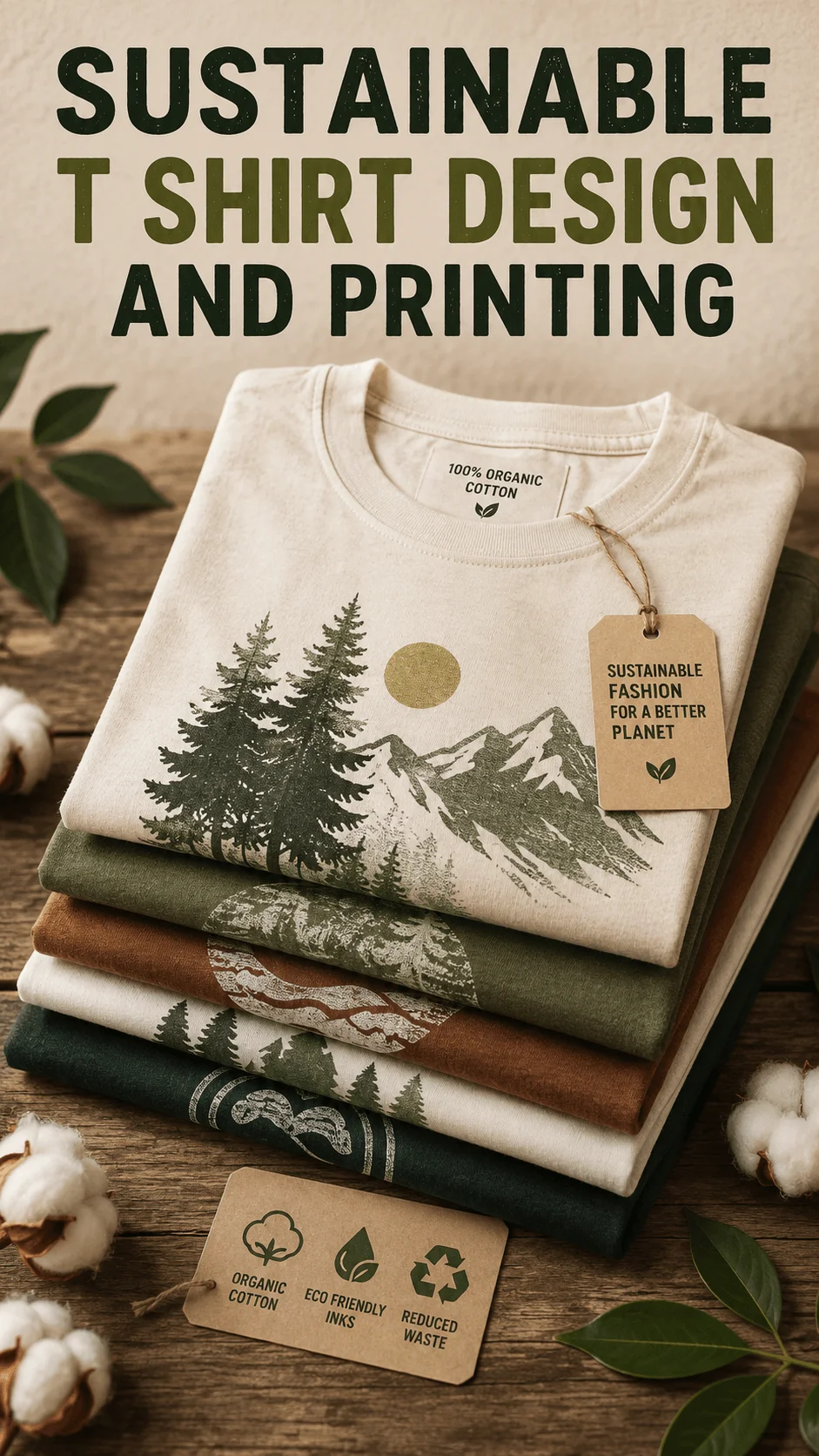
Modern sustainable fashion focuses on the complete life of a product. A shirt may use organic cotton, but it can still create environmental problems if the print cracks quickly, the factory wastes large amounts of energy, or the brand produces more stock than customers can buy. Strong sustainable t shirt design and printing considers the fabric, artwork, ink, production volume, durability, packaging, transport, labor conditions, and future recycling options.
The latest trends also show that sustainability does not have to look plain or predictable. Designers now use retro graphics, local nature illustrations, playful climate messages, recycled materials, digital product stories, and experimental plant based fibers. These ideas allow a T shirt to communicate personality while supporting more thoughtful production.
What Makes Sustainable T Shirt Design and Printing Different?
A sustainable shirt begins with responsible design decisions. Designers must think about how much ink a graphic needs, whether the fabric can handle the printing process, and how long the final product will remain attractive. A large design with thick layers of ink may require more material and energy than a small graphic, although the final impact depends on the printing system and production scale.
Fabric choice remains important, but it represents only one part of the process. Organic cotton can reduce reliance on certain agricultural chemicals, while recycled cotton can help keep textile waste in circulation. Hemp, lyocell, and other responsible cellulose fibers also offer useful options for particular products. Each material has strengths and limitations, so brands should avoid describing one fabric as a perfect solution.
Durability plays an equally important role. A well made shirt that survives years of washing can create more value than a product that looks sustainable but loses its shape after a few uses. The print should remain clear, flexible, and comfortable throughout the life of the garment.
Responsible production also means controlling inventory. Brands that order thousands of shirts without clear demand may create unsold stock. Smaller collections, made to order systems, and careful sales forecasting can reduce this risk. These principles help sustainable t shirt design and printing become a complete strategy rather than a marketing claim.
Trending Sustainable T Shirt Design Ideas for 2026
Sustainable Retro Ringer T Shirt Designs
Retro ringer shirts have returned because they combine sportswear nostalgia with a relaxed modern look. Their contrasting collars and sleeve bands immediately create visual character, even when the main artwork remains simple. Designers can use muted red, faded blue, forest green, cream, brown, and warm yellow to create an aged appearance.
This trend works especially well with vintage tourism graphics, local sports illustrations, old farming scenes, and nature inspired badges. A designer might create a fictional national park logo, a retro cycling club emblem, or a small community garden graphic. Soft textures and slightly imperfect lettering make the shirt feel collected rather than newly manufactured.
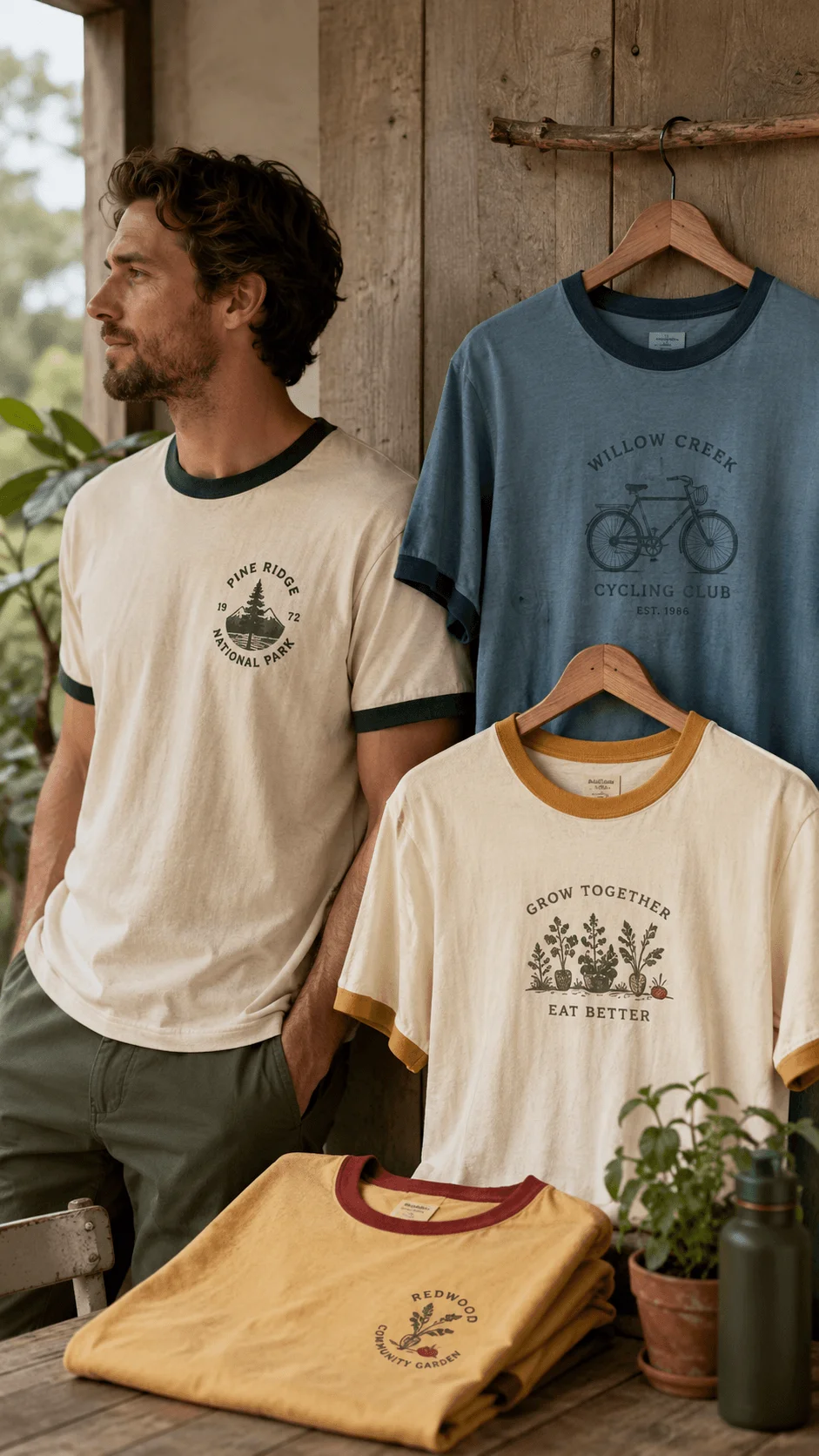
Organic cotton and recycled cotton suit this style because both can support a comfortable, natural appearance. Water based ink t shirt printing can create a softer print surface that complements the vintage look. Designers should avoid adding too many colors because a focused palette strengthens the nostalgic feeling and may reduce unnecessary ink use.
Retro ringer shirts appeal to younger buyers who enjoy vintage fashion, but they also attract older customers who recognize familiar sportswear references. Small brands can use this idea for limited collections connected to local culture, outdoor activities, music, or environmental campaigns.
Regenerative Cotton Storytelling T Shirts
Regenerative cotton has become an important subject because it connects clothing with soil restoration and farming systems. Instead of showing cotton as a simple raw material, designers can tell the story of the land that produces it.
Artwork can include cotton roots, earthworms, rainfall, cover crops, insects, birds, and healthy soil layers. These elements help people understand that fabric begins in an agricultural landscape. A shirt could show cotton plants above the ground and a detailed root system below, creating a powerful image of hidden ecological activity.
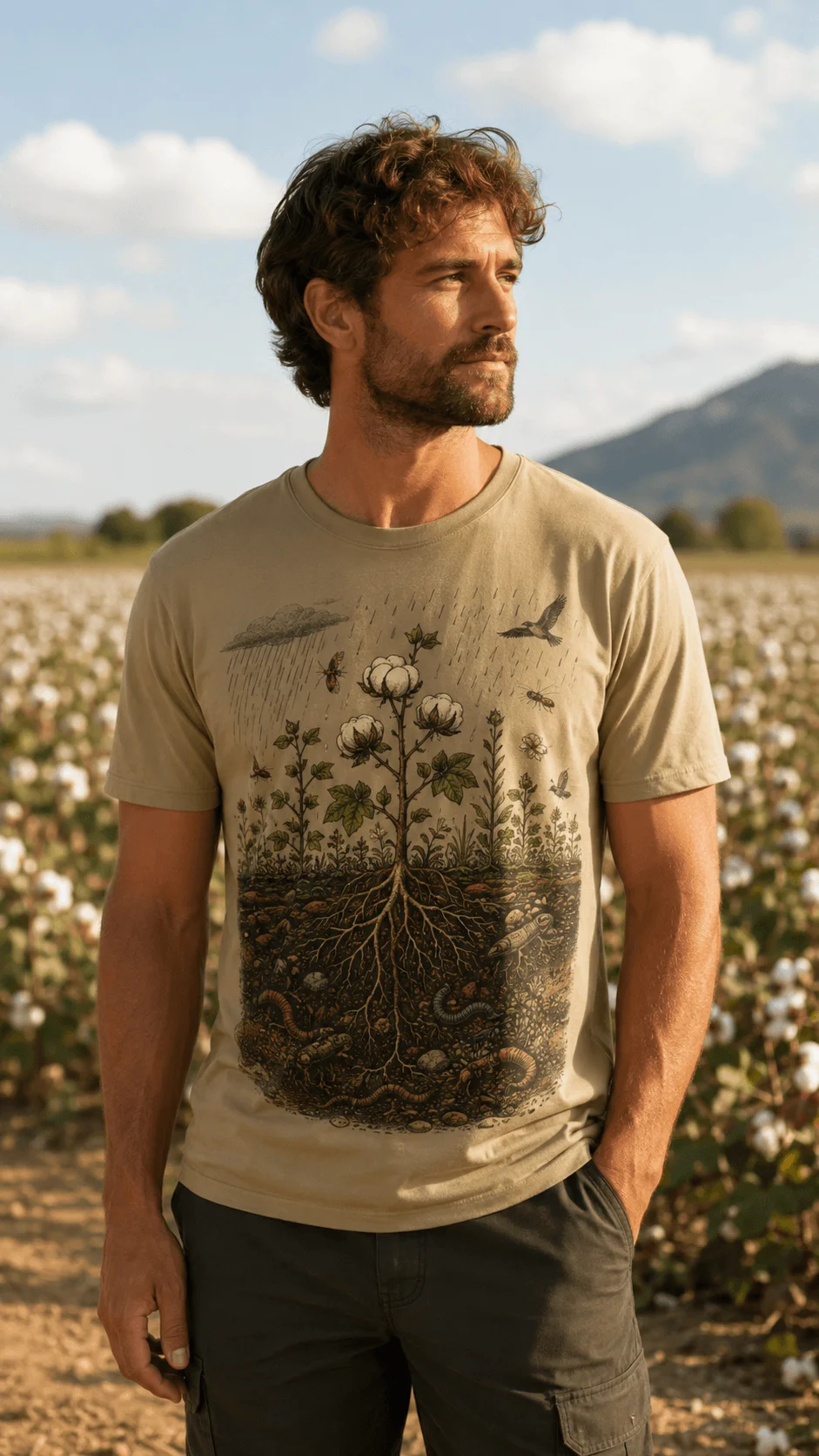
Earth colors work naturally with this theme. Rust, clay, olive, sand, cream, and deep brown can create a grounded visual identity. Designers may use hand drawn illustration, educational diagram styles, or artistic field scenes.
Regenerative cotton storytelling gives sustainable t shirt design and printing a deeper purpose. The graphic does not simply advertise that the shirt uses a better material. It explains why soil health, water retention, biodiversity, and responsible farming matter. Agricultural organizations, ethical clothing brands, schools, and sustainability campaigns can use this concept to create both attractive and educational clothing.
Textile to Textile Recycled Cotton Designs
Recycled cotton is gaining attention as brands search for ways to turn old clothing into new fiber. This approach differs from using recycled plastic bottles because it focuses on keeping textile material within the clothing system.
Designers can represent this process through circular arrows, unraveling threads, fabric fragments, spinning fibers, and shirts transforming into new garments. The design should feel creative rather than technical. For example, an old shirt could dissolve into colorful threads that reconnect as a new shirt.
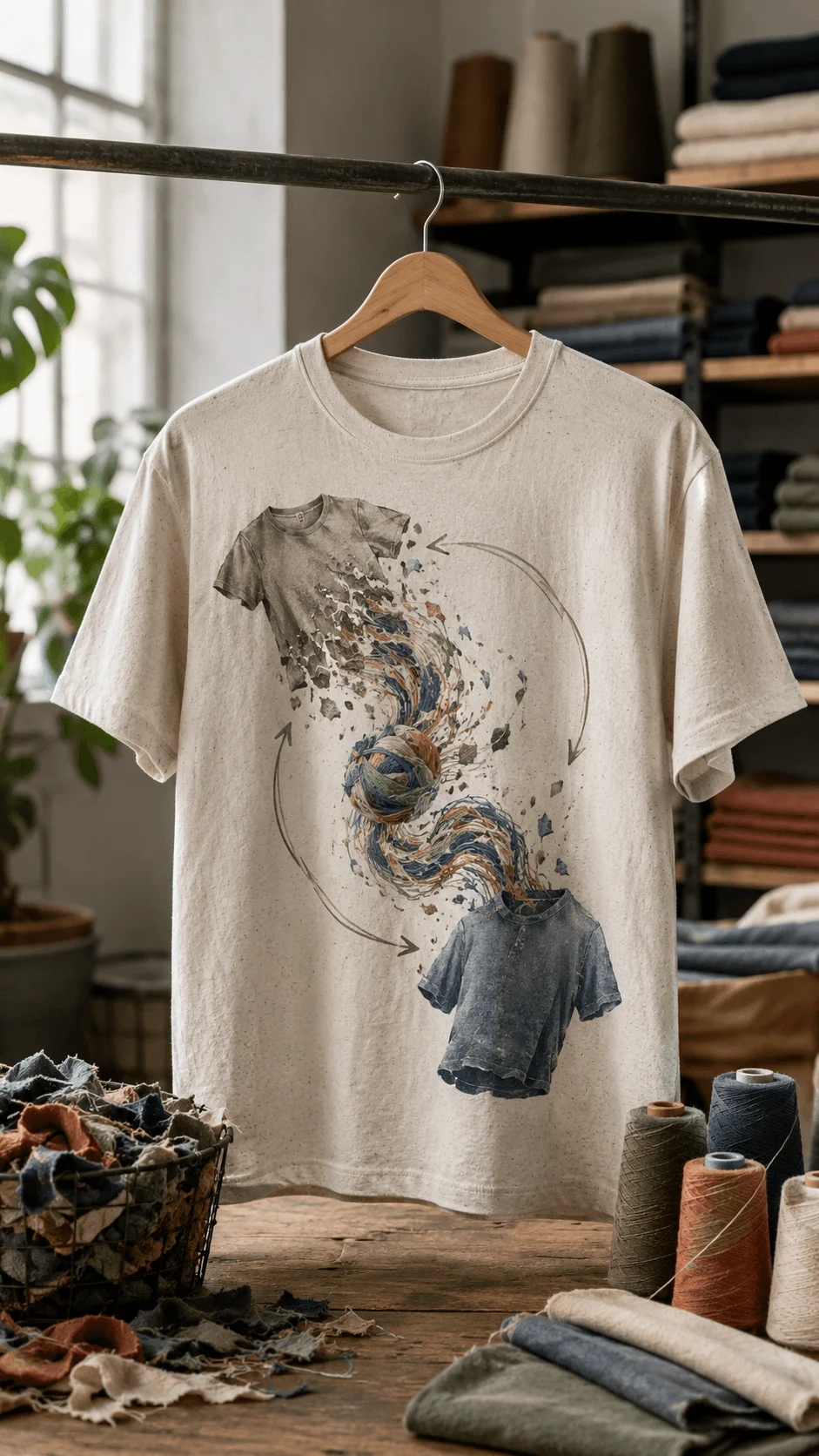
These graphics work well with rough textures because recycled fabrics may already have a slightly varied surface. Limited color printing can support the circular message without overwhelming the garment. Recycled cotton t shirt printing also gives brands an opportunity to explain material limitations honestly, since recycled fibers often need blending with stronger fibers for durability.
This trend appeals to consumers who already understand basic recycling and want to learn what circular fashion looks like in practice. Clothing brands can strengthen the concept by adding care instructions and take back information inside the shirt.
Circular Fashion T Shirt Design for Future Recycling
Circular design begins before production. A circular shirt should remain useful for as long as possible and become easier to repair, reuse, or recycle later.
Designers can support future recycling by choosing simple fiber combinations, removable labels, limited decoration, and prints that do not create unnecessary material conflicts. A shirt made mainly from one fiber may be easier to process than a garment containing several mixed materials.
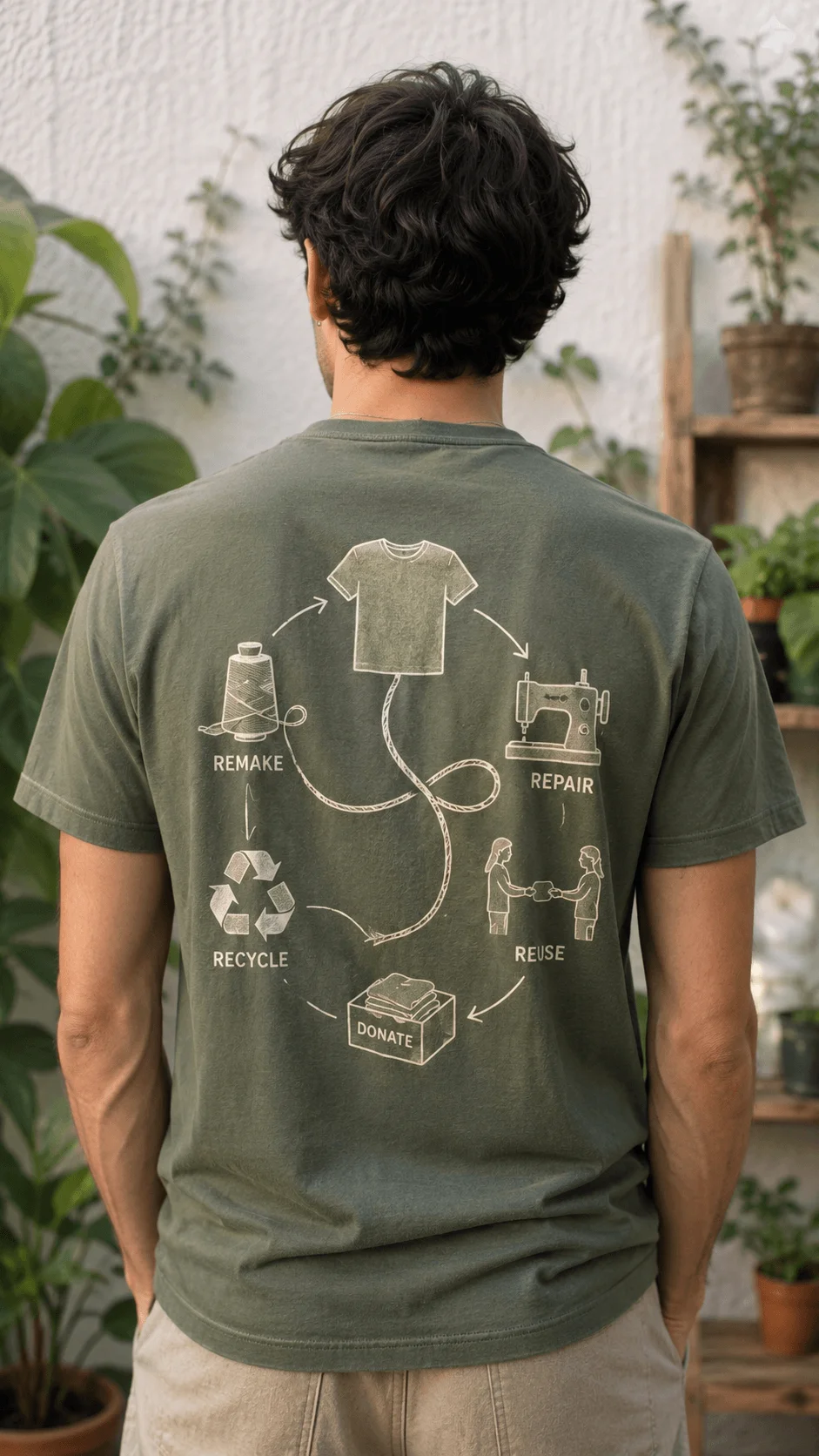
The artwork can communicate circularity without using predictable recycling symbols. Designers might show a continuous thread traveling through different stages of use, repair, resale, and recycling. Another concept could show a shirt passing between different people before returning to fiber.
This idea gives sustainable t shirt design and printing a practical future focus. Brands can connect the graphic with real systems such as repair services, resale programs, or garment collection schemes. The message becomes more believable when customers can take a clear action after wearing the product.
Low Ink Minimalist Sustainable T Shirt Design Ideas
Minimalism remains popular because it creates a clean, versatile look. It can also support low waste t shirt printing when designers use smaller print areas, fewer colors, and thoughtful negative space.
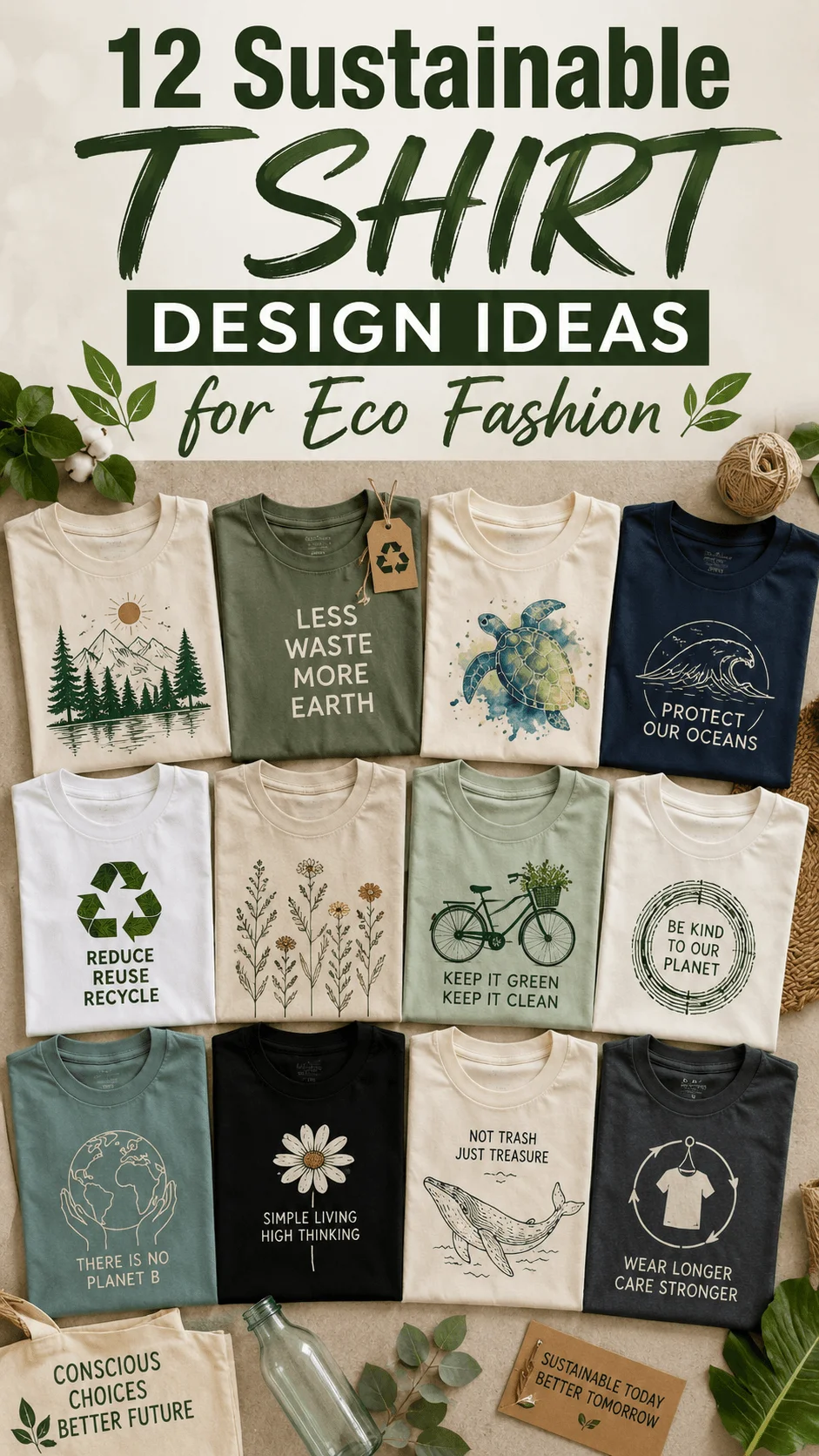
A small line drawing on the chest can communicate more effectively than a large block graphic. Popular subjects include leaves, mountain outlines, birds, seed shapes, hands, waves, and simple environmental symbols. Designers can also use a single short phrase with carefully chosen typography.

The challenge involves making minimal artwork feel intentional rather than unfinished. Strong spacing, line quality, and placement become extremely important. A small graphic placed slightly above the heart can feel personal, while a centered back print can create a more contemporary streetwear appearance.
These eco friendly graphic tee ideas work well for customers who prefer subtle clothing. They also allow brands to build collections where several small designs share one visual identity.
Local Ecosystem and Botanical Graphic Tees
Nature graphics often use generic forests, mountains, and planet imagery. In 2026, designers are moving toward more specific local ecosystems. This creates stronger emotional connections because people recognize the plants, animals, and landscapes around them.
A coastal design might feature mangroves, shore birds, sea grass, and tidal patterns. A desert collection could include native flowers, reptiles, insects, and drought resistant plants. A city based shirt might celebrate community gardens, urban trees, or local pollinators.

Accurate illustration makes these designs more valuable. Artists can study native species and create graphics that reflect real environments rather than decorative fantasy. Botanical line art, vintage field guide illustrations, and layered landscape scenes all work well.
Local environmental groups, tourism businesses, schools, and regional brands can use these sustainable t shirt design ideas to build community pride. A portion of sales may also support habitat restoration, although brands should communicate such claims clearly.
Hand Drawn Environmental Artwork
Perfect digital graphics can sometimes feel distant and corporate. Hand drawn artwork brings warmth, personality, and visible human effort into sustainable fashion.
Designers can use rough lettering, uneven shapes, sketchbook textures, simple animals, playful vegetables, and expressive plants. Small imperfections make each concept feel more honest. The artwork may look like it came from a community poster, an artist notebook, or a handmade protest sign.
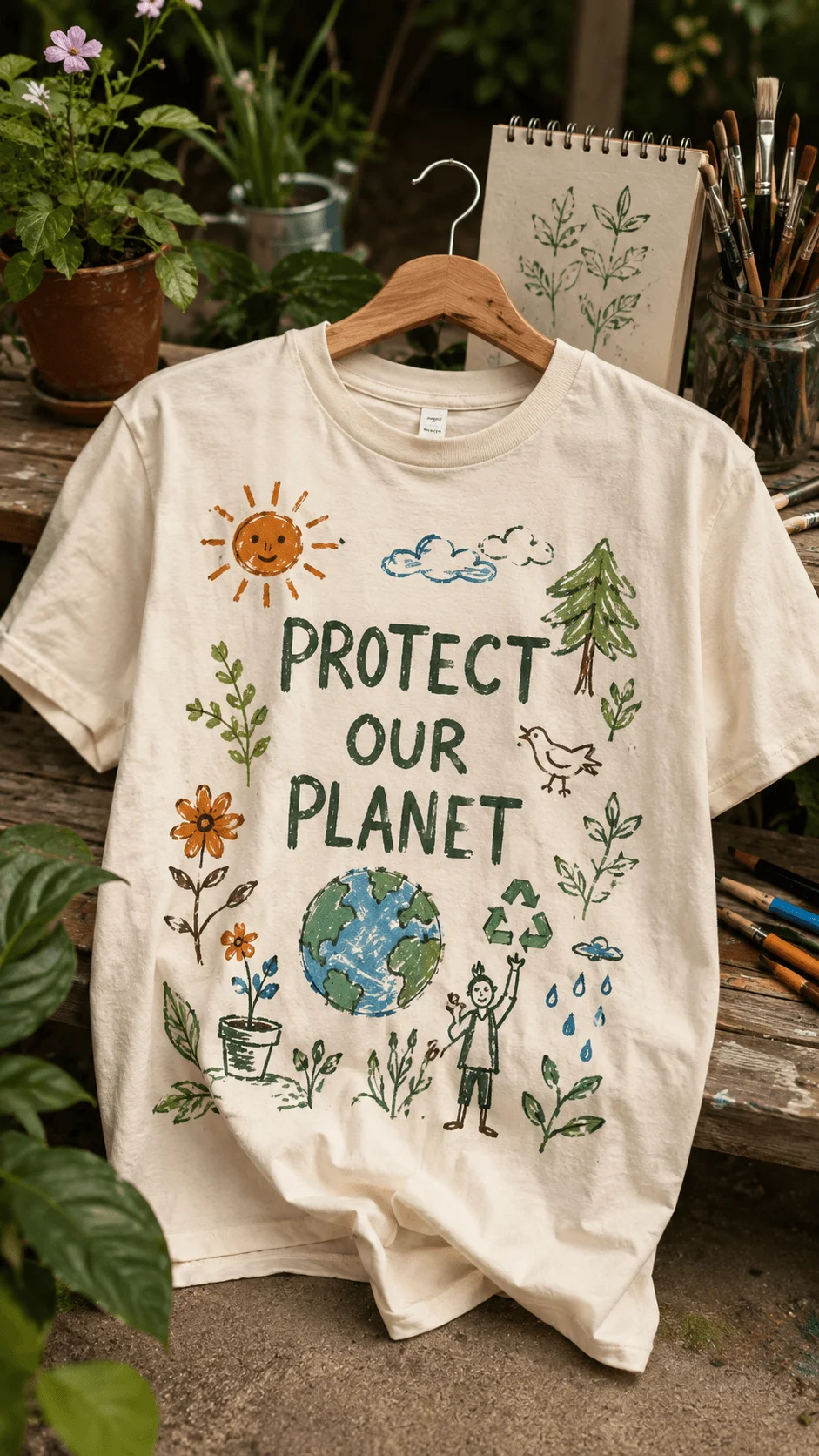
This approach works especially well with water based screen printing because the method can preserve texture and create a soft result. Earthy colors, faded black, dark green, and muted orange support the handmade appearance.
Young independent brands can use this style to separate themselves from polished mass market clothing. It also suits school projects, artist collaborations, local events, and environmental workshops.
Positive Climate Messages and Eco Humor
Environmental clothing often relies on serious warnings. Although urgent messages still matter, many people now respond more strongly to hopeful language and intelligent humor.
Designers can build concepts around repair, gardening, composting, reuse, public transport, and responsible consumption. A playful illustration of a proud compost pile or a patched shirt with personality can make sustainability feel approachable.

Typography plays a major role in this trend. Bold retro lettering creates energy, while handwritten text feels personal. Designers should avoid overused slogans and create phrases that connect with a specific audience.
Positive messaging can encourage action without making people feel overwhelmed. Sustainable t shirt design and printing becomes more engaging when the shirt starts a friendly conversation instead of delivering a lecture.
Plant Based and Bio Based Fabric T Shirts
Plant based fibers continue to attract attention as designers look beyond conventional cotton and polyester. Hemp, lyocell, responsible cellulose fibers, agricultural waste materials, and experimental algae based textiles offer new creative possibilities.
The graphic design can reflect the material story. A hemp shirt might feature strong botanical structures, while a cellulose based garment could use forest inspired artwork. Agricultural waste fibers can support designs that show fruit peels, crop remains, or circular farm systems.
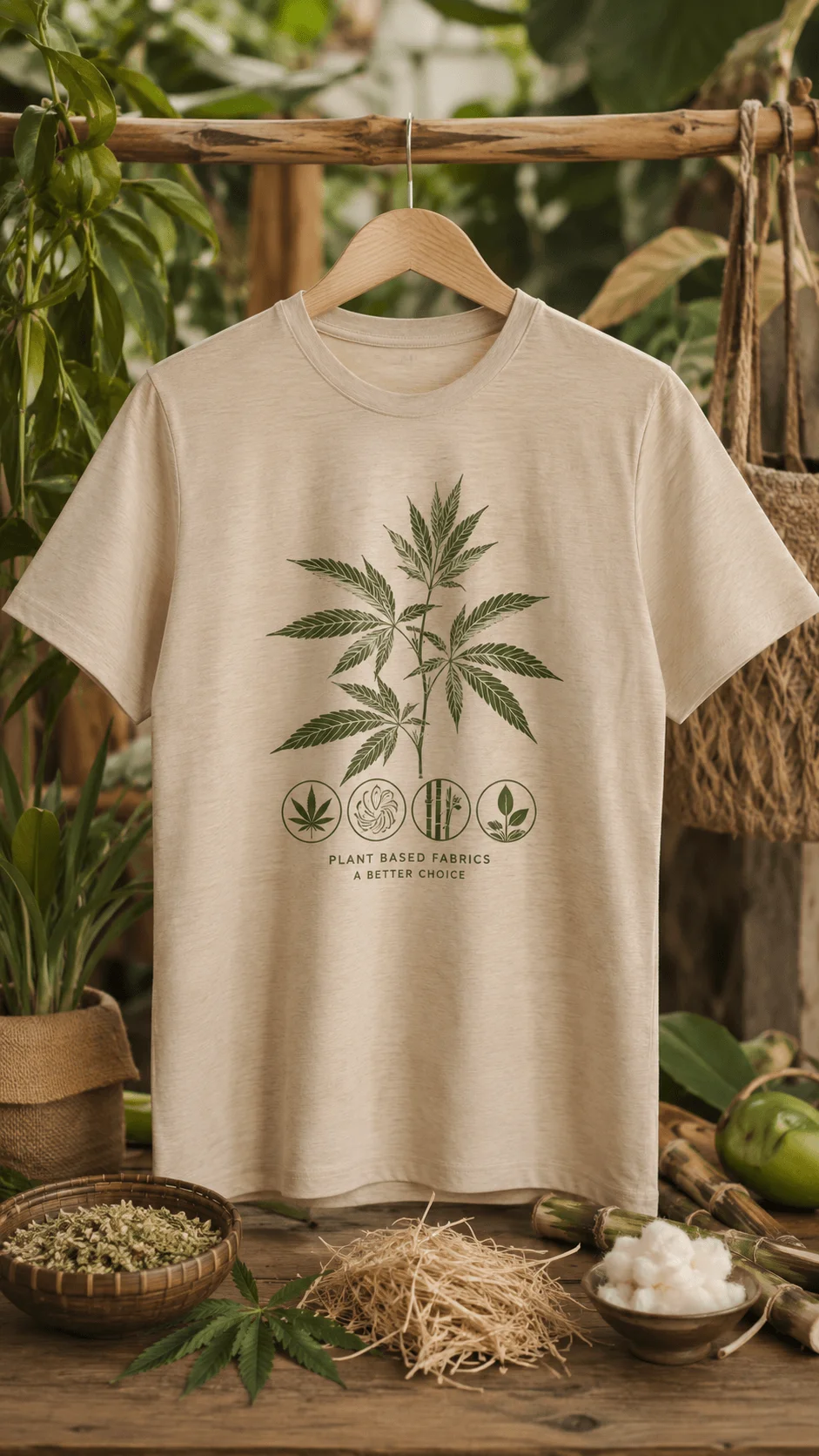
Brands must discuss these materials carefully. A plant based source does not automatically guarantee low impact. Processing chemicals, energy use, water consumption, sourcing, durability, and recyclability still influence the final result.
This trend gives designers an opportunity to combine material education with visual storytelling. It also helps readers understand how the search for the best sustainable fabric for printed t shirts continues to evolve.
Water Based Ink T Shirt Printing With Vintage Graphics
Water based ink t shirt printing remains popular because it can create soft prints that feel integrated with the fabric. This quality makes it especially suitable for distressed artwork, faded illustrations, and vintage themes.
Designers can create old travel posters, farm graphics, outdoor club emblems, botanical advertisements, and retro wildlife scenes. A slightly worn texture helps the shirt look comfortable and familiar from the first wear.
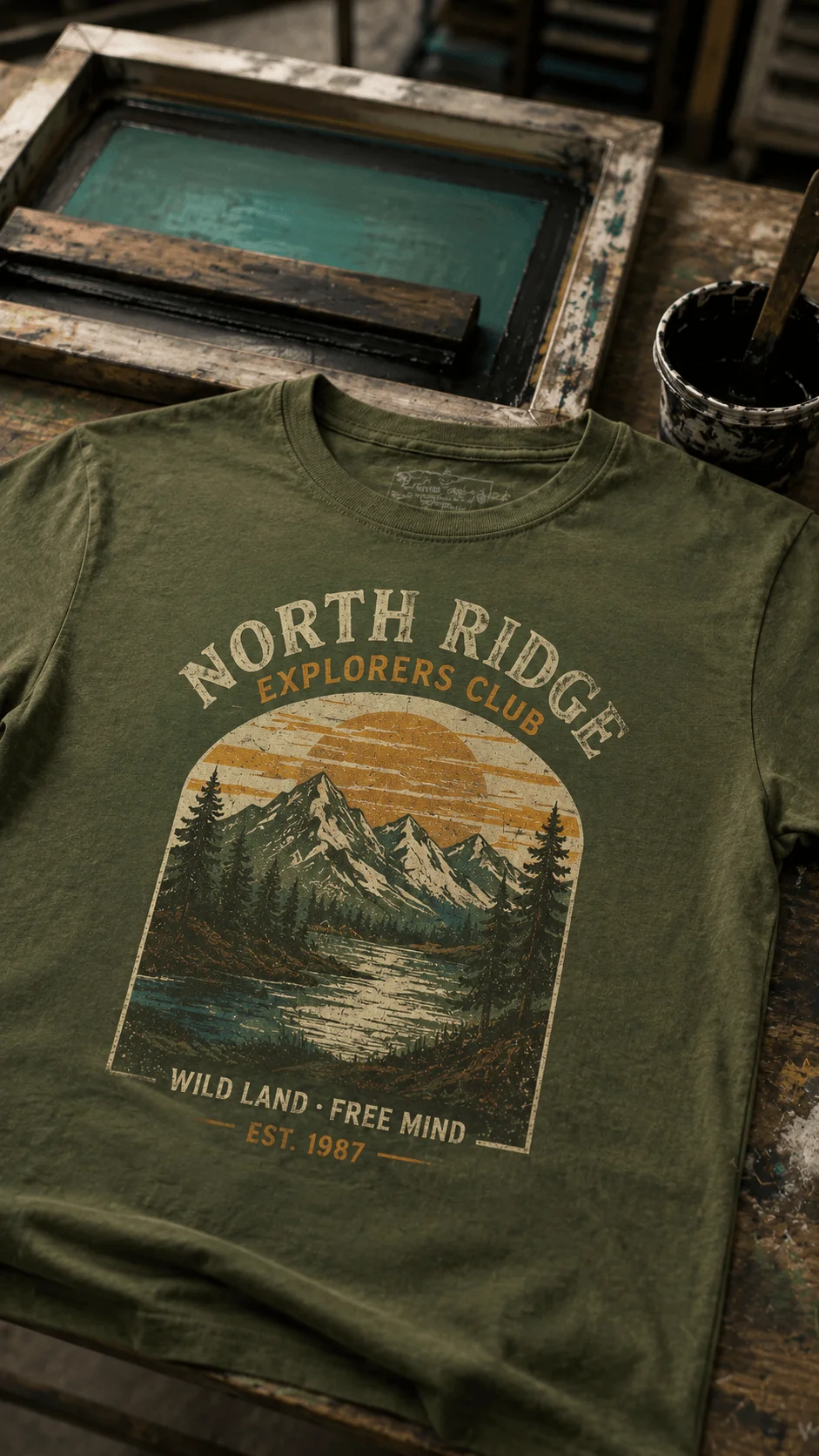
Printers must still manage the process carefully. Ink composition, fabric preparation, curing temperature, equipment, and production waste all affect sustainability. A water based label alone does not tell the full story.
For brands that want a premium vintage look, this method can create attractive results without the heavy surface associated with some thicker prints. It works particularly well on cotton garments and simple color palettes.
Sustainable Print on Demand Micro Collections
Print on demand allows creators to produce garments after customers place orders. This can reduce unsold inventory, especially for small businesses that cannot predict demand accurately.
The strongest approach involves creating focused micro collections rather than uploading hundreds of unrelated designs. A brand might release three shirts inspired by one wetland, one local food movement, or one seasonal gardening theme.
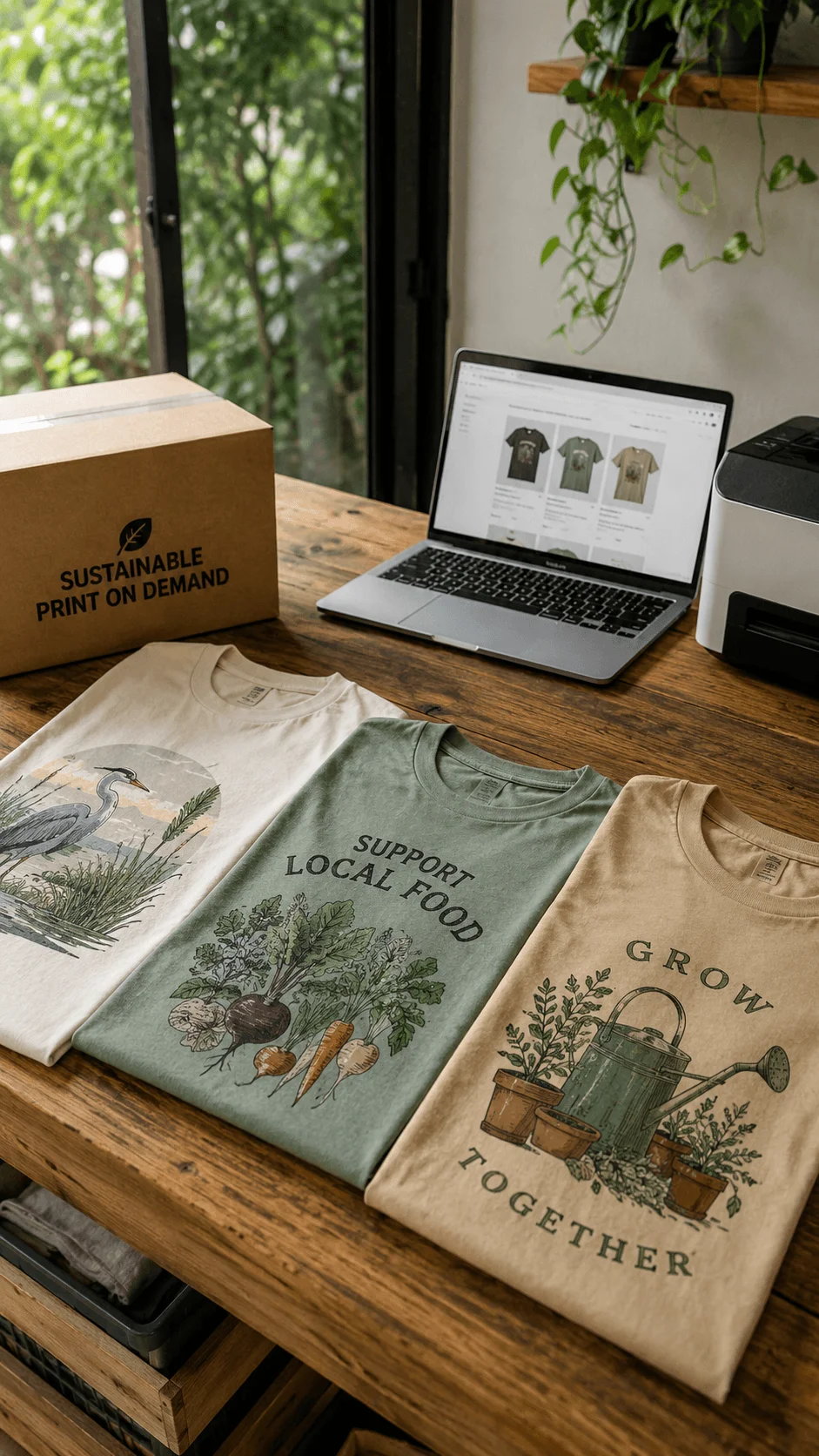
A small collection creates a clear story and makes marketing easier. Designers can use connected colors, typography, and illustrations across each garment. Sustainable print on demand shirts also allow artists to test new ideas before committing to larger production.
However, businesses should evaluate shipping distance, packaging, return rates, blank garment quality, and print durability. Responsible print on demand requires careful supplier selection rather than automatic claims.
Traceable T Shirts With Digital Product Stories
Transparency has become a major part of sustainable t shirt design and printing. Customers increasingly want to know where fibers came from, which factory made the garment, and what printing method the brand used.
A small QR code can connect the physical shirt with a digital product story. The page may explain fiber origin, recycled content, ink type, factory location, care instructions, repair guidance, and recycling options.
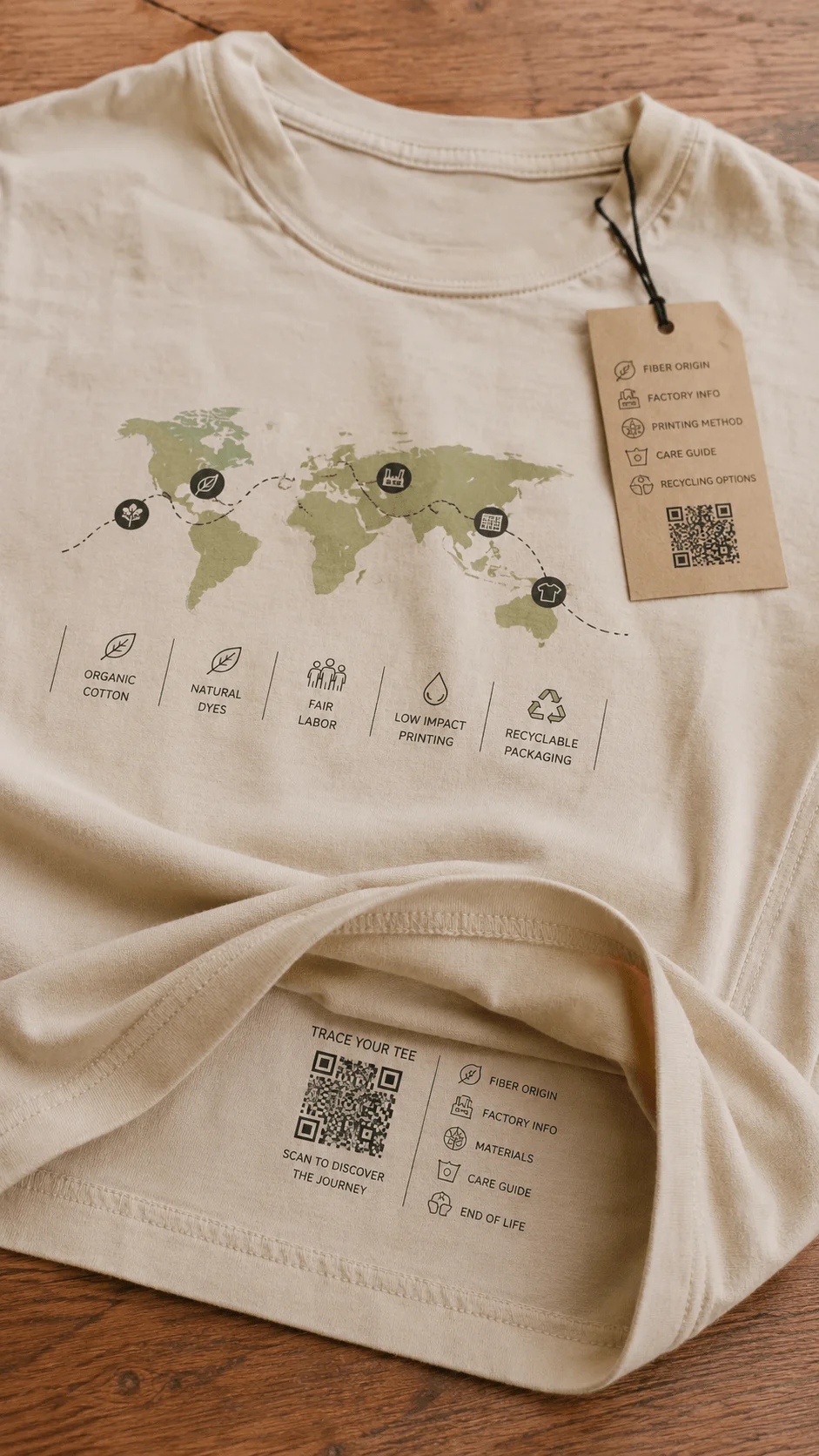
The code should remain visually subtle and functional. Designers can place it inside the garment, near the lower hem, or within a small printed label. The surrounding artwork can use map lines, thread paths, or simple information symbols.
Traceability gives brands a way to prove claims rather than relying on vague language. It also helps customers care for the garment correctly, which can extend its useful life.
Best Sustainable Fabrics for Printed T Shirts
Regenerative cotton offers a strong storytelling opportunity because it connects fabric production with soil care. Organic cotton remains a widely recognized choice, especially when credible certification supports the claim. Recycled cotton can reduce demand for new fiber, although manufacturers may blend it with stronger material to improve durability.
Hemp offers strength, breathability, and a distinctive natural texture. It can work well in casual shirts, although the fabric may feel different from conventional cotton. Lyocell and responsible cellulose fibers provide softness and smooth printing surfaces, but sourcing and processing methods deserve careful evaluation.
Undyed cotton reduces the need for added color treatment and creates a natural cream or earthy appearance. This fabric works beautifully with minimalist artwork and low ink printing. The best choice depends on the design, printing process, expected lifespan, price, and recycling plan.
Eco Friendly T Shirt Printing Methods
Water based screen printing suits medium and large orders with limited colors. It can create soft, durable graphics when printers control curing and fabric preparation correctly. Direct to garment printing works well for small quantities and detailed artwork because it allows full color production without preparing a separate screen for each color.
Discharge printing can create soft vintage effects by removing color from dyed fabric, although the chemistry requires careful handling. Low ink coverage printing focuses on artwork design rather than one specific machine. Smaller graphics and open shapes can reduce the amount of printed material while creating a modern look.
Responsible print on demand helps control inventory, while plastic free embroidery may offer another decoration method for selected garments. Every method has tradeoffs. Businesses should compare order size, energy use, ink chemistry, fabric compatibility, durability, and waste before choosing a process.
How to Avoid Greenwashing in Sustainable T Shirt Printing
Brands should support environmental claims with clear evidence. Words such as green, natural, conscious, and responsible mean little when companies provide no details.
Customers should look for material percentages, certification information, factory transparency, ink descriptions, production locations, packaging details, and care guidance. A brand should also explain limitations rather than presenting a product as completely harmless.
Durability deserves special attention. A shirt that lasts longer can reduce the need for frequent replacement. Brands should test print quality, fabric strength, shape retention, and color performance before launching a collection.
Honest communication builds more trust than exaggerated promises. Sustainable t shirt printing certifications can support credibility, but brands must also explain what each certification actually covers.
Choosing the Best Sustainable T Shirt Printing Method
The right method depends on the artwork and order. Screen printing often works well for larger runs with simple color palettes. Direct to garment printing may suit small collections with detailed illustrations and many colors.
Fabric type also affects the decision. Cotton usually accepts many printing methods, while blended or experimental fibers may require testing. Designers should consider print size, texture, wash performance, curing needs, and future recyclability.
Budget matters, but the cheapest option may create higher costs if the print fails quickly. A durable result gives customers more value and protects the reputation of the brand.
The Future of Sustainable T Shirt Design and Printing
Future innovation will focus on stronger circular systems. Textile recycling, regenerative agriculture, traceable supply chains, repair services, take back programs, and simpler material combinations will shape new products.
Designers will also play a larger role in sustainability. Their decisions about print size, color, decoration, garment construction, and messaging can reduce waste before production begins.
Digital product information may help customers understand how to care for garments and where to return them. Local manufacturing and smaller production networks may also help some brands reduce excess inventory and improve transparency.
Sustainable t shirt design and printing will continue to develop as materials, recycling technology, and consumer expectations change. The most successful brands will combine creativity with honest measurement and practical action.
Conclusion
Sustainable t shirt design and printing in 2026 brings together fashion, artwork, materials, technology, and environmental responsibility. The strongest ideas do more than place a green message on a shirt. They connect the visual concept with the fabric, printing method, production scale, durability, and future use of the garment.
Retro ringer styles, regenerative cotton stories, recycled textile graphics, botanical illustrations, hand drawn artwork, positive climate messages, and traceable products all show how broad this field has become. Designers can create clothing that feels personal and attractive while helping customers understand responsible production.
No single fabric or ink can solve every environmental problem. Brands must consider the complete product and communicate their choices honestly. When thoughtful design meets durable production and circular planning, a T shirt can remain useful for longer, create less waste, and tell a meaningful story.