Sustainable Living Aesthetic Kitchen Design Ideas
A kitchen is no longer just a place where meals are prepared. It has become the heart of modern homes, a space where families connect, creativity grows, and daily habits take shape. The growing interest in a sustainable living aesthetic kitchen reflects a major shift in how people think about interior design. Homeowners are now searching for kitchens that are not only visually beautiful but also support responsible living through natural materials, energy efficiency, thoughtful organization, and a stronger connection with nature.
The modern kitchen is moving away from fast changing trends and disposable designs. Instead, people are choosing spaces that feel timeless, peaceful, and meaningful. A sustainable kitchen combines beauty with purpose by focusing on long lasting materials, reduced waste, natural textures, and practical solutions that improve everyday life. This design approach creates a balance between environmental responsibility and personal comfort.
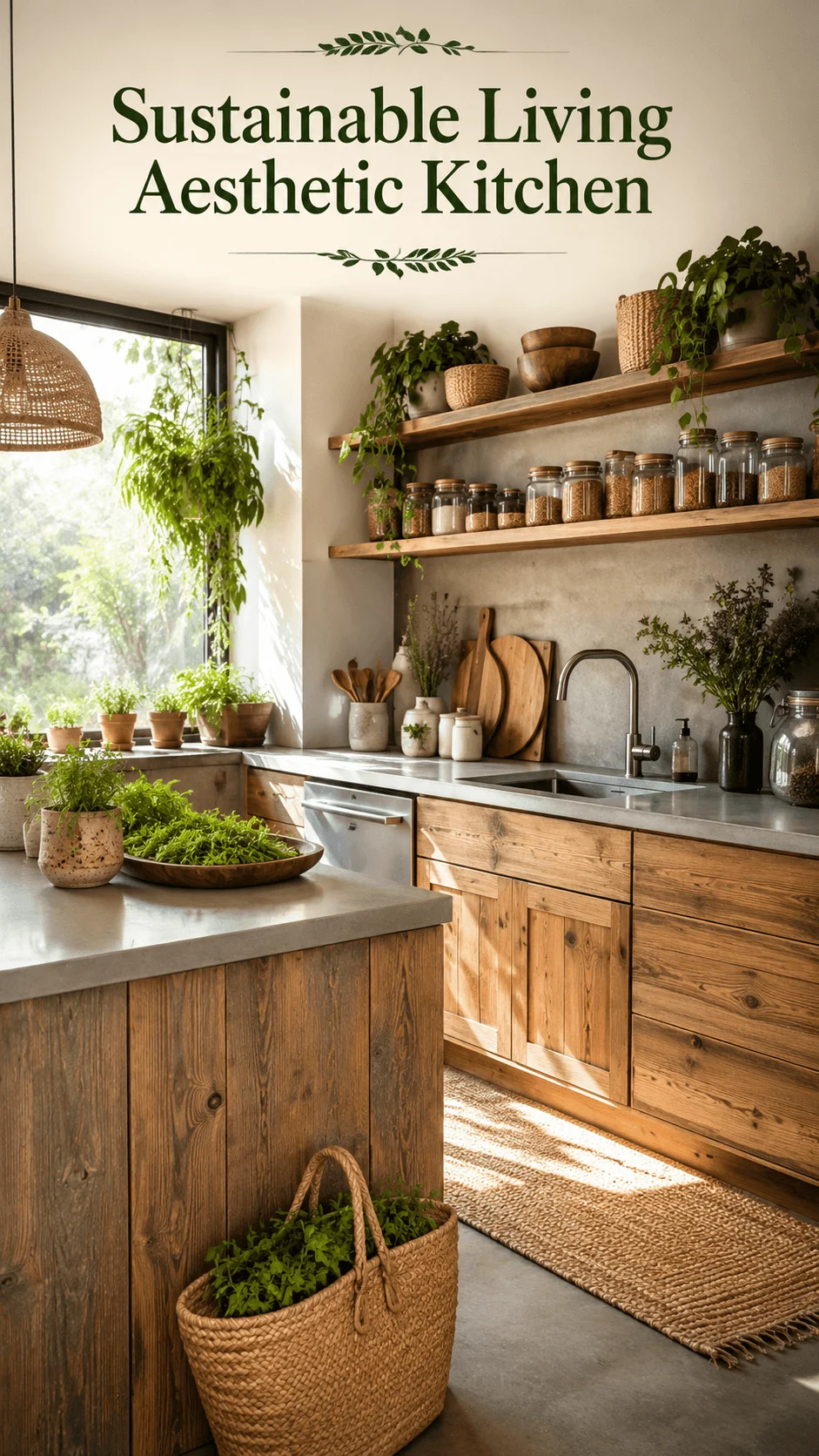
The idea behind this trend is simple. A beautiful kitchen does not need to harm the planet. With careful choices, homeowners can create a space that feels warm, stylish, and connected to nature while reducing unnecessary consumption. From reclaimed wood cabinets to indoor gardens and energy saving technology, sustainable kitchen design offers countless ways to transform an ordinary cooking space into an inspiring part of the home.
Understanding the Philosophy Behind a Sustainable Living Aesthetic Kitchen
A sustainable living aesthetic kitchen is based on the idea that design should serve both people and the environment. Traditional kitchen renovations often focus mainly on appearance, but sustainable design considers the complete life cycle of every element. It asks where materials come from, how long they will last, and what impact they create after years of use.
This approach encourages homeowners to choose quality over quantity. Instead of replacing cabinets every few years because of changing trends, sustainable kitchens focus on timeless designs that remain attractive for decades. The goal is to create a space that feels natural and comfortable rather than temporary.
The beauty of this style comes from intentional choices. A wooden shelf made from reclaimed timber, handmade ceramic accessories, natural stone surfaces, and carefully selected plants all contribute to a kitchen that tells a story. These details create emotional value because they represent thoughtful decisions rather than mass produced decoration.
Sustainability also influences daily habits. A well designed kitchen can encourage people to waste less food, use fewer disposable products, save energy, and appreciate simple routines. The kitchen becomes more than a room. It becomes a reflection of a mindful lifestyle.
Biophilic Kitchen Design and Bringing Nature Indoors
One of the strongest trends shaping sustainable kitchen design in 2026 is biophilic design. This concept focuses on creating spaces that connect people with nature through plants, natural light, organic textures, and earthy materials.
A kitchen inspired by biophilic design feels alive. Instead of relying only on artificial decoration, it introduces natural elements that create a healthier atmosphere. Indoor herb gardens near cooking areas, hanging plants above kitchen islands, wooden surfaces, and large windows that allow sunlight to enter are becoming popular choices.
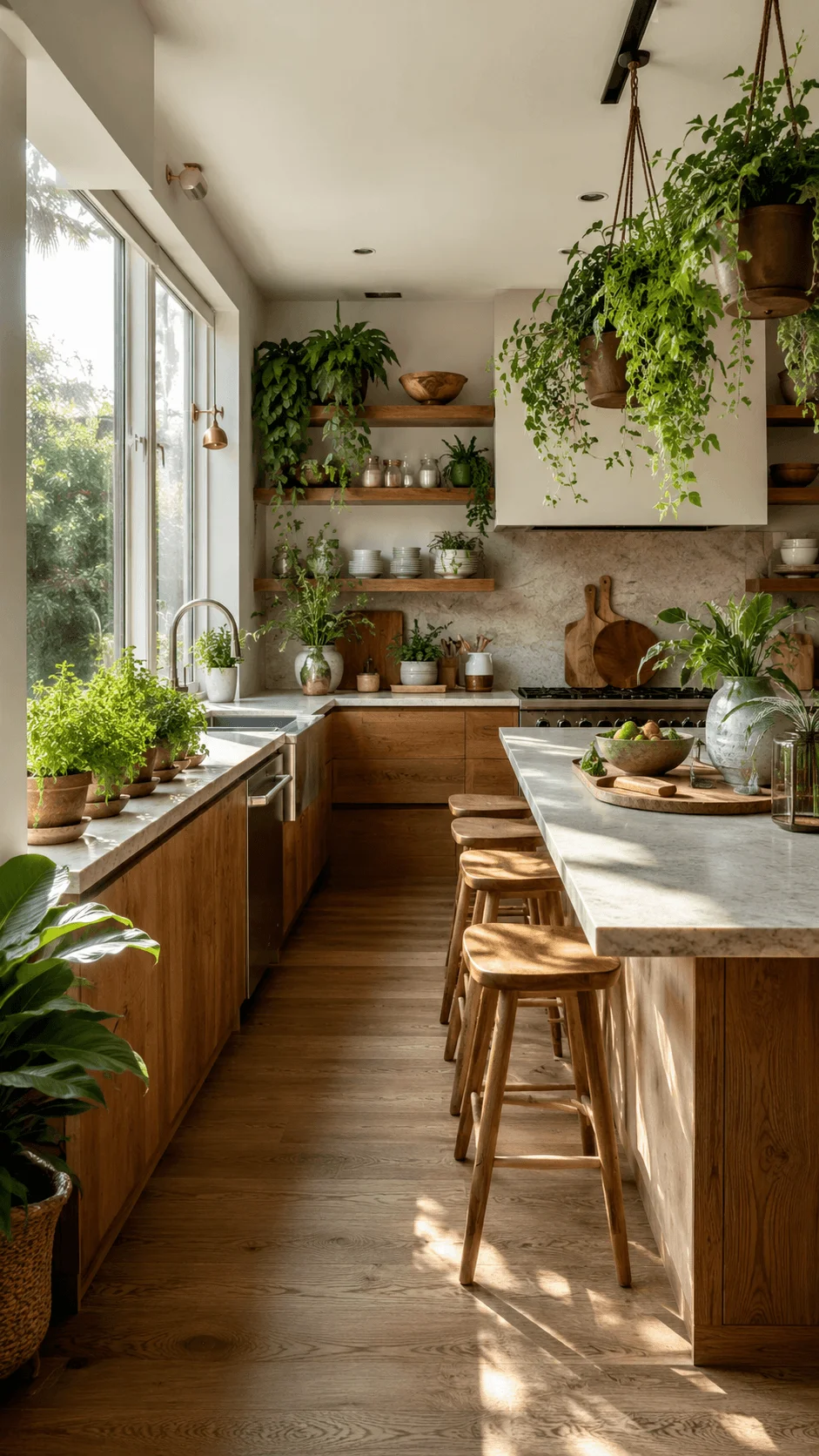
Plants play an important role because they add freshness and visual balance. A small kitchen does not need a large garden to benefit from nature. Even a few herbs such as basil, mint, or rosemary placed near a window can create a stronger connection with natural living.
Natural lighting is another important part of this approach. Many homeowners are redesigning kitchens to maximize sunlight because it reduces dependence on artificial lighting while creating a more welcoming environment. Soft daylight combined with natural materials creates a calm and relaxing atmosphere.
The popularity of biophilic kitchen design shows that people want their homes to support emotional wellbeing. After spending more time indoors, many homeowners are searching for spaces that feel peaceful, refreshing, and connected to the outdoor world.
Earth Tone Kitchen Design for Warm and Natural Spaces
Color has a powerful influence on how a kitchen feels. In recent years, cold white kitchens have dominated interior trends, but many homeowners are now moving toward warmer and more natural shades. Earth tone kitchen design has become a major part of the sustainable living movement because these colors create a feeling of comfort and connection with nature.
Popular shades include olive green, terracotta, beige, warm brown, clay, and soft sand tones. These colors reflect natural landscapes and create a relaxing environment that feels timeless rather than trendy.
Green shades are especially popular because they represent nature and freshness. Soft olive cabinets combined with wooden surfaces can create an elegant kitchen that feels organic and sophisticated. Terracotta accents can add warmth, while neutral tones help maintain a balanced appearance.
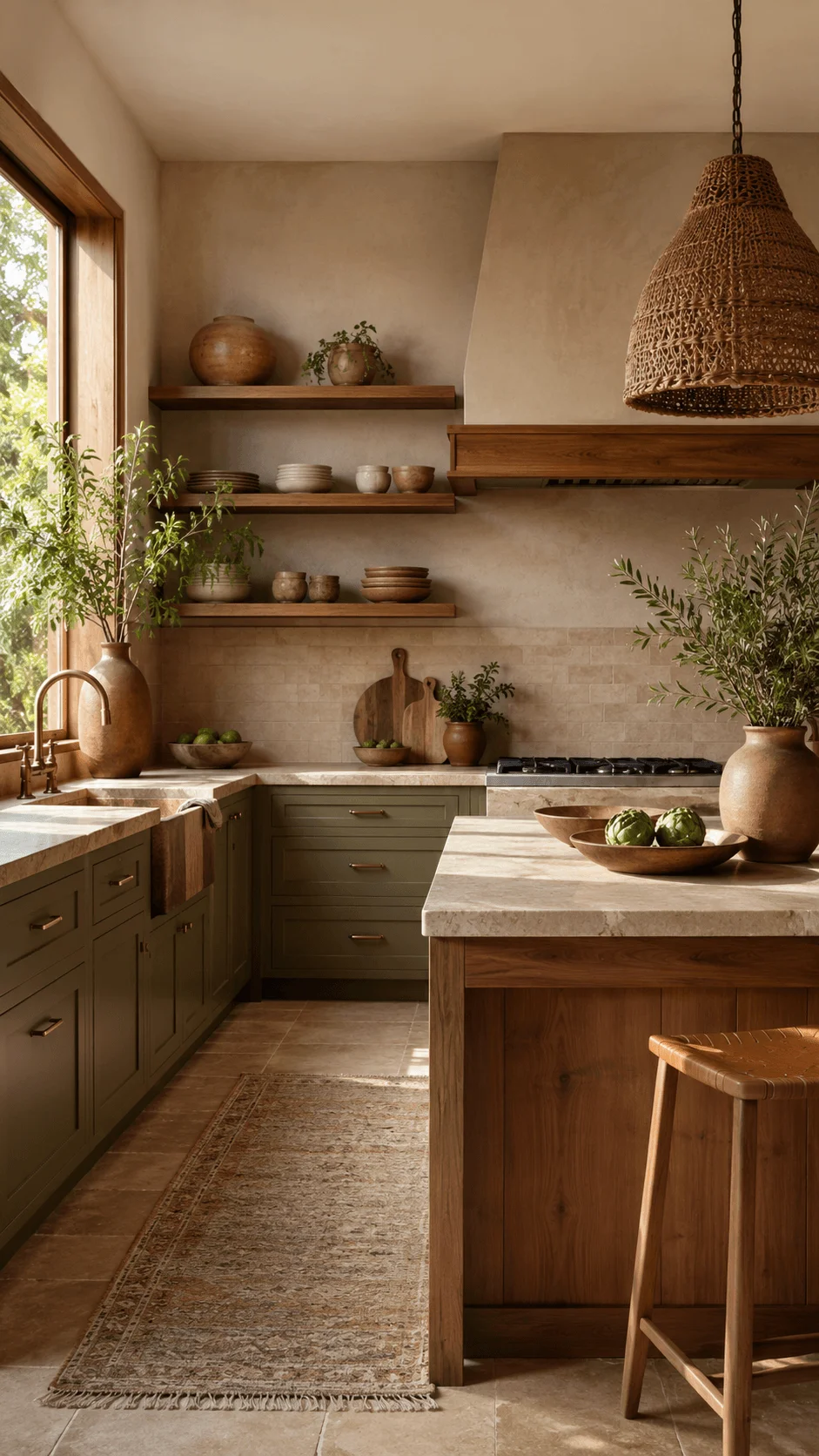
The advantage of earth inspired colors is their ability to work with sustainable materials. Natural wood, stone, ceramic tiles, and handmade accessories all complement these shades beautifully. Instead of creating a visually overwhelming space, these colors create harmony between different elements.
A sustainable kitchen aesthetic is not only about choosing environmentally friendly products. It is also about creating an emotional connection with the space. Earth inspired colors help transform kitchens into comfortable areas where people enjoy spending time.
Reclaimed Wood Kitchen Ideas and Sustainable Natural Materials
Materials play one of the most important roles in creating an eco friendly kitchen design. Among the most popular choices, reclaimed wood has gained attention because it combines sustainability with unique character.
Reclaimed wood comes from previously used structures, old furniture, or recovered timber. Instead of requiring new resources, it gives existing materials another purpose. Every piece often contains natural marks, textures, and patterns that make the kitchen feel authentic.
Reclaimed wood kitchen ideas include wooden cabinets, open shelves, kitchen islands, and decorative panels. These features create warmth while reducing the environmental impact associated with producing new materials.
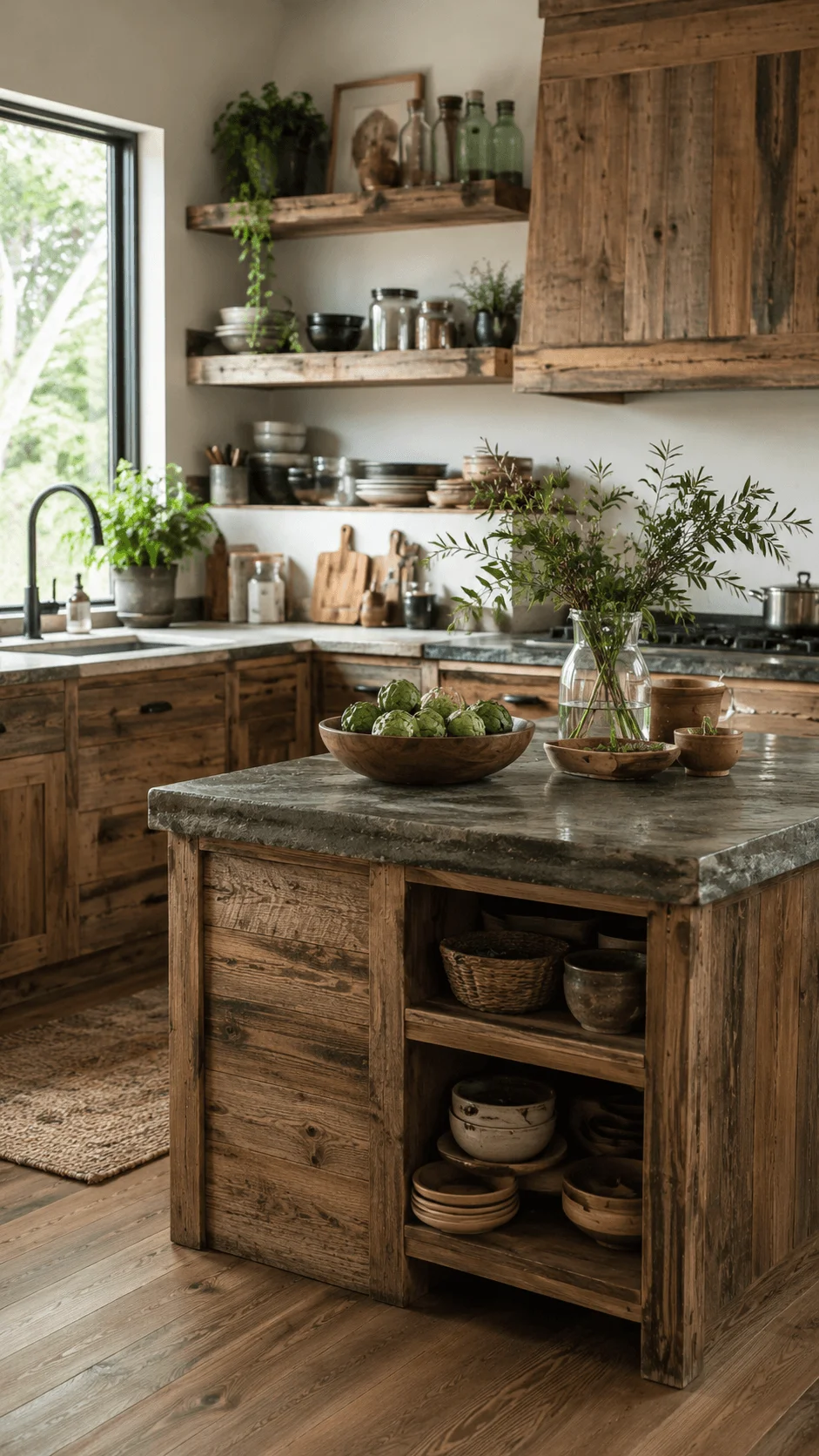
Beyond reclaimed wood, homeowners are also exploring other sustainable kitchen materials such as bamboo, recycled glass, natural stone, and responsibly sourced timber. These options provide durability while maintaining a natural appearance.
Durability is one of the most important principles of sustainable design. A material that lasts many years reduces the need for replacement and prevents unnecessary waste. This is why modern sustainable kitchens focus on craftsmanship and quality instead of choosing inexpensive materials that quickly lose their appeal.
The organic texture of natural materials also creates a stronger visual connection with nature. Smooth stone countertops, wooden surfaces, and handmade finishes help create a kitchen that feels warm, balanced, and welcoming.
Minimalist Eco Kitchen Ideas with Hidden Storage and Simple Design
Minimalism has become closely connected with sustainable living because both ideas encourage people to focus on what truly matters. A minimalist eco kitchen does not mean an empty or boring space. Instead, it means creating a thoughtful environment where every item has a purpose.
One of the biggest trends in modern sustainable kitchens is invisible design. This includes hidden appliances, integrated storage, handleless cabinets, and clean surfaces that reduce visual clutter.
Hidden storage solutions help homeowners maintain an organized kitchen without filling the space with unnecessary furniture. Pull out drawers, built in organizers, and smart cabinet systems allow people to store items efficiently while keeping the kitchen visually calm.
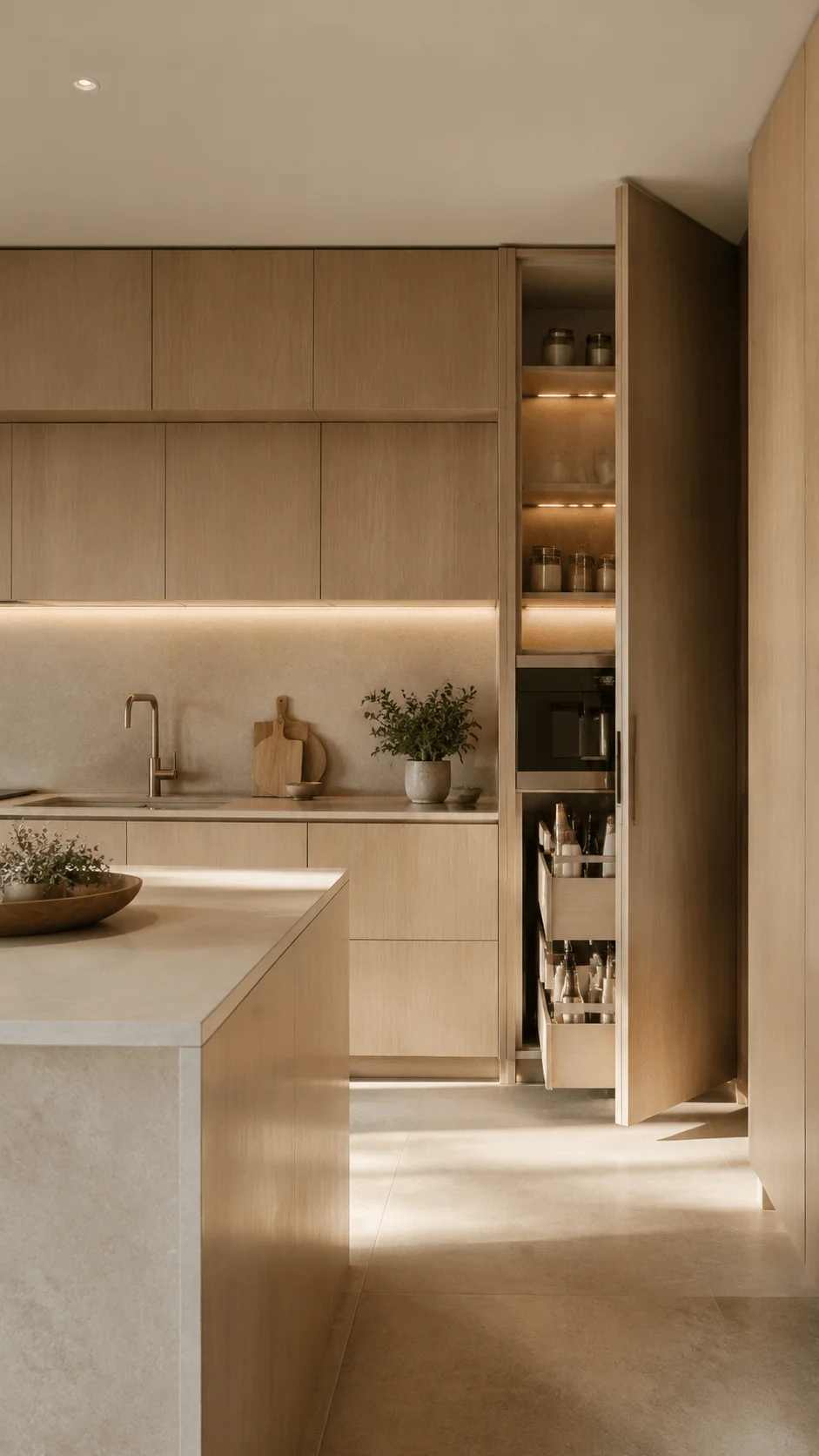
This approach also supports sustainable habits because it encourages conscious purchasing. When a kitchen is organized and functional, people are less likely to buy unnecessary products or accumulate items they rarely use.
Minimalism creates a peaceful atmosphere because it removes distractions. A simple kitchen with natural materials, neutral colors, and carefully selected accessories can feel more luxurious than a space filled with excessive decoration.
The connection between minimalism and sustainability is becoming stronger as people rethink their relationship with consumption. Instead of constantly changing their homes, they are choosing designs that remain beautiful for years.
Zero Waste Kitchen Ideas for a More Sustainable Lifestyle
A major part of sustainable kitchen design is creating a space that supports low waste living. A beautiful kitchen is not only about cabinets, colors, and materials. It is also about the daily habits that happen inside it. Zero waste kitchen ideas focus on reducing unnecessary waste while making organization more attractive and practical.
One of the simplest ways to introduce zero waste principles is through thoughtful storage. Glass containers, wooden storage boxes, ceramic jars, and reusable bags can replace disposable plastic packaging while creating a cleaner visual appearance. Open shelves filled with matching containers can become both a functional solution and a decorative feature.
Composting areas are also becoming popular in modern kitchens. Instead of throwing food scraps into regular waste, homeowners are creating small compost stations that support natural recycling. These spaces can be designed neatly inside kitchen cabinets or placed in attractive containers that match the overall style.
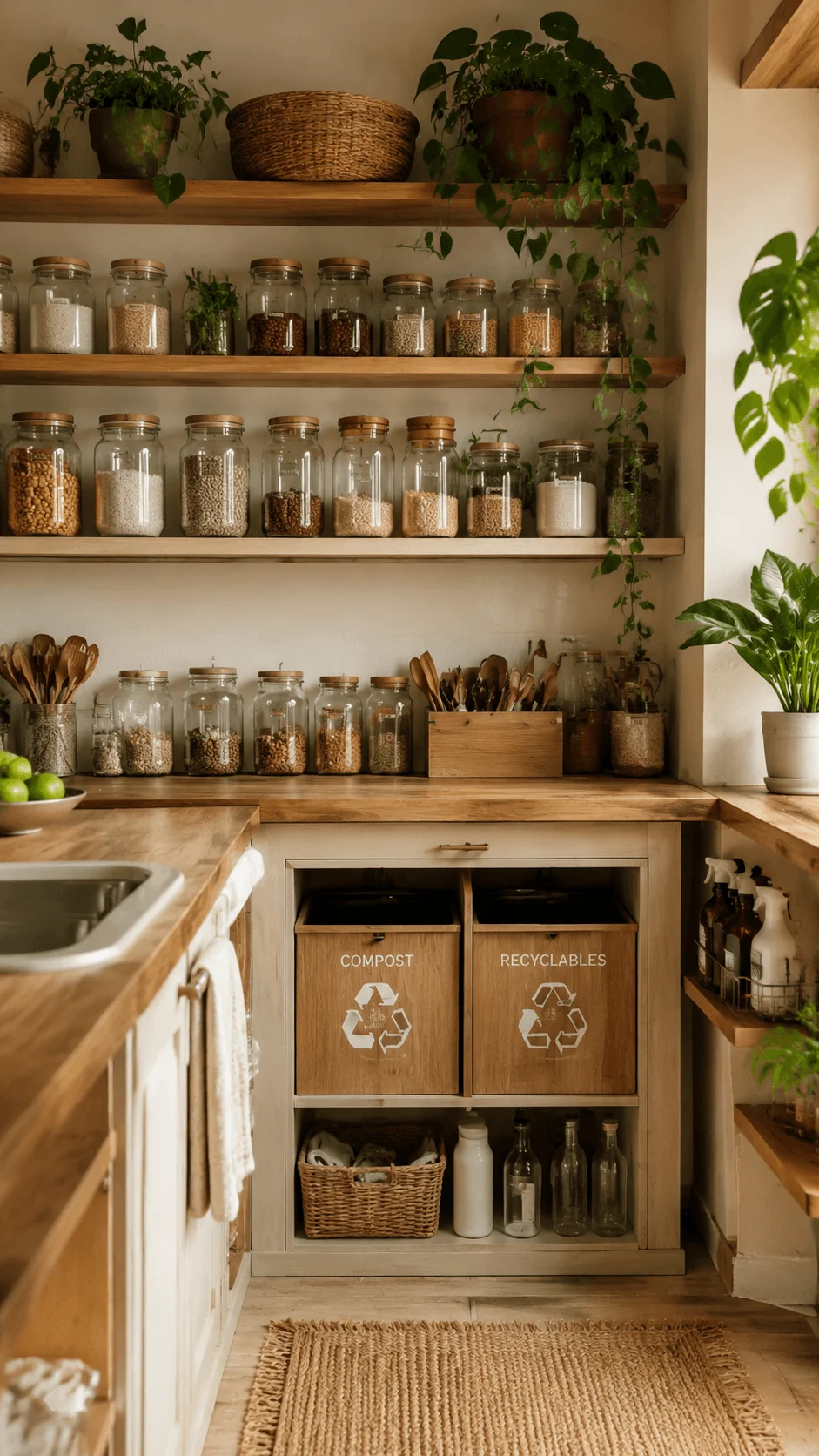
Refill stations are another growing trend. Many people are choosing to purchase ingredients such as grains, spices, and cleaning products in bulk to reduce packaging waste. A well organized pantry with labeled containers can make sustainable habits easier while improving the kitchen aesthetic.
The beauty of zero waste design is that it combines responsibility with creativity. Small changes in organization can completely transform how a kitchen feels and functions. A sustainable kitchen encourages people to slow down, appreciate resources, and make more thoughtful choices.
Sustainable Kitchen Materials That Improve Beauty and Durability
Choosing the right materials is one of the most important decisions when creating a sustainable living aesthetic kitchen. The materials used in countertops, cabinets, flooring, and finishes influence both the appearance and environmental impact of the space.
Modern homeowners are increasingly interested in recycled and natural materials because they offer a balance between beauty and responsibility. Recycled glass countertops, natural stone surfaces, bamboo details, and eco friendly finishes are becoming popular alternatives to traditional options.
Natural stone remains attractive because it provides durability and unique patterns created by nature. Instead of following temporary trends, homeowners are choosing materials that age beautifully and maintain their quality over time.
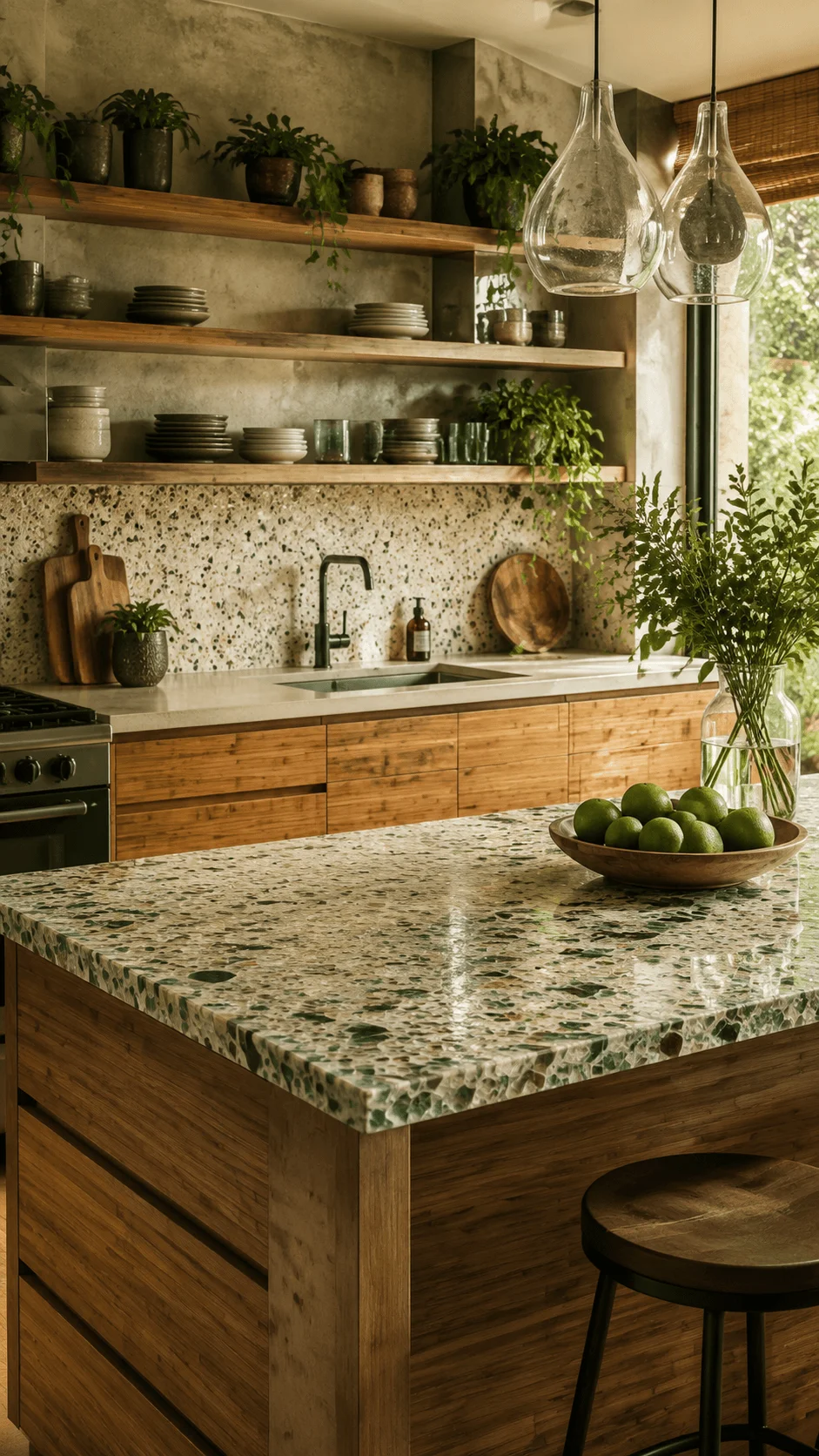
Another important factor is choosing materials with low chemical emissions. Eco friendly finishes and paints help create healthier indoor environments by reducing harmful substances. Since kitchens are spaces where families spend significant time, improving indoor air quality has become an important design consideration.
Sustainable kitchen materials are not only beneficial for the environment. They also create a sense of authenticity. Natural textures and imperfect details often make kitchens feel warmer and more personal compared with artificial surfaces.
A well designed kitchen should not need constant replacement. Investing in durable materials creates long term value and supports a more sustainable approach to home improvement.
Indoor Kitchen Gardens for a Natural Sustainable Kitchen Aesthetic
Growing food at home has become one of the most inspiring elements of sustainable kitchen design. Indoor gardens allow homeowners to bring freshness, beauty, and functionality into their cooking spaces.
Even small kitchens can include simple growing solutions. Window herb gardens, vertical plant walls, hanging planters, and compact hydroponic systems make it possible to grow fresh ingredients without requiring a large outdoor area.
Herbs such as basil, parsley, rosemary, and mint are especially popular because they are easy to maintain and useful for everyday cooking. These small green additions create a natural kitchen aesthetic while encouraging healthier food choices.
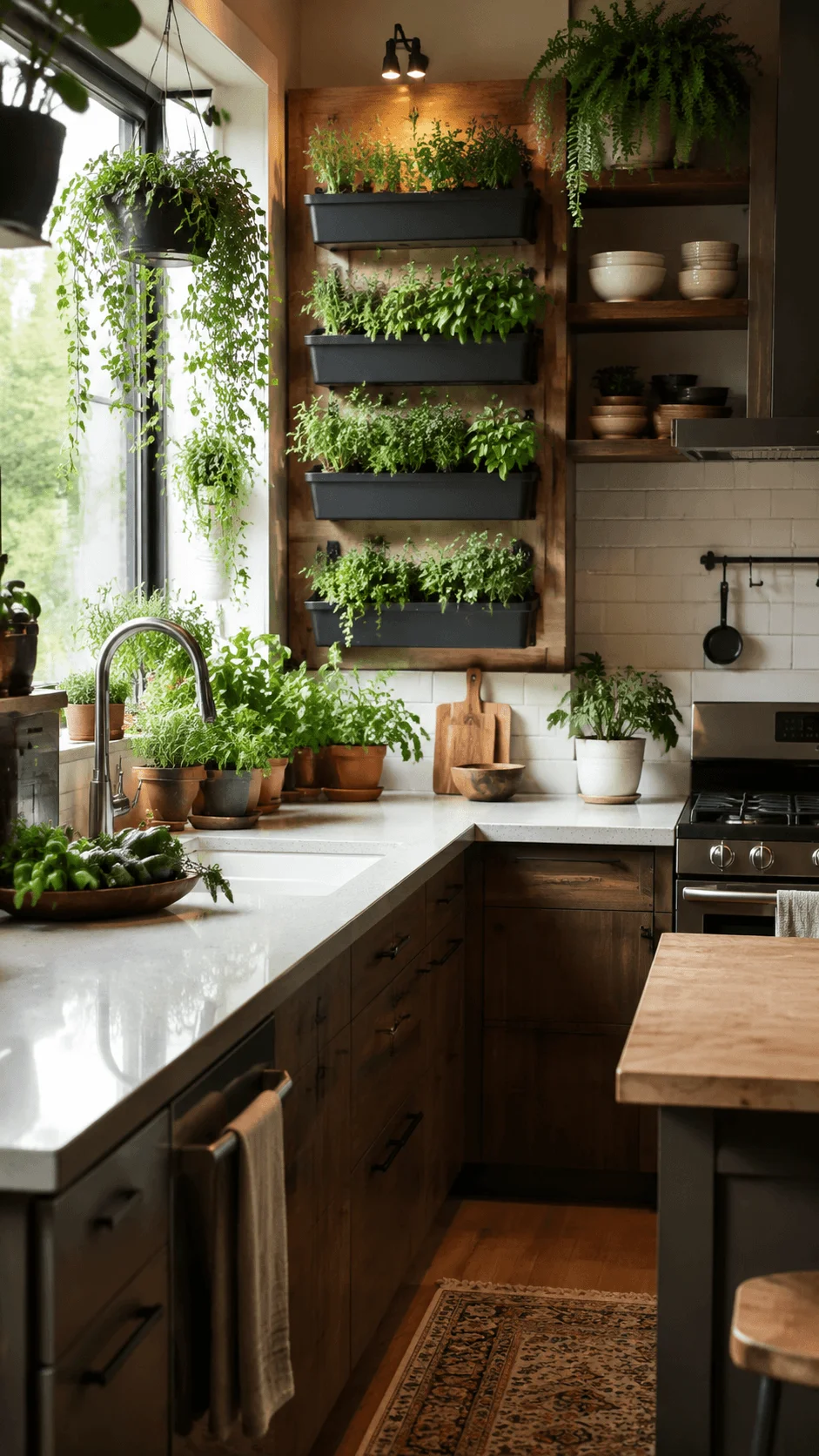
Indoor gardens also strengthen the connection between people and their food. Instead of viewing ingredients as something that simply comes from a store, homeowners develop a deeper appreciation for the process of growing and caring for plants.
Beyond practical benefits, plants add softness and visual interest. Greenery balances hard surfaces such as stone and metal while making the kitchen feel more welcoming.
The popularity of kitchen gardens represents a larger movement toward self sufficient living. People are becoming more interested in creating homes that support healthier lifestyles and reduce dependence on unnecessary resources.
Energy Efficient Smart Kitchens for Modern Sustainable Homes
Technology has become an important part of modern sustainable kitchen design. However, the focus has shifted from technology for luxury toward technology that improves efficiency and reduces environmental impact.
Energy efficient appliances are among the most popular upgrades. Modern refrigerators, ovens, and dishwashers are designed to use less electricity while maintaining strong performance. These improvements help homeowners reduce energy consumption without changing their daily routines.
Smart lighting systems are another useful addition. Adjustable lighting allows homeowners to use energy more effectively while creating different moods throughout the day. Natural light combined with efficient lighting creates a comfortable and practical environment.

Water saving fixtures are also becoming essential in sustainable kitchens. Modern faucets can reduce water usage through improved designs that maintain strong performance while limiting unnecessary consumption.
Smart technology helps homeowners understand their resource use. Energy monitoring systems can show how much electricity different appliances consume, allowing people to make better decisions.
The combination of technology and sustainability proves that modern kitchens do not have to choose between convenience and environmental responsibility. With thoughtful planning, smart solutions can improve both function and design.
Japandi Sustainable Kitchen Style for Calm Minimal Living
Japandi style has become one of the most admired approaches to sustainable interior design because it naturally combines simplicity, warmth, and functionality. This style merges Japanese minimalism with Scandinavian comfort to create spaces that feel peaceful and intentional.
A Japandi sustainable kitchen usually includes natural wood, neutral colors, simple furniture, handmade elements, and uncluttered layouts. Every detail serves a purpose, which makes the style closely connected with mindful living.
Unlike designs that rely on excessive decoration, Japandi focuses on quality. A single handcrafted bowl, a wooden cutting board, or a carefully selected ceramic piece can create more impact than many unnecessary decorations.
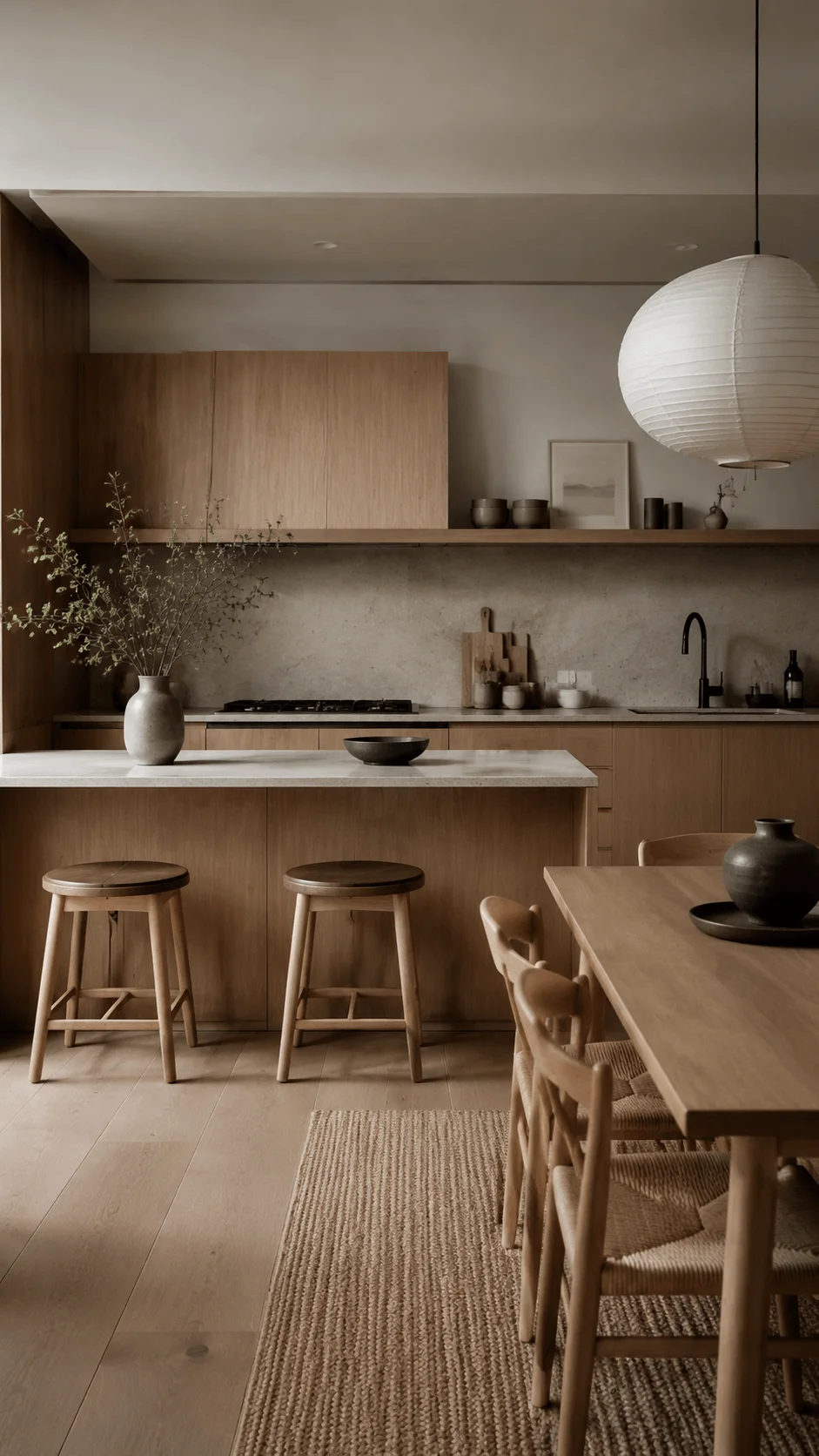
The use of natural materials makes this style naturally sustainable. Wood, stone, bamboo, and linen create warmth while reducing dependence on artificial finishes.
Japandi kitchens also encourage slower living. They create spaces where cooking becomes an enjoyable experience rather than a rushed daily task. The peaceful atmosphere supports relaxation and connection.
As more people search for homes that provide comfort and emotional balance, Japandi sustainable kitchens continue to grow in popularity.
Handmade Artisan Details in Sustainable Kitchen Design
Mass produced decoration is slowly being replaced by handmade pieces that bring personality and meaning into homes. Artisan details are becoming an important part of sustainable kitchen design because they celebrate craftsmanship and long lasting value.
Handmade ceramic plates, woven baskets, natural textiles, and locally crafted accessories add character to kitchens. These pieces often have unique imperfections that make them feel authentic and personal.
Supporting handmade products can also reduce dependence on large scale manufacturing. Local craftsmanship often involves traditional methods and careful production processes that value quality over quantity.
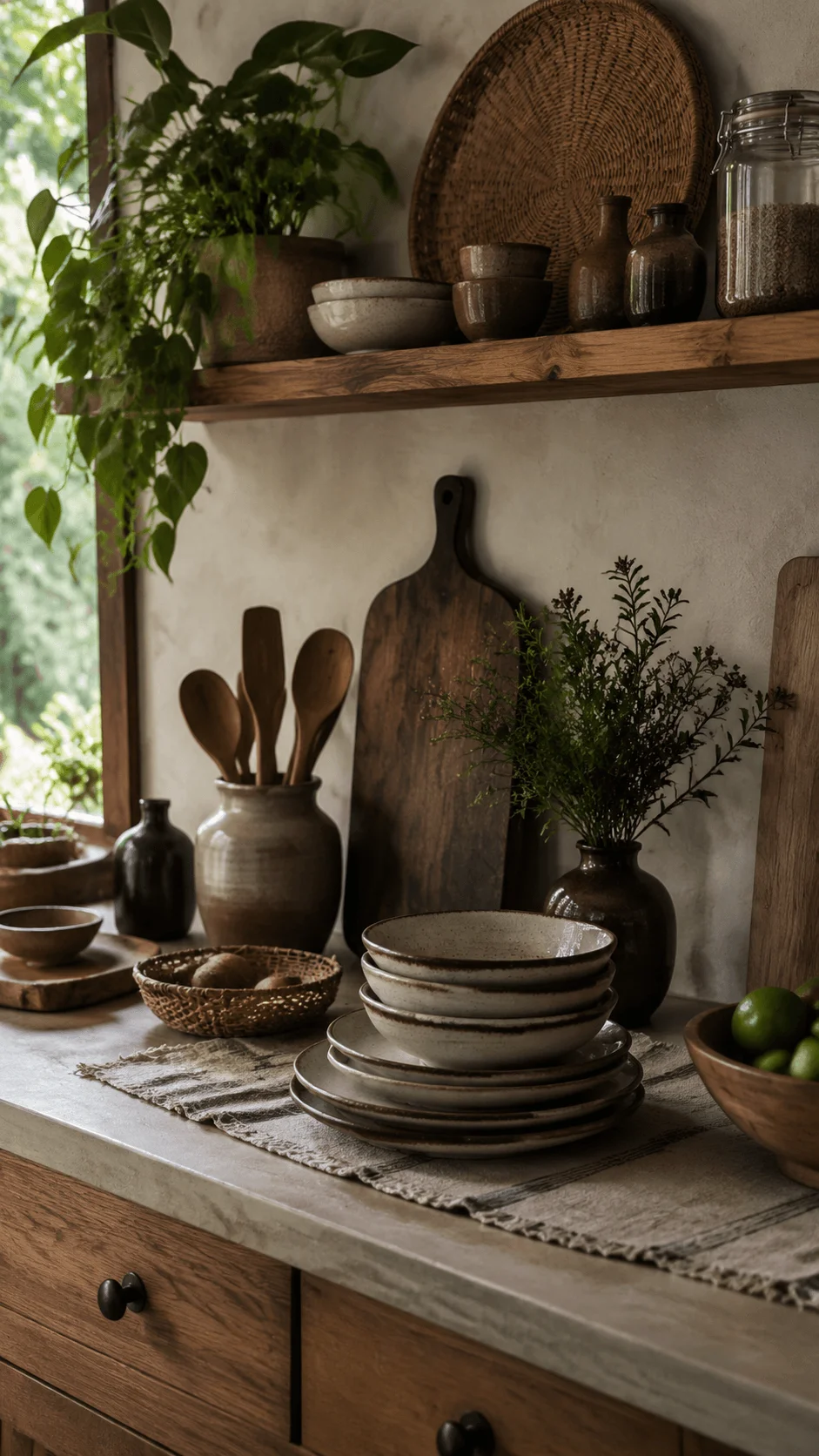
A kitchen filled with meaningful objects creates a stronger emotional connection. Instead of constantly replacing decorations, homeowners can build collections of pieces they truly appreciate.
This approach reflects the deeper philosophy behind sustainable design. The goal is not simply to create a beautiful room but to create a space filled with items that have purpose and meaning.
Vintage Sustainable Kitchen Design with Timeless Character
Vintage design has returned as homeowners search for alternatives to fast changing trends. A vintage sustainable kitchen combines classic elements with environmentally responsible choices.
Restored cabinets, antique furniture, second hand accessories, and traditional designs can create kitchens with unique personality. Instead of removing older pieces, homeowners are discovering ways to repair and reuse them.
Vintage kitchens also represent the idea of timeless beauty. A design that remains attractive for decades reduces the pressure to renovate frequently.
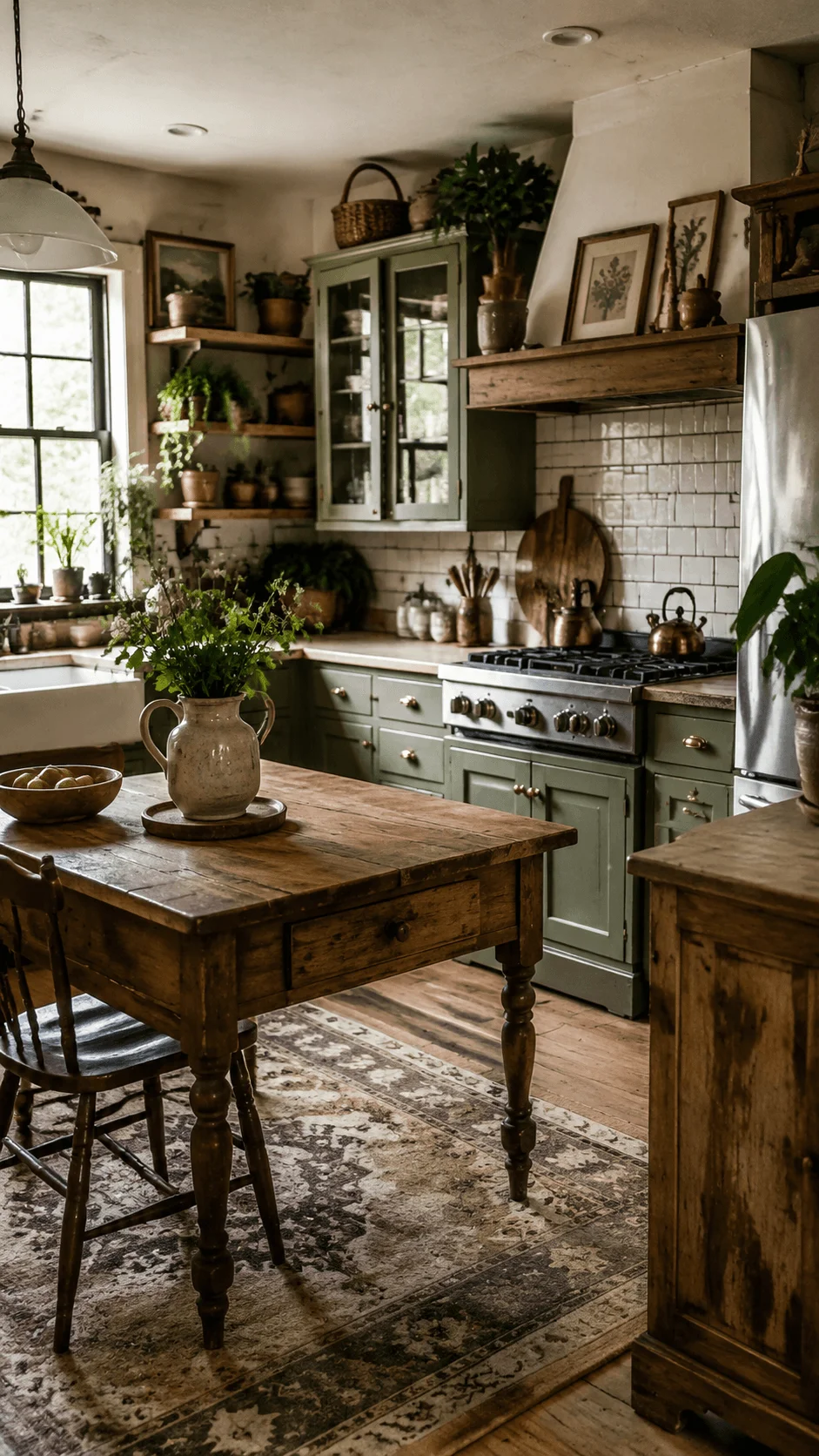
Old furniture often contains craftsmanship that is difficult to find in modern mass produced items. Restoring these pieces preserves history while reducing waste.
Combining vintage elements with modern sustainable materials creates a balanced style. An old wooden table, modern energy efficient appliances, and natural finishes can work together beautifully.
How to Create a Sustainable Living Aesthetic Kitchen on a Budget
Creating an eco friendly kitchen does not always require expensive renovations. Small changes can have a significant impact when they are planned carefully.
One affordable approach is using second hand furniture. Old cabinets, tables, shelves, and chairs can often be restored with simple improvements. This reduces waste while adding unique character.
Plants are another budget friendly way to transform a kitchen. Indoor herbs, small plants, and natural decorations can instantly create a fresher atmosphere.
Improving organization is also effective. Reusable containers, better storage systems, and thoughtful arrangements can make existing kitchens feel completely different.
Small energy saving upgrades can also support sustainability. Replacing old lighting, improving water efficiency, and choosing durable accessories are practical steps that do not require major investment.
Sustainability is not about creating a perfect home overnight. It is about making better choices over time and building a space that reflects conscious living.
Why Sustainable Kitchen Design Is Becoming a Major Trend in 2026
The popularity of sustainable kitchen design represents a larger change in how people view their homes. Modern homeowners are no longer interested only in appearance. They want spaces that improve their quality of life and reflect their values.
Environmental awareness has encouraged people to think more carefully about materials, energy use, and waste. At the same time, the desire for healthier homes has increased interest in natural materials, better air quality, and stronger connections with nature.
Minimalism has also influenced this movement. Many people are choosing fewer but better quality items instead of constantly buying new products.
The future of kitchen design is moving toward spaces that feel personal, responsible, and timeless. The sustainable living aesthetic kitchen represents this new approach by combining creativity with environmental awareness.
Conclusion
A sustainable living aesthetic kitchen is much more than a design trend. It represents a new way of thinking about how homes should look, feel, and function. By combining natural materials, thoughtful layouts, energy efficient solutions, and mindful habits, homeowners can create kitchens that support both personal wellbeing and environmental responsibility.
The most beautiful sustainable kitchens are not defined by expensive features. They are created through intentional decisions, from choosing durable materials to adding natural elements and reducing unnecessary waste. Every small improvement contributes to a larger vision of responsible living.
As people continue searching for homes that provide comfort, connection, and meaning, sustainable kitchen design will remain an important part of modern interiors. A kitchen designed with care can become more than a place for cooking. It can become a peaceful environment that represents a healthier lifestyle and a better relationship with the planet.