Sustainable T Shirt Design Business Plan 2026
A sustainable T shirt design business plan helps an entrepreneur turn responsible fashion ideas into a practical and profitable company. In 2026, many customers look beyond attractive graphics when buying clothing. They also consider fabric quality, product durability, ethical production, packaging, sizing, material origin, and the honesty of environmental claims. A detailed plan connects these expectations with clear decisions about products, suppliers, pricing, marketing, and future growth.
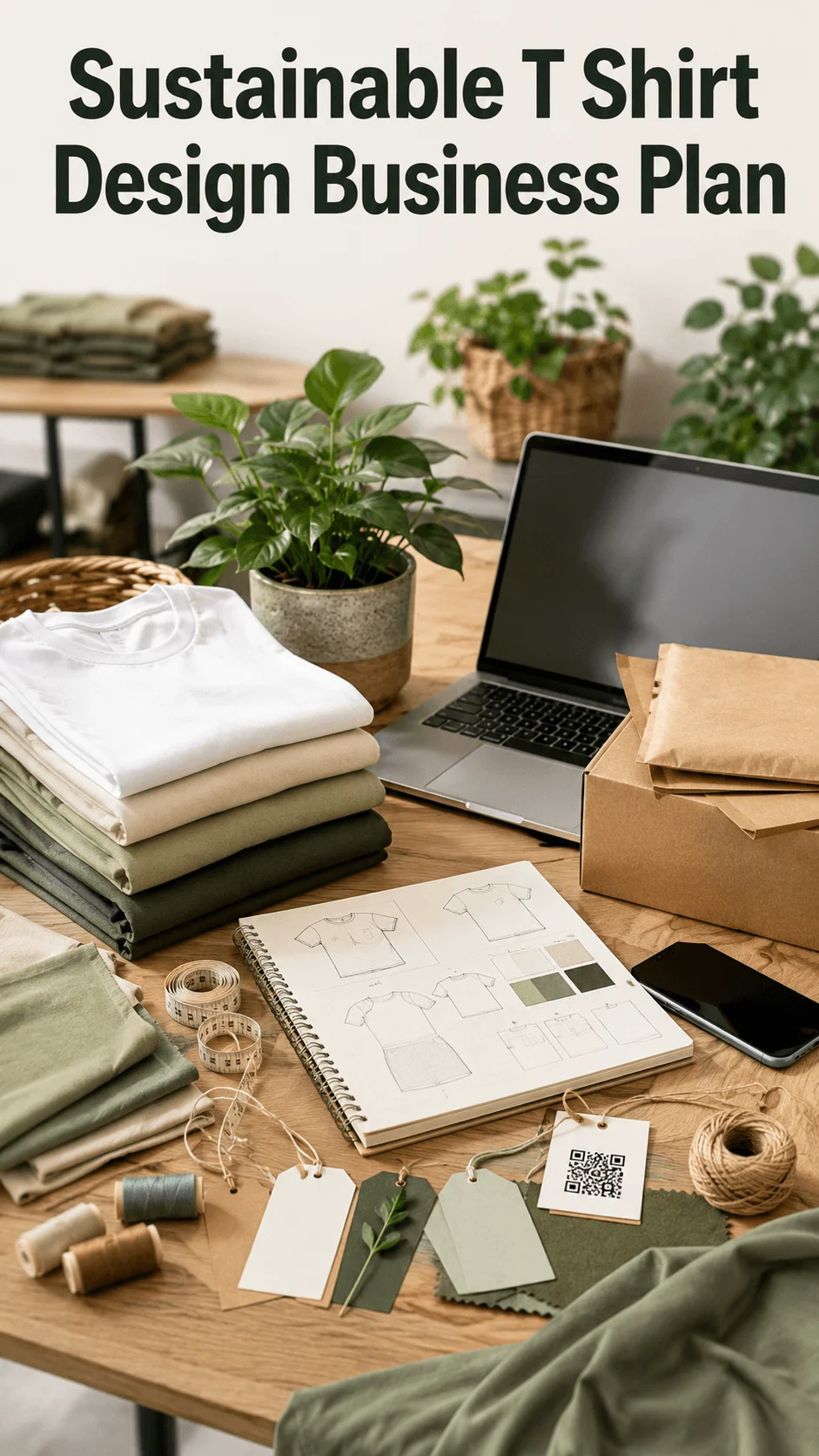
A responsible T shirt brand cannot rely on one organic fabric or a few environmental slogans. The founder must consider the complete product journey, including fibre selection, garment construction, printing, packaging, delivery, returns, repair, resale, and recycling. A successful business combines sustainability with comfort, originality, reliable service, and financial discipline.
What Is a Sustainable T Shirt Design Business Plan
A sustainable T shirt design business plan explains how a company will design, produce, promote, sell, and improve responsible T shirts. It includes traditional business elements such as market research, target customers, operating costs, sales goals, pricing, and marketing. It also covers ethical labour, responsible materials, product durability, waste reduction, traceability, and end of life solutions.
A written plan gives the founder direction before money goes into samples, inventory, branding, or advertising. It helps the business evaluate suppliers, estimate expenses, study customer needs, identify risks, and choose a realistic production model.
A general T shirt company may focus mainly on fashionable graphics and low prices. A responsible business looks further. It asks whether the product will last, whether the supplier provides accurate information, whether the print will survive regular washing, and whether customers can repair or return the garment.
Why an Eco Friendly T Shirt Business Matters in 2026
Customers increasingly expect clothing brands to explain how products reach the market. Many buyers want durable prints, comfortable fabrics, inclusive sizing, ethical manufacturing, minimal packaging, and original designs.
This change creates an opportunity for smaller companies. A new brand may struggle to compete with large retailers on price, but it can compete through quality, community knowledge, personal service, transparency, and meaningful artwork.
A sustainable T shirt design business plan should therefore connect environmental responsibility with customer value. A shirt still needs to look attractive, fit correctly, feel comfortable, and arrive on time. Sustainability should strengthen the product rather than replace these essential qualities.
Define Your Responsible T Shirt Brand Concept
A clear brand concept tells customers what the company represents and why its products deserve attention. The founder should define the mission, visual identity, customer promise, sustainability standards, and unique selling point before creating a large collection.
The brand may focus on premium basics, ethical streetwear, environmental artwork, outdoor lifestyles, educational illustrations, local culture, or circular fashion. Each direction attracts a different audience and influences fabric choices, colours, photography, pricing, packaging, and marketing.
A focused identity also makes the company easier to remember. A brand that tries to please every customer often creates weak designs and confusing messages. Strong positioning helps the founder make consistent decisions and develop loyal customers.
Research the Sustainable T Shirt Market
Market research prevents the founder from creating products based only on personal taste. The business should study customers who already care about responsible fashion, including students, teachers, gardeners, artists, cyclists, hikers, environmental volunteers, and ethical streetwear buyers.
Customer reviews, social media communities, search results, local events, and competing stores can reveal common problems. Buyers may complain about unclear sizing, weak fabric, fading prints, expensive delivery, poor colour choices, or vague sourcing information.
Competitor research should help the founder identify gaps rather than copy existing products. A new company may discover that many stores sell generic environmental slogans, while very few create premium designs for a specific community. That gap can support a stronger product idea.
Trending Sustainable T Shirt Business Ideas for 2026
The best sustainable T shirt business ideas combine a clear customer need with responsible production and a practical revenue opportunity. The following concepts can help a new company build a distinctive position.
Made to Order Sustainable T Shirt Production
A made to order model creates or prints a shirt after the customer places an order. This approach reduces unsold stock, storage costs, and unnecessary clearance sales. It also allows a new brand to test designs before purchasing larger quantities.
The founder can use preorders, print on demand, or controlled small batches. Print on demand reduces inventory risk, but it may limit quality control, packaging choices, and profit margins. Preorders improve demand forecasting, though customers may need to wait longer.

Clear communication remains essential. The brand should explain production and delivery times before checkout and provide updates when delays occur.
Circular T Shirt Take Back Programs
A circular T shirt business model continues the customer relationship after the first sale. The brand can invite buyers to return worn or damaged garments in exchange for store credit or discounts.
Returned shirts may support repair, resale, recycling, patchwork products, accessories, or artistic collections. This system can create repeat purchases while reducing the number of garments that enter general waste.
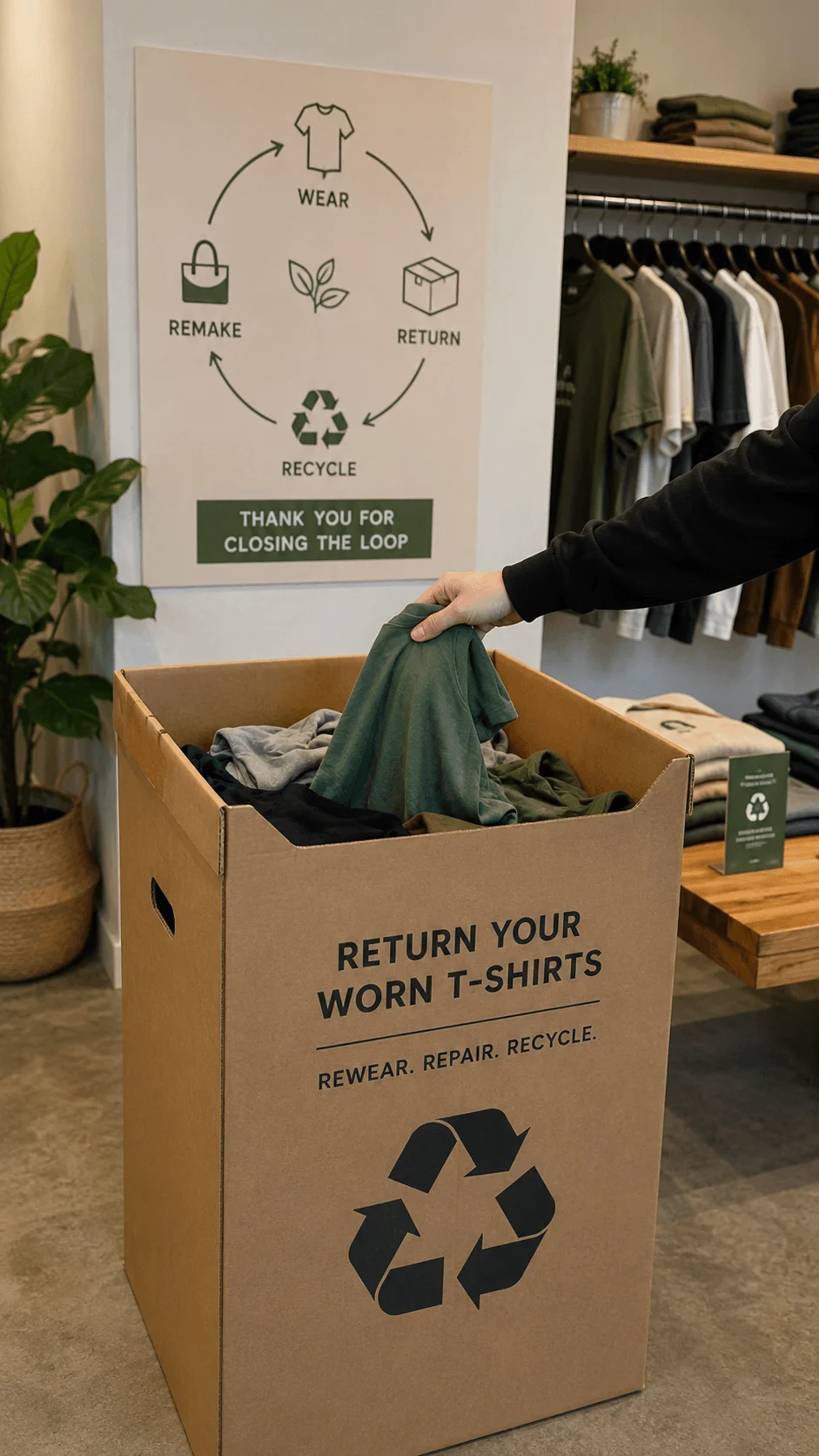
The founder must plan collection, sorting, cleaning, storage, labour, and recycling partnerships. A small company should begin with a simple return program before introducing several complicated services.
Digital Product Passports and QR Code Traceability
A digital product passport gives customers detailed information through a QR code on the garment label or packaging. The linked page can show fibre composition, material origin, factory details, printing methods, care guidance, repair instructions, and recycling options.
This feature helps the business support its claims with evidence. It can also strengthen trust because customers can see what makes the shirt responsible.
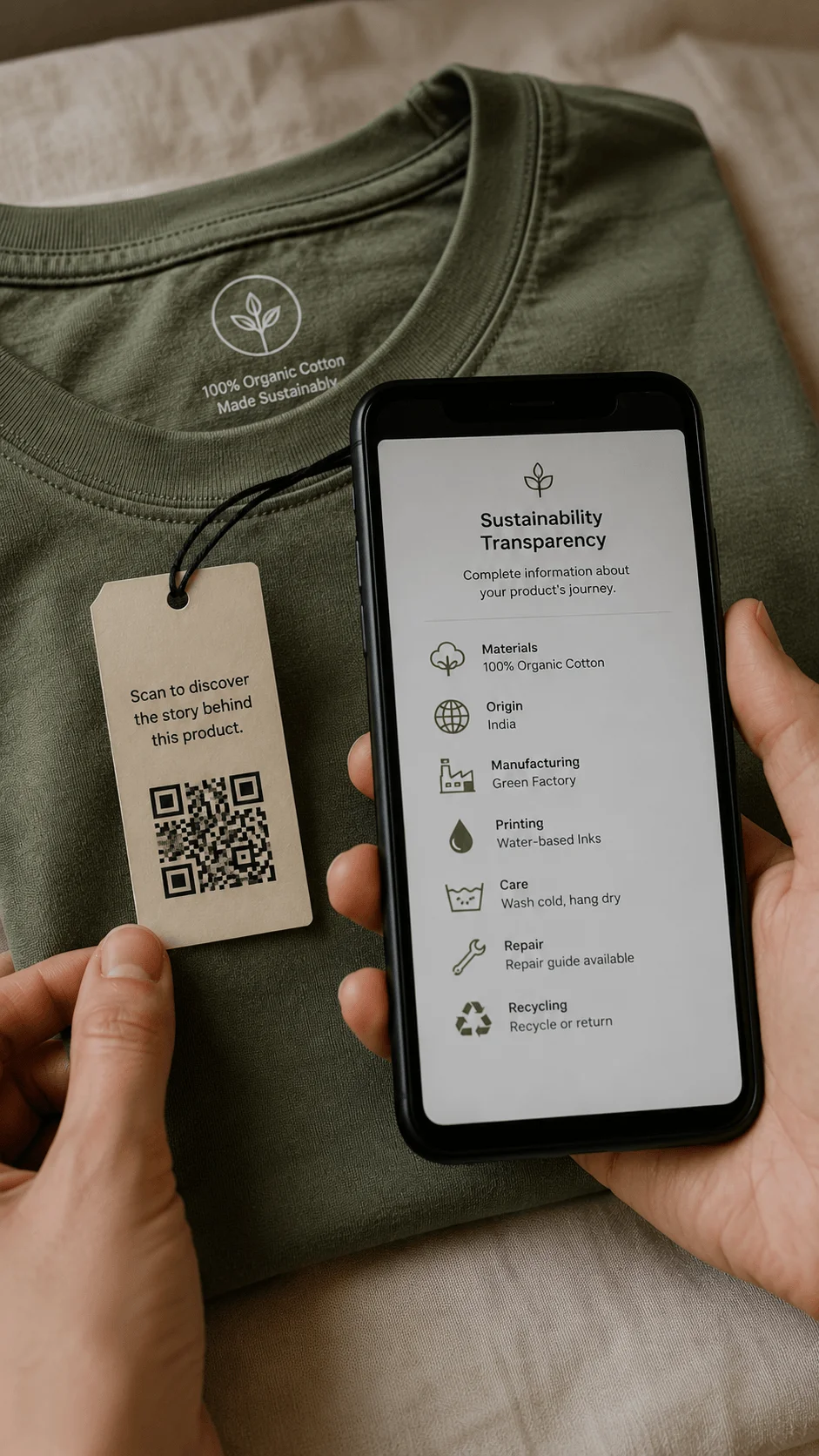
The company must keep every page accurate and easy to understand. Confusing technical language may weaken the customer experience.
Regenerative Cotton T Shirt Collections
Regenerative cotton supports farming methods that aim to improve soil health, biodiversity, and water retention. It can give a brand a more distinctive sourcing story than a simple organic cotton T shirt business plan.
However, the founder should not present regenerative cotton as a perfect solution. Definitions, farming methods, supplier evidence, and certification systems may vary. Availability can also remain limited.
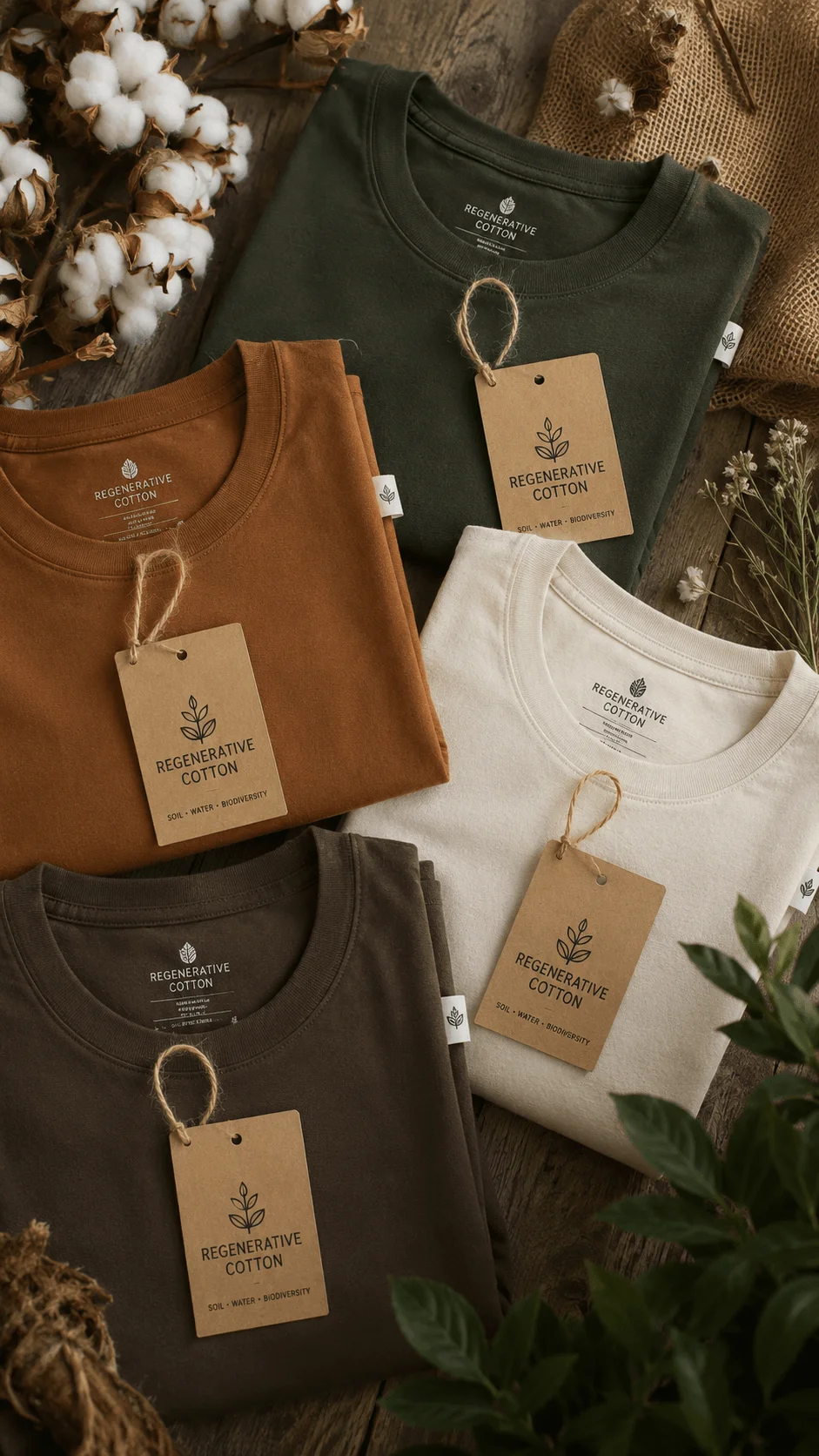
A carefully verified collection can support premium positioning when the business combines responsible farming with durable construction and timeless design.
Premium Durable T Shirts for Long Term Use
Durability should sit at the centre of a responsible clothing company. A shirt that fades, loses shape, or develops a damaged neckline after several washes creates waste regardless of its original fabric.
The founder should test fabric weight, stitching, shrinkage, colour retention, neckline quality, print durability, comfort, and fit consistency. Real washing and wearing tests can reveal problems that product photographs cannot show.
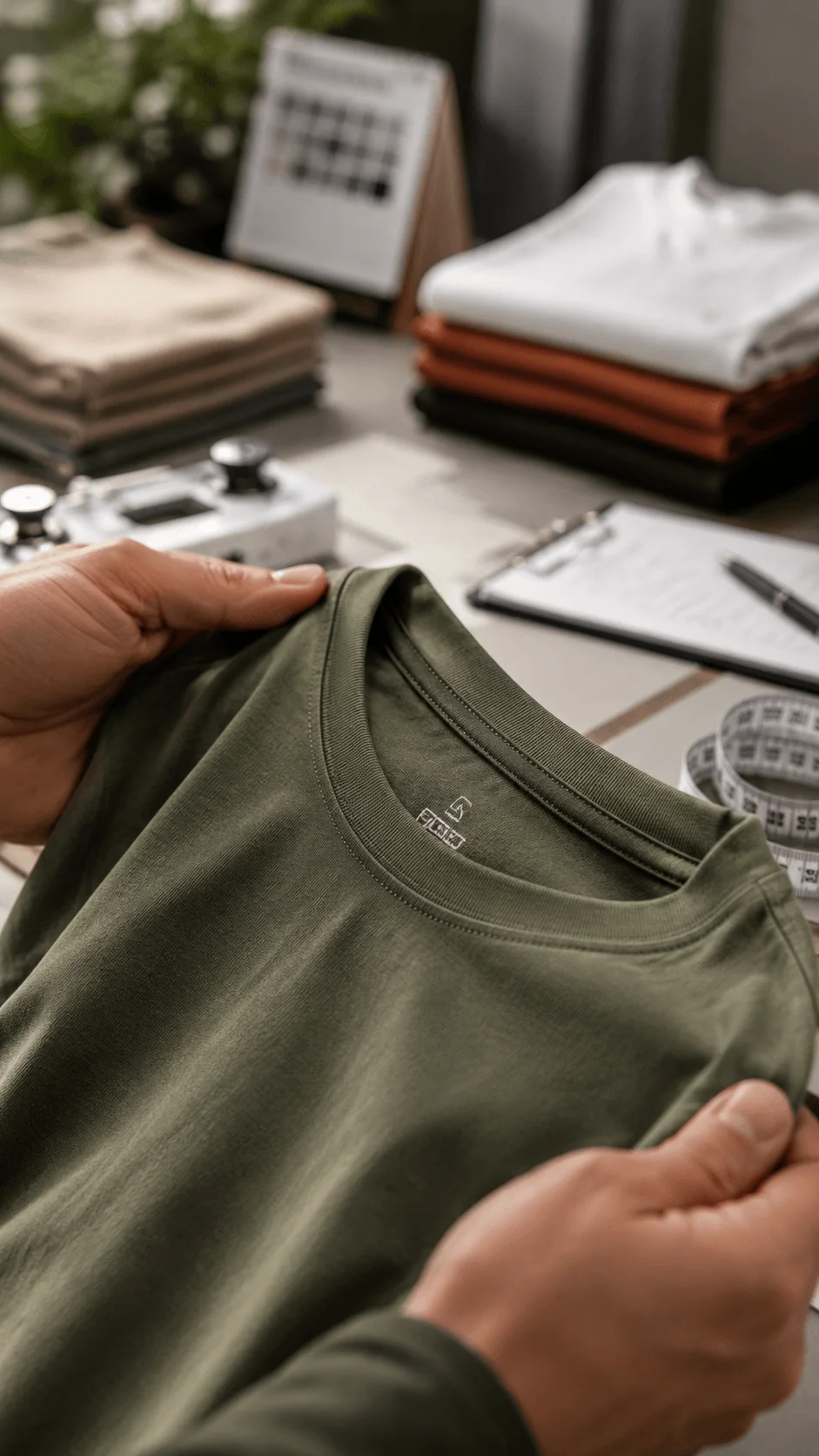
A care guide, repair service, or quality promise can also increase customer confidence and support premium pricing.
Oversized and Gender Inclusive Sustainable T Shirts
Oversized and relaxed shirts remain popular because they offer comfort and flexible styling. Gender inclusive fits can help the company serve a wider audience without creating completely separate product ranges.
The founder should test body length, sleeve shape, size grading, fabric drape, and movement. Diverse product photography and accurate measurement charts can help customers choose the correct size.

Inclusive products create opportunity, but poor sizing information can increase returns, waste, and customer dissatisfaction.
Low Impact Printing and Responsible Colours
Printing influences the appearance, cost, durability, and environmental performance of a shirt. The founder may compare water based screen printing, direct to garment printing, direct to film printing, embroidery, undyed garments, and small placement graphics.
No printing method suits every business. Screen printing can work well for larger orders, while direct to garment printing supports detailed artwork and smaller quantities. Embroidery offers durability but may increase production costs.
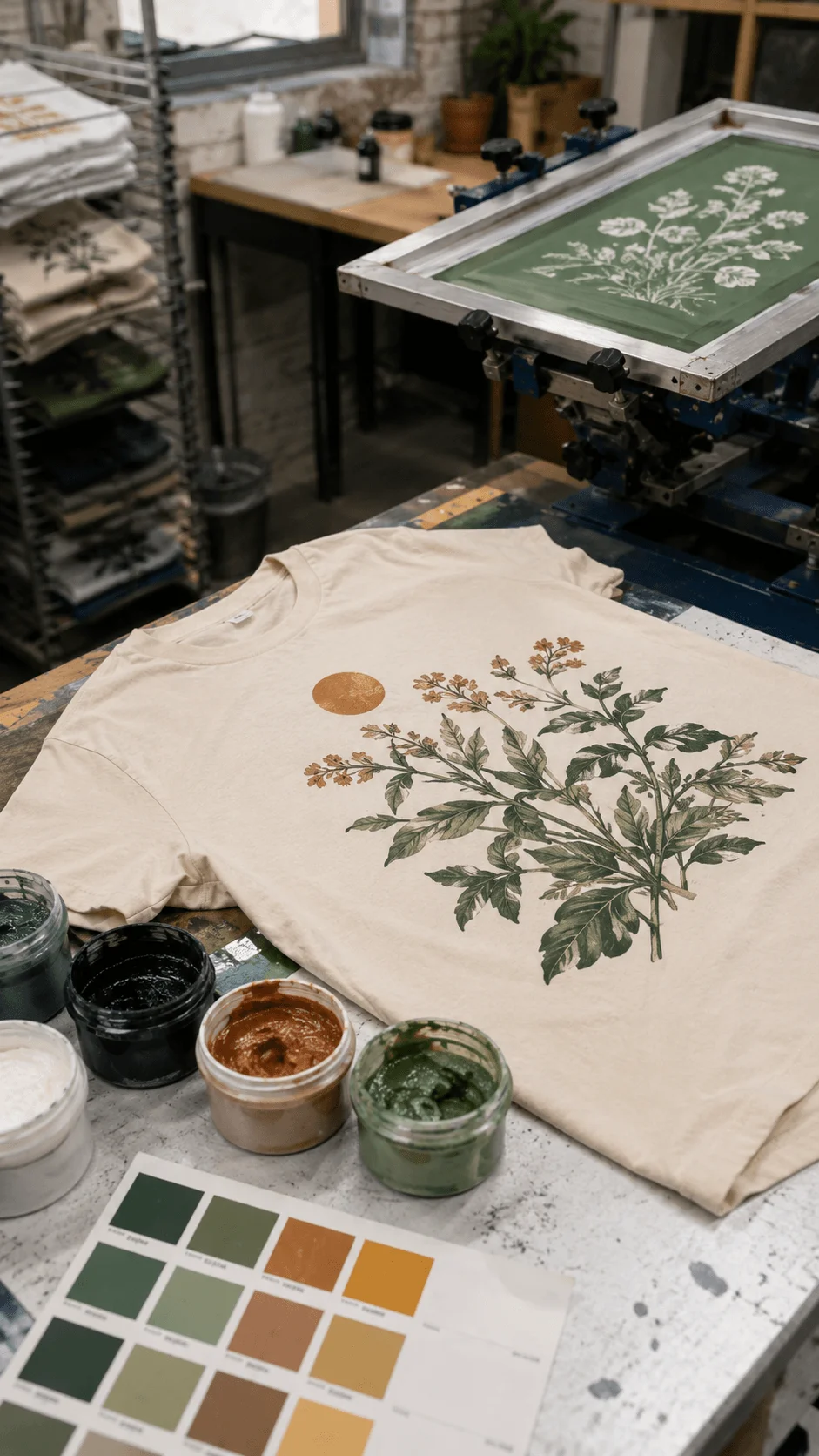
A sustainable T shirt design business plan should include print samples and wash tests. A durable design that customers enjoy for years may create greater value than a weak print supported by environmental marketing.
Upcycled and Reworked T Shirt Collections
Upcycled collections transform deadstock, samples, returned garments, secondhand shirts, and imperfect products into new designs. A brand can use embroidery, patchwork, visible repair, overprinting, or artistic stitching.
These methods create unique products that can support limited releases and higher prices. However, manual work increases labour expenses and production time.
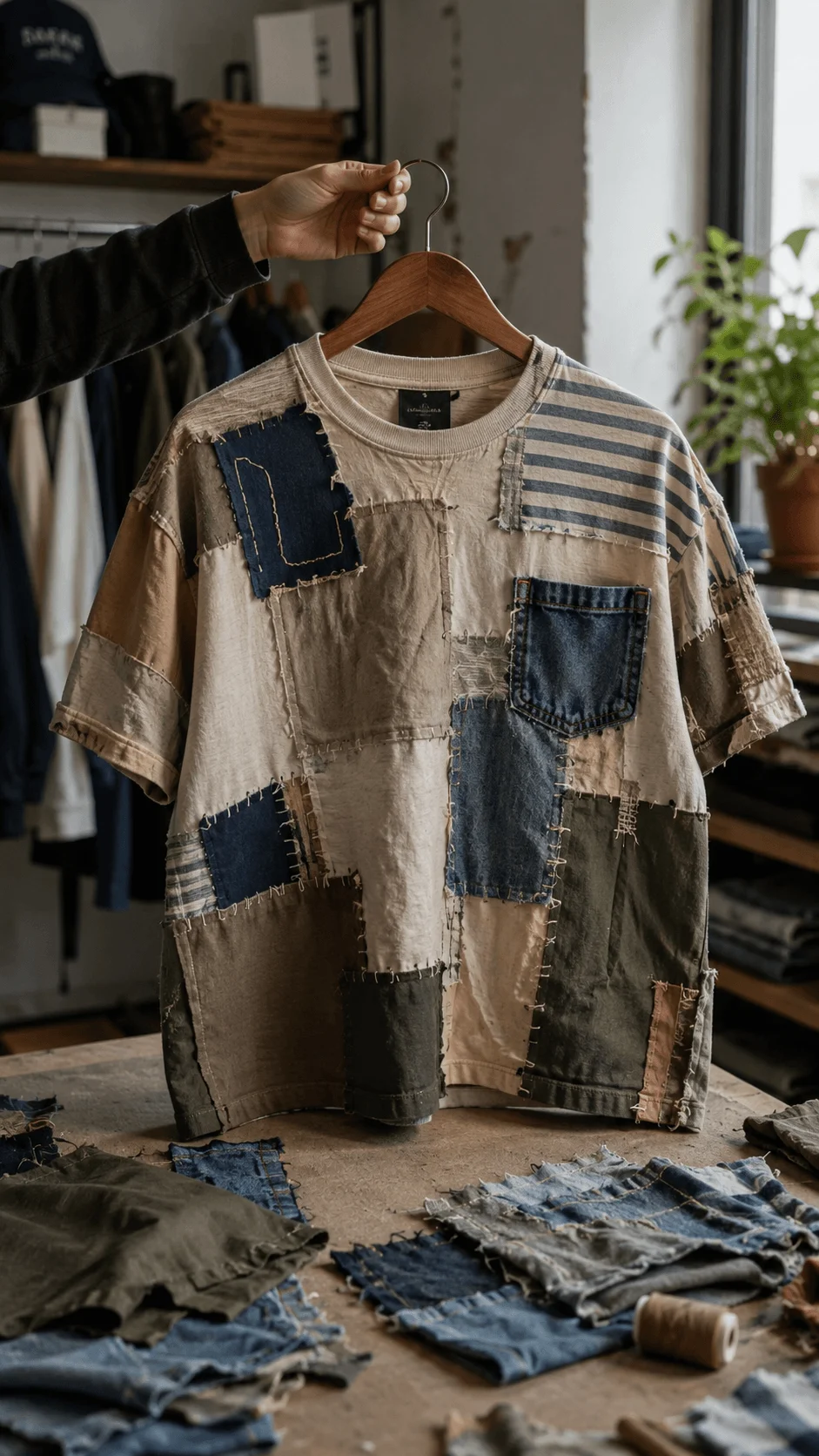
The company must also manage cleaning, inconsistent sizing, material availability, photography, and quality control. Every hour of reworking should form part of the final price.
Local Production and Regional Fulfilment
Local production can improve communication, sampling, quality control, and delivery speed. It may also strengthen the brand story by connecting products with regional skills and communities.
However, local production does not automatically guarantee ethical labour or responsible materials. The founder must still examine working conditions, supplier documents, defect rates, production capacity, and prices.
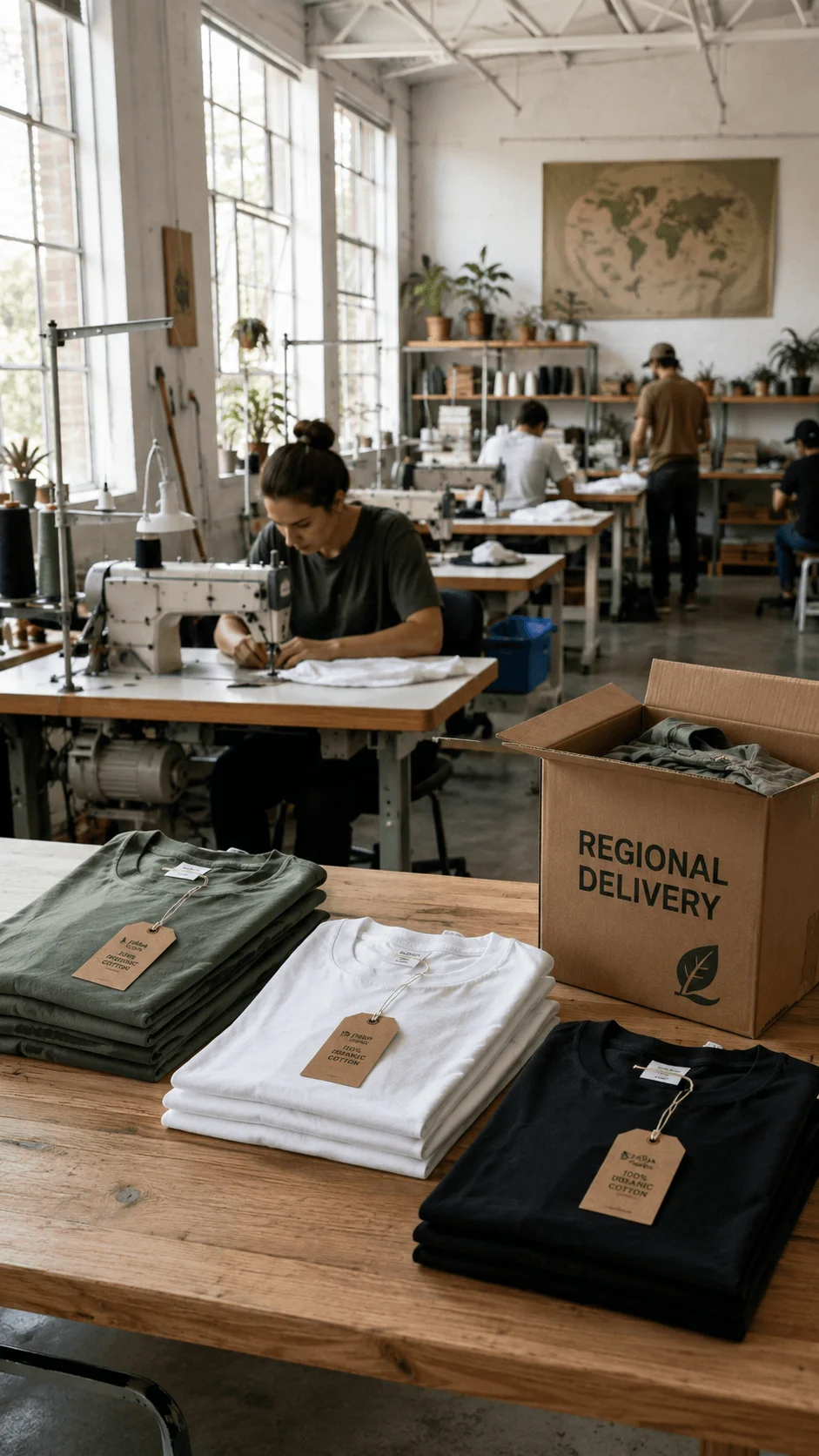
Regional fulfilment may reduce long shipping distances, but the business should compare total costs and service quality before choosing a partner.
Repairable and Customisable T Shirt Designs
Repairable and customisable products give customers more reasons to keep their garments. A brand can offer removable patches, embroidered badges, replacement artwork, custom text, and visible repair services.
These options can create additional income through personalisation fees, repairs, replacement pieces, and artist partnerships. They also increase emotional attachment because customers help shape the final product.
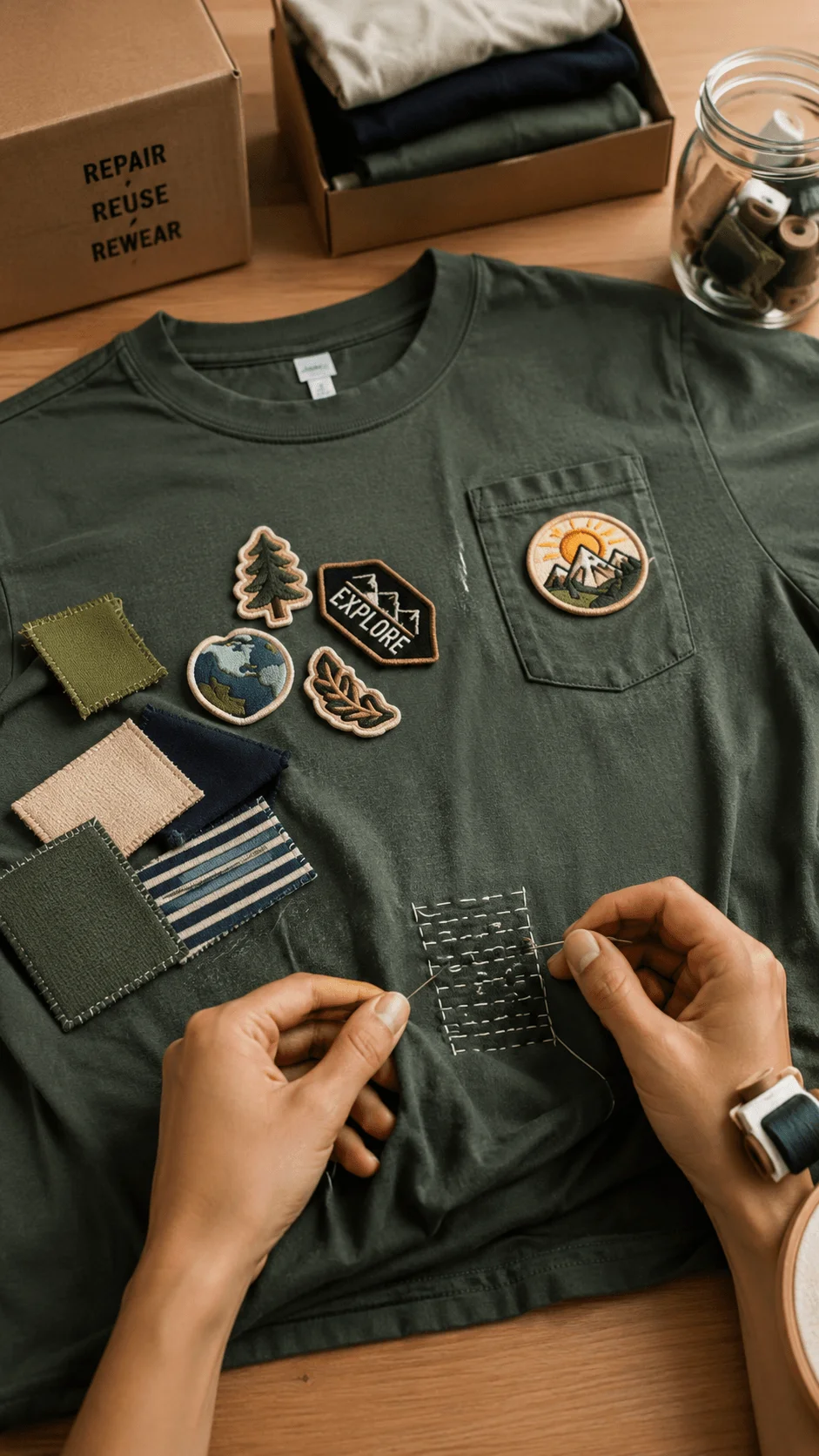
The company should limit unnecessary complexity. A small range of tested customisation choices often works better than unlimited options.
Community Based Micro Niche Collections
A focused niche can perform better than a broad collection filled with generic sustainability slogans. The business may create designs for cyclists, gardeners, hikers, teachers, farmers, wildlife volunteers, science students, or conservation groups.
The founder should study the language, humour, values, events, and visual symbols of the chosen community. Genuine understanding produces stronger artwork and more relevant marketing.

Partnerships with clubs, schools, charities, local creators, and community events can expand reach while giving the collection greater meaning.
Transparent Sourcing and Honest Sustainability
A responsible company should support every major claim with evidence. It can share fibre composition, supplier documents, factory information, packaging details, testing methods, and measurable improvement goals.
The brand should avoid phrases such as completely sustainable, planet safe, and zero impact when it cannot prove them. Honest communication creates stronger trust than exaggerated promises.
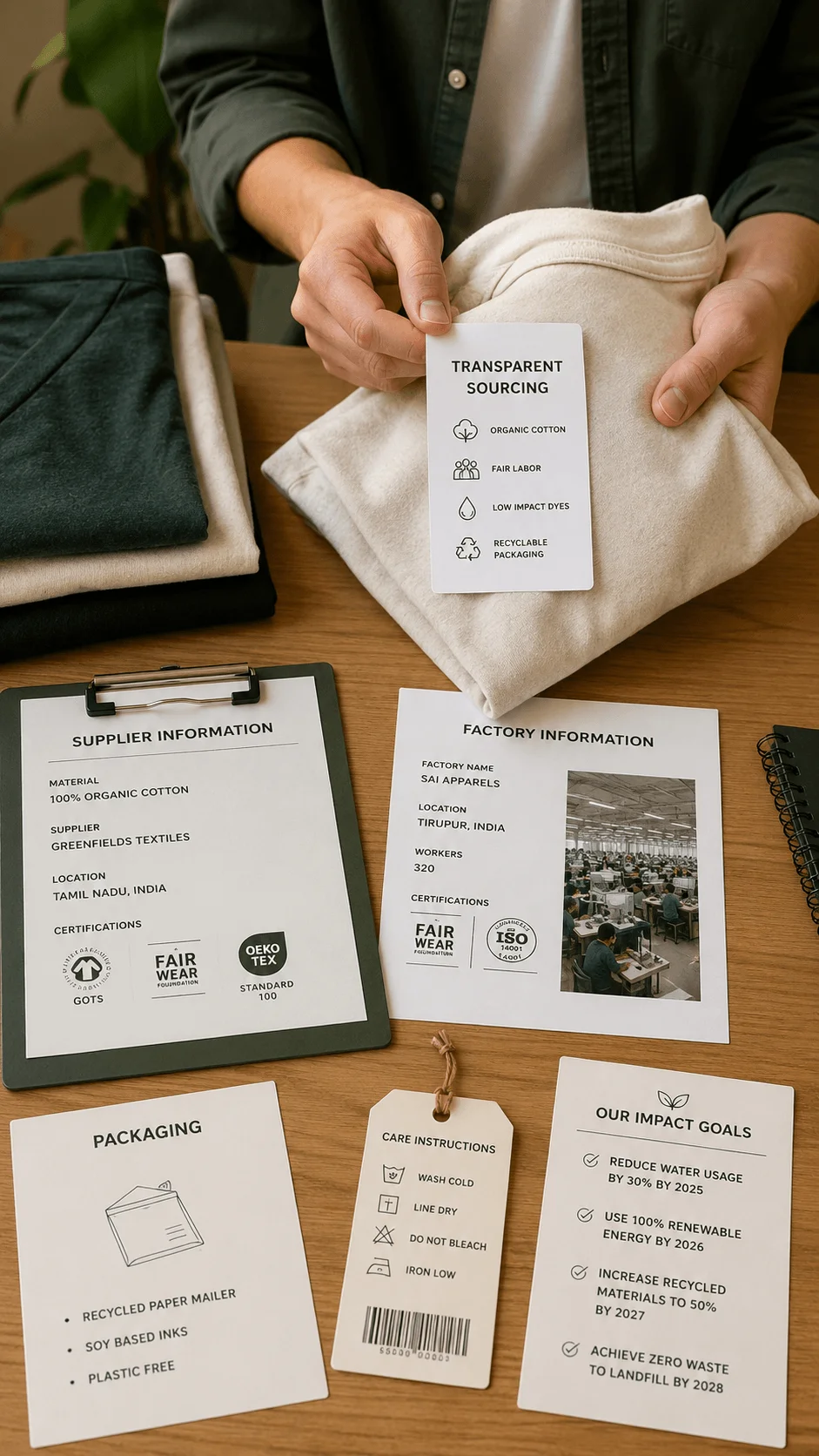
Transparency does not require perfection. A small company can explain what it currently does well, where limitations remain, and how it plans to improve.
Choose Responsible Materials for Your T Shirt Brand
Material selection affects comfort, printing quality, durability, price, and brand credibility. Common options include organic cotton, recycled cotton, regenerative cotton, hemp blends, recycled fibres, and conventional cotton.
Organic cotton may support responsible sourcing, but it can increase costs and limit supplier choices. Recycled cotton reduces demand for new fibre, though suppliers may blend it with other materials to improve strength. Hemp blends can offer durability and texture, while regenerative cotton may support soil focused farming.
The founder should request composition documents, order samples, test washing performance, and confirm printing compatibility. No fabric creates a perfect product by itself. Construction, transport, use, care, and lifespan also shape the final impact.
Select a Sustainable T Shirt Printing Method
An eco friendly T shirt printing business should choose its method according to order quantity, fabric type, artwork detail, colour count, supplier experience, durability, and cost.
Water based screen printing can create a soft finish and suit repeated designs. Direct to garment printing supports detailed artwork and smaller orders. Direct to film printing provides flexibility, while embroidery can offer long lasting decoration at a higher price.
The founder should test every sample through repeated washing. These tests can reveal fading, cracking, stiffness, peeling, or colour changes before customers experience them.
Choose the Right Green T Shirt Business Model
A sustainable T shirt design business plan must explain how the company will produce and fulfil orders. Print on demand, made to order production, preorders, small batches, and traditional inventory offer different benefits.
Print on demand lowers inventory risk but may limit quality and packaging control. Small batches provide better consistency but require more money at the beginning. Preorders confirm customer demand, though buyers may wait longer.
The founder can start with a lower risk model and change the system after collecting reliable sales data. Production should grow in response to proven demand rather than hope.
Calculate Sustainable T Shirt Startup Costs
Sustainable T shirt startup costs include more than blank garments. The founder must consider samples, printing, labels, packaging, website development, domain registration, design tools, photography, advertising, payment fees, shipping, returns, storage, legal registration, and emergency funds.
Costs vary according to location, supplier, order quantity, fabric quality, and production method. The business should calculate the direct cost of each shirt and add a reasonable portion of operating expenses.
Accurate calculations prevent the founder from setting attractive prices that produce no real profit.
Create a Profitable T Shirt Pricing Strategy
The selling price must cover garments, printing, labels, packaging, payment charges, marketing, returns, damaged products, taxes, operating expenses, and profit.
A responsible brand should not compete only through low prices. It can justify a higher price through quality, durability, original artwork, transparent sourcing, accurate sizing, customer service, and repair options.
Competitor prices provide useful context, but they should not control the decision. Small launches and preorder campaigns can help the company test customer response.
Develop a Sustainable T Shirt Marketing Strategy
A sustainable T shirt marketing strategy should explain what makes the product valuable. The business can show fabric selection, sample testing, printing, packaging, artwork development, supplier decisions, and repair services.
Search content, social media, email marketing, creator partnerships, customer photographs, and community events can support growth. Behind the scenes content often earns trust because it shows real actions instead of polished environmental slogans.
The company should also develop an email list. Email gives the brand a direct way to announce launches, care advice, preorders, and community projects without depending completely on social media platforms.
Plan Sustainable T Shirt Packaging and Shipping
Sustainable T shirt packaging ideas should focus on protection, efficiency, and minimal waste. The company may choose recyclable, reusable, compostable, or reduced packaging according to local facilities.
Oversized parcels, unnecessary plastic, excessive printed inserts, and decorative materials increase both cost and waste. Efficient parcel sizes and combined orders can improve fulfilment.
Clear product descriptions, size measurements, fit photographs, and customer support can reduce avoidable returns. Preventing a return may create more value than adding another environmental statement to the package.
Evaluate Ethical T Shirt Suppliers
Ethical T shirt manufacturing for small brands requires careful supplier evaluation. The founder should examine fibre composition, certifications, factory practices, minimum orders, sample quality, printing compatibility, delivery reliability, packaging, communication, and defect rates.
A low price can hide expensive problems such as weak stitching, delayed delivery, inaccurate sizing, or unreliable material information. Samples from several suppliers create a stronger basis for comparison.
The business should test fit, shrinkage, printing, washing, and durability before placing a large order.
Prevent Greenwashing in the Business Plan
Greenwashing occurs when a company makes environmental claims that appear stronger than the available evidence. It can damage trust and create legal, financial, and reputation risks.
The brand should use precise language and clearly explain the basis of each claim. It can publish sourcing information, measurable goals, product care guidance, and honest progress reports.
A sustainable T shirt design business plan should present improvement as an ongoing process. Customers often respect a company that admits limitations and demonstrates practical progress.
Measure Business and Environmental Performance
The founder should track revenue, profit, repeat purchases, customer acquisition, conversion rates, returns, defects, reviews, unsold inventory, repaired garments, returned products, recycled shirts, and packaging reductions.
Financial information shows whether the company can survive and grow. Environmental measures reveal whether responsible practices create meaningful results.
Monthly and quarterly reviews help the business improve products, suppliers, pricing, marketing, and customer service. Data turns sustainability from a promise into a manageable process.
Common Challenges in a Responsible T Shirt Startup
A responsible T shirt company may face expensive materials, limited suppliers, high minimum orders, slow production, inconsistent sizing, shipping costs, customer price concerns, and narrow profit margins.
The founder can reduce these risks through small collections, sample testing, supplier comparison, preorders, clear communication, and accurate financial planning.
The company should grow gradually. A small and reliable collection often creates a stronger foundation than a large launch with weak quality control.
Conclusion
A sustainable T shirt design business plan combines creativity with customer research, responsible sourcing, product durability, ethical manufacturing, financial discipline, honest marketing, and long term improvement. It helps the founder make better decisions before investing heavily in products, branding, or promotion.
The strongest approach begins with a clear niche, a small tested collection, reliable suppliers, accurate cost calculations, and original designs. The company should communicate honestly, avoid unsupported claims, and improve its materials and services as it grows.
A responsible T shirt concept can become a profitable and trusted business when the founder treats sustainability as a complete operating strategy rather than a temporary fashion trend.