Sustainable Building Design Poster Ideas
Sustainability in building design has moved from being a supportive concept to becoming a central expectation in architecture. In 2026, buildings are not only judged by their appearance or functionality but also by their environmental impact, resource efficiency, and long term responsibility. This shift has changed how designers present their ideas, and posters have become one of the most powerful tools to communicate sustainability in a clear and engaging way.
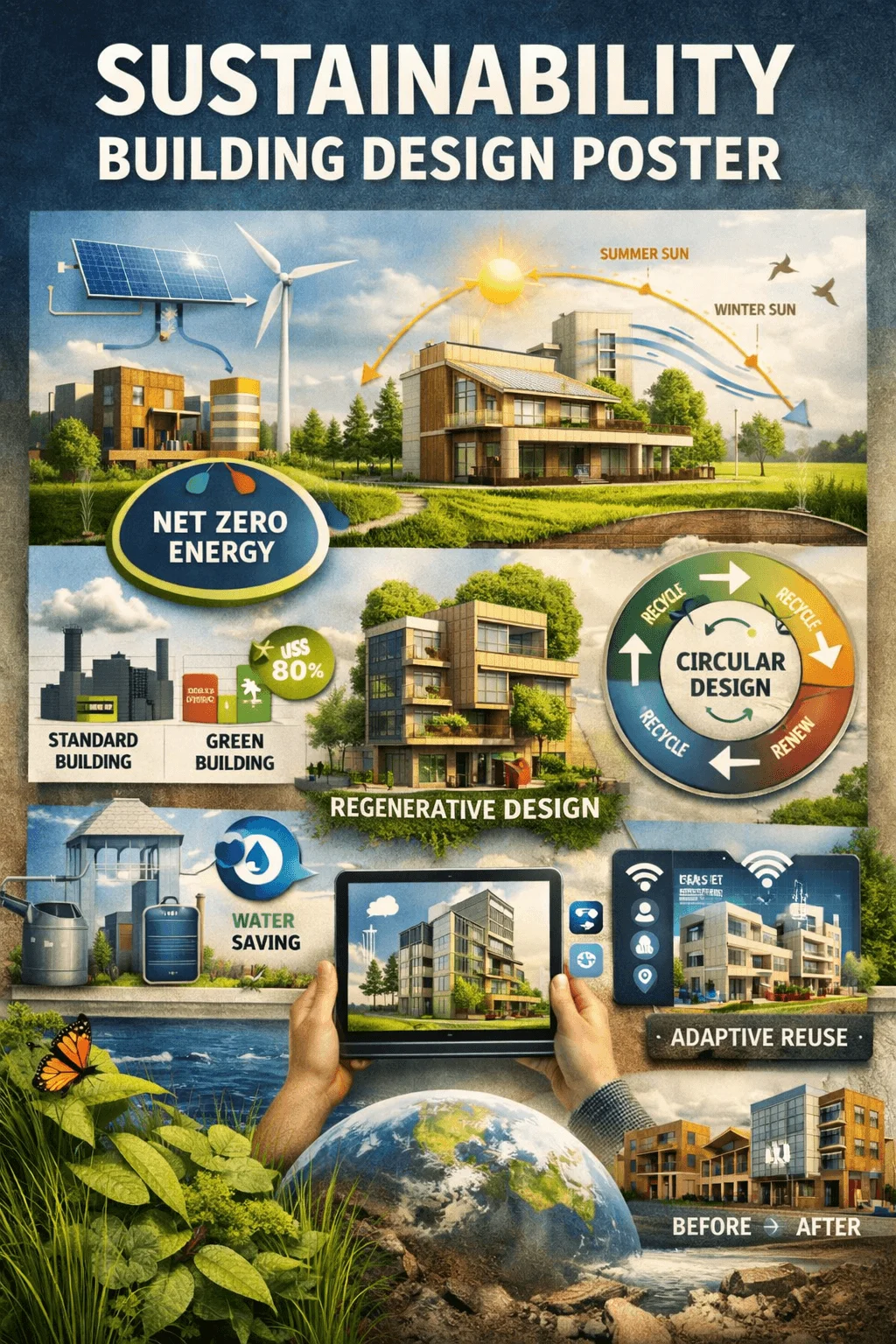
A sustainability poster today is not just a visual summary. It acts as a narrative that explains how a building interacts with energy, water, materials, and people. It simplifies complex systems and transforms technical information into something visually understandable. This makes poster design an essential skill for architects, designers, and content creators who want to present sustainable ideas effectively.
Net Zero Energy Visualization Posters
A net zero energy poster focuses on how a building balances energy consumption with energy production. Instead of presenting this concept in a technical way, the poster transforms it into a visual system that is easy to follow.
The idea works because it turns an abstract concept into a visible flow. Energy can be shown entering the building through renewable sources, being stored, and then being used efficiently. This creates a sense of balance and completeness that is visually satisfying and informative.
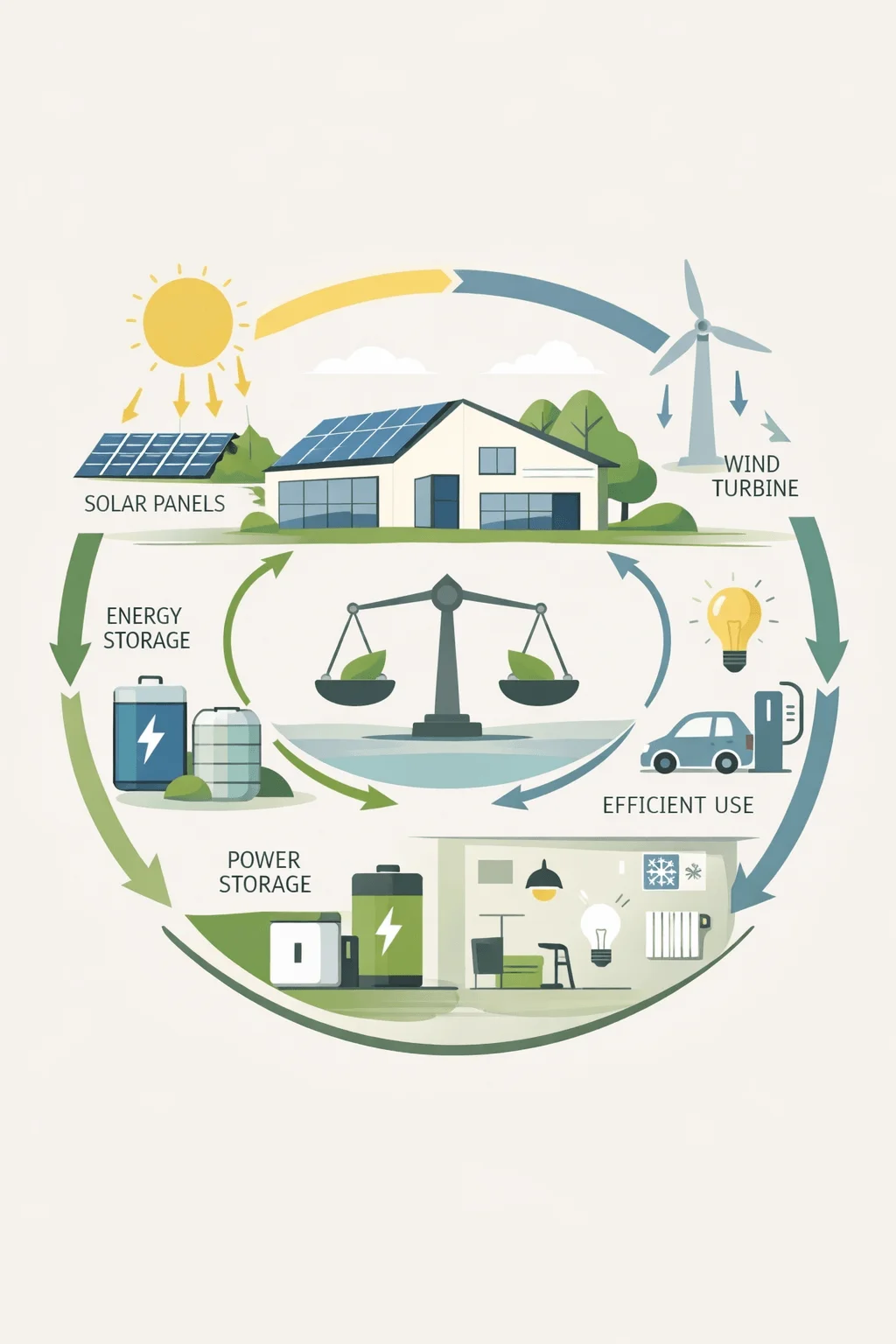
In 2026, this type of poster is trending because net zero design is becoming a standard goal in architecture. Designers are using clean layouts, circular compositions, and minimal color palettes to emphasize efficiency and harmony. The poster becomes a visual proof of how the building sustains itself.
Climate Responsive Design Posters
Climate responsive design posters explain how a building adapts to its environment. Instead of focusing only on the structure, the poster highlights external factors such as sunlight, wind, and temperature.
This idea is powerful because it shows that sustainability begins with understanding the site. The building is not isolated but connected to its surroundings. By visualizing sun paths, airflow, and shading strategies, the poster communicates how design decisions are influenced by natural conditions.
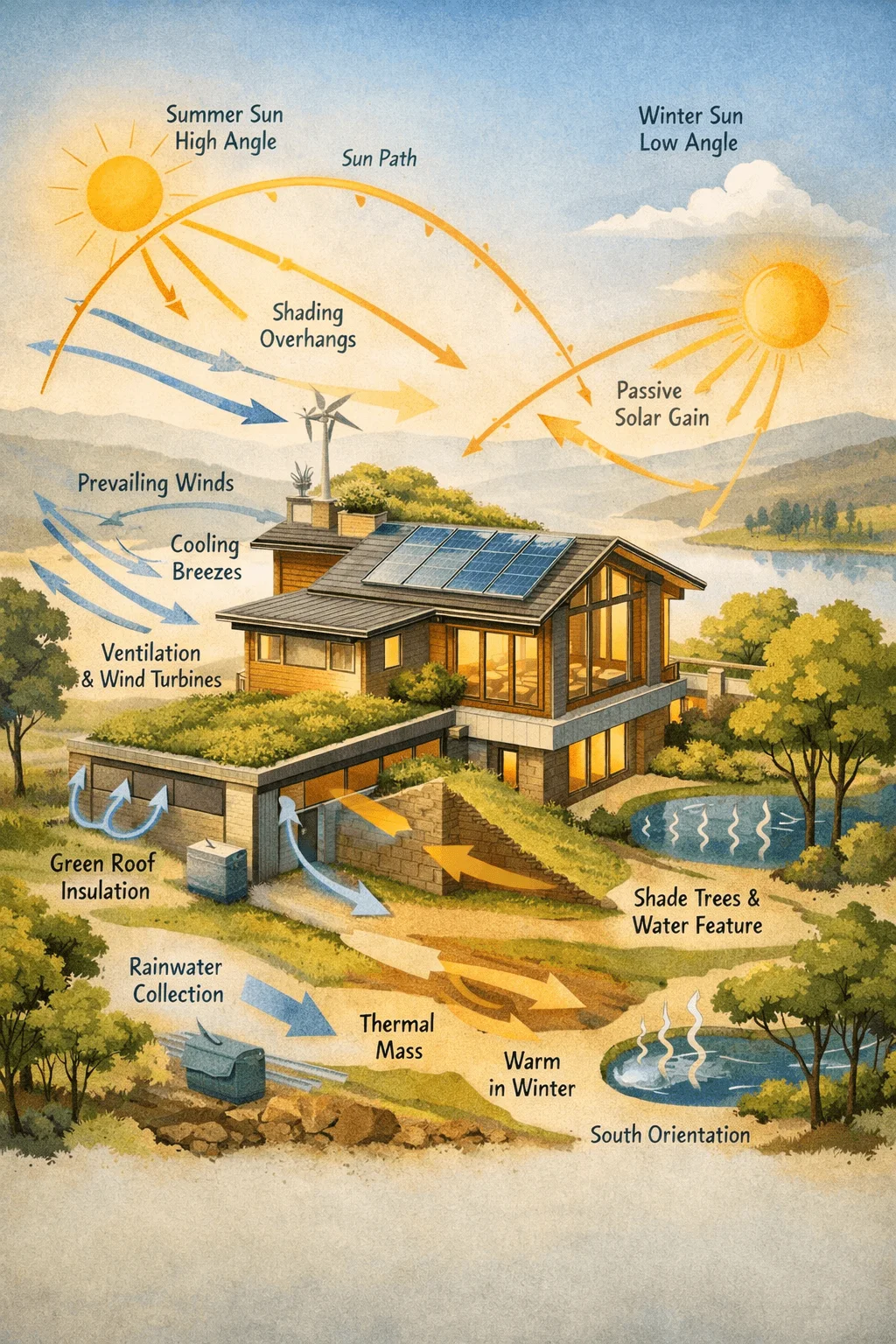
This concept is gaining attention in 2026 because architects are moving toward location specific solutions. The poster becomes a tool that demonstrates intelligence and sensitivity to the environment, making the design feel more thoughtful and grounded.
Carbon Impact Comparison Posters
A carbon impact comparison poster presents two contrasting scenarios. One side represents a conventional building, while the other shows a sustainable alternative. The goal is to highlight the difference in environmental impact.
This idea works because comparison is one of the most effective ways to communicate change. Instead of explaining sustainability in abstract terms, the poster shows clear outcomes. It allows viewers to immediately understand the benefits of sustainable design.
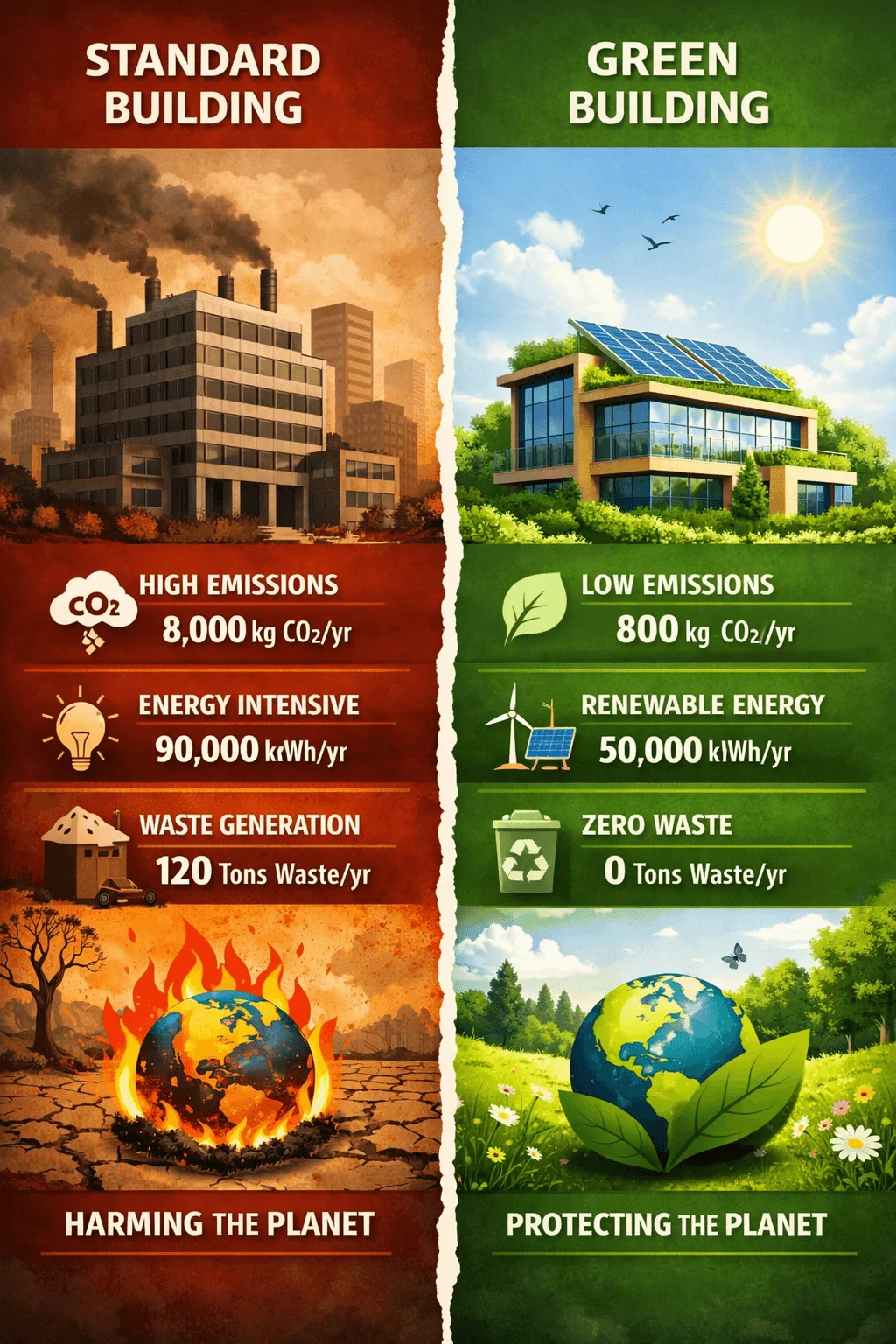
In current design trends, these posters use strong visual contrast to emphasize the difference. Color, layout, and data are used together to create a clear narrative. The viewer does not need to interpret complex information because the message is direct and visual.
Regenerative Architecture Posters
Regenerative architecture goes beyond reducing harm and focuses on creating positive environmental impact. A poster based on this idea shows how a building contributes to ecosystems rather than simply minimizing damage.
This concept is becoming increasingly relevant because sustainability is no longer enough. Designers are now exploring how buildings can restore natural systems, support biodiversity, and improve environmental conditions.
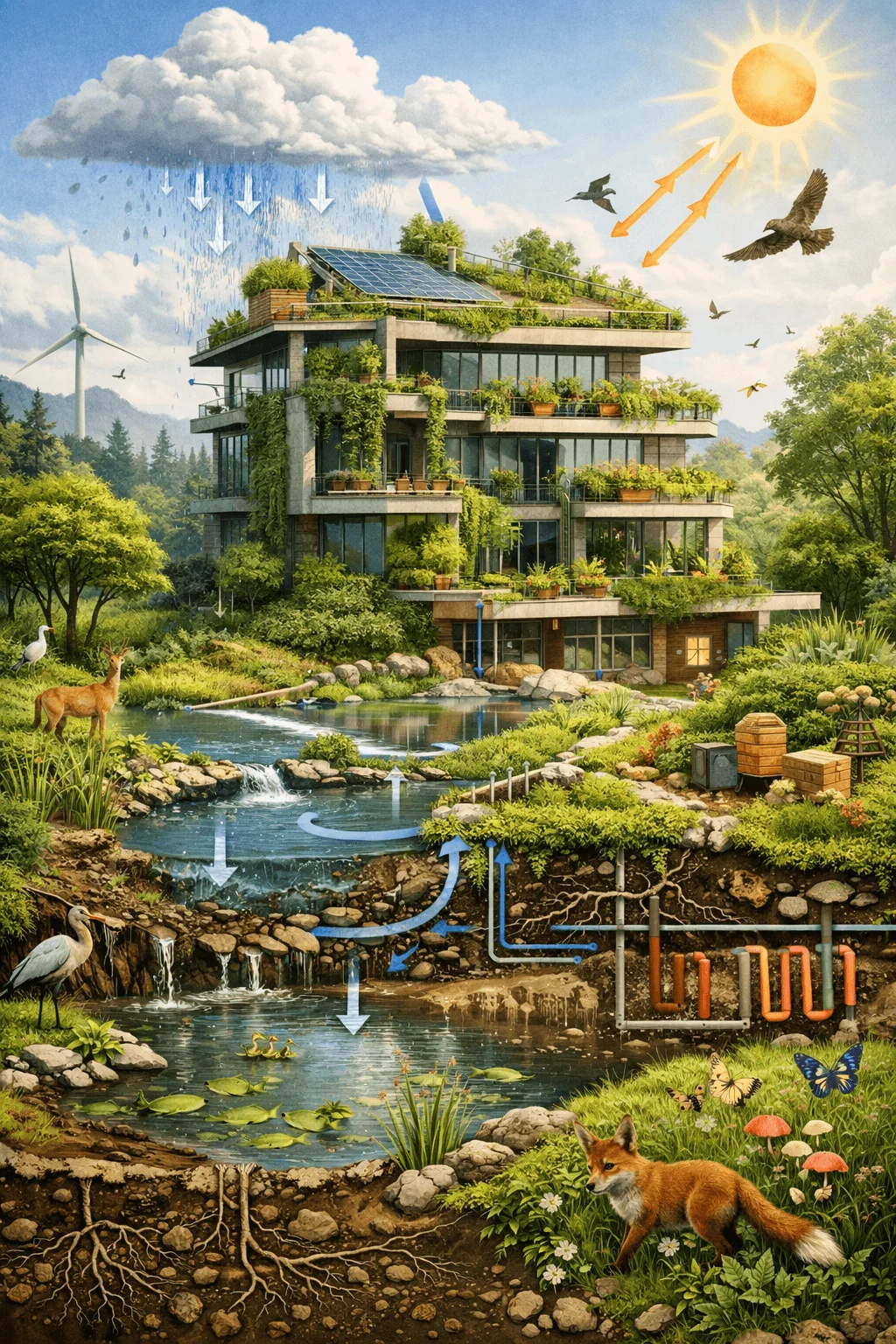
Visually, these posters often include layers of information that connect the building to its surroundings. They may show vegetation, water cycles, and ecological relationships. The poster tells a story of renewal and growth, making it both inspiring and informative.
Smart Building and AI Integration Posters
Smart building posters focus on the role of technology in improving sustainability. They show how systems such as sensors, automation, and artificial intelligence optimize energy use and building performance.
This idea is trending because technology is becoming deeply integrated into architecture. Buildings are no longer static structures but dynamic systems that respond to data in real time.

The visual approach often combines architectural elements with interface inspired graphics. This creates a connection between physical space and digital control. The poster communicates intelligence, efficiency, and innovation, which are key themes in modern sustainable design.
Circular Design Lifecycle Posters
Circular design posters explain how materials move through a continuous cycle rather than a linear process. Instead of being used once and discarded, materials are reused, recycled, and reintegrated.
This idea is important because construction waste is a major environmental issue. By visualizing the lifecycle of materials, the poster highlights how sustainability can be achieved through smarter resource management.
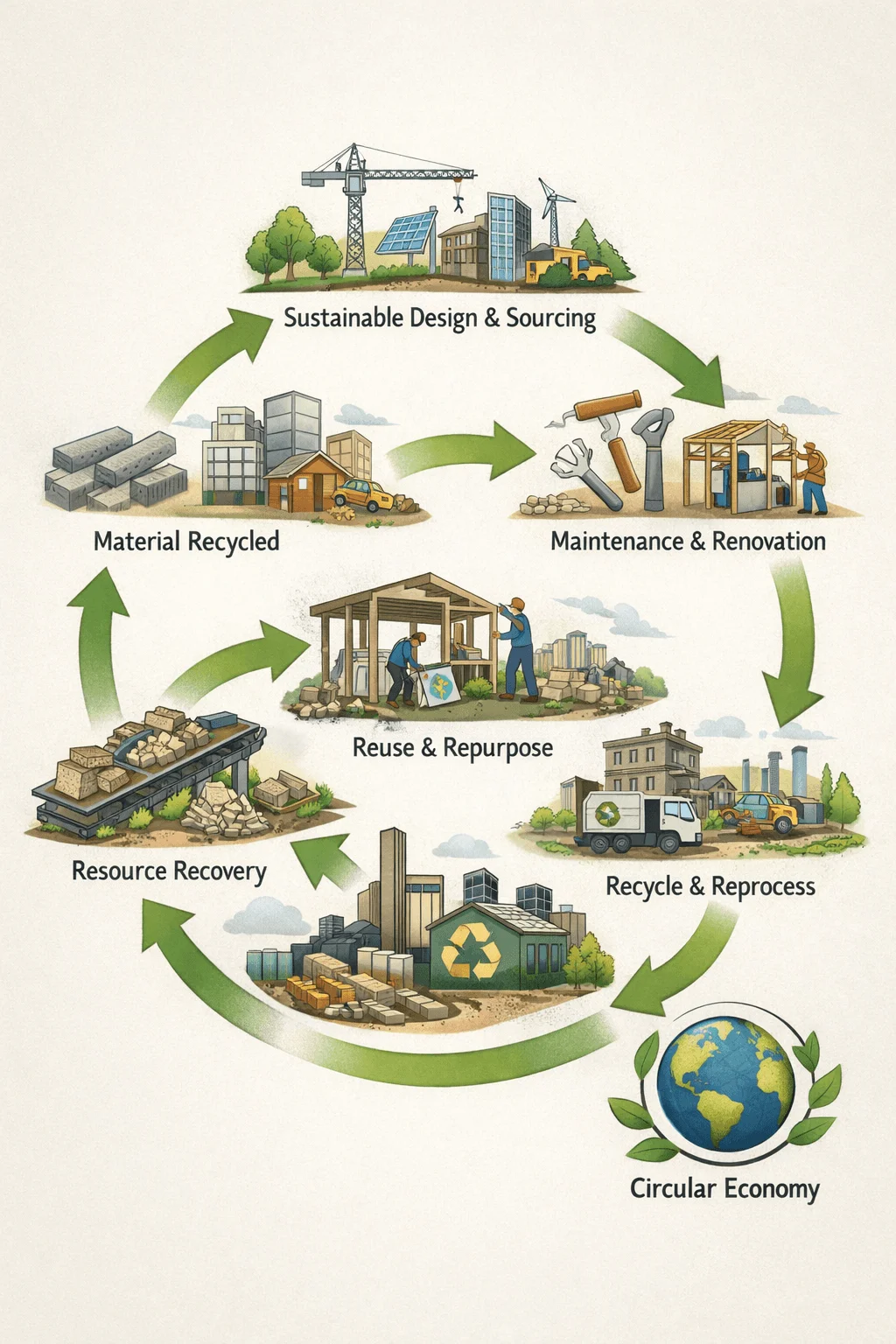
The concept is visually represented through loops and cycles, creating a sense of continuity. This reinforces the idea that nothing is wasted and everything has ongoing value.
Biophilic Design Posters
Biophilic design posters focus on the relationship between humans and nature within built environments. They show how natural elements are integrated into architecture to improve wellbeing.
This idea is gaining popularity because people are increasingly aware of the psychological and physical benefits of nature. Buildings are being designed to create healthier and more comfortable spaces.
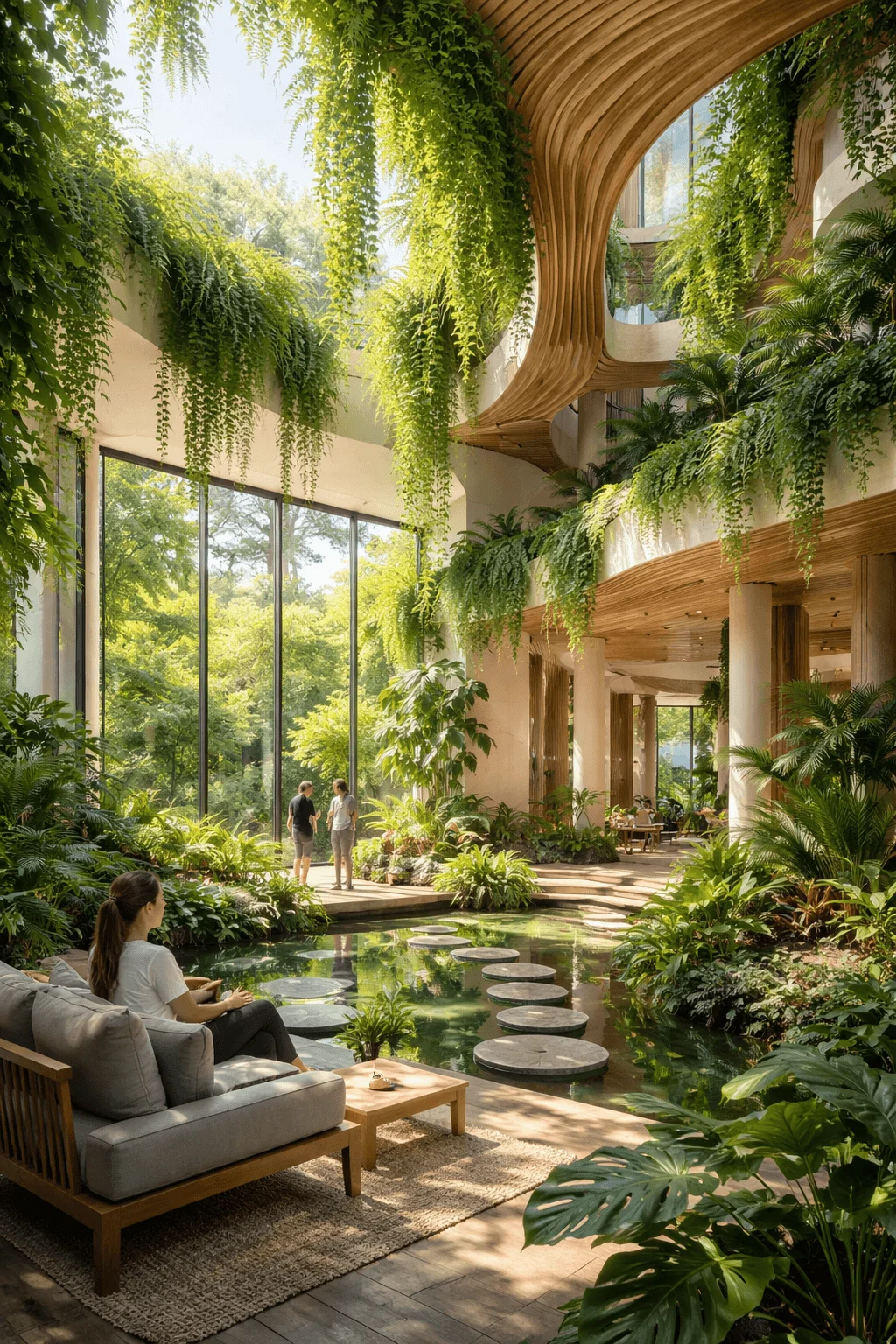
The poster often blends interior and exterior visuals, showing greenery as part of the structure rather than an addition. This creates a sense of harmony and balance, making the design feel more human centered.
Adaptive Reuse Posters
Adaptive reuse posters tell the story of transformation. They show how existing buildings are redesigned and repurposed instead of being demolished.
This concept is important because it reduces waste and preserves cultural value. It also demonstrates that sustainability can be achieved by working with what already exists.
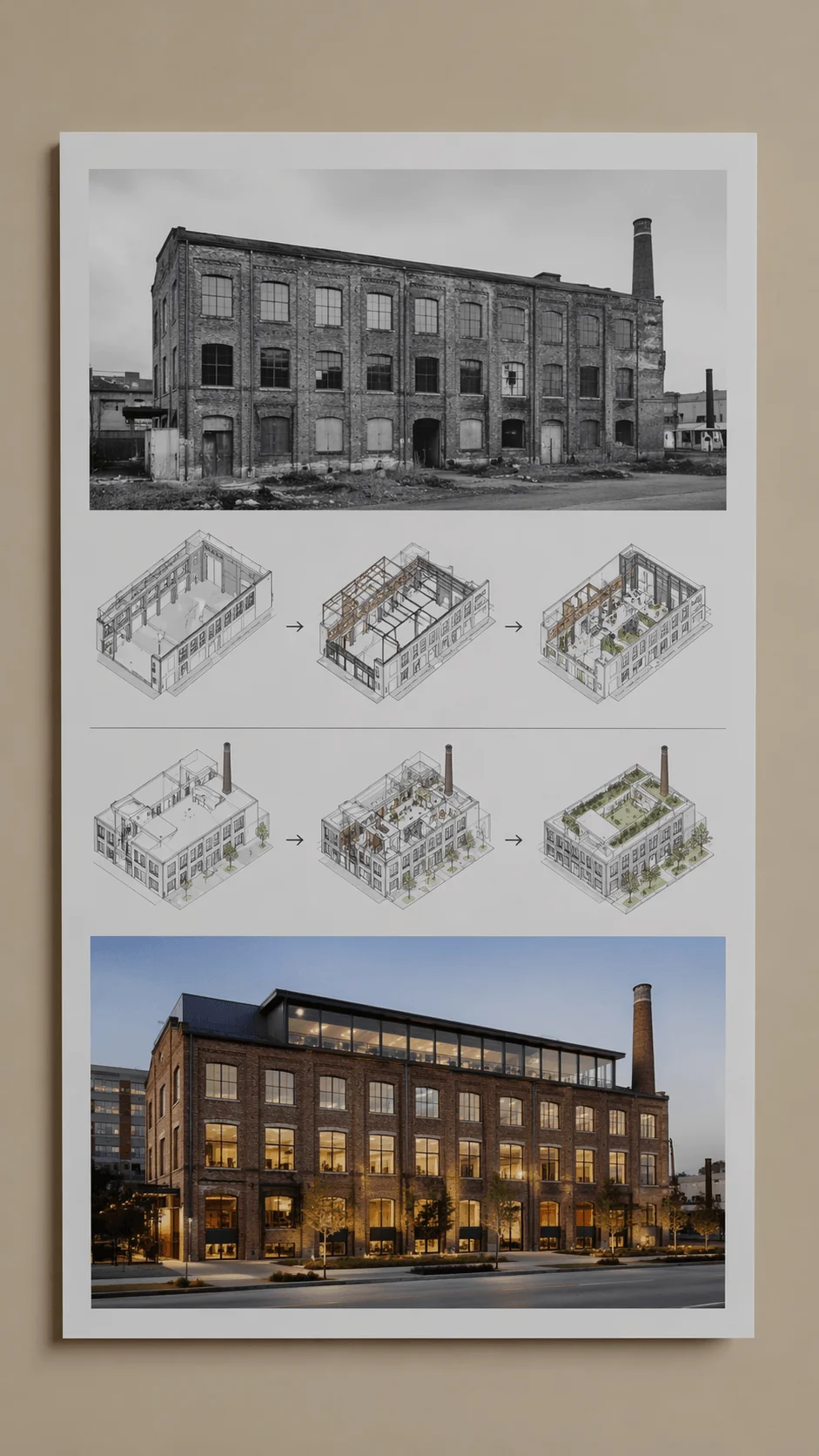
The visual narrative often includes stages of change, allowing viewers to see the evolution of the building. This makes the poster both informative and engaging, as it captures the idea of renewal.
Modular Construction Posters
Modular construction posters explain how buildings are created using prefabricated components. This method reduces waste, improves efficiency, and speeds up construction.
The idea is becoming more relevant as the industry looks for faster and more sustainable building methods. The poster highlights the process, showing how individual modules come together to form a complete structure.
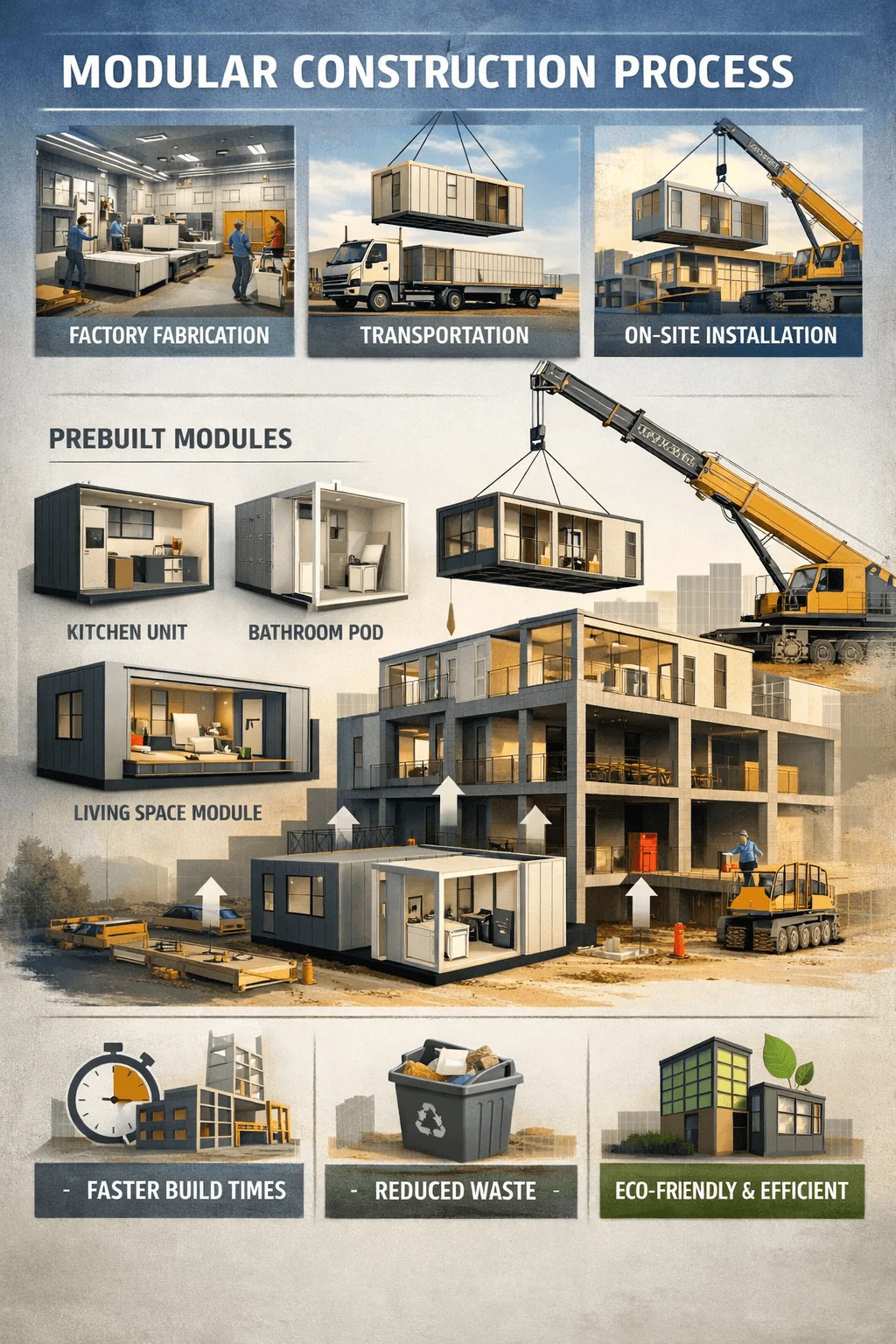
This approach emphasizes precision and efficiency, making the design feel modern and practical.
Sustainable Material Posters
Sustainable material posters focus on the physical components of a building. They highlight materials that are environmentally friendly and responsibly sourced.
This idea is significant because materials have a direct impact on sustainability. By showcasing them visually, the poster makes this impact more tangible.

The design often uses textures and close up visuals to create a strong sensory connection. This helps viewers understand the quality and uniqueness of each material.
Water Efficiency Posters
Water efficiency posters explain how buildings manage and conserve water. They show systems such as rainwater collection and reuse processes.
This concept is increasingly important due to global water challenges. The poster communicates how design can address these issues in practical ways.
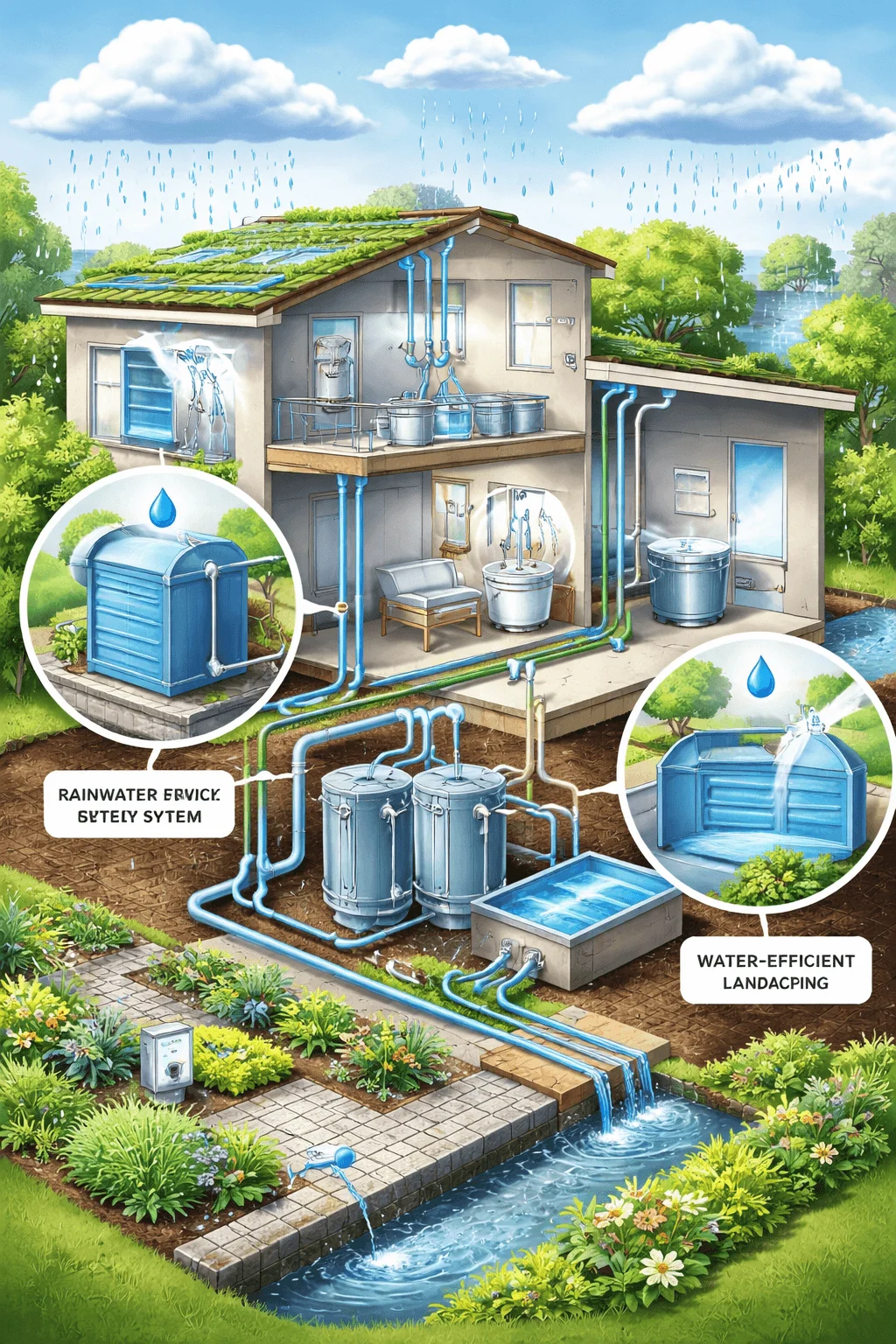
The visual approach focuses on flow and movement, making water systems easy to understand and visually engaging.
Indoor Environmental Quality Posters
These posters focus on the internal experience of a building. They highlight factors such as air quality, lighting, and thermal comfort.
This idea reflects a shift toward human centered design. Sustainability is not only about the environment but also about the people who use the space.
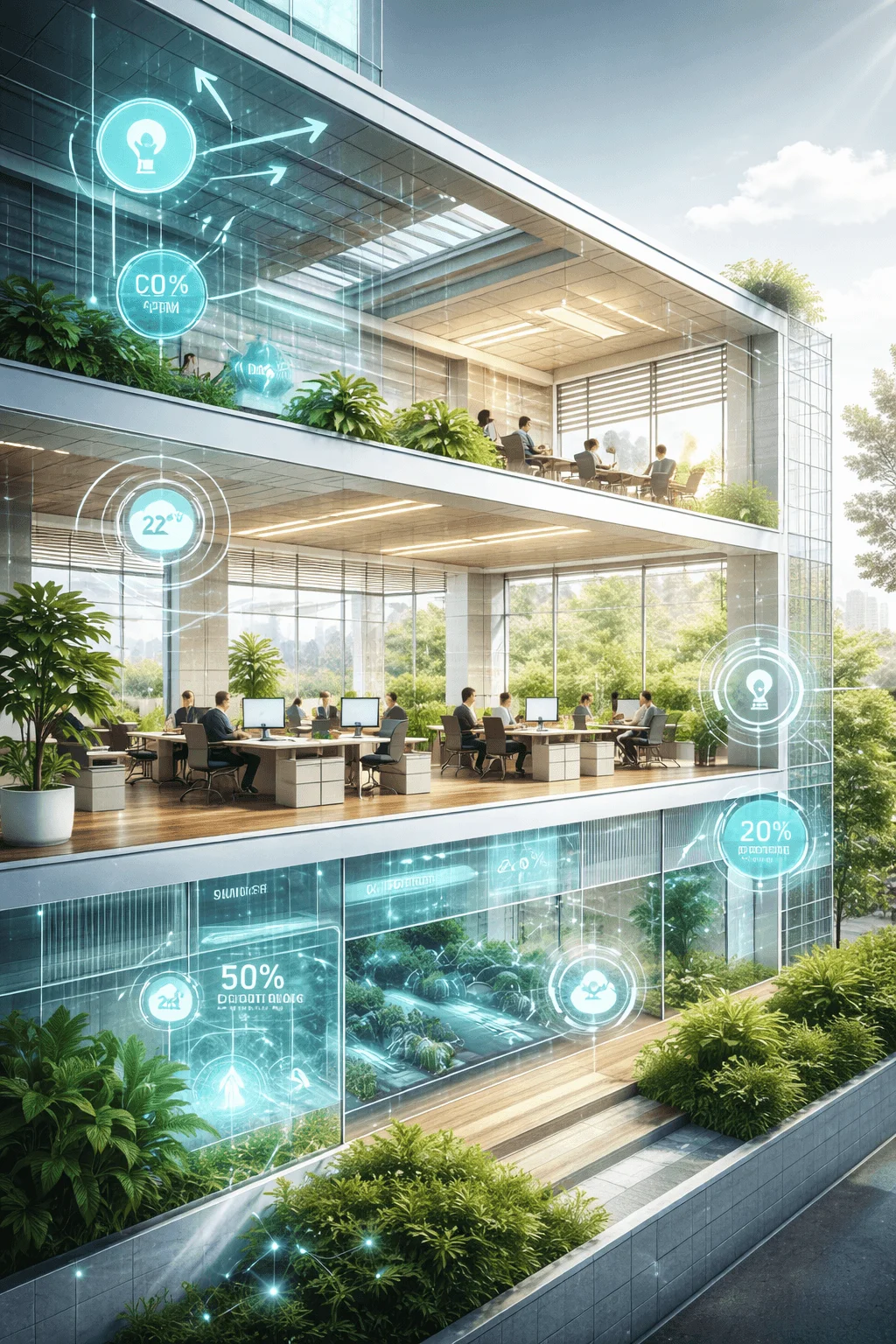
The poster often uses sectional views to show how different elements contribute to comfort and health.
Data Driven Sustainability Posters
Data driven posters place measurable results at the center of the design. Instead of hiding information in text, they present it visually and prominently.
This idea is powerful because it builds trust. It shows that sustainability claims are supported by real data.
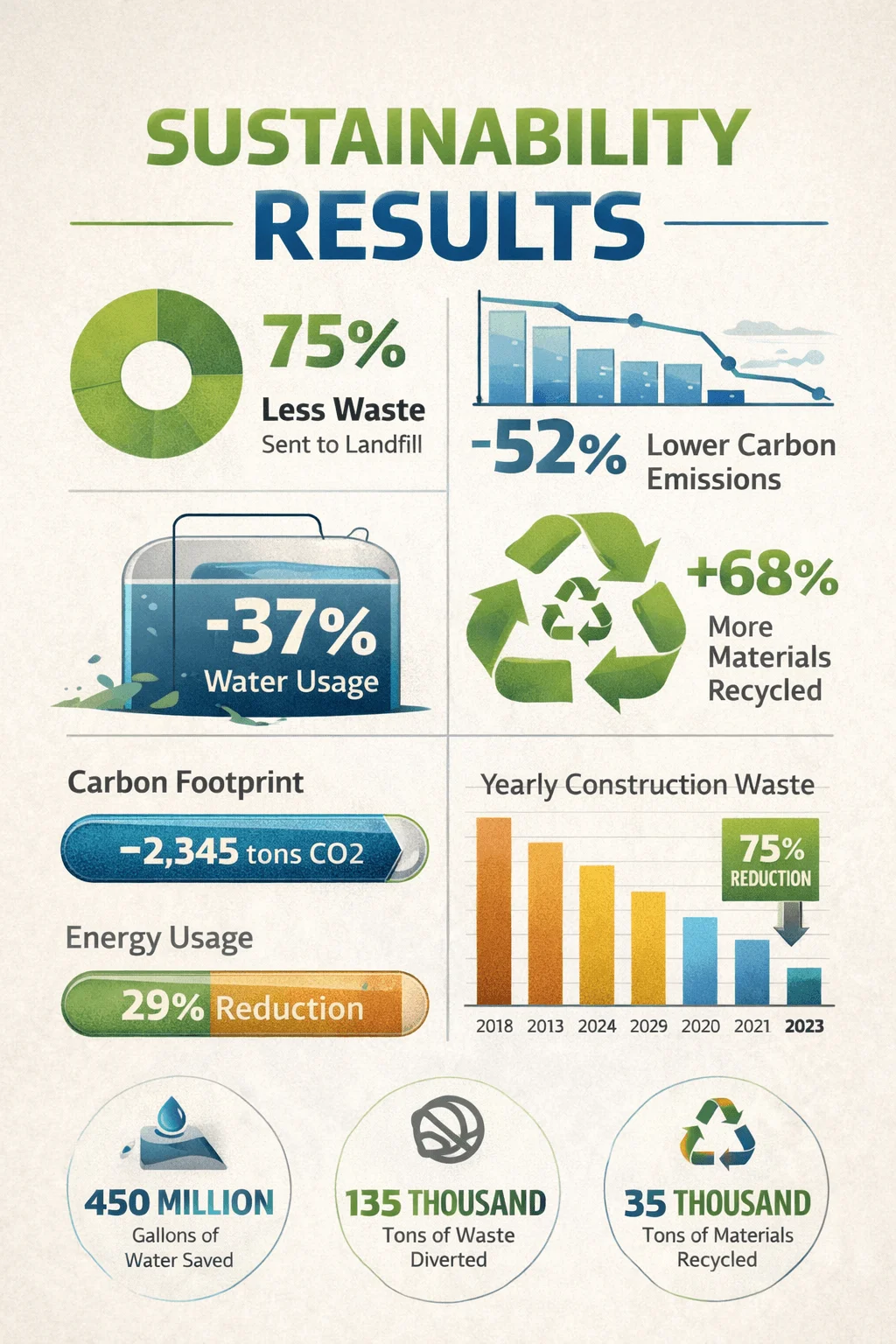
The design focuses on clarity and impact, using typography and layout to make information easy to read and understand.
Digital Twin and Simulation Posters
Digital twin posters show the relationship between a virtual model and a real building. They explain how simulations are used to predict and improve performance.
This concept is growing as technology becomes more advanced. It allows designers to test and refine ideas before construction.
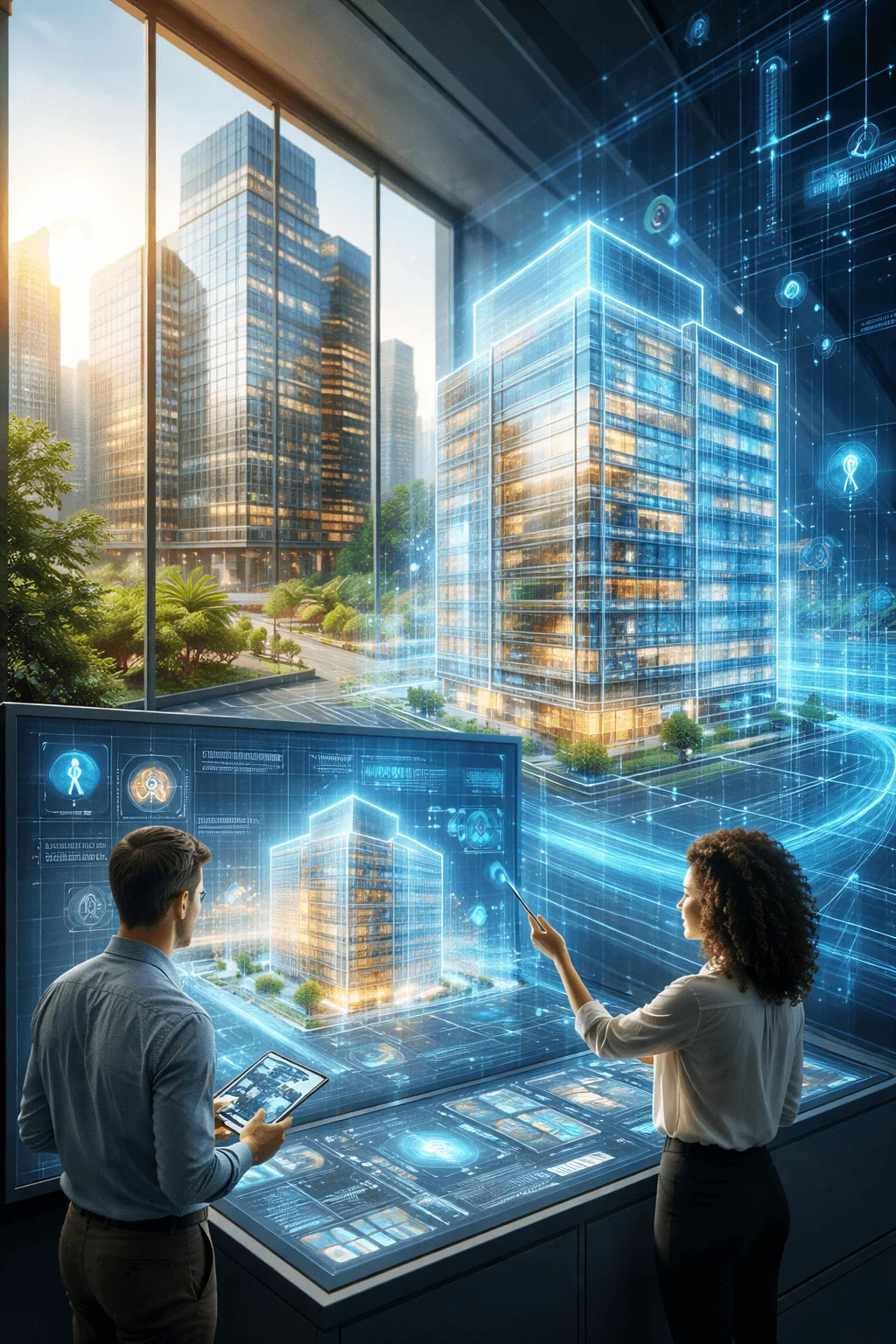
The poster creates a connection between imagination and reality, showing how data informs design decisions.
Minimal Concept Posters
Minimal concept posters focus on one strong idea. They remove unnecessary elements and present a clear, direct message.
This approach is effective because it reduces distraction and increases impact. In a world filled with information, simplicity stands out.

The design relies on strong composition and thoughtful use of space, allowing the message to take center stage.
Conclusion
Sustainability building design posters have evolved into powerful storytelling tools that combine design, data, and purpose. They are no longer limited to decorative visuals but have become essential for explaining how buildings function and why they matter.
The most effective posters in 2026 are those that communicate clearly, present meaningful information, and create a strong visual impact. By focusing on modern ideas such as net zero systems, circular design, and data driven storytelling, designers can create work that is both visually compelling and intellectually valuable.
As sustainability continues to shape the future of architecture, the ability to communicate these ideas through thoughtful poster design will become even more important.