Sustainable Development Goals Activities
Sustainable Development Goals Activities are becoming an essential part of modern education because they help students connect classroom learning with real world challenges. Instead of simply reading about environmental protection, equality, health, or responsible consumption, students actively explore these topics through meaningful experiences. These hands on learning opportunities encourage curiosity, creativity, teamwork, and problem solving while helping young people understand how their everyday choices can contribute to a more sustainable future. As schools and communities place greater emphasis on sustainability education, engaging activities have become one of the most effective ways to inspire positive action.
The United Nations introduced the 17 Sustainable Development Goals to address some of the world’s biggest challenges, including poverty, climate change, clean energy, quality education, and responsible resource management. While these goals may seem ambitious, students can begin making a difference through simple classroom and community projects. Well planned activities transform complex global issues into practical lessons that are enjoyable, memorable, and relevant to daily life. Whether students are planting gardens, reducing waste, designing innovative solutions, or exploring their local communities, every activity helps them build valuable skills while understanding the importance of protecting people and the planet.
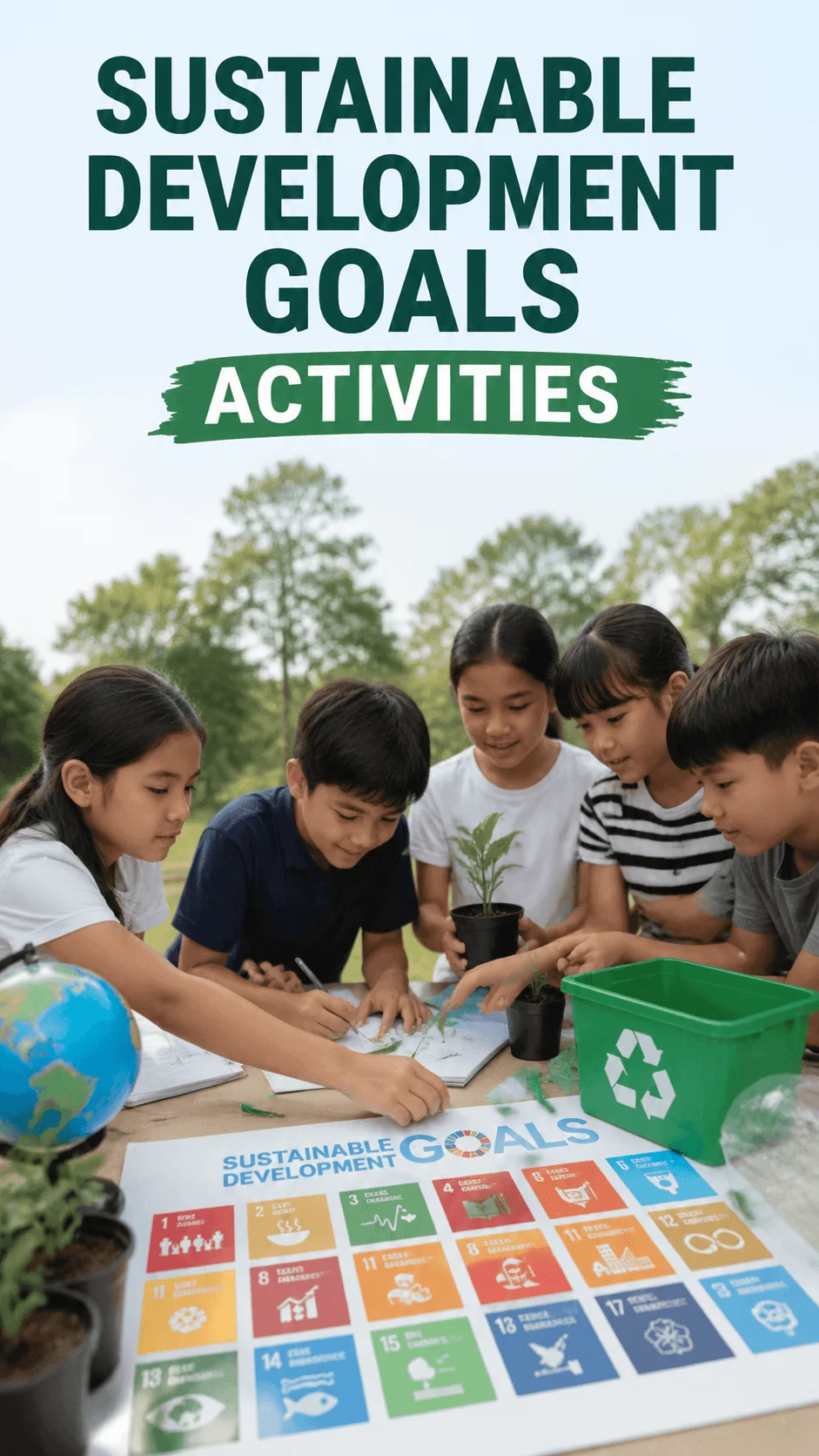
This guide explores some of the most creative and practical Sustainable Development Goals Activities that teachers, parents, and community leaders can use to inspire learners of all ages. Each idea goes beyond traditional classroom exercises by encouraging critical thinking, collaboration, and real world problem solving.
Why Sustainable Development Goals Activities Matter
The Sustainable Development Goals represent a shared vision for creating a healthier, fairer, and more environmentally responsible world. These goals cover many important topics, including quality education, clean water, affordable energy, climate action, sustainable cities, and protecting life on land and below water. Although these subjects are often introduced through textbooks, students develop a much deeper understanding when they actively participate in meaningful experiences.
Learning through activities allows students to connect facts with real situations. Instead of memorising information for an examination, they explore challenges, ask thoughtful questions, test ideas, and reflect on possible solutions. This approach improves long term understanding while making lessons far more enjoyable and memorable.
Another important benefit is that sustainability education develops skills that extend beyond environmental awareness. Students strengthen communication, leadership, creativity, teamwork, research abilities, and decision making. These skills remain valuable throughout higher education and future careers regardless of the profession they eventually choose.
Many schools also recognise that sustainability should not remain limited to science lessons. The Sustainable Development Goals can be connected with geography, mathematics, technology, language arts, business studies, and even creative subjects such as art and design. This interdisciplinary approach helps students understand that sustainability affects every aspect of modern society.
Perhaps the greatest strength of Sustainable Development Goals Activities is their ability to inspire action. When students see that even small efforts can create positive change, they begin developing lifelong habits that support healthier communities and a more sustainable future.
How to Plan Effective Sustainability Activities for Students
Planning successful sustainability activities requires more than selecting an interesting project. Teachers and parents should first consider the age, abilities, interests, and learning objectives of the students. Younger children often respond well to creative games, storytelling, and simple experiments, while older students usually enjoy research projects, debates, design challenges, and community based initiatives.
Activities should also connect with real issues that students experience in their own lives. A lesson about reducing plastic waste becomes much more meaningful when students examine the amount of disposable packaging used in their school cafeteria. Likewise, learning about biodiversity becomes more engaging when students observe local plants, insects, and birds instead of only viewing photographs in a textbook.
Encouraging teamwork creates another valuable learning opportunity. Working in small groups teaches students how to share responsibilities, respect different viewpoints, solve disagreements, and combine their strengths to achieve common goals. These collaborative experiences closely reflect how environmental projects operate in professional settings.
Reflection is equally important. After completing each activity, students should discuss what they discovered, the challenges they faced, and how their new knowledge could influence future decisions. Reflection transforms an enjoyable classroom exercise into a meaningful educational experience.
Technology can further enhance sustainability education. Digital mapping tools, online research platforms, collaborative documents, educational videos, and creative design software allow students to investigate global challenges while developing valuable digital skills. However, technology should support learning rather than replace meaningful discussion and practical experiences.
Finally, educators should celebrate progress instead of perfection. Sustainability is an ongoing journey, and students gain confidence when their efforts receive recognition. Displaying projects, organising exhibitions, or sharing achievements with families encourages continued participation and strengthens the connection between classroom learning and community action.
Creative Sustainable Development Goals Activities for Every Classroom
AI Sustainability Challenge
Artificial intelligence is rapidly becoming part of everyday life, making it an exciting topic to include in Sustainable Development Goals Activities. Rather than viewing AI as a replacement for human creativity, students can learn how technology supports better decision making while solving environmental and social problems. This activity encourages learners to explore practical solutions for issues affecting their own school or community using responsible and ethical AI tools.
Students begin by identifying a local sustainability challenge such as reducing food waste, improving recycling habits, conserving water, or encouraging greener transportation. They then use AI platforms to generate ideas, compare different solutions, and evaluate which suggestions are realistic. Throughout the process, teachers can guide discussions about verifying information, recognising bias, and using technology responsibly.
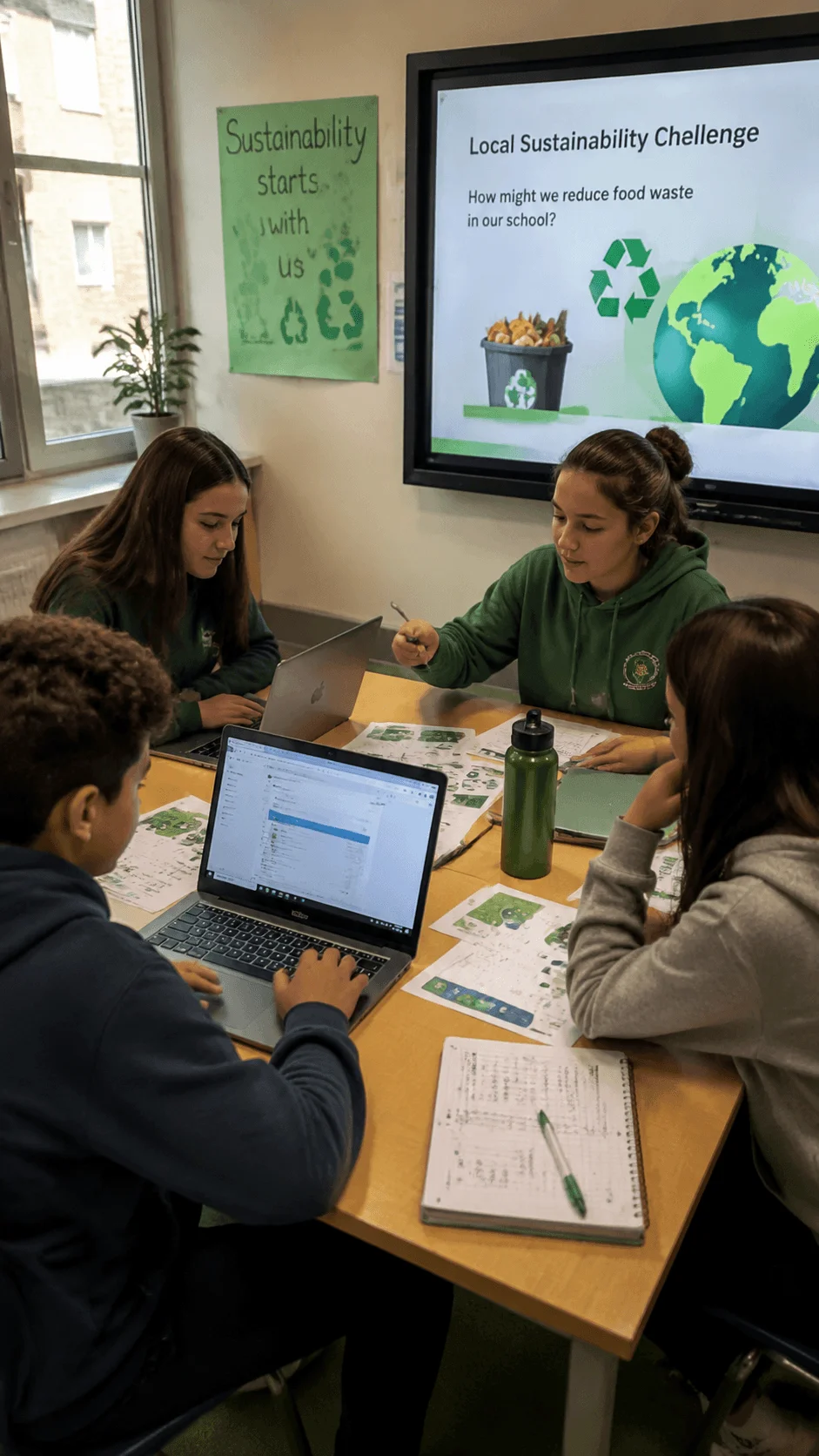
The greatest value of this activity lies in helping students understand that technology becomes most powerful when combined with human creativity and critical thinking. Instead of accepting every AI generated response, learners analyse recommendations, discuss possible improvements, and adapt ideas to suit local circumstances. This develops research skills while encouraging thoughtful decision making.
Older students can expand the project by presenting detailed sustainability proposals supported by data, while younger learners might create colourful posters or simple presentations based on the ideas they discover. By combining digital literacy with environmental awareness, this activity prepares students for a future where technology and sustainability increasingly work together.
Personal Carbon Footprint Audit
Understanding personal responsibility is one of the most effective ways to introduce sustainability education. A carbon footprint audit allows students to examine how everyday choices influence greenhouse gas emissions and environmental health. Rather than creating feelings of guilt, the activity encourages thoughtful reflection and practical improvements that anyone can achieve.
Students record daily habits related to transportation, electricity use, food choices, shopping, and waste disposal. Using age appropriate carbon calculators or simple estimation methods, they identify which activities produce the greatest environmental impact. The results often surprise students because many discover that small lifestyle decisions can create significant long term effects.
Once the assessment is complete, learners develop realistic goals for reducing their own carbon footprint. Some may choose to walk or cycle more frequently, reduce food waste, switch off unnecessary lights, or use reusable water bottles instead of disposable plastics. Teachers can encourage students to monitor their progress over several weeks and discuss the challenges they encounter.
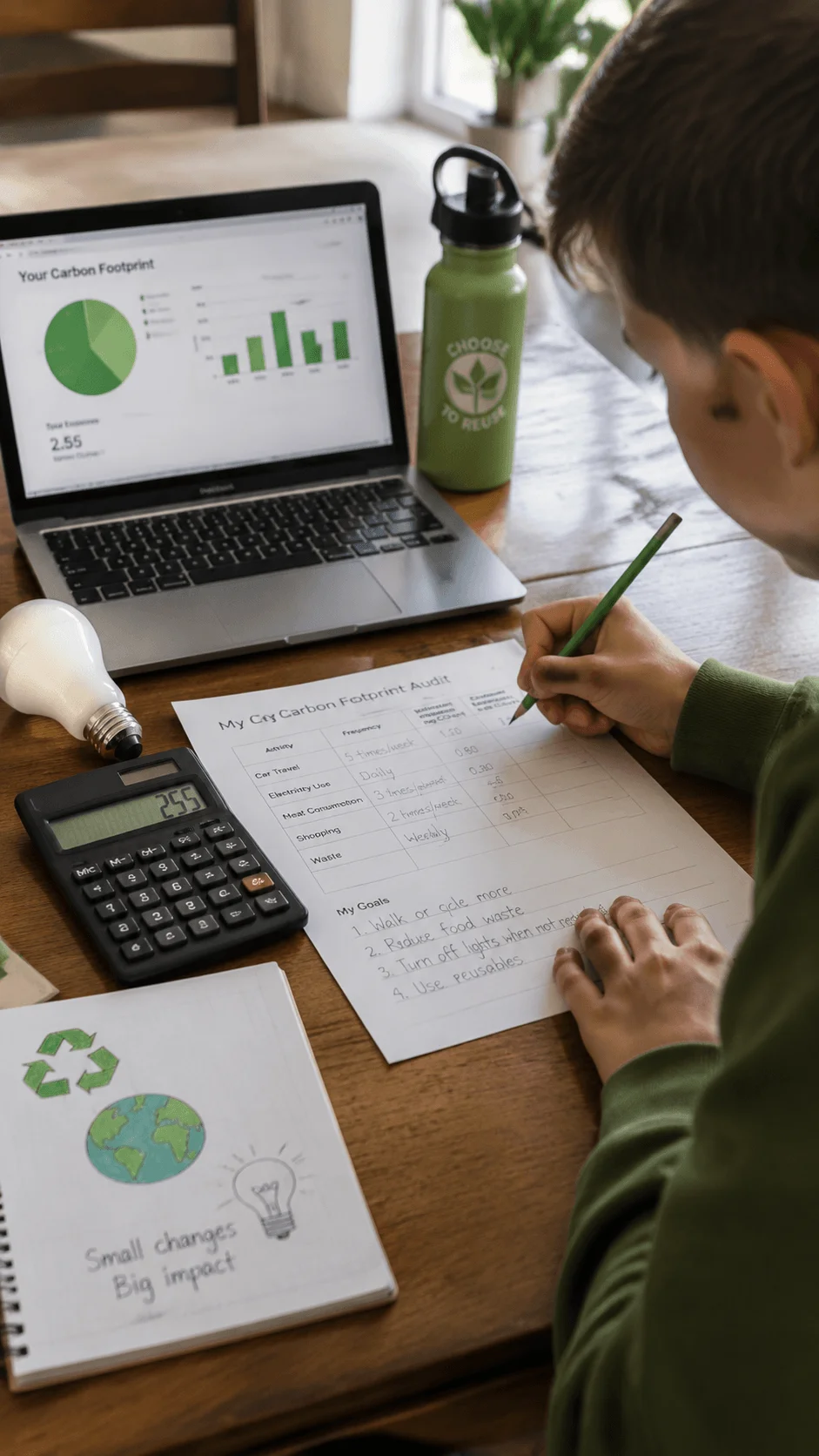
The educational value extends beyond environmental awareness. Students strengthen data collection, analysis, reflection, and goal setting skills while recognising that meaningful change begins with individual actions. Families often become involved as students share what they have learned at home, creating positive changes that extend beyond the classroom.
Zero Waste Lunch Week
Food packaging represents a major source of waste in many schools, making this one of the most practical sustainability activities for students. Instead of simply discussing recycling, learners investigate the amount of rubbish generated during lunchtime and work together to reduce unnecessary waste through simple behavioural changes.
At the beginning of the project, students observe and record the types of waste produced each day. They may notice disposable drink containers, plastic wrappers, food leftovers, paper packaging, and single use utensils filling rubbish bins. These observations provide valuable information for class discussions about consumption habits and responsible choices.
During the following week, students experiment with practical alternatives such as reusable lunch boxes, refillable water bottles, cloth napkins, and carefully planned meals that reduce leftovers. Teachers can encourage friendly classroom challenges by comparing overall waste reduction while emphasising cooperation rather than competition.
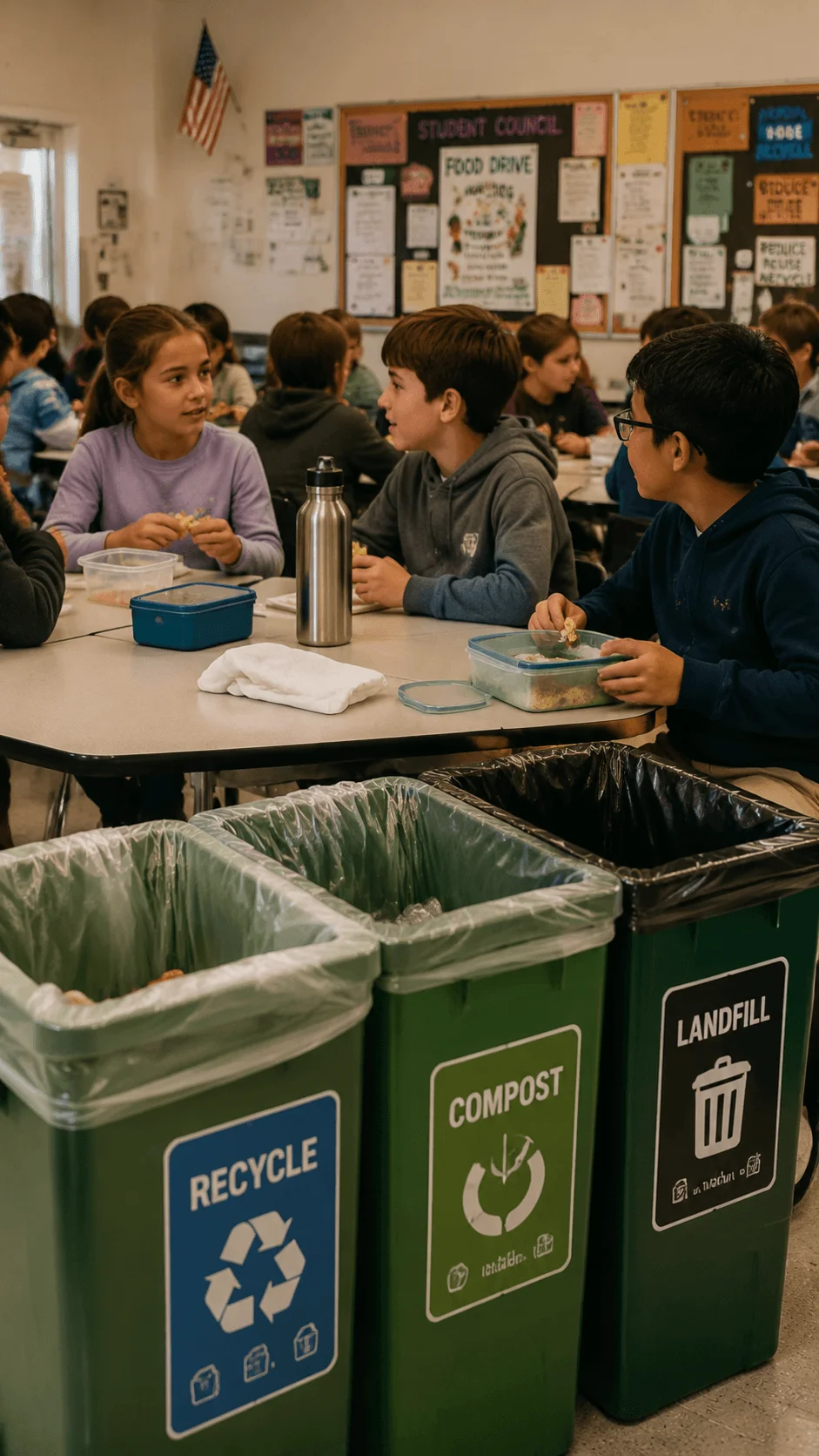
The activity also opens conversations about food production, packaging design, recycling systems, and responsible consumption. Students begin understanding that waste management involves far more than placing items into recycling bins. Preventing waste before it is created often has a much greater environmental benefit.
Many schools continue this initiative long after the project ends because students become enthusiastic advocates for sustainable habits. Parents frequently notice positive changes at home as children encourage family members to adopt similar practices.
Circular Economy Design Challenge
Traditional manufacturing often follows a simple pattern where products are created, used, and eventually discarded. The circular economy introduces a different approach by encouraging materials to remain useful for as long as possible through repairing, reusing, recycling, and redesigning products. This makes it one of the most valuable sustainable development project ideas for encouraging creativity and innovation.
Students begin by selecting an everyday object that people commonly throw away, such as plastic bottles, cardboard boxes, worn clothing, or damaged household items. Instead of viewing these materials as rubbish, they explore new ways to transform them into useful products with extended lifespans.
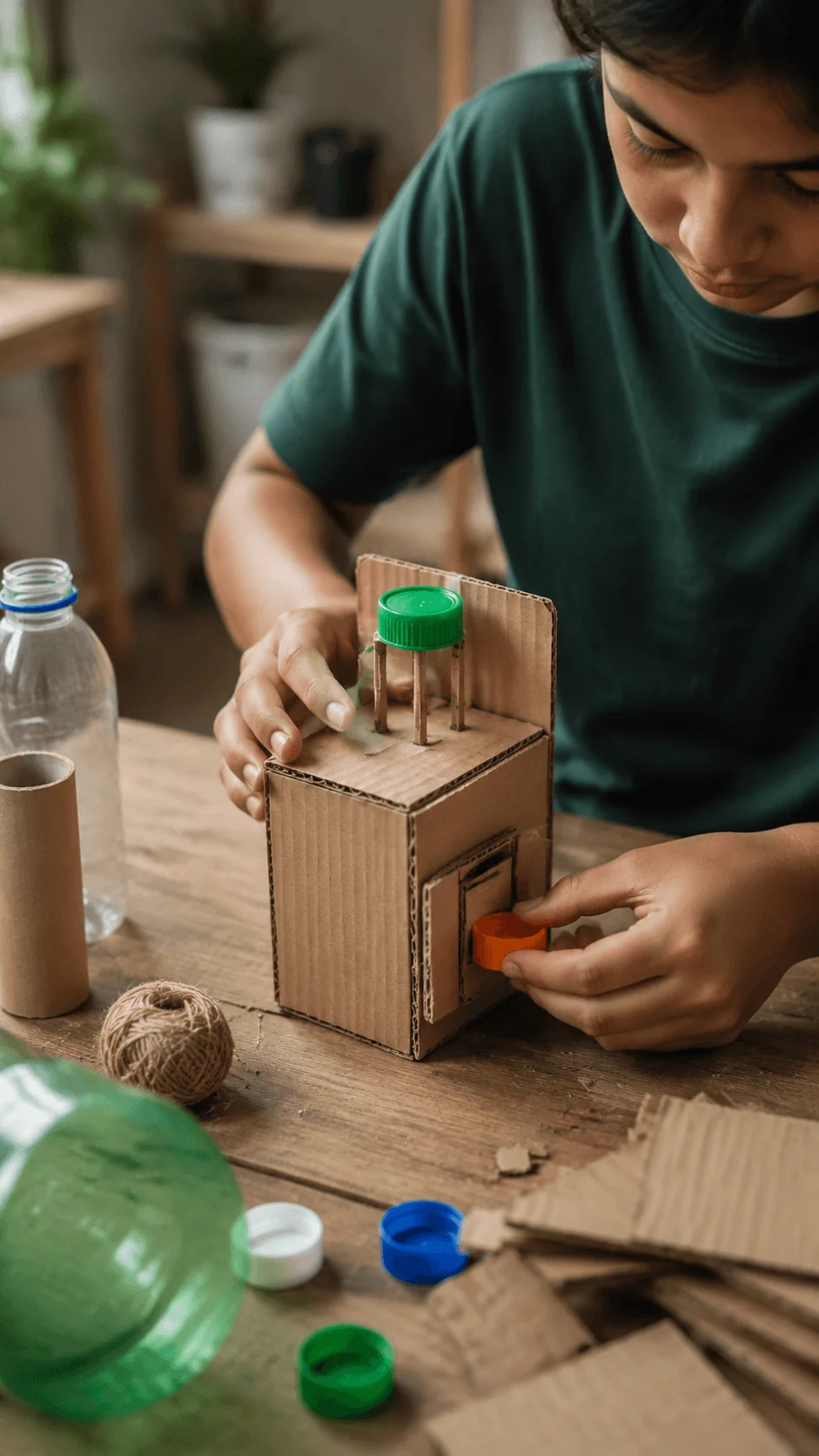
As they develop their designs, learners consider durability, functionality, appearance, and environmental impact. Teachers can encourage discussions about how companies increasingly adopt circular economy principles to reduce waste and conserve valuable resources.
This activity develops creativity alongside practical problem solving because students must balance environmental responsibility with realistic product design. Older learners may even research businesses successfully applying circular economy practices and compare different approaches used across industries.
The challenge helps students recognise that innovation does not always require expensive materials or advanced technology. Sometimes the most effective solutions emerge from rethinking resources that already exist.
Community Sustainability Mapping
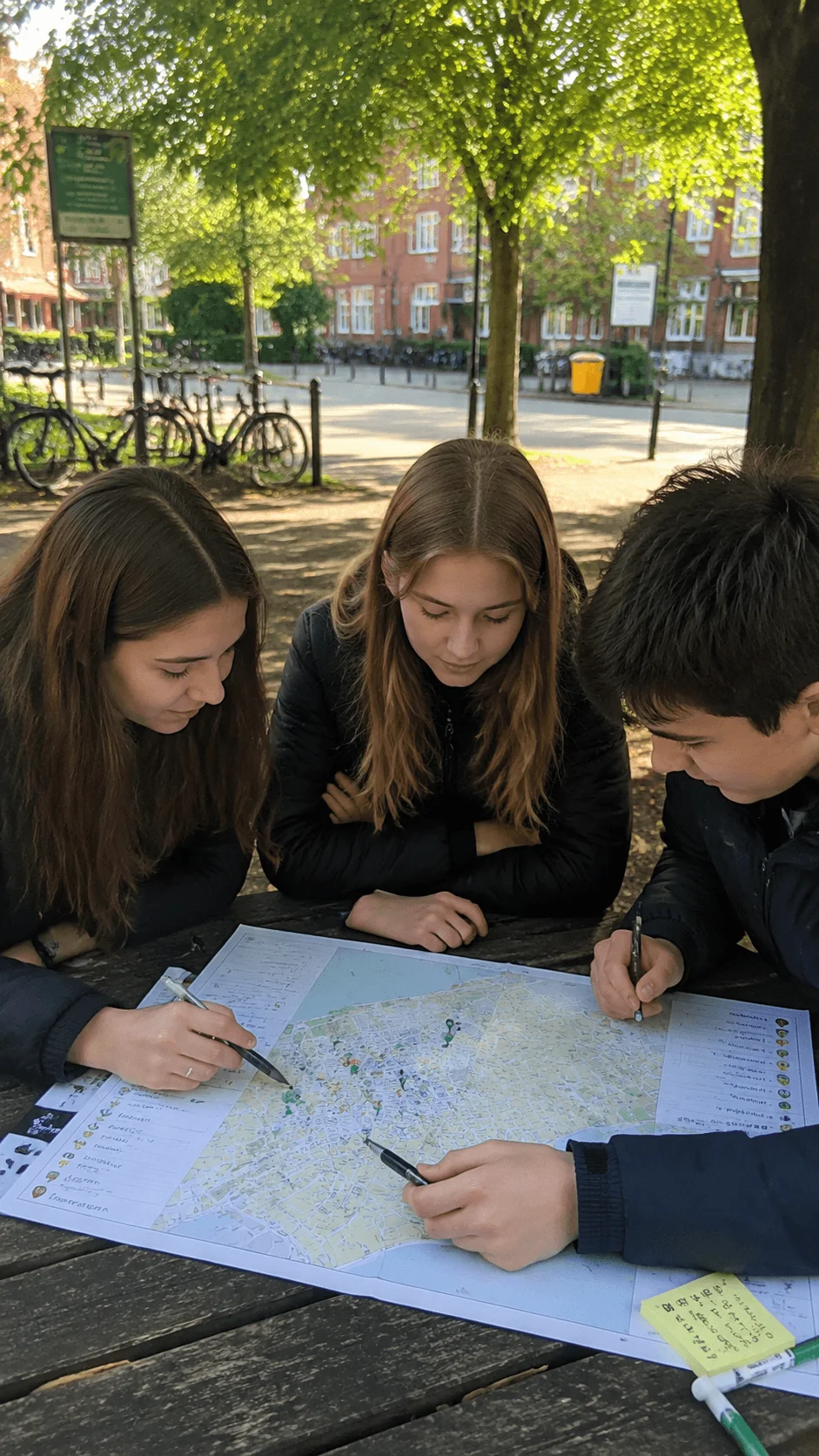
Community Sustainability Mapping encourages students to explore the places where they live while discovering how local services contribute to a healthier environment. Instead of learning about sustainability through textbooks alone, students step outside the classroom and observe how parks, cycling paths, public transport, recycling centres, community gardens, renewable energy projects, and green spaces support everyday life. This activity helps learners understand that sustainable development is already happening around them, although many people rarely notice it.
Students can work individually or in small groups to investigate different parts of their neighbourhood. They might use digital mapping tools or create hand drawn maps that highlight environmentally friendly features within their community. During their research, they can also identify areas that could be improved, such as locations that lack recycling facilities, safe walking routes, or green spaces. These observations encourage thoughtful discussions about how local governments and residents can work together to build more sustainable communities.
Teachers can extend the activity by inviting community leaders or environmental organisations to discuss local sustainability projects. Students may even present their findings to school administrators or local councils, allowing them to experience how young people can contribute valuable ideas.
Beyond environmental awareness, this activity strengthens observation, communication, research, and critical thinking skills. Students also develop a stronger connection with their local community while recognising that meaningful sustainability begins close to home before expanding to national and global challenges.
SDG Social Media Awareness Campaign
Many young people spend time on social media every day, making it an excellent platform for promoting sustainability education. This activity encourages students to create informative and inspiring digital content that raises awareness about one or more Sustainable Development Goals. Instead of using social media only for entertainment, learners discover how digital platforms can educate, encourage positive behaviour, and inspire meaningful action.
Students first choose a sustainability topic that interests them, such as reducing plastic pollution, conserving water, promoting responsible consumption, or protecting biodiversity. They then design creative content including short educational videos, informative graphics, digital posters, photo campaigns, or awareness messages. Teachers can also introduce basic principles of responsible digital communication by discussing accuracy, respectful language, and reliable sources of information.
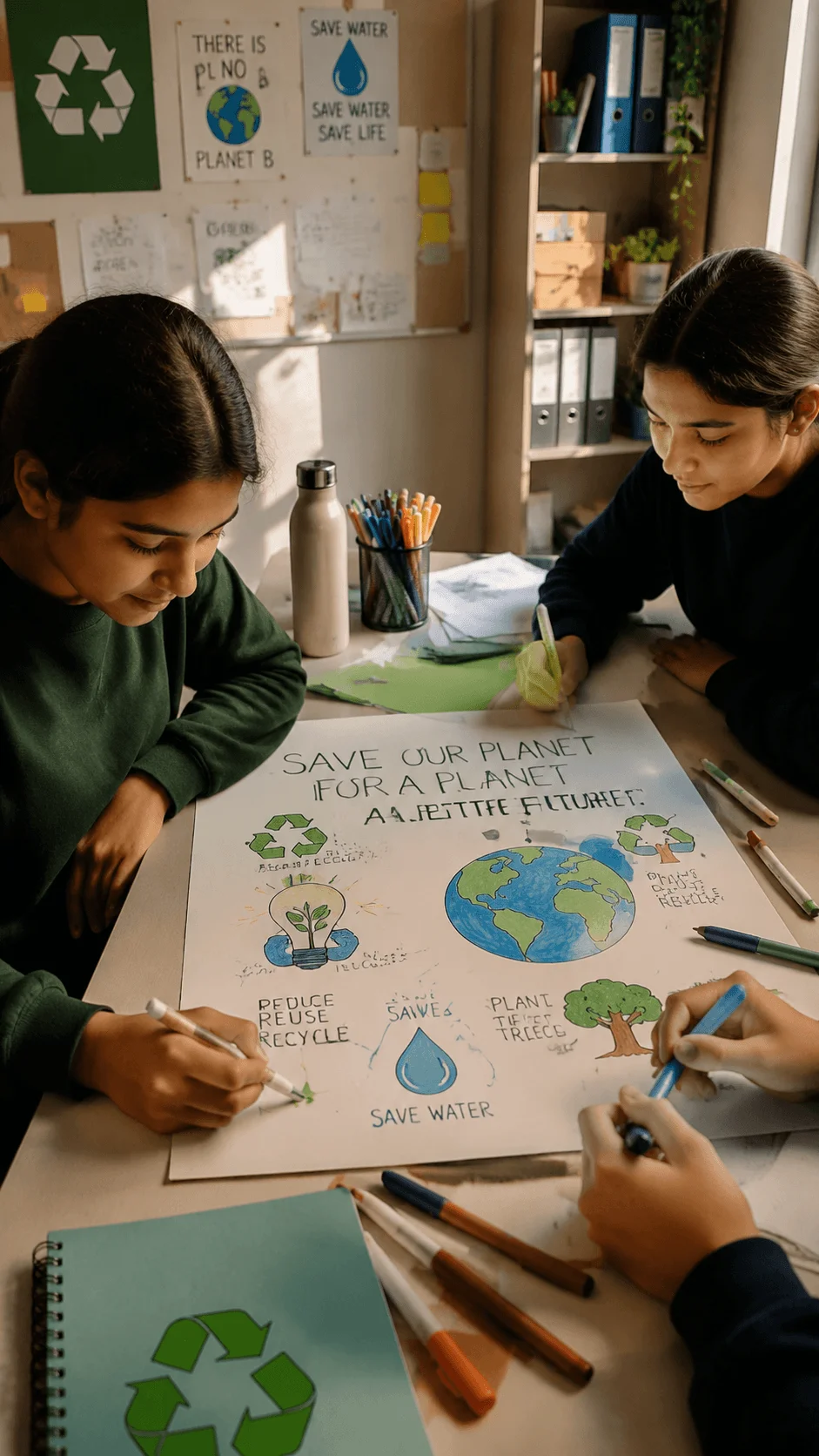
The project provides an excellent opportunity to combine sustainability education with digital literacy. Students learn how visual communication, storytelling, and clear messaging can influence public awareness more effectively than lengthy explanations. They also gain valuable experience presenting information in ways that capture attention while remaining informative.
Schools may choose to share selected projects through official communication channels or display them during sustainability events. This allows students to see that their work has a genuine audience beyond the classroom.
The activity demonstrates that even simple online messages can encourage conversations about important global issues and motivate communities to adopt more sustainable habits.
Sustainable Business Pitch Competition
Entrepreneurship plays an increasingly important role in solving environmental challenges. The Sustainable Business Pitch Competition introduces students to the idea that successful businesses can generate profits while also protecting people and the planet. This activity encourages learners to combine creativity with practical problem solving by developing environmentally responsible business concepts.
Students begin by identifying a sustainability challenge within their community. They may focus on reducing plastic waste, creating reusable products, improving recycling systems, encouraging sustainable fashion, or producing environmentally friendly packaging. After researching the problem, they develop a business idea that offers a practical solution while remaining financially realistic.
Teachers can guide students through basic concepts such as identifying customers, estimating costs, explaining environmental benefits, and presenting their ideas clearly. Older students may prepare detailed presentations while younger learners can create simple visual displays that explain their business concept.
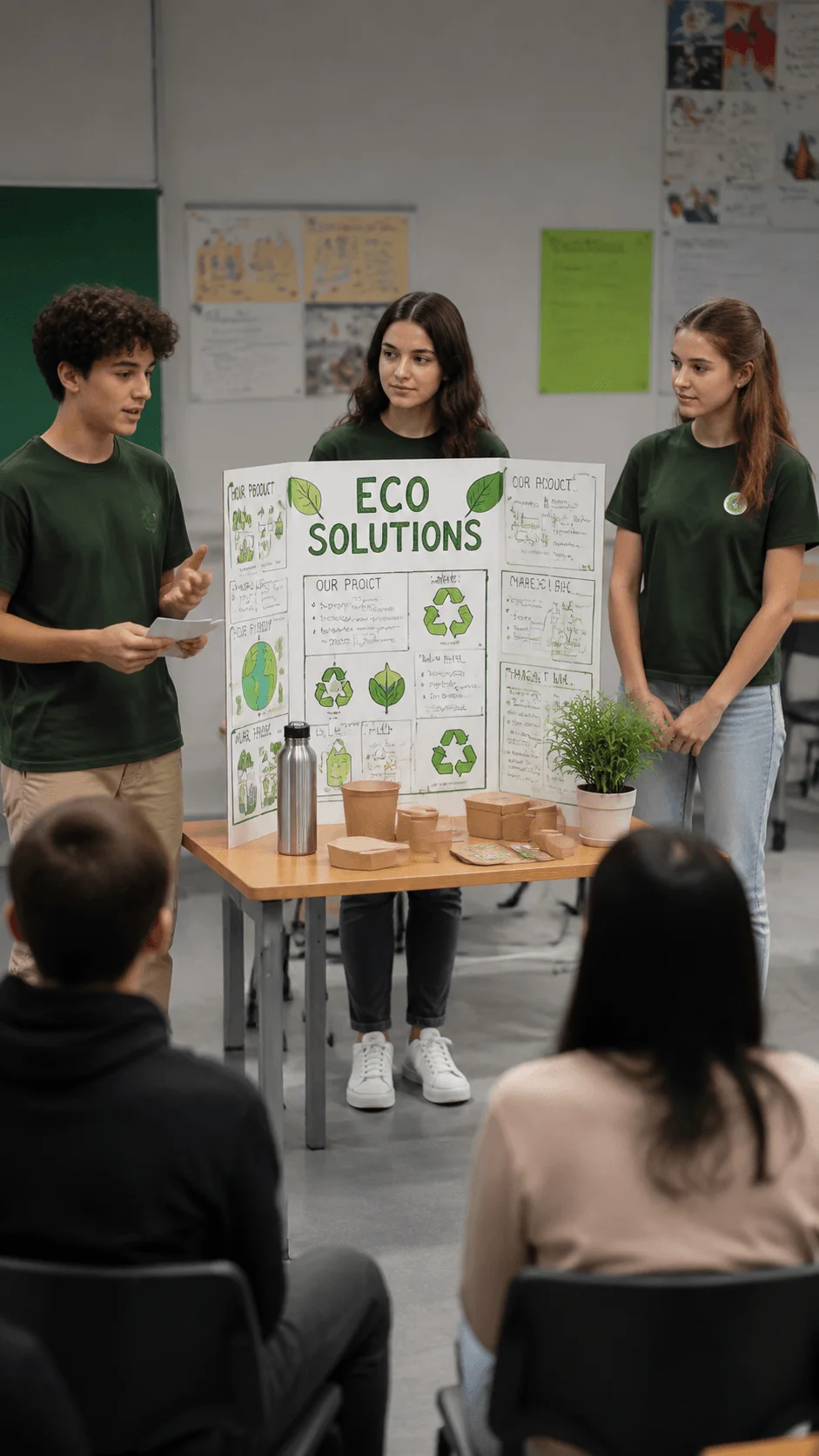
One of the greatest strengths of this activity is that it shows students how innovation and sustainability often work together. Many successful businesses around the world now focus on renewable energy, sustainable agriculture, waste reduction, and environmentally responsible manufacturing. Learning about these examples helps students recognise that protecting the environment can also create exciting career opportunities.
The experience builds confidence, presentation skills, teamwork, creativity, and financial awareness while encouraging students to think like future innovators who can solve real world problems.
Smart City Model Project
Cities continue to grow rapidly across the world, making sustainable urban planning more important than ever before. The Smart City Model Project encourages students to imagine how future communities can balance economic development, environmental protection, and quality of life through thoughtful planning and innovative design.
Students work together to design a model city that includes renewable energy, efficient public transport, green buildings, parks, water conservation systems, waste management solutions, and safe public spaces. Rather than simply constructing a physical model, learners explain how each feature contributes to a healthier and more sustainable community.
Teachers can introduce real examples of cities that have invested in clean transportation, energy efficient buildings, and urban green spaces. These case studies help students understand that many of the ideas they include already exist in different parts of the world.
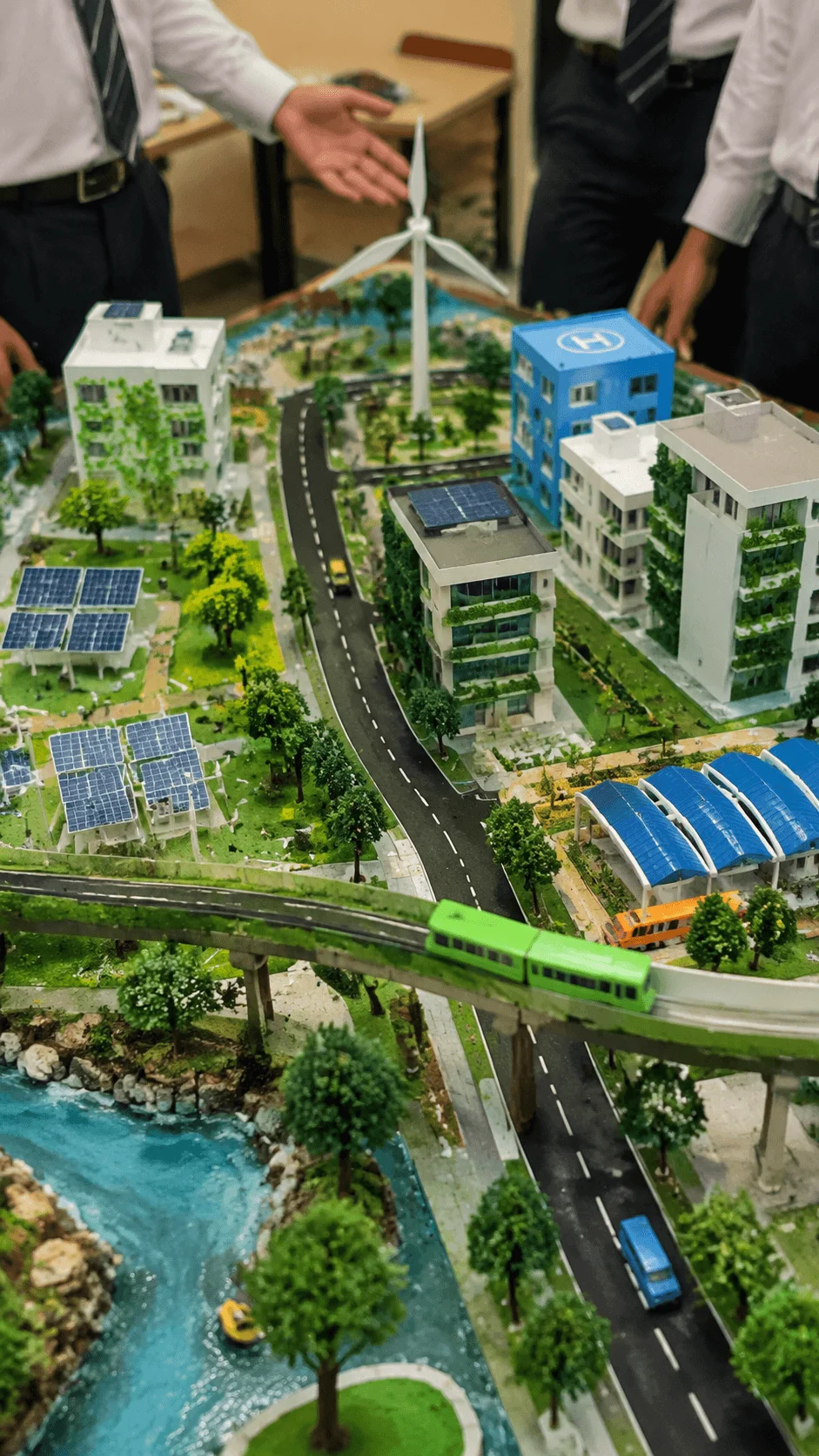
This project encourages students to think about the connections between housing, transportation, energy, education, healthcare, and environmental protection. They begin to recognise that sustainable cities require cooperation between governments, businesses, engineers, architects, and local residents.
The activity develops creativity, teamwork, planning, research, and presentation skills while helping students appreciate the complexity of designing communities that meet both present and future needs.
Biodiversity Observation Project
Healthy ecosystems depend on rich biodiversity, yet many students have limited opportunities to observe nature closely. The Biodiversity Observation Project encourages learners to explore local environments while developing a greater appreciation for the variety of plants, insects, birds, and other living organisms that share their community.
Students visit school gardens, nearby parks, nature reserves, or other safe outdoor spaces to observe and record different species. They may keep field journals, take photographs, create sketches, or compare observations collected over several weeks. These records help students recognise seasonal changes and understand how biodiversity supports healthy ecosystems.
Teachers can guide discussions about pollination, food chains, habitat protection, and the importance of preserving native species. Students may also investigate how pollution, urban development, and climate change affect local wildlife and explore practical ways to support biodiversity within their own communities.
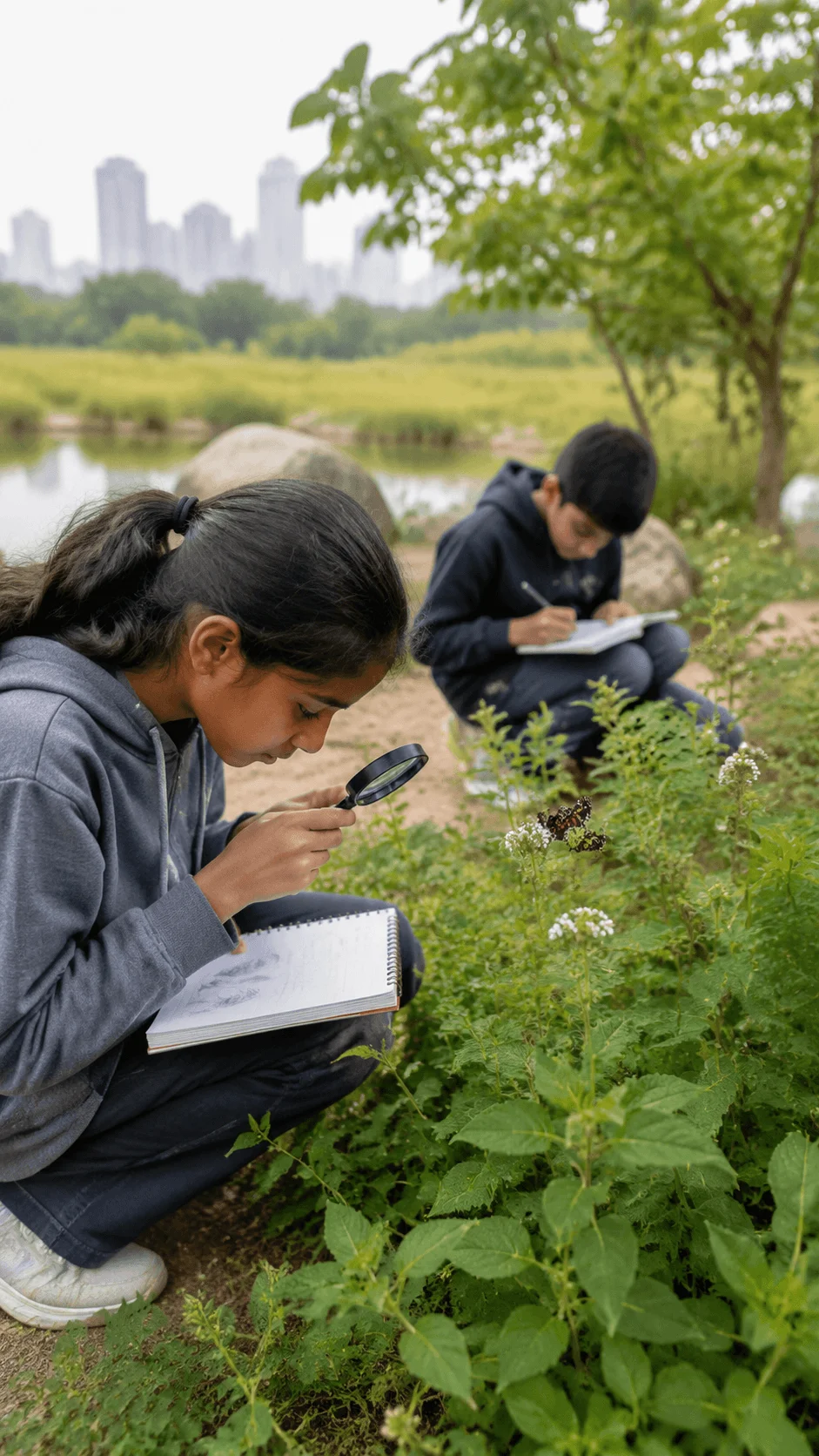
This activity combines scientific observation with environmental responsibility. Learners strengthen research skills, patience, attention to detail, and critical thinking while developing a stronger emotional connection with nature.
Many students discover that even small school gardens or neighbourhood parks contain surprising levels of biodiversity. This realisation often inspires greater respect for local ecosystems and encourages lifelong environmental stewardship.
Food Waste Innovation Challenge
Food waste remains one of the world’s largest sustainability challenges, yet many people underestimate how much edible food is discarded every day. The Food Waste Innovation Challenge helps students investigate this issue while developing practical solutions that can reduce waste at school and at home.
Students begin by examining where food waste occurs most frequently. They may observe cafeteria leftovers, household meal preparation, grocery shopping habits, or food storage practices. After gathering information, they brainstorm creative strategies that encourage more responsible consumption.
Possible solutions include improving meal planning, composting organic waste, donating surplus food, growing school gardens, or creating awareness campaigns that promote smarter food choices. Teachers can encourage students to evaluate which ideas would have the greatest impact within their own community.
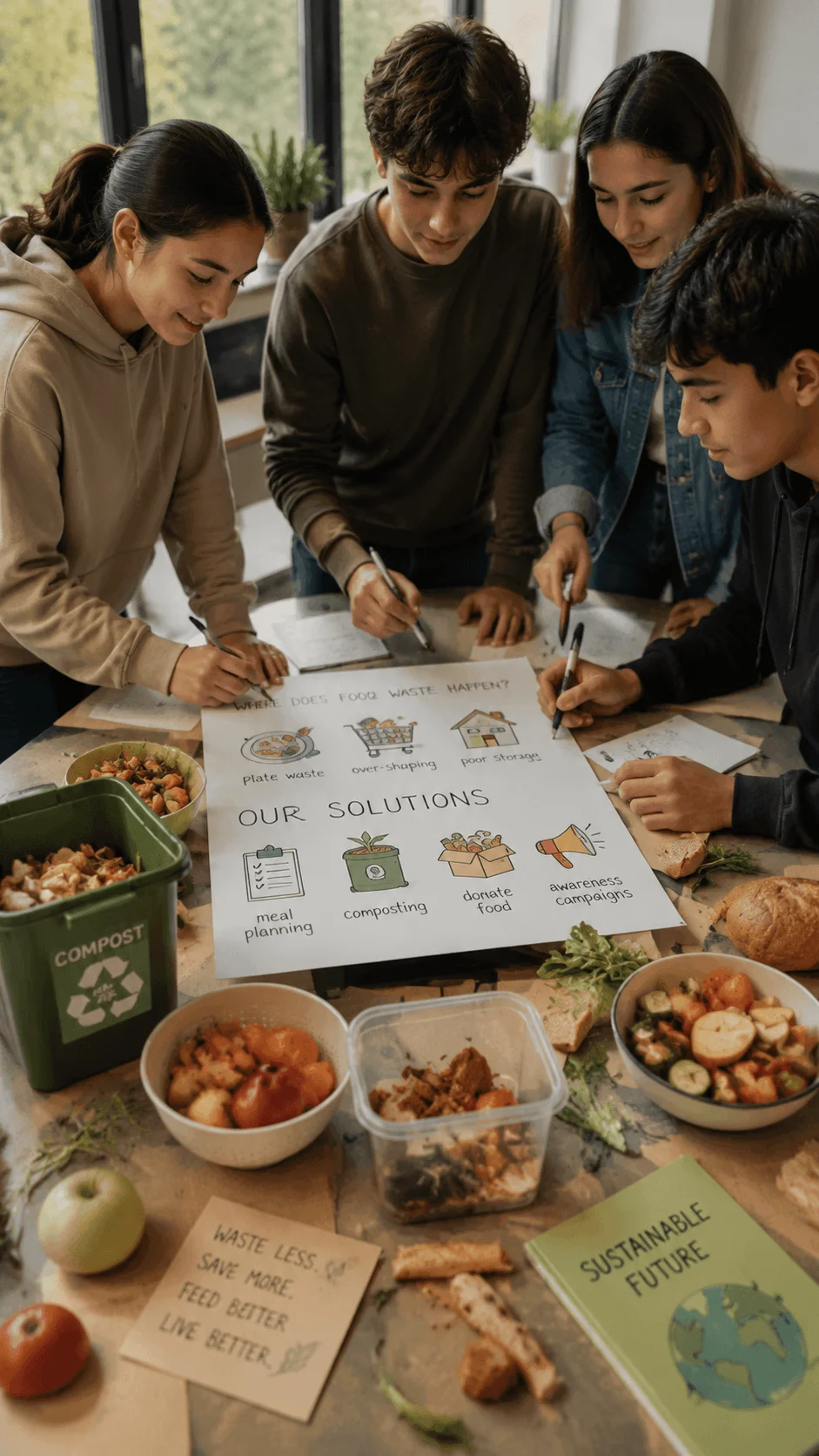
The activity demonstrates that sustainability often depends on careful planning rather than complicated technology. Students realise that simple everyday decisions can reduce waste, conserve natural resources, and lower environmental impacts.
In addition to environmental awareness, learners strengthen analytical thinking, teamwork, creativity, and communication skills. The project also highlights the connections between agriculture, nutrition, economics, and climate action, helping students appreciate the wider significance of responsible food management.
Sustainable Fashion Swap
The fashion industry has become one of the fastest growing sustainability topics because clothing production requires large amounts of water, energy, and raw materials. The Sustainable Fashion Swap introduces students to responsible consumption by showing that clothing can remain valuable long after its first owner has finished using it.
Students bring clean clothes, shoes, or accessories that they no longer wear and exchange them with classmates. Before the event, teachers can discuss topics such as textile waste, fast fashion, ethical manufacturing, and the environmental impact of producing new garments. These conversations help students understand why extending the life of clothing benefits both people and the environment.
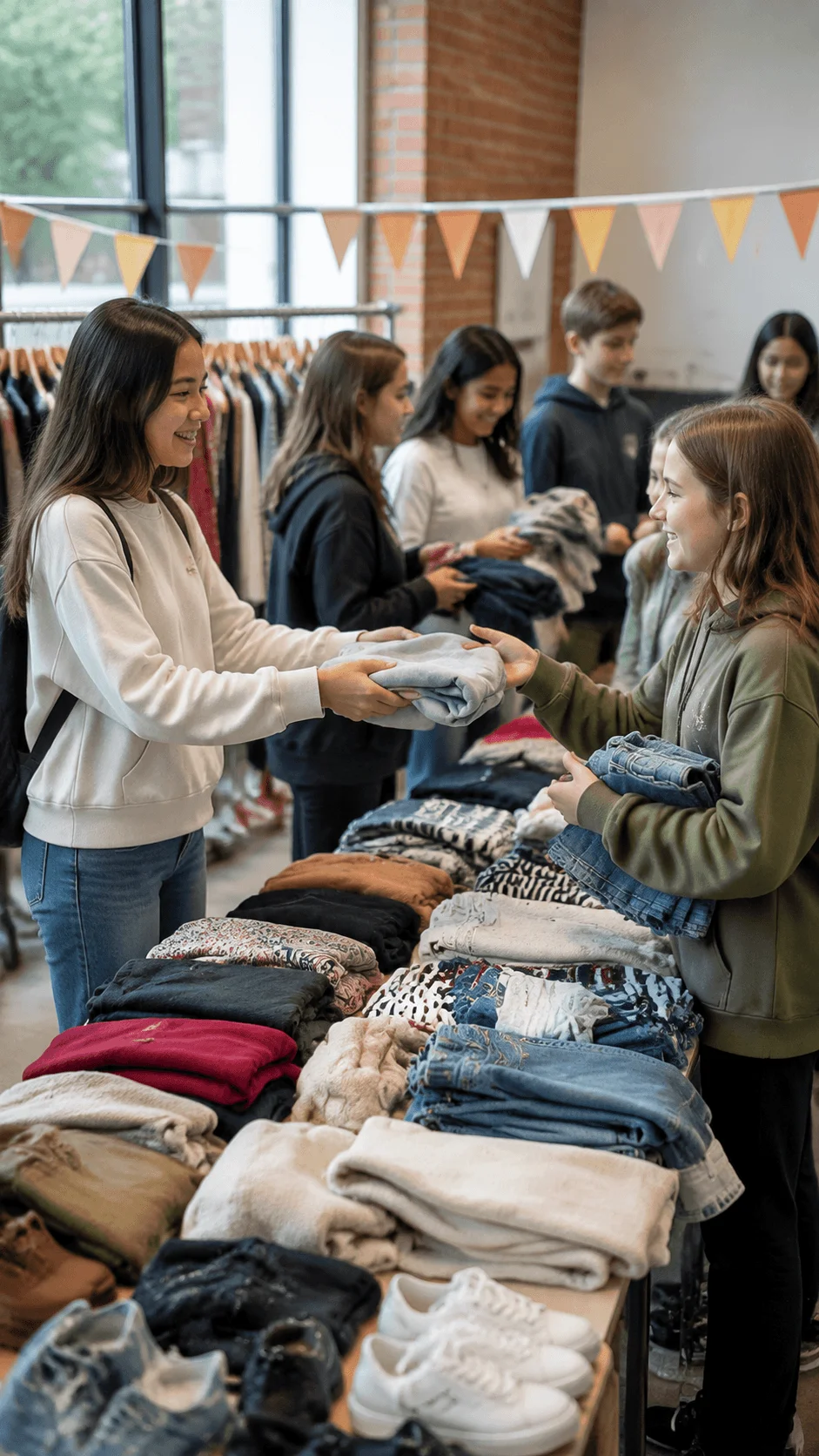
The activity also encourages thoughtful decision making about shopping habits. Rather than purchasing new items frequently, students learn to value quality, durability, and responsible consumption. Some schools expand the project by including clothing repair workshops or creative redesign sessions where students transform older garments into something new.
Beyond environmental education, the activity promotes generosity, appreciation, and community spirit. Students discover that sustainability often involves sharing resources instead of constantly replacing them.
The experience demonstrates that responsible fashion choices can reduce waste while encouraging more mindful lifestyles that support the goals of sustainable development.
SDG Innovation Hackathon
An SDG Innovation Hackathon brings together many of the skills students have developed through previous sustainability projects. Working within a limited period, teams identify a real community challenge and design practical solutions that address one or more Sustainable Development Goals. This fast paced activity encourages creativity, collaboration, and confident decision making.
Students begin by selecting a local issue such as water conservation, renewable energy, waste management, public transportation, or community health. They research the problem, analyse possible solutions, and develop an idea that they present to teachers, classmates, or invited community members.
The emphasis should remain on creativity and learning rather than competition alone. Teachers can encourage students to test different approaches, accept constructive feedback, and refine their ideas throughout the process. This reflects the way many professional innovators develop new products and services.
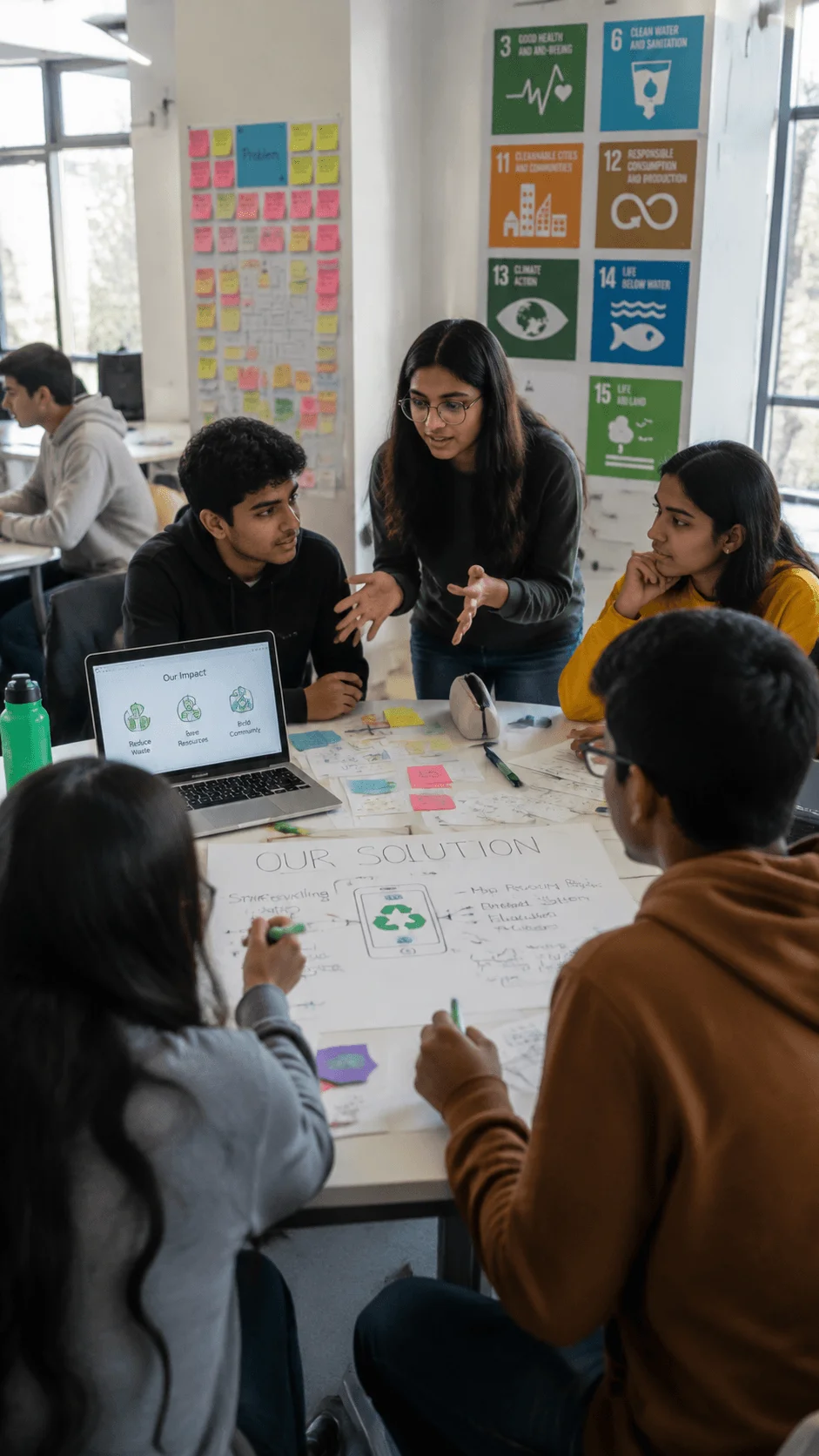
Hackathons also demonstrate that sustainability challenges rarely have simple answers. Students learn to balance environmental protection, economic feasibility, and community needs while considering different perspectives.
The experience strengthens leadership, communication, resilience, teamwork, and problem solving skills. Most importantly, students finish the activity with greater confidence in their ability to contribute meaningful ideas that support a more sustainable future.
Benefits of Sustainable Development Goals Activities
Sustainable Development Goals Activities provide far more than environmental knowledge. They encourage students to become active participants in their own learning while developing practical skills that remain valuable throughout life. Instead of memorising facts for examinations, learners investigate real challenges, explore different viewpoints, and create solutions that reflect their creativity and understanding.
These activities strengthen communication because students regularly discuss ideas, present projects, and explain their thinking to others. Collaboration also becomes an important part of the learning process as teams share responsibilities, solve disagreements, and work towards common goals. At the same time, critical thinking develops naturally because students must evaluate information, compare alternatives, and make informed decisions.
Many projects also improve digital literacy through research, presentations, mapping tools, and responsible technology use. Creativity flourishes as students design innovative products, awareness campaigns, and community solutions that reflect their own ideas. Leadership grows when learners organise activities, guide group discussions, and inspire others to participate.
Perhaps the greatest benefit is that students begin viewing themselves as capable of creating positive change. Rather than feeling overwhelmed by global challenges, they recognise that everyday actions can contribute to healthier communities and a more sustainable world.
Tips for Making Sustainable Development Goals Activities More Engaging
Successful sustainability education depends on creating experiences that students genuinely enjoy. Teachers can make activities more engaging by connecting lessons with local issues that students encounter every day. When learners investigate familiar parks, neighbourhood recycling programmes, or school waste management systems, sustainability becomes much more meaningful.
Storytelling also captures students’ interest by showing how individuals and communities have solved environmental challenges through creativity and determination. Real examples often inspire greater motivation than theoretical discussions alone.
Outdoor learning adds another valuable dimension because students experience nature directly instead of only reading about it. Visiting gardens, rivers, forests, or community projects helps learners build stronger emotional connections with the environment.
Technology can support engagement when used thoughtfully. Interactive maps, educational videos, collaborative documents, and creative design tools encourage participation while developing digital skills. Reflection activities, classroom exhibitions, and community presentations also give students opportunities to celebrate their achievements and share their learning with others.
Most importantly, teachers should encourage curiosity, experimentation, and continuous improvement. Sustainability is not about finding perfect answers but about developing thoughtful habits that lead to lasting positive change.
Conclusion
Sustainable Development Goals Activities provide an inspiring way to transform sustainability education into meaningful action. They help students move beyond theory by encouraging them to explore real challenges, develop creative solutions, and understand how their everyday choices influence the world around them. Whether learners are calculating their carbon footprint, designing sustainable businesses, observing biodiversity, or planning future cities, every activity builds valuable knowledge alongside essential life skills.
As schools continue preparing students for an increasingly complex future, these experiences become more important than ever. They strengthen creativity, teamwork, leadership, communication, and critical thinking while nurturing a genuine sense of environmental and social responsibility. Most importantly, they remind students that positive change does not always begin with large organisations or governments. It often starts with one thoughtful idea, one meaningful project, and one group of motivated learners willing to make a difference.
By introducing Sustainable Development Goals Activities into classrooms, homes, and community programmes, educators can inspire the next generation to become responsible global citizens who are prepared to create healthier, stronger, and more sustainable communities for everyone.