Sustainable Aesthetic Photography School Ideas
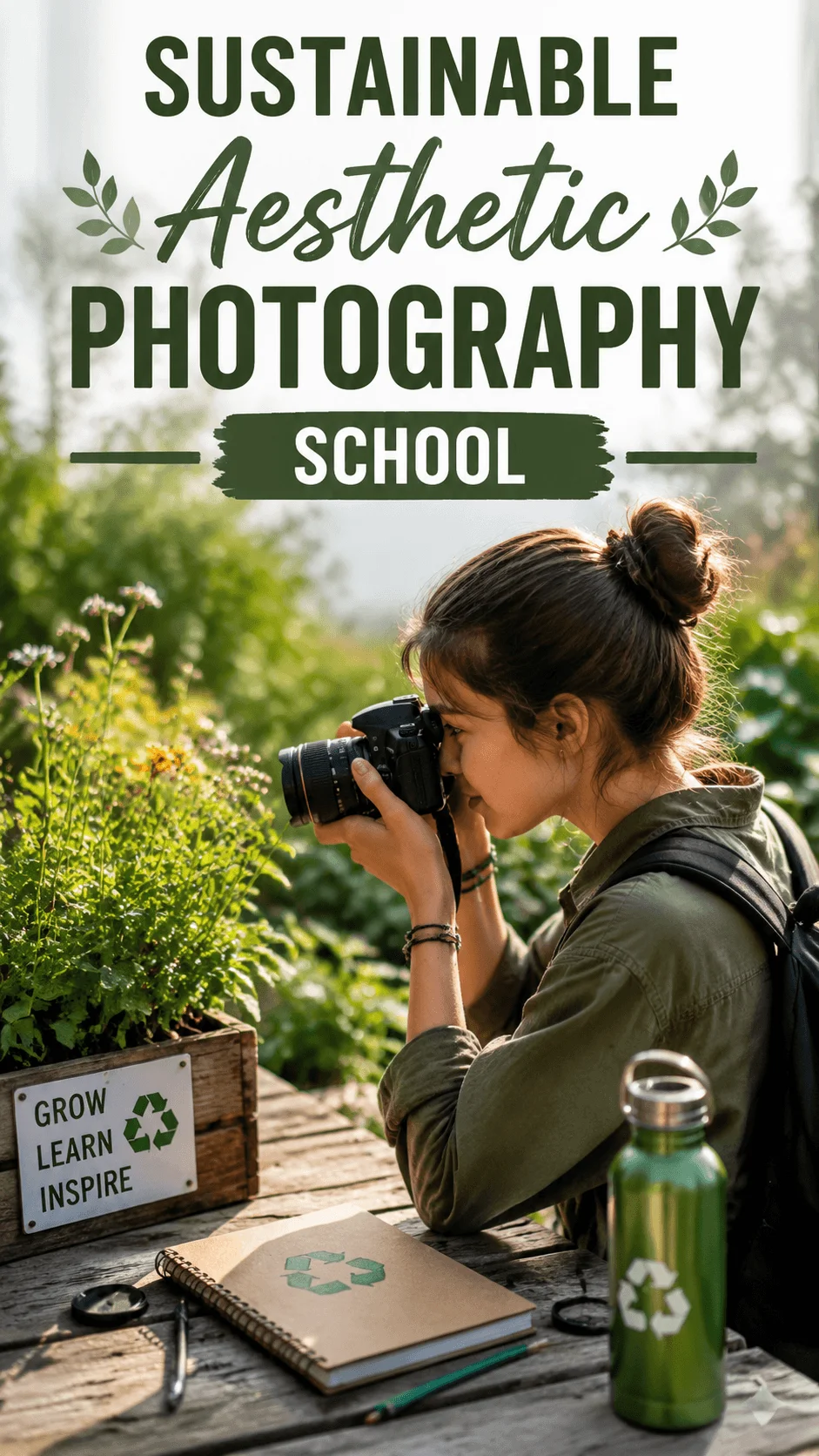
Sustainable Aesthetic Photography School is becoming an exciting way for students to combine creativity with environmental responsibility. Instead of focusing only on taking beautiful photographs, this approach encourages young photographers to think about the impact of their projects on the planet while creating meaningful visual stories. Schools around the world are introducing photography activities that promote recycling, natural lighting, community involvement, and appreciation for local environments. As sustainability becomes a bigger part of education, photography offers students a creative way to explore important environmental topics while developing technical and artistic skills. In this guide, you will discover inspiring project ideas, practical photography techniques, and creative strategies that help students produce stunning images while supporting a greener future.
What Is Sustainable Aesthetic Photography and Why Schools Are Adopting It
Sustainable aesthetic photography is more than capturing attractive images. It is a creative practice that encourages photographers to respect nature, reduce waste, and make thoughtful choices throughout every stage of a project. When schools introduce this concept, students learn that photography can become a powerful tool for education, storytelling, and environmental awareness.
Traditional photography projects sometimes rely on disposable props, excessive printing, artificial lighting, or unnecessary travel. A sustainable approach encourages students to work differently. They learn to use available natural light, create props from recycled materials, photograph familiar surroundings, and organize their digital files responsibly. These small changes help reduce environmental impact while encouraging creativity.
Schools appreciate this style of photography because it supports several learning objectives at the same time. Students strengthen their observation skills, improve visual communication, develop artistic confidence, and gain a better understanding of environmental issues. Photography also encourages teamwork as students often collaborate on projects, discuss ideas, and evaluate each other’s work in constructive ways.
Another reason schools are embracing sustainable photography is its accessibility. Most students already have access to a smartphone or a basic camera. Instead of requiring expensive equipment, teachers can focus on composition, storytelling, and creative thinking. This makes photography an inclusive activity that allows every student to participate regardless of their budget.
Modern education increasingly values project based learning, and photography naturally fits this approach. Students become active participants rather than passive learners. They explore their surroundings, identify environmental challenges, and communicate their discoveries through carefully composed images. As a result, photography becomes both an artistic activity and a meaningful educational experience.
Creative Sustainable Photography School Ideas for Students
Zero Waste Classroom Photography
Zero waste classroom photography transforms ordinary school spaces into inspiring visual stories about sustainability. Instead of viewing classrooms as simple learning environments, students begin exploring how everyday choices contribute to reducing waste. Reusable bottles, refillable markers, recycled notebooks, cloth lunch bags, and storage containers become meaningful photography subjects because they represent practical environmental action.
This project has become increasingly popular because many schools now encourage students to reduce single use plastics and adopt reusable alternatives. Rather than focusing only on environmental facts, photography allows students to document positive changes happening around them. Every photograph becomes evidence that small habits can create meaningful results.
Composition plays an important role in making these images visually attractive. Students should look for clean arrangements where sustainable objects stand out without distractions. Photographing neatly organized desks, colorful reusable supplies, or classroom recycling stations creates balanced images that immediately communicate the message. Including students naturally using these items adds authenticity while making the photographs feel more relatable.
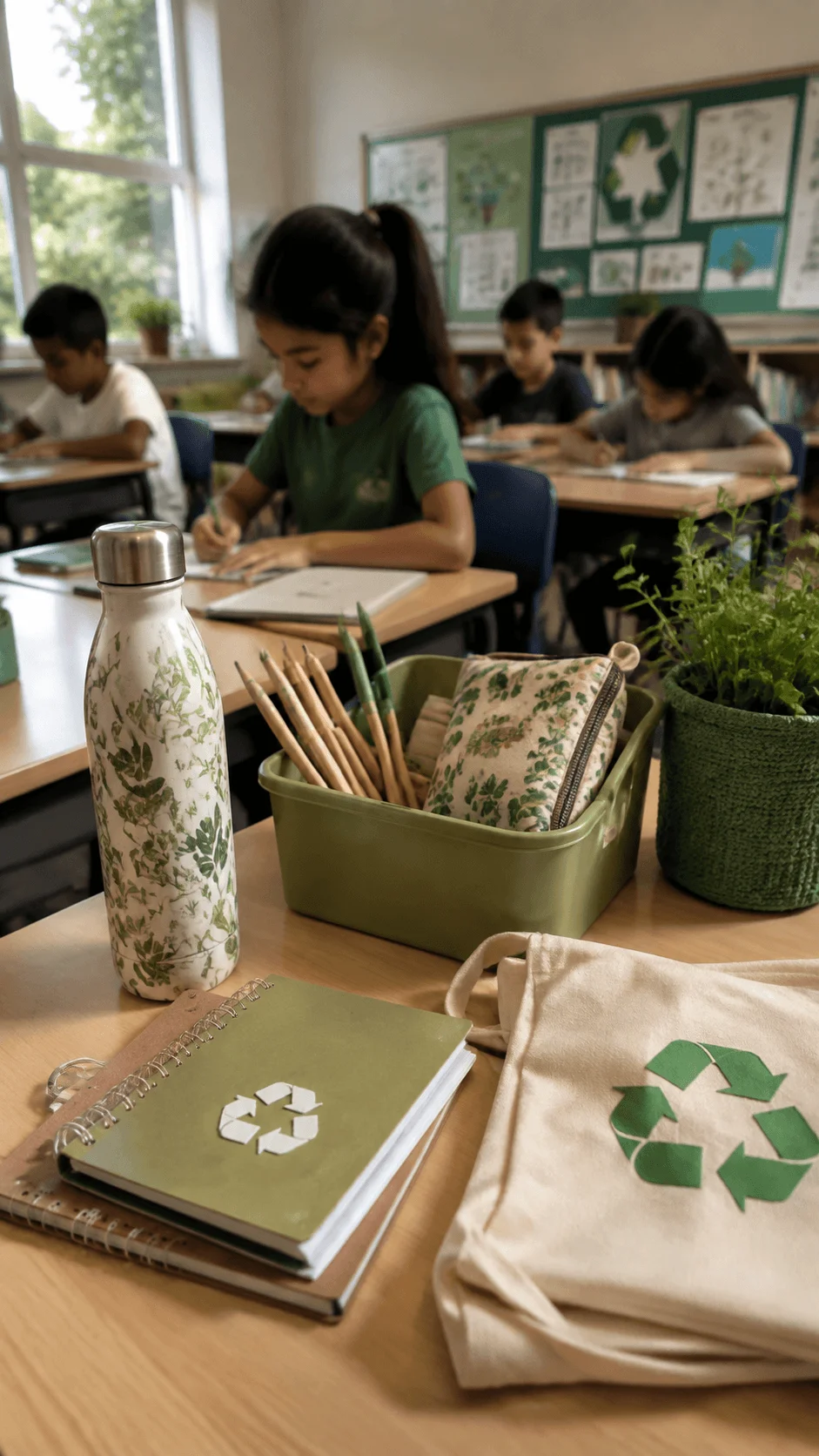
Natural window light works especially well for indoor photography because it creates soft shadows and realistic colors. Morning light often produces brighter and fresher images, while afternoon light creates warmer tones that make wooden furniture and recycled materials appear more inviting.
Students can also experiment with different perspectives. Instead of photographing objects only from eye level, they can shoot from above to create organized flat lay compositions or move closer to highlight textures found in recycled paper, wooden pencils, or fabric pencil cases. These creative angles transform everyday classroom supplies into artistic subjects.
Storytelling remains the heart of the project. Rather than simply photographing a reusable bottle, students should think about how the object represents a larger commitment to protecting the environment. Capturing classmates filling bottles at a refill station or organizing recycling bins tells a much stronger story than isolated product photographs.
By completing this project, students realize that sustainability begins with everyday choices. Photography helps preserve these moments while encouraging others to adopt similar habits.
Before and After Campus Transformation
One of the most rewarding photography projects involves documenting positive environmental changes around the school campus. This idea encourages students to capture the same location before and after improvement efforts, creating powerful visual comparisons that clearly demonstrate the value of community action.
Many schools organize cleanup events, tree planting activities, flower garden projects, or recycling campaigns throughout the year. Photography provides an excellent way to record these improvements while inspiring future environmental initiatives.
Planning becomes especially important for this project. Students should photograph the location from exactly the same position before and after changes occur. Maintaining consistent framing allows viewers to appreciate the transformation without distractions. Even small improvements become much more noticeable when images align perfectly.
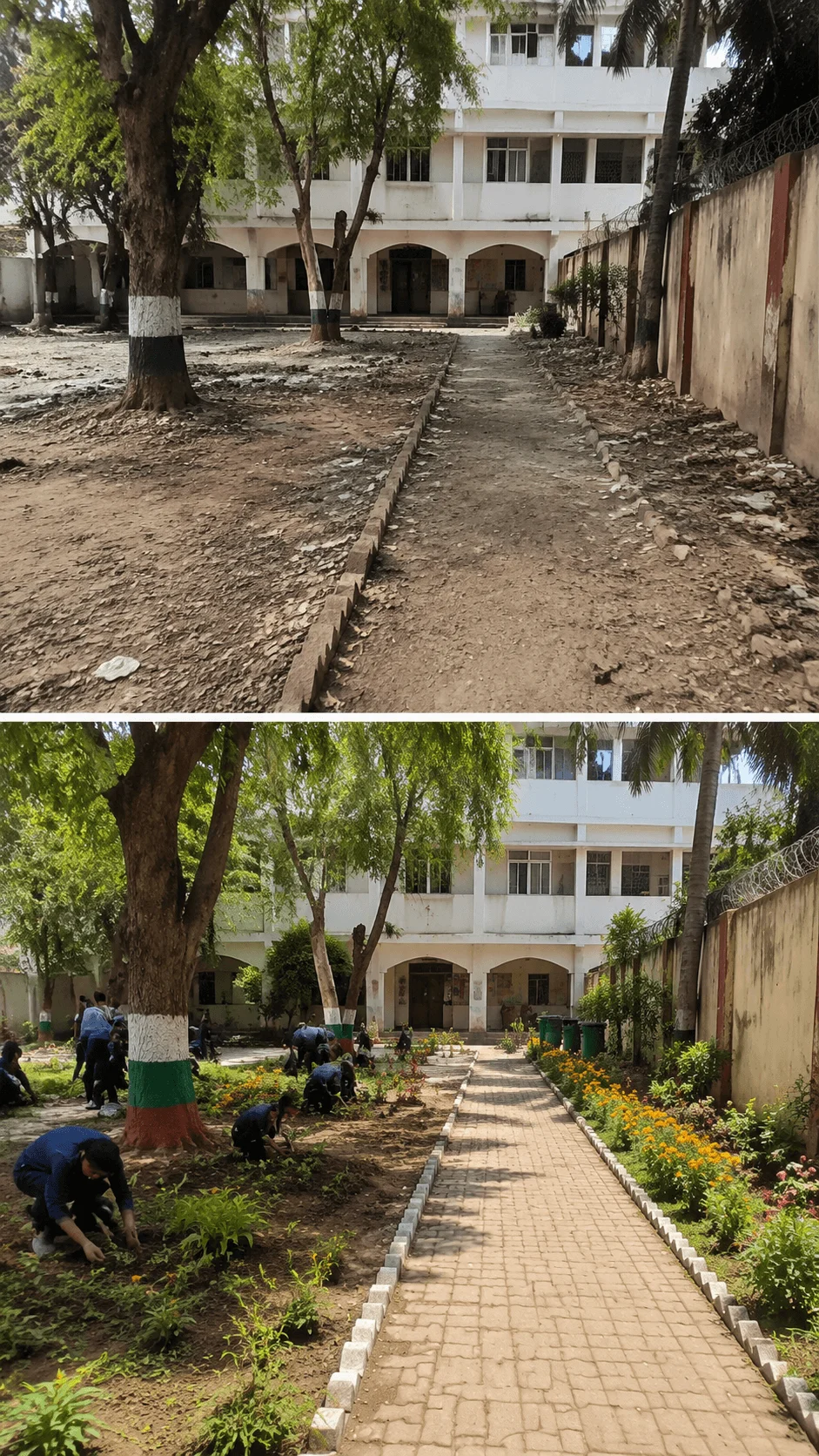
Lighting also contributes to successful comparisons. Photographing both scenes at similar times of day ensures that differences in sunlight do not distract from the actual environmental improvements. Consistency creates stronger visual impact while making the photographs appear more professional.
Students should look beyond obvious changes such as cleaner pathways or planted flowers. They can capture volunteers working together, children planting trees, teachers organizing gardening activities, or maintenance staff supporting environmental efforts. These human moments bring emotion into the project while celebrating teamwork.
Color also plays an important storytelling role. Fresh green plants, colorful flowers, and clean outdoor spaces naturally create brighter, more inviting images than neglected areas. These visual differences help communicate the positive effects of community action without requiring lengthy explanations.
This photography project teaches students that meaningful change often happens gradually. Through their cameras, they witness how small efforts combine to create healthier, more beautiful learning environments. Their photographs become lasting reminders that environmental responsibility produces visible and inspiring results.
Natural Light Only School Portraits
Natural light portrait photography encourages students to appreciate one of the most valuable resources available to every photographer. Instead of relying on studio equipment or artificial lighting, students learn how sunlight can create beautiful portraits with very little environmental impact.
This approach has become increasingly popular because it produces soft, authentic images while encouraging photographers to work with the changing conditions found outdoors. Every season offers different lighting opportunities, allowing students to experiment throughout the year without needing expensive equipment.
Successful portraits begin with careful observation of light direction. Bright midday sunlight often creates strong shadows across the face, making portraits appear harsh. Early morning and late afternoon provide softer illumination that flatters facial features while creating warmer colors. Window light inside classrooms can also produce elegant portraits when subjects stand beside large windows rather than directly underneath ceiling lights.
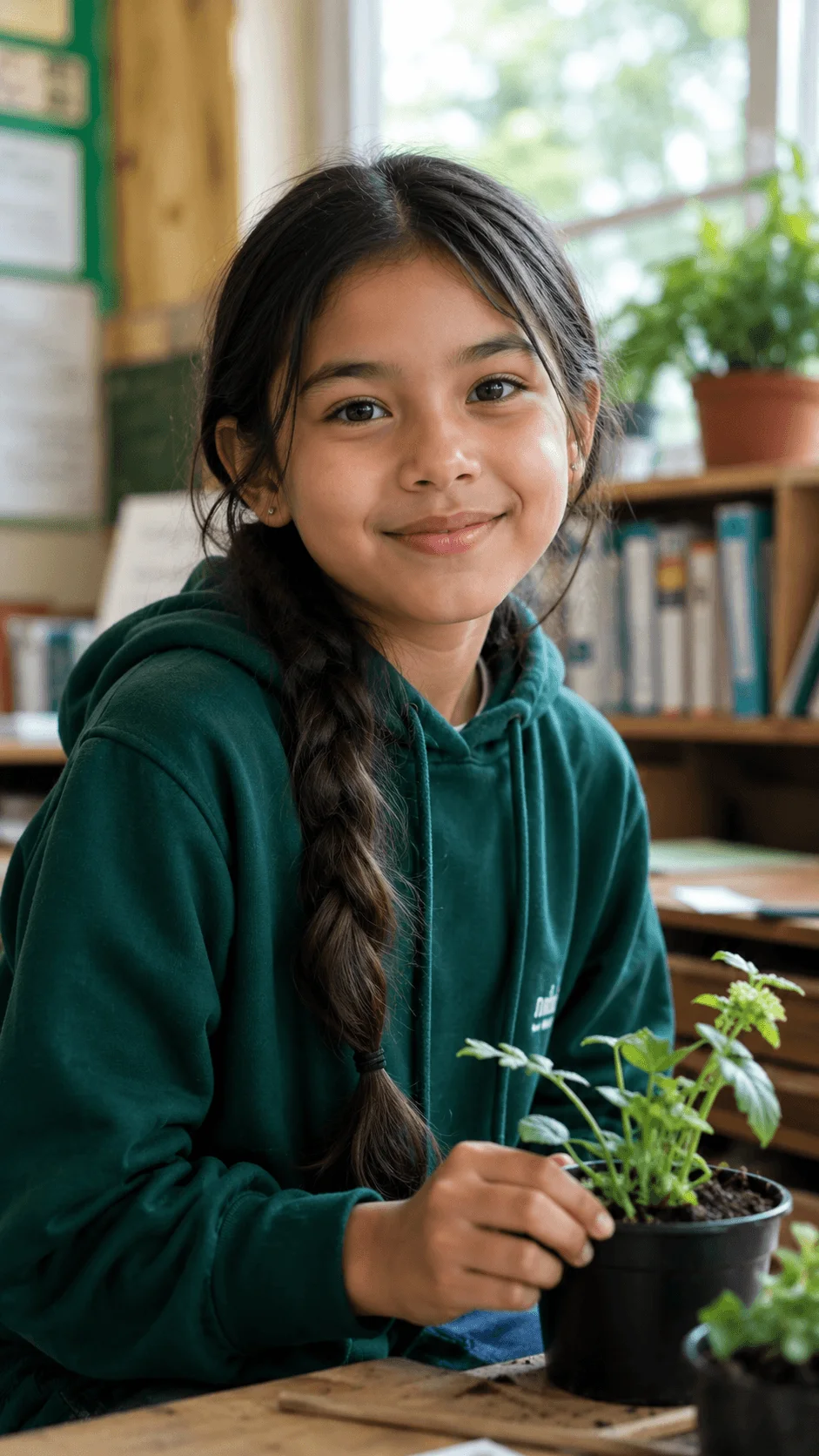
Background selection deserves equal attention. School gardens, tree lined pathways, brick walls covered with climbing plants, or quiet reading areas all provide visually pleasing environments that complement the subject without overwhelming the photograph. Students should keep backgrounds simple so attention remains focused on the person being photographed.
Encouraging genuine expressions creates stronger portraits than asking subjects to pose stiffly. Students can photograph classmates reading books, painting artwork, planting flowers, or participating in environmental activities. These natural moments feel more authentic because they capture real experiences rather than forced smiles.
Composition also strengthens visual storytelling. Students should experiment with different framing techniques, leaving space around the subject to include surrounding greenery or environmental features that support the overall theme of sustainability. These details help connect the portrait to its educational purpose.
Natural light portrait sessions also teach patience. Clouds may soften harsh sunlight, gentle breezes may create movement in hair or clothing, and changing weather conditions often introduce unexpected creative opportunities. Learning to adapt to these natural elements improves both technical skills and artistic confidence.
Beyond photography, this project reminds students that impressive images do not always require expensive technology. Careful observation, thoughtful composition, and respect for natural light often produce photographs that feel timeless, honest, and emotionally engaging.
Upcycled Photography Props
Creating photography props from recycled materials demonstrates that creativity often begins with imagination rather than expensive purchases. Instead of buying decorative items for every project, students can transform everyday discarded objects into visually interesting photography accessories that support both artistic expression and environmental responsibility.
Old newspapers, glass jars, cardboard boxes, wooden pallets, worn fabric, glass bottles, paper bags, and unused books can all become attractive visual elements when arranged thoughtfully. Students quickly discover that materials many people consider waste still contain beautiful textures, colors, and shapes that enhance photographic compositions.
One reason this project has become increasingly popular is that it encourages students to think differently about the objects around them. A simple cardboard box can become a creative background, while old fabric can serve as an elegant backdrop for portraits. Even dried leaves, twigs, and recycled paper can add depth and character to a photograph without costing anything.
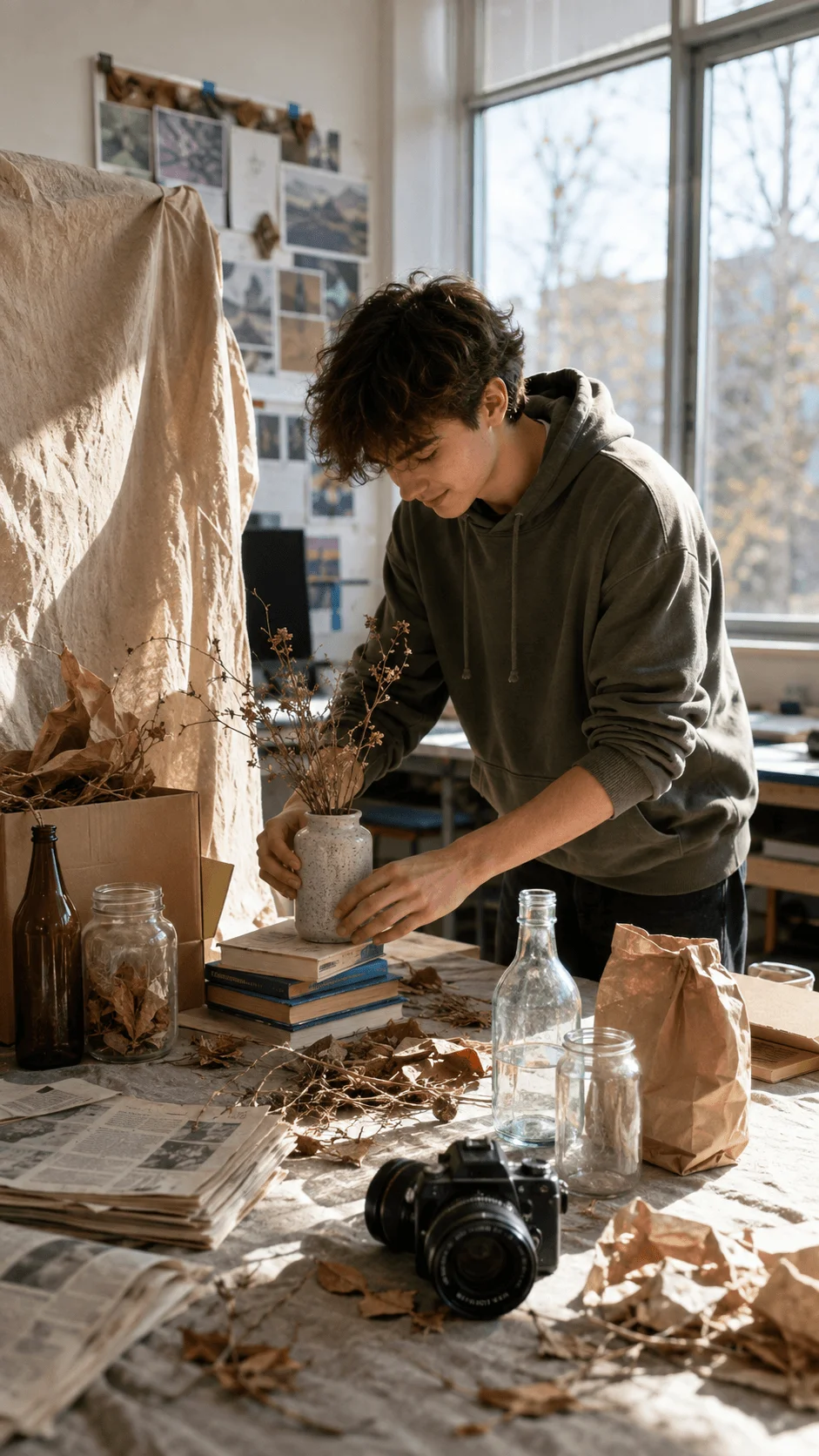
Lighting plays an important role in bringing these materials to life. Soft natural light highlights textures and subtle details, making recycled objects appear artistic rather than ordinary. Students should experiment with different angles to discover how light creates shadows and emphasizes patterns on wood, paper, or glass.
This project also teaches resourcefulness. Instead of relying on expensive studio accessories, students learn that imagination is often the most valuable creative tool. Their photographs become unique because every prop tells its own story of reuse and environmental responsibility.
Biodiversity Around School
Every school campus contains more life than students often realize. Trees, flowers, insects, birds, butterflies, and small plants create an ecosystem that deserves attention. A biodiversity photography project encourages students to slow down and observe the natural world with curiosity while improving their photography skills.
This idea continues to grow in popularity because schools increasingly include biodiversity education within environmental programs. Photography helps students document seasonal changes and understand how different species contribute to a healthy environment.
Students should begin by exploring different parts of the campus at various times of day. Morning often brings birds searching for food, while butterflies become more active as temperatures rise. Patience is essential because wildlife rarely appears on command.
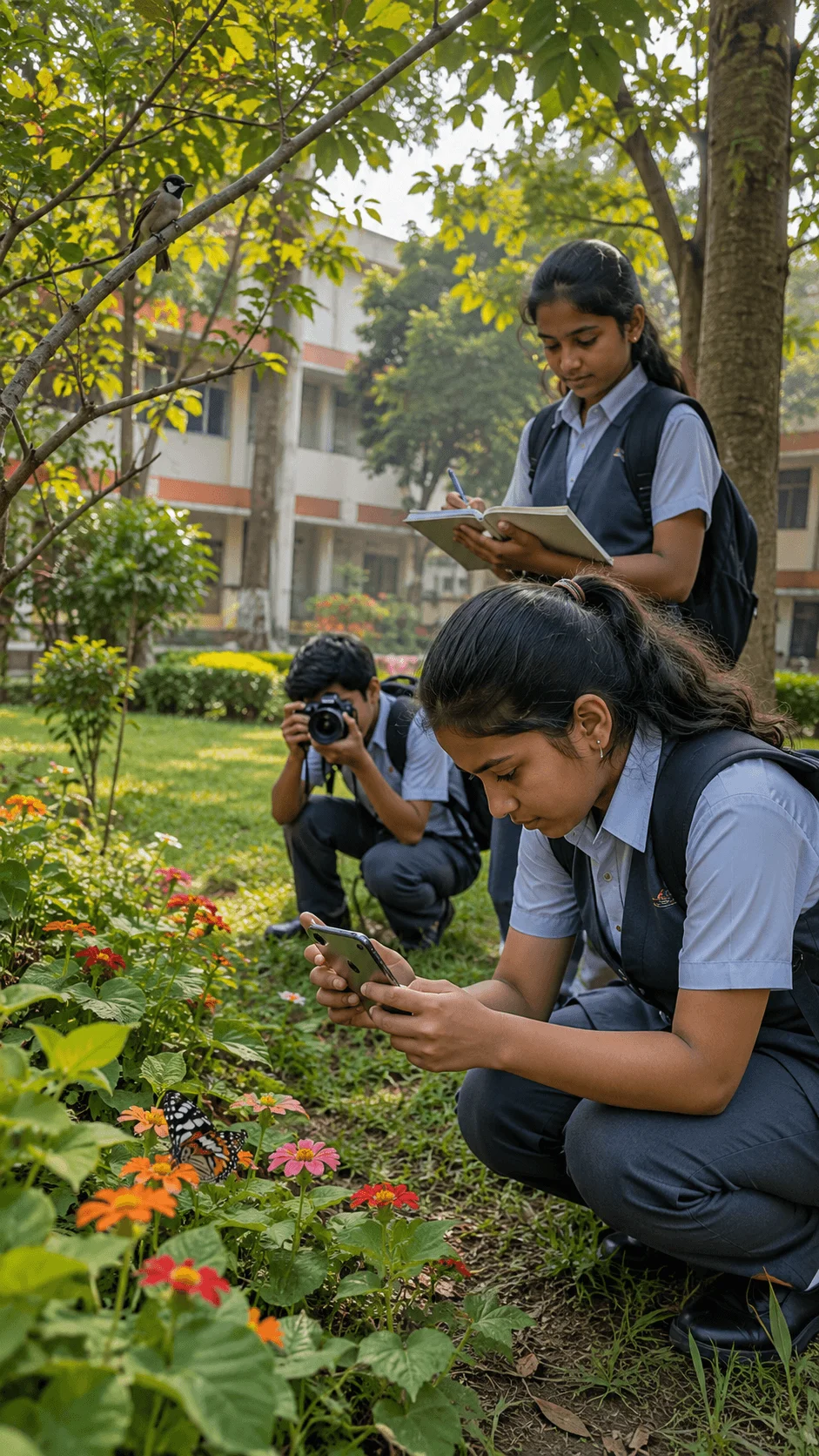
Close observation helps students capture details such as the delicate wings of a butterfly, dew on flower petals, or birds resting among tree branches. Even common plants become interesting subjects when photographed from creative perspectives that reveal patterns, colors, and textures.
Students should avoid disturbing wildlife while photographing it. Respecting natural habitats teaches ethical photography practices and reinforces the importance of protecting local ecosystems.
By documenting biodiversity, students create a visual record of the natural environment surrounding their school while developing greater appreciation for the living world that often goes unnoticed.
Storytelling Through School Gardens
School gardens offer endless opportunities for meaningful visual storytelling. Instead of taking random photographs of flowers and vegetables, students can document the complete journey of a garden from preparation to harvest.
This project allows students to understand that every garden tells a story of patience, teamwork, and sustainability. Photography captures each stage of that story in a way that words alone cannot.
Students can photograph volunteers preparing soil, planting seeds, watering young plants, removing weeds, and eventually harvesting vegetables or flowers. Each image becomes one chapter in a larger visual narrative.
Natural light changes throughout the seasons, creating different moods within the garden. Fresh spring growth often produces bright green colors, while autumn introduces warm tones that create rich and inviting photographs.
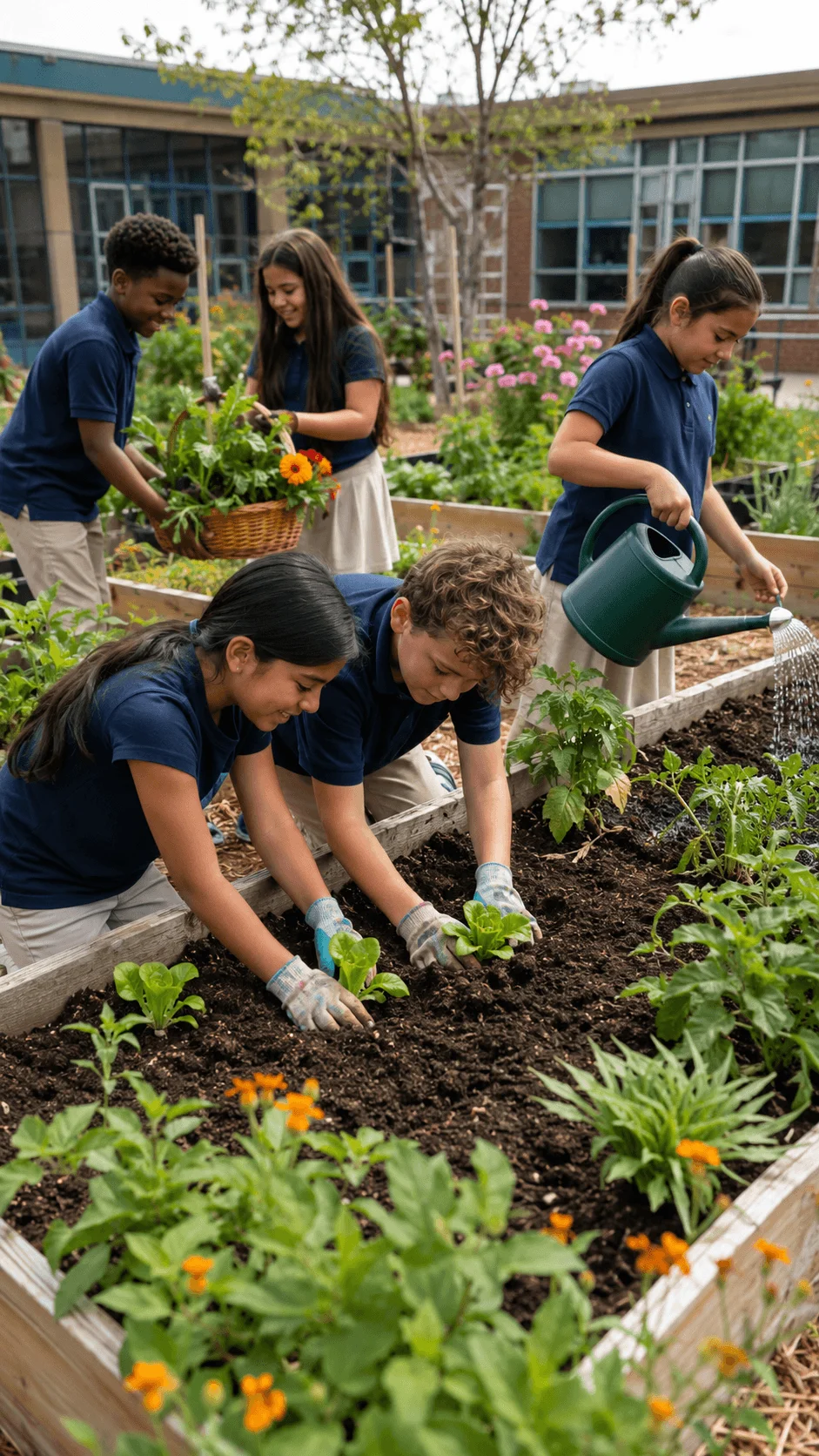
Composition should guide viewers through the story. Wide photographs establish the setting, while closer images reveal textures such as soil, leaves, roots, and flowers. Portraits of students working together add emotion and highlight the educational value of the project.
This photography idea encourages students to appreciate how small daily efforts eventually produce beautiful results. It also demonstrates that sustainability depends on consistent care rather than quick solutions.
Analog Inspired Sustainable Editing
Photography trends have shifted toward natural looking images that celebrate authenticity instead of excessive editing. Analog inspired editing reflects this movement by producing photographs that feel warm, timeless, and realistic.
Students often believe every photograph requires dramatic filters, heavy sharpening, or unrealistic colors. This project teaches the opposite. Small adjustments usually create stronger results than extreme editing.
Simple improvements such as correcting exposure, balancing contrast, and maintaining natural colors preserve the original atmosphere of the scene. Gentle film inspired tones can add character while keeping photographs believable.
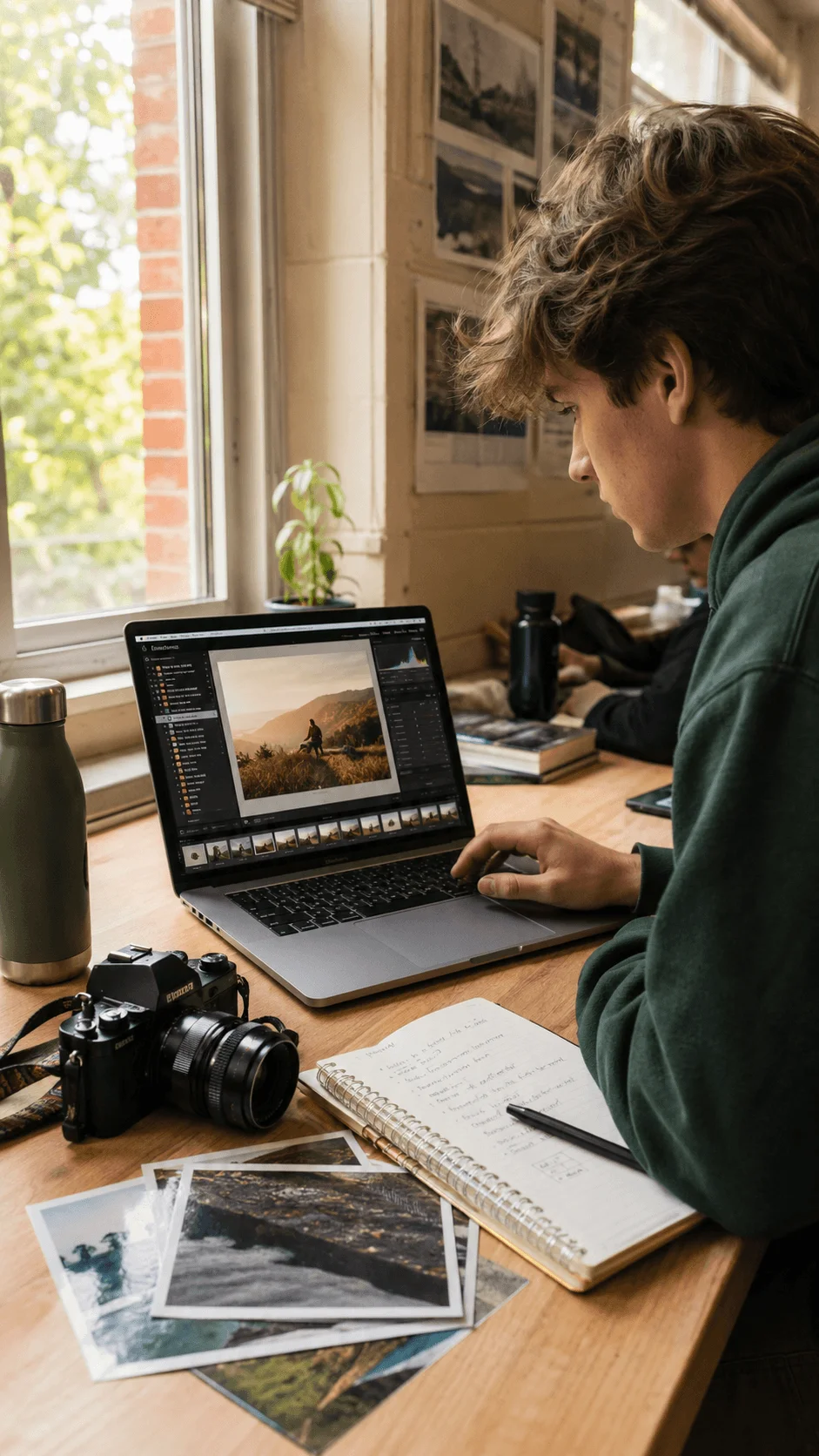
Students should avoid editing every image differently. Developing a consistent editing style helps create a recognizable visual identity while making photo collections appear more professional.
This project also introduces digital sustainability. Instead of saving countless edited copies, students can organize their photographs carefully, remove unnecessary duplicates, and preserve only their strongest work. Good organization reduces digital clutter and encourages thoughtful editing habits.
Climate Awareness Photo Essays
Photography becomes especially powerful when it communicates important environmental messages. Climate awareness photo essays encourage students to explore local environmental challenges through a connected series of images rather than isolated photographs.
Students may choose themes such as water conservation, recycling, energy saving, tree planting, clean transportation, or reducing waste. Each photograph contributes to a larger story that encourages viewers to reflect on everyday environmental choices.
Successful photo essays require planning. Students should think about the beginning, middle, and ending of their story before taking photographs. This approach helps create stronger visual narratives that keep viewers engaged from one image to the next.
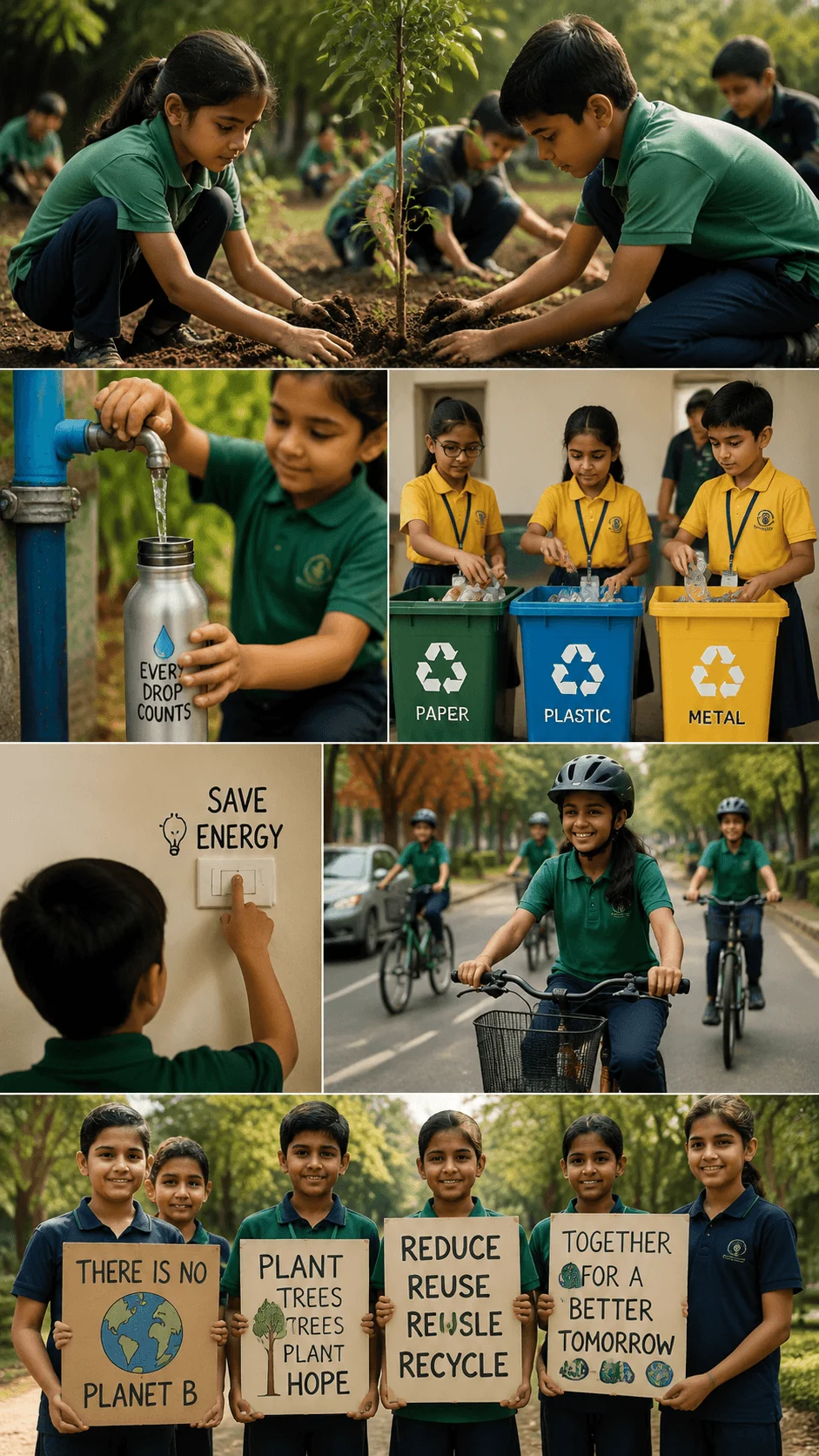
Including people within the photographs often creates greater emotional impact. Images of students planting trees, sorting recyclable materials, or conserving water make environmental issues feel personal rather than distant.
Photography allows students to communicate positive action rather than focusing only on problems. Hopeful stories inspire audiences and encourage meaningful change.
AI Assisted Sustainable Photography Workflow
Artificial intelligence has become an important tool in modern photography education, but students should learn to use it responsibly. Rather than replacing creativity, AI can support photographers by simplifying routine tasks.
Students can use AI to organize photo collections, identify duplicate images, suggest keywords, or improve basic exposure adjustments. These tools save time while allowing photographers to focus on storytelling and composition.
Responsible use remains essential. Students should continue making creative decisions themselves instead of depending entirely on automated editing. Their personal vision gives photographs originality and emotional value.

Teachers can also introduce discussions about ethics, authenticity, and responsible technology use. These conversations help students understand that technology should enhance creativity rather than replace it.
Learning balanced AI practices prepares students for future careers while encouraging thoughtful and environmentally responsible digital workflows.
Slow Photography Challenge
Modern cameras allow photographers to capture hundreds of images within minutes. While this convenience offers flexibility, it sometimes reduces careful observation. The Slow Photography Challenge encourages students to photograph with greater intention.
Instead of taking unlimited photographs, students challenge themselves to capture only a small number of carefully planned images during a session. This limitation encourages thoughtful composition and patience.
Students begin examining lighting, backgrounds, subject placement, and timing before pressing the shutter button. Every photograph becomes more meaningful because each decision receives careful attention.
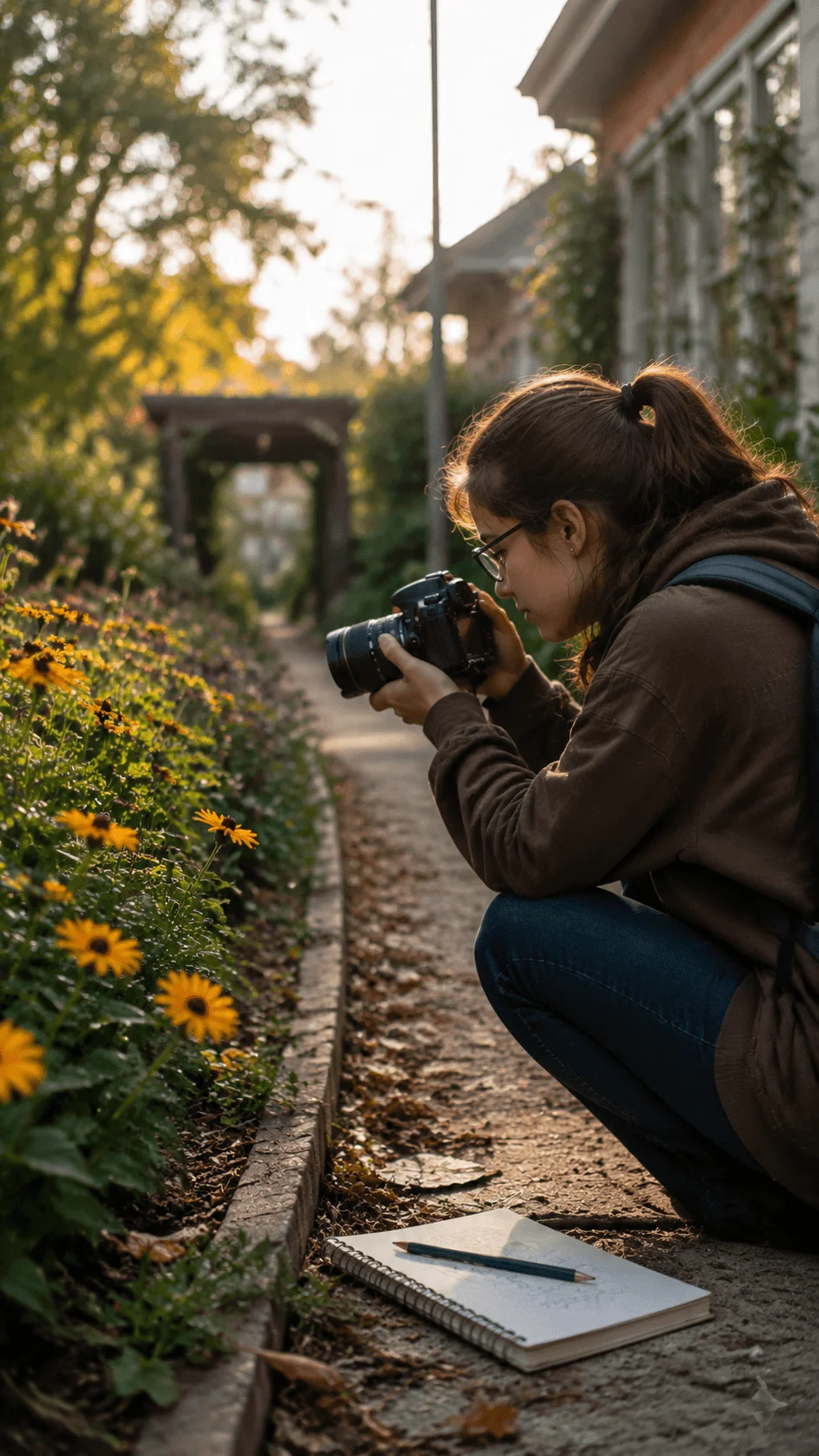
This challenge also reduces unnecessary digital storage and simplifies editing. Rather than sorting through hundreds of similar images, students work with a smaller collection of stronger photographs.
Many students discover that slowing down actually improves both creativity and technical skills because they spend more time observing their surroundings than repeatedly pressing the camera button.
Local Community Sustainability Stories
Photography extends beyond school grounds by documenting the people who actively care for the environment within the local community. Students can photograph gardeners, recycling volunteers, local farmers, environmental organizations, or community members working to improve public spaces.
This project develops communication skills because students often interview their subjects before taking photographs. Understanding personal stories helps photographers capture images with greater meaning and authenticity.
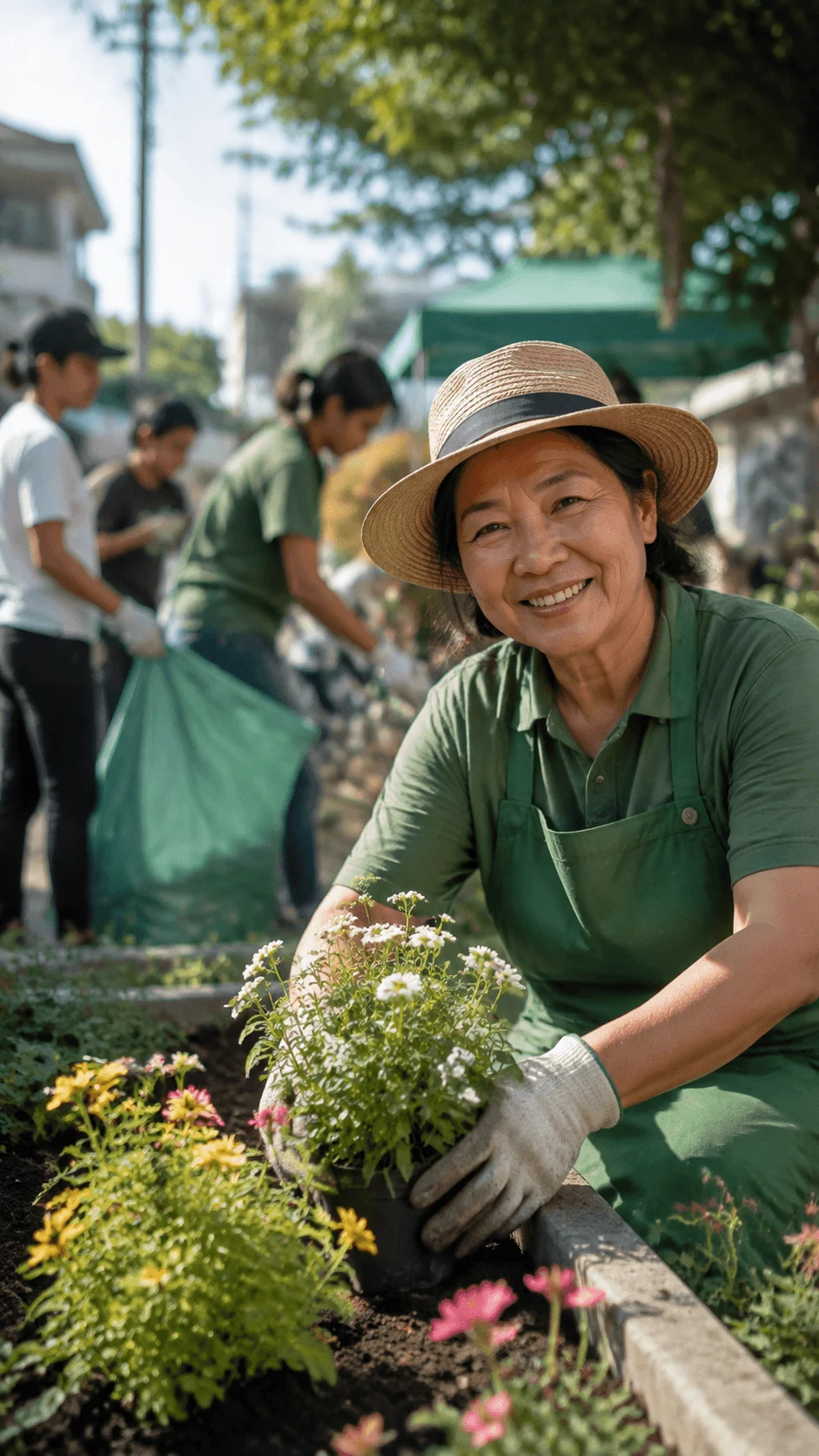
Portraits become stronger when photographed within familiar environments. A gardener surrounded by flowers or a volunteer organizing recyclable materials naturally tells a richer story than a plain background.
Students also learn that sustainability depends on ordinary people making positive choices every day. Their photographs celebrate these contributions while encouraging others to become involved.
Sustainable Fashion School Editorial
Fashion photography can also support environmental education. Instead of promoting fast fashion, students create editorials featuring second hand clothing, handmade accessories, recycled fabrics, or vintage garments.
Planning begins with selecting clothing that reflects creativity while supporting sustainable values. Students can combine colors, textures, and accessories to create stylish looks without purchasing new items.
Outdoor locations filled with natural greenery, brick walls, wooden fences, or gardens complement sustainable fashion themes while reducing the need for elaborate studio settings.

Students should pay close attention to movement, expressions, and posture. Genuine confidence creates stronger fashion portraits than dramatic poses.
This project teaches students that personal style does not depend on constant consumption. Creativity, thoughtful styling, and environmental awareness can produce beautiful fashion photography while encouraging responsible choices.
Common Photography Mistakes Students Should Avoid
Many beginners photograph without considering the background. Bright objects, clutter, or unnecessary distractions often pull attention away from the main subject. Taking a moment to simplify the composition usually produces much stronger images.
Another common mistake involves photographing in harsh midday sunlight. Waiting for softer morning or late afternoon light often improves image quality immediately.
Some students rely too heavily on editing applications. Excessive filters and unrealistic colors reduce authenticity and weaken visual storytelling. Gentle adjustments usually produce more attractive results.
Students also tend to photograph too quickly without planning their composition. Slowing down, observing carefully, and thinking about the story before pressing the shutter leads to more meaningful photographs.
Finally, many beginners overlook environmental responsibility while completing photography projects. Respecting plants, wildlife, and public spaces should always remain a priority. Great photographs should never come at the expense of nature.
Conclusion
Sustainable Aesthetic Photography School demonstrates that photography can be both visually inspiring and environmentally responsible. By combining creativity with sustainable practices, students learn to appreciate natural beauty, reduce waste, tell meaningful stories, and develop valuable artistic skills. Every project encourages careful observation, thoughtful decision making, and respect for the world around them. Whether students photograph school gardens, create portraits using natural light, document community sustainability efforts, or design creative projects with recycled materials, they gain experiences that extend far beyond the classroom. As more schools embrace environmentally conscious learning, Sustainable Aesthetic Photography School provides an inspiring way to develop creative confidence while encouraging future generations to protect the planet through responsible visual storytelling.