Eco Friendly Aesthetic Photography Air Photos
Eco friendly aesthetic photography brings together visual creativity, natural beauty, and environmental awareness in a way that feels especially relevant in 2026. Photographing landscapes and sustainable spaces from above can reveal patterns, colors, textures, and relationships that remain difficult to notice from ground level. A simple rooftop garden can become a striking geometric composition, while a river can transform into an abstract artwork when viewed from the sky.
Aerial photography has also moved beyond traditional scenic landscape images. Today, photographers can use elevated perspectives to explore sustainable architecture, green cities, wildlife habitats, farms, coastlines, restored environments, and even tiny patches of vegetation surrounded by developed areas. These subjects provide more than attractive photographs. They can tell stories about how people interact with nature and how sustainable choices shape the spaces around us.
The following ideas explore creative ways to approach aerial and air photography while keeping sustainability and visual appeal at the center.
What Is Eco Friendly Aesthetic Photography?
Eco friendly aesthetic photography focuses on creating visually appealing photographs that celebrate nature, sustainable living, environmental design, and responsible relationships with the planet. The aesthetic does not require every photograph to contain an obvious environmental message. Sometimes the connection can come from the subject itself, such as a forest, green roof, organic farm, or restored wetland.
The aerial perspective adds another creative dimension. Looking downward changes the way viewers understand familiar subjects. Trees can become patterns, rivers can resemble flowing lines, and buildings can appear as geometric shapes within a natural landscape. This unusual perspective encourages photographers to think about composition rather than simply documenting a location.
Natural colors often work particularly well with this style. Greens, browns, blues, sandy tones, and muted earth colors can create a calm visual atmosphere. However, strong contrasts can also produce beautiful results. A bright green park surrounded by gray buildings, for example, can immediately draw attention to the presence of nature within an urban environment.
Negative space also plays an important role. Leaving large areas of sky, water, sand, snow, or vegetation around a smaller subject can create a minimalist appearance. This approach can make a photograph feel peaceful while giving the main subject greater visual importance.
1. Minimalist Green Spaces From Above
One of the simplest ways to explore eco friendly aerial photography is to look for a small natural area surrounded by a much larger environment. A single tree standing in an open field, a small garden inside a city, or a patch of vegetation surrounded by pavement can create a powerful minimalist composition.
The strength of this idea comes from contrast and scale. When viewed from the ground, a tree might appear ordinary. From above, however, the surrounding environment becomes part of the composition. The viewer can immediately understand how much space the natural subject occupies compared with everything around it.
Urban parks provide particularly interesting opportunities. Look for small green spaces surrounded by roads, parking areas, rooftops, or buildings. The contrast between organic shapes and rigid architecture can create a striking visual effect.
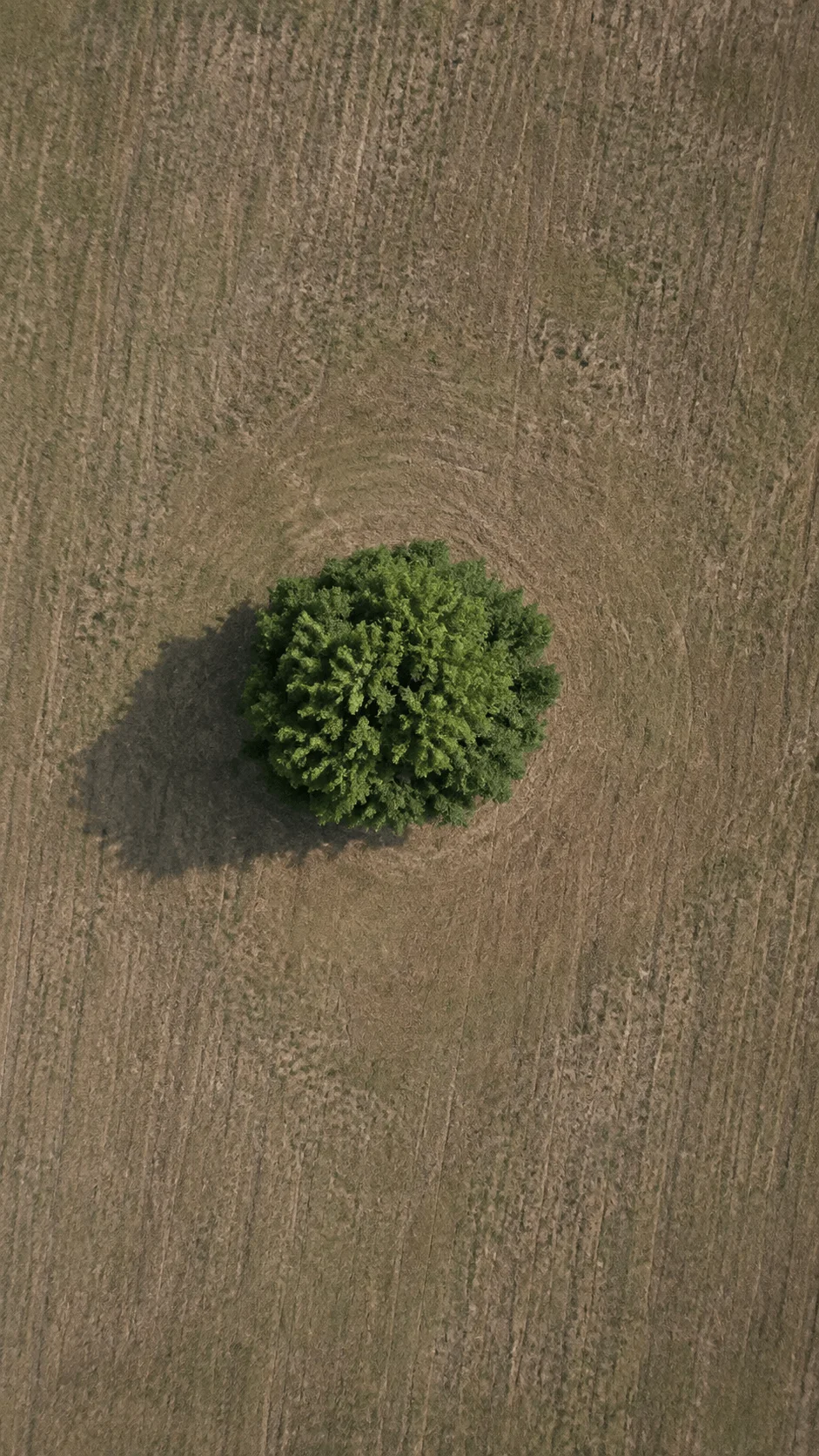
You can also experiment with seasonal changes. A green patch photographed during a dry season may look completely different from the same location after rainfall. Changes in vegetation can introduce different textures and colors while creating an environmental story.
For a stronger minimalist appearance, avoid filling the frame with unnecessary details. Give the main subject room to breathe. A small natural element surrounded by a large area of neutral color can often create more impact than a photograph filled with dozens of competing objects.
2. Abstract Water Aerial Photography
Water becomes an entirely different subject when photographed from above. Rivers, waves, wetlands, tidal areas, ponds, and coastlines can produce natural patterns that resemble abstract artwork.
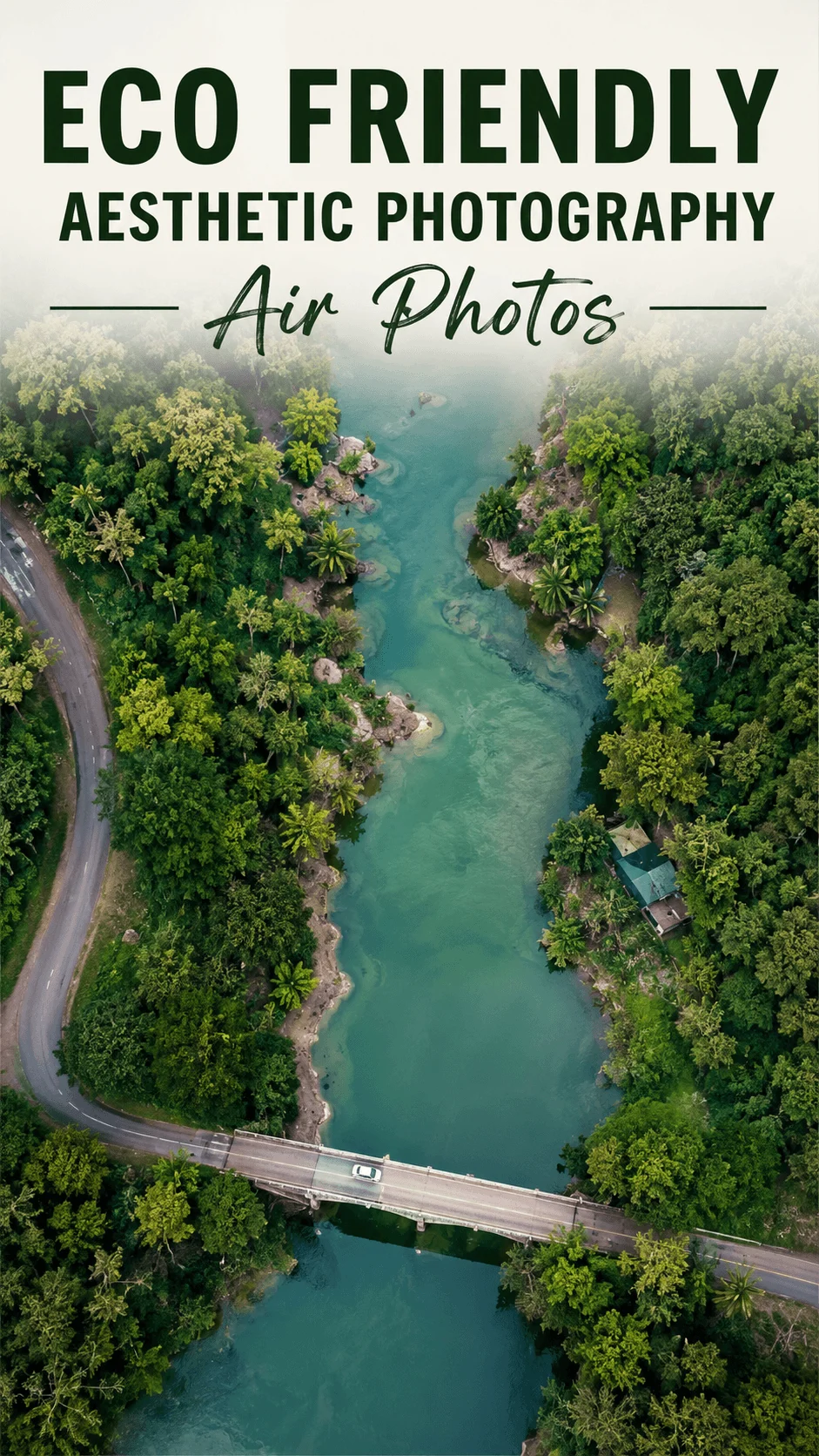
Look for flowing rivers that create curved lines across the landscape. Meandering water channels can lead the viewer through the frame naturally. Small changes in water depth can create different shades of blue, green, brown, or gray, adding visual complexity without requiring additional subjects.
Ocean waves can provide another opportunity. Instead of photographing the entire coastline, focus on the shapes created where water meets sand. Repeated waves can form parallel lines, while foam can create intricate white patterns across darker water.
Wetlands are particularly valuable for this style of nature aerial photography. Their combination of water channels, vegetation, mud, and reflections creates a layered composition. From above, these elements can appear like an intricate natural map.
Lighting can completely change the mood. Soft morning or evening light can emphasize texture, while stronger sunlight can produce defined reflections and shadows. Rather than searching only for traditionally beautiful scenery, look for unusual patterns that make viewers wonder what they are seeing.
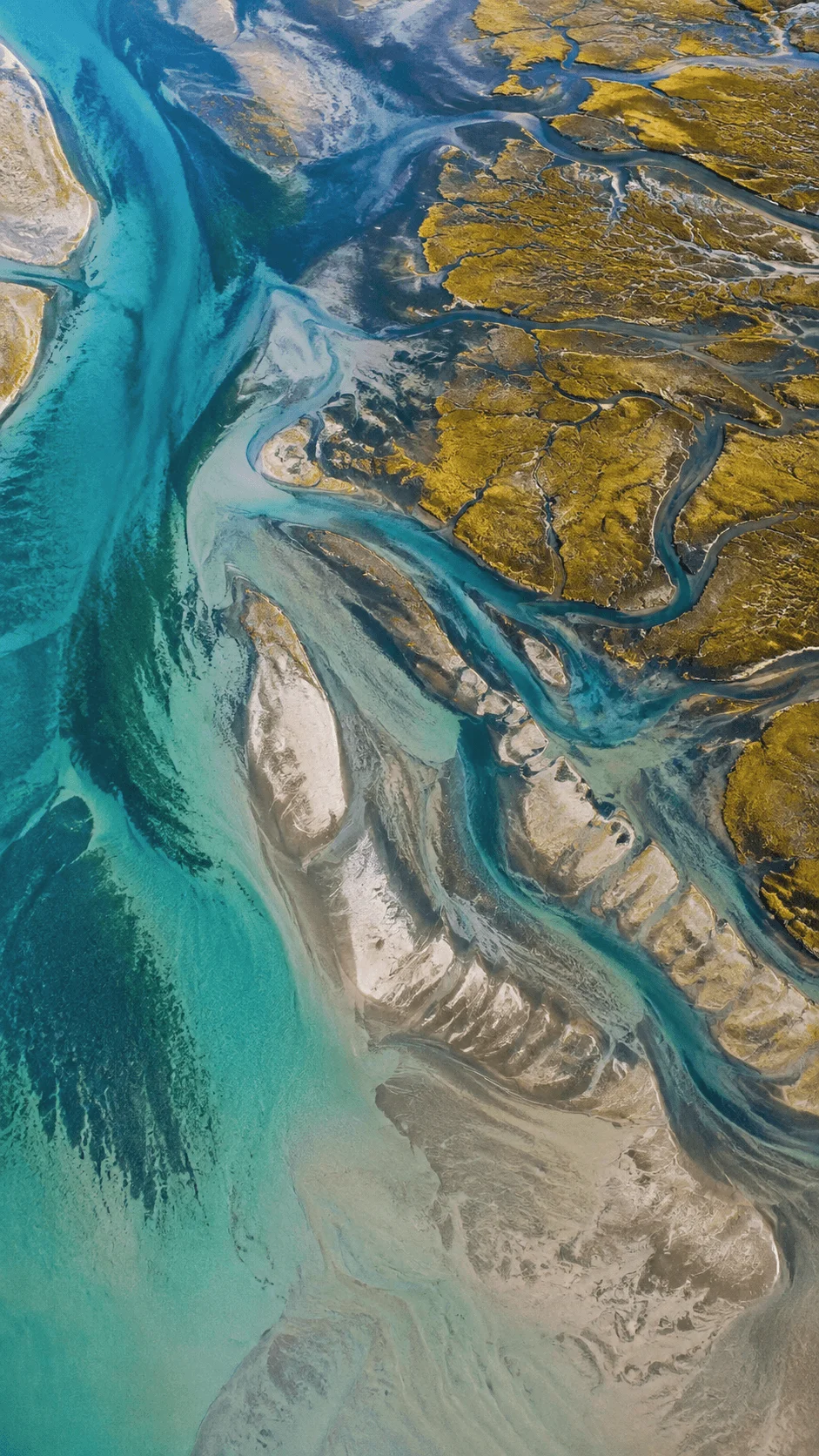
This approach makes aerial photography more artistic because the photograph does not always need to immediately reveal its subject. An abstract water image can encourage viewers to study the lines, shapes, and textures before recognizing the landscape.
3. Green Rooftop Photography Ideas
Cities provide some of the most interesting subjects for sustainable photography. Green rooftops, rooftop gardens, urban farms, planted terraces, and buildings surrounded by vegetation can create beautiful compositions when photographed from above.
A green rooftop can become a visual island within a dense city. The contrast between plants and concrete immediately communicates the relationship between nature and urban development.
Try looking for rooftops with clearly defined shapes. Rectangular gardens, circular seating areas, winding paths, and repeating rows of plants can create strong geometric compositions. When several green rooftops appear together, the photograph can show how vegetation spreads through an urban environment.
Rooftop gardens also offer an opportunity to combine different textures. Leaves, soil, wooden surfaces, concrete, glass, and metal can appear together in one frame. These contrasting materials can make the image more visually interesting.
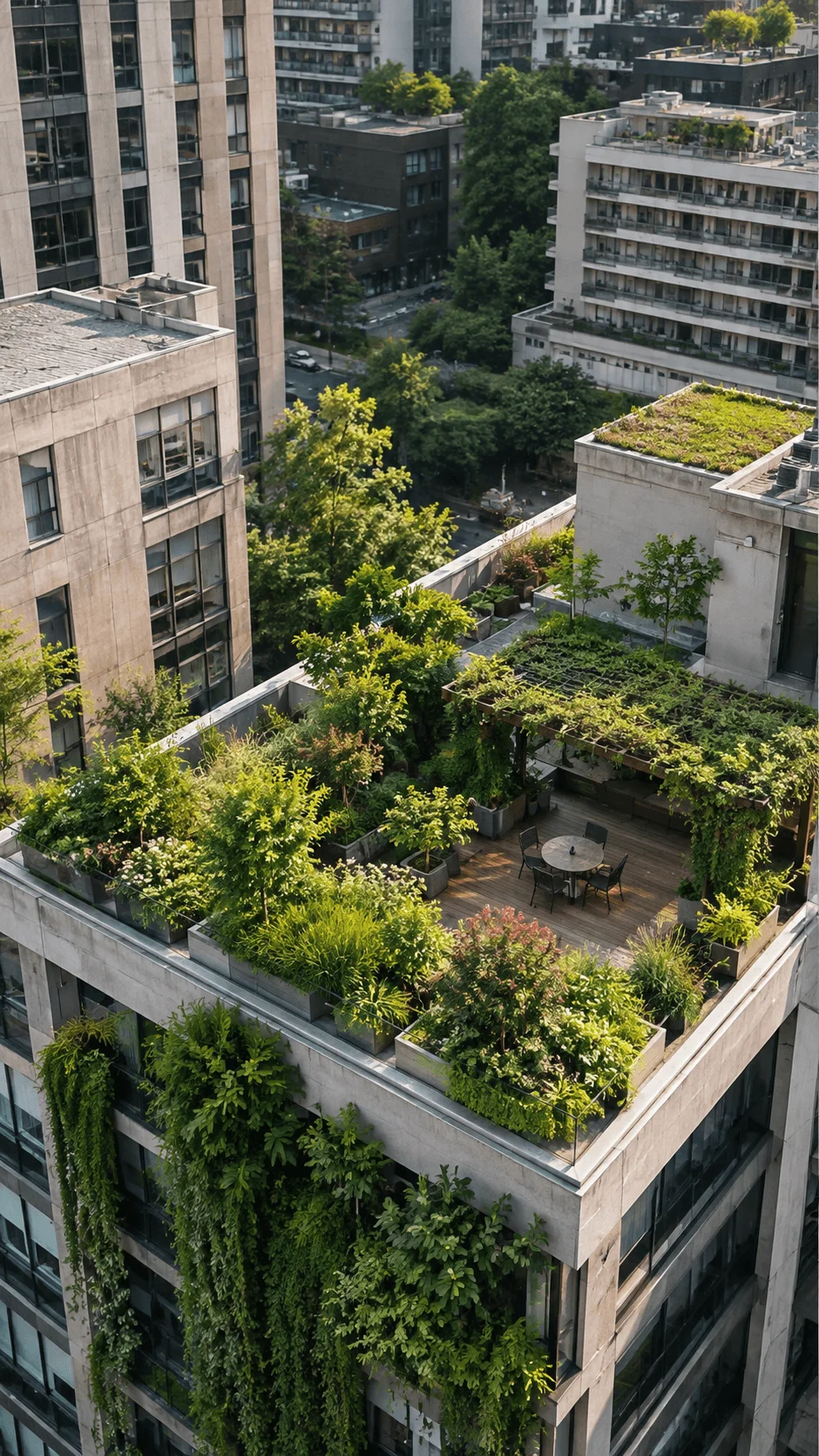
You can also use surrounding buildings as part of the story. A single green rooftop surrounded by conventional structures creates an obvious visual contrast. Several planted rooftops spread throughout a neighborhood can communicate a different message by showing how nature can become integrated into urban design.
The best images do not necessarily need to show an entire city. Sometimes a carefully composed view of one building and its surrounding vegetation tells a stronger story.
4. Eco Friendly Architecture From Above
Sustainable architecture offers an excellent combination of design and environmental photography. Modern buildings may incorporate solar panels, planted areas, natural landscaping, water management systems, bicycle facilities, and other features that become particularly interesting from an elevated viewpoint.
Aerial photography can reveal relationships that ground level photography often hides. For example, a building might appear conventional from the street, while an overhead photograph reveals an extensive green roof or carefully designed landscape.
Geometry is especially important here. Buildings naturally create straight lines, rectangles, circles, grids, and repeated patterns. When these structures interact with trees, gardens, lawns, or water, photographers can create compositions that combine human design with organic shapes.
Solar panels can also become visually interesting subjects. Rows of panels can create repetition and symmetry, especially when photographed from directly above. Their dark surfaces may contrast strongly with green vegetation or pale rooftops.
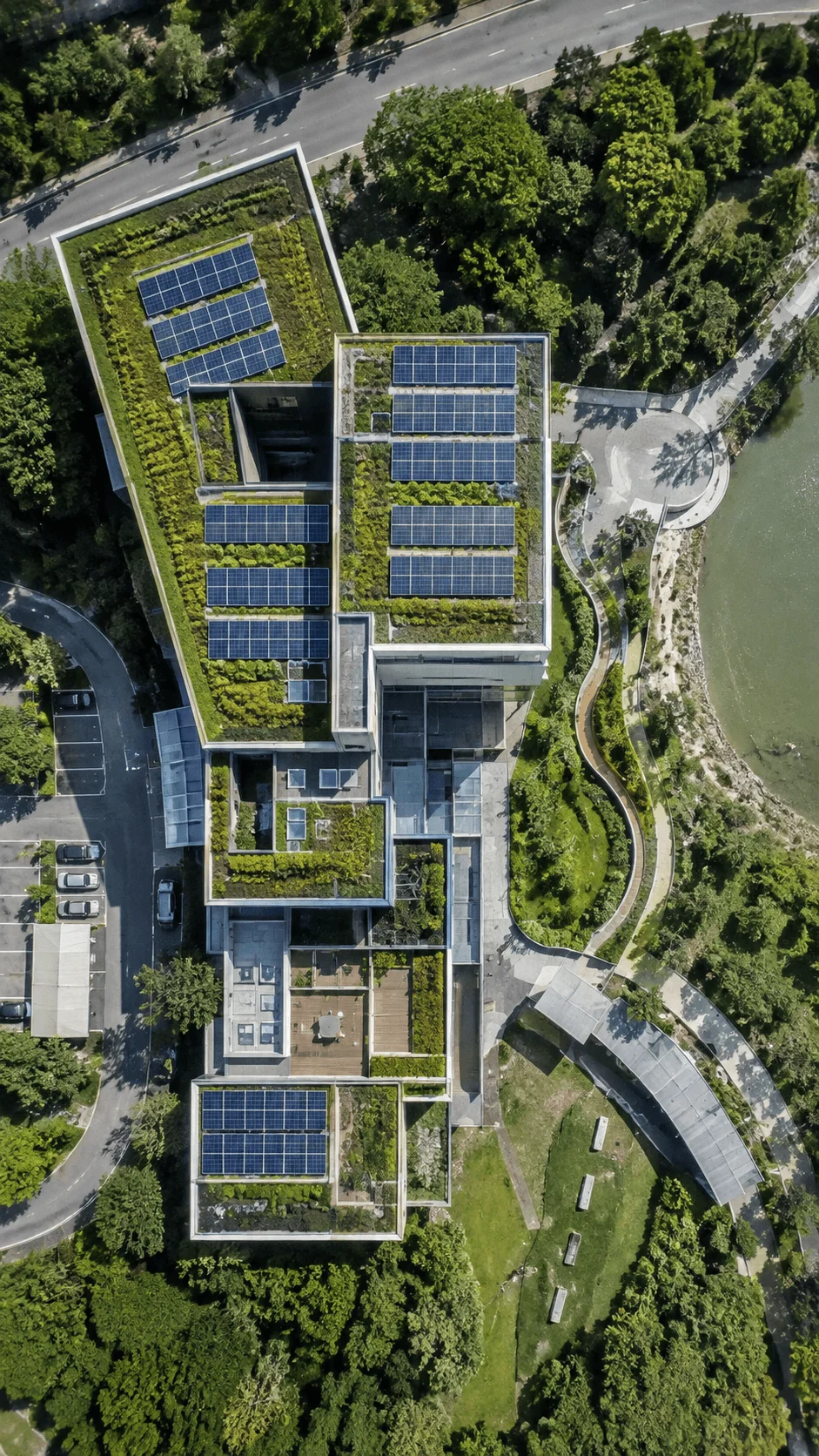
Another interesting approach involves photographing sustainable buildings within their broader surroundings. Instead of focusing only on the structure, show how it interacts with parks, trees, roads, water, and neighboring buildings.
This creates a stronger environmental story because the photograph becomes about the relationship between architecture and nature rather than architecture alone.
5. Aesthetic Nature Geometry From Above
Nature contains countless patterns that become much easier to recognize from the air. Forests, sand dunes, agricultural fields, rivers, rock formations, flower fields, and coastlines can all create geometric compositions without human intervention.
Forests can produce repeating textures through rows of trees and variations in vegetation. Sand dunes can create smooth curves that resemble carefully designed artwork. Agricultural fields can form large blocks of different colors and textures.
Rivers provide another natural source of geometry. Their curves can create strong leading lines that guide the viewer across the photograph. When a river passes through contrasting vegetation, the boundary between water and land can become the main visual feature.
The goal is not to force nature into a geometric style. Instead, look for patterns that already exist and frame them intentionally.
Symmetry can work beautifully when a landscape contains naturally balanced shapes. Repetition can create a calmer composition, while irregular patterns can make an image feel more dynamic.
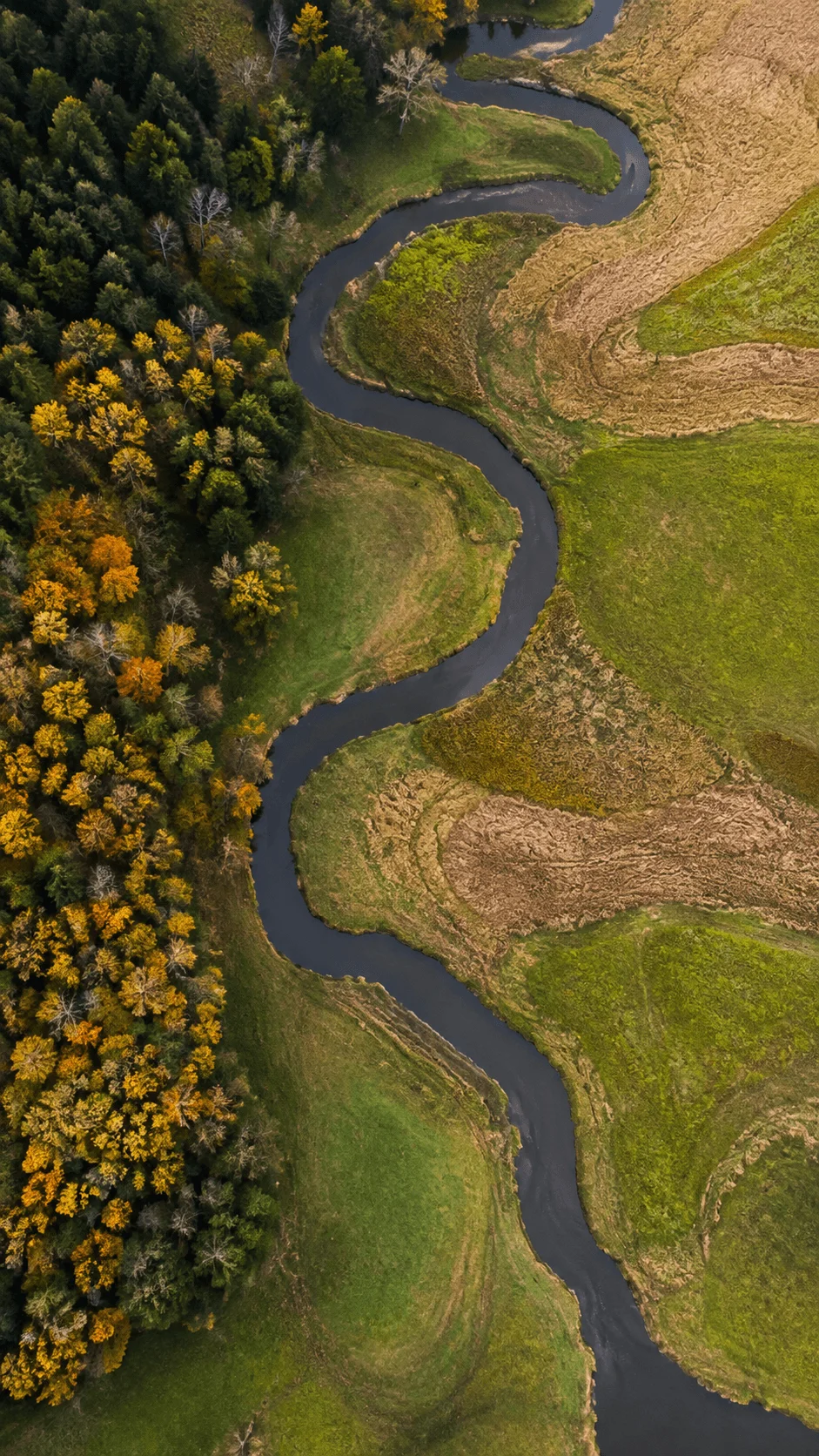
Color also matters. A field with several shades of green may create subtle visual depth, while autumn vegetation can introduce stronger contrasts. Sand, water, vegetation, and exposed rock can create natural palettes without artificial editing.
This idea demonstrates why aerial photography can be so powerful. A landscape that appears ordinary at ground level may become an abstract composition once its full structure becomes visible.
6. Sustainable Farm Aerial Photography
Sustainable farms provide an opportunity to combine agricultural photography with environmental storytelling. Organic farms, community gardens, regenerative agriculture projects, agroforestry systems, and carefully planned irrigation areas can all create visually compelling aerial scenes.
From above, agricultural landscapes often reveal patterns that are impossible to appreciate from the ground. Rows of crops create lines, fields form geometric blocks, and trees can divide growing areas into natural sections.
Look for places where farming and nature exist together. A field surrounded by trees can create a strong contrast between cultivated and natural areas. Farms that incorporate tree planting or mixed vegetation may produce more varied textures than large areas containing a single crop.
Community gardens can offer a smaller scale alternative. Raised beds, pathways, plants, compost areas, and natural landscaping can create colorful compositions when arranged within a limited space.
Water management can also become part of the photograph. Irrigation channels, ponds, rainwater collection areas, and natural drainage patterns can create lines and shapes across agricultural landscapes.
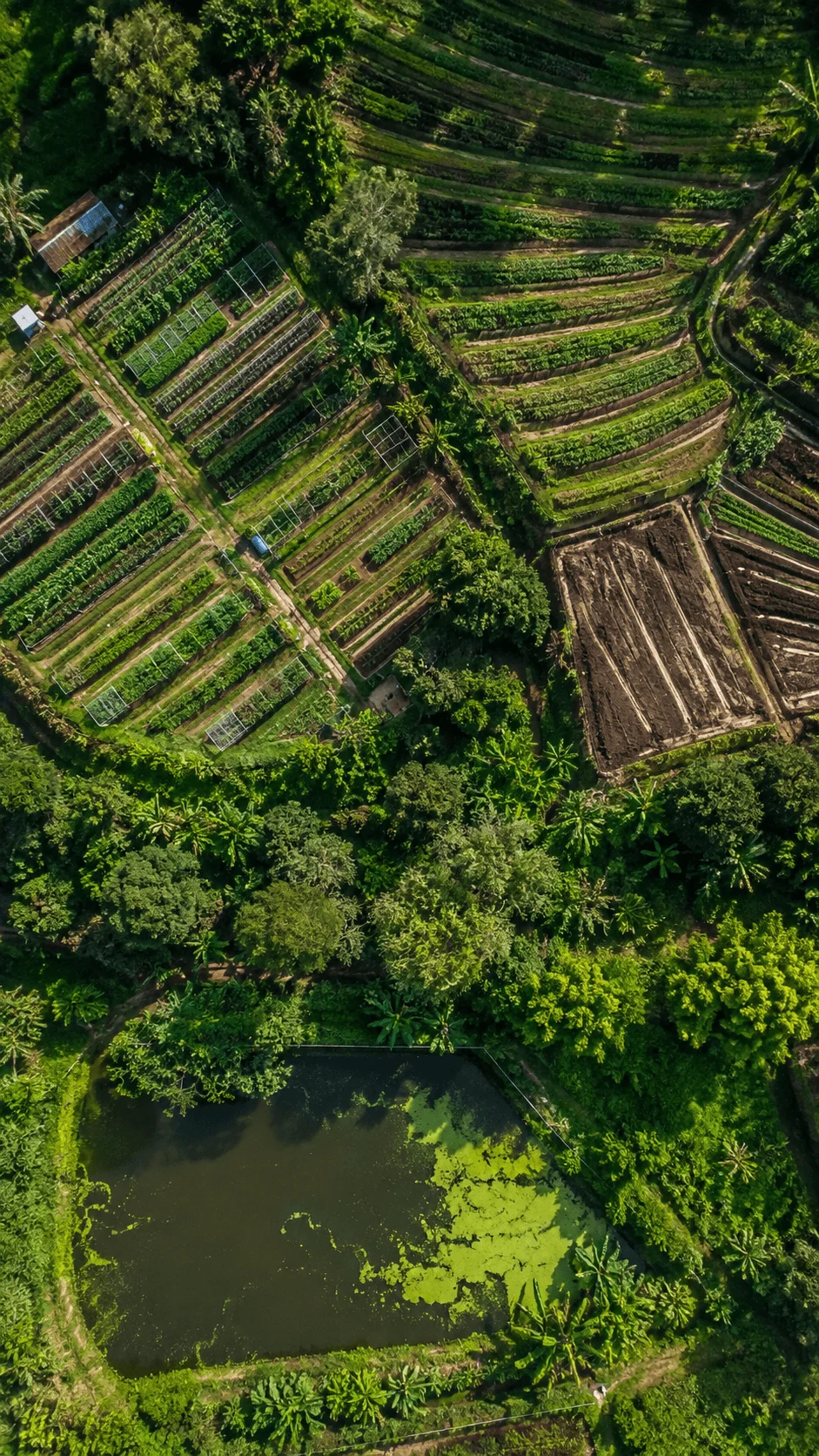
The most effective photographs can communicate more than the beauty of farming. They can show how food production interacts with soil, water, vegetation, and surrounding ecosystems.
7. Eco Friendly Coastal Aerial Photography
Coastal environments offer some of the richest subjects for eco friendly landscape photography. Beaches, mangroves, dunes, tidal areas, wetlands, and coastal vegetation create constantly changing patterns that work particularly well from above.
Aerial views can reveal the exact shape of a coastline. Curving beaches can create natural leading lines, while tidal water can produce intricate patterns across sand and mud.
Mangroves are especially interesting because their dense root systems and waterways create complex shapes. From above, these environments can resemble natural networks spreading across coastal areas.
Dunes provide another strong subject. Their repeating curves and changing shadows can create minimalist compositions. During softer light, shadows emphasize the shape of individual dunes and give the landscape greater depth.
Photographers can also document restored coastal environments. Newly planted vegetation or areas protected from erosion can create a visual story about environmental recovery.
The goal should not be to disturb the environment for the photograph. Coastal ecosystems can contain sensitive wildlife and vegetation, so photographers should choose appropriate locations and maintain respectful distances.
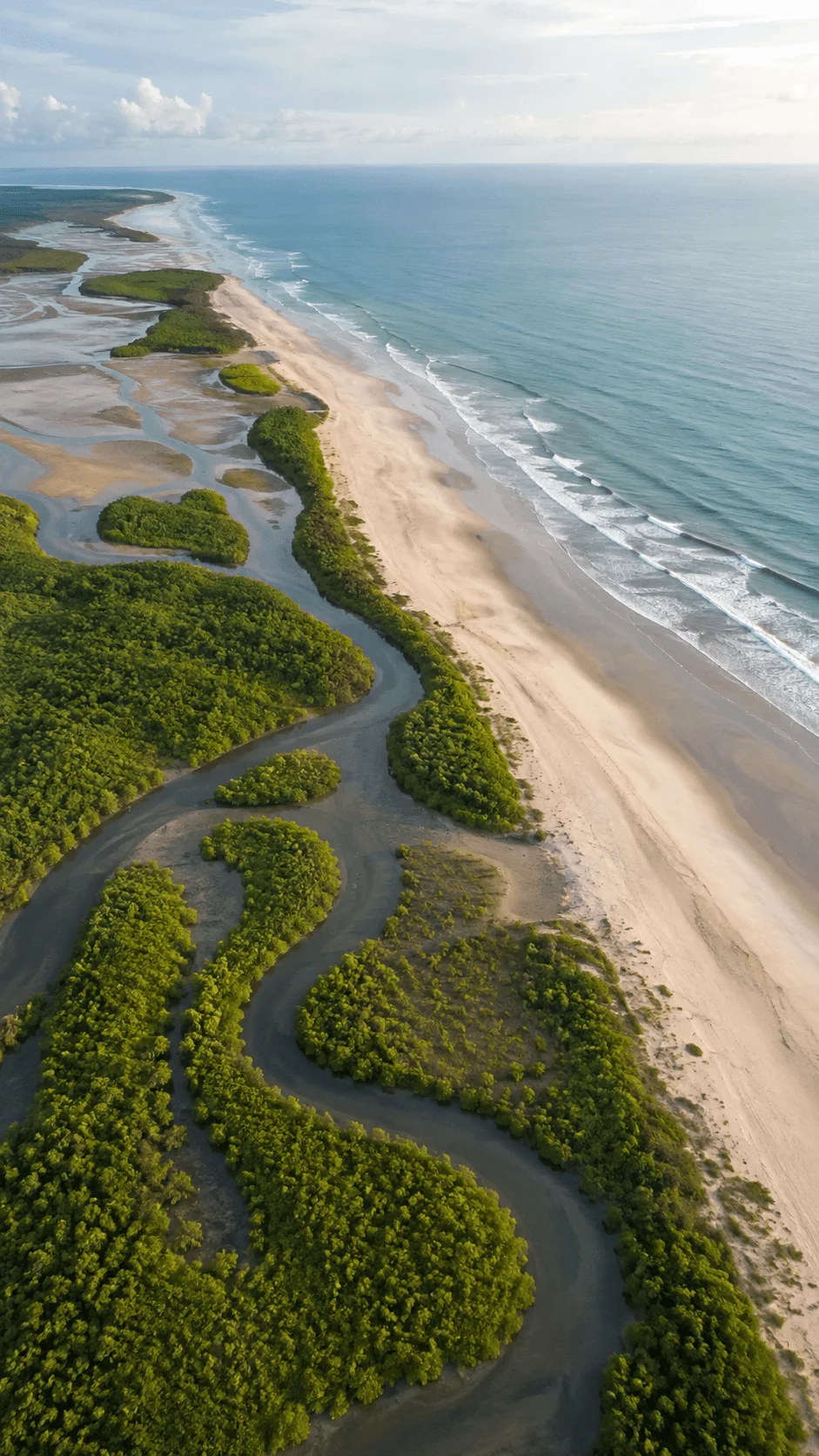
A beautiful coastal photograph becomes more meaningful when it encourages viewers to notice the ecological importance of the landscape rather than seeing it only as a scenic destination.
8. Nature Restoration Photography From Above
Nature restoration provides one of the most meaningful subjects for environmental aerial photography because the images can show how landscapes change over time. Reforestation projects, restored wetlands, recovering rivers, reclaimed land, restored beaches, and newly created green spaces can all become powerful photographic subjects.
The aerial perspective works particularly well because restoration often happens across large areas. From the ground, newly planted trees or restored vegetation may appear small and scattered. From above, however, photographers can show the broader landscape and make the scale of the project easier to understand.
Before and after photography can make this idea even stronger. Photographing the same location at different stages allows viewers to see changes in vegetation, water patterns, soil coverage, and land use. Even subtle changes can become visually noticeable when the images use similar framing and perspective.
Color can also communicate progress. Newly restored areas may initially contain exposed soil and small patches of vegetation. Over time, those areas can develop richer greens and more complex textures. Placing an older photograph beside a newer image can turn these changes into a visual environmental story.
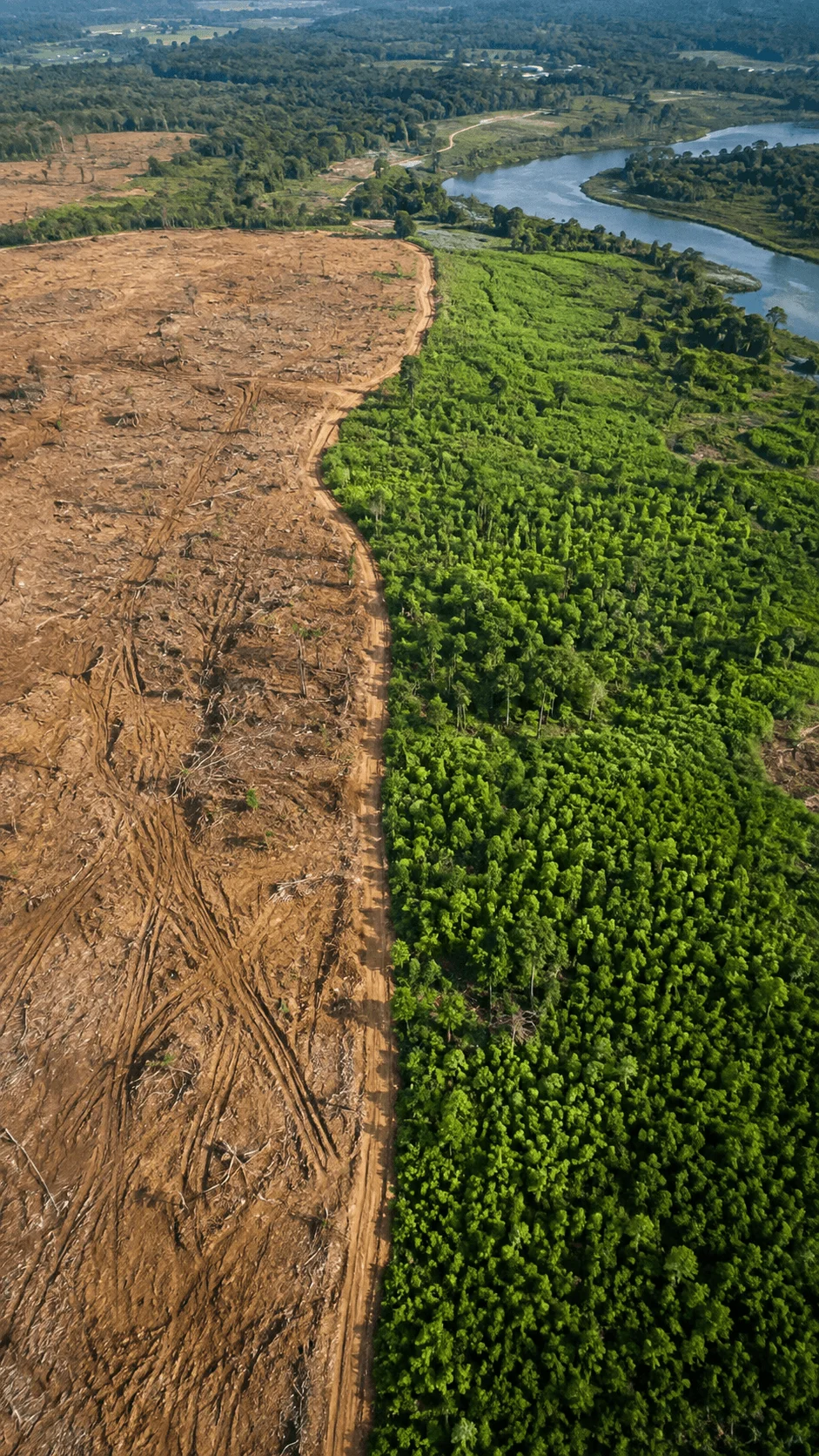
Restoration photography does not always need dramatic transformation. A small wetland recovering over several seasons can tell an important story. A previously bare area gradually becoming covered with vegetation can also demonstrate how natural environments respond when given the opportunity to recover.
Composition remains important. Try to include enough of the surrounding landscape to provide context while keeping the restoration area visually clear. Roads, rivers, forests, fields, or buildings around the restored area can help viewers understand what has changed.
This approach makes sustainable photography more than an aesthetic exercise. It gives the photograph a purpose and allows viewers to connect visual beauty with environmental improvement.
9. Sustainable City Photography From Above
Cities may seem like unlikely subjects for nature photography, but aerial views can reveal how urban environments incorporate green spaces and sustainable infrastructure. Parks, tree lined streets, community gardens, bicycle routes, solar installations, pedestrian spaces, and planted areas can all create interesting compositions.
The contrast between natural and constructed surfaces is one of the strongest features of urban aerial photography. Gray roads and buildings can create a structured background while trees and parks introduce softer organic shapes.
Try searching for locations where vegetation interrupts large areas of concrete. A small park surrounded by buildings can create a strong focal point. A tree lined road can form a natural leading line through a dense neighborhood.
Sustainable transportation can also become part of the composition. Bicycle paths can create long curved or straight lines that contrast with surrounding roads. Pedestrian areas and public green spaces can add additional shapes and textures.
Solar installations offer another interesting subject. Large collections of solar panels often create repetitive geometric patterns that look very different from above. Combining these panels with surrounding vegetation can produce a photograph that communicates both technology and environmental responsibility.
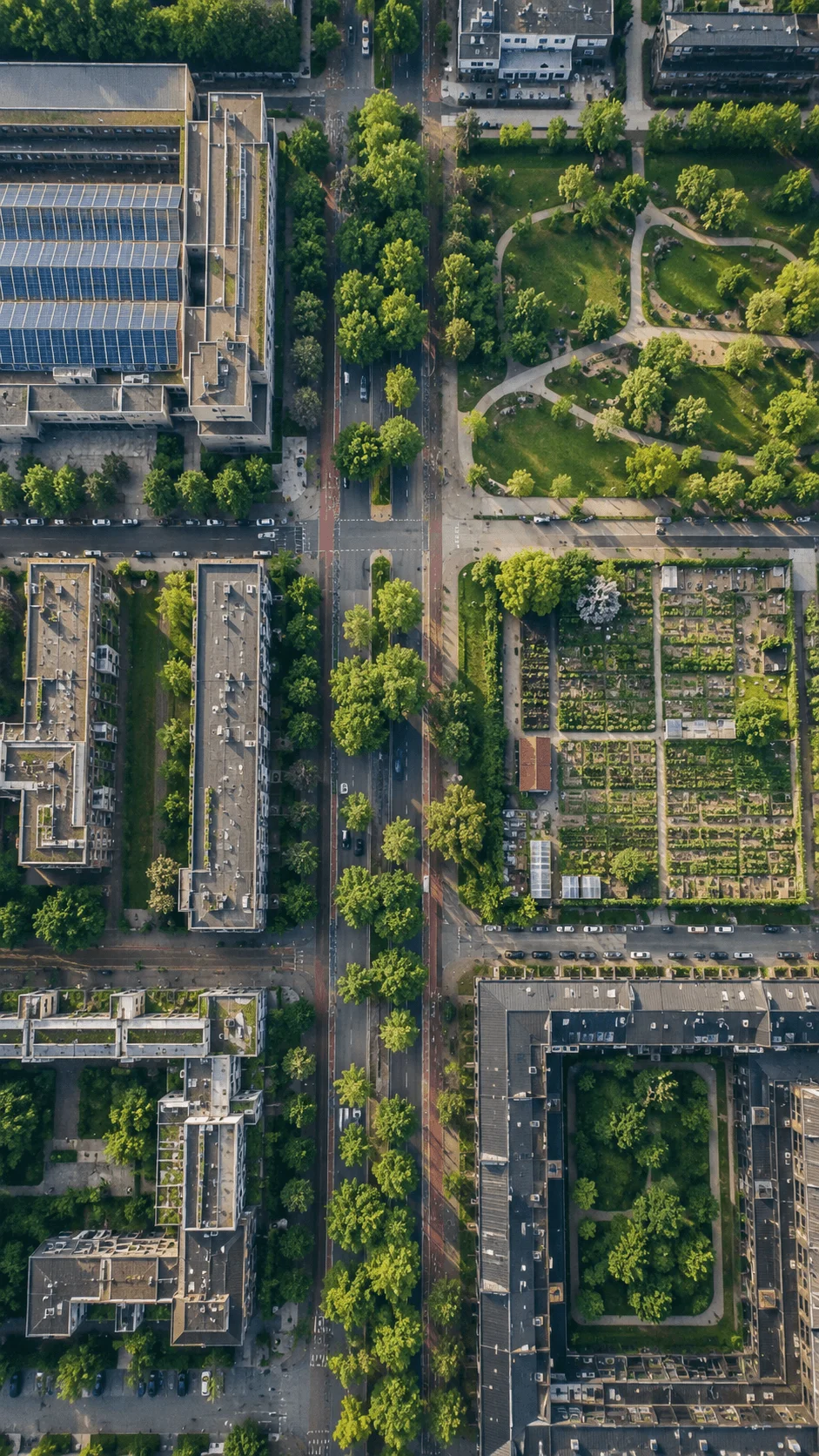
Urban gardens can provide smaller and more colorful subjects. Rows of plants, walking paths, raised beds, and surrounding buildings can create a layered composition that tells a story about sustainable living within a developed environment.
The most effective eco friendly aerial photography does not present cities as the opposite of nature. Instead, it can show how natural elements and human development can exist together.
10. Wildlife Habitat Aerial Photography
Wildlife habitat photography focuses on the environment surrounding animals rather than simply capturing close photographs of individual species. This approach can create a stronger sense of scale and demonstrate why habitats matter.
Wetlands, forests, grasslands, coastlines, deserts, and open plains can all provide interesting subjects. From above, the viewer can understand the size and structure of these environments while seeing animals as small elements within a much larger landscape.
This visual approach can communicate an important message. An animal may appear tiny compared with its habitat, which emphasizes how dependent wildlife is on large areas of healthy natural environments.
Birds can be particularly interesting subjects in wetlands and coastal areas. Groups of birds can create patterns across water or land, while individual animals can provide a focal point within a much larger composition.
However, wildlife photography requires responsibility. Photographers should avoid flying too close to animals or creating unnecessary noise and disturbance. Sensitive nesting areas and protected habitats may have specific restrictions, so research the location before planning a photography session.
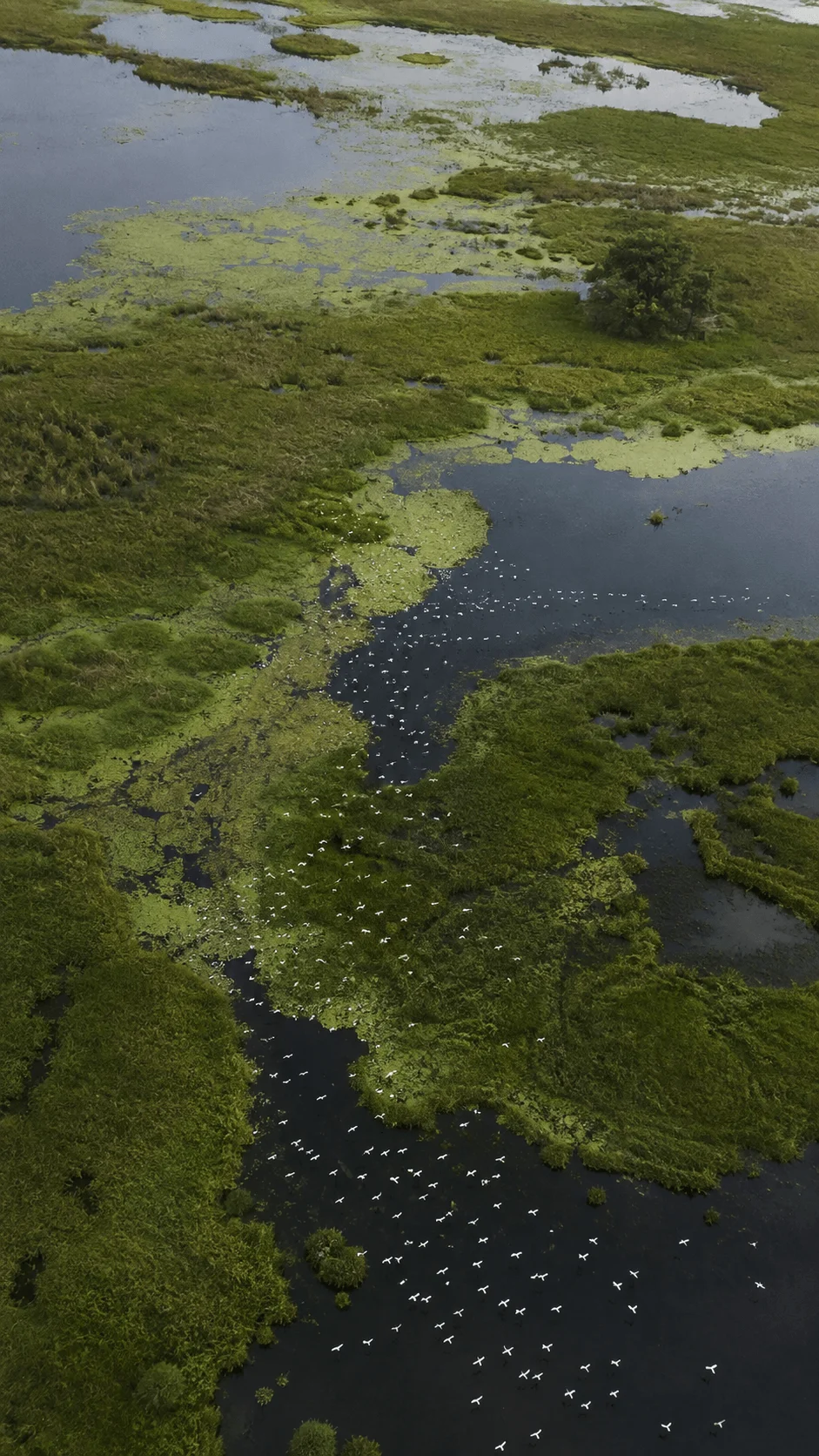
The best wildlife habitat photographs often require patience rather than aggressive pursuit of the subject. Instead of trying to get closer, allow the landscape itself to become the main part of the composition.
Color can also help establish the atmosphere. Green wetlands, blue water, brown earth, and natural vegetation can create harmonious palettes. Strong contrasts between animals and their surroundings can also help viewers notice wildlife without disturbing it.
This approach connects aesthetic nature photography with conservation awareness. The photograph becomes a reminder that wildlife exists within complex ecosystems rather than existing separately from the environment.
11. Top Down Sustainable Living Photography
Aerial photography does not always require a huge landscape. Some of the most creative images can come from relatively small scenes photographed from directly above.
Top down sustainable living photography focuses on environmentally conscious objects, activities, and spaces arranged into an attractive composition. Natural materials, plants, reusable items, gardening tools, bicycles, outdoor activities, and sustainable products can all become subjects.
The advantage of this perspective is control. Unlike a large landscape, a small scene allows the photographer to think carefully about placement, color, texture, and negative space.
Natural materials can create a warm visual atmosphere. Wood, woven materials, leaves, stone, cotton fabrics, and plants can introduce organic textures. Combining these elements with sustainable lifestyle objects can create an image that feels both artistic and informative.
Gardening provides another excellent subject. A top down view of a small garden can show rows of plants, soil, tools, pathways, and containers. The different shapes and textures can create a composition that looks almost like an illustration.

Outdoor sustainable activities can also work well. A bicycle beside natural surroundings, a picnic using reusable items, or a gardening scene can communicate sustainable living without relying on complicated visual effects.
Color coordination can make these photographs particularly attractive. Earthy greens, browns, beige tones, and natural wood colors can create a calm aesthetic. Small touches of brighter color can then become focal points.
This approach is useful because it brings sustainability into everyday life. Instead of presenting environmental photography only through forests and oceans, it shows that ordinary choices and activities can also become creative subjects.
12. Satellite Inspired Environmental Photography
Satellite imagery offers one of the most unusual sources of inspiration for modern aerial photography. Extremely high perspectives can transform familiar landscapes into abstract compositions filled with shapes, lines, textures, and colors.
Photographers can take inspiration from the way satellite imagery reveals forests, rivers, agricultural areas, cities, coastlines, and water systems. At a very high perspective, individual objects disappear and larger environmental patterns become the focus.
This concept can influence how photographers approach drone photography as well. Instead of flying close to a subject, they can consider how the entire landscape appears as a composition.
A river crossing agricultural land may resemble a painted line. A collection of fields can look like a geometric mosaic. A coastline can become a complex boundary between different colors and textures.
Satellite inspired photography also encourages photographers to think beyond traditional ideas of beauty. A landscape does not need to contain mountains, sunsets, or dramatic scenery to become visually interesting. Patterns created by natural and human systems can provide their own aesthetic appeal.
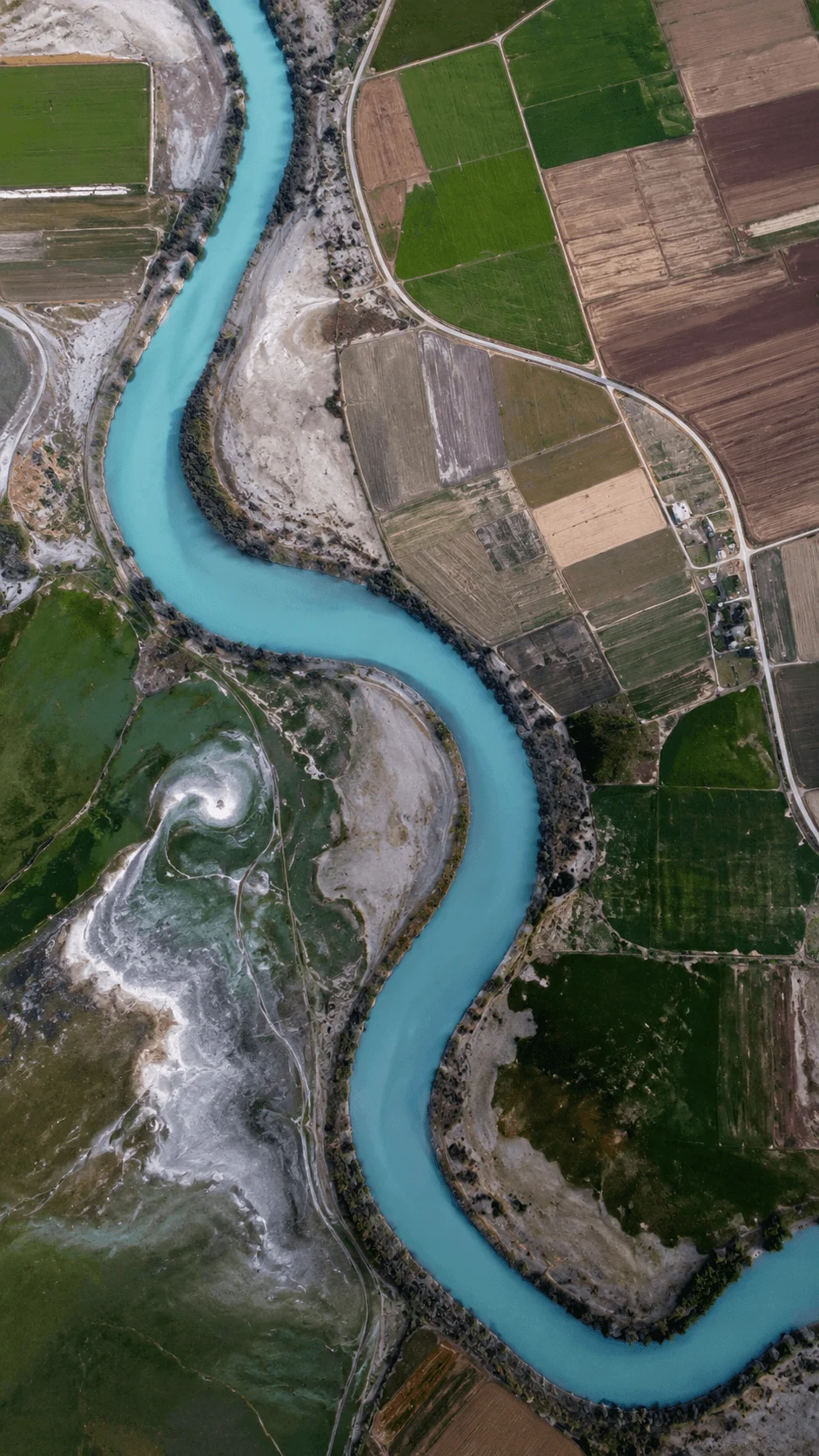
There is also an environmental benefit to considering alternatives to unnecessary flights. Existing aerial imagery and satellite based visual resources can sometimes provide useful environmental perspectives without requiring a photographer to physically travel to a location.
This idea represents an interesting direction for sustainable photography because it combines technology, environmental observation, abstraction, and artistic composition.
How to Create a Beautiful Sustainable Photography Aesthetic
Creating an attractive aerial photograph requires more than finding an interesting location. The photographer needs to think about how every element interacts inside the frame.
Negative space can be particularly powerful. Large areas of water, sand, vegetation, or open land can make a smaller subject appear more important. This technique works especially well with minimalist compositions.
Symmetry can create a sense of balance. Look for buildings, gardens, roads, agricultural patterns, or natural formations that naturally divide the image into balanced sections.
Leading lines can guide the viewer through the photograph. Rivers, roads, paths, shorelines, rows of crops, and shadows can all create visual routes that lead toward the main subject.
Natural patterns are another major part of an aerial photography aesthetic. Repeating trees, waves, crops, dunes, rocks, and vegetation can create rhythm. Try to identify these patterns before taking the photograph rather than relying on editing afterward.
Color should also support the story. Natural greens and blues can create a calm appearance, while contrasting colors can attract attention to a specific subject. Avoid excessive editing that makes natural environments look unrealistic.
Light can transform the same landscape. Morning and evening light can create long shadows and softer tones, while stronger daylight can reveal patterns and textures more clearly.
Scale is equally important. Including a road, building, person, boat, or other familiar object can help viewers understand the size of a landscape. Without a reference point, a large landscape may sometimes appear surprisingly small.
Most importantly, think about the story behind the photograph. Ask what the viewer should notice first and what they should understand after looking at the image for a few seconds.
Why Sustainable Aerial Photography Is Becoming More Creative in 2026
Aerial photography continues to expand beyond traditional scenic landscapes. Photographers are increasingly exploring abstraction, minimalism, environmental storytelling, sustainable architecture, urban greenery, wildlife habitats, agricultural systems, and changing natural environments.
This development gives photographers more creative freedom. Aerial images can now focus on patterns rather than landmarks, environmental relationships rather than individual subjects, and subtle changes rather than dramatic scenery.
The increased interest in sustainability also gives these photographs greater context. A green rooftop can represent more than an attractive pattern. It can become an example of how vegetation can enter urban environments. A restored wetland can become both an abstract landscape and a record of environmental recovery.
Minimalism is especially useful because it encourages photographers to remove distractions. A simple image can communicate a powerful idea when the composition has a clear subject and sufficient negative space.
Abstraction provides another opportunity. When photographs remove recognizable details, viewers often spend more time examining textures, colors, and shapes. This can make familiar environments feel completely new.
The combination of aesthetic photography and environmental storytelling therefore creates a broad creative field. Photographers can make beautiful images while encouraging viewers to notice how nature, communities, architecture, agriculture, and technology interact.
Conclusion
Eco friendly aesthetic photography offers a creative way to combine beautiful imagery with a greater appreciation for the natural and built environments around us. Aerial perspectives can transform ordinary subjects into striking compositions by revealing patterns, scale, geometry, textures, and relationships that remain hidden from ground level.
The twelve ideas explored here demonstrate how broad this style can be. Minimalist green spaces, abstract water patterns, sustainable farms, green rooftops, coastal environments, restored landscapes, wildlife habitats, sustainable cities, and satellite inspired compositions can all provide unique opportunities for creative photography.
The strongest images do not simply show nature from above. They encourage viewers to look at the environment differently. A small green space can demonstrate the importance of nature within a city. A restored landscape can tell a story of environmental recovery. A sustainable building can show how architecture and nature can work together.
As aerial photography continues to evolve in 2026, photographers have an opportunity to move beyond conventional landscape images and explore more thoughtful forms of visual storytelling. By combining intentional composition, natural beauty, responsible practices, and environmental awareness, eco friendly aesthetic photography can become both visually appealing and meaningful.