Eco Friendly Aesthetic Photography Lighting Ideas
Eco friendly aesthetic photography lighting combines creative visual techniques with more thoughtful and efficient ways of working with light. Instead of depending on complicated studio equipment for every photograph, photographers can use daylight, shadows, reflections, reusable materials, and efficient lighting to create images that feel natural, artistic, and visually refined. This approach works especially well for photographers who want their images to communicate a connection with nature, simplicity, sustainability, and modern design.
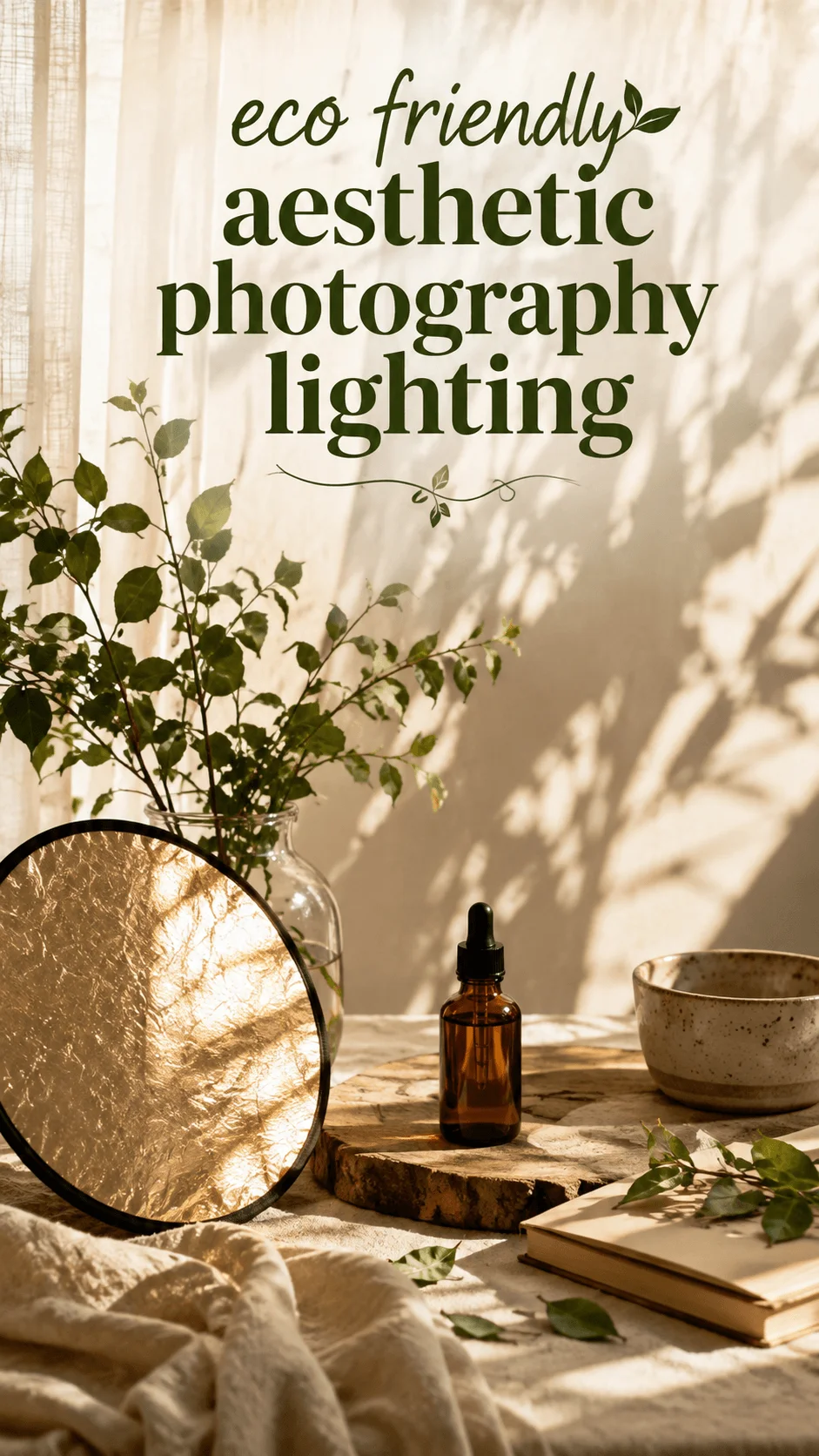
Lighting has always played a major role in photography, but beautiful results do not necessarily require a large collection of lights. A carefully positioned window, a reflector, a plant, or a compact LED can completely change the appearance of a scene. By understanding how light behaves, photographers can create sophisticated images while using fewer resources and making their photography workflow more intentional.
What Is Eco Friendly Aesthetic Photography Lighting?
Eco friendly aesthetic photography lighting refers to lighting approaches that combine visual creativity with more responsible use of energy and materials. The idea goes beyond simply choosing an efficient light. It involves considering how much lighting a photograph actually needs, how much equipment is being used, and whether natural or reusable alternatives can achieve the desired result.
Aesthetic photography depends heavily on atmosphere. Soft light can create a peaceful feeling, while directional light can produce drama and depth. Warm light can make an image feel intimate, whereas cooler illumination can create a clean and modern appearance. Shadows can add mystery, while reflections can make a simple composition appear much more complex.
Sustainable lighting techniques give photographers an opportunity to control these characteristics without automatically building a large lighting setup. Natural daylight can become the main source, while a reflector can redirect it. A small efficient LED can provide additional control when necessary. Reusable fabrics can soften harsh illumination, while leaves and branches can create organic shadow patterns.
This approach also encourages photographers to become more observant. Instead of immediately reaching for another light, they begin looking at windows, walls, surfaces, outdoor shade, reflective objects, and the position of the sun. That creative awareness can improve photographs while simplifying the overall setup.
Why Sustainable Photography Lighting Is Becoming More Popular
Photography has become increasingly accessible, and creators can now produce professional looking images from bedrooms, small studios, outdoor locations, and home workspaces. However, more equipment does not automatically produce better photographs. In many situations, photographers can achieve stronger results by understanding their existing light and controlling it carefully.
Natural lighting has become particularly attractive because it can create subtle variations that artificial lighting sometimes struggles to reproduce. Cloudy daylight can produce remarkably soft illumination. Golden hour can introduce warm highlights and long shadows. Window light can produce gentle transitions across a portrait or product.
Efficient LED lighting also provides photographers with more flexibility. Small continuous lights can offer brightness and color adjustments while occupying very little space. Rechargeable options can reduce reliance on disposable batteries, while dimming allows photographers to use only the intensity they need.
The sustainability conversation also encourages photographers to think about the entire workflow. Reusing materials, maintaining equipment, avoiding unnecessary purchases, and planning a shoot carefully can all contribute to a more thoughtful creative process.
Most importantly, sustainability does not require photographers to abandon artificial lighting. It encourages them to use it intentionally.
12 Eco Friendly Aesthetic Photography Lighting Ideas
Daylight First Photography
Making daylight the first lighting option is one of the simplest ways to create natural aesthetic photography. Instead of beginning with artificial lights, start by studying the available sunlight and determining what it can already accomplish.
A large window can provide beautiful illumination for portraits, products, food, and still life. Positioning the subject close to the window usually creates stronger light and more noticeable contrast, while moving the subject farther away can create a gentler transition.
The direction of daylight also changes the character of the photograph. Side light can emphasize texture and shape. Front light can produce a cleaner and brighter appearance. Backlighting can create glowing edges and atmospheric backgrounds.
Overcast weather offers another valuable opportunity. Clouds naturally soften sunlight, producing broad illumination with fewer harsh shadows. This can work beautifully for portraits, skincare products, flowers, clothing, and lifestyle photographs.
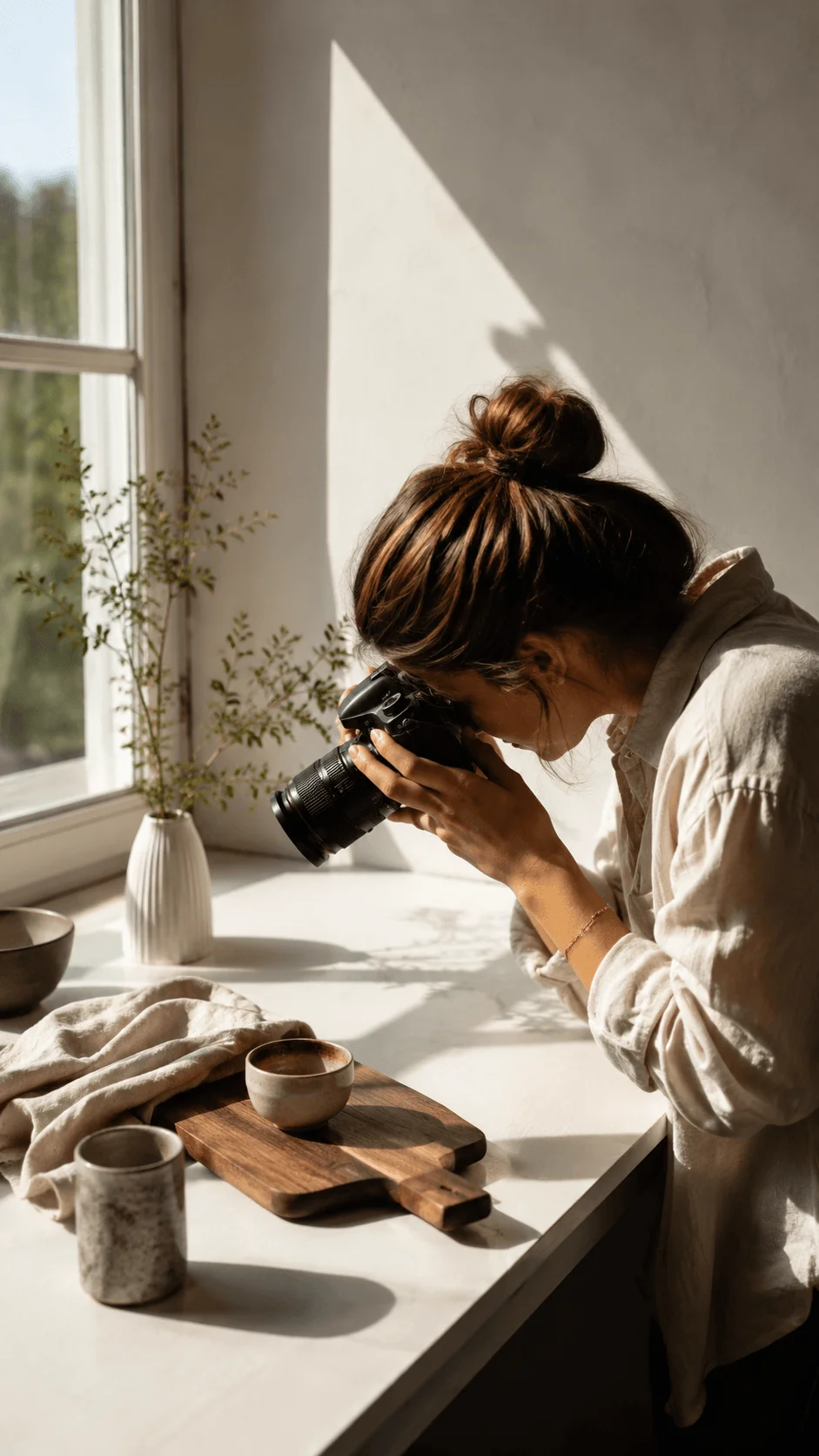
Golden hour provides another natural option. During this period, sunlight becomes warmer and more directional, allowing photographers to create long shadows and glowing highlights.
The most important skill is learning to observe the light before changing it. Walk around the subject and look at how the illumination changes from different angles. A small movement can completely alter the photograph.
Daylight also works especially well with minimalist compositions. A simple table near a window, a neutral background, and one carefully positioned subject can produce an image that feels polished without requiring a complicated studio.
Botanical Shadow Play
Botanical shadow play turns ordinary plants into creative lighting tools. Leaves, flowers, branches, and grasses can cast fascinating patterns across a subject when placed between the subject and a light source.
The technique works particularly well because the shadows themselves become part of the composition. A soft leaf pattern across a perfume bottle can make the product feel connected to nature. A branch shadow across a portrait can create a mysterious editorial appearance. Small leaves can create delicate patterns across skincare packaging or ceramics.
Distance plays an important role. When the botanical object moves closer to the light source, its shadow can spread across a larger area. Moving it closer to the subject can create a more defined pattern. Photographers can experiment with both positions until the shadow looks intentional rather than distracting.
The angle of the light also matters. Low directional sunlight can produce stronger botanical shadows, while softer window light can create subtle patterns.
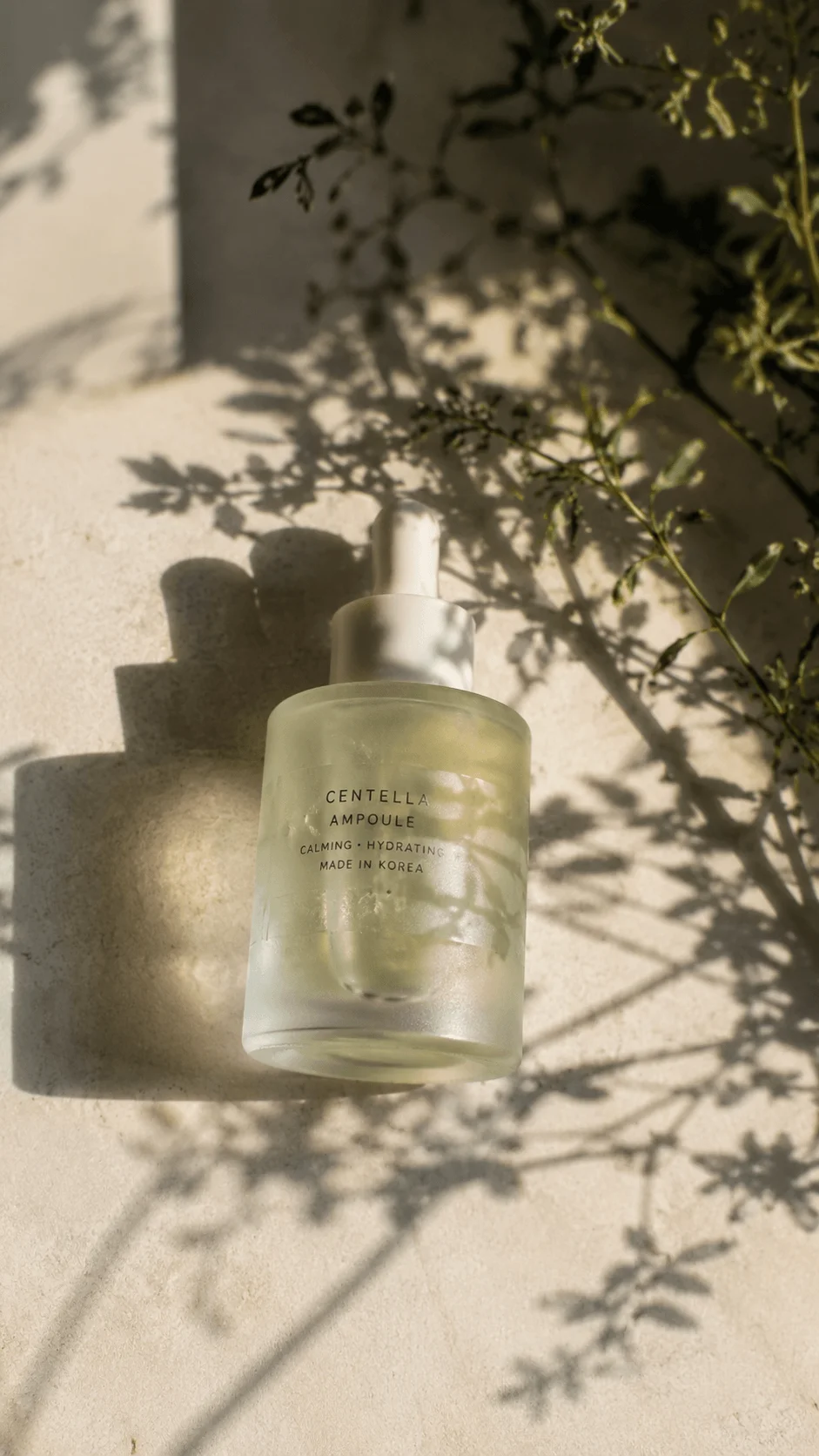
This technique works especially well for brands and photographers working with natural themes. Beauty, wellness, skincare, organic food, fashion, candles, handmade products, and sustainable products can all benefit from botanical lighting.
The technique also encourages reuse. A plant already growing nearby can become a temporary creative tool rather than requiring a new photography accessory.
Warm Golden Hour Minimalism
Golden hour is often associated with outdoor portraits, but photographers can use it for many other types of aesthetic imagery. The warm sunlight during this period can create a sophisticated appearance with very little additional equipment.
One of the most effective approaches involves positioning the subject so the sun comes from behind or slightly to the side. This creates warm highlights around edges while keeping parts of the subject in softer illumination.
For portraits, backlighting can produce glowing hair and an atmospheric background. For products, sunlight can emphasize reflective surfaces and warm materials such as wood, leather, ceramics, and natural fabrics.
Golden hour also works well for storytelling. A simple photograph of a person walking outdoors can feel more emotional when warm directional light interacts with the environment.
Minimalism makes this approach even stronger. Instead of filling every shadow, allow some areas to remain darker. The contrast between illuminated and shaded areas can create depth and visual interest.

Photographers can also use buildings, walls, and natural surfaces as reflectors. A nearby light colored wall may bounce enough sunlight toward the subject to soften harsh contrast without requiring another powered source.
Rechargeable LED Micro Lighting
Natural light cannot solve every lighting challenge. Indoor scenes, evening photography, product photography, and controlled creative work sometimes require artificial illumination. Compact rechargeable LED lights provide a practical way to introduce additional control without creating a large lighting arrangement.
A small LED can serve as a key light when positioned close to a subject. Moving it closer creates stronger illumination, while increasing the distance produces a softer effect when the light source itself is sufficiently large relative to the subject.
The same light can also function as a rim light. Place it behind a subject and slightly to the side to create a subtle highlight around the edges. This can separate the subject from a darker background.
For product photography, a compact light can create a controlled highlight on glass, metal, perfume bottles, jewelry, and polished surfaces. Instead of illuminating the entire scene, photographers can direct the light toward a specific part of the subject.
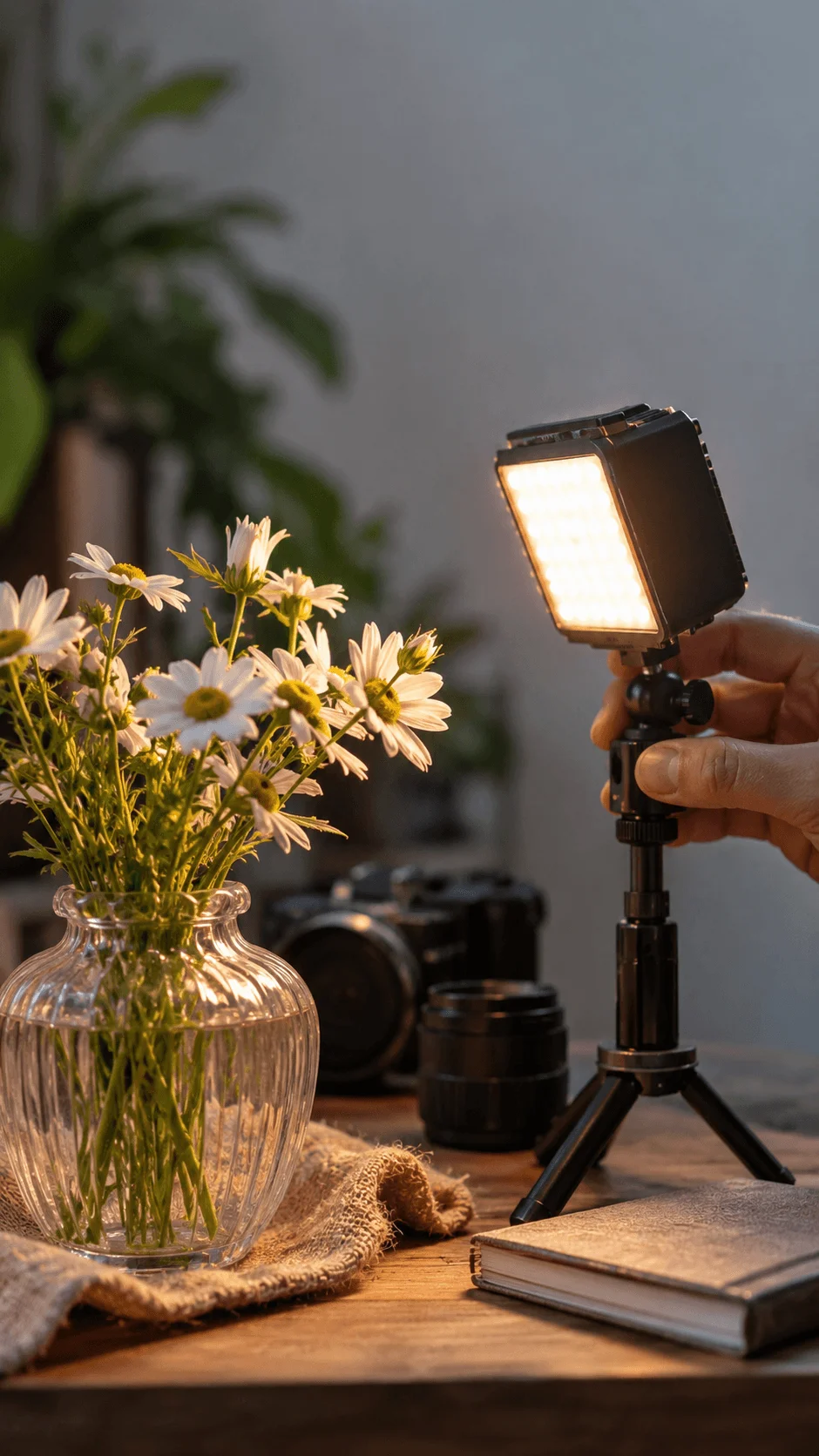
Adjustable color temperature can add another creative dimension. A warmer setting can produce an intimate atmosphere, while a cooler setting can create a cleaner contemporary mood.
The important principle is not simply choosing an LED. It is learning to use one efficient light creatively rather than assuming that more lights automatically create better photographs.
Natural Material Light Modifiers
Light modifiers do not always need to come from specialized photography stores. Many ordinary materials can influence the quality and direction of light.
Linen and cotton fabrics can soften illumination. Paper can diffuse light when used appropriately. Light colored surfaces can reflect illumination back toward a subject, while darker materials can absorb some of it and increase contrast.
Wooden surfaces can also become useful elements in an aesthetic setup. Their warm tones can complement natural products, food, ceramics, and handmade objects.
The creative advantage comes from understanding how each material interacts with light. A translucent fabric produces a different effect from a solid white surface. A textured material may create subtle variations in reflected light. A warm colored surface can introduce a slight tonal influence into the scene.
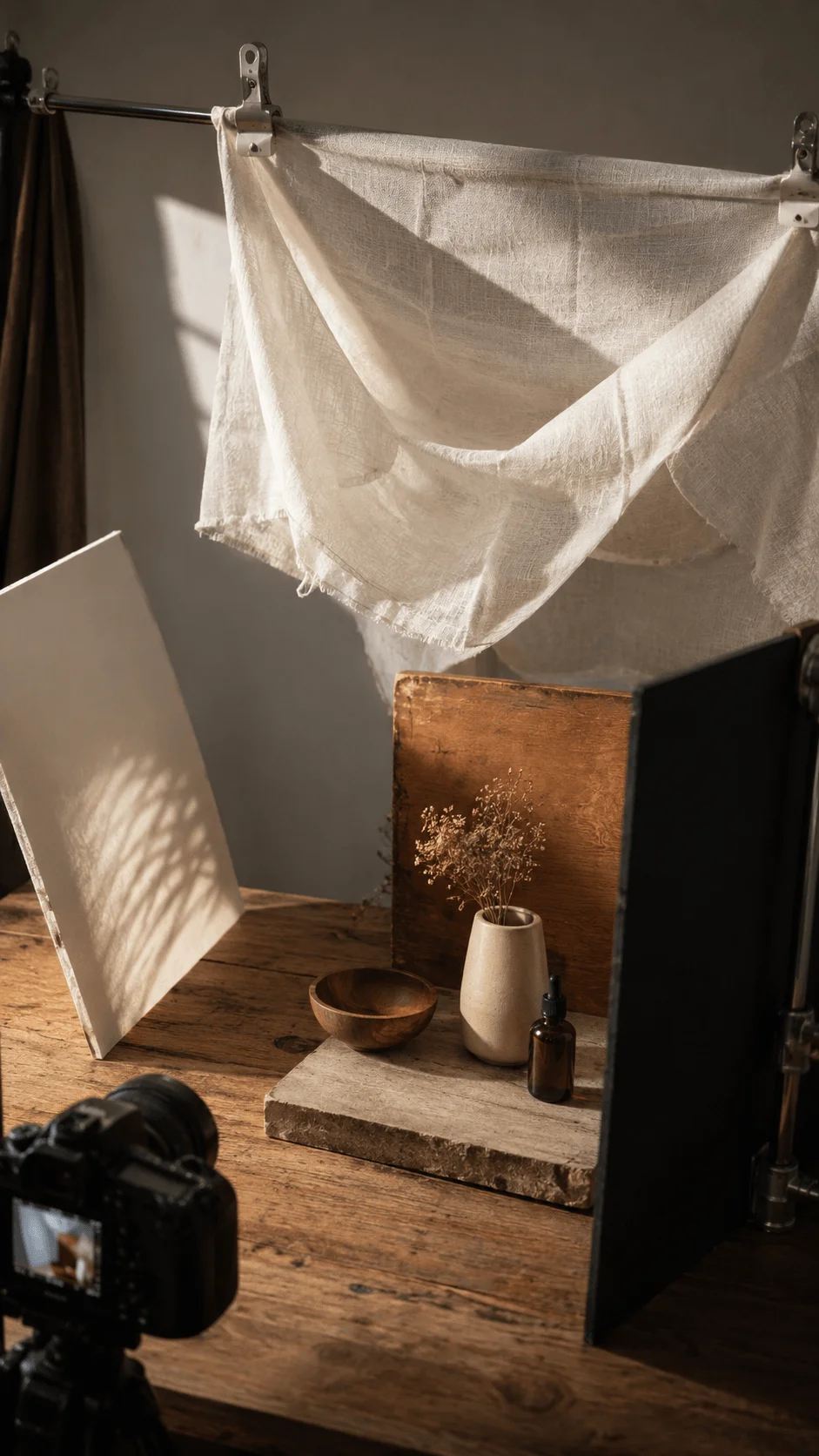
Reusable materials also allow photographers to experiment without constantly purchasing new accessories. An old piece of fabric might become a diffusion surface, while a piece of cardboard can become a simple flag that blocks unwanted illumination.
This approach fits particularly well with sustainable visual styles because the lighting equipment itself can become part of a more resource conscious workflow.
DIY Window Diffusion for Natural Photography Lighting
Window light can become surprisingly powerful when photographers learn how to control it. Direct sunlight can sometimes produce harsh highlights and deep shadows, but diffusion can transform that illumination into a softer and more flattering source.
Place the subject near a window and observe the intensity of the light. If the sunlight looks too harsh, a reusable translucent material can soften the illumination. The result creates smoother transitions between highlights and shadows.
For portraits, this can produce gentle skin illumination. For product photography, softer light can reduce distracting reflections and harsh edges.
The position of the subject also matters. A subject directly against the window receives a different quality of light from one positioned several feet away. Moving the subject can change contrast and background brightness.
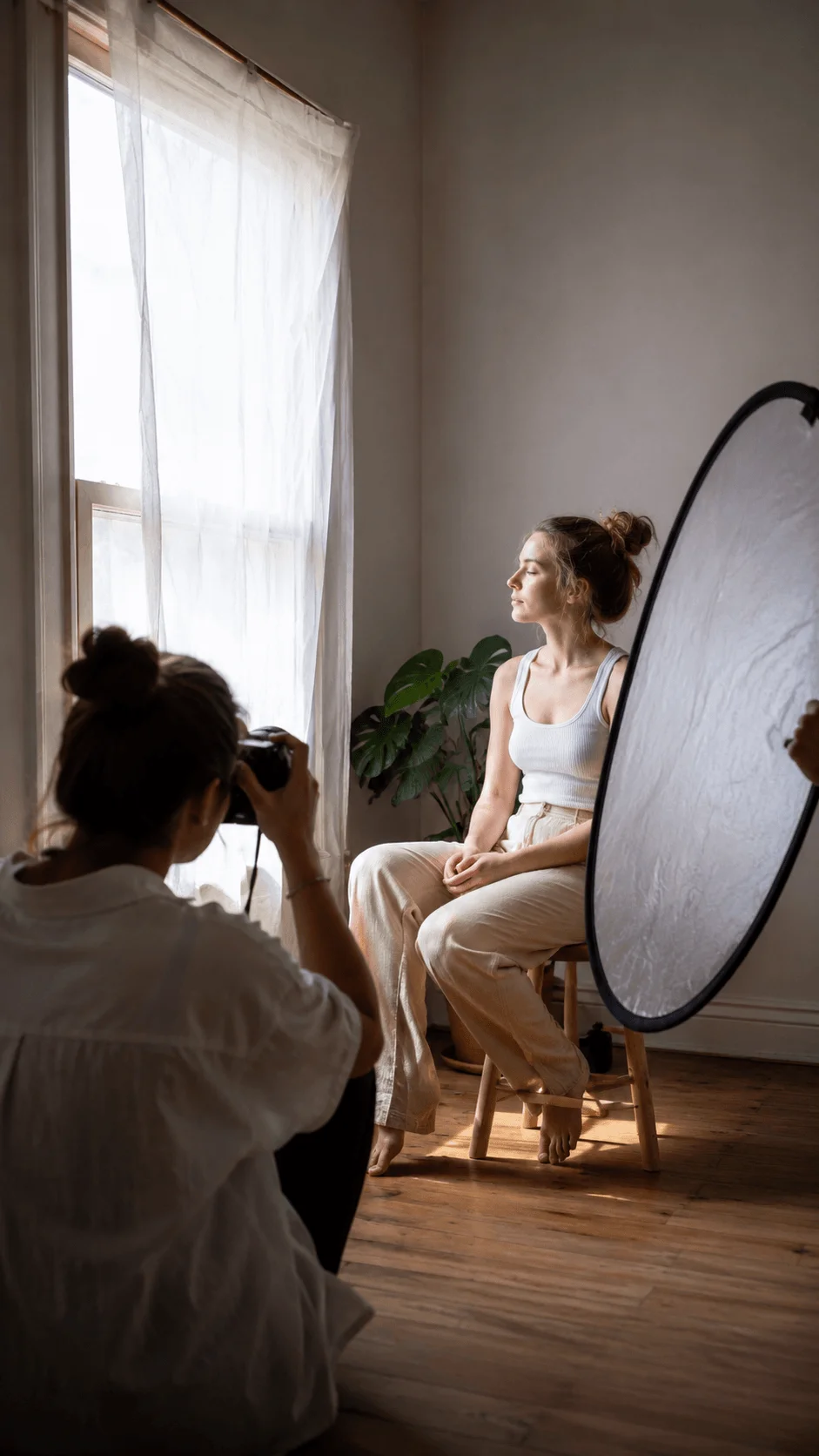
Photographers can also combine window light with a reflector positioned on the opposite side. The window becomes the primary source while the reflector gently returns some light to the shadow side.
This setup demonstrates an important principle of sustainable lighting: sometimes better positioning solves a lighting problem more effectively than adding another powered source.
One Light and One Shadow Direction
A minimalist lighting setup can produce some of the strongest aesthetic results because it gives the photograph a clear visual direction.
Instead of attempting to illuminate every part of a scene, choose one dominant source and allow the shadows to remain visible. Directional lighting can reveal texture, shape, contours, and depth.
For product photography, position the light so that it travels across the surface rather than directly toward it. This can reveal texture in materials such as wood, fabric, leather, ceramics, and paper.
For portraits, placing the light to one side can create dimension across the face. The darker side does not necessarily need to become completely bright. The remaining shadow can provide character and depth.

This approach also makes the photographer think more carefully about composition. Every illuminated area becomes meaningful because the light has a clear purpose.
A single efficient source can therefore create a sophisticated image without requiring several lights operating simultaneously.
Natural Light Sources for Aesthetic Photography
Different natural conditions produce different visual characteristics, and understanding these differences can help photographers plan their sessions more effectively.
Morning light often provides a softer and cooler atmosphere. It can work well for calm lifestyle images, interiors, food, and portraits.
Midday sunlight creates stronger contrast and harder shadows. Rather than avoiding it completely, photographers can use those shadows creatively for architectural photography, dramatic portraits, and high contrast product images.
Cloudy daylight creates broad and soft illumination. This makes it useful for subjects that benefit from gentle transitions, including portraits, flowers, skincare products, and food.
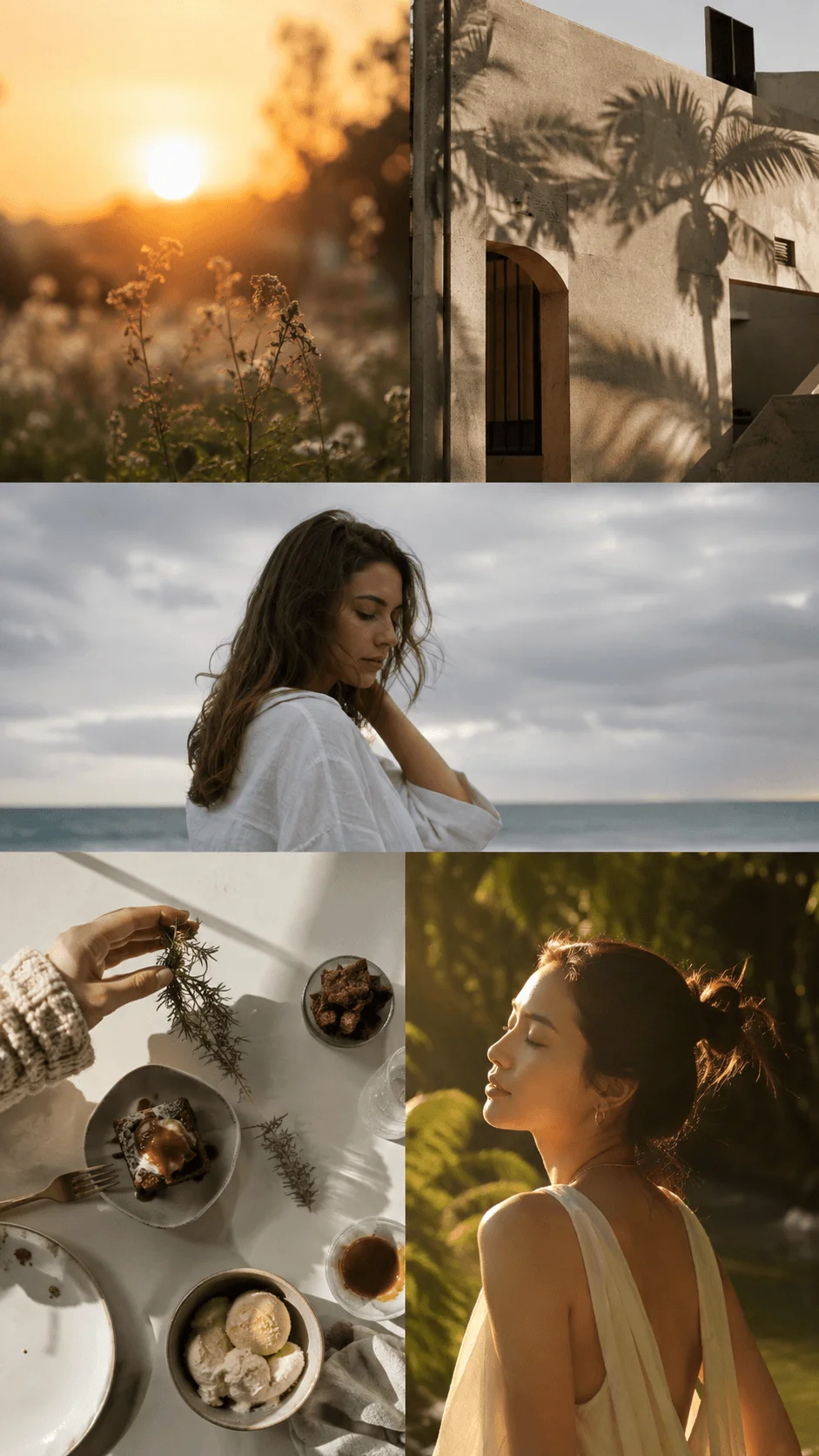
Golden hour introduces warmth and direction. It can make ordinary environments appear more cinematic.
Open shade provides another useful option. A shaded area can reduce harsh direct sunlight while still providing plenty of natural illumination.
Learning these differences allows photographers to choose the lighting condition that matches the mood they want instead of trying to force every scene into the same lighting style.
Sustainable Alternatives to Traditional Studio Lighting
Traditional studio photography often relies on several lights working together to control brightness, shadows, highlights, and background separation. While that approach can produce excellent results, photographers do not always need a large lighting arrangement for every project. A more sustainable approach starts by asking what the photograph actually requires.
Natural window light can replace a key light in many indoor situations. A nearby wall can act as a reflector. A piece of reusable fabric can soften harsh illumination. A small rechargeable LED can provide a controlled accent when daylight does not offer enough flexibility.
Efficient LED lighting also provides an alternative to older lighting technologies that generate considerable heat. Since photographers often work for extended periods, reducing unnecessary heat and electricity use can make the shooting environment more comfortable while supporting a more efficient workflow.
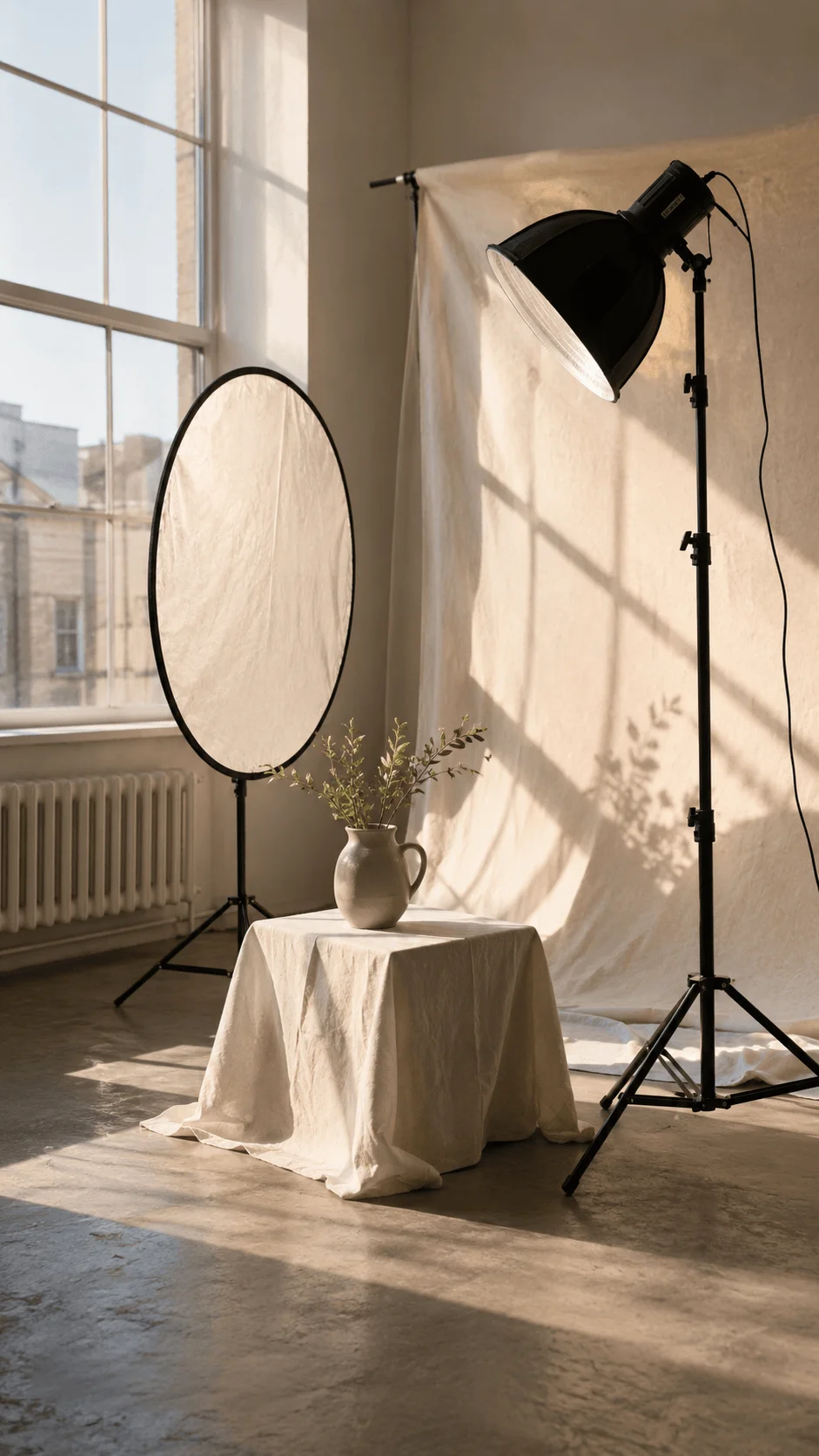
Another useful strategy involves reducing the number of active lights. A photographer might begin with one light, observe the shadows, and only introduce another source if the image genuinely needs it. This approach can improve creative control because every light has a specific purpose.
The goal of sustainable studio lighting is therefore not to eliminate professional equipment. It is to build a more intentional system in which each lighting choice contributes directly to the final image.
Eco Friendly Lighting for Portrait Photography
Portrait photography does not require a complicated lighting system to create depth and atmosphere. Natural daylight can provide many different looks depending on the location and time of day.
Window light remains one of the most versatile options. Place the subject near a large window and position the face toward the light for a bright, open appearance. Turning the subject slightly away from the window can create more dimensional shadows.
Open shade works well outdoors. It reduces the intensity of direct sunlight while maintaining natural illumination. Buildings, covered areas, trees, and other structures can provide useful shade.
Golden hour can create a warmer and more cinematic portrait style. Positioning the subject with the sun behind them can produce glowing edges, while a nearby light surface can gently reflect illumination back toward the face.
Photographers can also experiment with intentional darkness. Instead of trying to brighten the entire portrait, allow part of the face or background to fall into shadow. This can create a dramatic and sophisticated mood.
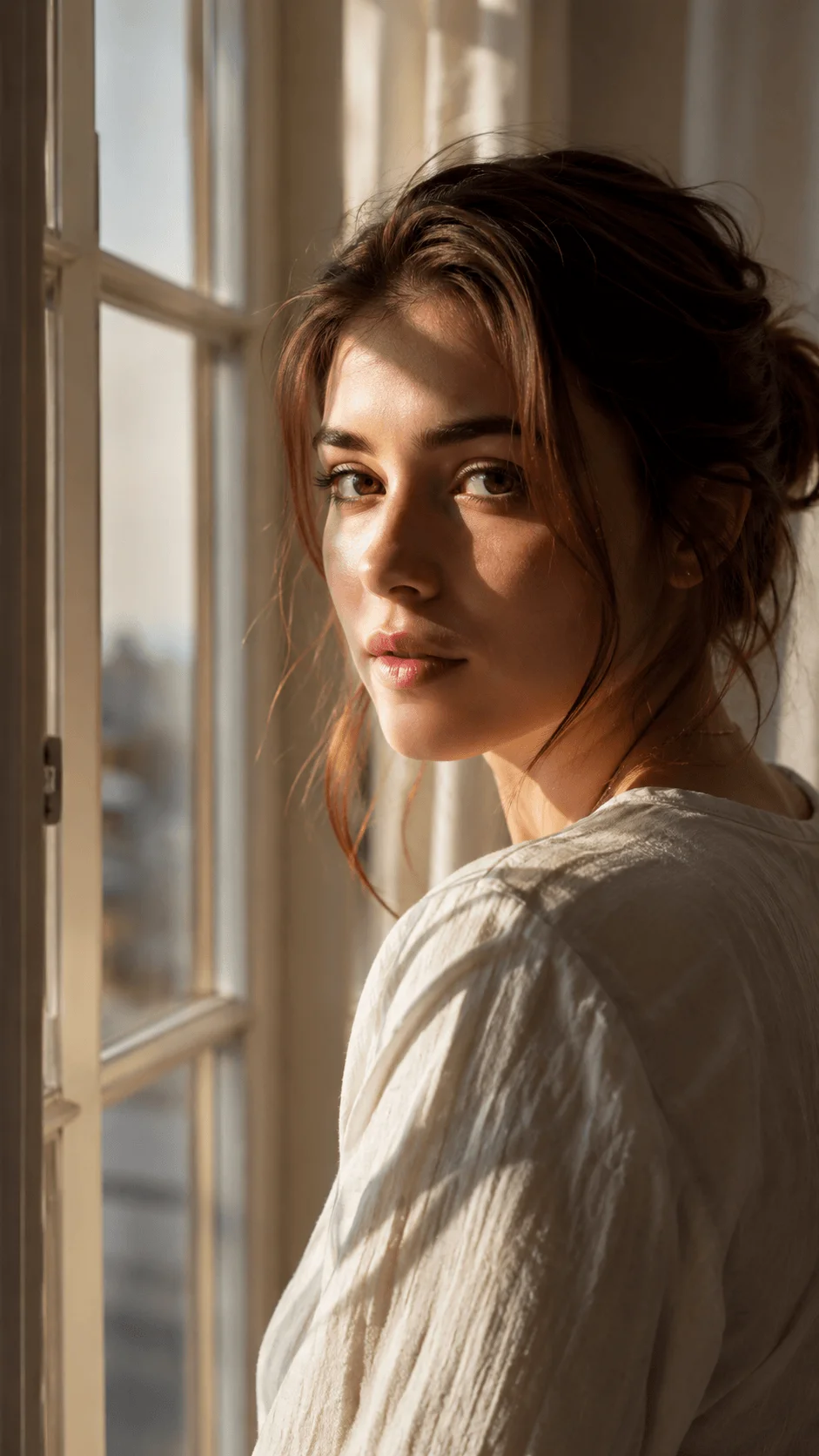
A small LED can help when natural light does not provide enough control. Rather than using multiple lights, one compact source can provide a subtle highlight or fill.
The key is to treat shadows as part of the portrait rather than as problems that always need correction. This mindset can create more expressive images while keeping the lighting arrangement simple.
Choosing the Right Sustainable Lighting Technique
The best sustainable lighting technique depends on the subject, location, time of day, desired mood, and available resources.
A photographer working with a skincare product near a large window might choose soft daylight and botanical shadows. A portrait photographer may prefer golden hour or open shade. Someone creating a dramatic still life could use one directional LED and allow most of the background to remain dark.
The subject itself should influence the decision. Reflective products need different treatment from textured objects. Glass requires careful control of highlights, while fabric often benefits from directional illumination that reveals its surface.
The desired mood matters just as much. Bright natural daylight can communicate freshness and simplicity. Warm directional light can create intimacy. Deep shadows can introduce mystery. Soft diffused illumination can make a photograph feel calm and gentle.
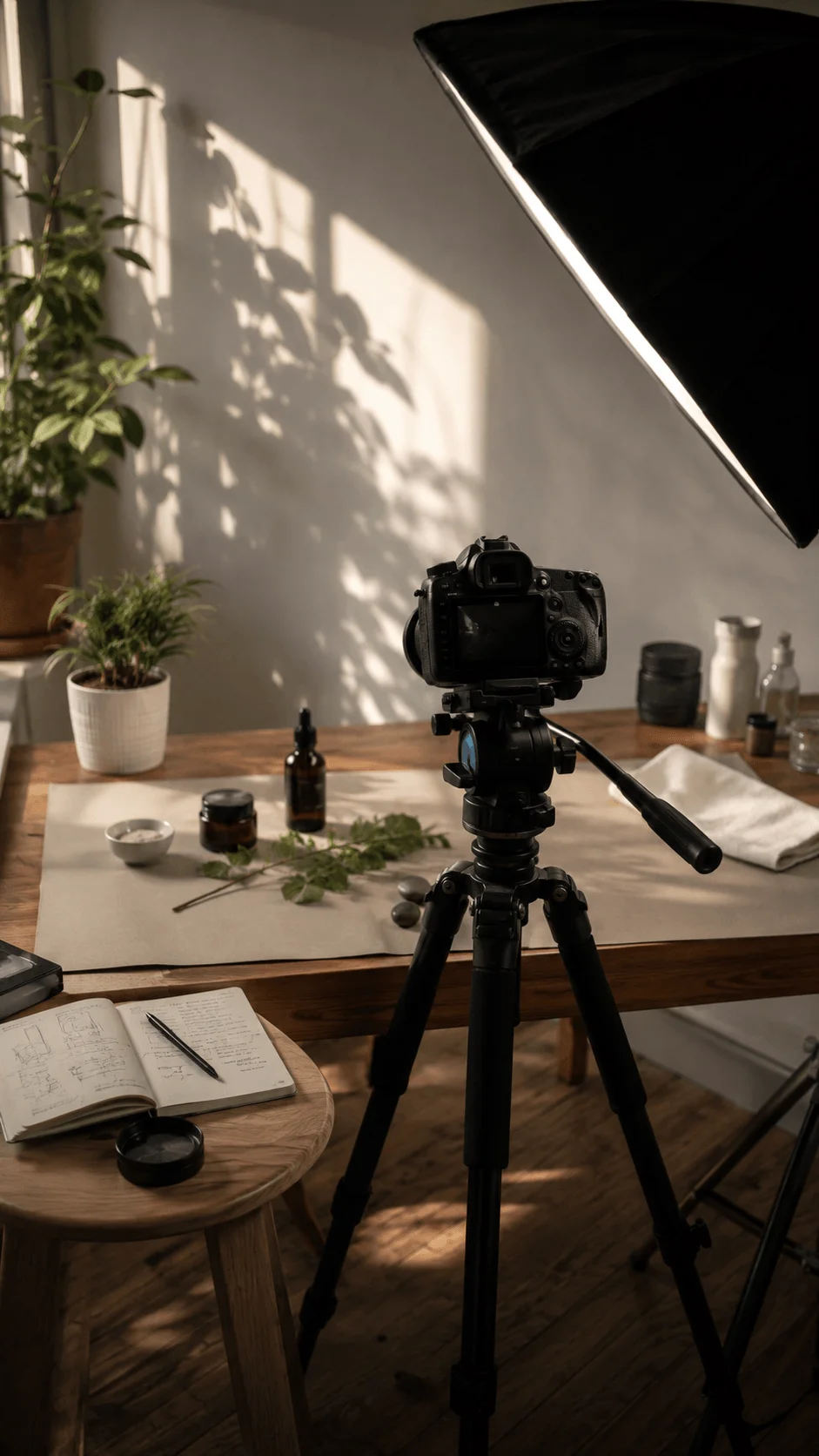
The shooting location also determines what options are available. A studio without windows may require efficient artificial lighting, while a home studio with a large window can rely heavily on daylight.
Photographers should also consider the time available. Natural light changes throughout the day, so outdoor sessions may require careful scheduling. Artificial lighting provides more consistency when the photographer needs the same visual appearance for an extended period.
The most effective eco friendly photography lighting approach is therefore not always the one that uses the least equipment. It is the approach that uses the right resources for the intended image without unnecessary complexity.
Combining Natural Light With Efficient Artificial Lighting
Photographers do not need to choose between natural light and artificial light. Combining both can provide greater creative control while maintaining a relatively simple setup.
For example, daylight can act as the main source while a small LED provides a subtle highlight. This works particularly well for portraits where the photographer wants natural skin illumination with a little additional separation from the background.
For product photography, window light can illuminate the front of a product while a compact LED creates a controlled highlight along one edge. The result can look more polished without requiring several large lights.
Reflectors become particularly valuable in hybrid setups. Instead of adding another powered light, a reflector can redirect daylight or LED illumination toward the darker side of the subject.
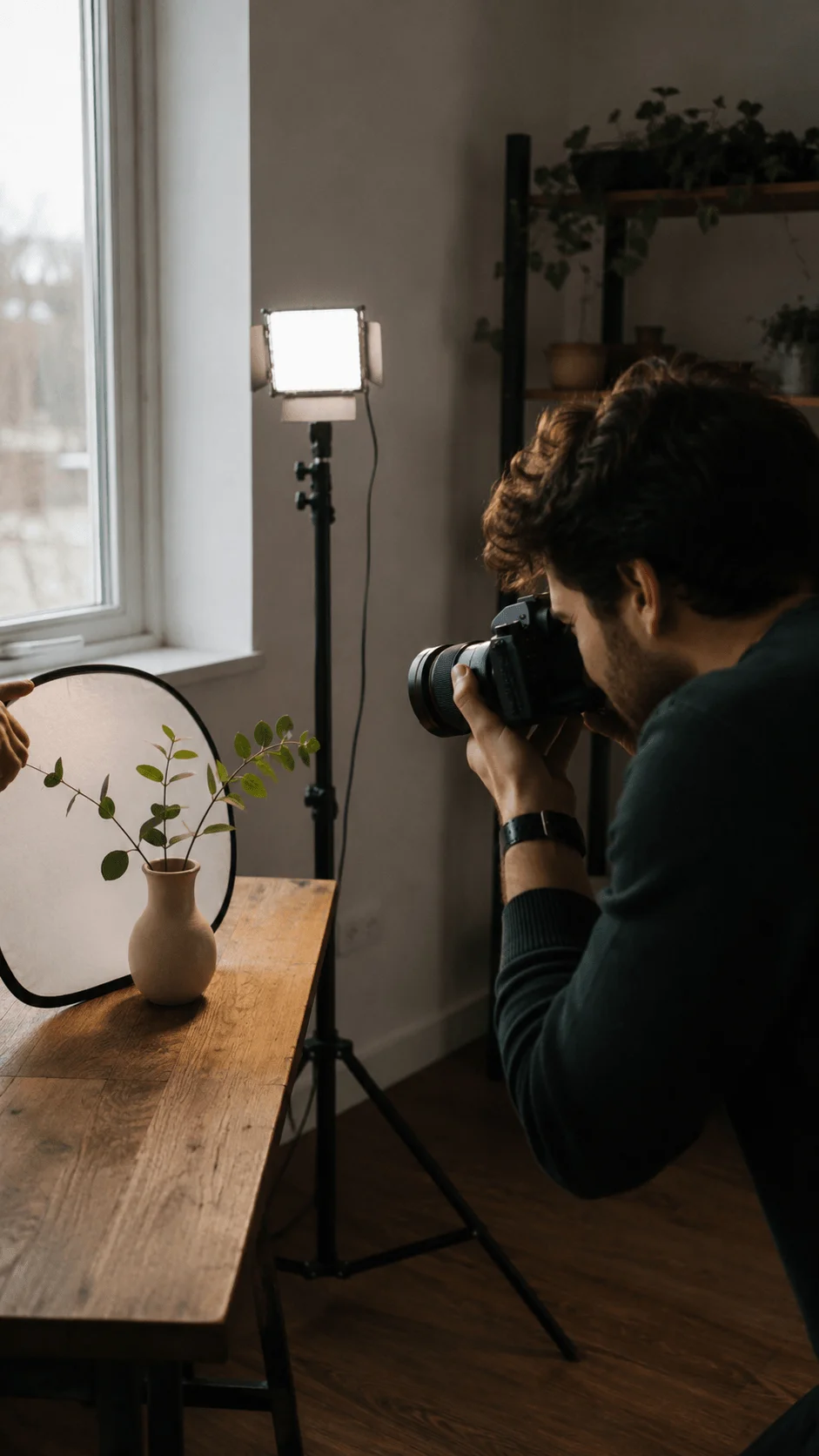
Color temperature also influences the final appearance. A warm LED against cooler daylight can create contrast between different parts of the frame. Matching the color temperatures can produce a more unified appearance.
The important point is to keep the artificial lighting purposeful. If daylight already creates the desired image, there may be no reason to add another source. If the photograph needs more shape or separation, a small efficient light may provide exactly the missing element.
The Future of Sustainable Aesthetic Photography Lighting
The future of sustainable lighting will likely involve a combination of efficiency, portability, natural light, and creative control.
Compact LED systems already allow photographers to carry considerable lighting capability in small packages. Rechargeable designs can make portable shoots easier, while adjustable brightness and color temperature give photographers more creative flexibility from a single source.
At the same time, natural light remains one of the most powerful creative resources available. Modern photographers can combine daylight with efficient technology instead of treating artificial lighting as the default starting point.
Another important shift involves the creative use of ordinary materials. Sustainable photography does not have to look plain or limited. Natural textures, botanical shadows, reflections, and organic surfaces can become defining elements of an image.
The result is a style that can feel contemporary while maintaining a strong connection to natural environments.
Conclusion
Eco friendly aesthetic photography lighting offers photographers a practical way to combine visual creativity with more thoughtful lighting choices. Beautiful images do not always require multiple powerful lights, complicated modifiers, or a large studio setup. Daylight, shadows, reflections, reusable materials, and compact efficient lighting can provide remarkable creative possibilities.
The strongest approach begins with observation. Before turning on another light, look at the window, the direction of the sun, nearby surfaces, and the shadows already present in the scene. These elements may provide much of what the photograph needs.
Natural light can create softness and warmth, while botanical shadows can introduce organic patterns. Golden hour can add cinematic atmosphere, and a small rechargeable LED can provide precise control when daylight falls short. Reflectors can redirect existing illumination, while reusable materials can shape and soften light.
The real value of eco friendly aesthetic photography lighting lies in its combination of simplicity and creativity. By using light intentionally, photographers can create photographs that feel refined, atmospheric, natural, and distinctive without relying on unnecessary complexity.
A sustainable lighting workflow does not mean limiting creativity. It can actually encourage photographers to experiment more, understand light better, and discover visual possibilities in ordinary surroundings. Whether you photograph products, portraits, food, fashion, or still life, thoughtful lighting can help you create stronger images while making your creative process more efficient and intentional.