Eco Friendly Garden Landscaping Ideas for 2026
Eco friendly garden landscaping ideas are changing the way homeowners design and maintain their outdoor spaces in 2026. Modern sustainable gardens are no longer limited to compost bins, rain barrels, and a few native flowers. Today, garden design is increasingly focused on creating spaces that can handle changing weather, use water wisely, support wildlife, improve soil health, and remain attractive throughout the year. From climate resilient planting and mini meadows to thermal garden design and patio islands, there are many creative ways to make a landscape more environmentally responsible without sacrificing beauty.
The best sustainable garden landscaping ideas also work with the natural conditions of a property instead of constantly fighting them. Choosing suitable plants, managing rainwater, improving soil, and creating habitat can make a garden healthier while reducing unnecessary maintenance. Whether you have a large backyard or a small outdoor space, these 2026 trends offer practical ways to create a landscape that is more resilient, useful, and connected to nature.
Climate Resilient Garden Landscaping
Climate resilient garden landscaping is becoming increasingly important as gardeners deal with hotter summers, irregular rainfall, drought periods, intense storms, and other challenging weather conditions. Instead of designing a garden around perfect weather, this approach considers what the landscape may experience throughout the year and selects plants and features accordingly.
A resilient garden begins with understanding the conditions already present on the property. Areas that receive strong afternoon sunlight may need plants that tolerate heat, while low sections of the yard may benefit from species that can handle occasional wet soil. Soil type, drainage, wind exposure, available shade, and seasonal rainfall can all influence which plants perform well.
Improving the soil can also make a landscape more resilient. Healthy soil can hold moisture more effectively and provide a better growing environment for plants. Adding suitable organic matter and compost can gradually improve soil structure while supporting beneficial organisms.
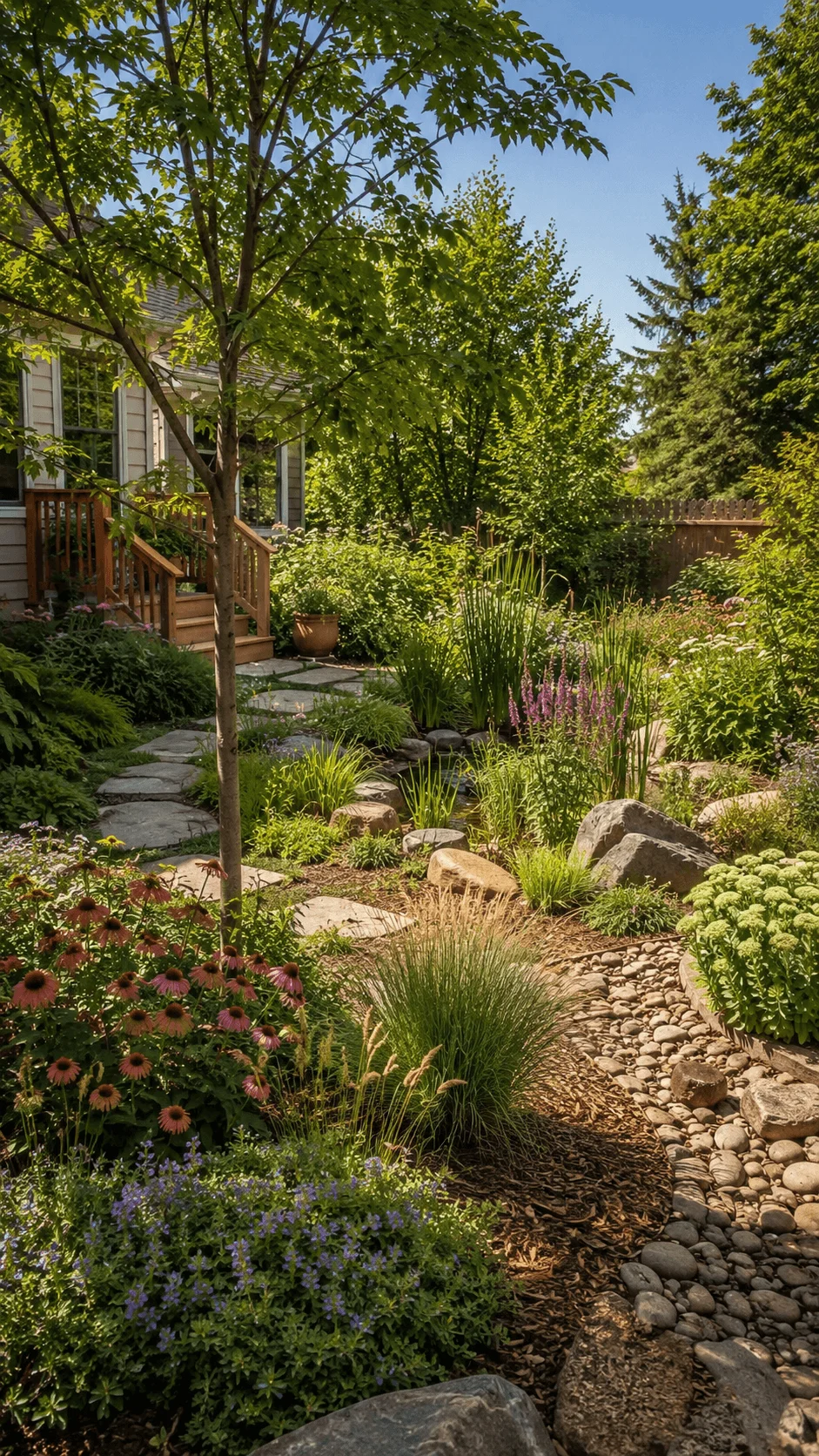
Plant diversity also matters. Instead of filling a garden with one type of plant, homeowners can combine trees, shrubs, flowers, grasses, and groundcovers with different characteristics. A diverse landscape can provide greater visual interest while reducing dependence on a single type of plant.
Another useful approach involves creating shade naturally. Trees can eventually provide cooler areas for people and plants while becoming valuable habitat for birds and insects. By planning tree placement carefully, homeowners can improve outdoor comfort while creating another layer within the garden ecosystem.
The goal is not to predict every future weather event. Instead, climate resilient landscaping creates a garden with enough diversity, healthy soil, appropriate plants, and thoughtful water management to respond better to changing conditions.
Mini Meadow Ideas for Sustainable Garden Landscaping
Traditional lawns can require regular mowing, watering, and maintenance, which has encouraged many homeowners to explore more natural alternatives. One of the most interesting trends in 2026 is the use of mini meadows and rewilded lawn areas.
A mini meadow does not mean allowing the entire garden to become unmanaged. Instead, homeowners can dedicate one section of the yard to flowering plants, grasses, and other suitable vegetation. The area can have a deliberate shape and clear boundary so it looks like an intentional part of the overall landscape.
The biggest attraction of mini meadow garden ideas is the opportunity to create more diverse planting. A conventional lawn generally contains a limited range of plants, while a carefully designed meadow can contain several types of flowers and grasses. These plants can provide food and shelter for pollinators and other wildlife when suitable local species are selected.
Mini meadows can also change the character of a garden. Instead of creating a landscape where every area has the same height and texture, the meadow introduces movement and seasonal variation. Flowers can appear at different times, grasses can add texture, and the landscape can develop a more natural appearance.
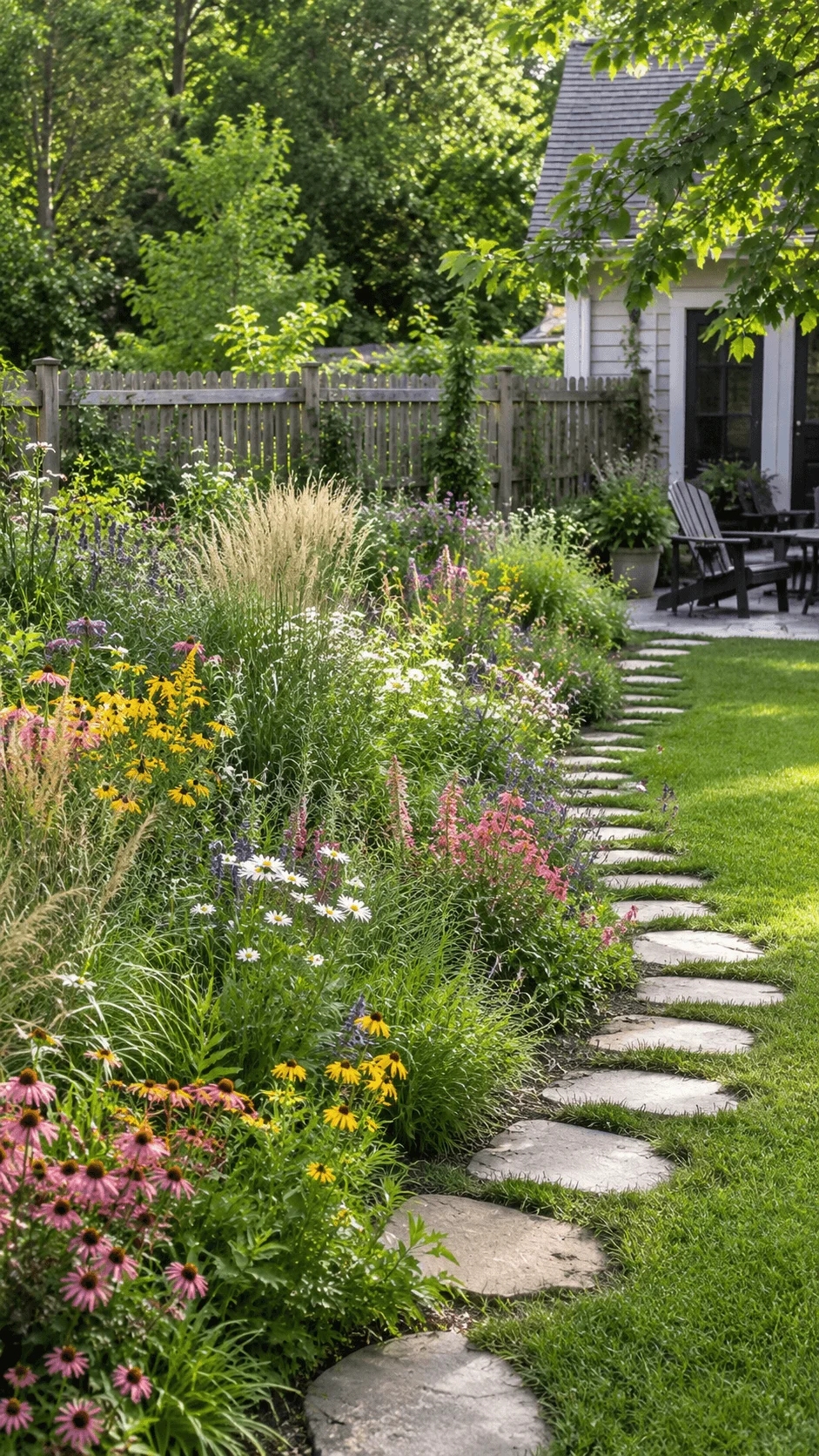
Homeowners do not need a huge property to try this approach. A small patch beside a pathway, along a fence, around a tree, or at the edge of a lawn can provide a starting point. The important consideration is choosing plants that suit the local climate and soil.
A mini meadow can also reduce the amount of lawn that needs frequent mowing. That does not mean every meadow requires no maintenance. It still needs appropriate management, particularly during establishment. However, changing part of a conventional lawn into a diverse planting area can create a more nature friendly landscape.
This makes mini meadows one of the most accessible eco friendly garden landscaping ideas for homeowners who want to make a noticeable change without redesigning the entire yard.
Patio Island Planting for Eco Friendly Garden Design
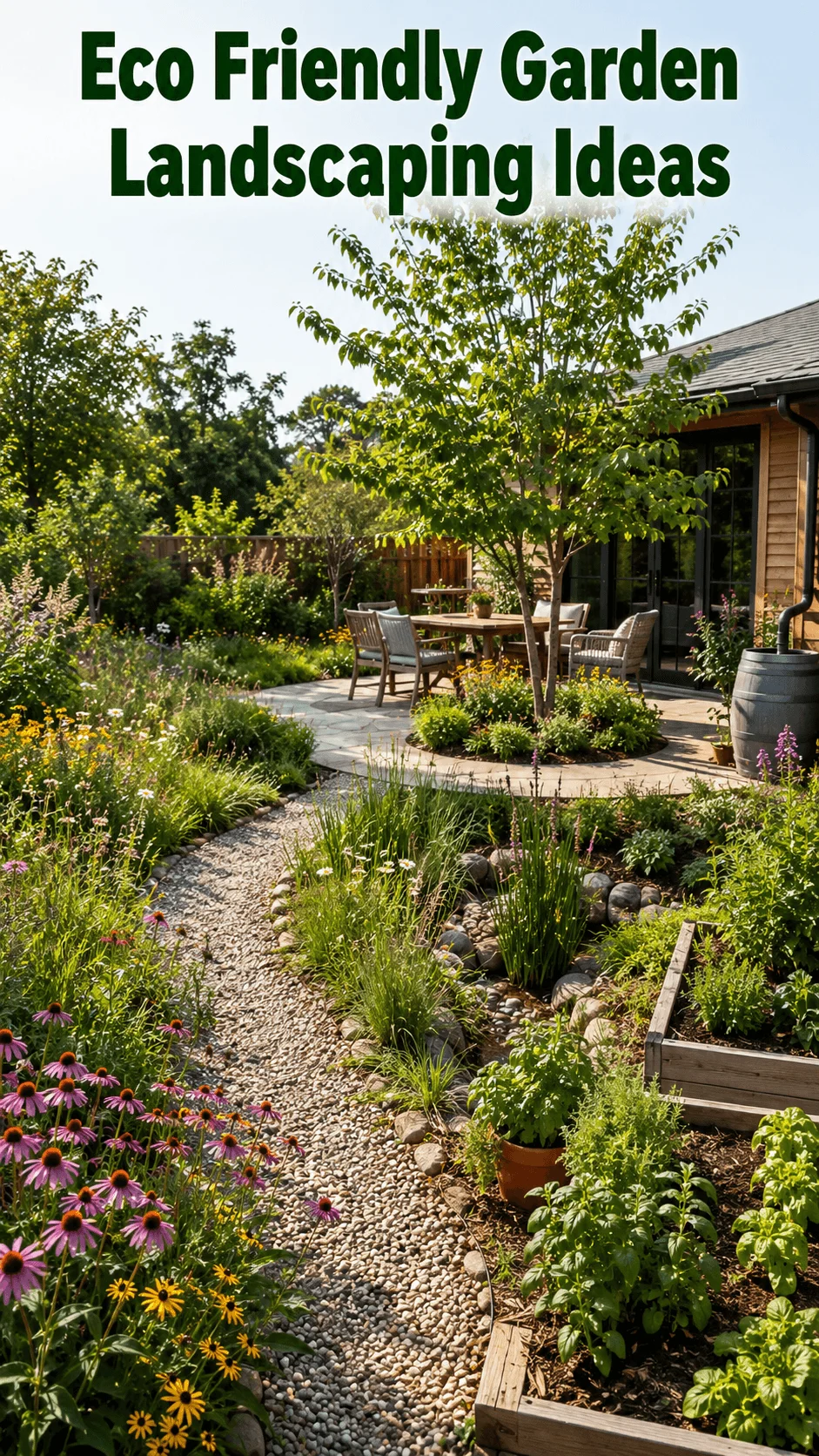
Patio islands are an increasingly interesting approach to outdoor landscape design. Instead of placing all planting around the outer edge of a patio, homeowners can introduce planted areas directly into the outdoor living space.
The concept works particularly well when a large paved area feels too hard or visually disconnected from the rest of the garden. A planted island can break up the surface and introduce natural textures between seating, walking, and entertaining areas.
Layered planting can make a patio island especially attractive. A small tree can provide height, while shrubs and flowering plants create middle layers. Groundcovers can fill lower spaces and help connect the planting area visually with the surrounding landscape.
The environmental value depends on how the feature is designed. Replacing some unnecessary hard surface with soil and plants can create more space for vegetation. Plants can also provide habitat, shade, and seasonal interest. A tree positioned carefully can eventually provide shade over part of a seating area, making the outdoor space more comfortable.
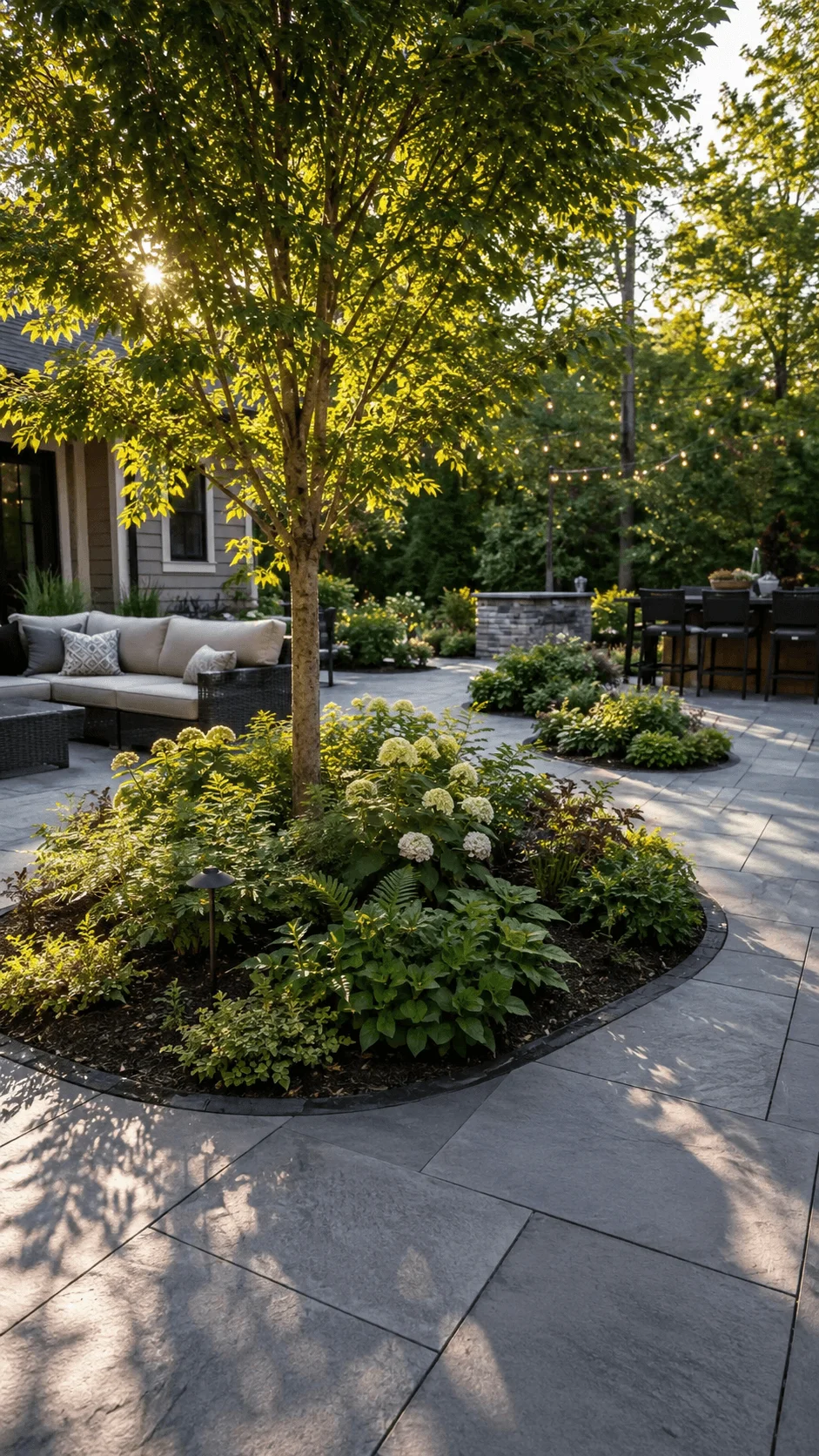
Patio island planting ideas can work in different garden sizes. A large backyard might accommodate a substantial island with a tree and several planting layers, while a smaller patio might use a compact planted section or raised planting bed.
The most successful designs consider movement through the space. Planting should not make the patio difficult to use or create awkward walking routes. Instead, the island should become part of the layout and help divide the space naturally.
This approach demonstrates how sustainable garden design can also improve the appearance and usability of an outdoor living area.
Thermal Garden Design for Hot Weather
Thermal garden design is one of the more distinctive landscaping trends gaining attention in 2026. The basic idea is to design an outdoor space with heat and thermal comfort in mind rather than treating temperature as something outside the control of garden design.
Hard surfaces can become extremely warm under strong sunlight, particularly when a garden contains large areas of paving with little shade. Thoughtful planting can help change the experience of these spaces by introducing shade and vegetation.
Trees are particularly useful because they can create overhead shade as they mature. Their placement matters, however. A tree should have enough room to grow while being positioned where its eventual shade can provide useful benefits.
Shrubs and taller plants can provide lower levels of shade and create visual separation. Combining different heights can make an outdoor area feel more enclosed and natural. Plants also introduce softer textures that can make a heavily paved landscape feel less harsh.
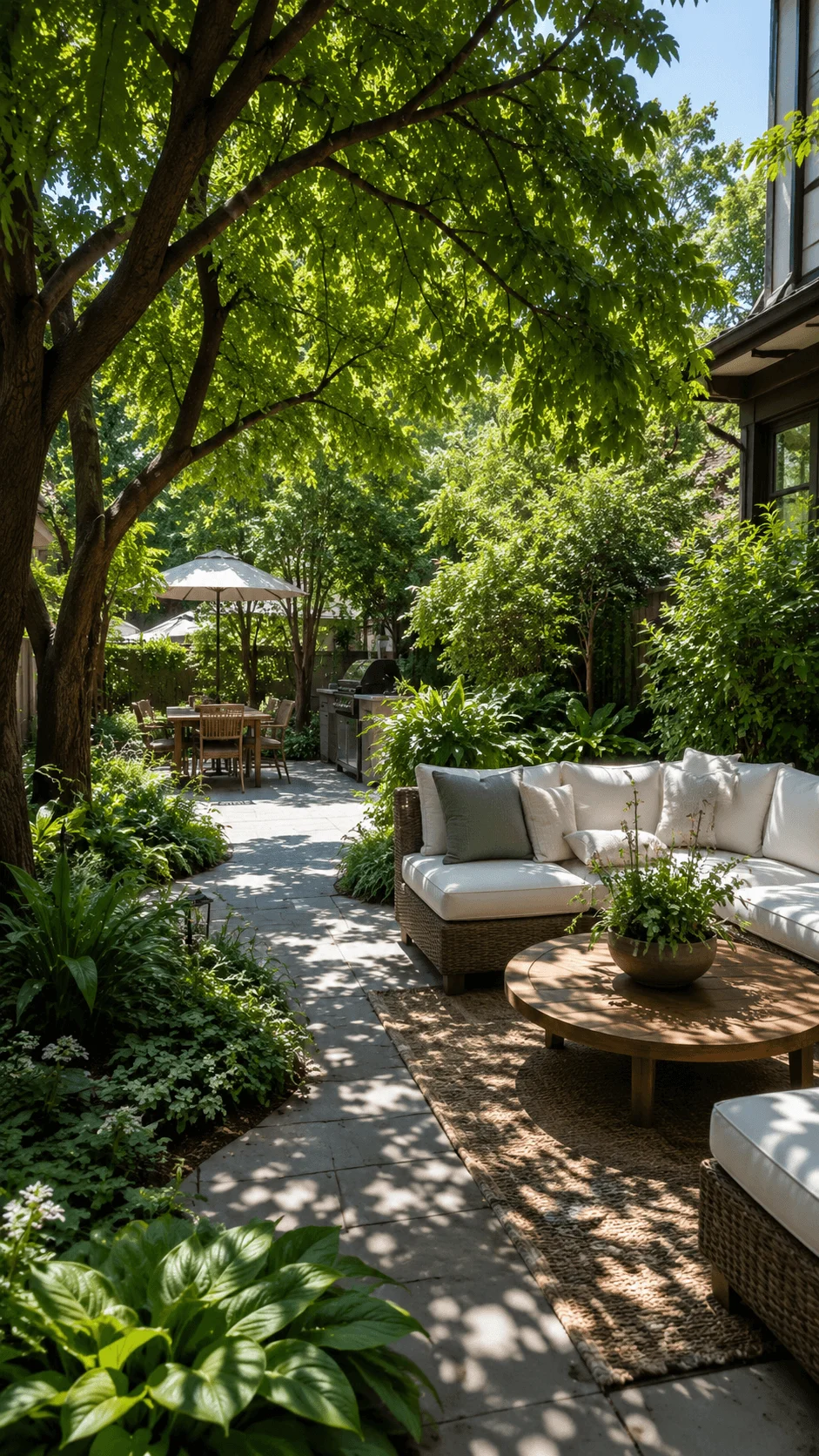
The choice of materials can matter as well. When homeowners redesign patios, paths, or seating areas, they can consider how different surfaces respond to sunlight and heat. Reducing unnecessary hardscape can also leave more space for planted areas.
Thermal garden design does not mean turning every yard into a heavily shaded forest. Some plants need plenty of sunlight, and people may want sunny areas for outdoor activities. The aim is to create a useful balance between sun and shade.
Garden layout can also help. Seating can be placed near existing shade, while heat sensitive plants can receive protection from stronger afternoon sunlight. This type of planning can make an outdoor space more comfortable while supporting a wider range of plants.
As hotter weather becomes a greater concern for gardeners, designing landscapes around thermal comfort gives homeowners another way to combine sustainability with everyday usability.
Keystone Native Plants for Sustainable Garden Landscaping
Native planting has been an important part of environmentally responsible garden design for years, but the idea of selecting particularly valuable native species adds another level to the concept. Keystone native plants can play an important role in supporting local ecological communities when they are appropriate for the region.
The key point is that not every plant provides the same ecological value. A garden filled with attractive plants may look beautiful, but carefully selected native species can provide food, shelter, and other resources for local wildlife.
The best plant choices depend on where the garden is located. A species that works extremely well in one region may perform poorly somewhere else. Homeowners should therefore consider local growing conditions and seek information from reliable local gardening or conservation sources when selecting plants.
A layered native garden can include different types of vegetation. Taller plants can provide structure, shrubs can create additional shelter, flowering plants can add seasonal color, and groundcovers can fill spaces close to the soil.
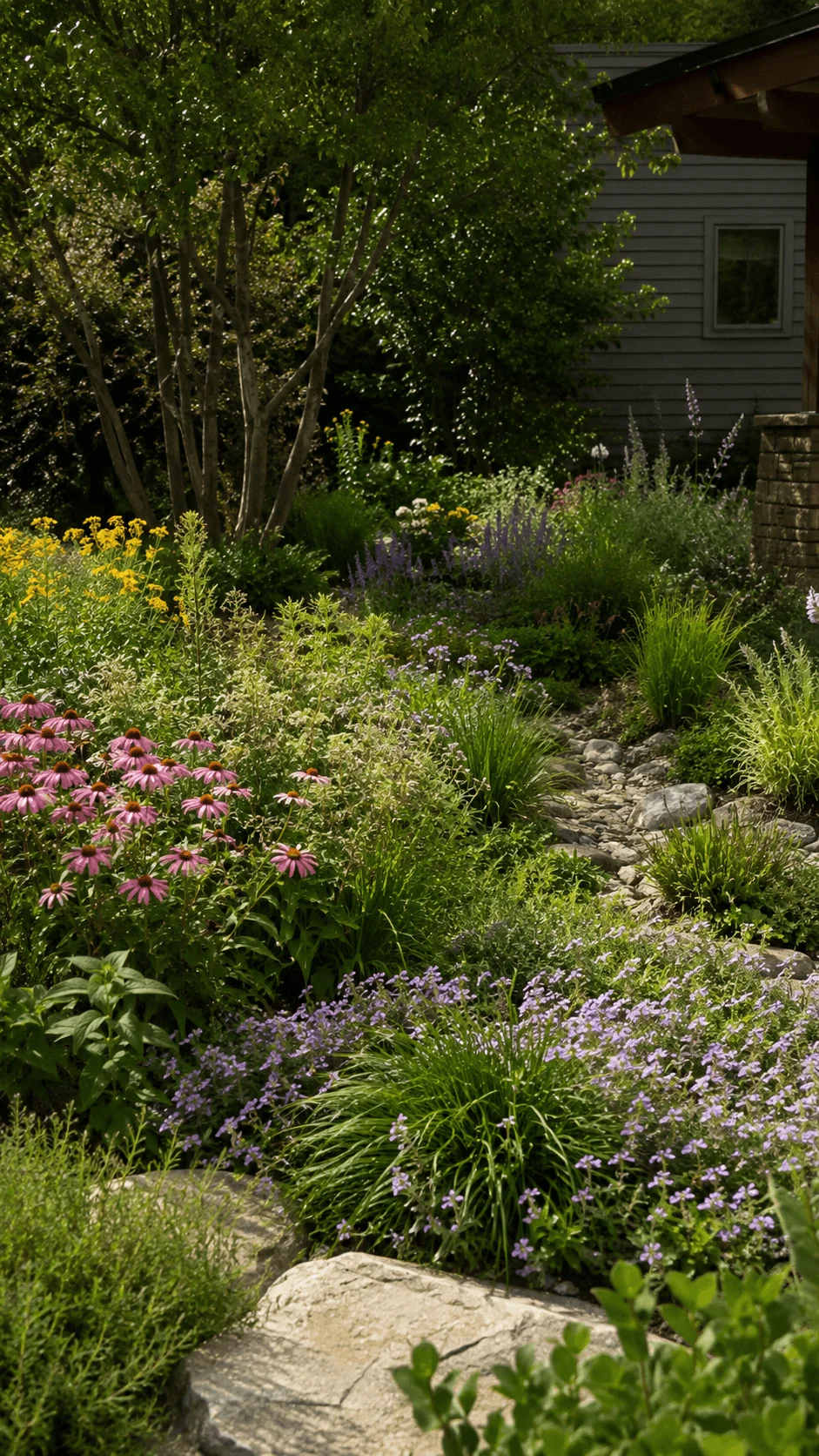
This type of design can also make a garden more visually interesting. Rather than relying on a single planting height, different layers create depth and texture. The garden can change throughout the seasons as different plants flower, produce seeds, or develop new foliage.
Native planting can also reduce the need to constantly replace plants that struggle with local conditions. When homeowners select species that naturally suit the climate and soil, the landscape has a better chance of establishing successfully.
Keystone plants landscaping therefore fits naturally into modern eco friendly garden landscaping because it combines aesthetic design with a stronger focus on local biodiversity.
Precision Gardening and Smart Watering
Technology is also finding a place in sustainable garden design. Precision gardening focuses on making better decisions about water, soil, and plant care instead of applying the same treatment to every part of a landscape.
Traditional irrigation systems may water an entire area according to a fixed schedule, even when some sections already contain enough moisture. Smart irrigation systems can use information such as soil moisture or weather conditions to help determine when watering is actually necessary.
Soil moisture monitoring can be particularly useful. Instead of guessing whether plants need water, gardeners can check conditions in the soil and respond accordingly. This can help prevent unnecessary watering while allowing plants to receive moisture when they genuinely need it.
Gardeners can also divide landscapes into different watering zones. Plants with similar water requirements can share an area, while drought tolerant plants can occupy sections that receive less irrigation.
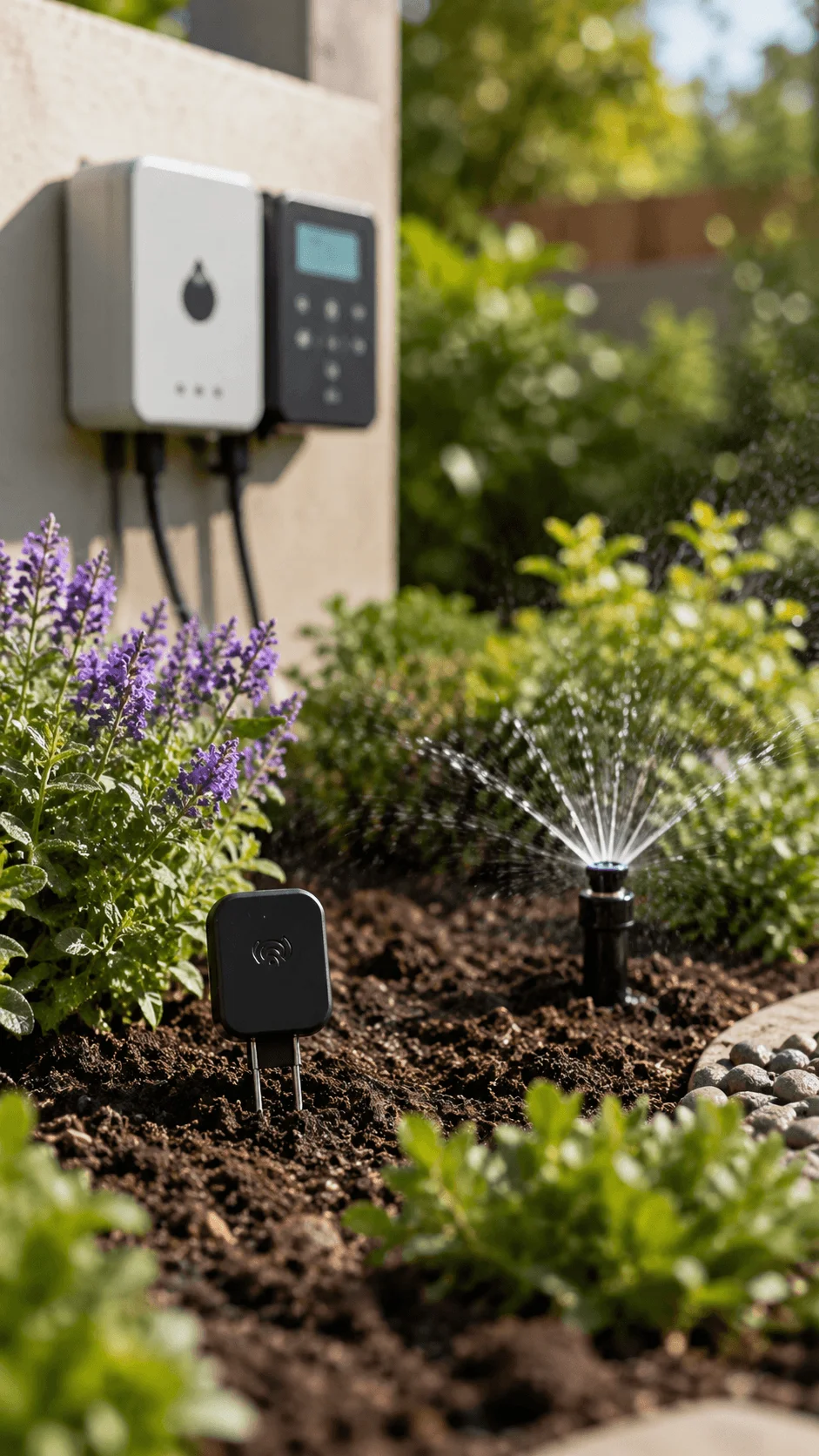
Precision gardening does not require expensive technology. Even simple observation can make watering more efficient. Checking soil moisture, watching plant behavior, understanding rainfall, and adjusting watering according to seasonal conditions can all contribute to better garden management.
Smart technology becomes most useful when it supports good garden planning rather than compensating for poor plant selection. Choosing suitable plants and improving soil should remain central to sustainable landscaping.
By combining thoughtful planting with targeted irrigation, homeowners can create a landscape that uses water more carefully while maintaining healthy plants.
Rain Gardens and Bioswale Landscaping
Rainwater can become a challenge when a garden contains large paved areas, compacted soil, or poor drainage. Instead of treating rainfall as something that needs to leave the property as quickly as possible, sustainable garden landscaping can use features that slow down and manage water naturally. Rain gardens and bioswales are two useful examples.
A rain garden is a planted area designed to receive and temporarily hold runoff from places such as roofs, driveways, patios, or other surfaces. The plants and soil help the area absorb water over time. A rain garden can become an attractive landscape feature rather than looking like a conventional drainage system.
Bioswale garden landscaping takes a somewhat different approach. A bioswale generally uses a shallow, planted channel to guide and slow stormwater while vegetation and soil help manage the flow. The shape and planting can make the feature blend into the surrounding landscape.
Both approaches can help homeowners think differently about drainage. Instead of directing every drop of rain toward a drain, suitable areas of the garden can capture some water and allow it to soak into the ground.
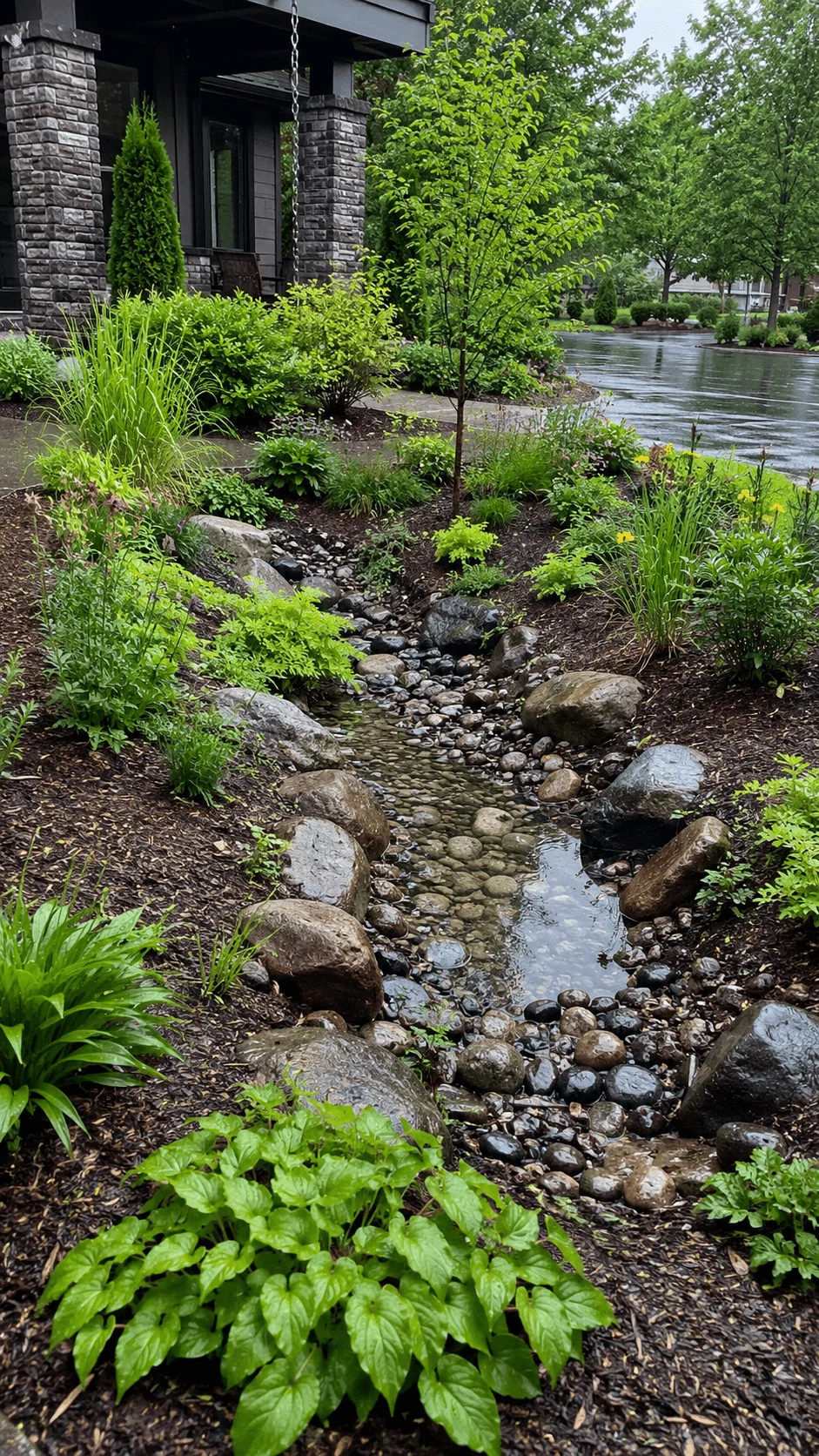
The location of these features matters considerably. Homeowners need to understand how water naturally moves across their property before creating a rain garden or bioswale. Soil conditions, slope, rainfall, existing drainage systems, and local requirements can all affect the design.
Plants should also match the conditions they will experience. Some parts of a rain garden may become temporarily wet after rainfall and then become much drier between storms. Selecting plants that can tolerate those changing conditions can help the planting establish successfully.
A well designed rain garden can also add seasonal interest. Flowering plants, grasses, shrubs, and other suitable vegetation can create a visually appealing feature while performing a practical function.
For homeowners looking beyond conventional planting beds, rain gardens and bioswales offer an excellent way to combine water management with attractive landscape design.
Eco Friendly Edible Landscaping and Foodscaping
A garden does not have to separate food production from ornamental design. Eco friendly edible landscaping combines plants that produce food with plants traditionally chosen for appearance, creating a landscape that is both useful and attractive.
Foodscaping can include herbs, vegetables, fruit trees, berries, and other edible plants. Instead of placing every edible plant in a hidden vegetable patch, homeowners can integrate suitable varieties throughout the landscape.
Herbs can work particularly well along pathways or near outdoor seating areas because they remain accessible while adding fragrance and texture. Berry producing plants can form part of a mixed border, while compact fruit trees can provide structure and seasonal interest.
Vegetables can also become part of ornamental planting. Leafy vegetables, colorful peppers, herbs, and other attractive crops can work alongside flowers when their growing requirements match the location.
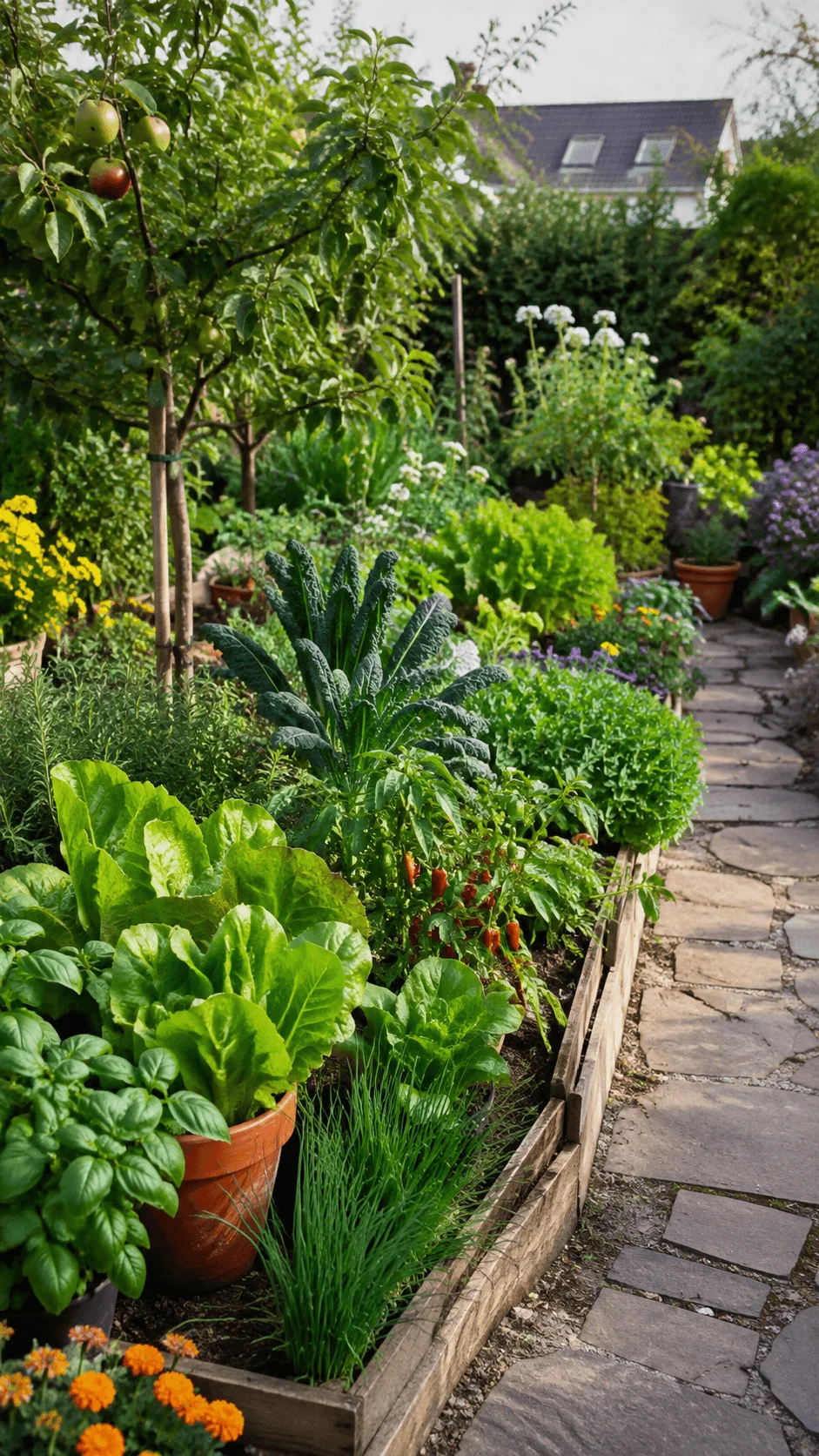
This approach can make a garden more productive without requiring a large dedicated vegetable area. It can also encourage homeowners to pay closer attention to seasonal planting and harvesting.
The design should still consider practical needs. Edible plants often require suitable sunlight, water, soil, and protection from pests. Plants should therefore go into locations where they have a good chance of growing successfully.
Containers provide another opportunity for foodscaping. A small patio or balcony can accommodate herbs, compact vegetables, or suitable fruiting plants in containers. This makes sustainable edible garden design possible even when there is limited ground space.
Edible landscaping also gives gardens a stronger sense of purpose. A border can provide flowers for people and wildlife while also producing herbs or fruit. A tree can provide shade and eventually produce food. A small garden can therefore perform several functions at once.
As homeowners increasingly look for productive outdoor spaces, foodscaping offers a practical way to make a landscape more useful while keeping its decorative character.
Permeable Garden Landscaping for Better Drainage
The surfaces used in a garden can have a major influence on how rainwater behaves. Large areas of conventional paving can prevent water from entering the soil, causing more runoff during heavy rainfall. Permeable garden landscaping offers an alternative by allowing more water to move through suitable surfaces.
Permeable paths can use materials that allow rainwater to pass into the ground rather than immediately flowing across the surface. Depending on the location and purpose, options can include suitable permeable pavers, gravel, planted areas, and other water friendly surfaces.
Reducing unnecessary paving can make an even bigger difference. A homeowner might not need a completely paved pathway when a narrower path with planted edges could serve the same purpose. Likewise, a garden can sometimes replace unused hard surface with planting areas.
Gravel can provide a relatively simple visual transition between planted spaces and pathways. However, the correct type and installation method depend on how the path will be used and the conditions of the site.
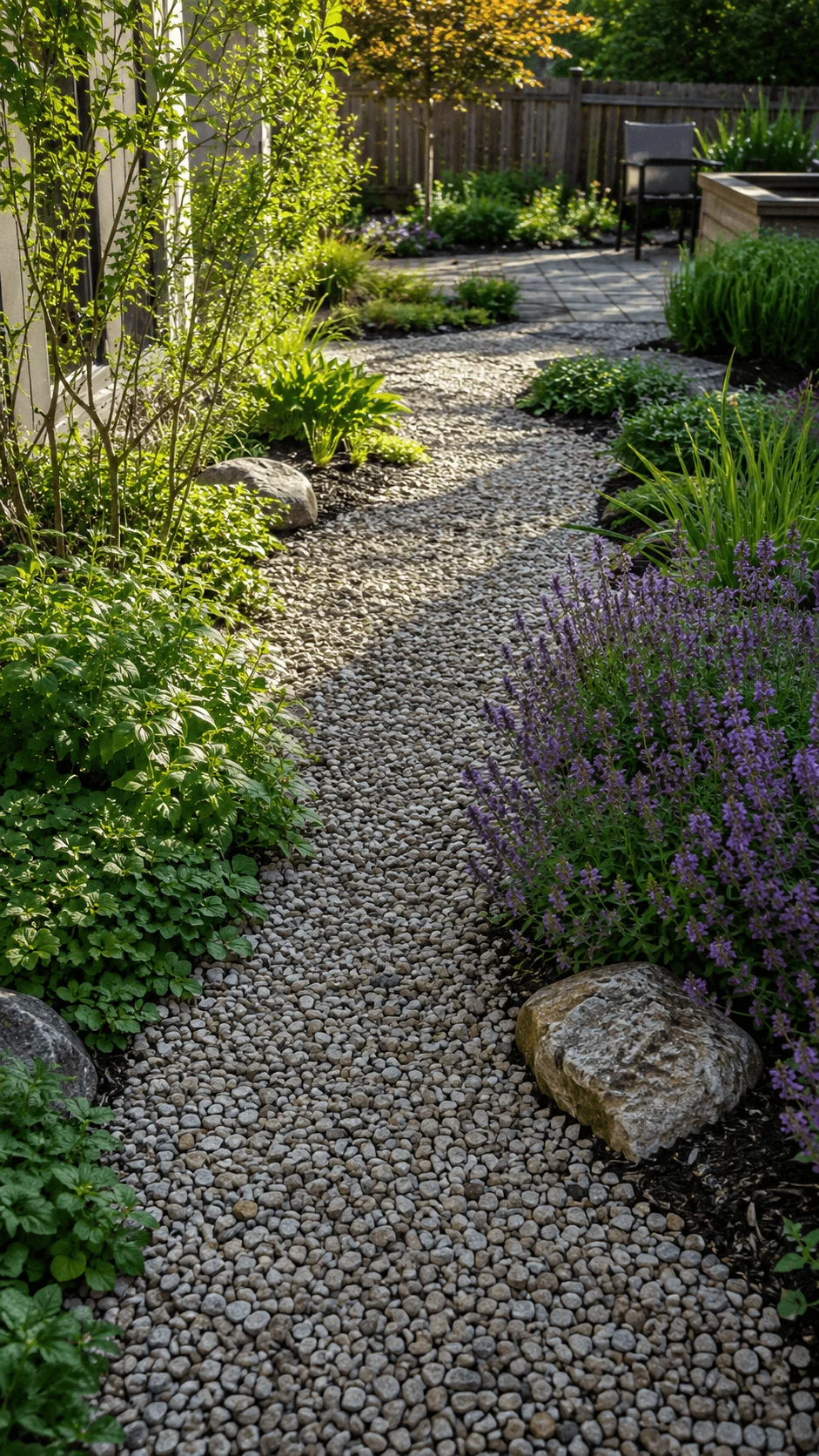
Permeable surfaces can also work with other sustainable landscaping features. For example, water from a permeable patio can interact with surrounding planted areas, while a garden slope can direct excess water toward an appropriate planting zone.
The objective is not to eliminate hardscape completely. Patios, paths, steps, and seating areas remain useful parts of many gardens. Instead, sustainable hardscape design asks whether every surface is necessary and whether some materials can manage water more naturally.
Good drainage design also requires attention to the existing property. Heavy clay soil, steep slopes, high rainfall, or existing drainage problems may require a more carefully planned solution.
When used appropriately, permeable landscaping can help create a garden where hardscape and planting work together rather than competing with natural water movement.
Regenerative Garden Landscaping
Sustainable gardening often focuses on reducing waste and using fewer resources, while regenerative garden landscaping takes the concept further by focusing on improving the condition of the garden ecosystem itself.
Healthy soil sits at the center of regenerative landscaping. Soil contains organic matter and a complex community of organisms that influence how plants grow. Improving soil structure can help create better conditions for roots while supporting the natural processes taking place underground.
Adding suitable compost and organic matter can contribute to healthier soil. Gardeners can also keep soil covered with suitable plants or organic materials instead of leaving large areas completely exposed.
Reducing unnecessary disturbance can also support soil health. Gardeners do not always need to dig and turn soil repeatedly. In many situations, minimizing disturbance can help maintain soil structure and reduce disruption to organisms living within it.
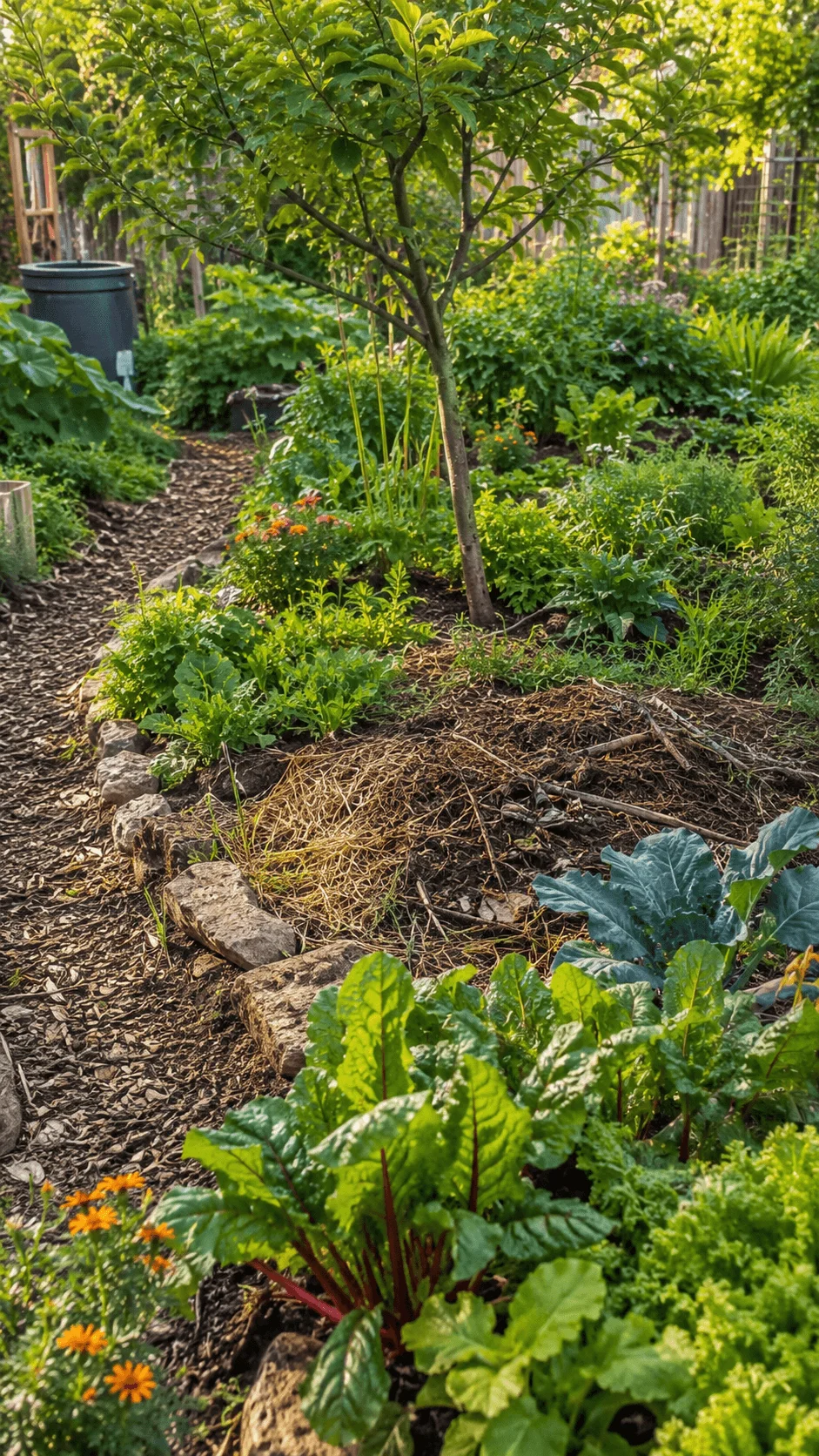
Garden waste can become another resource. Leaves, plant material, and suitable organic waste can be composted rather than automatically sent away. The resulting material can eventually return nutrients and organic matter to the garden.
Regenerative landscaping can also involve increasing plant diversity. A garden with multiple plant layers can create a wider range of conditions for insects, birds, and soil organisms.
This approach changes the way homeowners think about garden maintenance. Instead of constantly removing everything that appears naturally, gardeners can ask whether a particular plant or organic material has a useful role in the ecosystem.
Regenerative garden landscaping does not mean abandoning garden care. It means managing the landscape in ways that encourage natural processes and gradually improve the health of the soil and planting environment.
For homeowners interested in long term sustainability, regenerative practices can become the foundation upon which many other eco friendly garden landscaping ideas are built.
Wildlife Friendly Garden Landscaping
A garden can become much more valuable to wildlife when it provides more than flowers. Birds, pollinators, insects, and other local species need food, shelter, water, and places where they can complete different parts of their life cycles.
Wildlife friendly garden landscaping therefore works best when homeowners think about the entire structure of the garden. Trees can provide height and shelter, shrubs can create protected areas, flowers can provide seasonal resources, and groundcovers can create habitat close to the soil.
Layered planting is particularly useful because it creates different spaces within the same garden. A garden with only short flowers provides fewer structural opportunities than one containing several levels of vegetation.
Water can also become part of a wildlife focused landscape. Depending on the garden, a suitable shallow water feature can provide drinking or bathing opportunities for birds and other wildlife. Water features should be maintained appropriately so they remain clean and safe.
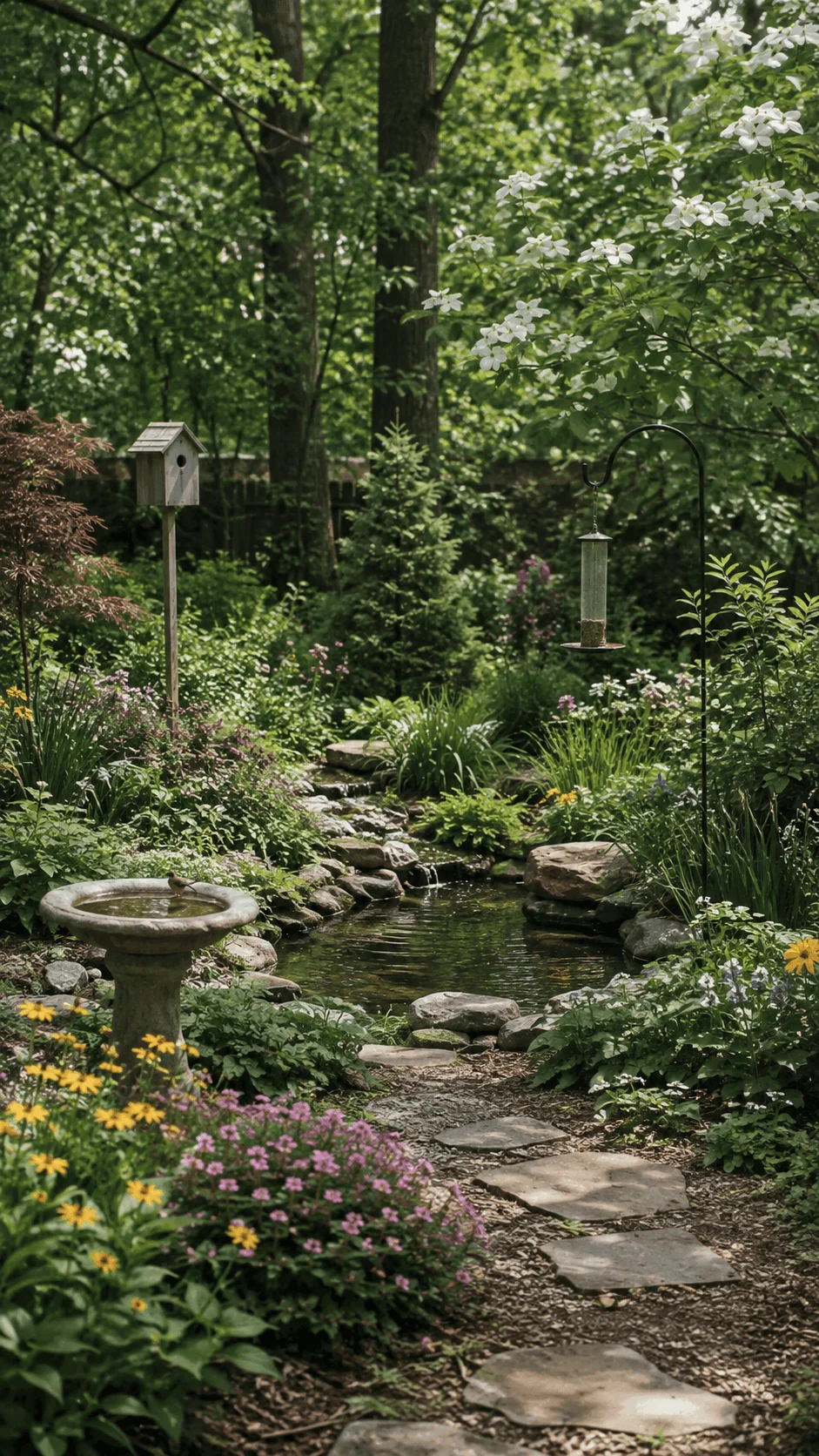
Wildlife habitat does not have to look messy. Homeowners can use defined borders, pathways, repeated plant groupings, and carefully selected species to create an organized appearance.
Another useful concept is connectivity. A single pollinator bed can provide resources, but connected planting areas can create a more continuous habitat across a property. Shrubs, flowering borders, trees, and groundcover can help create these connections.
Plant selection should focus on species that suit the local environment. Local wildlife has evolved alongside regional plant communities, so appropriate native species can play an important role.
A wildlife garden can also become more interesting for people. Seasonal flowers, birds, butterflies, changing foliage, and natural movement can add life to an outdoor space.
This makes biodiversity garden landscaping more than an environmental project. It can create a garden that feels active, varied, and connected to the surrounding natural world.
Reclaimed Materials and Sustainable Hardscape Design
Sustainability does not stop at the edge of a planting bed. Paths, patios, walls, borders, seating areas, and other hardscape features also influence the environmental impact of a garden.
Reclaimed materials can provide an alternative to purchasing completely new materials for every project. Reclaimed bricks, reused stone, suitable salvaged wood, and other durable materials can sometimes find a second life in garden construction.
Old bricks can create attractive pathways or borders. Reused stone can become part of a retaining feature or garden wall. Salvaged materials can also introduce character because they often have textures and variations that are difficult to reproduce with completely new products.
However, reused materials should still be selected carefully. They need to be suitable for their intended purpose, safe to use, and appropriate for the local climate. Some materials may require inspection or preparation before they become suitable for landscaping.
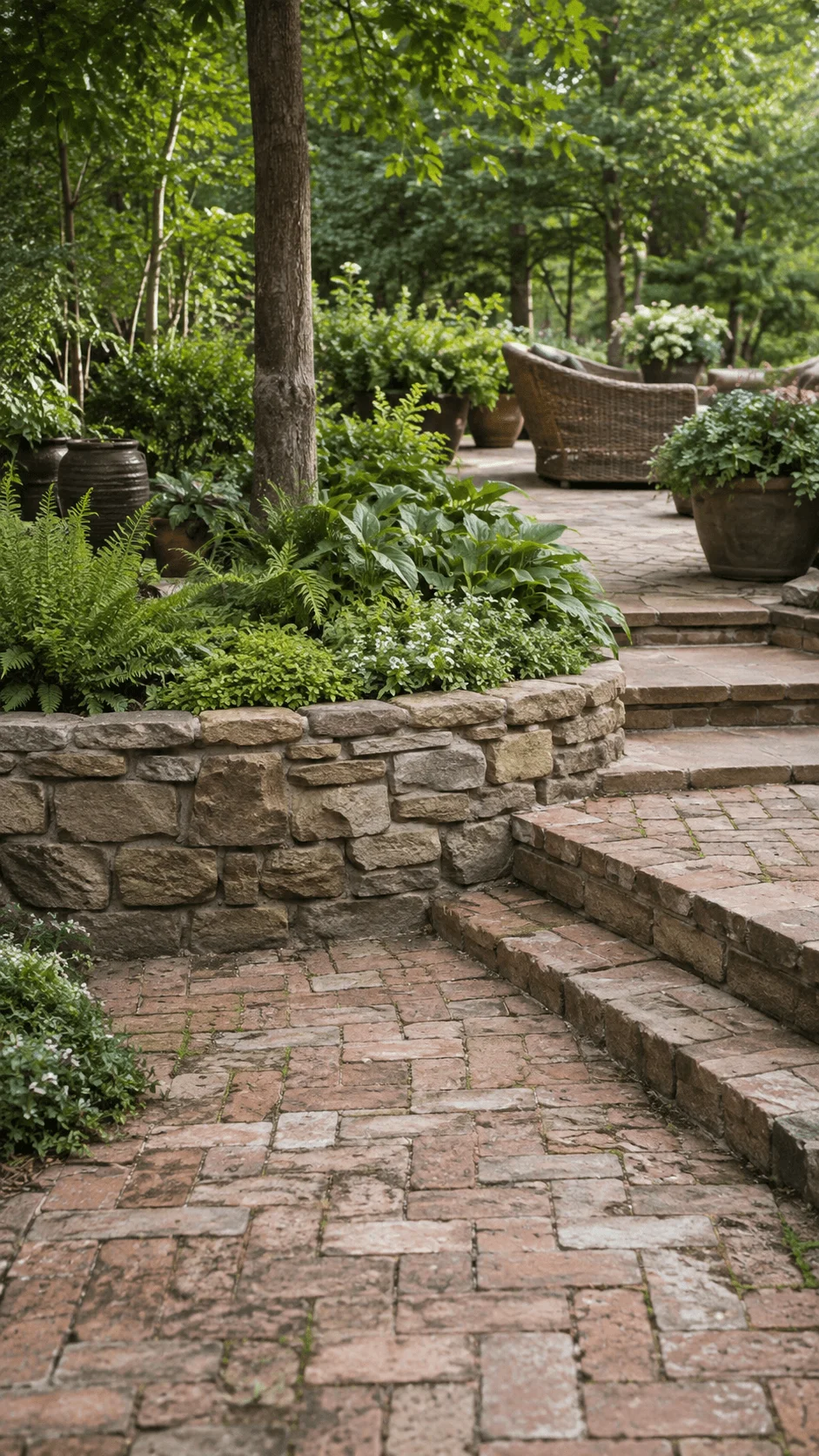
Durability is another important part of sustainable hardscape ideas. A material that lasts for many years can reduce the need for repeated replacement. Good construction and regular maintenance can extend the useful life of patios, paths, walls, and other features.
Homeowners can also design with future changes in mind. A flexible garden layout can make it easier to repair, adapt, or modify individual features without replacing the entire landscape.
Using fewer unnecessary materials can be just as important as choosing recycled ones. A simple pathway that meets the needs of the garden may be more sustainable than a complicated installation that requires large quantities of material.
Circular thinking encourages homeowners to consider what they already have before buying something new. Existing stones, bricks, containers, timber, or other suitable materials may have useful applications elsewhere in the garden.
When hardscape decisions become part of the overall environmental strategy, the result can be a garden that uses resources more thoughtfully from the ground up.
Conclusion
The best eco friendly garden landscaping ideas do not require homeowners to completely redesign their property overnight. A sustainable landscape can develop gradually as different features are introduced and existing areas are improved.
A homeowner might begin by replacing part of a conventional lawn with a mini meadow, adding native plants, improving the soil, or reducing unnecessary paving. Another garden might benefit more from a rain garden, better irrigation, shade planting, or an edible landscape. The right combination depends on the climate, soil, available space, rainfall, and needs of the household.
The most successful sustainable garden designs connect these features rather than treating them as separate projects. Healthy soil can support resilient plants. Native planting can create habitat. Trees can provide shade. Permeable surfaces can help manage rainfall. Smart watering can reduce unnecessary water use, while edible plants can make the garden more productive.
An environmentally responsible garden does not need to look plain or neglected. With thoughtful planning, it can be colorful, comfortable, productive, attractive, and full of life.
The real goal of modern sustainable landscaping is to create outdoor spaces that work with nature instead of constantly working against it. By adopting even a few of these approaches, homeowners can create gardens that are better prepared for changing conditions and more supportive of the natural world around them.