Eco Friendly Aesthetic Photography Room Ideas for 2026
Creating an eco friendly aesthetic photography room is a beautiful way to combine creative photography with thoughtful interior design and sustainable choices. A photography room does not need expensive decorations, disposable backdrops or large amounts of new furniture to look professional. With natural light, plants, reclaimed materials, reusable props and carefully selected furniture, you can create a space that feels warm, creative and visually distinctive.
Photography spaces have also started moving toward more natural and authentic interiors. Instead of completely sterile rooms with plain white walls and artificial decorations, photographers can create environments that feature natural textures, earthy colors, vintage furniture and organic elements. These choices can make photographs feel more personal while helping reduce unnecessary consumption.
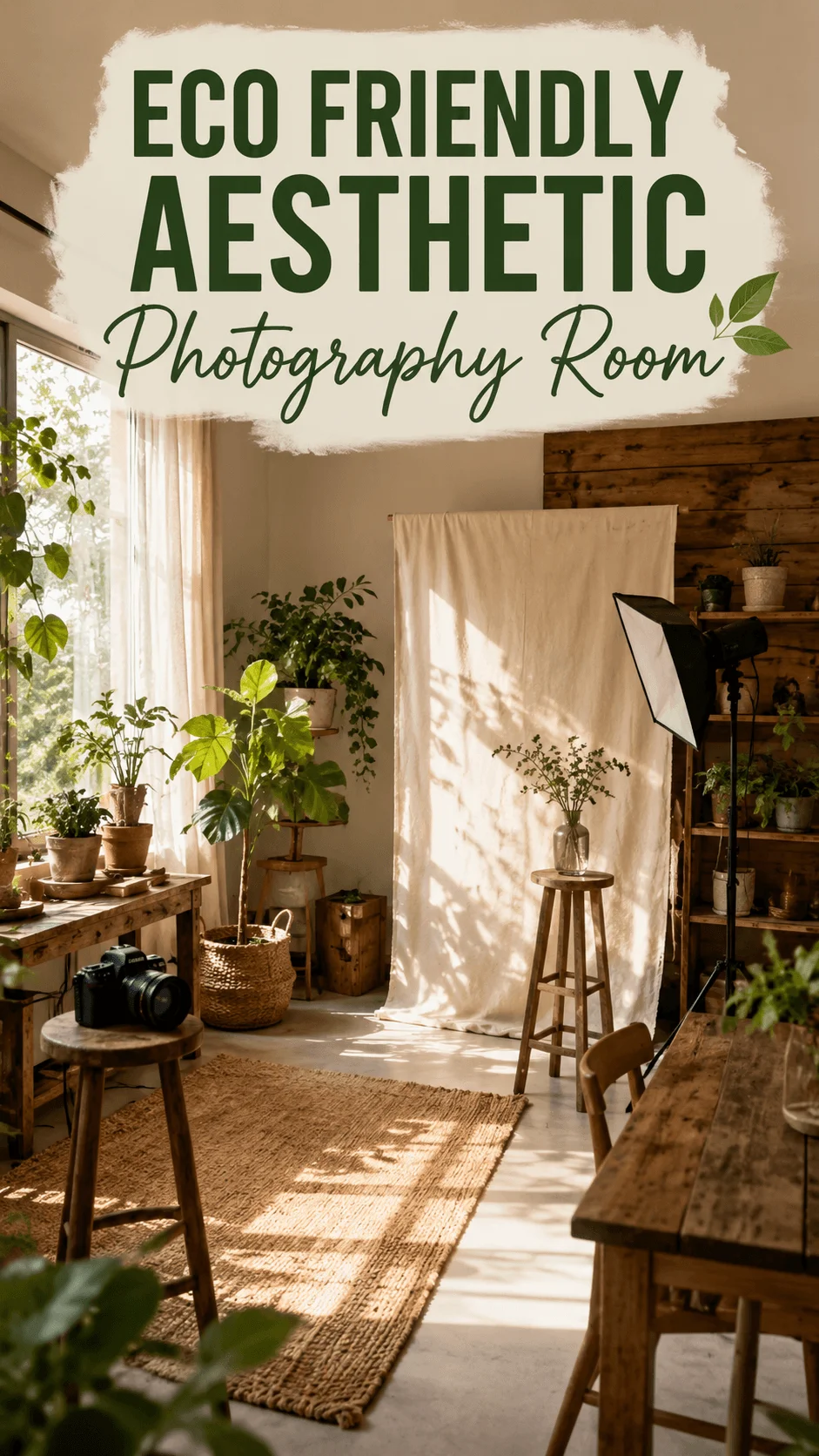
The best part of creating a sustainable photography room is that the space can serve several purposes. A single room can become a portrait studio, product photography area, content creation space and creative workspace. Thoughtful design allows every corner to contribute to the room without making it feel crowded.
Whether you have a dedicated studio or a small room at home, the following ideas can help you create an attractive photography environment while making more responsible choices about materials, lighting and decoration.
Why Eco Friendly Photography Rooms Are Trending in 2026
Sustainable interior design has become increasingly focused on longevity, natural materials, reuse and spaces that feel connected to nature. These ideas work particularly well in photography because the environment itself can become part of the visual story.
A sustainable photography room can use existing furniture instead of replacing everything with new pieces. A vintage wooden chair can become both functional furniture and a portrait prop. An old glass bottle can become part of a product composition. A linen curtain can provide privacy while also becoming a photography background.
Natural materials also create visual depth. Wood has grain and warmth. Linen has a soft irregular texture. Stone provides a grounded appearance. Plants introduce organic shapes and changing shadows. These characteristics can make photographs more interesting without requiring complicated decorations.
Another important reason for the growing interest in these spaces is natural light. A room designed around a large window can produce beautiful photographs while reducing the need for artificial lighting during daylight hours. Photographers can use curtains, reflective surfaces and carefully positioned furniture to control the light rather than filling the room with unnecessary equipment.
The result is a room that looks beautiful because of its materials and composition rather than because it contains a large collection of decorative products.
1. Create a Biophilic Photography Room
A biophilic photography room brings elements of nature into the photographic environment. Plants are the most obvious feature, but the concept goes much further than placing a few pots around the room.
Natural wood, stone, woven materials, daylight, organic shapes and earthy colors can all contribute to a nature inspired photography space. When these elements work together, the room can feel calm and visually rich.
Start by identifying the area that receives the best natural light. Place one or two larger plants near this area and use smaller plants on shelves or tables. Avoid covering every available surface because too many plants can compete with the subject.
Trailing plants can work particularly well around shelves or window areas. Their natural shapes can soften straight architectural lines and create interesting compositions. Larger plants can also become part of portrait backgrounds.
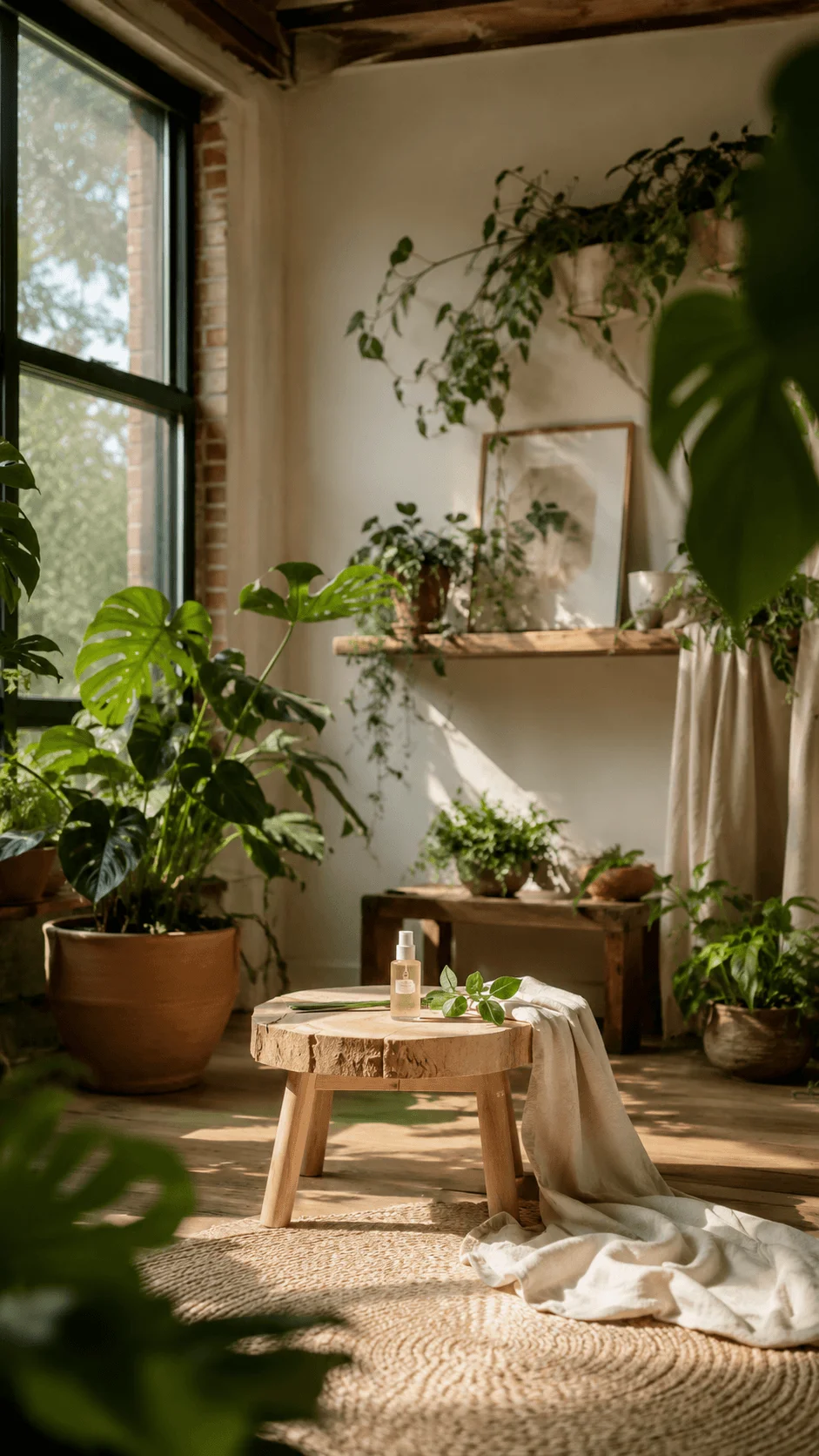
For product photography, plants can provide subtle foreground or background elements. A skincare product photographed beside a green plant and natural wooden surface can immediately communicate a fresh and organic feeling.
You can also combine plants with neutral walls and natural textiles. A cream wall, wooden stool, linen curtain and green foliage can create a simple scene that works for portraits, lifestyle content and product photography.
The key is to make nature part of the composition rather than treating it as decoration added at the end.
2. Design Around Warm Natural Light
Natural light is one of the most valuable features you can build into an eco friendly photography room. A large window can provide soft illumination for portraits, products, food and lifestyle photography without requiring artificial lights throughout the day.
Start by positioning the main shooting area close to the window. You do not always need the subject directly in front of the glass. Placing the subject slightly to one side can create attractive directional light and gentle shadows.
Sheer curtains can soften strong sunlight while maintaining a bright atmosphere. During harsh sunlight, they can prevent the scene from becoming excessively contrasty. During softer parts of the day, you can open them completely and allow more light into the room.
Wall color also matters. Cream, warm white, beige and other light shades can reflect daylight around the room. This can create a softer environment and reduce the need for additional lighting.
You can also use existing light colored surfaces as natural reflectors. A pale wall opposite the window can bounce light back toward the subject. This simple arrangement can produce surprisingly useful results.
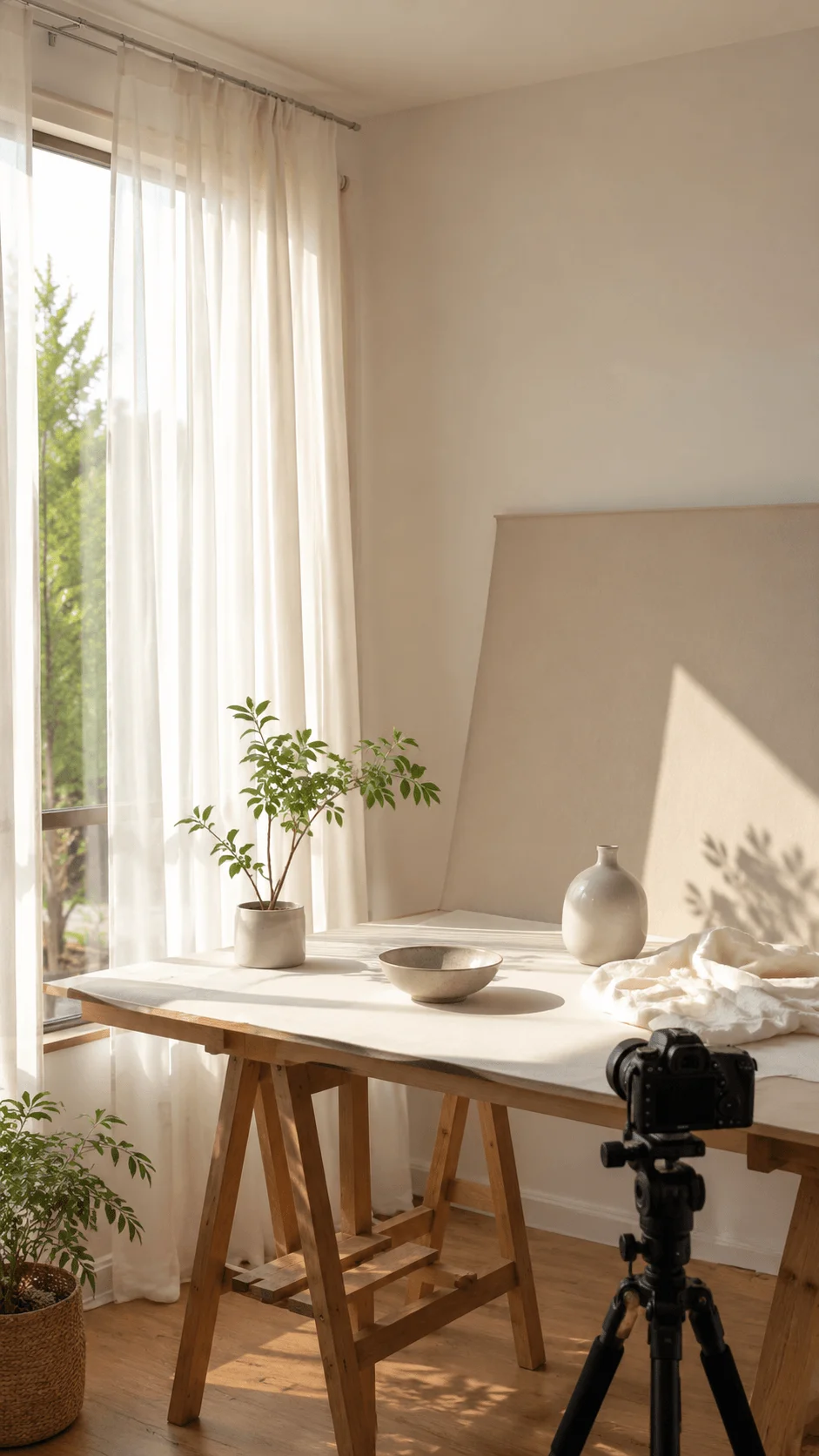
Morning and afternoon light can create different moods. Morning light may feel fresh and gentle, while later sunlight can create warmer shadows. Instead of trying to make every photograph look identical, use these natural changes to create different visual styles.
A natural light photography room can therefore become both sustainable and creatively flexible.
3. Add a Reclaimed Wood Photography Wall
A reclaimed wood wall can become one of the most recognizable features in a sustainable photography studio. Old wood often contains natural variations, marks and grain patterns that give a background more character than a perfectly manufactured surface.
You do not need to cover an entire wall. A smaller reclaimed wood section can create a dedicated shooting area while leaving the rest of the room neutral.
The wood can work particularly well for product photography. Place a small wooden table or board against the wall and photograph products against the textured background. Perfume bottles, watches, handmade products, ceramics and natural skincare products can all work well with this aesthetic.
Reclaimed wood also pairs naturally with other sustainable materials. Combine it with linen, ceramics, woven baskets, plants and stone to create a layered environment.
For portraits, the wall can provide a warm background without distracting from the person. A simple wooden surface behind the subject can create a more relaxed atmosphere than a completely blank studio wall.
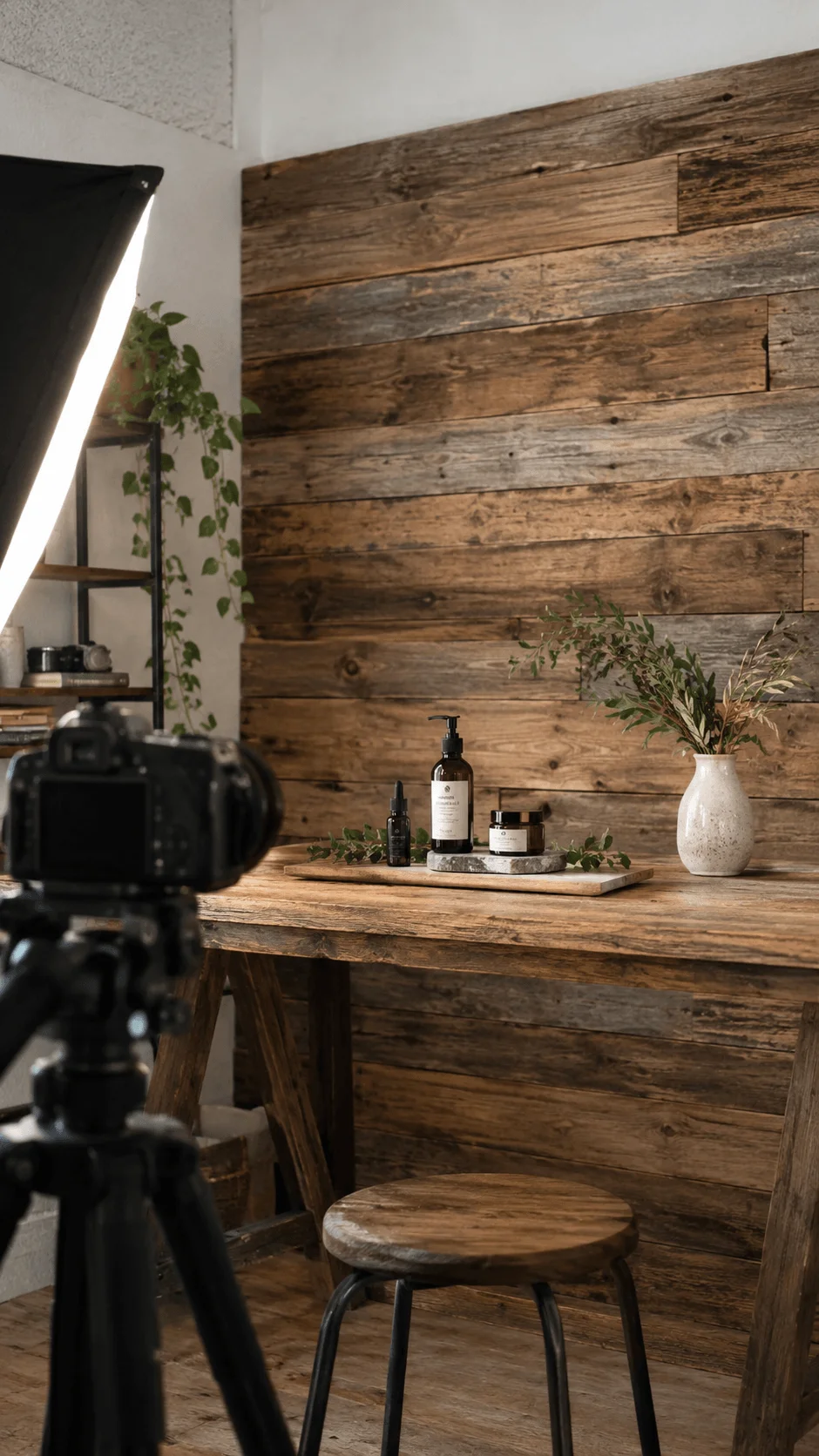
You can also use reclaimed wood for shelves and small display surfaces. This approach allows one material to appear throughout the room without making the entire interior look overly coordinated.
Before using reclaimed wood, make sure it is suitable for indoor use and free from hazardous treatments or structural problems. The goal is to reuse a material responsibly while creating a safe and attractive photography environment.
4. Choose an Earthy Minimalist Photography Room
Minimalism does not have to mean an empty white room. A modern minimalist sustainable photography studio can feel warm, textured and inviting when it uses earthy colors and carefully selected materials.
Cream, beige, muted green, brown, terracotta and soft natural shades can create a calm visual foundation. These colors also work well as photography backgrounds because they rarely compete aggressively with the main subject.
The biggest advantage of minimalism for photography is control. Every object in the room has the potential to appear in a photograph, so reducing unnecessary decoration gives you more control over the final composition.
Choose a few functional pieces instead of filling the room with accessories. A wooden chair can provide seating, a photography prop and a composition element. A simple shelf can hold equipment while also displaying a few carefully selected objects.
Negative space is equally important. Leaving an uncluttered section of wall can give photographers a clean area for portraits and product photographs. You can change the mood of the room simply by moving the subject between the textured and minimal areas.
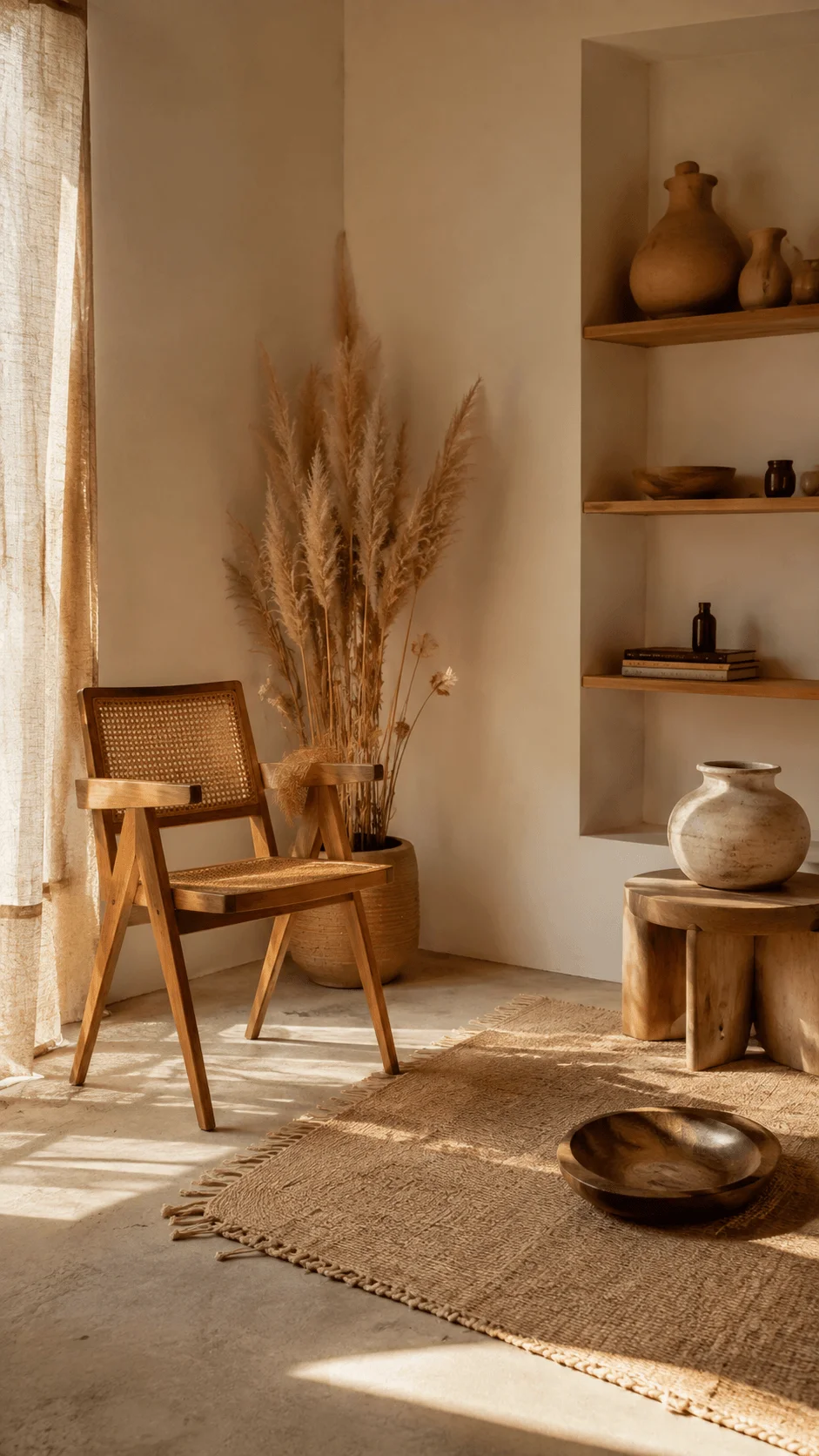
Natural textures can prevent the room from feeling boring. Add a linen curtain, woven basket, wooden stool or ceramic vase to introduce subtle differences in texture while maintaining the minimalist appearance.
The result is a photography room that feels peaceful in person and provides plenty of creative flexibility behind the camera.
5. Use Secondhand Furniture as Photography Decor
Secondhand furniture can give an aesthetic photography room considerably more personality than a room filled entirely with new products.
Look for wooden chairs, stools, small tables, cabinets, shelves and mirrors at secondhand shops or through local reuse opportunities. Older furniture often has visual character that can make photographs feel more authentic.
A vintage wooden chair can become a portrait prop. An old side table can support products during a shoot. A small cabinet can store camera accessories while appearing naturally in lifestyle photographs.
You can also repair or refresh furniture instead of replacing it. A scratched wooden surface might need cleaning and simple restoration rather than disposal. A dated piece can sometimes become useful again with careful refinishing.
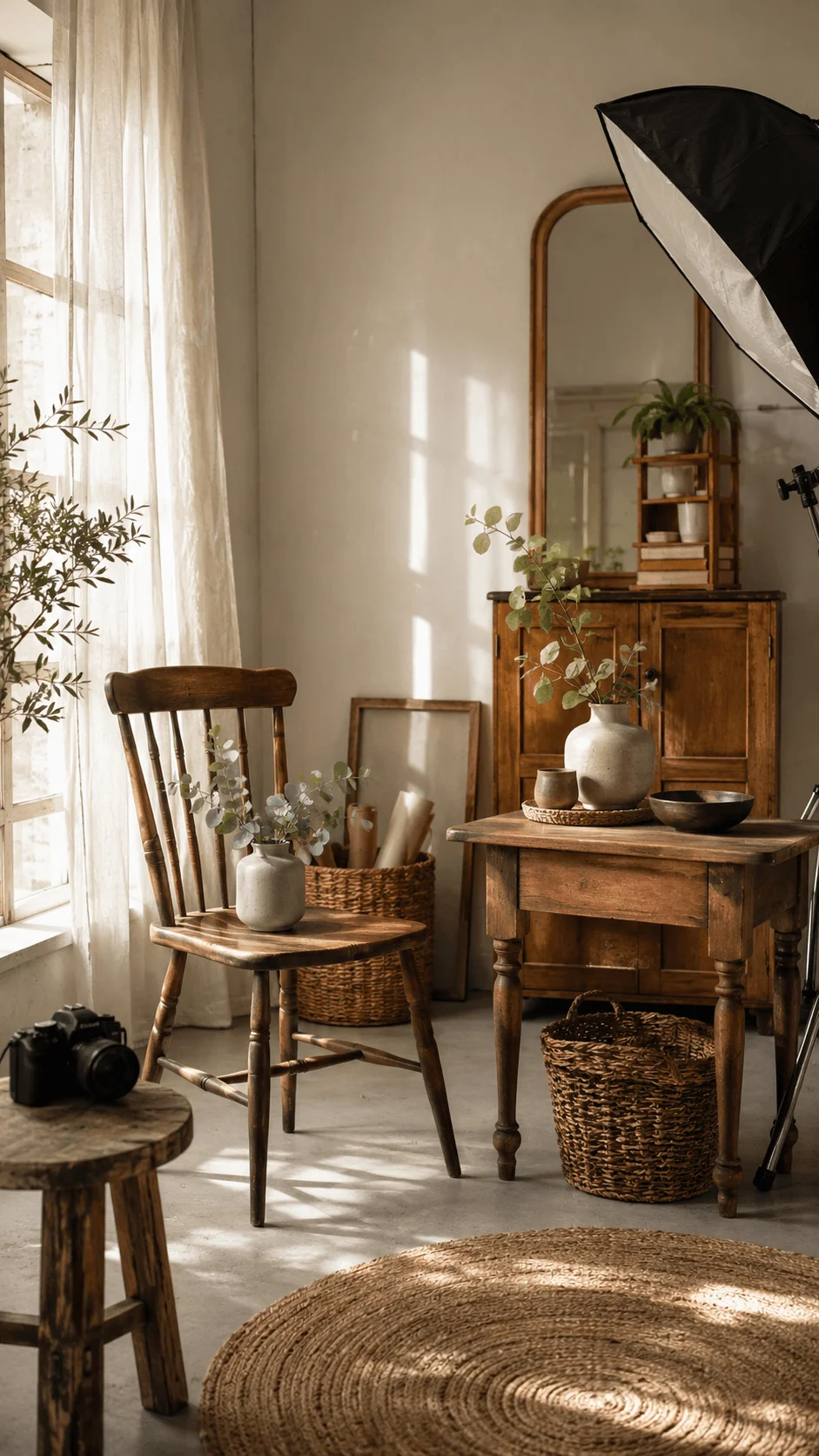
Do not worry about making every piece look identical. A slightly varied collection can create a more collected and personal aesthetic.
For example, a warm wooden chair beside a linen curtain, ceramic vase and green plant can create a relaxed portrait scene. The same chair can later move beside a table for a product shoot.
This approach makes the room more versatile while extending the useful life of existing furniture.
6. Create a Natural Linen Backdrop Corner
A dedicated linen backdrop corner can give your photography room a soft and sophisticated appearance while providing a reusable alternative to constantly purchasing new backgrounds.
Linen works especially well because its texture remains visible without becoming overwhelmingly distracting. Cream, beige, soft gray and natural linen shades can work with portraits, products, food and lifestyle photography.
Hang a large piece of linen from a simple curtain system or another reusable support. You can keep it relatively smooth for a cleaner image or allow gentle folds to create more texture.
Layering can create even more possibilities. Place one fabric behind the subject and allow another piece to fall naturally beside it. This can create depth without requiring additional decorative objects.
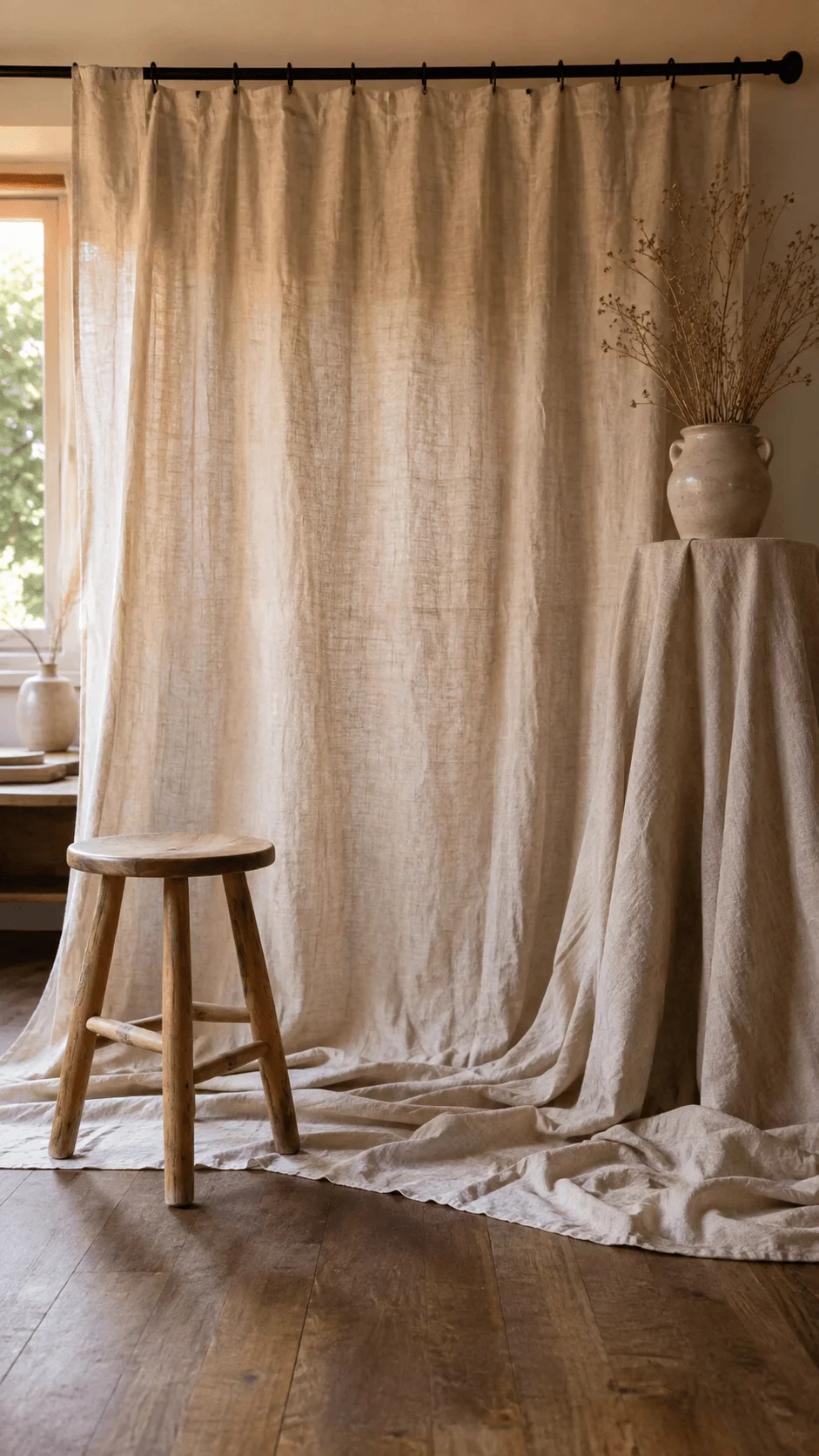
Linen also works beautifully with natural wood. A wooden stool in front of a cream linen background can produce a simple portrait setting. For product photography, place the product on a wooden or ceramic surface while allowing the linen to form the background.
The same fabric can serve multiple purposes around the room. It can function as a curtain, backdrop or styling material depending on the shoot.
Choosing reusable textiles gives photographers more creative flexibility while reducing the need to constantly purchase new decorative backgrounds.
7. Create a Botanical Shadow Photography Wall
A botanical shadow wall takes the natural light concept a step further by using plants to create patterns across a wall.
Position a plant close to a window so its leaves cast shadows across a nearby surface. The exact result will change depending on the time of day, window direction and position of the plant.
You can move the plant closer to the window to create sharper shadows or farther away to create a softer pattern. Changing the subject’s position can also dramatically alter the composition.
This technique works particularly well for beauty portraits, skincare photography, fashion content and still life scenes.
Imagine a neutral wall with soft leaf shadows falling across it while a small product sits on a wooden table in the foreground. The photograph can look carefully styled without requiring a large collection of artificial props.
A botanical shadow wall also gives you a changing background. As sunlight moves throughout the day, the shadows shift naturally. This means one simple setup can produce different images at different times.
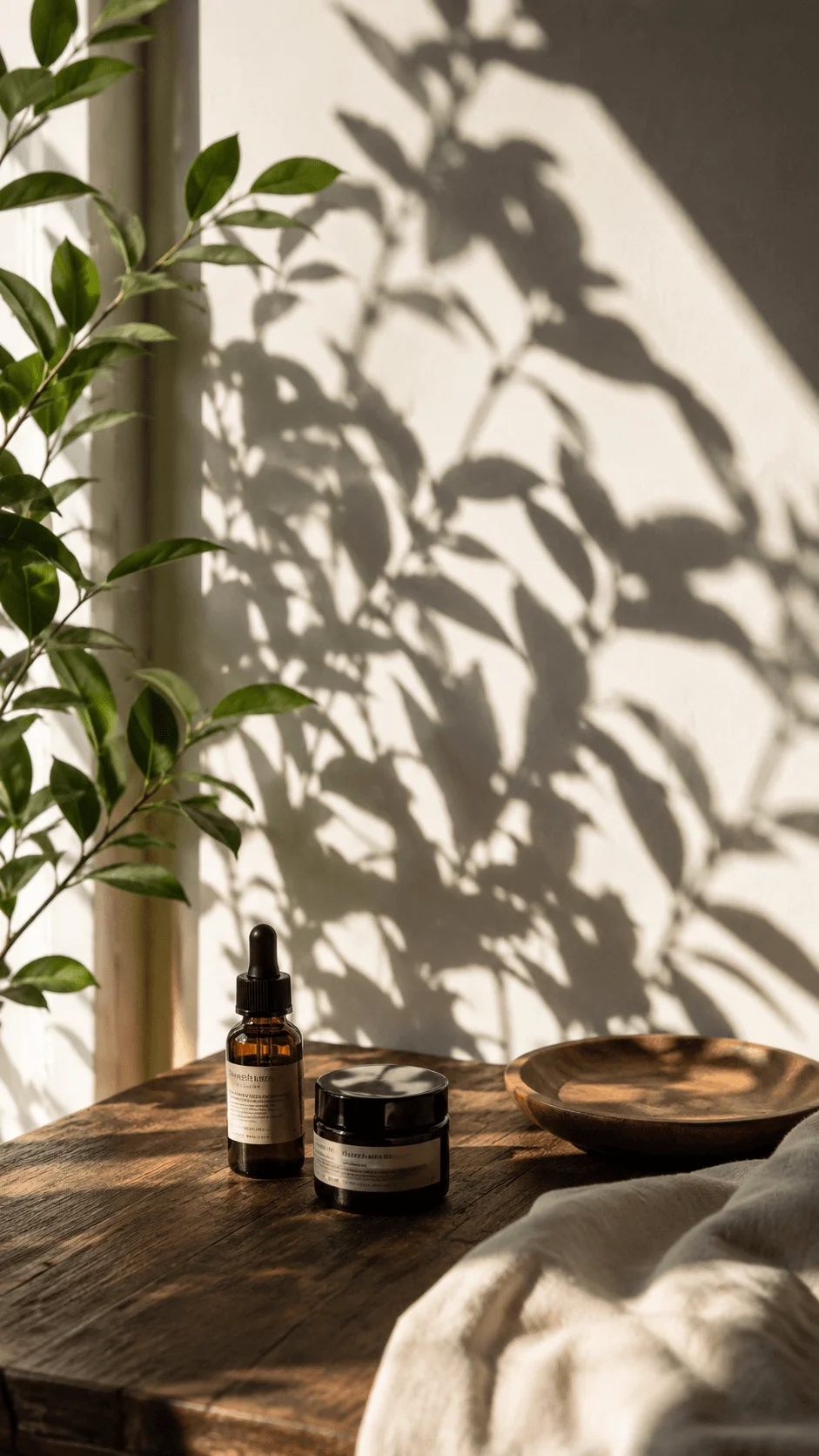
It is an excellent example of how sustainable design and creative photography can work together.
8. Add Cork and Natural Fiber Textures
Cork and natural fibers can introduce tactile detail without overwhelming the room. Cork can work as a wall section, pinboard or small photography surface, while jute, hemp and woven cotton can appear through rugs, baskets, curtains and styling materials.
These materials work particularly well in an earthy photography studio because they add texture while maintaining a natural visual language.
Use texture selectively. A woven basket beside a wooden table can create enough visual interest without requiring additional decorations. A small cork section can provide a different background for product photography.
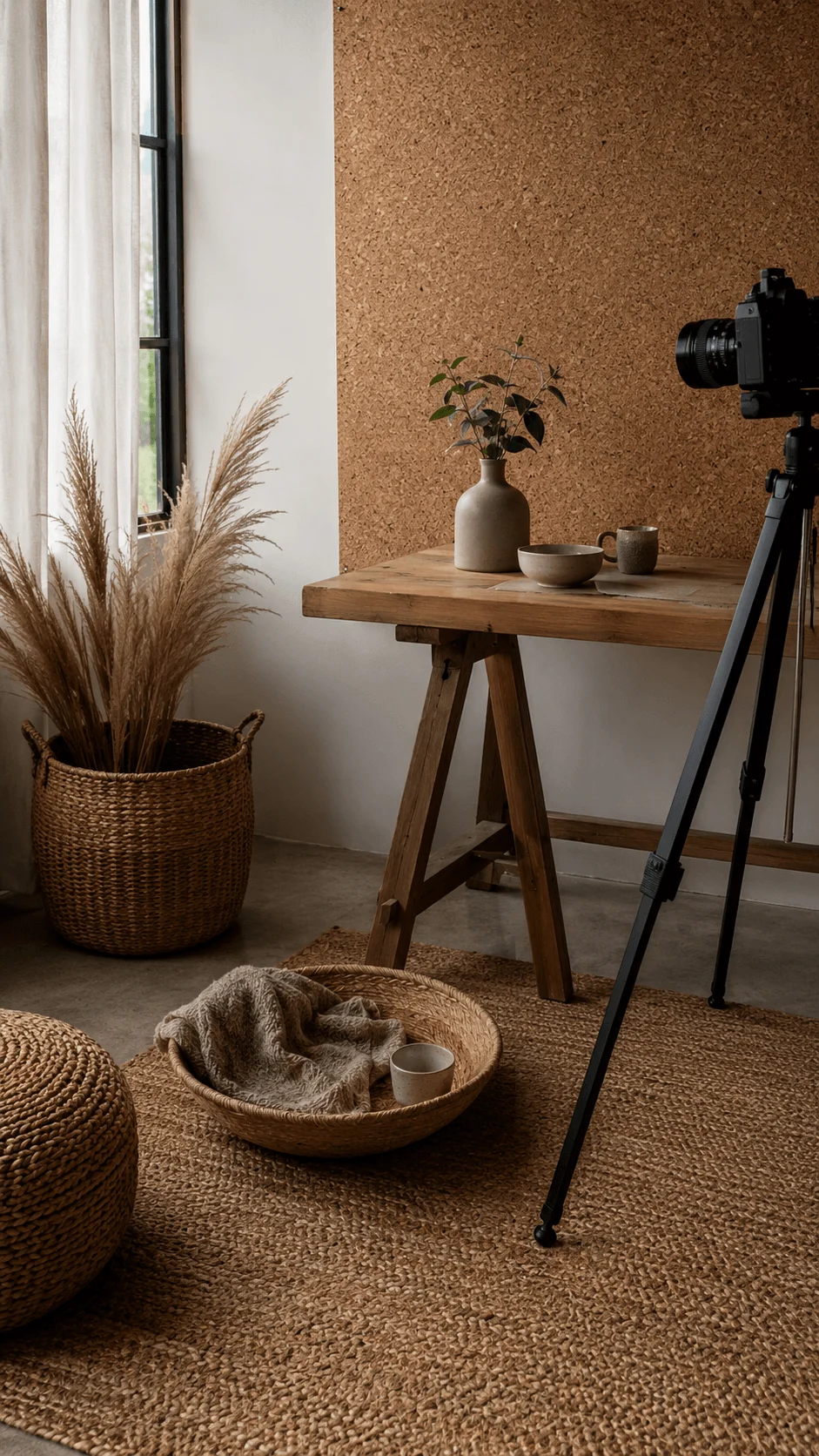
Natural fibers can also soften the appearance of hard surfaces. If the room contains a lot of wood or stone, a woven textile can create visual balance.
The goal is not to fill the room with sustainable materials simply because they are sustainable. Every material should contribute to the room’s function, atmosphere or photographic possibilities.
9. Create a Recycled Material Prop Shelf
A recycled material prop shelf can become one of the most useful features in an eco friendly photography room. Instead of buying new decorative objects for every photography session, create a small collection of reusable items that can work across different styles and subjects.
Old glass bottles, ceramic containers, wooden objects, vintage frames, books, baskets and fabric pieces can all become valuable photography props. Their purpose does not need to remain the same as their original purpose. An old bottle can become a decorative element beside a product. A wooden box can become a platform for a small object. An unused frame can create a visual border around a portrait or still life composition.
The most important factor is careful selection. A shelf packed with random objects can make the room look cluttered. Choose pieces with complementary shapes, textures and colors so the collection looks intentional.
Glass is particularly useful because it can interact beautifully with natural light. Transparent bottles can create reflections, highlights and subtle shadows. Ceramic objects provide matte textures, while wooden pieces introduce warmth.
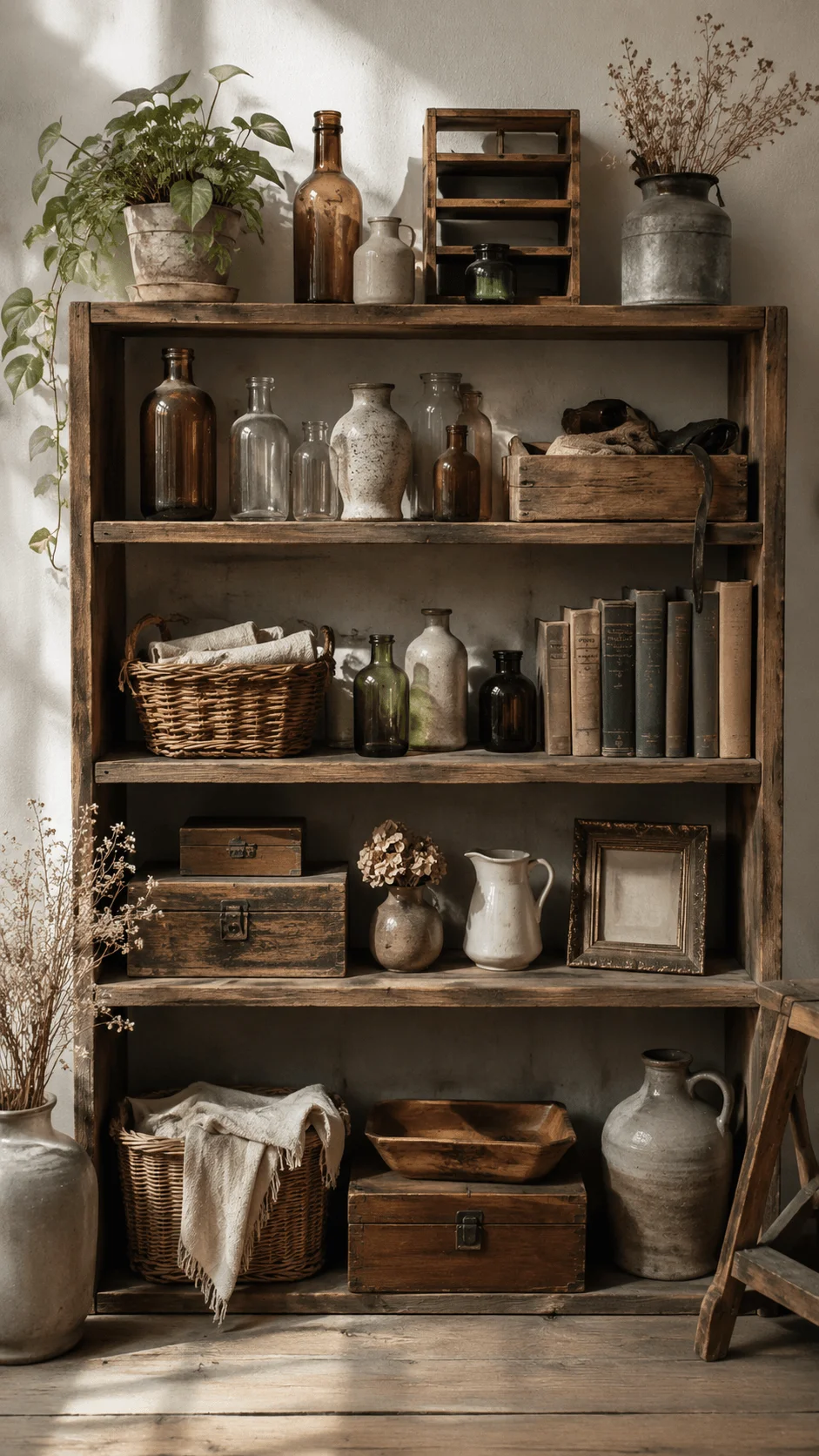
You can also organize the shelf according to color. Neutral ceramics, brown wood, clear glass and muted fabrics can create an earthy visual palette. When you need a different appearance, simply rearrange the objects rather than purchasing new decorations.
This approach makes the photography room more flexible. The same collection can support product photography one day and lifestyle photography the next.
A recycled prop shelf also demonstrates an important principle of sustainable design. Creativity does not always require something new. Sometimes the most interesting photography props already exist around you.
10. Design an Energy Efficient LED Photography Corner
Natural light can handle many photography situations, but artificial lighting remains important when photographers need consistent results. An energy efficient LED lighting corner can provide professional control while fitting naturally into a sustainable photography studio.
LED lights can work particularly well when combined with daylight. During bright daytime sessions, the photographer can rely primarily on the window. During cloudy conditions, evening sessions or controlled product shoots, the LED setup can provide additional illumination.
Create a dedicated area where the lighting equipment can remain organized. Wall storage or compact stands can keep equipment from occupying valuable floor space when it is not being used.
Cable organization also matters. Loose cables can make a room look messy and can interfere with movement during a shoot. Keep cables arranged neatly and store smaller lighting accessories in one accessible location.
You can also make the lighting corner part of the room’s aesthetic. A simple neutral wall behind the equipment can keep the setup visually clean. Wooden storage, woven baskets and other natural materials can soften the technical appearance of the equipment.
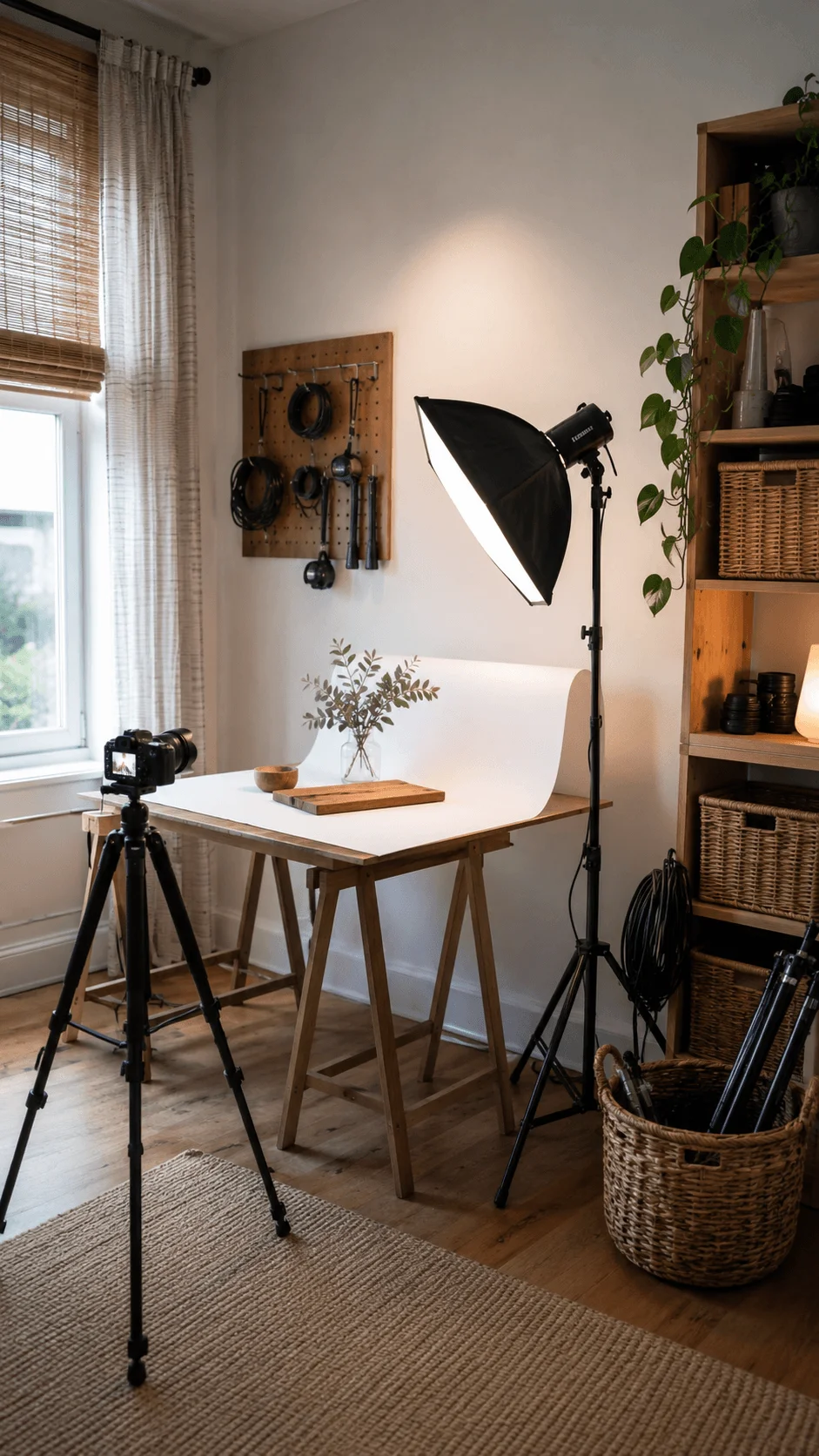
The goal is not to eliminate artificial lighting completely. Instead, use it thoughtfully and efficiently. A sustainable photography room should still provide the lighting control needed to create high quality photographs.
Combining daylight with efficient artificial lighting gives photographers flexibility without turning the entire room into a permanently illuminated studio.
11. Build a Circular Studio Storage Wall
Storage often becomes an overlooked part of photography room design. Cameras, lenses, tripods, cables, backdrops, stands and props can quickly create clutter. A well designed storage wall can solve this problem while also becoming part of the room’s aesthetic.
Instead of relying on large pieces of furniture that occupy the center of the room, use vertical space whenever possible. Wall mounted shelves can hold smaller props and equipment while leaving more floor area available for photography.
Reclaimed wood can work particularly well for shelves. Pair wooden surfaces with simple baskets or containers made from natural materials.
Keep frequently used equipment within easy reach. Less frequently used items can occupy higher shelves or enclosed storage.
You can also divide the wall into visual zones. One section can hold photography equipment, another can display props and another can store fabrics or backdrops.
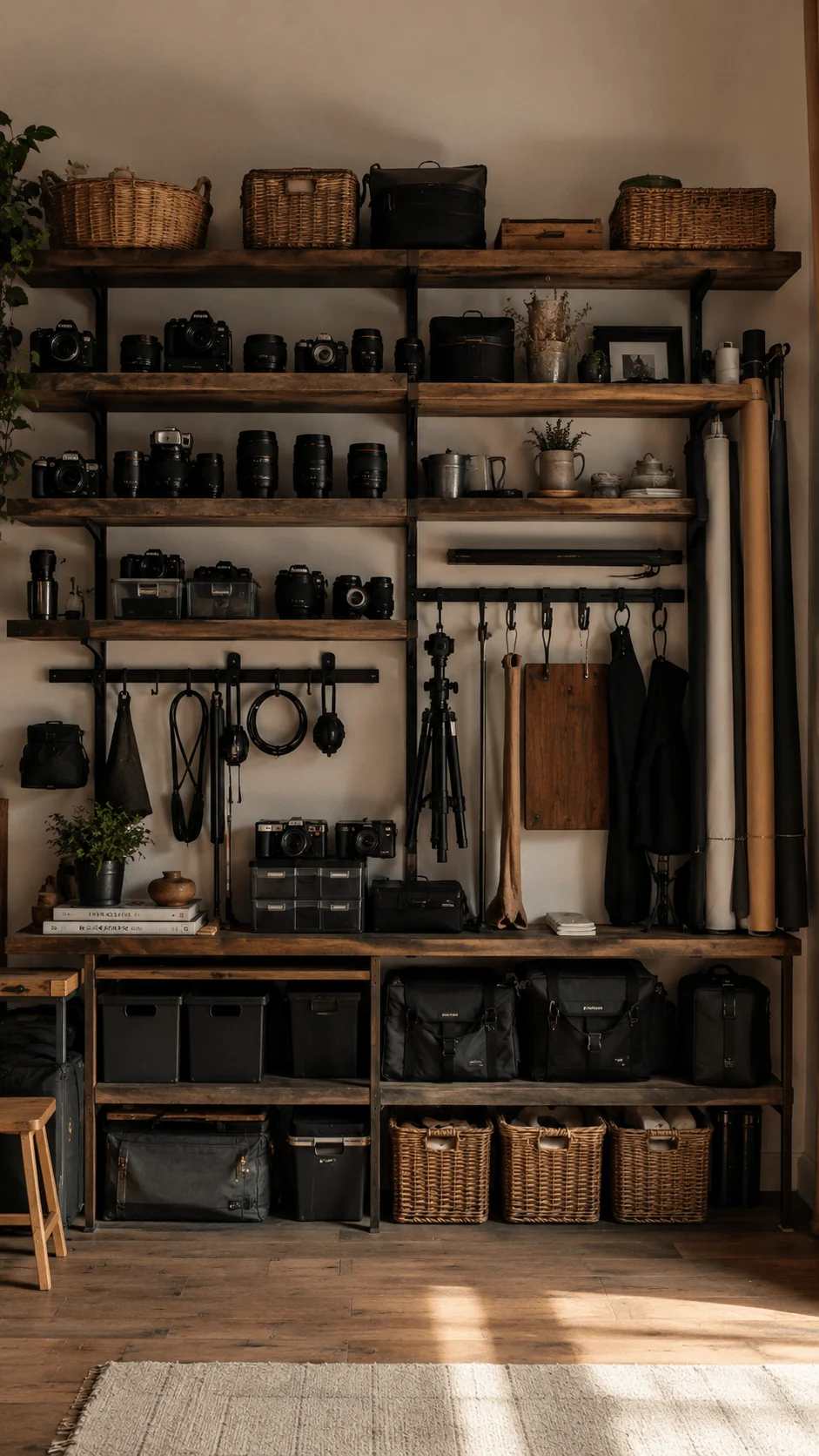
This organization makes the room easier to use because you can quickly find what you need before a shoot. It also makes the space more adaptable when you need to change the setup.
A storage wall can contribute to the aesthetic when everything has a deliberate place. Instead of hiding every object, you can display attractive props and materials while keeping technical equipment organized.
For a small photography room, vertical storage can make an especially significant difference. It keeps the center of the room open and gives photographers more space to move around the subject.
12. Create a Low Energy Creative Photography Corner
A low energy creative corner focuses on how the room operates rather than simply how it looks.
Start with daylight. If your room receives strong natural illumination, organize the primary photography area around the window. This allows you to use the available daylight before turning on artificial equipment.
When you finish a photography session, switch off lights and equipment that you no longer need. A smart power management system can also help organize devices and prevent equipment from remaining unnecessarily powered.
You can make the corner multifunctional. A small desk can serve as an editing station when you are not photographing. The same area can become a product photography setup when you clear the surface.
Choose durable furniture that can serve several purposes. A sturdy wooden table, for example, can function as a workspace, product photography surface and styling area.
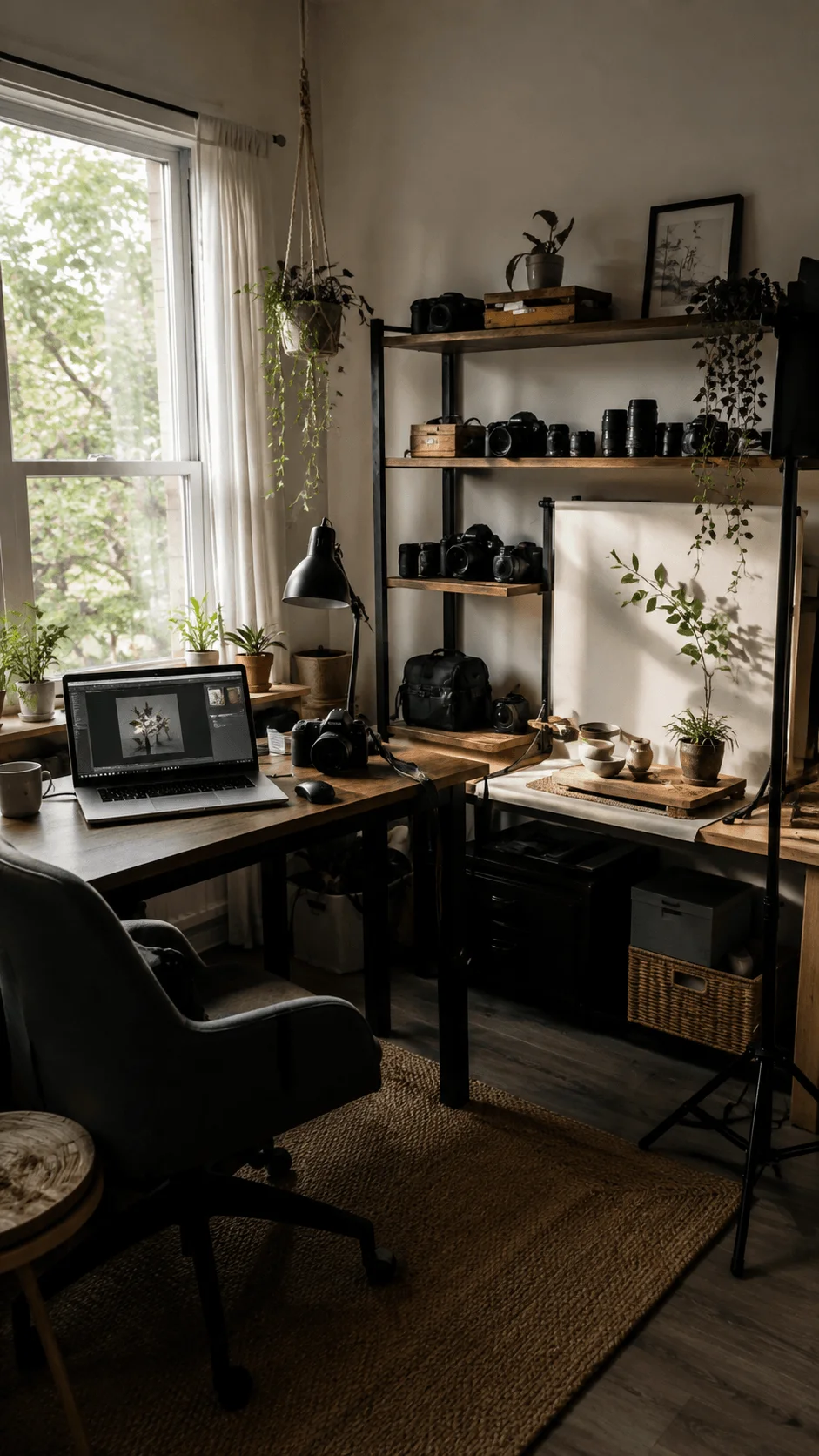
The room does not need to contain every piece of photography equipment at all times. Keeping only the equipment you regularly use in the main space can reduce clutter and make the room easier to work in.
This approach creates a more intentional photography environment. Instead of designing the room around constant consumption, design it around efficient use.
How to Combine Sustainability With Aesthetic Photography
The strongest eco friendly aesthetic photography room does not treat sustainability and beauty as separate goals. Instead, the two concepts support each other.
Natural materials can make backgrounds more interesting. Plants can introduce organic shapes. Reclaimed wood can create texture. Linen can soften a composition. Secondhand furniture can add character.
These elements can also help photographers create a distinctive visual identity.
A completely generic studio may provide a blank background, but a thoughtfully designed room can become recognizable. Viewers may begin to associate particular colors, textures and compositions with your photography.
Sustainability also encourages photographers to think more creatively. Instead of purchasing a new prop whenever a scene feels incomplete, you can experiment with objects you already have.
Try changing the position of furniture. Move a plant closer to the window. Turn a wooden surface in a different direction. Change the way linen falls across a background. Adjust the angle of natural light.
Small changes can produce completely different photographs.
This mindset makes the room more sustainable because you rely on creativity rather than constant purchasing.
At the same time, the room should remain practical. A photography space needs enough open area for movement, accessible equipment storage and suitable lighting.
The goal is not to create a room that looks sustainable. The goal is to create a genuinely useful photography environment where sustainable decisions naturally become part of everyday creative work.
Conclusion
An eco friendly aesthetic photography room can combine visual beauty, practical photography needs and responsible design without requiring an expensive renovation. Natural light, plants, reclaimed wood, linen, secondhand furniture, recycled props and efficient lighting can transform an ordinary room into a distinctive creative environment.
The most effective approach is to begin with what you already have. Look at the natural light in your room, reuse furniture, collect useful photography props and introduce natural textures gradually. You do not need to replace everything to achieve a sustainable aesthetic.
Small changes can have a noticeable effect. A linen backdrop can create a new shooting area. A vintage chair can become both furniture and a portrait prop. A plant near a window can create beautiful natural shadows. A reclaimed wooden surface can provide a completely different product photography background.
Most importantly, sustainability should support creativity rather than limit it. When your room contains versatile materials and thoughtfully selected objects, you can create many different photographic scenes without constantly buying new items.
A well planned sustainable photography room can therefore become more than a studio. It can become a flexible creative environment that feels natural, personal and inspiring every time you step behind the camera.