12 Eco Friendly Waste Management Ideas for 2026
Finding practical eco friendly waste management ideas has become increasingly important as households and communities look for better ways to reduce what they throw away. In 2026, waste management is moving far beyond simply putting paper into one container and general rubbish into another. New technology, community sharing, food rescue, repair systems, smarter composting, and circular design are changing the way people think about unwanted materials. The most effective approach starts before something reaches the trash and considers how products, food, packaging, and resources can remain useful for longer.
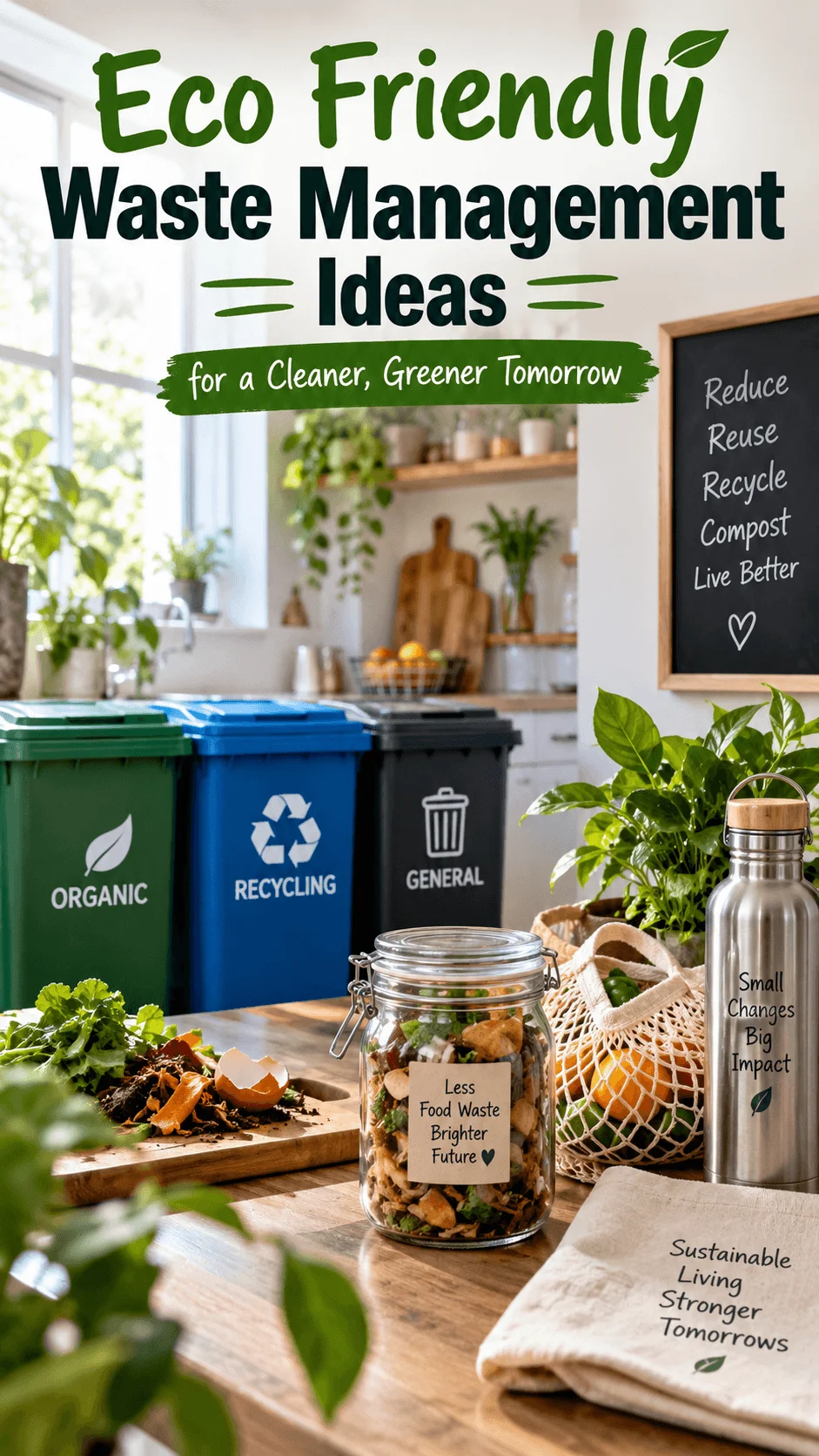
Modern sustainable waste management also recognizes that every household creates different types of waste. One family may struggle with food scraps, while another produces large amounts of packaging or regularly replaces electronics and household products. This means there is no single solution that works perfectly for everyone. The strongest eco friendly waste management ideas combine practical everyday habits with smarter systems that prevent waste, extend product life, recover useful materials, and reduce unnecessary disposal.
1. AI Powered Smart Waste Sorting for Sustainable Waste Management
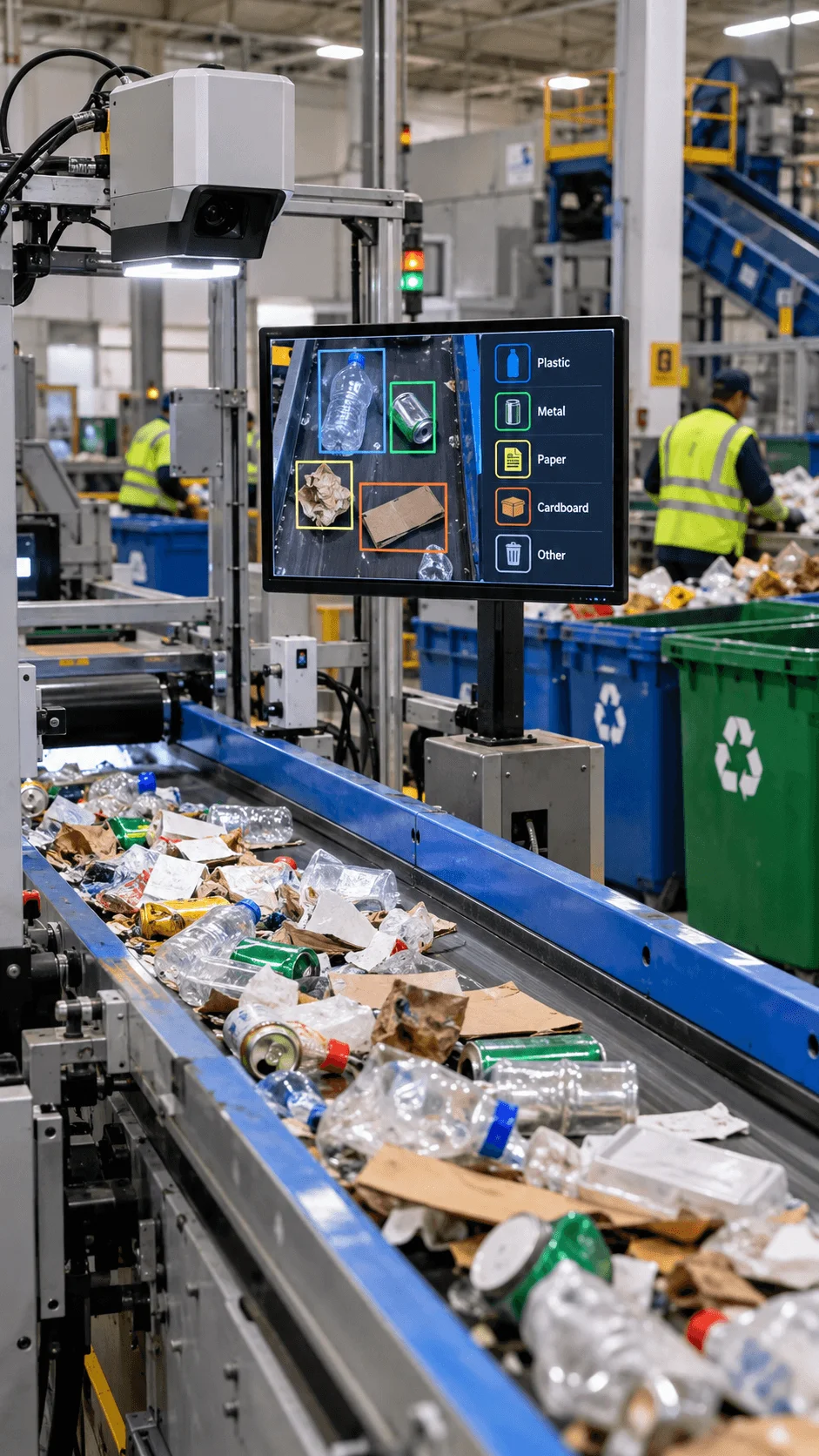
Artificial intelligence is becoming one of the most interesting developments in modern waste management. Recycling facilities increasingly explore cameras, sensors, computer vision, and intelligent software that can recognize different materials as they move through sorting systems.
Traditional recycling depends heavily on correct separation. When people place food contaminated packaging, plastic bags, batteries, or other unsuitable materials into recycling containers, they can make processing more difficult. Intelligent sorting systems can help facilities recognize some of these materials and direct them toward appropriate processing streams.
AI can also help identify different types of plastic, metal, paper, cardboard, and other valuable materials. Better identification can increase the amount of useful material recovered from mixed waste.
The idea may eventually become more visible outside large recycling facilities. Apartment buildings, universities, shopping centers, schools, and public spaces could use smarter disposal stations that help people decide where an item belongs.
However, intelligent sorting should support waste prevention rather than replace it. A sophisticated recycling system cannot make unlimited disposable consumption environmentally responsible. The better approach combines smarter sorting with reduced purchasing, reuse, repair, and thoughtful disposal.
For readers exploring eco friendly waste management ideas, AI sorting shows how technology can improve an existing system while still leaving personal responsibility at the center.
2. Smart Waste Bins for Better Eco Friendly Waste Management
Many waste collection systems follow fixed schedules. Collection vehicles may visit containers whether they are nearly empty or completely full. Smart waste bins offer another approach.
Sensors inside containers can estimate how much waste they contain and transmit that information to a management system. Collection teams can then identify which bins need attention instead of treating every container the same way.
This approach could prove especially useful in parks, apartment developments, universities, shopping districts, offices, and busy public spaces. A container that fills quickly could receive faster attention, while collection teams could leave nearly empty containers until necessary.
Better information can also help prevent overflowing bins. Overflowing waste creates visual pollution, odors, litter, and extra cleaning work. Monitoring fill levels gives managers a chance to respond before the problem becomes serious.
At home, people can apply a simpler version of the same principle without purchasing expensive technology. Creating clearly organized stations for recycling, food scraps, reusable materials, batteries, and general waste can make disposal decisions easier.
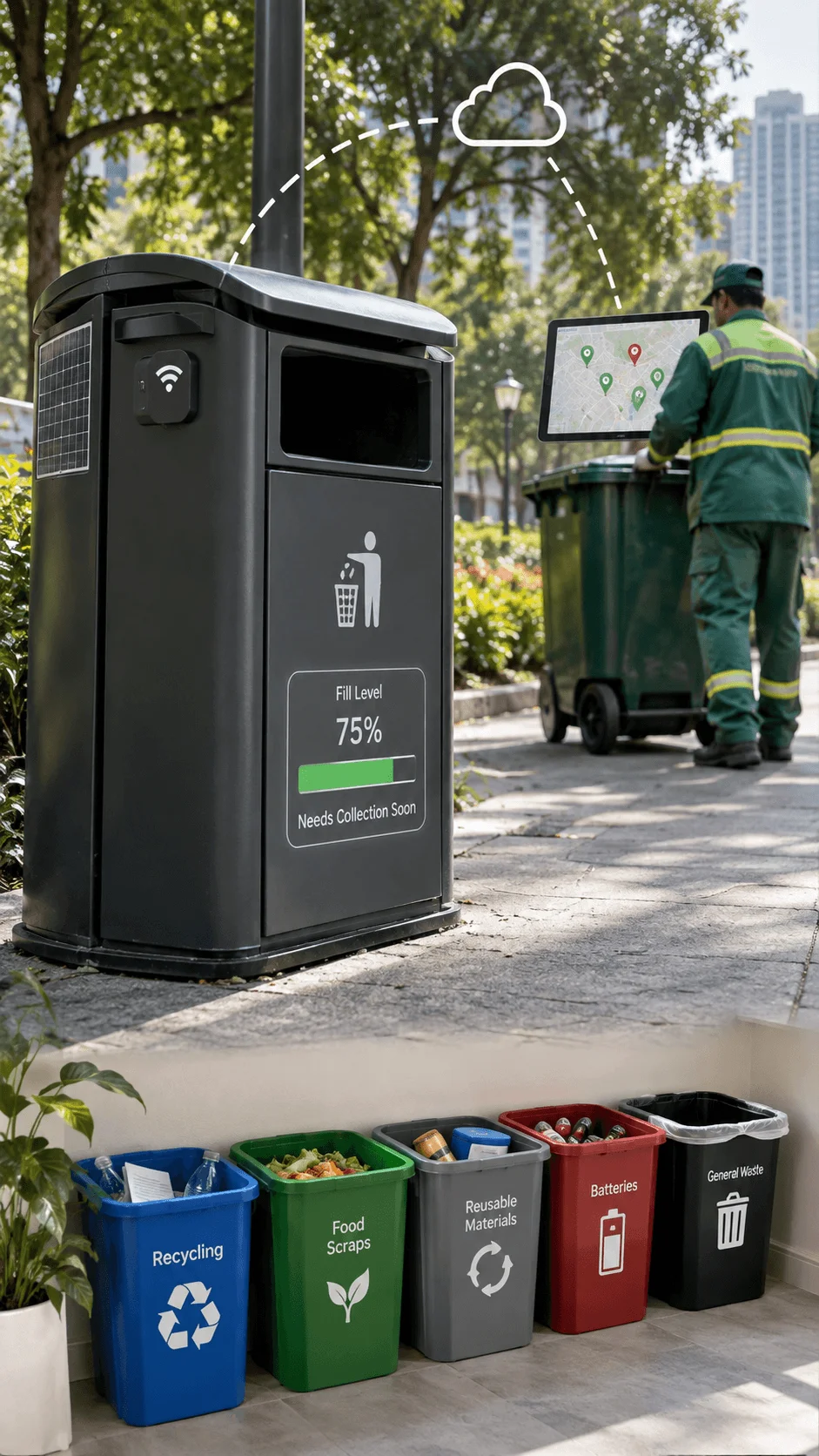
Smart bins are one of the more technology focused eco friendly waste management ideas, but their greatest value comes from using information to make collection more efficient rather than simply making trash containers more complicated.
3. Bokashi as an Eco Friendly Kitchen Waste Management Idea
Food waste remains one of the most important household waste streams to address. Traditional composting works well for many gardeners, but it does not suit every property. Bokashi offers another option.
Bokashi uses fermentation rather than the same decomposition process that occurs in a conventional compost pile. Households place suitable kitchen scraps into a sealed container and add a material that supports the fermentation process.
This method can appeal to apartment residents and people with limited outdoor space because the container occupies relatively little room. It can also handle a wider range of suitable kitchen scraps than many simple backyard compost piles.
The material inside the Bokashi container does not become finished compost immediately. After fermentation, users normally add it to soil or another suitable composting system where decomposition can continue.
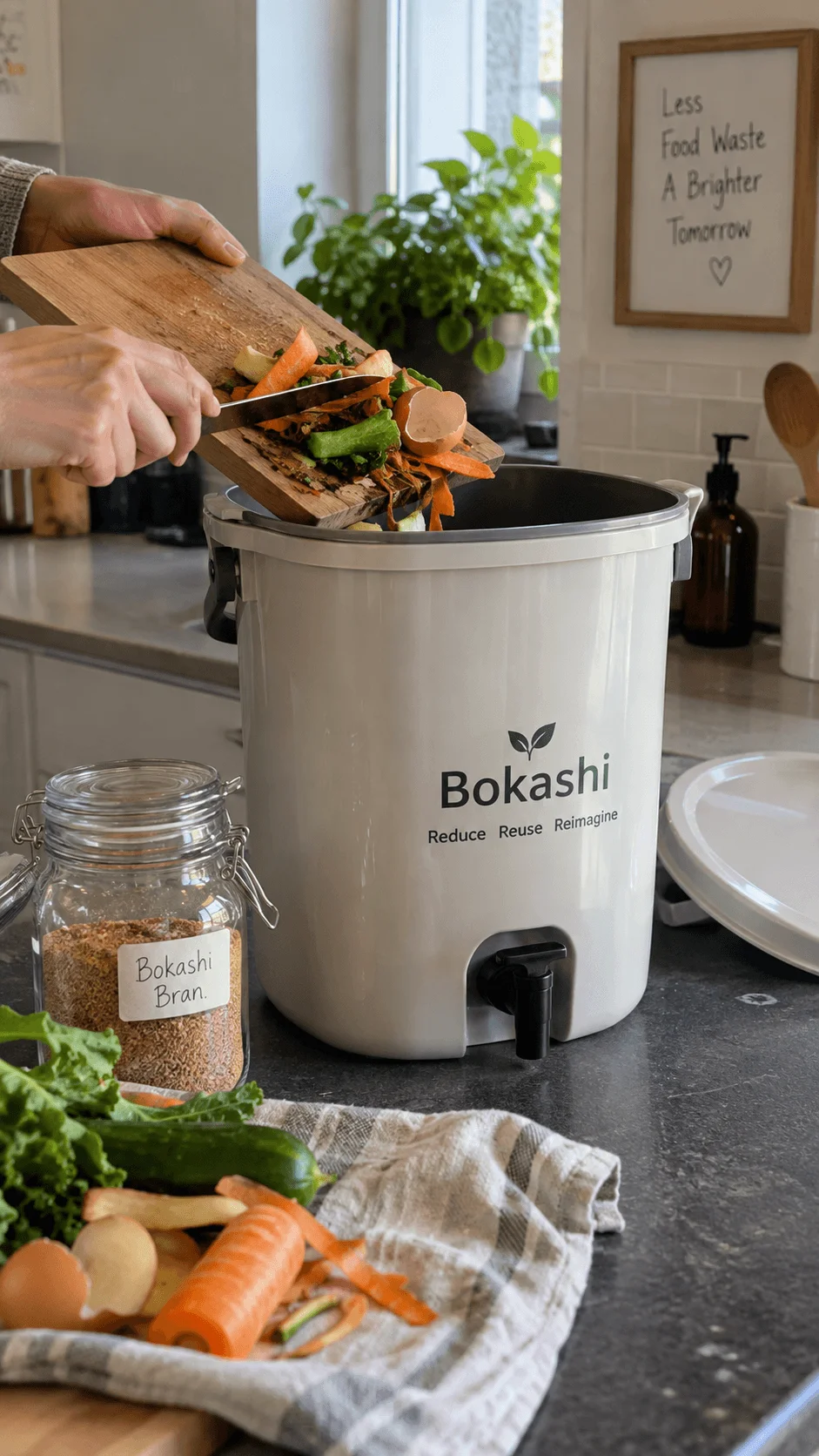
The approach encourages people to see kitchen scraps as a source of nutrients rather than rubbish. It also creates an opportunity to think more carefully about how much food enters the waste stream.
Anyone considering Bokashi should learn how to manage the system correctly. Poor management can create unpleasant results, while proper preparation and realistic expectations make the process easier.
Among practical eco friendly waste management ideas for smaller homes, Bokashi stands out because it brings organic waste management into spaces where a large compost pile would be impractical.
4. Decentralized Community Composting
Not every household needs its own compost pile. Communities can sometimes manage organic waste more effectively by sharing suitable facilities.
Decentralized composting means processing food scraps and other appropriate organic materials closer to the place where people produce them. Instead of transporting every bag of organic waste over long distances, a neighborhood, school, apartment complex, community garden, or local organization can manage part of that material locally.
This model creates opportunities for people who have no garden. Apartment residents could collect suitable food scraps and bring them to a shared location. The finished compost could then support community gardens, trees, landscaping, or other local growing projects.
Successful community composting requires more than simply creating a pile and hoping for the best. Organizers need clear rules about acceptable materials, moisture, airflow, contamination, access, and ongoing maintenance.
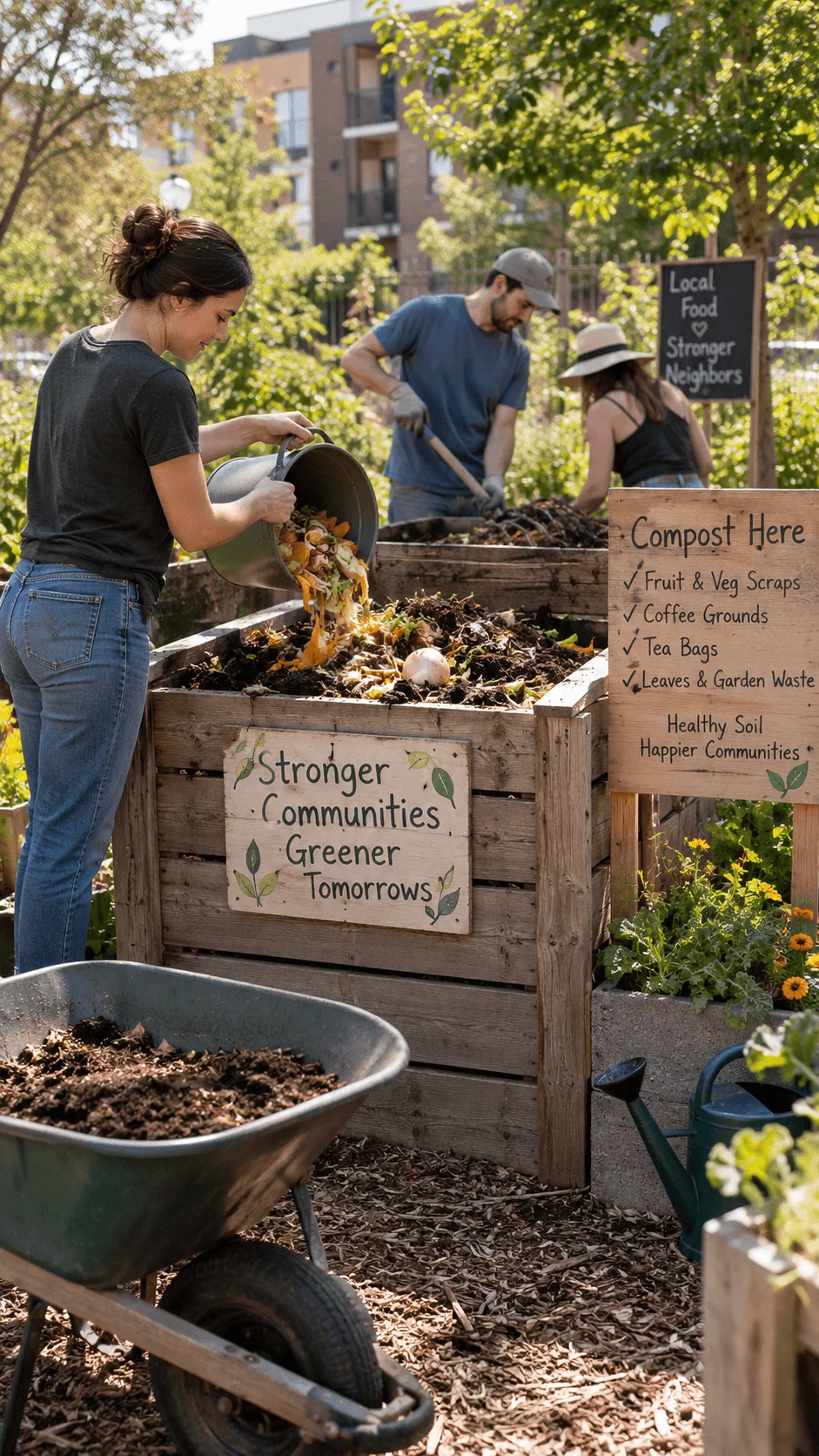
A well managed system can also increase awareness. When people physically see the amount of organic material a neighborhood generates, food waste becomes more visible.
Community composting therefore combines waste reduction with local participation, making it one of the more socially useful sustainable waste management ideas.
5. Black Soldier Fly Food Waste Recycling
Black soldier fly larvae provide a very different approach to organic waste management. Under suitable conditions, the larvae consume certain organic materials and convert part of that waste into biomass.
The idea has attracted interest because it treats food waste as something that can support another biological process rather than material that must automatically enter landfill.
Controlled systems can operate at different scales. Farms, communities, businesses, and specialized waste projects may use the process where climate, hygiene, management, and regulations allow it.
The method will not suit every household. People need to manage temperature, moisture, suitable feed materials, insects, and sanitation responsibly. Local rules can also determine whether such systems are appropriate.
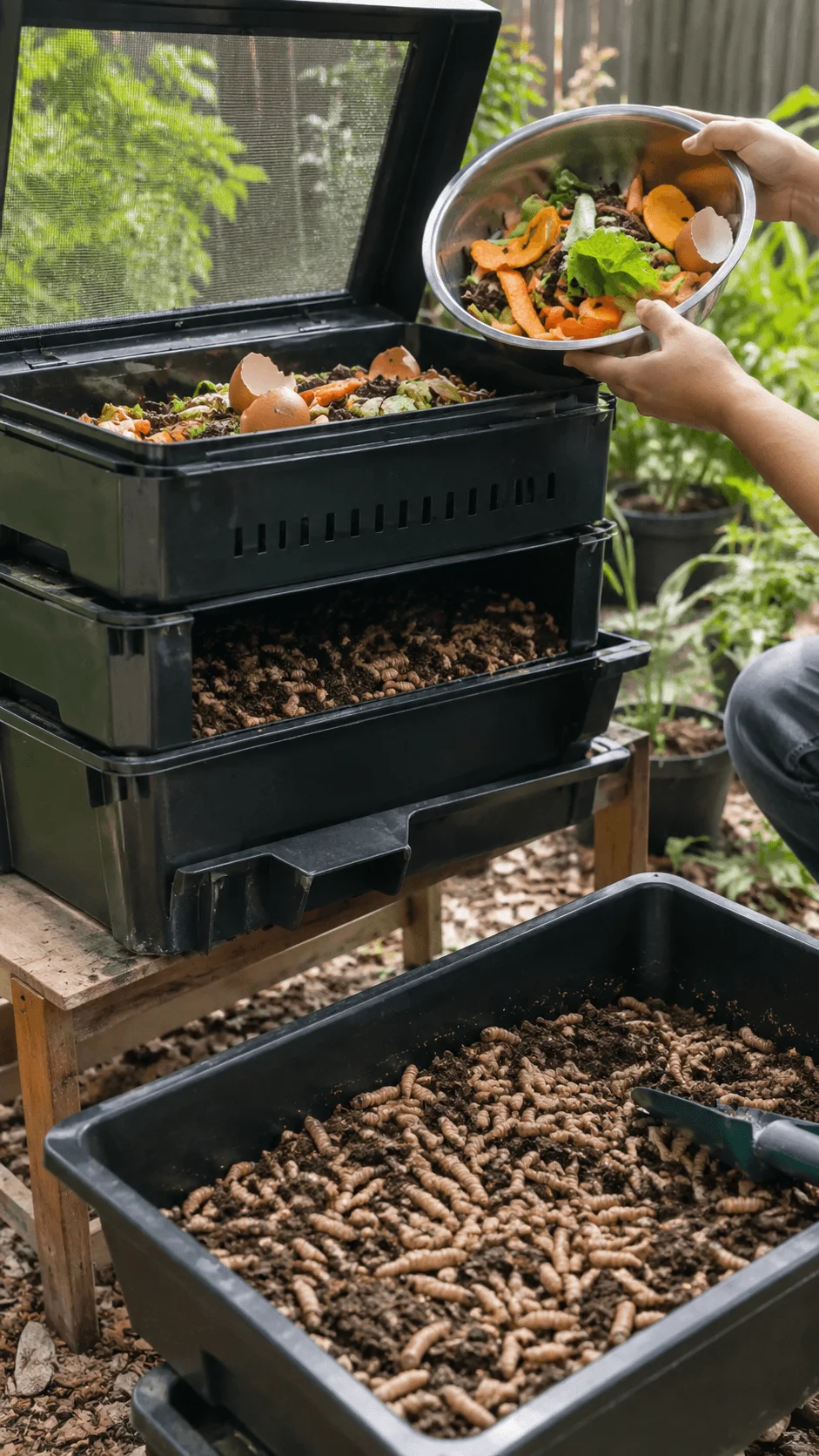
The wider lesson matters even for readers who never use black soldier flies. Biological processes can help society view organic waste differently. Instead of seeing food scraps as useless rubbish, people can consider how natural systems may recover value from them.
That makes this one of the more unusual eco friendly waste management ideas for readers who want to understand where circular organic waste systems may be heading.
6. Food Rescue as a Sustainable Waste Reduction Idea
Managing food after it becomes waste is useful, but preventing edible food from becoming waste offers greater value.
Households often discard food because they buy too much, forget what they already have, prepare oversized portions, or store ingredients incorrectly. Better planning can reduce much of this waste before composting becomes necessary.
Families can check refrigerators before shopping, plan meals around ingredients they already own, store food correctly, freeze suitable leftovers, and create new meals from ingredients approaching the end of their useful life.
Communities can take the concept further. Community refrigerators, food sharing groups, donation networks, surplus food platforms, restaurants, grocery stores, schools, and charitable organizations can help redirect edible food toward people who can use it.
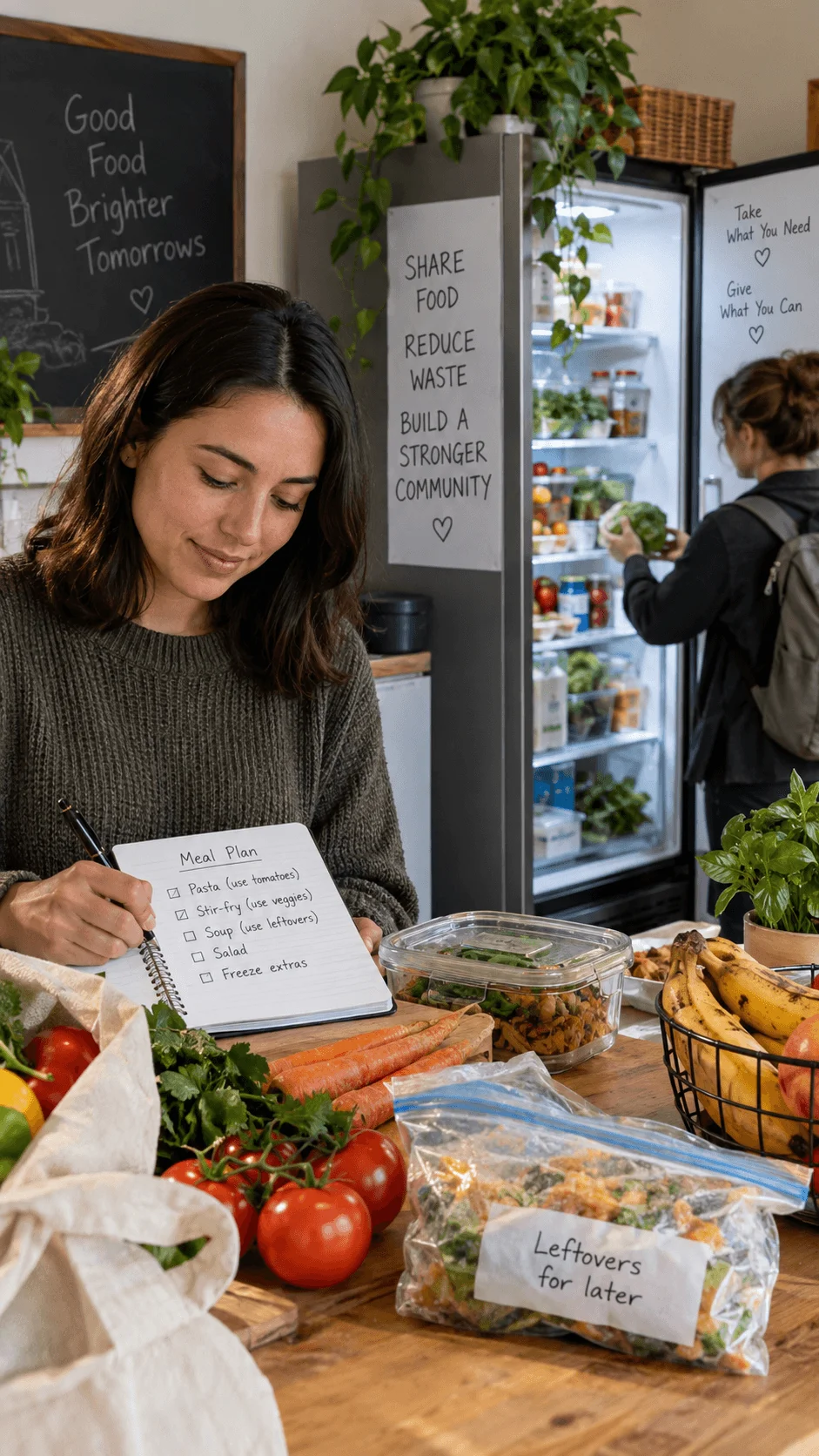
Digital platforms can make this process easier by connecting surplus food with nearby users.
Food rescue also changes how people think about composting. A compost bin should manage unavoidable food scraps, not become permission to waste edible food.
Any strong collection of eco friendly waste management ideas should therefore put prevention ahead of treatment whenever food remains safe and suitable to eat.
7. Refill and Reuse Systems for Zero Waste Living
Recycling packaging is useful, but preventing packaging waste can provide an even better solution.
Refill and reuse systems aim to keep containers in circulation for longer. Instead of buying a new bottle every time a product runs out, customers refill or return the original container.
This model can work with household cleaning products, personal care items, drinks, dry foods, takeaway containers, and other frequently purchased goods.
People do not always need a dedicated zero waste store to adopt the idea. Choosing larger refill packs when they genuinely reduce packaging, reusing durable containers, carrying reusable drink bottles, and selecting returnable packaging can all reduce disposable materials.
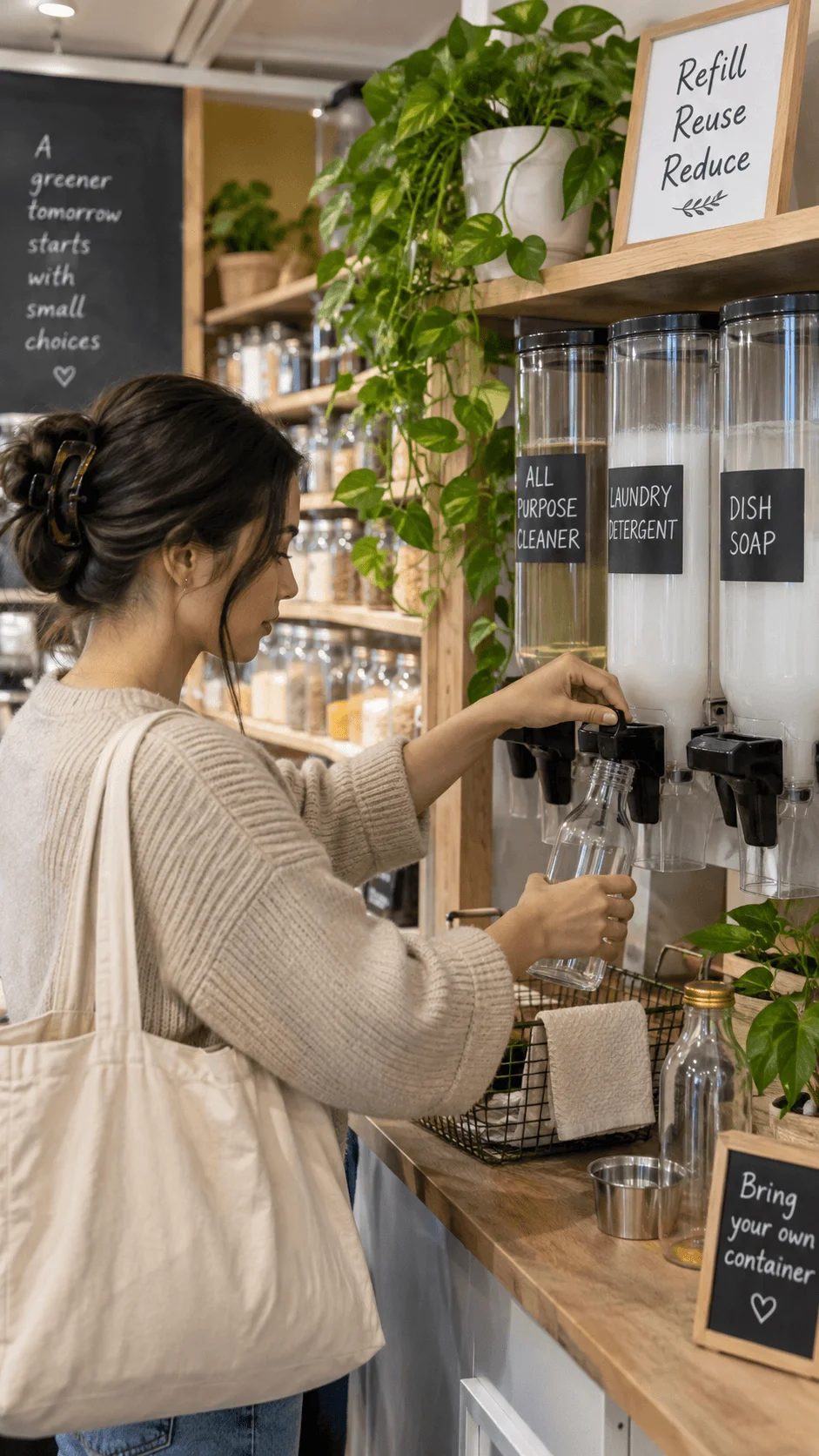
The key word is reuse. Buying many attractive reusable containers but rarely using them does not create a low waste lifestyle. A durable item becomes more valuable when it replaces disposable products repeatedly over a long period.
Refill systems also encourage manufacturers and retailers to think about packaging as part of a continuing system rather than something customers discard immediately after purchase.
8. Repair and Refurbish Before Recycling
Recycling is not always the best first destination for a damaged item. Repairing something can often keep the entire product in use instead of recovering only part of its material.
Electronics, appliances, clothing, furniture, bicycles, tools, and garden equipment often contain useful components even when one part fails.
Repair cafes and local repair businesses can help people extend product life. Tool libraries can reduce the need for households to purchase equipment they use only occasionally. Secondhand markets allow unwanted products to move to new owners instead of entering the waste stream.
Refurbishment provides another option. A repaired laptop, appliance, chair, or bicycle can continue delivering value long after its first owner no longer wants it.
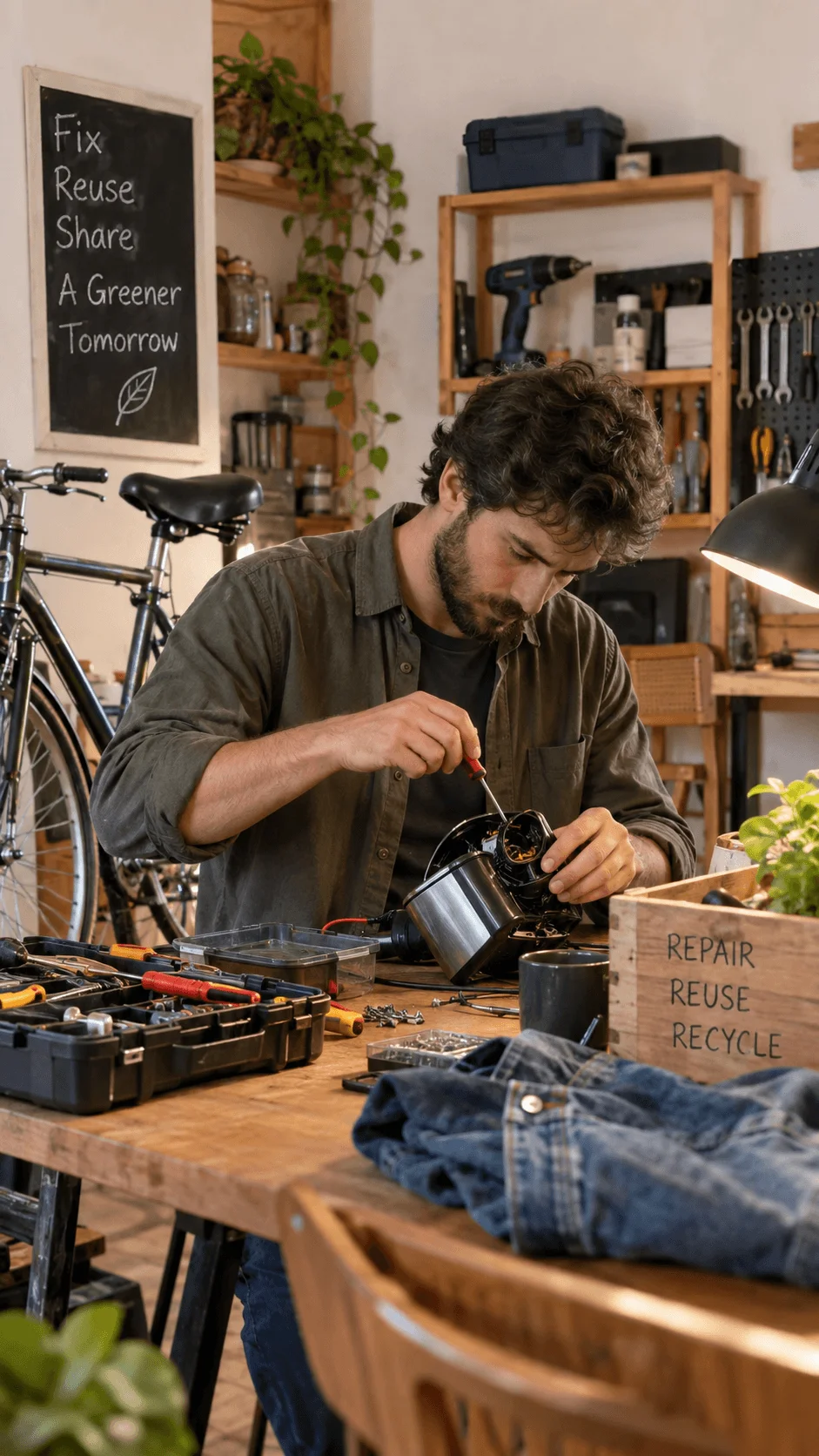
Manufacturers also play an important role. Products become easier to keep in use when companies provide spare parts, repair information, replaceable components, and sensible designs.
Repair therefore supports the circular economy by slowing the movement from purchase to disposal. It is one of the most practical eco friendly waste management ideas because people can apply it to everyday household decisions.
9. Digital Product Passports for Smarter Recycling
Digital Product Passports represent a newer approach to product information.
The basic concept connects a physical product with digital information about its materials, components, maintenance, repair options, and eventual recycling.
A consumer might scan a code on a product and learn which materials it contains, whether parts can be replaced, how to maintain it, or what should happen when the item reaches the end of its useful life.
This information could prove useful for electronics, batteries, appliances, textiles, furniture, and many other product categories.
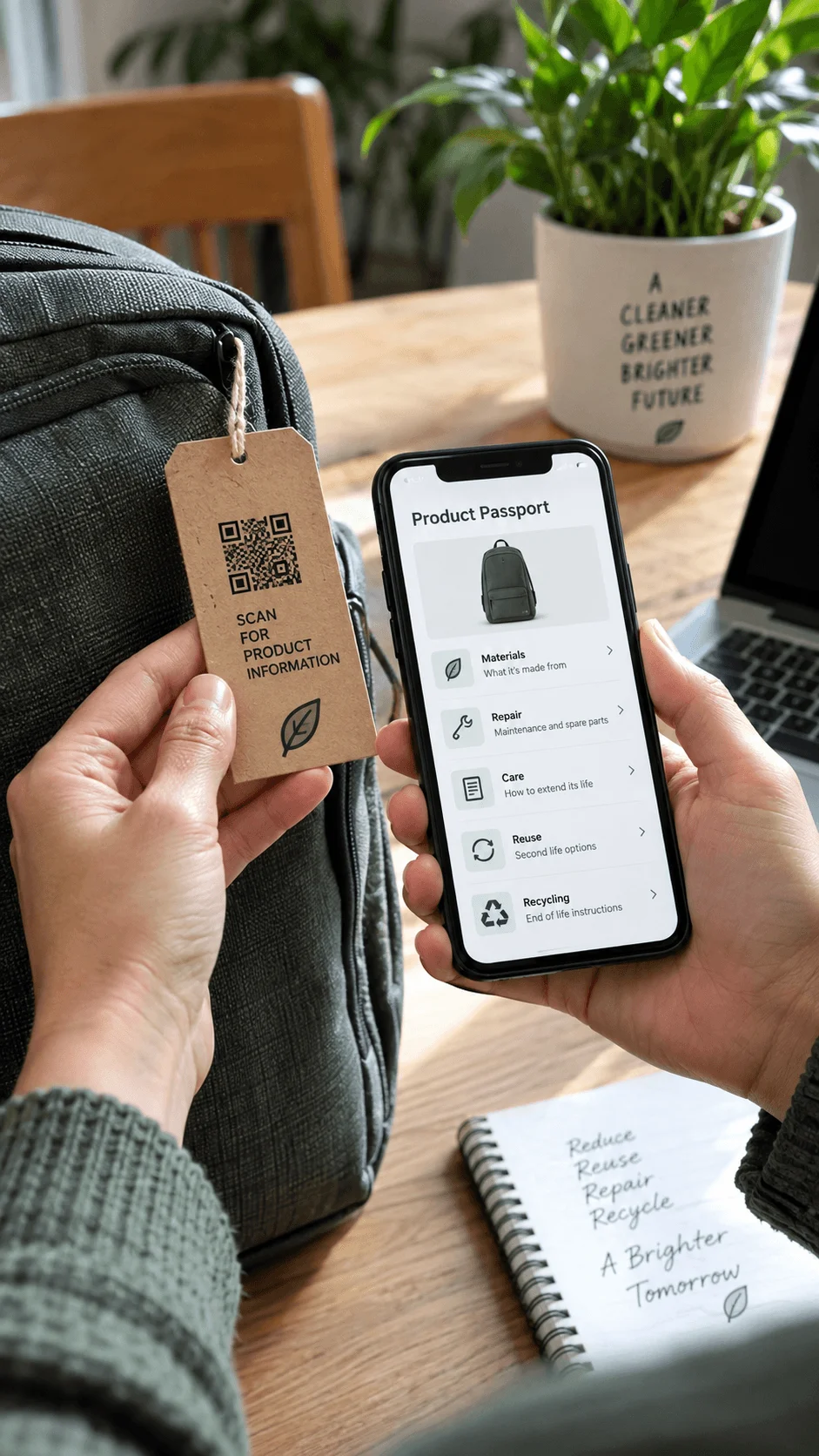
Repair businesses could use better information to understand components. Secondhand sellers could learn more about products. Recyclers could identify materials that require separate handling.
Digital Product Passports will not appear everywhere immediately. Their availability will depend on manufacturers, product categories, regulations, and markets.
Even so, the idea shows an important shift. Better waste management does not only require smarter bins. It also requires better information about the products people own.
10. Household Waste Audits and Digital Waste Tracking
People often want to reduce waste without knowing what they throw away most frequently. A household waste audit can reveal the answer.
The process involves observing waste over a suitable period and identifying recurring categories. A household may discover that most of its rubbish comes from spoiled food, takeaway packaging, disposable cleaning products, paper, clothing, or unnecessary purchases.
Once the pattern becomes visible, the solution becomes easier to choose.
Frequent spoiled vegetables may suggest poor meal planning or storage. Excessive delivery packaging may indicate that purchasing habits need attention. Large numbers of disposable bottles might point toward a reusable alternative.
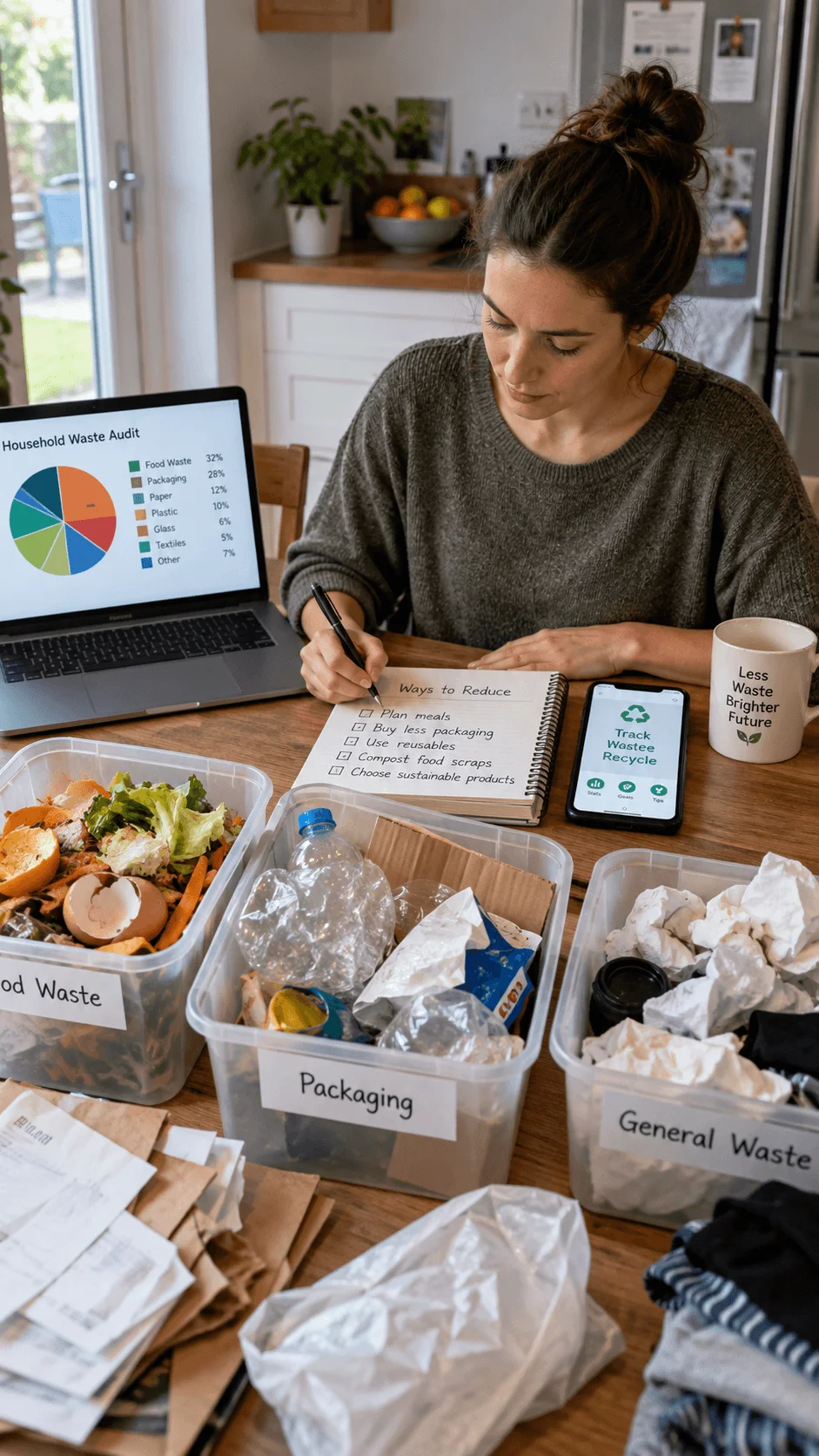
People can track these patterns with simple notes, photographs, spreadsheets, apps, or other digital tools.
The purpose is not to document every piece of rubbish forever. A waste audit should help identify the biggest opportunities and measure whether changes actually work.
This makes waste tracking one of the simplest eco friendly waste management ideas because it helps households focus effort where it can make the greatest difference.
11. Turning Organic Waste Into Energy With Anaerobic Digestion
Anaerobic digestion offers another way to recover value from suitable organic waste.
During the process, microorganisms break down organic material in an environment without oxygen. The process can produce biogas, which can serve as an energy source under suitable conditions.
This differs from ordinary composting, where microorganisms work in the presence of oxygen and the main goal usually involves producing compost.
Anaerobic digestion can process food waste, agricultural materials, and other suitable organic streams at community, agricultural, or larger commercial scales.
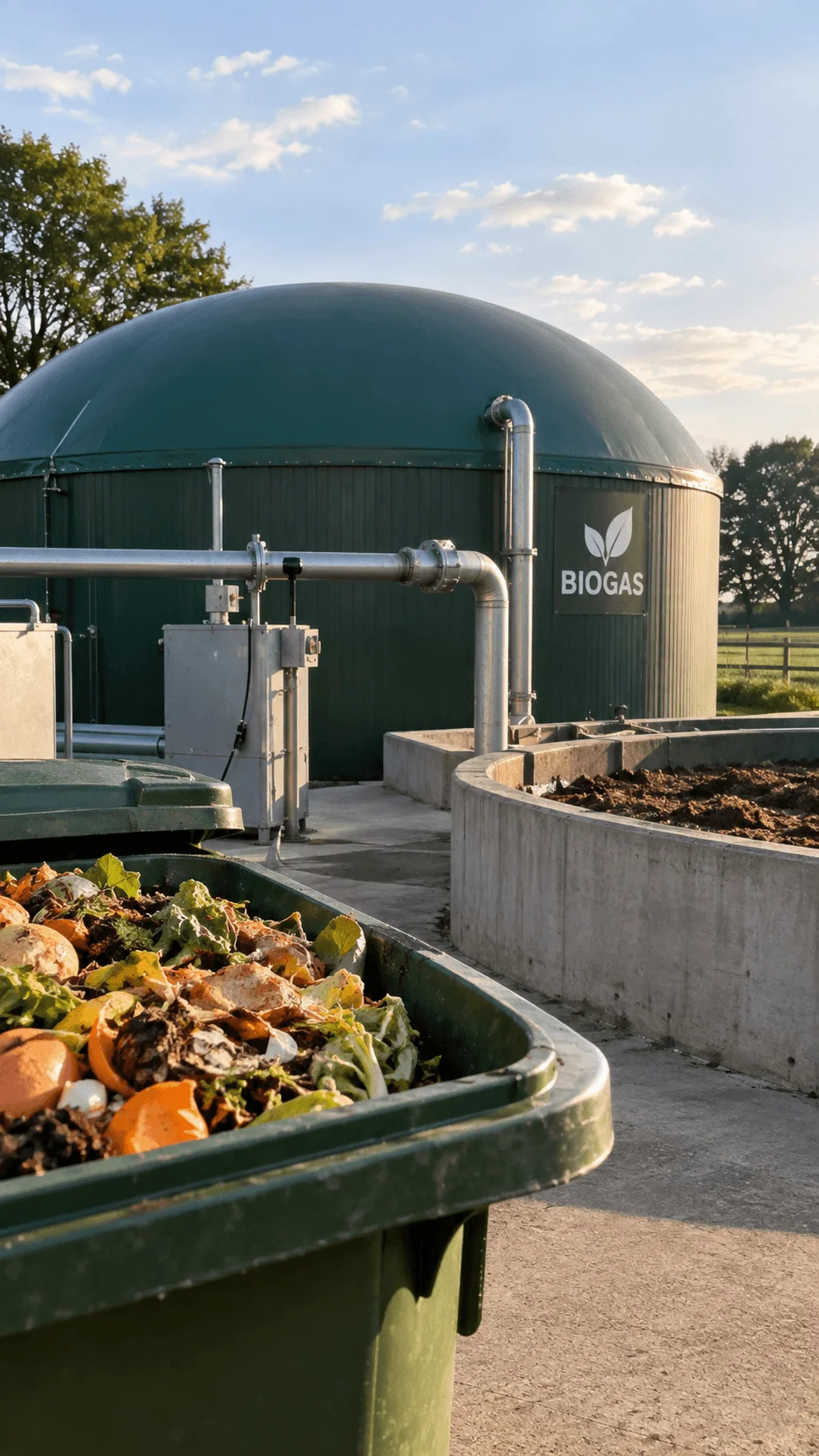
The technology illustrates the concept of resource recovery. Instead of sending suitable organic material directly to landfill, a managed system can extract useful value from it.
However, households should not treat anaerobic digestion as a simple do it yourself project. Safe and effective systems require suitable infrastructure, management, knowledge, and compliance with local rules.
Its strongest role in an article about sustainable waste management lies in showing how communities can rethink organic material as a potential resource.
12. Circular Neighborhood Waste Hubs
A circular neighborhood hub could bring several waste reduction strategies into one convenient place.
Imagine a community center where residents can return electronic waste, exchange textiles, repair household items, share tools, redirect edible food, drop off suitable compost materials, return reusable packaging, and send remaining recyclable materials toward appropriate facilities.
The goal would not simply involve collecting more waste. The hub would create several possible destinations for an unwanted product before disposal.
Someone with a damaged chair might find a repair service. A person who no longer needs a working appliance could offer it through an exchange. A resident with an unused drill might contribute it to a tool sharing program. Another household could return reusable containers instead of throwing them away.
Apartment developments, universities, schools, community centers, and residential neighborhoods could adapt the model to their own needs.
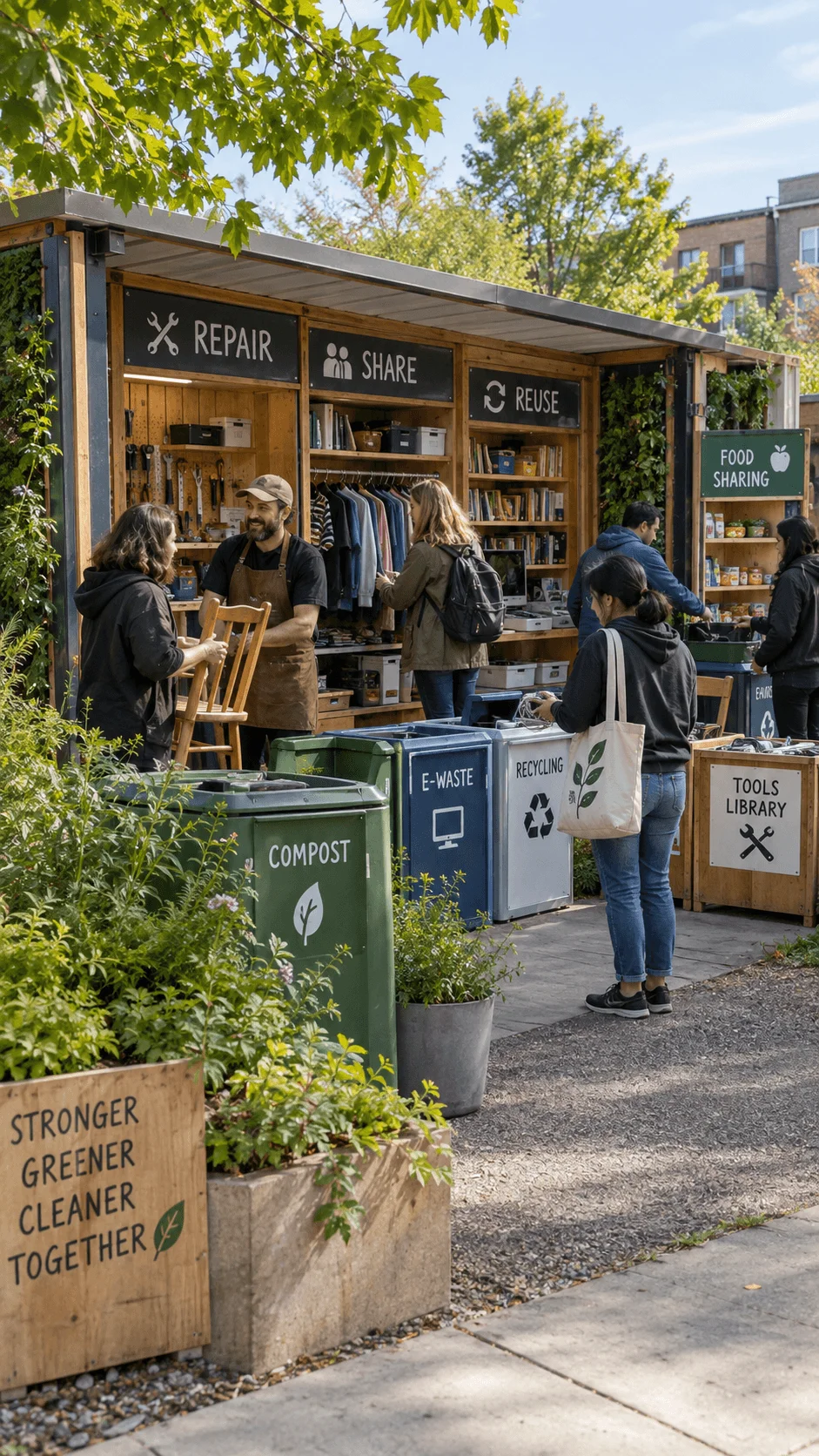
Organization would determine whether such a system succeeds. Safe handling, convenient access, clear rules, responsible partners, and consistent community participation would all matter.
Among the most forward looking eco friendly waste management ideas, circular neighborhood hubs stand out because they combine prevention, reuse, repair, sharing, composting, and recycling instead of treating each activity as a separate system.
How to Choose Sustainable Waste Management Ideas for Your Home
Not every household needs to adopt every idea in this article. A better approach starts by identifying the waste stream that creates the biggest problem.
A household that throws away large amounts of food should first examine shopping habits, storage, portion sizes, food rescue, Bokashi, or appropriate composting. A family producing large quantities of packaging could explore refill systems and reusable containers.
Someone who frequently replaces electronics, furniture, or appliances may benefit more from repair, refurbishment, sharing, and secondhand purchasing.
Property type also matters. Apartment residents may have limited outdoor space but excellent access to community programs. Larger homes may offer room for composting or organized storage for reusable materials.
Budget, climate, local services, regulations, available recycling facilities, and personal routines should guide decisions.
The best eco friendly waste management ideas are the ones people can maintain consistently. Small improvements that become permanent habits usually provide more value than ambitious systems that disappear after a few weeks.
Creating an Eco Friendly Waste Prevention Mindset
Waste management becomes easier when fewer unnecessary materials enter the household in the first place.
Before buying something, people can consider how often they will use it, how long it may last, whether they can repair it, whether they could borrow it, and what will happen when they no longer need it.
Food purchasing deserves the same attention. Buying more than a household can reasonably consume often creates waste regardless of how good the composting system may be.
Choosing durable products, maintaining possessions, sharing rarely used equipment, repairing damaged items, and avoiding unnecessary purchases can prevent waste before disposal becomes a problem.
This mindset shifts attention away from the trash bin and toward everyday decisions. Sustainable waste management then becomes part of purchasing, cooking, storage, maintenance, and community participation.
The Future of Innovative Waste Management
The future of waste management will probably combine human behavior with better technology rather than depend on one perfect invention.
Artificial intelligence may improve sorting. Sensors may improve collection. Digital product information may make repair and recycling easier. Biological systems may help process organic material. Community sharing could keep useful products circulating for longer.
At the same time, product design will matter increasingly. Manufacturers can reduce future waste by creating durable products that people can maintain, repair, upgrade, and eventually recycle more easily.
Communities can also play a larger role. Repair networks, reuse programs, food sharing, composting, and resource hubs can make sustainable choices more convenient.
The strongest future systems will likely combine prevention, reuse, repair, sharing, biological treatment, recycling, intelligent collection, and responsible resource recovery rather than relying on disposal alone.
Conclusion
The best eco friendly waste management ideas for 2026 reflect a broader change in the way people view unwanted materials. Instead of asking only where rubbish should go, sustainable waste management asks whether the waste needed to exist in the first place and whether the product, food, packaging, or material can remain useful.
Food rescue can prevent edible ingredients from entering the waste stream. Refill systems can reduce disposable packaging. Repair can extend product life. Bokashi and community composting can keep nutrients in circulation. Smart sorting and waste tracking can improve decisions, while Digital Product Passports and circular neighborhood hubs show how future systems may connect products, information, communities, and recovery services.
Technology can make waste management smarter, but it cannot replace thoughtful consumption. The most effective change often begins with a simple decision to buy less, use products longer, share resources, repair what still has value, and dispose of materials responsibly.
Rather than attempting every solution at once, choose one major source of waste in your home and improve it first. Over time, several small changes can develop into a practical system that reduces waste, preserves resources, and makes everyday living more sustainable.