Eco Friendly Garden Ideas Around Trees for 2026
Creating beautiful outdoor spaces does not always require removing existing trees or filling a garden with decorative features. In fact, eco friendly garden ideas around trees can transform the space surrounding mature trees into attractive, natural, and wildlife friendly areas. Instead of treating the ground beneath a tree as an empty or difficult part of the yard, homeowners can use it to create woodland gardens, pollinator spaces, natural groundcover beds, and climate resilient landscapes.
Modern garden design is increasingly moving toward natural planting, biodiversity, water conservation, native plants, and lower maintenance landscapes. Trees already provide an important foundation for this type of garden because they offer shade, shelter, organic material, and habitat. With the right approach, the area around an established tree can become one of the most interesting parts of the garden.
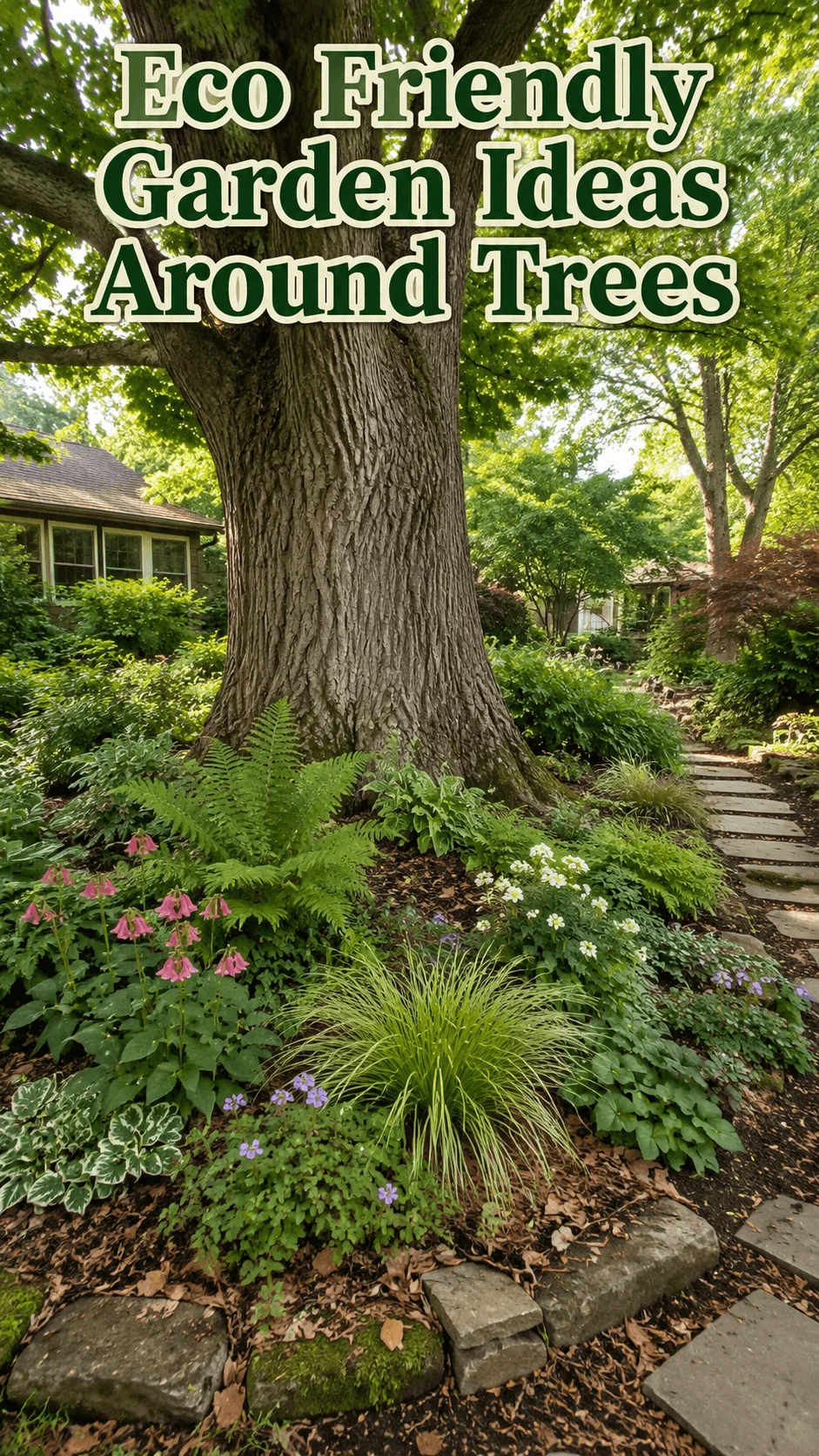
The key is to design around the existing tree rather than trying to force the tree and its roots to fit a particular landscape style. Choosing appropriate plants, protecting the root system, using natural materials, and allowing some areas to develop naturally can create a garden that looks beautiful while supporting the wider environment.
Create a Native Woodland Garden Around Trees
A native woodland garden is one of the most natural ways to transform the space around a mature tree. The idea takes inspiration from the layers found on a natural forest floor and adapts them to a home garden. Instead of surrounding the trunk with a simple circle of mulch, you can create a richer planting area filled with suitable native vegetation.
The tree canopy naturally changes the conditions beneath it. Depending on the tree and its location, the ground may receive filtered sunlight or remain heavily shaded throughout much of the day. Tree roots can also compete with surrounding plants for moisture and nutrients. This makes plant selection particularly important.
Native shade tolerant plants can work well when they match the conditions of the site. Ferns, woodland flowers, grasses, low growing plants, and suitable shrubs can create different heights and textures around the tree. Rather than arranging everything in perfectly straight rows, allow plants to appear in natural groups. This creates a softer woodland appearance.
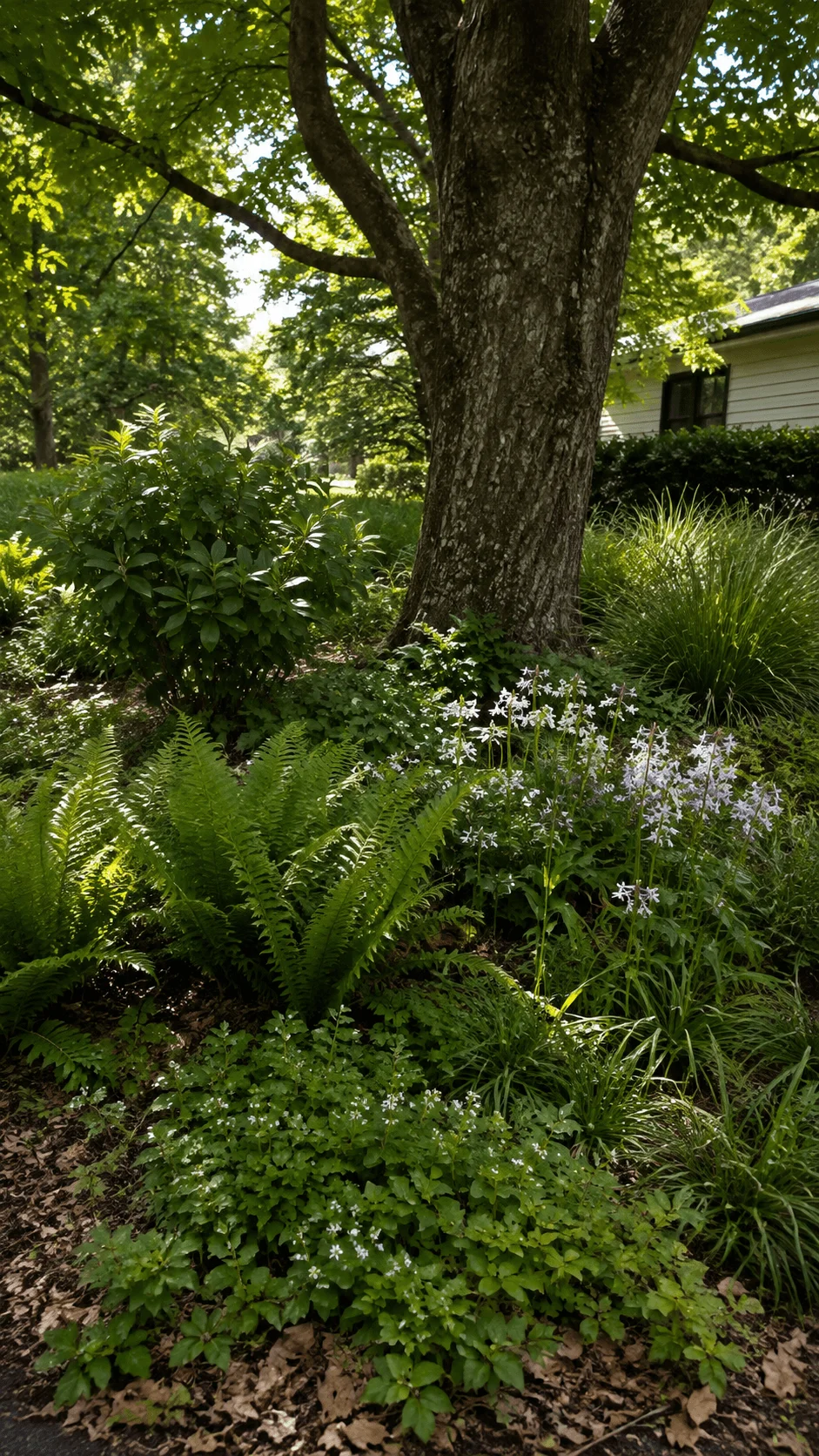
A native woodland garden can also provide valuable habitat. Flowers can provide food for pollinators, dense groundcover can offer shelter for small creatures, and fallen leaves can contribute to the natural environment around the plants. The garden can gradually become more connected to the surrounding ecosystem.
Before planting, examine the soil and sunlight carefully. Some areas beneath large trees remain dry because the canopy intercepts rainfall, while others may retain moisture depending on the soil and local climate. Select plants according to these existing conditions instead of choosing plants first and attempting to change the environment to suit them.
This approach also reduces the need for unnecessary maintenance. Once suitable plants become established, they can create a natural appearance without requiring constant trimming or replacement. The result is a sustainable garden that feels like a small extension of the surrounding landscape.
Design a Pollinator Garden Under a Tree
The space around a tree can also become a beautiful pollinator garden. Bees, butterflies, and other beneficial insects need food and shelter, and a thoughtfully planted tree garden can provide both. This makes a pollinator garden an excellent choice for homeowners who want their landscaping to have a purpose beyond decoration.
Start by observing how much sunlight reaches the area throughout the day. A tree with a relatively open canopy may allow enough sunlight for flowering plants, while a dense canopy may create conditions better suited to shade tolerant flowering species. Understanding the light level will make plant selection much easier.
Instead of planting a single type of flower, consider creating a diverse planting arrangement. Different plants can offer different flower shapes, colors, heights, and flowering periods. This creates a visually interesting garden while providing food for pollinators at different times.
The shape of the planting area does not need to be perfectly circular. Natural curves can make the space feel more integrated with the rest of the garden. You can allow flowering plants to blend into groundcovers and foliage plants rather than creating a sharply defined border.
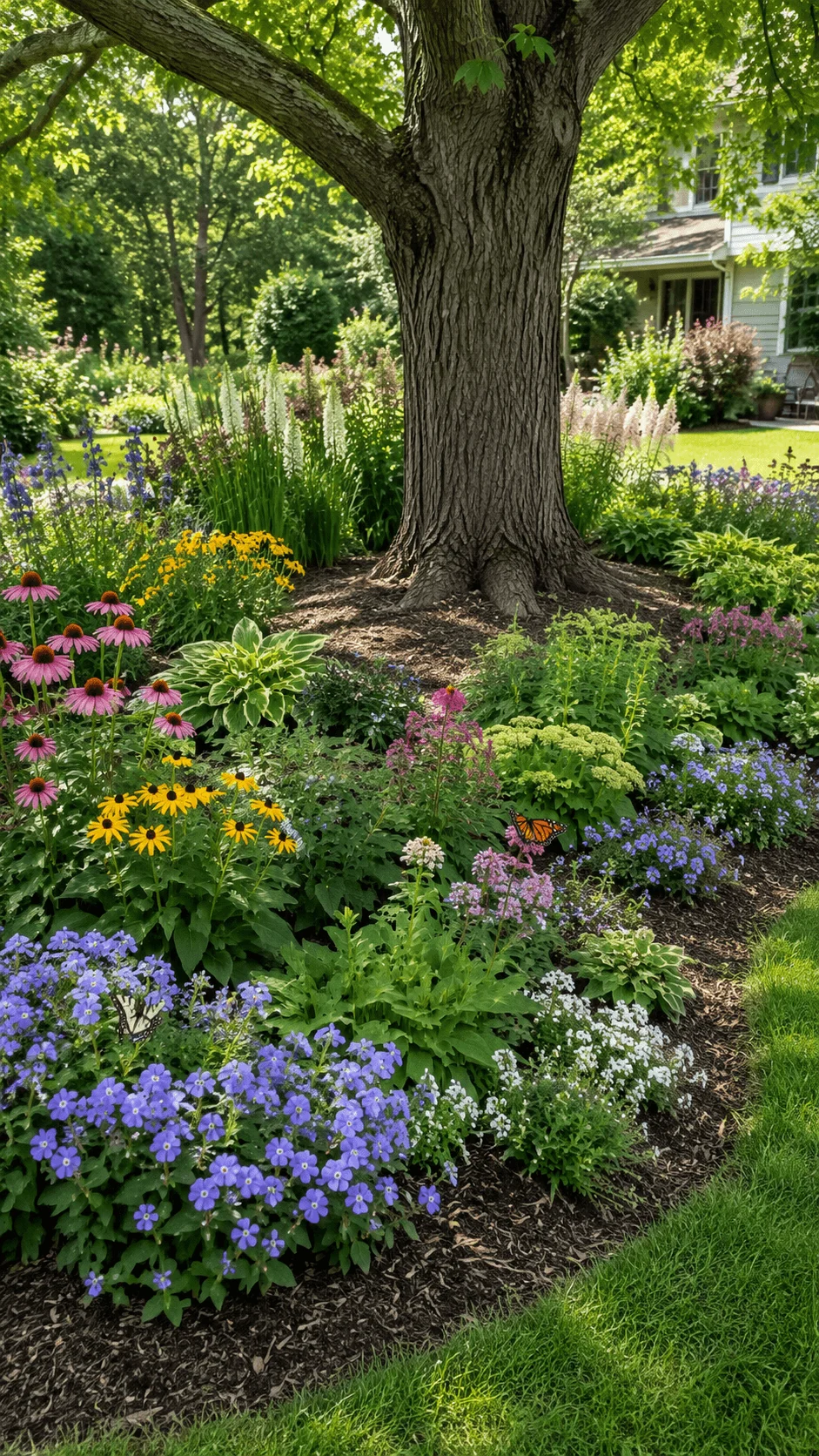
A pollinator garden around a tree can also become more attractive when you include plants with different forms. Taller plants can sit farther from the trunk while shorter plants can fill the outer edges. Groundcovers can connect the different sections and prevent the garden from looking fragmented.
Avoid relying entirely on highly decorative plants that require frequent replacement. A more sustainable approach focuses on plants that can tolerate the existing conditions and continue growing successfully. Native species can be especially valuable when they suit the local environment.
It is also important to protect the tree while creating the pollinator garden. Avoid digging unnecessarily close to large roots, and never cover the trunk or root flare with soil or excessive mulch. The garden should support the tree rather than compete with its health.
Try a Rewilded Tree Ring Garden
Traditional tree rings often have a very formal appearance. A perfectly circular border surrounds the trunk, with decorative mulch or a few plants placed inside. While this design can look tidy, modern sustainable gardening offers another option. A rewilded tree ring can create a softer, more natural landscape around an established tree.
Rewilding does not mean allowing the garden to become completely neglected. Instead, it means giving nature more room to influence the design. You can combine native plants, grasses, groundcovers, fallen leaves, organic mulch, and natural textures to create an informal planting area.
One of the most appealing aspects of a rewilded garden is its changing appearance. Plants may flower at different times, leaves may fall naturally, and different textures can become noticeable throughout the seasons. The garden therefore feels alive rather than looking exactly the same throughout the year.
You can also allow certain plants to spread naturally when they remain suitable for the space. This creates a less artificial appearance and can reduce the need to constantly rearrange the planting. The result resembles a natural landscape more closely than a traditional decorative flower bed.
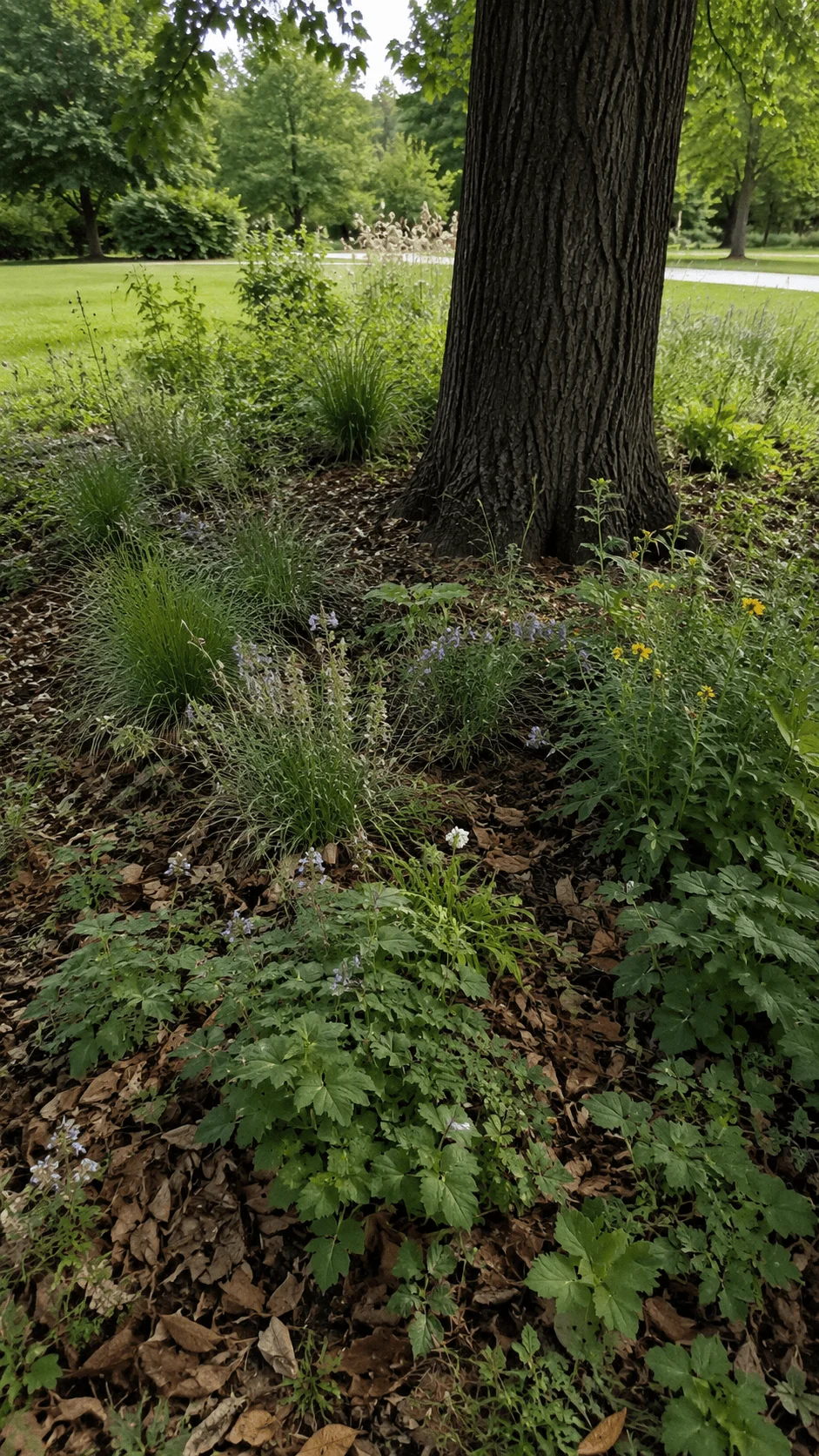
A rewilded tree garden can provide habitat for insects and other small wildlife. Fallen leaves can create shelter and return organic material to the soil. Groundcover plants can protect bare soil, while taller vegetation can create additional structure.
The most important part of this approach is choosing plants responsibly. Avoid introducing invasive species simply because they spread quickly. A sustainable rewilding garden should use plants that suit the local climate and do not create problems for surrounding natural areas.
Use Organic Mulch and Fallen Leaves
One of the simplest eco friendly tree landscaping ideas involves using the natural materials that already exist in the garden. Fallen leaves and suitable organic mulch can create a forest floor effect around mature trees while supporting healthier soil conditions.
In a natural woodland, leaves fall from trees and gradually break down. This process returns organic material to the soil and forms part of the natural nutrient cycle. Home gardeners can take inspiration from this process rather than removing every leaf from the area.
Shredded leaves can create a softer appearance than large whole leaves, particularly in formal garden spaces. Leaf mold can also become useful organic material when leaves have decomposed over time. Wood based mulch can provide another natural option when used correctly.
The purpose of mulch should not simply be decoration. A suitable organic layer can help protect exposed soil and reduce moisture loss. It can also make the area around a tree look more intentional without requiring expensive decorative materials.
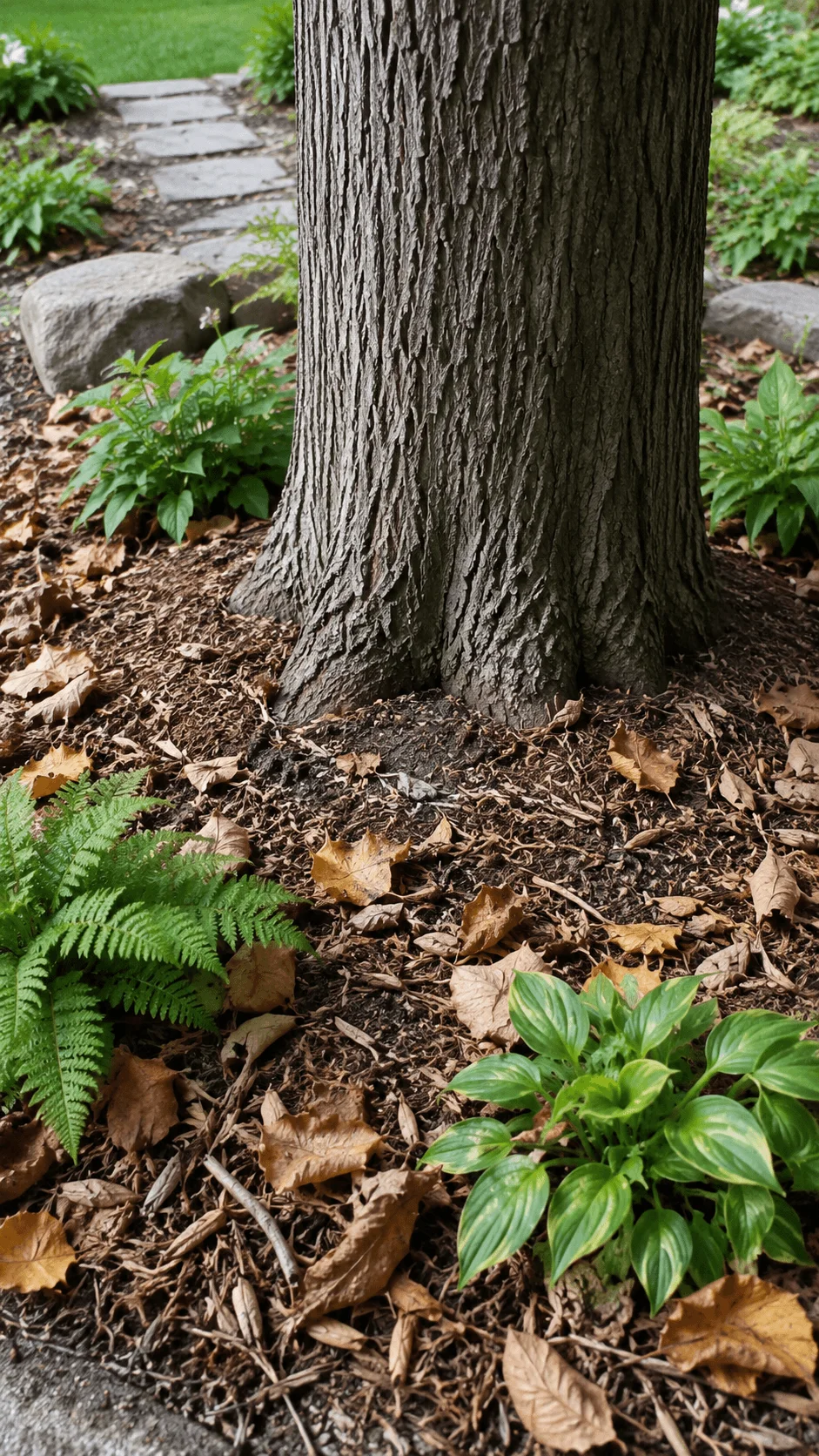
However, mulch needs to be applied carefully. Never create a thick mound directly against the tree trunk. Keep the root flare visible and leave appropriate space around the trunk. Excessive material against the bark can create an unhealthy environment and interfere with the natural structure of the tree.
Fallen leaves can also make a garden feel more connected to nature. Instead of removing every leaf immediately, homeowners can allow some natural leaf litter to remain where it will not create problems. This is particularly appropriate for woodland style gardens.
Combining organic mulch with native plants and groundcovers can create an attractive low maintenance garden. The area can gradually develop a richer appearance as plants establish and organic material returns to the soil.
Create a Low Water Tree Garden
Water conservation has become an increasingly important part of sustainable garden design. A low water garden around an existing tree can reduce unnecessary irrigation while still creating a beautiful outdoor space.
The first step is understanding the natural conditions of the site. Consider how much rainfall the area receives, how quickly the soil drains, how much sunlight reaches the ground, and how the existing tree affects moisture levels. Large trees can create dry conditions beneath their canopy because their roots compete with nearby plants for available water.
Choosing plants suited to these conditions is more sustainable than installing plants that need frequent watering. Climate appropriate and drought tolerant plants can create a garden that remains attractive without depending heavily on irrigation once established.
Mulching can also support a low water design. An appropriate organic mulch layer can help protect the soil surface from drying quickly. Healthy soil can further support the garden by improving its ability to hold and manage moisture.
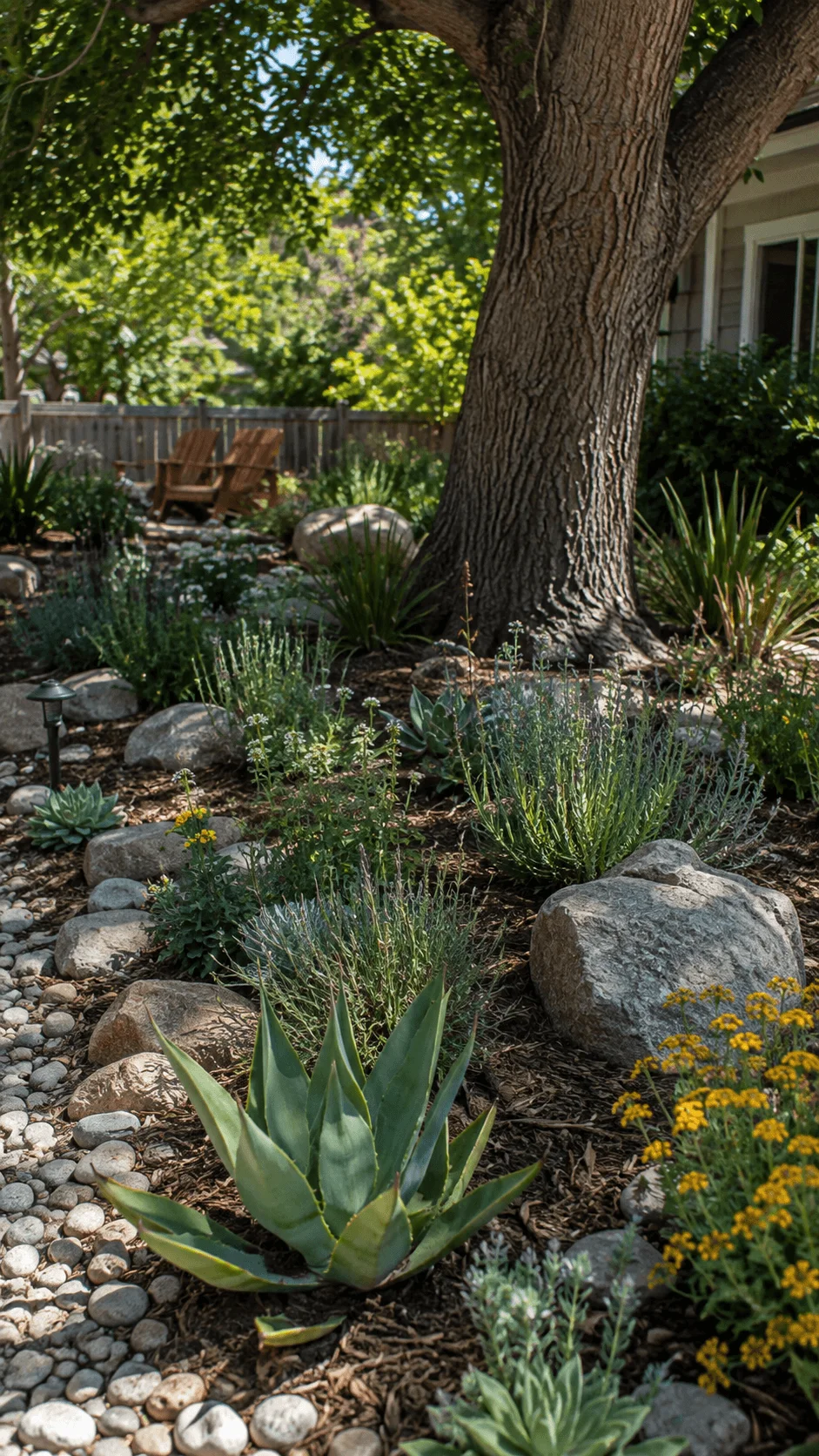
Plant placement matters as well. Plants with similar water requirements can be grouped together so that irrigation, when necessary, remains focused. This prevents water from being wasted on plants that require very different conditions.
A low water garden does not have to look dry or empty. A carefully selected combination of foliage, grasses, flowering plants, and groundcovers can create texture and seasonal interest. The design can feel lush while still using water responsibly.
The most sustainable approach is to work with the existing tree and local environment. Instead of constantly changing the soil or providing excessive irrigation, choose plants that can adapt to the conditions already present.
Try the Green on Green Garden Trend
A garden does not need large amounts of colorful flowers to look interesting. The green on green approach focuses on foliage, texture, shape, and different shades of green to create a calm and sophisticated landscape around trees.
This style works particularly well in shaded areas where many flowering plants may struggle. Ferns, grasses, foliage plants, groundcovers, and suitable shrubs can create visual variety even when flowers are limited.
The secret is contrast. Large leaves can look striking beside fine textured grasses. Upright plants can provide contrast against low groundcovers, while different shades of green can separate one plant from another.
You can also create depth by placing taller plants closer to the back of the garden and shorter plants toward the edges. Around a mature tree, this can create a natural layered appearance that makes the garden feel fuller without overcrowding the planting area.
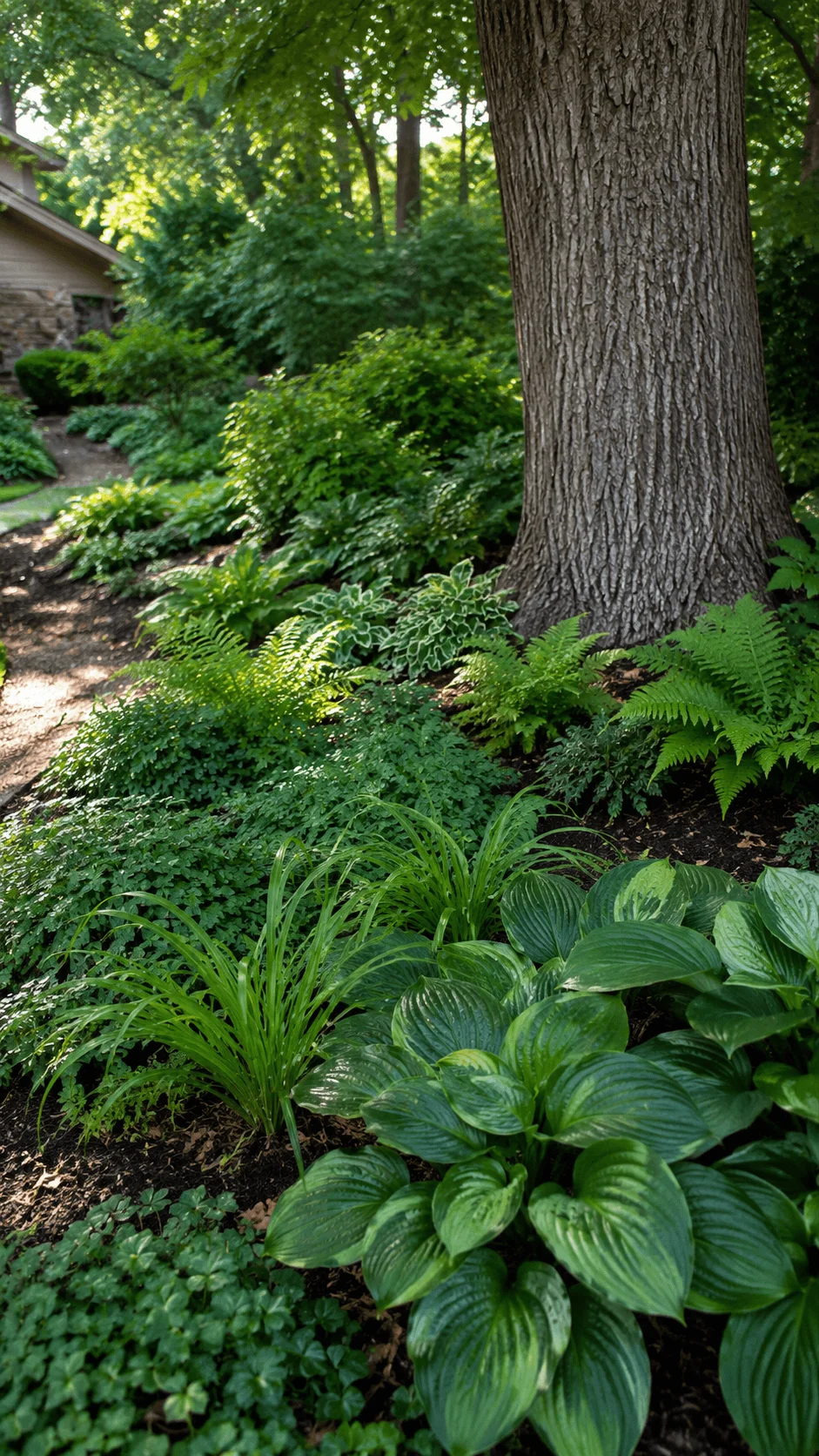
The green on green approach can also complement the natural character of an existing tree. Rather than competing with the tree for attention, the surrounding plants support its appearance and make the entire area feel connected.
For an eco friendly design, select plants that suit the conditions instead of choosing them purely for their appearance. Plants that tolerate the available shade, moisture, and soil conditions generally require less intervention.
This garden style also works well with natural mulch and fallen leaves. The combination of foliage, organic textures, and the existing tree can create a peaceful woodland atmosphere that feels both modern and natural.
Build a Rainwater Friendly Tree Garden
A rainwater friendly garden around an established tree can make better use of natural rainfall while creating a more sustainable landscape. Instead of treating rain as something that quickly runs across paved surfaces and disappears into drainage systems, homeowners can design planting areas that allow water to interact more naturally with the soil.
The first step involves understanding how water already moves through the garden. Watch the area during rainfall and notice whether water naturally collects in certain places or quickly runs away. This information can help you decide where planting areas, permeable surfaces, and moisture loving plants might work best.
Permeable materials can play an important role in this type of garden. Unlike completely sealed surfaces, materials that allow water to move through them can help reduce surface runoff. Natural planting areas can also provide spaces where rainfall reaches the soil instead of immediately leaving the garden.
Plants can contribute to water management as well. Their roots interact with the soil and can help create a living structure beneath the surface. Groundcovers and other vegetation can also reduce the amount of bare soil exposed to heavy rainfall.
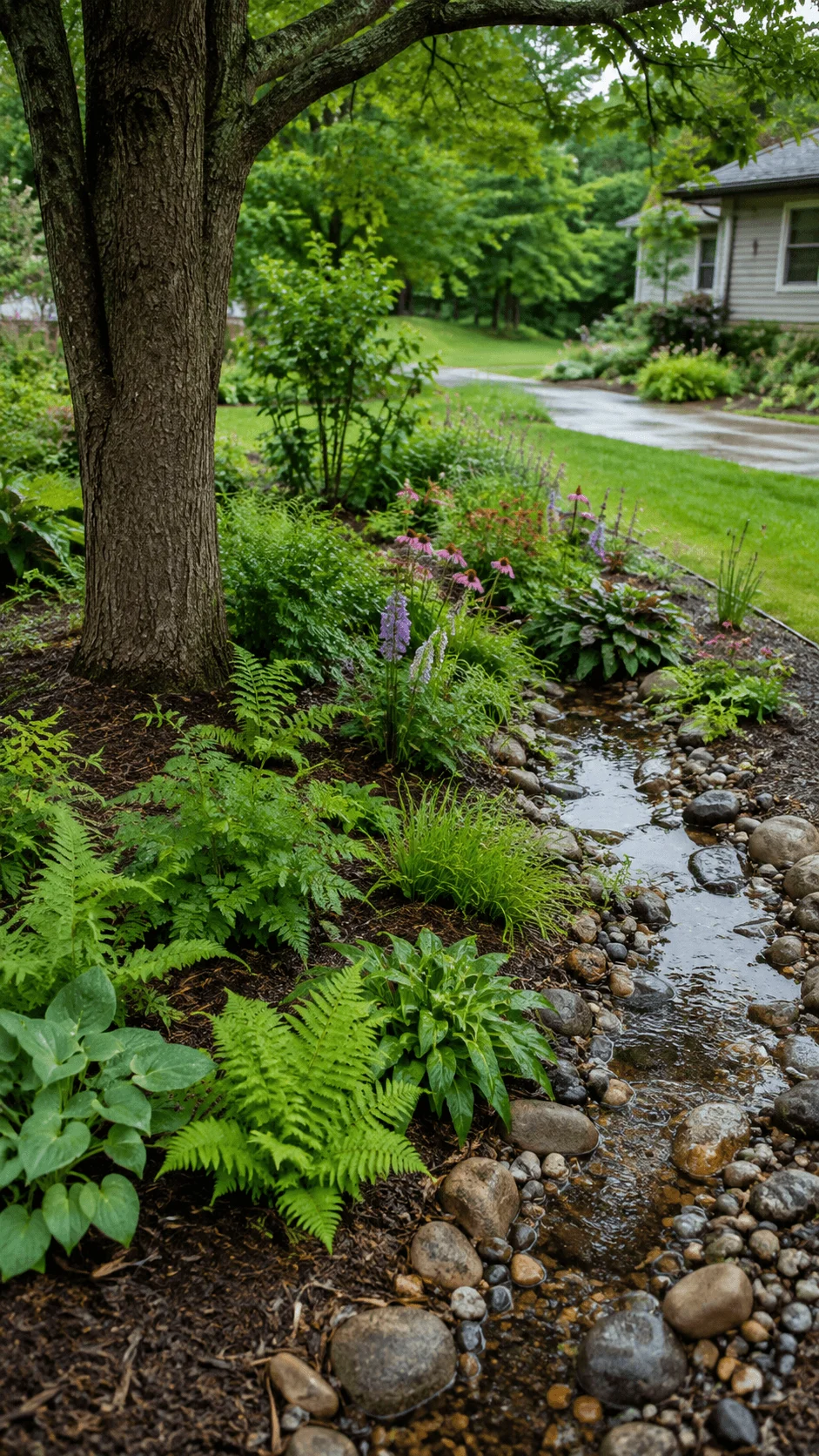
However, homeowners should avoid assuming that more water around a tree is always better. Many established trees prefer well drained conditions, and constantly wet soil can create problems for species that do not tolerate excessive moisture. A rainwater friendly design should therefore manage water intelligently rather than simply directing large amounts of water toward the trunk.
Avoid changing the soil level significantly around an established tree. Adding large amounts of soil can interfere with the natural environment around the roots and may cover the root flare. Instead, work with the existing landscape wherever possible.
A thoughtful rainwater garden can combine attractive planting with practical water management. When designed carefully, the area around a tree can become a useful part of a larger sustainable garden system.
Replace Lawn With Eco Friendly Groundcovers
Grass often struggles underneath mature trees, particularly when the canopy creates deep shade and the roots compete for moisture. Even when grass survives, mowing around exposed roots and close to the trunk can make maintenance difficult and can increase the chance of accidental tree damage.
Replacing lawn with suitable groundcovers creates an opportunity to make the area more diverse. Instead of maintaining a uniform carpet of grass, homeowners can create a living garden that includes different textures, heights, and shades of green.
The right groundcover depends on the local climate and conditions around the tree. Some plants tolerate shade well, while others need more sunlight. Soil moisture also matters because plants that prefer consistently moist soil may struggle beneath trees that create relatively dry conditions.
A lawn free garden can include a mixture of groundcovers rather than relying on one plant. Different textures can create a more natural appearance and help connect the tree with the surrounding garden.
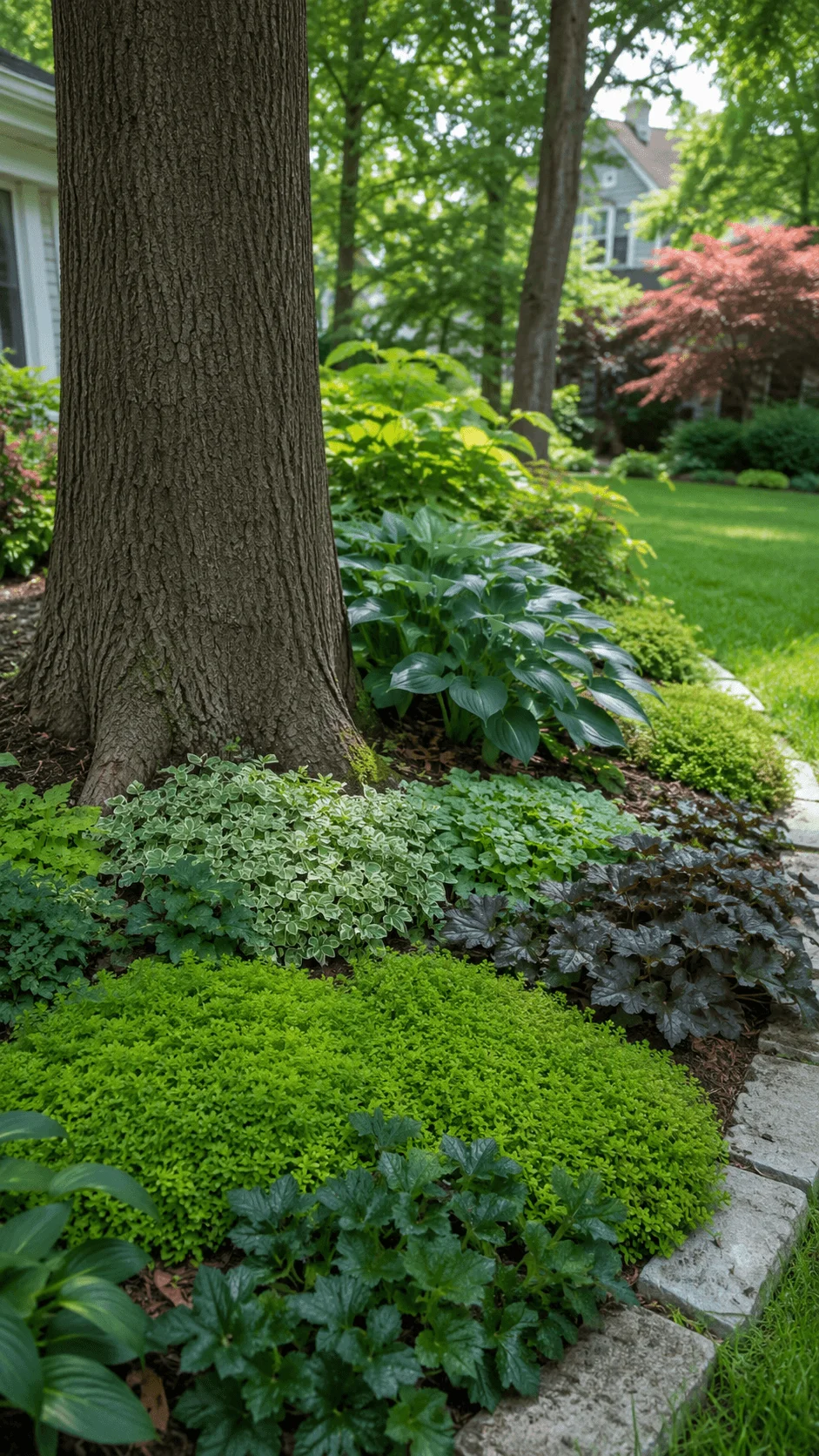
Native groundcovers can be particularly useful when they suit local conditions. They can provide habitat while contributing to a planting design that feels connected to the regional landscape.
Another benefit comes from reducing mowing. Lawn equipment can accidentally strike trunks and surface roots, especially when gardeners try to cut grass very close to a tree. Creating a defined planting area removes the need to repeatedly mow directly around the trunk.
You can also combine groundcovers with organic mulch. This creates a transition between planted areas and the tree itself while keeping the design visually cohesive.
Replacing lawn does not mean creating an untidy garden. With thoughtful plant selection and simple boundaries, the area can look intentional, attractive, and well maintained while requiring less routine lawn care.
Combine Natural Stone With Living Plants
Natural stone can add structure to a tree garden, but using too much hard material can reduce the environmental value of the space. A better approach combines stone with living plants so the garden retains both structure and natural character.
Irregular stones can create a soft visual boundary around a planting area. Instead of constructing a perfectly circular stone wall around the trunk, consider arranging stones in a loose curve that follows the natural shape of the garden.
Small areas of suitable gravel can also complement plants. Permeable materials may allow water to move through the surface more easily than completely sealed hardscape. However, the material should suit the climate and drainage conditions of the site.
Plants can soften the appearance of stone by growing around its edges. Low groundcovers, grasses, and suitable flowering plants can create a transition between hard and soft elements.
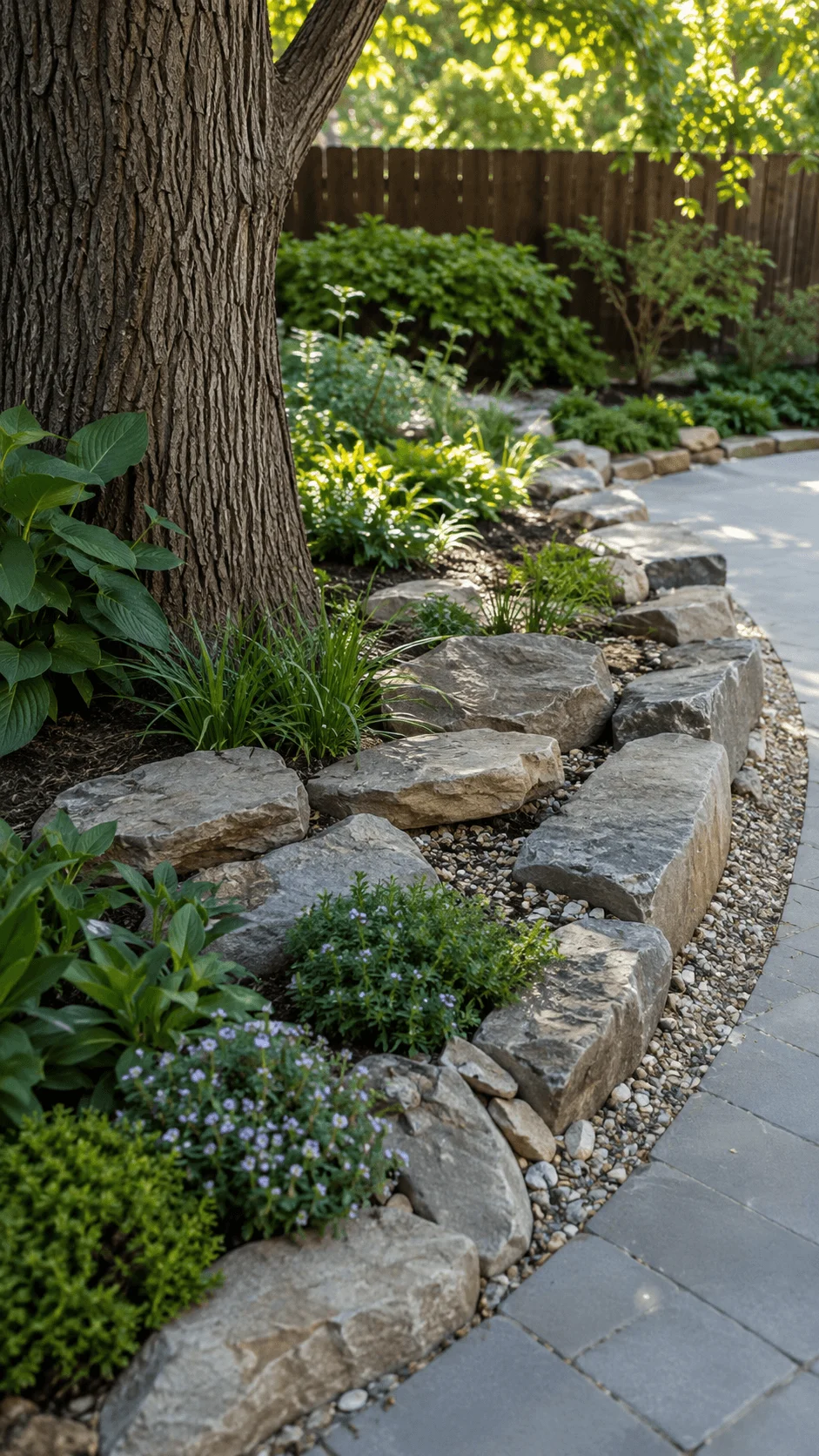
Natural stone can also create visual contrast. The solid texture of rocks can look attractive beside delicate foliage, fine grasses, or soft groundcovers. This combination works particularly well in contemporary natural gardens.
The placement of stone requires care around existing trees. Avoid digging deeply simply to install decorative edging, particularly where large roots may exist close to the surface. Heavy materials should also not compact the soil around important root areas.
Another consideration involves heat. Large areas of exposed stone can become hot in sunny locations. Combining stone with plants can reduce the amount of exposed hard material and create a more balanced environment.
The goal should be to use stone as a supporting element rather than making it the main feature. Living plants should remain an important part of the design so the garden continues to provide ecological value.
Create a Wildlife Habitat Around Trees
An established tree already provides an important foundation for wildlife. Its branches can offer shelter, while the surrounding soil and vegetation can create additional opportunities for insects, birds, and other small creatures. You can build on this natural advantage by turning the area into a wildlife friendly garden.
Start by creating plant diversity. Different species provide different forms of food and shelter. Flowering plants can support pollinators, while dense groundcovers can provide hiding places for small insects and other garden wildlife.
Varying plant height can make the habitat more useful. Low growing plants can cover the soil, medium height vegetation can add structure, and taller plants can create additional shelter around the edges.
Fallen leaves can also contribute to the habitat. Rather than treating every fallen leaf as garden waste, allow some leaf litter to remain where it will not cause problems. Natural organic material can become part of the garden ecosystem.
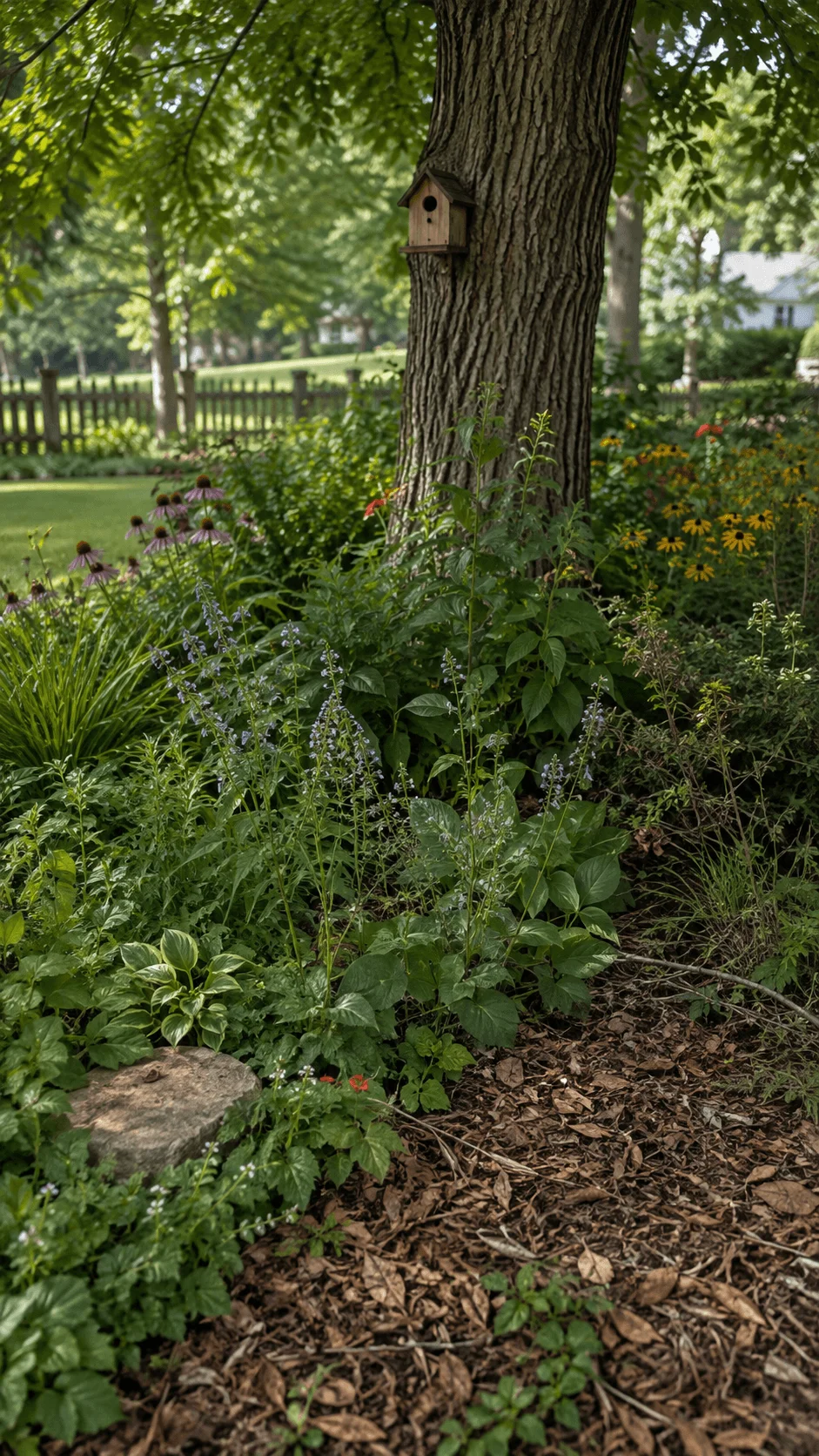
A wildlife garden does not need to look completely wild. You can create defined paths, attractive planting groups, and clear garden edges while still leaving certain areas more natural.
Native plants can strengthen this approach when they suit the local environment. They can create a stronger connection between the garden and the surrounding ecosystem.
You can also think about the garden throughout the seasons. Plants that flower at different times can provide changing resources, while evergreen or dense vegetation can continue to provide structure during periods when other plants become dormant.
The mature tree remains the central feature, but the surrounding planting turns it into part of a much larger habitat. This makes the garden more than a decorative landscape. It becomes a living space that can support biodiversity.
Use Layered Planting for a Natural Forest Effect
Layered planting is an excellent way to make the area around a mature tree feel deeper, fuller, and more natural. Natural forests contain vegetation at different heights, and homeowners can recreate a simplified version of this structure in a garden.
The existing tree provides the highest layer. Beneath its canopy, shrubs or taller plants can form a second layer, followed by smaller perennials and groundcovers. Organic leaf material can form another natural layer close to the soil surface.
This arrangement creates visual depth. Instead of seeing one flat planting bed, you see different forms at different levels. The result can make even a relatively small garden area feel richer.
Layering also provides opportunities for different plants to occupy different spaces. A taller plant may receive more filtered light, while a groundcover can tolerate conditions closer to the soil surface.
The approach works particularly well in woodland style gardens. Ferns, grasses, foliage plants, shrubs, and flowering plants can work together when each plant suits the conditions available to it.
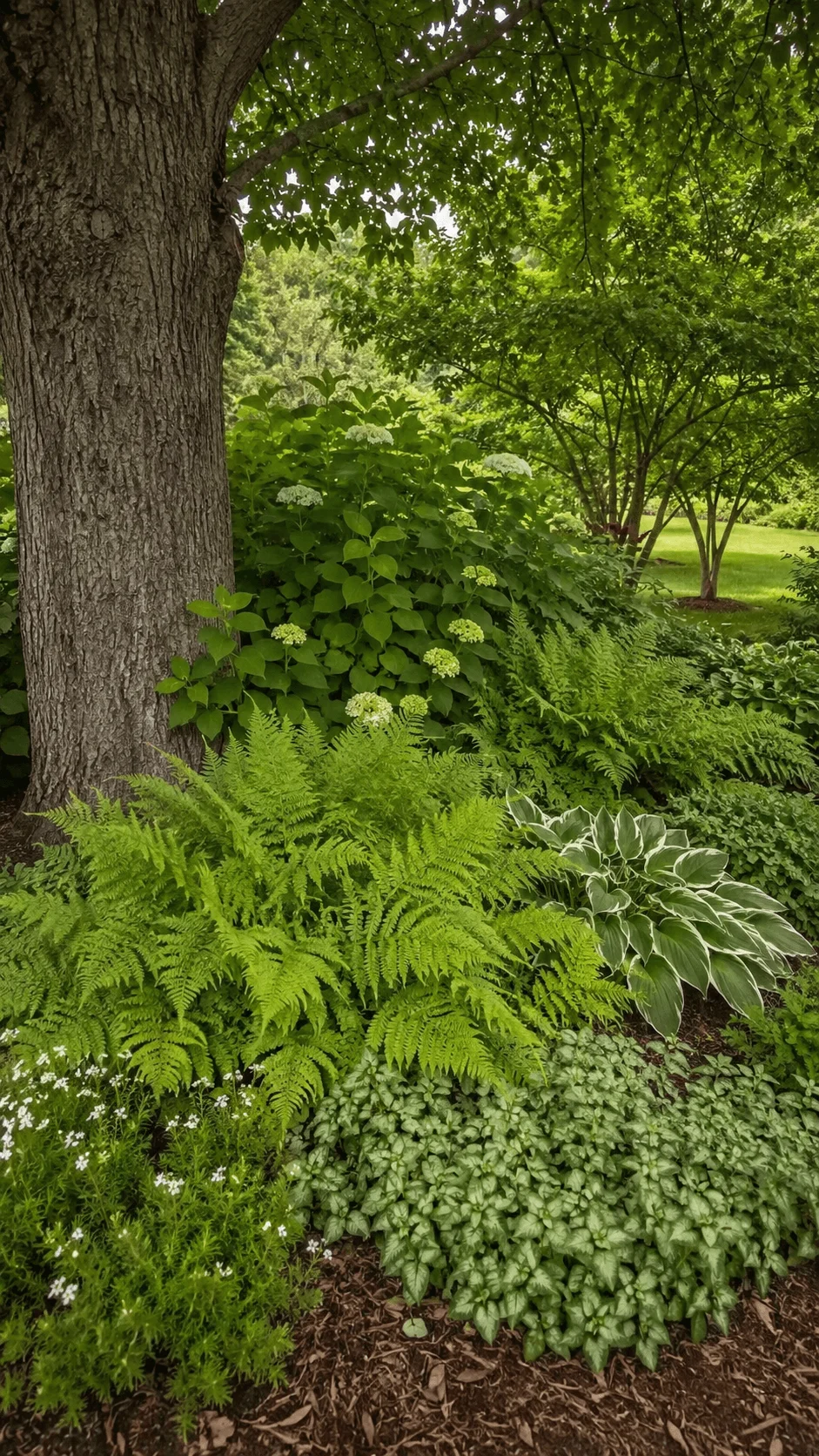
Avoid overcrowding the space. Mature trees already have extensive root systems, and adding too many plants can create unnecessary competition. Choose plants carefully and give them enough room to develop.
A layered garden can also become more interesting over time. Young plants may initially leave open spaces, but as they mature, their foliage can create a more connected appearance.
From an ecological perspective, different vegetation levels can provide different forms of habitat. Some insects may prefer low vegetation, while birds and other wildlife can use taller plants and the tree canopy.
This makes layered planting one of the most effective sustainable garden ideas around trees for homeowners who want both visual beauty and greater biodiversity.
Design a Climate Resilient Garden Around Trees
Climate resilient gardening is becoming an increasingly important part of modern landscape design. Instead of choosing plants only because they look attractive in a garden center, homeowners can select species according to the conditions they actually experience.
A climate resilient garden around an established tree should begin with observation. Consider temperature, rainfall, seasonal changes, sunlight, shade, soil type, wind exposure, and moisture levels.
The tree itself also affects these conditions. A large canopy can provide valuable shade during hot weather, while the root system can influence soil moisture. These characteristics can become advantages when you select plants that naturally suit the environment.
Climate appropriate plants can reduce the need for constant intervention. When a plant matches the conditions of the site, it may require less supplemental water, protection, or replacement.
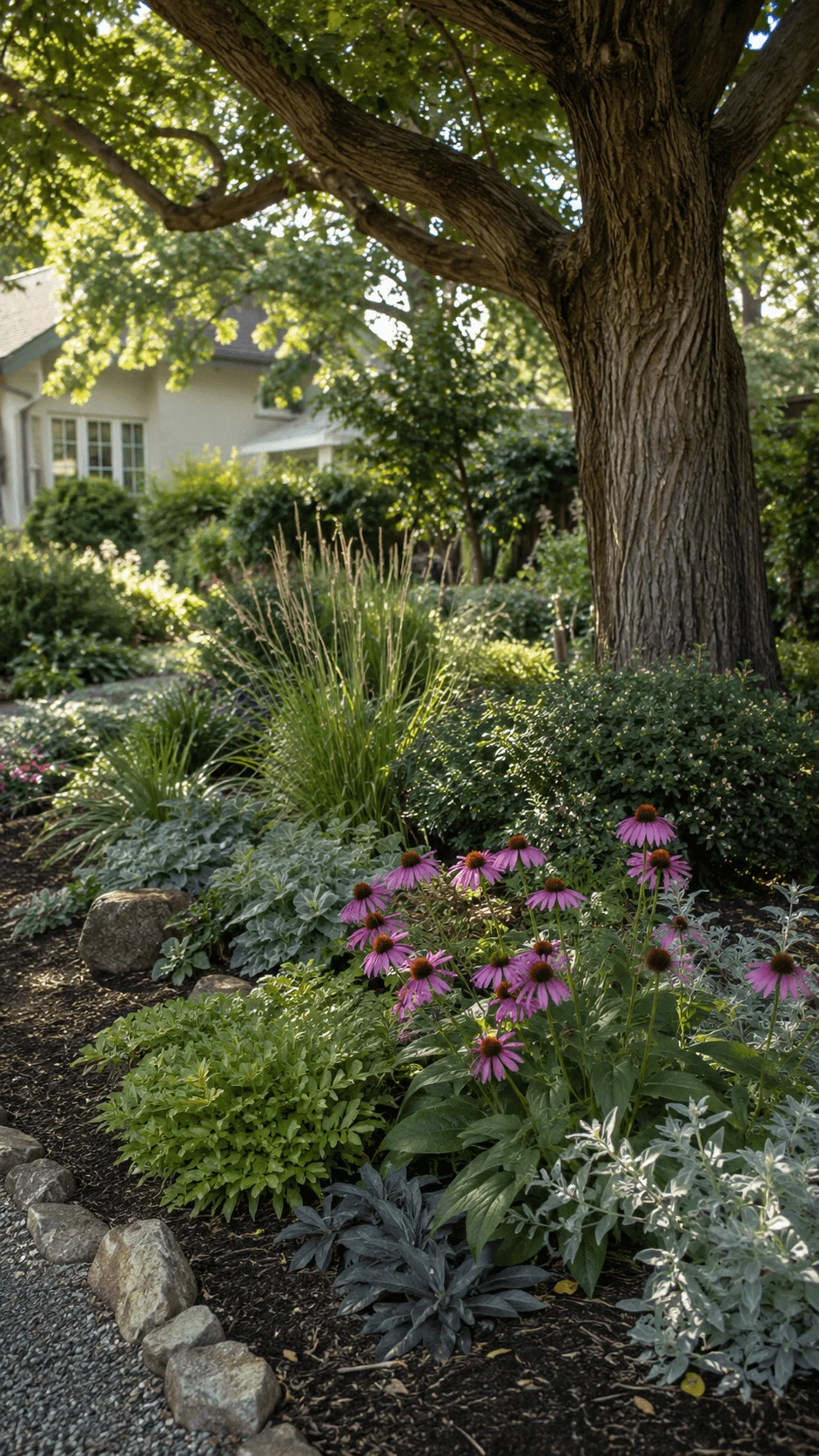
Native plants can also form an important part of a resilient garden when they suit the local conditions. Combining them with suitable climate adapted plants can create a diverse landscape that responds better to seasonal changes.
Soil health should receive equal attention. Organic matter, appropriate mulch, and living roots can contribute to a healthier soil environment. Avoid excessive disturbance because the soil around an established tree already supports an important root system.
Water management also matters. A resilient garden should make sensible use of rainfall while avoiding unnecessary irrigation. Permeable surfaces, appropriate planting, and good soil structure can all contribute to better water management.
Biodiversity strengthens resilience as well. A garden containing several suitable plant species can offer greater ecological variety than a landscape dominated by one type of plant.
The result is a garden designed around real environmental conditions rather than temporary trends. It can remain attractive while using resources more responsibly, making climate resilience one of the most forward looking eco friendly garden ideas around trees.
How to Protect Trees With Eco Friendly Garden Design
Creating a beautiful garden around a mature tree requires more than choosing attractive plants. The health of the existing tree should always come first. A tree can take many years to reach maturity, so landscape changes should avoid unnecessary damage to its roots, trunk, and surrounding soil.
One of the most important considerations involves digging. Tree roots can spread well beyond the visible trunk, and some roots may exist close to the soil surface. Avoid unnecessary excavation when installing planting beds, edging, or decorative features.
The root flare should remain visible. The base of a mature tree should gradually widen as the trunk transitions into the root system. Do not cover this area with soil, thick mulch, decorative rocks, or other materials.
Mulch can benefit the garden when used correctly, but creating a large mound around the trunk can cause problems. Spread mulch across the surrounding soil while leaving an open area immediately around the trunk.
Soil compaction also deserves attention. Heavy foot traffic, vehicles, construction materials, and repeated activity can reduce the spaces between soil particles and make conditions more difficult for roots. Keep unnecessary activity away from the main root zone.
Lawn equipment can create another risk. Mowers and string trimmers can damage the bark when used too close to the trunk. Replacing the grass around the tree with a suitable planting area can reduce this risk.
Be cautious when adding soil. Raising the soil level around an established tree can change the environment surrounding its roots. Instead of reshaping the area dramatically, design the garden around the existing grade whenever possible.
Drainage changes also require careful thought. Directing excessive water toward the tree may create problems for species that prefer well drained soil. A sustainable design manages rainfall according to the needs of both the landscape and the tree.
The best eco friendly landscaping around trees works with the existing environment. It protects the tree while adding plants and materials that complement its natural structure.
Choosing the Best Sustainable Garden Idea Around Your Tree
There is no single design that works for every tree. The best approach depends on the conditions around the tree and the type of garden you want to create.
Start with sunlight. A heavily shaded tree garden may work well with woodland plants, foliage focused planting, and suitable groundcovers. A tree with a more open canopy may allow enough sunlight for flowering plants and pollinator friendly planting.
Next, examine moisture. Some areas beneath trees remain relatively dry, while other locations receive plenty of rainfall. Choose plants according to the actual conditions rather than assuming that all tree gardens have the same environment.
Soil type also influences your choices. Observe whether the soil drains quickly, retains moisture, contains a lot of organic material, or feels compacted. Improving the garden gradually can be more appropriate than making major changes around an established tree.
Consider how much maintenance you want to perform. A naturalistic woodland garden or rewilded tree garden can reduce the need for frequent trimming, while a more formal planting design may require greater attention.
Think about your environmental goals as well. If supporting pollinators is your priority, create a flowering habitat. If water conservation matters most, focus on climate appropriate and drought tolerant plants. If wildlife is the main goal, combine native vegetation, layered planting, and natural shelter.
The size of the available area should also influence the design. A small tree bed may benefit from a simple combination of groundcovers and mulch, while a large mature tree can support several planting layers.
By considering these factors first, you can choose a design that works naturally with the existing tree instead of constantly trying to change the environment around it.
Conclusion
The space around a mature tree can become far more than an empty patch of lawn or a simple decorative tree ring. With thoughtful planning, it can become a beautiful and environmentally responsible part of the landscape. The best eco friendly garden ideas around trees work with the natural characteristics of the tree while adding plants, materials, and habitat features that support a healthier garden.
Native woodland planting can create a natural forest inspired atmosphere, while pollinator gardens can bring flowers and beneficial insects into the landscape. Rewilded planting can create a more relaxed appearance, and organic mulch can help the garden resemble a natural forest floor. Low water designs can reduce unnecessary irrigation, while green on green planting can create visual interest through foliage rather than relying entirely on flowers.
Rainwater friendly planting, lawn free groundcovers, natural stone, wildlife habitats, layered vegetation, and climate resilient planting can provide even more possibilities. Each approach offers a different way to make the area around an existing tree more attractive and useful.
Most importantly, sustainable landscaping should always protect the health of the tree. Avoid unnecessary digging, keep the root flare visible, prevent soil compaction, use mulch correctly, and choose plants that can coexist with the existing root system.
When you design with the tree rather than against it, the result can become a garden that looks natural, supports biodiversity, uses resources more responsibly, and changes beautifully with the seasons. An established tree already gives your garden a valuable foundation. The right planting and thoughtful design can turn that foundation into a thriving and sustainable outdoor space.