12 Eco Friendly Waste Sorting and Disposal Ideas for 2026
Eco friendly waste sorting and disposal is becoming an important part of creating a cleaner and more efficient home in 2026. Household waste no longer means putting everything into one trash bin and occasionally separating a few recyclable items. Modern homes produce food scraps, cardboard, glass, plastic packaging, batteries, electronics, old clothing, broken household products, and many other materials that need different forms of handling. A thoughtful sorting system can make it easier to decide what to reuse, repair, compost, recycle, donate, or dispose of responsibly.
Technology is also beginning to change this process. Smart sorting systems, AI recognition tools, digital disposal guides, and more convenient organic waste collection can help people make better decisions. At the same time, technology cannot replace good household habits. A complicated smart bin offers little value if nobody understands how to use it.
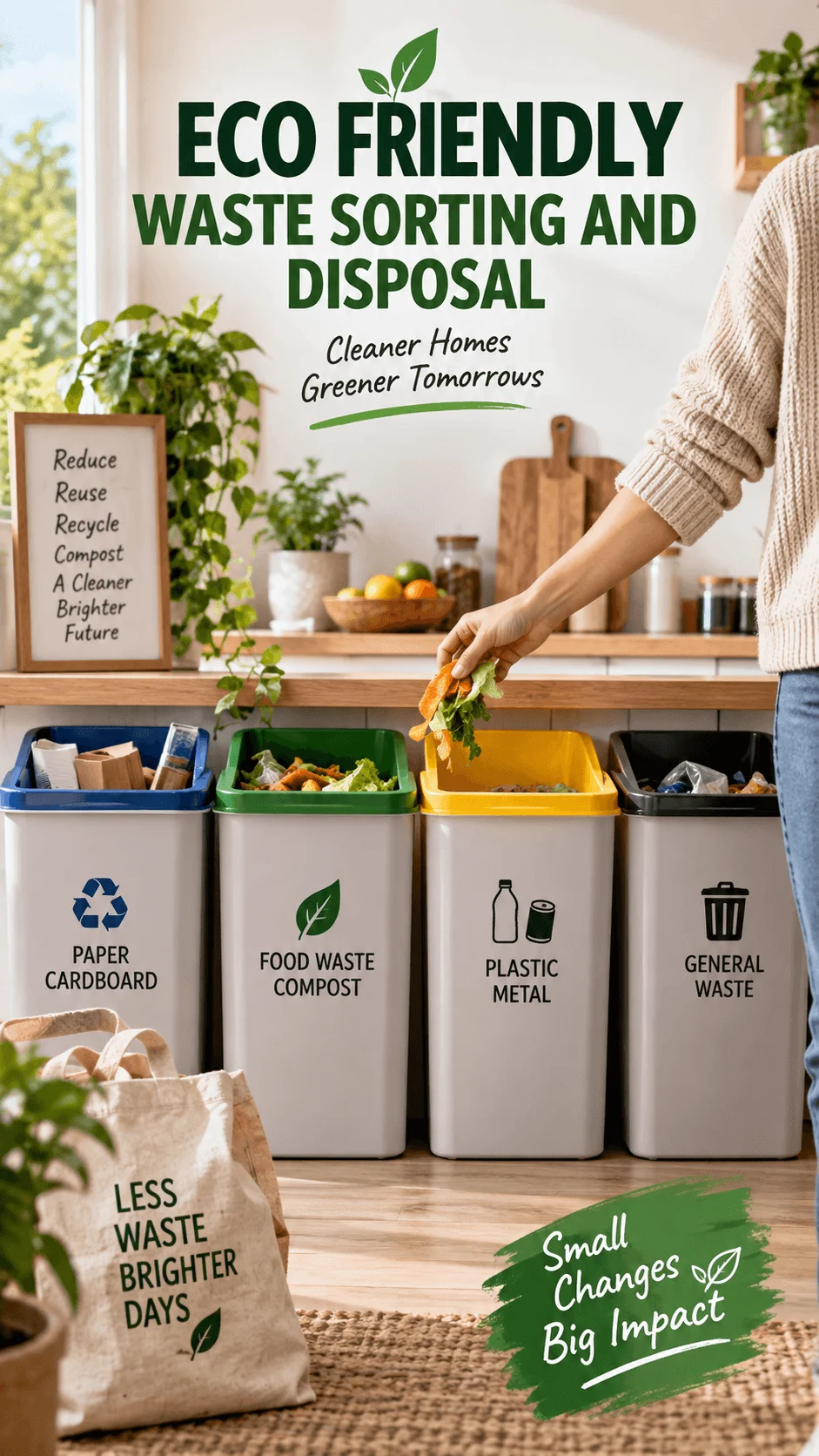
The best eco friendly waste sorting and disposal system should make responsible choices easier during everyday life. It should fit the available space, reflect the waste a household actually produces, and follow local collection rules. Instead of concentrating only on recycling, a modern system can consider the entire journey of an unwanted object. These twelve ideas explore practical and emerging ways to make household waste sorting more effective in 2026.
1. Create a Smart Waste Sorting Station at Home
A smart household sorting station does not necessarily need sensors, screens, or expensive equipment. Good organization can make an ordinary group of containers much smarter.
Instead of keeping one large trash bin and a small recycling container, consider the different waste streams your household produces. Food scraps may need one container, while locally accepted recycling can use another. Paper and cardboard may need separate storage depending on local collection requirements. Batteries, electronics, and other special materials can have a small designated storage area.
Container size matters as much as the number of containers. A household that produces large amounts of cardboard but very little residual waste does not need identical bins for both. Matching capacity to actual waste can make the entire system more convenient.
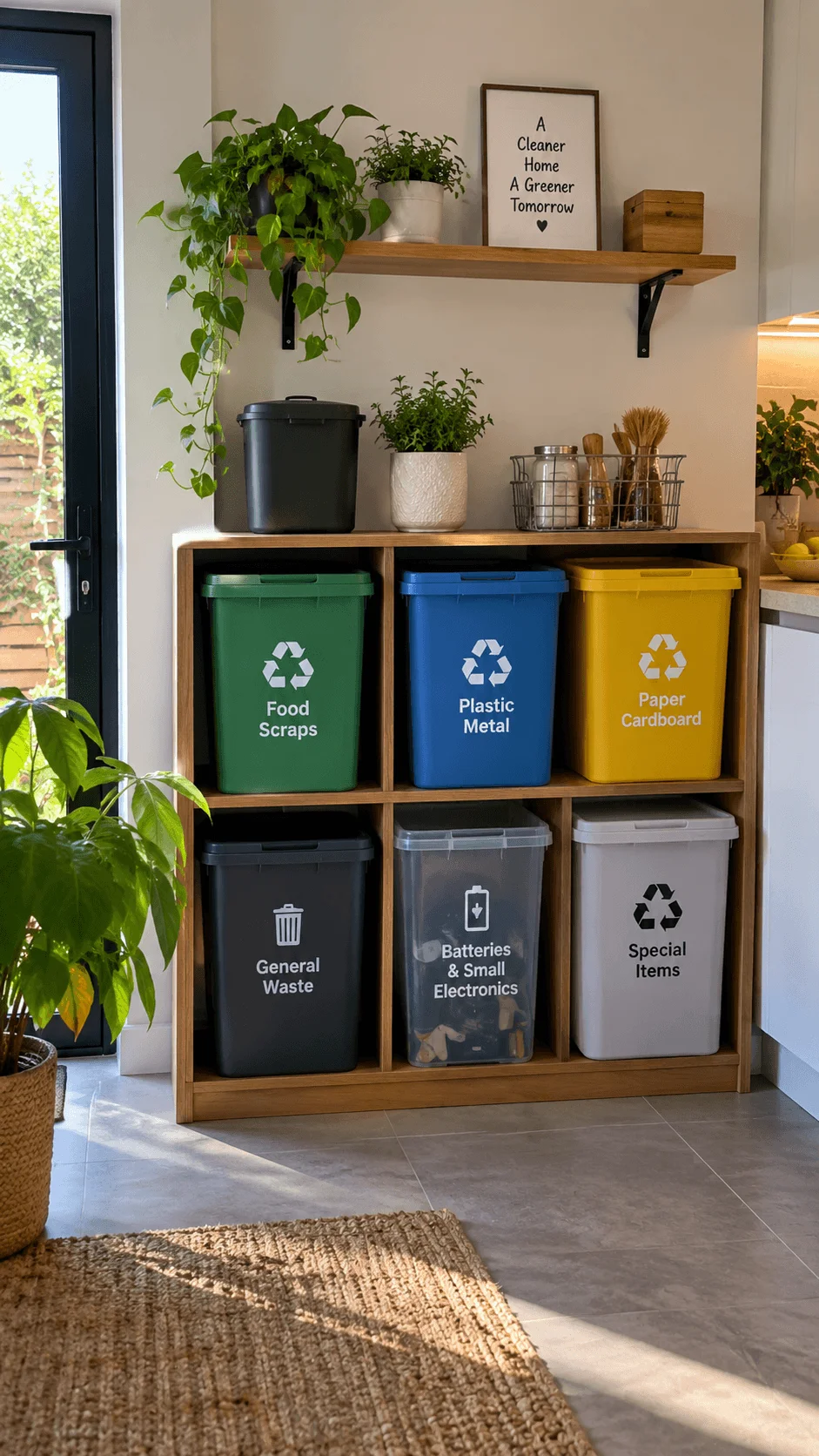
Placement also affects behavior. Keep containers close to where people produce the relevant waste. Clear labels can remove uncertainty and help children, visitors, and other household members follow the system.
This approach makes eco friendly waste sorting and disposal feel like part of everyday home organization rather than an additional chore.
2. Use AI Assisted Household Waste Sorting
Artificial intelligence is creating interesting possibilities for smart waste sorting in 2026. Computer vision systems can analyze images and recognize different objects or materials. As these systems improve, similar technology could help ordinary households identify confusing waste.
Imagine holding an unfamiliar food package and not knowing whether it contains recyclable plastic, coated paper, or several materials joined together. An AI assisted tool could help identify the object and provide information about its likely material category.
However, identifying a material does not automatically determine its correct destination. A tool might correctly recognize a particular type of plastic, but the local recycling facility may not accept it.
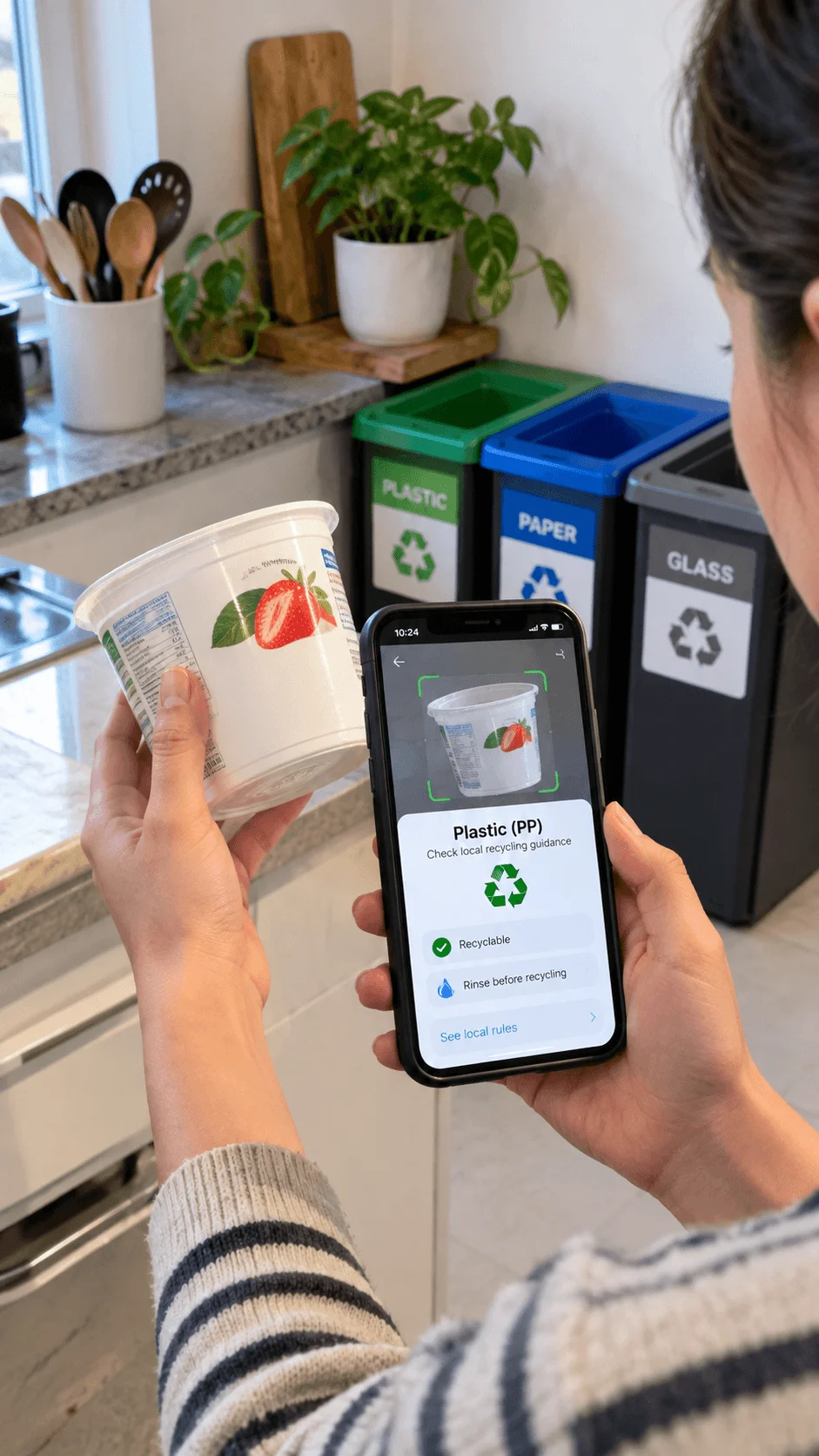
For this reason, AI should support local disposal guidance rather than replace it. The most useful future systems could combine image recognition with current municipal information. Someone could scan an object, identify the material, and then check whether a nearby collection service accepts it.
AI makes eco friendly waste sorting and disposal more interesting, but accurate local information remains essential.
3. Try Phone Based Smart Waste Recognition
Smartphones could become useful waste sorting assistants because they already contain cameras, powerful processors, and access to online information.
A person who feels unsure about an object could photograph it before deciding where it belongs. A recognition tool could identify the object or its likely material and then provide relevant information.
This approach could prove particularly useful for confusing packaging. Modern products often combine paper, plastic, foil, coatings, adhesives, and other materials. A simple visual check does not always provide a clear answer.
Future phone based systems could also connect product information with local recycling databases. QR codes on packaging could provide another source of information.
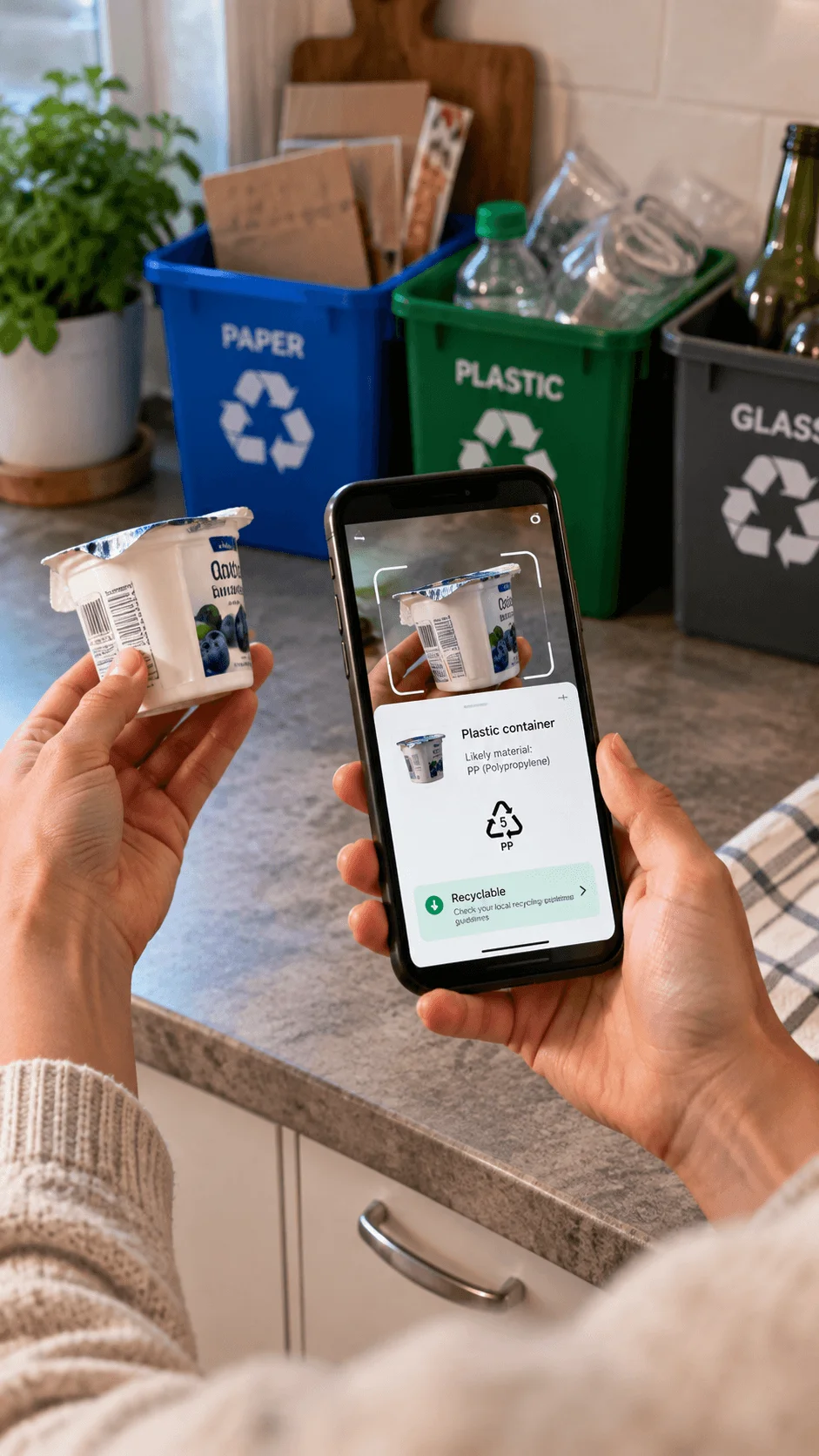
The important goal is convenience. People should not need to spend several minutes researching every yogurt container or delivery package. Smart recognition becomes valuable when it reduces confusion quickly.
Even with better technology, users should remember that object recognition and local recyclability are different questions. Local collection instructions should determine the final decision.
4. Separate Food Waste at the Source
Food waste sorting at home can make the rest of a household recycling system easier to manage. When food scraps enter general waste or contaminate recyclable materials, separating everything later becomes more difficult.
The easiest approach is to collect food waste where people generate it. A compact container near the food preparation area allows vegetable peelings and other locally accepted organic materials to move directly into the correct stream.
Good container design can make this process more pleasant. Choose a size that the household can empty regularly. Wash the container frequently and manage moisture carefully. Some households may have access to municipal food waste collection, while others may use home or community composting.
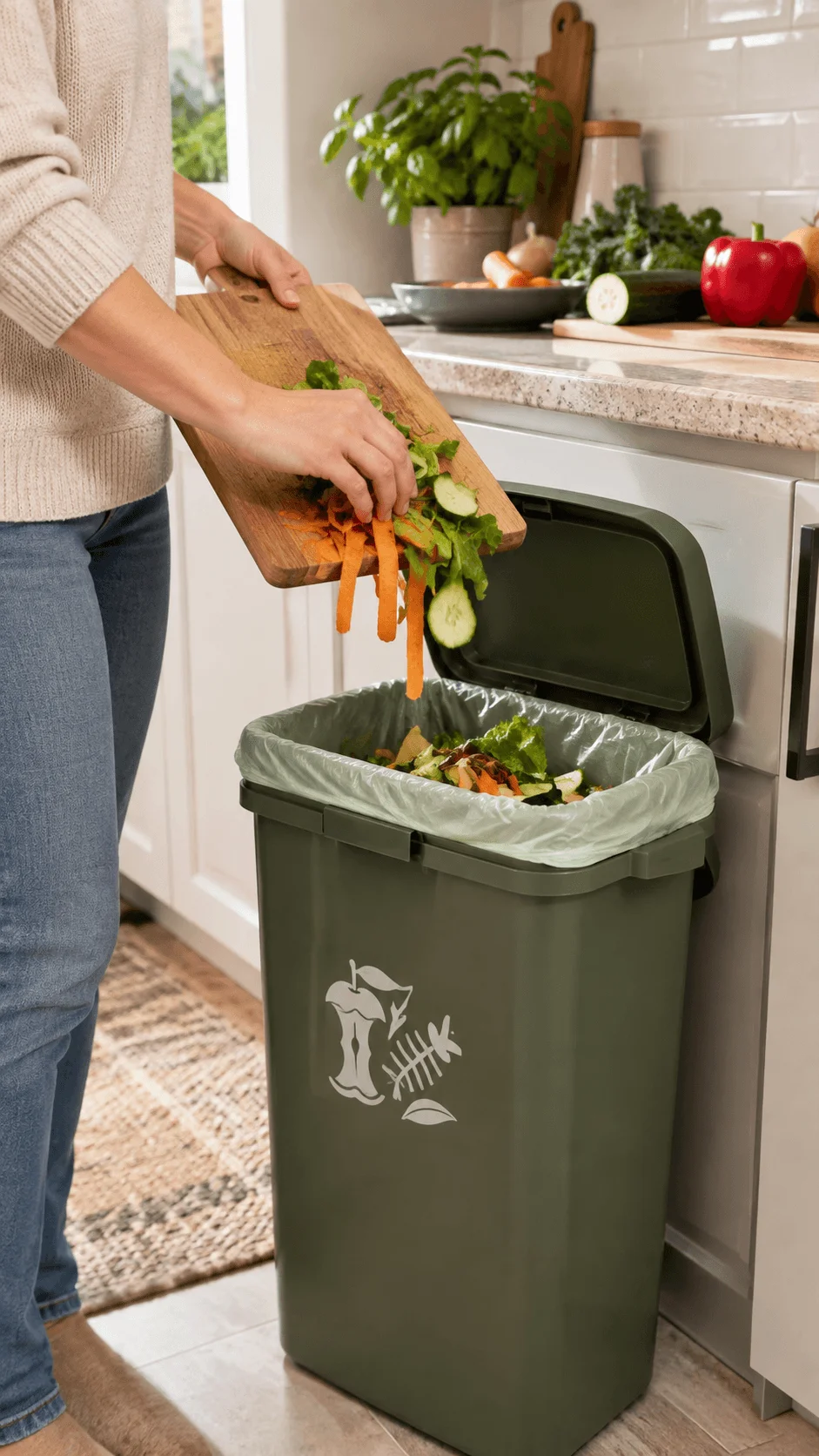
Separating organic material can also help keep cardboard, paper, and containers cleaner.
However, households should check local requirements carefully. Different food waste and composting programs accept different materials. A package that says compostable may require industrial processing and may not break down properly in a home compost system.
A successful eco friendly waste sorting and disposal routine therefore connects kitchen habits with the disposal options that actually exist locally.
5. Turn Suitable Organic Waste Into a Resource
Organic waste does not always need to become residual garbage. Where suitable systems exist, households can return some organic materials to productive use.
Home composting offers one familiar example. Gardeners can transform suitable kitchen and garden materials into compost through a managed biological process. Finished compost can contribute organic matter to garden soil.
Larger waste systems can use different technologies. Anaerobic digestion processes suitable organic material in controlled conditions without oxygen. Facilities can capture biogas during this process and use it as an energy source.
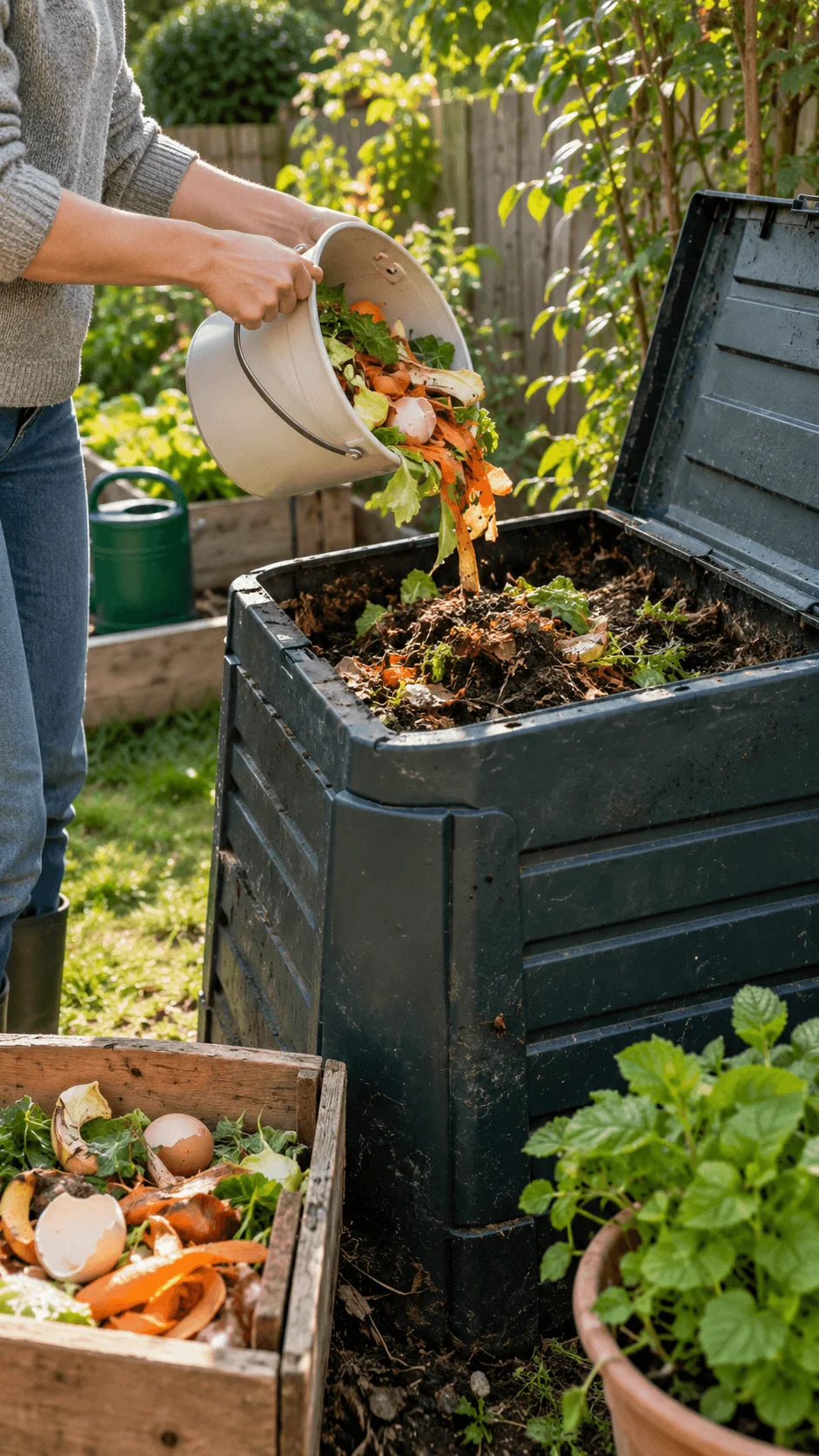
Home composting and industrial processing are not interchangeable. A backyard compost pile operates under different conditions from a commercial facility. Households should therefore avoid assuming that every product carrying a biodegradable or compostable label belongs in home compost.
The larger idea is valuable because it changes how people view food and garden waste. Instead of automatically treating organic material as useless garbage, a sustainable system considers whether an appropriate recovery route exists.
6. Reduce Recycling Contamination With Better Sorting
Recycling works best when households understand what their local collection system actually accepts. Confusion can lead to wishcycling, which happens when people put questionable objects into recycling because they hope somebody will recycle them.
Good intentions do not guarantee a good result.
A simple checking area can improve responsible household recycling. People can empty containers, keep cardboard dry, separate components when local instructions request it, and check uncertain materials before placing them into a recycling container.
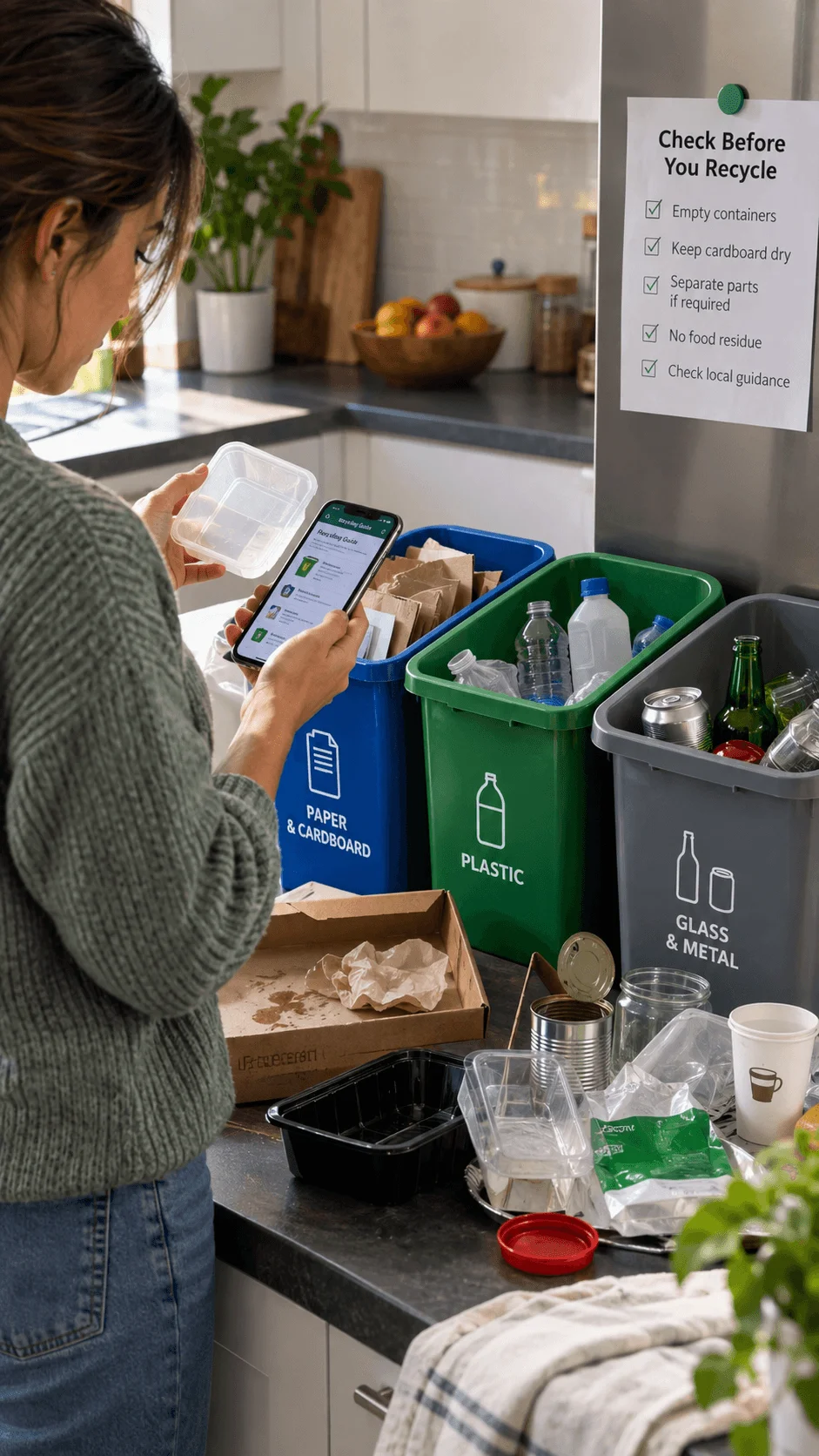
Packaging creates particular confusion. A takeaway container, coated paper cup, plastic film, pouch, lid, or mixed material package may look recyclable without being accepted by the local system.
Recycling symbols can also create misunderstandings. A symbol may identify a material without guaranteeing local curbside acceptance.
For better eco friendly waste sorting and disposal, households should replace guessing with checking. Saving official local disposal guidance on a phone can make this process much faster.
7. Separate E Waste Batteries and Hazardous Materials
Some household materials need more attention than ordinary packaging and food waste. Batteries, mobile phones, chargers, cables, small electronics, certain light bulbs, paints, and household chemicals may require dedicated collection or disposal.
Throwing these materials into an ordinary recycling container can create problems. Local regulations and collection options vary, so households should identify appropriate services in their area.
A small temporary storage area can make special waste easier to manage. The location should remain secure and appropriate for the material being stored, particularly when batteries or household chemicals are involved.
People should keep products intact and follow manufacturer and local authority guidance rather than trying to dismantle or process potentially hazardous items themselves.
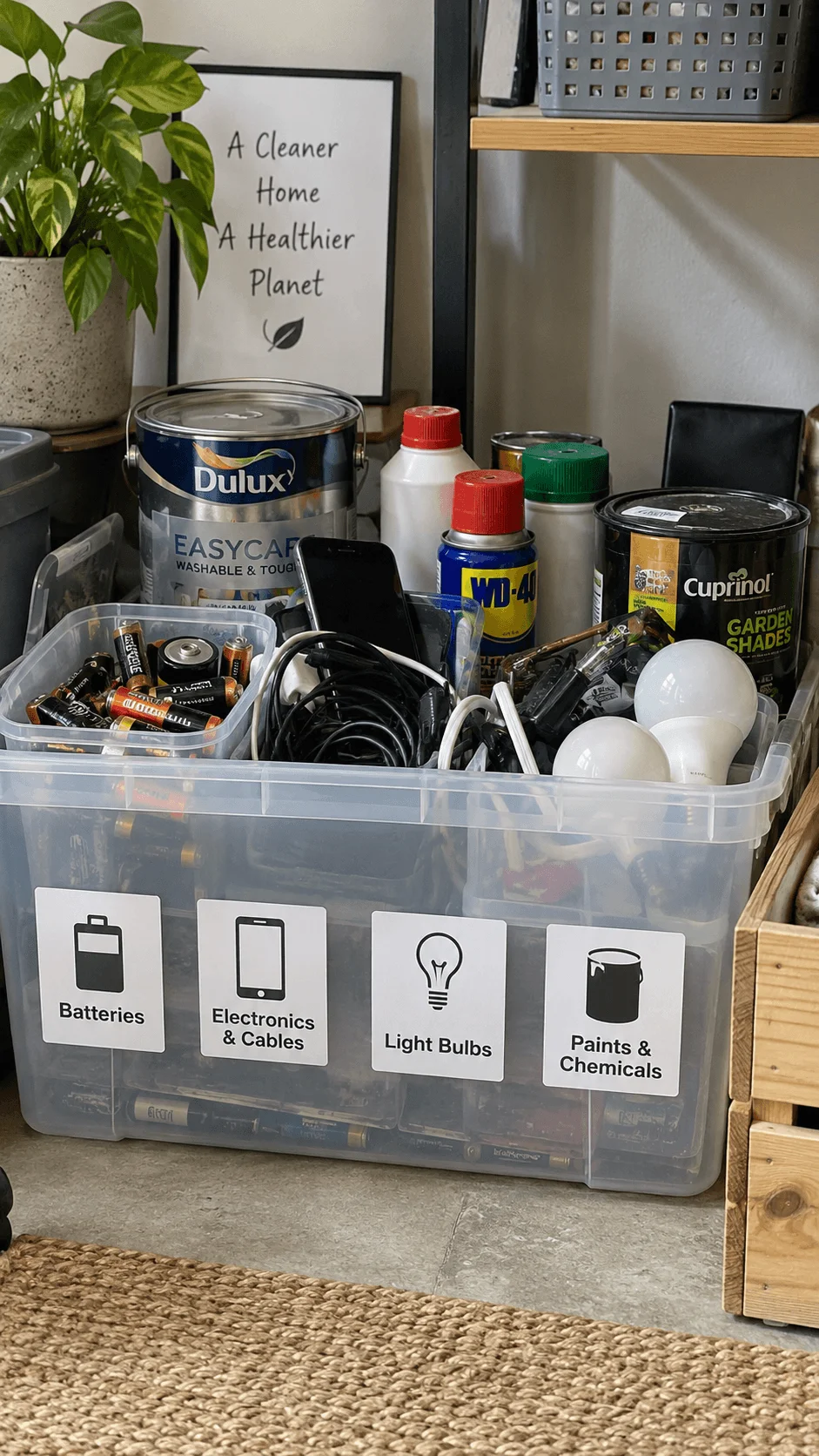
This category does not usually require a large container because most households produce special waste less frequently than food scraps or packaging. A clearly identified storage location can still prevent these items from disappearing into general waste.
Responsible handling of special materials forms an important part of modern eco friendly waste sorting and disposal.
8. Add QR Codes and Digital Sorting Guides
A physical label can tell someone that a container holds recycling, but it cannot explain every confusing item. Digital guidance can provide the missing detail.
A household could place a QR code near its sorting station that opens the official recycling guide for the local area. When someone encounters an unfamiliar package, they can quickly check the current instructions.
This idea can work particularly well in shared homes where several people use the same bins. Guests, children, roommates, employees, or apartment residents may not know the local sorting system.
Physical labels should remain simple and easy to understand. Digital information can provide the deeper explanation.
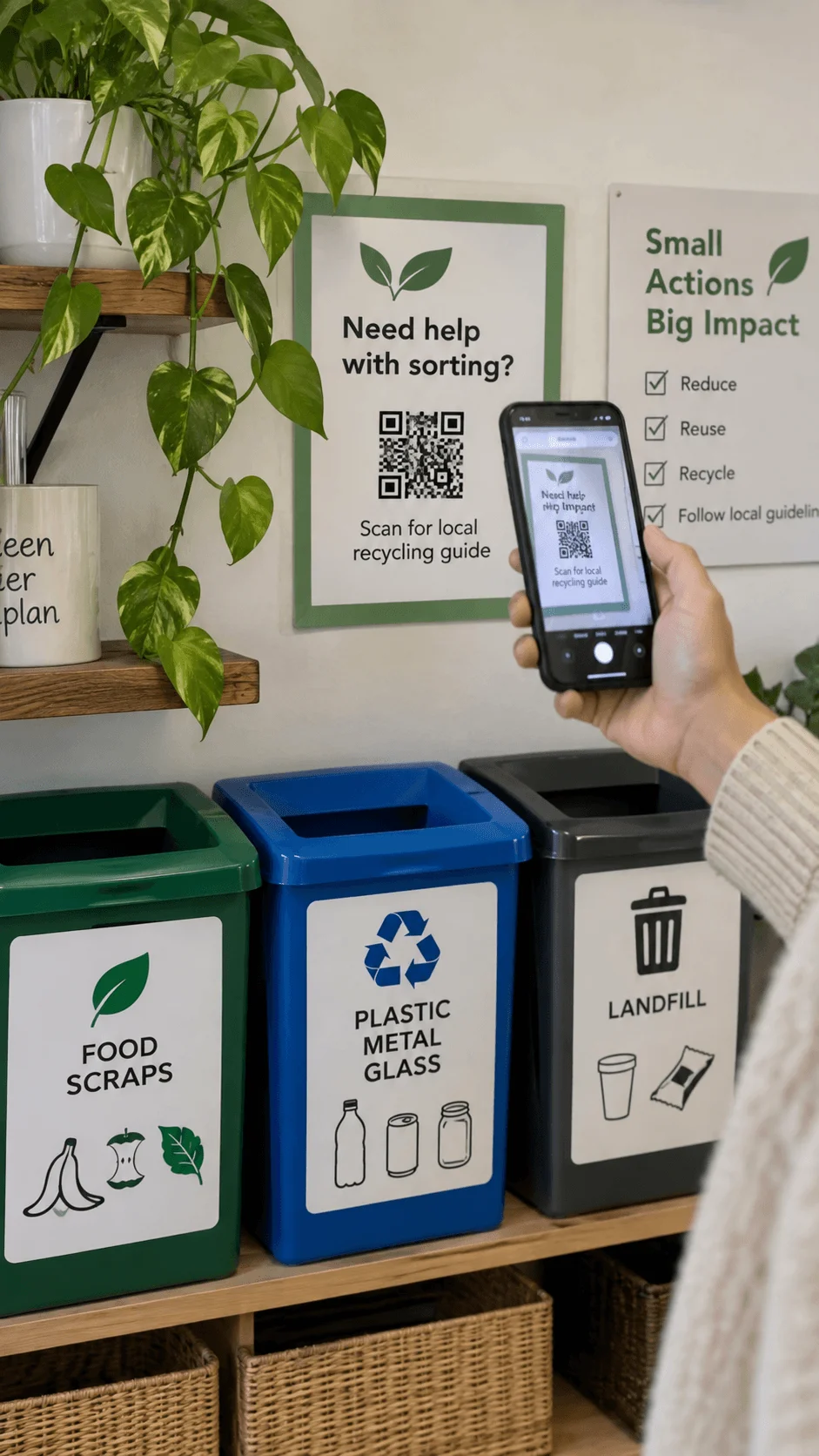
QR based guidance also has another advantage. Waste rules can change. A digital destination can provide newer information without requiring households to redesign every physical label.
This combination of simple labels and detailed digital guidance can make smart waste sorting at home more practical without requiring an expensive automated bin.
9. Encourage Better Sorting Through Simple Rewards
Waste sorting involves human behavior as much as containers and recycling facilities. Even a well designed station can fail when people find it confusing, inconvenient, or unrewarding.
Families can make sorting more engaging by creating simple household goals. Instead of focusing only on how much recycling they produce, they can examine how much residual waste remains after correct separation.
Children can learn to recognize different waste categories through clear labels and regular participation. Some locations also operate deposit return programs or other systems that provide an incentive for returning specific containers.
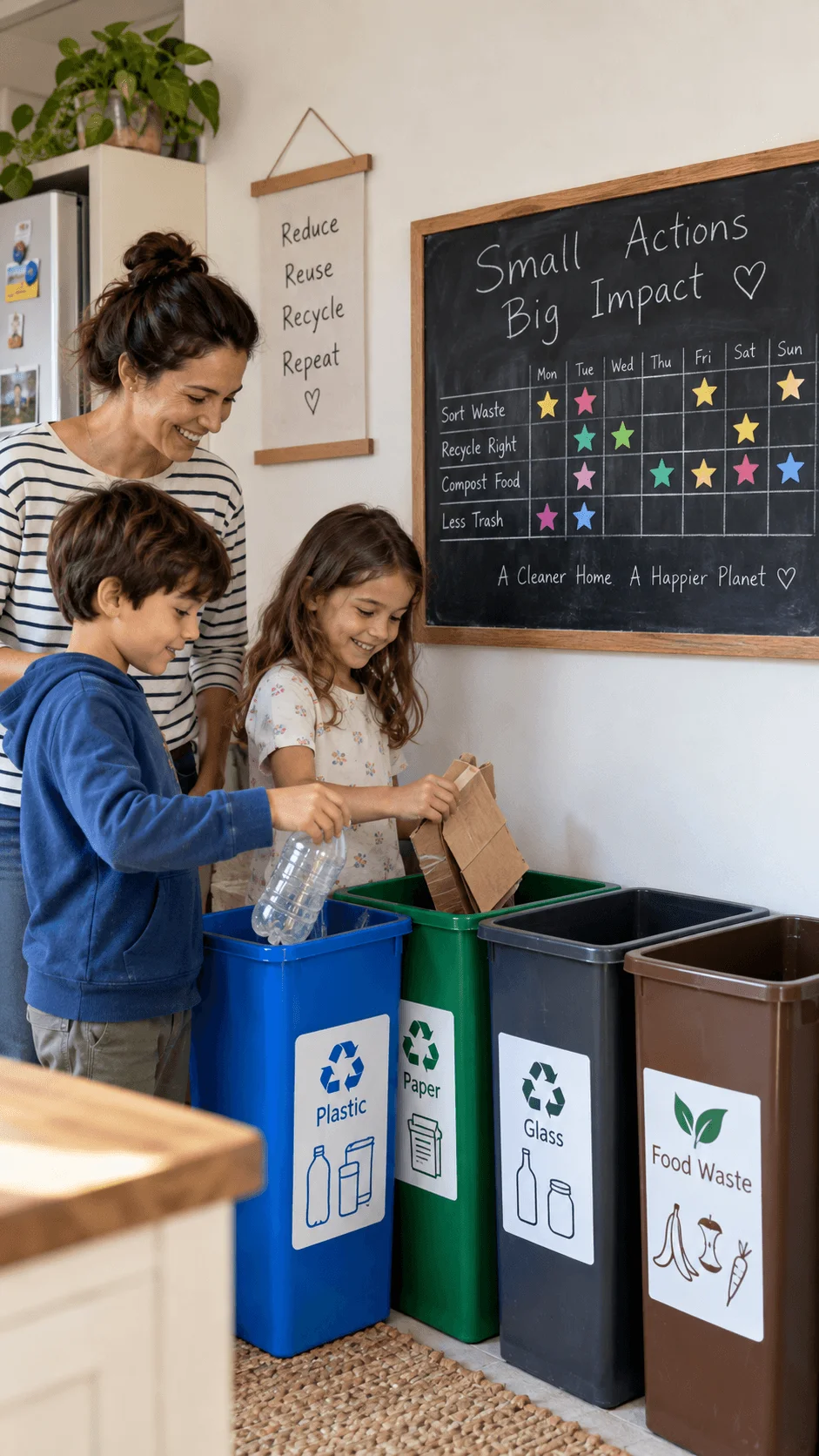
Rewards should not become the entire reason for sorting correctly. A stronger long term approach makes the responsible option convenient enough to become an ordinary habit.
Households can also treat visible progress as its own reward. Watching the general waste container fill more slowly after introducing food waste separation or reuse can show that the system is working.
10. Make General Waste the Smallest Stream
Many kitchens traditionally give the largest container to general trash. A more sustainable household system can challenge that assumption.
Before an object becomes residual waste, consider whether another realistic destination exists. Someone may be able to reuse, repair, donate, compost, recycle, or separately collect the material.
When these streams work properly, residual waste may naturally become a smaller portion of the household system. This does not mean every household should immediately buy a tiny trash bin. Container sizes should reflect actual needs.
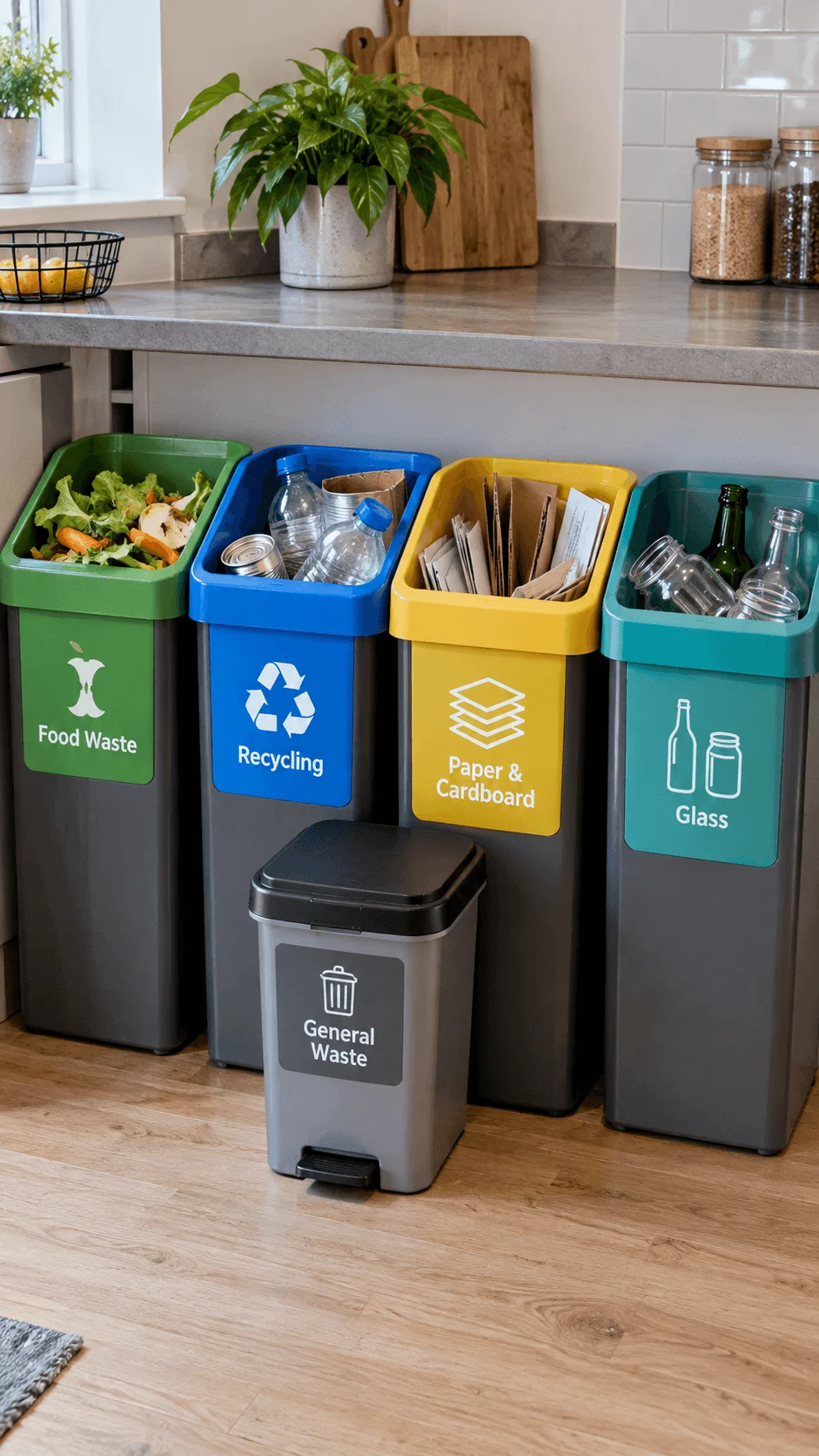
Some communities use pay as you throw approaches that connect waste charges with the amount of residual garbage produced. These systems vary considerably and do not exist everywhere.
The goal of sustainable waste disposal should never become reducing visible garbage at any cost. Households should not burn waste, dump it illegally, store unsafe materials, or contaminate recycling simply to empty the general waste bin less often.
Better separation should create the reduction naturally.
11. Put Waste Sorting Where Waste Actually Starts
Convenience can determine whether a household sorting system succeeds.
Imagine someone opening a package at a home office desk. If a paper recycling container sits nearby, correct sorting requires almost no additional effort. If the only recycling container sits downstairs in a utility room, general waste may become the easier option.
The same principle applies throughout a home.
A food waste caddy makes sense near the food preparation area. A paper container can sit near a desk. Reusable shopping bags can stay near the door. A safe designated area can collect used batteries until the household can take them to an appropriate collection point.
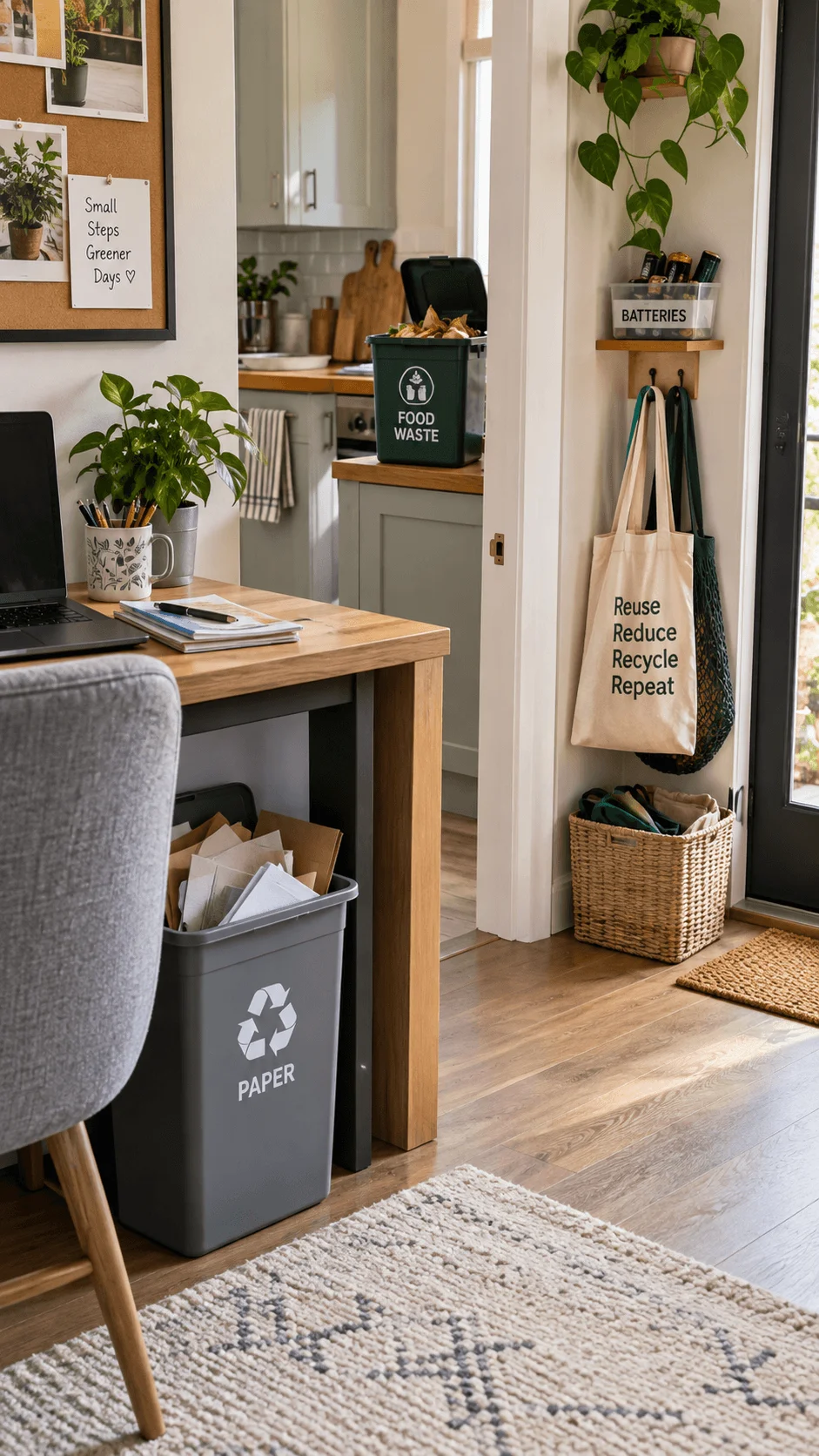
Small homes can use the same principle without filling every room with bins. Compact containers, stackable storage, vertical organization, and carefully selected collection points can save space.
Good eco friendly waste sorting and disposal should work with normal household behavior instead of constantly asking people to overcome inconvenience.
12. Create a Reuse Repair and Donation Stream
One of the most important changes in sustainable household waste management involves thinking before an object reaches a recycling bin.
Recycling has value, but an unwanted product does not automatically need recycling. A usable chair, jacket, storage container, toy, tool, or electronic device may still have useful life remaining.
Households can create a small area for objects that need another decision. Someone can consider whether to continue using the item, repair it, give it to another person, donate it, sell it, or repurpose it.
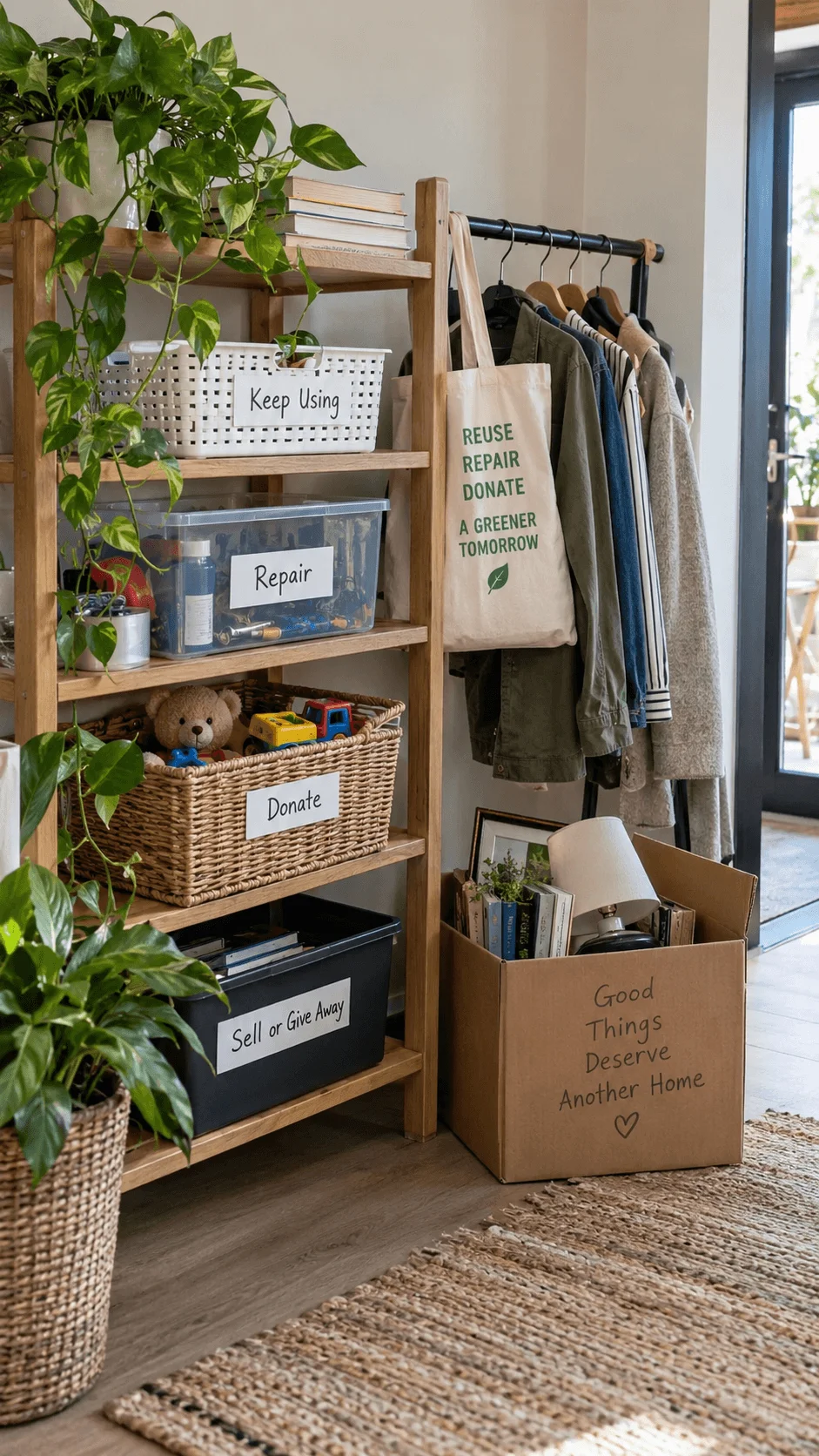
This approach supports the circular economy by keeping products and materials useful for longer.
It also changes the purpose of the household waste station. Instead of asking only, “Which bin does this go into?” people begin asking, “Does this need to become waste yet?”
That question can prevent waste before sorting even begins.
How Smart Waste Sorting Could Change Beyond 2026
Technology could make household sorting increasingly personalized. AI recognition may improve its ability to distinguish packaging and materials. Smart containers could eventually help identify common waste, while digital product information could provide more precise disposal guidance.
Connecting these tools with local databases could make the biggest difference. Identifying a material has limited value if the system cannot explain what a particular municipality accepts.
Households could also gain better information about what they discard most frequently. Instead of simply seeing a full trash bin, people could understand which categories contribute most to their waste and decide where prevention might work.
Some of these technologies remain emerging rather than universally available. Households do not need to wait for advanced smart bins to improve their habits today.
The most useful technology will make responsible decisions simpler, faster, and more accurate.
Conclusion
Eco friendly waste sorting and disposal in 2026 involves much more than putting bottles into a recycling container. A stronger household system considers the entire journey of an object, beginning with whether people need to discard it at all.
Reuse, repair, donation, food waste separation, composting where appropriate, recycling, special waste collection, and residual disposal can each play different roles. Smart technology adds another layer by helping households identify confusing materials and access better information.
However, expensive technology does not determine whether a system succeeds. Clear containers, sensible placement, accurate local information, and consistent household habits can make a major difference.
The most effective eco friendly waste sorting and disposal system is one that people can realistically follow every day. It should fit the home rather than making daily routines unnecessarily complicated. It should also adapt to local recycling infrastructure instead of assuming that one universal sorting method works everywhere.
Start by looking inside the general waste bin. Identify one material that appears frequently and ask whether you could reduce it, reuse it, repair it, donate it, compost it, recycle it, separate it, or handle it through a more appropriate collection route. Improving one waste stream at a time can gradually create a simpler and more responsible household system.