12 Eco Friendly Garden Ideas With Plants for 2026
Creating a greener outdoor space starts with thoughtful planting, and these eco friendly garden ideas with plants focus on making gardens more resilient, attractive, useful, and supportive of nature. In 2026, sustainable gardening continues to move beyond simple advice about using less water or avoiding chemicals. Gardeners are paying more attention to plant communities, local growing conditions, climate resilience, native species, living groundcovers, wildlife habitat, and planting designs that can adapt over time.
Plants influence far more than the appearance of a garden. Their roots help cover and stabilize soil, flowers can support pollinating insects, dense vegetation creates shelter, edible species can produce food, and suitable groundcovers can reduce the need for large areas of conventional lawn. The most successful eco friendly garden ideas with plants work with the conditions already present in a garden rather than constantly trying to change those conditions.
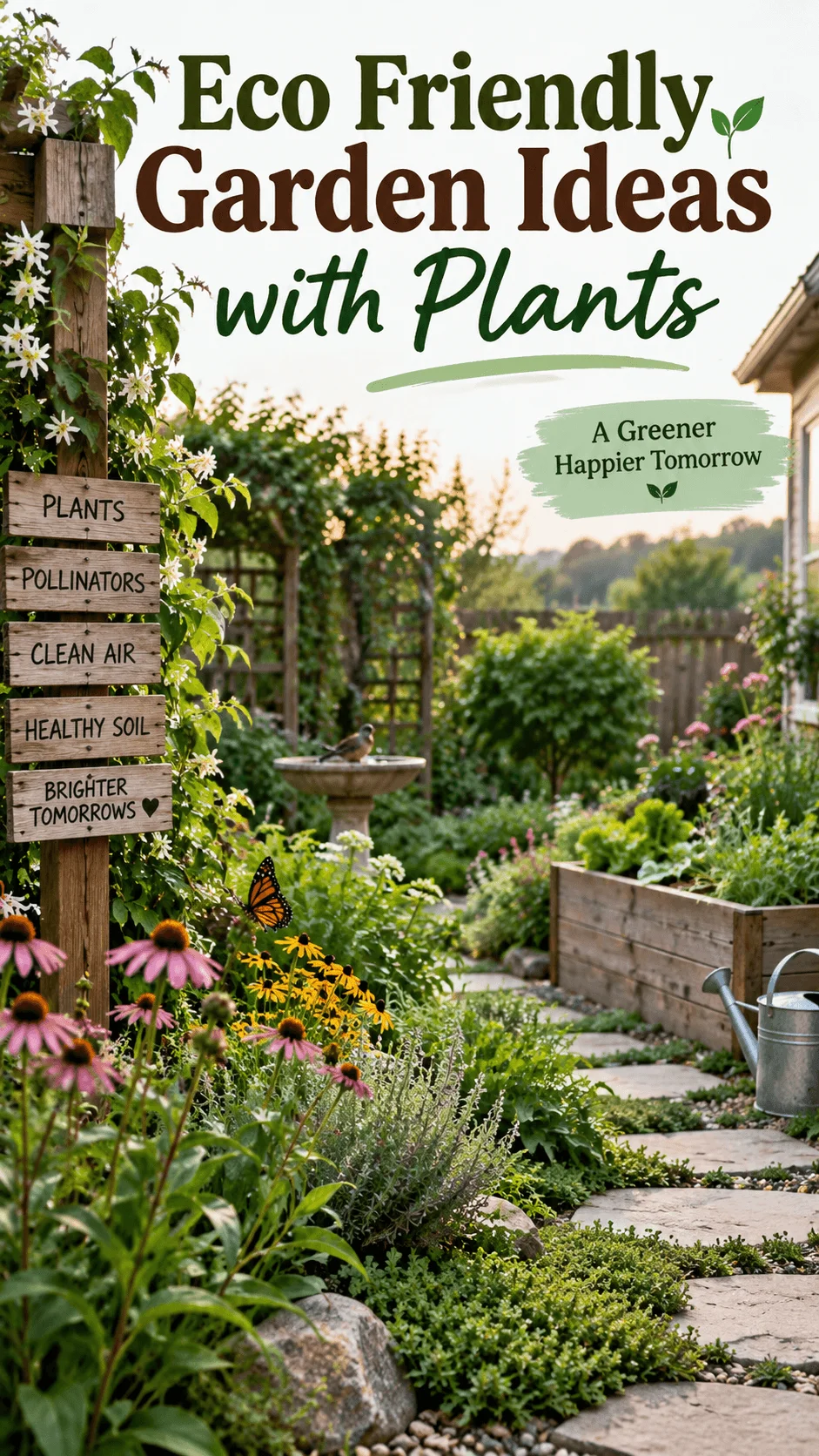
A sustainable garden also does not need to look wild or unfinished. Careful repetition, thoughtful plant combinations, different foliage textures, seasonal flowers, and clear pathways can create a garden that feels intentional while still providing ecological value. The following ideas combine emerging garden trends with practical ways to make plants the foundation of a more sustainable landscape.
1. Create a Keystone Native Plant Garden
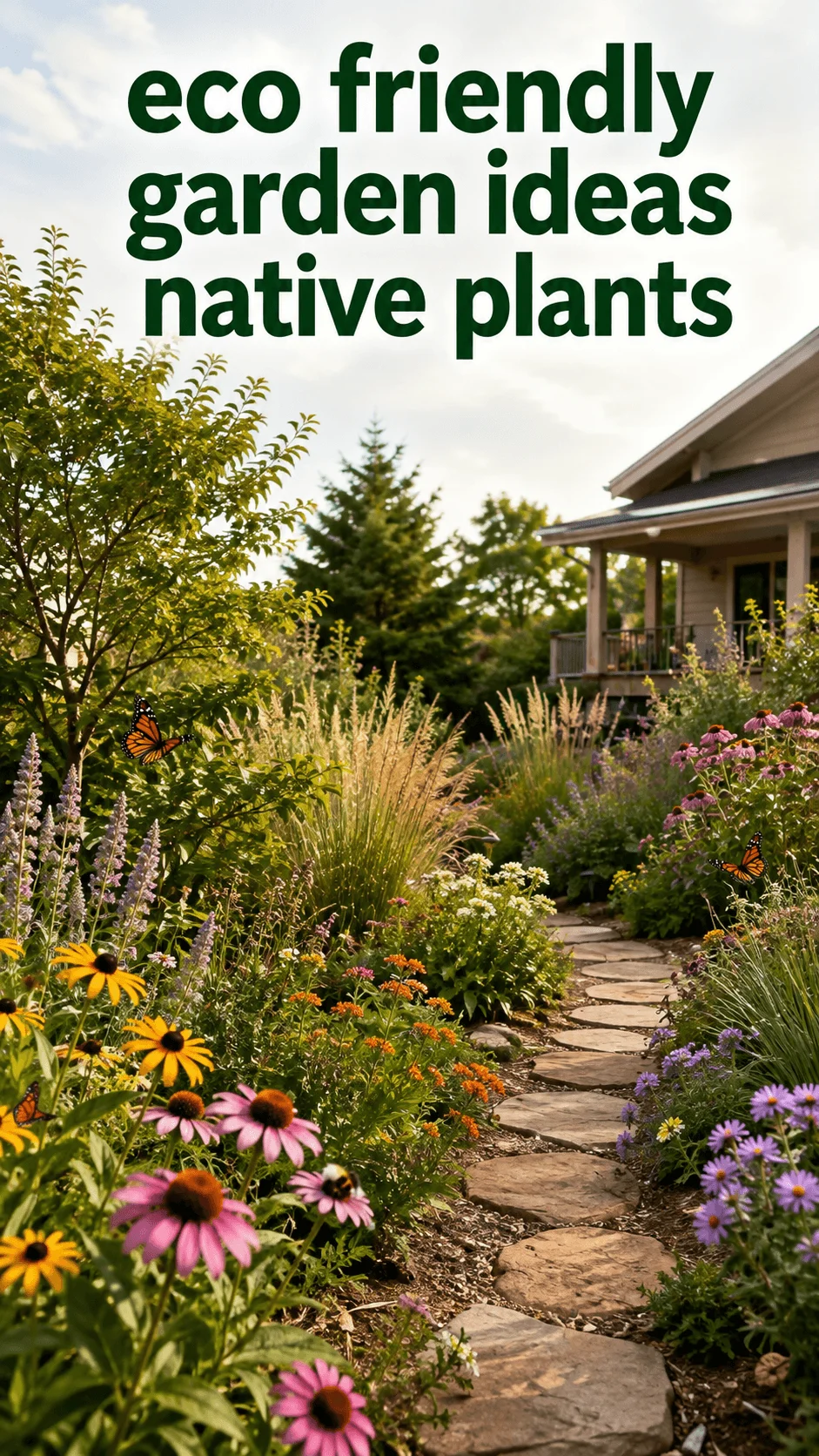
One of the most interesting native plant ideas for 2026 involves building a garden around keystone plants. These plants can play an especially important role within a local ecosystem because many insects, birds, and other organisms depend on them directly or indirectly.
A keystone garden goes further than simply buying several plants labeled as native. The goal is to identify species that have particular ecological importance in your region and then build a wider planting design around them.
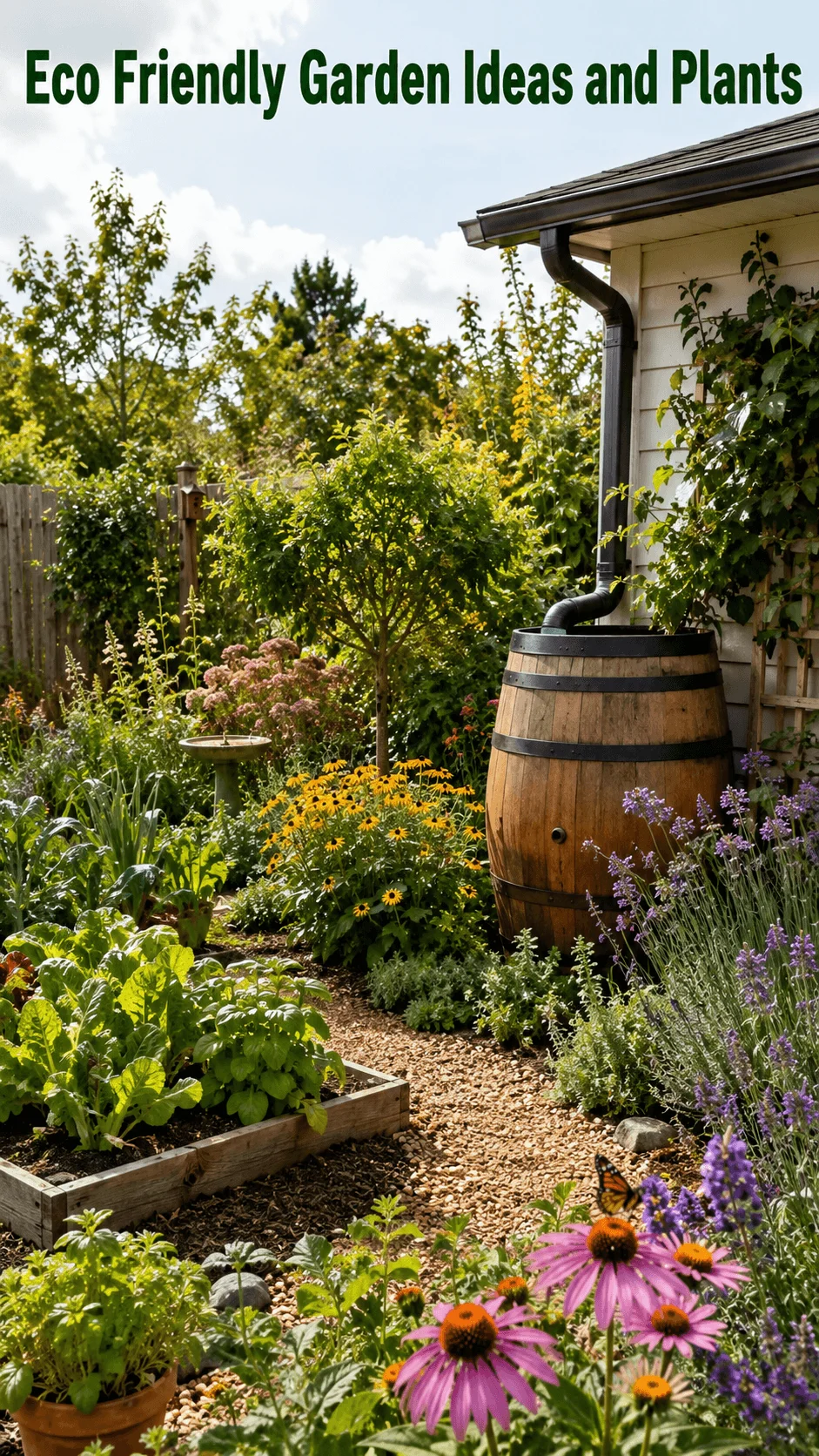
Because native status and ecological relationships vary by location, gardeners should research plants that naturally occur in their own region. Local native plant organizations, botanical gardens, extension services, and conservation groups can provide useful guidance.
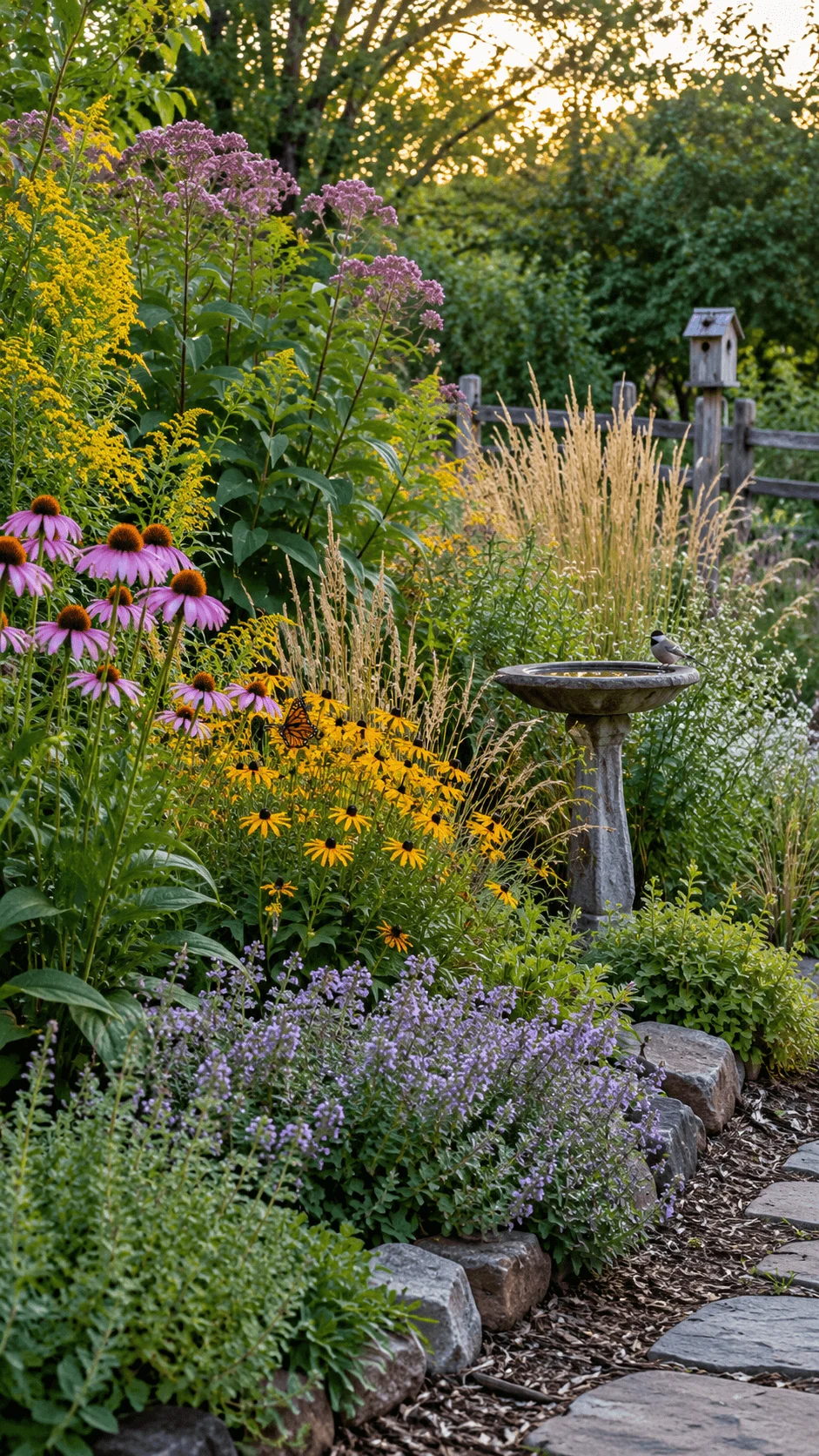
Design still matters. A sustainable native garden can include taller structural plants at the back, flowering perennials through the middle, and lower growing plants around the edges. Repeating a few important species can make the garden look more organized while still supporting biodiversity.
Seasonal change can also become part of the design. Flowers may dominate during spring and summer, while seed heads, foliage, grasses, and plant structure can maintain interest later in the year. Among modern eco friendly garden ideas with plants, this approach stands out because it connects garden design directly with local ecology.
2. Replace Traditional Grass With Tapestry Lawn Plants
Traditional grass lawns can require frequent mowing, watering, feeding, and maintenance. A tapestry lawn offers a more varied approach by combining several compatible low growing plants into a living carpet.
Instead of creating a surface made from one species, gardeners can combine flowering groundcovers, low growing herbs, sedges, and locally appropriate plants. The result can look like a soft patchwork of different leaf shapes, shades of green, and seasonal flowers.
The best tapestry lawn depends heavily on the site. A sunny, dry garden needs different plants from a shaded garden with heavier soil. Gardeners should consider drainage, moisture, mature spread, and how aggressively each species grows before mixing several plants together.
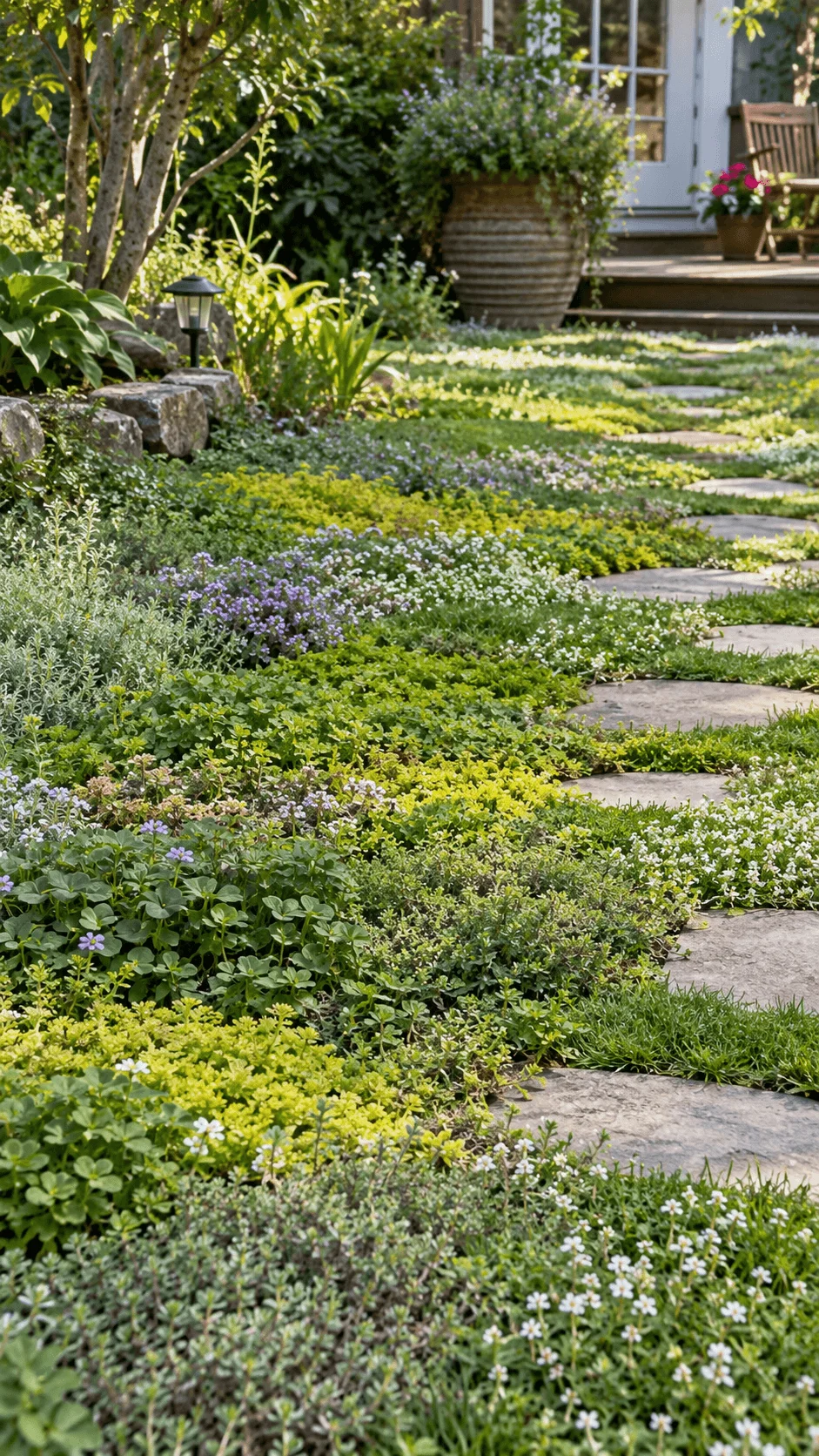
Foot traffic also matters. Some low growing plants tolerate occasional walking while others can become damaged. A practical design can include stepping stones through frequently used areas while allowing plants to fill the spaces around them.
Tapestry lawns work particularly well when gardeners want a more natural appearance without abandoning the open feeling of a lawn. They also create an opportunity to introduce more plant diversity into an area that would otherwise contain only grass.
3. Grow Climate Resilient Garden Plants You Can Eat
Climate resilience has become an increasingly important part of sustainable garden planning. Instead of choosing edible plants only because they are popular, gardeners can select crops that suit local temperatures, rainfall patterns, soil, and growing seasons.
Climate resilient edible planting does not mean searching for one crop that survives every extreme. It means selecting plants that match the conditions you actually experience.
In hot and dry areas, gardeners may focus on edible plants that cope better with heat and shorter periods of water stress. In regions with heavy seasonal rain, good drainage and plants that handle moisture may matter more. Local climate should guide the planting plan.
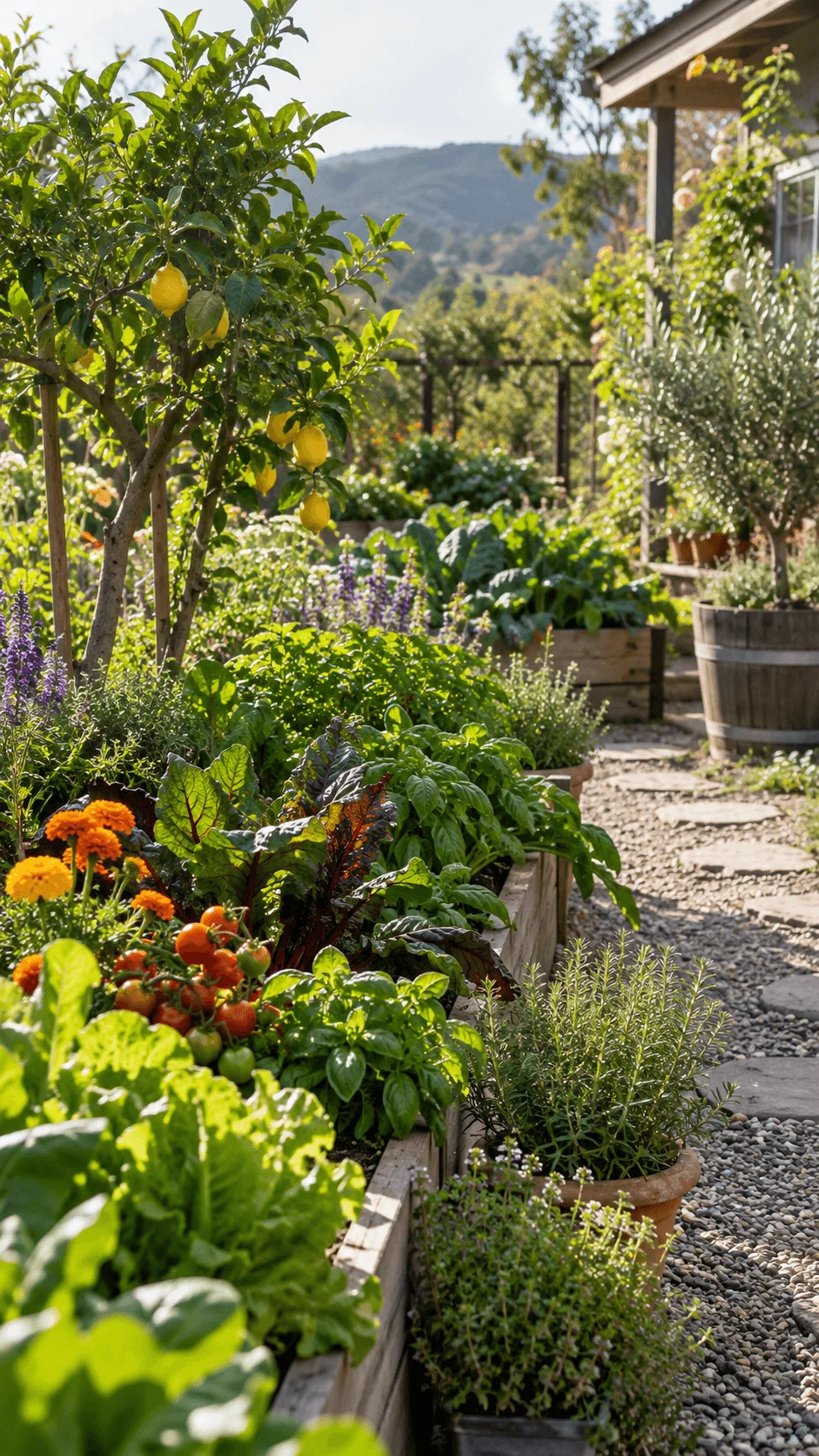
Edible plants can also become part of ornamental landscapes. Herbs can soften path edges. Fruiting shrubs can add structure. Edible flowers can bring seasonal color. Compact fruit trees can create height while producing food.
This approach makes eco friendly garden ideas with plants more practical because the garden can provide both visual interest and something useful to harvest. Gardeners should still consider mature plant size, sunlight, soil fertility, access for harvesting, and the amount of maintenance each crop requires.
4. Create a Pollinator Pathway With Flowering Plants
A pollinator garden does not need to exist as one isolated flower bed. A more connected approach uses several planted areas across a property to create a pathway of flowers, shelter, and habitat.
A front border might contain early flowering plants, while containers near a patio provide flowers later in the season. Groundcovers can fill smaller spaces, and backyard beds can continue the sequence. Together, these areas create a more connected planting system.
Flowering time deserves careful planning. If every plant blooms during the same month, the garden may provide abundant flowers briefly and very little for the rest of the growing season. Combining early, middle, and late flowering species creates longer seasonal interest.
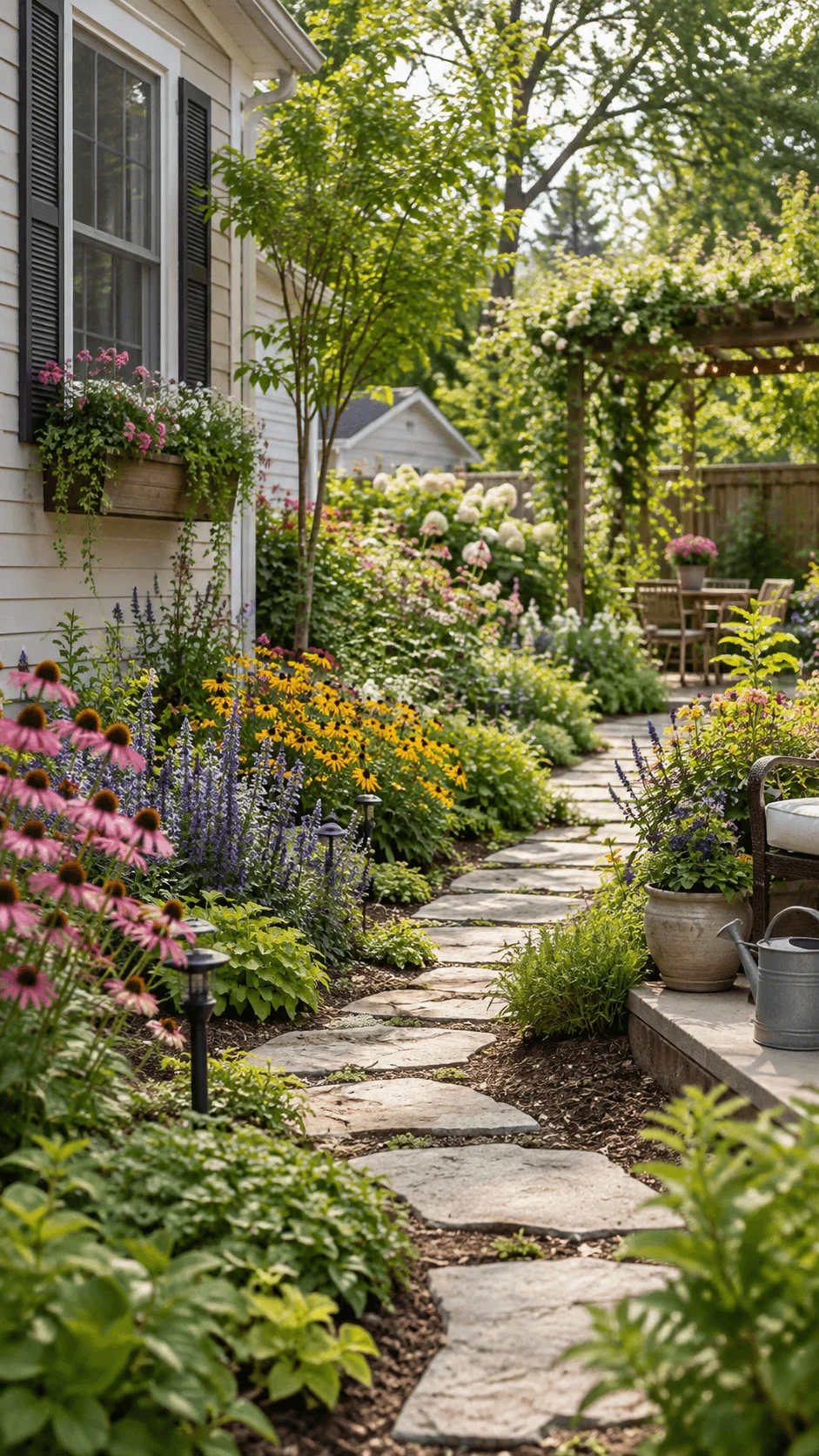
Different flower forms can also add diversity. Instead of filling the garden with one type of flower, combine plants with different shapes, heights, and structures where local conditions allow.
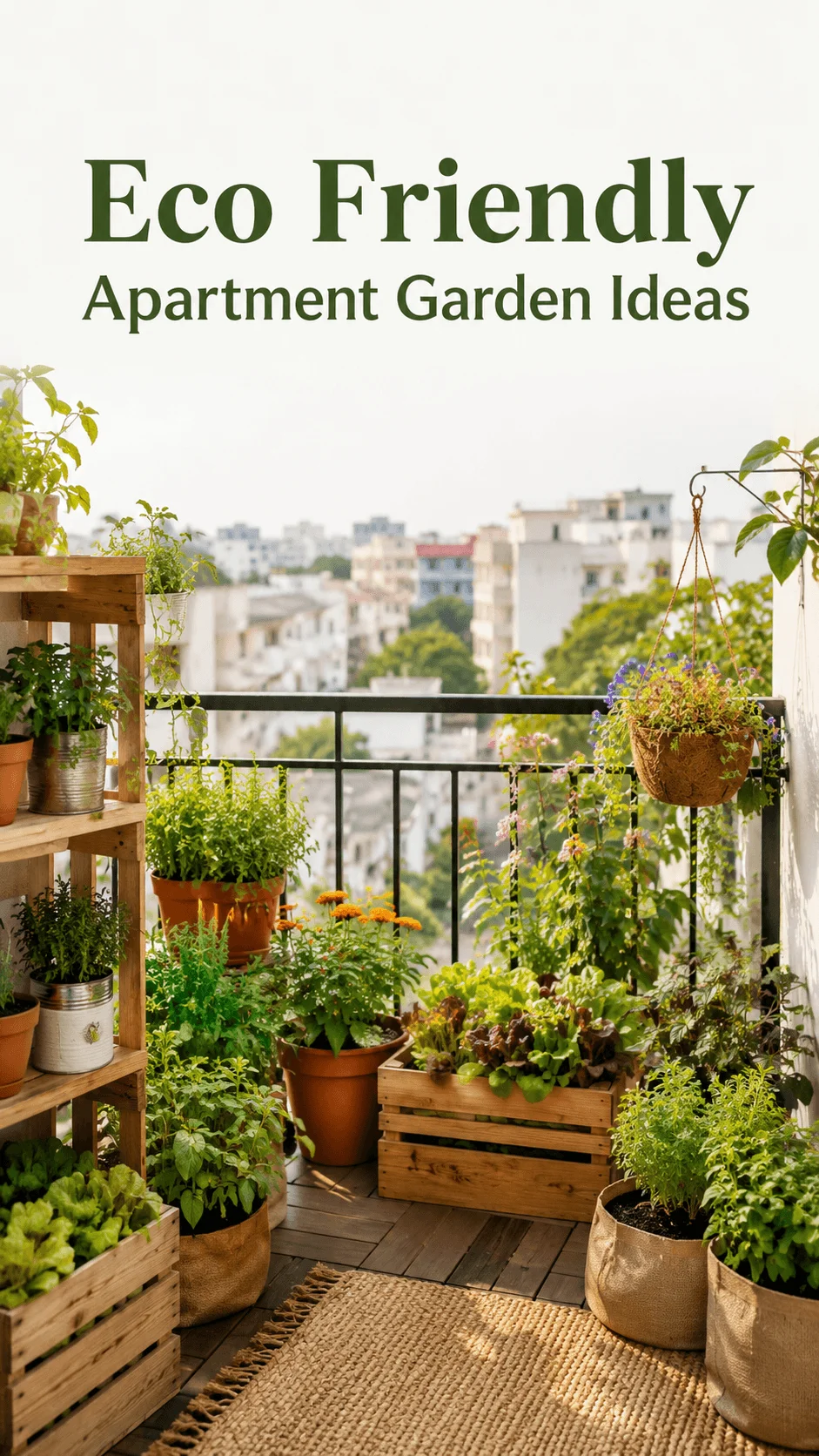
Small gardens can participate too. A balcony, courtyard, narrow side garden, or collection of containers can form useful planted stepping points. This makes pollinator pathways one of the most adaptable eco friendly garden ideas with plants for urban and suburban spaces.
5. Design a Green Drenched Foliage Garden
Flowers often receive most of the attention in garden design, but foliage can create an equally powerful landscape. A green drenched garden focuses on layers of green using different leaf shapes, textures, heights, and shades.
Broad leaves can sit beside fine grasses. Glossy foliage can contrast with soft, matte leaves. Light green plants can brighten darker corners, while deeper greens can create depth and structure.
The result does not need to look monochromatic or plain. Texture becomes the main source of visual interest. Ferns, grasses, shrubs, groundcovers, and perennial foliage plants can create a rich garden even when relatively few flowers appear.
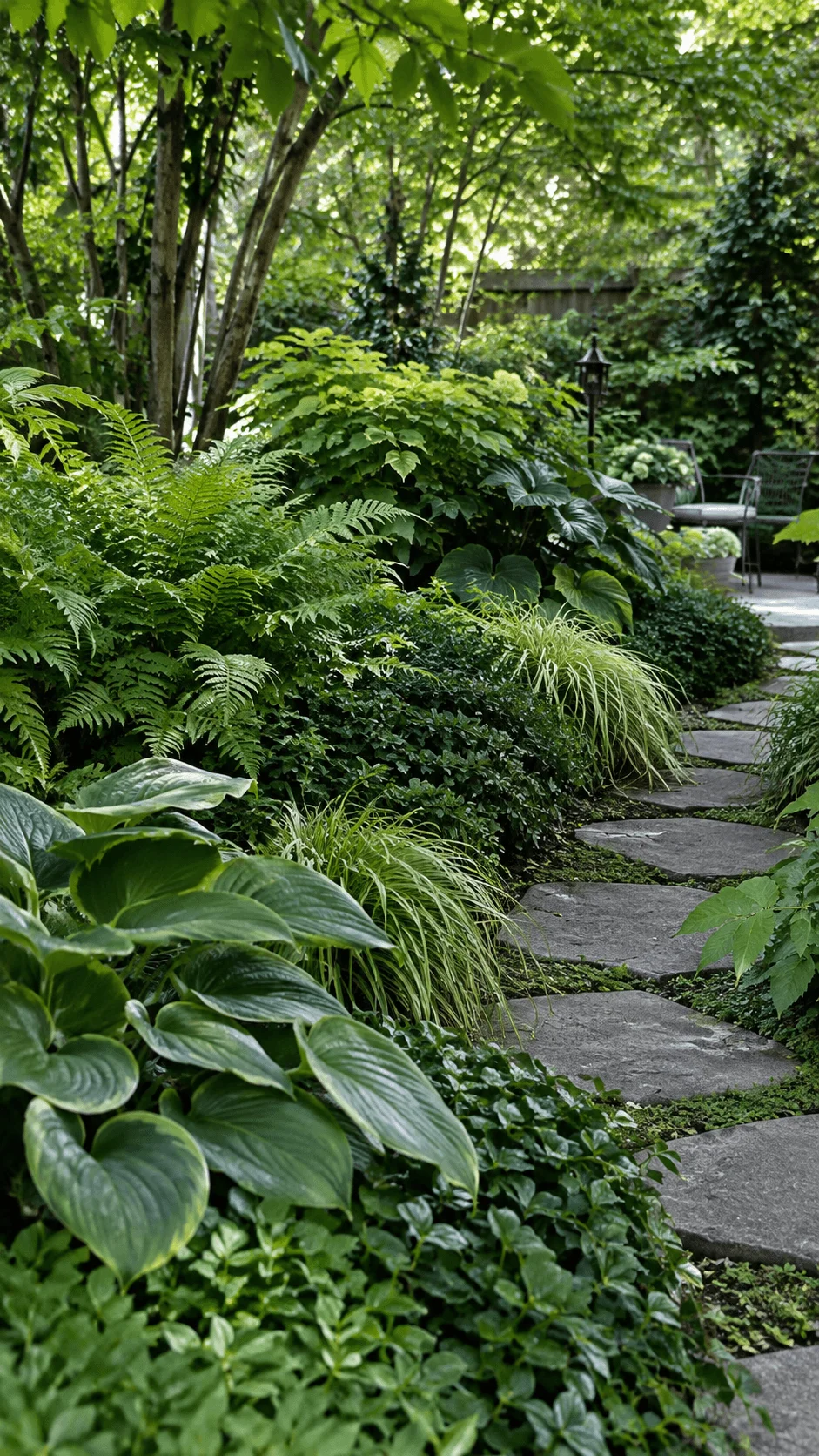
This approach can work especially well in shaded areas where dramatic flowering displays may be harder to maintain. It can also provide a calmer visual style for people who prefer natural, layered planting.
Choosing perennial and climate appropriate species can make the design more sustainable over time. Instead of rebuilding large seasonal displays every year, gardeners can develop a framework that matures gradually.
6. Build a Climate Resilient Native Plant Matrix
A plant matrix arranges compatible species so they grow together as a community rather than standing as isolated plants surrounded by bare soil.
Lower growing plants can form the base layer. Grasses and flowering perennials can rise through that layer, while taller plants create occasional accents. The goal is to produce a connected planting pattern with enough repetition to look intentional.
This type of design works particularly well with eco friendly garden ideas with plants because it treats the garden as a community rather than a collection of separate specimens.
Spacing requires patience. Young plants may initially leave visible gaps, but gardeners should consider how large each species will become at maturity. Planting everything too closely can create excessive competition later.
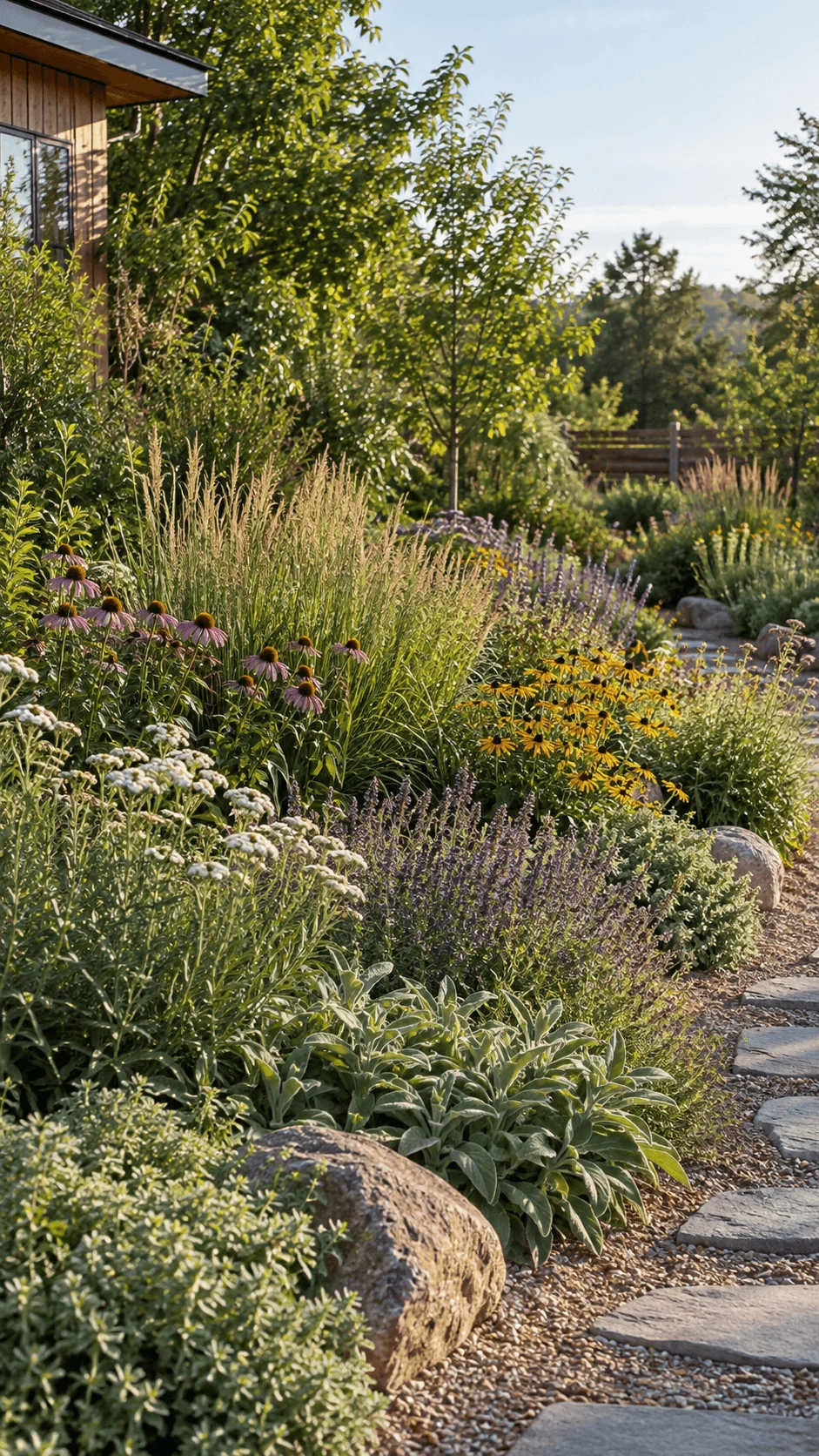
Plant compatibility also matters. Species that share similar sunlight, soil, and moisture preferences usually work better together. A drought tolerant plant may struggle beside another species that needs constantly moist soil.
Over time, a well designed matrix can change throughout the seasons. Flowers appear and disappear, grasses move in the wind, foliage shifts in color, and seed heads create interest after flowering ends.
7. Plant an Eco Friendly Rain Garden
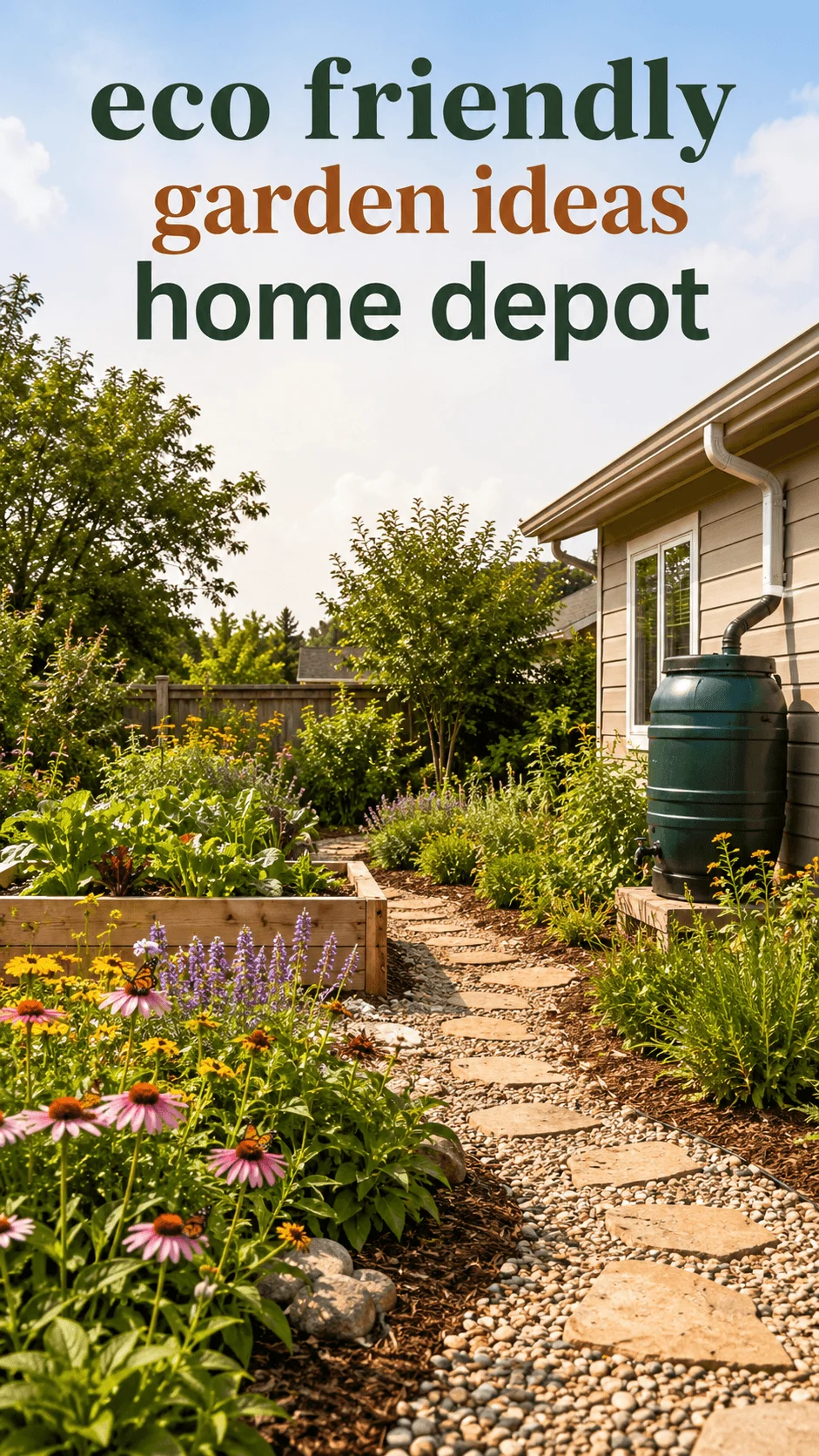
A rain garden can do much more than collect runoff. With thoughtful plant selection, it can become an attractive garden feature that changes with rainfall and the seasons.
Rain garden conditions can be unusual. Some areas may become temporarily wet after storms but dry significantly between rainfall events. Plants therefore need to suit the moisture patterns of the specific site.
Gardeners can create layers using grasses, flowering perennials, and lower growing plants. Taller species can create structure while smaller plants soften the edges.
The shape of the rain garden should relate naturally to the surrounding landscape. Curved planting areas often blend more easily with existing beds, while repeated plant groups can stop the feature from looking random.
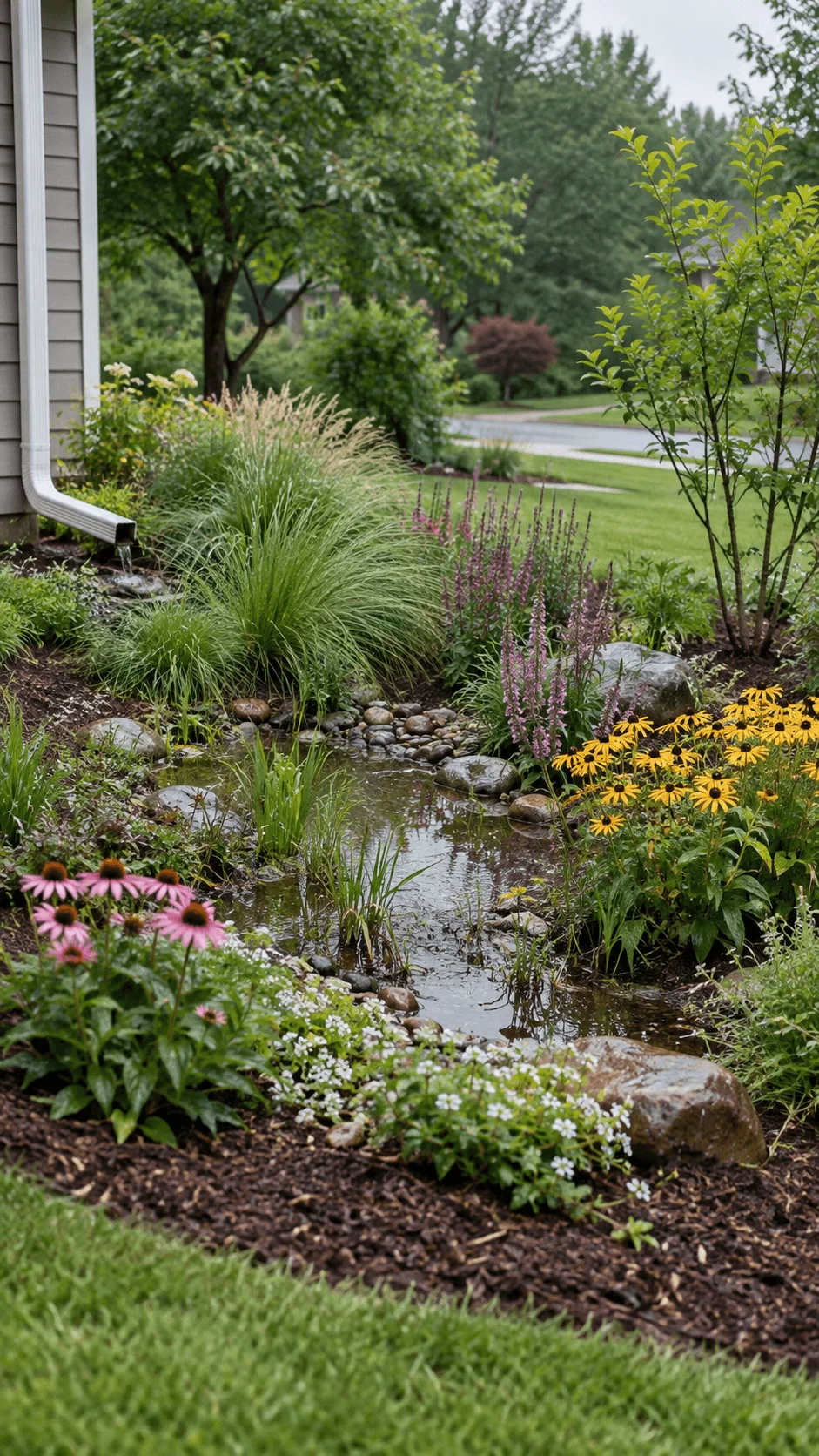
Soil and drainage require careful consideration. A rain garden should manage water without creating long lasting standing water where the site cannot support it.
Among practical eco friendly garden ideas with plants, rain gardens show how plants can contribute directly to landscape function while still creating an attractive focal point.
8. Grow a Foraging Foliage Garden
Edible landscaping brings productive plants into the ornamental garden rather than separating them into a hidden vegetable patch.
Herbs can grow along paths and near seating areas. Berry producing shrubs can become part of mixed borders. Edible flowers can sit among ornamental perennials. Compact fruit trees can provide vertical structure where space allows.
A successful foraging garden considers appearance as well as harvest. Leaf color, plant shape, flowers, fruit, mature height, and seasonal change can all contribute to the design.
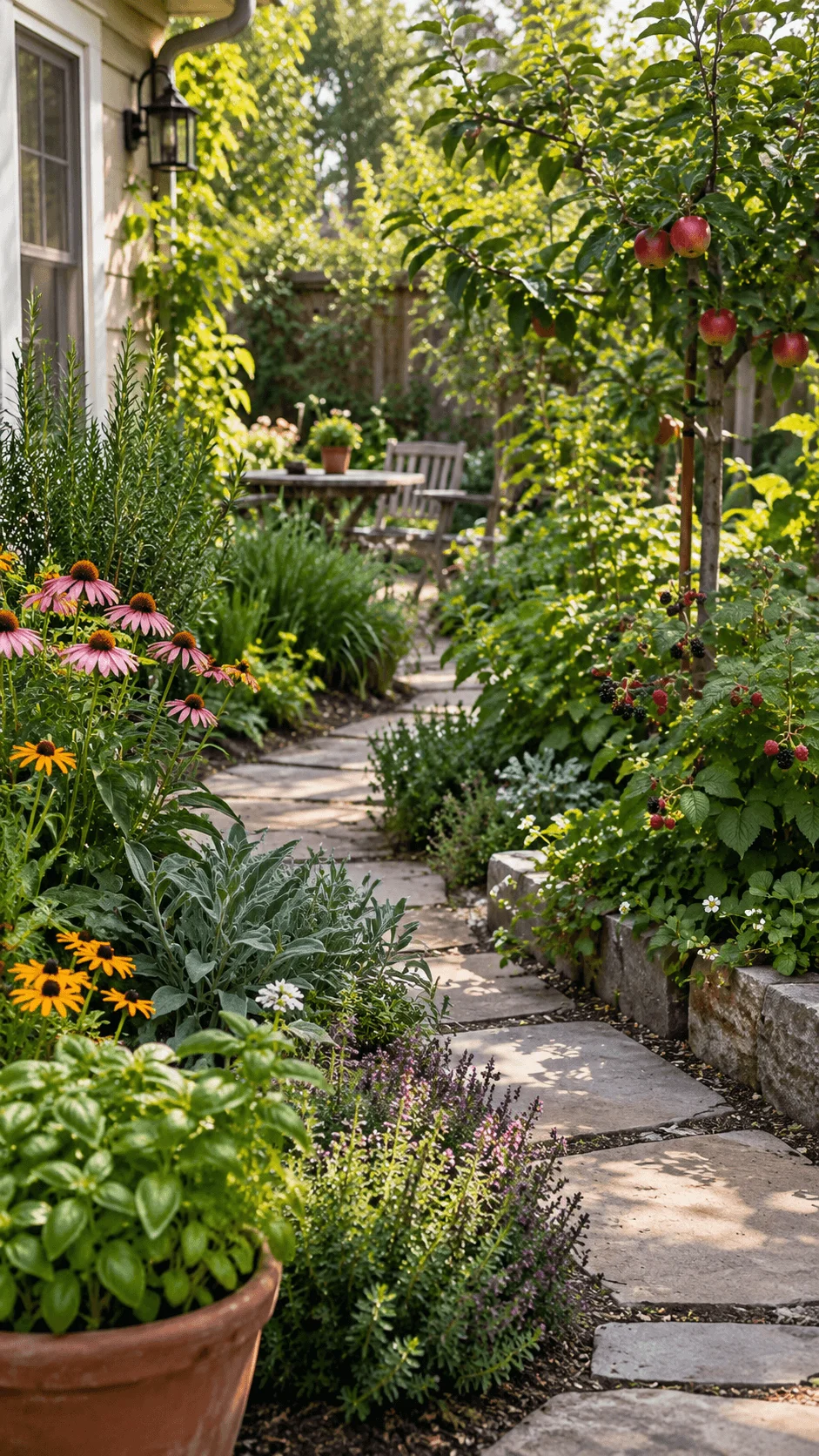
Placement matters too. Herbs that gardeners use frequently make more sense near the kitchen or patio. Larger fruiting plants can occupy areas where they have room to mature.
Gardeners should also consider access. Fruit or herbs become less useful when surrounding vegetation makes harvesting difficult.
This idea works especially well for people who want their garden to perform several roles. The same landscape can provide food, flowers, foliage, structure, and habitat.
9. Create a Crevice Garden With Low Water Plants
Crevice gardens bring a distinctive architectural character to sustainable landscapes. Rocks or stones create narrow planting spaces where compact species can grow between the gaps.
The design differs from a conventional rock garden because the narrow spaces form part of the visual structure. Small plants appear to emerge from cracks between larger stones.
Drainage plays an important role. Many plants suited to crevice style gardens prefer conditions where excess water can move away from the roots.
Gardeners should choose species according to climate rather than assuming every succulent or alpine plant will work everywhere. Local heat, winter temperatures, rainfall, soil, and sunlight all influence success.
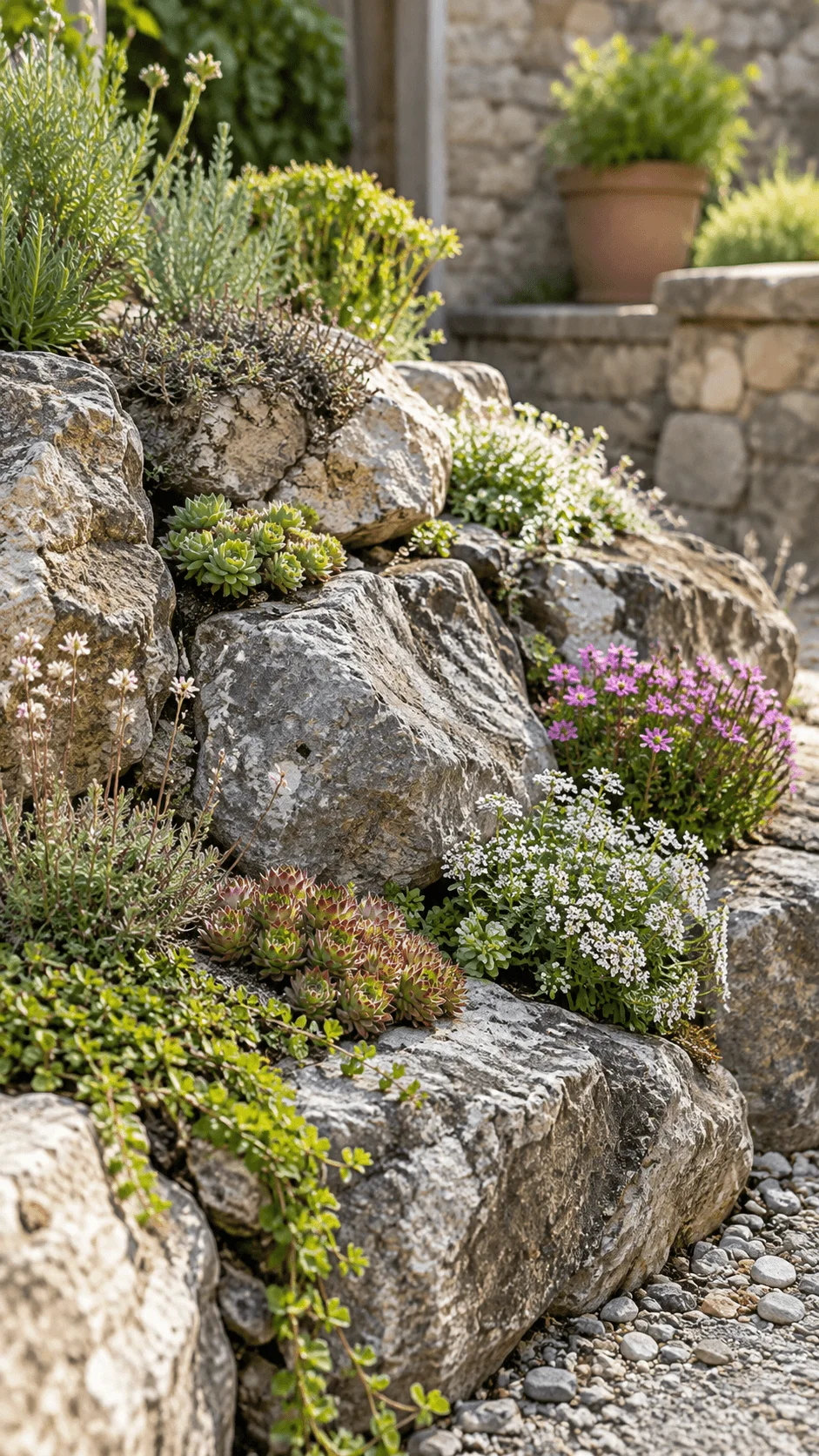
Crevice planting can fit into courtyards, slopes, sunny borders, small gardens, and areas where a large planting bed would feel excessive.
This is one of the more visually distinctive eco friendly garden ideas with plants because the plants and stonework work together as a single composition.
10. Choose Pollinator Friendly Plants for Continuous Blooms
A garden can look spectacular for a few weeks and empty for the rest of the year if gardeners choose plants without considering flowering periods.
Continuous seasonal bloom planning avoids that problem by combining plants that flower at different times.
Early flowering species begin the sequence. Middle season plants continue the display. Later flowering species extend garden color toward the end of the growing season.
The idea works best when gardeners also consider flower shape, plant height, foliage, and mature spread. A continuous bloom garden should still look cohesive when several plants are not flowering.
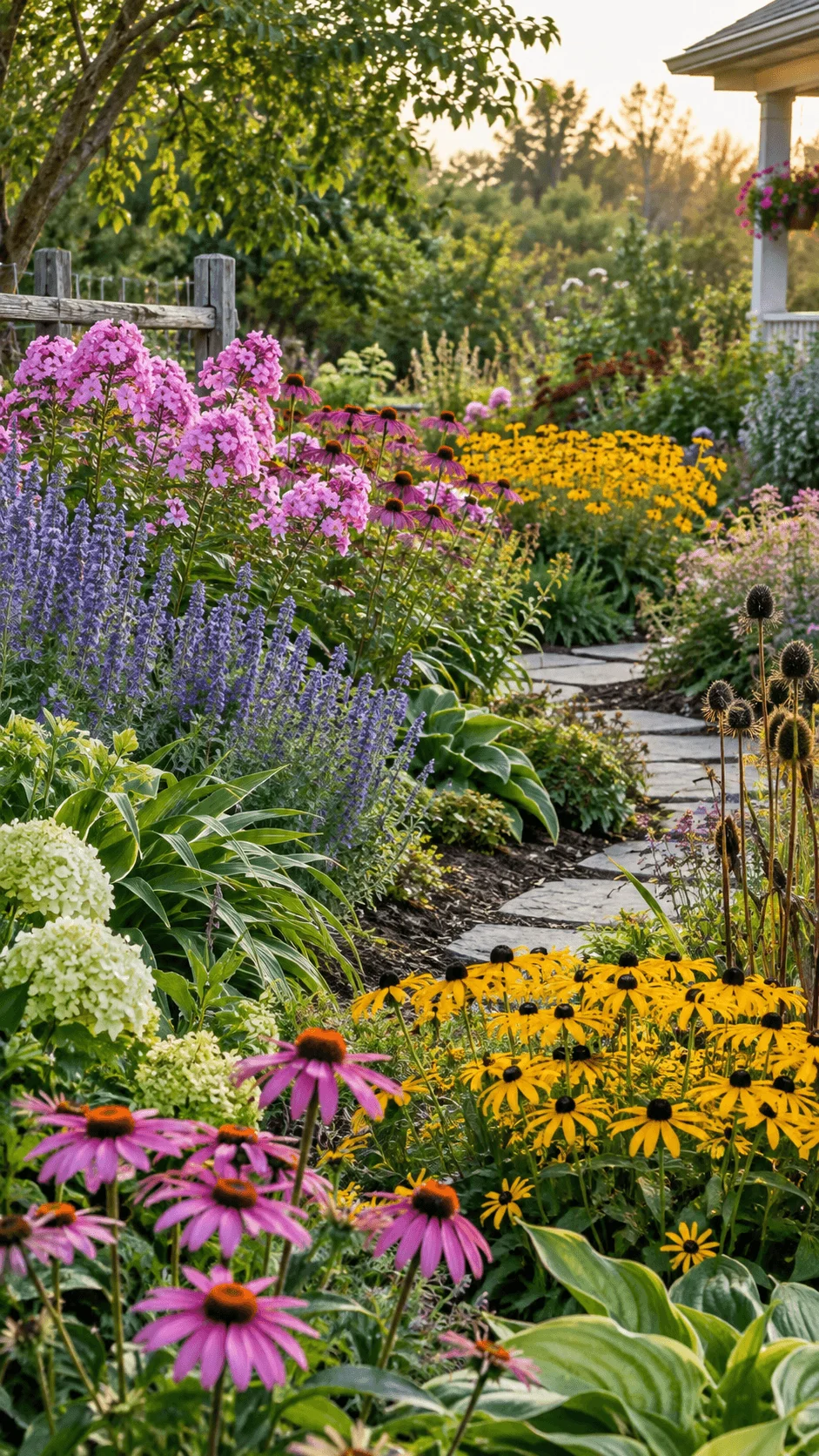
Seasonal interest can continue after flowers disappear. Seed heads, grasses, foliage, stems, and plant structure can all contribute to the landscape.
Creating a simple flowering calendar can help gardeners identify gaps. They can then search for locally appropriate plants that bloom during those quieter periods.
11. Replace Bare Soil With Eco Friendly Groundcover Plants
Bare soil often appears beneath shrubs, around trees, along slopes, and between larger perennials. Living groundcovers can turn those empty spaces into another layer of the garden.
Groundcover plants vary widely. Some prefer full sun and dry conditions. Others perform better in partial shade or moisture retaining soil.
Gardeners should select species that match the specific site rather than using the same plant throughout the entire property.
Growth habit also deserves attention. A groundcover that spreads quickly may work well on a large slope but become difficult to manage in a small border.
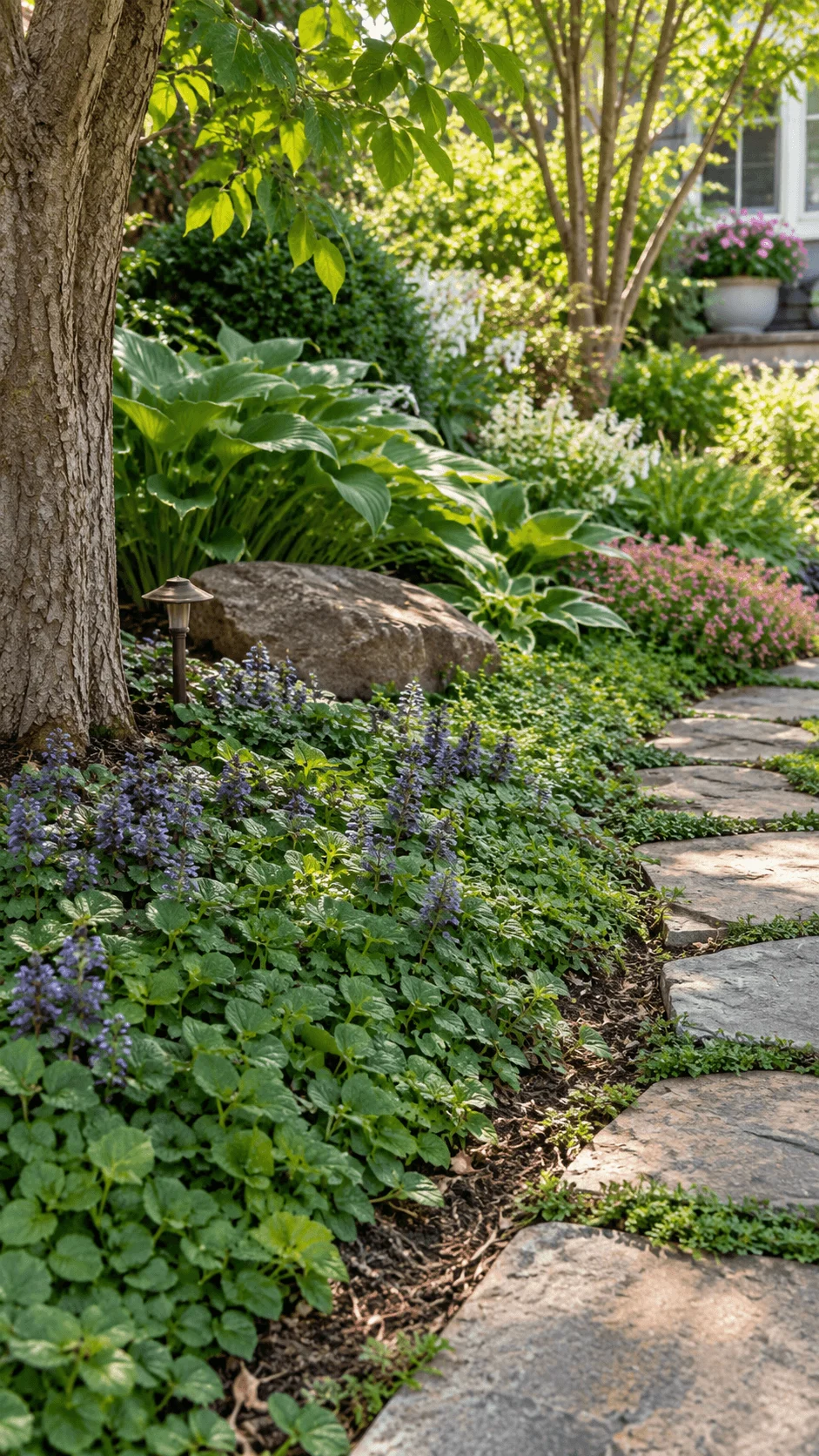
Combining compatible groundcovers can create more visual variety. Different foliage textures, flowers, and growth patterns can make the planting look more natural.
These eco friendly garden ideas with plants can also connect separate parts of a landscape. Groundcovers around shrubs, beneath taller perennials, and beside pathways can create a continuous planted appearance instead of isolated beds surrounded by exposed soil.
12. Build a Wildlife Habitat With Garden Plants
Wildlife friendly gardening often focuses on accessories such as feeders and artificial shelters, but vegetation itself can provide much of the structure that wildlife needs.
A plant based habitat can include flowering perennials, seed producing plants, grasses, berry producing shrubs, dense foliage, groundcovers, climbers, and trees where space permits.
Vertical layers increase variety. Ground level vegetation creates one environment, flowering plants provide another, shrubs add shelter and structure, and taller plants or trees create additional habitat.
Seasonal thinking matters as much as summer flowers. Berries, seed heads, stems, dense foliage, and persistent plant structure can remain useful after flowering ends.
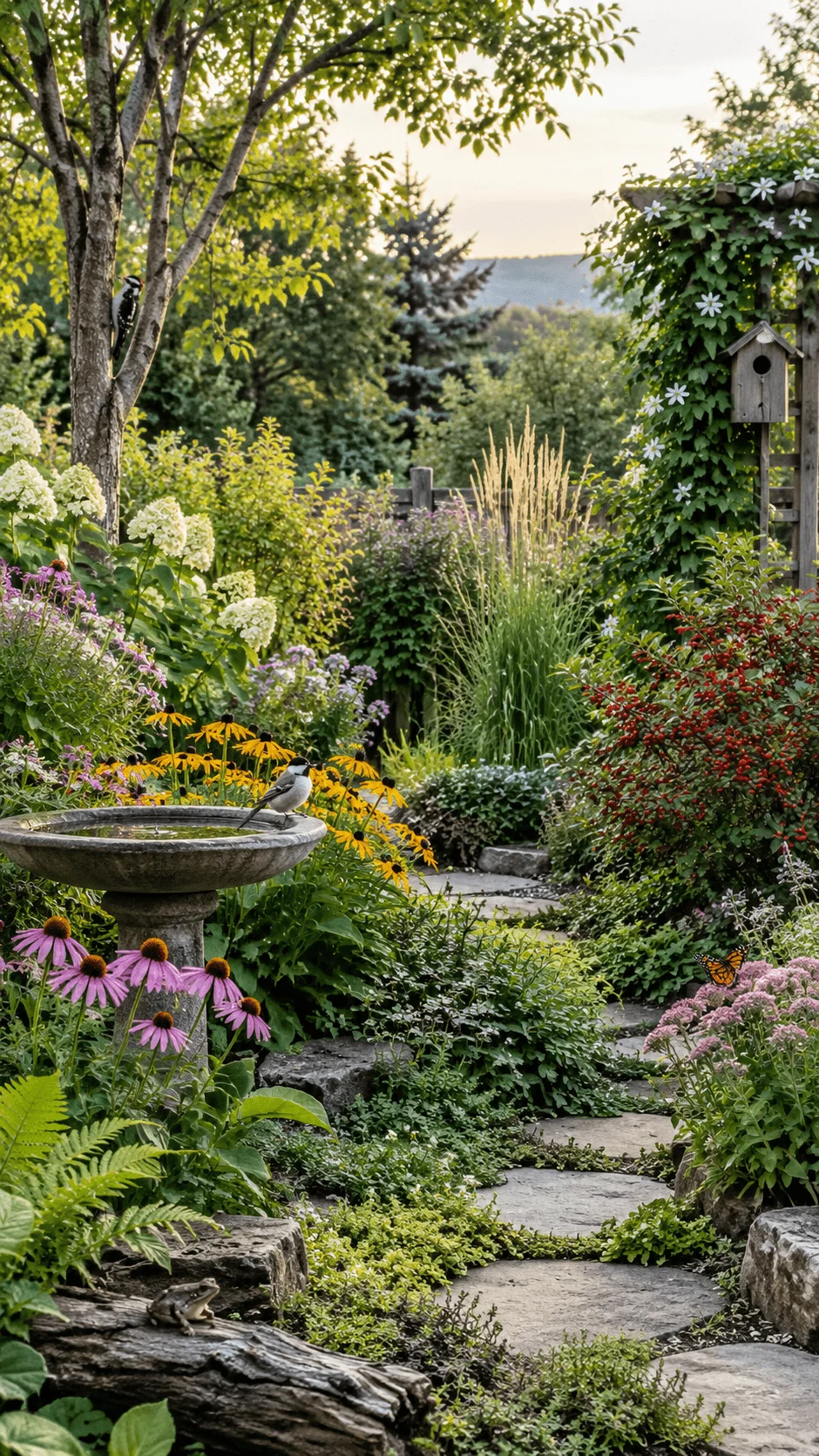
Gardeners do not need to make the entire property wild. Clear paths, defined edges, repeated plants, and carefully placed shrubs can create an organized garden while still supporting more plant diversity.
This idea brings many of the previous concepts together. A wildlife focused garden can include native plants, seasonal flowers, living groundcovers, layered planting, and climate appropriate species within one connected landscape.
How to Choose Sustainable Garden Plants for Your Space
The success of eco friendly garden ideas with plants depends less on following trends and more on matching plants to the conditions of the property.
Start by observing sunlight. Some sections may receive full sun throughout most of the day, while fences, buildings, and trees can create partial or deep shade elsewhere.
Next, consider moisture and drainage. One corner may stay damp after rainfall while a raised or exposed area dries quickly. Plants that suit those conditions usually need less intervention than plants that constantly struggle against them.
Soil also influences plant performance. Texture, fertility, drainage, and organic matter can vary even within the same property.
Available space matters just as much. Small plants at the garden center can mature into large shrubs or wide groundcovers. Understanding mature size can prevent overcrowding and reduce future maintenance.
Native range deserves attention when choosing plants for ecological value. A species that supports wildlife in one region may not provide the same role elsewhere. In some places, a plant that gardeners value ornamentally may even become invasive.
Maintenance expectations should also shape the design. Some gardeners enjoy frequent pruning, dividing, and seasonal care. Others want plants that can establish and require relatively limited attention.
You do not need to use all of these eco friendly garden ideas with plants at once. A small garden might begin with living groundcovers and a pollinator pathway. A larger property might combine native matrix planting, edible landscaping, and a rain garden. Gradual changes can often create a more thoughtful result than redesigning everything in a single season.
Conclusion
The best eco friendly garden ideas with plants treat vegetation as the foundation of sustainable garden design rather than as decoration added at the end. Keystone native plants can strengthen ecological relationships, tapestry lawns can introduce more diversity, climate resilient edible plants can combine beauty with food production, and pollinator pathways can connect different planted areas.
Green drenched foliage gardens, native plant matrices, crevice gardens, living groundcovers, and wildlife focused planting also show how different styles can support the same broader goal. Sustainable gardening does not require every garden to look identical.
The most successful approach starts with local conditions. Consider climate, sunlight, soil, moisture, available space, mature plant size, maintenance, and ecological function before selecting species.
By choosing the right eco friendly garden ideas with plants for your own space, you can create a garden that feels attractive and intentional while becoming more resilient, diverse, and useful over time. A thoughtful planting plan allows the landscape to change naturally through the seasons while continuing to serve both the people who use it and the wider environment.