12 Eco Friendly Waste Sorting Bin Ideas for a Smarter Home in 2026
An eco friendly waste sorting bin can make everyday household waste easier to separate before it reaches the wrong disposal stream. In 2026, this idea extends far beyond placing one recycling container beside an ordinary trash can. Modern households can use modular compartments, visual guidance, dedicated food waste containers, QR codes, smartphone tools, sensors, and even emerging artificial intelligence to create a smarter sorting routine. The most useful system does not simply look sustainable. It makes correct sorting convenient enough to become part of normal daily life.
Household waste can become surprisingly complicated. A typical home may deal with food scraps, cardboard, paper, glass, cans, plastic packaging, batteries, cables, broken electronics, reusable objects, and residual waste. Putting everything into one or two containers often leaves household members unsure about where unusual items belong.
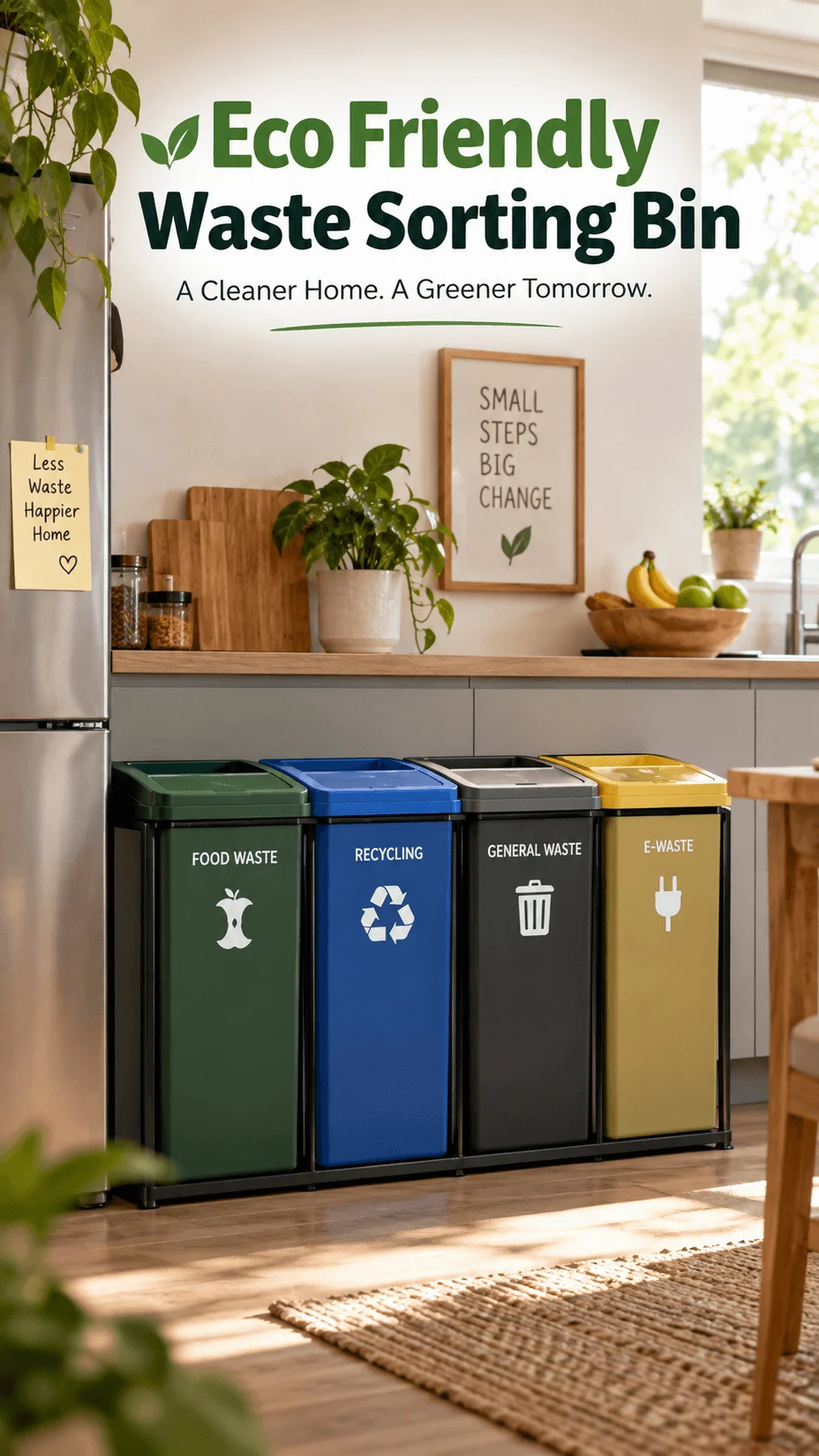
A well planned home waste sorting station can address that confusion. Good design considers where waste originates, how frequently each container fills, how easily people can understand the categories, and what local collection services actually accept. Durability and easy cleaning also matter. Instead of treating the bin as the final destination, it helps to view it as the first organized step in a larger waste management system.
1. Try an AI Assisted Eco Friendly Waste Sorting Bin
Artificial intelligence introduces one of the most interesting possibilities for household waste sorting in 2026. An AI assisted eco friendly waste sorting bin could use a camera and computer vision to recognize an object before suggesting an appropriate waste category.
This technology could prove particularly useful with confusing packaging. A simple cardboard box usually looks easy to identify, but modern packaging can combine paper, plastic film, foil, coatings, adhesives, and other materials. Someone may look at a package and have no idea whether it belongs in recycling or residual waste.
Computer vision can analyze visual characteristics and attempt to recognize the object or its likely material. More advanced systems could eventually combine this recognition with product information and local recycling databases.
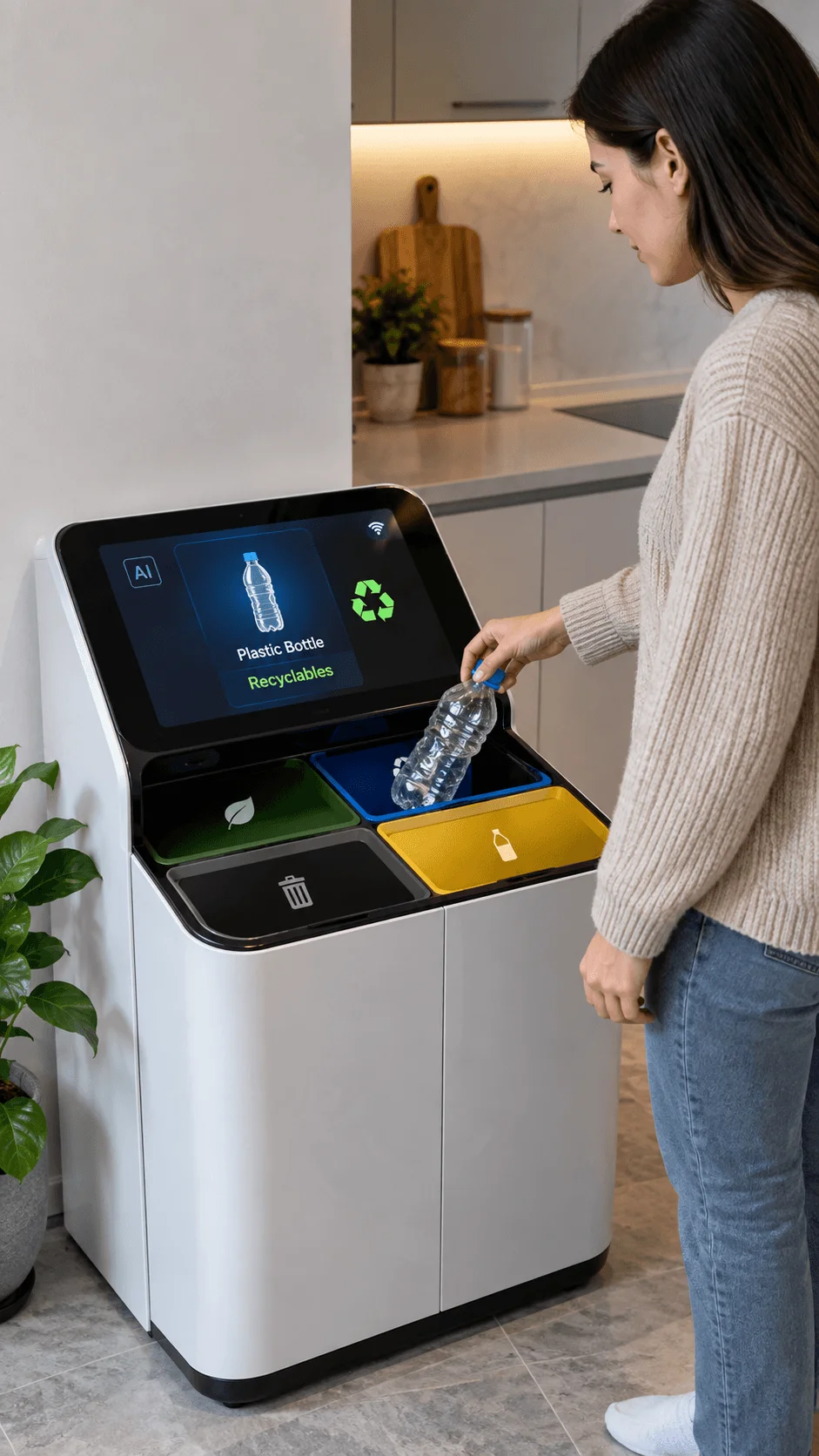
However, AI recognition does not solve every problem. Identifying an object as plastic does not mean a local collection program accepts that type of plastic. Recycling infrastructure differs between locations. An intelligent system therefore becomes much more useful when it connects identification with current local guidance.
Homeowners also do not need to rush out and replace functional bins with expensive technology. AI assisted sorting remains an emerging area for households. Its real value lies in reducing uncertainty, not in making a simple household task unnecessarily complicated.
2. Connect a Smart Waste Sorting Bin With a Smartphone
The smartphone in your pocket may provide a more practical route to smart waste sorting than placing expensive electronics inside every container.
A smart waste sorting bin for home could remain physically simple while a phone handles more complicated tasks. Someone who feels uncertain about an empty package could photograph it, identify the likely material, and then consult relevant disposal information.
A household app could also provide collection reminders and access to local sorting instructions. This approach separates two important jobs. Physical containers hold materials, while digital tools provide information.
That separation has practical advantages. Technology changes much faster than a durable container. A household may use the same bins for many years while updating the software that provides sorting guidance.
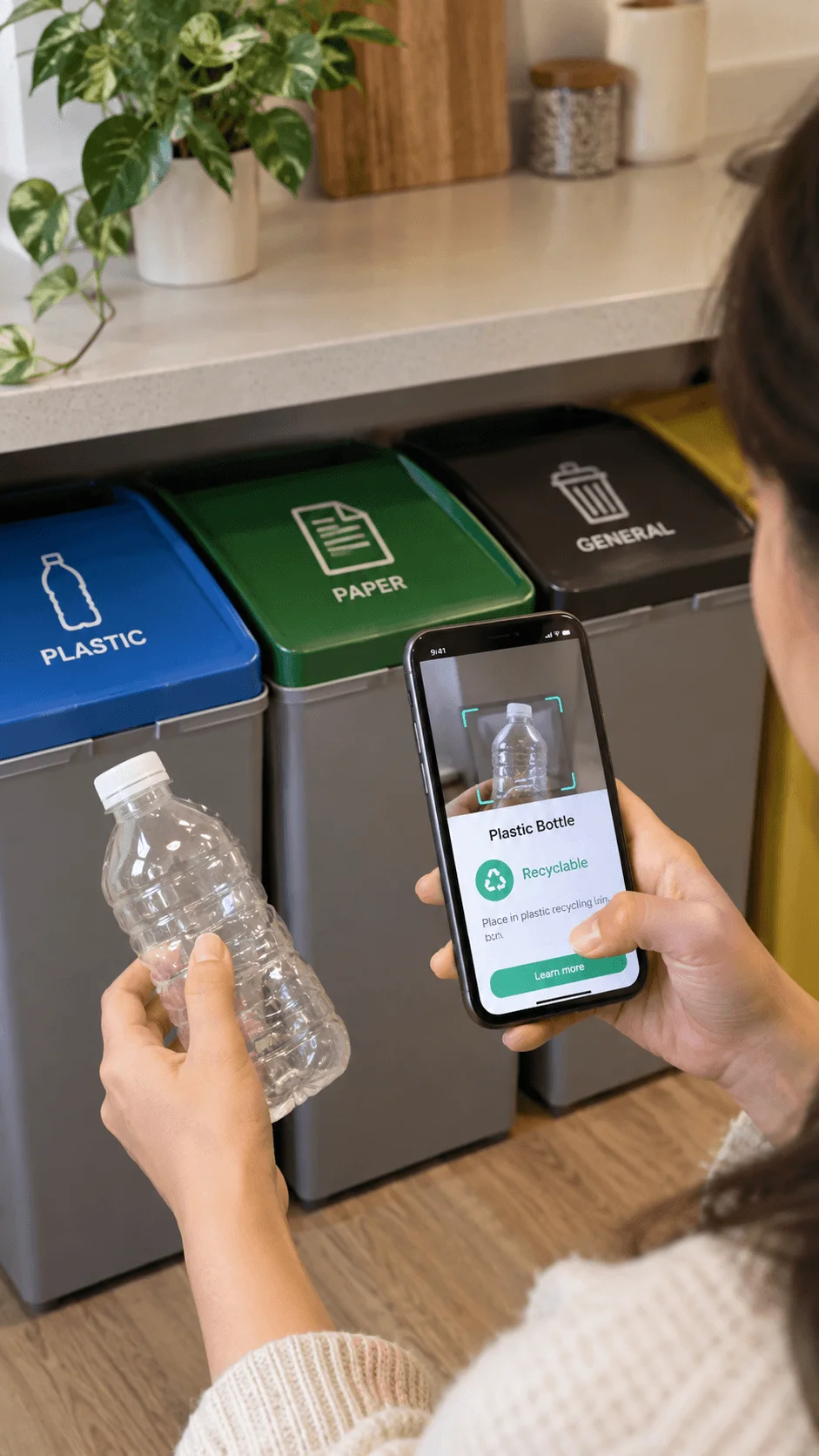
Smartphone assistance also allows people to seek information only when they need it. Nobody needs artificial intelligence to identify every newspaper or vegetable peeling. Technology becomes valuable when an unusual object creates genuine uncertainty.
For many households, this combination of simple containers and optional digital assistance could offer a sensible balance between convenience, cost, and innovation.
3. Create a QR Code Home Waste Sorting Station
QR codes provide another way to make an ordinary eco friendly waste sorting bin smarter without adding complicated hardware.
A household could place a small QR code beside its recycling station. Scanning it could open the official local recycling guide, food waste instructions, or another trusted disposal resource. Instead of trying to fit detailed instructions onto a small label, the physical station can remain simple while the digital page provides deeper guidance.
This idea becomes particularly useful in shared spaces. Roommates, visitors, family members, tenants, or employees may not know which materials the local collection system accepts. A visible code gives them somewhere to check.
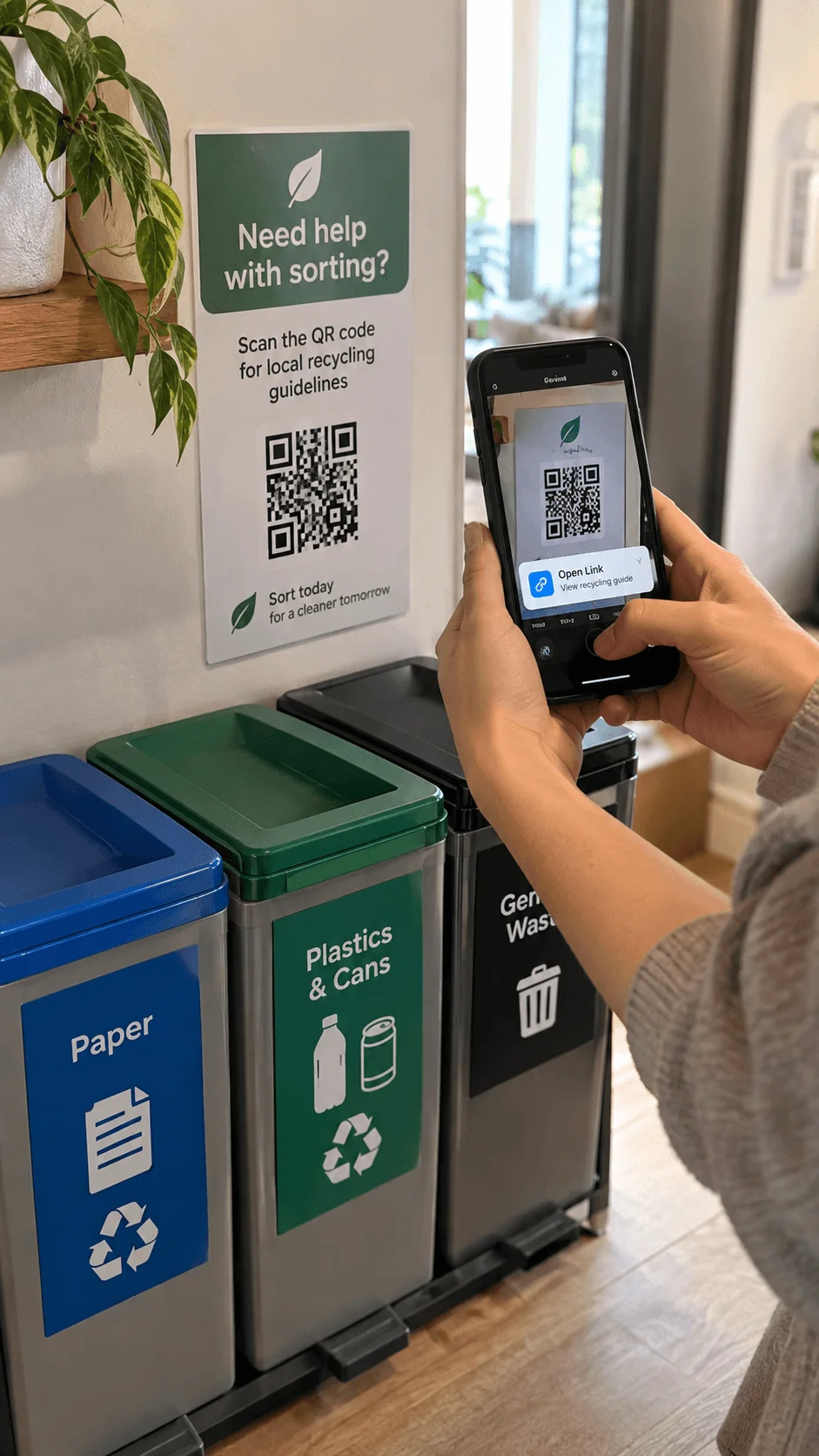
Digital guidance can also adapt more easily than permanently printed instructions. When local rules change, the destination behind a QR code can provide current information without requiring a completely new sorting station.
The system should still include basic physical labels. People should not need a phone every time they throw something away. The QR code works best as an extra source of information for confusing items rather than a replacement for clear everyday guidance.
4. Build a Modular Multi Compartment Waste Sorting Bin
A modular multi compartment waste sorting bin allows the household to organize containers according to the waste it actually produces.
This matters because different materials accumulate at different speeds. A family may produce a large amount of cardboard and packaging but relatively little glass. Giving every category an identical container can waste space.
A modular system solves this problem by combining different container sizes. Larger sections can handle common materials, while smaller removable containers can collect less frequent waste.
Flexibility also makes the system easier to change. A household that begins municipal food waste collection may add an organic waste container. Someone who starts composting may reorganize the same station differently.
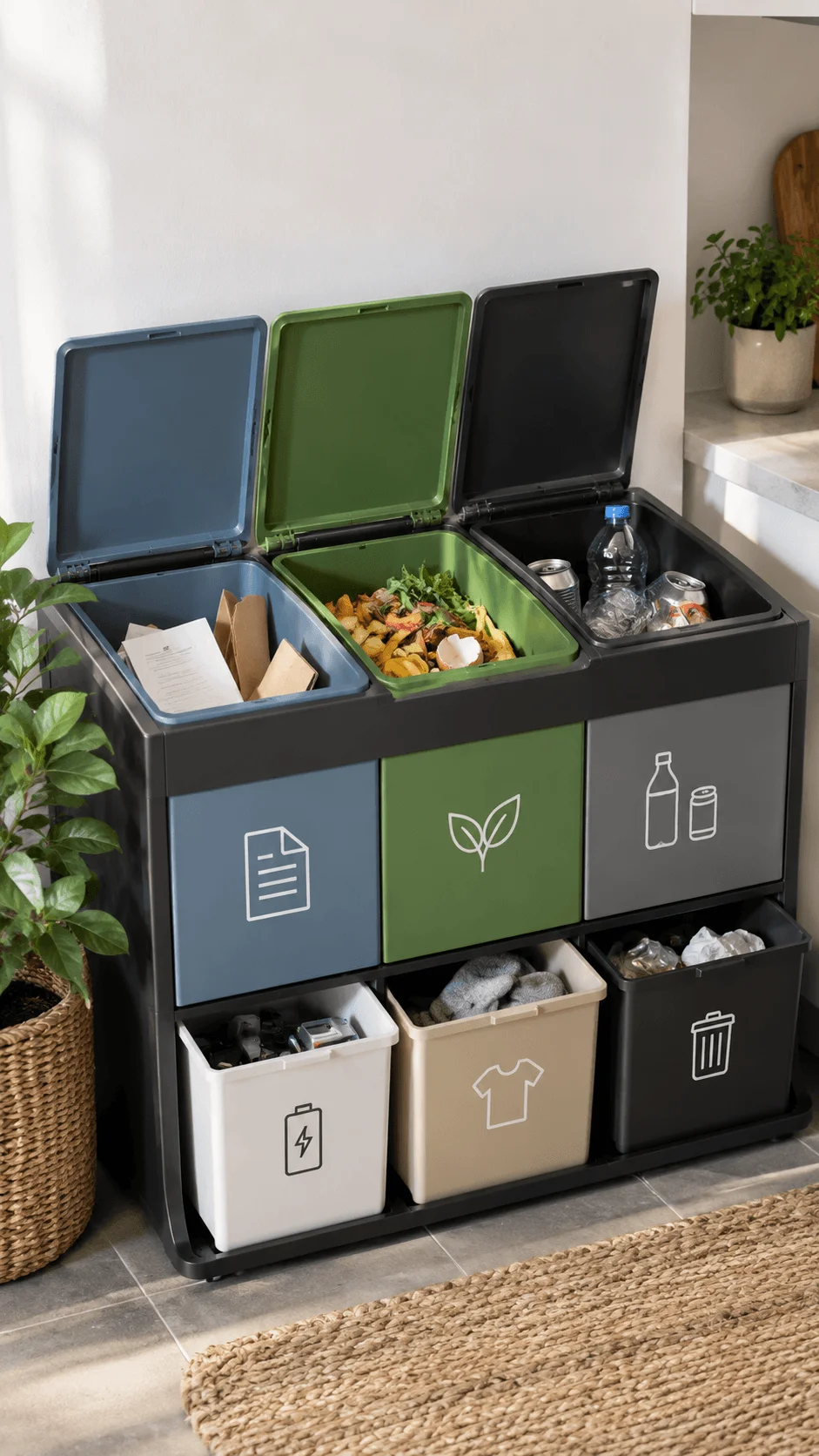
Removable compartments simplify cleaning and carrying materials to an outdoor bin or collection point. Homeowners can also replace one damaged component instead of discarding an entire station.
This approach supports sustainability through adaptability. A system that continues to meet changing household needs may remain useful much longer than a rigid design created for only one arrangement.
5. Use Sustainable Waste Sorting Bins in Small Kitchens
Limited floor space should not prevent effective household sorting. Waste sorting bins for small spaces can use vertical organization instead of spreading several containers across the kitchen.
A vertical waste sorting bin for home can place categories above one another. Stackable containers, narrow compartments, or tall cabinet systems can provide several sorting options while occupying a relatively small footprint.
Accessibility remains important. A beautifully compact system becomes frustrating if someone must remove three containers to reach the bottom one. Good vertical designs allow users to access each section easily.
Container size should also reflect how quickly materials accumulate. Paper and packaging may need more room than batteries or other occasional waste.
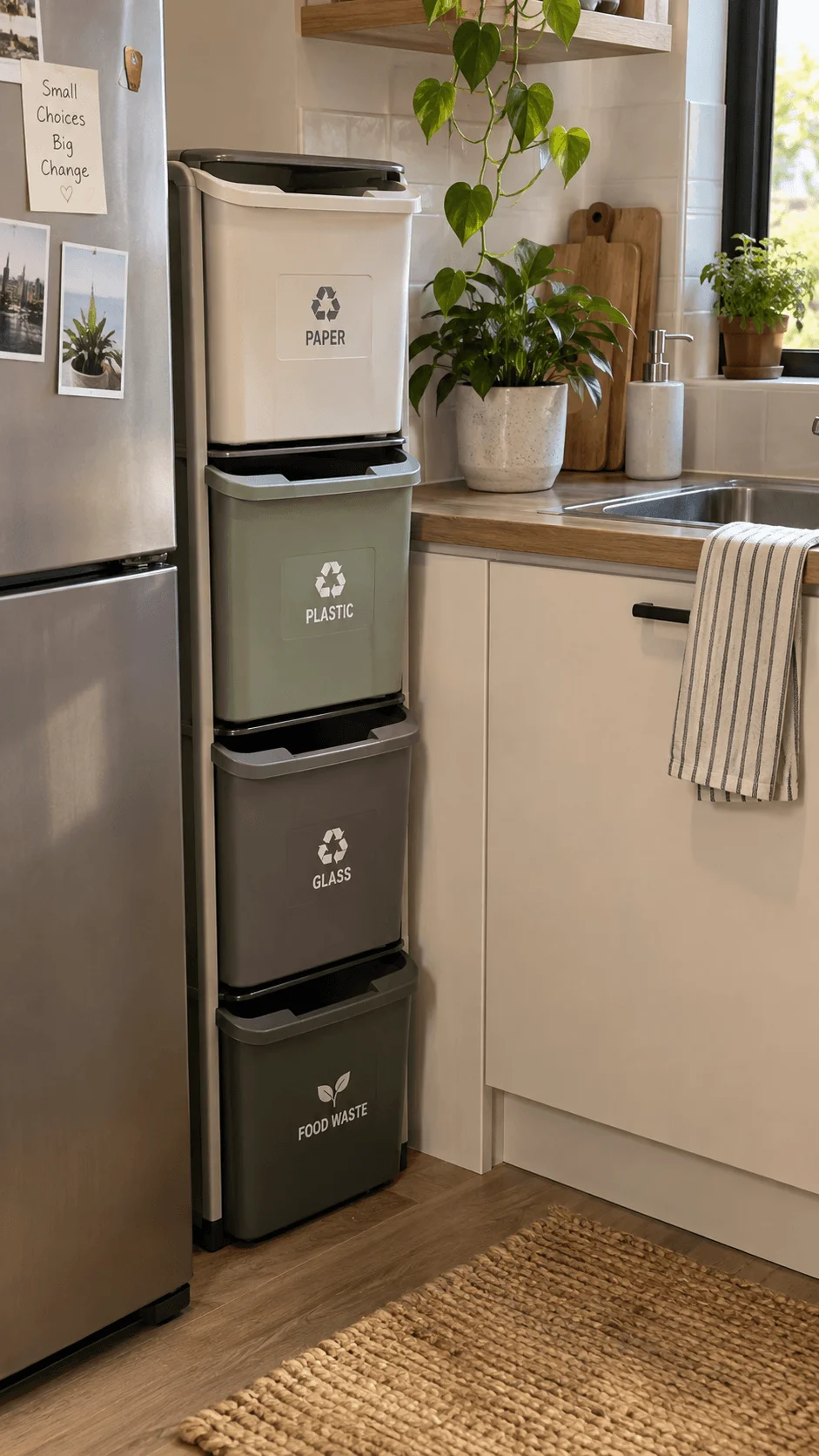
Small households can take the same principle even further by placing containers near the areas where specific materials originate. A compact paper container near a desk may work better than forcing every waste category into one kitchen station.
The goal is not to fit as many bins as possible into a tiny area. The goal is to create a convenient system that uses limited space intelligently.
6. Create a Pull Out Kitchen Waste Sorting System
A pull out kitchen waste sorting system can turn unused cabinet space into an organized recycling area.
Location makes this idea particularly practical. Kitchens generate food scraps, cans, bottles, cartons, cardboard, wrappers, and other packaging throughout the day. Placing appropriate containers close to food preparation and cleanup areas reduces the effort required to sort these materials.
A cabinet system can hold two or more removable containers while keeping them out of sight when nobody needs them. Pulling the cabinet open reveals the entire station.
Homeowners should think carefully about compartment capacity before installing one. The available cabinet space does not automatically match the amount of each waste stream the household generates.
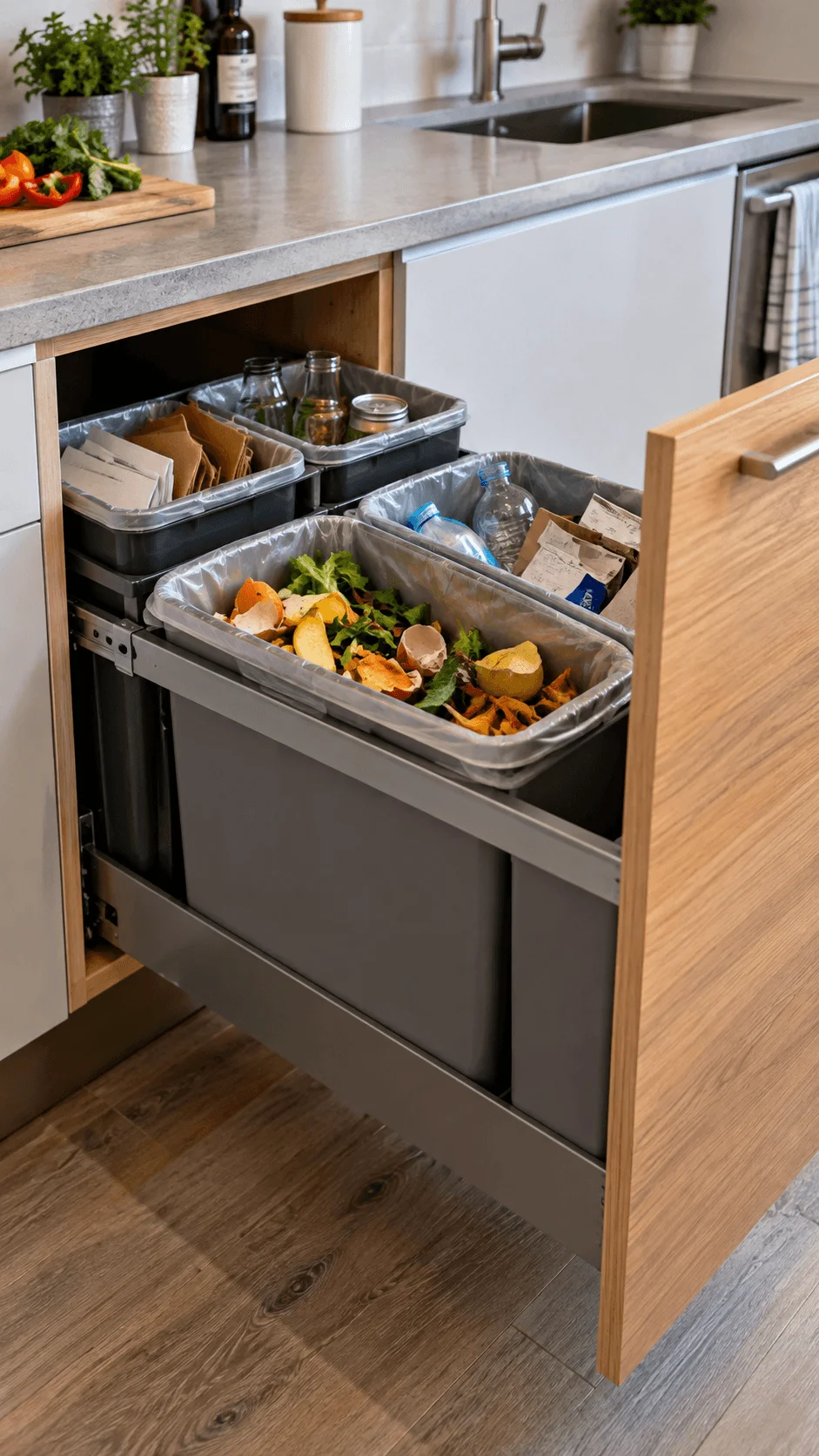
Cleaning also matters. Leaks, crumbs, and moisture can reach the surrounding cabinet, so removable and washable containers provide an advantage.
An eco friendly waste sorting bin works best when its location supports existing household behavior. Convenient placement can sometimes improve a sorting routine more effectively than adding sophisticated technology.
7. Add a Dedicated Food Waste Sorting Bin
Food scraps create different challenges from dry recycling, so they deserve a dedicated container.
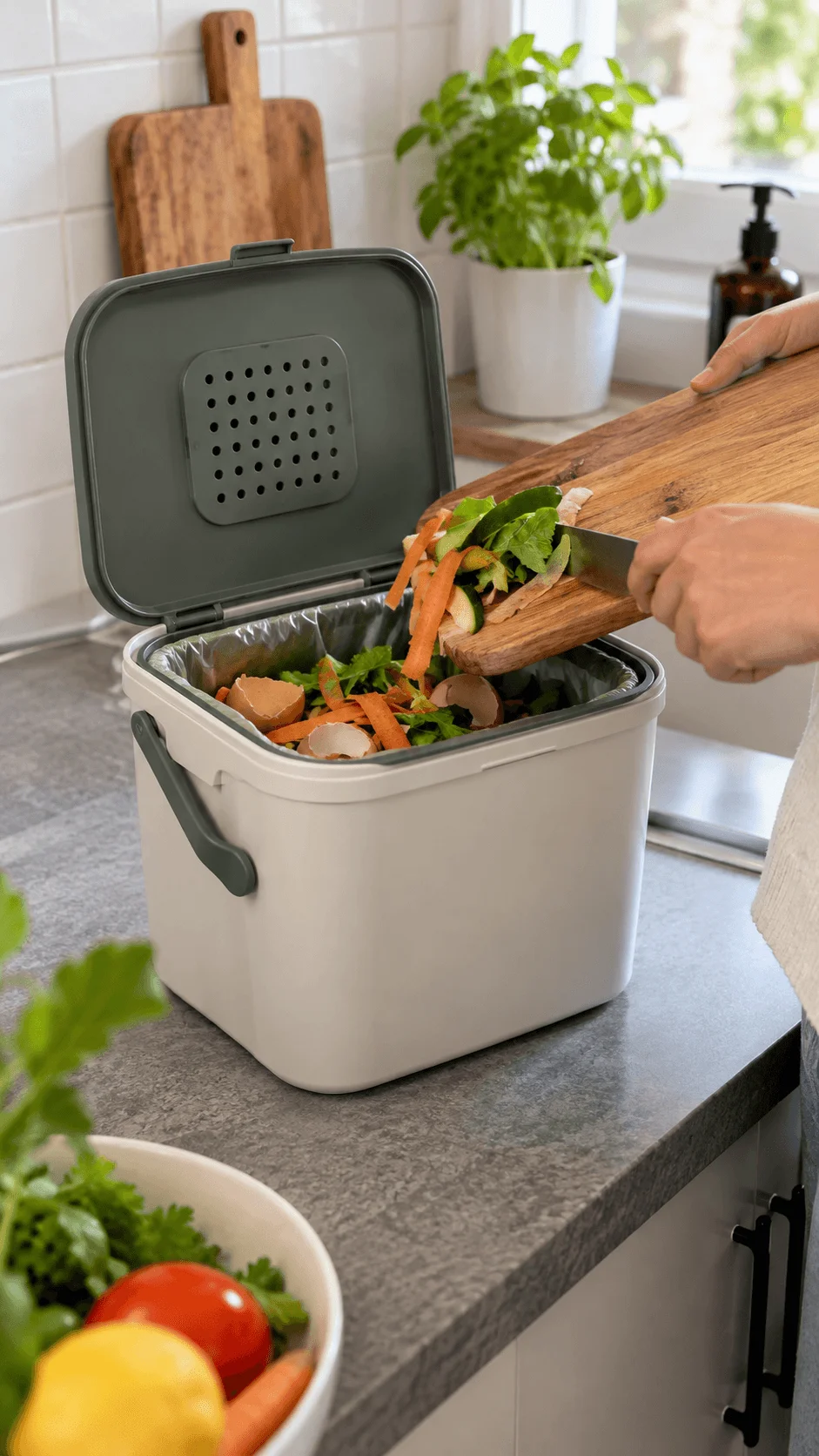
A food waste sorting bin for kitchen use should make collection convenient while remaining easy to empty and clean. Many households benefit from a compact caddy positioned near the food preparation area because vegetable peelings and other accepted scraps can go directly into it.
Container size matters. An oversized food waste bin may encourage organic material to remain indoors for too long. A smaller container that people empty regularly can make maintenance easier.
Ventilation, moisture management, washable surfaces, and a practical lid design can also affect everyday usability. The right solution depends on how the household manages organic waste.
Municipal food collection and home composting are not the same system. Local services may accept materials that would not break down effectively in an ordinary home compost pile. Similarly, packaging described as compostable may require specific processing conditions.
Households should therefore connect their container design with the organic waste route they actually use rather than assuming every food related material belongs together.
8. Choose an Eco Friendly Waste Sorting Bin Made From Recycled Materials
Waste sorting encourages people to think about materials after use, but sustainability should also include the materials used to manufacture the containers themselves.
An eco friendly waste sorting bin made with recycled plastic can reduce demand for virgin material, but recycled content should not become the only consideration. A poorly designed product that breaks quickly may offer less long term value than a durable container already sitting in the home.
Longevity deserves particular attention. Strong hinges, washable surfaces, replaceable components, sturdy handles, and simple construction can extend useful life.
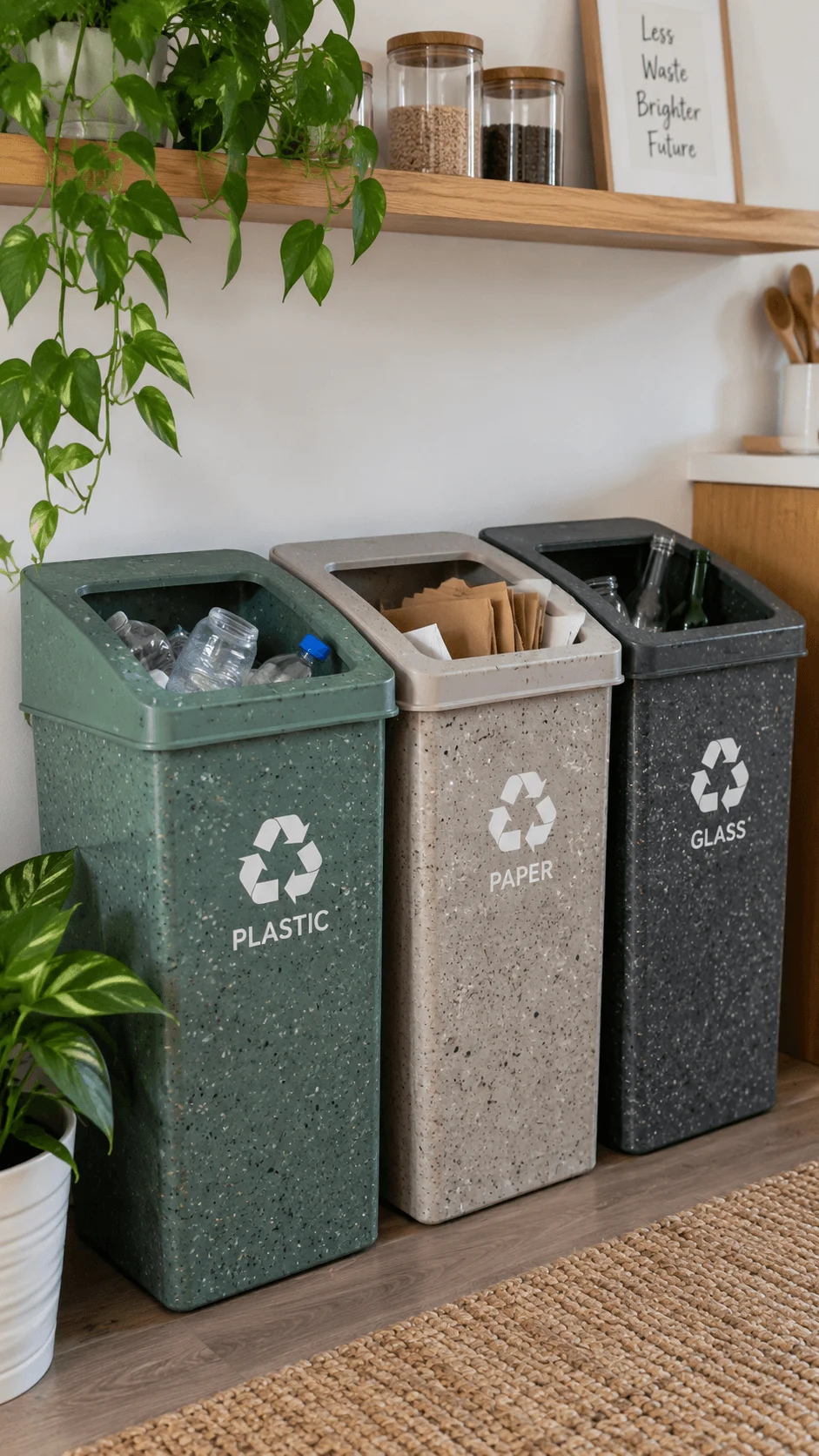
Households should also consider whether they actually need a new product. Existing buckets, boxes, containers, or bins may work perfectly well after cleaning and clear labeling. Reusing a functional container avoids replacing something simply because a newer version carries sustainable branding.
When a new purchase becomes necessary, recycled content can form part of a broader decision that also considers durability, repairability, capacity, and long term usefulness.
9. Improve Eco Friendly Recycling Bins With Visual Labels
A recycling station can contain all the right compartments and still fail if nobody understands them.
Pictures and clear symbols can make eco friendly recycling bins for home easier to use. Instead of displaying only the word recycling, a label can show recognizable examples of the materials accepted in that particular stream.
Visual guidance can help children, guests, roommates, and other household members make faster decisions. It can also reduce the amount of text people need to read while holding an item over a container.
Color can support the system, but households should avoid relying on color alone. Waste collection colors can vary between locations, and someone unfamiliar with the system may not know what a particular color represents.
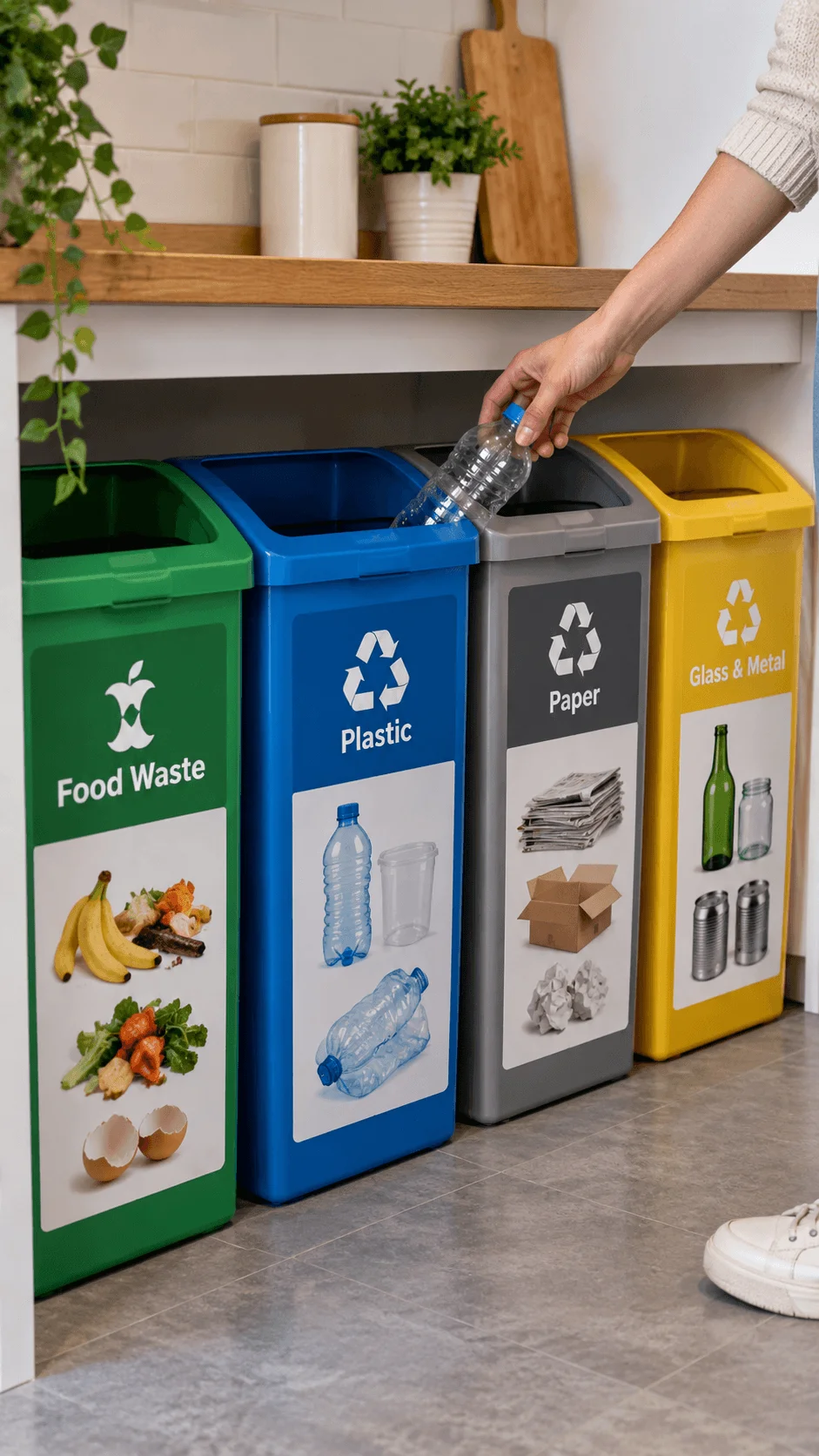
Simple labels work best when they answer the immediate question clearly. More complicated exceptions can appear in a nearby guide or digital resource.
Good visual communication turns the sorting station into an intuitive part of the home rather than a collection of containers that everyone must memorize.
10. Design Waste Sorting Bins That Help Prevent Contamination
Correct sorting matters just as much as the number of items placed in recycling.
Contamination happens when unsuitable materials enter a recycling stream. Confusing labels, identical containers, and unclear instructions can contribute to the problem.
Physical design can provide another layer of guidance. Instead of giving every container the same large opening, designers can use different shapes that suggest the intended material. A narrow slot may visually suggest flat paper, while another opening may suit containers.
The opening alone cannot determine recyclability, but it can encourage people to notice that each compartment has a specific purpose.
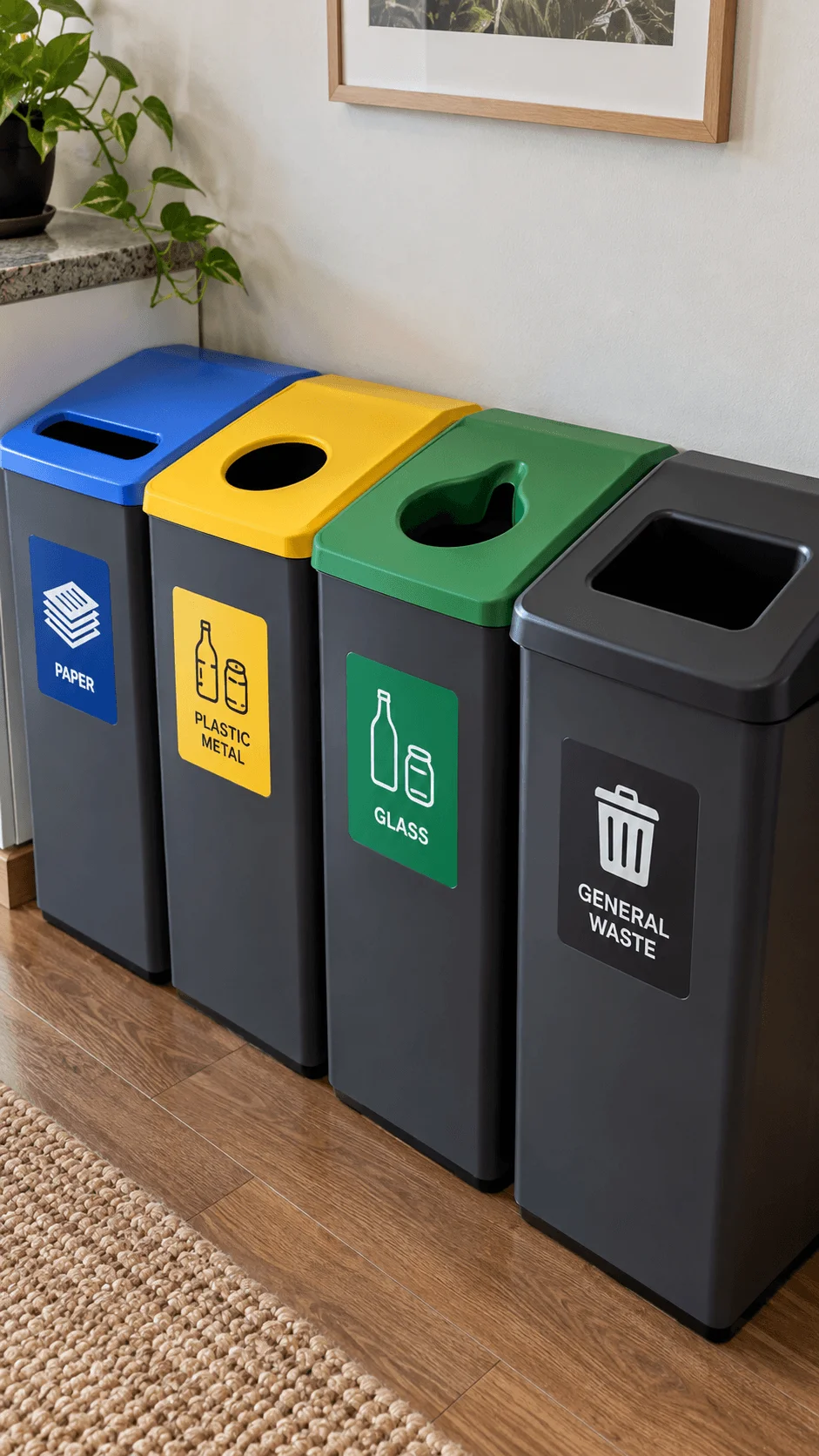
An effective home waste sorting station can combine opening design with pictures, short labels, sensible placement, and access to more detailed guidance.
The aim should not be to make disposal difficult. Good design gently directs behavior while keeping everyday sorting quick and convenient.
11. Add Smart Sensors to a Household Waste Separation System
Sensors provide another emerging approach to smart household waste management.
A container could monitor how full it becomes and provide a notification when it approaches capacity. A connected system might also remind household members about collection days or help them notice which waste streams fill most frequently.
The concept already makes sense in larger waste management environments where monitoring can help organizations understand container usage. Household applications can use much simpler versions.
However, adding electronics does not automatically make a sustainable waste sorting bin better. Sensors require materials, energy, maintenance, and money. If someone can easily see that a transparent recycling container is full, an electronic alert may solve a problem that does not really exist.
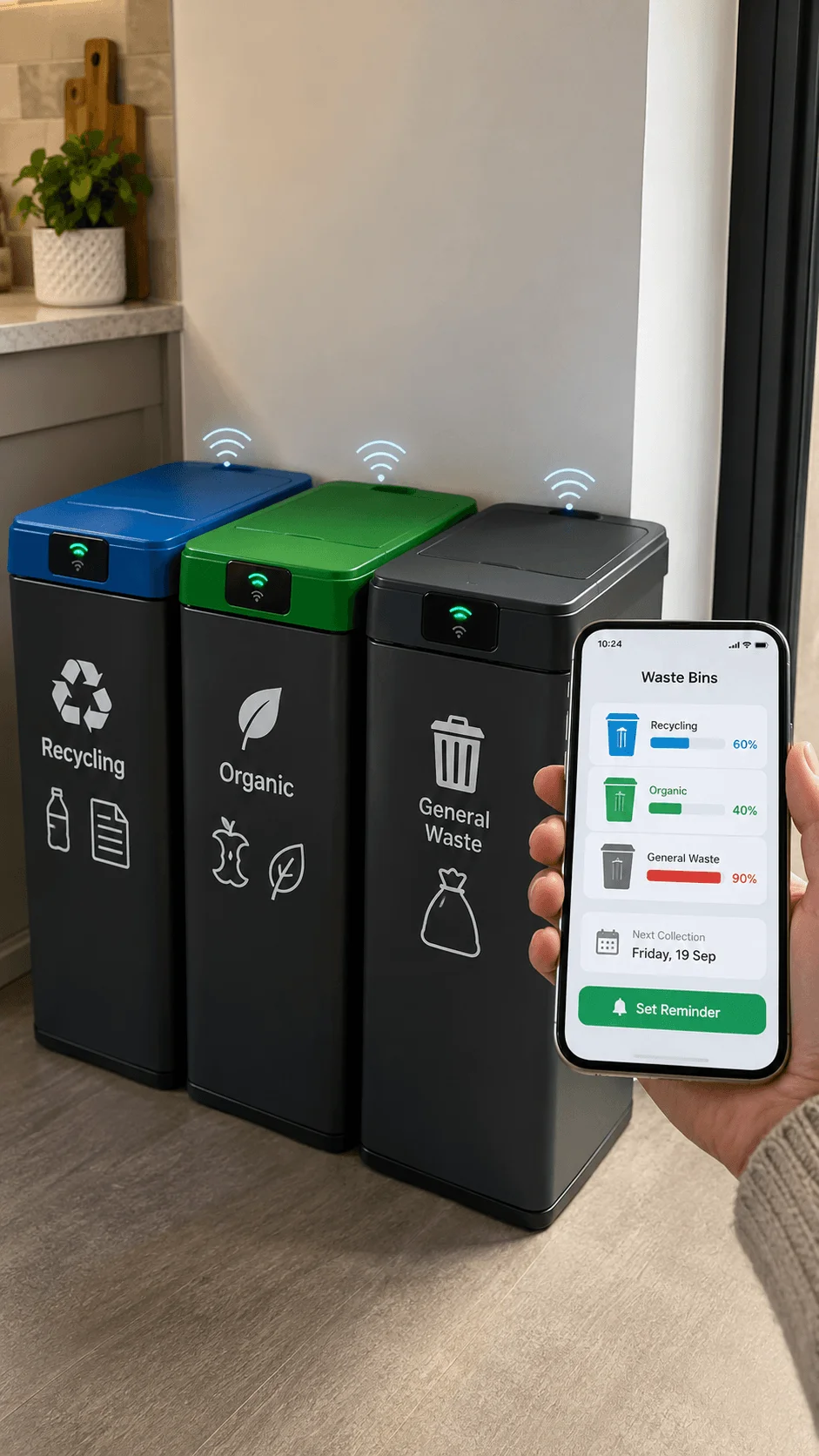
Smart technology makes the most sense when it removes a genuine inconvenience. A large household, shared property, or difficult to access waste area may benefit more than a small kitchen where someone checks the bins every day.
In sustainable design, simplicity can itself be a valuable feature.
12. Create a Special Sorting Compartment for Batteries and E Waste
Modern homes contain waste streams that do not fit comfortably into ordinary recycling categories.
Used batteries, old chargers, cables, small electronic devices, and certain other items may require dedicated collection or drop off services. Throwing them automatically into household recycling can create problems.
A modern eco friendly waste sorting bin system can include a small designated storage section for appropriate special items while they wait for proper disposal.
This compartment usually does not need much capacity because households generate these materials less frequently than packaging or food scraps. A small, clearly identified container in an appropriate location may be enough.
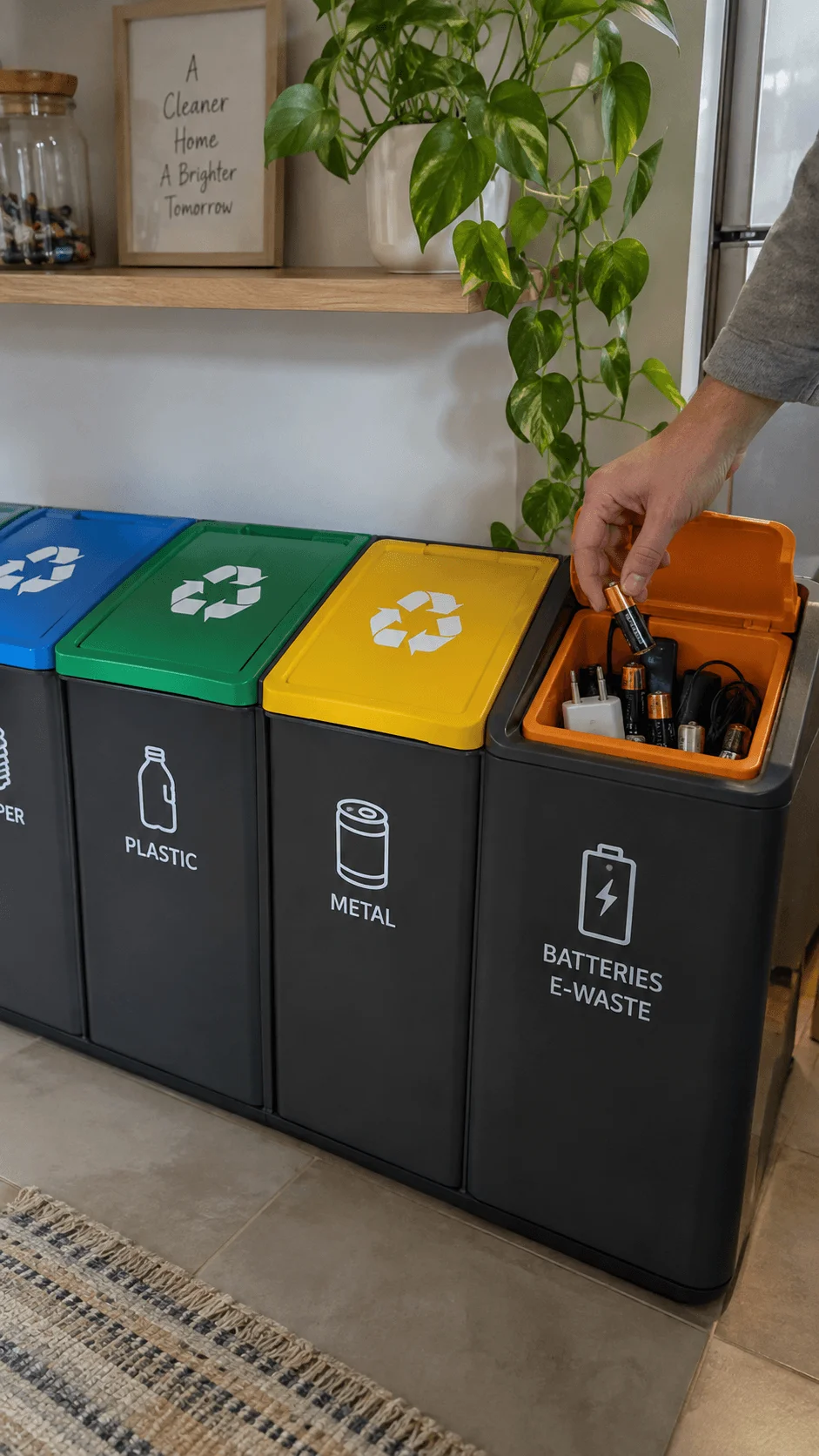
Safety remains essential. People should follow manufacturer guidance and local requirements when storing or disposing of batteries, electronics, light bulbs, chemicals, and other potentially hazardous materials. They should not dismantle questionable items simply to make them fit a waste category.
This idea also changes the way people think about sorting. Household waste management becomes more than separating recyclables from trash. It becomes a process of finding the most appropriate next destination for different materials and products.
Conclusion
The best eco friendly waste sorting bin in 2026 does not necessarily contain cameras, artificial intelligence, sensors, or a complicated digital interface. Technology can reduce confusion and provide useful information, but thoughtful physical design can achieve a great deal on its own.
A modular station can adapt to different waste volumes. Vertical containers can make sorting possible in a small kitchen. A dedicated food caddy can separate organic material at its source. Pictures and carefully designed openings can make categories easier to understand. QR codes and smartphone tools can provide additional guidance when an unusual item creates uncertainty.
The most effective system will depend on household size, available space, local collection services, budget, and daily habits. Instead of copying a universal setup, homeowners can examine the materials they regularly discard and build their sorting station around those real needs.
An eco friendly waste sorting bin should ultimately make responsible decisions easier rather than adding another complicated task to everyday life. As smarter technology develops, households will gain new ways to identify and organize waste, but convenience, durability, reuse, clear information, and responsible consumption will remain just as important. Combining those principles with better design can create a waste sorting system that feels practical for 2026 while remaining adaptable for the years ahead.