12 Fun Eco Friendly Activities for Preschoolers
Teaching young children about caring for the environment does not have to involve complicated lessons or long explanations. The best eco friendly activities for preschoolers allow children to learn through touching, creating, observing, planting, building, and exploring. When sustainability becomes part of everyday play, children can begin to understand simple ideas such as reusing materials, caring for plants, protecting living things, and using natural resources thoughtfully.
Preschool is an especially exciting stage for introducing these concepts because young children naturally ask questions about the world around them. A fallen leaf, a growing seed, a butterfly visiting a flower, or an empty cardboard box can become the starting point for an engaging learning experience. Instead of simply telling children that nature matters, parents and teachers can give them opportunities to interact with it.
The following ideas combine environmental awareness with creativity, sensory exploration, early science, gardening, outdoor play, and problem solving. They also avoid making sustainability feel like a chore. Each activity gives preschoolers a chance to discover something for themselves while developing a stronger connection with their surroundings.
Why Eco Friendly Activities Are Important for Preschoolers
Children often learn best when they can experience an idea directly. Sustainability can seem like a difficult subject when adults explain it through abstract concepts, but simple experiences make it easier to understand. A child who helps care for a plant can see that living things need attention. A child who turns an old container into a planter can understand that an object does not always need to become waste after its first use.
Sustainable activities for preschoolers can also encourage children to notice details in their environment. They may begin paying attention to different leaves, insects, textures, weather conditions, plants, and natural materials. These observations can lead to questions and conversations that support early science learning.
Another advantage is that environmental learning can happen alongside creativity. Children can paint with natural materials, construct imaginary structures from cardboard, create pictures with leaves, or design a small garden. These experiences allow sustainability to become part of normal preschool play rather than a separate subject.
12 Eco Friendly Activities for Preschoolers
There are many ways to introduce environmental ideas through preschool play. The most effective activities do not need expensive equipment. In many cases, the most interesting materials already exist in a garden, classroom, kitchen, or recycling area.
Nature Loose Parts Art
Nature loose parts art is an excellent example of how creativity and sustainability can work together. Instead of giving children new craft materials and asking them to produce a specific picture, provide a collection of safe natural objects and allow them to decide what they want to create.
Children might arrange fallen leaves into an animal, use stones to create a pattern, place pinecones around a pretend garden, or combine sticks and leaves to make an imaginary character. They can take their creation apart and design something completely different a few minutes later.
The temporary nature of this activity is part of what makes it special. Children do not need to glue every object onto paper or turn natural materials into permanent decorations. They can simply experiment, rearrange, and start again.
Loose parts activities for preschoolers can encourage open ended thinking because there is no single correct result. One child might create a house while another sees the same collection of materials as a forest or spaceship. This gives children freedom to explore their own ideas.
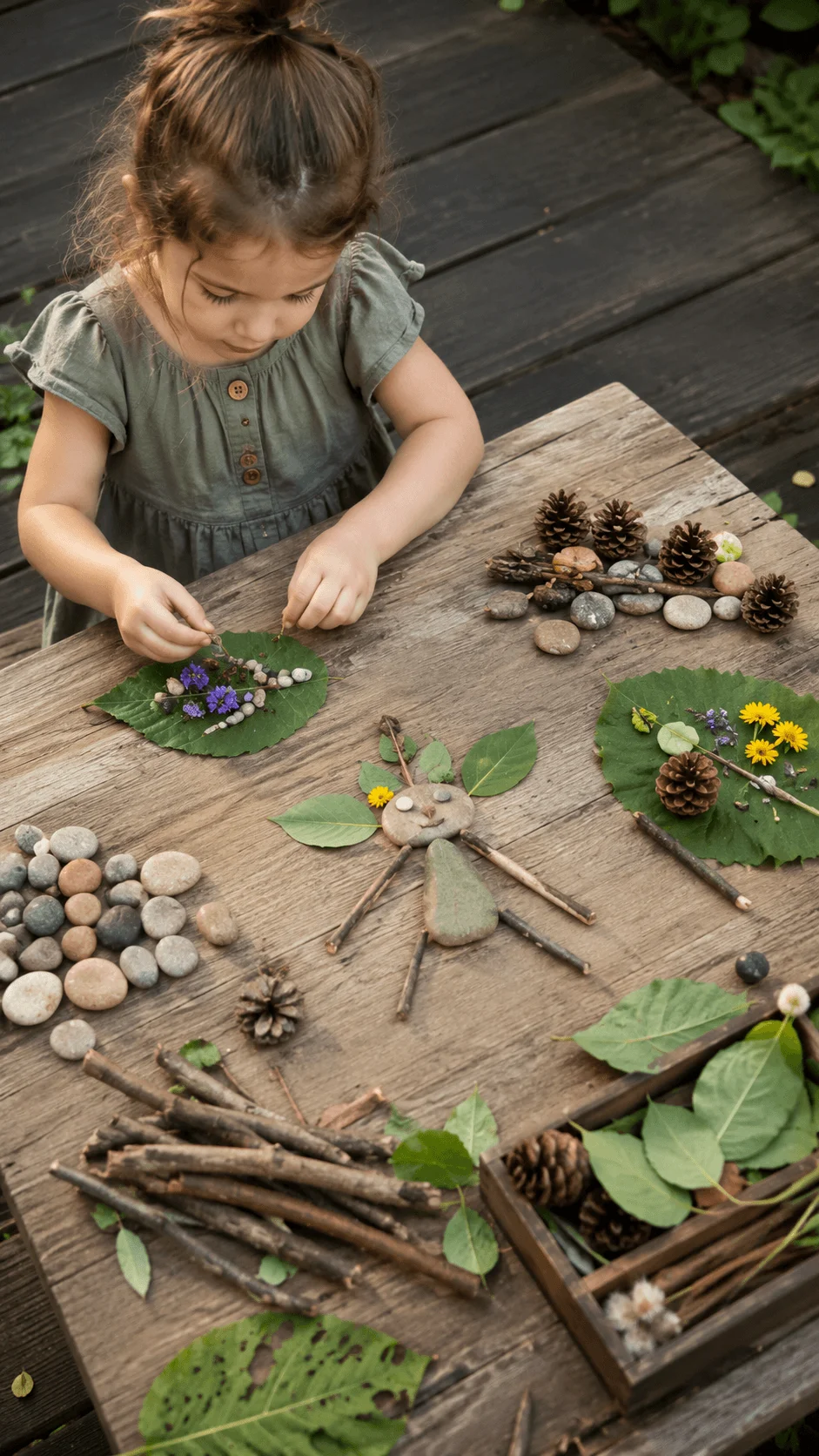
Teachers can place a small selection of suitable natural materials on a table or outdoor surface and invite children to investigate them. Parents can do the same during backyard play or a supervised nature outing. Adults should choose materials carefully and avoid anything sharp, poisonous, contaminated, or small enough to create a choking risk.
The activity also creates an opportunity to talk about respecting nature. Children can learn that they do not need to pull living plants apart to create art. Fallen materials provide plenty of possibilities while leaving growing plants undisturbed.
Upcycled Mini Planters
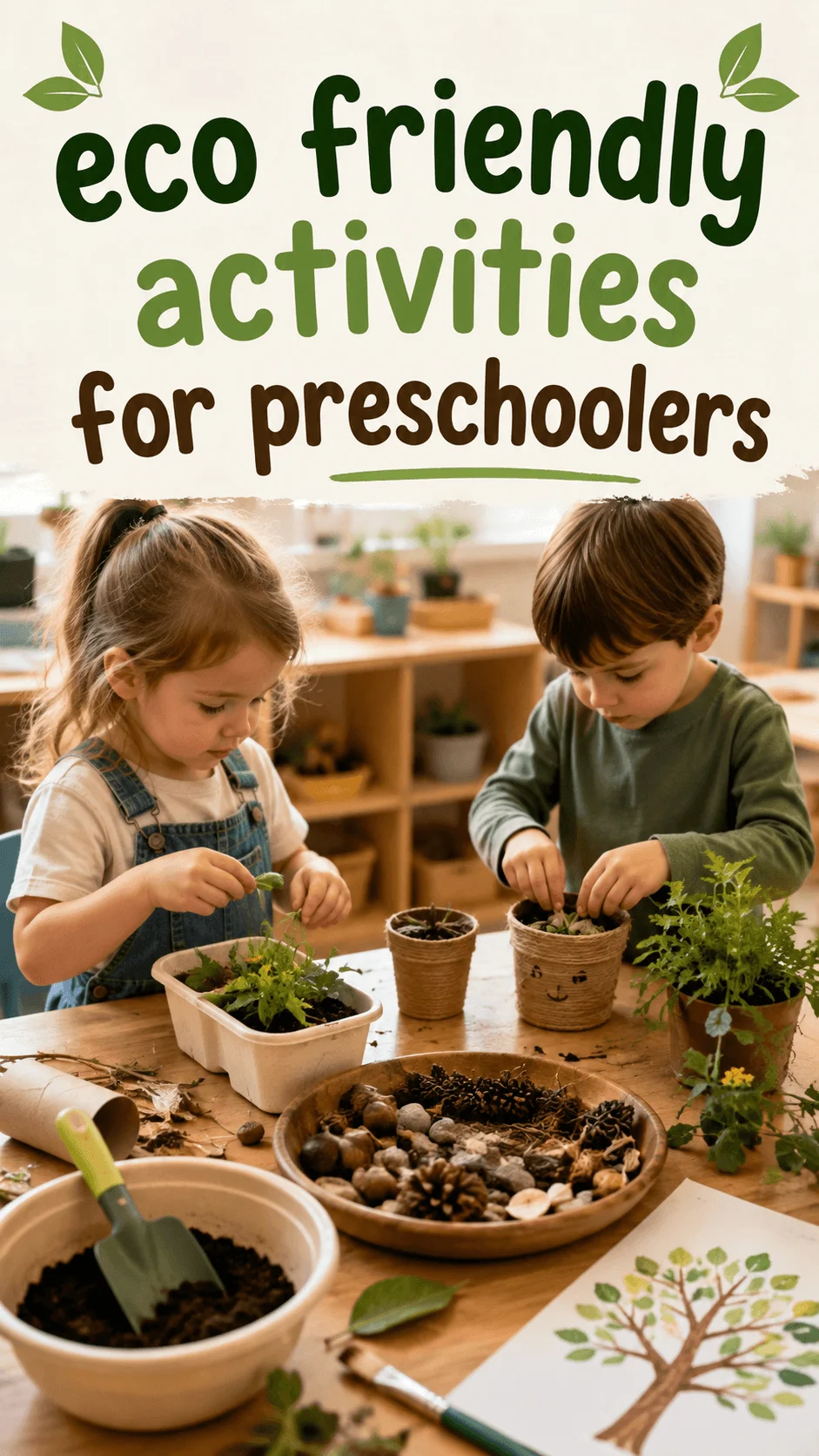
An old container can become the beginning of a small gardening project. Upcycled mini planters turn an item that might otherwise be discarded into something useful and living.
Children can decorate a suitable clean container and help prepare it for planting. Depending on the environment, they might grow herbs, flowers, or another appropriate plant. The most valuable part of the activity comes after planting because children can continue observing their plants over time.
Upcycling activities for preschoolers become more meaningful when children understand why they are reusing something. Rather than simply decorating an old container, adults can explain that the container already exists and can serve another purpose instead of immediately becoming waste.
The planter can also become a personal responsibility project. A child might check whether the soil looks dry, observe new leaves, or draw pictures showing how the plant changes. Teachers can create a small collection of planters in a classroom garden and encourage children to compare how different plants develop.
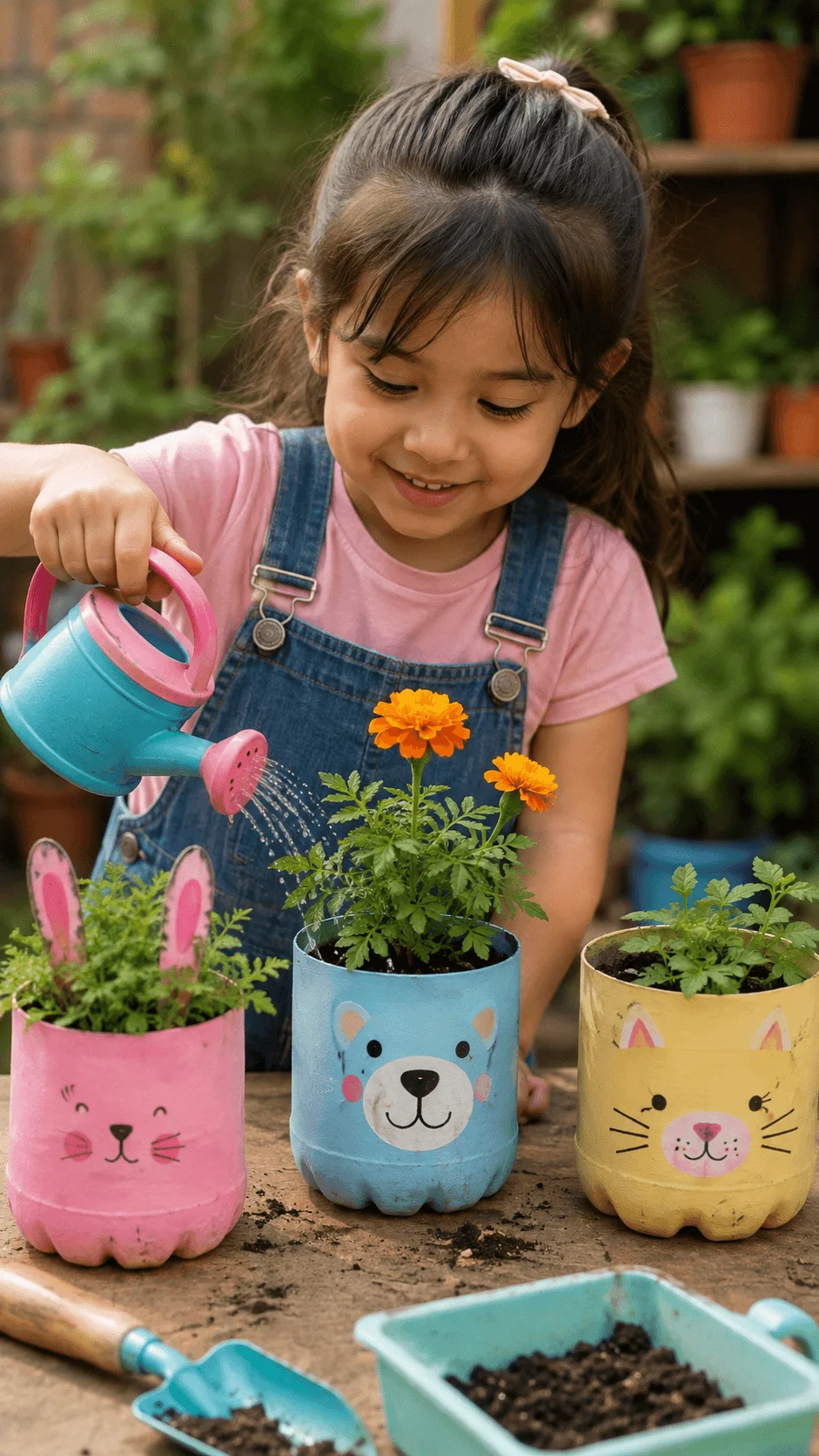
This activity connects several ideas at once. Children experience reuse, gardening, observation, responsibility, and nature appreciation. It also gives them something real to care for rather than creating a craft that disappears after one afternoon.
For safety, adults should select containers that are clean, stable, and free from sharp edges. Children should receive help when handling soil, water, or planting materials, and adults should choose plants that are suitable for children and the local environment.
Mini Compost or Worm Farm Observation
Composting can seem complicated to young children, but the basic idea is surprisingly easy to introduce. Children can learn that some materials we normally call waste can change over time and contribute to healthy soil.
A small supervised compost observation area or suitable worm farm can become a fascinating classroom feature. Children can watch what happens as organic material changes. Instead of expecting preschoolers to manage the compost themselves, teachers can guide observations and explain the process using simple language.
For example, an adult might explain that tiny living organisms help break down certain natural materials. Children can observe changes in color, texture, and appearance over time. These observations can lead to questions about soil, plants, food, and decomposition.
Composting activities for preschoolers are especially useful because they challenge the idea that everything we throw away has the same destination. Children can begin to recognize that some materials can return to natural systems in useful ways.
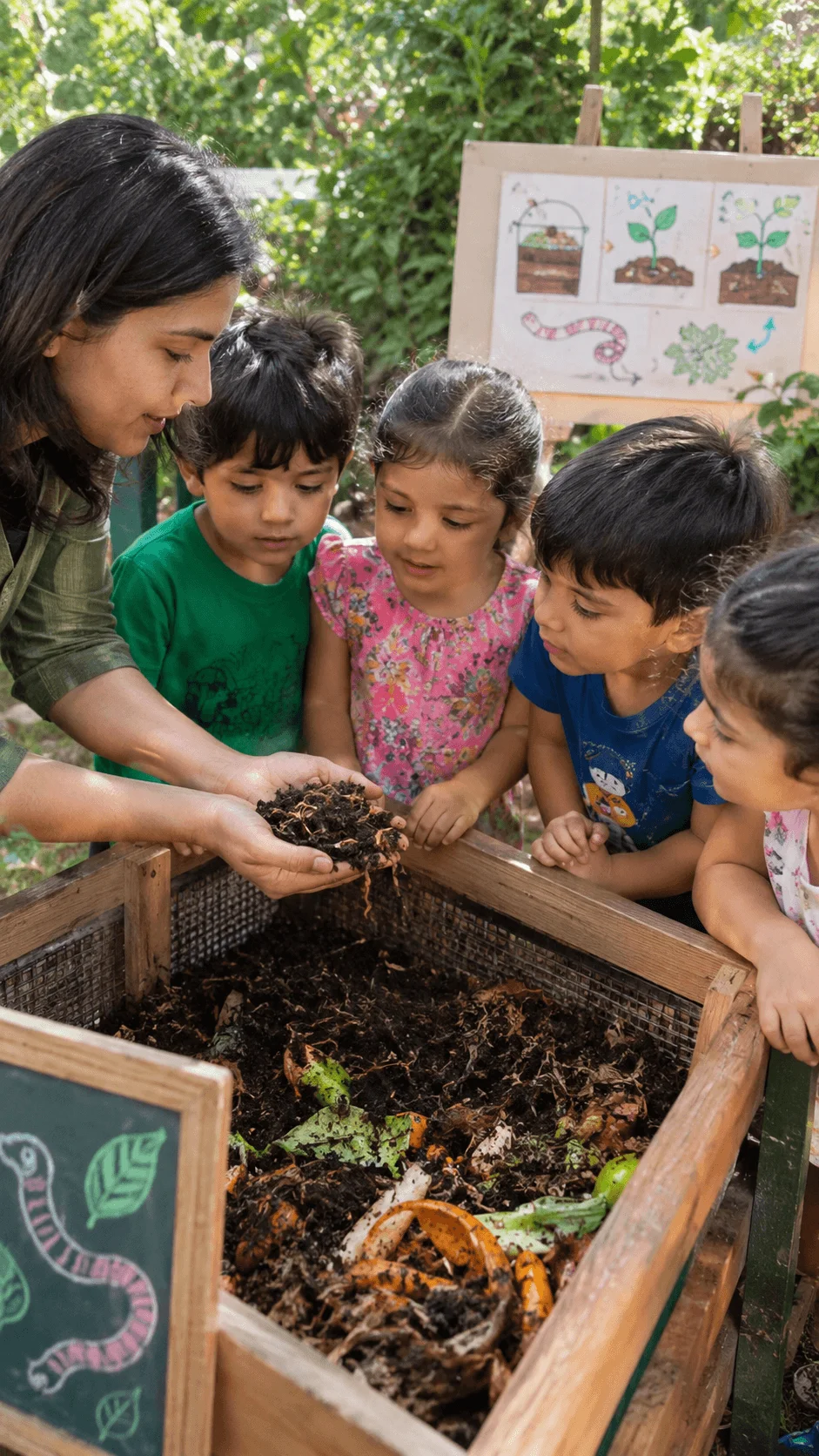
A teacher can create an observation chart using drawings rather than written descriptions. Children might draw what the compost area looks like at different times. This turns sustainability into an ongoing science investigation.
Safety should remain the priority. Adults should manage the compost or worm farm and decide which materials are appropriate. Children should not handle decomposing material without suitable supervision and hygiene practices. Washing hands after outdoor activities is also important.
Pollinator Garden for Preschoolers
A pollinator garden gives children an opportunity to observe the relationship between plants and small creatures. Flowers can attract bees, butterflies, and other insects, creating a miniature ecosystem that children can watch throughout the seasons.
The activity does not require a large garden. Even a small area with suitable flowering plants can become a place for observation. Children can watch which insects visit flowers, notice differences between insects, and draw pictures of what they see.
Pollinator activities for preschoolers can introduce biodiversity in a simple and memorable way. Instead of giving children a complicated explanation about ecosystems, adults can help them notice that gardens contain many different forms of life.
A teacher might ask questions such as, “What do you notice near the flowers?” or “Which flowers seem to attract the most visitors?” These questions encourage observation without requiring children to memorize scientific terms.
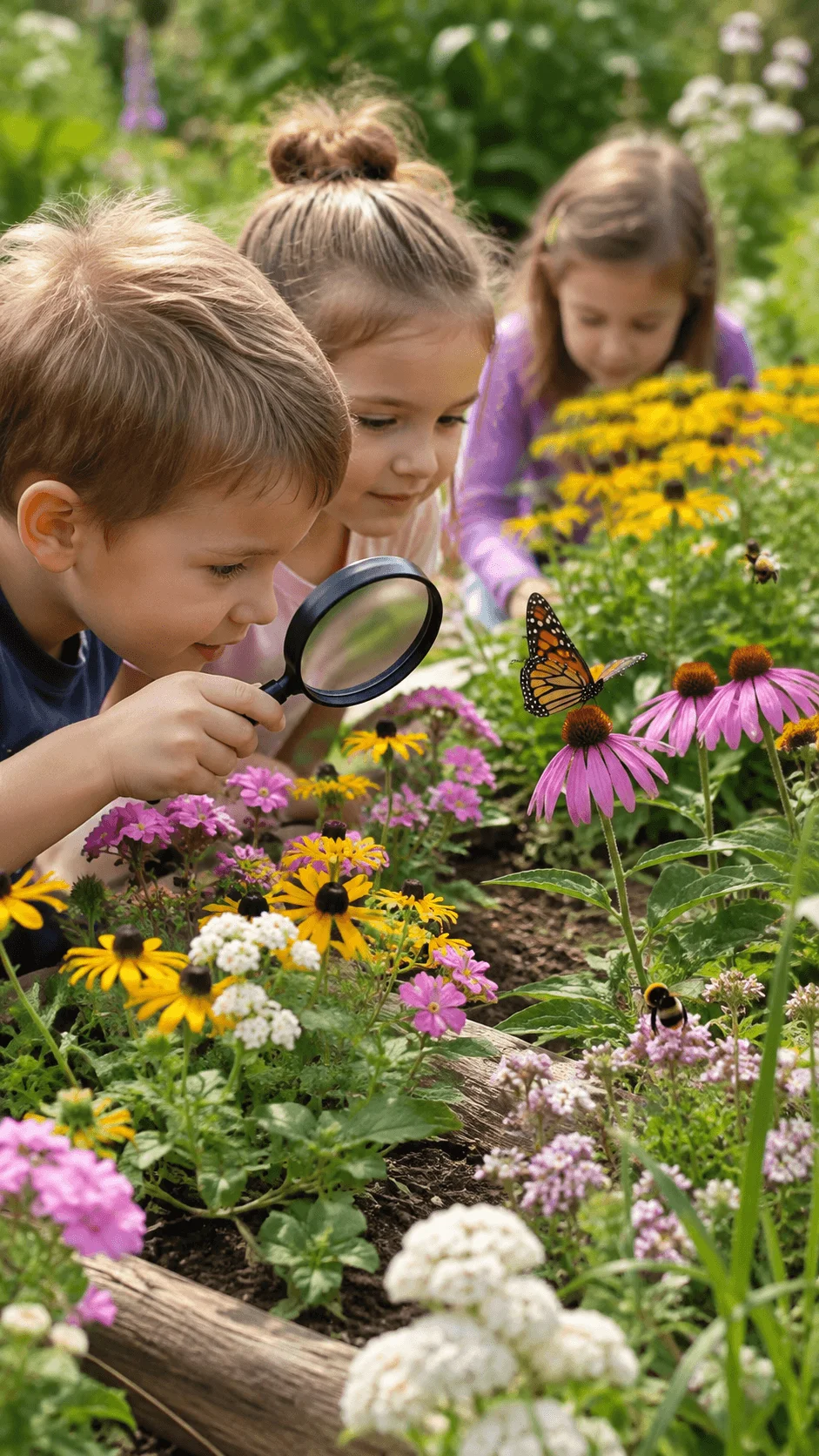
The garden can also become a long term learning project. Children can watch flowers open, observe changing weather conditions, and notice which insects appear at different times. They may begin to understand that plants and animals interact with one another.
Adults should choose plants appropriate for the local climate and garden conditions. Children should observe insects without touching them, particularly bees and other stinging insects. The goal is respectful observation rather than direct interaction.
Nature Texture Sensory Tray
A nature texture sensory tray transforms ordinary natural objects into an invitation to explore. Safe leaves, large pinecones, smooth stones, pieces of bark, seed pods, and other suitable materials can give children many different textures to investigate.
The activity can begin with simple questions. Which object feels smooth? Which one feels rough? Which feels light? Which feels heavy? What happens when two materials are tapped together?
Eco sensory activities for preschoolers can make sustainability more engaging because children experience natural materials directly. They are not simply looking at pictures of leaves or hearing adults describe textures. They can examine the real objects with their senses.
Teachers can also encourage children to sort the materials according to characteristics they notice. One child might group objects by texture while another groups them by size or shape. There does not need to be only one correct way to organize the tray.
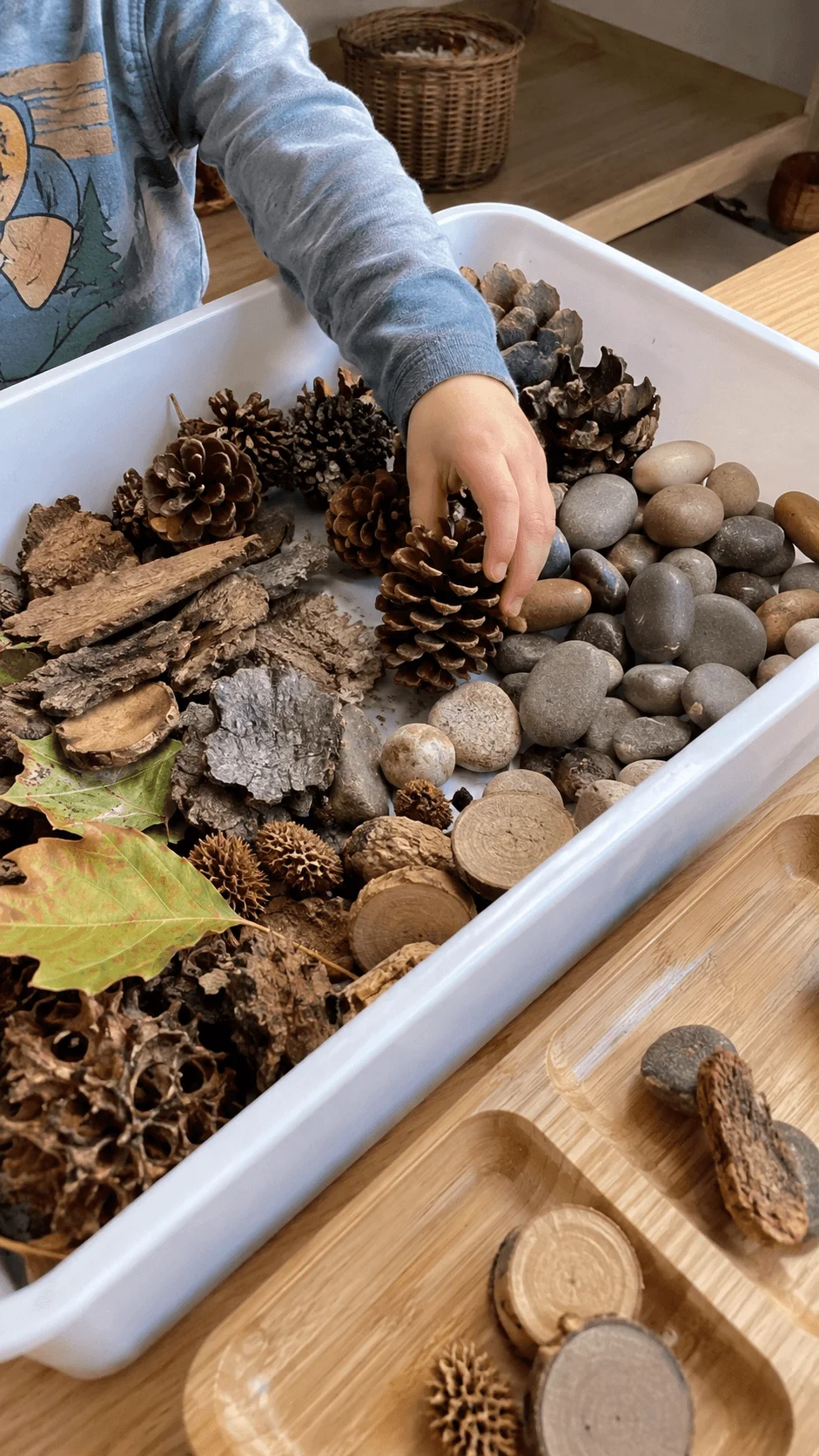
The activity works well indoors when weather prevents outdoor exploration, but it can also become part of an outdoor classroom. Parents can create a small sensory collection from safe materials found around their home or garden.
Adults should inspect every material before children use it. Avoid sharp objects, toxic plants, dirty materials, and very small pieces that could create a choking hazard. The collection should also remain clean and appropriate for the children’s age.
Natural Paintbrush Art
Painting does not always require a collection of manufactured brushes. Children can experiment with suitable natural objects and discover how different shapes create different marks.
A leaf may create a broad print, while a small twig may produce a narrow line. Grass can create a completely different texture. Children can dip these objects into suitable paint and experiment on paper.
The purpose is not to produce a perfect picture. Natural paintbrush art is more interesting when children have permission to experiment. They can drag, stamp, twist, tap, and layer different materials to see what happens.
Natural materials activities for preschoolers can encourage children to look at familiar objects differently. A leaf is no longer only something found on the ground. It can become a temporary artistic tool that produces a unique shape.
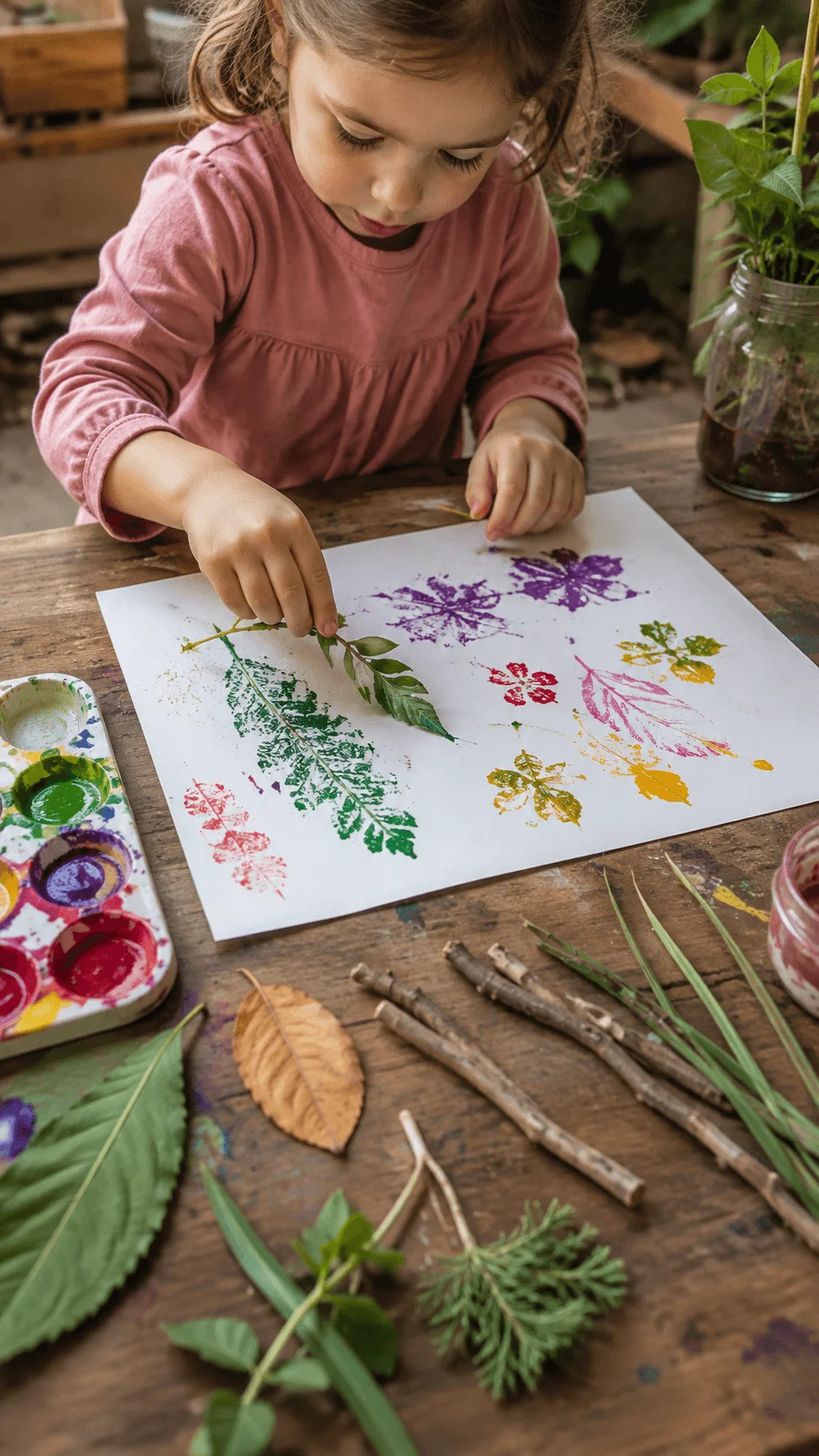
Teachers can invite children to compare the marks produced by different materials. This introduces basic observation and experimentation while keeping the experience playful.
The activity also provides a natural conversation about reuse. Children can discover that creative materials do not always need to come from a craft store. However, adults should make sure that all natural objects are clean, safe, and appropriate for the activity.
Building Curiosity Through Everyday Nature
The most effective environmental learning does not have to happen during a special event. A teacher can stop during outdoor play and point out a new leaf. A parent can invite a child to notice insects visiting flowers. A classroom can keep a small plant near a window and observe its growth.
These ordinary moments can become powerful learning experiences when adults encourage children to ask questions.
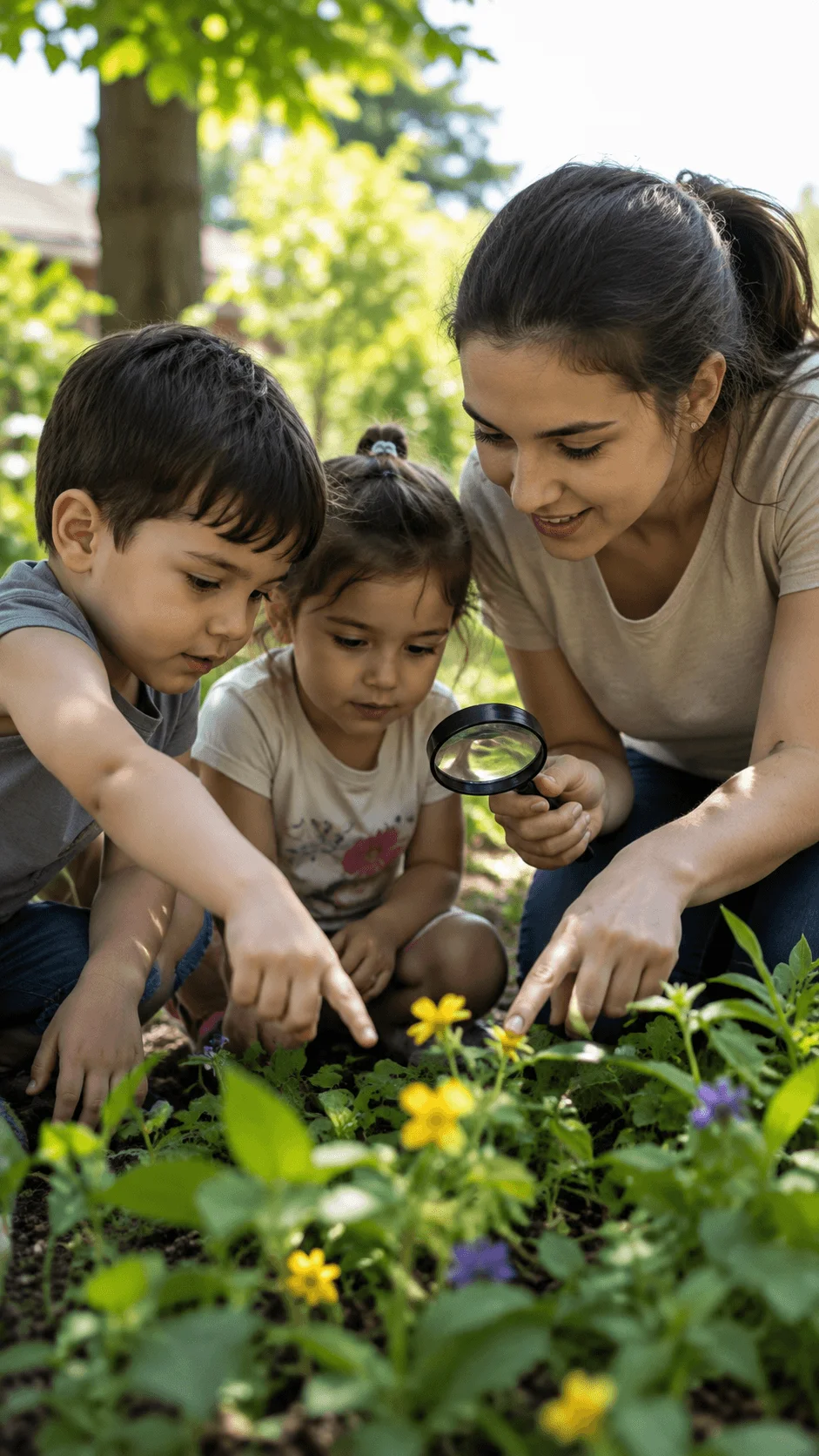
The goal is not to expect preschoolers to understand every environmental issue. Instead, adults can help them develop a simple awareness that plants, animals, water, soil, and materials all have value.
That mindset makes eco friendly activities for preschoolers more than entertainment. They become opportunities for children to explore their surroundings while developing an early appreciation for responsible choices.
Rainwater Collection and Plant Watering
Water conservation is an important part of sustainability, and preschoolers can begin exploring the concept through a simple rainwater activity. Children often enjoy watching rain, but collecting and using rainwater gives them another way to understand what happens after water falls from the sky.
Parents or teachers can place a suitable container outdoors during rainfall and invite children to observe how quickly it fills. After the rain stops, adults can explain that the collected water can sometimes be useful for appropriate gardening tasks. This turns an ordinary weather event into a practical environmental learning experience.
Water conservation activities for preschoolers work particularly well when children can see the connection between an environmental idea and something they do every day. Instead of simply telling children not to waste water, adults can show them how thoughtfully collected rainwater can support plants.
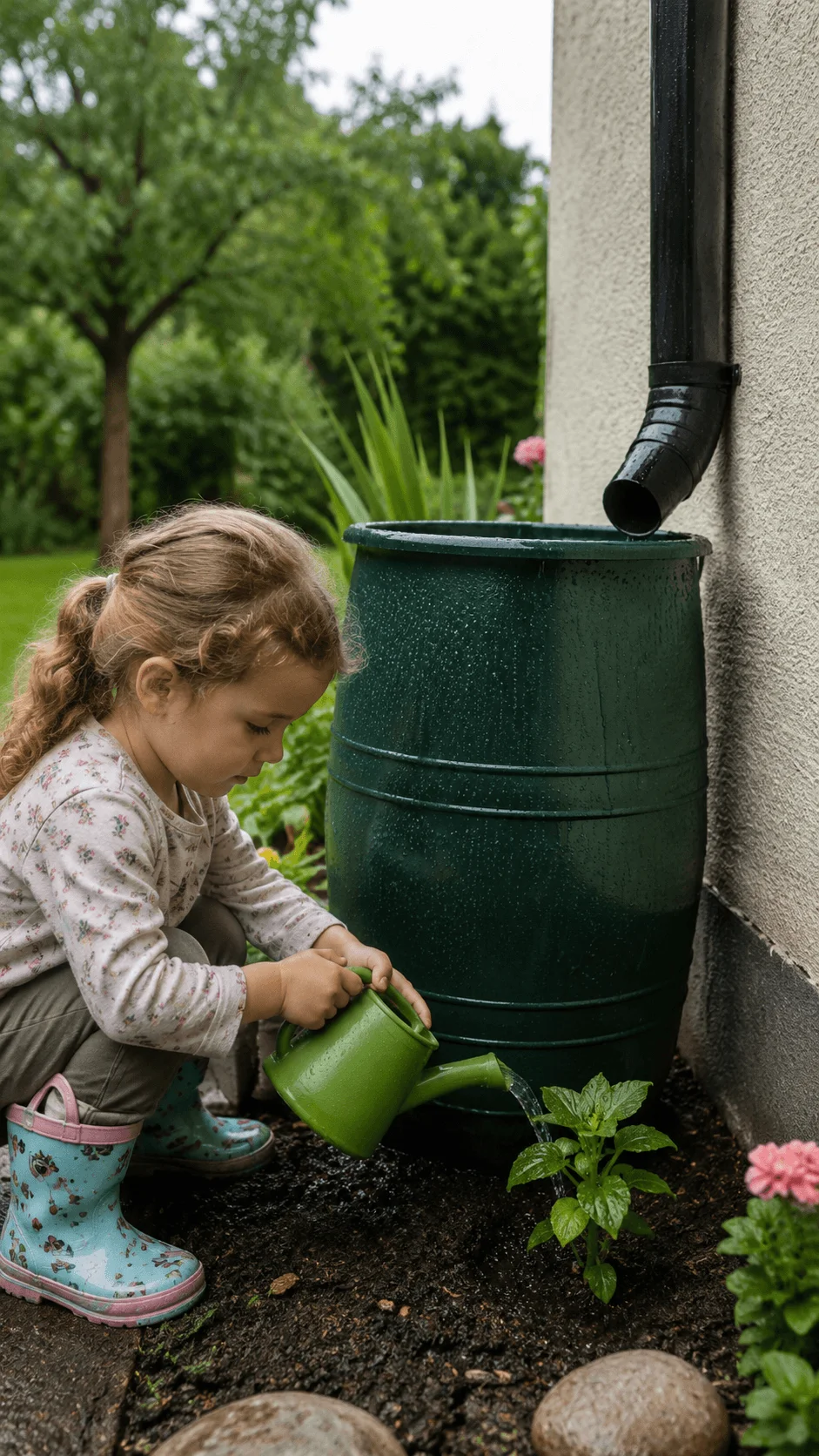
Children can help decide which plants need watering and observe how the soil looks before and after watering. They can also compare dry and wet soil, notice changes in plants, and talk about where rain comes from.
The activity can become even more engaging by connecting it with weather observations. Children can draw a picture of a rainy day, record whether the collection container received a little or a lot of water, and compare observations over several days.
Adults should handle the collection container and determine whether the water is suitable for the intended use. Children should never drink collected rainwater, and adults should avoid leaving open containers where they could become a safety hazard or attract unwanted insects.
Recycled Cardboard Construction Challenge
Cardboard boxes are among the most useful materials for creative preschool play. Rather than immediately throwing packaging away, families and teachers can turn clean cardboard into a construction challenge that encourages imagination and problem solving.
Give children an assortment of suitable cardboard pieces and ask them what they could build. They might create a home for an imaginary animal, a small garden, a bridge, a vehicle, or an entire pretend town.
The most valuable part of this activity is that there is no single correct result. One child may construct a tall structure while another creates something completely different. Children can test their ideas, discover that a structure falls over, make adjustments, and try again.
This makes recycled cardboard construction more than a recycling craft. It becomes an open ended learning experience involving design, experimentation, spatial awareness, and early engineering concepts.
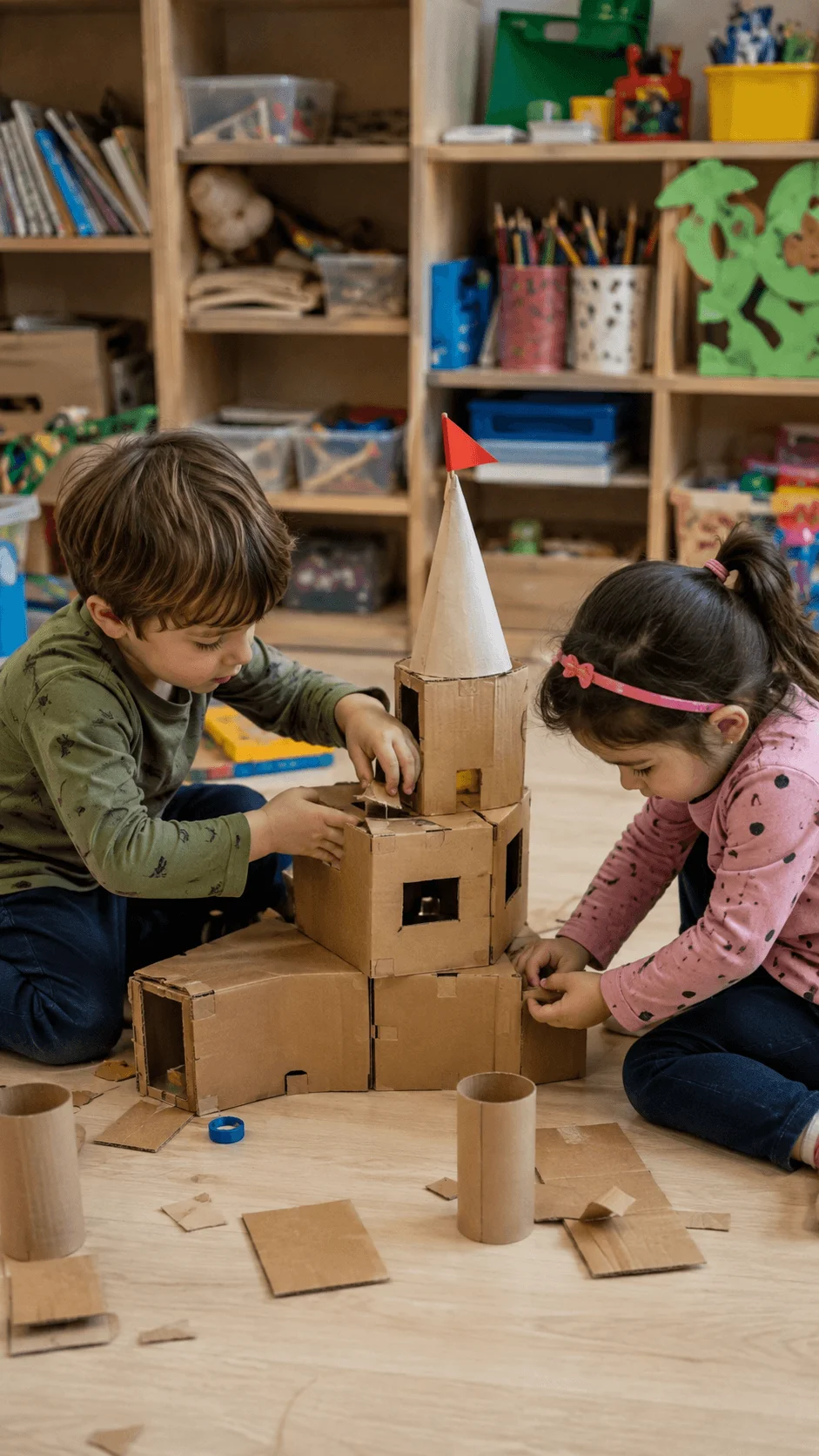
Teachers can introduce simple challenges to encourage deeper thinking. They might ask children to build something that can stand without being held or create a structure that can hold a lightweight toy. These challenges encourage children to think about balance, shape, strength, and stability.
The activity also introduces an important sustainability concept. Materials do not always need to be new to be useful. A cardboard box that once protected a delivery can have a second life as a creative resource.
Parents can keep a small collection of clean cardboard pieces for rainy day activities. Teachers can create a classroom construction area where children can return to their projects over several days.
Adults should remove staples, sharp edges, tape with unsuitable materials, and other potentially unsafe pieces before giving cardboard to young children.
Eco Friendly Nature Scavenger Hunt
A nature scavenger hunt can turn an ordinary outdoor walk into an environmental discovery activity. Instead of asking children to collect everything they see, encourage them to observe the world around them.
Children might look for a fallen leaf, a flower, a tree with interesting bark, a shady place, an insect, a bird, or evidence that an animal has visited the area.
The important difference is that children do not need to take these things home. They can simply find them, observe them, and talk about what they notice.
Nature based activities for preschoolers can help children develop a stronger awareness of their surroundings because they encourage close observation. A child may walk past a tree every day without noticing its texture, but a scavenger hunt can encourage them to stop and investigate.
Teachers can adapt the activity to different environments. A preschool playground might contain enough natural features for a short hunt, while a garden or suitable outdoor space can provide a wider range of discoveries.
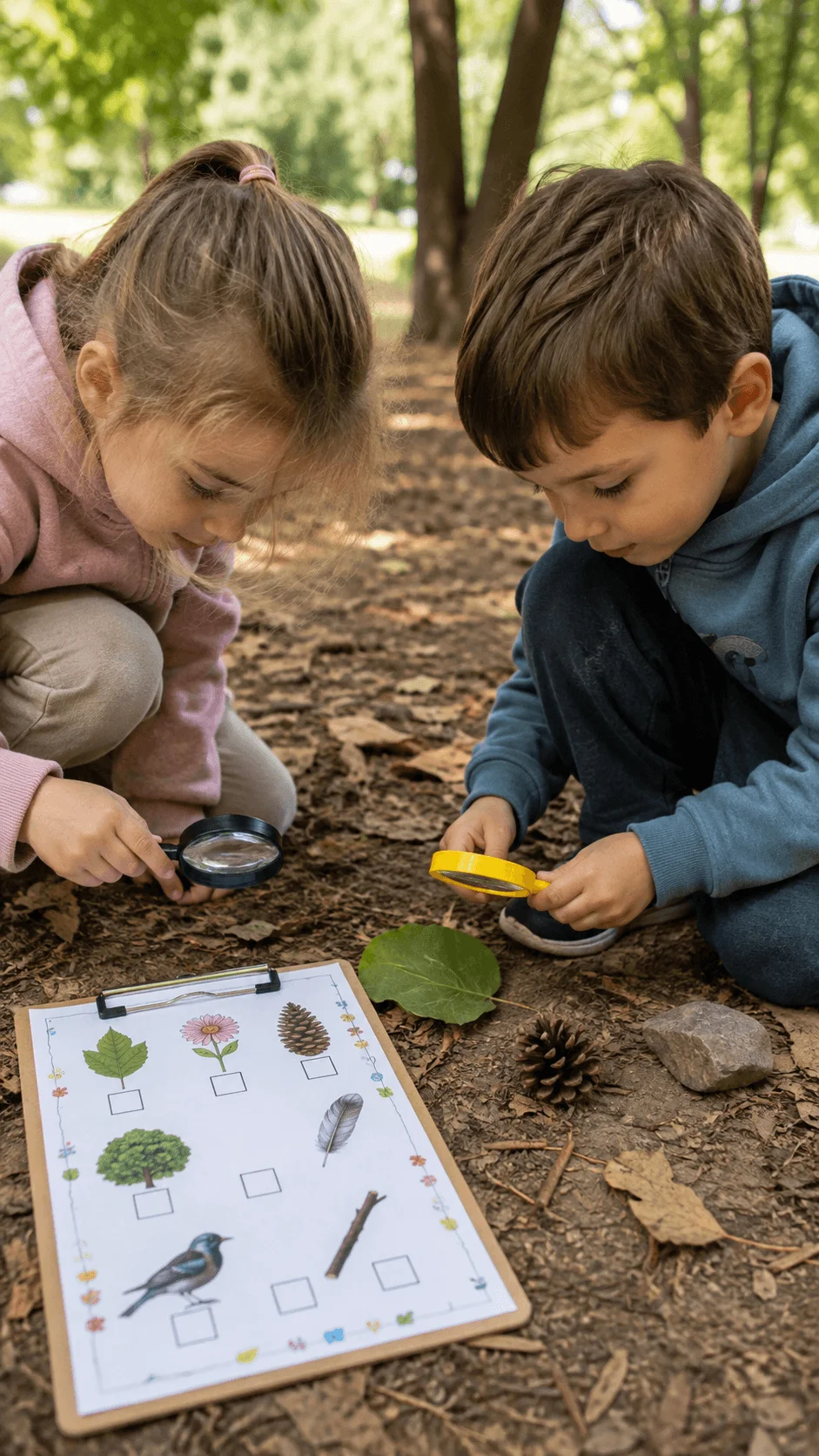
You can also make the activity more imaginative. Instead of simply asking children to find a leaf, ask them to find something that looks like a particular shape or something that provides shelter for a small creature.
This activity can also introduce respectful behavior around nature. Children can learn that flowers do not need to be picked, insects do not need to be captured, and living plants do not need to be damaged for exploration to be enjoyable.
For younger preschoolers, adults can guide the activity verbally. Older preschoolers can use simple picture based observation sheets created by their teacher.
Seed to Sprout Preschool Journal
Growing a plant from a seed provides one of the clearest ways to introduce children to change in the natural world. A seed may look small and ordinary, but over time it can develop into a growing plant.
A seed to sprout journal gives this process an additional creative dimension. Children can draw what they observe at different stages instead of simply watching the plant grow.
At the beginning, a child might draw the seed. Later, they can draw the first sprout, new leaves, and changes in the plant’s size. These drawings create a visual record of the experience.
Gardening activities for preschoolers become more meaningful when children have time to observe gradual changes. The plant does not transform immediately, so children learn that some natural processes happen slowly.
Teachers can place several plants in an accessible observation area and encourage children to compare them. They might notice that one plant has more leaves or that different plants have different shapes.
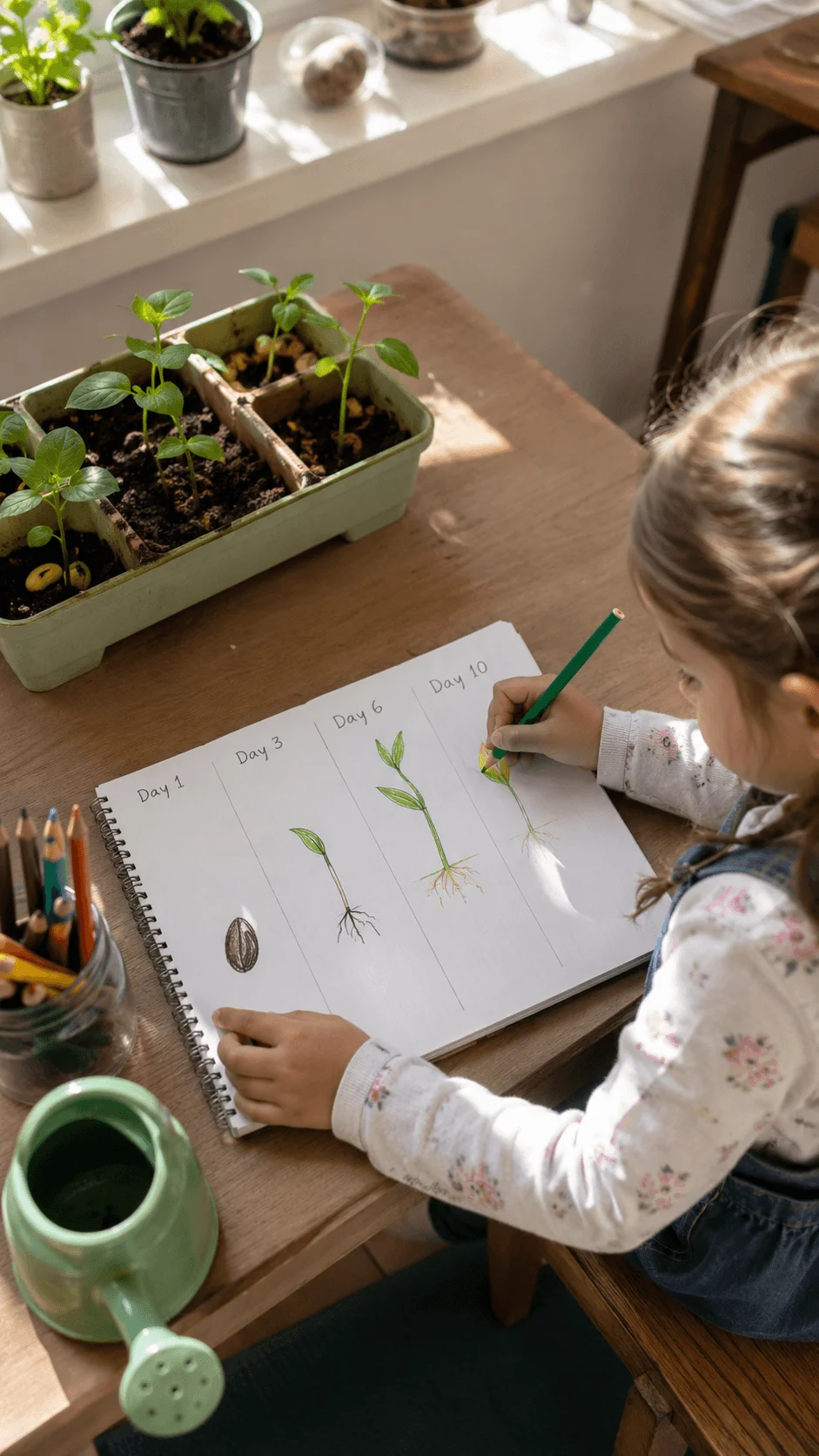
The journal can also encourage questions. Why did the seed change? What happened after watering? Why did the leaves become larger? What does the plant need to continue growing?
These questions create natural opportunities for early science conversations without requiring complicated explanations.
Parents can create the journal at home with a few sheets of paper or a simple notebook. Teachers can keep a shared class journal where children contribute drawings over time.
Adults should choose suitable seeds and plants and supervise watering so that children do not overwater them. The activity should focus on observation and care rather than expecting children to manage every part of gardening independently.
Bird and Bug Habitat Station
Children often become fascinated when they notice a bird in a garden or discover an insect near a flower. A bird and bug habitat station can turn these unexpected discoveries into an ongoing environmental learning opportunity.
The idea is to create an area where children can safely observe small creatures without trying to catch or handle them. Plants, suitable natural features, and other appropriate habitat elements can make an outdoor space more interesting for wildlife.
The purpose is not to build a complicated habitat. Even a small garden area can become a place for children to observe changes.
Children can watch from a suitable distance and draw what they see. One day they may notice a butterfly, while another day they may see a bird searching around plants.
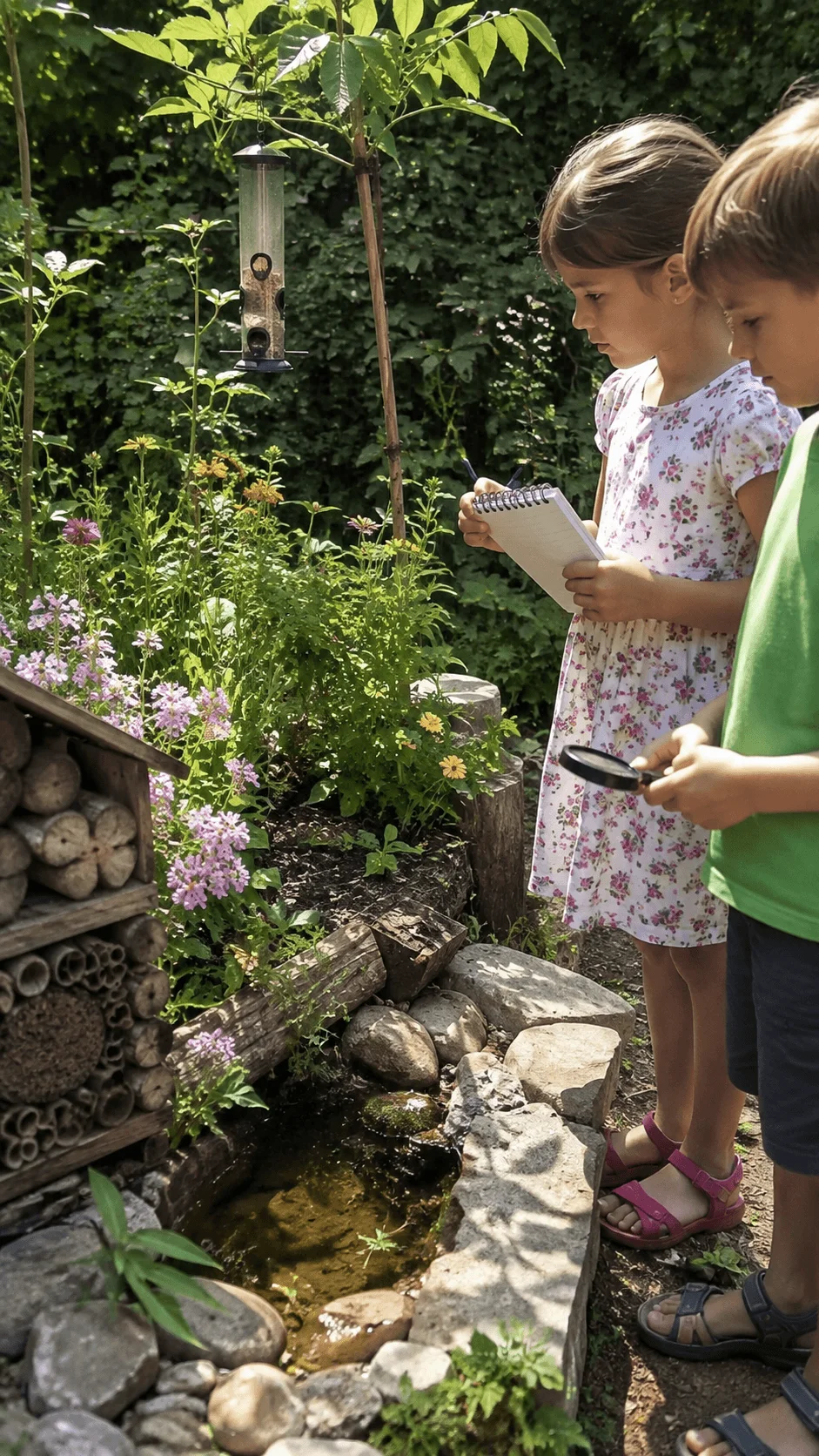
Environmental activities for preschoolers become especially memorable when children can connect their learning with real living things. Instead of looking at pictures of biodiversity in a book, they can observe some of the life that exists around them.
Teachers can encourage children to think about what animals need. Where might a bird find food? Where could a small insect hide? Why might some creatures prefer plants or shaded areas?
These questions help children understand that outdoor spaces are homes for many forms of life.
Adults should make sure that the habitat does not involve dangerous materials or practices. Children should observe wildlife rather than touching, feeding, chasing, or disturbing animals.
How Sustainable Activities Support Preschool Learning
The value of these activities extends beyond environmental awareness. When children create nature art, observe insects, grow seeds, build with cardboard, or explore textures, they are also developing opportunities to practice different skills.
A nature loose parts activity can encourage creative decision making. A cardboard challenge can invite children to test solutions. A seed journal can encourage careful observation. A sensory tray can encourage children to describe differences between materials.
This is one reason sustainable activities for preschoolers can fit naturally into early learning environments. The activities do not need to replace normal play. They can become part of art, science, outdoor exploration, sensory experiences, and creative construction.
The activities can also encourage conversations between adults and children. A teacher might ask why a leaf feels different from a stone. A parent might ask what happened to the seed since yesterday. These simple questions can encourage children to look more closely at the world around them.
Sustainability also becomes less abstract when children can see it in everyday situations. Reusing cardboard becomes something they experience. Caring for a plant becomes something they practice. Observing a pollinator becomes a real event rather than a picture on a screen.
Conclusion
Eco friendly activities for preschoolers can introduce important environmental ideas through experiences that feel natural, creative, and enjoyable. Children can explore sustainability by creating temporary art from natural materials, reusing cardboard, growing plants, observing pollinators, learning about composting, conserving water, and watching birds and insects.
The goal is not to place the responsibility for environmental problems on young children. Preschoolers simply need opportunities to notice the world around them and understand that their surroundings deserve care.
Parents and teachers can make this learning meaningful by choosing simple activities, asking thoughtful questions, allowing children to explore, and returning to projects over time. A small planter, a handful of natural materials, a cardboard box, or a patch of flowers can become the beginning of a valuable learning experience.
When sustainability becomes part of everyday play, children can begin developing a lasting appreciation for nature and the resources they encounter every day. With the right approach, eco friendly activities for preschoolers can make environmental learning practical, memorable, and genuinely fun.