12 Eco Friendly Waste Sorting Bags and Ideas for Smarter Recycling in 2026
Finding practical eco friendly waste sorting bags has become more important as households look for better ways to separate recyclables, food scraps, garden waste, and general rubbish. In 2026, the idea goes far beyond replacing an ordinary plastic trash bag with something labeled green. Reusable sorting bags, compostable food waste liners, recycled materials, transparent recycling sacks, paper options, and smart sorting systems are creating new possibilities for organizing household waste.
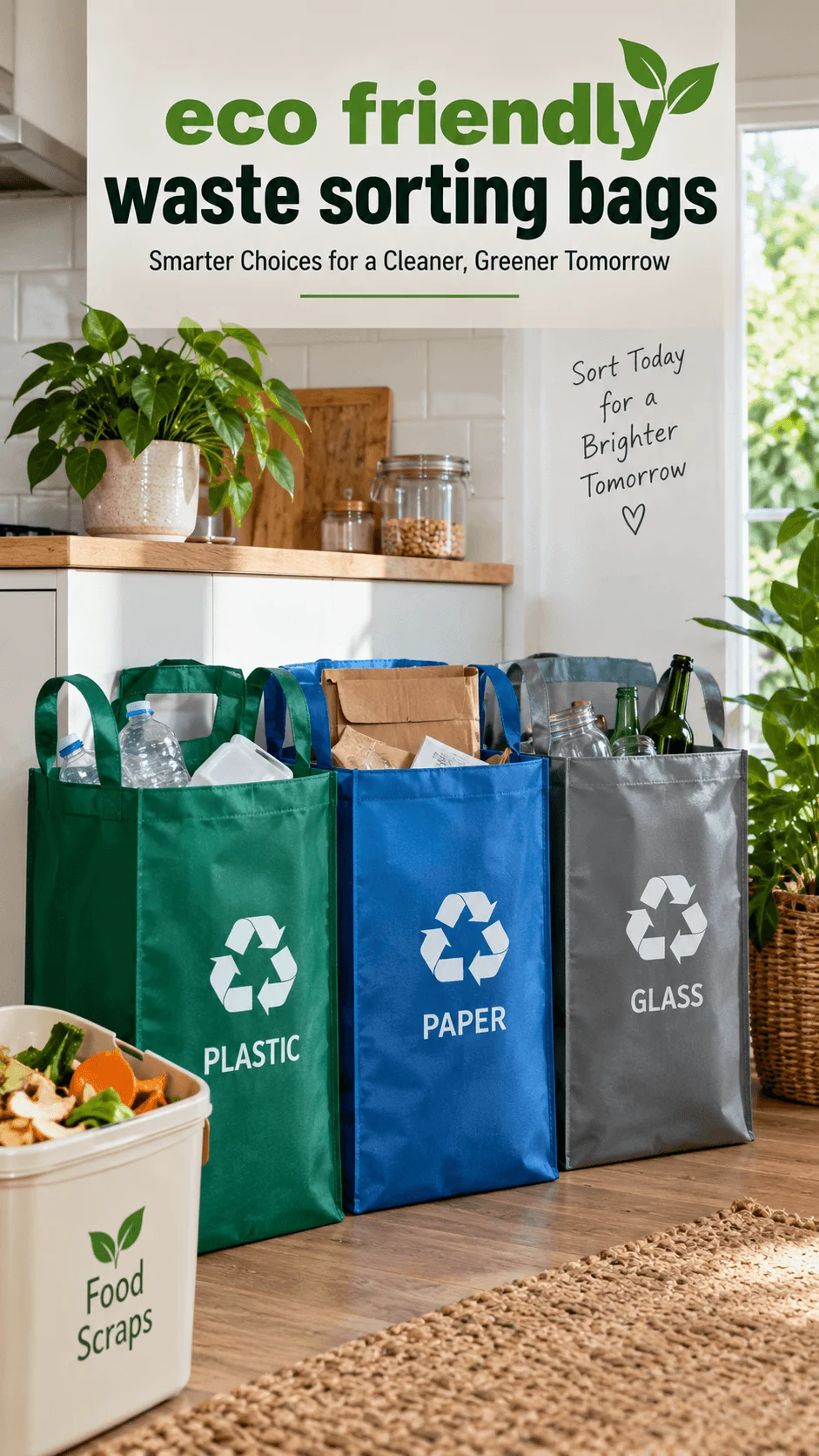
The right solution depends on what you need to collect and what happens to that material after collection. A reusable bag may work extremely well for bottles and cardboard but poorly for wet food scraps. A compostable liner may seem attractive, but it offers limited value if the local organic waste program does not accept it. Good waste sorting therefore requires a combination of suitable materials, convenient organization, clear local rules, and consistent household habits.
These eco friendly waste sorting bags and related ideas show how households can build a practical system without assuming that one material works perfectly for every waste stream.
1. Reusable Waste Sorting Bags With Color Coded Systems
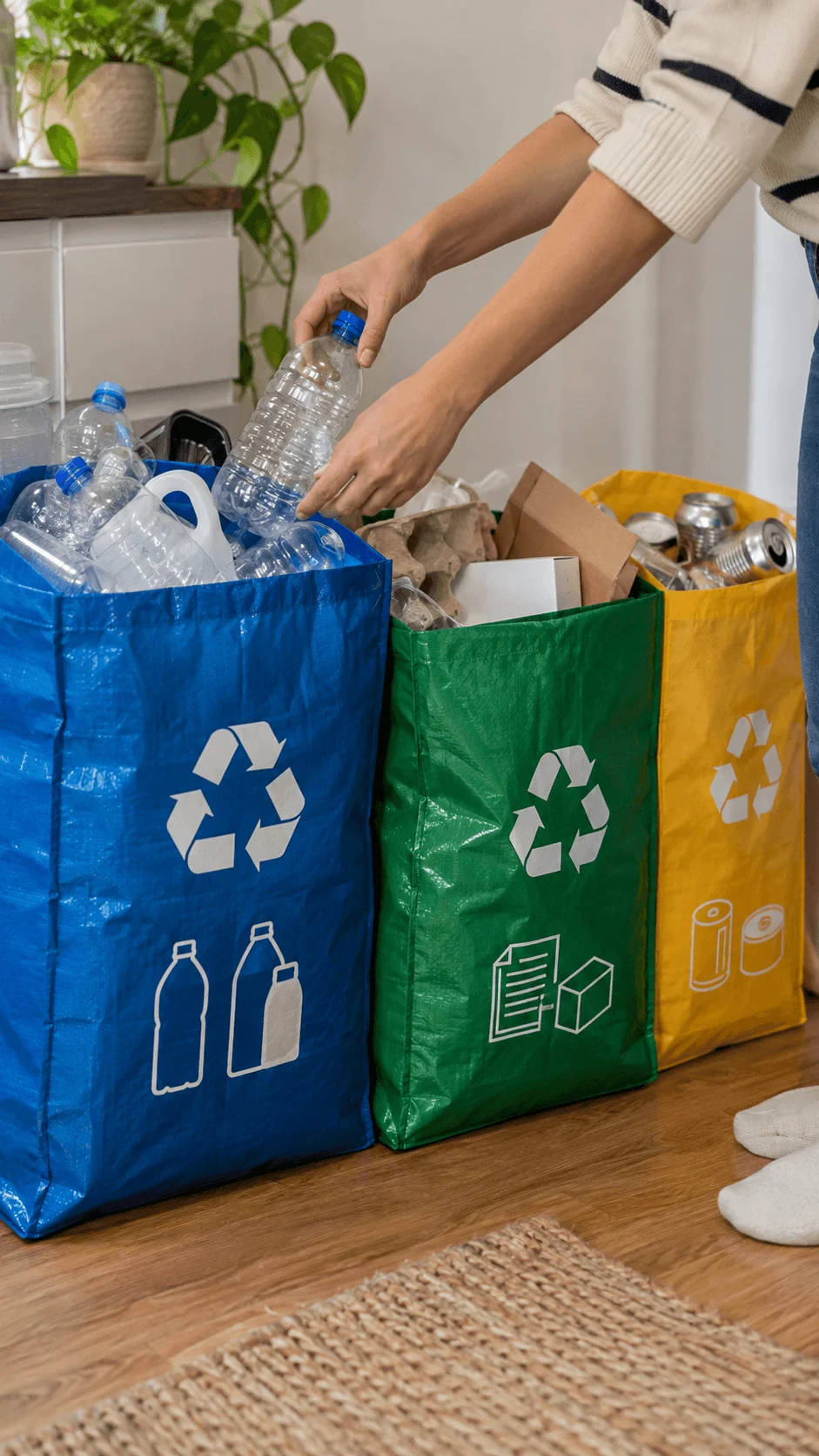
Reusable waste sorting bags provide one of the simplest ways to organize recyclables without constantly throwing away liners. Instead of placing every material into a disposable bag, a household can assign permanent reusable bags to its main recycling categories.
One bag might collect paper and cardboard while another holds glass. Other bags can handle metal cans, plastic packaging, textiles, or deposit containers according to local collection rules. Colors can make these categories easier to recognize, particularly in busy households where several people use the same recycling station.
Useful designs include strong carrying handles, wide openings, reinforced bottoms, washable surfaces, and labels that remain easy to see. Foldable bags provide another advantage because people can flatten them when they do not need them.
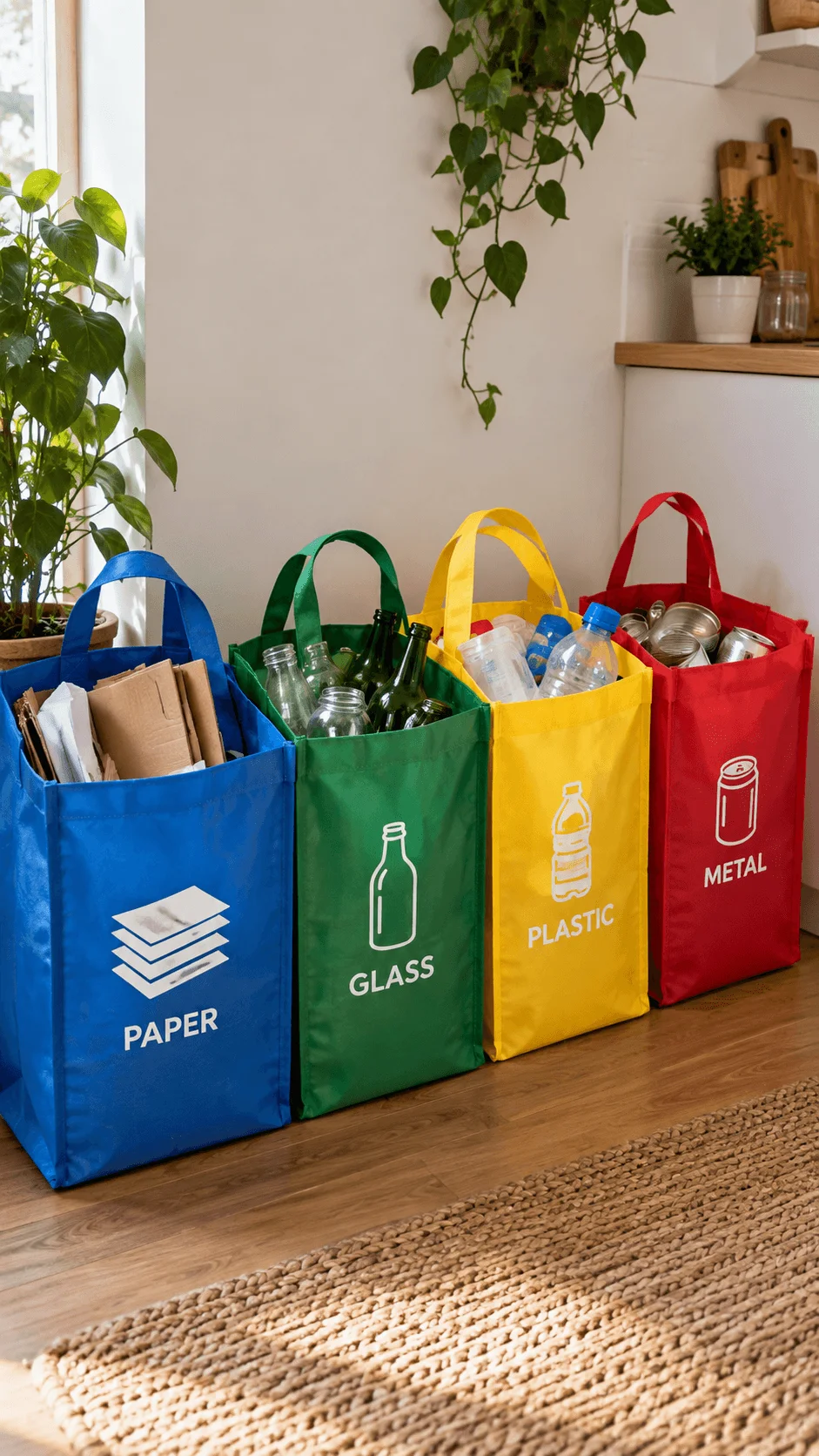
These reusable waste sorting bags can work especially well in apartments. Residents can fill them at home, carry them to communal recycling containers, empty the contents, and bring the bags back for another cycle.
However, households should not rely on color alone. Recycling colors differ between locations. Clear words and recognizable symbols can prevent confusion and make the system easier for everyone to follow.
2. Smart Waste Sorting Bags With QR Codes
Digital technology is beginning to influence even simple household waste containers. Smart eco friendly waste sorting bags can use QR codes or digital labels to connect a physical sorting system with useful disposal information.
A resident could scan a code before throwing away an unfamiliar package and open instructions explaining which materials belong in that waste stream. A digital guide could also explain whether people need to remove lids, rinse containers, separate components, or take a particular item to a special collection point.
This approach can address an important recycling problem. Waste rules vary between locations, and advice that applies in one municipality may not apply in another. A digital system can potentially provide more specific guidance and update information without replacing every physical label.
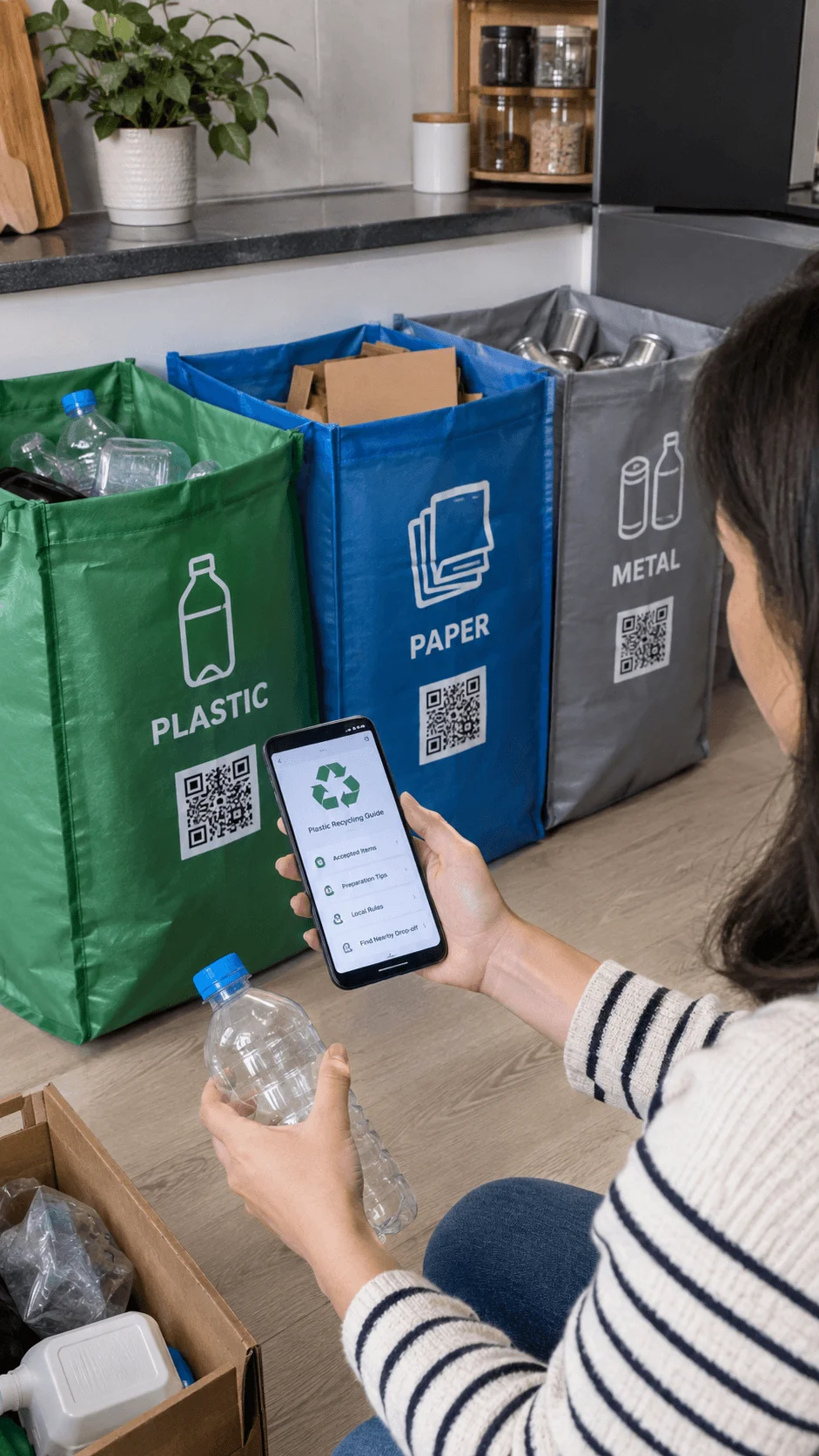
More advanced systems can connect codes with participation tracking, recycling education, collection information, or incentive programs.
Technology alone does not make a sorting bag environmentally responsible. A useful system still needs appropriate bag materials, accurate information, convenient access, and a sensible disposal route. Smart features provide the greatest value when they help people make fewer sorting mistakes rather than simply adding technology to an ordinary bag.
3. Dual Compartment Recycling and Waste Separation Bags
Limited floor space can make household recycling difficult. Several separate rigid bins may work in a large utility room but become impractical in a compact apartment kitchen.
Dual compartment waste separation bags address this problem by dividing one sorting unit into two clearly defined sections. A household could use one compartment for paper and another for containers, depending on the categories required by its local recycling program.
Good separation remains essential. If items regularly move from one compartment into another, the system can create confusion rather than preventing it. Clear labels, contrasting colors, and secure internal divisions can help maintain separate waste streams.
Some designs may also allow people to detach or empty each section independently. That can make the system more convenient when one category fills faster than another.
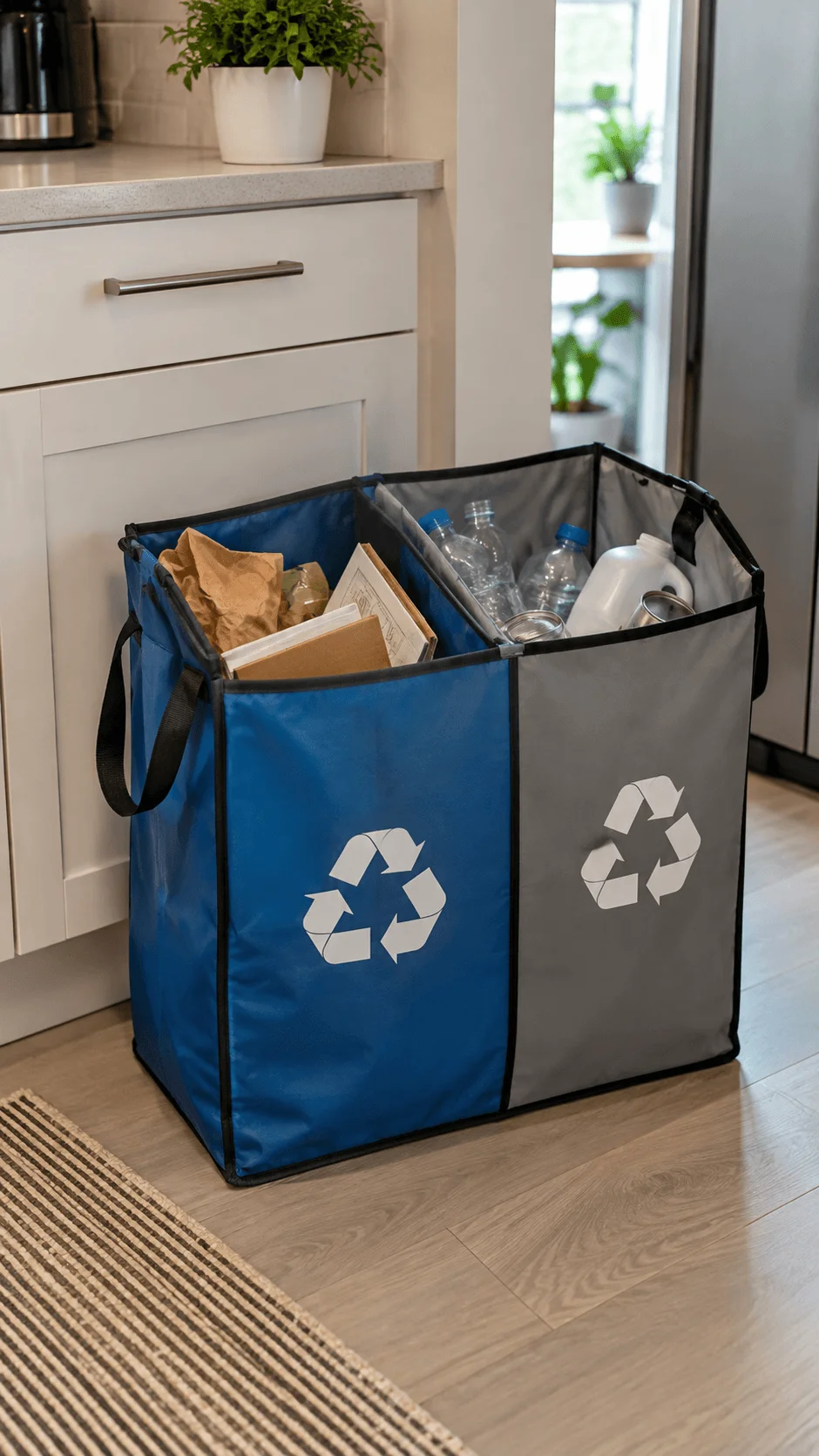
Capacity deserves attention as well. Two small compartments may save floor space but require more frequent emptying. For households that generate large amounts of recyclables, separate reusable bags may still work better.
For apartments, offices, dorm rooms, and compact kitchens, however, dual compartment designs can provide an interesting balance between sorting accuracy and efficient use of space.
4. Compostable Food Waste Sorting Bags
Food scraps create different challenges from dry recyclables. Moisture, odors, and decomposing material can make an ordinary reusable fabric bag unsuitable. Certified compostable food waste liners can provide an alternative where the local organic collection system accepts them.
These compostable waste sorting bags can make it easier to collect suitable kitchen scraps while keeping a food waste caddy cleaner. Once full, the household can follow its local collection instructions for transferring the food waste.
The word compostable deserves careful attention. Consumers frequently encounter packaging covered with environmental language, but words such as green, degradable, or natural do not automatically tell someone how a product should be processed.
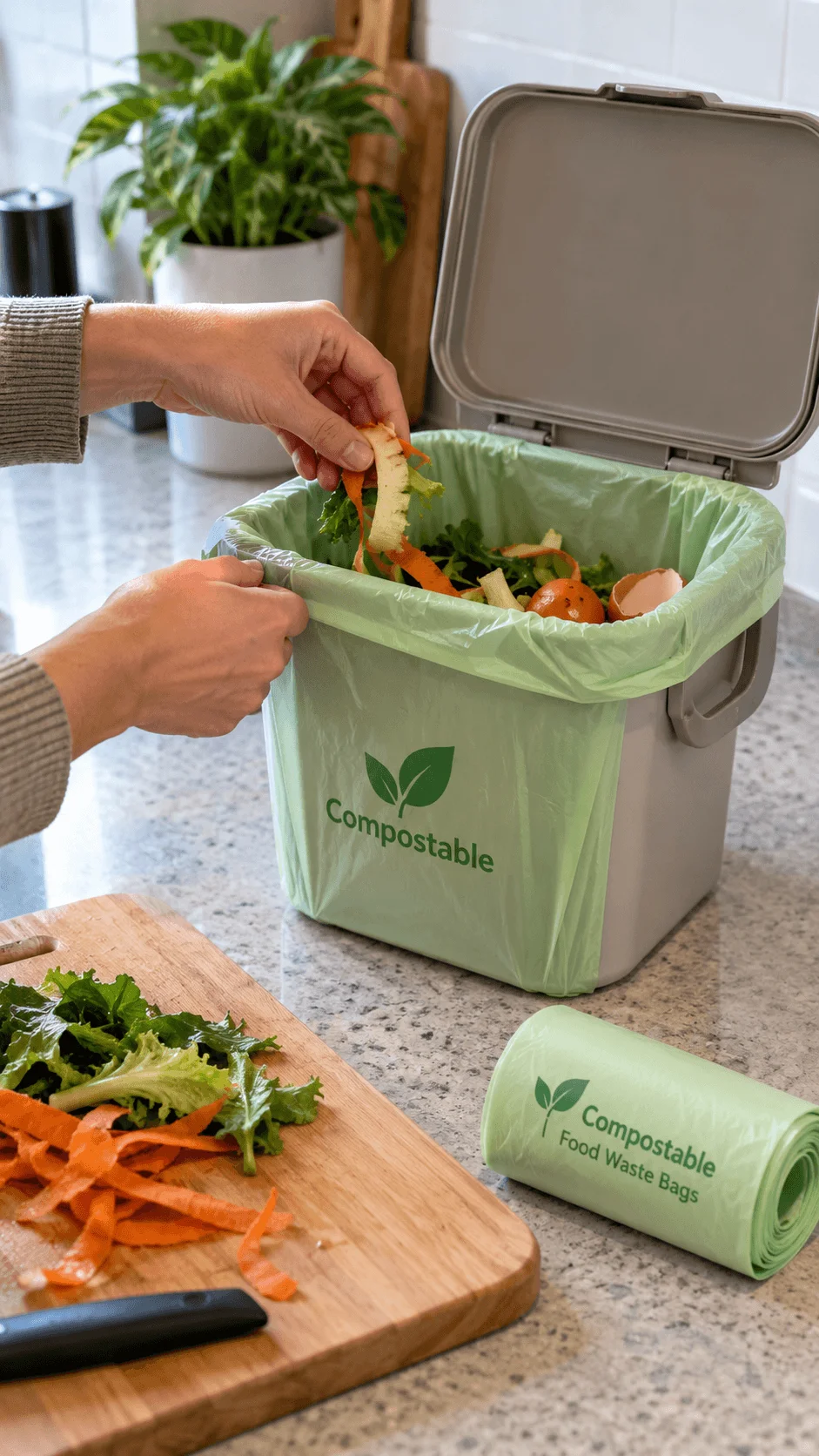
Certification and clear disposal instructions provide much more useful information. Even a properly certified compostable bag may not belong in every municipal organic waste stream. Different processing facilities use different equipment and acceptance policies.
Households should therefore check local requirements before buying liners in large quantities. A compostable bag works best when the collection and processing system can actually handle it as intended.
5. Home Compostable Bags for Organic Waste
Home compostable bags deserve separate attention because home composting and industrial composting do not provide identical conditions.
Commercial facilities can control factors such as temperature, moisture, processing time, and microbial activity more closely than most backyard compost piles. A product designed for those controlled conditions may not break down in the same way at home.
Genuinely suitable food waste sorting bags designed for home composting can be useful for some households, but users still need to understand the product instructions. Composting does not make material disappear instantly. Conditions inside the compost pile influence the process.
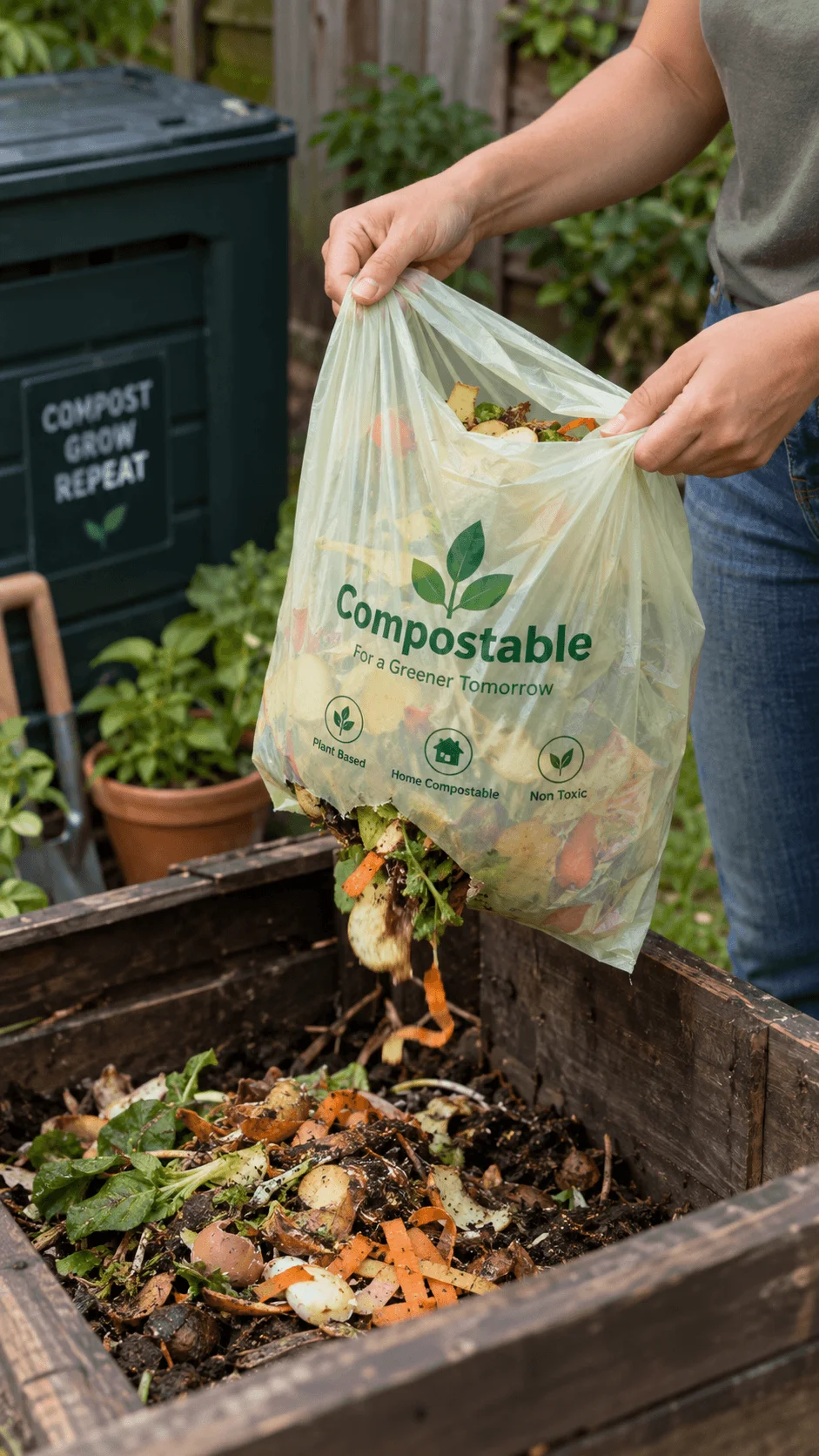
This distinction also demonstrates why biodegradable and compostable should not be treated as interchangeable terms. A claim that something can eventually degrade does not necessarily explain how quickly that happens, under which conditions it happens, or whether the material belongs in a particular composting system.
People who compost at home should therefore look beyond attractive packaging. Suitable certification, material information, disposal guidance, and compatibility with their composting method provide a better basis for choosing a liner.
6. Recycled Material Waste Sorting Bags
Reducing plastic does not always require eliminating it immediately. Bags made with post consumer recycled plastic offer another approach by using material that has already completed a previous product life.
For certain waste streams, strength and moisture resistance remain important. A durable recycled plastic sack may make more practical sense than a weak alternative that tears during collection.
These sustainable waste sorting bags can reduce dependence on virgin plastic when manufacturers use meaningful quantities of recycled feedstock. However, recycled plastic remains plastic, so it should not be presented as plastic free or zero waste.
Durability also matters. A bag that contains less virgin material but tears so easily that someone needs two bags for every load can undermine the intended material savings.
Consumers can consider recycled content alongside thickness, carrying capacity, intended use, and disposal requirements. The goal should be choosing enough strength for the job without consuming more material than the waste stream actually requires.
7. Low Material and Ultra Thin Recycling Bags
Changing the material is not the only way to rethink waste bags. Another approach involves reducing how much material goes into each bag.
Ultra thin recycling sacks attempt to provide sufficient carrying strength while using less film. For lightweight dry recyclables, this can make sense because the bag does not need the same strength required for heavy or wet rubbish.
Transparent lightweight sacks can also make contents visible, which may help people notice obvious sorting mistakes.
Material reduction requires balance. If an extremely thin bag regularly splits while someone carries it outside, households may start double bagging. That defeats much of the purpose.
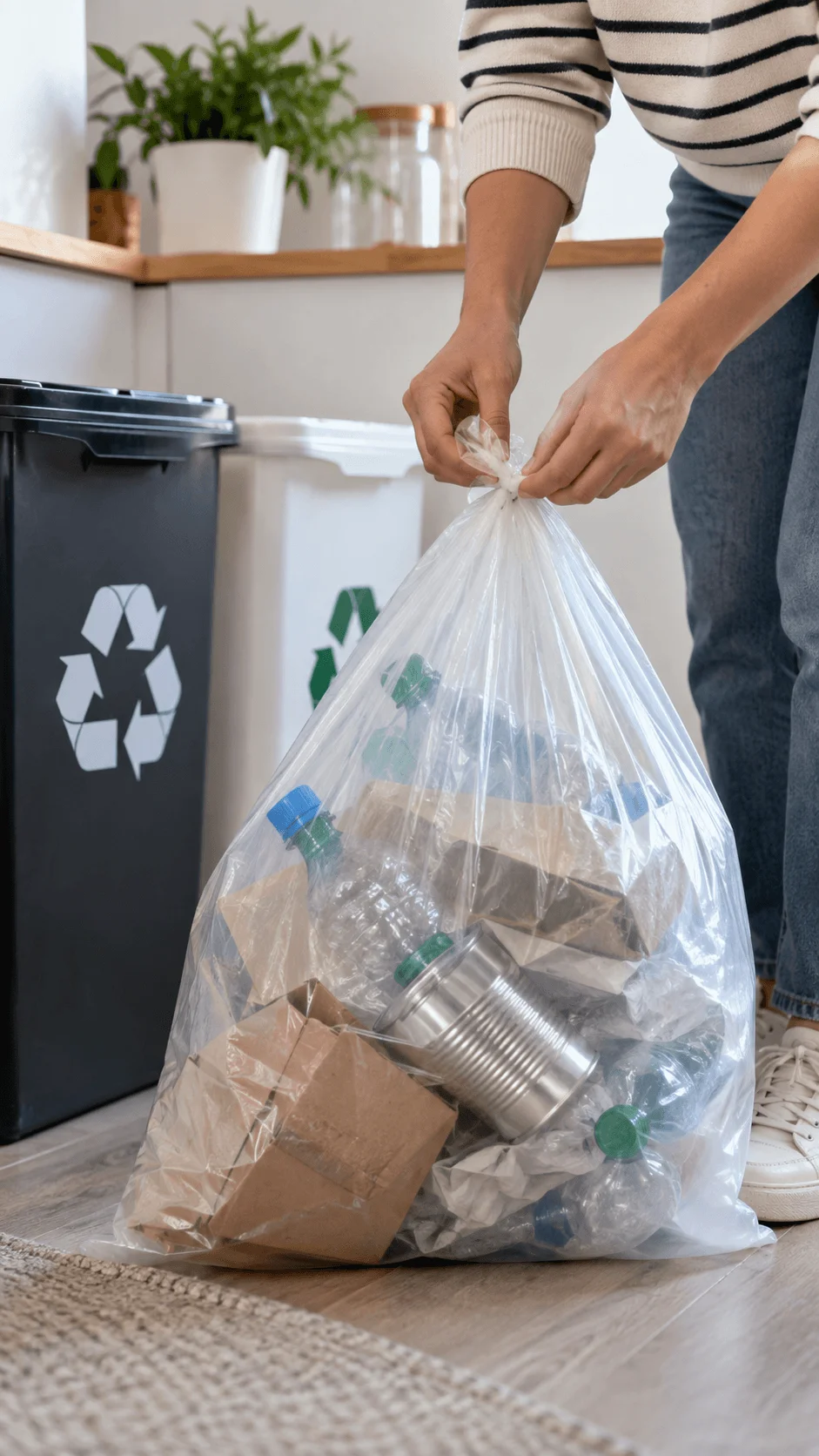
The best eco friendly waste sorting bags should therefore use an appropriate amount of material for their intended job rather than simply chasing the lowest possible thickness.
Households can also avoid overloading lightweight sacks. Matching capacity and strength to the actual waste stream can help a thinner bag perform successfully without unnecessary material consumption.
8. Transparent Recycling Bags for Better Waste Sorting
Contamination remains a major challenge in household recycling. Someone may place food covered packaging, an unsuitable plastic item, or another incorrect material into a recycling stream without realizing the mistake.
Transparent recycling sorting bags make the contents easier to inspect. Residents can notice obvious errors before putting the bag out for collection or emptying it into a shared recycling container.
Visibility can also help in offices, schools, apartment buildings, community programs, and public events where many people use the same sorting stations. Organizers can identify recurring mistakes and improve labels or instructions accordingly.
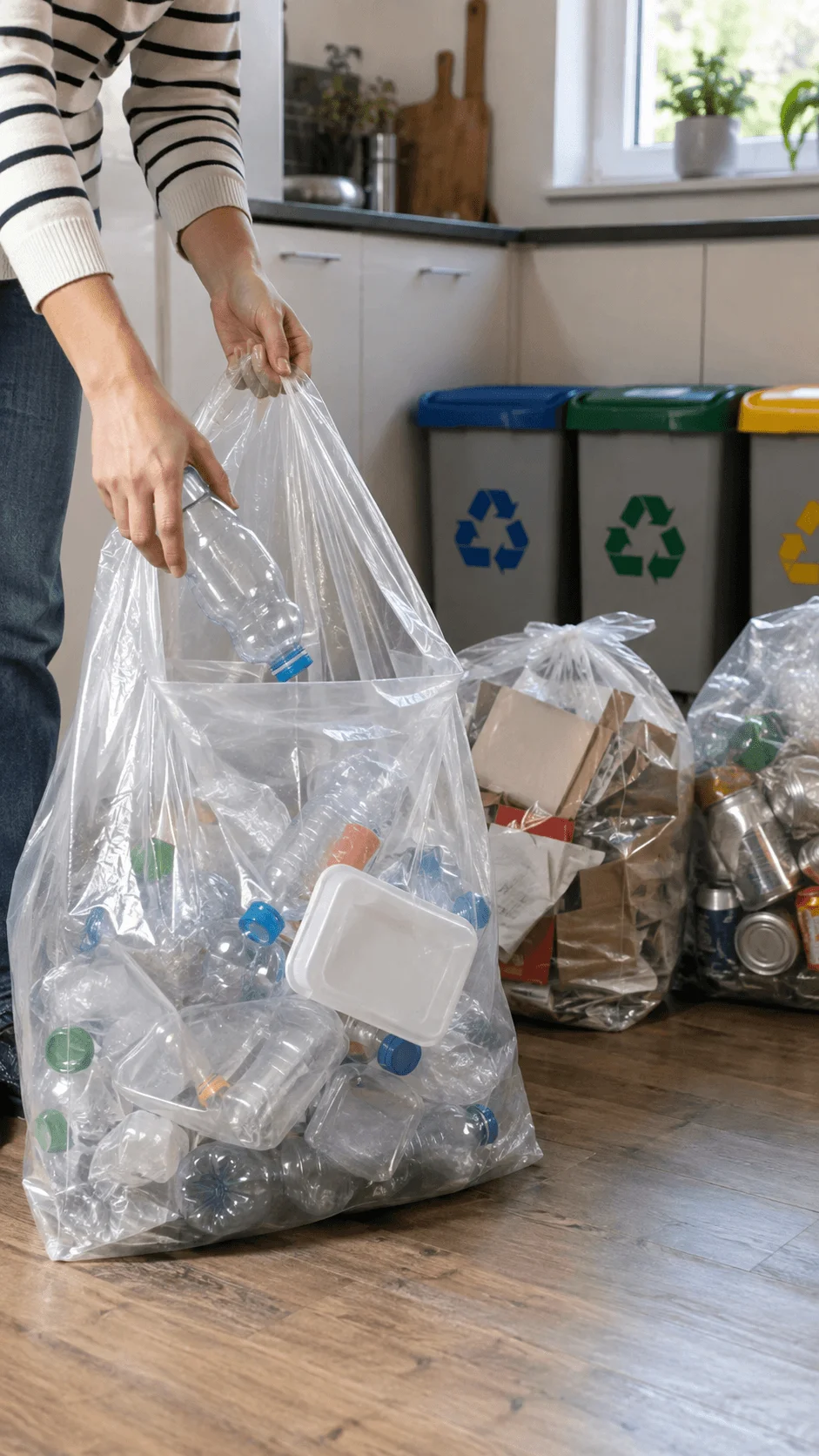
Clear bags do not solve contamination by themselves. People still need accurate information about what the local system accepts. However, visibility can make mistakes harder to overlook.
Privacy creates an important limitation. People may not want certain household waste visible to neighbors or collection workers. Transparent bags therefore make more sense for appropriate recycling streams than for every category of household rubbish.
Local collection rules should always determine whether residents can use them.
9. Foldable Reusable Recycling Bags With Handles
One of the most practical approaches to eco friendly waste sorting bags involves treating the bag as permanent household equipment rather than disposable packaging.
A foldable reusable recycling bag can remain in a kitchen, utility area, pantry, garage, or balcony while the household fills it with a particular recyclable stream. When it becomes full, someone carries it to the collection point, empties it, returns home with the same bag, and uses it again.
Handles make this routine considerably easier. Reinforced bottoms can support bottles and cans, while wide openings make bulky packaging easier to insert and remove.
Washable surfaces also matter because even dry recyclables can occasionally leak or leave residue. A bag that is difficult to clean may become unpleasant after repeated use.
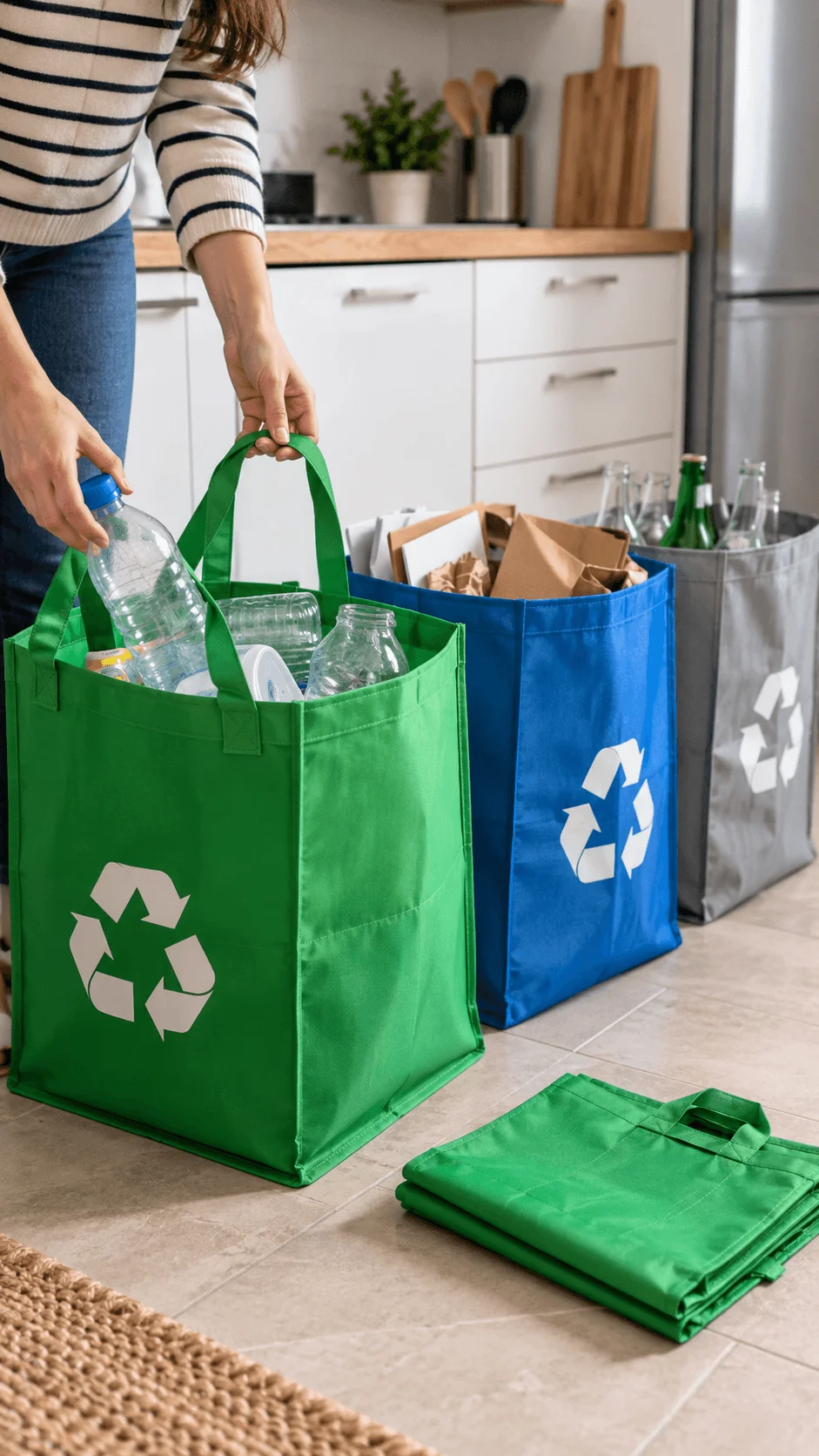
Foldable construction provides another advantage for small homes. Unlike rigid recycling bins, empty bags can collapse into a compact space.
Long term value depends heavily on repeated use. Buying a reusable product and replacing it frequently provides fewer benefits than choosing a durable design and maintaining it properly.
10. Paper Waste Sorting Bags for Garden and Dry Waste
Paper offers another option for selected waste streams. Strong kraft paper sacks can work for appropriate garden materials, leaves, dry waste, or paper based recyclables where local collection services permit them.
Paper bags can be particularly convenient when a collection program accepts both the contents and the sack through the same processing route.
However, paper should not automatically receive an environmental advantage simply because it contains no conventional plastic film. Manufacturing, durability, transportation, and disposal all matter.
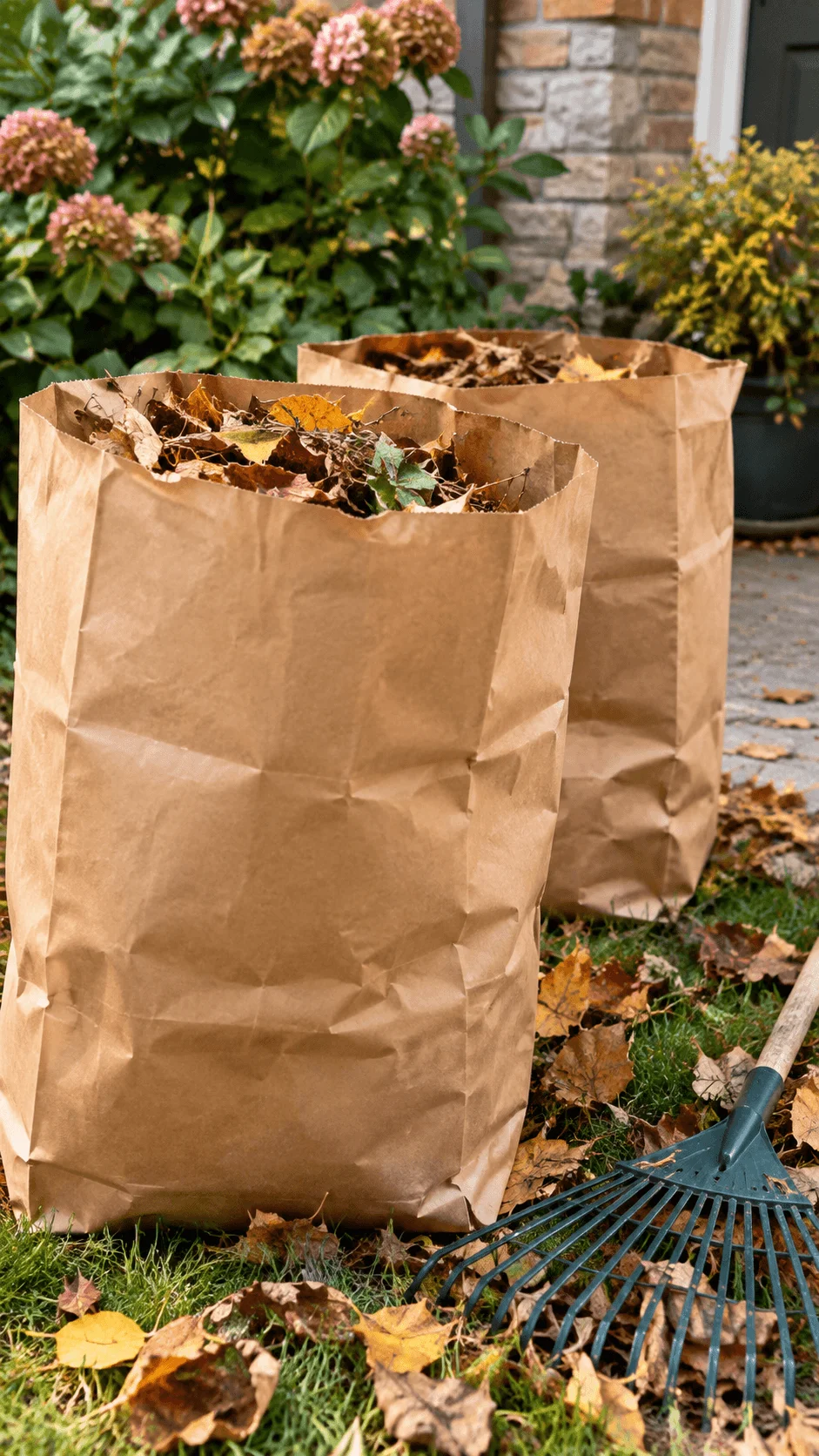
Moisture presents one of the biggest practical limitations. Wet leaves and garden material can become surprisingly heavy, while prolonged exposure to water can weaken ordinary paper.
Reinforced bases and multiple layers can improve carrying strength, but users still need to store bags appropriately and avoid excessive loads.
These plastic free waste bags make the most sense when their material properties match both the waste stream and the requirements of the collection service.
11. Plastic Free Food Waste Sorting With Paper Liners
Sometimes the most resource efficient waste bag is the one a household does not need to buy.
Where local collection rules allow it, people may collect food scraps directly inside a washable caddy and empty that container into the appropriate collection system. Some programs may also permit suitable paper liners or folded newspaper.
This approach changes the question from finding better disposable eco friendly waste sorting bags to reducing dependence on disposable liners altogether.
A bag free system comes with practical responsibilities. Food waste containers need regular emptying and cleaning. Moisture can collect inside the caddy, while warm conditions can increase odors if scraps remain there too long.
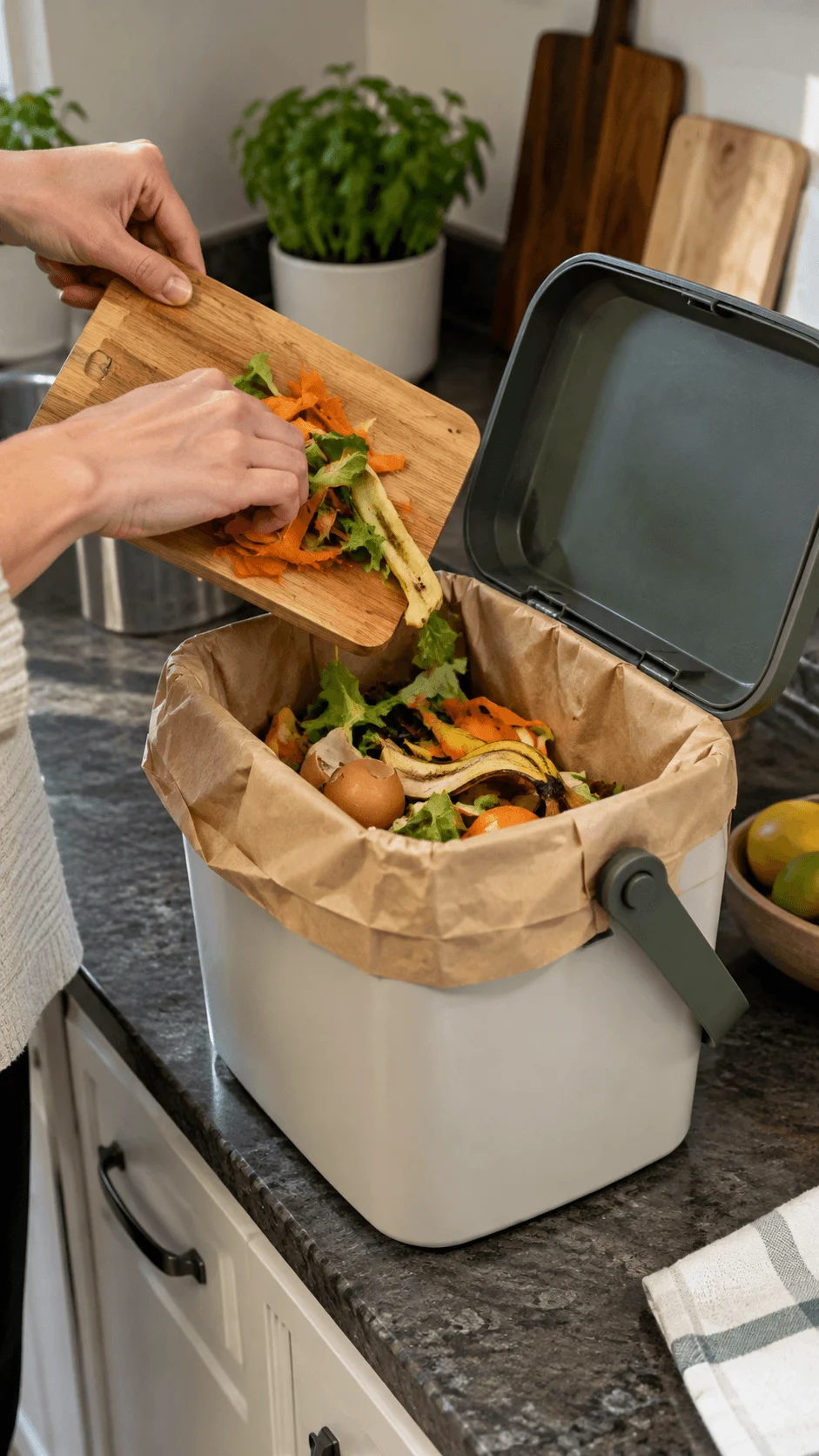
Paper liners can make cleaning easier in suitable systems, but wet food can weaken them.
Convenience should remain part of the decision. If an extremely complicated routine discourages household members from separating food waste, it may achieve less than a simple system they follow consistently.
Local organic waste rules remain essential because acceptable collection methods vary significantly.
12. Trackable Recycling Bags and Smart Reward Systems
Waste sorting bags may eventually do more than contain materials. Digitally identifiable bags can become part of systems that gather information about recycling activity.
A unique code could connect a bag with collection records. Depending on the system, waste managers could potentially record when materials arrive, how much they weigh, whether contamination appears, or how consistently participants use the program.
This creates possibilities for reward based recycling. Communities could use verified participation to support points, incentives, neighborhood goals, or educational campaigns.
Data could also help waste managers understand where residents struggle with sorting. If one waste stream repeatedly contains incorrect materials, the program could improve instructions rather than relying on general recycling messages.
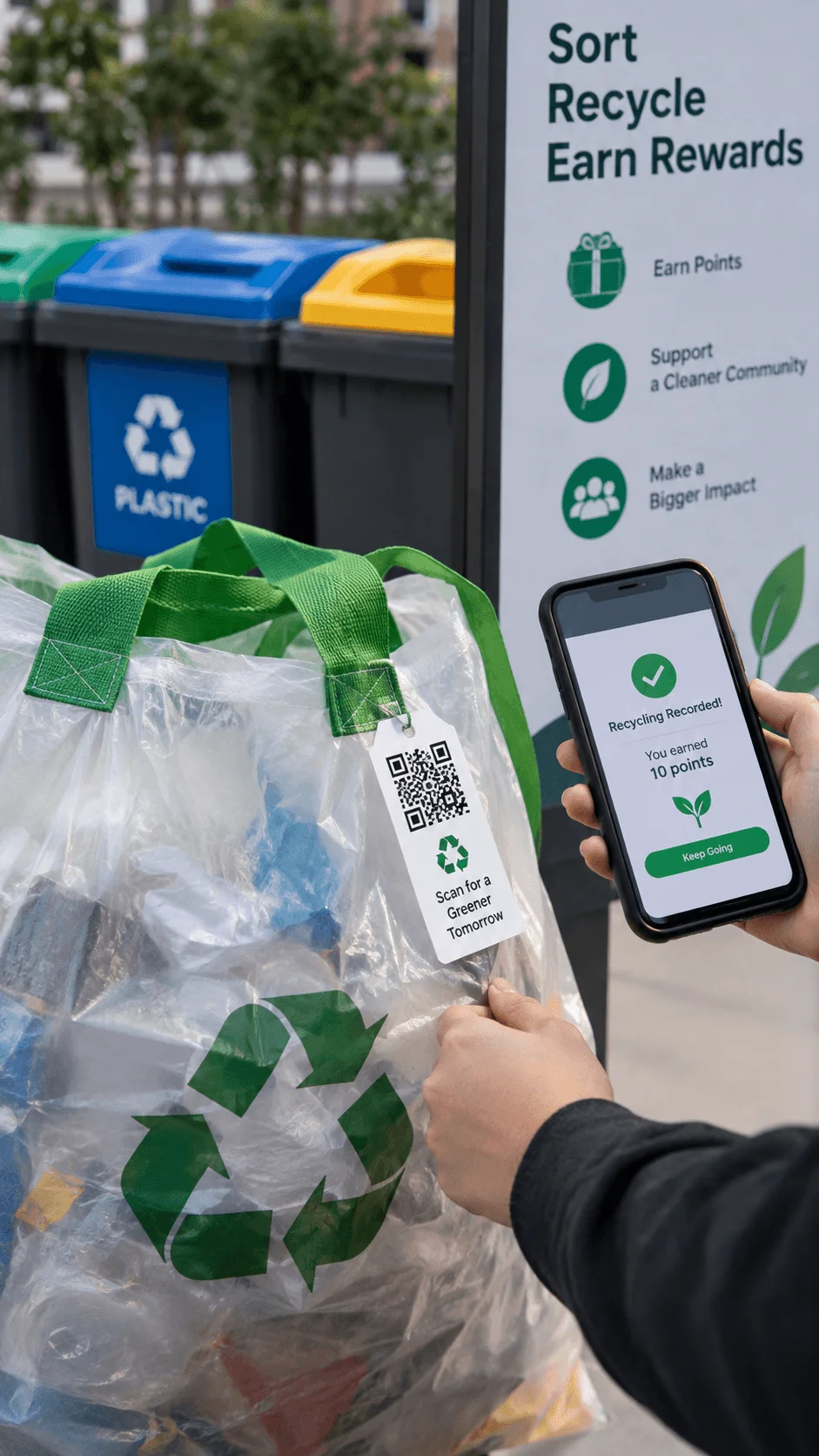
These smart waste sorting bags also introduce challenges. Digital infrastructure costs money. Tracking can create privacy concerns, and technology must remain accessible to people who do not regularly use smartphones.
For that reason, smart sorting should support convenient recycling rather than turn a simple household activity into an unnecessarily complicated digital process.
Choosing Sustainable Waste Sorting Bags for Your Home
No single waste bag suits every household. Choosing eco friendly waste sorting bags starts with understanding what materials the household actually needs to separate.
Space matters. An apartment resident may benefit from foldable reusable bags that can carry recyclables to communal bins. A house with a large utility area may have enough room for several permanent sorting containers.
The waste stream matters even more. Dry paper and bottles require different handling from wet food scraps. Garden material creates another set of demands. Trying to use one bag type for everything can create unnecessary problems.
Local infrastructure should guide the final decision. A certified compostable liner provides little practical advantage if the local food waste service prohibits it. Similarly, sorting packaging into categories that the local recycling system later combines may add unnecessary complexity.
A mixed system can often work better. Reusable recycling bags can handle dry materials, while an approved liner or washable caddy can collect food scraps. Appropriate paper sacks may serve garden waste.
The goal is not to own the largest collection of environmentally marketed products. It is to create a simple system that household members can use correctly every day.
Understanding Eco Friendly Waste Bag Claims
Environmental terminology can make waste bag shopping unnecessarily confusing.
Biodegradable generally describes a material that microorganisms can break down under certain conditions, but the word alone does not explain the required conditions or timeframe. Compostable products need suitable composting conditions, and home compostable products differ from materials intended for controlled industrial processing.
Recycled plastic refers to plastic containing material recovered from previous uses. Recyclable means a material may be capable of entering an appropriate recycling process, although actual local acceptance still matters.
Reusable describes a product designed for repeated use. Its practical environmental value depends partly on how often someone actually uses it.
Plastic free describes material composition rather than the complete environmental impact of a product.
Understanding these distinctions can help shoppers evaluate sustainable waste sorting bags more carefully. Instead of relying on green packaging, consumers can consider material composition, credible certification where relevant, recycled content, durability, intended use, and disposal instructions.
Most importantly, they can ask whether their local waste system can actually process the bag in the way its manufacturer intends.
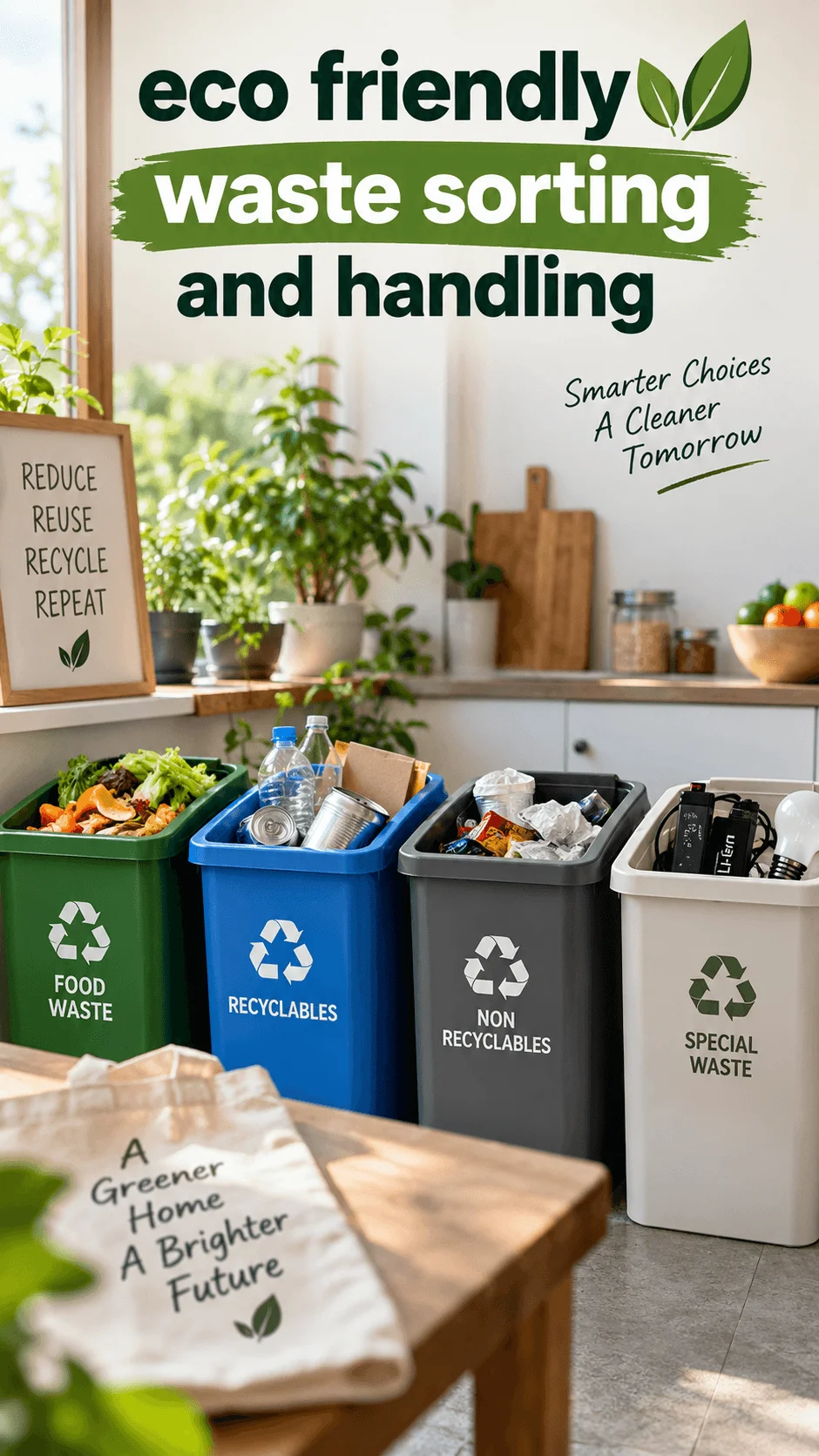
Building a Complete Home Recycling Sorting System
A successful home sorting station does not require twelve different containers simply because twelve interesting ideas exist.
Start with the waste streams that the local collection system actually separates. A household might need several categories, while another location may use a much simpler collection model.
Convenient placement can improve sorting habits. Recycling containers should sit close enough to the places where people generate packaging, bottles, paper, and other recyclable materials. Food waste collection should remain convenient during meal preparation.
Clear labels can reduce mistakes, especially when several household members share the system. Consistency matters more than creating an elaborate sorting station that nobody understands.
Reusable bags also need maintenance. Emptying them regularly prevents overflowing, while occasional cleaning keeps the system pleasant to use.
The most successful recycling sorting system combines suitable containers with simple habits. Bag materials matter, but human behavior determines whether paper reaches the paper stream, food scraps reach the correct organic collection, and contaminants stay out of recycling.
Conclusion
The growing range of eco friendly waste sorting bags shows how household recycling is moving beyond conventional disposable trash liners. Reusable color coded bags can simplify everyday separation, compostable liners can support suitable food waste systems, recycled materials can reduce demand for virgin feedstock, and transparent sacks can make contamination easier to identify.
Paper alternatives and bag free food waste systems demonstrate that replacing one disposable plastic product with another is not always the only option. Meanwhile, QR codes, digital guidance, trackable bags, and reward systems show how technology may increasingly connect household sorting with wider waste management infrastructure.
The most appropriate solution still depends on the waste itself. Dry recyclables, food scraps, garden material, and general rubbish have different requirements. Local recycling and composting systems also determine which materials collectors can accept.
A practical household system should therefore focus on correct separation, durability, repeated use where appropriate, low contamination, and convenient daily habits. When the bag matches both the waste stream and the local collection system, sustainable waste sorting becomes easier to maintain rather than another complicated environmental task.