12 Eco Friendly Waste Sorting Basket Ideas for a Greener Home
An eco friendly waste sorting basket can turn everyday waste disposal into a simpler and more organized household routine. Instead of throwing paper, food scraps, packaging, reusable objects, and general waste into one container, a thoughtful sorting system gives each material an appropriate place from the beginning. This approach can make recycling easier, reduce confusion, support composting and reuse, and help households pay more attention to what they actually throw away.
Waste sorting has also become more practical than simply placing several large bins beside each other. Modern households can choose modular compartments, vertical baskets, recycled materials, visual labels, compact cabinet systems, and even emerging smart technology. The most sustainable solution, however, is not necessarily the newest or most expensive. A useful system should match the space available, local collection rules, household habits, and the amount of each waste type produced.
1. Modular Multi Compartment Waste Sorting Basket
A modular eco friendly waste sorting basket creates several collection areas within one organized system. Instead of buying unrelated containers for every waste category, households can combine removable compartments and assign each one to a particular stream.
For example, a kitchen station might contain a large compartment for recyclable packaging, a medium section for paper and cardboard, and a smaller container for glass where local services collect it separately. Another removable basket could collect organic kitchen scraps.
The biggest advantage of modularity comes from flexibility. Households rarely produce equal amounts of every type of waste. Someone who shops online frequently may generate considerable cardboard, while another household may need much more room for food scraps. Removable modules allow people to select sizes that reflect their actual habits.
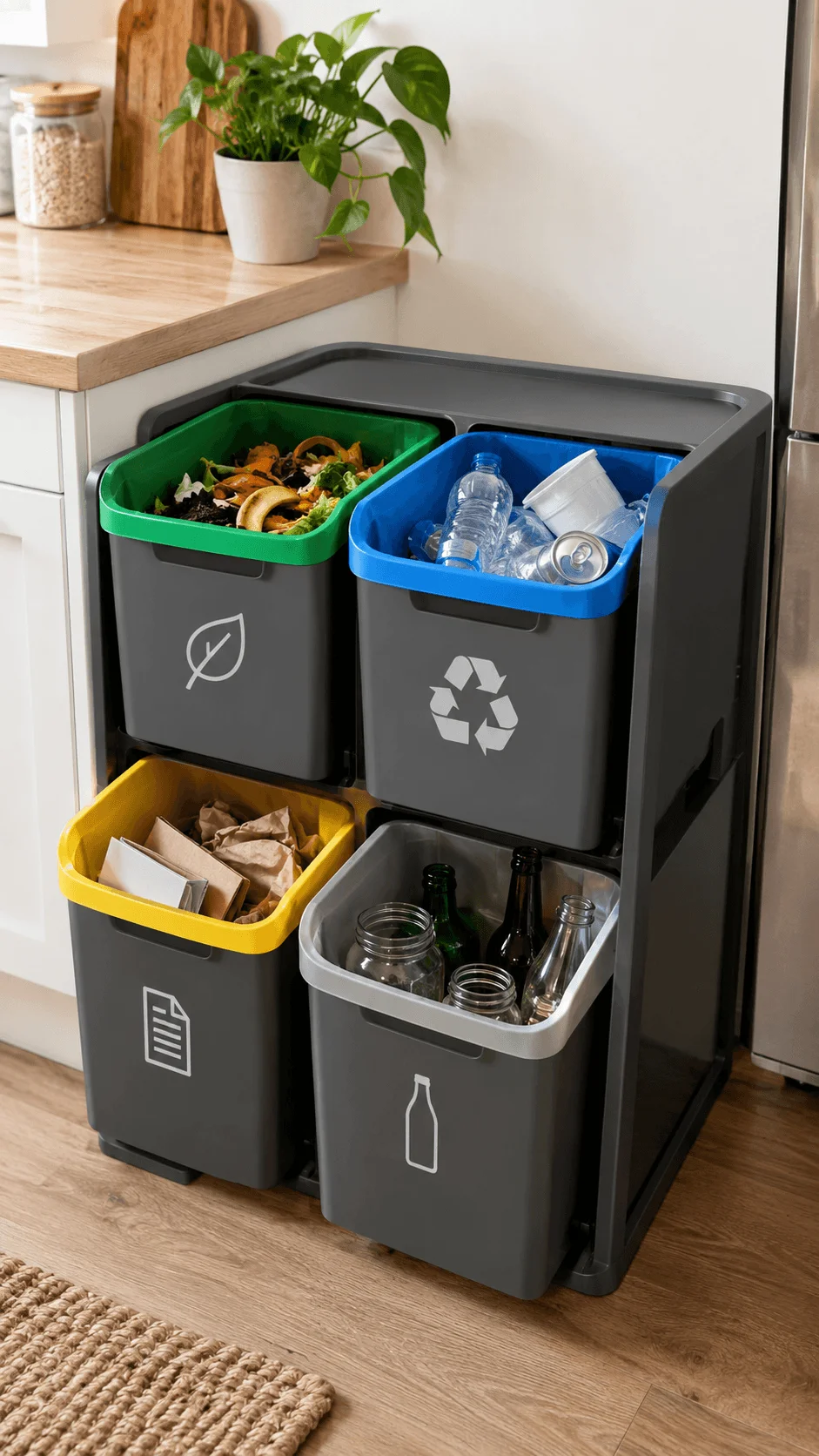
Cleaning also becomes easier when individual sections lift out. Instead of washing an entire station whenever one compartment becomes dirty, users can remove the affected basket and clean it separately.
A modular design can also adapt over time. If local collection rules change or a household starts composting, residents can reorganize the compartments instead of replacing the entire system.
2. Stackable Waste Sorting Baskets for Small Spaces
Finding enough space for recycling can become difficult in apartments and compact kitchens. Stackable waste sorting baskets address this problem by using vertical space rather than spreading containers across the floor.
A household could place paper in one level, recyclable packaging in another, and bottles or cans in a third. The complete station occupies a relatively small footprint while keeping several materials separate.
Accessibility matters when choosing this type of household waste sorting basket. A stack should not require users to remove several containers every time they need the lowest one. Front access openings or individually accessible sections make the system much easier to use.
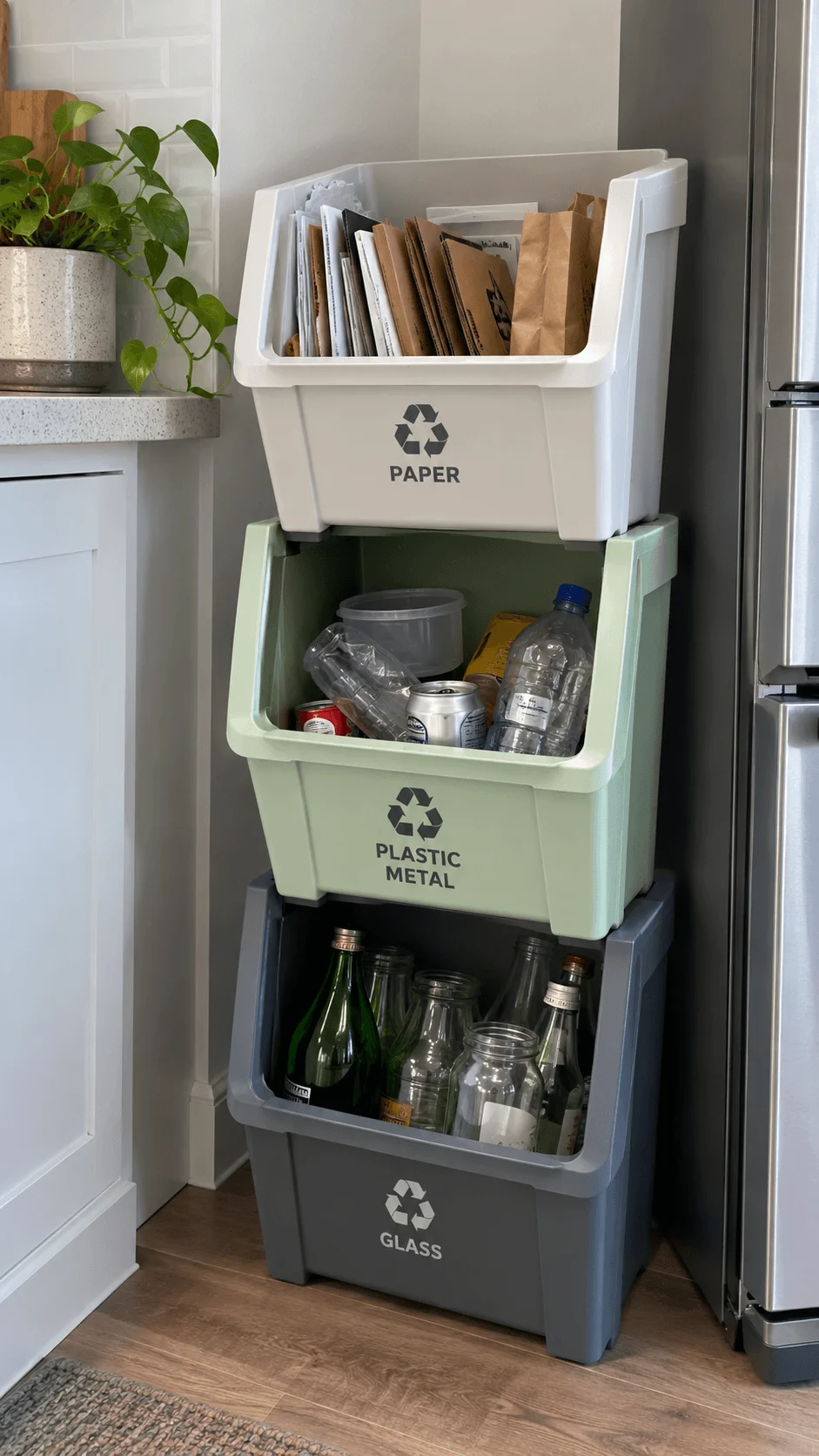
Stability also deserves attention. Heavy materials should generally remain in positions that help the system stay secure. Strong handles make individual baskets easier to remove and carry to a collection point.
Stackable systems work particularly well in utility rooms, pantries, dormitories, apartments, laundry rooms, and small kitchens. They demonstrate that effective recycling does not always require a large dedicated area.
3. Recycled Plastic Eco Friendly Recycling Basket
Recycled plastic has become an increasingly relevant material for sustainable household products. A basket containing recycled material can reduce demand for virgin plastic while still providing the moisture resistance and easy cleaning that waste containers often require.
However, recycled content alone does not make an eco friendly waste sorting basket sustainable. Durability remains extremely important. A strong basket that survives many years of daily use can provide more practical value than a poorly constructed container that cracks quickly and requires replacement.
Consumers should therefore consider construction quality alongside environmental claims. Strong handles, durable lids, washable interiors, and replaceable components can extend useful life.
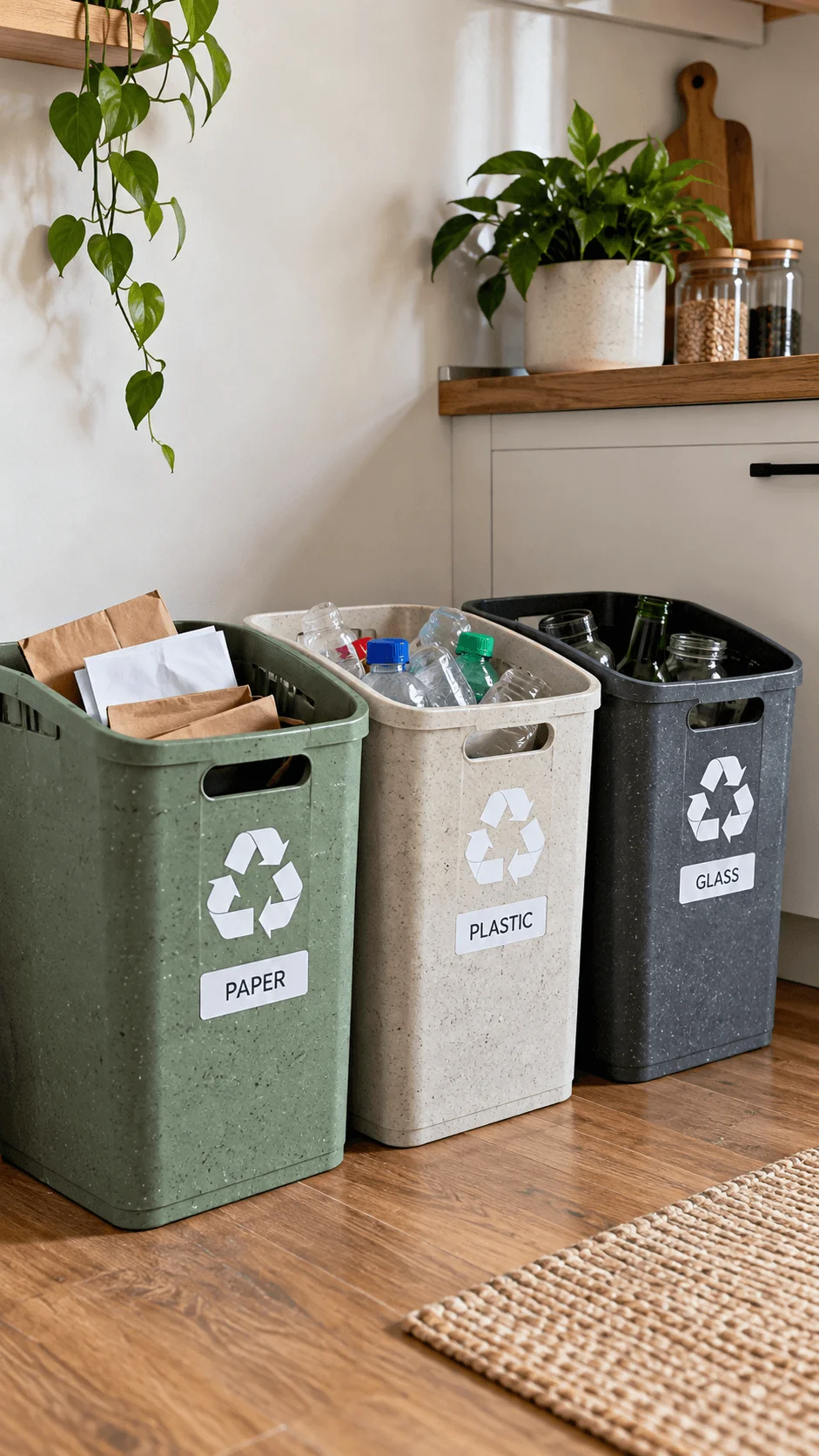
It is also worth checking how much recycled material a manufacturer actually uses. General words such as green, sustainable, or environmentally conscious do not provide the same information as a clearly stated recycled material percentage.
At the end of the product’s useful life, local recycling infrastructure matters too. Different plastics and combined components may require different disposal routes. Choosing a durable design and keeping it in service for as long as practical should remain a priority.
4. Under Sink Household Waste Sorting Basket
The cabinet underneath a kitchen sink can become a convenient location for household waste separation. A pull out waste sorting basket keeps containers hidden while placing them close to one of the busiest waste generating areas in the home.
Imagine preparing vegetables for dinner. Food scraps can move directly into an organic waste container, while suitable packaging can enter another section. This convenient placement reduces the effort required to sort materials correctly.
Pull out systems can contain two or more removable baskets mounted on sliding mechanisms. Users can pull the entire station forward, deposit waste, and slide it back into the cabinet.
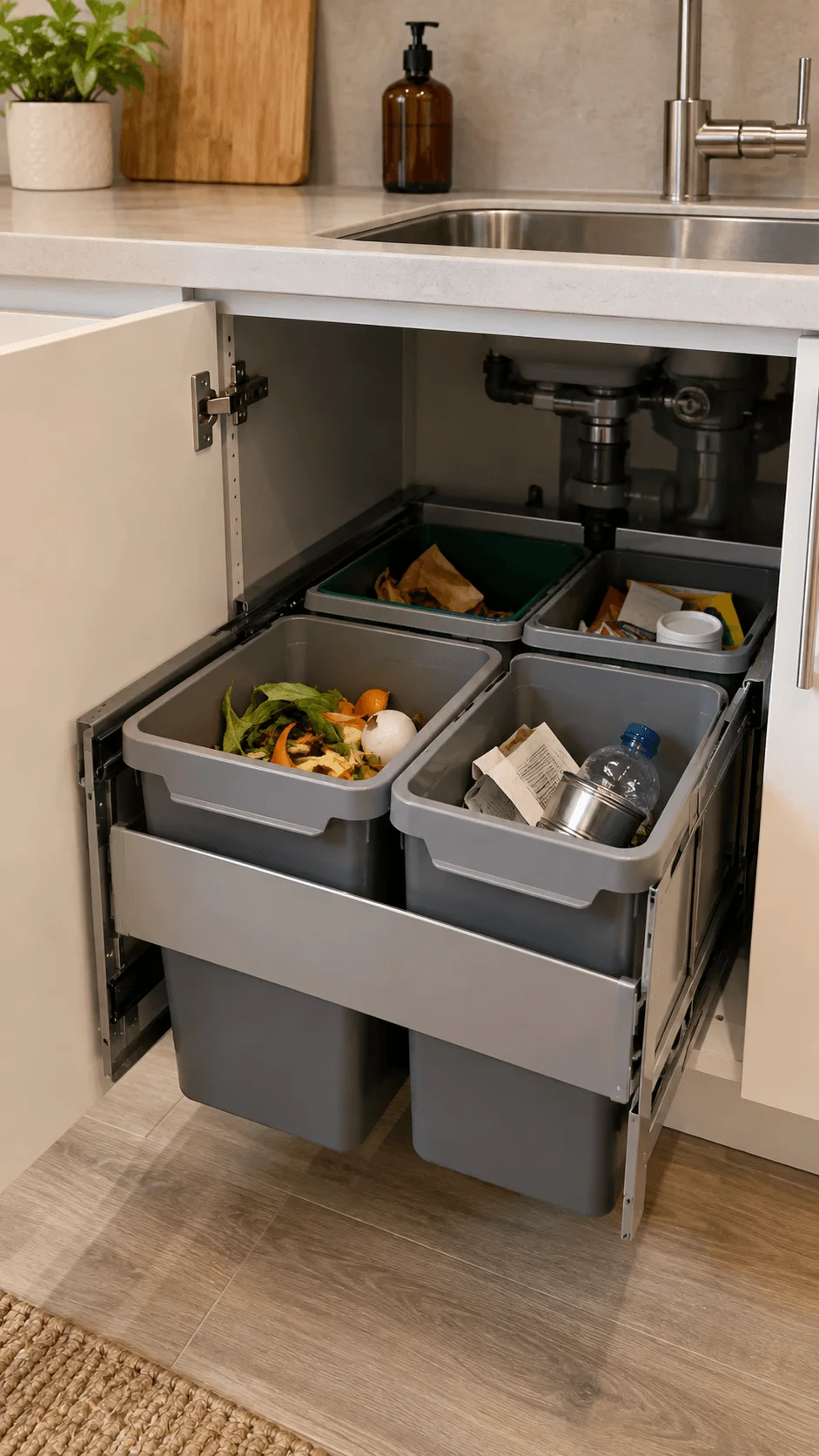
Before installing this arrangement, households should measure carefully. Pipes, filters, cleaning supplies, and other plumbing components can reduce usable cabinet space.
Moisture and cleanliness also require attention. Removable containers make regular washing easier, while suitable lids can help manage odors where necessary.
For small kitchens and visually minimal interiors, an under sink system provides a particularly discreet way to organize recycling without filling the room with visible containers.
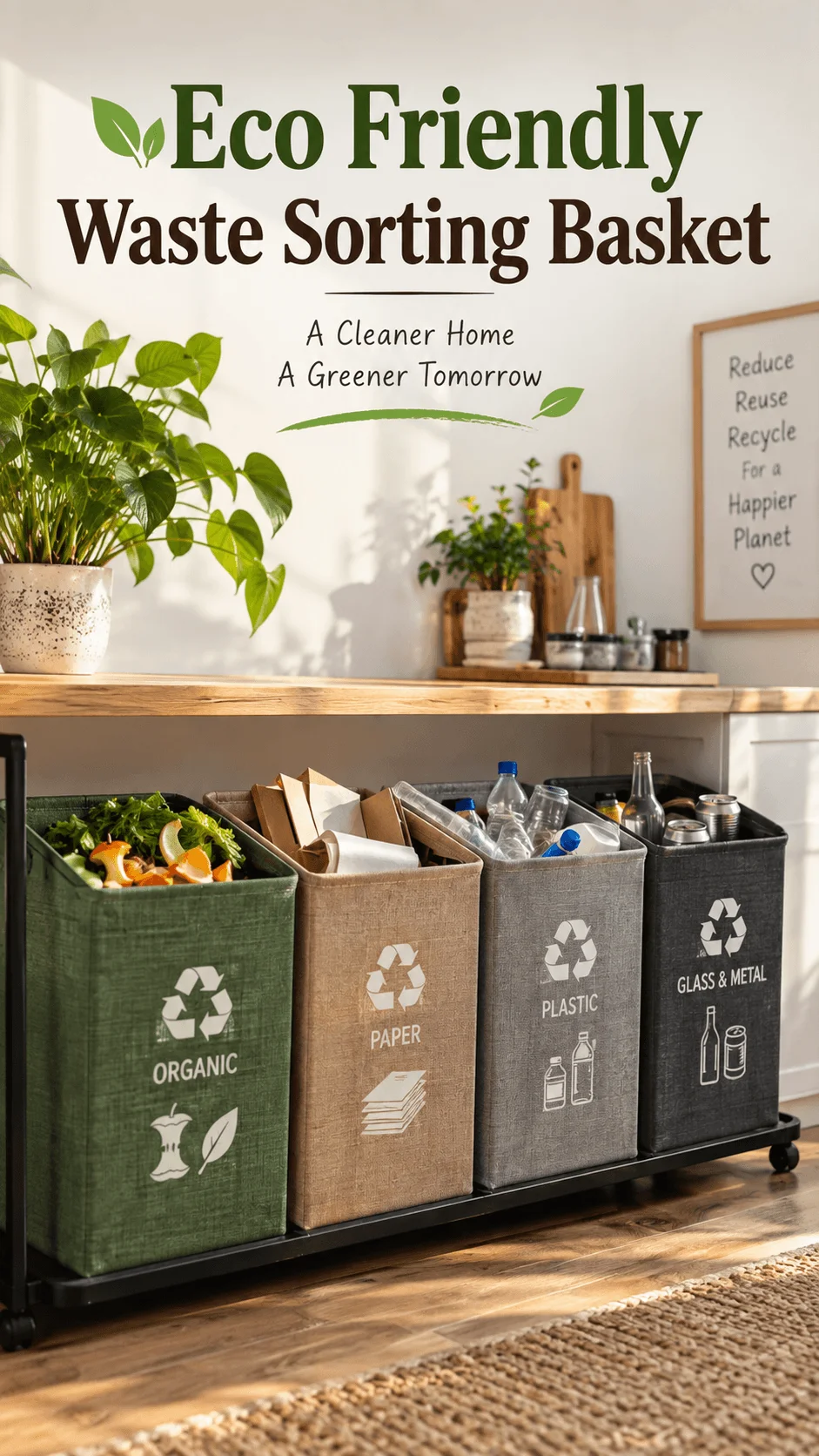
5. Color Coded Waste Separation Basket With Visual Labels
Correct sorting becomes much easier when household members can immediately understand where something belongs. Colors, words, symbols, and pictures can turn an ordinary collection of containers into an intuitive eco friendly waste sorting basket system.
A household might assign clearly different visual identities to paper, recyclable packaging, organic waste, glass, and residual waste according to local requirements. Simple images can make the system even easier to understand.
Visual guidance can prove especially useful in homes with children, guests, roommates, or family members who do not regularly manage recycling. Instead of repeatedly asking which basket accepts a particular material, they can check the label.
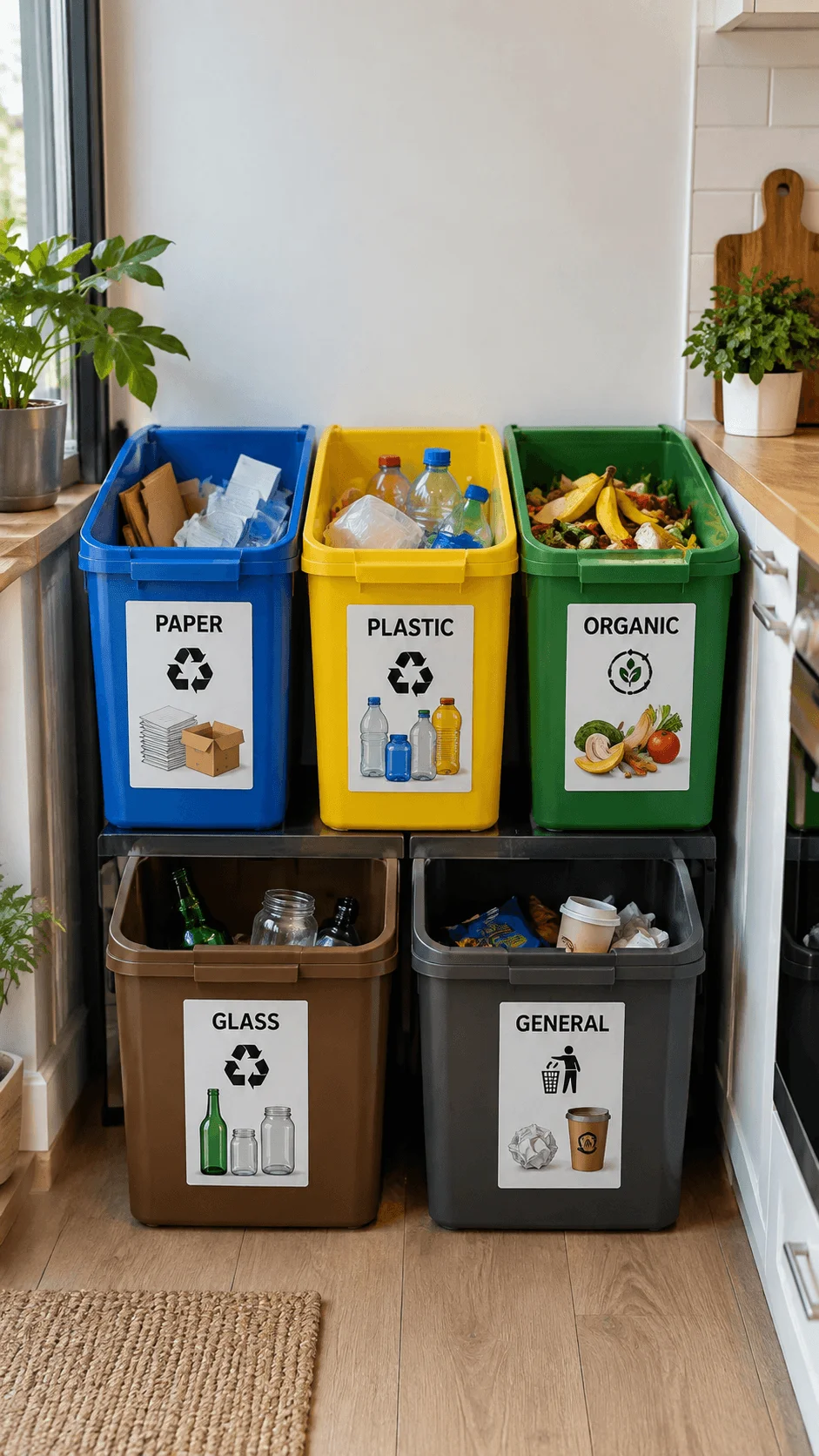
Labels should remain simple. Covering a container with long instructions can create more confusion rather than less. A clear category name, recognizable symbol, and a few common examples may work better.
Most importantly, households should not assume that recycling colors mean the same thing everywhere. Collection requirements vary considerably between regions. Labels should reflect the rules of the actual local waste service.
6. Organic Waste Sorting Basket With Ventilation
Food scraps need different treatment from dry paper, glass, and packaging. A dedicated organic waste sorting basket gives households a convenient place to collect appropriate kitchen scraps before composting or municipal collection.
Ventilation can help manage moisture in systems designed for airflow. A suitable basket should also have surfaces that residents can clean easily because food residue can quickly create unpleasant conditions.
Capacity matters. A person living alone may find a compact countertop container sufficient, while a larger family may need a more substantial cabinet basket. Oversized containers can encourage food scraps to remain indoors too long, so bigger does not always mean better.
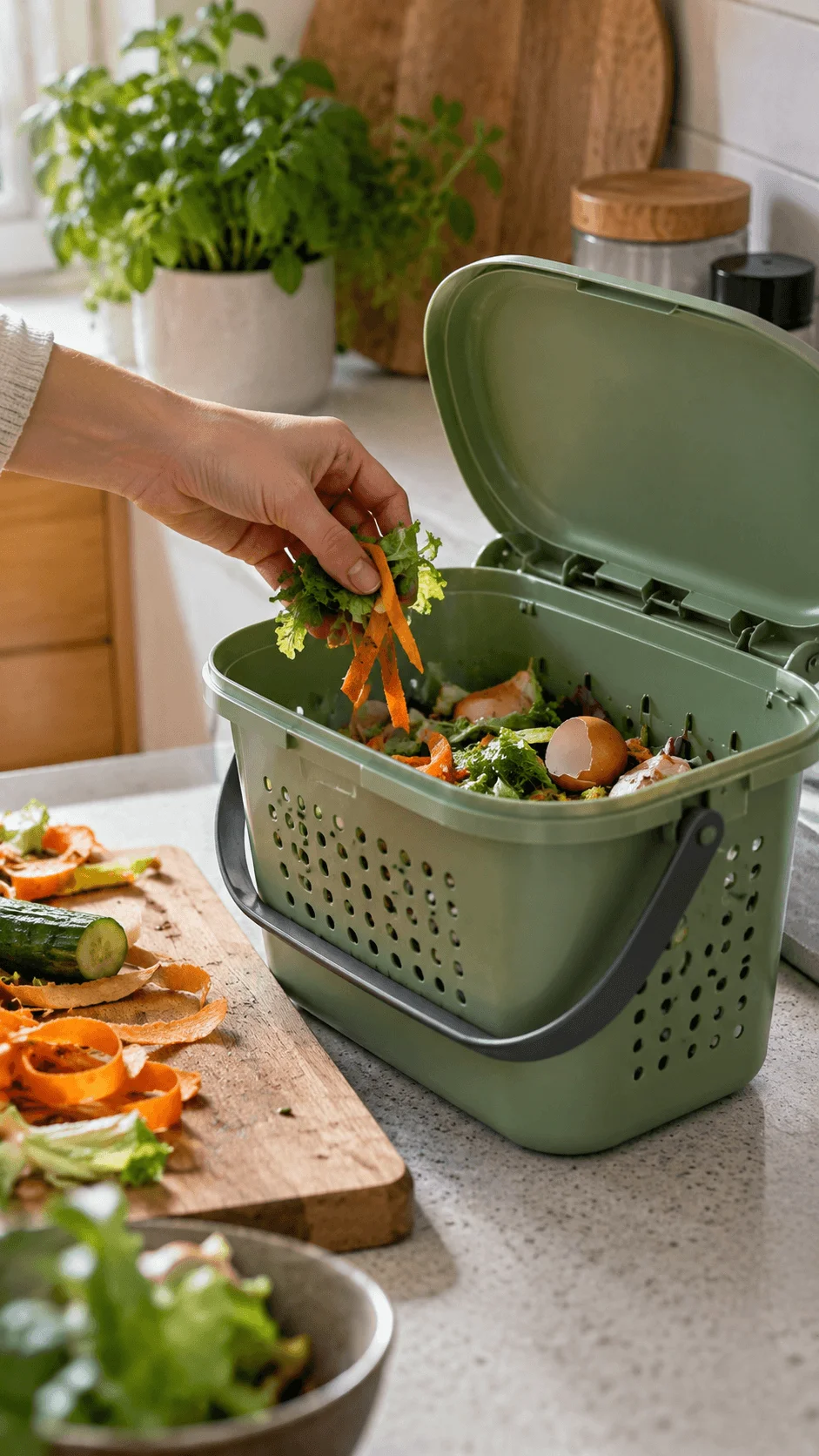
Placement should make daily use convenient. Keeping the basket near a food preparation area allows users to separate suitable scraps immediately.
Households must also distinguish between home composting and municipal organic collection. A local service may accept materials that do not belong in a backyard compost pile, while another service may reject them. Products described as compostable do not automatically belong in every organic collection system.
The best approach combines convenient storage with local guidance and regular cleaning.
7. Foldable Recycling Basket for Flexible Waste Sorting
Waste volume does not remain constant throughout the week. Deliveries may suddenly produce cardboard, while gatherings can generate more bottles, cans, and packaging than usual. A collapsible recycling sorting basket offers temporary capacity without permanently occupying valuable space.
When needed, users can expand the basket and collect appropriate dry recyclables. Once they empty it, they can collapse the container and store it in a cupboard, utility area, vehicle, or other compact location.
This flexibility makes the concept useful for apartments, dormitories, camping trips, RV travel, shared accommodation, and temporary events. Handles can also make it easier to carry sorted materials to communal recycling facilities.
Durability remains essential. Folding mechanisms and flexible materials experience repeated movement, so weak construction can shorten product life considerably.
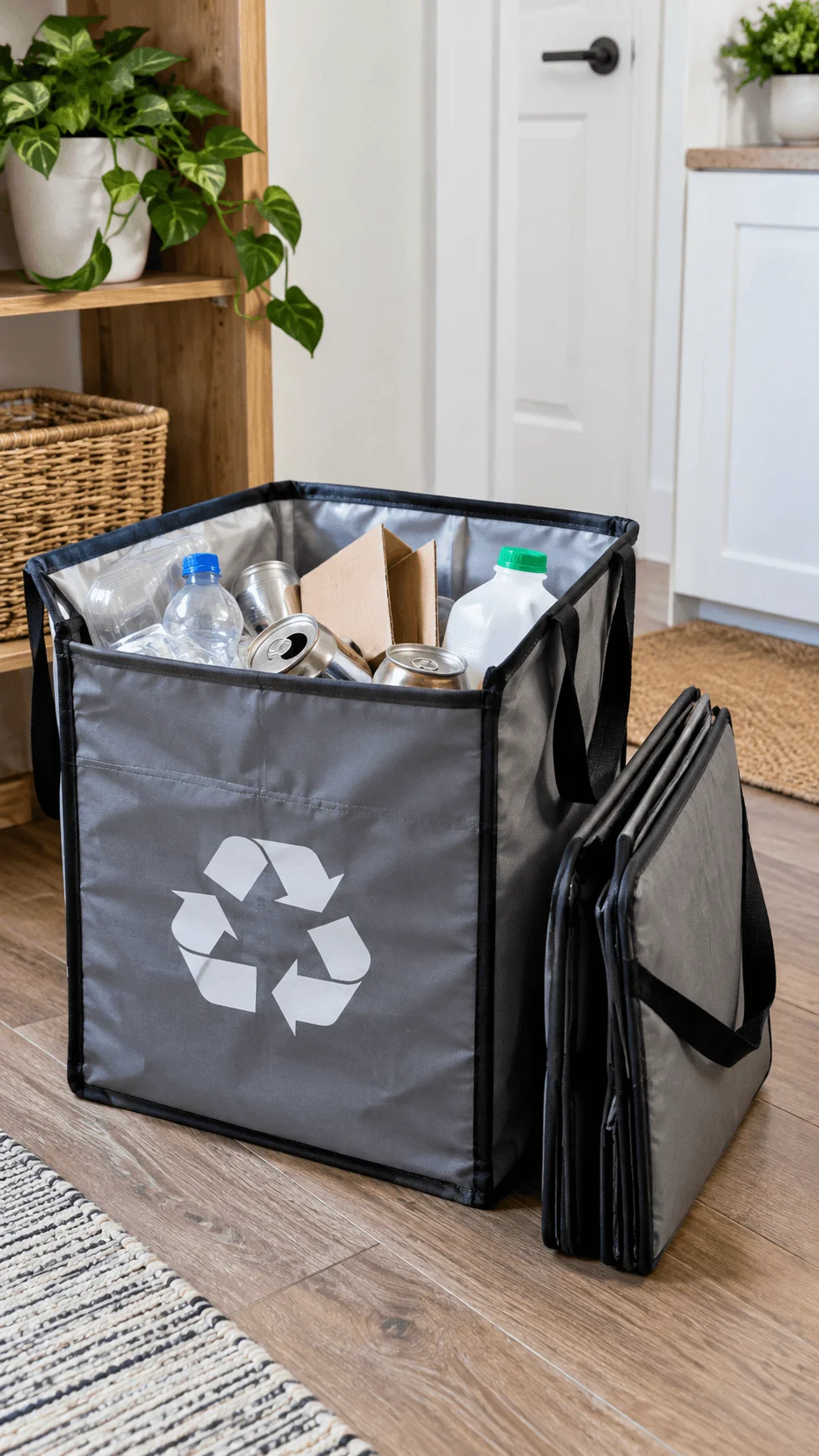
Washable surfaces can also improve usefulness. Even dry recycling sometimes contains residue, and a basket that is difficult to clean may become unpleasant over time.
A collapsible solution makes the most sense when it provides both compact storage and enough strength for repeated use.
8. Slim Vertical Household Recycling Station
A narrow unused area beside a refrigerator, cabinet, or pantry can potentially become a complete home waste sorting station. Slim vertical designs use height to create sorting capacity where wide traditional bins would not fit.
The most frequently used compartment should remain easy to reach. If a household produces recyclable packaging every day, that section should occupy a convenient position. A smaller stream can use a less prominent compartment.
Good weight distribution helps prevent tall systems from becoming unstable. Heavy bottles or other dense materials may require lower placement, depending on the design.
Openings should also provide enough room for the materials they receive. A narrow container may look attractive but become frustrating if ordinary cardboard or packaging cannot enter easily.
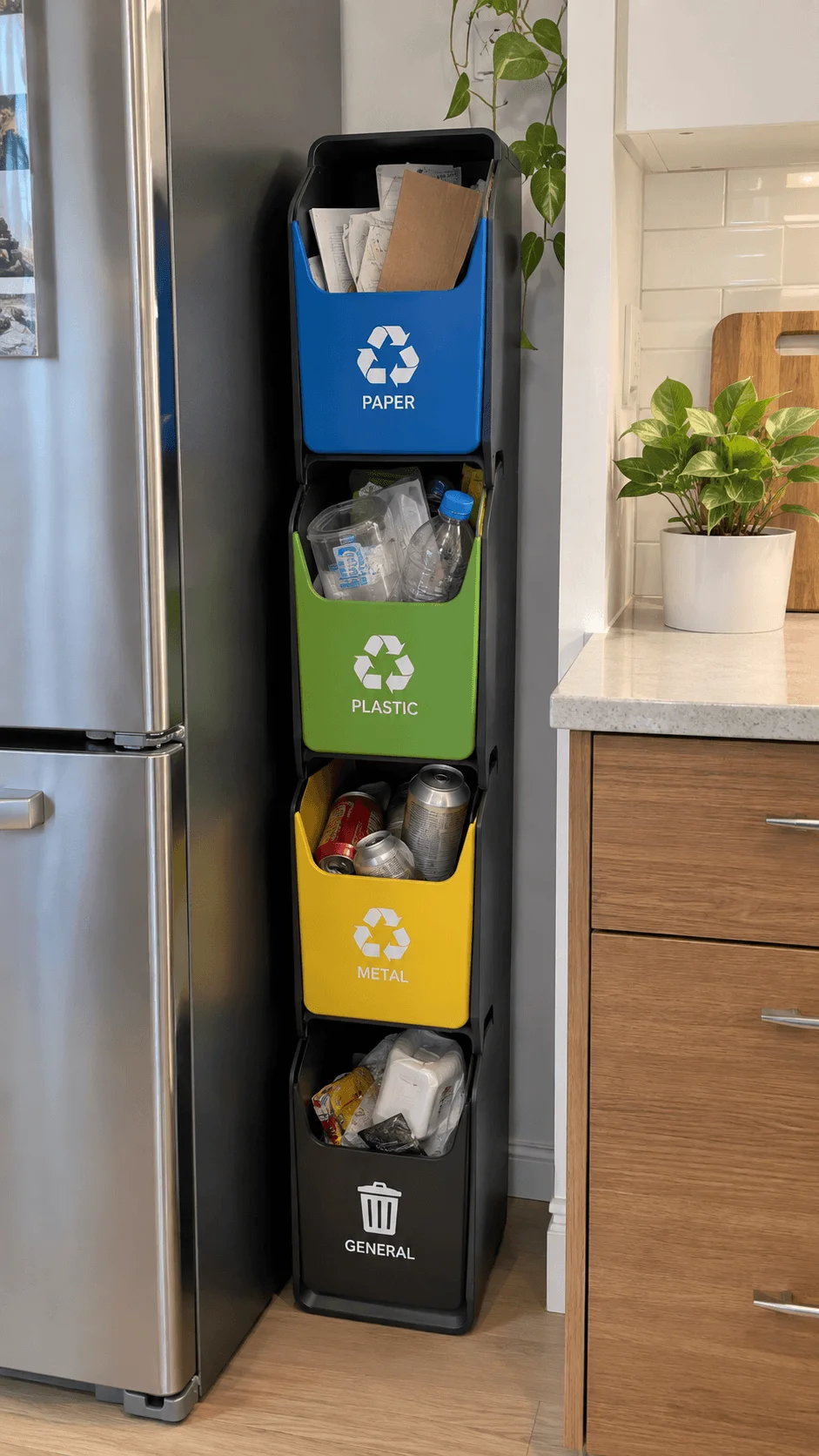
Vertical systems work best when designers balance compact dimensions with practical access. Choosing the smallest possible container is not always the goal. The objective is to use available space efficiently without making sorting inconvenient.
For households with limited floor area, this approach can transform an awkward corner into a useful recycling station.
9. Smart Waste Sorting Basket With AI Technology
Artificial intelligence introduces a more futuristic direction for the eco friendly waste sorting basket. Emerging smart systems can use cameras, sensors, computer vision, and software to recognize objects or provide guidance about different material categories.
Imagine holding unfamiliar packaging near a smart station. A camera could analyze the object and suggest a likely category. Future systems could also record how much waste a household generates and identify categories that regularly create confusion.
Educational feedback may become particularly useful. Instead of simply opening a compartment, a smart system could explain why an object belongs in a particular stream or tell the user to check local requirements.
However, households should view this technology realistically. Advanced automatic sorting remains an emerging direction rather than a standard feature in ordinary home baskets.
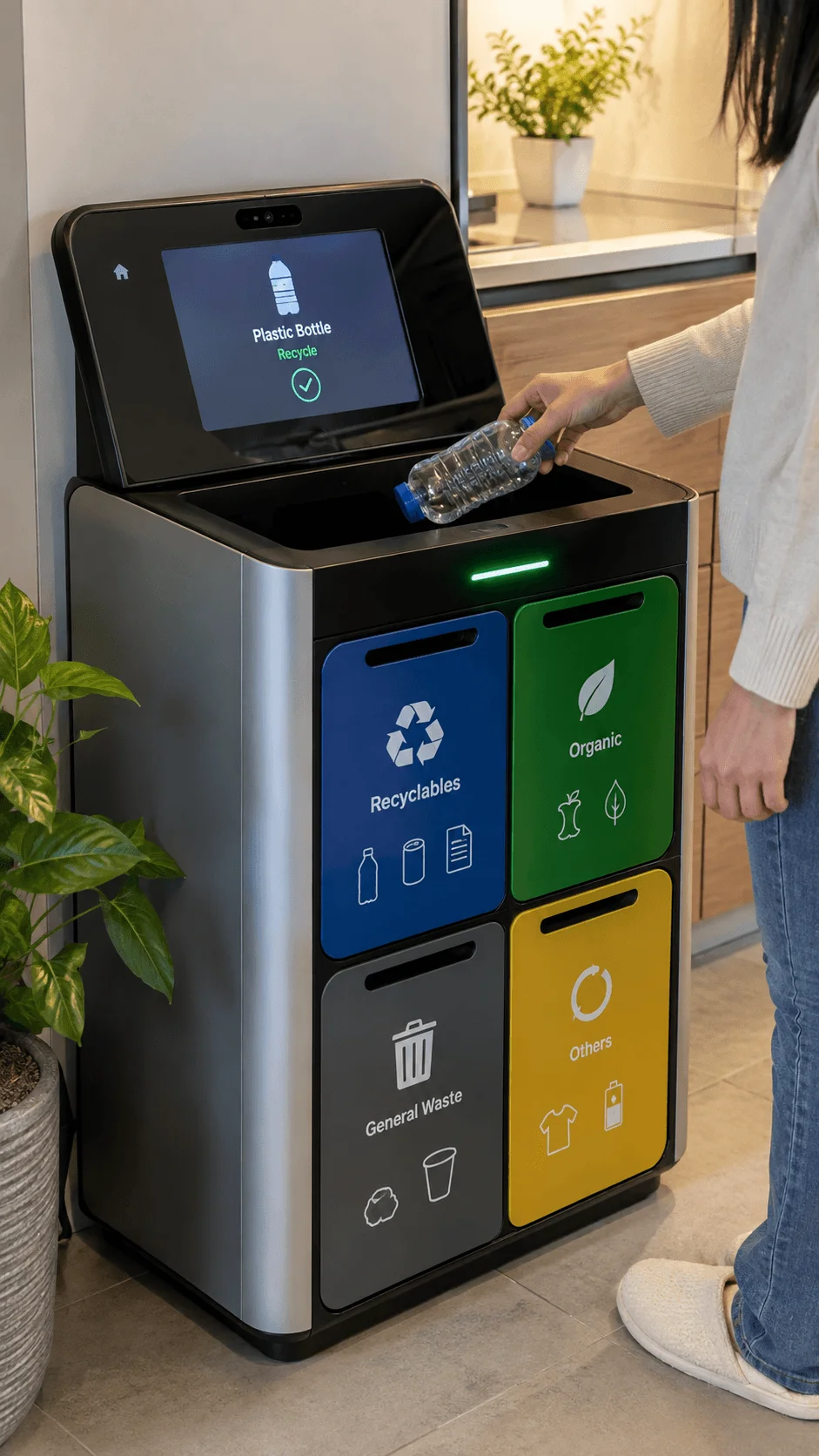
Electronics also introduce sustainability tradeoffs. Cameras, sensors, processors, displays, batteries, and connected components require resources and may eventually become electronic waste themselves. Cost, electricity use, maintenance, software support, accuracy, and privacy also deserve consideration.
Smart technology has potential, but a simple clearly labeled basket may still provide the more practical solution for many homes.
10. QR Code Eco Friendly Waste Sorting Basket
QR codes offer a simpler way to connect physical baskets with digital sorting information. Unlike a complex AI system, a QR based eco friendly waste sorting basket can add useful guidance without requiring cameras or sophisticated electronics.
A household could place a code beside each container. Scanning it could open local instructions showing accepted materials, common mistakes, and special disposal requirements.
This approach becomes particularly useful when someone encounters confusing packaging. Instead of guessing, the user can consult the relevant guidance before choosing a basket.
Shared apartments, student accommodation, rental properties, schools, and offices could also benefit. New users can learn the system without relying entirely on another person to explain it.
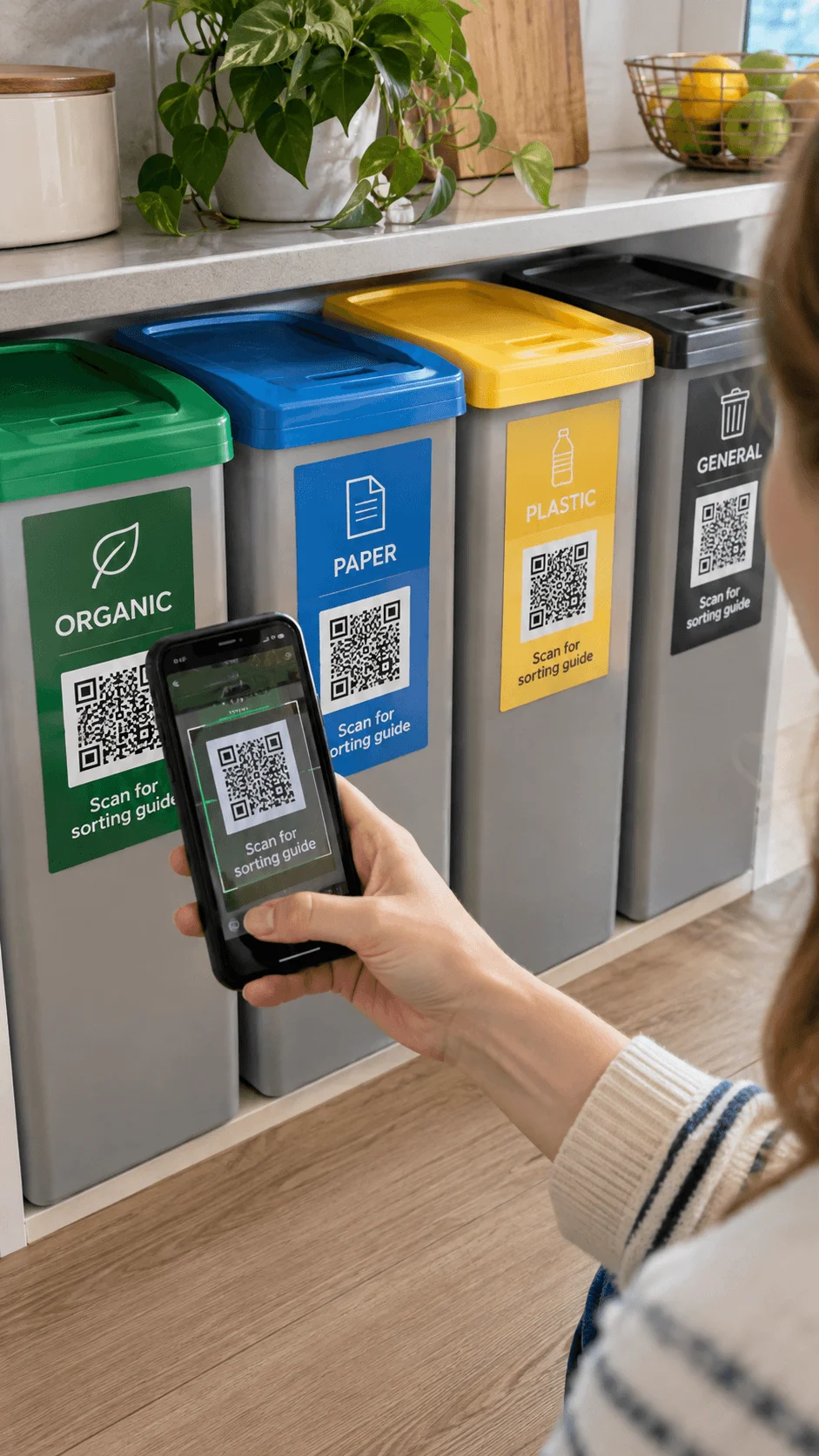
Digital information has another advantage. Households can update the destination behind a code when collection guidance changes rather than replacing the physical sorting station.
QR codes should still support rather than replace clear labels. People should not need a phone every time they throw away an ordinary item. Basic categories should remain obvious at a glance, while digital guidance can handle more complicated questions.
11. Repair Reuse and Donate Basket for Waste Prevention
Not every unwanted object needs to become recycling or rubbish immediately. A dedicated reuse basket creates a temporary place for useful possessions before someone decides their next destination.
Clothing, toys, books, decorations, containers, household objects, and suitable small appliances may still have considerable useful life. Instead of throwing them away during cleaning, residents can place them in a repair, reuse, or donation basket.
This simple idea expands the purpose of an eco friendly waste sorting basket beyond disposal. It introduces waste prevention into the household sorting routine.
Residents can review the basket regularly and decide whether to repair an item, give it to someone, donate it, sell it, repurpose it, or send it to an appropriate recycling service.
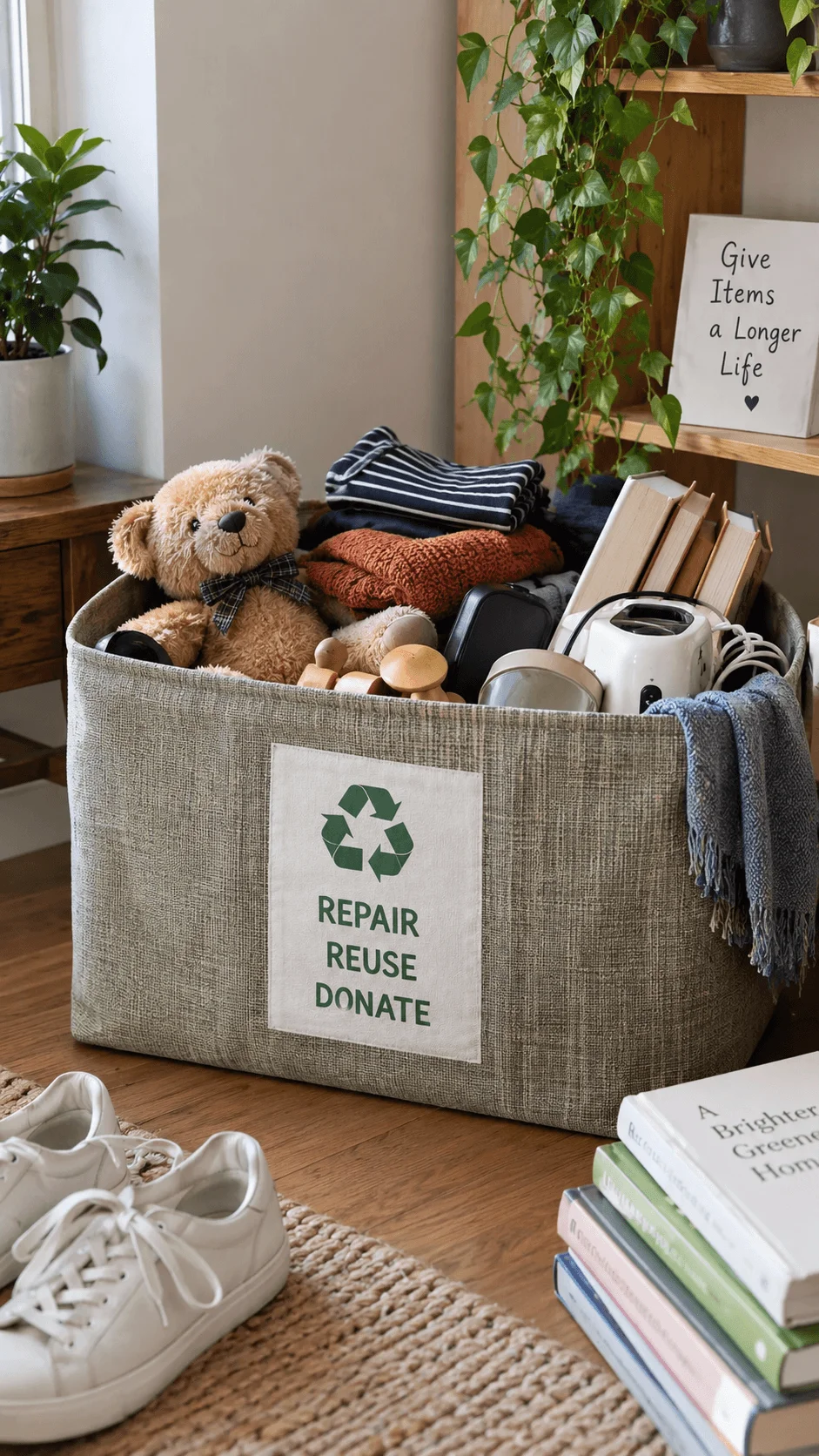
The pause matters because people sometimes discard objects simply because throwing them away provides the quickest solution. A temporary reuse category creates time to consider another option.
The basket should not become permanent clutter, however. Setting a regular routine for reviewing its contents keeps the system functional and encourages objects to move back into useful circulation.
12. Five Stream Zero Waste Sorting Station
A comprehensive zero waste sorting station can bring several of these ideas together. Instead of relying on one container, households can create a coordinated system that reflects the waste streams available through local services.
A typical arrangement might separate paper and cardboard, recyclable packaging, glass where collected separately, organic material, and residual waste. The exact categories should always follow local requirements.
Compartment size should reflect real household behavior. A family that produces large quantities of cardboard may need more space for paper materials, while a household that cooks frequently may prioritize organic collection.
The station can combine modular baskets, visual labels, recycled materials, washable surfaces, ventilation, and vertical storage. These features work together to make separation convenient rather than complicated.
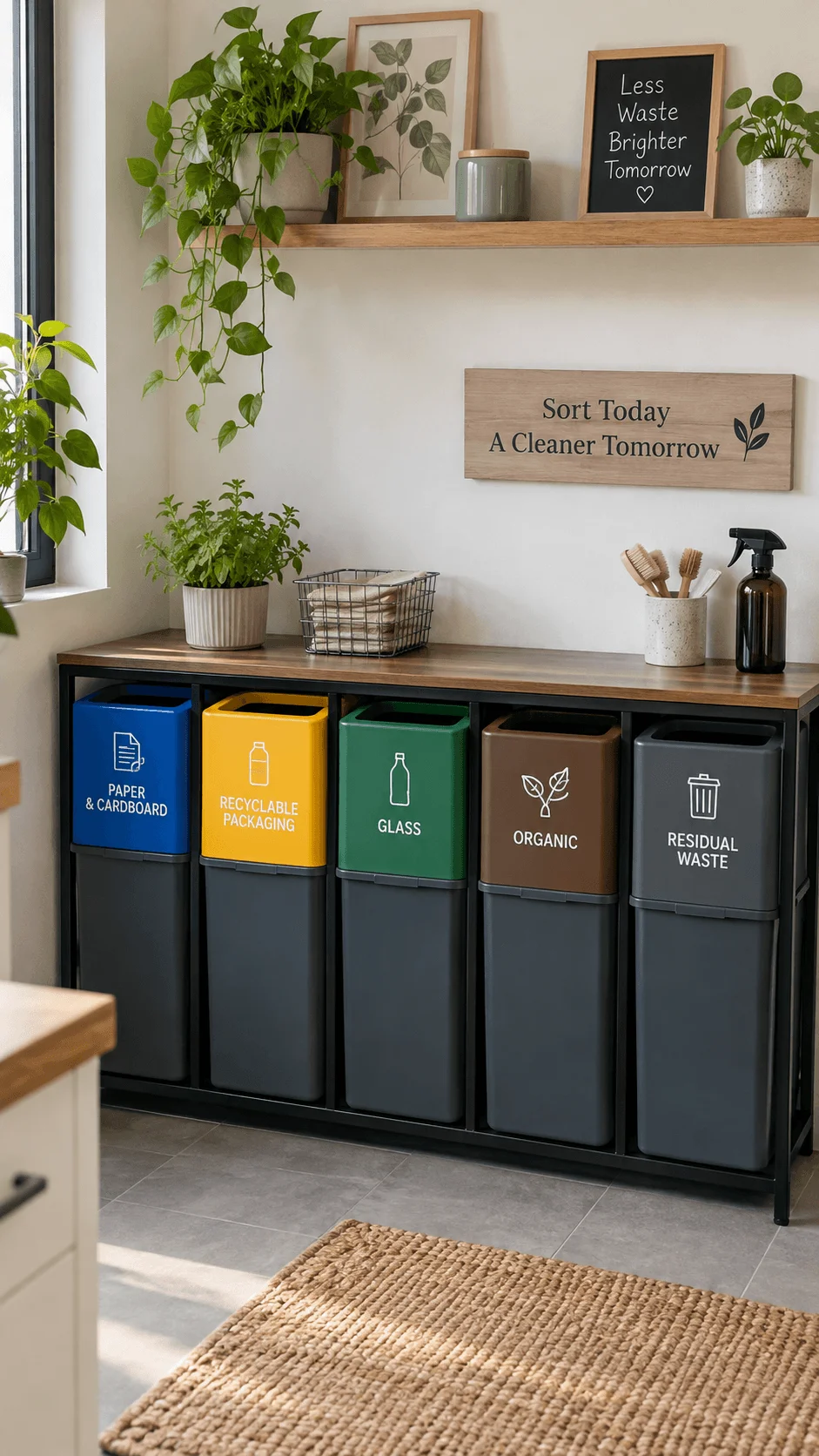
Special waste requires additional attention. Batteries, electronics, chemicals, medicines, bulbs, and similar materials may need dedicated collection services. Households should not assume that these items belong in ordinary recycling containers.
The strongest sorting station is therefore not the one with the greatest number of baskets. It is the one that accurately reflects local services and remains easy enough for household members to use every day.
How to Choose the Best Eco Friendly Waste Sorting Basket
Choosing an eco friendly waste sorting basket should begin with understanding the household rather than immediately shopping for containers. Available space, family size, waste volume, local collection rules, and daily habits can all influence the ideal design.
Observe the waste produced during a normal week. A household that generates large amounts of cardboard needs different capacity from one that mainly produces food scraps and packaging. Matching basket size to actual volume prevents frequently overflowing containers and avoids wasting space on categories that rarely fill.
Location also affects success. A beautiful recycling station placed somewhere inconvenient may receive less consistent use than simple containers positioned near the kitchen.
Materials deserve careful consideration as well. Recycled content can provide an advantage, but strength, washable surfaces, replaceable components, and long useful life also contribute to sustainability.
Handles become important when residents regularly carry recyclables outside. Ventilation may matter for organic material, while lids can prove useful for certain waste streams. Stackability becomes valuable when floor space is limited.
The best system should make the correct action feel easy. When sorting requires excessive effort, household members become more likely to ignore the system.
What Makes a Sustainable Waste Sorting Basket Truly Eco Friendly?
Environmental marketing can make almost any green colored household product appear sustainable. A genuinely useful sustainable waste sorting basket needs more than an environmental looking design.
Longevity should receive serious consideration. A durable container that remains useful for years avoids the repeated manufacturing and purchasing associated with frequently replacing weak products.
Recycled content can contribute to a better material choice, while replaceable lids or components may extend the useful life of the complete system. Easy cleaning can also encourage people to keep containers longer.
Consumers should consider whether they even need new baskets. Existing buckets, storage containers, boxes, or baskets may already provide suitable sorting capacity. Clear labels can transform containers that a household already owns into a functional waste separation station.
This idea connects directly with the purpose of waste reduction. Replacing perfectly functional containers simply to purchase products marketed as environmentally friendly can create unnecessary consumption.
A sustainable system should ultimately help people separate waste accurately, reuse what still has value, prevent unnecessary disposal, and maintain good habits over the long term.
How to Make a Home Waste Sorting Station More Effective
Even the best household waste sorting basket cannot improve recycling if people find it inconvenient to use. Placement and simplicity often determine whether a system becomes part of daily life.
Frequently generated waste should have the easiest collection points. Kitchen packaging and food scraps, for example, usually benefit from containers close to food preparation areas. Less common materials can remain in a utility room or another appropriate location.
Clear labels reduce uncertainty. Household members should understand each category without needing complicated instructions every time they discard something.
Regular cleaning also matters. Residue, moisture, and odors can make people reluctant to use sorting baskets. Removable containers and washable surfaces make maintenance easier.
Households should periodically review local recycling instructions. Collection systems can differ significantly, and accepted materials may change. Following current local guidance helps prevent contamination.
Most importantly, the sorting station should fit normal behavior. A sustainable routine works best when correct sorting feels like an ordinary part of disposing of an item rather than an additional household chore.
Conclusion
An eco friendly waste sorting basket can do much more than hold recyclable materials. A thoughtful system can organize different waste streams, reduce sorting confusion, encourage reuse, support organic collection, save space, and make responsible disposal easier to incorporate into everyday routines.
Modular baskets provide flexibility, stackable and vertical designs solve space problems, recycled materials can reduce reliance on virgin resources, and visual labels help household members make quicker decisions. Organic baskets address food scraps, while repair and donation containers encourage people to consider reuse before disposal. Digital tools and emerging smart technology can add another level of guidance where they provide genuine practical value.
No single design works perfectly for every household. A small apartment may benefit from narrow stackable containers, while a larger family may need a spacious modular station. Local recycling rules should ultimately determine the categories each household creates.
The most effective eco friendly waste sorting basket does not need to look futuristic or cost a large amount of money. Existing durable containers with thoughtful placement and clear labels can create an excellent starting point. Households can then improve the system gradually as they understand their waste habits better.
Successful waste sorting depends on consistency. When containers remain accessible, categories make sense, and household members understand where materials belong, sustainable waste management becomes easier to maintain. A simple basket system can therefore become an important everyday tool for reducing confusion, improving separation, supporting reuse, and building a more thoughtful approach to household waste.