12 Eco Friendly Waste Sorting Box Ideas for 2026
An eco friendly waste sorting box can make everyday waste separation much easier by giving different materials a clear place before they leave the home. In 2026, household sorting is becoming more thoughtful than simply placing one recycling bin beside a general waste bin. Modern systems can separate food scraps, recyclable packaging, paper, reusable objects, electronic waste and residual waste while fitting into kitchens, apartments and other limited spaces. Newer ideas also combine modular designs, recycled materials, visual labels, QR codes and smart technology to make sorting more convenient.
The environmental value of a sorting system does not depend only on what the container is made from. A durable box that a household uses for many years may make more practical sense than repeatedly replacing containers marketed as sustainable. Available recycling services, household habits, cleaning requirements and the amount of waste generated also matter.
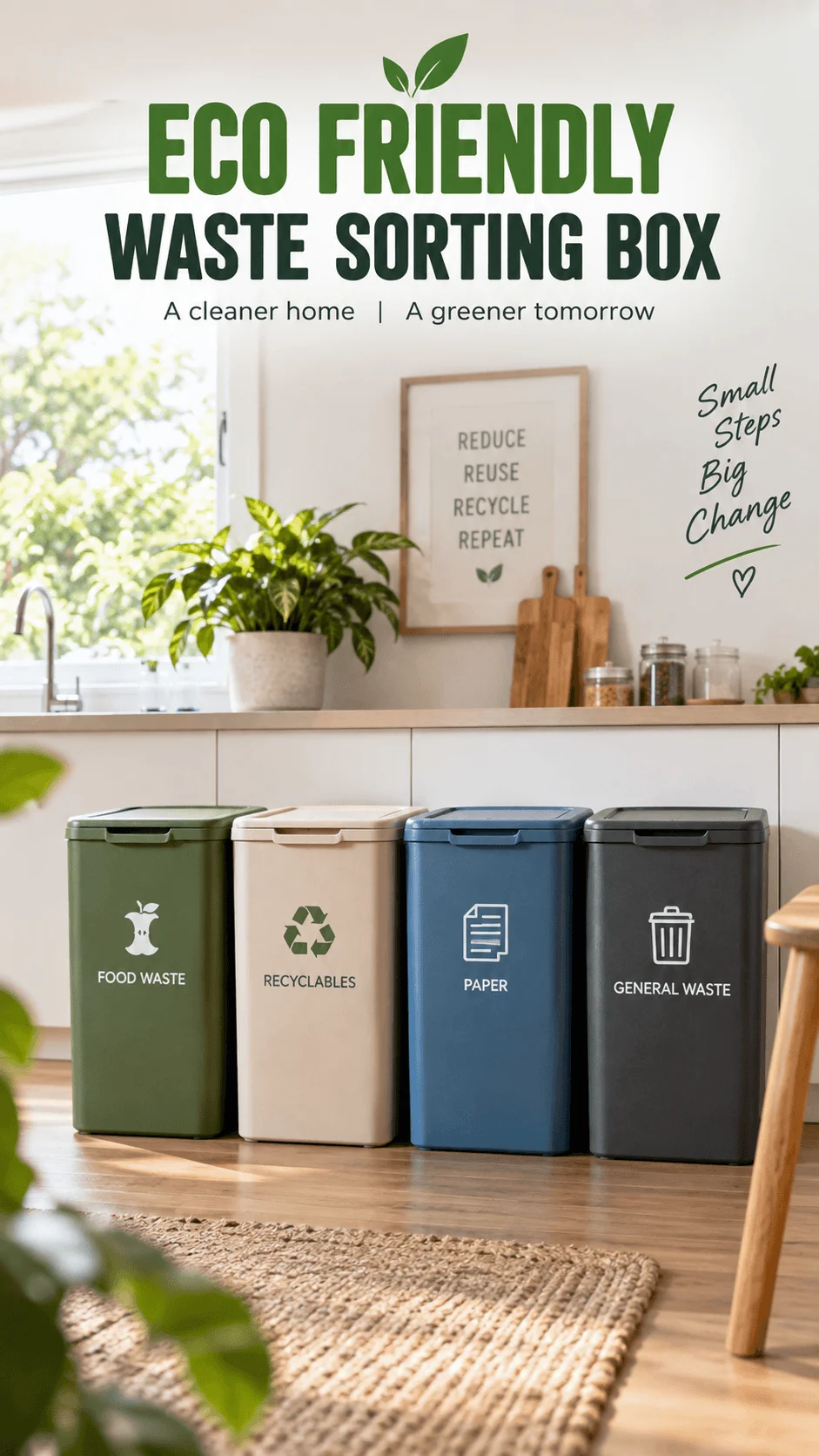
A good home waste sorting system should make the correct disposal choice easy. When every category has a convenient and clearly identified place, household members spend less time deciding where an item belongs. The following ideas explore how waste sorting boxes can become more practical, adaptable and useful in 2026.
1. Modular Eco Friendly Waste Sorting Box
A modular eco friendly waste sorting box gives households the freedom to build a sorting station around the waste streams they actually produce. Instead of buying one fixed unit with predetermined compartments, users can combine individual containers and change the arrangement when necessary.
One household might need separate containers for paper, recyclable packaging, food scraps and residual waste. Another household may have local collection services for glass or other materials and therefore need additional compartments.
Different container sizes can make the system even more practical. A family that receives many cardboard deliveries might require a larger paper and packaging section. Someone who cooks most meals at home may benefit from a conveniently positioned food waste container.
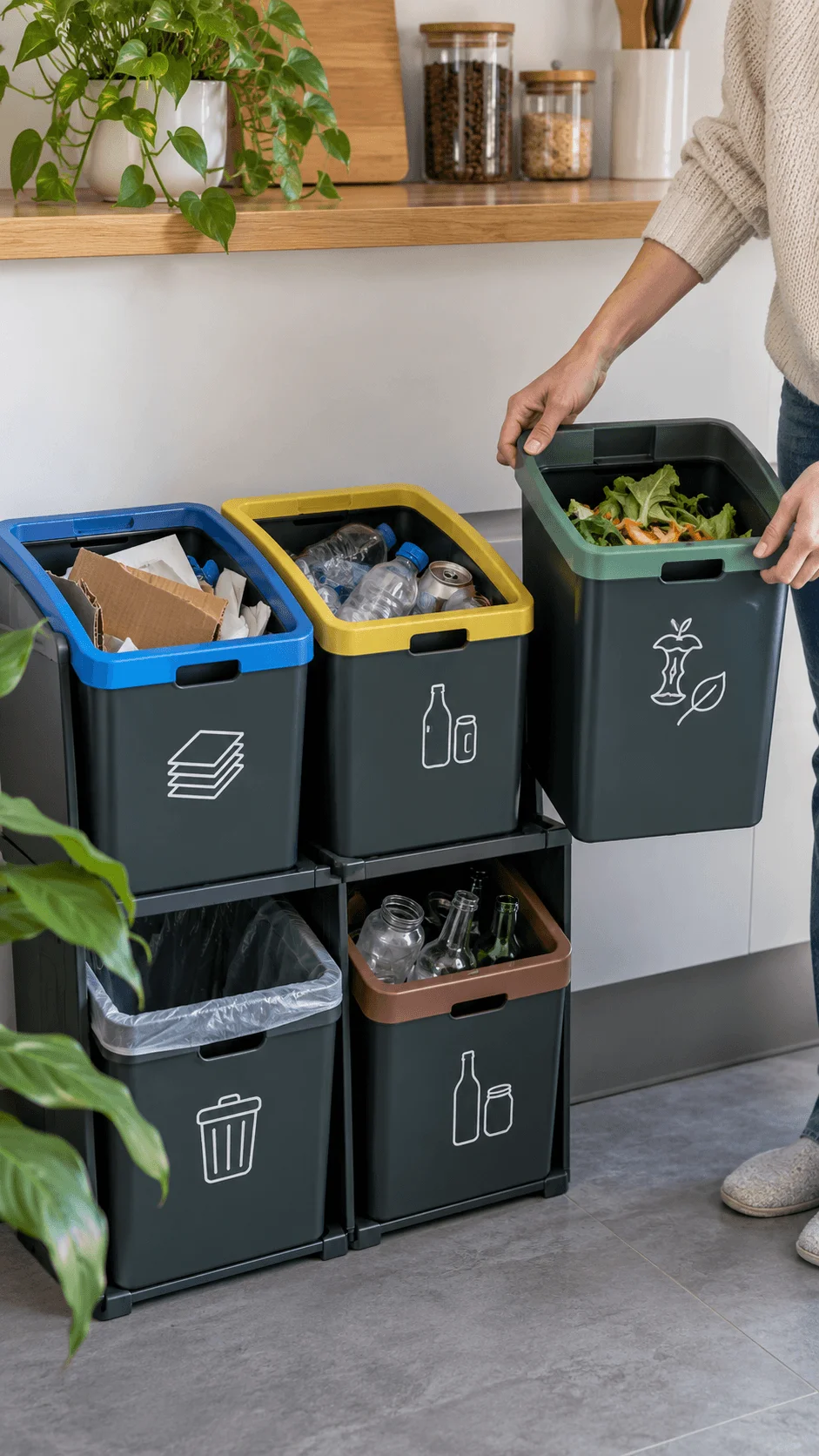
Removable compartments also simplify cleaning. Users can wash one container without dismantling the entire station. Clear replaceable labels allow the system to change if local collection requirements change.
Modularity can also extend the useful life of the setup. If one component becomes damaged, households may be able to replace that part instead of discarding the complete station. This adaptability makes modular design particularly relevant for people who want a waste system that can evolve with their needs.
2. Stackable Waste Sorting Boxes for Small Spaces
Finding enough floor space for several recycling containers can become difficult in apartments and compact kitchens. Stackable waste sorting boxes address this problem by using vertical space.
A well designed stackable system allows each compartment to remain accessible without requiring users to dismantle the entire stack. Front access doors or individually removable containers can make everyday disposal much easier.
Households could position frequently used categories at comfortable heights. Recycling and residual waste may need quick access, while less frequently generated materials can occupy higher or lower compartments.
Stability matters when several containers sit on top of one another. The structure should remain secure during normal use, particularly when users remove or refill individual compartments.
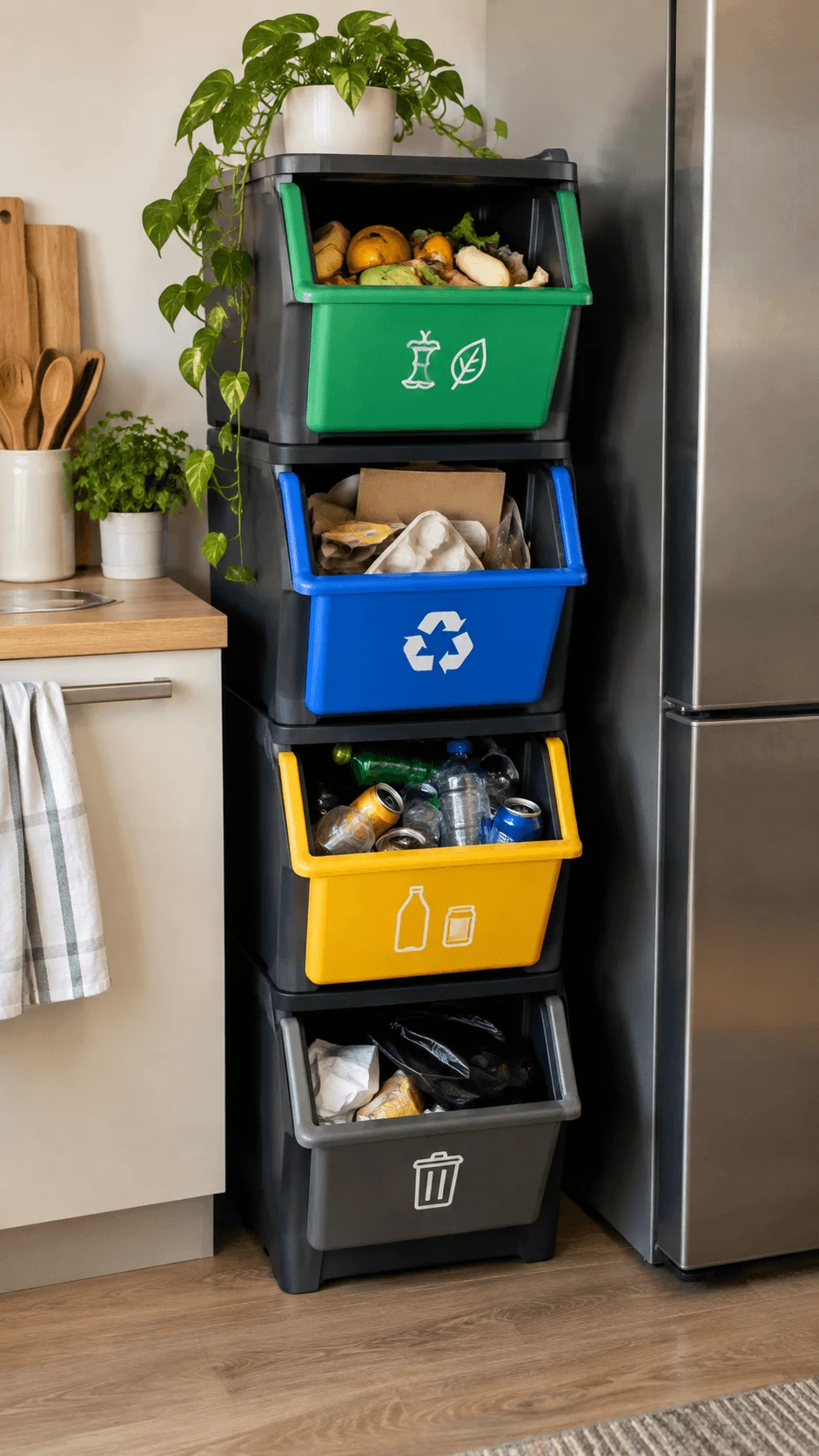
Ventilation and cleaning also deserve attention, especially when containers hold packaging with traces of food. A compact design should not sacrifice hygiene simply to save space.
The main advantage of this home waste sorting system comes from making multiple waste streams manageable in a small area. When recycling feels convenient rather than intrusive, households may find it easier to maintain consistent sorting habits.
3. Recycled Plastic Sustainable Waste Sorting Box
Recycled plastic can provide a useful material for a durable household sorting container. Manufacturers can incorporate recovered plastic into new products, potentially reducing demand for virgin material.
However, recycled content alone does not automatically make an eco friendly waste sorting box environmentally responsible. Construction quality and useful lifespan remain important considerations.
A strong container that survives years of regular use offers a different value proposition from a lightweight box that cracks quickly and requires replacement. Consumers can therefore consider durability alongside recycled content when evaluating a sorting system.
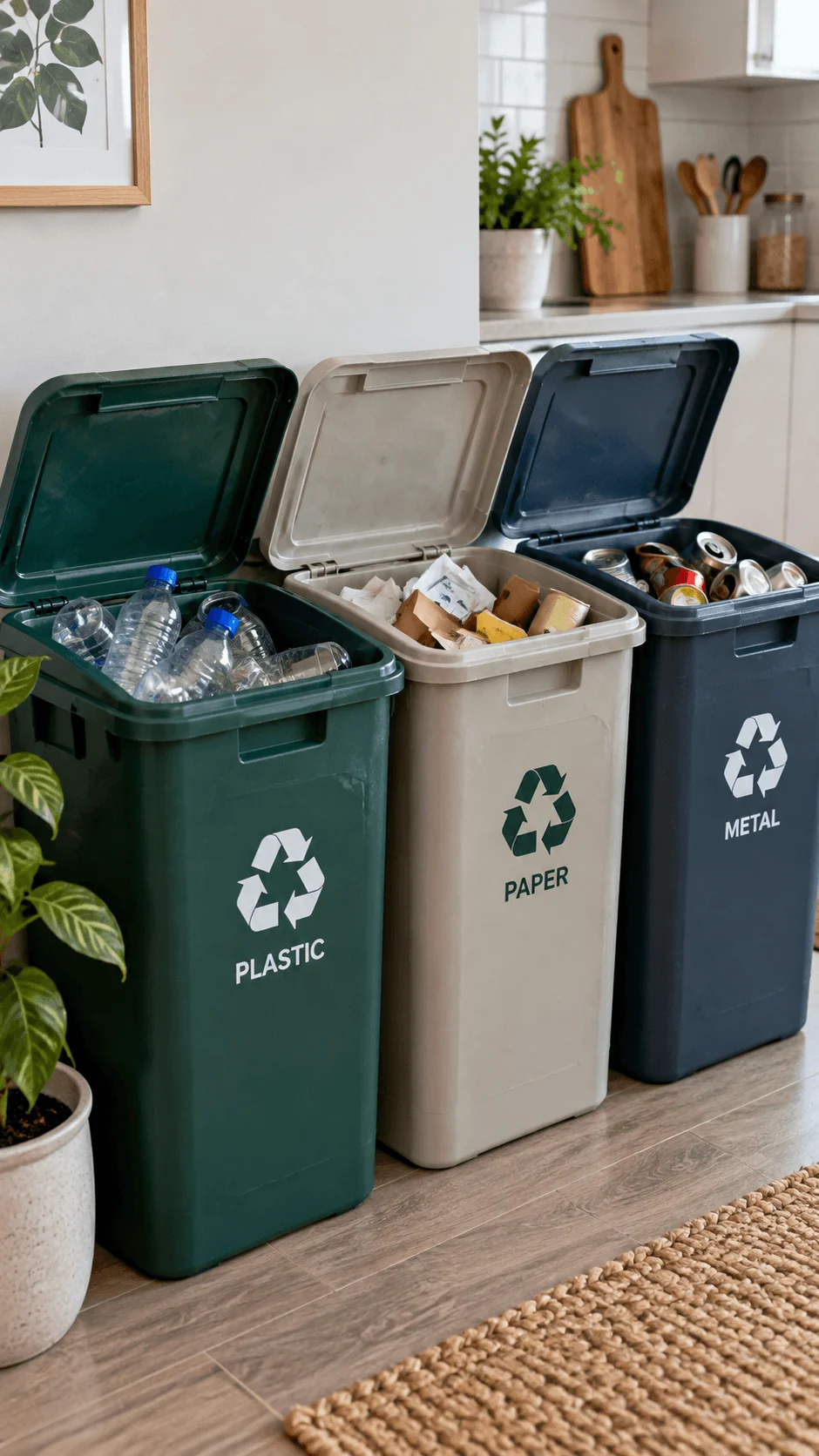
Plastic also offers practical advantages in areas where containers require regular cleaning. Smooth washable surfaces can help households manage residue from bottles, cans and food packaging.
The complete product deserves attention. Handles, lids, hinges and other components can determine how long a box remains functional. A container designed so that commonly stressed components remain durable may stay useful much longer.
The broader goal should involve keeping materials useful for as long as reasonably possible rather than treating recycled content as the only measure of sustainability.
4. Plastic Free Cardboard Recycling Sorting Box
Recycled cardboard offers a simple approach for households that need containers for clean and dry materials. A sturdy cardboard recycling sorting box for home can collect paper, lightweight packaging and other suitable recyclables without requiring a heavy permanent container.
Cardboard systems can work especially well in home offices, bedrooms, schools and dry indoor storage areas. Foldable designs also require little storage space when they are temporarily unnecessary.
Households can customize cardboard containers with clear labels or images showing the materials accepted in each category. When collection requirements change, users can update those labels without replacing the whole system.
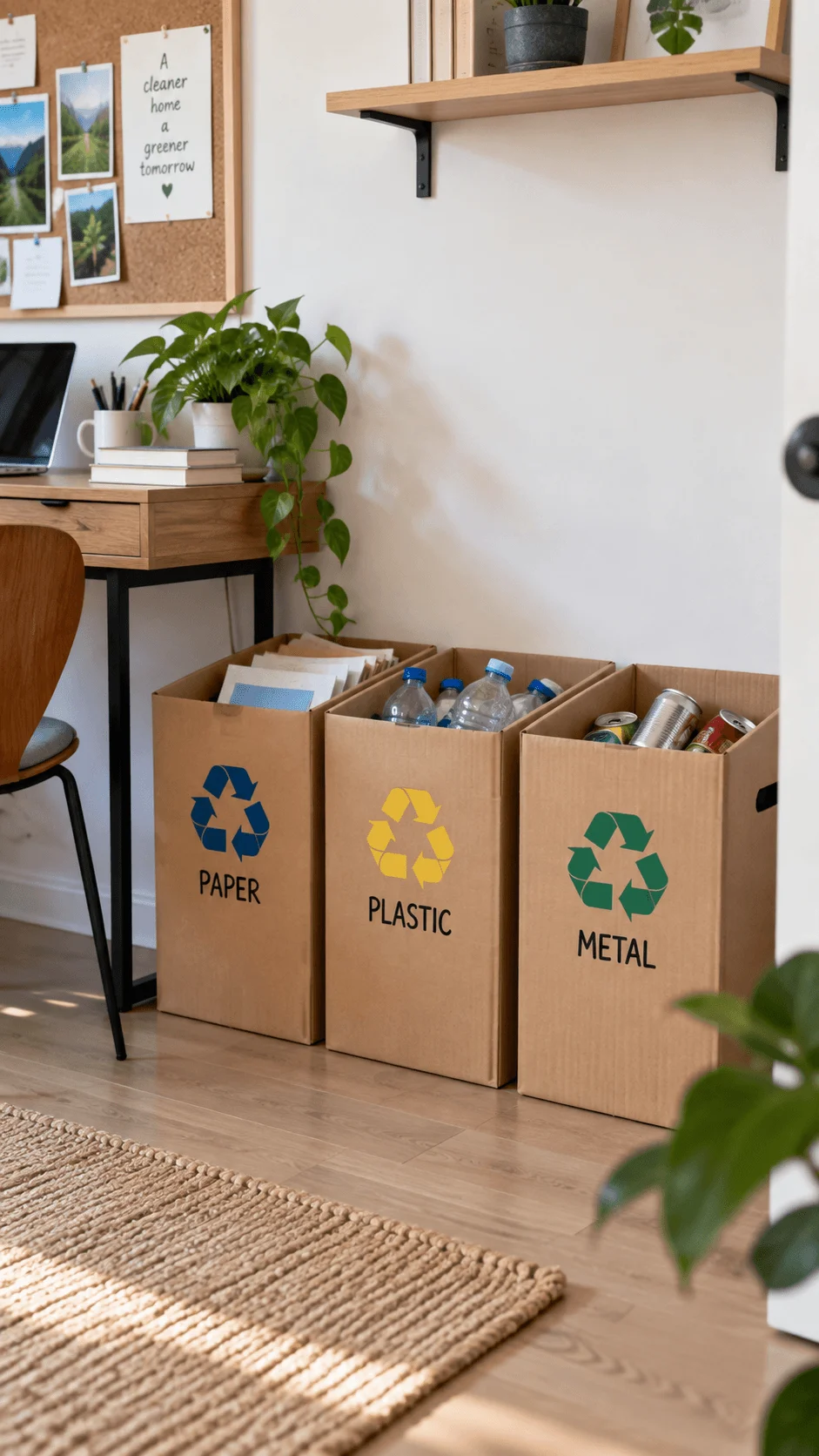
Cardboard does have significant limitations. Moisture can weaken the structure, while leaking containers and food residue can create hygiene problems. For that reason, cardboard should not become the default material for every waste stream.
Its strength lies in simple dry recycling applications. Matching the material of the box with the type of waste it collects creates a more practical system than choosing cardboard solely because it contains no conventional plastic.
5. Food Waste Sorting Container With Removable Caddy
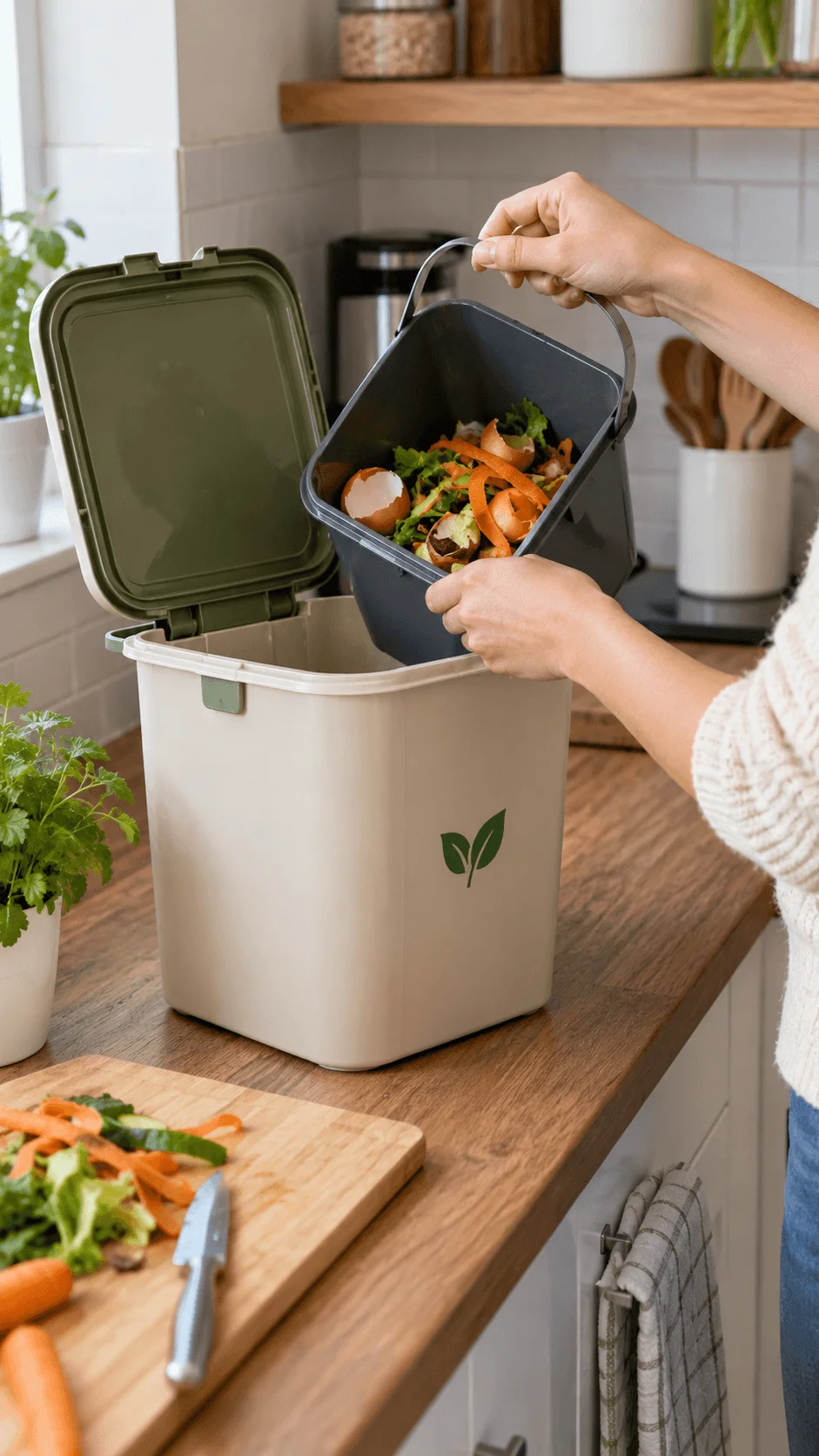
Food scraps need a convenient collection point when a household has access to suitable composting or separate organic waste services. A small food waste caddy can make separation part of ordinary meal preparation.
Positioning the container near the food preparation area allows users to transfer suitable scraps directly into it. A removable inner caddy makes carrying and cleaning easier.
Odor management deserves careful consideration. Regular emptying, appropriate ventilation and routine washing can keep the container more pleasant to use. Households should also follow local guidance about liners because organic waste programs can have different requirements.
An eco friendly waste sorting box with a removable food waste compartment can connect the kitchen with a larger household sorting system. The smaller container can collect scraps during cooking before users transfer them to a home composting system or approved collection container.
Local rules remain important. Composting services do not necessarily accept exactly the same materials, so households should understand what belongs in their particular organic waste stream.
Convenience can determine whether this idea succeeds. When the food waste container sits close to where scraps originate, sorting becomes a simple part of cooking rather than an additional chore.
6. Smart Waste Sorting Bin With AI Recognition
Artificial intelligence adds a technology focused direction to waste sorting. Emerging systems can use cameras, sensors or object recognition software to help identify discarded items and suggest an appropriate category.
A smart eco friendly waste sorting box could potentially help when users encounter confusing packaging or materials. Instead of guessing, someone might receive immediate guidance from the system.
However, recognizing an object represents only part of the challenge. Recycling requirements differ between collection programs. A system may correctly recognize a particular type of packaging while the local facility still does not accept it.
Smart technology also introduces additional considerations. Cameras, sensors, electronic components, electricity use, software support and repairs add complexity that an ordinary container does not require.
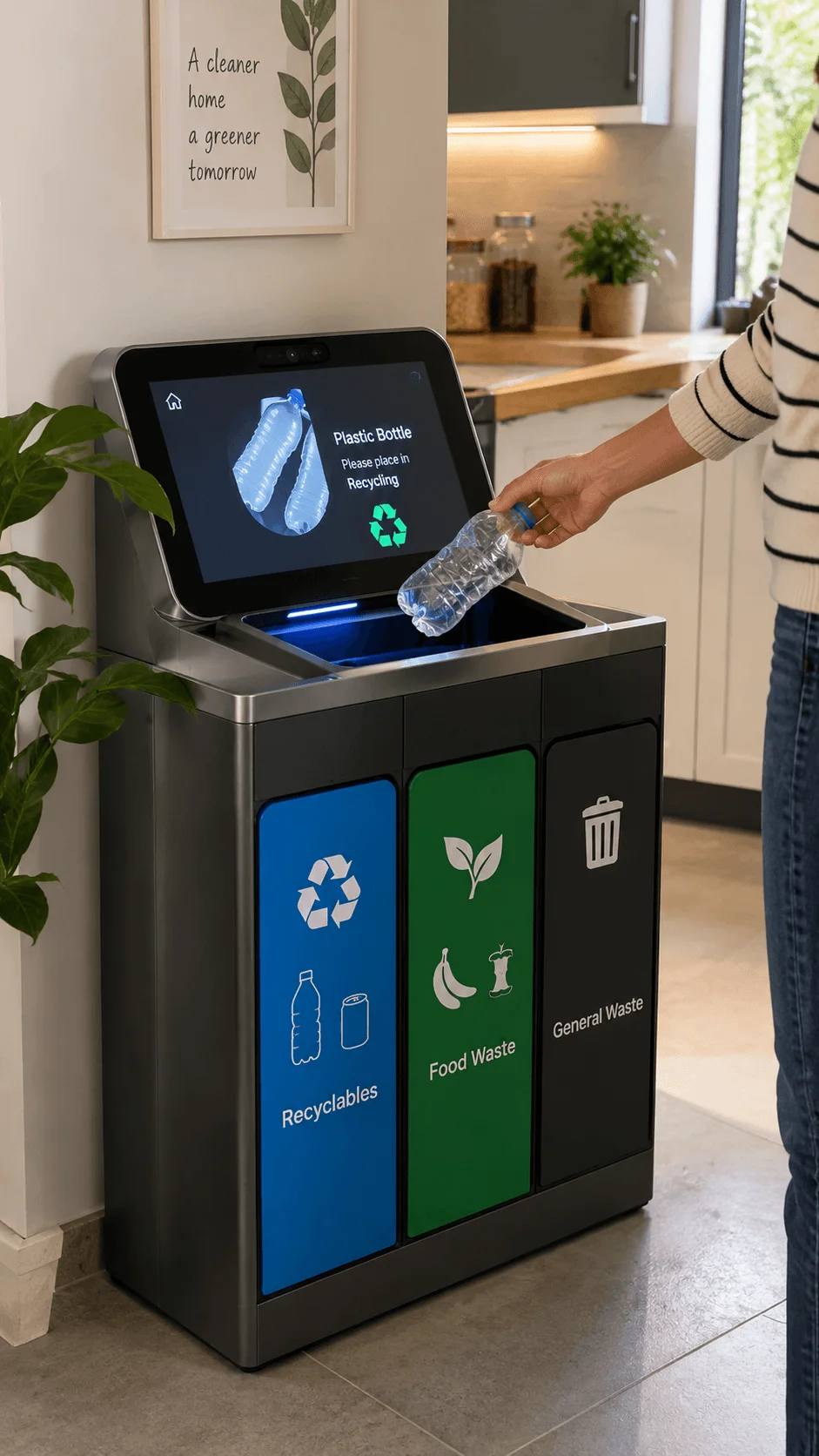
Privacy may matter if a device uses cameras or connected services inside the home. Buyers should understand how a particular system handles images or data before relying on it.
For these reasons, AI should support informed sorting rather than replace local recycling guidance. The most valuable smart systems will combine accurate recognition with relevant information about what users can actually recycle in their area.
7. QR Code Home Waste Sorting System
QR codes offer a simpler digital approach without requiring an entire container full of electronics. Households can place a code on each sorting compartment and connect it with detailed disposal information.
Someone uncertain about an item could scan the code and check which materials belong in that particular waste stream. The digital page could also explain whether containers need emptying, cleaning or separating before disposal.
This approach can make a household waste sorting box particularly useful in shared spaces. Schools, offices, shared accommodation and large households often have many people using the same containers.
Digital information can also support multiple languages without covering a physical box with excessive text. Administrators can update online instructions when collection requirements change while leaving the container itself in place.
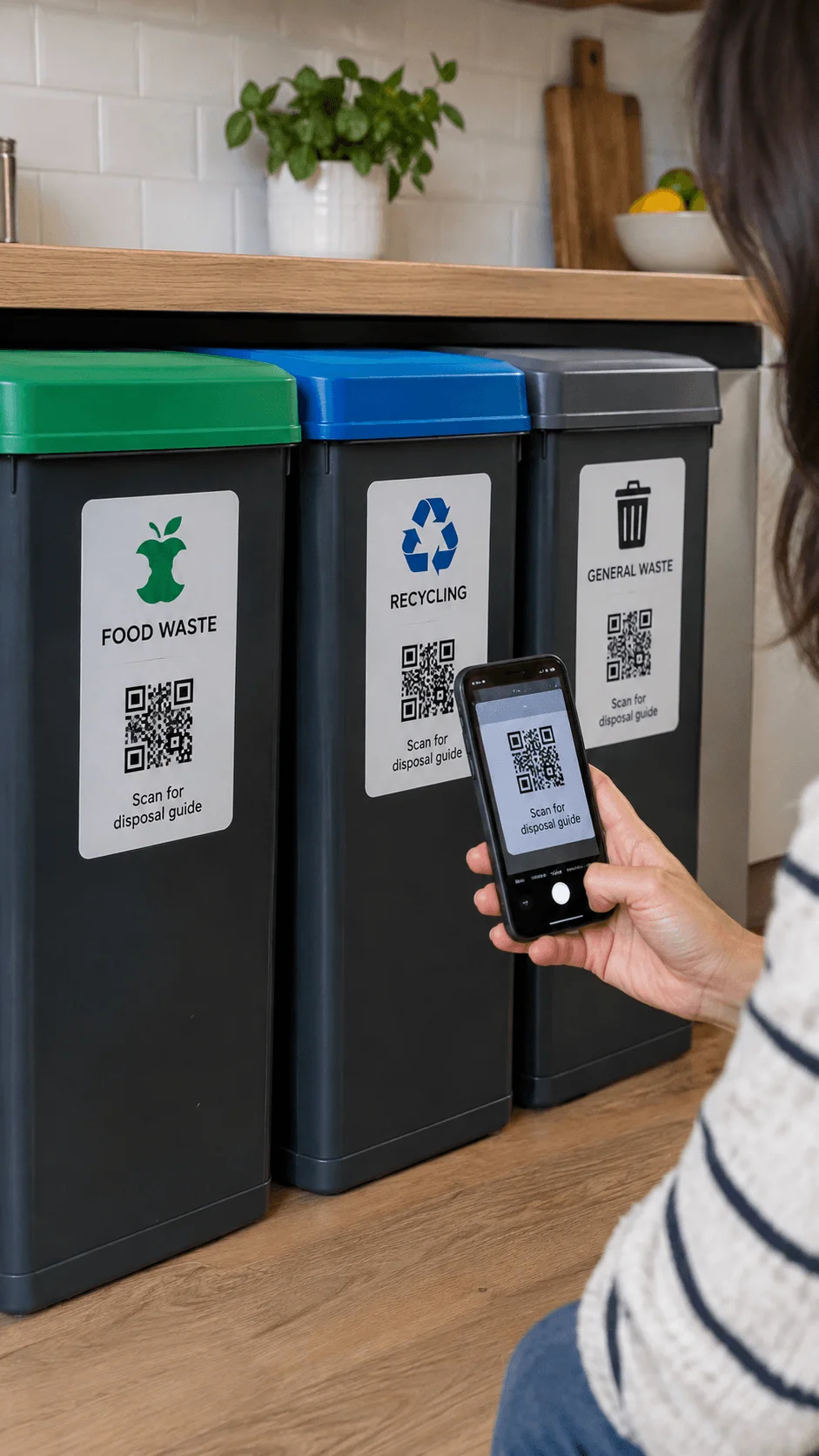
QR systems still require maintenance. Broken links or outdated instructions can create more confusion instead of solving it. The information behind the code should therefore remain accurate and relevant to the local collection system.
The concept shows that a relatively ordinary physical box can become more informative without requiring expensive technology.
8. Color Coded Household Waste Sorting Box With Visual Labels
Clear visual communication can dramatically simplify a recycling station. Instead of relying entirely on written instructions, households can combine colors, recognizable symbols, photographs and short labels.
Pictures of common objects can help users understand where materials belong. A paper compartment might show typical paper products, while another container could display examples of locally accepted packaging.
A visually organized eco friendly waste sorting box can also help children and visitors understand the system without repeatedly asking for instructions.
Replaceable labels offer additional flexibility. If local recycling rules change, households can update individual labels rather than replacing their containers.
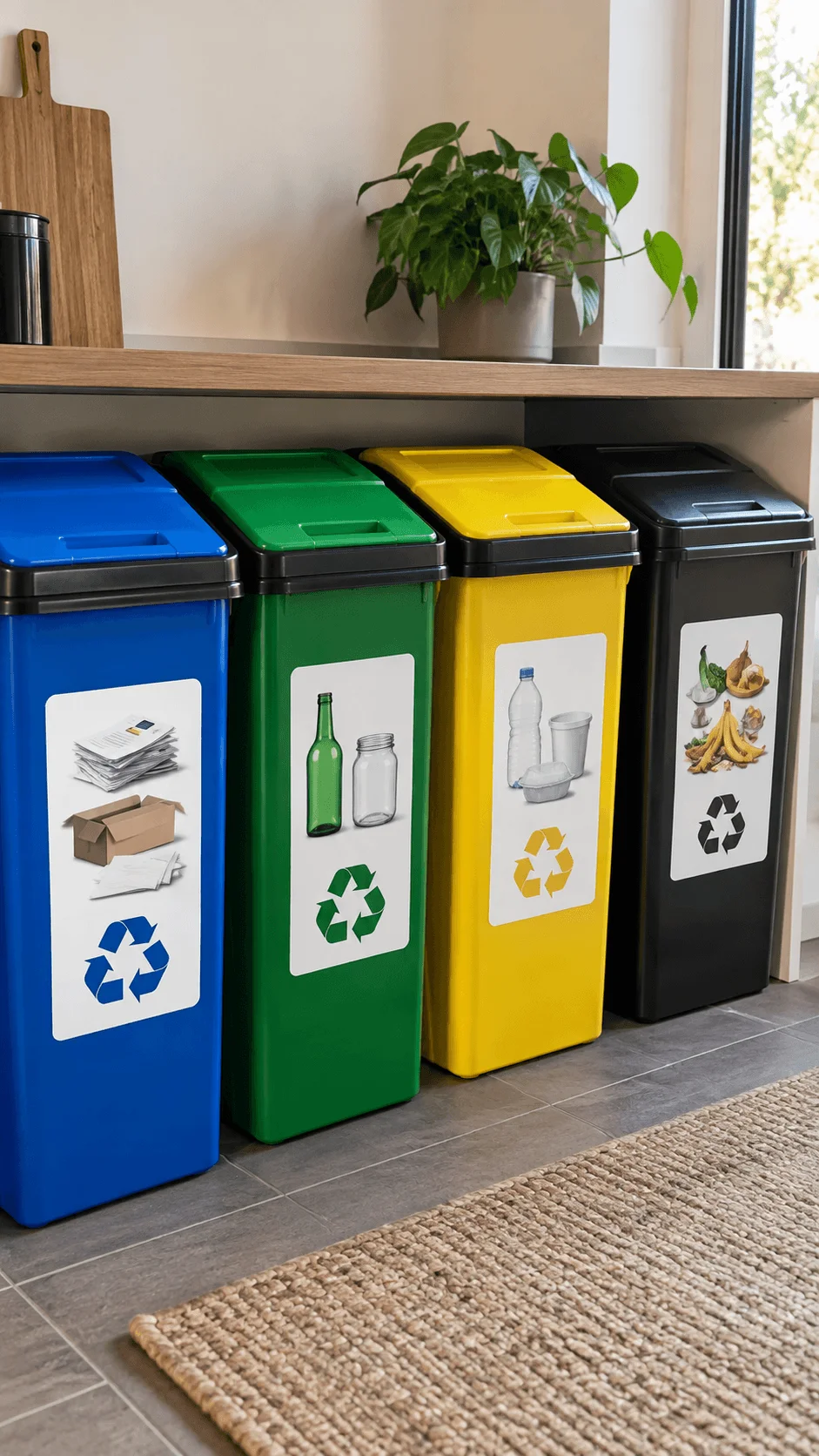
Users should not assume that a particular color always represents the same waste category. Collection systems can use different conventions. Designing labels around local requirements provides more reliable guidance than following a universal looking color scheme.
Simple communication often matters more than decorative complexity. Users should be able to identify the correct compartment within seconds.
9. Repair Reuse Donate and Recycling Sorting Station
A modern sorting station does not need to begin and end with recycling. Some household objects still have useful life remaining when their current owner no longer needs them.
A dedicated compartment can temporarily collect suitable objects for repair, reuse, donation or resale. This approach encourages households to ask whether an item actually needs disposal before placing it into a waste stream.
Books, toys, clothing and appropriate household accessories may sometimes have further uses. A damaged but repairable object might also remain useful after a relatively simple fix.
This approach expands the purpose of a sustainable waste sorting box from managing discarded material to preventing useful objects from becoming waste prematurely.
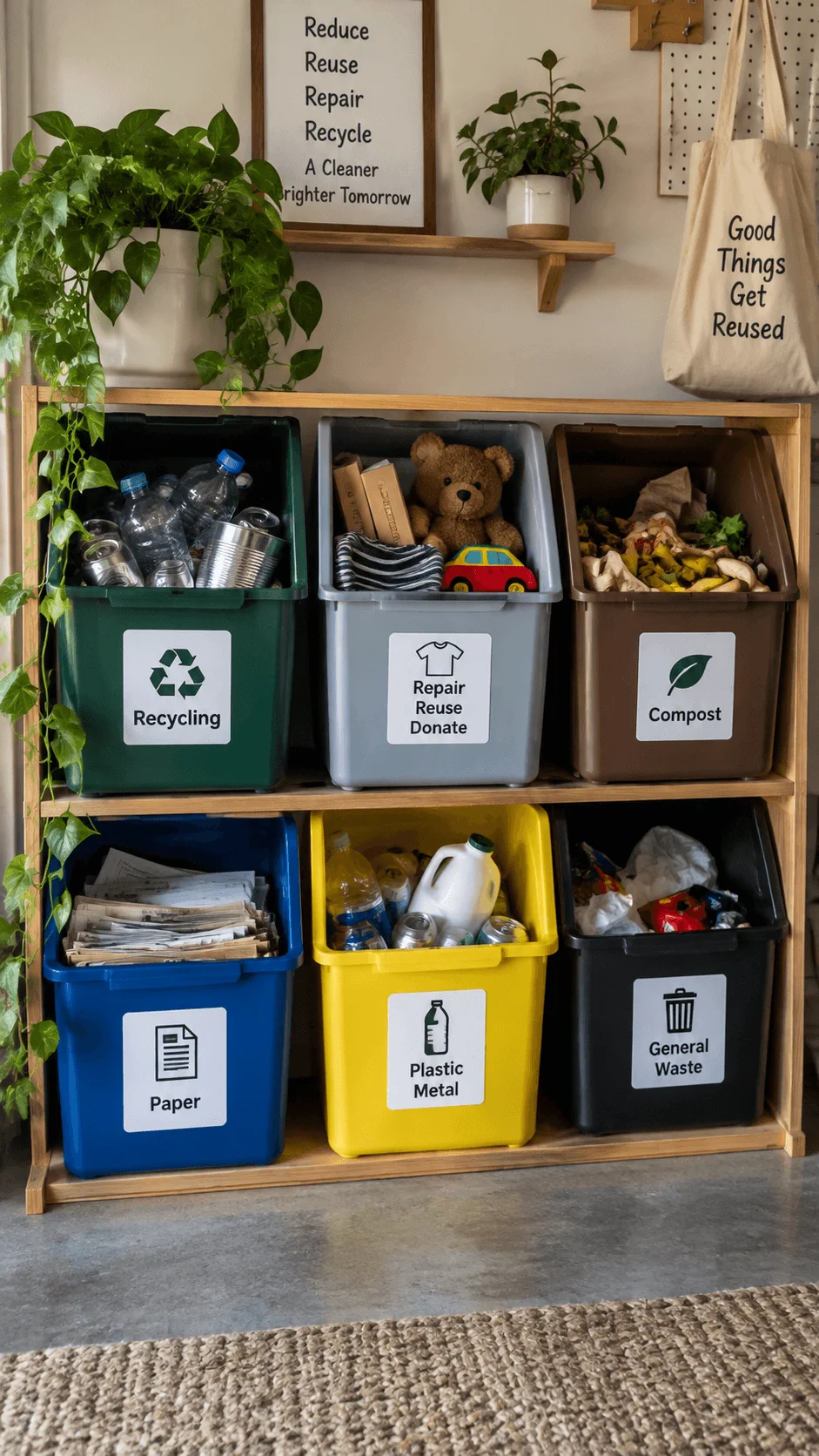
The system needs regular attention. A donation or repair compartment can quickly turn into permanent clutter if nobody empties it. Households can periodically review these items and take the appropriate action.
By creating a visible stage between ownership and disposal, the sorting station can support more thoughtful consumption habits.
10. E Waste Segregation Box for Small Electronics
Small electronic items frequently disappear into drawers because people do not know where to put them. Chargers, cables, accessories and outdated devices can accumulate for years.
A dedicated e waste container provides a temporary collection point until household members can take suitable items to an appropriate collection facility.
This compartment does not need to occupy much space because most households generate electronic waste less frequently than packaging or food scraps. A compact clearly labeled box may provide enough capacity.
An eco friendly waste sorting box can include an e waste section, but households should treat electronic items differently from ordinary recycling. Batteries, damaged devices and products containing potentially hazardous components may require special handling.
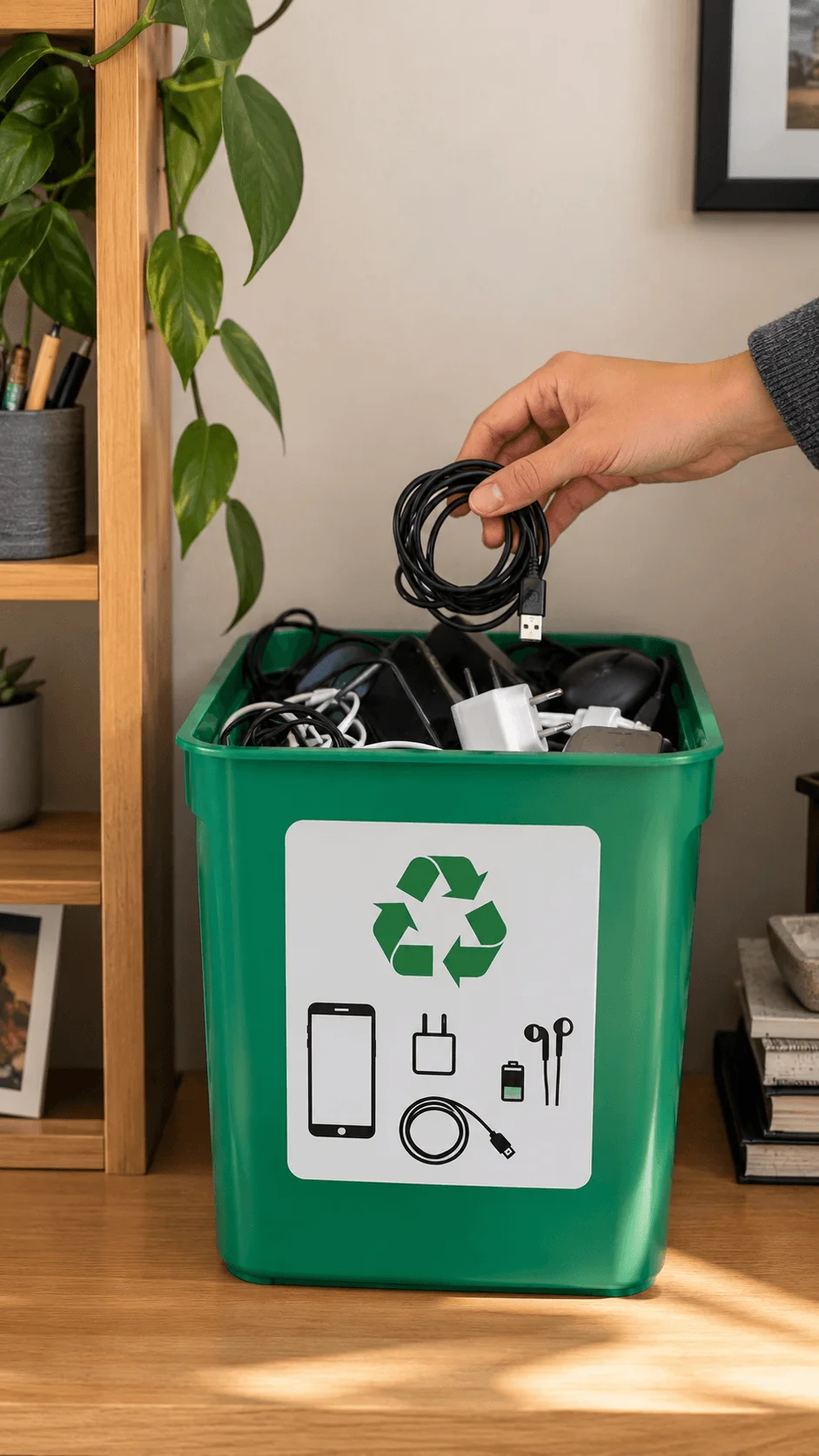
Local collection instructions should determine how users store and dispose of these materials. People should avoid assuming that everything containing electronics belongs in the same collection stream.
Creating a dedicated location still solves an important household problem. It keeps electronic waste visible and organized until responsible disposal becomes possible.
11. Slim Vertical Recycling Sorting Box for Home
A vertical recycling station offers another solution for homes where floor space comes at a premium. Instead of placing several wide containers beside one another, the system arranges multiple waste streams upward.
Tall narrow compartments can fit into suitable kitchen corners, utility rooms or pantry spaces. Pull out containers can provide access while keeping the station visually organized.
A vertical recycling sorting box for home should prioritize ergonomics as much as space efficiency. Frequently used categories need convenient positions so users do not have to bend excessively or reach awkwardly every time they discard something.
Capacity also matters. Extremely narrow compartments may save space but require constant emptying. Households should balance compact dimensions with the amount of waste they actually generate.
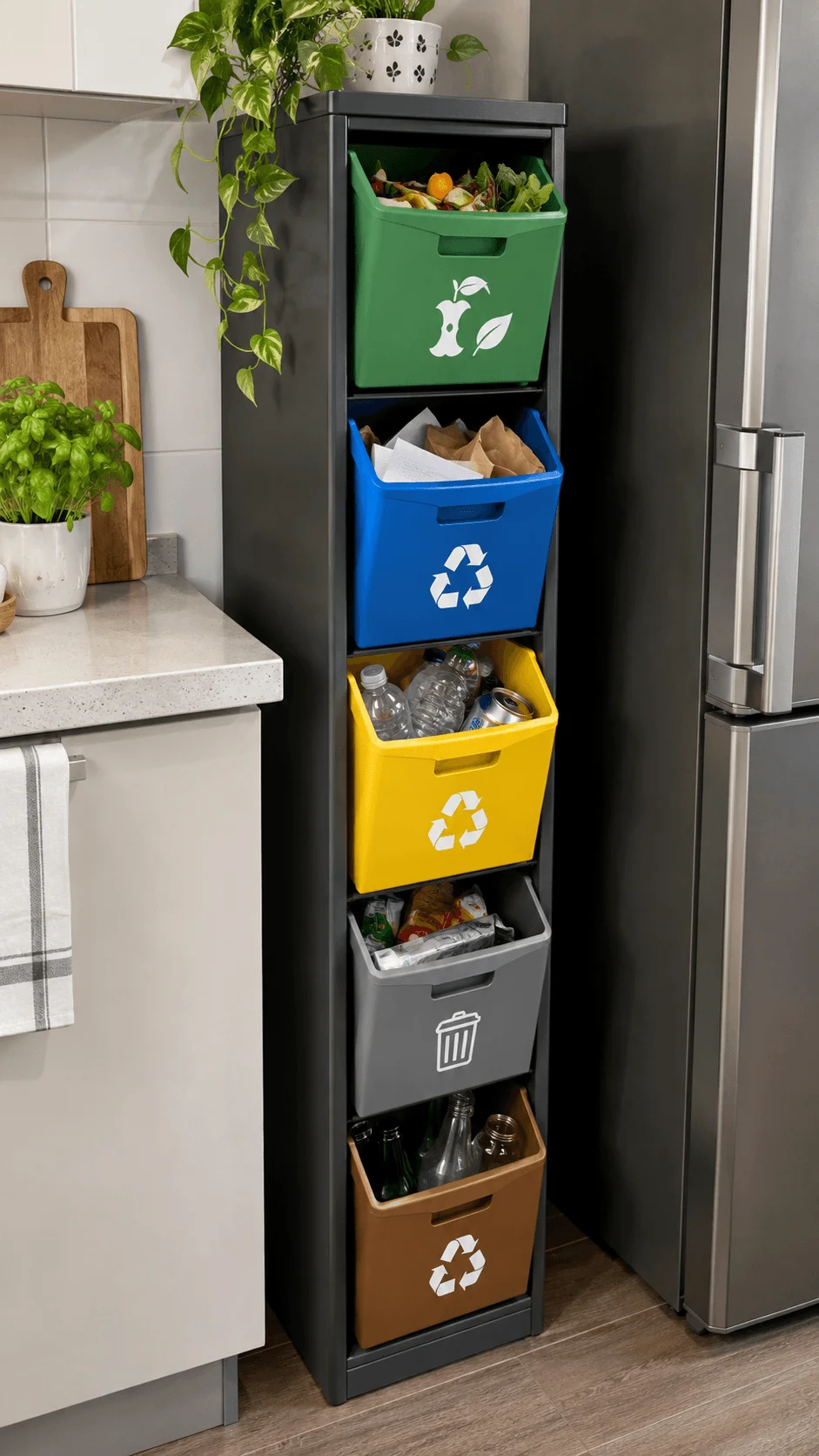
Removable containers simplify washing and transportation to larger collection bins. Stable construction also becomes important when several compartments form one tall structure.
A thoughtfully planned vertical station can provide several sorting categories while occupying a relatively small footprint.
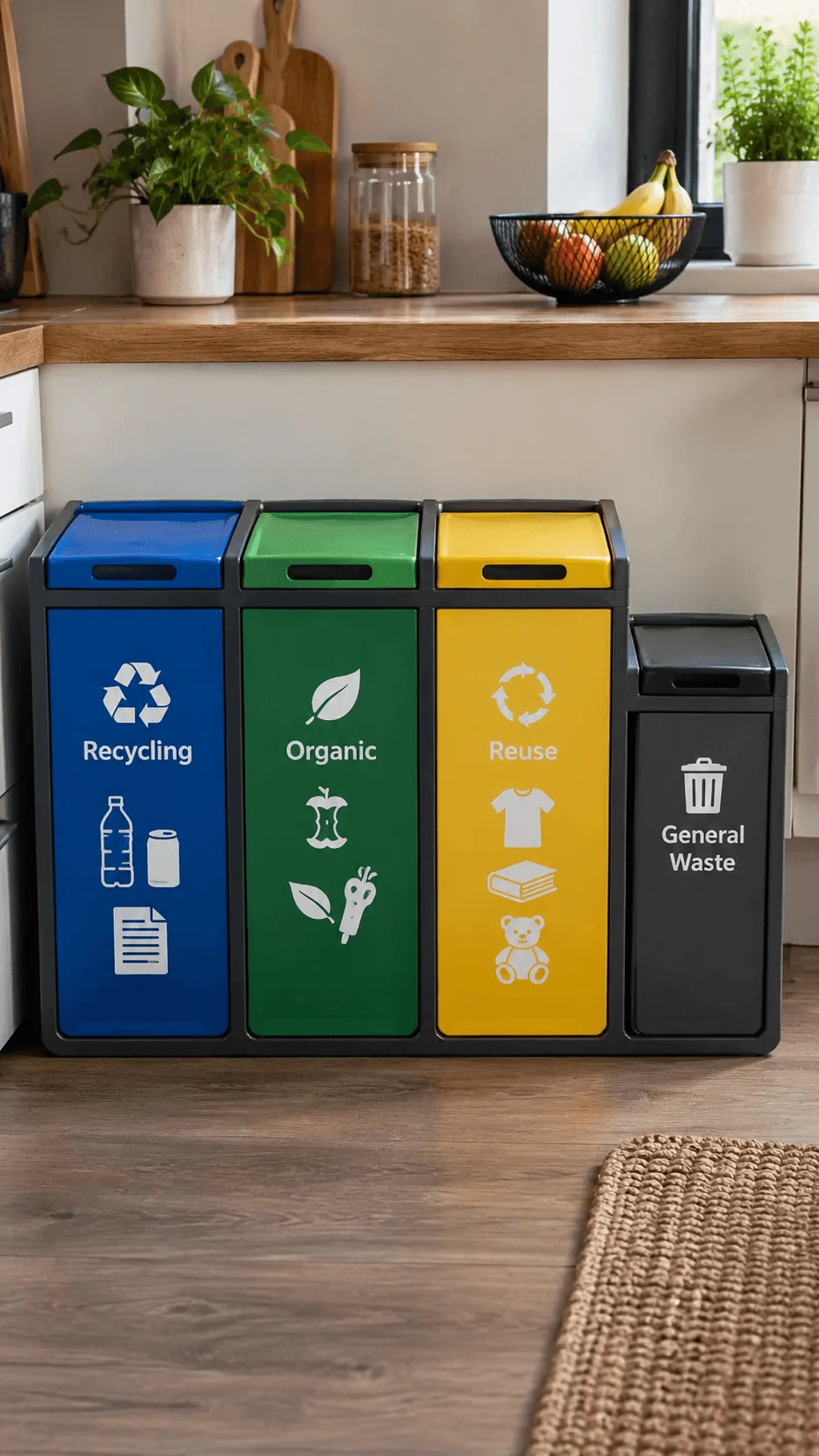
12. Zero Waste Sorting Station With a Smaller General Waste Box
A conventional waste station often gives the largest container to general waste. A zero waste inspired design can reverse that assumption by making recycling, organic waste and reuse more prominent.
The residual waste compartment remains available, but its smaller size encourages households to notice how much material still enters that stream.
This eco friendly waste sorting box can therefore become a simple waste awareness tool. When one compartment fills unusually quickly, household members can examine what they frequently discard.
A large volume of food scraps might encourage better meal planning or food storage. Frequent packaging could encourage shoppers to consider products with less unnecessary packaging where practical.
The system should not create unrealistic expectations. Zero waste works better as a direction for reducing avoidable waste than as a promise that a household will literally discard nothing.
The main benefit comes from making waste visible. Instead of throwing everything into one large container, households can understand what they discard and where opportunities for reduction may exist.
How to Choose an Eco Friendly Waste Sorting Box for Your Home
Choosing an eco friendly waste sorting box should begin with the household rather than the product. Before purchasing containers, determine which waste streams local collection services actually handle.
A household with separate food waste collection needs a different setup from one without that service. Similarly, some areas may collect certain recyclables together while others require additional separation.
Available space should influence the design. A large utility room may accommodate several containers beside one another, while a compact apartment may benefit from modular or vertical solutions.
Household size also changes capacity requirements. A large family may fill recycling containers quickly, while one person may prefer smaller compartments that occupy less space.
Cleaning should remain simple. Containers that regularly receive packaging or organic residue need surfaces and shapes that users can maintain easily.
Durability deserves equal attention. Instead of replacing perfectly functional containers merely because a new sustainable product appears, households can consider adapting suitable boxes they already own. Extending the useful life of existing products can sometimes avoid an unnecessary purchase.
The best system ultimately matches physical space, collection services and everyday habits.
How to Make a Home Waste Sorting System More Effective
Even an expensive home waste sorting system can fail if people find it confusing or inconvenient. Placement and communication often determine how effectively the system works.
Position containers near the areas where household members generate waste. Kitchen recycling and food waste compartments should remain easy to reach during cooking and cleanup.
Clear labels can reduce mistakes. Rather than using vague categories, households can display locally relevant examples of accepted materials.
Regular cleaning keeps the station pleasant to use. Emptying containers before they overflow also prevents a well organized system from becoming frustrating.
Households should pay attention to contamination. Putting unsuitable objects into a recycling container does not necessarily improve recycling. Following local instructions matters more than trying to place as much material as possible into the recycling compartment.
The system should also change when circumstances change. New collection services, different household habits or changes in waste volume may require larger, smaller or additional compartments.
An effective sorting station makes responsible behavior convenient. The less effort household members need to understand and use it correctly, the more naturally it can become part of everyday routines.
Conclusion
An eco friendly waste sorting box can turn a confusing collection of household waste into a clearer and more manageable system. The most suitable design depends on available space, household size, daily habits, local collection infrastructure and the materials people regularly discard.
Modular containers offer flexibility, while stackable and vertical systems address limited space. Food waste caddies support organic separation where appropriate, and visual labels can make everyday sorting easier. QR codes provide access to more detailed instructions, while smart recognition technology demonstrates how digital tools may increasingly contribute to waste management. Dedicated reuse and electronic waste compartments can extend the sorting process beyond conventional recycling.
However, the container itself represents only one part of responsible waste management. Households can also reduce unnecessary purchases, continue using functional products, repair useful belongings, donate suitable items, prevent avoidable food waste and follow local recycling requirements.
A thoughtfully designed eco friendly waste sorting box should ultimately make good waste habits easier rather than more complicated. When households can clearly see what they discard and quickly identify where each material belongs, waste sorting becomes part of everyday life and can also reveal practical opportunities to reduce the amount of waste produced in the first place.