DIY Reusable Fabric Christmas Gift Wrapping Ideas
DIY Reusable Fabric Christmas Gift Wrapping Ideas make holiday presents look thoughtful while giving old textiles a useful new purpose. Instead of tearing through another layer of disposable wrapping paper, you can cover gifts with cotton squares, scarves, tea towels and simple sewn bags that survive Christmas morning. Many options take only a few folds and knots, so a beautiful result does not require expensive equipment or advanced sewing skills.
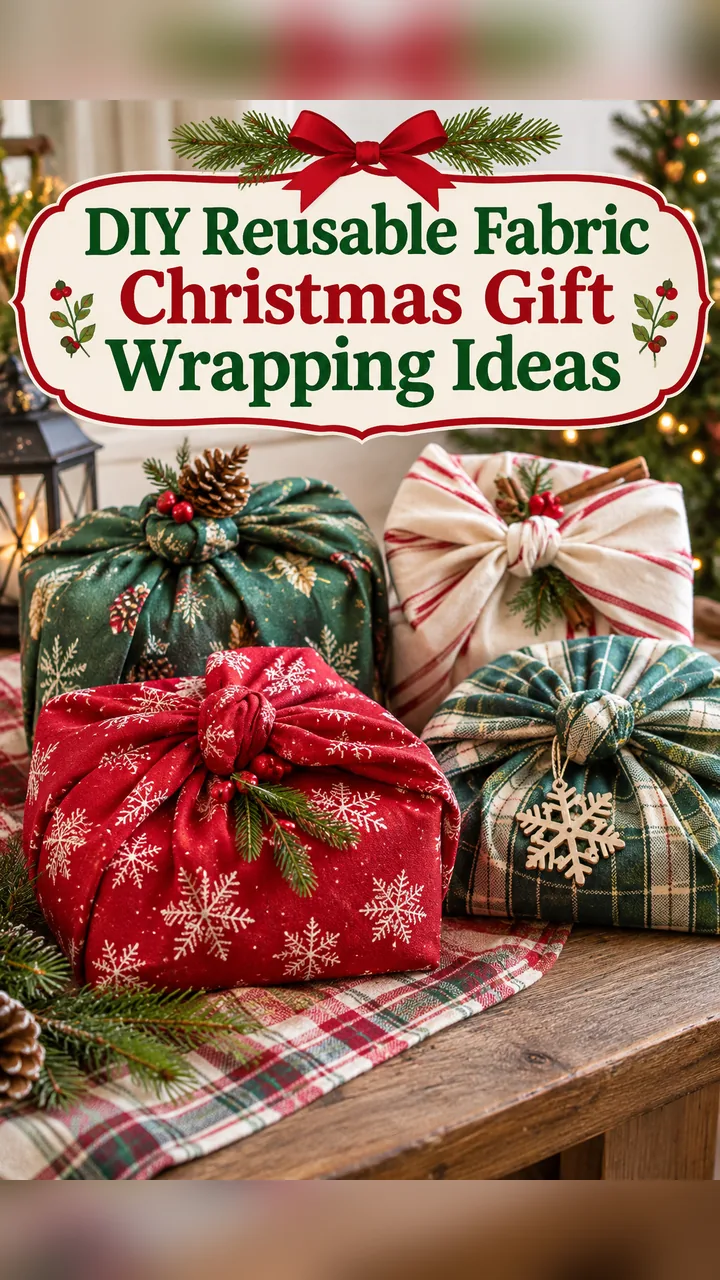
The best approach depends on the shape of the present, the fabric you already have and whether the recipient can use the cloth again. These twelve creative methods include traditional Japanese furoshiki, easy no sew alternatives and more structured fabric designs. Each one offers practical ways to personalize a gift while keeping wrapping materials in circulation for another celebration.
Classic Furoshiki Square Wrap
A simple furoshiki wrap is an excellent place to begin because it needs no tape, glue or sewing. Furoshiki is a Japanese cloth wrapping tradition, and its elegant knots make even an ordinary box feel special. Choose a soft cotton square that is large enough to cross over the gift and leave fabric for a comfortable knot. Place the box diagonally in the center of the cloth, fold two opposite corners snugly over it, then bring the remaining corners together above the box and tie a secure square knot. Tuck any loose edges underneath for a smooth finish.
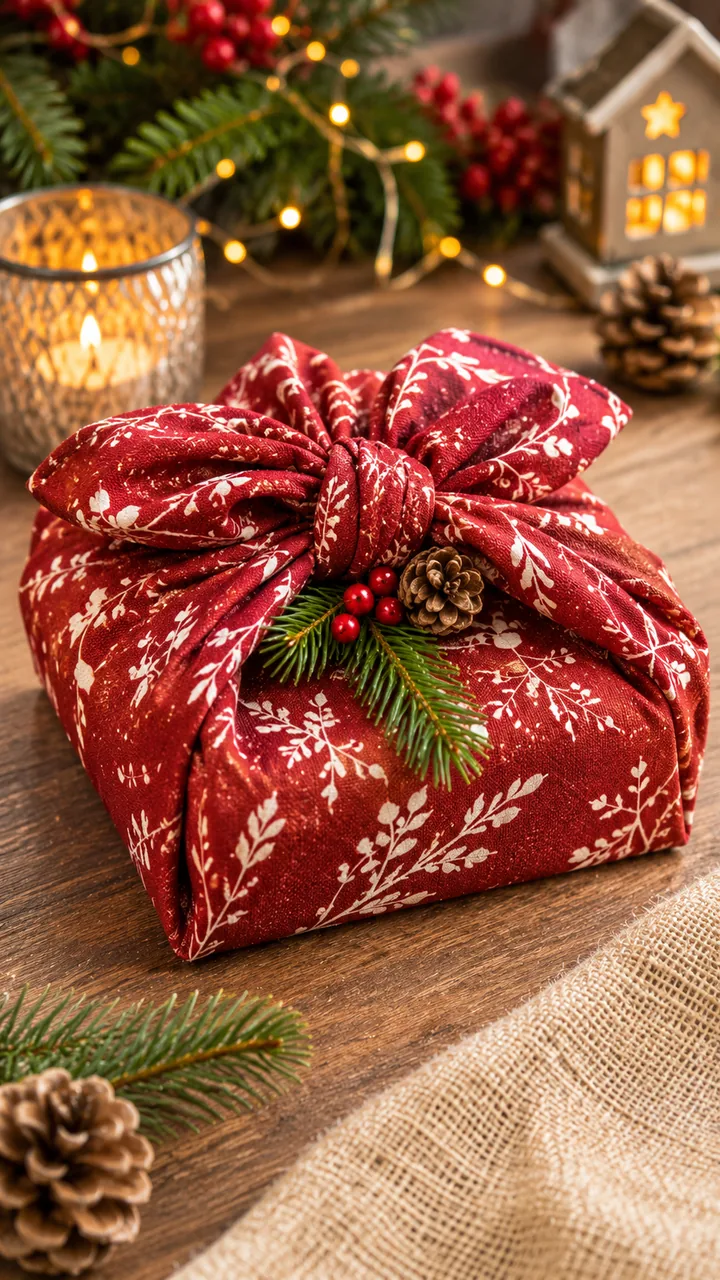
For a traditional Christmas palette, use burgundy, evergreen or cream fabric. When the recipient opens the gift, the fabric remains useful for wrapping another present, carrying small items or lining a drawer.
No Sew Christmas Fabric Wraps From Old Shirts
A clean, unwanted cotton shirt can supply several attractive gift wraps without a trip to the craft store. Wash and iron the shirt, then cut around seams, buttons and damaged areas to create the largest practical rectangles or squares. Woven cotton holds a knot more neatly than very stretchy jersey, so begin with a button down shirt or a cotton blouse. Use pinking shears if you already own them to give edges a decorative finish, though the edges may still fray with use.
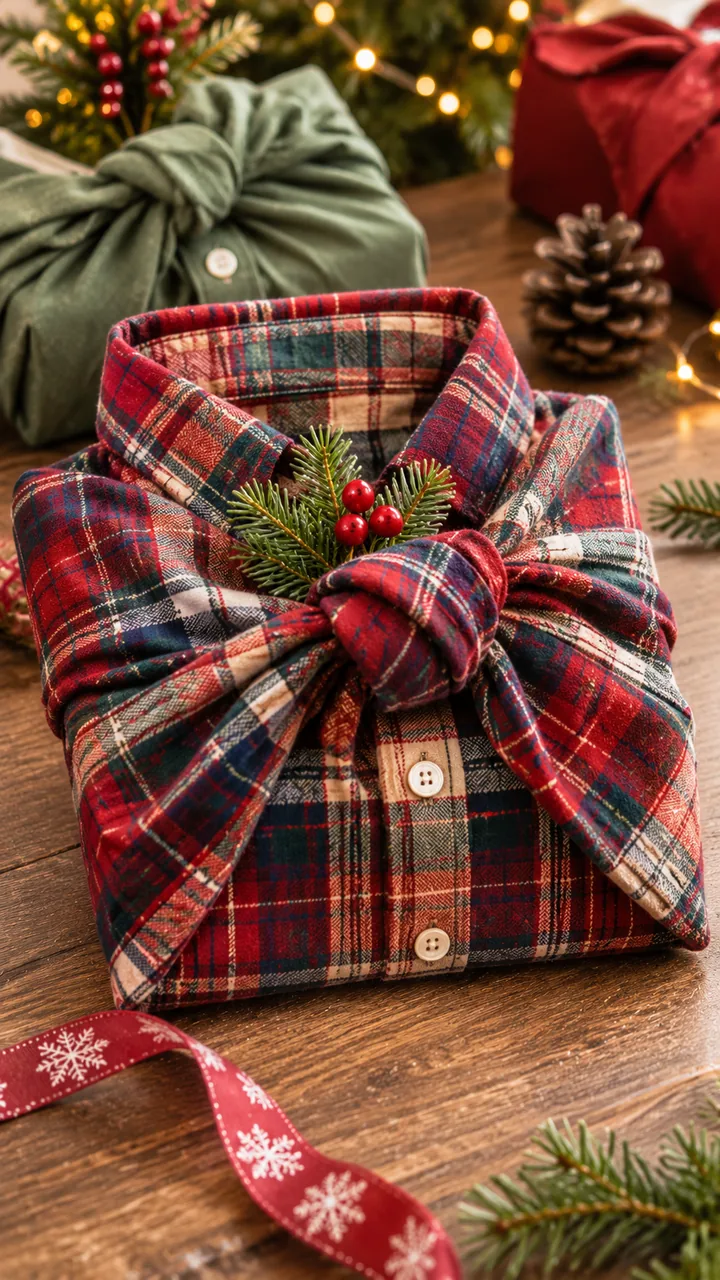
Place a saved button placket across the front of a gift. Fold the cloth around the box as you would fold paper, but secure it with reusable cotton ribbon instead of tape. Use clean, durable fabric you already own.
Reusable Drawstring Christmas Gift Bags
Drawstring bags are ideal for gifts that are awkward to wrap, including stuffed toys, handmade soaps and several smaller surprises. Cut two matching fabric rectangles with enough extra room for seam allowances and the drawstring channel. Put the right sides together and sew the sides and bottom. At the opening, fold the top edge inward twice, stitch the channel, and thread a cotton cord through it with a safety pin. Knot the cord ends so they cannot slip back inside.
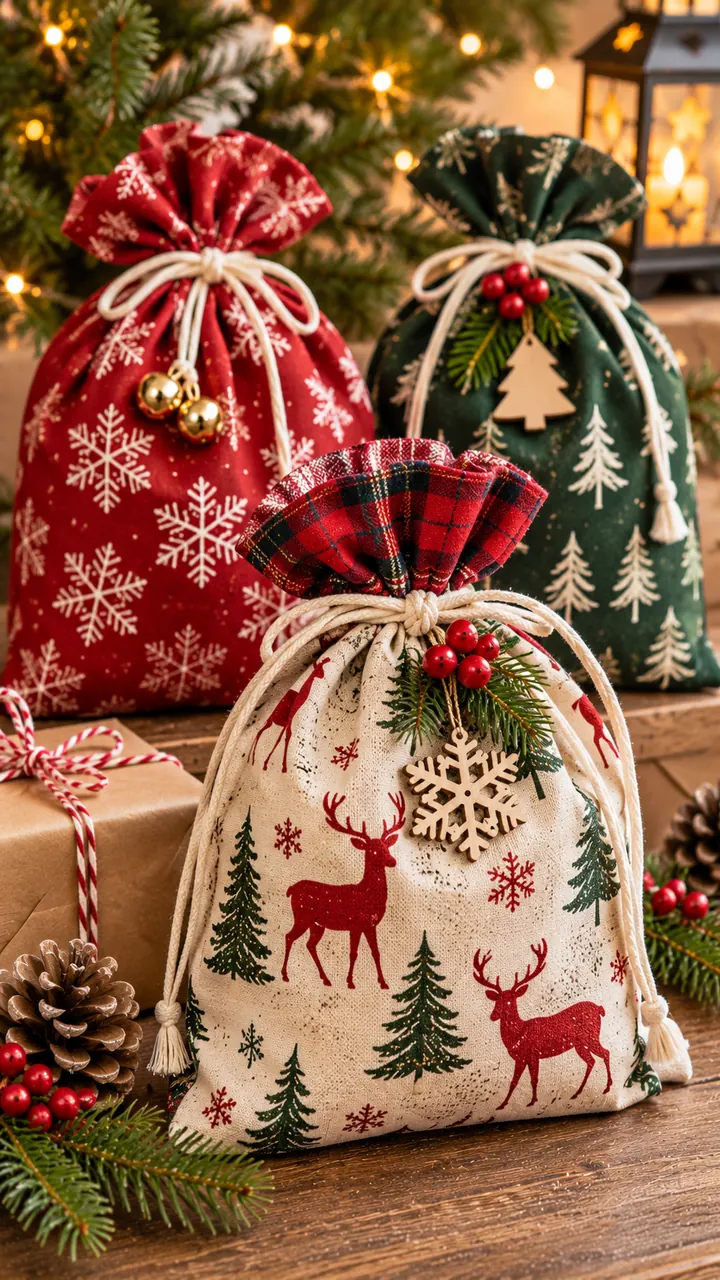
Try making a family set in several sizes so each present has a matching bag. Cotton quilting scraps, old pillowcases and leftover curtain fabric can work, but avoid thick upholstery textiles that make the channel bulky. After Christmas, reuse the bag for storage. A reusable bag becomes especially valuable when it serves a purpose beyond the holiday season.
Festive Tea Towel Gift Wrapping
A tea towel can be both the wrapping and a useful additional present. This approach suits baking kits, cookbooks, homemade treats in sealed containers and small kitchen tools. Lay a clean towel flat with the printed side facing down and place the gift near its middle. Bring the long sides over the item, fold the shorter ends inward, then tie everything with washable fabric ribbon or a separate narrow strip of cotton.
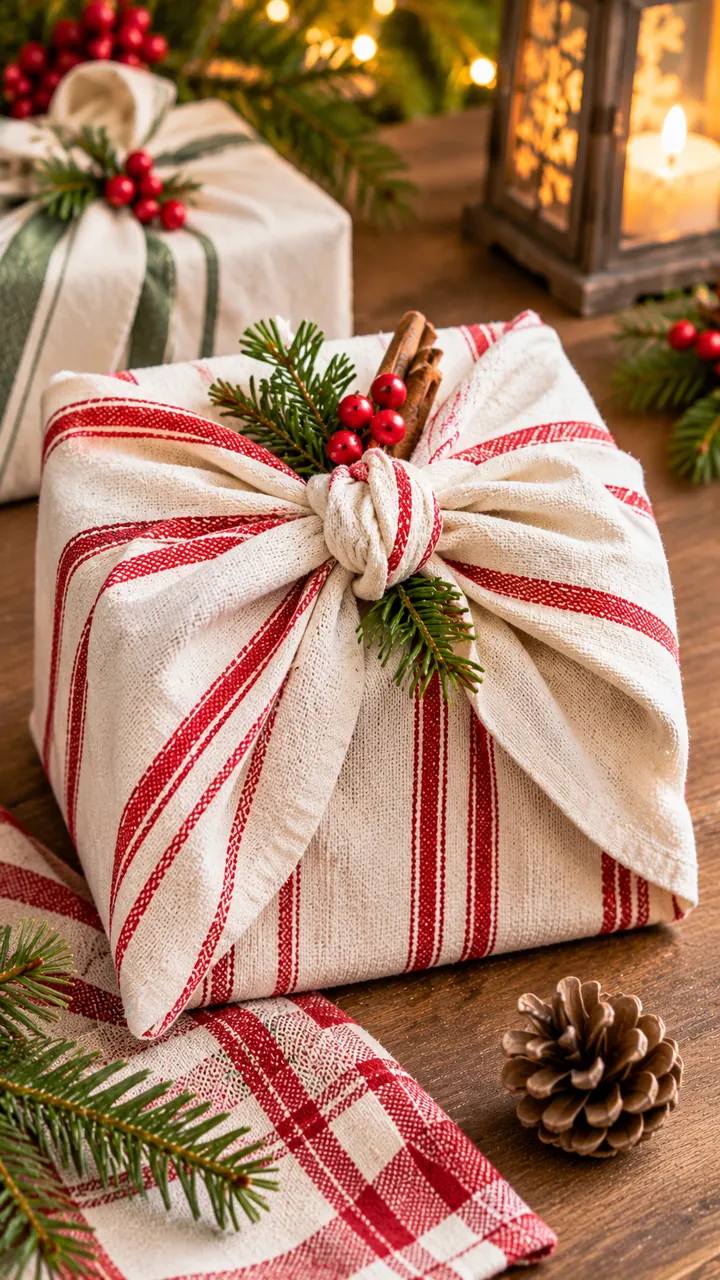
Choose a towel that matches the recipient’s kitchen instead of buying a novelty print that may only feel suitable in December. A simple plaid or botanical design can look festive under the tree and remain practical all year. If you are presenting food, keep it in a separate food safe container rather than letting it touch the fabric directly.
Vintage Scarf Wrap With a Decorative Knot
A vintage scarf creates an especially beautiful finish for smaller boxes, candles in protective packaging and accessories. Look in your own closet first, then consider a clean secondhand scarf with strong stitching and no noticeable damage. Place the scarf diagonally beneath the gift, lift two corners around the box and tie the other two in a neat knot at the top. Spread the knot ends into soft loops to create the appearance of a bow without adding one.
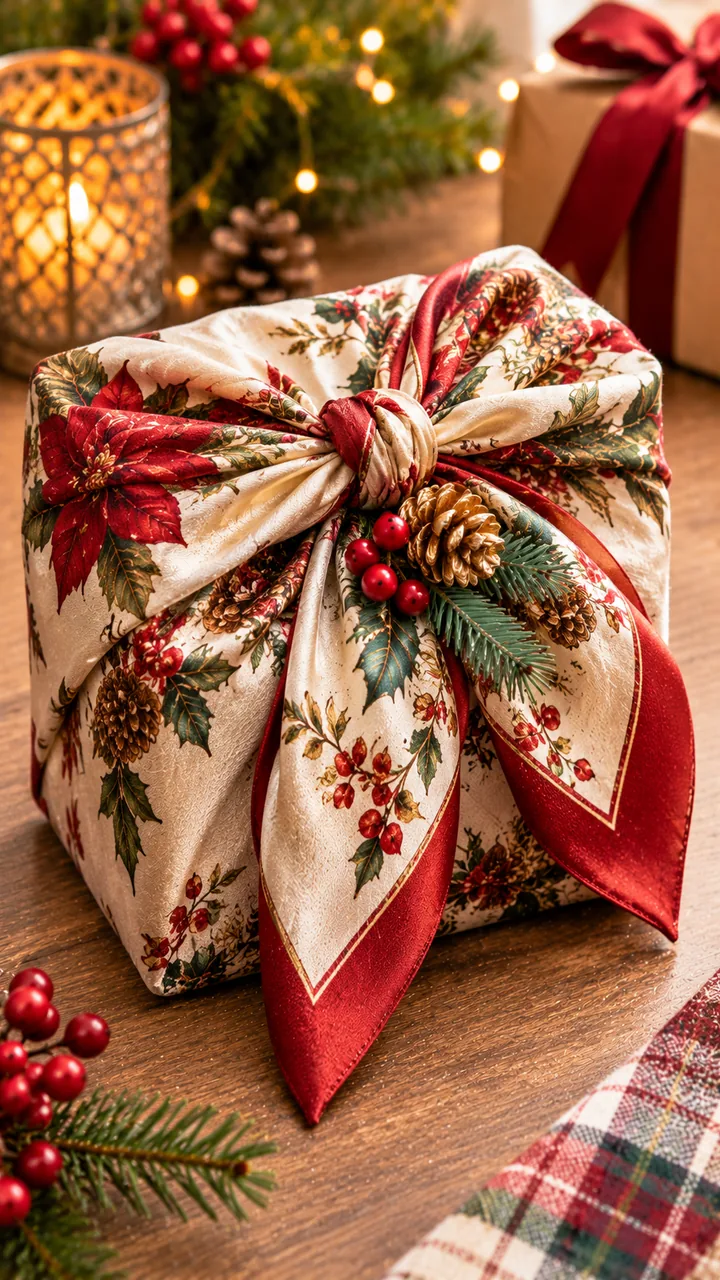
Silky fabrics can slip, so choose a textured cotton scarf for your first attempt or use a small fabric tie to help hold the knot. Avoid fragile antique silk for heavy gifts or anything with sharp edges. It is also an excellent option when the scarf itself is part of the present. Tell the recipient that the wrap is wearable, making its second use immediately obvious.
Patchwork Wraps From Fabric Scraps
Small remnants do not have to go to waste after a sewing project. Gather clean scraps of similar thickness and arrange them into a cheerful patchwork square with a mix of prints and solid colors. Sew the pieces into rows, press each seam flat, then join the rows and finish the outer edges with a narrow hem. Lightweight cotton is easiest to handle, especially when the finished square needs to fold neatly around a box.
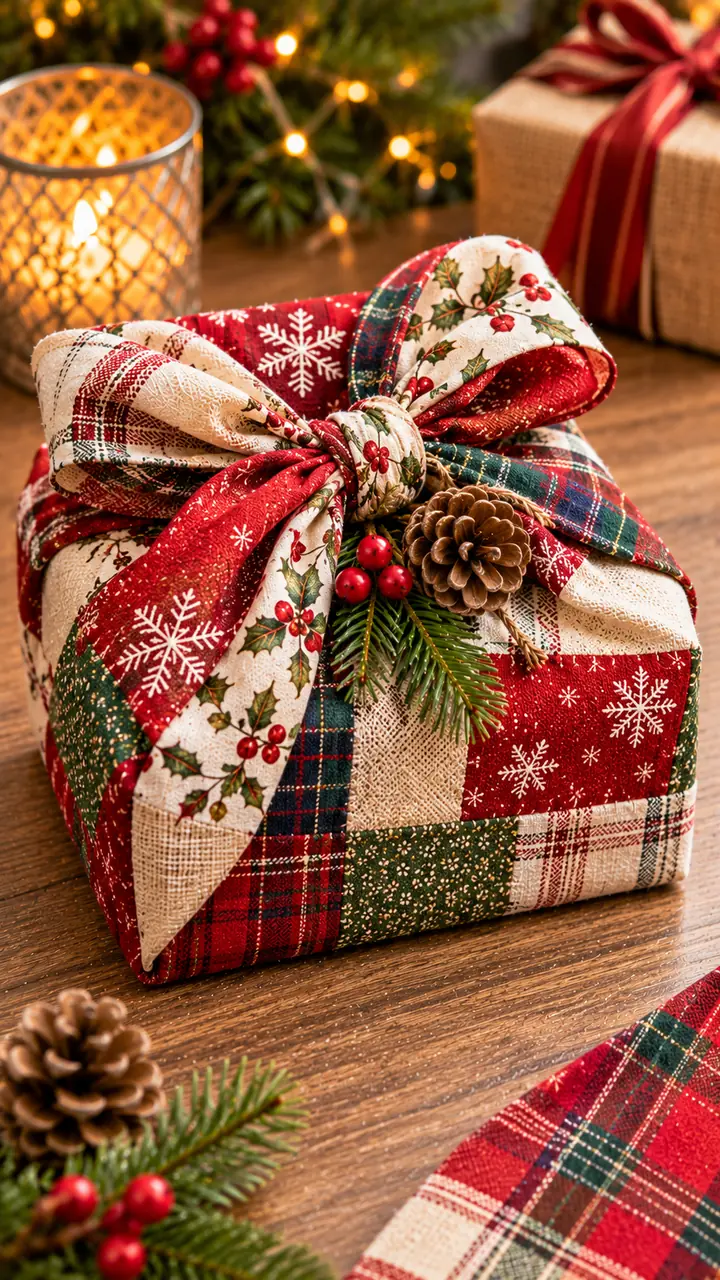
For Christmas, pair red checks with neutral linen colors, or combine favorite pieces from old holiday projects. Keep patterns balanced so the cloth looks intentional rather than crowded. Patchwork takes longer but creates a useful family tradition. If the gift is large, join extra pieces to create a wider square.
Reversible Double Sided Fabric Gift Wrap
Reversible wraps give you two styling options from a single piece. Choose two lightweight fabrics that coordinate, such as plain forest green cotton and a muted Christmas print. Cut equal squares, place the right sides facing inward, and stitch almost all the way around. Turn the fabric through the small opening, press the edges and sew the opening closed. A final line of topstitching helps the square keep its shape after washing.
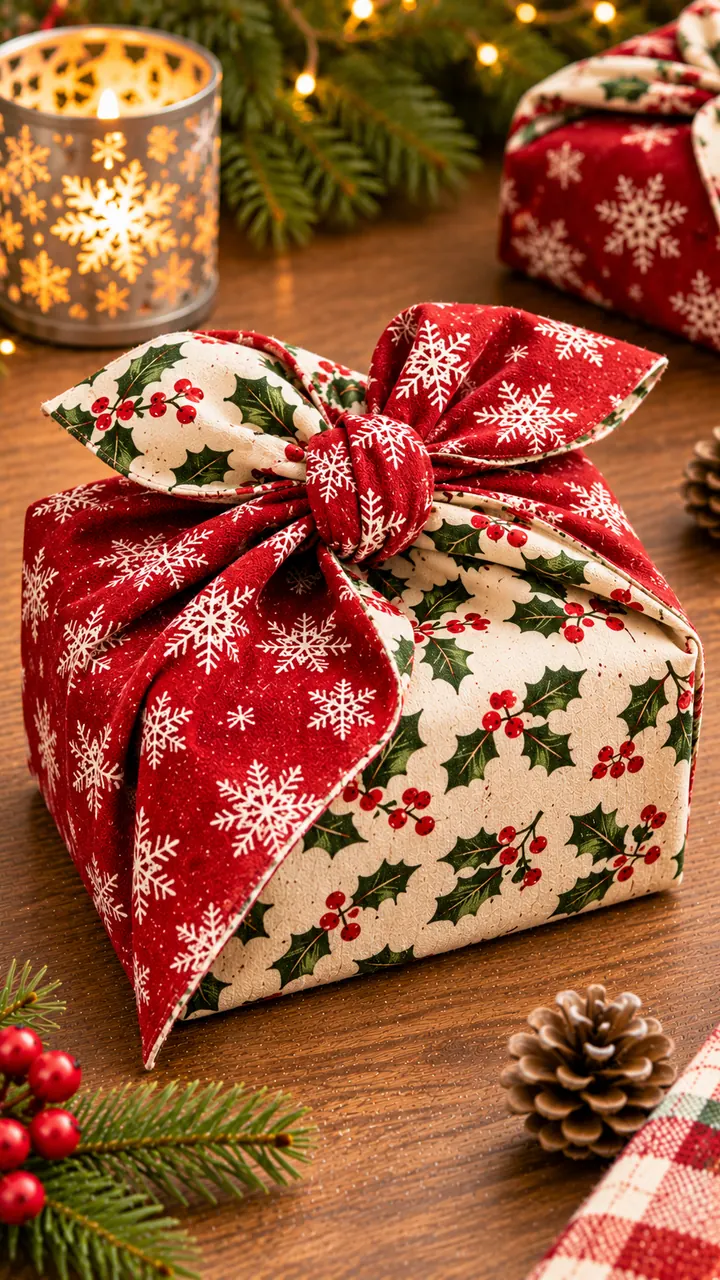
The double layer creates a polished finish with no unfinished edges, making it particularly good for gifts going to friends who enjoy reusable household items. Show the solid side first, then reverse the cloth next time. Avoid heavy lining because thick corners make knots difficult to tie. This technique also works with nonseasonal patterns, extending the usefulness of your Christmas wrapping collection throughout the year.
Christmas Pillowcase Gift Sack
A pillowcase provides a quick solution for bulky presents that would require several sheets of wrapping paper. Start with a clean, gently used case that is still in good condition. Slip in a lightweight gift, fold the opening toward the back, and tie the gathered fabric with a reusable ribbon. If the case is too long, fold excess fabric under the gift rather than cutting it immediately. This keeps the pillowcase useful afterward.
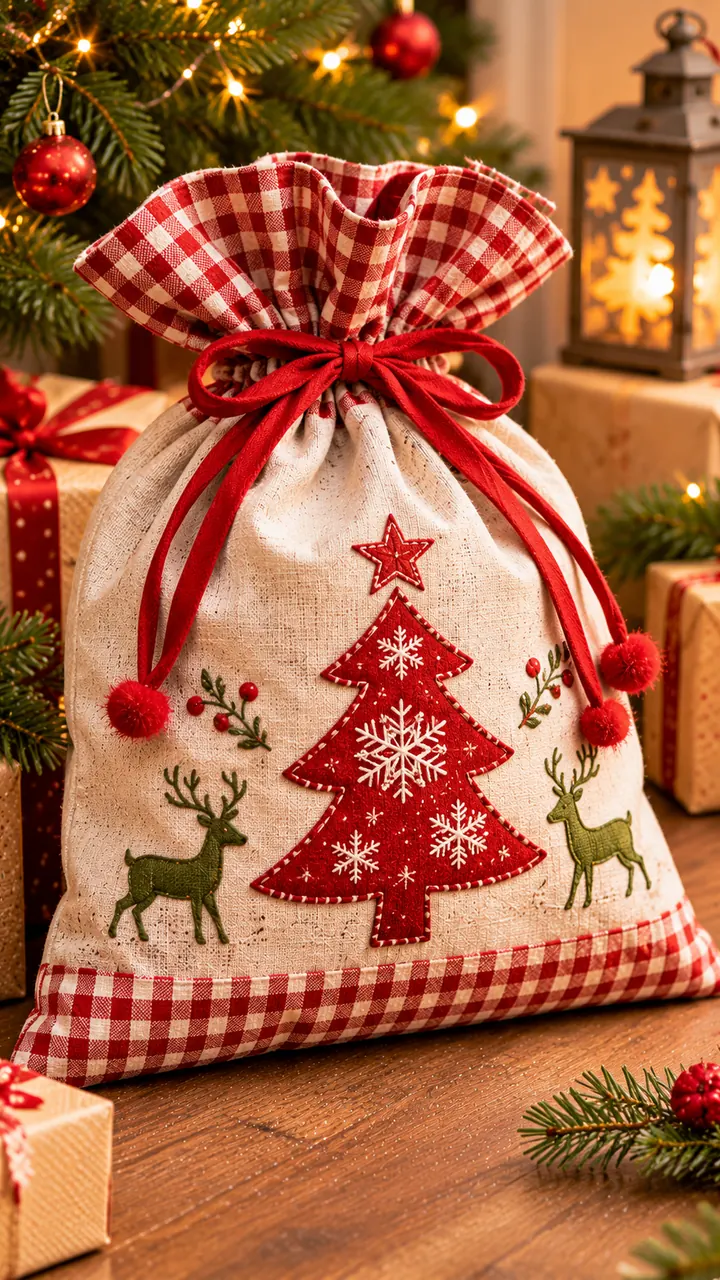
For a more finished sack, sew a simple channel along the open edge and add a fabric drawstring. Choose an existing plaid pillowcase for a holiday look, or decorate a plain one with a removable fabric bow. This idea suits blankets, sweaters and soft toys. Avoid using it as a carrying bag for heavy objects unless its seams are strong enough. A washable case can return to the linen closet after gift giving, which makes its reuse straightforward.
Fabric Bottle Wrap With Twin Knots
Tall gifts can be challenging to cover with a flat square of wrapping paper, but fabric can adapt to their shape. For a bottle of olive oil, flavored syrup or another nonalcoholic gift, choose a sturdy cotton square and stand the sealed container in the center. Pull two opposite corners upward along the bottle and secure them above its neck. Bring the remaining corners around the sides and tie them firmly at the front, keeping the base level.

Check that the bottle remains upright and stable when you lift it; the wrap is decorative rather than protective packaging. For glass containers, add a reusable padded sleeve or keep the original protective box underneath the cloth. A checked kitchen towel is another practical option because the recipient can wash and reuse it. Finish with a small fabric label attached to the knot. This wrapping style looks elegant beside traditional box shaped presents and adds variety to the gifts beneath the Christmas tree.
Reusable Fabric Envelope for Books
A book shaped gift is perfect for a fabric envelope that opens without tearing. Measure the book or notebook, leaving room for its thickness, then cut a fabric rectangle long enough to fold into overlapping flaps. Finish the raw edges with a hem before folding the bottom portion upward and stitching the two sides. Add a broad top flap, and secure the envelope with a reusable length of cotton ribbon wrapped around its middle.
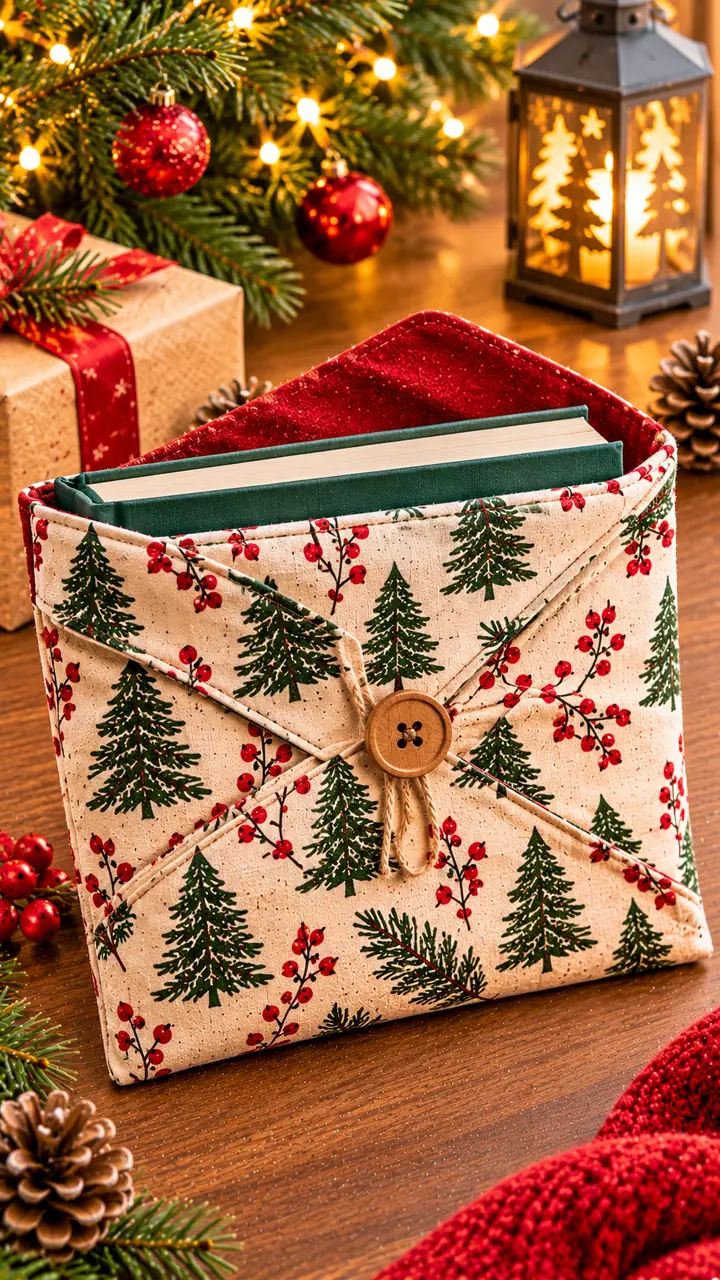
Soft woven cotton, linen blends and fabric from an old tablecloth work well for this project. Use a simple embroidered initial on the flap for a personalized touch, but avoid embellishments that might snag the book cover. The recipient can later reuse the envelope to protect a paperback in a backpack or organize stationery at home. Make the opening loose enough that the gift slides out comfortably.
Rustic Burlap and Cotton Wrap
For a woodland Christmas style, combine a smooth piece of cotton fabric with a narrow strip of reclaimed burlap. Start by wrapping the gift in cotton, tying its upper corners securely. Fold a small burlap strip around the center as a decorative band, then fasten it with reusable cotton string. The layered textures offer a rustic look without relying on plastic bows or glossy gift wrap.
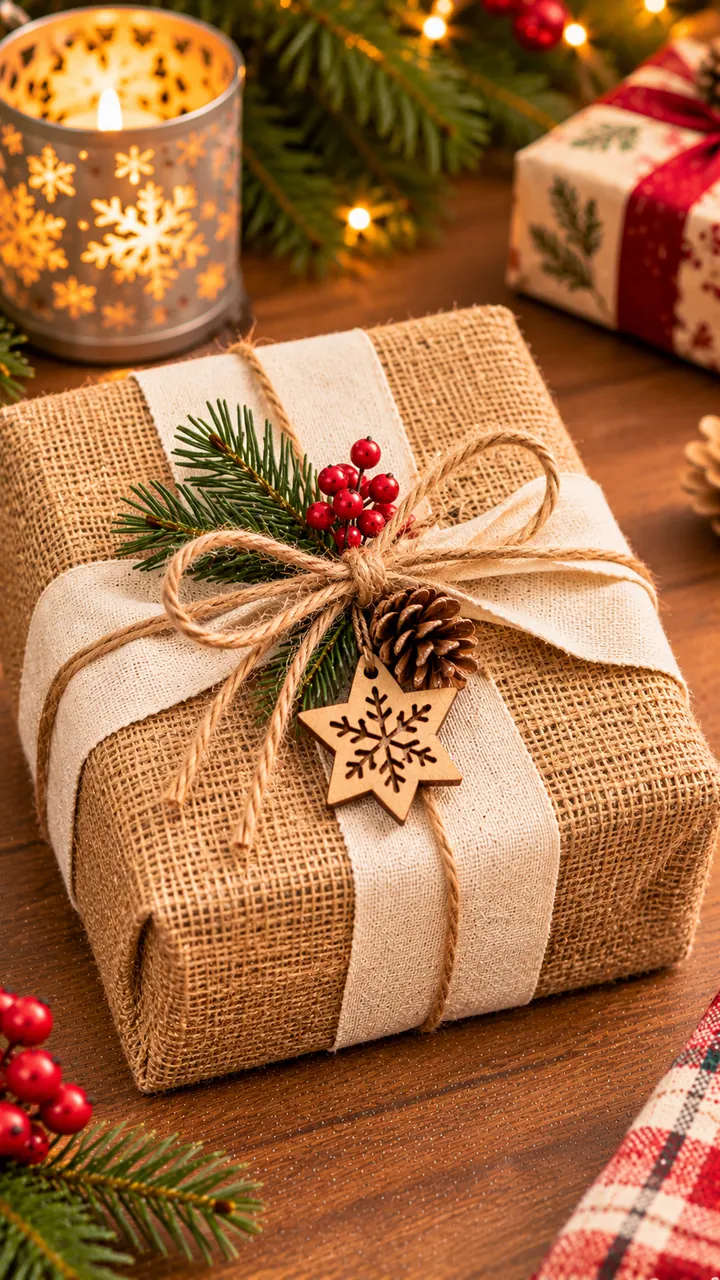
Burlap can shed fibers and feel rough, so keep it away from delicate clothing and food. A cotton layer provides a cleaner surface next to the actual gift. If you already have burlap from a previous project, cut carefully and secure fraying edges with stitching. You can tuck a cinnamon stick or small evergreen clipping into the outer tie, but only if the recipient can remove it easily and no plant material will damage the present. Reuse the burlap band and cotton wrap separately in future years instead of treating either as disposable decoration.
Personalized Reusable Fabric Christmas Stockings
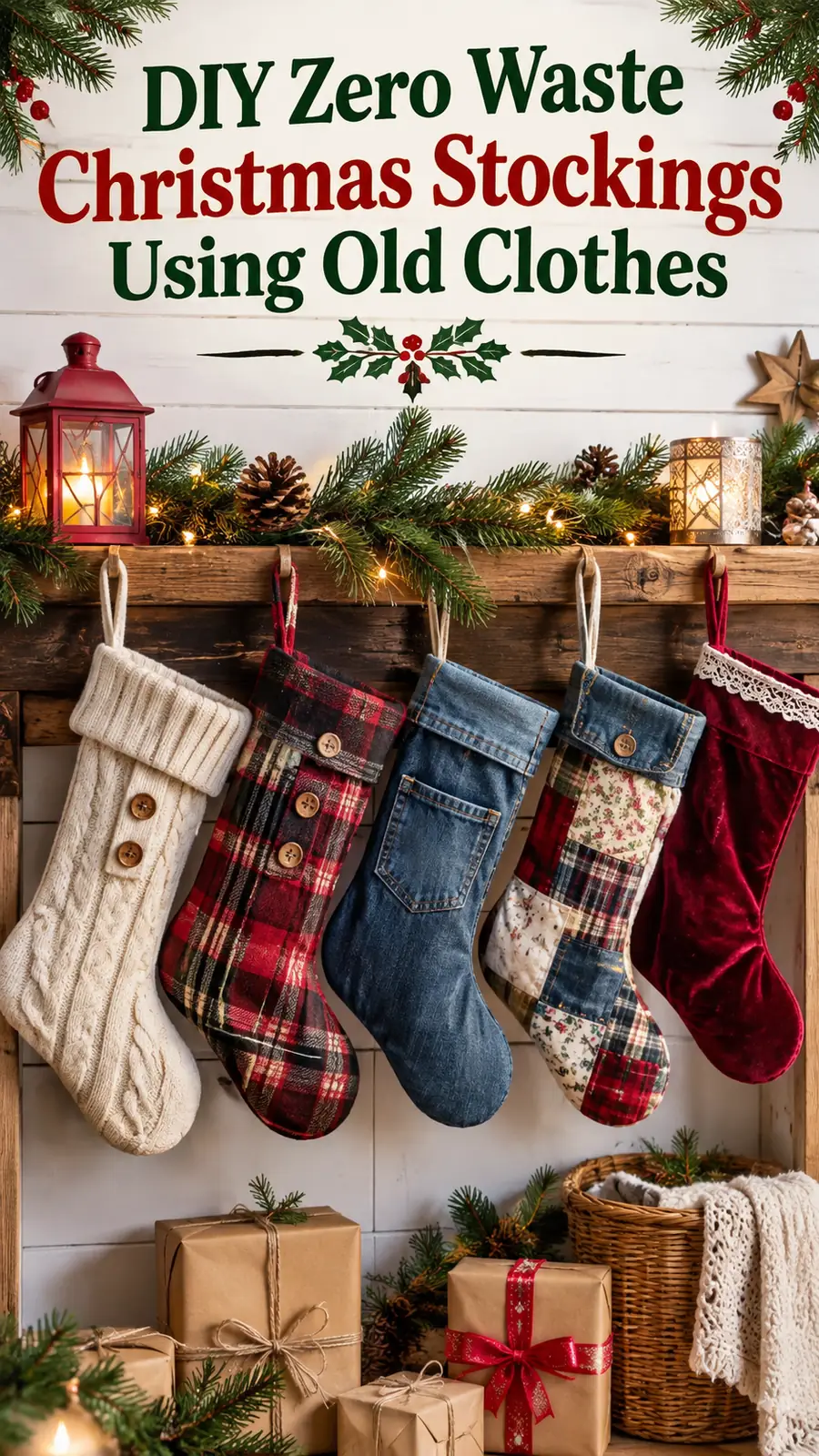
Small Christmas stockings can replace individual wrapping for treats, stationery and little gifts. Trace a simple stocking shape on paper and use it as a pattern to cut two matching pieces of sturdy cotton. Place the right sides together, sew around the sides and toe, and leave the top open. Turn it right side out, hem the opening, and add a loop made from leftover fabric. A contrasting cuff offers a festive finish without requiring complicated stitching.
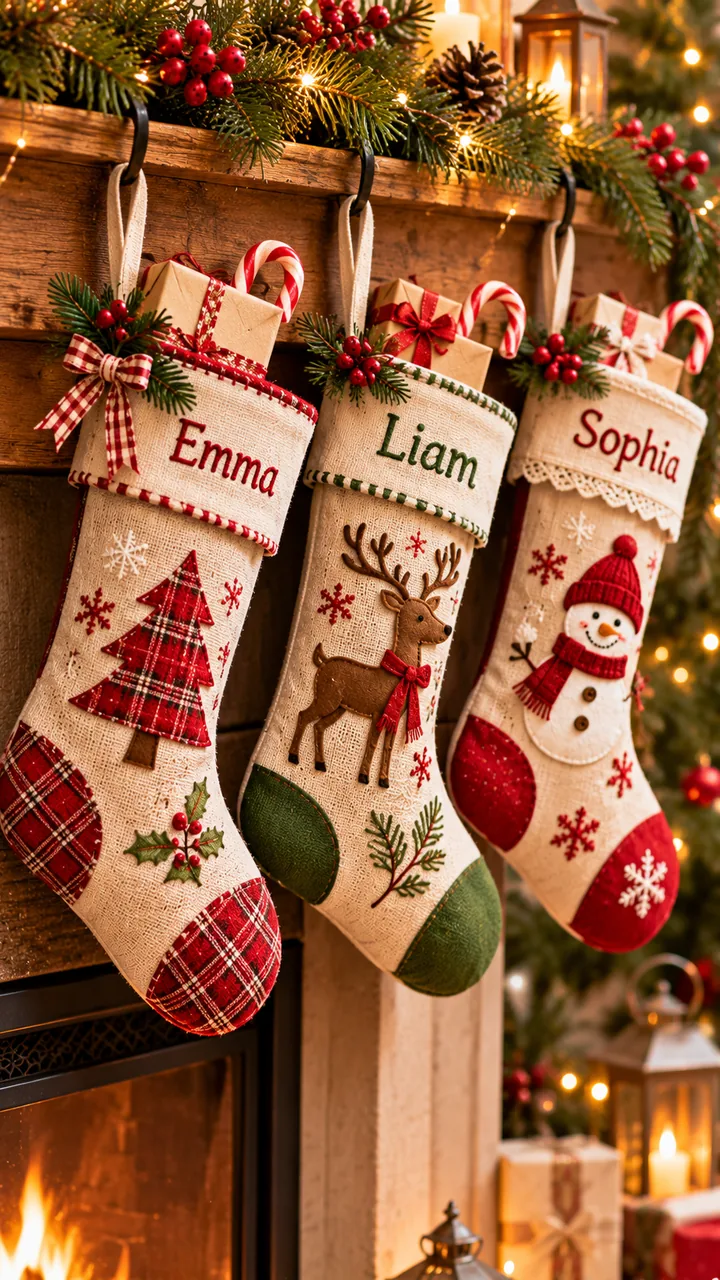
Personalize each stocking with a stitched initial or a reusable name tag rather than writing directly onto a label that will become outdated. Fill it with several small gifts and place it beside the tree or at a family member’s seat. Choose a size that fits the items comfortably and avoid overloading delicate stitching. Once the presents are opened, the stocking can be packed away for next Christmas and refilled year after year. Over time, its familiar appearance can become part of a meaningful family tradition.
How to Choose Fabric and Find the Right Size
Begin with clean household textiles rather than buying new cloth. A soft woven cotton square holds a knot nicely, while linen gives a natural textured appearance. Very slippery satin and bulky upholstery materials can be frustrating for beginners. If you choose a blend, check its care label so it can be washed between uses.
There is no single perfect fabric size because gift shape, depth and knot style all matter. As a starting point, test a square around 20 inches wide for a small box, then move up to 28 or 36 inches for larger parcels. Place the gift diagonally on the cloth and lift opposite corners before cutting anything. If the corners cannot meet with enough material left for a secure knot, use a bigger square. When preparing several gifts, keep small, medium and large cloths together and test the fit before adding decorative touches.
How to Make Reusable Wrapping Last
Wash secondhand textiles before using them, and make sure they are completely dry before covering a gift. Pressing fabric makes folds crisp and improves the overall presentation. Finish edges that are likely to fray, especially when you expect to use the same wrap many times. A simple hem often lasts longer than an unfinished edge, although some no sew cloths work perfectly well for occasional gifts.
After unwrapping, shake out crumbs or debris, wash according to the fabric care instructions and store the cloth flat or loosely folded in a dry drawer. Keep reusable ribbons and name tags in the same container. For family celebrations, invite everyone to return fabric wraps to a shared basket if they prefer not to keep them. When gifts travel to other households, make it clear that recipients are welcome to keep the wrapping. A reuse plan matters more than a perfect holiday aesthetic.
Budget Friendly Styling Without Disposable Extras
Coordinate two or three colors without buying extra accessories. Repurposed red table linens, green cotton scraps and neutral kitchen towels can produce a cohesive Christmas look even when the patterns differ. Create bows from narrow offcuts, or tie a strip of cloth through a knot for extra texture. Reusable wooden labels, washable cloth tags and simple stitched initials can identify presents without single use stickers.
Think about the recipient as well as the presentation. Someone who loves cooking might appreciate a tea towel, while a book lover may prefer a fabric envelope. If the person is unlikely to reuse decorative cloth, consider offering to collect it afterward. Do not purchase large amounts of new fabric solely to make wrapping appear environmentally friendly. Using materials repeatedly and avoiding unnecessary purchases are the practical advantages of fabric Christmas gift wrapping.
Conclusion
DIY Reusable Fabric Christmas Gift Wrapping Ideas offer plenty of room for creativity without depending on a fresh roll of paper every December. Begin with a cloth you already have, learn one dependable knot and expand into drawstring bags, fabric envelopes or patchwork wraps as your confidence grows. Choose designs that fit securely and will actually be reused. Whether you choose a festive tea towel or a favorite scarf, the wrapping can add a little extra meaning to the gift and remain useful long after the holidays.